With a tenuous cease-fire between Israel and Lebanon holding, the ever-hotter war in Iraq is once again creeping back onto newspaper front pages and towards the top of the evening news. Before being fully immersed in daily reports of bomb blasts, sectarian violence, and casualties, however, it might be worth considering some of the just-under-the-radar-screen realities of the situation in that country. Here, then, is a little guide to understanding what is likely to be a flood of new Iraqi developments -- a few enduring, but seldom commented upon, patterns central to the dynamics of the Iraq war, as well as to the fate of the American occupation and Iraqi society.1. The Iraqi Government Is Little More Than a Group of "Talking Heads"
A minimally viable central government is built on at least three foundations: the coercive capacity to maintain order, an administrative apparatus that can deliver government services and directives to society, and the resources to manage these functions. The Iraqi government has none of these attributes -- and no prospect of developing them. It has no coercive capacity. The national army we hear so much about is actually trained and commanded by the Americans, while the police forces are largely controlled by local governments and have few, if any, viable links to the central government in Baghdad. (Only the Special Forces, whose death-squad activities in the capital have lately been in the news, have any formal relationship with the elected government; and they have more enduring ties to the U.S. military that created them and the Shia militias who staffed them.)
Administratively, the Iraqi government has no existence outside Baghdad's heavily fortified Green Zone -- and little presence within it. Whatever local apparatus exists elsewhere in the country is led by local leaders, usually with little or no loyalty to the central government and not dependent on it for resources it doesn't, in any case, possess. In Baghdad itself, this is clearly illustrated in the vast Shiite slum of Sadr city, controlled by Muqtada al-Sadr's Mahdi Army and his elaborate network of political clerics. (Even U.S. occupation forces enter that enormous swath of the capital only in large brigades, braced for significant firefights.) In the major city of the Shia south, Basra, local clerics lead a government that alternately ignores and defies the central government on all policy issues from oil to women's rights; in Sunni cities like Tal Afar and Ramadi, where major battles with the Americans alternate with insurgent control, the government simply has no presence whatsoever. In Kurdistan in the north, the Kurdish leadership maintains full control of all local governments.
As for resources, with 85% of the country's revenues deriving from oil, all you really need to know is that oil-rich Iraq is also suffering from an "acute fuel shortage" (including soaring prices, all-night lines at gas stations, and a deal to get help from neighboring Syria which itself has minimal refining capacity). The almost helpless Iraqi government has had little choice but to accept the dictates of American advisors and of the International Monetary Fund about exactly how what energy resources exist will be used. Paying off Saddam-era debt, reparations to Kuwait from the Gulf War of 1990, and the needs of the U.S.-controlled national army have had first claim. With what remains so meager that it cannot sustain a viable administrative apparatus in Baghdad, let alone the rest of the country, there is barely enough to spare for the government leadership to line their own pockets.
2. There Is No Iraqi Army
The "Iraqi Army" is a misnomer. The government's military consists of Iraqi units integrated into the U.S.-commanded occupation army. These units rely on the Americans for intelligence, logistics, and -- lacking almost all heavy weaponry themselves -- artillery, tanks, and any kind of airpower. (The Iraqi "Air Force" typically consists of fewer then 10 planes with no combat capability.) The government has no real control over either personnel or strategy.
We can see this clearly in a recent operation in Sadr City, conducted (as news reports tell us) by "Iraqi troops and US advisors" and backed up by U.S. artillery and air power. It was one of an ongoing series of attempts to undermine the Sadrists and their Mahdi army, who have governed the area since the fall of Saddam. The day after the assault, Iraqi premier Nouri Kamel al-Maliki complained about the tactics used, which he labeled "unjustified," and about the fact that neither he, nor his government, was included in the decision-making leading up to the assault. As he put it to an Agence France-Presse, "I reiterate my rejection to [sic] such an operation and it should not be executed without my consent. This particular operation did not have my approval."
This happened because the U.S. has functionally expanded its own forces in Iraq by integrating local Iraqi units into its command structure, while essentially depriving the central government of any army it could use purely for its own purposes. Iraqi units have their own officers, but they always operate with American advisers. As American Ambassador Zalmay Khalilzad put it, "We'll ultimately help them become independent." (Don't hold your breath.)
3. The Recent Decline in American Casualties Is Not a Result of Less Fighting (and Anyway, It's Probably Ending)
At the beginning of August, the press carried reports of a significant decline in U.S. casualties, punctuated with announcements from American officials that the military situation was improving. The figures (compiled by the Brookings Institute) do show a decline in U.S. military deaths (76 in April, 69 in May, 63 in June, and then only 48 in July). But these were offset by dramatic increases in Iraqi military fatalities, which almost doubled in July as the U.S. sent larger numbers of Iraqi units into battle, and as undermanned American units were redeployed from al-Anbar province, the heartland of the Sunni insurgency, to civil-war-torn Baghdad in preparation for a big push to recapture various out-of-control neighborhoods in the capital.
More important, when it comes to long-term U.S. casualties, the trends are not good. In recent months, U.S. units had been pulled off the streets of the capital. But the Iraqi Army units that replaced them proved incapable of controlling Baghdad in even minimal ways. So, in addition, to fighting the Sunni insurgency, American troops are now back on the streets of Baghdad in the midst of a swirling civil war with U.S. casualties likely to rise. In recent months, there has also been an escalation of the fighting between American forces and the insurgency, independent of the sectarian fighting that now dominates the headlines.
As a consequence, the U.S. has actually increased its troop levels in Iraq (by delaying the return of some units, sending others back to Iraq early, and sending in some troops previously held in reserve in Kuwait). The number of battles (large and small) between occupation troops and the Iraqi resistance has increased from about 70 a day to about 90 a day; and the number of resistance fighters estimated by U.S. officials has held steady at about 20,000. The number of IEDs placed -- the principle weapon targeted at occupation troops (including Iraqi units) -- has been rising steadily since the spring.
The effort by Sunni guerrillas to expel the American army and its allies is more widespread and energetic than at any time since the fall of the Hussein regime.
4. Most Iraqi Cities Have Active and Often Viable Local Governments
Neither the Iraqi government, nor the American-led occupation has a significant presence in most parts of Iraq. This is well-publicized in the three Kurdish provinces, which are ruled by a stable Kurdish government without any outside presence; less so in Shia urban areas where various religio-political groups -- notably the Sadrists, the Supreme Council of Islamic Revolution in Iraq (SCIRI), Da'wa , and Fadhila -- vie for local control, and then organize cities and towns around their own political and religious platforms. While there is often violent friction among these groups -- particularly when the contest for control of an area is undecided -- most cities and towns are largely peaceful as local governments and local populations struggle to provide city services without a viable national economy.
This situation also holds true in the Sunni areas, except when the occupation is actively trying to pacify them. When there is no fighting, local governments dominated by the religious and tribal leaders of the resistance establish the laws and maintain a kind of order, relying for law enforcement on guerrilla fighters and militia members.
All these governments -- Kurdish, Shia and Sunni -- have shown themselves capable of maintaining (often fundamentalist) law and (often quite harsh) order, with little crime and little resistance from the local population. Though often severely limited by the lack of resources from a paralyzed national economy and a bankrupt national government, they do collect the garbage, direct traffic, suppress the local criminal element, and perform many of the other duties expected of local governments.
5. Outside Baghdad, Violence Arrives with the Occupation Army
The portrait of chaos across Iraq that our news generally offers us is a genuine half-truth. Certainly, Baghdad has been plunged into massive and worsening disarray as both the war against the Americans and the civil war have come to be concentrated there, and as the terrifying process of ethnic cleansing has hit neighborhood after neighborhood, and is now beginning to seep into the environs of the capital.
However, outside Baghdad (with the exception of the northern cities of Kirkuk and Mosul, where historic friction among Kurd, Sunni, and Turkman has created a different version of sectarian violence), Iraqi cities tend to be reasonably ethnically homogeneous and to have at least quasi-stable governments. The real violence often only arrives when the occupation military makes its periodic sweeps aimed at recapturing cities where it has lost all authority and even presence.
This deadly pattern of escalating violence is regularly triggered by those dreaded sweeps, involving brutal, destructive, and sometimes lethal home invasions aimed at capturing or killing suspected insurgents or their supporters. The insurgent response involves the emplacement of ever more sophisticated roadside bombs (known as IEDs) and sniper attacks, aimed at distracting or hampering the patrols. The ensuing firefights frequently involve the use of artillery, tanks, and air power in urban areas, demolishing homes and stores in a neighborhood, which only adds to the bitter resistance and increasing the support for the insurgency.
These mini-wars can last between a few hours and, in Falluja, Ramadi, or other "centers of resistance," a few weeks. They constitute the overwhelming preponderance of the fighting in Iraq. For any city, the results can be widespread death and devastation from which it can take months or years to recover. Yet these are still episodes punctuating a less violent, if increasingly more run-down normalcy.
6. There Is a Growing Resistance Movement in the Shia Areas of Iraq
Lately, the pattern of violence established in largely Sunni areas of Iraq has begun to spread to largely Shia cities, which had previously been insulated from the periodic devastation of American pacification attempts. This ended with growing Bush administration anxiety about economic, religious, and militia connections between local Shia governments and Iran, and with the growing power of the anti-American Sadrist movement, which had already fought two fierce battles with the U.S. in Najaf in 2004 and a number of times since then in Sadr City.
Symptomatic of this change is the increasing violence in Basra, the urban oil hub at the southern tip of the country, whose local government has long been dominated by various fundamentalist Shia political groups with strong ties to Iran. When the British military began a campaign to undermine the fundamentalists' control of the police force there, two British military operatives were arrested, triggering a battle between British soldiers (supported by the Shia leadership of the Iraqi central government) and the local police (supported by local Shia leaders). This confrontation initiated a series of armed confrontations among the various contenders for power in Basra.
Similar confrontations have occurred in other localities, including Karbala, Najaf, Sadr City, and Maysan province. So far no general offensive to recapture the any of these areas has been attempted, but Britain has recently been concentrating its troops outside Basra.
If the occupation decides to use military means to bring the Shia cities back into anything like an American orbit, full-scale battles may be looming in the near future that could begin to replicate the fighting in Sunni areas, including the use of IEDs, so far only sporadically employed in the south. If you think American (and British) troops are overextended now, dealing with internecine warfare and a minority Sunni insurgency, just imagine what a real Shiite insurgency would mean.
7. There Are Three Distinct Types of Terrorism in Iraq, All Directly or Indirectly Connected to the Occupation
Terrorism involves attacking civilians to force them to abandon their support for your enemy, or to drive them away from a coveted territory.
The original terrorists in Iraq were the military and civilian officials of the Bush administration -- starting with their "shock and awe" bombing campaign that destroyed Iraqi infrastructure in order to "undermine civilian morale." The American form of terrorism continued with the wholesale destruction of most of Falluja and parts of other Sunni cities, designed to pacify the "hot beds" of insurgency, while teaching the residents of those areas that, if they "harbor the insurgents," they will surely "suffer the consequences."
At the individual level, this program of terror was continued through the invasions of, and demolishing of, homes (or, in some cases, parts of neighborhoods) where insurgents were believed to be hidden among a larger civilian population, thus spreading the "lesson" about "harboring terrorists" to everyone in the Sunni sections of the country. Generating a violent death rate of at least 18,000 per year, the American drumbeat of terror has contributed more than its share to the recently escalating civilian death toll, which reached a record 3,149 in the official count during July. It is unfortunately accurate to characterize the American occupation of Sunni Iraq as a reign of terror.
The Sunni terrorists like those led by Abu Musab al-Zarqawi have utilized the suicide car bomb to generate the most widely publicized violence in Iraq -- hundreds of civilian casualties each month resulting from attacks on restaurants, markets, and mosques where large number of Shia congregate. At the beginning of the U.S. occupation, car bombs were nonexistent; they only became common when a tiny proportion of the Sunni resistance movement became convinced that the Shia were the main domestic support for the American occupation. (As far as we can tell, the vast majority of those fighting the Americans oppose such terrorists and have sometimes fought with them.) As al-Qaeda leader Ayman al-Zawahiri wrote, these attacks were justified by "the treason of the Shia and their collusion with the Americans." As if to prove him correct, the number of such attacks tripled to current levels of about 70 per month after the Shia-dominated Iraqi government supported the American devastation of Falluja in November 2004.
The Sunni terrorists work with the same terrorist logic that the Americans have applied in Iraq: Attacks on civilians are meant to terrify them into not supporting the enemy. There is a belief, of course, among the leadership of the Sunni terrorists that, ultimately, only the violent suppression or expulsion of the Shia is acceptable. But as Zawahiri himself stated, the "majority of Muslims don't comprehend this and possibly could not even imagine it." So the practical justification for such terrorism lies in the more immediate association of the Shia with the hated occupation.
The final link in the terrorist chain can also be traced back to the occupation. In January of 2005, Newsweek broke the story that the U.S. was establishing (Shiite) "death squads" within the Iraqi Ministry of Interior, modeled after the assassination teams that the CIA had helped organize in El Salvador during the 1980s. These death squads were intended to assassinate activists and supporters of the Sunni resistance. Particularly after the bombing of the Golden Dome, an important Shia shrine in Samarra, in March 2006, they became a fixture in Baghdad, where thousands of corpses -- virtually all Sunni men -- have been found with signs of torture, including electric-drill holes, in their bodies and bullet holes in their heads. Here, again, the logic is the same: to use terror to stop the Sunni community from nurturing and harboring both the terrorist car bombers and the anti-American resistance fighters.
While there is disagreement about whether the Americans, the Shia-controlled Iraqi Ministry of Defense, or the Shia political parties should shoulder the most responsibility for loosing these death squads on Baghdad, one conclusion is indisputable: They have earned their place in the ignominious triumvirate of Iraqi terrorism.
One might say that the war has converted one of President Bush's biggest lies into an unimaginably horrible truth: Iraq is now the epicenter of worldwide terrorism.
Where the 7 Facts Lead
With this terror triumvirate at the center of Iraqi society, we now enter the horrible era of ethnic cleansing, the logical extension of multidimensional terror.
When the U.S. toppled the Hussein regime, there was little sectarian sentiment outside of Kurdistan, which had longstanding nationalist ambitions. Even today, opinion polls show that more than two-thirds of Sunnis and Shia stand opposed to the idea of any further weakening of the central government and are not in favor of federation, no less dividing Iraq into three separate nations.
Nevertheless, ethnic cleansing by both Shia and Sunni has become the order of the day in many of the neighborhoods of Baghdad, replete with house burnings, physical assaults, torture, and murder, all directed against those who resist leaving their homes. These acts are aimed at creating religiously homogeneous neighborhoods.
This is a terrifying development that derives from the rising tide of terrorism. Sunnis believe that they must expel their Shia neighbors to stop them from giving the Shiite death squads the names of resistance fighters and their supporters. Shia believe that they must expel their Sunni neighbors to stop them from providing information and cover for car-bombing attacks. And, as the situation matures, militants on both sides come to embrace removal -- period. As these actions escalate, feeding on each other, more and more individuals, caught in a vise of fear and bent on revenge, embrace the infernal logic of terrorism: that it is acceptable to punish everyone for the actions of a tiny minority.
There is still some hope for the Iraqis to recover their equilibrium. All the centripetal forces in Iraq derive from the American occupation, and might still be sufficiently reduced by an American departure followed by a viable reconstruction program embraced by the key elements inside of Iraq. But if the occupation continues, there will certainly come a point -- perhaps already passed -- when the collapse of government legitimacy, the destruction wrought by the war, and the horror of terrorist violence become self-sustaining. If that point is reached, all parties will enter a new territory with incalculable consequences.

Tuesday, August 22, 2006
7 Facts You Might Not Know about the Iraq War, By Michael Schwartz


Indiscriminate bombardment
Human Rights Watch investigated some two dozen bombing incidents in Lebanon involving a third of the civilians who by then had been killed. In none of those cases was Hizbullah anywhere around at the time of the attack.
Human Rights Watch investigated some two dozen bombing incidents in Lebanon involving a third of the civilians who by then had been killed. In none of those cases was Hizbullah anywhere around at the time of the attack.
So what was the cause of so many civilian deaths? The IDF seemed to assume that, because it gave warnings to civilians to evacuate southern Lebanon, anyone who remained was a Hizbullah fighter. When the IDF saw a civilian home or vehicle that Hizbullah might use, it often bombed, even if, as in Kana, Srifa, Marwahin, or Aitaroun, there was no evidence that Hizbullah was in fact using the structure or vehicle at the time of attack. In weighing the military advantage of an attack against the civilian cost, the IDF seemed to assume no civilian cost, because all the "innocent" civilians had supposedly fled. Through these calculations, the IDF effectively turned southern Lebanon into a free-fire zone.
Yes, I know this was also posted on the Angry Arab website. But did you guys read it there, or just go to the comments section? :)
FAQ on Palestinian prisoners
As of August 8, 2006, there are 9,273 Palestinian prisoners in Israeli prisons or detention camps. (2) Of these prisoners, 351 are children under the age of 18, (3) 75 are women and 42 are over the age of 50. Of the total number of prisoners, 433 Palestinians, who were imprisoned prior to the signing of the Oslo Accords, remain in prison despite the Accords’ call for their release. (4) The prisoners include members of the elected Palestinian Legislative Council.
2. Haven’t Palestinian prisoners been convicted of serious offenses against Israel?
In fact, of the 9,273 prisoners currently held by Israel, only an estimated 1,800 have actually been put on trial and convicted of any offense at all. According to Amnesty International, these trials often fall short of international standards for fair trials. (5)
Israel currently holds an estimated 800 Palestinians detained in prison camps who have not been charged with any crime under what is called “administrative detention.” Administrative detention violates international law. (6) Administrative detention orders may last for up to six months, with Palestinians held without charge or trial during this period. (7) Israel routinely renews the detention orders and may renew the orders without limitation, thereby holding Palestinians without charge or trial indefinitely. (8) During this period, detainees may be denied legal counsel. While detainees may appeal their detention, neither they nor their attorneys are allowed access to the State’s evidence, or know the purpose of the detention – thereby rendering the appeals procedure virtually useless.
3. Don’t most Palestinian prisoners have “blood on their hands”?
No. The vast majority of Palestinian prisoners are political prisoners who have been arbitrarily imprisoned or detained for no legitimate security reason, but for political expression, peaceful resistance or simply because they are Palestinian. According to B’Tselem:
“Security is interpreted in an extremely broad manner such that non-violent speech and political activity are considered dangerous...[This] is a blatant contradiction of the right to freedom of speech and freedom of opinion guaranteed under international law. If these same standards were applied inside Israel, half of the Likud party would be in administrative detention.” (9)
Furthermore, of those Palestinians currently being held, the overwhelming majority have not been put on trial.
Many Palestinians are arrested arbitrarily. For example, from February to March 2002, approximately 8,500 Palestinians were arrested arbitrarily. In many cities, all Palestinian males from the ages of 15 to 45 were rounded up and detained or imprisoned. Palestinians were blindfolded, handcuffed tightly with plastic handcuffs and forced to squat, sit or kneel for prolonged periods of time. Mass arrests and detention of this type have been condemned by Amnesty International as a breach of human rights.
4. How are Palestinian children treated in Israeli prisons?
The issue of child detainees and prisoners is perhaps the most striking example of Israel’s policy of arbitrary imprisonment. Approximately 2,000 Palestinian children were arrested and detained from September 2000 to the end of June 2003. (10) Children as young as 13 are held in Israeli prisons, and are housed with the adult prisoner population. Children aged 13 and 14 constitute approximately ten percent of all child detainees. Almost all child detainees have reported some form of torture or mistreatment, whether physical (beatings or placed in painful positions) or psychological (abuse, threats or intimidation). (11) Children are routinely held in detention centers under inhumane conditions. (12) For example, in some centers up to eleven children have been packed into cells as small as five square meters. (13)
5. How are Palestinian women treated in Israeli prisons?
Most Palestinian women political prisoners were previously housed with the general Israeli prison population in Neve Terze prison where drug addicts, prostitutes, and other hardened prisoners were held. After hunger strikes, most were transferred to Telmond prison. Some, however, including several administrative detainees, remain incarcerated at Neve Terze.
A few Palestinian women are raising very young children in prison; two, Mervat Taha and Manal Ghanem gave birth while under detention. For most others, contact visits with children and other family members are permitted twice every six months. However, as a condition for the visits, women are required to submit to full body searches in the nude. This is a condition most have rejected.
Prison guards have stormed Palestinian women prisoners’ cells, and searched and confiscated their personal effects without reason, beating the women prisoners in the process. Denial of medical services has been used to punish those who protest the conditions of their incarceration.
6. Does Israel subject Palestinian prisoners to torture, and other forms of cruel and degrading treatment?
Yes. Palestinian prisoners are routinely tortured in Israeli jails. A 1999 Israel High Court decision outlawing some forms of physical mistreatment of Palestinian prisoners has not ended Israel’s physical and psychological abuse of Palestinian detainees. According to Amnesty International:
“Among the thousands of Palestinians arrested after 27 February 2002, some hundreds were transferred to full-scale interrogation by the GSS [Israel Security Agency], in centers...Amnesty International has received reports that some of the detainees interrogated by the GSS were subjected to prolonged sleep deprivation, shabeh (prolonged standing or sitting in a painful position), beatings and being violently shaken.” (14)
The Public Committee Against Torture in Israel and B’Tselem report that methods of torture include the following: slapping, kicking, threats, verbal abuse and humiliation, bending the body in extremely painful positions, intentional tightening of the handcuffs, stepping on manacles, application of pressure to different parts of the body, choking and other forms of violence and humiliation (pulling out hair, spitting etc.), exposure to extreme heat and cold, and continuous exposure to artificial light. (15)
Palestinians are held in detention centers and prisons that do not meet the minimum international standards and are routinely denied visitation rights. (16) Amnesty International reports that:
“According to consistent reports received by Amnesty International, detainees’ conditions in Ofer and Ansar III/Ketziot are poor and may amount to cruel, inhuman or degrading treatment or punishment...In both camps, detainees sleep in tents; in Ansar III/Ketziot nights are particularly cold. Conditions in Ofer are said to be overcrowded, with detainees sleeping 25 to 30 to a tent. In both camps detainees initially slept on pieces of rough wood...Detainees were said to be given frozen chicken schnitzels which they had to defrost in the sun; a tub of yoghurt, one or two cucumbers and two pieces of fruit between 10 prisoners.” (17)
7. Why is the release of Palestinian prisoners so important?
No issue illustrates Israel’s denial of freedom to the Palestinians more pointedly than that of political prisoners. The Palestinians have been subjected to the highest rate of incarceration in the world. Approximately 20 percent of the Palestinian population in the Occupied Palestinian Territories has, at one point, been arbitrarily detained or imprisoned by Israel. (18)
Israel’s imprisonment and detention of Palestinians is a manifestation of its failure to abide by international law and the Fourth Geneva Convention: administrative detentions and imprisonment inside Israel are both illegal under the Fourth Geneva Convention. (19) Israel’s failure to release Palestinian political prisoners and its continued arbitrary arrest of Palestinian civilians leads to an unfortunate conclusion: that Israel views itself as above the law and the Palestinians beneath it.
Israel and the US are Still Focused on the Wrong Issues
by Rami G Khouri
We have a very simple choice before us in the Middle East: we can get serious about working together to give the people of this region a chance to live normal lives in peace and security; or we can all act silly in the ways of provincial chieftains, as many public figures in Lebanon, Syria, Iran, Israel and the US have done in recent days.
The chances of achieving a region-wide peace in the Middle East are slim to non existent right now, because the key non-Arab players are focusing on the wrong issues. They are trying to manage or eliminate the symptoms of our region's tensions instead of addressing the root causes. Hizbullah and Iran are among the best examples of this.


Tehran sharpens its sword
Asia Times
"Israel is licking its wounds from the embarrassment, if not humiliation, of not being able to "eradicate" Hezbollah, as its leaders declared at the beginning of hostilities. Consequently, the US had to start its own propaganda war, with President George W Bush initiated a campaign for the global community insisting that Israel was the real victor.
Even the name given to the war games carries enormous symbolic meaning, for both the US and the world of Islam. They are depicted as "Blow of Zulfiqar". Zulfiqar was the name of the sword of Imam Ali, who was the first imam of the Shi'ite sect and the son-in-law and first cousin of the Prophet Mohammed.
Zulfiqar is a highly revered phrase among the entire Muslim community as a symbol used for the protection and promulgation of Islam. The message to the US is quite unambiguous: if threatened by military action, the Islamic Republic is ready to strike a blow against the lone superpower and its client, Israel.
Iran is aware that the Lebanese conflict is far from over. The government of Israeli Prime Minister Ehud Olmert is desperately looking for victory of some sort. That is why Israel violated the ceasefire over the weekend by sending its paratroopers into Lebanon. The apparent purpose was to capture or kill Hassan Nasrallah, the leader of Hezbollah, who has emerged as the new hero of the Arab world, a hero who might have acquired greater respect and attention than the late Gamal Abdel Nasser of Egypt did in 1956 when he challenged the combined forces of Britain, France and Israel during the Suez crisis.
Finally, and most important, Iran knows the significance of the Persian Gulf as a source of energy to Japan, Europe and China. The uppermost question US military planners must be asking, as they watch Iran's war games from neighboring areas, is how far Iran will go in terms of blocking the passage of energy supplies in the Persian Gulf - and if this happens, what countermeasures they must take to minimize a disastrous outcome. That variable alone might be sobering enough to put a damper on the ostensibly uncompromising wish of the neo-conservatives to take military action against Iran."


Playing Cowboy – and Falling Off the Horse
"U.S. President George W. Bush has fancied himself playing Gary Cooper's role in High Noon. Yep, Sheriff W. and his loyal deputy Tony B. ride into Mideastville, where they confront a revenge-seeking killer by the name of Saddam and his Islamofascist gang, while cowardly lawmen Jacques C. and Gerhard S. hide in the Old Europe Café. W. vanquishes the enemy and spares the town from frontier justice brought on by a deadly group of outlaws. In the final scene, our cowboy rides into the sunset, leaving behind a once-dishonorable town that has now been transformed into the civilized and prosperous Greater Middle East.
President Bush's attempt to apply Hollywood's Western genre of Good vs. Bad Guys to make sense of the complex and atavistic political animosities of the Levant area and its peripheries was a costly misjudgment, as was his decision to recruit as his adviser on the Middle East an aging raconteur of oriental fantasies, Bernard Lewis.
Bush would have been better off killing two birds with one stone – watching a great film at the same time as he learned something about the Middle East – by watching Lawrence of Arabia. Perhaps he might have realized how difficult it would be to impose an imperial order in the Middle East."
How Washington Goaded Israel
There is increasing evidence that Israel instigated a disastrous war on Lebanon largely at the behest of the United States. The Bush administration was set on crippling Hezbollah, the radical Shiite political movement that maintains a sizable block of seats in the Lebanese parliament. Taking advantage of the country's democratic opening after the forced departure of Syrian troops last year, Hezbollah defied U.S. efforts to democratize the region on American terms. The populist party's unwillingness to disarm its militia as required by UN resolution—and the inability of the pro-Western Lebanese government to force them to do so—led the Bush administration to push Israel to take military action.
In his May 23 summit with Prime Minister Ehud Olmert, President George W. Bush offered full U.S. support for Israel to attack Lebanon as soon as possible. Seymour Hersh, in the August 21 New Yorker, quotes a Pentagon consultant on the Bush administration's longstanding desire to strike “a preemptive blow against Hezbollah.” The consultant added, “It was our intent to have Hezbollah diminished, and now we have someone else doing it.” ...
On to Iran and Syria?
On July 30, the Jerusalem Post reported that President Bush pushed Israel to expand the war beyond Lebanon and attack Syria. Israeli officials apparently found the idea “nuts.”
On the Israel/Zionist lobby in America
conquer" while the US government seems intent on unifying diverse groups
from Iraqi resistance to Sunni Hamas to Shi'i Hizballah to Arab
Nationalists? This administration talks and acts based on a supposed common
threat and in the process ofcourse unifying others and creating enemies.
Perhaps the Zionist coined "Islamofascism" term should be a hint. Perhaps
those who think tribally can only think of others as equally tribal: if
there is a Jewish nation and not simply a religion then there must also be
an Islamic nation and not simply a religion. If "goyim/gentiles" are
inherenltly anti Jewish then it would make sense to lump Castro, Chavez,
Nasrallah and Ahmedinujad (and hence help them find common ground)! Or does
it? Looking carefully at these questions sometimes generates discomfort in
both left and right circles. A lifelong pacifict once stated that they were
put on this earth to comfort the afflicted and make the comfortable
uncomfortable. It is IMHO important to engage in open discussion regardless
of where one stands on these matters. The following four pages are not
intended to be a comprehensive analysis but hopefully strings to begin this
needed discussion. I would suggest actually that the Council for National
Interest, ADC or other groups host a conference specifically to delve deeper
into the questions raised.
Howard Friedman, President of AIPAC, titled his letter of July 30 2006 to
friends and supporters of AIPAC "Look what you've done". He explained:
"Israel is fighting a pivotal war for its life...the expected chorus of
international condemnation of Israel's actions. ..only ONE nation in the
world came out and flatly declared: Let Israel finish the job.. That nation
is the United States of America--and the reason it had such a clear,
unambiguous view of the situation is YOU and the rest of America
Jewry....How do we do it? ... decades of long hard work which never ends."
Ari Berman in The Nation stated that "The congressional reaction to
Hezbollah's attack on Israel and Israel's retaliatory bombing of Lebanon
provide the latest example of why AIPAC's lock on US foreign policy in the
Middle East must be examined." (July 31, 2006
http://www.alternet.org/story/39679 ). So let us do a little research on
this lobby and cite some resources. Here we divide this into two sections:
a) Articles that describe the lobby and its influence (perhaps not "lock")
on US foreign policy, and
b) Examples of situations when other elite interests (oil, weapons
manufacturers) collided with the Israel lobby and the latter won. There are
of course other situations when the Israel lobby lost, especially early in
its career (e.g. 1956 with Eisenhauer and the Suez crisis).
First a relevant quote from Nehemia Stessler writing in Haaretz, May 12,
1989: "Israel’s dependence on the United States is far greater than
suggested by the sum of $3 billion. Israel’s physical existence depends on
the Americans in both military and political terms. Without the US, we would
not be equipped with the latest fighter planes and other advanced weapons.
Without the American veto, we would have long since been expelled from every
international organization, not to speak of the UN, which would have imposed
sanctions on us that would have totally paralyzed Israel’s international
trade, since we cannot exist without importing raw material"

THE MIGHTY IOF HAS FOUND ITS MAN
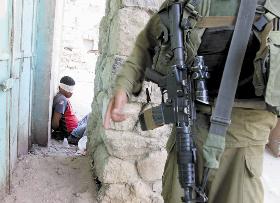
The Symbol of Israeli Failure in Lebanon: Hassan Deeb Nassrullah greeted as he returned to his home in the city of Ba'albek with five other Lebanese after being abducted by Israeli terrorist forces. The faulty Israeli intelligence led to the stupid Ba'albek air raid to abduct Hassan Deeb Nassrullah confusing him for the leader of Hizbullah, Shaikh Hassan Nassrullah, just on basis of name similarity!!!!!!!!! (Assafir, 8/22/06).

"You Cannot Promise Victory, Produce a Humiliating Defeat and Stay in Power"
"Indeed, the IDF military offensive doctrine is grounded on one basic axiom that was defined by David Ben Gurion in the early fifties: whatever it takes, Israel must always win! This axiom is indeed very powerful, yet, in reality, the Israeli army can’t provide the goods anymore. In the last three decades the Israeli army is constantly being beaten time after time by enemies that are getting smaller and smaller.
Yet, one may mention that the IDF isn’t very original in being defeated. The IDF fails exactly where the American army has been failing since Vietnam. Shockingly, the IDF has managed to copy every possible American mistake. It religiously adopted the new American military philosophy of a ‘compact highly sophisticated fighting force’. Undeniably, this very doctrine is very effective in producing some gigantic collateral damage i.e., war crimes. Yet, in the long run, it fails miserably in wining wars. The new American military doctrine may win a battle or two but no more than that. In the most recent years it has been totally beaten in Afghanistan, Iraq, Gaza and obviously in Lebanon.
This is exactly where the Israeli limbo is. In order to maintain its status as a winning regional super power, Israel needs the blind support of America (politically, financially and logistically). Yet American blind support can be grunted to Israel only if the Jewish State is indeed a regional super power to start with. Olmert and his government are fully aware of this very complexity. They know that without being a regional super power in the first place, they have nothing to offer their almighty American brothers. Israel is crucial for the strategy of the Americans as long as it can wipe out all its enemies in six days at the most. The way things appear now, the Israeli Army is basically defeated by the two smallest nations in the Arab world, the Palestinian and the Lebanese ones.
As much as it clear to the Israelis, it is clear to the Americans that unlike the bold Hezbollah, the IDF soldier has lost his will to fight. The IDF is a spoiled, confused and tired army that is specializing solely in terrorizing civilian populations while being engaged in constant tactical withdraw. This Israeli Army is not trained to win wars anymore. Instead, its tank battalions are mainly engaged in daily shelling of schools and hospitals. Its Air Force uses the best American fighter planes to flatten neighborhoods and shoot deadly rockets at cars in the streets of Gaza. Its command units are expert in abducting democratically elected middle-aged Palestinian politicians. The IDF is basically a heavy army specializing in merciless regional bullying. Yet, it cannot win a war, and as such it has nothing to offer the American empire.
The recent victory of the Hezbollah therefore must be realized as a major event with some global implications. While the Hezbollah regards itself a paramilitary organization concerned mainly with some local issues having to do with Israeli expansionism, it has managed to cause a serious blow to neo-conservatism as a political praxis as well as a philosophy. It has beaten the Zionized Anglo-American worldview. Standing up to Zionism and Americanism, it is the Lebanese, the Palestinians, the Iraqis, the Afghanis and the Iranians who happen to be at the vanguard of the war for humanity and humanism. For those who are yet to be convinced that this indeed the case, I will mention that the fact that it is Iran who rushed to pay 3 billion dollars to rebuild Lebanon after the destruction made by ‘American interventionism’ leaves no room for interpretation. While America spreads destruction and death all over the world, it is Iran and the Hezbollah that offers a new beginning."
Monday, August 21, 2006
Gaza swelters through summer without power
Meanwhile in Palestine
21.8.06: Beatings and abuse in the shadow of war
This is no way to make a deal
Palestinians: Soldiers more violent due to war
Lessons from history
Four civilians, including two children, injured in Rafah
Israel to US: Fund Gaza sewage treatment
Troops install cameras at the Gaza International Airport
Papal nuncio visits Gaza
Palestinian PM urges Pope to help release Hamas officials
Diskin urges changes to Rafah deal
25% of Palestinian MPs detained by Israel
Uncomfortable Truths about Israel, By Larry C. Johnson
08/21/06 "AlterNet" -- -- What would we be saying if Hizbullah kidnapped the Israeli Deputy Prime Minister and launched a daring raid inside Israel to disrupt a U.S. effort to resupply the Israeli Defense Force? We would be up in arms over their provocation and would be convening the UN Security Council to recommend new sanctions. Hell, we'd probably have the National Security Council in session and be ready to dispatch U.S. military forces to help Israel.
Okay. Back to reality. Hizbullah is minding its own business (or at least fostering that public image) and has embarked on public relief operation to counteract the devastation visited on the people of Lebanon by Israel's recent invasion and bombing campaign. The Hizbullah aid and recovery effort is so successful that some wags suggest that Nasrallah be hired to take over from FEMA in the event the U.S. is hit with another storm like Katrina. How inept are you when Hizbullah is able to organize a better public relief effort? But I digress.
Having helped transform Hizbullah from a band of terrorists into the rock stars of the Muslim world, Israel persists with being stupid. Ehud Olmert either never learned or forgot the first rule of crisis management--i.e., when you're in a hole, stop digging. With the reputation of the Isreali Defense Force in tattters after the debacle in Lebanon, Israeli leaders apparently decided to go all out to secure their reputation as the supreme rogue state in the Middle East. How else to explain the following?
Israel kidnaps elected official: The Palestinian's Deputy Prime Minister, Nasser Al Shaer was kidnapped by the Israeli army on Saturday, after hiding since the start of Israel's Palestine offensive in June. He was seized in a raid at his home in the West Bank town on Ramallah.
Israel breaches ceasefire: UN Secretary-General Kofi Annan called Israel's latest attack on Lebanon a violation of the UN backed truce that ended the 34-day war. "The secretary-general is deeply concerned about a violation by the Israeli side of the cessation of hostilities as laid out in Security Council resolution 1701," a spokesman for Annan said in a statement posted on the United Nations Web site.
I realize Israeli officials will justify the kidnapping as the capture of a wanted terrorist and the attack in Lebanon as an effort to prevent Hizbullah from rearming. Unfortunately for Jerusalem's sake, these acts feed the image of Israel as a renegade state that operates outside the normal boundaries of international law.
If you had a friend you cared deeply about engaging in self-destructive behavior you would do an intervention--sit them down and try to talk some sense into them. Apparently that is not an option with Israel. Witness what happens when a reporter tells the public that Israel was trying to manipulate public perceptions during the recent invasion of Lebanon:
Kurtz: One other note. On Reliable Sources two weeks ago, "Washington Post" Pentagon reporter Tom Ricks said he'd been told by U.S. military analysts that Israel was leaving some Hezbollah rocket launchers intact because the killing of Israeli civilians provided an image of moral equivalency in the war. "Post" editor Len Downie, responding to a letter from former New York mayor, Ed Koch, says he told Ricks he should not have made those statements.
Ricks told the New York Sun that he accurately reported the comments from analysts but that, quote, "I wish I hadn't said them, and I intend from now on to keep my mouth shut about it."
The last thing Israel needs now are a bunch of sycophants and fawning relatives telling it how great and good it is. They need to stop acting like adolescent fools and find the moral high ground they once occuppied. One key to Israel's longterm security is to solidify its reputation as a nation committed to law and the protection of human rights. When Israeli civilians were being blown up on buses and in market places during the Intifada, international public pressure forced Hamas and Hizbullah to shift away from suicide bombings.
When Israel acts with honor and restraint it has little difficulty portraying its enemies as crazy terrorists. But, when Israel lowers itself to the level of the terrorists, it is Israel, not the terrorists, who suffer. And let there be no doubt, Israel is suffering.
The time has come to look to the past for some answers. When Israel kidnapped Adolf Eichmann, the mastermind of the Final Solution, in the 1960s, the Israelis gave the Nazi a defense counsel, a public trial, and a chance to confront his accusers. That was a moment of greatness for Israel because it provided a graphic demonstration of the difference between a terrorist state and a civilized nation. Israel gave a mass murderer due process and, in the course of events, provided the ultimate condemnation of the Nazi regime.
Now we have the spectacle of Hizbullah acting with statesmanship and restraint while the Israelis destroy their credibility among the international community. That is a truth Israel's true friends need to communicate to Tel Aviv and Jerusalem in the strongest terms possible. And they need to do it soon.
© 2006 Independent Media Institute. All rights reserved.
Support for Iraq war at all time low
Just 35 percent of 1,033 adults polled say they favor the war in Iraq; 61 percent say they oppose it -- the highest opposition noted in any CNN poll since the conflict began more than three years ago. Continued.
PUPPET JORDANIAN KING AS ISRAEL'S COP
"BEIRUT (Reuters) - Airlines resumed flights to and from Lebanon's war-damaged capital Beirut on Monday, but at Israel's insistence all planes were routed through Jordan for security checks, a senior industry source said.
Lebanon's flag carrier, Middle East Airlines, announced it had resumed flights to all its destinations on Monday. It said they would be routed through Amman where passengers would stay on board for a transit time "not exceeding 50 minutes".
It gave no reason, but a senior industry source said the enforced stop in Amman was a condition set by Israel, which is determined to stop Hizbollah guerrillas from re-arming after a U.N.-backed truce took effect a week ago.
"They say it's for security checks. It's not an acceptable reason. It's part of the pressure that is being put on Lebanon by Israel," said the source, who asked not to be named.
"It's absurd. I don't think Hizbollah is going to smuggle weapons or hostages or part of their leadership on a commercial flight," the source added."
WHAT PALESTINIAN GOVERNMENT?

Palestinians in the larger Israeli occupation prison:
The Palestinian government in cell number 10
The Palestinian Legislative Council in cell number 12
The West Bank in cell number 17
Gaza Strip in cell number 22
(Nasser Al-Ja'afari, Alquds, 8/20/06).

The liberation of Lebanon
"So, the US and Israel have found accomplices they need to help them achieve their goals of reshaping the Middle East and extending America’s dominance throughout the oil-rich region. If they succeed, they will have a stranglehold on the world’s most crucial natural resources and will be able to control the growth of China, India, Japan, and other potential rivals in the 21st century. Israel will also play a central role as regional leader in the oil trade; opening pipeline routes from Ceyhan to the Far East and from Kirkuk to Haifa. (check “Triple Alliance”: The US, Turkey, Israel and the war on Lebanon” Michel Chossudovsky)
But we shouldn’t underestimate the growing strength of non state actors and guerilla forces. In Iraq, the resistance has brought the world’s only superpower to a grinding standstill; frustrating all attempts to establish security, rebuild infrastructure, or transport vital resources.
Similarly, Hizbullah has won a stunning victory against a high-tech and well-disciplined Israeli army. They have shown the world that they are resourceful and ferocious fighters capable of forcing a fully-armed modern army of 30,000 men to withdrawal. That’s no small feat.
They have shattered the illusion of Israeli invincibility and emboldened a new generation of Arab youths to see beyond their present subjugation and despair and aspire to reclaim their countries from the corrupt US-backed regimes.
The imperial juggernaut will continue lurching recklessly through the Middle East until it is worn-down piecemeal by the bold actions of the resistance. Iraq and Lebanon foreshadow an even wider war extending from the Caspian to the Red Sea; destabilizing oil supplies and overturning the teetering Arab monarchies.
Bush and Olmert have thrown open Pandora’s Box thinking they can contain the chaos within, but have failed to achieve any of their objectives. They continue to misread the lessons of Afghanistan, Iraq, and Lebanon. High-altitude bombing and trigger-happy soldiers only swell the ranks of the resistance and feed their determination. If Bush and Olmert choose to fight a generation-long 4-G (4th Generation) war, they should at least consider the modest goals set out by their adversary, Hassan Nassrullah, in a recent public statement."


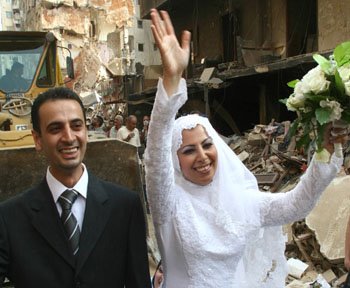


Christian Lebanese Lara Faqih, 16, left, and Hana Faqih, 23 walk through the rubble while looking at the damage in the Mar Elias Church, as holy religious places did not escape the damage caused by the recent 34-day Israeli attack on Lebanon, in the southern town of Khiam, Lebanon Sunday, Aug. 20, 2006
The new creative destruction
By Mark LeVine
"For all who celebrated creative destruction, the United States was, in the words of neo-conservative philosopher and Bush adviser Michael Ledeen, "an awesome revolutionary force" for whom creative destruction was (and, we can assume, remains) "our middle name".
But in keeping with this philosophy, the Israeli military thought that by destroying thousands of Lebanese lives and buildings it could take out Hezbollah, and in so doing create a new and more favorable regional balance of power. What it didn't count on was that Hezbollah was using the same principle of violence as the instigator of social and political change, only in reverse: each bombed-out building and lifeless baby created another opportunity for Hezbollah to show its patriotism, charity and efficiency.
Now, as Israeli soldiers begin withdrawing from Lebanon in what almost every Lebanese believes is defeat, Hezbollah fighters exchange their Kalashnikovs for hard hats and bulldozers, clearing away the rubble, handing out money, food and furniture to the homeless, and rebuilding the roads and buildings that the war they precipitated destroyed - all with an unlimited supply of funds from Israel's and America's main enemy and ultimate target of the war, Iran.
In short, Hezbollah has been able to eat its cake and have it too: it has stood up to the mighty Israel Defense Forces and either co-opted or cowed its domestic opposition (which collectively had more support than Hezbollah did before the war). Then, before anyone could criticize it for the magnitude of destruction its actions unleashed, it has begun a massive, well-funded rebuilding effort. If only the Bush administration had acted as astutely in Iraq.
What can the US and Israel learn from the past five weeks? Well, they've been pretty creative about destroying things, as a tour of Iraq, Lebanon or Gaza makes clear, and in the process unleashing waves of chaos that they assumed could be managed to their advantage.
But Nasrallah's strategy has shown him to be a true master of both sides of the creative-destruction equation. That is, he understands that creative destruction must create a viable system that gives people a stake in their future if the process is to be completed."
A Pretext for War With Iran?
James Bamford, author of A Pretext for War and a recent article in Rolling Stone on the neoconservative push for war with Iran, talks to INN's Lenny Charles in this video interview.
To Watch Video, Click Here
What Does Israel Want?
By Justin Raimondo
"If the two Israeli soldiers could be rescued, then so could Olmert's government – but it is more than just internal Israeli politics that is driving the IDF. As I pointed out last week, we were warned by Israeli Foreign Minister Tzipi Livni, who admitted "The war isn't over yet." Indeed, if the Israelis have their way, it has barely begun: they are now shifting their focus to a full-fledged effort to embroil Damascus in the conflict, and I wouldn't rule out air strikes on Syrian territory before all this is over.
Lebanon is just a pawn in the game: Israel's real objective is toppling Bashar al-Assad and militarily confronting the Iranian mullahs – using U.S. troops, of course. The resulting incredibly destructive regional war will see not a few of their old enemies tossed in history's dustbin.
Israel's partisans in the U.S. have, in some instances, been quite open about this objective: Michael Ledeen's infamous taste for "creative destruction" is vivid evidence of the neocons' nihilism. But this is nihilism with a purpose: out of all that death and destruction will come a new world, the vaunted "transformation" of the region that was supposed to lead to democratic societies in nations that had never known any such thing. But, as it turns out, democracy has nothing to do with it: it's all about destabilizing the region to pursue an Israeli agenda. That agenda is the breakup and atomization of the Arab-Muslim world, so that it is little more than a collection of splinters. Lebanon is only the first phase of this campaign, and the Israelis are pushing ahead no matter what Washington thinks.
For years, we've been telling our readers that American foreign policy has been hijacked, and here we have the confirmation. The invasion of Iraq, the campaign of threats and provocations directed at Iran, and the destruction of Lebanon have all served the interests of a single country, and that country is not the United States of America. In the most successful covert action in history, Israel's amen corner in the U.S. has essentially seized effective control of the American giant, and is now riding the dumb elephant for all he's worth through the rubble of the Middle East."
Abu Mazen: America's Tribute to Hafez Assad
divergent, they served politically to forestall any move
by the PLO towards a negotiated settlement with Israel and
personally to thwart the man Assad loathed like no other:
Yasser Arafat.
Surely few in my generation have even heard of the
personalities comprising the Palestinian face of Assad's
crusade. Abu Musa, a celebrated Palestinian commander
early in the Lebanon War, in 1983 led his breakaway Fateh
faction into battle against what remained of Arafat's PLO
in the wake of Begin and Sharon's slaughter a year prior.
Thanks to Syrian patronage, his combat victory led him
into total obscurity and into early retirement in
Damascus. Ahmed Jibril, a Palestinian-born Syrian military
officer whose Popular Front for the Liberation of
Palestine-General Command (PFLP-GC) broke from George
Habash's PLFP and later from the PLO entirely largely on
the issue of Syrian clientage, similarly led his
organization into irrelevance.
If anything, the Syrian groups deserve recognition as the
vanguard of the Palestinian national movement's plunge
into a moral abyss from which it has never fully emerged.
Special mention is owed to the PFLP-GC's string of raids
targeting children in northern Israel in the early 1970s.
The "Damascus alliance" of Palestinian leftist groups took
Assad's bait, its acts of barbarism sufficient to wipe out
Arafat's efforts to force a political compromise on
Israel, starting with the binational secular state
outlined in the PLO's Ten-Point Programme of 1974.
George Bush and Condoleezza Rice have "their Palestinian."
He is Abu Mazen (Mahmoud Abbas).
Ideologically, he bears nothing in common with the
aforementioned Syrian puppetry. His nom de guerre is the
signature of a generation that, it must be remembered, led
the Palestinians back from certain extinction by a
combination of diplomacy, publicity, and armed resistance.
Abu Mazen was there from day one, and remained Arafat's
technocratic deputy through the PLO's successive exiles
until its arrival in Gaza in 1994.
Abu Mazen is neither a fighter nor a leader. Since Israel
renewed its destruction of Gaza last month, killing more
than 200 Palestinians, seemingly the only mention of him
has come in the context of Rice's deluded musings on a
"new Middle East." As America's allies from Great Britain
to Jordan try to impress on it Palestine's centrality in
the Middle East's troubles, the U.S. demurs by playing the
Abu Mazen card just as Hafez Assad played the Palestinian
rejectionist card.
After Lebanon, Israel Looks for More War
"Israel regards the "home front" – its civilian population – as its Achilles' heel in the army's oppression of the Palestinians in the occupied territories, its intermittent invasions of south Lebanon, and its planned attacks further afield. The military needs the unconditional support of the country's citizenry and media to sanction its unremitting aggression against Israel's "enemies," but fears that the resolve of the home front is vulnerable to the threat posed by rockets landing in Israel, whether the homemade Qassams fired by Palestinians over the walls of their prison in Gaza or the Katyushas launched by Hezbollah from Lebanon.
Where does all this "defensive" Israeli activity leave us? Answer: on the verge of more war and carnage, whether inflicted on the Palestinians, on Lebanon, on Syria, on Iran, or on all of them. Iran's head of the army warned on Saturday that he was preparing for an attack by Israel. Probably a wise assumption on his part, especially as U.S. officials were suggesting over the weekend that the UN Security Council is about to adopt sanctions that will include military force to stop Iran's assumed nuclear ambitions.
In fact, Israel looks ready to pick a fight with just about anyone in its neighborhood whose complicity in the White House's new Middle East has not already been assured, either like Jordan and Egypt by the monthly paychecks direct from Washington, or like Saudi Arabia and the Gulf states by the cash-guzzling pipelines bringing oil to the West. The official enemies – those who refuse to prostrate themselves before Western oil interests and Israeli regional hegemony – must be brought to their knees just as Iraq already has been."
Four dead as mine-clearing teams fear death toll from Israeli weapons could soar
Monday August 21, 2006
The Guardian
When the guns went silent in Aitta Shaab, a war-ravaged village close to the Israeli border, three children skipped through the rubble looking for a little fun.
Hurdling over lumps of crushed concrete and dodging spikes of twisted metal, Sukna, Hassan and Merwa, aged 10 to 12, paused before a curious object. Sukna picked it up. The terrifying blast flung her to the ground, thrusting metal shards into her liver. Hassan's abdomen was cut open. Merwa was hit in the leg and arm.
"We thought it was just a little ball," said Hassan with a hoarse whisper in the intensive care ward at Tyre's Jabal Amel hospital. In the next bed Sukna, a ventilator cupped to her mouth and a tangle of tubes from her arms, said even less.
Her mother watched anxiously. "The Israelis wanted to defeat Hizbullah," said Najah Saleh, 40. "But what did these children ever do to them?"
Israel may be pulling out of Lebanon but its soldiers leave behind a lethal legacy of this summer's 34-day war. The south is carpeted with unexploded cluster bombs, innocuous looking black canisters, barely larger than a torch battery, which pose a deadly threat to villagers stumbling back to their homes.
Scientists suspect Israeli arms used in South contain radioactive matter
"A team from the council will test a sample from the crater in order to find out what kinds of radioactive materials it contains," Qobeisi told The Daily Star.
http://www.dailystar.com.lb
He added that the Israeli weapons launched on Khiam and the neighboring areas of South Lebanon "probably contained a high level of uranium.""

A broken statue of Virgin Mary is seen at the backyard of the St. Joseph's Christian Maronite church, moved there according to residents, from inside the church by Israeli forces when they occupied the building for some 16 days during their month-long offensive, in the southern village of Qaouzah, Lebanon, Sunday Aug. 20, 2006. (AP Photo/Lefteris Pitarakis, 8/20/2006).
Sunday, August 20, 2006
GET READY: THE "PEACE PROCESS" CIRCUS IS MAKING A NEW TOUR
Like clock work, every time there is a war in the Middle East, the circus known as the "peace process" is dusted off and with its clowns it heads to various capitals in the region to peddle the illusion that this time Usrael and Britain are really serious about starting the "process." The impotent Arab foreign ministers have met, again, and they are doing the preparatory work for the circus to begin. The same ministers who declared just about a month ago in Cairo that the peace process was dead, are now ready to resurrect it from the dead! The mighty Arab puppets, trying to cover up their shameful and pathetic behavior while Hizbullah was making history, by re-launching a "peace initiative" in the UN. Don't laugh now; these Arab leaders mean business this time, and if the UN does not respond positively, the Lebanese PM will burst into tears!
Chief Clown Blair has sent his adviser, Lord Levy, to the M.E. to prepare for the arrival of the Chief Clown himself next week. He is expected to visit the major puppets in the area: Egypt, Jordan, S.A., and the P.A. in addition to Israel, of course.
Having failed militarily against Hizbullah, the Anglo-Usraeli axis is shifting gears. The main objective is to lure Syria away from Iran to accomplish three objectives: complete an anti-Iran Arab alliance under the Usraeli umbrella in preparation for an attack on Iran, cut off arm supplies to Hizbullah and end any support of the Palestinian Hamas and Islamic Jihad. The carrot being dangled in front of Syria is the start of the "peace process" negotiations about the future of the occupied Golan Heights. The process will involve neutralizing Syria, demilitarizing it and taking it outside of the confrontation with Israel in return for some arrangement for a demilitarized Golan.
As for the Palestinians, the chief stooge Abbas is ready to execute his role as a junior clown. He, having failed to get rid of Hamas, is calling for a national unity "government" and another one-sided truce where the Palestinians agree not to fight back while Israel continues with the assassinations, demolitions and arrests. Chief Clown Blair will be calling for restarting the "Road Map" discussions and he will be asking Israel to make some minor concessions in order to help Abbas. Things such as opening the border crossings to Gaza and easing the financial noose imposed on the Palestinians.
The key question is whether Syria will fall for such a trap and end its strategic alliance with Iran. It is not beyond the Syrian regime to take such bait, and one will have to wait and see. Early indications are that Syria will resist the temptation, especially since the credibility of any promises made by Bush and Blair is very low now. Similar promises were made before to the Palestinians which were not kept. The last one was made by Blair just before the invasion of Iraq, when the "Road Map" was launched and Bush promised a Palestinian state by 2005. It was perhaps telling that Syria did not attend the latest Foreign Ministers conference in Cairo.
سورية والجزرة الامريكية
يبدو واضحا ان الدولة العبرية التي واجهت قواتها اخفاقات عسكرية ملحوظة اثناء عدوانها الاخير علي لبنان سيكون من الصعب عليها ابتلاع الهزيمة امام حركة مقاومة هي حزب الله ولذلك من غير المستبعد ان تتحرك في الايام أو الاسابيع القليلة المقبلة في اتجاهين:
الاول عسكري: أي محاولة استكشاف نقاط الضعف والقصور في اداء القوات المسلحة التي ادت الي هذه النتيجة غير المسبوقة، واعادة الكرة مرة اخري من خلال شن عدوان جديد بخطط وقيادات عسكرية جديدة.
الثاني سياسي: اي اعادة تحريك العملية السلمية التي اعلن وزراء الخارجية العرب علي لسان السيد عمرو موسي أمين عام الجامعة العربية وفاتها رسميا اثناء اجتماعهم الطاريء في القاهرة لمناقشة الاوضاع في لبنان.
فتجربة الايام القليلة الماضية التي تلقت سريان مفعول قرار مجلس الامن الدولي رقم 1701 تثبت ان القيادة الاسرائيلية تواصل عمليات الانزال وخرق الاجواء الجوية اللبنانية غير عابئة بالاتهامات الموجهة اليها بخرق القرار، فهي تريد منع وصول امدادات جديدة من الصواريخ والعتاد العسكري لحزب الله، ومحاولة اغتيال، او خطف، أحد قياديي حزب الله البارزة مثل السيد حسن نصر الله، او الشيخ محمد يزبك، وهذا ما يفسر عمليات الإنزال الفاشلة في بعلبك واطرافها.
حلفاء اسرائيل في واشنطن ولندن سيحاولون في الايام القليلة المقبلة مساعدتها علي الجبهة السياسية من خلال تحركات محسوبة تهدف الي تفريغ انتصار حزب الله من تداعياته العربية والاسلامية اولا، وتكوين تحالف عربي لعزل ايران.
فاللافت ان اللورد ليفي مستشار توني بلير رئيس وزراء بريطانيا يقوم حاليا بجولة في المنطقة العربية للتمهيد لزيارة رئيسه المقررة في الاسبوع المقبل، ومن المتوقع ان تشمل العواصم العربية الرئيسية مثل الرياض والقاهرة وعمان علاوة علي القدس المحتلة.
التحرك البريطاني المدعوم امريكيا، يركز علي امرين رئيسيين:
الاول: اعادة احياء خريطة الطريق، وتقديم بعض التنازلات للطرف الفلسطيني، مثل تخفيف الحصار واستئناف المساعدات المالية من قبل الدول المانحة، وفتح المعابر. وهذا ما يفسر التحرك الاخير للرئيس محمود عباس الذي تمثل في بدء المشاورات لتشكيل حكومة وحدة وطنية علي اساس وثيقة الأسري كرد علي مطالب حل السلطة بعد موجة الاعتقالات الاسرائيلية التي شملت رئيس المجلس التشريعي وأمين سره، وثلث اعضائه علاوة علي نائب رئيس الوزراء وتسعة من الوزراء.
الثاني: محاولة احياء العملية التفاوضية مع سورية عبر التلويح باستعداد اسرائيل للتنازل عن هضبة الجولان وفق معظم الشروط السورية وخاصة التواجد عند مياه بحيرة طبريا، اي مثلما كان عليه الحال قبل احتلال عام 1967.
الخطة الامريكية الجديدة التي ربما يحملها توني بلير اثناء جولته في المنطقة، ستركز علي كيفية ابعاد سورية عن ايران، وتحويلها الي منطقة عازلة بين ايران وحزب الله في جنوب لبنان، وبما يؤدي الي قطع الامدادات العسكرية الي الحزب، ووقف دعمها السياسي لفصائل المقاومة الاسلامية الفلسطينية وخاصة حركتي حماس و الجهاد الاسلامي .
هناك وجهتا نظر حول كيفية الرد السوري علي اي غزل امريكي علي صعيد استئناف المفاوضات حول هضبة الجولان:
وجهة النظر الاولي تقول ان النظام السوري بات معزولا عربيا ودوليا، ويواجه حصارا اقتـصاديا وسياسيا، وتحقيقات شرسة تتعلق بملف اغتيال الرئيس الراحل رفيق الحريري ربما تفضي الي عقوبات وربما خطط لتغيير النظام، الأمر الذي قد يدفعه الي القبول بالجزرة الامريكية طالما انها تتضمن استعادة اراضيه المحتلة كاملة، ومعاهدة سلام مرتبطة بمساعدات مالية واقتصادية علي غرار المعاهدة المصرية ـ الاسرائيلية.
وجهة النظر الثانية تجادل بان سورية لن تخرج من تحالفها الاستراتيجي مع ايران مهما كانت الظروف والمغريات، لانها بنت كل حساباتها في الفترة الاخيرة علي اساس الاستمرار في هذا التحالف وتعميقه، ودعم حزب الله حتي النهاية. فالرئيس بشار الاسد قرر اعتماد خيار شمشون اي عدم الرضوخ للضغوط الامريكية، وقال صراحة في احد خطاباته ان ثمن المواجهة ارخص بكثير من ثمن التنازل.
ما يرجح وجهة النظر الثانية هذه، ان الرئيس الاسد خرج كليا من المثلث المصري ـ السعودي ـ السوري الذي صاغ سياسة المنطقة علي مدي الثلاثين عاما، وساهم في تسهيل الحرب الامريكية الاولي علي العراق، واعتماد الخيار السلمي كحل وحيد لتسوية الصراع العربي ـ الاسرائيلي، والاكثر من ذلك ان الرئيس الاسد، وفي خطابه الاخير، انتقل الي خندق العداء الكلي للمثلث الجديد الذي حل فيه الاردن محل بلاده، عندما وصف القادة العرب بأنصاف الرجال، وحلفاء هؤلاء في لبنان بـ نتاج اسرائيلي .
فأي محاولة لعزل سورية عن ايران، تتطلب دورا مصريا ـ سعوديا فاعلا لاغواء القيادة السورية، ومثل هذا الدور غائب الآن في ظل القطيعة الحالية، والحملات الاعلامية المتبادلة، وقرار السيد وليد المعلم وزير خارجية سورية التغيب عن اجتماع وزراء الخارجية العرب الذي انعقد امس في القاهرة.
نصيب اي تحرك امريكي ـ بريطاني للتلويح مجددا بالخيار السلمي في المنطقة من النجاح يبدو محدودا للغاية، لان اهداف مثل هذا التحرك تنطوي علي انتهازية مفضوحة. فالشارع العربي بات لا يثق بادارة الرئيس بوش ولا بحليفها الاوثق توني بلير ولا يصدق أيا من وعودها. فقد سمع الشيء نفسه اثناء حرب تحرير الكويت ولم يتمخض مؤتمر مدريد الا عن خيبة الامل، وقبيل الغزو الامريكي للعراق حيث تولي بلير، نيابة عن امريكا، الترويج لخارطة الطريق، وتحدث الرئيس بوش عن دولة فلسطينية مستقلة قبل عام 2005، وسرعان ما تخلي عن هذه الوعود بعد نجاح مهمة قواته في اطاحة النظام العراقي في بغداد.
عدوان اسرائيلي جديد ربما لا ينجح في اعادة الهيبة المهدورة للجيش الاسرائيلي بل قد يأتي بنتائج معاكسة تماما تؤدي الي زيادة القلق في اوساط اليهود داخل الدولة العبرية وخارجها. ففي الماضي كانت القيادة الاسرائيلية تضرب وتقصف، وتنفذ عمليات انزال لجنودها في قلب العمق العربي، ولا تجد من يتصدي لها او يرد عليها، الآن تغير الحال، وبات اي انزال اسرائيلي يواجه بالرد وينتهي ليس فقط بالفشل وانما بخسائر بشرية.
امريكا كانت حتي الامس القريب تخوض حروب اسرائيل في العراق وافغانستان وفلسطين، الآن اسرائيل هي التي تخوض حروب امريكا في لبنان، وربما في ايران قريبا، ومن المتوقع ان تدفع ثمنا باهظا لاول مرة منذ انشائها. فالعلاقة مع امريكا لم تعد طريقا من اتجاه واحد، اي تكسب اسرائيل المال والدعم العسكري، وتلحق الهزائم بالعرب. وهذا هو اهم تطور استراتيجي ستتم علي اساسه صياغة ملامح الشرق الاوسط الجديد .


Amateur Warlords, Bush, Cheney, Blair - and now Olmert - have demonstrated they have no grasp of military affairs
By Eric Margolis
08/20/06
For a leader who styles himself "the war president," U.S. Commander-in-Chief George W. Bush's military record now stands at 0 for 4. Even Italy's born-again "imperial Roman conqueror," Benito Mussolini, fared better.
- Fiasco I: Five years after Bush ordered Afghanistan invaded and proclaimed "total victory," U.S. and allied forces are fighting a losing war against Afghan resistance groups. Afghan heroin exports are up 90%. The U.S. just quietly deployed thousands more troops to Afghanistan to hunt Osama bin Laden and Ayman al-Zawahiri in a desperate attempt to save Republicans from getting clobbered in November midterm elections.
- Fiasco II: "Mission accomplished" in Iraq. Bush's war in Iraq is clearly lost, but few dare admit it. The U.S. has spent $300 billion on Afghanistan and Iraq, with nothing to show but bloody chaos, deficits, body bags, and growing hatred of America. The Bush/Dick Cheney "liberation" of Iraq has now cost more than the Vietnam War.
- Fiasco III: The White House had the CIA and Pentagon spend tens of millions bribing Somali warlords to fight Islamist reformers trying to bring law and order to their strife-ravaged nation. The Islamists whipped CIA-backed warlords and ran them out of Somalia. Following this defeat, the U.S. is now urging ally Ethiopia -- shades of Lebanon -- to invade Somalia, thus raising the threat of a wider war between Somalia, Ethiopia, and Eritrea. Good work, Mr. President.
- Fiasco IV: Bush and Vice President Cheney egged Israel into the hugely destructive but militarily fruitless war in Lebanon over the past month, in what many view as the first part of their long-nurtured plan to militarily crush Hezbollah, Syria and Iran. They did there best to thwart world efforts to halt the conflict. Continued.
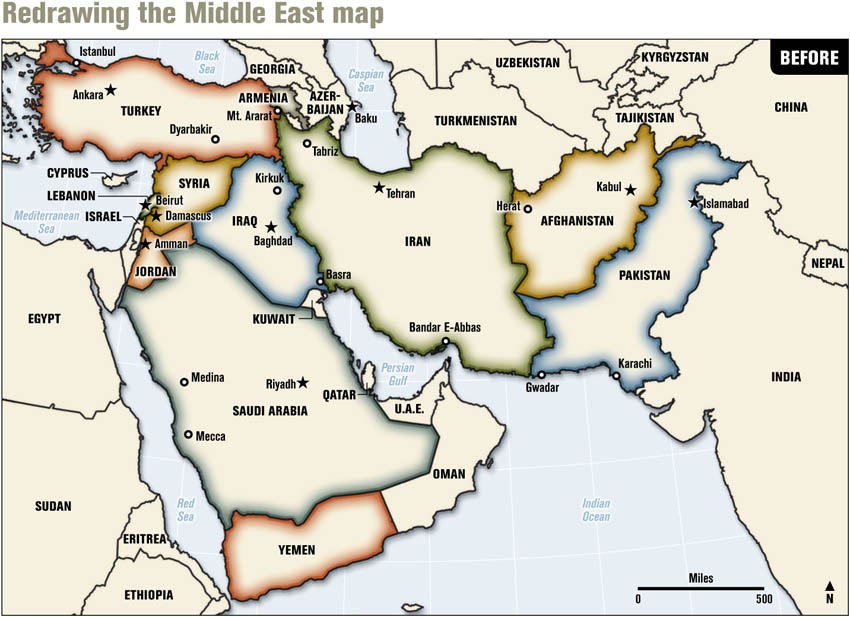

THE LOSERS MEET......AGAIN!
"Worried that the 34-day war between Hezbollah and Israel has given a boost to radical militants and their Syrian and Iranian backers, Arab ministers were expected to review a plan to channel funds to Lebanon and to revive the stalled Middle East peace process with Israel.
Diplomats said Arabs want to counter a flood of money that is believed to be coming from Iran to Hezbollah to finance reconstruction projects. An estimated 15,000 apartments were destroyed and 140 bridges hit by Israeli bombardment in Lebanon, along with power and desalination plants and other key infrastructure."
---
THE "PEACE PROCESS" IS DEAD; LONG LIVE THE "PEACE PROCESS"!
These pathetic losers run from one meeting to the next trying to prove that, since they meet, hence they exist. At the beginning of the Israeli attack on Lebanon, the same group of useless ministers met in Cairo. Unable to come up with anything, not even symbolic, in support of Lebanon, their closing press conference turned into an attempt to quiet the angry reporters who bombarded them with heated questions and demanded some action. The head of the so-called Arab League, Amr Mousa, could only say, "The peace process is dead!" Now the "peace process" is being resurrected from the grave. These Arab ministers can work miracles indeed.
Back to Roots of the Palestinian Problem
By Salman Abu Sitta
(Dr. Salman Abu Sitta researches and writes about Palestinian refugees and their right to return to their homes and land. He was a member of the Palestine National Council for more than 20 years. Currently, Dr. Abu Sitta is the president of the Palestine Land Society. He presented this talk at the Fourth International Convention of Al-Awda, the Palestine Right of Return Coalition, in San Francisco on July 14. It was the keynote presentation on the convention’s opening night.)
"Balfour was fully aware of what he was doing. True to his colonial heritage, he said in 1918:
"For in Palestine we do not propose even to go through the form of consulting the wishes of the present inhabitants of the country. … [Zionism is] of far profounder impact than the desires and prejudices [not the rights] of the Arabs who inhabit this ancient land.
He said the Arabs are "wholly barbarous, undeveloped and unorganized black tribes."
Nine decades before George Bush came up with his campaign for "democracy" for the whole world, the Palestinians started their campaign for democracy. When they petitioned, agitated and revolted for their cause, Winston Churchill, the British colonial secretary, told them in 1921:
"Step by step we shall develop representative institutions leading to full self-government, but our children’s children will have passed away before that is accomplished."
They are still waiting. They have not given up.
By 1948, with the collusion of the British Mandate, the Zionists had failed to acquire—even by money, Zionist-inspired laws and economic pressure—more than 5.5 percent of the land of Palestine. But they succeeded in increasing the Jewish population from nine percent to thirty percent of the total population and they trained an army of 120,000, or 20 percent of the Jewish immigrant population. (Compare this with a normal country where the army makes up one to two percent of the population). This Zionist army was ready to pounce on Palestine."

HOLD ON TO THE LAND!

Arab puppet ruler to Palestinian "government":
"Be firm and hold on to the land! We are all behind you!"
Where are the Achievements of This War?
"Thus spoke a commander of the Lebanese army, the deployment of which along the border is being celebrated by the Olmert-Peretz government as a huge victory, because this army is supposed to confront Hizbullah and disarm it. Israeli commentators have created the illusion that this army would be at the disposal of the friends of the US and Israel in Beirut, such as Fuad Siniora, Saad Hariri and Walid Jumblatt.
But not only the balloon of the redeeming Lebanese army has been punctured. The same has happened to the multi-colored second balloon that was to serve as an Israeli achievement: the deployment of the international force that would protect Israel from Hizbullah and prevent its re-armament. As the days pass, it becomes increasingly clear that this force will be, at best, a mishmash of small national units, without a clear mandate and "robust" capabilities. The commando raid carried out by our army today, in blatant violation of the cease-fire, will certainly not attract more international volunteers for the job.
So what remains of all the "achievements" of this war? A good question.
All these are serious questions, and it is certainly necessary to clear them up. But it is more important to investigate the roots of the war:
* What made the trio Olmert-Peretz-Halutz decide to start a war only a few hours after the capture of the two soldiers?
* Was it agreed with the Americans in advance to go to war the moment a credible pretext presented itself?
* Did the Americans push Israel into the war, and, later on, demand that it go on and on as far as possible?
* Was it Condoleezza Rice who decided in fact when to start and when to stop?
* Did the US want to get us entangled with Syria?
* Did the US use us for its campaign against Iran?
The war against the Palestinian people is being waged in order to keep the "settlement blocs" and annex large parts of the West Bank. The war in the North was waged, in fact, to keep the settlements on the Golan Heights.
All over Israel, they are already talking about the "Next Round", the war that will at long last eliminate Hizbullah and punish it for besmirching our honor. That has become, so it seems, a self-evident matter. Even Haaretz treats it as such in its editorials.
In the South, they don't speak about the "Next Round" because the present round is endless."
Israel warns Fatah could vanish from Gaza
"Fatah is in an extremely difficult situation," a senior government official quoted Shin Beth chief Yuval Diskin as saying during the weekly cabinet meeting Sunday. "It has never been at such a low point.
"If nothing positive happens soon, the chances are high that within a matter of months Fatah could disintegrate and disappear from the Gaza Strip," he said.
Fatah was routed by the Islamist Hamas movement in a January election and since then, Hamas and Fatah loyalists have been periodically involved in deadly internecine clashes."
---
The issue is very simple: Fatah has abandoned armed struggle, sold out most Palestinian rights, has become a tool for the US and the traitorous Arab regimes and is led by a bunch of old and corrupt men who have enriched themselves while Palestinians in the refugee camps die daily from Israeli raids with basics for daily survival missing. Fatah with its stooge-in-chief Abbas still pursues a fictitious "peace process," which itself knows does not exist. Is it any wonder that Fatah is almost finished? Especially in light of the impressive model that Hizbullah is demonstrating.

Fallout of Failed Israeli Raid
"Al-Sharq al-Awsat reports that the Israeli raid into the Biqa' was aimed at kidnapping a prominent Hizbullah leader, or possibly recovering captured Israeli soldiers. The official Israeli cover story is that they were preventing the supply of arms to Hizbullah by Syria. But that makes no sense. Why would you send a special ops team into a village near Baalbak to stop truck shipments? You would just mount an air raid on the truck. You send in a team of men to capture someone.
Why would the Israelis risk reopening the war? The Olmert government at the moment looks like a loser, especially to the Israeli public, and needs to pull off a big win. What if they could capture a leader like Yazbek? Or free the 2 captured Israeli soldiers? All of a sudden they would be heroes, not losers. So the impetus is there for further adventurism.
The raid, instead of rehabilitating Olmert, was another fiasco. Hizbullah appears effectively to have fought it off, killing an Israeli officer and inflicting injuries on others in the party. Shaikh Yazbek remains at large, and Hizbullah is passing out crisp $100 bills to Lebanese Shiites, getting credit for being more well organized than the government. Kofi Annan condemned it. Siniora threatened to suddenly become less cooperative. It did not exactly help Bush recruit more troops from France for the south. France wants a peace keeping mission, not a hot war that might engulf its soldiers, and Olmert just confirmed Paris's suspicions that the French are being suckered into a combat situation. Olmert wants to be Yitzhak Rabin, who presided over the Entebbe operation. But he instead keeps coming up with Operation Eagle Claw and more of a Jimmy Carter image (circa 1979) inside Israel."