Monday, January 8, 2007

Condoleezza And The Palestine Contra


No-goodniks and the Palestinian shootout

Over the past 12 months, the US has supplied guns, ammunition and training to Palestinian Fatah activists to take on - and bring down - Hamas in the streets of Gaza and the West Bank. Egypt and Jordan, which assisted with the arms deliveries, are fast cooling to the idea, as are Israel and many in the Pentagon. Yet the architect of the project, Elliott Abrams - the last neo-con standing - is winning his fight to provide the Palestinians with enough rope to, he hopes, hang themselves

An Important Article
By Mark Perry and Alastair Crooke
Asia Times

"US Deputy National Security Adviser Elliott Abrams - whom Newsweek recently described as "the last neo-con standing" - has had it about for some months now that the United States is not only not interested in dealing with Hamas, it is working to ensure its failure.

In the immediate aftermath of the Palestinian elections won by Hama last January, Abrams greeted a group of Palestinian businessmen in his White House office with talk of a "hard coup" against the newly elected Hamas government - the violent overthrow of its leadership with arms supplied by the US.

While the businessmen were shocked, Abrams was adamant - the US had to support Fatah with guns, ammunition and training, so that it could fight Hamas for control of the Palestinian government.

While those closest to him now concede that Abrams' words were issued in a moment of frustration, the "hard coup" talk was hardly just talk. Over the past 12 months, the United States has supplied guns, ammunition and training to Palestinian Fatah activists to take on Hamas in the streets of Gaza and the West Bank.

A large number of Fatah activists have been trained and "graduated" from two West Bank camps - one in Ramallah and one in Jericho. The supplies of rifles and ammunition, which started as a mere trickle, have now become a torrent (the Israeli daily Ha'aretz reports that the US has designated an astounding US$86.4 million for Abu Mazen's - Palestinian President Mahmoud Abbas' - security detail), and while the program has gone largely without notice in the US press, it is openly talked about and commented on in the Arab media - and in Israel.

Thousands of rifles and bullets have been poring into Gaza and the West Bank from Egypt and Jordan, the US administration's designated allies in the program.

At first, it was thought, the resupply effort (initiated under the guise of "assist[ing] the Palestinian Authority presidency in fulfilling PA commitments under the roadmap to dismantle the infrastructure of terrorism and establish law and order in the West Bank and Gaza", according to a US government document) would strengthen the security forces under the command of Abbas.

Officials thought that the additional weapons would easily cow Hamas operatives, who would meekly surrender the offices they had only recently so dearly won. That has not only not happened, but the program is under attack throughout the Arab world - particularly among America's closest allies.

While both Egypt and Jordan have shipped arms to Abbas under the Abrams program (Egypt recently sent 1,900 rifles into Gaza and the West Bank, nearly matching the 3,000 rifles sent by the Jordanians), neither King Abdullah of Jordan nor Egyptian President Hosni Mubarak believe the program will work - and both are now maneuvering to find a way out of it.

"Who can blame them?" a Bush administration official told the authors recently. "While Mubarak has no love for Hamas, they [Egyptians] do not want to be seen as bringing [it] down. The same can be said for Jordan."

A Pentagon official was even more adamant, cataloguing official Washington's nearly open disdain for Abrams' program. "This is not going to work and everyone knows it won't work. It is too clever. We're just not very good at this. This is typical Abrams stuff."

This official went on to note that "it is unlikely that either Jordan or Egypt will place [its] future in the hands of the White House. Who the hell outside of Washington wants to see a civil war among Palestinians? Do we really think that the Jordanians think that's a good idea? The minute it gets under way, Abdullah is finished. Hell, 50% of his country is Palestinian."

Senior US Army officers and high-level civilian Pentagon officials have been the most outspoken internal administration critics of the program, which was unknown to them until mid-August, near the end of Israel's war against Hezbollah. When then-secretary of defense Donald Rumsfeld learned about it, he was enraged, and scheduled a meeting with President George W Bush in an attempt to convince him the program would backfire.

Rumsfeld was concerned that the anti-Hamas program would radicalize Muslim groups among US allies and eventually endanger US troops fighting Sunni extremists in Iraq. According to these authors' reports, Rumsfeld was told by Bush that he should keep his focus on Iraq, and that "the Palestinian brief" was in the hands of the secretary of state. After this confrontation, Rumsfeld decided there was not much he could do.

The Abrams program was initially conceived last February by a group of White House officials who wanted to shape a coherent and tough response to the Hamas electoral victory of January. These officials, the authors were told, were led by Abrams, but included national security advisers working in the office of the vice president, including prominent neo-conservatives David Wurmser and John Hannah. The policy was approved by Secretary of State Condoleezza Rice.

The president then, the authors were told, signed off on the program in a Central Intelligence Agency "finding" and designated that its implementation be put under the control of the CIA. But the program ran into problems almost from the beginning. "The CIA didn't like it and didn't think it would work," the authors were told in October. "The Pentagon hated it, the US Embassy in Israel hated it, and even the Israelis hated it." A prominent American military official serving in Israel called the program "stupid" and "counter-productive".

The program went forward despite these criticisms, however, though responsibility for its implementation was slowly put in the hands of anti-terrorism officials working closely with the State Department. The CIA "wriggled out of" retaining responsibility for implementing the Abrams plan, the authors have been told.

Since at least August, Rice, Abrams and US envoy David Welch have been its primary advocates, and the program has been subsumed as a "part of the State Department's Middle East initiative". US government officials refused to comment on a report that the program was now a part of the State Department's "Middle East Partnership Initiative", established to promote democracy in the region. If it is, diverting appropriated funds from the program for the purchase of weapons may be a violation of congressional intent - and US law.

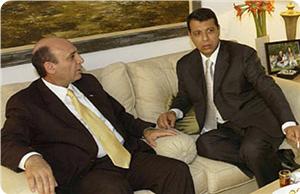
The recipients of US largesse have been Abbas and Mohammad Dahlan, a controversial and charismatic Palestinian political leader from Gaza. The US has also relied on advice from Mohammad Rashid, a well-known Kurdish/Palestinian financier with offices in Cairo. Even in Israel, the alliance of the US with these two figures is greeted with almost open derision.

While Prime Minister Ehud Olmert has hesitantly supported the program, many of his key advisers have made it clear that they want to have nothing to do with starting a Palestinian civil war. They also doubt whether Hamas can be weakened. These officials point out that since the beginning of the program, Hamas has actually gained in strength, in part because its leaders are considered competent, transparent, uncorrupt and unwilling to compromise their ideals - just the kinds of democratically elected leaders that the Bush administration would want to support anywhere else in the Middle East.

Of course, in public, Rice appears contrite and concerned with "the growing lawlessness" among Palestinians, while failing to mention that such lawlessness is exactly what the Abrams plan was designed to create. "You can't build security forces overnight to deal with the kind of lawlessness that is there in Gaza, which largely derives from an inability to govern," she said during a recent trip to Israel.

"Their [the Hamas-led PA] inability to govern, of course, comes from their unwillingness to meet international standards." Even Middle East experts and State Department officials close to Rice consider her comments about Palestinian violence dangerous, and have warned her that if the details of the US program become public, her reputation could be stained.

In fact, Pentagon officials concede, Hamas' inability to provide security to its own people and the clashes that have recently erupted have been seeded by the Abrams plan. Israeli officials know this, and have begun to rebel. In Israel, at least, Rice's view that Hamas can be unseated is now regularly, and sometimes publicly, dismissed.

According to a December 25 article in Ha'aretz, senior Israeli intelligence officials have told Olmert that not only can Hamas not be replaced, but that its rival, Fatah, is disintegrating. Any hope for the success of a US program aimed at replacing Hamas, these officials argued, will fail. These Israeli intelligence officials also dismissed Abbas' call for elections to replace Hamas - saying that such elections would all but destroy Fatah. Ha'aretz reported:
Shin Bet chief Yuval Diskin told the cabinet Sunday [December 24] that should elections be held in the Palestinian Authority, Fatah's chances of winning would be close to zero. Diskin said during Sunday's weekly cabinet meeting that the Fatah faction is in bad shape, and therefore Israel should expect Hamas to register a sweeping victory.
Apparently, Jordan's King Abdullah agrees. On the day that article appeared, December 25, Abdullah kept Abbas waiting for six hours to see him in Amman. Eventually, Abdullah told Abbas that he should go home - and only come to see him again when accompanied by Hamas leader and Palestinian Prime Minister Ismail Haniyeh.

Most recently, Saudi officials have welcomed Haniyeh to their country for talks, having apparently made public their own views on the US program to replace Hamas. And so it is: one year after the election of Hamas, and one year after Abrams determined that sowing the seeds of civil war among a people already under occupation would somehow advance America's program for democracy in the Middle East, respect for America's democratic ideals has all but collapsed - and not just in Iraq."

***


To put what is happening in perspective, see this item published in February, 2005 by the Washington Post:

Iran-Contra Figure to Lead Democracy Efforts Abroad.

"Elliott Abrams, who pleaded guilty in 1991 to withholding information from Congress in the Iran-contra affair, was promoted to deputy national security adviser to President Bush. Abrams, who previously was in charge of Middle East affairs, will be responsible for pushing Bush's strategy for advancing democracy."

One last chance for sanity in Iraq

The United States is not Rome, and strengths and weakness are no longer measured alone by a nation's number of combatants. Yet President George W Bush's "new" Iraq strategy will call for thousands more troops, when withdrawal is the only viable option

By Ramzy Baroud
Asia Times

"....Disgruntled Democrats are not alone in objecting to Bush's imprudent proposal; the military leadership also finds it reckless and futile. Therefore, top army brass Generals George Casey and John Abizaid, who are deeply skeptical regarding increasing troop numbers in Iraq, are on their way to be replaced by war supporters.....

Moreover, the president reportedly intends to endorse William Fallon to head US Central Command. The choice of Fallon, according to Tim Reid, The Times of London's reporter in Washington, as the top military commander in the Middle East - to replace Abizaid - came as a big surprise to the Pentagon, for the former is a naval officer with little experience in that region.

But things will fall neatly in place when one considers that Bush's choice has more to do with Iran than repairing the damage done in Iraq: "Any mission against Tehran would rely heavily on carrier-based aircraft and missiles from the Persian Gulf," according to The Times, and the expertise of Fallon is most needed in that type of military scenario....

Most of the new troops will be positioned in Sunni areas in Baghdad and al-Anbar province, seen as the heart of the resistance. Only a naive person would argue that such a stratagem would lead to anything other than greater bloodshed and further enlivening and validating the so-called insurgents.

Although the "Sunni insurgency" remains the prime target of the US military in Iraq, there is a growing realization among US officials and war generals that the unruly Shi'ite militias and their death squads are a greater cause of instability and violence.

Ironically, the rise of the Shi'ite militias was an early US strategy that put the many Shi'ite factions on a crash course with the Sunni resistance: thus dividing and weakening the Iraqis and lowering the risk of American casualties.

Now that the Iraqi army and police are composed mostly from those same militant thugs, many Iraqis find themselves victimized by their supposed national army and police force. Those who are expecting Iraqis to "take responsibility for their future" seem oblivious to the fact that the future of Iraq is most bleak under the current US-devised sectarianism where Sunnis are murdered with impunity and Shi'ites are blown up in their markets.

The humiliating execution of former Iraqi president Saddam Hussein at the hands of masked Shi'ite guards purporting to be an executive arm of a legitimate government was indeed the last attestation that will forever categorize the ongoing strife in Iraq as one between Shi'ite and Sunni, the former allied to invading foreigners and the latter fighting for mere survival...."

Many more sons will die while the Democrats do nothing to stop the war


They have failed to take on the principal reason they were elected and, tragically, the US public is unlikely to force them to

Gary Younge
Monday January 8, 2007
The Guardian

"........In an attempt to intervene between the supine and the stubborn, the Iraq Study Group last month offered Bush a stern rebuke - but also a way out. This week it will receive his response as he plans to rebuff popular opinion, political opposition and establishment advice and call for a "surge" of between 20,000 and 40,000 troops in Iraq to "stabilise" the situation. The word surge, like every other premise for this war, is misleading. It suggests a brief increase when, in fact, his advisers have told him the extra troops would have to be there for at least 18 months.

"Clearly, this is not a move to shift public opinion," explains Gelpi. "The only thing that Bush can do to turn around public opinion is turn around the situation on the ground. It's a gamble. It's his last chance. This is about his legacy." As such, it poses a clear challenge to the Democratic Congress's legitimacy and to America's democratic political culture.

For if the Democratic Congress is unwilling to use any means at its disposal to fulfil its democratic mandate, then it will be left to the public to make their displeasure known. It is two years and tens of thousands of lives, some of them American, before the next presidential election. The American people clearly don't want this. A CBS poll last month showed that 18% wanted to see an increase in troop levels compared with 59% who want them either decreased or withdrawn completely. The question is: what are they going to do about it?

The tragic answer is probably nothing. For while opposition to the occupation is clearly broad, its depth is more difficult to fathom. "It's rare when people seriously publicly engage," says Leslie Cagan, the national coordinator of the largest anti-war organisation, United for Peace and Justice. "They watch it on TV, they read about it in the newspapers. They get angry, but that doesn't necessarily mean they engage. So it's difficult to know the depth of feeling."

We have been here before. Sensing the unpopularity of the war in Vietnam, Nixon stood for the presidency in 1968 claiming he had a secret plan to end the conflict. It was so secret the Vietnamese hadn't even heard of it. There was no doubt that feelings ran deep then, but it would be another seven years before American troops withdrew. "How do you ask a man to be the last man to die for a mistake?" a young John Kerry asked the Senate foreign relations committee in 1971. We have long known it was a mistake. Sadly, the last person to die for it is still a long way off. "

Maliki Is Threatening Countries That Condemned The Lynching
By Naser Jafari

Maliki's Protectors Starting Another Gestapo Sweep In Baghdad


(Click on to enlarge)

How A Sectarian Government Inflames More Sectarianism

From Juan Cole:

"Al-Zaman reports in Arabic on the new security plan for Baghdad put forth by PM al-Maliki. Musa Abu Tawq and Ali al-Musawi write that some members of parliament have denounced the plan as unconstitutional because parliament has never been given the opportunity to vote on it. MP Hussein al-Faluji of the Iraqi Accord Front (Sunni religious)insisted that the plan must be presented to parliament.

Others are criticizing the plan because it concentrates on Sunni West Baghdad and exempts Shiite Sadr City in the east. Members of parliament warned that this lack of even-handedness would exacerbate civil conflict rather than ending it. Kurdish politician Mahmud Osman objected to the planned use of Kurdish Peshmerga fighters who are in Iraqi army units, saying he worried that it might provoke fighting between Arabs and Kurds. He admitted that the plan had been approved by President Jalal Talabani and the leader of the Kurdistan Regional Government, Masoud Barzani. Three Iraqi army brigades are expected to head down from northern Iraq to the capital, two of them Kurdish. MP al-Faluji also said that the use of the Peshmerga should be presented to parliament for its approval.

Al-Zaman maintains that militiamen [a code word for the Shiite Mahdi Army] attacked the Baghdad district of al-Rahmaniya on sunday, killing 3 persons and wounding 10 among locals who were defending their homes. The militiamen set fire to 10 dwellings. At the same time, the Mahdi Army in Sadr City has begun a conscription drive to expand its ranks. Every family with a male between the ages of 15 and 45 is being forced to relinquish him to the militia."

Sunday, January 7, 2007


This Is What Over 140,000 U.S. Troops Control In Iraq
The Green Republic Of Maliki

نداء لكل الشرفاء

د.إبراهيم حمّامي

لكل شرفاء الوطن، لكل أبناء الشعب الفلسطيني الصابر المصابر

لم يعد هناك مجال للتأويل والتفسير، لم يعد هناك وقت لتصفيف الكلمات والعبارات، لم يعد الوضع يحتمل المجاملة والدبلوماسية والسياسة والتكتيك، فقد عزم عبّاس ودحلان ومن معهما وبشكل لا لبس فيه على توجيه أجهزتهم لضرب الشعب الفلسطيني وإرادته ومقاومته، وأصدروا لذلك القرارت والمراسيم وتحت مسميات عدة ليس أقلها منع الفوضى والفلتان الأمني الذي كان ومازال صنيعتهم، وهاهي الحملة قد بدأت للنيل من صمود شعبنا إرضاءً لحكام تل أبيب وحفاظاً على امتيازاتهم من بطاقات خاصة ووكالات وعمولات وصفقات لبيع كل شيء حتى الشرف والكرامة.

لقد حول هؤلاء شعبنا إلى مجرم إرهابي يقوم بممارسة العنف والإعتداء، وكأن الشعب الفلسطيني هو الذي يقوم بالإجتياحات والإعتقالات والإغتيالات وباقي الممارسات الإحتلالية، التي لم يحرك عبّاس ودحلان ساكناً لمواجهتها وحماية شعبنا منها، بل لم يجرؤوا حتى على مجرد التنديد بها أو إدانتها، ليتلقى هؤلاء الصفعة تلو الصفعة من الاحتلال وجنرالاته باستعذاب غريب وخضوع وخنوع تستحي منه الأرانب، ليفردوا ريشهم الآن في ضرب شعبنا والاستئساد عليه.

قوانين عباس وصلاحياته التي يتبجح هؤلاء بها ويهددون بمعاقبة من يخرقها، هي نفسها الذي زجت بأبناء شعبنا في زنازين الوقائي والاستخبارات، وعباس ومن معه هم من أطلقوا العنان للمجرمين الكبار ممن نهبوا خيرات البلاد ليستوزروا ويعينوا سفراء، وهم أنفسهم من رفضوا حتى الآن التحقيق في أسباب مرض ووفاة عرفات، وهم من برأ عصابة الأسمنت، وهم من يغض الطرف عن الاعتقالات بدون محاكمات، وهم الذي يتجاهلون الزعران من منتسبي الحزب الحاكم كالحاكم بأمره في جنين، وهم الذين عجزوا عن إنصاف مظلوم أو مغبون، فعن أي قانون يتحدث هؤلاء، وعن أي سلطة وسيادة وهم لا يملكون قرار نفسهم، وعن أي وحدانية والاحتلال يصول ويجول على مرأى ومسمع من حجرات نومهم؟

ترى إن طُبق هذا القانون الوهمي الذي أصبح ككلمة حق أريد بها باطل، فكم سيزج في السجون الأوسلوية من عباد، وكم ضحية سنعد على أيدي هؤلاء الجلادين، وكم شهيداً سيسقط برصاص المرتزقة حرّاس المستوطنات من قوات لحد الجديدة التي تقف متفرجة أمام ممارسات الاحتلال الذي تقوم بحمايته؟

لقد أصبح هم هذه الزمرة تنفيذ أوامر المحتل دون عناء تفكير، ودون خجل، ودون حتى تقديم المبررات، وأصبح شغلهم الشاغل تجريم شعبنا ومعاقبته على تهمة عدم القبول بالاحتلال، لتمرير مخططاتهم التسووية الجاهزة، فبعد كل تحقير للشعب ومقاومته تنهال المساعدات العسكرية للقوات اللحدية وتنفق عشرات الملايين من الخارج لدعمهم.

ما تسعى إليه زمرة الفساد والإفساد هو مواجهة مفتوحة تنتهي بتطويع وتركيع هذا الشعب وتدجينه كما يتوهمون، والقضاء على كل من يرفض نهج أوسلو من فصائل ومجموعات وأفراد، وعلى رأسها جميعاً كتائب شهداء الأقصى التي يراد لها أن تدخل حظيرة أوسلو طيعة مطيعة وبأي ثمن، فبعد العرض العباسي المغري قبل عام ونصف بمنح قادة الكتائب 100000 دولار لكل منهم، يزيد عباس ودحلان أنه يجب حل مشاكلهم الاجتماعية والاقتصادية ودمجهم في الأجهزة الأمنية، وكأن دافعهم كان الفقر والعازة وانخفاض المستوى الاجتماعي، وكأنما يقول أنتم بنادق للإيجار وسنستأجركم، أي مهانة تلك وأي تسفيه هذا؟

هذا نداء لكل حر شريف أينما كان وفي أي منصب هو: لنرفض جميعا مخطط الاحتلال الذي تسعى زمرة أوسلو لتطبيقه، بضرب بعضنا ببعض، ليتحول الصراع إلى حرب داخلية لا منتصر فيها، وليقف الاحتلال متفرجاً عن بعد، هانيء البال بتحقيق مراده، وبدون خسائر من جانب المحتل، إذ أن السلطة الواحدة التي تريد فرض هيبة القانون وانهاء الفلتان (..) تقوم بذلك وعلى أكمل وجه، حتى وان كانت السلطة تلك لا يملك رئيسها قرار دخول المرحاض دون اذن من الاحتلال، وان تجرأ وأعلن أنه سيطلق سراح أحد المعتقلين، كما حدث مع سعدات، فلا بأس من أن يقوم موفاز وباقي جنرالاته بتذكير فخامة الرئيس أنه لا يملك حق اصدار مثل هذا القرار.

هذا نداء لكل مواطن وفرد أن يعلنها وبصراحة: لا وألف لا لتوجيه البنادق والرصاص نحو صدور أبنائنا، لنرفض جميعاً على اختلاف مشاربنا وألواننا أن تسيل شلالات الدم الفلسطينية إرضاءاً لهذا الطرف أو ذاك.

أخي في أجهزة السلطة الأمنية، هل تقبل أن تتحول لنائب عن الإحتلال في مواجهة أبناء شعبك؟ هل أصبح العدو هو ابن شعبك من أي لون آخر كان، وهل جهازك الأمني هو لعميل مجرم كدحلان ليتحكم بكم وبقراراكم؟ هل تقبل أن تواجه أخاك أو ابن عمك أو جارك؟ هل ستقبل بأن تقتحم منازل الآمنين بحثاً عن السلاح غير الشرعي كما يدعي قادتك، هل ستقبل بأن تكون أداة تنفيذ في يد من لا يخاف الله؟ أخي فكر جيداً، وارفض أن تكون طرفاً في المؤامرة، استقل، تمارض، تقاعد، افعل ما شئت، لكن لا توجه رصاصك نحو أبناء شعبك.

أخي الفرد والعنصر والشرطي والجندي والضابط، لا تخشى على راتب أو رتبة غمست بالذل والمهانة، ولا تقبل أن يأكل أولادك من ثمن دماء شعبك سحتاً إلى يوم الدين، ارفض أوامر الظلاّم والعملاء، كن رجلاً، فالرجال وقت الشدائد والمحن وهذا ابتلاء وامتحان، أخي ابن فلسطين فكر ثم فكر ثم قرر، لكن لا تكن أبداً مع من سيلعنهم التاريخ.

أخي وابن وطني، ما سيحدث إن أقررتموه وكنتم طرفاً فيه تتحملون مسؤوليته تماماً كمن عذّب ويعذب في غياهب معتقلات الأمن الوقائي والإستخبارات، أو كمن يطلق النار من فرقة الموت، أو يقتحم منازل الآمنين، ومنع الإقتتال والفتنة مسؤولية وواجب وأمانة، لن يفيدك رؤساؤك شيئاً يوم تقع الواقعة، فمسؤليتك قائمة لا محالة كمجرم حرب ان حوكمت يوماً على ما ستقترفه ان لم تتوقف الآن، فإن سقطت مقتولاً وأنت تهاجم أبناء شعبك فلن يفيدك هؤلاء شيئاً، ألم تقرأ قوله تعالى في سورة البقرة.

"إِذْ تَبَرَّأَ الَّذِينَ اتُّبِعُواْ مِنَ الَّذِينَ اتَّبَعُواْ وَرَأَوُاْ الْعَذَابَ وَتَقَطَّعَتْ بِهِمُ الأَسْبَابُ. وَقَالَ الَّذِينَ اتَّبَعُواْ لَوْ أَنَّ لَنَا كَرَّةً فَنَتَبَرَّأَ مِنْهُمْ كَمَا تَبَرَّؤُواْ مِنَّا كَذَلِكَ يُرِيهِمُ اللّهُ أَعْمَالَهُمْ حَسَرَاتٍ عَلَيْهِمْ وَمَا هُم بِخَارِجِينَ مِنَ النَّارِ "،

نعم لن يفيدوك بشيء لا في الدنيا ولا فى الآخرة، فإثمك على نفسك، ولن تفيد الحجج والذرائع أنك عبد مأمور ينفذ الأوامر فالمسؤولية فردية أولاً وأخيراَ.

أبناء شعبي المخلصين، في فلسطين أرض الرباط، أرزاقكم ليست بيد السلطة أو عبّاس أو دحلان، بل بيد من خلقكم وسوّاكم وكتب ما لكم وما عليكم يوم ولدتكم أمهاتكم، اتركوا مناصبكم ومواقعكم وارفضوا تنفيذ أوامر الظلمة ممن ارتضوا أن يكونوا أداة لتنفيذ رغبات المحتل، ارفضوا العمل تحت امرة المجرمين والعملاء، لا تخشوا من فقر أو عوز، أو من فقدان منصب أو امتياز، فموقفكم هو الشرف والامتياز، ومن يرزق بلا حساب لا يغفل ولا ينام.

بترككم مواقعكم ورفضكم التعامل مع المفسدين ستحولون دون تحول مجتمعنا إلى مجتمع متصارع في غابة من الرصاص وسفك الدماء بحجة الشرعية، وستمنعوا حدوث الكارثة التي يتمناها أعداء هذا الشعب، فإن لم تفعلوا فما الفرق بينكم وبين عملاء جيش لحد الذين وقفوا في وجه شعبهم لينتهي بهم المطاف في مزابل تل أبيب والتاريخ، بالله عليكم ما الفرق؟

أبناء فلسطين، أنتم أمام خيارين لا ثالث لهما، إما أن تساهموا في مجزرة بشعة يتم الإعداد لها باسمكم لتريح الإحتلال وتقض مضاجعنا، أو أن تمنعوا هذه المأساة بأن تقفوا وقفة عز وفخار فتحقنوا دماؤكم ودماء أهلكم وذويكم، ليكن اختياركم اختيار الحق والعدل، ولتعلنوا بكل ما أوتيتم من قوة، لا لمحاولات تحويلنا إلى أكياس رمل وحراس للمستوطنات، لا لتزوير ارادتنا، لا لتسفيه مقاومتنا وتجريمها، لا لمنح الإحتلال صك براءة من جرائمه، لا لتوجيه الرصاص نحو أبناء شعبنا، ولا لتحويلنا إلى قطعان غنم تنفذ أوامر الظلمة.

ليس المطلوب بكثير، وليس المطلوب توجيه البنادق نحو رموز السلطة، لكن المطلوب عصيان الأوامرالتي قد تصدر لضرب شعبنا وقواه، وهذا يحتاج إلى جهد جماعي وتكافل على أعلى مستوى، سبق وأن نجحنا فيه في إنتفاضة الحجارة الأولى، وعلى أسس نبذ الأنانية ومد يد العون للغير لنتحول لمجتمع متراص متكاتف يواجه ما قد تقوم به عصابات السلطة التي ارتضت تنفيذ الأوامر ضد شعبها في محاولة لكسر إرادتنا، وإضعاف عزيمتنا بل ومعاقبتنا.

إنما النصر صبر ساعة، والنصر لا يكون فقط في ميادين الوغى، لكن النصر ايضاً على النفس والهوى والمغريات من مناصب ورواتب وحوافز وامتيازات.

زمرة أوسلو اختارت وارتضت طريقها ونهجها المنفذ لرغبات الإحتلال، وهاهي بدأت هجومها على كل ما هو فلسطيني دون استثناء، وتحت نفس المسميات والذرائع من اصلاح وفرض سيادة القانون التي تعني في عرف أوسلو الإبقاء على نفس الرموز في مواقعها أو في مواقع جديدة وبنفس الصلاحيات والإمتيازات ولو على حساب دماء شعبنا وتضحياته، فهل نختار نحن أيضاً طريقنا ونهجنا؟

أبناء فلسطين

هذا النداء لكم جميعاً: أفشلوا مخططات الفتنة، لا تسمحوا بإراقة دماء شعبكم، لا تتحولوا إلى جزارين لشعبكم، لا تقبلوا بتجريم شعبكم، لا تحموا المحتل وتنوبوا عنه، قاطعوا، ارفضوا، عارضوا، تمردوا، اعصوا، افعلوا ما شئتم لكن لا توجهوا رصاصكم نحو اخوة لكم، ولا تكونوا طرفاً في خطيئة وجريمة لن يغفرها التاريخ.

إن كنا اليوم نطالب أبناء الأجهزة الأمنية بوقفة عز، فالشعب بكل فئاته مطلوب منه أن يتحرك ويقول كلمته، جماهير الشعب الفلسطيني برجالها ونسائها، بشيبها وشبابها، بصحيحها وسقيمها، مطالبة أن تنزل إلى الشوارع بقدها وقديدها، بمئات الألوف، وفي حركة جماهيرية سلمية لتحول دون تنفيذ مخطط الجبناء العملاء، ولتحافظ على خيارها وحقوقها.

إن السلبية اليوم هي مشاركة حقيقية في المخطط الذي يعد لتركيع شعبنا، لنقل كلمتنا ولنخرج جميعاً نفترش الأرض ونلتحف السماء، حتى نحسم الأمر لصالح الشعب وحقوقه، وليس لصالح أحد من البشر أو التنظيمات، إن الحركة الشعبية الجماهيرية هي الرد الحقيقي على كل من يحاول الاستفراد بالضفة الغربية تحت حماية ورعاية الاحتلال، ورد حقيقي يحسم الصراع لصالح من يستحق ألا وهو الشعب الفلسطيني الصابر المصابر.

صورة نضالنا تتشوه، وتعاطف العالم وشعوبه معنا بدأ يهتز، ومجرمو وسفاحو أوسلو كشروا عن أنيابهم، والمخطط القادم رهيب رهيب، وقد تكون هذه المواجهة الجولة الأخيرة في صراع الحق مع الباطل، فهل نبقى على الهامش ننتظر أن يقرر غيرنا عنا بعد أن تسيل دماءنا إرضاء للإحتلال؟

دور كل فرد اليوم هو أمانة سيسأل عنها، ولن ينفع بعد اليوم لوم ولا عتب، وإن وقعت الكارثة وسالت الدماء فكلنا خاسر، إلا المحتل! احسموا أمركم وشاركوا وبكل حضارة وبشكل سلمي تام في فرض إرادتكم بدلا من أن تفرض إرادة الغير عليكم، فإن تقاعسنا فلا نلومن إلا أنفسنا!

"وَاتَّقُواْ يَوْماً لاَّ تَجْزِي نَفْسٌ عَن نَّفْسٍ شَيْئاً وَلاَ يُقْبَلُ مِنْهَا عَدْلٌ وَلاَ تَنفَعُهَا شَفَاعَةٌ وَلاَ هُمْ يُنصَرُونَ"

اللهم إني قد بلغت اللهم فاشهد.

The Mangy Mouse That Thought It Has Roared

Condi’s Savage War on the Palestinians


An Excellent Piece
By Tony Karon

".... But any honest assessment will not fail to recognize that the increasingly violent conflict between Hamas and Fatah is not only a by-product of Secretary Rice’s economic siege of the Palestinians; it is the intended consequence of her savage war on the Palestinian people – a campaign of retribution and collective punishment for their audacity to elect leaders other than those deemed appropriate to U.S. agendas. Moreover, the fact that the conflict is now coming to a head is a product of Rice’s micromanagement of Palestinian President Mahmoud Abbas’s political strategy – against his own better instincts.

Rice’s siege strategy was premised on the belief that the economic torture of the entire Palestinian population would either force the Hamas government to chant the catechism of recognizing Israel-renouncing violence-abiding by previous agreements (again, Israeli leaders have to giggle at that one!) — or else, preferably, force the Palestinian electorate to recant the heresy of choosing Hamas as its government in the first place. Frustrated by the failure of this collective punishment to produce the desired results — and mindful of the need to quickly reorder Palestinian politics in order to satisfy the urgent need of the increasingly marginal Arab autocracies that Washington seeks to mobilize against Iran — she has stepped things up a notch, cajoling the hapless Abbas to take steps to toppled a government democratically elected only 11 months ago and beefing up the forces of the Fatah warlords dedicated to taking down Hamas in order to restore their own power of patronage......

Anyway, thanks to Conflicts Forum, we now know also that Elliot Abrams, the last of the Likudniks in senior Bush Administration positions, has spoken openly of the need for the U.S. to fund, arm and train Fatah activists to launch a “hard coup” against the elected Hamas government (Abrams, of course, is a veteran of Reagan -era Latin America policies, so he has some experience in these things.) This is more berserk social engineering from the neocon Likud crowd, and most of the U.S. government (as well as the Israelis) know that the extensive effort to promote a coup are doomed to fail, but fail bloodily.

Even Middle East experts and State Department officials close to Rice consider her comments about Palestinian violence dangerous, and have warned her that if the details of the U.S. program become public her reputation could be stained. In fact, Pentagon officials concede, Hamas’s inability to provide security to its own people and the clashes that have recently erupted have been seeded by the Abrams plan. Israeli officials know this, and have begun to rebel. In Israel, at least, Rice’s view that Hamas can be unseated is now regularly, and sometimes publicly, dismissed.....

Abbas is a man of good intention, but has no political base of his own. His power is derived from two constituencies: The remnants of a Fatah organization in steady decline over the past decade, and all but shattered by its defeat in the January 2006 elections, its only organized formations now being squadrons of gunmen answerable to various warlords, and the bureaucracy of the PA. And the United States, at least to the extent that it represents the only game in town for the realization of Abbas’s preferred strategy of patient diplomacy in pursuit of Palestinian statehood, because it’s the only party capable of delivering Israeli compliance. That, of course, is an abstraction, because no matter how capable the U.S. is of delivering Israeli compliance with a peace deal, it has no intention of doing so — not under the Bush Administration, and I have to say, I’m pessimistic about the chances of the Democrats doing it, either. Still, Abbas has no alternative but to jump through whatever hoops Washington places before him, because once he gives up hope of a U.S. mediated solution, his own political role is over.

Curiously enough, in this instance the interests of the U.S. Administration and those of the corrupt and self-serving Fatah warlords and bureaucrats coincide entirely. So entrenched was the sense in Fatah’s leadership of entitlement to rule over the Palestinians that its activist leadership had been pressing Abbas, from the moment the election results were announced, to move to topple Hamas. The fact that Fatah had been repudiated by the people would have demanded a thorough reorganization and democratization, a political “long march” in which the organization restored its standing among ordinary Palestinians by standing by them, working for them, listening to them and articulating their aspirations, as Hamas had done so successfully. Instead, the Fatah leadership demanded that Abbas make a coup and reinstate them, restoring their power of patronage.

And Condoleezza Rice, in her typically callous arrogance (remember those “birthpangs of a New Middle East” that shook Beirut last summer?) supported them: The Palestinian people would have to pay for their folly in defying her and electing Hamas, and would have to keep paying until they were ready to recant.

Abbas, still mindful of the national interest, sought a unity government with Hamas, based on a compromise document forged between Fatah and Hamas prisoners held in Israel. But Rice was having none of it — it didn’t require Hamas to grovel sufficiently and apologize for disrupting the Bush administration’s somnambulent stroll in Middle Eastern fantasy — and pressed Abbas to abandon the plan, and instead seek national unity on terms less acceptable to Hamas.

And then, together with the venal warlords and corrupt bureaucrats of Fatah, Rice finally prevailed on Abbas to threaten to call new elections — which he did three weeks ago, touching off the latest bout of violence. Hamas is unlikely to accept the call — why would it, since it has been forced on the Palestinians from outside — and any election held without their participation would be meaningless. No matter, the U.S. appears to be pressing ahead in forcing Abbas into a violent confrontation with Hamas. (Was it just a Freudian slip that Abbas made clear on Saturday in declaring Hamas’s militias in Gaza “illegal” that he had, earlier in the day been on the phone with Condi?) So, Gaza will bleed. And it will starve. And it will burn. Until the Palestinians are ready to rue the day they ever dared to choose their own leaders over those chosen for them by Rice, and Bush and Blair."

Lynching Won't Help U.S.

By Eric Margolis
Toronto Sun

"The bungling of Saddam's trial and execution hurts America's reputation.

Just when it seemed the Bush-Cheney Administration couldn't drag America's reputation any lower, it did.

The U.S. is now being rebuked around the globe for delivering President Saddam Hussein of Iraq to a Shiite lynch mob.

Washington professed surprise and denied blame for this disgusting, gruesome atrocity. But Saddam had been under U.S. guard in a U.S.-run prison in the U.S.-run Green Zone. What did U.S. officials think the mob of U.S.-backed Shiite thugs intended to do with Saddam? Give him a parade? ....

By contrast, the UN's new South Korean secretary general, Ban Ki-moon, who was shoe-horned into office by Washington, shamefully supported Saddam's execution even though the UN has long opposed the death penalty. An inauspicious start for a timid yes-man....

Good, responsible presidents know when to listen to their generals, and when to retreat from stalemated or lost wars. If Bush does send thousands more troops to Iraq, he will be risking more American lives in a desperate, 11th-hour political gamble to show voters he has a new plan to resolve the horrible mess in Iraq he created.

Twenty or thirty thousand more U.S. troops thrown into the cauldron of Iraq will make little military difference. One hundred fifty thousand or more might, but the U.S. has run out of soldiers.

If Bush pours more troops into this -- a lost war -- he will fall into the trap of many bad gamblers who double up their bets in a reckless effort to recoup previous losses.

Bush continues ignoring his generals while still heeding the siren song of the neo-cons around him. Their goal is not advancing America's interests, but totally destroying Iraq, then Iran.

Sen. John McCain, the current Republican presidential front-runner, has joined Bush and Cheney in urging more troops be sent to Iraq. All three have clearly lost touch with reality and their nation's basic values.

Call it Saddam's curse."

Images of Hanging Make Hussein a Martyr to Many


The N.Y. Times

"BEIRUT, Lebanon — In the week since Saddam Hussein was hanged in an execution steeped in sectarian overtones, his public image in the Arab world, formerly that of a convicted dictator, has undergone a resurgence of admiration and awe.

On the streets, in newspapers and over the Internet, Mr. Hussein has emerged as a Sunni Arab hero who stood calm and composed as his Shiite executioners tormented and abused him.

“No one will ever forget the way in which Saddam was executed,” President Hosni Mubarak of Egypt remarked in an interview with the Israeli newspaper Yediot Aharonot published Friday and distributed by the official Egyptian news agency. “They turned him into a martyr.”......

By standing up to the United States and its client government in Baghdad and dying with seeming dignity, Mr. Hussein appears to have been virtually cleansed of his past.

“Suddenly we forgot that he was a dictator and that he killed thousands of people,” said Roula Haddad, 33, a Lebanese Christian. “All our hatred for him suddenly turned into sympathy, sympathy with someone who was treated unjustly by an occupation force and its collaborators.”......

But shortly after his execution last Saturday, a video emerged that showed Shiite guards taunting Mr. Hussein, who responded calmly but firmly to them. From then on, many across the region began looking at him as a martyr.

“The Arab world has been devoid of pride for a long time,” said Ahmad Mazin al-Shugairi, who hosts a television show at the Middle East Broadcasting Center that promotes a moderate version of Islam in Saudi Arabia. “The way Saddam acted in court and just before he was executed, with dignity and no fear, struck a chord with Arabs who are desperate for their own leaders to have pride too.”.......

At the heart of the sudden reversal of opinion was the symbolism of the hasty execution, now framed as an act of sectarian vengeance shrouded in political theater and overseen by the American occupation......"

The Latest From The Brazilian Cartoonist Latuff


Latuff: The Curse of Saddam Hussein

Six armed wings: We will stop civil war by force

"Gaza - Six Palestinian armed wings on Sunday told a press conference in Gaza city that they would use force if they have to in order to stop civil war in the PA-run lands and held PA chief Mahmoud Abbas responsible for ramifications of his latest decision on the interior ministry's executive force.

They said that they would not allow "agents and traitors" to drag the Palestinian arena into the marsh of civil war even if "we have to chop off a number of treacherous elements and strike them with an iron first".

The armed wings of Hamas, popular resistance committees, Fatah and PFLP-GC vowed before the Palestinian people to remain the shield of national unity.

They expressed surprise at Abbas' decision outlawing the PA interior ministry's executive force, noting that it came in harmony with Israeli demands.

The armed wings urged members of all security apparatuses not to allow conspirators to drive a wedge between them and members of the executive force, renewing their support for that force. "

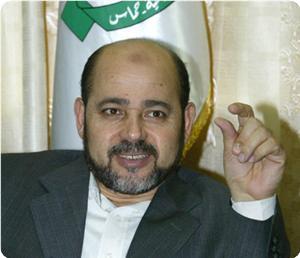
Abu Marzouk: Palestinian internal struggle over decision-making


"Damascus - Dr. Mousa Abu Marzouk, deputy political bureau chairman of the Hamas Movement, on Sunday affirmed that international and regional pressures along with internal struggle in the Palestinian arena aimed at controlling the national decision making.

He stressed that the Palestinian "national project" should be re-built in order to include all Palestine and not only the West Bank and the Gaza Strip.

The Hamas leader said that two programs were present in the Palestinian arena the first encouraged a settlement with Israel and the second championed resistance to grab rights, which is winning vast popularity.

He noted that many countries did not like the second program, adopted by Hamas, and thus tried all sorts of political, economic and diplomatic siege and other pressures in a bid to eliminate that option.

Abu Mazrouk opined that the chaotic events and security mess in the West Bank and Gaza fell in line with an American scheme aimed at spreading what they call "creative chaos".

He warned that Israel might exploit the current internal Palestinian differences to expand colonization of the West Bank and to judaize occupied Jerusalem. "

Hoyer and Dems Set Stage for Iran Attack


By Kurt Nimmo

"It only took Steny Hoyer a few hours to please his masters.

“Iran with nuclear weapons is unacceptable, new House Majority Leader Steny Hoyer told The Jerusalem Post hours after entering the party leadership position. The Maryland Democrat said the view is shared by his party, rejecting assertions that the Democrats would be weaker than the Republicans on Iran…. He also said that the use of force against Teheran remained an option.”

Some may think the word “masters” is a bit too strident. But regular readers of this blog realize both parties are essentially controlled by AIPAC, a well documented fact, and AIPAC is a front for the racist Likud and Kadima parties in Israel.

“AIPAC works closely with leaders on both sides of the aisle, each deeply committed to strengthening the bonds between the United States and Israel. No matter who wins the upcoming elections, AIPAC is confident that Congress will continue to support a strong Israel and a strong relationship between the United States and its most reliable ally in the Middle East,” an AIPAC statement declared last November."
Continue

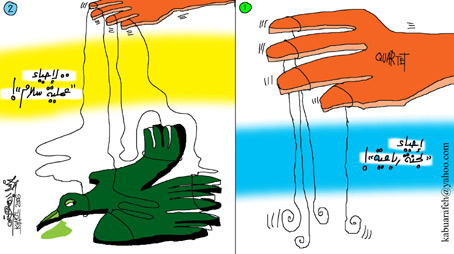
Condoleezza Rice intends to revive the Quartet and the "Peace Process"
(Khalil Abu Arafeh, Alquds, 1/7/07)

Working Hand-in-Hand With Israel:
Palestinian security officers are seen during an operation to arrest Hamas militants in the West Bank town of Jenin, Sunday, Jan. 7, 2007. Three Hamas militants were arrested Sunday by Fatah-loyalist security officers. (AP Photo)

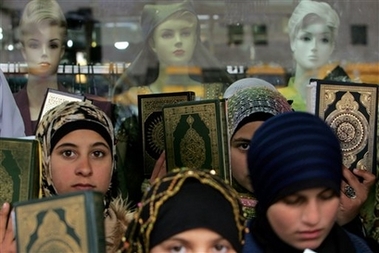
Palestinian girls, supporters of Hamas, hold copies of the Quran, Islam's holy book, during a protest against the attack on Hamas offices by unknown gunmen on Saturday, in the West Bank town of Ramallah, Sunday, Jan. 7, 2007. (AP Photo)

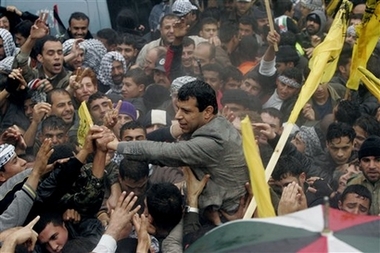
Palestinian Pinochet, The CIA Asset Dahlan, Stirring Up His Backers To Launch The Long-Awaited, Condoleezza-Ordained Coup.

We're Losing the Infowar

Insurgents using simple cell-phone cameras, laptop editing programs and the Web are beating the United States in the fierce battle for Iraqi public opinion.

Newsweek


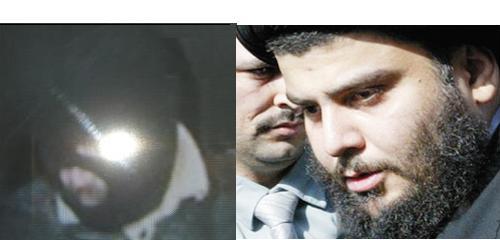
Was Muqtada The Hooded Thug Who Placed The Noose Around Saddam's Neck? You decide.

Animation: Effect Of Nuclear Bunker Buster Attack On Iran

Union of Concerned Scientists

Watch Animation

You can right-click on the animation to have more options.

Is the Bush Administration Planning a Nuclear Holocaust?

Will the US launch "Mini-nukes" against Iran in Retaliation for Tehran's "Non-compliance"?

An Important Comprehensive Article
by Michel Chossudovsky

"At no point since the first atomic bomb was dropped on Hiroshima on August 6th, 1945, has humanity been closer to the unthinkable, a nuclear holocaust which could potentially spread, in terms of radioactive fallout, over a large part of the Middle East.

All the safeguards of the Cold War era, which categorized the nuclear bomb as "a weapon of last resort" have been scrapped. "Offensive" military actions using nuclear warheads are now described as acts of "self-defense".

The distinction between tactical nuclear weapons and the conventional battlefield arsenal has been blurred. America's new nuclear doctrine is based on "a mix of strike capabilities". The latter, which specifically applies to the Pentagon's planned aerial bombing of Iran, envisages the use of nukes in combination with conventional weapons.

As in the case of the first atomic bomb, which in the words of President Harry Truman "was dropped on Hiroshima, a military base", today's "mini-nukes" are heralded as "safe for the surrounding civilian population".....

"Defensive" and "Offensive" Actions

"Integration" of Nuclear and Conventional Weapons Plans

Theater Nuclear Operations (TNO)

Planned Aerial Attacks on Iran


An operational plan to wage aerial attacks on Iran has been in "a state of readiness" since June 2005. Essential military hardware to wage this operation has been deployed. (For further details see Michel Chossudovsky, Nuclear War against Iran, Jan 2006 ).

Vice President Dick Cheney has ordered USSTRATCOM to draft a "contingency plan", which "includes a large-scale air assault on Iran employing both conventional and tactical nuclear weapons." (Philip Giraldi, Attack on Iran: Pre-emptive Nuclear War , The American Conservative, 2 August 2005).

USSTRATCOM would have the responsibility for overseeing and coordinating this military deployment as well as launching the military operation. (For details, Michel Chossudovsky, Nuclear War against Iran, Jan 2006 ).

In January 2005 a significant shift in USSTRATCOM's mandate was implemented. USSTRATCOM was identified as "the lead Combatant Command for integration and synchronization of DoD-wide efforts in combating weapons of mass destruction." To implement this mandate, a brand new command unit entitled Joint Functional Component Command Space and Global Strike , or JFCCSGS was created.

Overseen by USSTRATCOM, JFCCSGS would be responsible for the launching of military operations "using nuclear or conventional weapons" in compliance with the Bush administration's new nuclear doctrine. Both categories of weapons would be integrated into a "joint strike operation" under unified Command and Control......

Nuclear Weapons Deployment Authorization

Israel's Stockpiling of Conventional and Nuclear Weapons

The Role of Western Europe

Germany: De Facto Nuclear Power

France Endorses the Preemptive Nuclear Doctrine

Building a Pretext for a Preemptive Nuclear Attack

"Second 9/11": Cheney's "Contingency Plan"

The Battle for Oil

The World is at a Critical Cross-roads


Continued."

Israel Divulges Plan to Nuke Iran


By Kurt Nimmo

"Not to worry. The “mini-nukes” Israel will use against Iran’s Natanz facility and the heavy water reactor at Arak “would each have a force equivalent to one-fifteenth of the Hiroshima bomb,” thus we should not worry about the downwinders, mostly Iranians.

“Two Israeli air force squadrons are training to blow up an Iranian facility using low-yield nuclear ‘bunker-busters,’ according to several Israeli military sources,” reports the Sunday Times. “The attack would be the first with nuclear weapons since 1945, when the United States dropped atomic bombs on Hiroshima and Nagasaki.”

The Hiroshima Bomb was equivalent to 12.5 kilotons of TNT, so a fifteenth would put a Israeli nuclear bunker-buster under a kiloton. Let’s round that off to a kiloton for the sake of argument. According to Robert W. Nelson, writing for Physics Today, an earth-penetrating nuclear weapon of the 1-kiloton range, used in an urban area, “would kill tens of thousands.”

Not a problem for the Israelis and the neocons, of course. After all, we’re talking about Muslims here, Muslims that hanker to “wipe Israel off the map,” never mind there is no evidence Mahmoud Ahmadinejad ever said this. Saddam didn’t have weapons of mass destruction, either, but that didn’t stop the media, with its neocon contrived script, from repeating the lie over and over until millions of Americans took it as fact.

It also does not matter that Iran, under the NPT, is perfectly within its right to develop nuclear energy. In fact, as Dr. Helen Caldicott notes, “Iran was actively encouraged by the United States to develop its own nuclear power program.”

This brings to mind April Glaspie, ambassador to Iraq, telling Saddam Hussein on July 25, 1990 that the United States had “no opinion on your Arab-Arab conflicts, such as your dispute with Kuwait. Secretary Baker has directed me to emphasize the instruction, first given to Iraq in the 1960s, that the Kuwait issue is not associated with America.”

“When the blast breaks through the surface, it carries with it into the air large amounts of dirt and debris, made radioactive by the capture of neutrons from the nuclear detonation, as well as fission products from the bomb itself. The radioactive dust cloud produced in the blast does not rise as high as a classic mushroom cloud, but instead typically consists of a narrow column of vented hot gas surrounded by a broad base surge of ejecta and suspended fine particles.”

“At a depth of 15 meters, a one-kiloton explosion would knock down homes within a radius of one kilometer, killing most inhabitants, states a study by Physicians for Social Responsibility,” writes Cristina Hernández for Tierramérica. “The survivors would absorb hundreds to thousands of rems of radiation, enough to be fatal. The rem is a unit used to measure the biological effects of radiation…. Even limited contact with radiation could affect the brain’s capacity to regulate blood circulation, reduce fertility and increase the incidence of cancer. Furthermore, DNA damage could give rise to genetic mutations in the offspring of affected populations.”

“Radioactive fallout would likely be significant. A 1-kiloton warhead exploding 20 feet underground would eject about one million cubic feet of radioactive debris and form a crater the size of ground zero at the World Trade Center. The radiation dose from the explosion could exceed 100 rads per hour,” notes People for Peace and Justice of Utah. “Mini-Nukes will not limit ‘collateral damage’ (civilian injury and death). Even a very low-yield nuclear weapon exploded in or near an urban environment will disperse radioactive dirt and debris over several square miles and could result in fatal doses of radiation to tens of thousands of civilians.”

Of course, Israel may be simply throwing a histrionic tizzy and has no intention of “mini” nuking Iran. Robert Gates, Bush’s new Sec. Def., has declared attacking Iran will be a “last resort,” but then you can’t exactly hold neocons and intimates of the Bush crime family to their word.

“How seriously should we take the threat of Israeli action? There is, inevitably, an element of sabre-rattling. Any attack would require, at the very least, Washington’s tacit approval. With George W Bush up to his eyes in Iraq and the Israelis still getting over last year’s humiliation at the hands of Hezbollah in Lebanon, this would seem to be the last thing on American and Israeli minds,” declares a Times op-ed. “Looked at in another way, however, these events may have made a tactical nuclear strike against Iran more likely. Ehud Olmert, Israel’s prime minister, refused to rule out military action last month, letting slip publicly for the first time the fact that his country has nuclear weapons; surely one of the world’s worst-kept secrets.”

However, the cachet stamped on the idea of nuking Iran, now lightly discussed in the corporate media—an idea not long ago considered not only taboo, but criminally insane—reveals a whole lot about the mindset of our rulers, or at least one faction. Israel may not nuke Iran, as we are told, but the nation will be attacked one way or another before Bush departs office, as it figures prominently on the hit list.

Floating dire scenarios of nuclear-tipped bunker-busters, complete with casual references to Hiroshima, is part an parcel of the emerging propaganda campaign, as any “conventional” attack will come off as mild by way of comparison.

Of course, killing 650,000 Iraqis over the span of three years, a number cast atop a death toll exceeding 1.5 million over the period of a decade, is hardly mild, no matter the comparison or how you slice it. "

قائد الانقلابيين يعطي إشارة البدء لأتباعه لحرب أهلية في فلسطين


دحلان يتقرّب للصهاينة بإشعال حرب أهلية فلسطينية

دعا أتباعه إلى وضع أيديهم على الزناد استعدادا للاقتتال الداخلي


"غزة - المركز الفلسطيني للإعلام

أعطى محمد دحلان، قائد التيار الانقلابي في حركة "فتح"، التعليمات لأتباعه للاستعداد للحرب الأهلية، وانتظار التعليمات التي ستأتيهم للانتقام من حركة المقاومة الإسلامية "حماس".

وقال دحلان، في كلمة له خلال مهرجان انطلاقة "فتح" في غزة اليوم: "سنغادر هذا المكان دون أن نتحدث في السياسة، فلا مكان لها اليوم، وإنه إذا اعتدي على فتحاوي واحد، سنرد الصاع صاعين، وإذا اعتقدت قيادات حماس أنها بمنأى عن قواتنا فهم مخطئون"، حسب تعبيره.

ودعا دحلان، الذي حرّض بشدة ضد حركة "حماس"، أعضاء وكوادر "فتح" أن يعودوا لأماكنهم الجغرافية وأيديهم على الزناد، "وستصلكم التعليمات للتعامل مع (حماس)".

وأضاف: "إن من واجب كتائب شهداء الأقصى، هذه الليلة، أن يبقوا في مواقعهم وأيديهم على الزناد"، مدعياً أن دم العميد غريب "علامة فارقة بيننا وبينهم (حماس)، وإذا اعتقدوا أنهم لن يحاسبوا فهم مخطئون".

وقد أثارت تصريحات دحلان، وتحريضه العلني لعناصره على الاستعداد للحرب الأهلية وممارسة أعمال القتل، استياء العديد من أبناء الشعب الفلسطيني، الذين اعتبروها تحريضاً سافراً على الفتنة، والبدء بالحرب الأهلية، التي لا تحمد عقباها، داعين للجمه، ووضع حد لجرائمه ومنعه من إيصال الشعب الفلسطيني إلى الهاوية والاقتتال الداخلي.

وكانت ستة أجنحة عسكرية فلسطينية قد تعهدت أمام الشعب الفلسطيني الأحد بمنع جر الشعب إلى حرب أهلية، "وإن اضطرت إلى اجتثاث بعض طفيليات التآمر والخيانة
". "

Wesley Clark: Bush's 'surge' will backfire


The rise in troop numbers could reduce the urgency for political effort

"The odds are that President George Bush will announce a "surge" of up to 20,000 additional US troops in Iraq. But why? Will this deliver a "win"? The answers: a combination of misunderstanding and desperation; and, probably not.

The recent congressional elections - which turned over control of both houses to the Democrats - were largely a referendum on President Bush, and much of the vote reflected public dissatisfaction with the war in Iraq. Most Americans see the US effort as failing, and believe that some different course of action must be taken. Most favour withdrawing forces soon, if not immediately. The report of the Iraq Study Group is widely seen as a formal confirmation of US failure in Iraq.

The country's action there has been the very centrepiece of the Bush presidency. With two years left in office, he would, of course, try to salvage the situation. Many Americans remember the 1975 evacuation of the US embassy in Saigon, with desperate, loyal Vietnamese friends clinging to the skids of the American helicopters. No one wants that kind of an ending in Iraq. And our friends and allies in the region are also hoping for the US to pull some kind "rabbit from the hat", even if it seems improbable, for a US failure would have grave consequences in the region. Iran, especially, is the beneficiary of a failure, and al-Qa'ida will also try to claim credit."

Continue

Blood and oil: How the West will profit from Iraq's most precious commodity


An Important, Long Article

The 'IoS' today reveals a draft for a new law that would give Western oil companies a massive share in the third largest reserves in the world. To the victors, the oil? That is how some experts view this unprecedented arrangement with a major Middle East oil producer that guarantees investors huge profits for the next 30 years

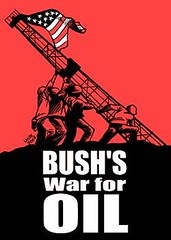
"So was this what the Iraq war was fought for, after all? As the number of US soldiers killed since the invasion rises past the 3,000 mark, and President George Bush gambles on sending in up to 30,000 more troops, The Independent on Sunday has learnt that the Iraqi government is about to push through a law giving Western oil companies the right to exploit the country's massive oil reserves.

And Iraq's oil reserves, the third largest in the world, with an estimated 115 billion barrels waiting to be extracted, are a prize worth having. As Vice-President Dick Cheney noted in 1999, when he was still running Halliburton, an oil services company, the Middle East is the key to preventing the world running out of oil.

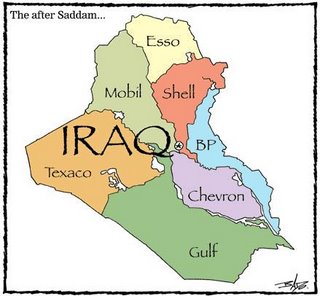
Now, unnoticed by most amid the furore over civil war in Iraq and the hanging of Saddam Hussein, the new oil law has quietly been going through several drafts, and is now on the point of being presented to the cabinet and then the parliament in Baghdad. Its provisions are a radical departure from the norm for developing countries: under a system known as "production-sharing agreements", or PSAs, oil majors such as BP and Shell in Britain, and Exxon and Chevron in the US, would be able to sign deals of up to 30 years to extract Iraq's oil.

PSAs allow a country to retain legal ownership of its oil, but gives a share of profits to the international companies that invest in infrastructure and operation of the wells, pipelines and refineries. Their introduction would be a first for a major Middle Eastern oil producer. Saudi Arabia and Iran, the world's number one and two oil exporters, both tightly control their industries through state-owned companies with no appreciable foreign collaboration, as do most members of the Organisation of Petroleum Exporting Countries, Opec.

Critics fear that given Iraq's weak bargaining position, it could get locked in now to deals on bad terms for decades to come. "Iraq would end up with the worst possible outcome," said Greg Muttitt of Platform, a human rights and environmental group that monitors the oil industry. He said the new legislation was drafted with the assistance of BearingPoint, an American consultancy firm hired by the US government, which had a representative working in the American embassy in Baghdad for several months.

"Three outside groups have had far more opportunity to scrutinise this legislation than most Iraqis," said Mr Muttitt. "The draft went to the US government and major oil companies in July, and to the International Monetary Fund in September. Last month I met a group of 20 Iraqi MPs in Jordan, and I asked them how many had seen the legislation. Only one had."

Britain and the US have always hotly denied that the war was fought for oil. On 18 March 2003, with the invasion imminent, Tony Blair proposed the House of Commons motion to back the war. "The oil revenues, which people falsely claim that we want to seize, should be put in a trust fund for the Iraqi people administered through the UN," he said.

"The United Kingdom should seek a new Security Council Resolution that would affirm... the use of all oil revenues for the benefit of the Iraqi people."

That suggestion came to nothing. In May 2003, just after President Bush declared major combat operations at an end, under a banner boasting "Mission Accomplished", Britain co-sponsored a resolution in the Security Council which gave the US and UK control over Iraq's oil revenues. Far from "all oil revenues" being used for the Iraqi people, Resolution 1483 continued to make deductions from Iraq's oil earnings to pay compensation for the invasion of Kuwait in 1990.

That exception aside, however, the often-stated aim of the US and Britain was that Iraq's oil money would be used to pay for reconstruction. In July 2003, for example, Colin Powell, then Secretary of State, insisted: "We have not taken one drop of Iraqi oil for US purposes, or for coalition purposes. Quite the contrary... It cost a great deal of money to prosecute this war. But the oil of the Iraqi people belongs to the Iraqi people; it is their wealth, it will be used for their benefit. So we did not do it for oil."

Paul Wolfowitz, Deputy Defense Secretary at the time of the war and now head of the World Bank, told Congress: "We're dealing with a country that can really finance its own reconstruction, and relatively soon."

But this optimism has proved unjustified. Since the invasion, Iraqi oil production has dropped off dramatically. The country is now producing about two million barrels per day. That is down from a pre-war peak of 3.5 million barrels. Not only is Iraq's whole oil infrastructure creaking under the effects of years of sanctions, insurgents have constantly attacked pipelines, so that the only steady flow of exports is through the Shia-dominated south of the country.

Worsening sectarian violence and gangsterism have driven most of the educated élite out of the country for safety, depriving the oil industry of the Iraqi experts and administrators it desperately needs.

And even the present stunted operation is rife with corruption and smuggling. The Oil Ministry's inspector-general recently reported that a tanker driver who paid $500 in bribes to police patrols to take oil over the western or northern border would still make a profit on the shipment of $8,400.

"In the present state, it would be crazy to pump in more money, just to be stolen," said Greg Muttitt. "It's another reason not to bring in $20bn of foreign money now."

Before the war, Mr Bush endorsed claims that Iraq's oil would pay for reconstruction. But the shortage of revenues afterwards has silenced him on this point. More recently he has argued that oil should be used as a means to unify the country, "so the people have faith in central government", as he put it last summer.

But in a country more dependent than almost any other on oil - it accounts for 70 per cent of the economy - control of the assets has proved a recipe for endless wrangling. Most of the oil reserves are in areas controlled by the Kurds and Shias, heightening the fears of the Sunnis that their loss of power with the fall of Saddam is about to be compounded by economic deprivation.

The Kurds in particular have been eager to press ahead, and even signed some small PSA deals on their own last year, setting off a struggle with Baghdad. These issues now appear to have been resolved, however: a revenue-sharing agreement based on population was reached some months ago, and sources have told the IoS that regional oil companies will be set up to handle the PSA deals envisaged by the new law.

The Independent on Sunday has obtained a copy of an early draft which was circulated to oil companies in July. It is understood there have been no significant changes made in the final draft. The terms outlined to govern future PSAs are generous: according to the draft, they could be fixed for at least 30 years. The revelation will raise Iraqi fears that oil companies will be able to exploit its weak state by securing favourable terms that cannot be changed in future.

Iraq's sovereign right to manage its own natural resources could also be threatened by the provision in the draft that any disputes with a foreign company must ultimately be settled by international, rather than Iraqi, arbitration.

In the July draft obtained by The Independent on Sunday, legislators recognise the controversy over this, annotating the relevant paragraph with the note, "Some countries do not accept arbitration between a commercial enterprise and themselves on the basis of sovereignty of the state."

It is not clear whether this clause has been retained in the final draft.

Under the chapter entitled "Fiscal Regime", the draft spells out that foreign companies have no restrictions on taking their profits out of the country, and are not subject to any tax when doing this.

"A Foreign Person may repatriate its exports proceeds [in accordance with the foreign exchange regulations in force at the time]." Shares in oil projects can also be sold to other foreign companies: "It may freely transfer shares pertaining to any non-Iraqi partners." [HERE IS WHERE ISRAEL WILL OWN IRAQI OIL] The final draft outlines general terms for production sharing agreements, including a standard 12.5 per cent royalty tax for companies.

It is also understood that once companies have recouped their costs from developing the oil field, they are allowed to keep 20 per cent of the profits, with the rest going to the government. According to analysts and oil company executives, this is because Iraq is so dangerous, but Dr Muhammad-Ali Zainy, a senior economist at the Centre for Global Energy Studies, said: "Twenty per cent of the profits in a production sharing agreement, once all the costs have been recouped, is a large amount." In more stable countries, 10 per cent would be the norm.

While the costs are being recovered, companies will be able to recoup 60 to 70 per cent of revenue; 40 per cent is more usual. David Horgan, managing director of Petrel Resources, an Aim-listed oil company focused on Iraq, said: "They are reasonable rates of return, and take account of the bad security situation in Iraq. The government needs people, technology and capital to develop its oil reserves. It has got to come up with terms which are good enough to attract companies. The major companies tend to be conservative."

Dr Zainy, an Iraqi who has recently visited the country, said: "It's very dangerous ... although the security situation is far better in the north." Even taking that into account, however, he believed that "for a company to take 20 per cent of the profits in a production sharing agreement once all the costs have been recouped is large".

He pointed to the example of Total, which agreed terms with Saddam Hussein before the second Iraq war to develop a huge field. Although the contract was never signed, the French company would only have kept 10 per cent of the profits once the company had recovered its costs.

And while the company was recovering its costs, it is understood it agreed to take only 40 per cent of the profits, the Iraqi government receiving the rest.

Production sharing agreements of more than 30 years are unusual, and more commonly used for challenging regions like the Amazon where it can take up to a decade to start production. Iraq, in contrast, is one of the cheapest and easiest places in the world to drill for and produce oil. Many fields have already been discovered, and are waiting to be developed.

Analysts estimate that despite the size of Iraq's reserves - the third largest in the world - only 2,300 wells have been drilled in total, fewer than in the North Sea.

Confirmation of the generous terms - widely feared by international non government organisations and Iraqis alike - have prompted some to draw parallels with the production-sharing agreements Russia signed in the 1990s, when it was bankrupt and in chaos.

At the time Shell was able to sign very favourable terms to develop oil and gas reserves off the coast of Sakhalin island in the far east of Russia. But at the end of last year, after months of thinly veiled threats from the environment regulator, the Anglo-Dutch company was forced to give Russian state-owned gas giant Gazprom a share in the project.

Although most other oil experts endorsed the view that PSAs would be needed to kick-start exports from Iraq, Mr Muttitt disagreed. "The most commonly mentioned target has been for Iraq to increase production to 6 million barrels a day by 2015 or so," he said. "Iraq has estimated that it would need $20bn to $25bn of investment over the next five or six years, roughly $4bn to $5bn a year. But even last year, according to reports, the Oil Ministry had between $3bn and $4bn it couldn't invest. The shortfall is around $1bn a year, and that could easily be made up if the security situation improved.

"PSAs have a cost in sovereignty and future revenues. It is not true at all that this is the only way to do it." Technical services agreements, of the type common in countries which have a state-run oil corporation, would be all that was necessary.

James Paul of Global Policy Forum, another advocacy group, said: "The US and the UK have been pressing hard on this. It's pretty clear that this is one of their main goals in Iraq." The Iraqi authorities, he said, were "a government under occupation, and it is highly influenced by that. The US has a lot of leverage... Iraq is in no condition right now to go ahead and do this."

Mr Paul added: "It is relatively easy to get the oil in Iraq. It is nowhere near as complicated as the North Sea. There are super giant fields that are completely mapped, [and] there is absolutely no exploration cost and no risk. So the argument that these agreements are needed to hedge risk is specious."

One point on which all agree, however, is that only small, maverick oil companies are likely to risk any activity in Iraq in the foreseeable future. "Production over the next year in Iraq is probably going to fall rather than go up," said Kevin Norrish, an oil analyst from Barclays. "The whole thing is held together by a shoestring; it's desperate."

An oil industry executive agreed, saying: "All the majors will be in Iraq, but they won't start work for years. Even Lukoil [of Russia], the Chinese and Total [of France] are not in a rush to endanger themselves. It's now very hard for US and allied companies because of the disastrous war."

Mr Muttitt echoed warnings that unfavourable deals done now could unravel a few years down the line, just when Iraq might become peaceful enough for development of its oil resources to become attractive. The seeds could be sown for a future struggle over natural resources which has led to decades of suspicion of Western motives in countries such as Iran.

Iraqi trade union leaders who met recently in Jordan suggested that the legislation would cause uproar once its terms became known among ordinary Iraqis.

"The Iraqi people refuse to allow the future of their oil to be decided behind closed doors," their statement said. "The occupier seeks and wishes to secure... energy resources at a time when the Iraqi people are seeking to determine their own future, while still under conditions of occupation."

The resentment implied in their words is ominous, and not only for oil company executives in London or Houston. The perception that Iraq's wealth is being carved up among foreigners can only add further fuel to the flames of the insurgency, defeating the purpose of sending more American troops to a country already described in a US intelligence report as a cause célèbre for terrorism.

America protects its fuel supplies - and contracts

Despite US and British denials that oil was a war aim, American troops were detailed to secure oil facilities as they fought their way to Baghdad in 2003. And while former defence secretary Donald Rumsfeld shrugged off the orgy of looting after the fall of Saddam's statue in Baghdad, the Oil Ministry - alone of all the seats of power in the Iraqi capital - was under American guard.

Halliburton, the firm that Dick Cheney used to run, was among US-based multinationals that won most of the reconstruction deals - one of its workers is pictured, tackling an oil fire. British firms won some contracts, mainly in security. But constant violence has crippled rebuilding operations. Bechtel, another US giant, has pulled out, saying it could not make a profit on work in Iraq.

In just 40 pages, Iraq is locked into sharing its oil with foreign investors for the next 30 years

A 40-page document leaked to the 'IoS' sets out the legal framework for the Iraqi government to sign production- sharing agreement contracts with foreign companies to develop its vast oil reserves.

The paper lays the groundwork for profit-sharing partnerships between the Iraqi government and international oil companies. It also lays out the basis for co-operation between Iraq's federal government and its regional authorities to develop oil fields.

The document adds that oil companies will enjoy contracts to extract Iraqi oil for up to 30 years, and stresses that Iraq needs foreign investment for the "quick and substantial funding of reconstruction and modernisation projects".

It concludes that the proposed hydrocarbon law is of "great importance to the whole nation as well as to all investors in the sector" and that the proceeds from foreign investment in Iraq's oilfields would, in the long term, decrease dependence on oil and gas revenues.

The role of oil in Iraq's fortunes

Iraq has 115 billion barrels of known oil reserves - 10 per cent of the world total. There are 71 discovered oilfields, of which only 24 have been developed. Oil accounts for 70 per cent of Iraq's GDP and 95 per cent of government revenue. Iraq's oil would be recovered under a production sharing agreement (PSA) with the private sector. These are used in only 12 per cent of world oil reserves and apply in none of the other major Middle Eastern oil-producing countries. In some countries such as Russia, where they were signed at a time of political upheaval, politicians are now regretting them.

The $50bn bonanza for US companies piecing a broken Iraq together

The task of rebuilding a shattered Iraq has gone mainly to US companies.

As well as contractors to restore the infrastructure, such as its water, electricity and gas networks, a huge number of companies have found lucrative work supporting the ongoing coalition military presence in the country. Other companies have won contracts to restore Iraq's media; its schools and hospitals; its financial services industry; and, of course, its oil industry.

In May 2003, the Coalition Provisional Authority (CPA), part of the US Department of Defence, created the Project Management Office in Baghdad to oversee Iraq's reconstruction.

In June 2004 the CPA was dissolved and the Iraqi interim government took power. But the US maintained its grip on allocating contracts to private companies. The management of reconstruction projects was transferred to the Iraq Reconstruction and Management Office, a division of the US Department of State, and the Project and Contracting Office, in the Department of Defence.

The largest beneficiary of reconstruction work in Iraq has been KBR (Kellogg, Brown & Root), a division of US giant Halliburton, which to date has secured contracts in Iraq worth $13bn (£7bn), including an uncontested $7bn contract to rebuild Iraq's oil infrastructure. Other companies benefiting from Iraq contracts include Bechtel, the giant US conglomerate, BearingPoint, the consultant group that advised on the drawing up of Iraq's new oil legislation, and General Electric. According to the US-based Centre for Public Integrity, 150-plus US companies have won contracts in Iraq worth over $50bn.

30,000 Number of Kellogg, Brown and Root employees in Iraq.

36 The number of interrogators employed by Caci, a US company, that have worked in the Abu Ghraib prison since August 2003.

$12.1bn UN's estimate of the cost of rebuilding Iraq's electricity network.

$2 trillion Estimated cost of the Iraq war to the US, according to the Nobel prize-winning economist Joseph Stiglitz.

WHAT THEY SAID

"Oil revenues, which people falsely claim that we want to seize, should be put in a trust fund for the Iraqi people"

Tony Blair; Moving motion for war with Iraq, 18 March 2003

"Oil belongs to the Iraqi people; the government has... to be good stewards of that valuable asset "

George Bush; Press conference, 14 June 2006

"The oil of the Iraqi people... is their wealth. We did not [invade Iraq] for oil "

Colin Powell; Press briefing, 10 July 2003

"Oil revenues of Iraq could bring between $50bn and $100bn in two or three years... [Iraq] can finance its reconstruction"

Paul Wolfowitz; Deputy Defense Secretary, March 2003

"By 2010 we will need [a further] 50 million barrels a day. The Middle East, with two-thirds of the oil and the lowest cost, is still where the prize lies"

Dick Cheney; US Vice-President, 1999
"

Leading article: The oil rush


The Independent

""The oil can is mightier than the sword," said the 19th-century US Senator Everett Dirksen. Nowhere does this seem more true than in contemporary Iraq where, despite widespread despair about the war's costs in terms of blood and treasure, US corporations look set to be some of the conflict's few winners. The announcement that the Iraqi government is planning to change its constitution to allow foreign extraction of oil will give Western companies access to the world's third largest oil reserves. Production sharing agreements (PSAs), lasting for up to 30 years, will divert up to 75 per cent of Iraqi oil revenues to Western drilling companies until their initial investment costs have been recouped. The importance of this cannot be overstated for a shattered country still reliant on oil for 95 per cent of its income.

Of course, the Iraqi oil industry, starved through years of sanctions and now under constant insurgent attack, badly needs Western investment. Only a small proportion of Iraq's known oil fields have been developed, and production still languishes below pre-invasion levels. The neo-conservative dream - indulged in by Paul Wolfowitz and Dick Cheney prior to the conflict - that the invasion and reconstruction would be self-financed through a twist of the oil taps, dissipated long ago.

In a country where unemployment has hit 70 per cent, a policy that will quicken the pace of economic reconstruction should be universally welcomed. At face value, the measure is not being imposed by the fiat of a US general: it will be voted on in the Iraqi parliament and, if passed, enacted by a democratically elected government. And objections that foreign companies will steal Iraq's birthright seem faintly anachronistic in the global economy: specialist engineering is an international industry these days, and Iraq's command economy, isolated from the rest of the world, urgently requires liberalisation.

But it doesn't demand the fevered imaginings of a conspiracy theorist to think that this law, struck while the beleaguered Iraqi government is facing opposition from all quarters, protects the interests of oil wealth (which is so well represented in the White House) more than it does the Iraqi people. Production sharing agreements don't apply in most other major Middle Eastern oil producers because they are widely thought to grant greater control to companies than governments. With economies so heavily dependent on oil, it's hard to see how countries can truly be self-governing if they sign away influence over their almost exclusive source of wealth.

Legitimate questions must be asked. How did this decision come to be made? How much pressure was President Nouri al-Maliki placed under to bend to the American corporate interests? Conservative US thinktanks such as the Heritage Foundation have been plotting the wholesale privatisation of the Iraqi oil industry for years. Since 2003, the supposed reconstruction of Iraq by US companies has left a bitter taste with most Iraqis who see a symbiotic relationship between the US military and big business that would make a British district commissioner in imperial Africa blush.

From the immediate aftermath of the invasion, the ill-fated US proconsul, Paul Bremer, denied the Iraqi government the ability to give preference to Iraqis in the reconstruction effort. Instead, US companies were awarded contracts totalling more than $50bn. And they have conspicuously failed to deliver. Despite billions spent, clean water, sanitation and electricity are below pre-war levels. The spectre of Americans scouting the country for oil at the same time as the death toll from the insurgency reaches new heights could shatter whatever residual faith is left among the Iraqis in the intentions of Western policy. Iraqis will reach the natural conclusion that, from the beginning, the Iraq adventure was an attempt to steal imperial spoils.

Before the war, to meet precisely these criticisms, Tony Blair promised that a development fund for Iraq was to be established to hold in trust the proceeds from oil sales under United Nations control. But, like so many of the concessions that the Prime Minister attempted to squeeze out of the President, this got lost somewhere in the Oval Office.

This is not the moment to rehearse the causes of the Iraq war, disputed as they are, but this newspaper has always been sceptical that it was "all about oil". Yet, at a time when the Americans and British are desperate to establish some sort of credit on the ground in Iraq, to make some claim on Iraqi hearts and minds, this arrangement looks terrible. What greater fuel could a conspiracy theorist want than the news of this oilman's bonanza? Was it mere coincidence that the war's most vociferous champions, such as Dick Cheney, were former oilmen? Policymakers would do well to remember that long and lucrative contracts handed to Western oil companies by the Shah of Iran during the 1960s led to a widespread feeling that the country was raped.

The Iranian revolution was the bitter harvest of a previous generation's oil greed in the Middle East. It would be to heap a further tragedy on Iraq if, in a country where the appearance of things can be as important as how they really are, the perception was to grow yet further that it was American greed that took the country to war. The importance of reflecting honourable intentions towards the Iraqi people is all the more important in a week when, in the teeth of a new Democrat-controlled Congress, President Bush is expected to announce a "surge" of 20,000 troops to "secure" Baghdad. After spending the Christmas break reflecting on Iraq policy, the President seems to have chosen what his obstinate character always suggested: to ignore the conventional wisdom and dig the hole in which Iraq policy is mired ever deeper.

After years of repeating his stay-the-course mantra, it was unlikely that, whatever the appalling evidence from Baghdad, George Bush would suffer the ignominy of admitting defeat. With ratings of his handling of the war at an all-time low, this is George Bush's final chance to avoid his presidency being branded as one of the worst in history. Like a gambler who has stacked up losses and hopes that one more lucky throw will rescue him, the President thinks that a modest additional deployment in Baghdad will see him vindicated by what he likes to call the "long march of history".

But, as General Wesley Clark writes today, the situation in Baghdad departed from the well-laid plans of Pentagon planners long ago. There have been attempts to retake Baghdad before by flooding it with troops stationed in the rest of the country - only to see the violence get worse. US troops are not in a position to stem the Sunni-Shia violence, and an overwhelming majority of Iraqis from across the ethnic divide now no longer believe that the troops are helping the situation.

With the death toll of US troops slipping over the 3,000 mark during the Christmas lull, there is a real risk that additional men and materiel in Iraq will merely provide more sitting targets for the insurgents to attack."

Future of Iraq: The spoils of war


How the West will make a killing on Iraqi oil riches

"Iraq's massive oil reserves, the third-largest in the world, are about to be thrown open for large-scale exploitation by Western oil companies under a controversial law which is expected to come before the Iraqi parliament within days.

The US government has been involved in drawing up the law, a draft of which has been seen by The Independent on Sunday. It would give big oil companies such as BP, Shell and Exxon 30-year contracts to extract Iraqi crude and allow the first large-scale operation of foreign oil interests in the country since the industry was nationalised in 1972.

The huge potential prizes for Western firms will give ammunition to critics who say the Iraq war was fought for oil. They point to statements such as one from Vice-President Dick Cheney, who said in 1999, while he was still chief executive of the oil services company Halliburton, that the world would need an additional 50 million barrels of oil a day by 2010. "So where is the oil going to come from?... The Middle East, with two-thirds of the world's oil and the lowest cost, is still where the prize ultimately lies," he said.

Oil industry executives and analysts say the law, which would permit Western companies to pocket up to three-quarters of profits in the early years, is the only way to get Iraq's oil industry back on its feet after years of sanctions, war and loss of expertise. But it will operate through "production-sharing agreements" (or PSAs) which are highly unusual in the Middle East, where the oil industry in Saudi Arabia and Iran, the world's two largest producers, is state controlled.

Opponents say Iraq, where oil accounts for 95 per cent of the economy, is being forced to surrender an unacceptable degree of sovereignty.

Proposing the parliamentary motion for war in 2003, Tony Blair denied the "false claim" that "we want to seize" Iraq's oil revenues. He said the money should be put into a trust fund, run by the UN, for the Iraqis, but the idea came to nothing. The same year Colin Powell, then Secretary of State, said: "It cost a great deal of money to prosecute this war. But the oil of the Iraqi people belongs to the Iraqi people; it is their wealth, it will be used for their benefit. So we did not do it for oil."

Supporters say the provision allowing oil companies to take up to 75 per cent of the profits will last until they have recouped initial drilling costs. After that, they would collect about 20 per cent of all profits, according to industry sources in Iraq. But that is twice the industry average for such deals.

Greg Muttitt, a researcher for Platform, a human rights and environmental group which monitors the oil industry, said Iraq was being asked to pay an enormous price over the next 30 years for its present instability. "They would lose out massively," he said, "because they don't have the capacity at the moment to strike a good deal."

Iraq's Deputy Prime Minister, Barham Salih, who chairs the country's oil committee, is expected to unveil the legislation as early as today. "It is a redrawing of the whole Iraqi oil industry [to] a modern standard," said Khaled Salih, spokesman for the Kurdish Regional Government, a party to the negotiations. The Iraqi government hopes to have the law on the books by March.

Several major oil companies are said to have sent teams into the country in recent months to lobby for deals ahead of the law, though the big names are considered unlikely to invest until the violence in Iraq abates.

James Paul, executive director at the Global Policy Forum, the international government watchdog, said: "It is not an exaggeration to say that the overwhelming majority of the population would be opposed to this. To do it anyway, with minimal discussion within the [Iraqi] parliament is really just pouring more oil on the fire."

Vince Cable, the Liberal Democrat Treasury spokesman and a former chief economist at Shell, said it was crucial that any deal would guarantee funds for rebuilding Iraq. "It is absolutely vital that the revenue from the oil industry goes into Iraqi development and is seen to do so," he said. "Although it does make sense to collaborate with foreign investors, it is very important the terms are seen to be fair." "

After All The B.S., The Truth Revealed


Iraq poised to end drought for thirsting oil giants
After 35 years, the third-largest reserves in the world are to be opened to American and British companies


By Danny Fortson
The Independent
Published: 07 January 2007

"For more than three decades, foreign oil companies wanting into Iraq have been like children pressed against the sweet shop window - desperately seeking to feast on the goodies but having no way of getting through the door. That could soon change.

The Iraqi Council of Ministers is expected to approve, as early as today, a controversial new hydrocarbon law, heavily pushed by the US and UK governments, that will radically redraw the Iraqi oil industry and throw open the doors to the third-largest oil reserves in the world. It would allow the first large-scale operation of foreign oil companies in the country since the industry was nationalised in 1972.

It would also be a shot in the arm for the global petroleum industry. The biggest oil companies are finding it ever harder to uncover new reserves to replace those that are going dry. Iraq sits on a sea of easily tapped, high-quality crude.

For a sector desperate for a panacea, the stakes couldn't be higher. By conservative estimates, Iraq represents about one-tenth of the world's reserves at 115 billion barrels. Most of this is untapped or under-exploited. Former oil minister Issam Al-Chalabi was quoted recently saying that a fully functioning Iraqi oil industry could generate $100bn (£52bn) in annual revenue.

The new legislation "is a redrawing of the whole Iraqi oil industry into a modern standard," said Khaled Salih, a spokesman for the Kurdish Regional Government, a party in the negotiations. "It will allow new technologies to come in to revitalise the oil industry and allow foreign investors to invest long-term in Iraq and upgrade infrastructure."

Iraqi government sources say the hope is to have the law on the books by March.

No one expects big players such as Exxon, BP and Shell to jump into the country until the security situation stabilises. They are jockeying to stake their claims now for exploitation later. "It's a mad rush to get something there," said James Paul, the executive director of Global Policy Forum, a New York watchdog group. "The companies are saying, 'Before any troops are withdrawn, we have to have these contracts.' "

So why are the oil companies so desperate to get a foot in the door? For one, they are struggling to keep production increasing in line with demand, which last year rose to more than 82 million barrels a day. Those rises have been driven in large part by the growth of the Chinese economy. The tide of oil nationalism in places such as Venezuela, where the stranglehold applied by President Hugo Chavez on the industry has led to lower production, has shifted more pressure on to the rest of the industry.

Also, the cost-per-barrel of extracting oil in Iraq is among the lowest in the world because the reserves are relatively close to the surface . This contrasts starkly with the expensive and risky lengths to which the oil industry must go to find new reserves elsewhere - witness the super-deep offshore drilling and cost-intensive techniques needed to extract oil form Canada's tar sands.

"The majors are finding it increasingly difficult to locate actual black oil resources," said Praveen Martis, an analyst at research firm Wood Mackenzie.

The most coveted sites in Iraq are the Majnoon and West Qurna fields, both close to Basra in the south of the country. Together, they fields represent nearly a quarter of Iraq's proven reserves. Total and Russia's Lukoil had deals in place with Saddam Hussein's government on the Majnoon and West Qurna fields respectively.

It is arguable whether these contracts are still valid, and Exxon is now seen by insiders as the frontrunner to nab the rights to the Majnoon field.

Other parts of the country, such as the Western desert, remain virtually unexplored and could be home to large reserves.

Critical to whether the petro-leum industry will be able to exploit Iraq's buried treasure will be the introduction of production-sharing agreements (PSAs). These are contracts that allow the state to retain legal ownership of its reserves but let international companies share in the profits from extracting oil, in exchange for investing in the infrastructure and operation of the wells, pipelines and refineries. The agreements would be the key to the sweeping development of the Iraqi industry by international companies.

According to an early draft of the legislation that was sent to oil companies this past summer and obtained by The Independent on Sunday, PSAs are the centrepiece of the new legal framework.

Their introduction would be a first for a major Middle Eastern power and is sure to be highly contentious. Saudi Arabia and Iran, the world's number one and two producers, both control their industries tightly with no appreciable foreign company collaboration. According to the Iraqi draft legislation, the PSAs could be fixed for as long as 30 years, which would provide a welcome framework in which the companies could work. Though they are preferred by the oil industry, PSAs don't always guarantee profits for Western companies.

The Russian government depended heavily on PSAs in the 1990s when it was far weaker economically than it is now. The Kremlin has since made moves to wind back these agreements. The most notorious instance came last month when Shell was forced to cede a controlling stake in the $20bn Sakhalin 2 oil and gas project back to the Russian state-owned gas giant Gazprom, after months of brinkmanship from the Kremlin.

Yet for all the black gold that lies under the sand of the Iraqi desert, any potential payoff for Western oil giants is years off. An enormous amount of work remains to be done. The infra-structure is decrepit and patchy after years of neglect, and there is the risk of sabotage and wars. The country is in a state of near anarchy and the debate about the ownership and exploitation of its main asset, which accounts for nearly all of Iraq's GDP and export revenues, is still to be had.

But if the new hydrocarbon proposals pass through their fledgling parliament, the Iraqi people will be forced to share their buried treasure with the West's oil giants."

عباس يبذل جهوداً مضاعفة لإدخال قوات بدر إلى غزة بأسرع وقت ممكن


لتعجيل إسقاط الحكومة الفلسطينية المنتخبة عسكرياً

"غزة - المركز الفلسطيني للإعلام

كشفت مصادر فلسطينية مطلعة عن جهود حثيثة يقوم بها رئيس السلطة محمود عباس لاستجلاب ميليشيات مسلحة لتعزيز قوته في قطاع غزة، أمام حركة المقاومة الإسلامية "حماس"، التي تتمتع بقوة جماهيرية وعسكرية عالية، ولإسقاط الحكومة المنتخبة التي تقودها.

وأشارت المصادر إلى أن اتصالات تجريها العديد من الدول العربية، بناء على طلب من مؤسسة الرئاسة الفلسطينية مع الحكومة الصهيونية، من أجل الإسراع في إدخال قوت بدر المتواجدة في العاصمة الأردنية عمان إلى الأراضي الفلسطينية، وذلك عقب الأحداث، التي وقعت في الأراضي الفلسطينية، ومحاولات زرع بذور الفوضى والفتنة، من قبل عناصر محسوبة على تيار انقلابي في حركة فتح ومؤسسة الرئاسة، والتي تصدت لها قوات الأمن الفلسطيني والقوة التنفيذية التابعة لوزارة الداخلية.

وبحسب ما أوردته المصادر؛ فإن الحكومة الصهيونية سترد على هذه الاتصالات في أقل من 48 ساعة، إذ إنها ستعقد سلسلة مشاورات بين قادة الأحزاب السياسية الصهيونية لاتخاذ القرار المناسب بإدخال قوات بدر إلى قطاع غزة.

هذا وكان محمود عباس قد طلب من الحكومة الصهيونية الحالية مراراً السماح بنقل آلاف المقاتلين الفلسطينيين من قوات بدر التابعة لجيش التحرير الفلسطيني من الأردن إلى قطاع غزة بأسلحتها كاملة، والتي حظيت بدعم أمريكي مؤخراً.

وكانت الحكومة الصهيونية السابقة بزعامة آرائيل شارون قد رفضت طلبات متكررة من السلطة الفلسطينية بنقل قوات بدر إلى الضفة الفلسطينية المحتلة وقطاع غزة؛ إلا أن حكومة إيهود أولمرت تدرس الآن السماح بنقل تلك القوات إلى قطاع غزة، في محاولة لإيجاد توازن بين القوة العسكرية لحماس والقوات الموالية لرئيس السلطة محمود عباس، في قطاع غزة بالذات. "