Scores killed and wounded by heavy rocket fire and airstrikes targeting a besieged Syrian rebel stronghold east of Damascus that also hit a school The Guardian Link
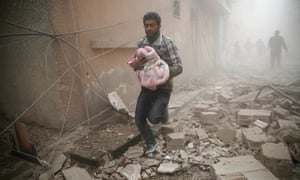
A Syrian man carries a baby wrapped in a blanket following airstrikes on the town of Douma, a rebel stronghold east of Damascus Photograph: Sameer Al-Doumy/AFP/Getty Images
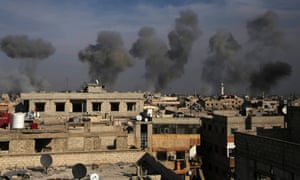
At least 45 civilians have been killed during heavy bombardment of a besieged Syrian rebel stronghold east of Damascus that also struck a school.
The Syrian Observatory for Human Rights monitoring group said rockets fired by regime forces landed on the towns of Douma, Harasta, Saqba and Arbin in the opposition-held Eastern Ghouta region.
Observatory head Rami Abdel Rahman said airstrikes also hit the towns, but it was unclear whether they were carried out by Syrian orRussian warplanes.
At least 10 children and four women were among the dead and dozens of people were wounded, he said.
“One of the airstrikes on Douma hit near a school, killing the school’s principal,” Abdel Rahman said.
Men carried children across the dust-covered rubble of destroyed buildings in Douma, whose streets were littered with debris and shards of glass, according to a photographer on the scene.
A small girl’s body lay on an operating table in a field hospital, as doctors prepared to operate on her badly-wounded leg.
An activist group in Douma shared photographs on Facebook of crumbling buildings and bloodied children lying in a makeshift clinic.
In one jarring photo, children’s shoes, notebooks, and bags are strewn across the blood-stained floor of what the group said was a schoolyard in Douma.
Abdel Rahman said one rebel fighter was also killed in the bombardment on Sunday.
Government forces regularly bombard Eastern Ghouta, and rebels there fire rockets and mortar shells into the capital.
إثر محاولاتهم التقدم باتجاه قرية بانص بريف حلب الجنوبي التي استعادتها المعارضة في الساعات الأخيرة، في وقت قصفت حركة أحرار الشام المراكز والطائرات الروسية بمطار حميميم بريف اللاذقية.
وبثت جبهة النصرة تسجيلا مصورا على الإنترنت، قالت فيه إنها تمكنت من صد هجوم للجيش السوري وما سمتها بالمليشيات الإيرانية والعراقية الداعمة له على القرية.
يأتي ذلك في وقت تواصل فيه المليشيات الشيعية محاولاتها للتسلل عبر أنفاق إلى مواقع المعارضة المسلحة في المناطق الجنوبية من دمشق، في حين تعمل المعارضة على تفجير هذه الأنفاق.
ويكمن الهدف الأهم للمليشيات من هذه المحاولات في إبعاد مقاتلي المعارضة المسلحة عن طريق مطار دمشق الدولي.
ويخشى أن تؤدي هذه المحاولات إلى زعزعة الهدنة القائمة بين قوات المعارضة والنظام في تلك المناطق منذ عامين.
غارات روسيةوفي السياق ذكر موقع سوريا مباشر أن غارات روسية قصفت حيي الجزماتي والمرجة بمدينتي الأتارب والباب بريف حلب، مما أدى إلى إصابة امرأة وطفل.
من جهة أخرى تحدث اتحاد تنسيقيات الثورة عن وقوع اشتباكات عنيفة بين كتائب المعارضة وقوات النظام بمحيط حي المنشية بالتزامن مع قصف مدفعي وبقذائف الدبابات على الأحياء المحررة في درعا البلد.
وذكر المصدر أن اشتباكات عنيفة يخوضها مسلحو المعارضة في محيط جبل النوبة في ريف اللاذقيةلصد هجوم النظام ومليشياته منذ فجر اليوم الاثنين، تزامنا مع تجدد الغارات الروسية على مدن وبلدات بأرياف اللاذقية وحماة وإدلب التي سقط فيها قتلى.
من جانبها ذكرت حركة أحرار الشام الإسلامية عبر حسابها بتويتر أنها قصفت المراكز والطائرات الروسية في مطار حميميم في جبلة وقمة النبي يونس بريف اللاذقية بصواريخ "غراد".
قتلى مدنيون في غضون ذلك قتل ستون مدنيا على الأقل في غارات روسية على مناطق عدة في سوريا، كان أكثرها دموية غارة على سوق شعبي بمدينة دوما في ريف دمشق الشرقي.
وأفاد مراسل الجزيرة بأن أربعين مدنيا بينهم أطفال ونساء قتلوا في الغارة على المدينة، مضيفا أن قتلى وجرحى سقطوا أيضا في قصف لطائرات روسية استهدفت أحياء سكنية في بلدات زملكا وحمورية وكفربطنا في الغوطة الشرقية.
وغير بعيد، حقق مقاتلو المعارضة تقدما مفاجئا في ريف حماة الشمالي بعد هدوء لما يزيد على الشهرين عقب إعلان معارك تحرير حماة.
ونقل مراسل الجزيرة نت يزن شهداوي عن القيادي العسكري في الجيش الحر أبو محمد قوله إن كتائب المعارضة سيطرت عصر أمس الأحد على قرية البويضة وعلى حواجز عدة في ريف حماة الشمالي، واغتنمت مدافع وأسلحة وذخيرة من قوات النظام، كما سيطرت على منطقة زور المحروقة.
كما أكد مقتل ما يزيد على 13 عنصرا من قوات النظام جراء عمليات اقتحام المعارضة قرية البويضة شمالي حماة، بينما قتل وجرح عدد كبير من قوات النظام جراء معارك السيطرة على حواجز النظام في ريف حماة الشمالي.
بعد أن كشفت تقارير استخباراتية بدء سحب إيران قوات حرسها الثوري من سورية بسبب الخسائر التي تكبدتها، قال قيادي في الجيش الحر إن روسيا ممتعضة من فشل إيران بحقيق أي تقدم عسكري على الأرض. ونقلت صحيفة 'الشرق الأوسط' اللندنية، اليوم الأحد، عن العقيد عبد الجبار العكيدي، القيادي في الجيش السوري الحر، أن 'هناك خلافات كبيرة بين الروس والإيرانيين، وهو ما يبدو واضحا لنا خلال تنصتنا على محادثاتهم'. وأشار إلى أن 'الروس كانوا يعولون على تحقيق الإيرانيين تقدما كبيرا وفعليا على الأرض كونهم مدعومين بآلاف الغارات الجوية الروسية، وقد سعوا لأن يحصل ذلك قبل مؤتمر الرياض أو مؤتمر نيويورك، وهو ما لا يمكن أن يحصل'. ووفقا لما نقلته الصحيفة عن مراقبين، في حال ثبتت صحة المعلومات عن أن إيران قد تنسحب من المشاركة مع روسيا في العمليات في سورية، فإن أحد الأسباب الرئيسية سيكون العلاقات بين موسكو وتل أبيب، وبصورة رئيسية التنسيق بينهما خلال تنفيذ الطلعات الجوية في الأجواء السورية. ومن الطبيعي أن إيران مستاءة والأرجح أنها غاضبة إزاء هذا التنسيق. وأضافت الصحيفة: 'ويبقى هناك سبب آخر ربما يكون رئيسيا أيضا ضمن جملة الأسباب التي ربما تقف خلف خطوة مثل انسحاب إيران، وهنا تجدر الإشارة إلى أن مصادر سورية متقاطعة تحدثت منذ ظهور القوات الروسية في سورية عن عمليات حل وتفكيك لبعض الميليشيات الطائفية التي شكلتها إيران، وتعتبرها نواة لنفوذها مستقبلا في سورية، مثلما هو الحال بالنسبة لحزب الله ودوره في لبنان'. وقالت مصادر من دمشق إن روسيا طالبت بحل هذه الميليشيات وحصر السلاح بيد الجيش السوري وحده، داعية الراغبين للانضمام للقتال تحت راية وإدارة وإشراف قيادة أركان جيش النظام. وترمي روسيا من وراء ذلك إلى تحقيق عدة أمور، في مقدمتها الحيلولة دون ظهور ميليشيات مسلحة خارجة عن القرار العسكري لدمشق، وقد تتمرد في لحظة ما على القرار 'العسكري الرسمي' ما سيخلق لروسيا مشاكل لم تحسب حسابها.
بيروت ـ الاناضول: نعى حزب الله اللبناني، اليوم الاحد، 14 مقاتلاً من عناصره قتلوا في ريف محافظة حلب شمالي سوريا خلال الساعات الثمان والاربعين الماضية.
وبحسب بيانات النعي، التي نشرها الحزب عبر مواقع التواصل الاجتماعي، ووسائل إعلامه، فقد “سقط المقاتلون أثناء قيامهم بواجبهم بالدفاع المقدس″، وهو المصطلح الذي يستخدمه الحزب في نعي مقاتليه الذين يقتلون بسوريا.
وقد نشرت صور القتلى إلى جانب اسمائهم على المواقع الالكترونية التابعة للحزب ومنهم، محمد حسين ابراهيم من بلدة كوثرية السياد (جنوب)، الذي تناقلت مواقع التواصل الاجتماعي، أنه قريب المدير العام للامن العام اللبناني اللواء عباس ابراهيم.
وبحسب مراسلي “الأناضول”، فقد شهدت العديد من قرى وبلدات البقاع شرق لبنان، وجنوب لبنان، مواكب التشييع، فيما حمل الأهالي النعوش على الأكف وسط حال من الحزن.
ويشارك حزب الله اللبناني في القتال الدائر في سوريا الى جانب قوات النظام، منذ عام 2013، وقد شيّع الحزب مؤخراً العديد من قتلاه الذين قضوا خلال المعارك مع قوات المعارضة السورية.
(Beirut) – Houthi authorities in Yemen have closed several dozen nongovernmental organizations and arbitrarily detained numerous activists since taking over the capital, Sanaa, in late 2014. Human Rights Watch interviewed activists with four Sanaa-based organizations that the Houthis closed down in April 2015, apparently because of their links to the Islah political party, which is opposed to the Houthis.
A military vehicle stationed outside the Association of Social Solidarity Charity and the Renaissance Homeland Foundation, two nongovernmental organizations, on April 4, 2015, two days after both organizations were raided and forcibly shut by Houthi forces.
The Yemen office of the United Nations Office of the High Commissioner for Human Rights told Human Rights Watch that since September 2014, the Houthis, also known as Ansar Allah, have raided and shut down 33 groups in Sanaa, in many cases confiscating assets and equipment. Most of these groups have been prevented from reopening, particularly those affiliated with Islah, the high commissioner’s office said.
“The Houthis’ closure of organizations comes in the midst of a campaign of arrests andenforced disappearances of activists, political opposition figures and journalists,” said Joe Stork, deputy Middle East director. “This is one more repressive Houthi tactic to close down democratic space in the areas they control.”
The Houthis’ closure of organizations comes in the midst of a campaign of arrests and enforced disappearances of activists, political opposition figures and journalists. This is one more repressive Houthi tactic to close down democratic space in the areas they control.
Joe Stork
Deputy Middle East Director
The Houthis should immediately allow nongovernmental groups to operate freely, compensate groups whose offices were looted, and release activists being detained for peaceful conduct, Human Rights Watch said. While Houthi authorities may take appropriate measures to address security concerns during the armed conflict in Yemen, international human rights law protects basic rights.
Three of the organizations whose closing Human Rights Watch documented remain shut, and three staff members from two of them were briefly detained. Heads of other organizations that were shut down declined to speak to Human Rights Watch, fearing further retribution. Houthi authorities closely monitored the movements of Human Rights Watch staff conducting interviews in Sanaa in late October 2015.
Of the four cases that Human Rights Watch documented, one was affiliated with Islah and the three others had some staff members who belonged to the party. Houthi forces demanded entry to the groups’ premises and stationed guards at the entrances. The Houthis detained, without charge, the director of the Sanaa branch of the Islah-affiliated Charitable Society for Social Welfare for one week, and two guards working for the Chastity and Piety Social Charity Committee, one for a day and the other for four days. All four individuals said that the Houthis had looted their offices. The Charitable Society for Social Welfare was permitted to reopen in July, but the authorities prevented the other groups from reopening, stationing armed guards at their premises for varying periods.
In April, shortly after Islah publicly endorsed the Saudi-led coalition airstrikes against the Houthis that began on March 26, Houthi forces detained without charge, and in some cases forcibly disappeared, more than 100 Islah members, international media reported. Among those taken into custody was Muhammad Qahtan, 57, an Islah leader, on April 4. His family still has no information about his whereabouts or well-being.
Human Rights Watch also documented the Houthis’ enforced disappearance of Abd al-Kader al-Guneid, a physician and human rights activist, in Taizz, on August 5. The Houthis have yet to provide his family any information about his whereabouts or situation.
In November, Houthi officials barred Dr. Shafiqa al-Wahsh, director of the quasi-governmental Women’s National Committee, from traveling outside the country so she could attend preparatory Yemeni peace talk meetings in the region.
“The Houthis have been running Sanaa for a year and should demonstrate respect for basic rights and freedoms like any other ruling authority,” Stork said.
Groups Whose Closing Human Rights Watch Documented
Association of Social Solidarity Charity Waleed Ahmad Ali al-Khawi, 28, is a member of the administrative commission of the Association of Social Solidarity Charity, which provides free health care and other charitable activities like giving clothes to orphans. He told Human Rights Watch that some of its staff are affiliated with the Islah party. Because the organization only works in the evening, no staff members were there when armed Houthi forces broke into the apartment that serves as the group’s headquarters. However, neighbors told him that at 10 a.m. on April 2, 2015, about 15 to 20 Houthis, some in military uniform, arrived in several vehicles and broke into the offices. When they left, they padlocked the doors.
The Houthis returned on June 23, moving members into the premises, al-Khawi said. Some of the neighbors became friendly with the armed men and sat inside the offices with them to chew qat, a plant that many Yemenis chew as a mild stimulant. They told al-Khawi that they saw the Houthi men remove furniture, blankets, computers, and other items. At 2 p.m. on June 25, al-Khawi was watching the building from across the street and saw them remove 10 chairs and two or three desks, taking them away in a minibus. When al-Khawi reported the thefts at a local police station, the officer told him that the property now belonged to the Houthi neighborhood supervisor.
Al-Khawi said, in late October, that there were between one and six guards outside the offices on a daily basis in a mix of military and civilian dress.
Renaissance Homeland Foundation The Renaissance Homeland Foundation provides health and development workshops for youth. The executive director, Ibrahim Rizq al-Jassar, 34, said that some of its staff are affiliated with the Islah party. Al-Jassar told Human Rights Watch that he heard from neighbors that at 10 a.m. on April 2, 2015, about 20 armed Houthis, in a mix of military uniforms and civilian dress, arrived in several vehicles at the group’s offices, in an apartment facing the Association of Social Solidarity Charity’s offices. The Houthis were accompanied by the neighborhood supervisor, a local leader tasked by the Houthis with monitoring neighborhood developments and enforcing law and order. No staff were present at the time.
A neighbor who was watching the events told Human Rights Watch that the armed men broke into and searched the offices. One of the armed men told the neighbor they were searching because they had heard that both the Association of Social Solidarity Charity and the Renaissance Homeland Foundation had been hiding weapons in their premises.
The neighbor said that the Houthis left that day without removing anything from the apartment. However, over the next two months, groups of armed Houthis returned and incrementally removed computers, chairs, desks, and other office items. The neighbor and another local resident said that in late June, they saw the men removing a large number of chairs and desks and loading them into a military vehicle and driving off. Since then, guards and a military vehicle have remained posted outside the entrance to the building.
The second neighbor told Human Rights Watch that on November 24, at 7 p.m.:
I was leaving the mosque, walking along a side street, and passed the military vehicle always parked outside [the Renaissance Homeland Foundation]. I saw four masked gunmen exit the apartment building leading three young, blindfolded men at gunpoint. I had heard the rumors that they were using the NGO offices as a military operations center and then as a prison, but I didn’t really believe them until [then].
Charitable Society for Social Welfare Hayal Saad Muhammad, 32, deputy director of the Sanaa branch of the Charitable Society for Social Welfare, the charitable wing of the Islah party, told Human Rights Watch that at 4 p.m. on April 10, 2015, six armed men, four in Republican Guard uniforms and two in civilian dress, arrived at the organization’s Sanaa headquarters. They insisted that the guard should let them enter, searched the premises, and demanded that the director, Ahmed al-Harbi, 40, who was at home at the time, come to the headquarters. When al-Harbi arrived, they arrested him and detained him at the local police station for a week without charge.
Muhammad said that for three months, armed guards in military uniforms linked to units that protect government installations blocked staff, including himself, from entering the building. They finally left and permitted the staff to regain access on July 14.
Muhammad said that when they were able to enter, they found many items missing, including drugs and medical equipment worth US$18,900, three cylinders of cooking gas, three cylinders of generator fuel – the value for both of which was rapidly rising because of shortages – as well as children’s clothing and school bags intended as gifts for orphans at the end of Ramadan. The safe had been shot at with several rounds even though al-Harbi said he had already opened it to show there was nothing inside when Houthi forces demanded that he do so.
Chastity and Piety Social Charity Committee Ammar Muhammad Nasser al-Theeb, 31, is director of social welfare at the Chastity and Piety Social Charity Committee, an organization that assists poor couples with wedding costs. Al-Theeb said that some of the organization’s staff are affiliated with the Islah party. He told Human Rights Watch that at 9 p.m. on April 4, 2015, between 30 to 45 armed men, wearing a mix of civilian and military dress, arrived at their offices. The guard who was there at the time, Muhammed Ali Yaghnam, 31, told Human Rights Watch that the gunmen demanded entry to the building and then conducted a search, including of the living quarters he shared with his wife in the same building, without allowing him to be present.
Yaghnam watched them confiscate office equipment, including 12 computer hard drives, a video camera, a camera, some chargers for electronic devices, modems, and employee and other office files. They arrested Yaghnam, whom they held overnight, and another guard, Ahmed Ali al-Qadiri, 32, whom they held for four days at the local police station before releasing him without charge.
Yaghnam told Human Rights Watch that he returned to the building the day he was released:
They let me enter but there were three guys sleeping in my apartment, and they didn’t let me take any food, my mattress, or even my blankets. They only allowed me to take my wife’s suitcase, which contained her clothes but they had broken the suitcase lock. There was money inside the apartment that had gone missing. It is not fair! They are sleeping and chewing qat inside my house and I don’t have a place to sleep.
Al-Theeb said that there were about six guards outside the building for the next two months, before the owner of the building demanded that either the Houthis start paying rent or leave. Al-Theeb said that the landlord told him they had left and removed their padlocks. The organization has not resumed its activities out of fear, he said. It also runs a free medical clinic, the Bilal Medical Center. Houthi forces arrived at the clinic on April 10 and announced that it must close, and stationed two armed guards in civilian dress at the door. Al-Theeb said a neighbor told him that in mid-June at about 2 a.m., he saw many men arrive with a big truck and load items from the clinic into the truck. Guards remain stationed at the entrance, and so staff from the clinic have not been able to return to verify what had been taken, al-Theeb said.
قاد الحرج من القعود والتفرّج على مأساة الشعب السوري إلى جولات المندوبين الدوليين المكوكية، والمؤتمرات المتنقلة، التي عافها حتى الإعلام الذي لا يكل ولا يمل، وبدّد متعاطفون مع الشعب السوري الوقت، بالتحجج بعدم وحدة المعارضة. مرّت سنتان، وكادت تمر الثالثة من دون أن يسمع أحد بداعش. ولكن كل شتاء منها كان دهراً بالنسبة للشعب السوري. فخلافاً لما يسمى المجتمع الدولي في مؤتمراته، لم يبدّد النظام يوماً واحداً بدون تعذيب السوريين وقتلهم وتشريدهم.
وأخيراً، وصلت مواقف الدول الغربيّة، عمليًّا، إلى حدّ المصارحة بأنّ المشكلتين الرئيسيّتين في سورية، بالنسبة للغرب، هما تنظيم الدولة (داعش) وأمواج اللاجئين المتدفقة من سورية إلى هذه الدول. وحلت مشكلة النظام السوري نفسه في المرتبة الثالثة. (تداعيات: أما على غلاف مجلة التايم الأميركية فحلّت المستشارة الألمانية ميركل في المرتبة الأولى، واحتل البغدادي المرتبة الثانية، وكانت الثالثة من نصيب دونالد ترامب. واحتفت وسائل الإعلام العربية بهذه وكأنها منافسة عالمية فعلاً، وليس مجرد غلاف لمجلة أميركية. فأميركا وأوروبا هما العالم بالنسبة للإعلام العربي).
عبثاً، انتظر العرب من أميركا وأوروبا موقفاً جدياً بالنسبة لمعاناة الشعب السوري. وأضاعوا وقتاً ثميناً كان يمكن استغلاله بحثا عن بدائل أخرى عربية إقليمية. ولم يتخلّف شتات المعارضة السورية عن عملية هدر الوقت، فأوساطها كانت بداية تمنّي النفس بالنموذج الليبي، الذي انتهى إلى ما نرى ونشهد، وما سبق أن شهدنا في العراق. ولم تتمكّن من طرح بديل منظّم سياسي -مسلّح طوال الفترة السابقة، كما أن أطيافها لم تتعامل مع طرح بديل للنظام، أولوية ملحّة لا تقلّ أهمية عن مناهضة النظام.
يعرف القادة الغربيون والشرقيون تمام المعرفة أنّ أصل المشكلة في سورية طبيعة نظام الحكم، وأنّ رفض هذا النظام التجاوب مع انتفاضةٍ مدنيّة، سواء بالإصلاح أم باستنتاج ضرورة المغادرة من عدم القدرة على الإصلاح، وإصراره على الخيار الأمني، ثمّ العسكري، في قمع انتفاضة شعبه، أدّى إلى التخلّص من المظاهرات وتحويل الثورة السوريّة إلى حالاتٍ محليّة غير منظّمة للدفاع عن النفس. ولم تنجح حالات الدفاع المسلح عن النفس في التحوّل إلى تنظيم مسلّح وموحّد على المستوى الوطني. واقتحمت الميدان قوى مسلحة منظمة، بعضها لا علاقة له بأهداف الثورة السورية، ولا يميّز أصلا بين المعارضة والنظام، فملّة الكفر واحدة بالنسبة له. وبعضها الآخر ليس تكفيرياً، لكنه وجد في الإيمان حليفاً موثوقاً وحيداً. وحين تحوّل الكفاح المسلح إلى استراتيجية وحيدة ممكنة في مواجهة النظام، ظلّت هذه إمكانية وحيدة بدون استراتيجية، نتيجة لتشظي القوى المسلحة الذي لا يعرف حدوداً.
ثار هذا الشعب ضد صنوف القمع والإذلال والنهب التي يتعرّض لها الإنسان السوري، منذ ولادته وحتى مماته في ظل هذا النظام. وكان الصمت قبل ثورة الشعب السوري ممكناً، بسبب
أدوار النظام الإقليمية المختلفة، وأحيانا المتناقضة. ولكن طبيعة النظام كانت معروفة، وحين ثار الشعب السوري، كان الجميع يعرف أن لديه أسباباً للثورة أكثر من غيره من الشعوب. ولهذا، أصبح الصمت محرجاً. ففي حالة الثورة السورية، لا يمكن إلا اتخاذ موقف متعاطف مع الشعب السوري. (أما من اختار الوقوف إلى جانب النظام، لأسبابه التي لا علاقة لها بالشعب السوري، فلا يمكنه إلا أن يتشنج بشكل مطلق، كآلية دفاع عن هذا الموقف -الجريمة في مواجهة العقل والضمير، معبّراً عن نفسه، بابتداع المؤامرات واختلاق الأكاذيب، لأن أي نقاش عقلاني يقوّض موقفه، وأي تعامل مع الحقائق يدحضه. وهو إضافة إلى ذلك لا يستطيع أن ينتقد أي ممارسة للنظام، مهما كانت إجرامية، لأن أي نقد هو شق قد يتسرّب منه الضوء إلى ذهنه عبر جدار الدفاع الأصم. ولهذا، يجد نفسه منقاداً للدفاع، حتى عن التعذيب والتهجير والبراميل المتفجرة).
لم ينجح من سمّوا أنفسهم لاحقًا "أصدقاء الشعب السوري"، في حماية المدنيين السوريين من إطلاق النار على المظاهرات بحرية تامة، واحتلال مراكز المدن السوريّة بالفرق العسكريّة المدرعة، والقصف العشوائي من الجو بالبراميل المتفجرة، وبغيرها ضد المناطق المأهولة التي خرجت عن سيطرته. ولا علاقة لحماية المدنيين بوحدة المعارضة السورية. ومع ذلك، لم يقوموا بحمايتهم، ولا حتى بالإنذار بتطبيق حظر الطيران.
ولكن الدول الغربيّة سارعت إلى اتخاذ موقف فعلي، عندما مُسّ مدنيّوها بعمليات الإرهاب المدانة والمستنكرة، أو حين مُسّت حدود مجتمعاتها بتدفّق اللاجئين. استنفر الغرب على الفور. ولكن، ليس لنجدة الشعب السوري، وإنّما في مواجهة هذين الخطرين حصرياً، مع تناسٍ مقصود لجذورهما الضاربة عميقاً في طبيعة النظام وسلوكه، وفي نكبة الشعب السوري. وتذكروا طبيعة النظام لأغراض التحليل فقط.
ولو ادعى السوريون أمام الدول الغربية أنّ النّظام هو خصم الشعب الرئيسي، وداعش هو خصمه الثّاني، لأجابهم بعض المسؤولين أنّه بالنّسبة للرأي العام الغربي داعش هو العدو الرئيسي، وأن النظام مستبد، لكنّه ينفذ عملياته ضدّ ملايين المدنيين السوريين، وليس ضد عشرات، أو ربما مئات، المدنيين الغربيين. يكتفي النظام بارتكاب جرائم إبادة جماعية "ضد السوريين فقط". ثمّة تراتبية ما في عالمنا بين حياة المدنيين، وكلنا يعرف ذلك. وما كان ينبغي لأحد أن ينساه للحظة.
سيكون على السوريين طرح بديل ديمقراطي متكامل للنظام، وإيجاد الحلفاء لهذا البديل، وتوحيد العمل العسكري والسياسي والإعلامي لتغيير الوقائع على الأرض وفي الرأي العام. ليس هذا منصفاً، فلم يُطلب من شعبٍ تلبية مثل هذه الشروط، لكي يتحرّر من الاستبداد. ولكن قضية الشعب السوري تعقدت، ليس فقط بسبب طبيعة النظام، وأدواره الإقليمية وطبيعة حلفائه، بل أيضاً جراء فعل قوة ظلامية، دخلت إلى ساحة الصراع ضد الثورة على النظام، قبل أن تكون ضد النظام نفسه.
Last week I warned that Russian President Vladimir Putin is a threat to Saudi Arabia due to his stubbornness and politics when it comes to Syria. There was wisdom behind my warnings, which found their place among some of the most widely read articles in Al-Hayatnewspaper, which was confirmed by the online comments.
Yet, even with the great deal of public interest in the article, my ideas were the subject of a smear campaign as some of my colleagues took offence and sought to combat my opinions with their own. They not only offered counter-arguments but one writer was also pushed over the edge to ask who was I to “give the impression that [Syria] is at war with Russia.”
To him I would say that I am a writer like he is and I have the right to help form public opinion on this topic by providing an analysis of what is going on; if he seeks to limit me and prevent me from expressing my opinion then I dare say that he would limit himself and the industry as a whole. Another reaction to my article framed Putin’s actions as if they were opportunistic while yet others accused me of attempting to drag Saudi Arabia into a Turkish-Russian conflict on behalf of the Muslim Brotherhood. A former colleague even wrote me a letter in which he scaled the cause of the Syrian conflict down to one party: the Muslim Brotherhood. This is a clear example of the Brotherhood-phobia that has been adopted by some who no longer see the danger of adopting such a philosophy. The real danger of this phobia is that it has caused one writer to confront another and has also entered the most dangerous ranks of decision-making circles.
The Syrian conflict is a complicated regional and international crisis that is far greater than the Muslim Brotherhood and political Islam as a whole. The main concern of the smallest players within this large-scale conflict is that it is first and foremost a struggle for liberation by a large number of the Syrian people, who have taken up arms against the brutal ways of the Damascus regime. There are now more than 150,000 young Syrian men in dozens of different militias and we cannot ignore their demands and needs if we want to find a solution to this conflict. For that reason, the Kingdom of Saudi Arabia has invited 15 or so armed factions to represent the Syrian people in the general convention that will take place in Riyadh and Abha within the coming days. In addition, the kingdom has also invited a number of traditional national and religious actors, as well as the representatives of religious minorities whom we have grown accustomed to seeing in conferences in Istanbul, Doha or Cairo.
The Syrian crisis is a crisis of regional actors. From the Saudi perspective, the kingdom will not tolerate permanent Iranian military influence in the north of the country. Until this point, Riyadh has not tolerated any discussion of any regional actor’s suggestion that there will be a “Syria without Iran”; until this condition is met Russian intervention in the country might make the situation more sensitive as many will want to avoid colluding with the Russian giant. Saudi Arabia has yet to change its firm position, as was evidenced by Foreign Minister Adel Al-Jubeir who insisted on Assad’s departure even after a Russian jet was downed by Turkish forces. The minister also insisted that the kingdom prefers finding a peaceful solution rather than one of war. He also stressed that Riyadh’s point of view on Iran was based on the latter’s defence of its sectarian strongholds along the Mediterranean, whether in Syria, Lebanon or elsewhere.
If war has a place in our world then at least Turkey has allied itself with the Saudis in this regard, as it not only rejects Iran’s presence in the Syrian conflict but also seeks to protect the Turkmen minority in Syria as well as prevent the Kurds from expanding into their own mini-state.
On the global level, this is also a battle between Russia and the West, as it expands from the Crimea, Ukraine, the eastern Mediterranean and even the former Yugoslavia, including Montenegro. Putin sought his own global rehabilitation as he announced to NATO last Wednesday his intention to include Montenegro in the alliance. This announcement infuriated many Russians and even went so far as to cause concern for Egypt as the country was pressured to choose an international camp to help resolve the internal conflict that has taken place in the country since July 2013. Following the military takeover, Egypt has stood confused between one man here and another man there but the international community will not allow the country to remain confused forever. It cannot and will not allow Egypt to stand with more than one place at any one time, which may help explain the Saudi position with regards to Egyptian public opinion as well as the cooperative efforts that took place in Riyadh a few days ago.
There is quite a bit of deliberate ambiguity when it comes to the Syrian crisis and this becomes more and more evident upon listening to any press conference held by the foreign ministers of any country concerned with finding a solution for Syria. The current status quo calls on any and everyone to come to terms with the moment of truth and their position in the crisis. There needs to be frankness in attitude, relationships and overlapping interests. Even in the case of the animosity between Iran and Saudi Arabia, for example, neither is a complete enemy of Turkey, as the government in Ankara needs Saudi oil in addition to access to the markets in both countries. Even western countries as of late have benefitted from gaining access to Iran’s markets after the signing of the nuclear agreement.
The UAE stands in complete agreement with Saudi Arabia concerning its position on Yemen but does not want to get involved in the Syrian conflict or with Turkey and wants to maintain its economic relationship with Iran. While Jordan rejects Bashar Al-Assad and has allowed both Saudi Arabia and the US to train soldiers on its territory, it does not want to get involved in a conflict that is far bigger than Jordan itself. The United States, meanwhile, is the mother of all contradictions as it stands against Assad but refuses to arm rebel fighters. Washington is also considering ground operations against Daesh in Syria to support the Kurds further. They seek to launch operations from Turkish territory, a country that fears the Kurds and their ambitions, especially the American-backed PKK, which Turkey considers to be a terrorist organisation. While Saudi stands in opposition to Russian interference in Syria, it continues to foster the possibility of growing trade relations with the country, which is perhaps the key to better understanding Moscow. While Germany opposed NATO operations in Libya, it is considering sending five thousand soldiers to fight against Daesh, a position that reflects the standing of other countries as well.
The possibility of building a deal on the provisions mentioned previously are not feasible as the positions of global actors are changing constantly. What needs to be done is for provisions to be built on constant factors, such as the position of Saudi Arabia, which insists on a “Syria without Iran”. What is more important is that this is the position of the majority of the Syrian people who call for a “Free Syria”. These are the outlooks that we need to consider as opposed to western and American viewpoints, which place the current blame on political Islam or the Muslim Brotherhood.
I would like to point out that while there are certain opinions that remain constant in Saudi Arabia’s point of view, the kingdom has not been rigid and unreasonable in its consideration of the Syrian conflict. In the last NATO meeting, Turkish Prime Minister Ahmet Davutoglu announced that Turkey, Saudi Arabia and a third country that he did not wish to name would all be launching a military operation in Syria to fight terrorism. We do not know the details of this operation or who this third country is, but what we do know is that no high level security official has denied Davutoglu’s statement, nor have any details been disclosed of any security meetings among the three countries involved.
Should we consider this latest development as a Turkey-Saudi military alliance? Those who are affected by a Muslim Brotherhood phobia would reject such an outcome and view Turkey as a regional state rather than a larger regional actor. Many people view the Assad regime and its Russian and Iranian allies as a large coalition, but have Turkey and Saudi Arabia just created the same thing?
ميشيل كيلو Link كتب وزير خارجية إيران، محمد جواد ظريف، مقالة يحدد فيها وجهة نظر حكومته حول وضع سورية "واحدة من أكبر الكوارث البشرية في الحقبة المعاصرة". واستعرض سعادته الإطار الذي تنظر جمهورية إيران الإسلامية من خلاله إلى الأزمة السورية، وحدد سبل الخروج منها، مؤكداً أن سياسة بلاده تجاهها قامت، منذ بدايتها، على المبادئ الثلاثة: احترام مطالب الشعوب وإرادتها في تعيين مصيرها، وإدارة وتعديل أمورها بنفسها، ومعارضة التدخل الخارجي لفرض رغبات أجانب على حكومة وشعب مستقلين، ورفض استخدام الإرهاب أداة لبلوغ أهداف سياسية في النزاعات الداخلية في البلدان الأخرى. إذا كان هناك من لم يضحك بعد من سذاجة هذا الذي يتوهم أن سوريّاً واحداً سيصدق أن إيران تحترم "إرادة شعبه وحقه في إدارة أموره بنفسه"، فإنه سيضحك، حتماً، من الفقرة التي يدّعي فيها أن بلاده "تعارض التدخل الخارجي لفرض رغبات أجانب على حكومة وشعب مستقلين". يعرف السوريون ما تقوله جثث قتلى إيران، وهو أنها تتدخل ضدهم وتقاتل من أجل إخضاعهم لمجرم اغتصب رئاسة دولتهم، ويعمل لإبادتهم. ويعلمون، أيضاً، أن إيران تقتلهم، لأنها لا تحترم "حقهم في تعيين مصيرهم بأنفسهم" ، ولم ترسل "ملائكة" حزب الله وعصائب أهل الحق وكتائب أبو الفضل العباس إلى وطنهم، إلا لفرض إرادتها عليهم، مع أن وزيرها يدّعي أنه يرى فيهم شعباً مستقلاً يعارض فرض رغبات الأجانب عليه. يبدو الوزير كأنه يعتقد أن مرتزقة الولي الفقيه الذين يذبحون السوريين، ليسوا أجانب، بل عرباً عاربة، لا يدمرون سورية، إلا لحماية شعبها من الإرهاب، ومن لا يصدق، فليقرأ مبدأ سياسات طهران الثالث الذي يرفض "استخدام الإرهاب لبلوغ أهداف سياسية في نزاعات البلدان الداخلية". بعد أن صدّق السوريون أن قتلة حزب الله وأضرابهم من العراقيين والأفغان ليسوا أجانب، ها هم يصدّقون، أيضاً، أن المرشد الإلهي لا يستخدم إرهابهم لبلوغ أهداف سياسية. ربما كانت السذاجة قد أوهمت الوزير أن كلماته يمكنها ليَّ عنق الحقيقة، وأن ضحايا سياسته سيصدقون أكاذيبه، عرفاناً بجليل خدمات جيشه ومرتزقته لهم، وأن قتل مواطنيهم لم تُمْلِهِ نيّاتٌ ومطامع خبيثة، بل كان يستهدف زيادة رواتب القتلى والمحاصرين بالحصار الغذائي والدوائي، ورفع قدرتهم على مواجهة الموت جوعاً أو حرقاً وتقطيعاً. لا عجب أن يختم الوزير أكاذيبه بالقول: "إن حل الأزمة السورية يأتي فقط من خلال إرادة الشعب السوري ورأيه، بما أن الوصاية على الشعوب قد ولت حقبتها، ولا يحق لأي من اللاعبين الأجانب التحدث باسم هذا الشعب". يطبق الوزير سياسات تناقض أقواله، تحتقر عقل الشعب السوري، وترفض حقه في تعيين مصيره بنفسه، وتفرض رغبات إيران ومرتزقتها عليه، ولا تعترف به شعباً مستقلاً، وتستخدم الإرهاب لإطالة نزاعات داخلية في وطنه هي أيضا فتنة إيرانية لها أهداف سياسية خسيسة، يذبح السوريون بسببها منذ أربعة أعوام ونصف العام، ولولا تدخلها العسكري الوحشي والشامل، لكانوا اليوم شعباً مستقلاً وحراً وخارج قبضة الاستبداد والحرب. يتحدث الوزير كأنه ملاك ويتصرف كسفاح. ولشدة سذاجته، يخال أن ضحاياه لن يروا سكاكينه وهي تجزّ أعناق أطفالهم ونسائهم وشيوخهم، وتدمر ما بنوه خلال قرون في وطنهم. ويتوهم أن شعب الثورة من الغباء بحيث تنطلي عليه أكاذيب مفضوحة، يروجها أفاق يريد التلاعب بعقولهم!. تقول حكمة دارجة: من لا يستحي فليقل ما يشاء. وتقول وقائع إيران السورية إن وزير خارجيتها ساذج، ولا يستحي.