Tuesday, January 19, 2016

Arabs in the eye of history

Five years that transformed the Middle East: What went right, how it's gone wrong and why it got so ugly?


By Marwan Bishara

Link

When the Arab Spring swept through the region five years ago, progress seemed inevitable and the contagion unstoppable. But then everything started to regress and looks destined to go from bad to worse unless we identify why and how something so divine turned so ugly so fast.
Unfortunately, the most peddled answers one hears nowadays are also the most flawed.
In the Middle East, the conspiracy theorists blame the West's intervention and manipulation of a misguided Arab youth who bought into its subversive ideas. And in the West, smug, told-you-so cynics repeat the same derisive cliches: the Arabs are hopeless; Islam is incompatible with democracy.
Five years on: After the Arab Spring
Some see the rise of the Islamic State of Iraq and the Levant group (ISIL) as proof of their scepticism of the democratic promise of the Arab Spring, and advocate support for Arab autocracy, proclaiming its security apparatuses the essential bulwark against chaos.
But that is a misreading of history. 

What went wrong?

The Arab Spring was an authentic and potent response to United States neoconservative attempts to spread democracy on the back of US tanks. It showed the world that millions of Arabs, Christian and Muslim, are just as passionate as citizens of Western democracies are about the universal values of human rights, justice and political freedom. To claim otherwise is either ignorant, or racist.


If the young leaders of the Arab rebellion are at fault, it's not because they dared to act, but rather because they didn't act vigorously enough. For example, they failed to turn their slogans into political programmes and form political parties to rally the support of the wider public around their democratic vision.
If the young leaders of the Arab rebellion are at fault, it's not because they dared to act, but rather because they didn't act vigorously enough.

Predictably, given the absence of a civil society space for opposition movements, when the grip of autocracy was breached, older and better-organised Islamist groups rushed to fill the void. Those groups failed to heed the sentiment expressed in the streets and squares of the Arab world.
Instead of embracing pluralism and strengthening the democratic process, the Islamists were seen as seeking to monopolise power, albeit, through the ballot box.
But the fallout from the Islamist-secular divide could have been contained peacefully, as in Tunisia, if only the ancien regime had accepted the principle of peaceful transition towards a more just society and representative democracy. It didn't. As expected.

How it got so ugly

The old political, business and military elites - the so-called "deep state" - worked to subvert the democratic process and resorted to extreme violence in the cases of Syria, Libya, Yemen and Egypt, in the belief that they could bludgeon their way back to stability.
When that didn't work, they redefined their oppression, as a much needed anti-terror campaign.
If ISIL didn't exist, it would have been necessary to invent it, writes Bishara [REUTERS]
And ISIL was more than happy to provide the alibi for dictators to continue to repress their people. If ISIL didn't exist, it would have been necessary to invent it. But was that really the case?
Meanwhile, the region continues to unravel at terrible cost of life and property because defenders of the status quo have failed to grasp the historic transformation their repression has helped trigger.
What began as peaceful calls for freedom, justice and jobs became revolutionary challenges that exposed the rottenness of the post-colonial regional order of Arab states.
The failure of the Arab Spring to transform those states peacefully has quickened the erosion of the entire system of the post-colonial nation state. Not necessarily a bad thing if it led to region-wide Arab unity, but in reality, it is creating new rifts within the colonial partitions.


By eschewing a relatively painless path towards political change, the security states put the region on a course towards a more painful transition. Chaos and insecurity have pushed people to seek refuge in tribal, ethnic and other primordial affiliations that undermine state legitimacy and threaten to reshape the entire region. It's a process that started in Iraq after the US invasion of Iraq in 2003.

Powers beyond the pale

The region is now in the throes of what Condoleezza Rice, George Bush's secretary of state, memorably (if mistakenly at the time) called "the birth pangs of a new Middle East". 
And there is a lot of blame to go around for the region's descent into a series of interlocking ethnic and sectarian proxy wars. Especially those players with high stakes and few scruples, such as those ruling in Moscow and Tehran.
But unlike Western powers, Russia and Iran never claimed to support or stand for the values and aspiration of the Arab Spring. Indeed, they have been consistently dead set against them.
Men remove rubble at a site hit by barrel bombs in the southern outskirts of Damascus [REUTERS]
However, US President Barack Obama, who has been marked by his predecessor's military blunders, and preoccupied by negotiations with Iran over its nuclear programme, has insisted that no good can come out of intervening in distant civil wars. And while he may be right, there is much the West could have done to stop the deterioration and reduce the pain.  
For example, the US could have acted early and decisively against ISIL before it exploited the chaos and entrenched itself in vast areas of Iraq and Syria, by providing sufficient support to the secular or so-called moderate opposition.
He should have at least spoken forcefully in defence of the oppressed Egyptian youth, and helped impose a no-fly zone to protect the Syrian people from the daily barrel bombings.


As the US and others held back, the situation deteriorated dangerously, the death toll rose and the prospects for a decent outcome dimmed.
Obama's hesitation on Syria was underscored by the lesson he said he had learned from the Libya debacle ...

Obama's hesitation on Syria was underscored by the lesson he said he had learned from the Libya debacle - that toppling a dictator without extensive, patient involvement in managing the aftermath was a recipe for an even more dangerous civil war.
After five years of turmoil and bloodshed and 50 years of dictatorships, one might not expect the West to act decisively in the spirit of the Arab Spring, but at least to refrain from selling expensive military hardware, as the US and France have done to the likes of the bankrupt Egyptian regime.

Silver lining

But the US and Russia are not paying attention.
Neither Egyptian General Abdel Fattah el-Sisi, nor any of the regional dictators such as Syria's Assad are able to restore stability or security, let alone bring prosperity to their peoples.
They have violently suppressed opposition with total impunity, but have failed to tame the spirit of change.
When Assad and Sisi held elections, the turnout figures show that Syrians and Egyptians voted with their feet. Their fall is only a matter of time, but the substitute or the alternative, it seems, will be transitional at best.
The Arab world is going through an historic transformation that is certain to take more time and many lives, alas. But judging from other similar experiences in other areas and eras, history is not on the side of violent tyrannies of the Arab region.
Marwan Bishara is the senior political analyst at Al Jazeera.

Current Al-Jazeera (Arabic) Online Poll


This poll is analogous to asking, is the Pope Catholic?

Do you consider Egypt a partner with Israel in the siege on Gaza?

So far, 95% have voted yes.

الأمم المتحدة.. هل تواطأت مع النظام بشأن مضايا؟

Emad Hajjaj's Cartoon: ايران والنفط

ايران والنفط

Monday, January 18, 2016

في العمق- هل غاب الليبراليون عن الربيع العربي؟

IRANIAN THIEVES! قناة "العالم" تسرق كاريكاتير الزميل عماد حجاج وتشوّه محتواه

Link
قناة "العالم" تسرق كاريكاتير الزميل عماد حجاج وتشوّه محتواه

الفرق بين الرسمين (العربي الجديد/فيسبوك)

نشرت قناة "العالم" على حسابها على "فيسبوك" رسماً كاريكاتيرياً أمس، هو رسم الزميل عماد حجاج في "العربي الجديد" عن الاتفاق النووي الإيراني، لكنّها شوّهته وفبركت محتواه بما يتناسب مع سياستها.

ففي إطار تنفيذ الاتفاق النووي الإيراني ورفع العقوبات الأميركية والأوروبية عن إيران، نشر الزميل حجاج رسماً يُظهر يد إيران ويد الغرب، وبينهما العرب في المنتصف. لكنّ قناة "العالم" أخذت الرسم، واقتطعت منه توقيع الزميل حجاج، ومسحت كلمة "العرب" لتكتب مكانها "أعداء إيران" وشوّهت الرسم بتقنيّات رديئة. كما نشرته بالعلامة المائيّة الخاصة بالعربي الجديد أيضاً، والواضحة في الصورة.

DNA 18/01/2016 حزب الله..مجموعة ميشال سماحة

Five people starved to death in Madaya despite aid delivery, UN says

UN report says five people have died of severe and acute malnutrition since 11 January, when first aid convoys broke months-long siege of Syrian town

Reuters in Madaya

Link

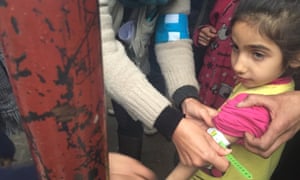
A Unicef employee measures the arm of a malnourished child in Madaya
 A Unicef employee measures the arm of a malnourished child in Madaya on 14 January, when a second aid delivery reached the Syrian town. Photograph: AFP/Getty

Five people have starved to death in the past week in the Syrian town of Madaya, where a single biscuit sells for $15 (£10) and baby milk costs $313 per kg, despite two emergency United Nations aid deliveries to the besieged town, a UN report has said.
Relief workers have reported 32 deaths from starvation in the past month. Last week two aid convoys delivered supplies to the 42,000 people living under a months-long blockade.
Dozens more need immediate specialised medical care outside Madaya if they are to survive, but aid workers from the UN and Syrian Arab Red Crescent have managed to evacuate only 10 people, the report says.
“Since 11 January, despite the assistance provided, five people reportedly died of severe and acute malnutrition in Madaya,” said the UN humanitarian report, published late on Sunday.
The UN secretary general, Ban Ki-moon, said on Thursday that Syria’s warring parties, particularly President Bashar al-Assad’s government, were committing “atrocious acts” and he condemned the use of starvation as a weapon of war in the nearly five-year-old conflict.
The UN says there are approximately 450,000 people trapped in about 15 sieges across Syria, including in areas controlled by the government,Islamic State militants and other insurgent groups.
The UN made seven requests in 2015 to be allowed to bring an aid convoy to the town, and got permission to deliver aid for 20,000 people in October, the report said. After several more requests, the Syrian government allowed a life-saving aid delivery on 11 January and another on 14 January.
About 50 people left the town on 11 January, the report said. The UN has askedSyria to allow the evacuation of a number of others needing immediate care, it said.
Syrian government forces and their allies have surrounded Madaya and neighbouring Bqine since July 2015 and imposed increasingly strict conditions on freedom of movement.
The UN said the humanitarian workers who entered the town last week heard that landmines had been laid since late September to stop people leaving, but many civilians continued to search for food on the outskirts, and some had lost limbs in landmine explosions.
The controls on movement also meant many children had been separated from their parents, leading to symptoms of trauma and behavioural disorders.
Chairs and desks in schools are being used as firewood and there have been unconfirmed reports of women being harassed at military checkpoints and of gender-based violence, the UN said.

MORE AND MORE IRANIUM!

استطلاع لمركز الجزيرة: صورة سلبية لإيران لدى النخب العربية

التوتر السعودي - الإيراني .. جذور الأزمة وتداعياتها

المركز العربي للأبحاث ودراسة السياسات
Link

بلغ التوتر السعودي - الإيراني ذروته، باتخاذ السعودية قرار قطع العلاقات الدبلوماسية مع إيران في 3 يناير كانون ثاني ردًا على مهاجمة سفارتها في طهران وقنصليتها في مشهد وإحراقهما. وقد تصاعد الخلاف بين البلدين في السنوات الأخيرة، بسبب ما تراه السعودية سياسات إيران العدائية تجاهها، ومحاولتها التدخّل في الشؤون الداخلية لدول الخليج العربية، والعمل على زعزعة أمنها واستقرارها، فضلًا عن مساعيها المستمرة لبسط نفوذها، سواء في المشرق العربي أو في اليمن.

جذور الأزمة الراهنة
اختلفت العلاقات السعودية – الإيرانية حاليًا عن النمط الذي كان سائدًا منذ عقود؛ فقد طرأت عليها تغيّرات جذرية. ففي عهد الشاه، عرفت العلاقات بين البلدين حالةً من الاستقرار والتعاون، نتجت أساساً من انتساب الطرفين إلى المعسكر الدولي نفسه الذي كانت تقوده الولايات المتحدة، في فترة الحرب الباردة، وشعورهما المشترك بتهديد الاتحاد السوفياتي وحلفائه الإقليميين. كانت تلك الحالة سائدةً، على الرغم من الأطماع الإيرانية في السواحل الشرقية للخليج العربي، وخصوصاً بعد إعلان بريطانيا رغبتها في الانسحاب من المنطقة، في أواخر ستينيات القرن الماضي، فسارعت إيران إلى احتلال جزر الإمارات الثلاث عام 1971، كما حاولت ضمّ البحرين، لكنها لم تفلح في مسعاها. 


وقد توترت تلك العلاقات بشدة، بعد إطاحة نظام الشاه، وإعلان الجمهورية الإسلامية في إيران عام 1979؛ إذ خرجت إيران من استقطابات الحرب الباردة، وشرعت في محاولة تصدير ثورتها إلى الخارج، وإطاحة الأنظمة المحافظة في منطقة الخليج، واتهمتها بالتبعية للغرب، وخصوصًا الولايات المتحدة. ولذلك، كان متوقعاً وقوف السعودية إلى جانب العراق، ودعمها له في حرب السنوات الثماني مع إيران (1980-1988). وعقب الغزو العراقي للكويت، مطلع تسعينيات القرن الفائت، سرى بعض الدفء في العلاقات السعودية - الإيرانية، بما في ذلك التبادل الدبلوماسي بينهما، كما ساهم وصول الإصلاحي، محمد خاتمي، إلى منصب الرئاسة في إيران ومحاولته الانفتاح على جيرانه والعالم، في إحداث تحسّنٍ أكبر، إلا أنّ العلاقات سرعان ما عادت إلى التوتر بعد الغزو الأميركي للعراق عام 2003. وازدادت سوءاً بعد وصول محمود أحمدي نجاد إلى الحكم في صيف 2005.
قاد أحمدي نجاد الذي جاء ممثلاً لتيار أصولي متداخلٍ مع نزعةٍ قوميةٍ طاغية، تحولاً في سياسات إيران الإقليمية؛ مستفيدًا من التغيّر الإستراتيجي الكبير الذي طرأ في المنطقة، بفعل التدخل العسكري الأميركي وضرب العراق وأفغانستان، فقد أخذ يروِّج ليس تصدير الثورة الإسلامية إلى دول الجوار فحسب، كما كان عليه الحال في عهد آية الله الخميني، وإنما أيضًا لإنشاء مشروعٍ إيراني يمتد إلى البحر الأبيض المتوسط مستخدماً أدوات تصدير الثورة، مثل تسييس الطائفية ودعم ميليشيات وأحزاب طائفية في منطقةٍ لا تعدم القابلية لها. 
استغل النظام الإيراني تهرّب النظام الرسمي العربي من تحمّل مسؤولية القضية الفلسطينية، والتنصّل منها عبر مبادرات السلام وغيرها، لاستخدام هذه القضية الوطنية، في محاولة الحصول على شرعية شعبية عربية. كما استغل عدم حلّ مسألة المواطنة أساساً لعلاقة الفرد بالدولة في الأقطار العربية، لتحويل مشاعر الغبن باتجاه طائفي.
وبالتوازي مع إطلاق عملية بناء قوس نفوذٍ إيراني، يمتدّ شمال شبه الجزيرة العربية، ويشمل كامل الهلال الخصيب، أعلن أحمدي نجاد، فور وصوله إلى السلطة، استئناف تخصيب اليورانيوم الذي كان خاتمي قد أوقفه في عام 2003، بعد أن كشفت المعارضة الإيرانية عن وجود برنامج نووي سرّي عام 2002؛ وهو ما أضاف عامل خلافٍ آخر مع السعودية. 

"الربيع العربي" وورقة العرب الشيعة
قبل اندلاع ثورات "الربيع العربي" عام 2011، مثّل العراق نقطة التوتر الأبرز في العلاقات السعودية – الإيرانية؛ إذ ظلّت السعودية تتهم إيران بمحاولات بسط نفوذها على العراق، مستفيدةً من تدمير الولايات المتحدة مؤسسات الدولة العراقية، وفي مقدمتها الجيش، وتسليم السلطة لحلفاء طهران من ميليشيات وأحزاب، عِلماً أنَّ السعودية ودول الخليج العربية لم تقم بأي عمل لمنع الولايات المتحدة من العدوان غير المبرر على العراق المحاصر واحتلاله، والذي لم يكن يشكل أي تهديد.
وقد أوجد اندلاع ثورات "الربيع العربي" أسبابًا أخرى جديدة للخلاف، ففيما اتخذت السعودية موقفاً "مبدئيًا" في معارضة الثورات العربية، تفاوتت مواقف طهران منها بحسب مصالحها، فبعد أن أيدت إيران ثورات تونس ومصر (بوصفها "تعبيراً عن صحوة إسلامية" حسب خامنئي)، وساندت الاحتجاجات الشعبية التي اندلعت في البحرين، وعدّتها أيضًا امتدادًا للصحوة الإسلامية التي بدأت بالثورة الإيرانية عام 1979، تحوّلت الثورة العربية ضد الاستبداد والفساد (في نظرها) إلى "مؤامرة" أميركية إسرائيلية، عندما وصلت إلى سورية، فقد أصبحت المسألة قضية استهدافٍ للمقاومة ومحورها. وما لبث هذا التقييم أن أُسقط على الثورات كلها بأثر رجعي. أما في اليمن، فلم تعترف إيران بوجود ثورة هناك، إلا عندما استولى الحوثيون على السلطة، وحاولوا الاستئثار بحكم البلد في النصف الأخير من عام 2014.
كانت مواقف الطرفين مما يجري في المنطقة محدّدة باعتبارات جيوسياسية واضحة، لا علاقة مباشرة لها بقضايا الشعوب الثائرة ومطالبها. وهي مواقف متناقضة في الجوهر، بين السعودية التي تسعى إلى استدامة الوضع القائم في المنطقة وإيران التي لا تفوّت فرصةً لتغييره لمصلحتها، بوصفها دولةً غير مقتنعة بتركيبة النظام الإقليمي وتوجهات أقطابه. وبعد محاولات فاشلة عديدة بدأت منذ انتصار ثورتها عام 1979، توفرت لإيران، بعد الحرب الأميركية على العراق، فرصةً أفضل لتحقيق طموحاتها في بسط سيطرة كاملة على المشرق العربي، وصولًا إلى المتوسط


وكانت إيران قد استأنفت، بعد الثورة، سياسات بناء ركائز نفوذ لها في مجتمعات الدول المجاورة، عبر محاولات التواصل مع مكوناتها الشيعية، أو ادّعاء تمثيل هذه المكونات وقضاياها، عندما لا تملك تواصلاً مباشراً معها. قام في إيران بعد الثورة نظام ديني مذهبي، يحوّل الدولة إلى أداة في نشره، وفي تسييس الانتماء الطائفي للشيعة عبر العالم، بربطهم بدولةٍ ليست دولتهم. وأخذت إيران على عاتقها مهمة فرض نفسها ممثلاً للشيعة حول العالم (لا يشبهها في ذلك إلا إسرائيل التي تفرض نفسها ممثلًا لليهود في أنحاء العالم كافة، مع الفارق بين دولة إقليمية تنتمي للمنطقة حضارياً وتاريخياً وبين دولة استعمارية استيطانية). ومع ذلك، لم يدّع الشيعة تاريخياً يوماً أنهم شعب أو قومية، وقلما تبلوروا حتى كطوائف منظّمة داخل مجتمعاتهم التي انتموا إليها. أمّا ولاية الفقيه، وهي الأداة الدينية لفرض تبعيةٍ كهذه، فكانت دائماً موقف أقلية بين علماء الشيعة، حتى في إيران نفسها، فيما لم يسمع بها أحدٌ في البلدان العربية، قبل أن يتبناها حزب الله في لبنان. 


وبدأت عملية بناء قوى وأحزاب وميليشيات شكّلت أدواتٍ لإيران، وأذرعاً لها، تستخدمها للتأثير في مجتمعات هذه الدول، وفي علاقات القوة القائمة في الإقليم أيضاً؛ فجرى إنشاء حزب الله في لبنان من الحرس الثوري الإيراني في مطلع الثمانينات، كما ظهر المجلس الأعلى للثورة الإسلامية في العراق، وجناحه العسكري "فيلق بدر" الذي أسسته إيران عام 1982، وأدى دور رأس الحربة للغزو الأميركي للعراق عام 2003، قبل أن يتمكّن، مع مليشيات وأحزاب أخرى حليفة لطهران من الإمساك بزمام الدولة العراقية، بعد الانسحاب الأميركي عام 2011. وكانت آخر محاولات إيران، في هذا السياق، دعم ميليشيا الحوثي في اليمن، ودفعها للعمل "ثلثاً معطلاً"، قبل أن "تجمح" باتجاه السيطرة على البلاد مطلع عام 2015، وكذلك الاختراق المتواصل للحشد الشعبي الذي دعت إليه المرجعية الشيعية في العراق، لكنها لم تعد تملك السيطرة عليه.

الرد السعودي والموقف الأميركي
بعد سقوط صنعاء بيد الحوثيين في سبتمبر/أيلول 2014، بدا أنّ إيران استكملت حصار السعودية؛ ففي الشمال غدت إيران تفاخر بتحكّمها بمفاصل القرار في دمشق وبغداد وبيروت، كما أضحت تتحكّم بصنعاء في الجنوب، وتستمر في محاولات زعزعة استقرار بقية دول الخليج (من البحرين إلى الكويت). وكان ذلك يحدث كله في وقتٍ بدأت فيه الولايات المتحدة تتحدث، صراحةً، عن ضرورة أن تبدأ دول الخليج العربية، وفي مقدمتها السعودية، من الآن فصاعدًا، بتحمّل القسط الأكبر من أعباء الدفاع عن أمنها ومصالحها؛ لأنّ الحليف الأميركي لم يعد يريد القيام بذلك، إلا إذا تعرّضت مصالحه المباشرة للخطر. ونتيجة ذلك، قامت السعودية بتدخل عسكري في اليمن، والذي يعد الأكبر في تاريخها، بعد أن سيطر الحوثيون على العاصمة صنعاء، وأصبحت إيران تهددها من خاصرتها الجنوبية.
من جهة أخرى، أصبح واضحاً، بعد توقيع الاتفاق النووي الإيراني، أنّ الولايات المتحدة تعمل على أساس إنشاء توازنٍ في القوى بين السعودية وإيران، ليصبح بديلاً من ذلك الذي كان سائدًا بين إيران والعراق، قبل أن تحطّمه إدارة الرئيس السابق، جورج بوش الابن عام 2003. لكنّ الإدارة الأميركية خطت خطوةً أخرى باتجاه تبنّي وجهة النظر الإيرانية؛ ففي حين تقوم كل موازين القوى الإقليمية في العالم في إطار ترتيبات أمن إقليمي جماعي، عماده الدولة الوطنية، وضعت الإدارة الأميركية هذا التوازن في منطقة الخليج في سياق صراعٍ طائفي بين "معسكرٍ سني" تقوده السعودية و"معسكرٍ شيعي" تقوده إيران، وهو ما أشار إليه الرئيس باراك أوباما في خطابه الأخير عن حالة الاتحاد، عندما تحدّث عن صراعٍ داخل الإسلام، عمره ألف سنة، وذلك في سياق محاولته التهرّب من اتخاذ موقفٍ في سورية وغيرها. تبنى أوباما سرديةً طائفيةً للصراعات السياسية في المنطقة، عجز عن تسويقها عتاة الطائفيين من الأطراف كافة في منطقتنا.
وقد كشف إعدام السعودية 47 شخصاً متهمين بـ "الإرهاب"، في 2 يناير/كانون ثاني 2016، بينهم رجل الدين الشيعي السعودي نمر النمر، حجم التوتر الكامن في العلاقات السعودية - الأميركية، وخصوصاً في ما يتعلق بالمقاربة الأميركية الجديدة نحو إيران. فالسعودية مضت في تطبيق أحكام الإعدام، متجاهلة تحذيرات أميركية سابقة بأنّ إعدام النمر قد يؤدي إلى تصعيد التوتر الطائفي في المنطقة، بشكل قد يعقّد كثيراً من الملفات الملتهبة في الشرق الأوسط، بما في ذلك الحرب على تنظيم الدولة الإسلامية في العراق والشام "داعش"، وفرص إيجاد حلٍ سياسي في سورية واليمن. وفي حين لم يهتمّ كثيرون بإعدام 47 شخصًا دفعةً واحدةً، ولا حتى بأسمائهم، تصرّفت إيران كأنها ممثل رجل الدين الشيعي السعودي الذي نُفِّذ بحقه حكم الإعدام


زادت هذه المقاربة الأميركية الجديدة للعلاقة مع إيران مخاوف السعودية، وعمّقت شكوكها في نيات الولايات المتحدة؛ ما دفعها إلى مزيدٍ من التصعيد مع إيران؛ فقرّرت قطع العلاقات معها، بعد أن هاجم متظاهرون السفارة السعودية في طهران والقنصلية في مشهد، وأضرموا النار فيهما. ويبدو واضحاً مقدار الحرج والإرباك الذي تسبّب به هذا الحادث للتيار الإصلاحي داخل إيران، الذي رفض، من جهةٍ، الاعتداء على البعثات الدبلوماسية السعودية، بوصفه تصرفًا يسيء إلى مساعي إخراج إيران من عزلتها، خصوصاً بعد توقيع الاتفاق النووي، وكي لا يجري، من جهةٍ أخرى، تكريس صورة عن إيران، باعتبارها لا تحترم القواعد والأعراف الدولية، خصوصاً تلك المتعلقة بحماية البعثات الدبلوماسية، وذلك بعد أن تكرّرت هذه الحوادث، وكان آخرها الاعتداء على السفارة البريطانية في طهران. وعلى الرغم من أنّ التيار الإصلاحي في إيران يعدّ الأقرب إلى مفهوم الدولة، والتعامل مع الشيعة العرب باعتبارهم مواطنين في دولهم، فإنّ الإصلاحيين كانوا، في البداية، مستعدين لمجاراة المتشددين في قضية إعدام نمر النمر، في سياق المزايدات في أجواء انتخابية؛ فإيران على عتبة انتخابات مصيرية لمجلس الشورى (البرلمان) ومجلس الخبراء الذي تُناط به مهمة اختيار المرشد الأعلى للثورة الإسلامية في إيران.

خاتمة
على الرغم من التصعيد الأخير في العلاقات السعودية - الإيرانية، فإنّ حدوده تبقى مضبوطةً بقيودٍ دولية وإقليمية، يصعب تجاوزها، فضلاً عن أنّ الرياض وطهران لا ترغبان في دخول هذه المواجهة، أو تحمّل أعبائها. لذلك، من المرجح أن تستمر المواجهة بينهما في ساحاتٍ إقليمية عديدة مثل اليمن. ولكن، تبقى أهمها سورية؛ إذ لا يمكن أن تقبل السعودية بسقوط سورية في الحضن الإيراني بعد العراق، لأنّ ذلك يعني فعلياً وقوع السعودية نفسها في قبضة النفوذ الإيراني.


Emad Hajjaj's Cartoon: قصف البراميل !

قصف البراميل !

أمير قطر: نعول على روسيا للوصول لتسوية سياسية بسورية

IS THIS THE SAME QATAR?? WHAT THE HELL??
أمير قطر يبحث قضايا المنطقة في موسكو
Link


أعرب أمير دولة قطر، الشيخ تميم بن حمد آل ثاني، اليوم الإثنين، أثناء زيارته الأولى إلى روسيا، عن أمله في أن تلعب موسكو دوراً أكبر في التسوية السياسية للأزمة السورية.
ونقلت وكالة الأنباء الرسمية القطرية (قنا)، عن أمير قطر قوله خلال اجتماعه برئيس مجلس الدوما (النواب) للبرلمان الروسي، سيرغي ناريشكين، إنّ العلاقات بين قطر وروسيا متينة جداً، مؤكداً اهتمام الدوحة بمواصلة تعزيز تلك العلاقات.
وأشار أمير قطر إلى أن الدور الروسى فى العالم ولاسيما في شؤون الشرق الأوسط يزداد، مضيفاً أن الدوحة تعول على "الأصدقاء الروس لكي يلعبوا دورا أكبر، لإيجاد حل لمعاناة الشعب السوري ولتسوية سياسية تلبي مطالب الشعب السوري".

Sunday, January 17, 2016

ما وراء الخبر- هل تسعى إيران لمزيد التدخل بالمنطقة؟

الواقع العربي- واقع المعتقلين السوريين في سجون الأسد

Emad Hajjaj's Cartoon: ايران بعد رفع العقوبات

ايران بعد رفع العقوبات

Yemen: 3 Months Since Houthis ‘Disappear’ Protesters

Ex-Detainees Describe Mass Arrests, Torture in Ibb

Link

(Beirut) – Yemen’s Houthi authorities should immediately provide information about two protesters forcibly disappeared since mass arrests in the city of Ibb on October 12, 2015. Ameen al-Shafaq and Antar al-Mubarizy should be immediately released unless the authorities provide a lawful basis for holding them.
The Houthis, formally known as Ansar Allah, should also compensate protesters who were tortured or ill-treated while in detention and appropriately punish those responsible.
“The Houthis should understand that exercising authority means respecting the human rights of those under their control,” said Joe Stork, deputy Middle East director. “They should produce the two protesters who were ‘disappeared’ and compensate the others who were tortured.”
On the evening of October 12, 34 journalists and activists held a meeting on the sixth floor of the Garden Hotel in Ibb to plan a protest against the Houthis for blocking aid from non-Houthi-controlled neighborhoods in the bordering governorate of Taizz. The plan was to peacefully march from Ibb to Taizz the next morning under the slogan, “A drop of water can save more lives than a gun barrel or a bullet.”
Human Rights Watch interviewed six men who attended the meeting. They said that at about 5 p.m., six armed men in civilian dress stormed into the meeting. The gunmen detained 29 people, while five others managed to escape. One of those who escaped said he saw at least 50 armed men in and around the hotel, as well as four military vehicles, two police vans, and two civilian cars parked outside.
The armed men confiscated the detainees’ phones, wallets, glasses, and other items. “They blindfolded us with our own scarves and handcuffed us,” said Ahmad Kharsan, one of the meeting organizers. Then the men took the detainees to the headquarters in Ibb of the Political Security Organization (PSO), one of Yemen’s main intelligence agencies.
One of those held told Human Rights Watch:
They locked us all together in a 4x5 meter cell. They would only let us take short bathroom breaks three times a day. I fainted twice in the first two days because of health problems. They took me into a different room for my two interrogations, which lasted for about one or one-and-a-half hours. During that time they asked me what I do for a living, why I support the Islamic State, and whether we are getting financial support from Islah [Yemeni Sunni Islamist party opposed to the Houthis], the United Arab Emirates, or Saudi Arabia [countries involved in military operations against the Houthis]. They kept me blindfolded and kept hitting my back, sometimes with a stick and sometimes with their bare hands. The second time, they told me that if I didn’t start confessing they would electrocute or hang me.
Another detainee, Adel Taha, said that he shared a cell with another protester, who, after returning from an interrogation on October 13, had multiple marks on his back. He told Taha that his interrogators had beaten him.
Taha said that during his interrogation on the fourth day after their arrest, three officers accused him of delivering weapons to the “resistance.” He alleged that one beat him with various items, including a club; applied electric shock for up to half a minute more than 50 times; and punched and kicked him in the face, stomach, and chest. He estimated the interrogation lasted for at least an hour. “I could not sleep lying down for the next three days,” he said. “There are a lot of torture details that I am not ready to talk about. I’m on medication now and suffering from different complications. I’m visiting the doctor regularly to try to cope with what happened.” He showed Human Rights Watch photos of severe bruising to his back and thigh.
Taha said that when guards returned him to his cell, they tied his leg to a man with a mental disability, who would kick him whenever he was about to fall asleep. The guards told Taha that the man had strangled another prisoner to death in his sleep.
Kharsan, the meeting organizer said that while he was blindfolded, his interrogators threatened to electrocute him or throw him into pools of freezing or boiling water. They questioned him about the planning of the protest, who was supporting the demonstrators, his view of the Houthis, and about Islah. Another detainee said that he was required to sign a contract promising not to harm the interests of national security to secure his release.
During their detention, the men had no access to family members or legal counsel.
Within a week, the authorities released 23 of the detainees, and they released four more over the following weeks. But they never released al-Shafaq, an Education Ministry director and an Islah youth leader, and al-Mubarizy, an engineer at Yemen Mobile. Guards told their family members that both were moved from the PSO headquarters on October 30, but would not say where they were now detained. The families have had no further news of the men’s whereabouts.
Human Rights Watch has previously reported on arbitrary detentions, ill-treatment, and enforced disappearances by the Houthis in the capital, Sanaa, and other areas that they have controlled since late 2014. These have included numerous political opposition figures, activists, and journalists, many of whom were arrested because of their alleged links to Islah.
While Houthi authorities may take appropriate measures to address security concerns during the armed conflict in Yemen, international human rights law protects basic rights, including the right not to be arbitrarily detained, mistreated, or forcibly disappeared. At a minimum, those detained should be informed of the specific grounds for their arrest, be able to fairly contest their detention before an independent and impartial judge, have access to a lawyer and family members, and have their case periodically reviewed.
Under international human rights law, an enforced disappearance occurs when the authorities take someone into custody and deny holding them or fail to disclose their fate or whereabouts. “Disappeared” people are at greater risk of extrajudicial execution, torture, and other ill-treatment, especially when they are detained outside formal detention facilities, such as police jails and prisons.
The United Nations Human Rights Council should create an independent, international inquiry into alleged violations of the laws of war by all sides to the conflict in Yemen, Human Rights Watch said.
“The Houthis should demonstrate that they are capable of running cities and towns under their authority in accordance with basic human rights standards,” Stork said. “So far they haven’t.”

Aide to top Palestinian negotiator arrested for spying for Israel

COMMENT

This is a sick joke since Erekat himself has been one of the biggest collaborators with Israel. See this:

Chief Palestinian negotiator Saeb Erekat is quoted as saying, "We are offering you the biggest Yerushalayim in Jewish history," using the Hebrew word for Jerusalem. But Israel apparently rejected the offer.


Saeb Erekat denies that the employee, who has reportedly confessed, held a senior position
Link


An aide to Palestine’s chief negotiator has been arrested on suspicion of spying for Israel, the official’s office said on Sunday.
The office of Saeb Erekat, who for decades has represented Palestine during negotiations with Israel, said an employee was arrested two weeks ago for “informing for Israel”.
The employee, who has not been named, had worked with the administration of the Palestinian Authority for over 20 years, according to reports in local media. 
However, Erekat told the Hamas-affiliated news website al-Risalah that the employee did not hold a senior position.
A source told the same site that the employee was arrested by Palestinian intelligence in Ramallah after months of surveillance, and that Erekat was not informed prior to the arrest.
AFP quoted sources as saying that the employee has admitted to spying, but that a criminal investigation is still ongoing.
- See more at: http://www.middleeasteye.net/news/aide-top-palestinian-negotiator-arrested-spying-israel-1416667391#sthash.fBitHpNP.dpuf

Hamas snubs Iranian normalisation offer

Link

Khaled Meshaal
Khaled Meshaal


The Palestinian Islamic Resistance Movement - Hamas - has refused an Iranian offer of normalisation and funds if it severed all ties with Saudi Arabia, Al-Sharq Al-Awsat newspaper reported on Friday.

According to the London based newspaper, Hamas’ top leader Khalid Meshaal rejected the Iranian offer of closer ties with Tehran, fearing this would be seen as an agreement on Iran’s hostile stance toward Saudi Arabia and support for its policy in Syria.
Sources told the newspaper that there is a broad “consensus” within Hamas not to “become involved in any alliance with Iran” in order to preserve its Sunni base in the region.
The sources said that Iran has stopped all forms of support for Hamas due to the latter’s position towards Syria. Similarly, Tehran also stopped its support for Islamic Jihad because of its criticism of Iran’s intervention in Yemen.
Al-Sharq Al-Awsat said that Hamas rejected the Iranian offer despite the financial crisis it has been facing and its inability to pay salaries for its activists and employees in Gaza.
The newspaper reported that Iran’s Foreign Minister Mohamed Javad Zarif made the offer during a recent meeting with the Hamas representative in Tehran, Dr Khalid Al-Kaddoumi.