Wednesday, January 20, 2016

المرزوقي لـ"العربي الجديد": بشار الأسد هولاكو العصر


Link


وصف الرئيس التونسي السابق، المنصف المرزوقي، بشار الأسد بأنه هولاكو العصر، لأنه يدمر سورية ويهجّر ويقتل شعبها، معبّراً عن أسفه لعدم قدرته على فتح حدود تونس أمام الشعب السوري، لكنه سيزور الحدود التركية السورية ويدخل المخيمات، ليستضيف أسرة سورية في بيته.
وفيما انتقد المرزوقي دور إيران في دعم بشار الأسد، الذي وصفه بمجرم القرن، واستعداء الدول العربية، تمنى أن تعيد طهران التفكير والنظر بسياستها، "هل تريد الاستمرار بنشر التشيّع وعداء الشعوب العربية، أم تعيش مع جوارها بشكل سلمي آمن؟".
التقى "العربي الجديد" الرئيس المرزوقي بإسطنبول، وطرح عليه تقييمه لتونس بعد مرور خمس سنوات على الثورة، ولماذا عاد للعمل السياسي، عبر تشكيل حزب "تونس الإرادة" بعد التوقف لعام كامل.
هذا نص المقابلة:
* هل نجحت الثورة التونسية وانتقلت إلى الديمقراطية بعد مرور الذكرى الخامسة على انتصارها وهروب الرئيس بن علي؟
** لا يمكننا القول إن الثورة التونسية نجحت، بل تعدينا العقبة الكبرى، لكننا ما زلنا بعيدين كل البعد عن الأفق الذي حددناه، أي الحرية والكرامة والتشغيل، وربما تراجعنا خطوة، لأن الديمقراطية المزيفة التي تعيشها تونس، هي بناءٌ هشّ، ودخل فيه كثير من المال والإعلام الفاسد، وما زال هناك عمل كثير ينتظرنا لنبني ديمقراطية حقيقية.
* تُكثر من قول: ديمقراطية هشّة ومزيّفة، ما هي ملامح هذه الديمقراطية وخلافها عن مسعاكم الديمقراطي؟
** حقيقة، أشعر بخطر كبير لما آل إليه الحال بتونس، وربما ما سيؤول إليه ببعض بلدان الثورات العربية، فنحن ناضلنا لعشرات السنين من أجل حرية الرأي والتعبير، وما حصلنا عليه باسم الديمقراطية، كان نتيجة التقاء عصابات سياسية تجتمع في أحزاب يمولها المال.
للأسف، دخلنا من أسوأ أبواب الديمقراطية، وهذه ليست مشكلة الأخيرة بذاتها، كما يحاول البعض التكريس والتسويق، بل كانت التجارب سيئة ويجب تحليلها لنعبر إلى تجربة أكثر نضجاً.
وهنا أحذر إخوتي السوريين، وبقية شعوب الثورات العربية من الديمقراطية المزيفة، لأنها قد تكون أسوأ من الاستبداد، لأنها تعطي واجهة للظلم باسم الديمقراطية، وتصويبها باعتقادي بيد الشعوب.

اقرأ أيضاً: المرزوقي: الثورة بحاجة إلى الزمن لتحقق أهدافها
* وهل لهذا السبب عُدتم للعمل السياسي بعد توقف لعام، عبر تأسيس حزب "تونس الإرادة"؟
** عدنا للعمل النضالي عبر تشكيل الحزب، بعد أن أعطينا فرصة لمدة عام كامل لحكم السبسي، ولأن ما أتى بعد الثورة أشبه بالشركات السياسية وليس الأحزاب. وعدنا نتيجة الفراغ السياسي، لأن الشعب التونسي ينتظر حركة سياسية لها برنامج ومصداقية، ولها مبادئ ولا تنطلق من المصالح فحسب، ولهذا كله، أنا مضطر للعودة للنضال والعمل السياسي لوضع تونس على السكة الصحيحة.
* كيف تتوقعون حصتكم بالمشهد السياسي، علماً أن عام 2016 سيكون عام مؤتمرات الأحزاب وفرض الوجود على الأرض؟
** أعتقد أن عملية إعادة رسم المشهد السياسي الآن، ستكون واضحة بعد الانهيار السريع للنظام الذي جاء بالرئيس الباجي قائد السبسي للحكم، وهناك إعادة ترتيب البيت السياسي على قواعد أخرى وجديدة، والشركات السياسية المرتكزة على المال والإعلام الفاسد، ستحاول التموضع من جديد، بعد أن ثبت بالتجربة فشلها، لكني أعتقد أنها لن تعطى فرصة أخرى.
* وهل تعتقد أن الثورات المضادة ستسمح بخلق أجواء ديمقراطية صحية؟
** الثورات المضادة التي قامت بعقل وتفكير إسرائيلي ومال إماراتي - أقول إماراتي على مسؤوليتي - وتنفيذ محلي، كان لديها غرفة عمليات موازية لغرف عمليات الثورات، وحرفت الثورات عبر المال والإعلام الفاسد، الذي نفذ أجندة الثورات المضادة. لذا نحن بصدد إعادة تقييم كل الأخطاء التي ارتكبناها لفهم تلك الاستراتيجية، لنبني ردة فعل لمواجهتها.
ومن جملة ما قمنا به، تأسيس مجلس "الدفاع عن الثورات الديمقراطية العربية"، لتوعية شعوبنا من ذلك المخطط، وسنواجهه لأننا ضمن سياق التاريخ وهم ضد التاريخ وسياقه.

اقرأ أيضاً: حزب المرزوقي ينتقد "وضع اليد في يد جلّاد الأمس"
* ولكن أمام ما يمكن وصفه بالتحريض، ألا يخشى على تونس من انفجار وثورة أخرى؟
** هذا ممكن، ولكن نحن نريد للتطور أن يبقى سلمياً ويبقى في إطار الدستور.
* ما يتعلق بسورية، أعلنتم أخيراً أن الرئيس التونسي السبسي رفض استقبالكم وكنتم تحملون شيئاً يخص سورية، ماذا كنت ستقول للرئيس حول سورية؟
** كنت سأطلب منه فتح تونس للإخوة السوريين، إذ ليس من المعقول أن تغلق تونس حدودها بوجه السوريين. كنت أتطلع لتستقبل تونس ألف عائلة سورية على الأقل، والشعب التونسي مستعد لذلك، وقد استقبل مليوني ليبي في ظروف اقتصادية أسوأ مما هو عليه الآن.
لكن السبسي رفض استقبالي، رغم أن باب مكتبي كان مفتوحاً للجميع وقت كنت رئيساً، والسبسي بالذات استقبلته ثلاث مرات، لذا أنا أعتذر للشعب السوري، وسأزور الحدود والمخيمات وأستقبل أسرة سورية ببيتي، وهذا ما يمكنني فعله الآن، وهذا أضعف الإيمان.
هذا الأمر مطروح أمام جميع الزعماء العرب، هل ستستمرون بغلق حدودكم وعقولكم أمام هذه المأساة وتتصرفون وكأن السوريين سكان المريخ؟ أم ستعترفون أن هذا الشعب عربي.
أيها الحكام العرب: خذوا مسؤوليتكم أمام شعوبكم وتاريخكم.
ما يجري في سورية اليوم، هو ملحمة وحرب حرية بالنيابة، لتحرير 400 مليون عربي.
وما جرى ويجري، من قتل وإبادة وتهجير للشعب السوري، لم يتعرض له أي شعب بالعالم، كما لم يشهد القرن الحالي، مجرماً كبشار الأسد.
كما أن كل قوى الأرض تكاتفت ضد السوريين وثورتهم، لكنها لم تكسر عزيمتهم، ليبقى شعور بالإعجاب هو الغالب، من شعب يبدأ بالبناء منذ الآن، ليقول للأسد ومن يؤيده، أنتم تخربون ونحن نبني، نحن بدأنا البناء وأنتم تدمرون، ستتوقفون عن التدمير لكننا لن نتوقف عن البناء، لأنكم تسوّقون ثقافة الموت وسنبقى نسوّق ثقافة الحياة.

Northern Iraq: Satellite images back up evidence of deliberate mass destruction in Peshmerga-controlled Arab villages


Link

Peshmerga forces from the Kurdistan Regional Government (KRG) and Kurdish militias in northern Iraq have bulldozed, blown up and burned down thousands of homes in an apparent effort to uproot Arab communities in revenge for their perceived support for the so-called Islamic State (IS), said Amnesty International in a new report published today.
The report, Banished and dispossessed: Forced displacement and deliberate destruction in northern Iraq, is based on field investigation in 13 villages and towns and testimony gathered from more than 100 eyewitnesses and victims of forced displacement. It is corroborated by satellite imagery revealing evidence of widespread destruction carried out by Peshmerga forces, or in some cases Yezidi militias and Kurdish armed groups from Syria and Turkey operating in coordination with the Peshmerga.
 “KRG forces appear to be spearheading a concerted campaign to forcibly displace Arab communities by destroying entire villages in areas they have recaptured from IS in northern Iraq. The forced displacement of civilians and the deliberate destruction of homes and property without military justification, may amount to war crimes,” said Donatella Rovera, Amnesty International’s Senior Crisis Response Advisor, who carried out the field research in northern Iraq.

KRG forces appear to be spearheading a concerted campaign to forcibly displace Arab communities by destroying entire villages in areas they have recaptured from IS in northern Iraq

Donatella Rovera, Senior Crisis Response Advisor

Arab residents who fled their homes are also barred by KRG forces from returning to recaptured areas.
“Tens of thousands of Arab civilians who were forced to flee their homes because of fighting are now struggling to survive in makeshift camps in desperate conditions. Many have lost their livelihoods and all their possessions and with their homes destroyed, they have nothing to return to. By barring the displaced from returning to their villages and destroying their homes KRG forces are further exacerbating their suffering,” said Donatella Rovera.
The report reveals evidence of forced displacement and large-scale destruction of homes in villages and towns in Ninewa, Kirkuk and Diyala governorates – which Peshmerga forces recaptured from IS between September 2014 and March 2015.
Though KRG officials have justified the displacement of Arab communities on grounds of security, it appears to be used to punish them for their perceived sympathies with IS, and to consolidate territorial gains in “disputed areas” which the KRG authorities have long claimed as rightfully theirs. This is part of a drive to reverse past abuses by the Saddam Hussein regime, which forcibly displaced Kurds and settled Arabs in these regions.
“KRG forces have a duty to bring to justice in fair trials individuals who are suspected of having aided and abetted IS crimes. But they must not punish entire communities for crimes perpetrated by some of their members or based on vague, discriminatory and unsubstantiated suspicions that they support IS,” said Donatella Rovera.
Satellite imagery corroborates evidence of mass destruction
Thousands of residents of Arab villages near Jalawla, in the east of Diyala governorate, fled after IS fighters attacked the area in June 2014. More than a year after the area was recaptured by Peshmerga forces, residents are unable to return and the villages have been largely destroyed.
Maher Nubul, a father of 11 who left his village, Tabaj Hamid, in August 2014 said the whole village was “flattened” after it was recaptured by the Peshmerga four months later.
“All I know is that when the Peshmerga retook the village the houses were standing. We could not go back but could see it clearly from the distance. And later they bulldozed the village, I don’t know why. There is nothing left. They destroyed everything for no reason,” he said.
There is nothing left. They destroyed everything for no reason

Maher Nubul, displaced resident of Tabaj Hamid

Satellite image of the Iraqi village of Tabaj Hamid before it was razed.
Village of Tabaj Hamid in June 2014 before it was razed © Digital Globe


Amnesty International researchers who visited the area in November 2015 found that the village of Tabaj Hamid had been razed to the ground. Satellite images obtained by the organization also show that not a single structure is left standing. 

Satellite image of the Iraqi village of Tabaj Hamid after it was razed. No building were left standing by January 2015.
Tabaj Hamid, January 2015 after the village was razed to the ground © Digital globe

In Jumeili, researchers found the main part of the village had been reduced to rubble. These findings are also supported by satellite imagery evidence showing 95% of all walls and low lying structures have been destroyed. Of the structures that remain the majority of rooftops and windows have been damaged or destroyed.
© Digital Globe, Jumeili in June 2014 and in January 2015
In both villages, satellite images also reveal possible bulldozer tracks near the piles of rubble and debris where buildings once stood.
Satellite images also provided evidence of large-scale destruction in two nearby villages, Bahiza and Tubaykh.
Amnesty International also found evidence of repeated deliberate mass destruction of homes and property in Arab villages under Peshmerga control in Iraq’s north-western Ninewa governorate.
“After our homes were burned down we were ready to roll up our sleeves and repair them, but the Peshmerga did not allow us to go back and then the Yezidi militias came back and bulldozed and destroyed everything, including our orchards; they left nothing for us to salvage,” said Ayub Salah, a resident of Sibaya, north-east of Mount Sinjar.
In Sibaya and four nearby Arab villages – Chiri, Sayir, Umm Khabari and Khazuqa – most of the houses were first burned down in January 2015 by members of Yezidi militias and fighters from Syrian and Turkish Kurdish armed groups operating in the Sinjar region. They were destroyed when the perpetrators returned with bulldozers five months later.
Amnesty International visited the area in November 2015 and found the villages largely destroyed.
During a previous visit in April 2015, many houses had been ransacked and burned, but were still standing.
Satellite images obtained for four of the five villages also show them largely destroyed. In Sibaya, for example, more than 700 structures were damaged or destroyed out of an estimated total of 897 structures.

In Sibaya, more than 700 structures were damaged or destroyed, out of an estimated total 897 structures. Intact (green) and damaged or destroyed structures (red).
In Sibaya, 700 structures were damaged or destroyed (red), structures intact (green) out of an estimated total of 897 structures © CNES 2015, Distribution AIRBUS DS

In a nearby Arab village, Barzanke, where virtually every single house had been destroyed, Peshmerga tried to blame the destruction on IS fighters, despite a lack of any evidence to support these claims and their own colleagues’ admission that they had destroyed the village to ensure that Arab residents would have nothing to return to. 
The KRG must immediately cease the unlawful destruction of civilian homes and property and provide full reparation to all civilians who have had their homes demolished or looted.

Donatella Rovera
On at least two occasions shortly after their arrival in destroyed villages, Amnesty International researchers were apprehended by Peshmerga, who escorted them out of the area and prevented them from taking photographs.
End unlawful destruction, forced displacement
The KRG authorities have faced unprecedented humanitarian and security challenges, since hundreds of thousands of people sought refuge in areas under their control after IS captured large parts of northern Iraq in 2014. However, these difficult circumstances cannot excuse deliberate destruction and other serious abuses committed by KRG forces and other militias documented in this report.
“The KRG must immediately cease the unlawful destruction of civilian homes and property and provide full reparation to all civilians who have had their homes demolished or looted. Civilians who have been forcibly displaced must be allowed to return to their homes as soon as possible,” said Donatella Rovera.
“The Peshmerga must not allow armed groups and militias who are their allies in the fight against IS to commit such abuses. They have been in control of this area since they recaptured it from IS in December 2014 and have a responsibility to ensure the protection of all communities.
“It is also critical that the international community – including members of the US-led coalition fighting IS such as the UK and Germany and others who are backing the Peshmerga forces – publicly condemn all such violations of international humanitarian law. They must also ensure that any assistance they are providing to the KRG is not fuelling such abuses.”

Ending Syria’s Atrocities Is a Prerequisite to Ending Its War


Kenneth Roth

Executive Director

Link

The warring parties in Syria are to resume talks in Geneva on January 25 with the aim of ending a conflict that has killed hundreds of thousands of Syrians and displaced millions. What will it take for the talks to succeed?
In October in Vienna, the main foreign actors in the war, including Russia, adopted guiding principles for the talks. They speak of the eventual defeat of the self-proclaimed Islamic State (ISIS) “and other terrorist groups,” maintenance of Syria’s prewar borders, and the protection of minority groups and state institutions. 
Yet major points of dispute remain, and the Vienna principles outline no plan to build the trust among the warring parties needed to facilitate difficult compromises. Diplomacy will not be enough if the warring parties continue the attacks on civilians and other atrocities that are driving Syrians apart.
The war has continued for so long in part because both the Syrian government and the armed groups aligned against it believed that they could prevail militarily. Russia’s entry into the war may have helped to dispel those illusions. Its airpower has been enough to bolster the Syrian government against collapse but not to make significant progress against the opposition. Meanwhile, the rise of ISIS and its demonstrated ability to attack in Europe, as well as the mass exodus of Syrian refugees, have led many external actors to renew their push for a political compromise. They hope to encourage their Syrian allies to fight ISIS and other extremist groups like Jabhat al-Nusra rather than each other. 
One of the biggest open questions for negotiation concerns the fate of President Bashar al-Assad and other senior officials. They are the architects of a brutal strategy of indiscriminate attacks in populated areas held by the armed opposition, as well as sieges imposed on civilian populations and the mass torture and execution of prisoners. Although no reliable figures exist for the total number of civilians killed in the Syrian war, there is broad agreement that the Syrian government has been responsible for a significant majority.
Because of the government’s history of atrocities, the opposition demands that Assad leave power. On the other hand, with the possible exception of extremist groups, no one has an interest in the Syrian state collapsing, since the loss of its security forces and judicial system could yield chaos even worse than today’s conflict, especially for Syria’s minorities. Because Assad’s abrupt departure might deal a symbolic blow that would jeopardize the Syrian state, a managed transition with an orderly transfer of power to a new government or transitional authority would be a compromise that should be in most parties’ interest. 
In a recent interview, President Vladimir Putin seemed to recognize that eventually Assad must go, but he said he would consider a replacement only after a new constitution and elections. The Vienna declaration speaks of UN-supervised elections. But given Syria’s turmoil and displacement, credible elections will take a long time to hold. It is extremely unlikely that the opposition would settle for such an indefinite timetable when ridding the country of Assad and his henchman is its primary goal. 
Instead, a more productive route would be to establish a coalition government by agreement, tasked with running the country pending constitutional reform and elections. The Vienna declaration calls for “credible, inclusive, non-sectarian governance.” Such a government would need to be led by figures with credibility among both Syria's Sunni majority and the Alawite and other minorities that have largely entrusted their fate to the current government.
Syrians participating in the negotiations would determine the members of this coalition. But the possibility for compromise—and the likelihood of the Vienna principles being met—would increase greatly if the international community including Russia demanded that the new government exclude people from any side who, through a fair, open, and contested process, are found responsible for serious abuses. That is likely to include Assad, his chief lieutenants, as well as leaders of armed groups that have been responsible for regular atrocities. 
As it sees the writing on the wall, the Assad government will likely seek amnesty for its crimes. Russia should join other nations in rejecting that request. As a general rule since the early 1990s, the international community has rightly refused to give its imprimatur to amnesties for mass atrocities. Rejection is required by international law, respects the victims, and avoids encouraging further atrocities.
In any event, an amnesty in Syria would not guarantee against prosecution. If a future Syrian government joined the International Criminal Court and consented to retroactive jurisdiction, the court would not accept an amnesty for mass atrocities. Foreign courts exercising universal jurisdiction over alleged Syrian war criminals found on their territory would also be free to ignore an amnesty. Precedents from Argentina, Chile, and Peru show that even in countries where the atrocities occurred, amnesties granted under pressure of violence can be ruled invalid.
That said, Assad and other officials can hardly be expected to deliver themselves directly to The Hague.  As a practical matter, they could either use their power in Syria to shield themselves or, if weakened, flee to Moscow or Tehran, leaving for another day the issue of their prosecution and trial.  
Achieving an accord along these lines will require difficult compromises by all involved.  That necessitates a level of trust among the warring factions that is currently lacking. It is difficult to shake hands with opponents who are killing one’s families and neighbors.
That is why it is so important to stop the slaughter of civilians. All sides have been responsible for such killing, but as noted, measured by the number of victims, Syrian government forces are mainly responsible. Because the Syrian government today depends for its survival in large part on Russia’s military support, the Kremlin has enormous influence in Damascus. It should use that influence to press Assad to stop attacking civilians, as well as besieging civilian populations, and torturing and executing perceived opponents. 
Taking these steps are not just a byproduct of a deal in Geneva. They are a prerequisite. As the Geneva talks recommence, negotiators should not treat the atrocities as a sideshow, as the Vienna declaration did. Instead, they should use their substantial collective influence to insist on an end to them now. 

Al-Jazeera Cartoon: Sectarian Militias in Iraq

كاريكاتير: تطهير

وفاة جرحى حوثيين في طهران والدفن بإيران

Link
جنازات خرجت الشهر الماضي في صنعاء لمسلحين حوثيين لقوا مصرعهم في المعارك مع الجيش والمقاومة اليمنيين (الأوروبية)
قالت وكالة أنباء فارس الإيرانية إن أربعة من مقاتلي جماعة الحوثي توفوا بأحد مستشفيات طهران متأثرين بجراح أصيبوا بها في اليمن أثناء المعارك الدائرة هناك مع القوات الموالية للرئيس عبد ربه منصور هادي.
وأضافت الوكالة أن القتلى الحوثيين الأربعة سيُشيعون في إيران ويُدفنون في محافظة مازندران شمالي البلاد.

وعزت الوكالة دفن هؤلاء المقاتلين في إيران لتعذر عودة جثامينهم إلى الأراضي اليمنية. وفي مارس/آذار الماضي تحدثت تقارير عن نقل عشرات الجرحى الحوثيين إلى مستشفيات في إيران لتلقي العلاج.
وكان هؤلاء من جملة المصابين في تفجيرات استهدفت مساجد للحوثيين بصنعاء, وقتل فيها نحو 150 شخصا, وتبناها حينها تنظيم الدولة الإسلامية. يشار إلى أن قتلى غير إيرانيين من المليشيات الشيعية  التي تقاتل في سوريا إلى جانب نظام الرئيس بشار الأسد يتم دفنهم في إيران.

وتعلن إيران بوضوح دعمها لجماعة الحوثي التي تقاتل في اليمن إلى جانب قوات الرئيس المخلوع علي عبد الله صالح, وتتهم أطراف يمنية وغير يمنية طهران بأنها أمدّت الحوثيين في السنوات القليلة الماضية بكميات كبيرة من الأسلحة.

الاتجاه المعاكس - لماذا رفضت إسرائيل إسقاط نظام الأسد؟


EXCELLENT!

Russia, Israel and America are on the same page in Syria

Faisal Al-Qassem 

Link
Dr Faisal Al-Qasim
Dr Faisal Al-Qasim


The ridiculous and lying members of the so-called “axis of “resistance and defiance” have given us headaches since the beginning of the Syrian revolution with their talk about those plotting against Syria; they claim that such people want to move it from the “axis of resistance” to the axis of subordination to the US and Israel. The conflict in Syria has been portrayed as one between the US and its supporters on one side and Russia and the “axis of resistance” on the other. This talk has been shown to be nonsense after the Russians and Israelis started coordinating their operations in Syria in collaboration with the Assad regime and its “defiant” allies such as Iran and Hezbollah.
I do not know why the Arab nationalists, resistance and what remains of the weak left-wing insist on portraying the conflict in Syria as one between East and West, as if we were still caught up in the Cold War between the USSR and America. It is true that Russia’s President Vladimir Putin is trying to restore the glory of the Soviet Union with a new mentality and ideology, but there is no potential for Moscow to challenge the US in the Middle East. I do not believe that the Russians are filling the vacuum left by America in the region, as if the Americans have been defeated by the Russian expansion.
The blatant Russian interference in Syria has no relation whatsoever to America’s weakening nor to Moscow’s increased power. The whole matter is associated with Israel’s interests in Syria specifically and across the region in general, as well as with the mutual interests of the US and Russia. For example, Russia could not intervene so strongly in Egypt without Israeli, and therefore US, blessing. Egypt is still in America’s pocket politically and militarily, and its military budget still feeds off US aid. If Russian influence and power had an impact on US influence in Egypt, then Putin would not have dared even to greet the Egyptians. Notice too how Jordan is now coordinating with Russia more than with America; would Jordan have dared to do that if it didn’t have the green light from Israel and the US?
Russia’s intervention in Syria occurred after Israel-Russia deliberations at the highest political, military and intelligence levels. Putin and Israeli Prime Minister Benjamin Netanyahu met twice during the two weeks preceding the intervention. Former Israeli Foreign Minister Avigdor Lieberman has admitted that Russian-Israeli coordination in Syria is taking place 24/7.
Even young children know that US policy in the Middle East is dictated by Israel and not the State Department in Washington. If Tel Aviv is driving US foreign policy in the region, then it is fairly obvious that America must approve of the Russian intervention in Syria when it happened with the blessing of Israel.
As such, it is shameful to hear some Syrian, Lebanese and Iranian individuals supporting the Syrian regime and boasting about Russia’s role in Syria, as if it is confronting Israel and the US. How ridiculous that they say that Russia came to cleanse Syria of US-backed terrorists and restore stability, as if Russia is a charity coming to help the needy. There is nothing to suggest that Russia is fighting the Americans in Syria. At best, it may be a process of dividing interests between the Russians and the Americans, if the Russians aren’t actually acting on behalf of the American in Syria, that is, as they did when they put pressure on the Syrian leadership to hand over its strategic chemical weapons to serve US and Israeli interests. Those who remove Syria’s strategic weapons to serve Israel are undoubtedly closer to Tel Aviv than to Damascus. Anyone cheering the Russian intervention in Syria must remember the Kerry-Lavrov agreement — which some described at the time as a new and possibly more dangerous version of the 1916 Sykes-Picot agreement —to tear the region apart into US and Russian spheres of influence. US Senator Lindsey Graham admitted in his questioning of the US Secretary of Defence a while back that America willingly sold Syria to Russia and Iran as part of a game of exchanging interests.
Hence, no matter how much the resistance and defiance axis gloats about its strategic alliance with Russia, we know that the Israel-Russia alliance remains much stronger. We must not forget that there are more than a million Russian Jews in Israel; they control Israel policy and maintain close ties with their homeland. Putin wore a Jewish skullcap during his visit to the “Temple Mount” excavations under Al-Aqsa Mosque, blessing the work that will one day destroy the third holiest site in Islam.
According to international analysts, Russia is weaker than America; it is a regional force, not a global superpower and still dependent on oil and gas exports. While it is true that Russia has a powerful military and impressive arsenal, this alone does not make it a threat to the US. That is why what Russia is doing in Syria and other areas must be done with US consent, or at least its approval. If Russia’s actions in Syria were not to America’s liking, Russia would not have dared to send even a paper aeroplane there.
Anyone talking about a Russia-US conflict in Syria similar to that during the Cold War has little knowledge of the situation. If the US wanted to hinder the Russian intervention, it would have given the Syrian opposition a handful of anti-aircraft missiles to shoot down Russian aircraft in Syrian airspace. That would have damaged Russia’s prestige and turned it into an international laughing stock overnight. It is true that Russia’s latest national security document describes America and NATO as being the greatest threat to Russia, but when it comes to Syria, the Russians, Israelis and Americans are all on the same page.
Translated from Al Quds Al Arabi, 15 January, 2016.

Tuesday, January 19, 2016

لماذا رفضت إسرائيل إسقاط نظام الأسد؟

المرزوقي يقرر استقبال عائلة سورية لاجئة في بيته

Link

COMMENT

President Marzouqi is the most decent, honest and intelligent Arab leader alive. I just wish we had more like him. 

13
إسطنبول ـ الأناضول ـ أعلن الرئيس التونسي السابق، محمد المنصف المرزوقي، اليوم الثلاثاء، عن قراره باستضافة عائلة سورية لاجئة في بيته، مؤكداً أنه لو كان في موقع رئيس البلاد، “لفتح الأبواب أمام هؤلاء اللاجئين”.

جاء ذلك في مؤتمر صحفي، عقده اليوم في اسطنبول التركية، على هامش مشاركته في “الملتقى السوري الأول للتمكين المجتمعي”، الذي ينظمه “المعهد السوري الإنساني للتمكين الوطني”(غير حكومي).
وقال المرزوقي: “قررت أن أستضيف عائلة سورية في بيتي (لم يحدد متى، ومن هذه العائلة، أو أية تفاصيل أخرى)، حيث لا أستطيع فتح أبواب تونس، وأسأل الزعماء العرب، هل ستستمرون بغلق عقولكم وقلوبكم للسوريين، وهل هم من سكان المريخ”.
وأشار إلى أنه كان سيطلب من الرئيس الحالي، الباجي قايد السبسي “فتح أبواب تونس للأخوة السوريين والتي لا يجب أن تبقى مغلقة”، مضيفاً أن “الشعب التونسي مستعد لاستقابل مثل هذه العئلات، كونه استقبل من قبل، مليوني ليبي، ولكنه (السبسي) رفض هذا الأمر، واعتذر للشعب السوري عن التقصير الذي لا يتحمل مسؤوليته”.
ورأى أن “أكبر خطر يهدد سوريا، هو تفريق الشعب لطوائف”، داعياً السوريين إلى الالتزام بما أسماه “قسم درعا” وهو (واحد واحد واحد الشعب السوري واحد).
وبحسب إحصاءات رسمية، فإن عدد اللاجئين السوريين الموجودين في تونس يقدر بـ4 آلاف لاجئ يتلقّى معظمهم دعما من المؤسسات الاجتماعية.
إيرانياً،
اعتبر الرئيس التونسي السابق، أن الدور الذي تلعبه إيران “سلبي بعلاقاتها مع العالم العربي، ولها دور فيما يحدث للشعب العراقي، والسوري، والليبي، واليمني”، قائلاً في هذا الصدد: “يجب على السلطات الإيرانية تحديد هل تريد الصراع مع الدول العربية كلها، بنشر التشيع وقضية الميليشيات في العراق، ودعم بشار الأسد؟ لأنها بصدد استعداء كل العرب لها”.
من جهته، أعرب أيمن نور، مؤسس حزب الغد المصري، في المؤتمر نفسه، عن إيمانه في أن “الثورات العربية هي واحدة، ودوافعها وأزماتها واحدة، وتحدياتها كذلك”، داعياً شركاء الثورة (25 يناير 2011) في مصر إلى “التوحد، لأنه لا سبيل غير ذلك”.
وقال نور، إن الأزمة في مصر “ليست في سقوط النظام، وإنما في تحقيق بدائل، ولا سبيل إلا من خلال توحيد الجهود، ونحن أمام مسار طويل من النضال لاستعادة قيم ومبادئ الثورة، وهذا المسار لن يتوقف عند تاريخ بعيد”.
بدورها، أكدت رانيا قيسر، مديرة المعهد السوري الإنساني للتمكين الوطني، في المؤتمر ذاته، على “ضرورة محاسبة المجرمين في سوريا، من أجل النهوض بالمجتمع، ونسيان الطائفية في البلاد”.
وكانت أعمال “الملتقى السوري الأول للتمكين المجتمعي”، انطلقت في مدينة اسطنبول، اليوم، بهدف “إنشاء مجتمع سوري أفضل من خلال عدة برامج علمية واقتصادية”، بحسب منظميه.
وشارك في هذا الملتقى، الذي ينعقد ليوم واحد، إلى جانب المتحدثين في المؤتمر الصحفي، العديد من النخب السياسية السورية والعربية.

DNA 19/01/2016 جعجع يتبنى ترشيح عون

Israel: Businesses Should End Settlement Activity

Settlement Business Links Foster Abuse

Link

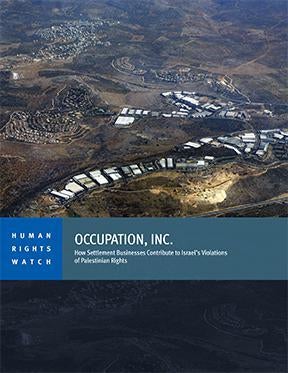
(Jerusalem) – Businesses should stop operating in, financing, servicing, or trading withIsraeli settlements in order to comply with their human rights responsibilities, Human Rights Watch said in a report released today. Those activities contribute to and benefit from an inherently unlawful and abusive system that violates the rights of Palestinians.
The 162-page report, “Occupation, Inc.: How Settlement Businesses Contribute to Israel’s Violations of Palestinian Rights,” documents how settlement businesses facilitate the growth and operations of settlements. These businesses depend on and contribute to the Israeli authorities’ unlawful confiscation of Palestinian land and other resources. They also benefit from these violations, as well as Israel’s discriminatory policies that provide privileges to settlements at the expense of Palestinians, such as access to land and water, government subsidies, and permits for developing land.
Barkan, located in the occupied West Bank, is an Israeli residential settlement and industrial zone that houses around 120 factories that export around 80 percent of their goods abroad. In the background is the Palestinian village of Qarawat Bani Hassan.

“Settlement businesses unavoidably contribute to Israeli policies that dispossess and harshly discriminate against Palestinians, while profiting from Israel’s theft of Palestinian land and other resources,” saidArvind Ganesan, director of the business and human rights division. “The only way for businesses to comply with their own human rights responsibilities is to stop working with and in Israeli settlements.”
More than a half million Israeli settlers live in 237 settlements throughout the Israeli-occupied West Bank, including in East Jerusalem. Successive Israeli governments have facilitated this process, but businesses also play a critical role in establishing and expanding settlements, and enabling them to function.
Under the United Nations Guiding Principles on Business and Human Rights, companies should respect human rights and identify and mitigate any adverse human rights impact their operations may cause. But because of the nature of settlements, which are inherently illegal under the Geneva Conventions, companies cannot mitigate their contribution to Israel’s violations so long as they operate in settlements or engage in settlement-related commercial activity, Human Rights Watch said.
“Settlement businesses unavoidably contribute to Israeli policies that dispossess and harshly discriminate against Palestinians, while profiting from Israel’s theft of Palestinian land and other resources. The only way for businesses to comply with their own human rights responsibilities is to stop working with and in Israeli settlements. 

Arvind Ganesan

Director of the Business and Human Rights Division
Businesses engage in a variety of activities that support settlements. Some settlement businesses are directly engaged in managing the practical demands of settlements. Human Rights Watch investigated Israeli bank financing of settlement construction; a global real estate franchise that has a branch in settlements and whose Israeli franchisees market settlement properties; and a waste management company that collects and processes settler garbage in a landfill in the Jordan Valley that exclusively services settlements and Israel.
Other businesses are located in settlements or settlement industrial zones, often drawn by cheap Palestinian labor, low rents, or favorable tax rates. Human Rights Watch investigated a textile manufacturer in a settlement industrial zone that supplies linens to a major American retailer. It relocated to Israel in October 2015. About 20 settlement industrial zones house about 1,000 factories, and Israeli settlers oversee the cultivation of around 9,300 hectares of Palestinian land. Settlement manufacturers and agricultural producers export much of these goods, often wrongly labeling them as made in Israel.
Both types of settlement businesses facilitate Israel’s violations of international humanitarian law. The Fourth Geneva Convention prohibits an occupying power from transferring its civilians into the territory it occupies, and the Rome Statute, the founding treaty of the International Criminal Court, states that such a transfer, directly or indirectly, is a war crime.
Human Rights Watch takes no position on a consumer boycott of settlement companies or on the movement to boycott, divest from, and sanction Israel. Rather, Human Rights Watch is calling for businesses to comply with their own human rights responsibilities by ceasing settlement-related activities.
Other countries should ensure that any import of settlement goods into their territory is consistent with their duty under international humanitarian law not to recognize Israeli sovereignty over the occupied Palestinian territories, Human Rights Watch said. This includes prohibiting such goods from being labeled as made in Israel, excluding them from preferential tariff treatment for Israeli products, and refraining from recognizing any certification – such as organic – of settlement goods by Israeli government authorities.
Settlement businesses also operate on and contribute to the Israeli military’s confiscation of large amounts of land in the West Bank, which it transfers to settlements. That violates the international humanitarian law prohibition on an occupying power using the resources of the territory it occupies for its own benefit. Some of the land is privately owned by Palestinians, violating an additional international humanitarian law prohibition, and the Israeli military severely restricts many more Palestinian landowners from accessing their farmland in the vicinity of settlements.
“Businesses should account for the reality that using Palestinian land, water, minerals, and resources in their settlement operations is unlawful and comes at a great cost to Palestinians,” Ganesan said. “But the tide is turning as more and more businesses are waking up to the reality that it is wrong for them to profit from inherently illegal settlements.”
The Israeli military’s unlawful transfer of Palestinian land to settlements and settlement-related restrictions are aspects of a broader system of discrimination that benefits settlement businesses while devastating the Palestinian economy, Human Rights Watch has found. Human Rights Watch documented the vastly discriminatory settlement system, and the ways in which it gravely harms Palestinians and forcibly displaces them from their land in a 2010 report, “Separate and Unequal.”
Israel all but bars Palestinians from building or extracting natural resources in Area C, the part of the West Bank under its administrative control. Between 2000 and 2012, the Israeli military administration rejected 94 percent of Palestinian construction permit requests, and in 2014, it issued only one such permit. Human Rights Watch investigated one of 11 Israeli-administrated quarries in this area, owned by a European conglomerate. Israel has not approved a new quarry license for a Palestinian company there since 1994, according to the Palestinian Union of Stone and Marble, an independent organization representing more than 500 Palestinian companies.
“Every dollar of stone that settlement businesses extract and sell from the West Bank is a dollar taken from Palestinians,” Ganesan said. “The bottom line is no settlement business should be operating and profiting from land and resources illegally taken from the Palestinian people.”
The World Bank estimated in 2013 that Israeli restrictions in Area C cost the Palestinian economy $3.4 billion annually, approximately equal to 33 percent of Palestine’s GDP. Settlement businesses contribute to and benefit from unlawful and discriminatory policies that leave many Palestinians with no alternative but to work in Israel or settlements.
This system affords Palestinian workers in Israeli settlements few labor protections. Israeli government officials have said they conduct virtually no oversight over labor conditions for Palestinian workers in settlements due to these workers’ ambiguous legal status under Israeli law. This leaves Palestinian workers vulnerable to abuse. In 2007, Israel’s Supreme Court held that the two-track legal system in the West Bank, which applies Israeli civil law to settlers but military law to Palestinians, discriminates against Palestinian workers, but the government has yet to implement the decision. Military law provides some labor protections, such as minimum wage, but since 2006, the Israeli civilian government has been responsible for enforcement.
“Settlement businesses help entrench discriminatory Israeli policies that favor settlers over Palestinians in Area C, even though the settlers should not be there in the first place,” Ganesan said. “Businesses that claim they are helping Palestinians by offering trapped Palestinians minimum-wage jobs with few labor rights protections add insult to injury.”
Human Rights Watch also has issued a question-and-answer document about its research.

ميشيل كيلو متشائم من عقد مفاوضات “جنيف” بشأن سوريا في موعدها

A VERY GOOD PIECE

Link

7075836-10831686
سوريا - الأناضول – أعرب عضو الائتلاف الوطني السوري المعارض، ميشيل كيلو، عن تشاؤمه بشأن عقد مفاوضات “جنيف” بين النظام والمعارضة حول حل سياسي للأزمة السورية في موعدها، 25 يناير/ كانون الثاني الجاري، والذي حدده المبعوث الدولي الخاص إلى سوريا، ستيفان دي ميستورا.
وقال كيلو، الثلاثاء، إن “المفاوضات لن تعقد، وإن عقدت فستكون لجلسة أو جلستين، ولن يترتب عليها شيء”.
وشدد أن “حماية الشعب السوري، هي مسؤولية دولية”.
وأشار الى أن “هيئة المفاوضات العليا(تابعة للمعارضة) المنبثقة عن مؤتمر الرياض(عقد مؤخراً)، تتعرض إلى ضغوط شديدة للدخول في المفاوضات، يقابلها نفور وعدم رغبة من الهيئة، نتيجة الوضع الراهن على الأرض، واستمرار قصف الشعب السوري وحصاره”.
واعتبر كيلو بيان فيينا (30 أكتوبر/تشرين أول)، وقرار مجلس الأمن الدولي 2254 (18 نوفمبر/ تشرين ثاني)، حول الحل السياسي في سوريا، تراجعاً عن وثيقة جنيف (30 حزيران/يونيو 2012)، التي تنص على تشكيل هيئة حكم انتقالي كامل الصلاحيات، لافتاً أن “بيان فيينا هو تفسير لوثيقة جنيف بمنظور روسي وتفاهم أمريكي”.
وأكد كيلو أن “بيان فيينا والقرار 2254، يفتقدان الأداة والمسار والهدف والضمانات الموجودة في وثيقة جنيف، ويعتبران أن هيئة الحكم الانتقالي هي أحد الموضوعات التي سيتم التفاوض عليها، وليس بداية الحل السياسي، كما أن الانتقال السياسي بحسب القرار 2254 ليس إلى نظام ديمقراطي، بل لحكم شامل وذو مصداقية وغير طائفي، وهذا ما يمكن للنظام الحالي أن يدعيه، ويقول أنه يحمل المقومات المذكورة”.
وأضاف كيلو أن “النظام يسعى للتفاوض على حكومة جديدة، وسن دستور جديد، ويرغب أن يأتي بالمعارضة لإبداء الرأي فيها، وهو يسعى إلى انتخاب بشار(الأسد) عن طريق البرلمان وليس الشعب”.
وانتقد كيلو ما اعتبره “تصورات المبعوث الدولي إلى سوريا، ستيفان دي مستورا، الملغومة، الهادفة إلى وقف إطلاق النار المتدرج، بدءاً من المدن وانتهاءاً بالأحياء، والتي تتجاهل هيئة الحكم الانتقالي”، داعياً إياه(دي مستورا) إلى إدراك أن وقف إطلاق النار بناءاً على القرار 2254 يجب أن ينفذ فوراً، ولا يجوز تركه للمفاوضات.
وحول التدخل الروسي في سوريا، أوضح كيلو أن “النظام السوري وروسيا حققا انجازات خلال فترة الـ 4 أشهر السابقة، منذ بدء التدخل الروسي، وبحساب الإنجازات خلال هذه الفترة، يتضح أن روسيا بحاجة إلى 20 عاماً لإنهاء مهمتها في سوريا(في إشارة إلى ضألة تلك الإنجازات)”.
وأكد كيلو أن “فصائل المعارضة باتت بحاجة إلى أسلحة أكثر للتصدي للتدخل الروسي، وأن على الدول الصديقة للشعب السوري تزويدها بالأسلحة المطلوبة”، واصفاً الوضع الداخلي السوري بـ”بيضة القبان” في المنطقة، الذي إذا انهار، فإن الوضع الإقليمي كله سينهار.
وتابع قائلاً: “من غير المنتظر أن يحدث تدخل من دول إقليمية بشكل مباشر في سوريا، فبعض تلك الدول بالرغم من ارتفاع وتيرة تصريحاتها ضد النظام السوري غير قادرة على ذلك بسبب أعبائها ومشاكلها”، لافتاً أن “بإمكان الدول الإقليمية أن تحدث فرقاً دون الحاجة لتدخل مباشر، من خلال تسليح فصائل المعارضة السورية بأسلحة نوعية، ومواصلة دعمها لها خلال تقدمها”.
وكان ممثلين عن 17 دولة من بينهم الولايات المتحدة، وروسيا، إضافة للأمم المتحدة، والاتحاد الأوربي، وجامعة الدول العربية، اتفقوا في العاصمة النمساوية فيينا تشرين الثاني/نوفمبرالماضي، على البدء بمفاوضات بين المعارضة والنظام السوري تتضمن “تشكيل حكومة انتقالية” خلال 6 أشهر يعقبها مرحلة انتقالية تنتهي بإجراء انتخابات خلال 18 شهراً.