Saturday, May 5, 2018

Revealed: Trump team hired spy firm for ‘dirty ops’ on Iran arms deal

Israeli agency told to find incriminating material on Obama diplomats who negotiated deal with Tehran

The Observer

Link

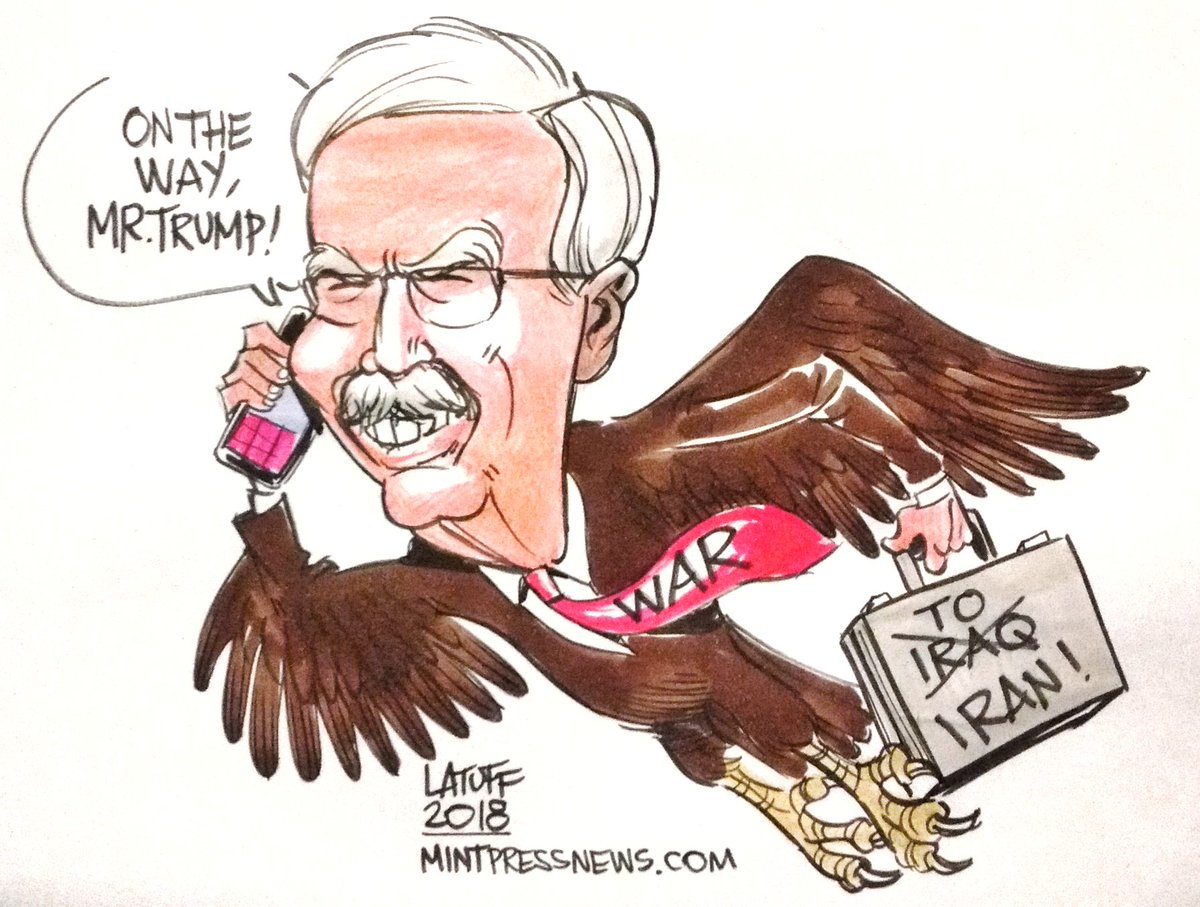
Aides to Donald Trump, the US president, hired an Israeli private intelligence agency to orchestrate a “dirty ops” campaign against key individuals from the Obama administration who helped negotiate the Iran nuclear deal, the Observercan reveal.
People in the Trump camp contacted private investigators in May last year to “get dirt” on Ben Rhodes, who had been one of Barack Obama’s top national security advisers, and Colin Kahl, deputy assistant to Obama, as part of an elaborate attempt to discredit the deal.
The extraordinary revelations come days before Trump’s 12 May deadline to either scrap or continue to abide by the international deal limiting Iran’s nuclear programme.
Jack Straw, who as foreign secretary was involved in earlier efforts to restrict Iranian weapons, said: “These are extraordinary and appalling allegations but which also illustrate a high level of desperation by Trump and [the Israeli prime minister] Benjamin Netanyahu, not so much to discredit the deal but to undermine those around it.”
One former high-ranking British diplomat with wide experience of negotiating international peace agreements, requesting anonymity, said: “It’s bloody outrageous to do this. The whole point of negotiations is to not play dirty tricks like this.”
Sources said that officials linked to Trump’s team contacted investigators days after Trump visited Tel Aviv a year ago, his first foreign tour as US president. Trump promised Netanyahu that Iran would never have nuclear weapons and suggested that the Iranians thought they could “do what they want” since negotiating the nuclear deal in 2015. A source with details of the “dirty tricks campaign” said: “The idea was that people acting for Trump would discredit those who were pivotal in selling the deal, making it easier to pull out of it.”
Benjamin Netanyahu on Israeli television, describing how Iran has continued with its plans to make nuclear weapons.
Pinterest
 Benjamin Netanyahu on Israeli television, describing how Iran has continued with its plans to make nuclear weapons. Photograph: Jim Hollander/EPA
According to incendiary documents seen by the Observer, investigators contracted by the private intelligence agency were told to dig into the personal lives and political careers of Rhodes, a former deputy national security adviser for strategic communications, and Kahl, a national security adviser to the former vice-president Joe Biden. Among other things they were looking at personal relationships, any involvement with Iran-friendly lobbyists, and if they had benefited personally or politically from the peace deal.
Investigators were also apparently told to contact prominent Iranian Americans as well as pro-deal journalists – from the New York Times, MSNBC television, the Atlantic, Vox website and Haaretz, the Israeli newspaper among others – who had frequent contact with Rhodes and Kahl in an attempt to establish whether they had violated any protocols by sharing sensitive intelligence. They are believed to have looked at comments made by Rhodes in a 2016 New York Times profile in which he admitted relying on inexperienced reporters to create an “echo chamber” that helped sway public opinion to secure the deal. It is also understood that the smear campaign wanted to establish if Rhodes was among those who backed a request by Susan Rice, Obama’s final national security adviser, to unmask the identities of Trump transition officials caught up in the surveillance of foreign targets.
Although sources have confirmed that contact and an initial plan of attack was provided to private investigators by representatives of Trump, it is not clear how much work was actually undertaken, for how long or what became of any material unearthed.
Neither is it known if the black ops constituted only a strand of a wider Trump-Netanyahu collaboration to undermine the deal or if investigators targeted other individuals such as John Kerry, the lead American signatory to the deal. Both Rhodes and Kahl said they had no idea of the campaign against them. Rhodes said: “I was not aware, though sadly am not surprised. I would say that digging up dirt on someone for carrying out their professional responsibilities in their positions as White House officials is a chillingly authoritarian thing to do.”
A spokesman for the White House’s national security council offered “no comment” when approached. However, the revelations are not the first time that claims of “dirty tricks” have been aimed at the Trump camp. Special counsel Robert Mueller is leading an investigation into apparent attempts by Trump’s inner-circle to dig up damaging information on Hillary Clinton during the 2016 presidential campaign.
Missiles are paraded through Tehran on Iran’s annual army day on 18 April.
Pinterest
 Missiles are paraded through Tehran on Iran’s annual army day on 18 April. Photograph: Atta Kenare/AFP/Getty Images
Of particular interest is a meeting involving the US president’s eldest son, Donald Trump Jr, his brother-in-law Jared Kushner and then-campaign chair Paul Manafort and a Kremlin-connected Russian lawyer who had promised damaging information about Clinton.
Trump has repeatedly signalled his intention to scrap the Iran deal, denouncing it as “the worst deal ever.” In a January speech the US president accused his predecessor of having “curried favour with the Iranian regime in order to push through the disastrously flawed Iran nuclear deal.”
Last Monday, Netanyahu, accused Iran of continuing to hide and expand its nuclear weapons know-how after the 2015 deal, presenting what he claimed was “new and conclusive proof” of violations.
However, European powers including Britain responded by saying the Israeli prime minister’s claims reinforced the need to keep the deal.
On Thursday the UN secretary general Antonio Guterres urged Trump not to walk away from the deal, warning that there was a real risk of war if the 2015 agreement was not preserved. The following day details emerged of some unusual shadow diplomacy by Kerry, meeting a top-ranking Iranian official in New York to discuss how to preserve the deal.
It was the second time in around two months that Kerry had met foreign minister Javad Zarif to apparently strategise over rescuing a pact they spent years negotiating during the Obama administration. Straw, who was foreign secretary between 2001 and 2006, said: “The campaign against the JCPOA has been characterised by abuse and misinformation. It is the best chance of ensuring Irannever develops a nuclear weapons programme, and it is insane to suggest abandoning the deal could do anything but endanger international security.”

Thursday, May 3, 2018

Why Saudi and the UAE shouldn’t bet on Trump

Saudi strategy should not be to dominate the Sunni world and cast Palestinians aside, but to build an alliance of Sunni states as a balance to Iran

By David Hearst

These are trying times for Mohammed bin Zayed, the Darth Vader of the Middle East who plans to establish a Galactic Empire of “moderate Islamic” states. Liberal in name, police states in practice, all would end up paying tribute to the Death Star, Abu Dhabi.
Emirati military trainers have just been kicked out of Somalia, after $9.6m of cash was seized on a UAE plane. The crown prince’s plans to establish a string of ports along the Indian Ocean, including Berbera in breakaway Somaliland, have taken a hit as a result.
His plans for Libya are not faring any better either. The self-appointed field marshal, Khalifa Haftar, limped back home after a prolonged absence in a Paris hospital. He is reported to have lung cancer that has metastasised to the brain, and walked with difficulty on his return home. 

In the line of fire

Haftar’s enemies, in contrast, are in rude health. The leaders of the two warring city states, Misrata and Zintan, have reconciled. (The Zintanis represented Haftar’s best chance of establishing a military presence in western Libya.) And one of Haftar’s most prominent opponents, leading Muslim Brotherhood member Khalid al-Mishri, has just been voted head of the High Council of State.
The war in Yemen grinds on. The Saudi ambassador in Washington, Prince Khaled bin Salman, a former fighter pilot, claimed in a tweet that his elder brother, Crown Prince Mohammed bin Salman, had ordered the attack that killed Salah al-Sammad, the head of the Houthis’ Supreme Political Council. 
But it may not be wise to crow about this killing. Both the Houthis and pro-Iran Shia groups in Iraq have promised to avenge the death of their leader by killing members of the Saudi royal family. Bin Salman, who is also defence minister and launched the “quick” war in Yemen, is first in the line of fire. Perhaps this is why he now travels with three rings of bodyguards.
When you buy into Trump, you also become a stakeholder in the battles he engages in. Before long you acquire his enemies, too
More broadly, the Saudi-Emirati intervention has long since squandered the support of those Yemenis who invited them in and should have remained their natural allies.
The exiled president of Yemen, Abd Rabbuh Mansour Hadi, has himself become a de facto inmate of Riyadh’s prison palaces. He was forced to sign a paper agreeing to the “formation of a tripartite committee” with Saudi and the UAE “to participate in the management of the situation of his country”. Reports like these seem to confirm the Yemeni view that a war of liberation has morphed into a war of occupation.
Hadi had just lost a power battle with the Emirati-controlled militias over the control of Aden airport. Further humiliation followed when Hadi and an office manager, Abdullah al-Alimi, were transferred to a room with a sofa bed, two armchairs and no blankets for 24 hours, after meeting the king at his residence.

Expensive miscalculation

Curiously, bin Zayed’s biggest disappointment and his most expensive miscalculation may turn out to be none of the above: Somalia, Libya or Yemen. He could yet lose on the most substantial bet he has placed: on US President Donald Trump himself.
Bin Zayed spotted Trump early on in the US presidential campaign, when Hillary Clinton was still the outright favourite.
Clinton was too long in the tooth as a foreign policy hand as far as the Emiratis were concerned. They needed an aggressive novice, a truly blank page on which anyone fast and rich enough could scribble the script. The Qataris had shunned Trump’s advances. Here was an opportunity the Emiratis could not miss.
US President Donald Trump shakes hands with Saudi Crown Prince Mohammed bin Salman in the Oval Office of the White House on 20 March 2018 (AFP)
Bin Zayed alighted upon another novice - a young prince, bin Salman, who was then at two removes from the Saudi throne - in late 2015 and took him on a camping trip in the desert with falcons, the equivalent of a round of golf. The pair was on the yacht with George Nader, the Lebanese-American back channel used by successive US administrations, in which moves were made to re-align the region. 
Bin Zayed instructed bin Salman on what he had to do to become king. The Machiavellian mentor knew how to nurture the ambitions of a power-hungry prince. Bin Zayed introduced bin Salman to Israel, and then to Trump’s family. Bin Zayed promoted bin Salman in Washington, using his able and hyperactive ambassador, Youssef Otaiba. This was when his elder cousin, Mohammed bin Nayef, was still the toast of the US defence establishment. Otaiba then successfully set about destroying bin Nayef’s reputation. 

Visit delayed

The pair of crown princes spent literally a fortune buying Trump’s favours - up to $500bn in defence contracts from Saudi alone over the next decade.
All of this patient groundwork was to culminate in a series of royal visits to Washington, of which bin Zayed positioned himself to be the last. It was scheduled to come at the end of April, but I am informed that it has been postponed. 
Far from being the triumphal tour that bin Zayed and bin Salman expected, the US is not proving easy terrain on which to manoeuvre. True enough, the mass media is gullible and easy to hoodwink. Washington’s think-tanks are venal and eminently buyable. 
READ MORE►
But when you buy into Trump, you also become a stakeholder in the battles he engages in. Before long you acquire his enemies, too. 
I understand that bin Zayed is asking for a written undertaking that neither he nor his entourage will be stopped for questioning by special counsel Robert Mueller about his inquiry into illegal funding of Trump’s election campaign.
Mueller has inside information on bin Zayed’s past dealings from Nader, one of bin Zayed’s former advisers. Bin Zayed wants to avoid the further forensic dissections in the New York Times that this could produce. 

Joker in the pack

Then there is the joker in the pack: Trump himself. Bin Zayed does not want to repeat the fiasco where bin Salman was humiliated by the former reality TV host pulling out a series of large, coloured cards showing how much the kingdom was spending on US arms. Bin Salman visibly winced when the cards were produced, and well he might. 
Nor does he want Trump to repeat the lines he spoke recently to French President Emmanuel Macron, that US allies in the Middle East would crumble “within a week” if the US was not there to protect them.
“They wouldn’t be there except for the United States. They would not last a week. We are protecting them. They have to now step up and pay for what is happening,” Trump bragged.
Emirati distress was such that licensed commentators were instructed to hold forth. One of them was Abdulkhaleq Abdulla, who tweeted that the Arab Gulf States had been around well before the US was founded and would be around years after the US leaves.

Assuaging US Jewish audience

Neither has Trump played ball on Qatar, from the Saudi and Emirati perspective.
No sooner had the two crown princes congratulated themselves on dispatching Secretary of State Rex Tillerson to an early retirement, than they were told by his successor, Mike Pompeo, the same thing: Enough is enough. End the blockade. 
This is not what Saudi Foreign Minister Adel al-Jubeir had expected to hear. They wanted to build a moat on the border of the Qatari peninsula and fill it with nuclear waste. 
From the start, bin Zayed and bin Salman set out to do everything they could, bar physically prostrating themselves, to please Trump and assuage a US Jewish audience. Bin Salman went as far as telling US Jewish leaders, according to reports by Israel’s Channel 10 news, that Palestinians should accept the latest proposals or shut up.
Palestinians from the Shuafat refugee camp in occupied East Jerusalem watch as Israeli forces repair the separation wall dividing the camp from the Israeli settlement of Pisgat Zeev on 27 April 2018 (AFP)
“It is about time the Palestinians take the proposals and agree to come to the negotiations table or shut up and stop complaining,” the crown prince was reported as saying.
Trump and Israel are demanding that Palestinians accept a number of conditions as a basis for restarting talks: the loss of East Jerusalem; the abandonment of the right of return and folding of the refugee issue; and defunding of UNRWA, the UN agency for Palestinian refugees.
But none of this is enough. The thought must by now have occurred, even to them, that Trump’s agenda and theirs do not necessarily match.

Iranian influence

Bin Salman has recast Saudi foreign policy. It was passively aggressive; now it is just plain aggressive. Its strategic aim is to coordinate the Sunni Arab pushback against Iranian military and political influence in Yemen, Iraq, Syria and Lebanon.
An air campaign against Iranian nuclear facilities and its air defence would be the culmination of this policy.
Trump is not part of the region, but the next ruler of Saudi Arabia is. When those American and Israeli fighters return to their bases, Saudi will feel the consequences first and foremost
If there is to be a conventional war against Iran, it will be an American and Israeli one. The Saudi role in such a war would be to provide cover, support and bases, as it was in George W Bush’s war against Saddam Hussein in Iraq in 2003.
The lesson of Iraq was that long before the retreat, the US lost control of the country it had conquered, ceding power to Shia politicians in Iran’s pocket. The Iraqi war was started and conducted by American rules, and ended on American terms. The Saudi interest in these was secondary to Washington’s. The result now is a belated Saudi offensive to buy influence in Iraq. 
Trump is not part of the region, but the next ruler of Saudi Arabia is. When those American and Israeli fighters return to their bases, Saudi will feel the consequences first and foremost. There are any number of highly organised and trained Shia militias who could do the job.

Devastating effects

If Bush’s war on Iraq opened up a sectarian hell in the region, a war on Iran could be far worse, and the Saudi kingdom would find itself in the epicentre of this maelstrom.
Unlike 2003, the Saudis would not be protected by a brotherly feeling from fellow Arab states. When you kick out hundreds of thousands of foreign Arab workers from your land - 800,000 expatriates left Saudi in the last year and a half, according to one estimate - you lose a lot of goodwill in Jordan, Egypt and the other countries that depend on their remittances.
READ MORE►
An Iranian war may suit a US neo-conservative (and Netanyahu’s) regional agenda, but its effects on the stability of Saudi Arabia, and specifically the new king himself, may be devastating. The Saudi strategy should not be to dominate the Sunni world and cast the Palestinians to one side. It should be to build an alliance of Sunni states as a balance to Iran. 
For their personal interest, Bin Salman’s and Bin Zayed’s bet on Trump is looking increasingly like a misjudged one.
David Hearst is editor-in-chief of Middle East Eye. He was chief foreign leader writer of The Guardian, former Associate Foreign Editor, European Editor, Moscow Bureau Chief, European Correspondent, and Ireland Correspondent. He joined The Guardian from The Scotsman, where he was education correspondent.

Friday, April 13, 2018

فوق السلطة- اقترب الجرب يا عرب

Trump is teetering – and tweeting – on a high wire with Syria crisis

Donald Trump’s increasingly bizarre and unpredictable behaviour has created a new international circus, and this week it came to Syria


The Guardian

Link

A GOOD ANALYSIS

Trump apologists claim everything is planned. So when the US president says avenging American missiles are heading imminently for Syria, then casually declares a day later that maybe they aren’t, a perplexed international audience is expected to believe the confusion is deliberate – a clever ploy to keep the bad guys off-balance.
In truth it’s Trump who is teetering on a high wire, wobbling and wavering, with a big drop and gaping chasm below. Trump’s “tweet of the day” approach to the Syrian crisis suggests to a watching world that an unheeding, impulsive president is making it up as he goes along, has no clue which way to jump and would really rather be golfing.
What has happened, they ask, to American leadership? What became of the Pax Americana? For US allies and enemies alike, in these noxious days of fear and loathing across Europe and the Middle East, Trump more closely resembles a circus ringmaster than a commander-in-chief.
Similarities between Trump and PT Barnum, the 19th century showman and hoaxer who ran an internationally notorious traveling circus, are striking. Like Trump, Barnum was a New York-based entrepreneur. Like Trump, he nurtured political ambitions and became embroiled in vexatious litigation. Like Trump perhaps, he subscribed to the old adage, which he supposedly coined, that “there’s a sucker born every minute”.
Trump’s increasingly bizarre and unpredictable behaviour – a Russian TV commentator this week dubbed it “unbelievable” – has created a new international circus, and this week it came to Syria.
It is currently also showing in London and Paris, where disconcerted allies struggle to discern what the US leader really wants while trying to avoid the appearance of dancing to his raucous tune. With one notional crack of the whip – his mention of “smart” missiles zooming towards Damascus – Trump sends a sizable chunk of Bashar al-Assad’s armed forces scurrying for cover. Another crack, and overexcited politicians in Russia are talking about the dangers of an escalating global confrontation and a third world war.
In Israel and Lebanon, worryingly, they have a ringside seat. In Iran, unabashed hardliners are selling tickets. “Roll up, roll up: watch and marvel as we destroy the Great Satan!” Meanwhile, military men in Washington and Moscow reportedly conspire to choreograph a neo-Strangelove conflict in which nothing they value gets broke. It’s like ballet with bombs.
The diplomatic circus spawned by Trump’s shenanigans is something to see. In New York, the UN security council, ostensibly the world’s premier political forum, meets in solemn session only to descend into a shouting match. You unfeeling Russians are protecting a “gas killing animal”, Trump’s minions declare. You Americans are plotting to destroy the Soviet Union, the Putinistas scream back, forgetting (again) that it is already destroyed.
The media, markets and pundits relish all the fun of the fair. No sooner is there a mention of bombing a Middle East country, up goes oil, down go stocks. Out come the pious priests of the left, seizing the moral high ground like an Iraqi tank brigade on the Golan in 1973. Just as fast, the right hits back. Bombing is good for you, say armchair veterans of Iraq, Afghanistan, Libya, Somalia, Yemen and countless other conflicts. You have to kill people to save lives! Watching DJ Trump’s traveling circus of political panjandrums, diplomatic dunderheads and popular pandemonium is like watching bareback riders running round and round a ring.
They chase each other in circles. They get nowhere fast. Nobody “wins”. But it’s a grand spectacle, with the pulse-racing prospect of an ear-splitting finale. Yet in their highfalutin fury and prepaid passion, the performers seem to lose sight of the real issue – the dying people of Douma, sprawled in sand and sawdust where homes used to be.

Friday, March 30, 2018

فوق السلطة - وهّابية بطلب أميركي!

Mohammed Bin Salman is buying America's silence with a fake veneer of cultural openness

Riyadh has delivered a small dose of cultural and economic openness in order to avoid demands for political liberalism

Soumaya Ghannoushi

Link

A number of Gulf countries are heading towards greater cultural and economic "liberalism", but not on the level of politics or governance. 
In fact, these states are resorting to some form of social and economic openness precisely to avoid demands to inject a dose of political liberalism into their totally closed political systems.
Perhaps the most visible face of this paradox today is Saudi Arabia, along with the UAE and Bahrain. A group of Saudi "liberals" has recently taken centre stage in Saudi Arabia, replacing the Wahhabi sheikhs whose merchandise no longer appears desirable. 

Sharp and rapid shift

These sheikhs seem to have no function now other than to swear allegiance to the new rulers, and are otherwise seen as a liability for the Saudi state. 
After a decades-long policy of religious conservatism, Saudi Arabia is seeking to shed its heavy Wahhabi heritage and move towards some form of cultural and economic pseudo-liberalism. It has thus imposed a sharp and rapid shift on its religious apparatus, which has long acted as an instrument for imposing discipline at home and promoting the Wahhabi ideology abroad.
Today, Saudi Arabia has orchestrated a coup d’etat against its own former stance at lightning speed, wiping its hands of a heavy legacy of Wahhabi militancy that it created and propagated over several decades
As such, it has become common to witness Saudi security forces intervening to prevent Mutaween agents (officials of the so-called Committee for the Promotion of Virtue and the Prevention of Vice, who formerly acted as religious police) from interfering in women’s appearance, as they had done for decades, or aggressively cracking down on free mixing in streets and shopping malls. 
In a very unusual sight in Saudi Arabia, a few months ago, the musician Cheb Khaled took to the stage in Jeddah, performing for a large audience that swayed to the strains of Algerian rai music. 
Also late last year, the Saudi Entertainment Agency brought US actor John Travolta to take selfies with smiling Saudi girls - a far cry from the usual images of Saudi women peering from behind black veils.

Draconian religious ideology

That Saudi women have finally been allowed to catch up with most women around the world and obtain the right to drive a car is great. So too is allowing Saudis to enjoy leisure and entertainment activities, which have been permitted in much of the Arab and Muslim world for decades. 
However, what would be even greater is to have these abrupt shifts accompanied by even a basic level of political openness, rather than the very opposite.
We would do well to remember, amid the loud cheers and eager applause, that it was Saudi Arabia itself, with its draconian religious ideology, that created the very problems it is bending over backwards and forwards trying to deal with today. To claim that this extremism is foreign to it is a historical distortion. It is the birthplace and fount of an extremist, distorted version of Islam. 
US rapper Nelly poses for a picture with a fan ahead of a male-only concert at King Abdullah Economic City on 14 December 2017 (AFP)
Until recently, Saudi religious leaders had attacked reformist Islamic scholars and thinkers, going as far as to excommunicate them for simply saying that Islam does not prohibit women from driving, or for daring to maintain that democracy is not incompatible with Islam. 
State-sponsored Gulf sheikhs have expended much of their energy on waging fierce battles against women, minority rights, other Muslim sects, and the idea of constitutionalism and democracy, based on a radical Wahhabi ideology. The Saudi state has dedicated massive resources - mosque pulpits, satellite channels and funds - to promoting these hardline religious interpretations throughout the Muslim world and beyond.

Shedding the Wahhabi legacy

Today, Saudi Arabia has orchestrated a coup d'etat against its own former stance at lightning speed, wiping its hands of a heavy legacy of Wahhabi militancy that it created and propagated over several decades.
What we have in Saudi Arabia is the appearance of cultural "liberalism", reduced to a few concerts and shows here and there, coupled with some economic liberalisation, manifested in the trend towards privatising major state institutions such as Aramco - but the complete absence of the most minimal level of political liberalism when it comes to governance.
The sincerity of the Saudi elite's approach to liberalisation should be measured by the extent of its ability to liberalise the political field first and foremost. 
READ MORE►
The shift to constitutional rule - the distribution of power, respect for individual rights, and an end to arbitrary detention and violations of the physical and moral integrity of citizens - is the primary measure of openness and emancipation. 
Otherwise, all we have is a fraudulent liberalism whose only aim is to purchase the protection of the West. In a nutshell, what Saudi Arabia's new ruler is striving to do is buy America's silence, in return for a fake veneer of cultural openness and pumping billions into its economy through arms and investment contracts. 
The well-known Lebanese academic Ghassan Salame once wrote that one of the biggest obstacles facing Arabs today is a form of democracy without democrats. Today, it would be more accurate to say that the biggest problem facing Arabs is the absence of democracy even with the presence of democrats, and the absence of liberalism with the presence of "liberals" or semi-liberals.

Another Arab Spring?

If the main difficulty lay in the scarcity of democrats, this would be less problematic, since the democratic system would be able to generate democrats. 
However, democrats, where they can be found in the Arab world, are unable to build democracy on their own for one simple reason: political systems are bigger than the will of a few individuals.
It is clear that the Gulf monarchies are pushing towards a form of liberal authoritarianism based on a model of superficial openness at the cultural and economic levels, within an unprecedented level of political repression
To be more precise, in the case of the Gulf countries, the presence of semi-liberals chatting away in private and public councils does not necessarily produce liberalism. All it produces is a new form of authoritarianism in liberal clothing.
It is clear that the Gulf monarchies are pushing towards a form of liberal authoritarianism based on a model of superficial openness at the cultural and economic levels, within an unprecedented level of political repression.
What we are seeing is the replication of the Ben Ali and Mubarak model: a kind of pseudo-liberalism based on the creation of a new class of businessmen linked to those in power, with a small dose of cultural openness limited to dancing, music and soirees, surrounded by an arid desert of authoritarianism and political repression. 
This was precisely the equation that generated the Arab Spring, and that may yet give rise to another chain of Arab uprisings.
Soumaya Ghannoushi is a British-Tunisian writer and expert in Middle East politics. Follow her on Twitter: @SMGhannoushi

Wednesday, March 28, 2018

بلا حدود- الكاتب البريطاني ديفد هيرست


AN IMPORTANT INTERVIEW!

كيف نفكّك وصفة تدميرنا الشامل؟

Link

مروان قبلان

A GOOD ARTICLE
كيف نفكّك وصفة تدميرنا الشامل؟
على الرغم من تلاشي الحدود بين ما هو داخلي وما هو خارجي في العلاقة بين الدول والمجتمعات، مع استمرار تآكل سيادة الأولى، وتلاشي خصوصية الثانية، يمكن مع ذلك القول إن لمنطقتنا العربية بعض الخصوصية في هذا الشأن. إذ يصعب أن نجد منطقةً أخرى في العالم تتداخل فيها عوامل الصراع والتنافس، وتتشابك المصالح والتحالفات والتفاعلات داخل الدول والمجتمعات، وفيما بينها، بالحدّة القائمة لدينا. وقد بلغ هذاالتداخل درجةً غدا معها صعباً تحديد أيهما يأتي أولا لتحقيق الأمن والاستقرار، السلام داخل الدول أم السلام بين الدول؟ ومنها يبرز أيضاً السؤال الأكثر إلحاحا وأهمية: هل يمكن أن تتحقق إرادة الشعوب في الحرية والعدالة والتغيير نحو الأفضل في أجواء تطاحنٍ إقليمي ودولي؟ 
واقع الحال أن أكثر صراعاتنا، على الرغم من أن أسبابها محلية، متصلة بسوء توزيع الموارد، وغياب العدالة، وتفاقم الاستبداد والفساد، واستئثار القلة بالسلطة والثروة، وافتقاد دولة المواطنة والقانون، إلا أنها ما أن تنفجر حتى تتحول إلى جزء من ديناميات صراعٍ إقليمية، تتغذّى منها وتغذّيها، حتى تمسي امتدادا لها أو تعبيراً صاخباً عنها. لذلك، وبمقدار ما يصح القول إن ما يجري هي حروب الآخرين على أرضنا، يصح أيضا القول إن حروبنا تجر الآخرين إليها، ليصبحوا طرفا فيها أو جزءاً منها. 
كشفت ثورات الربيع العربي، وسقوط بعض قلاع الاستبداد، وتهتك بعضها الآخر، أن مجتمعاتنا منقسمة حتى النخاع، إلى طوائف، وقبائل، وفي أحسن الأحوال، إلى عصبيات سياسية، فكرية، أو أيديولوجية، تتفق جميعها في رفض الآخر المحلي حتى حدود الفناء. وعندما تعجز عن إلغائه بقواها الذاتية، لا تجد بأساً في الاستعانة عليه، أو طلب الحماية منه، من قوى تقبع وراء الحدود. هذه الانقسامات وتجلياتها الناجمة عن فشل النظم السياسية العربية في بناء دولة القانون والمواطنة، وتحويلها إلى ملاذٍ لكل مواطنيها، تتفاقم، ويجري تصديرها إلى الخارج، قبل أن تجري عملية إعادة استيرادها محملةً بعناصر صراع جديدة. 
لكن هذه ليست آخر مشكلاتنا، ففي وقتٍ تتفاعل فيه الانقسامات وتتعمق التناقضات داخل دولنا ومجتمعاتنا، نتيجة الافتقاد إلى قنوات مؤسسية، وأطر سياسية، حزبية، وقانونية، للتعبير عنها وحلها، تستمر نخب منطقتنا الحاكمة حبيسة أفكار التمدّد والتوسع والهيمنة، والانشغال حتى حدود الهوس بموازين القوى والصراع الإقليمي، والسعي وراء زعامات خارج الحدود، على الرغم من أنها تقدم نماذج فاشلة للزعامة في دولها. والأدهى أن بعضها ما زال مشغولا بانتقاماتٍ تاريخيةٍ، يخوض من أجلها حملاتٍ تبشيريةً ومعارك دونكيشوتية. هذه البيئة الإقليمية ونمط السياسة الخارجية السائد فيها يجعلان التنافس والتطاحن بين الدول المتصارعة على النفوذ والسيطرة أمرا حتمياً. كما أن هذا النمط من التفكير يجعل هذه الدول منجذبةً تلقائيا إلى الانشغال بالصراعات التي تحدث داخل دول أخرى، لأنها تخشى تأثيرها في موازين القوى السائدة. لذلك ما أن ينفجر صراع داخلي هنا أو تندلع ثورة هناك، حتى تهرع هذه الدول للتدخل، بعضها لتعظيم مكاسبه، وبعضها لتقليل خسائره، بعضها يدفع إلى التغيير أملاً في حكومة أكثر انسجاماً مع مصالحه، وبعضها يسعى إلى الحفاظ على الوضع القائم. يحدث هذا كله من دون أدنى اعتبار لمصالح الشعوب صاحبة الشأن أو إرادتها، ومن دون اكتراثٍ بالأسباب والدوافع التي أدت إلى انتفاضتها. 
نحن نعيش إذاً في بنية سياسية - مجتمعية، تستدعي طوائفها وقبائلها وجماعاتها المتصارعة، قوى الخارج، وتستعين بها على بعضها. ومن جهة أخرى، لدينا بنية إقليمية تجد الدول نفسها فيها منجذبةً إلى التدخل في شؤون دول أخرى وصراعاتها، ليصبح لدينا المزيج التام (Perfect Recipe) لصراعٍ مدمر، يقف فيه الجميع ضد الجميع، في معركة هرمجدونية عظمى، تختفي فيها الحدود بين الداخل والخارج. من أين نبدأ بتفكيك هذه الوصفة المدمرة، من داخل الدول بإقامة دولة المواطنة والقانون، فلا تعود الجماعات تنشد الحماية خارج أوطانها، وتؤجّج التنافس بين رعاتها؟ أم بين الدول من خلال إنشاء نظام أمن إقليمي، ينقلنا من عقلية الصراع والمعادلات الصفرية إلى عقلية التسويات والمساومات والحلول الوسط، حيث تتحقق مصالح الدول جميعا، فتترك للشعوب الأخرى مسألة تقرير مصيرها من دون تدخل؟ كيفما جاءتك الإجابة لن يكون الأمر سهلا.