AN IMPORTANT REPORT
by Michel Chossudovsky
September 4, 2006
GlobalResearch.ca
"Israel's war on Lebanon is an integral part of a US sponsored "military roadmap".
The war on Lebanon, which has resulted in countless atrocities including the destruction of the nation's economy and civilian infrastructure, is "a stage" in a sequence of carefully planned military operations.
In the aftermath of the Israeli bombings and the "ceasefire", UN Security Council Resolution 1701, drafted by France and the US in close consultation with the Israeli government, has paved the way for the militarization of Lebanon, under a bogus UN mandate.
Confirmed by official statements and military documents, the US in close coordination with Britain (and in consultation with its NATO partners), is planning to launch a war directed against Iran and Syria.
US military sources have confirmed that an aerial attack, pursuant to a sanctions regime on Iran, with or without UN approval, would involve a large scale deployment comparable to the US "shock and awe" bombing raids on Iraq in March 2003.
While the threat of punitive aerial bombardments of Iran's nuclear facilities have been announced repeatedly by the Bush administration, recent developments suggest that an all out ground war is also under preparation."
---
Steven Rix: What do you think of this report?

Wednesday, September 6, 2006


The Grand Mufti of Jerusalem Sheik Ikrima Sabri (L), the top Palestinian Muslim Cleric, shakes hands with Atallah Hanna, spokesman of the Greek Orthodox Church in Jerusalem, during a news conference in East Jerusalem September 6, 2006, where they called for an end to Israeli arrests of Hamas leaders. (REUTERS)

Ioustinos Mamalos, the head of the monastery at Jacob's Well, walks on the grounds of the monastery in the West Bank city of Nablus September 6, 2006. The monastery at Jacob's Well, on the edge of the Palestinian city of Nablus, stands on the site where the Bible says Christ stopped on his way through Samaria two thousand years ago and asked a Samaritan woman for a drink of water. (REUTERS)

A Palestinian boy runs on the grounds of the monastery at Jacob's Well in the West Bank city of Nablus September 6, 2006. The monastery at Jacob's Well, on the edge of the Palestinian city of Nablus, stands on the site where the Bible says Christ stopped on his way through Samaria two thousand years ago and asked a Samaritan woman for a drink of water. (REUTERS)

Sinn Fein leader Gerry Adams, foreground, speaks with Palestinian legislators during a visit to the Palestinian Legislative Council building in the West Bank town of Ramallah in the West Bank town of Ramallah, Wednesday Sept. 6, 2006. Adams arrived for a two-day visit to Israel and the Palestinian areas, but Israeli officials will shun Adams during his first trip to the Holy Land because of plans to meet with members of the Hamas militant group, a government spokesman said Tuesday. (AP Photo)


Palestinians in Gaza largely cut off from outside world

UN Office for the Coordination of Humanitarian Affairs
"RAFAH, 6 Sep 2006 (IRIN) - Israel’s continued closure of the Gaza Strip’s only international border crossing is isolating Gaza’s 1.4 million residents.
As Gaza’s only international border crossing, Rafah is the only route for ordinary Palestinians to cross from Gaza to Egypt to go back to their jobs and universities across the world - and to get back in to see their families.
All other crossings into Israel have been closed since the start of a second intifada in 2000. Meaning ‘uprising’ in Arabic, an intifada is a campaign directed at ending Israeli military occupation.
Many stuck in Gaza face losing their jobs if they cannot travel when they planned to. Palestinians unable to cross into Egypt risk losing money spent on airline tickets from Cairo to countries in the Gulf and elsewhere.
When the border last opened on August 25 and 26, priority was given to sick and vulnerable people, many of whom were travelling to Egypt for medical treatment.
Only a few thousand Palestinians got through, though – alerted by television news and mobile phone messages from friends - masses rushed towards it.
"It was insanely crowded – about 10,000 people. Many people jumped up onto the roofs of buses arriving at the border, and a lot fell off again."

OSAMA BIN LENIN

"Bored with the Hitler comparisons, Bush’s speechwriters have moved on to new and equally absurd rhetorical territory. “George Bush has given another warning on the dangers of terrorism, in which he compares Osama bin Laden to Hitler and Lenin,” reports ITV News, and none too soon, as the mid-term elections are right around the corner.
Osama and Vladimir Lenin are ideological opposites, but never mind—the American public is not paying attention."
وقائع «بهدلة» معلنة
A GREAT EDITORIAL BY LEBANESE COLUMNIST
JOSEPH SAMAHA (in Arabic)
جوزف سماحة
"إننا، نحن العرب، متّجهون نحو «بهدلة» سيسببها لنا حكامنا ومسؤولونا. نقترب منها بخطى حثيثة. لن تمضي أسابيع إلا ويكون المحظور قد وقع. لن نستطيع فعل شيء لتجنب هذه الكأس المرّة. وقائع هذه «البهدلة» معلنة.
قال أنان أمس في مقابلة مع الزميلة «الحياة» إن «الجامعة العربية لديها اقتراح لمجلس الأمن للنظر في عملية السلام وقد أرادوا أن يكون الاجتماع خلال هذا الشهر وأنا خارج نيويورك ولستُ متأكداً مما قرره رئيس مجلس الأمن وإذا كان سيتم هذا الشهر أم لا. وإذا تأجّل فإنه يمكن عقد اجتماع وزاري أثناء عقد الجمعية العمومية». أما لماذا الاجتماع فلأنه، حسب أنان، «من أجل إعطاء أمل للناس»!
هكذا إذاً، باتت وظيفة «النظام العربي الرسمي» إطلاق الأفكار من أجل «إعطاء الأمل».
لم يعد ممكناً سحب المذكرة. ستقع الواقعة. «البهدلة» حاصلة لا محالة. كنا في غنى عنها. لم يكن ضرورياً أن ننتقل من مراسم دفن عملية التسوية مباشرة نحو «مبادرة الأمل» التعيسة هذه.
The People's Struggle in the Middle East: An Interview with Ramzy Baroud
By Joshua Frank
Guerrilla News Network
Ramzy Baroud is a US author and journalist, currently based in London. He is the author of The Second Palestinian Intifada: A Chronicle of a People's Struggle (Pluto Press, 2006). He is also the Editor-in-Chief of PalestineChronicle.com. Here Baroud talks with Joshua Frank about the latest crisis in the Middle East and how it threatens the US and Israel’s international prowess.
"The tide quickly turned when Hizbollah exhibited steadfastness never displayed by entire Arab armies of well-armed legions with extensive political and material support. Every Arab I know watched in disbelief as events folded in Lebanon. The best they’ve hoped for is nominal resilience from Hizbollah, enough to thwart Israel’s overall objectives. A few went as far as predicting an Israeli defeat. Needless to say, Hizbollah’s victory has managed to help most Arabs and Muslims rise above their religious and sectarian divides, and has helped the group re-establish itself as a formidable political power and a military force not to be reckoned with.
That said, it’s important not to underestimate Arab factionalism, but especially Lebanese factionalism and its feasible role in helping Israel and the US achieve what they’ve failed to achieve through war.
In Lebanon, a redoubtable elite, representing various sects is greatly alarmed that the balance of power -- struck in Lebanon through years of civil wars and subsequent treaties (fair to some, utterly unfair to others) -- might be hindered with the re-rise of Hizbollah.
At one point, it was hoped that by removing the Syrian factor from the Lebanese equation, and weakening Hizbollah militarily, a pro-American Lebanon would effortlessly emerge: the old neoconservative calculation. That is yet to happen. However, Saad Hariri, son of former prime minister Rafik Hariri’ condemnation of Syria, calling it a greater threat to Lebanon than Israel, just a day after the end of the Israeli onslaught, speaks volumes regarding the nationalistic priorities of this crowd."
Chaos as a Strategy in Gaza
By Ramzy Baroud
"Israel, on one hand, desperately tried to link its fight against Palestinians — which evolved into a war against Palestinian democracy following the January 2006 legislative elections — with America’s “war on terror”. Palestinian factions, wary of the dangerous Israeli scheme, seemed least interested in any involvement with Al-Qaeda and its criminal affiliations. Desperate, yet canny Israeli attempts, reported sporadically in world media, failed miserably.
The Israeli redeployment around Gaza, ending on Sept. 12, 2005, was hardly the end of Israeli interests in the impoverished Gaza Strip. It left behind a legion of self-seeking, dare I say a pro-Israeli crowd, incessant in its attempts to redeem the many privileges it had lost since the restructuring of the political landscape introduced with the democratic toppling of Fatah in the recent Palestinian elections. While many Palestinians wish not to admit the size and significance of such a group, all signs point to their unmatched influence, and ability to wreak havoc within Palestinian society, permeate chaos, and impede genuine attempts of Hamas and a less corrupt Fatah faction to achieve a national unity government.
Regardless of who is exactly behind the journalists’ kidnapping in Gaza, this episode highlights the volatility of a situation when an elected government is being forced to operate underground (with many of its members already in Israeli jails), leaving the matter of security to be handled by the same dysfunctional and power hungry Fatah faction that caused most of the chaos and insecurity in Gaza.
Is it a surprise that the Fatah security forces always fail to carry out even one arrest once the release of foreign hostages is secured, perhaps with the hope that the kidnappers will strike once more whenever such distractions are convenient for both Israel and its beneficiaries?
The mockery is most disturbing."
Gerry Adams: Law limiting family reunification is a 'terrible thing'
Sinn Fein leader Gerry Adams on Wednesday slammed Israeli legislation that makes it difficult for Palestinians married to Israeli Arabs to gain legal status in Israel as a "terrible thing."
Speaking during a meeting with the deputy Knesset speaker, MK Ahmed Tibi, at his East Jerusalem hotel, Adams also called criticized the law that restricts Palestinian appeals for compensation for damage resulting from military operations. Continued
Jewish settlers in the West Bank predict a rosy future
By Michael Blum
Agence France Presse
6 September 2006
MAALEH REHAVAM, West Bank, Sept 6 2006-- Jewish settlers in the Israeli-occupied West Bank are looking to the future with renewed optimism, now that "realignment" --withdrawal -- is no longer the priority it once was for Prime Minister Ehud Olmert's government.
"I think we'll be here for a long time. There's no longer any reason to pull us out," one of the founders of the Maaleh Rehavam settlement near Bethlehem, Drori Bar Levav, told AFP.
He was speaking Tuesday, a day after Olmert was quoted by a Knesset official as telling the parliamentary defense and foreign affairs committee: "At this moment the question of realignment is not on our priority list the way it was two months ago."
"Olmert understands that the Israelis will not accept the expulsion of people from their homes for no valid reason, following the failure of the Gaza pull-out and the consequences of the war in Lebanon," the 30-year-old Bar Levav told AFP.
Established in 2001 on the outskirts of Noqdim, part of the Gush Etzion group of settlements, Maaleh Rehavam has never received the green light from the Israeli authorities.
Just 29 people live in the rogue settlement which the government has promised to dismantle under the roadmap drafted by the United States, European Union, Russia and the United Nations outlining steps toward establishing a viable Palestinian state living in peace alongside Israel.
Olmert's Kadima party narrowly won parliamentary elections in March with the aim of withdrawing from large swathes of the occupied West Bank -- but also effectively annexing
the largest Jewish settlements to Israel, with or without Palestinian agreement.
His realignment plan envisaged dismantling isolated settlements, evacuating some 70,000 settlers and regrouping them.
In March last year, Talia Sasson, a lawyer in the state prosecutor's office, produced a report on illegal Jewish outposts in the West Bank at the behest of then prime minister Ariel Sharon.
Her report recommended evacuating dozens of illegal settlements, but this never happened.
On July 10, a jurist at the justice ministry, Malkiel Blass, suggested legalising most of the unauthorised settlements -- prompting a sharp response from Sasson.
If Blass's recommendation were adopted, the government would be "violating Israeli law and the pledge made to the American administration to dismantle illegal settlements created after March 2001", she wrote in a letter published by the Haaretz daily newspaper.
For Emilie Amroussi, spokeswoman for Yesha, the organisation representing Israeli settlers in the West Bank, "the recommendations to legalise the outposts and Olmert's declaration are encouraging".
"But we're not claiming victory yet," she added quickly. "Olmert has not given up on these projects. He has merely deferred them for political reasons."
Drori Bar Levav is more upbeat, however, believing that he will now be able to stay at Maaleh Rehavam.
"My grandchildren will eat fruit from the trees that I plant," he said, pointing proudly at the vines and olive trees growing around the simple caravan in which he lives.
At the regional council of Gush Etzion, which comprises more than 20 settlements -- Maaleh Rehavam among them -- his optimism is not shared, however.
"Despite what Olmert says, I am not reassured about the future of the outposts and settlements," council president Saul Goldstein told AFP. "The threat of evacuation may
have lessened somewhat, but all that could change very quickly."
Calling himself a realist, Goldstein believes that only the formation of a government of national unity that includes the far right will remove the threat to dismantle unauthorised settlements and prevent Ehud Olmert's realignment plan from eventually going ahead.
Bush Turns to Fear-Mongering
Creation of "Islamic" Bogeyman
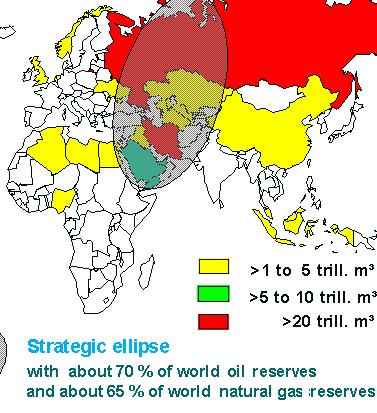
"This isn't a coherent enemy, it is a laundry list of places Bush would like to control because they have oil or gas, or are key to its development, or have other strategic benefits for the US and/or its regional allies, especially Israel.
So Bush tried to unify the Bogeyman by condemning radical Sunni Islam and then equally condemning radical Shiite Islam.
Shiite Islamism in Iraq is good, the same thing in southern Lebanon is bad.
And this is the reason for which he needs to keep 140,000 troops in Iraq, to stop the Muslim fundamentalists from taking it over. But of course, the Da'wa Party, the Supreme Council for Islamic Revolution in Iraq and the Sadr movement have *already* taken it over.
So there are good Muslim fundamentalist movements and bad ones. What seems to distinguish them is whether they are eager to do business with Houston or whether they badmouth Bush.
If you want to know what is really going on, it is a struggle for control of the Strategic Ellipse, which just happens demographically to be mostly Muslim. Bush has to demonize the Muslim world in order to justify his swooping down on the Strategic Ellipse. If demons occupy it, obviously they have to be cleared out in favor of Christian fundamentalists or at least Texas oilmen."
Tuesday, September 5, 2006
Blair's legacy is a reckless adventure that's wreaked havoc the world over
Jonathan Freedland in Washington
Wednesday September 6, 2006
The Guardian
"That was the new doctrine: unilateralism, pre-emption and coercive democratisation. And what has been the fate of this new faith? Judged from any and every point of view, it has proved the most spectacular failure.
Genuinely spreading democracy is a noble goal, but Bush could not face the logic of his own position. Not only would it have meant allowing people to vote for parties the US does not like, it would also have seen them rid themselves of regimes the US has long backed. Rhetorically Bush swore he was ready for that, but his continued support for the dictatorships in Pakistan and Egypt, and his closeness to the House of Saud, show it was just talk. Moreover, if the peoples of the Muslim and Arab world were really allowed their say, one of their prime demands would be an end to US and western meddling in their affairs. But that would be a democratisation too far for Washington.
Accordingly, the Bushies are trying to soften their approach, resorting to diplomacy and alliances in dealing with Iran, for example. But that's chiefly because Iraq has deprived them of military options. "There's a change of course, but not a change of heart," one senate Democrat told me.
Either way, it's too late for Tony Blair. He signed up for the Bush project, even though it was doomed. His aides speak of legacy, but this is his legacy - to have glued himself to a reckless venture which has wreaked havoc the world over. Destroying the Blair premiership is the very least of it."
Meanwhile in Iraq
Iraq: At least 25 killed as U.S. occupation continues: Police said they found the bodies of seven people in Baghdad with gunshot wounds to the head, five of them in the mainly Sunni area of Adhamiya, where insurgents are active.
U.S. occupation forces kill 5: U.S. troops killed five men in a ground assault and air strike on what they called a "safe house", targeting a person involved in moving money and foreign fighters into Iraq. A child was also killed in the fighting in Muqdadiya, northeast of Baghdad, the U.S. military said in a statement
3 U.S. occupation troops killed in Iraq fighting: The deaths brought to eight the number of American troops killed in Iraq in combat-related violence over the past two days.
Iraq to extend state of emergency: The measure has been in place for almost two years and grants security forces greater powers. It affects the entire country apart from the autonomous Kurdish region in the north.
Dahr Jamail : U.S. Losing Control Fast: The U.S. military has lost control over the volatile al-Anbar province, Iraqi police and residents say. The area to the west of Baghdad includes Fallujah, Ramadi and other towns that have seen the worst of military occupation, and the strongest resistance.
Iraqi parliament mulls federal break up: Abbas al-Bayati, spokesman for the largest Shia bloc, the United Iraqi Alliance, predicted: "In the next few sessions the parliament will discuss the law for the formation of provinces."
Shiite Revival or Majority Resistance?: The Sunni-Shiite divide is a deplorable ploy that was implemented by the West to create a diversionary tactic. Regrettably, the people of Iraq have fallen prey to it, for violence begets violence.
Patrick Seale: Four American allies in deep trouble: In Islamabad, Kabul, Baghdad and Jerusalem, four heads of government are facing grave, possibly terminal, difficulties -- largely because of their alliance with the United States.
Documentary Slams U.S. Companies Working in Iraq: He's tackled Wal-Mart and Fox News with his scathing documentaries. Now, filmmaker Robert Greenwald is releasing a documentary which argues that private companies helping to fight the war in Iraq don't have the nation's best interests in mind.
Truth in a Time of War with Howard Zinn : Video: Zinn's talk explores the notion of "just" wars with his usual candor and critical understanding.
Subscribe to:
Posts (Atom)