Thursday, January 25, 2007

The Palestinians, kicked out of Palestine by the Stern Gang, now being kicked out of Iraq by the Mahdi Gang


Palestinians Under Pressure To Leave Iraq

The Washington Post

"...."You are Palestinians. Why are you still living in Iraq?" Mohammed recalled the man saying. "You have 48 hours to leave."

Within 24 hours, Mohammed was gone. The 36-year-old was among dozens of people who loaded their meager belongings onto buses at dawn Wednesday inside Baghdad's main Palestinian enclave in the Baladiyat neighborhood. They drove north toward the Syrian border, joining a growing exodus of Palestinians now following their familiar story line: an unwelcome people searching for a home.

Baghdad is a dangerous place for anyone to live, and the fighting between Sunni and Shiite Muslims has displaced hundreds of thousands. Largely forgotten amid this violence is the plight of thousands of Palestinians in Iraq, who face an increasingly hostile environment because they are predominantly Sunni and perceived as having been favored during the rule of Iraqi President Saddam Hussein.

Palestinians and human rights officials in Baghdad say members of the group are being targeted by roving Shiite militias and Iraqi police in efforts to expel them.....

An estimated 19,000 Palestinians have fled Iraq since 2003, leaving about 15,000 behind, according to the United Nations. About 350 Palestinians are now stranded in a desolate refugee camp in a no man's land at the Al Tanf border crossing into Syria. For more than six months they have been denied entry into Syria, and they refuse to return to Iraq. An additional 80 Palestinians are stuck on the Iraqi side of the line. Similar makeshift settlements have cropped up along the border with Jordan.

"Killings, threats, intimidations and kidnappings are becoming the norm for Palestinians in Iraq," the U.N. Assistance Mission for Iraq said in a report this month. "Many of these actions are reportedly carried out by the militias wearing police or special forces uniform[s]."

Mortar shells regularly crash down on the squalid cinder-block Baladiyat compound, the largest settlement of Palestinians in Iraq, with an estimated population of 4,000 to 7,000. In November and December, guerrillas staged at least six organized attacks on the area. On Dec. 13, three hours of mortar attacks killed as many as 11 people, the U.N. report said.

"Any country that wants us, we will go there," said Rafaat Musaa Ahmed, 36, a carpenter and father of four who lives in the Palestinian compound in Baladiyat. "Even if we would live in a barren place, even if it was a desert."

After evening prayers during Ramadan in October, a mortar round fell on Ahmed's apartment, injuring his wife with shrapnel. She now suffers seizures, he said, and has been denied treatment at clinics affiliated with Iraq's Health Ministry, which is run by loyalists of Shiite cleric Moqtada al-Sadr......"

Continue This Long Article

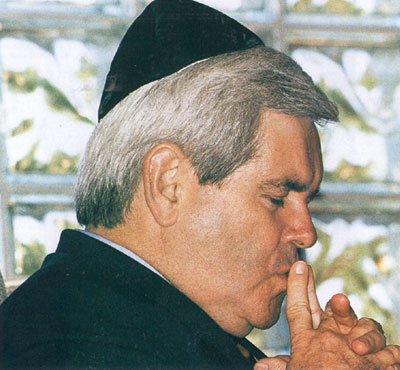
Presidential Selectee Hopefuls Do the Bomb Iran Conference


By Kurt Nimmo

"Newt Gingrich once again climbs up on the soapbox, this time at the Herzliya Conference sponsored by the Institute for Policy and Strategy in Israel. Newt tells us that the “terrorist threats are larger and more formidable than the political system in Israel or the US can cope with,” and of course, following the official fairy tale, this threat is nuclear, never mind Israel and the United States combined have more nukes than any other nation on the planet and have expressed their avid desire to use them, explicitly against Iran.

Gingrich believes the “Department of Homeland Security needs to hold two exercises of what would happened if a nuclear weapon is deployed against us, and one exercise with a biological weapon, to be used on an American city like, Dallas or Pittsburg…. This is not paranoia by the Bush administration, but their legitimate worries about how dangerous the world has become, and most Americans believe this,” thanks to unremitting propaganda and Fox News, hyping Iran’s nonexistent nukes, and telling lies about Ahmedinajad, mistranslating his speeches and inventing scary campfire stories about genocide and national suicide.

“In 1930 we thought we could accommodate Hitler,” Gingrich continues......

“Anyone who proposes that we pull out of Iraq needs to understand the price of defeat,” Gingrich continues. “The last time the United States was seen as weak and defeated, 1979 and 1980, we had a 444 day long hostage crisis in Iran, and an ambassador killed in Afghanistan.”

Only the magnificently ignorant will buy this argument, as history teaches otherwise.

Iran remembers all too well the 1953 plot to overthrow the popular and democratically elected leader Mossadeq and install the hated monarch Reza Pahlavi, who wasted no time setting up the dreaded SAVAK secret police, trained by the Israelis and having the dubious honor of the worst human rights record on the planet in 1976, according to Amnesty International, no small feat considering the gruesome parade of sadists and torturers haunting the 20th century.

For Gingrich, it wasn’t enough Carter kissed the Shah’s hem and proclaimed: “Iran under the leadership of the Shah is an island of stability in one of the more troubled areas of the world. This is a great tribute to you, Your Majesty, and to your leadership, and to the respect, admiration and love which your people give to you.” Carter said this as the Shah prepared to kill thousands on a single day, September 8, 1978, known as Black Friday in Iran. For Gingrich, the Shah failed miserably, as he did not kill millions of his own people instead of a mere few thousand. Leave it to the neocons to pick up where the Shah left off some thirty odd years ago......

“My grandchildren are in greater danger than I was throughout the Cold War,” Newt tells us with a straight face.

In short, Gingrich and the neocons demand a new Cold War—only in their demented criminal minds it will not be “cold,” but rather hot, as in nuclear fission, as we have been told for some time now the only way to get at Iran’s fictional nuclear labs is through the use of “mini-nukes,” a word tossed around casually, as if “mini” poses no threat to folks downwind, to say nothing of those in the neighborhood.

It would seem the U.S. presidential selectee field is glutted with those chomping at the bit not only to attack Iran, but please warmongering fanatics in Israel.

“Republican US presidential aspirant Mitt Romney summed up the sentiment of four US presidential hopefuls who addressed the Seventh Annual Herzliya Conference run by the Institute for Policy and Strategy of the IDC Herzliya over the last two days by saying, ‘Iran must be stopped, Iran can be stopped, and Iran will be stopped,’” reports the neocon- and Likudnik-infested Jerusalem Post. “The heart of the jihadist threat is Iran… I believe that Iran’s leaders and ambitions represent the greatest threat to the world since the fall of the Soviet Union and before that Nazi Germany,” comments demonstrating these folks are following the script closely as they press the flesh in Herzliya, hometown of Mossad (in keeping with the tenor of the proceedings in Herzliya, it should be noted that the Institute for Policy and Strategy is run by Uzi Arad, a former senior Mossad official).

Romney made sure to add “that a military option remains on the table,” in other words, we can expect an attack sooner before later.

Not to be back-benched, John Edwards, “progressive Democrat,” told the Herzliya Conference at the Interdisciplinary Center that Iran poses “an unprecedented threat to the world and Israel” and said “in order to ensure Iran never gets nuclear weapons, all options must remain on [the] table,” i.e., thousands of Iranians must die for the lies of the neocons.

Apparently unable to contain himself, Edwards opened “his speech with great praise for former Israeli Prime Minister Ariel Sharon,” the comatose war criminal, according to Israel Insider. Edwards’ speech put to rest the idea, held by the easily flimflammed, that there is any difference between Democrats and Republicans.

Incidentally, for Canadians out there, your country is on the bomb-Iran-bandwagon, as Peter MacKay, Minister of Foreign Affairs, was on hand in Herzliya. “Canada is deeply concerned,” Mr. MacKay told the gathered. “Tehran must not be allowed to obtain nuclear weapons. We need to start talking seriously and creatively about what the international community can do and can do now and what resources we can draw upon.”

“Rallying the international community to isolate Iran should be the ‘main mission’ of Israel, said Likud Chairman Benjamin Netanyahu,” reports the Jewish Week. “Richard Perle, a former administration official now with the American Enterprise Institute, cautioned that time is running out before Iran hits the point of ‘no return’ on its nuclear program (although other speakers estimated it could take a decade before Iran produces a weapon). While he advocated for the creation of conditions for domestic regime change in Iran, Perle also warned that little time remains before the U.S. weighs taking military action.”

Meanwhile, “Islamic expert and historian Bernard Lewis spoke back-to-back with former CIA director James Woolsey,” reports the Arutz Sheva Israel Broadcasting Network.

Lewis, pegged as “the doyen of Middle Eastern studies,” is the neocon’s neocon who, as any racist worth his salt, believes the “real culprit behind the political, economic, and military failures of the Middle East over the past half a millennium” is Islamic culture, as M. Shahid Alam puts it.

James Woolsey is better known as “Mr. World War Four,” a former CIA director, lurker at the Jewish Institute for National Security Affairs, Coalition for Democracy in Iran (comparable to the “democracy” now enjoyed by millions of Iraqis), a PNAC signatory (thus he is a demonstrable war criminal of Nuremberg caliber), and Booz Allen Hamilton VP. “This is going to be a long war, very long indeed,” once declared Woolsey, parroting his buddy Eliot Cohen. “I hope not as long as the Cold War, 40 plus years, but certainly longer than either World War I or World War II.”

“There is a very substantial likelihood that if the diplomatic approach failed—and I think it will—and non-violent regime change won’t work (in Iran), there is no alternative except for the U.S. to use force,” Woolsey told the Jerusalem Post, according to United Press International.

As Woolsey sees it, the “Wahhabis, al-Qaida, the Vilayat Faqih in Teheran … are capable of unification,” never mind “al-Qaida” was assigned the role, in part, of widening the schism between the two branches of Islam, as the now largely forgotten al-Zarqawi labored day and night at accomplishing in Iraq, thus helping to facilitate “civil war,” in short engineered chaos.

One must ask what sort of drugs Mr. Woolsey is taking, as the Wahabbis in Saudi Arabia are petrified of the Shia in Iran and not too secretly anticipate and welcome any attack designed to take out the mullahs.

Finally, Blake Hounshell, blogger over at Foreign Policy, is spot on when he writes: “Judging by the sound bytes I’m reading, you could call it the Bomb Iran conference. U.S. government officials as high as Gordon England and Nick Burns were in attendance. Republican presidential candidate Mitt Romney was also there, as were his rivals John McCain and Rudy Giuliani…. Expect more of this over-the-top rhetoric from both sides of the aisle. What to do about Iran is going to dominate the American debate from now until 2008, and beyond.”

Of course, as the above comments make painfully obvious, the “debate” (i.e., threats) will not stretch into 2008. More than likely, the Iran attack will come this year, probably before summer, although I am reluctant to drag out the crystal ball and make predictions, as this has failed dismally in the past. However, we can probably bank on the dire prospect of an Iran attack and its ominous reverberations in the Middle East and its economic backlash here in the United States, indeed around the world, well before 2008. "

Forgive them for they know not what they do?

By Mazin Qumsiyeh

"Standing ovations to a criminal spouting lies Regurgitated in News and Editorial pages Yet, what is censored is far more important and its ramifications far more significant Some victims adopted the language of their oppressors Others resigned to their proscribed fates Many in a peace movement co-opted or afraid letting others pay the sacrifices Goebbles would have envied their media devices allowed to endlessly quibble Baghdad burning while they argue over the sound of the fiddle (using colonial language) "How do we fix Eyraq?" "How do we fight Eyran”? "How do we isolate the radicals"? (even the majority wanting freedom) "How do we kill more extremists"? (even as we created the largest green house to grow them) How do we get more subservient UN institutions? While violating all human rights resolutions. maybe more money to Dahlan, Al-Hurra, and Iraqi puppets? more tours of duty, fancy words and better bullets? more new clothes for old generals or old cloths for new programs? maybe better hasbara language of us vs them, them vs them, terrorism vs democracies Palestinians vs Israelis Shi'i vs Sunni Arabs vs Jews blacks vs whites black and white language of hate and diversion language of murder and deception language of Nero and Ghenkis Khan Churchill and Balfour Hertzl and Samuels Clinton and Pelosi Browne and Raymond enriched from Oil that somehow got under our soil Starbucks' Schultz pontificating that Israel must do more killing

Forgive them for they know not what they do?

They tell us if victims stop just maybe, maybe they can drop some of the worst torture methods maybe allow some of us to live on our lands with limited supervised demilitarized autonomy if we promise the occupiers security maybe then revive the US constitution bring kinder pimps for prostitution maybe share 10% of the privatized resources with the manufactured competing provinces promises to give us a glimmer of tunnels which may have light less dimmer A promise of another Condi trip peddling a map like Kissinger peddling his Zionist crap to get accolades from his masters and money from his (undisclosed) consultants While committing and supporting war crimes with designer suits and fake smiles fake words of democracy and million dollar bonuses they play musical chairs in countless institutions with deceptive names occasionally jumping to corporations and then back to government halls that keeps its only credibility by spreading fear of Arabs and Muslims While manufacturing Abrams tanks and misnamed think tanks while US trained death squads kill the innocents and propagate the ageless game of conquer, divide, and pillage

Forgive them for they know not what they do?

they said "our policy for the Iraq-Iran war was to get them to kill each other" deduct the one million who perished in that war deduct the 1.5 million killed by US led sanctions deduct the 650,000 Iraqis who perished and those yet to perish in neocon latest war how many Iraqis will be left in five years? will they bring Democracy to the last Iraqi standing alive or hang her? But Iran is next and Maybe China (hence the nuclear deals with India) Meanwhile Arabs and Muslims are fair game and don't run fast enough....."

Middle East's cold war heats up

With Iran empowered by the demise of its enemies in Iraq and Afghanistan, it is orchestrating a Shi'ite crescent that stretches from Kabul to Beirut. In response, a Sunni axis with US backing is being marshaled - with Pakistan the latest recruit. The proxies of Iran and Saudi Arabia are locking horns all over the region, from Baghdad to Beirut and Gaza, while Washington and Tehran step up military preparations

By Iason Athanasiadis
Asia Times

"TEHRAN - After several months of faint rumblings, a US-led, Middle East-wide alliance of conservative Sunni and secular Muslim states marshaled against Iran is starting to take shape, to the deepening discomfort of the Iranian theocracy. Leading countries in this alliance are Saudi Arabia, Egypt and Jordan......

The new Middle East cold war is being waged on such diverse battlefields as Baghdad, Beirut and Gaza between the proxies of Tehran and Riyadh. In Lebanon, the US Central Intelligence Agency (CIA) is taking covert action against Hezbollah as part of a plan by President George W Bush to help the Lebanese government prevent the spread of Iranian influence. Perhaps in reaction to that, Hezbollah loyalists took to the streets of Beirut on Tuesday and engaged in fighting that led to the deaths of three people.......

This week, the anti-Iranian alliance of Sunni-majority states stretched east to embrace Pakistan as that country's leader journeyed to the Egyptian beach resort of Sharm al-Sheikh for consultations with Egyptian President Hosni Mubarak. President General Pervez Musharraf was coming from Riyadh, where he vowed to deepen defense and strategic ties with the Wahhabi kingdom. His trip, according to the Saudi-owned, Arabic-language news site Elaph, was intended to "expand the Sunni alliance that includes Egypt, Saudi Arabia and Turkey to include Pakistan as well in order to face the growing Iranian influence in the region"......

A US task force led by the aircraft carrier John C Stennis is on its way to the Gulf, where it will join another carrier. Analysts point out that the two carriers would have a combined capacity to launch around-the-clock bombing raids. The Pentagon is reportedly considering hitting 24 targets to degrade Iran's nuclear capability and potential for striking back, in case diplomacy fails to resolve the crisis surrounding the Iranian nuclear program.

"An air campaign against Iran of this magnitude would almost certainly include efforts to knock out potential Iranian retaliatory capabilities in the Gulf, such as Iran's array of coastal anti-ship missiles," said White. "Perhaps one new point of emphasis was how difficult such a confrontation could be to end once initiated.".....

"Most actions require extensive lead time, usually for unglamorous activity like logistics," said James Spencer, a Middle East expert specializing in defense and security issues. "Contingency plans usually therefore take the form of identifying a vague concept of operations, and consequently troop numbers, logistic requirements, timelines etc. When the politicians suddenly have their brilliant idea, the file can be opened and the flesh put on the prepared bones with more thoroughness than haste."

In an e-mail titled "Pieces in place for escalation against Iran", retired US Air Force Colonel Sam Gardiner listed the arrival of US military hardware to the region and noted that "the pieces are moving. They'll be in place by the end of February. The United States will be able to escalate military operations against Iran." "

Inside Baghdad: A city paralysed by fear


By Patrick Cockburn
Published: 25 January 2007

"Baghdad is paralysed by fear. Iraqi drivers are terrified of running into impromptu checkpoints where heavily armed men in civilian clothes may drag them out of their cars and kill them for being the wrong religion. Some districts exchange mortar fire every night. This is mayhem beyond the comprehension of George Bush and Tony Blair.

Black smoke was rising over the city centre yesterday as American and Iraqi army troops tried to fight their way into the insurgent district of Haifa Street only a mile north of the Green Zone, home to the government and the US and British embassies. Helicopters flew fast and low past tower blocks, hunting snipers, and armoured vehicles manoeuvred in the streets below......

It is extraordinary that, almost four years after US forces captured Baghdad, they control so little of it. The outlook for Mr Bush's strategy of driving out insurgents from strongholds and preventing them coming back does not look good.

On Monday, a helicopter belonging to the US security company Blackwater was shot down as it flew over the Sunni neighbourhood of al-Fadhil, close to the central markets of Baghdad. Several of the five American crew members may have survived the crash but they were later found with gunshot wounds to their heads, as if they had been executed on the ground.

Baghdad has broken up into hostile townships, Sunni and Shia, where strangers are treated with suspicion and shot if they cannot explain what they are doing. In the militant Sunni district of al-Amariyah in west Baghdad the Shia have been driven out and a resurgent Baath party has taken over. One slogan in red paint on a wall reads: "Saddam Hussein will live for ever, the symbol of the Arab nation." Another says: "Death to Muqtada [Muqtada al-Sadr, the nationalist Shia cleric] and his army of fools.".......

The fear in Baghdad is so intense that rumours of even bloodier battles sweep through the city. Two weeks ago, many Sunni believed that the Shia Mehdi Army was going to launch a final "battle of Baghdad" aimed at killing or expelling the Sunni minority in the capital. The Sunni insurgents stored weapons and ammunition in order to make a last-ditch effort to defend their districts. In the event, they believe the ultimate battle was postponed at the last minute. Mr Bush insisted that the Iraqi government, with US military support, "must stop the sectarian violence in the capital". Quite how they are going to do this is not clear. American reinforcements might limit the ability of death squads to roam at will for a few months, but this will not provide a long-term solution.

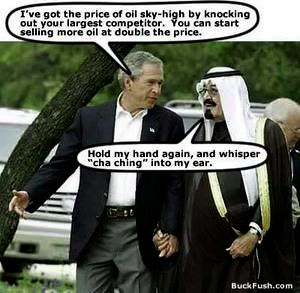
Mr Bush's speech is likely to deepen sectarianism in Iraq by identifying the Shia militias with Iran. In fact, the most powerful Shia militia, the Mehdi Army, is traditionally anti-Iranian. It is the Badr Organisation, now co-operating with US forces, which was formed and trained by the Iranian Revolutionary Guards. In the Arab world as a whole, Mr Bush seems to be trying to rally the Sunni states of Saudi Arabia, Egypt and Jordan to support him in Iraq by exaggerating the Iranian threat.

Iraqis also wonder what will happen in the rest of Iraq while the US concentrates on trying to secure Baghdad. The degree of violence in the countryside is often underestimated because it is less reported than in the capital. In Baquba, the capital of Diyala province north-east of Baghdad, US and Iraqi army commanders were lauding their achievements at a press conference last weekend, claiming: "The situation in Baquba is reassuring and under control but there are some rumours circulated by bad people." Within hours, Sunni insurgents kidnapped the mayor and blew up his office.

The situation in the south of Iraq is no more reassuring. Five American soldiers were killed in the Shia holy city of Karbala last Saturday by gunmen wearing American and Iraqi uniforms, carrying American weapons and driving vehicles used by US or Iraqi government forces. A licence plate belonging to a car registered to Iraq's Minister of Trade was found on one of the vehicles used in the attack. It is a measure of the chaos in Iraq today that US officials do not know if their men were killed by Sunni or Shia guerrillas.

US commanders and the Mehdi Army seem to be edging away from all-out confrontation in Baghdad. Neither the US nor Iraqi government has the resources to eliminate the Shia militias. Even Kurdish units in the capital have a high number of desertions. The Mehdi Army, if under pressure in the capital, could probably take over much of southern Iraq.

Mr Bush's supposedly new strategy is less of a strategy than a collection of tactics unlikely to change dramatically the situation on the ground. But if his systematic demonising of Iran is a precursor to air strikes or other military action against Iran, then Iraqis will once more pay a heavy price."

***

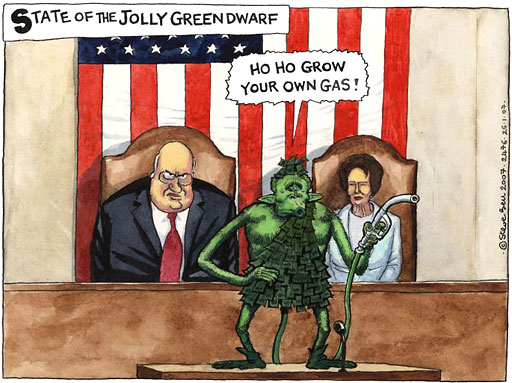
Iran will fight the Great Satan to the last Iraqi!

Jolly Green Dwarf


By Steve Bell, The Guardian

Wednesday, January 24, 2007

Chief War Pimp Alert


PM: International front has been formed against the Iranian threat

"An international front has been created to fight the Iranian threat, Prime Minister Ehud Olmert told delegates to the Herzliya Conference on Wednesday.

Olmert focused his address at the conference on a report detailing the state of the Iranian threat. The prime minister emphasized that Israel has been following Iran's efforts to achieve nuclear capability for years.

"For many long years, we have followed Iran's efforts to acquire nuclear weapons, in the guise of a civilian nuclear program. They are working through secret channels in a number of sites spread out across Iran," he said. "In the past few years, we have been witness to especially intense Iranian activity on two tracks - the overt and the covert."

The prime minister said that the Iranian threat was evident in the financial, military and intelligence aid Tehran granted Palestinian terror groups, both directly and through Syria. Olmert said the threat was also manifested in Iranian support of Iraqi terror groups and the Hezbollah.

"This activity has created an opposing front, which includes, in varying intensities, all the permanent members of the UN Security Council; Arab states such as Saudi Arabia, the Gulf States, Egypt and Jordan; and other key countries in the West, such as Germany and Japan," he said.

"This front is acting to unite forces and prevent this threat from becoming a reality," Olmert added...."

Another War Pimp Alert

Former CIA chief expects force with Iran

"A former head of the CIA, speaking in Israel, said that he expects diplomacy alone will not force Iran to stop developing nuclear weapons.
"There is a very substantial likelihood that if the diplomatic approach failed -- and I think it will -- and non-violent regime change won't work (in Iran), there is no alternative except for the U.S. to use force," said James Woolsey, according to The Jerusalem Post.
On Monday, Woolsey addressed a forum at the Herzliya Conference, an annual event held this year from Jan. 21-24.
As a former chief of the world's largest intelligence agency, Woolsey dismissed claims by Iran and its apologists that the Islamic Republic seeks nuclear capability for peaceful means.
"With its huge oil and natural gas reserves, Iran is not the least bit interested in nuclear power," Woolsey said.
Woolsey also warned that the United States, Israel, and their allies could face an empowered threat if various extremist factions in the region align. "The Wahhabis, al-Qaida, the Vilayat Faqih in Teheran, although often lethally competitive with one another in the way the Nazis and communists were in the 1930s, are capable of unification," Woolsey said, according to The Jerusalem Post.
Questioned about the likelihood that President George W. Bush would launch an attack on Iran, Woolsey replied, "The president is a man of great character and principle."
Woolsey said he believes Bush is a man "who means what he says, and he said we're not going to let Iran have a nuclear weapon."
Woolsey was head of the CIA from 1993 to 1995 under President Bill Clinton."

The American hostility towards Iran

By Paul Reynolds
BBC

"One of the notable features of President George W Bush's State of the Union speech was its hostile attitude towards Iran.

References to Iran ran like a drum beat through the speech, adding a wider element to his appeal for support for what he called his "new strategy" in Iraq.

He accused the "regime" in Iran of arming "terrorists like Hezbollah" and of directing "Shia extremists" in Iraq.

He raised the prospect of a larger conflict in the Middle East in which Iran would be central......

The new chairman of the Senate Intelligence Committee Senator John Rockefeller, a Democrat, has spoken out against the verbal attacks on Iran and compared them to what happened before the invasion of Iraq in 2003.

"To be quite honest, I'm a little concerned that it's Iraq again," Senator Rockefeller told the New York Times....."

Iraq Parliament Finds a Quorum Hard to Come By

"Mahmoud al-Mashhadani, the speaker of Parliament, read a roll call of the 275 elected members with a goal of shaming the no-shows.

Ayad Allawi, the former prime minister? Absent, living in Amman and London. Adnan Pachachi, the octogenarian statesman? Also gone, in Abu Dhabi.

Others who failed to appear Monday included Saleh Mutlak, a senior Sunni legislator; several Shiites and Kurds; and Ayad al-Samaraei, chairman of the finance committee, whose absence led Mr. Mashhadani to ask: “When will he be back? After we approve the budget?”

It was a joke barbed with outrage. Parliament in recent months has been at a standstill. Nearly every session since November has been adjourned because as few as 65 members made it to work, even as they and the absentees earned salaries and benefits worth about $120,000.

Part of the problem is security, but Iraqi officials also said they feared that members were losing confidence in the institution and in the country’s fragile democracy. As chaos has deepened, Parliament’s relevance has gradually receded......"

***

And this is the "parliament" that will approve the theft of Iraqi oil for the next 30 years by American companies, under the new oil "law" written by an American company. A group of absent thieves rubberstamping a much bigger theft!

What Can Be Done in Iraq?

Strategic Errors of Monumental Proportions

By Lt. General WILLIAM E. ODOM (US Army Ret.)
CounterPunch

Text of testimony before the Senate Foreign Relations Committee,18 January 2007.

Mockery and deception continue


A Very Good Analysis
Hasan Abu Nimah, The Electronic Intifada
, 24 January 2007

"When Palestinian Authority Chairman Mahmoud Abbas flew to Damascus last weekend to meet with Khaled Mishaal, the head of the Hamas politburo, he took with him many expectations.

It was hoped that this meeting could put an end to the political infighting that has been going on ever since Abbas' Fatah movement refused, with Western-backing, to accept the result of the elections one year ago that gave Hamas a sweeping majority of seats and the right to form a Cabinet.

With both parties nominally committed to a "national unity government", it was also hoped that an agreement would put an end to the US-Israeli-EU siege and boycott of the Palestinian Authority that has brought an occupied people to unprecedented levels of suffering and misery.

After a delay, resolved through Syrian mediation, Abbas and Mishaal did meet, but they did not achieve the sought-after agreement. Both committed themselves to further talks, and Mishaal reiterated Hamas' position that it would not allow the Palestinians to be drawn into the civil war that their external enemies want and plan for them.

Why have repeated efforts to persuade the two conflicting Palestinian sides to agree on one political programme failed? The answer is simple: it is not possible to reconcile the irreconcilable; it is not possible to invent a formula that can easily disguise the significant aspects of two contradictory political programmes.

In any political dispute, it is common to devise language that allows each party to interpret the formulation in a manner that allows it to make concessions while keeping its constituency onboard. But this can happen only when both sides share the commitment to overcome obstacles.

The so-called "Prisoners Document" was sought as a basis for agreement between the two sides last summer. It implicitly included all the elements Hamas is required to accept as conditions for reconciling with Abbas and his Western backers, but when Hamas accepted the document, Israel undermined any chance of progress by launching a full-scale assault on Gaza, killing hundreds of people and cutting off electricity to nearly a million, ostensibly in retaliation for the capture of one Israeli occupation soldier by Palestinian resistance fighters.

The crucial point of disagreement reappeared in Damascus, with Abbas insisting that his letter of designation to the new prime minister would require the new national unity Cabinet to commit itself to accepting all the previously signed agreements between the PLO and Israel, in addition to the Prisoners Document, the decisions of the Arab summit conferences and the rulings of the "international community" (code for the US-Israel-EU axis).

Demonstrating on how fine a line political agreements can stand, Hamas apparently agreed to "respect" rather than "pledge to accept" these conditions. This was not enough to seal an agreement. But it would be incredibly naive to expect that even if Hamas submitted unconditionally to all Abbas' demands and pledged allegiance to a Jewish Zionist state, this would result in any progress towards a reasonable settlement of the conflict.

The key factor is that Israel shows no interest whatsoever in a full withdrawal from the territories occupied in 1967, the minimal conditions for the creation of a Palestinian state -- if that is even possible, given the decades of Israeli colonisation in the West Bank. At the very best, Hamas' capitulation would mark the return to an endless Western-sponsored "peace process" that never leads to peace.

The PA, Fatah and the Abbas' "presidency", acting as a shadow parallel government, want just that: to return to the good old days when money was pouring in to finance the luxuries of the ruling elite and when a sterile "peace process" was providing a tranquilising effect by maintaining the false impression of progress.

Israel, in the meantime, continued to colonise the land, annihilating what was left of the Palestinian rights and hopes.

The Palestinians' decision to vote for Hamas in the last general elections was precisely to indicate that they were fed up with deception, incompetence and corruption. It was a plea to exit the vain cycle of redefining the terms of reference always at their expense.

And yet, deception and lies continue unabated. In December, Abbas met Israeli Prime Minister Ehud Olmert. Amid images of them hugging and kissing effusively, the results of their meeting were hailed by the peace process industry as a great breakthrough: Olmert promised to remove dozens of checkpoints which enforce the apartheid regulations in the West Bank, and to transfer $100 million of Palestinian tax money illegally seized by Israel. Yet on January 22, senior Israeli army sources confirmed what UN monitors had already stated: the 44 barriers and checkpoints allegedly removed by the Israeli army had not existed in the first place (Haaretz, January 22, 2007). Meanwhile, the released tax money will not flow through the Palestinian finance ministry, but into the unaccountable hands of Fateh and the "presidency", where much of it will be misappropriated to fund its militias rather than meet the needs of the public.

It is once again in fashion to proclaim the necessity to address the Arab-Israeli conflict.

US Secretary of State Condoleezza Rice, EU President Angela Merkel, and various Arab leaders are rushing from meeting to meeting. The Quartet is scheduled to meet in February, with US blessing, and Abbas would love to show up armed with an agreement with Hamas that meets the Quartet conditions. Everyone stresses the need to return to negotiations, but no one has the guts to refer to the substance of the called for negotiations or to face the real obstacle: Israeli intransigence and unabated colonisation.

There can be no better example of how much the patrons of this mockery of a peace process have their heads in the sand than the latest regional tour (they now seem to occur monthly) by the EU high representative, Javier Solana. After seeing the extent of new Israeli settlements in and around occupied Jerusalem, he declared himself "shocked", just like the corrupt police chief who "discovers" gambling going on under his nose in the movie Casablanca.

Why should Solana be shocked? The settlement growth is a direct result of the policies he supports and represents: punishing and imposing sanctions and conditions on the occupied Palestinians while appeasing Israel at every turn and remaining silent as it builds a system of apartheid more total than anything that existed in South Africa."

Gangsters in Lebanon


Al-Manar special report – Ali Hashem – Translated/

"In spite of the fact that black smoke was rising from burning tires during Tuesday's opposition general strike, however ashes only reached the faces of government supporters who did a great job of being mere gangsters, bringing back their old but new militia history. From the Dora to the Nahr el-Kalb regions, up to Mount Lebanon and down to the capital Beirut, Samir Geagea's Lebanese Forces, MP Walid Jumblatt's Progressive Socialist Party, MP Saad Hariri's Future Movement's supporters and their allies sought to strike the chord of sedition by attacking opposition supporters with stones, batons and even machine guns.

The Dora highway that links Beirut with the northern capital of Tripoli witnessed the aggression by the Lebanese Forces militias against the supporters of MP Michel Aoun's Free Patriotic Movement. There, the gangsters attacked the demonstrators, destroyed parked cars and also detained and interrogated whomever they lay their hands on. While the gangsters of the Lebanese Forces were undertaking the commands of their leadership to intercept the demonstrators, Future Movement supporters were showering other demonstrators with stones from rooftops. Another style to attack the demonstrators was this time innovated by Future Movement loyalist, Bilal el-Shbib. He ran his car into a group of demonstrators in the northern town of Adma injuring three people. The demonstrators managed to stop the car and hand e-Shbib to the Lebanese army and later on, it was found that he works for one of the state's services as a supervisor at the VIP Salon of Beirut's International Airport. And to Mount Lebanon, the place that has become a stronghold for Jumblatt's Progressive Socialist Party (PSP) armed members whose hands are still stained with the innocent blood of a man from Sawfar. The footage broadcast through Al-Manar TV station clearly show armed PSP members dismounting their car to confront opposition demonstrators."

Taken for a Ride by the Israeli Left

A Response to Uri Avnery

Note: Here is the full text of the article, which was removed by CounterPunch soon after posting it.

An Excellent Article
By STEVEN FRIEDMAN and VIRGINIA TILLEY

CounterPunch

"Uri Avnery is a human rights crusader of venerable standing. He has fought, written, published and campaigned for Palestinian rights for some sixty years. He has stood on the political barricades and faced down bulldozers to defend Palestinians from Israeli military abuse. His articles, books, and magazine denounced Israel's seizure of Palestinian land before most of the "new historians" learned to write. He even denounces legalized discrimination against Palestinian Israelis in uncompromising terms and has called for Israel to become "a state of all its citizens", although still retaining a large Jewish majority (e.g., see his recent "What Makes Sammy Run?"). As a founder of the peace group Gush Shalom, he remains the recognized godfather of liberal Zionism and no one doubts his sincerity in insisting on a two-state solution.

Given all this, it may seem odd that many people working hard for a stable peace in Israel-Palestine find Mr. Avnery so misguided on some basic issues irritating.

The reason stems from his moral contradictions, all too common to liberal Zionism: that is, while taking an unflinching moral stand against racist abuses of Palestinians, he somehow drops the same principles in assuming that Israel itself has a right to preserve its "Jewish character" at the expense of Palestinian rights. For it is all too obvious that sustaining an "overwhelming" Jewish majority in Israel, essential to preserving its "Jewish character," requires that Israel sustain a whole cluster of racist practices, such as giant Walls to keep people from mixing and not allowing Palestinian exiles to return.

Liberal Zionists who cling to Mr. Avnery's analyses consistently trip over this moral fallacy. They want the occupation to end and find oppression of Palestinians morally abhorrent, and some even believe that discrimination against Palestinian Arabs must end. But they don't want Israel's status as a state run for only one ethnic group to end. They must therefore endorse whatever discrimination is deemed essential to preserving Israel's Jewish majority, particularly in keeping those Palestinians expelled from what is now Israel from ever coming back. In this view, Israel itself is morally okay--a "miracle," as David Grossman recently put it--or it would be okay if its leaders hadn't stupidly stumbled into military occupation after the 1967 war.

The result of this conundrum is moral chaos. While blatant ravings about ethnic cleansing by racists like Avigdor Lieberman are repellent, the earlier ethnic cleansing that gave birth to Israel is considered acceptable--a convulsion of war violence that has (it is never explained how) been morally transcended. The solution, in this view, is not to redress that founding sin but simply to stabilize Jewish statehood, which is understood mostly as relieving Jewish-Israeli fear of attack or annihilation. Recognizing that some modicrum of justice is required to achieve this "peace", the liberal-Zionist goal is to create a Palestinian state next door (safely demilitarized, of course, and not necessarily within the 1948 green line).

It takes a special kind of denial to hold onto this worldview, especially in light of fresh histories like Ilan Pappe's The Ethnic Cleansing of Palestine, which demolish the soothing fantasy that Israel's history of ethnic cleansing was an accident of war. This isn't surprising in itself: nationalist myths everywhere dismantle slowly. But Mr. Avnery does not fall into the classic category. He exposed Zionist crimes before anyone else. Yet he has never lost his affection for Jewish statehood or his dedication to preserving Israel's Jewish majority in Israel. He knows that, in 1948, Zionist troops ruthlessly terrorized and expelled hundreds of thousands of defenceless Palestinians from their villages and threw them out of the country. But he believes that the agenda of preserving the Jewish-Israeli society that he treasures not only mandates but grants moral authority to not allowing them back.

It is from this muddle of contradictory tenets that Mr. Avnery approaches the "apartheid" charge in President Carter's best-selling Palestine: Peace or Apartheid?

Mr. Avnery's argument against the apartheid analogy is not that Israeli state policies toward the Palestinians are not racist. He agrees that the occupation is racist and that the settlements and the Wall are creating a Bantustan Palestinian state. He endorses the term "apartheid" to describe Israeli policy in the West Bank. He also argues what is incontestably true: that many people treat the comparison of Israel with South Africa too casually and commit errors of logic. (His "Eskimo" comparison, about chewing water, is an uncomfortably antiquarian reference to the Inuit but makes the point). This care we endorse: genuine differences distinguish South Africa and Israel that do require careful consideration.

But Mr. Avnery's own analysis includes glaring logical and factual errors, stemming partly from a fundamental misunderstanding of what apartheid was and how it worked. He seems to think apartheid was an extreme version of Jim Crow, in which blacks were subordinated while being incorporated into a white society. In fact, apartheid was a system of racial domination based, crucially, on the notion of physical separation. The doctrines, policies, and collective psychologies of the Israeli and South African systems were much more similar than he recognizes and it is vital to spell these out.

Mr. Avnery's main argument stems from his most profound misconception. He warns that a campaign for South African-style unification in Israel-Palestine would only trigger new ethnic cleansing, because brooding Jewish anxiety about the "demographic threat" (too many non-Jews) would inspire Israeli reactionaries to forcibly expel the entire Palestinian population. Yet he considers this risk special to Israel, on grounds that it didn't exist in South Africa: "no White would have dreamt of ethnic cleansing. Even the racists understood that the country could not exist without the Black population." Yet a key feature of apartheid was forcible population transfers. Celebrated books have been written about the forced removal of hundreds of thousands of people from their homes and lands in an attempt to create a "white South Africa" in which blacks would be allowed only as "guest workers". So widespread was the policy of "forced removals" in order to "whiten" South Africa that we will probably never know how many people were really moved; the campaigns were far more systematic attempts at "ethnic cleansing" than anything attempted in Eastern Europe. If Mr. Avnery thinks apartheid had nothing to do with population transfer, he does not even vaguely understand apartheid.

Mr. Avnery supports this flawed analysis by offering four reasons why the apartheid comparison should not guide a solution in Israel-Palestine. First, he says that consensus on a one-state solution was already in place in South Africa. Blacks and whites, he argued, "agreed that the state of South Africa must remain intact- the question was only who would rule it. Almost nobody proposed to partition the country between the Blacks and the Whites".

This is a fundamental misunderstanding.Territorial separation of blacks and whites was the central plank of official apartheid policy at least until 1985--that is, for almost four decades. Central to the policy was the claim that 87 percent of the country's land mass belonged only to whites and that blacks were allowed into it only under sufferance and without rights. In the late 1970s, for example, a senior Cabinet Minister told the South African Parliament that eventually "there will be no black South Africans". Part of this policy was the creation of phoney "black homelands" which were given sham "independence" to make the point that their "citizens" were no longer South African --just as Israel's "two state" policies promise a "homeland" for Palestinians today. The acknowledgment that South Africa should remain intact was a consequence of apartheid's defeat, not a feature of the system.

Second, Mr. Avnery argues that, while racial separation in South Africa was a white agenda universally rejected by blacks, in Israel-Palestine both peoples want separate states. "Our conflict is between two different nations with different national identities, each of which places the highest value on a national state of its own." He affirms that only a radical micro-minority on both sides wants a single state. On the Jewish side, he says, these radicals are the religious zealot settlers who insist on retaining all of the West Bank. On the Palestinian side, the rejectionists are "the Islamic fundamentalists [who] also believe that the whole country is a "waqf" (religious trust) and belongs to Allah, and therefore must not be partitioned."

These sweeping assessments of either case do not hold up. First, black South Africans were not so monolithic in their own views. The ANC supported unification and democracy but factions of South Africa's black population bought into the "homelands" concept. Best known for this was the Inkatha Freedom Party in KwaZulu, but other groups also embraced the homeland policy for the power and patronage it allowed them--much as Fatah is embracing the truncated "state" offered by Israel today. Yes, the vast majority of black opinion rejected separate "homelands". But the small section of black society that felt it had something to gain from the "homelands" did not.

Palestinian views are not so monolithic, either. Polls conducted by the Jerusalem Media and Communication Centre from 2000 through 2006 have shown Palestinian support for a two-state solution (understood as an independent Palestinian state in the West Bank and Gaza Strip) running at only around 50 percent. Adherence to the vision of one Palestinian state in all of Palestine has waffled between 8 and 18 percent. But notably, support for a single "bi-national" state in all of Israel-Palestine has hovered stubbornly between 20 and 25 percent--a strikingly high figure given that the one-state option is not under public debate among Palestinians. (The reason for this silence is not that unification is unpopular, but that its discussion would undermine the premise for the Palestinian Authority's "interim" existence and is therefore politically very sensitive.) If a quarter of Palestinians support a one-state solution even under these daunting conditions, it is not unreasonable to propose, as do veteran Palestinian activists like Ali Abunimah (author of the new book, One Country), that wider Palestinian support for unification would quickly manifest under more conducive ones.

It's also relevant that, in these same polls, Palestinian support for an Islamic state has run at about 3 percent. Clearly, 25-percent Palestinian support for a unified state can't be reduced, as Mr. Avnery suggests, to Islamic radicalism.

Third, Mr. Avnery points to the different demographics of the two conflicts. In South Africa, a 10-percent white minority ruled over a 78-percent black majority (as well as "coloreds" and Indians), while in Israel-Palestine the Jewish and Palestinian populations are roughly equal, at about 5 million each. But this point leaves the argument hanging--so what? Any idea that it somehow makes the comparison inapplicable fails in two ways. First, it fails morally. Does oppression change qualitatively if the population distribution between the oppressor and oppressed vary? Would apartheid not have been apartheid if whites were half the population? Second, it fails in its political logic. Surely the black "threat" perceived by a 10-percent white minority in South Africa was far greater than the Palestinian Arab "threat" now feared by a Jewish-Israeli population standing at roughly 50 percent. Not surprisingly, the fear of being "swamped" by a large black majority was frequently cited by apartheid's supporters as a rationale for continuing to deny black rights. Yet Israeli Jews are far better positioned to retain political and economic power in Israel than were whites (especially Afrikaners) in South Africa.

Finally, Mr. Avnery holds that unification in South Africa was driven by racial economic interdependency. "The SA economy was based on Black labor and could not possibly have existed without it". In its initial phases, apartheid did try to minimize any dependence on blacks, by trying to relegate blacks only to menial labour. Black Africans were not permitted to do work reserved for whites (or for Indians and "coloreds"). There was, for example, a strict ban on blacks working as artisans outside the segregated homelands. The system started unravelling in the late 1960s when the economy ran out of whites in some semi-skilled and skilled occupations and the government was forced to allow blacks in. That change gave black workers greater bargaining power and, with other factors, provided a base for more effective organised resistance. Whether the Israelis will be forced at some point to let Palestinians back into the labour market is hard to know. But even here the differences are not as stark as he claims.

In his conclusions, Mr. Avnery argues that the apartheid comparison also fails on the question of an international boycott. "It is a serious error," he insists, "to think that international public opinion will put an end to the occupation. This will come about when the Israeli public itself is convinced of the need to do so." This argument suggests that Mr. Avnerydoes not know enough the fall of apartheid, either. White South Africans did not change their minds about apartheid simply because the moral and political case was at last brought home to them by black street demonstrations and labour strikes. They did so when a strategic campaign of hard and bloody domestic struggle was supported by concerted international pressure, which included boycotts of South African products and the currency as well as artists and sports teams.

The economic effects of these sanctions against South Africa are still debated. But the psychological effect of international isolation on South African whites' willingness to change was immense and became one of the key levers which ended apartheid. As late as 1992, when whites were asked to endorse a negotiated settlement in a referendum, media interviews with voters showed that whites' desire to "rejoin the international community" persuaded many who might have voted against a settlement to endorse it.

To attribute the "lack of bloodshed" in that transition to "wise leaders" like de Klerk and Nelson Mandela is to misunderstand how those historic figures were able to play their vital role precisely because of this far larger and historical collective effort. Just as it was impossible to imagine a negotiated end to apartheid without international isolation of South Africa, so it is hard to imagine that a political solution to the Palestinian conflict will be achieved unless substantial pressure is exerted on Israel by the world.

But an even deeper mistake underlies Mr. Avnery's pessimism about a one-state solution on the South African model: he seems to confuse the South Africa that everyone saw at the 1990 negotiations with the South Africa that existed before then. This all-too-common error holds that the factors which led to a settlement were immutable parts of the South African reality. In fact, political consensus about the need for national unity crystallized only after a long and bitter struggle, whose successful outcome had seemed just as implausible to most commentators as a shared society in Israel now seems to Mr Avnery. Forgetting this history indeed erases from it those courageous campaigners who fought for decades for the principle of national unity, sometimes at the cost of their lives. In fact, South Africans were never united in the view that the country had to be shared--many whites still reject the notion today. This is partly why, as late as the 1980s, much scholarship and "expert" commentary on South Africa continued to assume that the conflict was intractable and that a shared society was impossible, citing many of the same arguments that are repeatedly cited in the Palestinian case.

It clearly suits those who believe that partition is the only solution to act as though the world never changes. But it does--and did under apartheid. It will change also in Palestine."

International Mobilization To Stop U.S. Attack on Iran

by Muriel Mirak-Weissbach

Global Research, January 24, 2007

"Anyone, including those in Iranian political circles, who cherished the illusion that the Cheney-Bush cabal was not committed to a new war in Southwest Asia, has had to abandon such dreams in the wake of George W. Bush’s Jan. 10 speech on his “new” policy for Iraq. The so-called “surge” in troop strength for Iraq which Bush announced, was recognized, correctly, by all in the region, as a commitment to open a new war front, this time against Iran or Syria. This analysis, which EIR had been circulating for weeks, including during a visit to Tehran in late November-early December, was finally embraced as the correct reading.

Bush said that he would not only deploy 21,500 more troops to Iraq, but that he would pursue foreign elements working with the insurgency (read: Syria and Iran). Secretary of State Condoleezza Rice and outgoing U.S. Ambassador to Iraq Zalmay Khalilzad both echoed the new policy. Not only would the U.S. forces now pursue Iranian and Syrian elements inside Iraq, suspected of working with the insurgency, but they would also engage in “hot pursuit” into Iran itself. National Security Advisor Stephen Hadley, when asked by ABC’s George Stephanopoulos, whether he thought the Administration did not have the authority to engage in cross-border incursions into Iran, said, “I didn’t say that.”

Thus, what is “new” in the crazy line emanating from the White House, is not the number of troops to be beefed up in Iraq. What is “new” is the propaganda line being spread to justify military action against Iran. Due to the fact that the U.S. has not succeeded in producing any smoking gun to show that Iran’s nuclear program were military, and in fact, could not do so, it is difficult for Washington to present the nuclear program as a casus belli, even despite the unfortunate UN Security Council’s December resolution, calling on Iran to suspend its enrichment activities. The new indictment against Iran is therefore that it has been feeding the anti-U.S. resistance in Iraq with men and matériel....."

The World Agrees: Stop Him


By Robert Scheer

"Stop him before he kills again. That is the judgment of the American people, and indeed of the entire world, as to the performance of our president, and no State of the Union address can erase that dismal verdict.

President Bush has accomplished what Osama bin Laden only dreamed of by disgracing the model of American democracy in the eyes of the world. According to an exhaustive BBC poll, nearly three-quarters of those polled in 25 countries oppose the Bush policy on Iraq, and more than two-thirds believe the U.S. presence in the Middle East destabilizes the region......

But it is not just our failure in that all-important region that disgraces us. Those around the world who still believe we play a positive global role has dropped to a miserable 29 percent, strikingly similar to Bush’s overall performance numbers at home, according to the most recent CBS poll. So it’s true: Bush is “a uniter, not a divider”—uniting people across the world in their opposition to his policies.

With a whopping 71 percent saying in an ABC-Washington Post poll that the country is seriously off track, the Post called it “the highest such expression of national pessimism in more than a decade.” And that’s at a time when the economy, presumed to be the all-important bellwether, is in halfway decent shape.

It’s the war, stupid, and ending it is the major concern of most Americans, while all other issues are in single digits of importance to them.....

In fact, it seems as if everyone gets it except the president and those still hunkered down with him in the White House. “They’ve backed themselves into a tough corner,” GOP pollster Tony Fabrizio told the Post, “and the problem is his continued insistence for the troop increase, which flies in the face of what 70 percent of Americans want.” He added that it makes Bush seem to say, “I’ll listen to you, but I’ll do what I want anyway.” Hardly the message that the leader of the world’s greatest experiment in representative democracy should be sending to the world....."

International Commission To Investigate Hariri's Assassination

Checkpoint comradeship


By Amira Hass

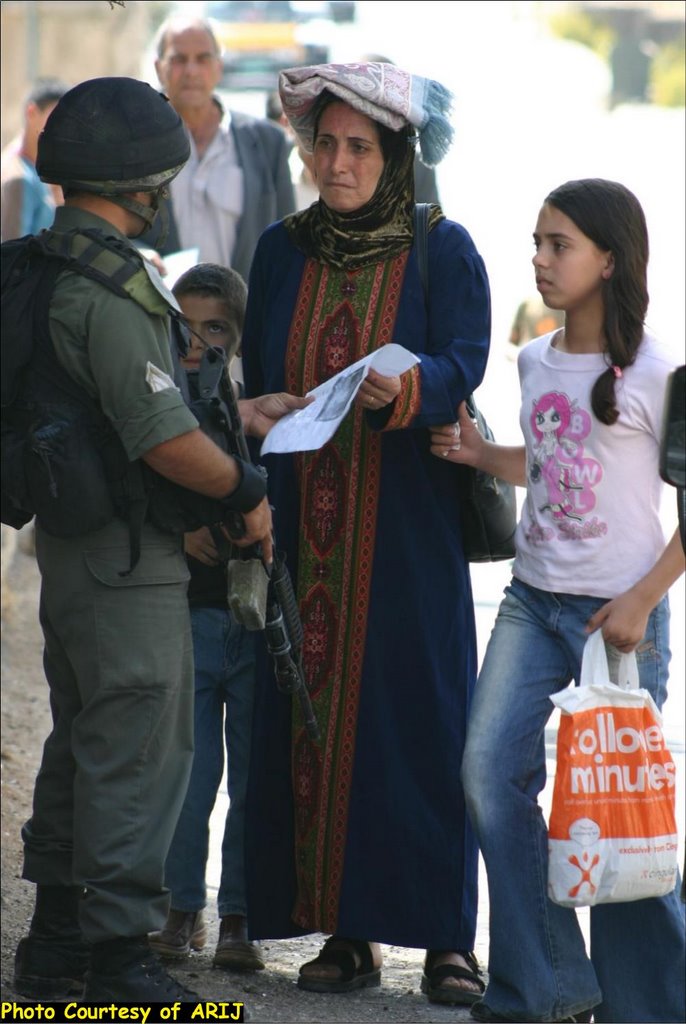
"Anyone who wants to become acquainted with Israeli society should go to the checkpoints. Not for a quarter of an hour, under the guidance of commanders who will glory in the pavilion they built for the people waiting in line and will explain that the upgrading and the expansion of the checkpoint are intended to benefit the locals. Those who really want to know the checkpoints should rather dwell here for hours, during several days. When you observe the soldiers, you will discover many Israeli characteristics among them, characteristics in which we have always taken pride.......

Each of the many dozens of checkpoints has developed its own methods of harassment over the years. They derive from the implicit order behind the existence of every checkpoint: Prevent Palestinian freedom of movement for the sake of the welfare of the Jewish settlements; that is to say - Israel. One gets sick of reading about the checkpoints. One gets even sicker of writing about them. And the most sickening thing of all is to pass through them. But because the Palestinians have no alternative but to continue to pass through them, these checkpoints will continue to be the representatives of Israeli society. "

أخجل من كوني فلسطينيا

عبد الباري عطوان

24/01/2007

يبدو ان الحضيض الذي تنحدر باتجاهه الأوضاع في الاراضي الفلسطينية المحتلة بات بلا قاع. واصبح كل يوم يحمل الينا مفاجأة جديدة مؤلمة تجعل العاقل منا يخبط رأسه في اقرب حائط غير مصدق لما يحدث.
ثقافات غريبة بدأت تتسلل في وضح النهار الي الشعب الفلسطيني ومجتمعه، تطرد ثقافات من المعايير الخلقية والانسانية والسياسية الراقية التي تعكس وعياً وانضباطاً وحرصاً علي حقن الدماء، وتقديم تجربة ناصعة في النضال والجهاد من أجل استعادة حقوق ثابتة مشروعة من بين انياب عدو فاجر في دمويته وتعطشه للقتل والتدمير.
لا يمكن ان نصدق اقدام فلسطينيين علي خطف صحافيين اجانب جاءوا من مختلف انحاء العالم لنصرة قضية عادلة، ونقل معاناة شعبها تحت الجوع والحصار والمجازر ونسف البيوت. لم يخطر ببالنا في اي يوم من الايام ان يهاجم فلسطينيون مقر قناة فضائية عربية ويضعوا القنابل في حجراته، ويحولوه الي ركام تختلط فيه بقايا الكاميرات واجهزة الكمبيوتر، بشظايا القنابل. هذا ليس الشعب الفلسطيني الذي نعرفه وننتمي اليه، وهذه ليست فصائل مقاومة تتصدي للاحتلال، وتقدم عشرات بل آلاف الشهداء والجرحي والأسري، وتشكو من انحياز الاعلام العالمي الي الاحتلال واساليبه التضليلية.
نقف عاجزين امام تفسير هذه الظاهرة الخطيرة والمدمرة واستيعاب مفردات هذه الثقافات الطارئة علي شعب ضرب أروع الامثلة في الانضباط، واحترام الرأي الآخر، والايمان برسالة الاعلام والاعلاميين في نقل الحقيقة حتي لو اختلفنا معها.
الشعب الفلسطيني مدين للاعلام العربي منه والاجنبي، لانه كان نصيره دائما في مواجهة التغول الاسرائيلي، والازدواجية الامريكية، وتهميش الامم المتحدة، والمنظمات الدولية الاخري.
الرئيس الفلسطيني الراحل ياسر عرفات اقام دولة فلسطينية، ونال اعتراف اكثر من مئة دولة بها من خلال استيعابه لدور الاعلام وقدرته علي الانتصار لقضايا العدل والحرية، وفضح الاحتلال الاسرائيلي وكل ممارساته البشعة وغير الانسانية. لم يغضب صحافيا ابدا، وان اغضبه فانه يهاتفه في اليوم التالي معتذرا ومتوددا.
الرئيس عرفات كان يبالغ في حفاوته وتقديره للصحافيين، العرب والاجانب، ويصر علي دعوتهم الي مائدة طعامه المتواضعة، ويضع لقيمات الخبز في افواههم بيده، ولا يتردد لحظة في السؤال عن احوالهم واطفالهم وأسرهم.
ولا نكشف سرا اذا قلنا ان عشرات بل مئات الصحافيين العرب كانوا موظفين في منظمة التحرير، اسوة بأشقائهم الفلسطينيين، وكان لا يتردد لحظة في تكفل مصاريف علاج العديدين في الخارج اذا ألم بهم مرض يستدعي ذلك، ودون ان يطلبوا، بل كان يبادر بنفسه بالاتصال بهم والاطمئنان علي صحتهم.
وهذه الروح المتفهمة لرسالة الصحافي والاعلامي هي التي جعلت الثورة الفلسطينية الاعظم في التاريخ، وموضع اجماع الجميع من اقصي اليسار الي اقصي اليمين، ومن الولايات المتحدة حتي الصين. ولم يحظ اي حدث عالمي بنصف تغطية الحدث الفلسطيني، حتي في اضعف مناسباته، وتكفي الاشارة الي ان اجتماعات المجلس الوطني الفلسطيني، كانت تستقطب اكثر من 1500 صحافي من مختلف الاشكال والالوان.
هذه المدرسة اندثرت للأسف، وحلت محلها ثقافة خطف الصحافيين، ونسف مقراتهم، وتهديد من لا يتفق مع هذا التنظيم او ذاك بالقتل، بحيث اوشكنا ان نحتل قمة رأس قائمة الكراهية في اوساط ابناء هذه المهنة الأخطر والأكثر فاعلية ونفوذا في العصر الحديث.
مصيبتنا الكبري في الصراع علي السلطة الذي بات الهدف الأكبر للتنظيمين الرئيسيين علي الساحة الفلسطينية حماس و فتح وظهور قيادات جديدة لا تعرف من السياسة واصولها وآدابها غير التحريض علي الآخر، وهدر دمه واستخدام مفردات مخجلة طارئة علي قاموسنا مثل العمالة والخيانة والظلامية واللصوصية وغيرها.
نسينا الاحتلال وجرائمه مستوطناته وعملاءه، نسينا اسرانا، وتضحيات شهدائنا، واصبحنا نتقاتل علي جيفة اسمها السلطة. وباتت القضية الأهم موضع الخلاف والصراع هي من يتولي هذه الحقيبة الوزارية او تلك.
يتحدثون عن وزارات سيادية مثل المالية والخارجية والداخلية والإعلام، وينسون اننا بلا سيادة ولا كرامة، ونرزح تحت الاحتلال، ورئيس وزرائنا يجلس علي الرصيف امام المعبر مثل الذليل، ورئيس سلطتنا لا يستطيع مغادرة مكتبه دون اذن من شاويش في الجيش الاسرائيلي.
جميع قيمنا وتقاليدنا التي كانت موضع فخر الأمتين العربية والاسلامية، وحسد الأعداء، انقلبت رأساً علي عقب، واصبح المواطن الفلسطيني لا يخشي الاحتلال وصواريخه وقنابله بقدر ما يخشي من الحرب الأهلية، والصدامات بين ابناء القضية الواحدة.
في الماضي كانت الفصائل الفلسطينية تعين المتحدثين الاعلاميين حتي يخاطبوا العالم بلغة حديثة تقدم المعلومات الدقيقة وبما يضمن تعاطفه، اما اليوم وفي زمن الصراع علي السلطة، فقد اصبحت الفصائل تعين عشرات المتحدثين للرد علي بعضها البعض، واصدار بيانات التحريض والاتهام لهذا الفصيل او ذاك.
ويبلغ النفاق قمته عندما يجتمع المسؤولون الكبار في الفصائل ويتحدثون كما لو انهم يمثلون احزابا سويسرية او سويدية، يظهرون حرصا علي الوحدة الوطنية، ويلقون المعلقات في تحريم الدم الفلسطيني.
اقولها، بصراحة، وبالفم الملآن، ان هؤلاء، الذين يقولون انهم يمثلوننا، لا يمتون بأي صلة الي تراثنا وتاريخنا وتضحيات شهدائنا، ونشعر بالخزي والعار بسبب افعالهم وتجاوزاتهم ايا كان الفصيل الذي ينتمون اليه.
فاذا كان الصراع علي هذه السلطة الوهمية هو الذي اوصلنا الي هذا الحضيض، فاننا لا نريدها، ونري ان المطالبة بحلها واجب وطني لا يقل عن واجب تحرير فلسطين، لانها باتت عبئا علينا، ومصدر كل الشرور التي نعانيها وسنعانيها.
اعترف بأنني اشعر بالعار كفلسطيني، وانا اتابع ما يحدث علي الارض في بلادنا من مهازل، وأتمني من كل مواطن داخل الارض المحتلة وخارجها ان يقف في وجه هؤلاء المستوزرين الطامحين الي المناصب، وان يقول لهم كفي لستم منا ولسنا منكم، ولا نريد سلطتكم هذه، وعلينا ان نعود الي ثوابتنا الوطنية، اي التصدي للاحتلال الذي نسيناه او تناسيناه، واصبح الفلسطيني هو العدو وليس المحتل الغاصب.
لا اتردد في الاعتذار، ولو للحظة واحدة، لكل الزملاء الاعلاميين، عربا واجانب، وفي محطة العربية خاصة الذين تعرض مكتبهم في غزة للنسف، يوم امس الاول من جراء هذه الممارسات المخجلة والمعيبة، واقول ان هؤلاء الذين يستخدمون لغة الخطف والترويع والنسف والتدمير طارئون علينا، وعلي اخلاقنا وعلي قضيتنا العادلة.