Thursday, October 15, 2015

تدريبات روسية إسرائيلية مشتركة لضمان أمن الطيران فوق سورية

I AM WAITING FOR THE AIR FORCE OF NEPAL TO JOIN BOMBING SYRIA!


ISRAEL IS NOW OFFICIALLY AN ACTIVE MEMBER IN THE "RESISTANCE" FRONT!

Link


موسكو - (د ب أ)- كشفت وزارة الدفاع الروسية أن طيارين روس وإسرائيليين بدأوا في تدريبات مشتركة لضمان أمن الطيران في الأجواء السورية.
ونقلت قناة “روسيا اليوم” على موقعها الإلكتروني عن اللواء إيجور كوناشينكوف الناطق باسم الوزارة القول الخميس إن “المرحلة الأولى من التدريبات التي تهدف إلى منع وقوع حوادث طيران غير مرغوب فيها في أجواء سورية ، جرت يوم أمس ، أما المرحلة الثانية ، فتجري اليوم”.
وتابع كوناشينكوف أنه تم إطلاق “خط ساخن” بين مركز إدارة الطيران في قاعدة حميميم الجوية السورية ومركز القيادة لسلاح الجو الإسرائيلي للإبلاغ المتبادل حول طلعات الطائرات في أجواء سورية.

Wednesday, October 14, 2015

Iran ramps up troop deployment in Syria in run-up to ‘anti-rebel offensive’

Iran’s role in war has been relatively low-key so far, but deployment and dispatch of famous commander reinforce perception of new stage in support for Assad

 and


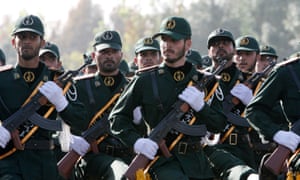
Iran is escalating its role in the war in Syria, sending hundreds of men from its elite forces to support Bashar al-Assad and dispatching its most celebrated Revolutionary Guards commander to an area where an anti-rebel offensive is expected shortly.
Arab diplomats and analysts said on Wednesday that Iran had already sent hundreds of troops to northern and central Syria, after reports that up to 2,000 are to be deployed alongside fighters from Tehran’s Lebanese ally Hezbollah and foreign Shia militia units under the cover of Russian airstrikes.
Iran has backed the Assad regime from the start of the war four and half years ago, but its role so far has been relatively low-profile. Pictures of Gen Qassem Suleimani, commander of the al-Quds force of the Revolutionary Guards, addressing fighters in Syria, reinforce the perception that a new stage of deeper Iranian involvement may be beginning.


Diplomats say Iran urged Russia to intervene militarily in support of Assad after serious losses of territory and manpower this year. Suleimani visited Moscow in July, reportedly to make that point. But some experts also see a degree of competition between Moscow and Tehran for influence in Damascus.
Suleimani was pictured addressing unidentified fighters in the Latakia area. The image was distributed on Tuesday by al-Mayadeen, a Lebanese TV channel that is close to Iran and Hezbollah. This generated intense attention on social media. The channel linked his presence to a forthcoming offensive against anti-Assad rebels.


Iran has advised the Syrian army and trained Shia militia units from Iraq, Pakistan and Afghanistan. The Kuwaiti newspaper al-Rai reported that Tehran would send 2,000 troops to Syria, along with 5,000 Iraqi and Afghan Shia fighters.
“We have seen received confirmed reports of Revolutionary Guards being deployed in the hundreds in an attempt to regain territory recently lost in Aleppo by Assad,” a senior Arab diplomat told the Guardian. Another Arab source warned, however, that information about the Iranians could be deliberately misleading propaganda.Iranian fighters began arriving two weeks ago, after Russian airstrikes began, and have accelerated in recent days, an unnamed regional official told the Associated Press. The Iranians flew into Damascus airport and were transported to a base in Latakia from where they were deploying in Hama and Aleppo provinces.
The Syrian Observatory for Human Rights reported on Wednesday that Iranian troops were continuing to arrive and being sent to a base in Jableh, near Latakia.
“There is no doubt an Iranian escalation [is being] coordinated with the Russian intervention,” said Emile Hokayem of the International Institute for Strategic Studies (IISS). “There is an operational and territorial division of labour, whereby Iran contributes skilled manpower and Russia air power, probably increasingly in the form of close air support.”


Iran’s enhanced role is a risky one, as shown by the rising number of funerals held for members of the Revolutionary Guards killed in Syria in recent months. The Syrian conflict has cost the lives of more senior Iranian guards than any other conflict apart from the eight-year war with Iraq in the 1980s.
Members of the guards killed in Syria are referred to as “defenders of the holy shrine” by Iranian media. “In Qom, people are seeing such funerals almost on daily basis,” one source said. “This shows that they are sending soldiers to fight in Syria.”
Last week a senior guards commander, Hossein Hamedani, was killed near Aleppo. It emerged on Wednesday that two other senior members were killed this week: they were named as Farshad Hasonizadeh and Hamid Mokhtarband. The Isna news agency said they were helping the Syrian army and “Islamic resistance fighters”.
“It is no coincidence that three Iranian generals have been killed in just a week,” said Hokayem of the IISS. “The planning and operations of ambitious campaigns require senior oversight so more risk-taking by Iranian generals.”Hasonizadeh was a former commander of the guards special forces unit, Tip-e-Saberin. Morad Veisi, an expert on Iran’s armed forces who works with Radio Farda in Prague, said more Saberin personnel appear to have been sent to Syria.
On Monday two funerals were held in south Tehran for guards from Iran’s Fatemiyoun brigade, composed of Iran-based Afghan expatriates.
Following the rising Iranian death toll in Syria, Iranian officials have become vocal in vowing to crush “takfiri terrorists”. Mohsen Rezaee, a former guards commander, said: “We will bury takfiris in Syria and Iraq and we will prove to the world that conspiracy and deception has no place in Islam.” A takfiri is a Sunni Muslim who believes it is legitimate to kill Muslim apostates, and is Iran’s terminology when referring to Islamic State (Isis).

Ali Akbar Velayati, a foreign policy adviser to Iran’s supreme leader, Ayatollah Ali Khamenei, said this week that maintaining Assad in power remained Tehran’s red line. “Russia’s presence in Syria is important and effective,” he said. “We’ve supported Bashar al-Assad for more than four years and we will continue to do so.”

ما صحة التسريبات بشأن هجوم وشيك على حلب؟

Carlos Latuff's Cartoons


DNA- ميشال عون..والسوخوي- 14/10/2015

US Arms Shipments Fuel Proxy War With Russia Over Syria

US Stepping Up Shipments of Anti-Tank Missiles


Link

The US had ditched a plan to arm Syrian rebel factions over a year ago, but the start of Russian airstrikes against ISIS and other factions has the US going back to that strategy, and throwing large amounts of anti-tank missiles at the various rebel factions in the nation’s west.
The initial shift was because of America’s shift in focus from early Civil War goals of regime change to fighting against ISIS. The groups getting the tow missiles aren’t fighting ISIS, by and large, they’re fighting the government, and by extension the Russians.
The shipments seem aimed atturning the Syrian Civil War into a proxy war, and the fact that the US is overtly backing Free Syrian Army (FSA) factions that are fighting alongside al-Qaeda in Idlib and Hama, because that’s the focus of one of the first Russian-backed offensive.
So the US strategy in Syria is shifting once again, initially focused on regime change, then focused on destroying ISIS, and now, having given up more or less on both of those, they just want to see Russia fail, and the administration seems comfortable with the possibility that US-made weapons will be destroying Russian tanks and helicopters.
This proxy war is also bringing the US closer to a de facto alliance with al-Qaeda, as the efforts to undermine Russia run squarely through al-Qaeda-held Idlib, and “stopping” Russia at this point means further consolidating al-Qaeda control over northwest Syria.

The rise of the Oslo generation

Three reasons why the Israelis need to stop whining.


By Marwan Bishara


In 1988, Israel's then Defense Minister Yitzhak Rabin ordered his lieutenants at the height of the first Palestinian Intifada to "break the bones" of young Palestinian inciters and stone throwers to "bring them under control".

And recently, Prime Minister Benjamin Netanyahu told the military to use "all means necessary", including the use "live ammunition" against Palestinian stone throwers.

Almost three decades later, and it's more of the same.

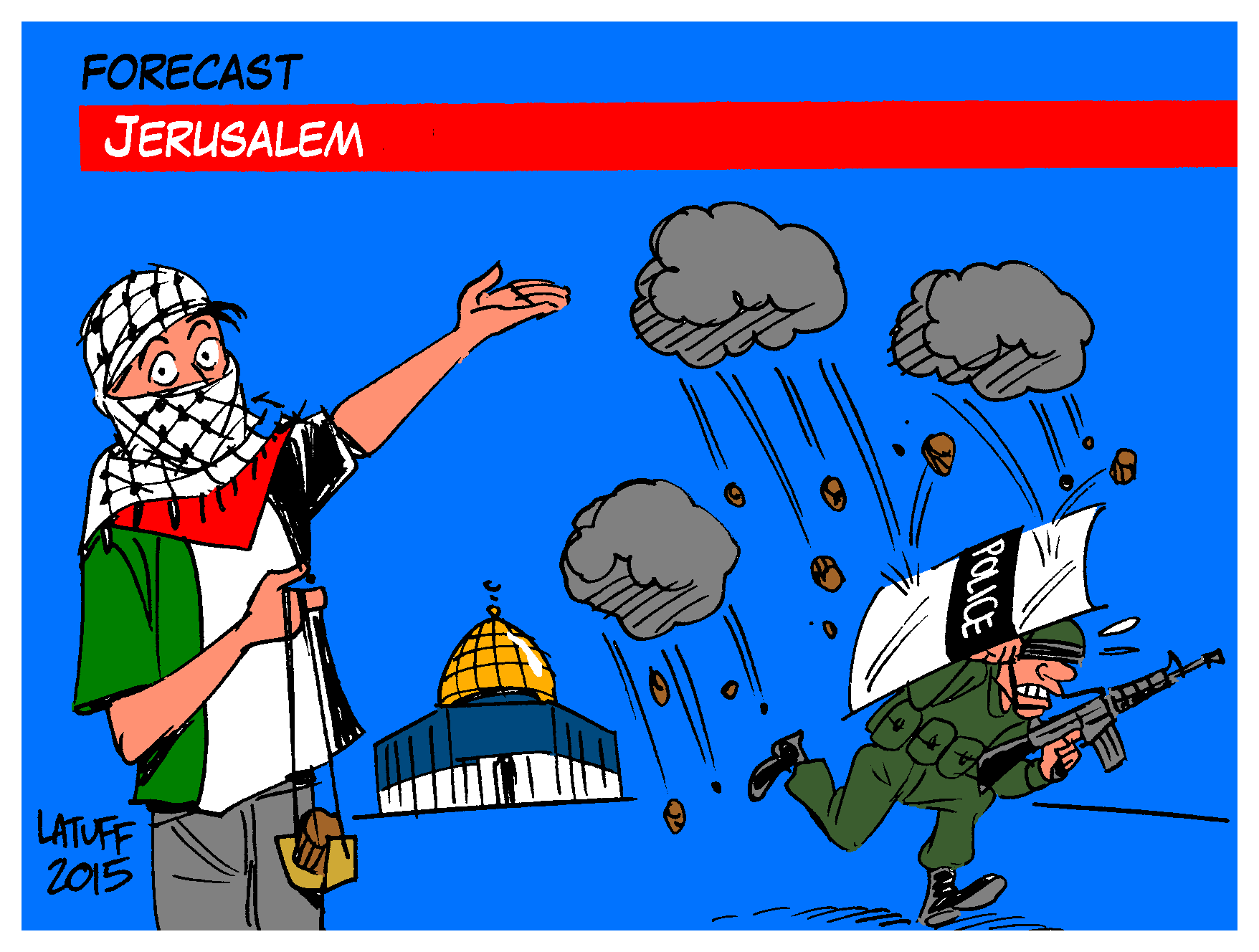
Now as then, Israel's excessive use of force has failed to repress the Palestinian yearning for freedom from occupation. Instead, the tensions in Jerusalem have spread to Palestinians communities in the West Bank, Gaza and within Israel itself.

However, unlike Rabin, who concluded that force has its limits and that Israel needs to embrace diplomacy, the current prime minister reckons force works and diplomacy is only good to waste time and gain territory. (Rabin was later assassinated by an Israeli extremist against the backdrop of incitement by the Israeli Right led by none other than Benjamin Netanyahu.)
Inside Story - The end of the Oslo agreement?
'The Zionist enterprise'

But now that his policy backfired, Netanyahu is doing what he does best; project blame elsewhere. Predictably, he expressed shock and dismay, and accused the Palestinians of trying to destroy the "Zionist enterprise", i.e. Israel.

Such "whining while shooting" policy has worked for Israel in the past, but will it work this time around?

The peace process generation
Unlike their predecessors, the overwhelming majority of the young Palestinians who are out demonstrating grew up under the shadows of the Israel dictated "Peace Process".


Their anger and frustration is the culmination of Israel's refusal to end its repression and occupation of the Palestinian people more than two decades after the Oslo process began.
It's as if there's never a good time to end the occupation and begin the peace. Not when Israelis feel insecure - for reasons, real or imagined.

It takes political chutzpa and moral bankruptcy to blame them for leadership failure in Israel or Palestine. They shouldn't be blamed for why Israel, to paraphrase one of its diplomats, didn't miss an opportunity to miss an opportunity to make peace.

Instead, Israel has rejected an awfully generous Palestinian/Arab offer to live in peace and security within 78 percent of historic Palestine.

It's as if there's never a good time to end the occupation and begin the peace. Not when Israelis feel insecure - for reasons, real or imagined. Nor when they feel totally secure.

Five years ago, the influential US weekly TIME magazine asked a controversial question on its cover: "Why Israel doesn't care about peace."
And the answer is rather straightforward: Israelis feel prosperous, secure - and disengaged from the peace process with the Palestinians. Basically, "it's quiet there, over on the moon", TIME referred to the adjacent Palestinian territories.  

But the Palestinian response to Israel's indifference (and the world's silence) has been loud and clear: You might turn your back on our suffering, you might ignore our occupation, and you might even let us down again and again, but we aren't going anywhere.


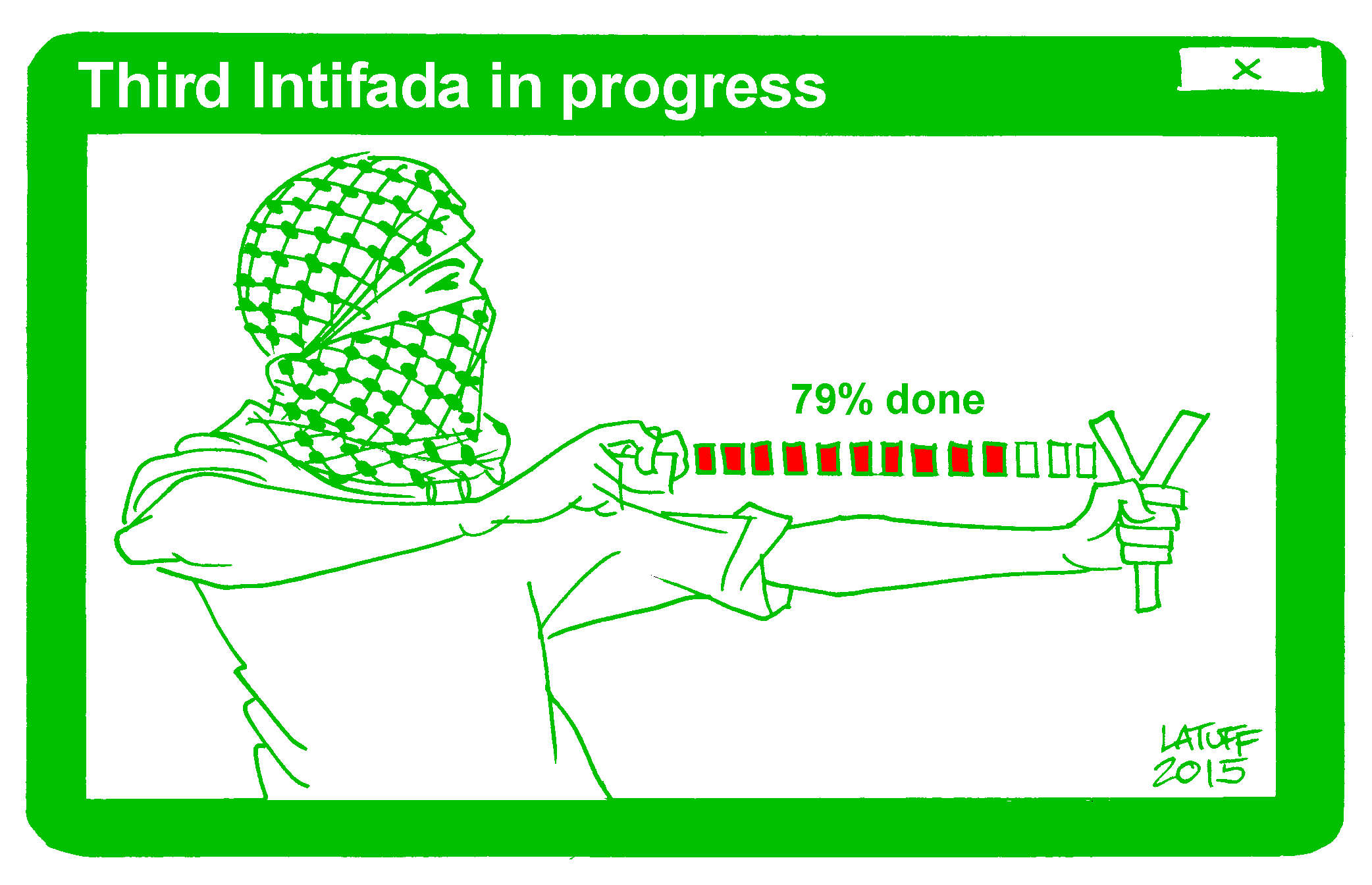
And within couple of weeks, it's the Israelis who are anxious, helpless and fearful of another Intifada.

And most surprisingly, they're also shocked.

In your face
How could any any sane Israeli be any bit surprised that Palestinians would do something - anything or everything - to free themselves from decades of occupation, repression and disposition?
A Palestinian tries to dodge rubber coated bullets during clashes with Israeli troops near Ramallah, West Bank [AP]
Do they really expect the Palestinians to accept Israel's discrimination and dehumanisation? Or perhaps rejoice at being occupied by "the one and only democracy in the Middle East", that affords them refugee camps in their own homeland.

Well, they don't and won't. Time to get real and perhaps learn one or two lessons from history.

First, occupied people ultimately liberate themselves from their colonisers as we've seen over the last century; Palestine is no exception.

Second, occupying another people isn't (and shouldn't be) easy or cost-free enterprise. But Israel has had it relatively easy during the longest occupation of the 20th century, perhaps too easy, at least in comparison with other foreign occupations in the region and beyond.

And third, it's Israel's own settlement expansion throughout historical Palestine that has shortened the distance between Palestinians and Israelis with each passing day, and in the process, making it tougher to separate the two peoples, and certainly far harder to police their fault-lines.


Make no mistake; from now on besieging Palestinians will translate into encircling Israelis. And as US Secretary of State John Kerry (and many others) warned last year, the failure to reach a two state solution leads to "Apartheid".
US Secretary of State John Kerry [Reuters]


But of course, Kerry later backed down on the wording as his boss did when it comes to Israel's policies in Palestine. All of which takes us to the third reason why Israelis need to stop whining.

US protection
Despite Netanyahu's hostility towards US President Barack Obama, his meddling in US politics and his failure to subvert the nuclear deal with Iran, the Obama administration, and the US political establishment as a whole, continue in their appeasement of Israel.

And despite Israel's violation of international law, successive US administrations have protected Israel through its veto at the UN Security Council, and provided it with more military and financial support than any other nation on earth.


Already, Kerry's first reaction was condemnation of Palestinian terrorism.
Indeed, despite Israel's continued occupation, expansion of illegal settlements (which Obama opposed), and rejection of US overtures to re-launch the so-called peace process, Obama will receive the extremist Israeli leader next month at the White House and most probably afford him a new elaborate support package.

But Israel has become a serious burden on the US, not the asset it imagines itself or perhaps it once was. In fact, judging from its repeated violent outbreaks and use of excessive force, Israel has become a real embarrassment.

And yet, the Israeli prime minister continues to badger the US president when it's America that's providing protection to its military and diplomatic racket. If that's not chutzpa, I don't know what is.

But that's also precisely why it's high time for change. Netanyahu's Israel cannot continue to have its cake and eat it too.

In their White House meeting next month, Obama has a moral and political obligation to hold the Israeli prime minister accountable for his failed and dangerous policies in Palestine.
Marwan Bishara is the senior political analyst at Al Jazeera.

It's time to challenge the status quo in Palestine

In the name of "peace", Israel continues to wage a daily war against the Palestinians.


Lamis Andoni


The deafening silence in the international media as the toll of Palestinians injured and killed by the Israeli army is appalling. It seems there is an unwritten consensus that as long as Western governments, mainly the US, do not see a serious threat to "Israeli security" and to "Israeli Jewish lives", it is just another "cycle of violence" that can be suppressed, if not crushed by a well-equipped Israeli army.
UpFront - Two-state solution is not a 'valid solution right now'
What we are witnessing across the West Bank and the Gaza Strip is not another "cycle of violence" that needs to be de-escalated but a continued national liberation struggle that needs to be fulfilled.
The term "cycle of violence" itself, even though regretfully repeated by some Palestinian leaders, is meant to obfuscate the settler-colonial situation that keeps Palestinians under Israeli control by brutal force.
It is not about "extremists" from both sides exploiting the failure of a moribund "peace process", but it is about the fact that futile negotiations have consolidated the Israeli occupation and expansion.
Equating Palestinian youth confronting their oppressors with the armed colonial settlers and soldiers is effectively criminalising resistance of the occupation, thus legitimising Israeli killings.


In the name of "peace", Israel continues to wage a daily war against the Palestinians - restricting their movement, demolishing their homes, displacing families, assassinating Palestinians and bombing towns and cities when it sees fit.
It is no coincidence that since the 1991 Oslo Accords, the number of illegal Israeli settlements has dramatically increased. From the very outset, Israel with US backing, refused to abide by international laws and conventions that ban an occupying force from confiscating acquisitioned by force and the transfer of population to that land.
The Palestinians are rising again not only against the military apartheid colonial regime, but also placing a mirror in the face of a disgraced Palestinian Authority, and an apathetic world.

The removal of international law from the framework of all accords signed after Oslo, made the outcome no more than dictats of the balance of military power, allowing Israeli to continue its colonial activities with impunity. Yet at the same time those very agreements created a dangerous appearance of false symmetry putting both Israeli and Palestinian leaderships on "equal footing".
The facts that even the Palestinian president can't travel within or outside the occupied territories and that the Israeli army can routinely raid and kidnap Palestinians meant that the power structure remained intact.
Israeli security requirements, constantly updated and defined by Israel itself, remain the key regulator of a lopsided relationship between Israel and the Palestinian Authority. As a result a leadership that once led the liberation struggle was reduced to an enforcer of Israeli security - expected to subdue Palestinian resistance with the illusion that "good behaviour" will lead to an end of the Israeli occupation.
What started as illusion became an entrenched belief advocated by many Palestinian leaders and elite, as their privileges, including the freedom of movement, and interests have become reliant on their ability to "preserve calm" for Israel.
Preserving "Israeli security", has effectively become the ultimate test of Palestinian humanity - and Palestinians are subjected to this daily test as "violating it" which means punishment that ranges from denying movement to arrests, assassination or all out invasion or war.


It is exactly the right to pursue a simple ordinary life that young Palestinian men and women are demanding -but no ordinary life can be attained without freedom. Unless the West acknowledges this reality, it is doing no more than perpetuating injustice and acquiescing in Israeli crimes.
The young men and women, who are challenging the armed Israeli soldiers, are not relying on a sudden awakening of Western governments' consciousness, but on shaking up the status quo.
Like the generations who fought the first and second Intifadas, of 1987 and 2001, they are showing incredible courage and making sacrifices. What they are not relying on is a false hope of resumed negotiations while the noose of occupation is tightened.
Oslo worked, and for a long time, as a sedative that created a mirage of a just peace. Such sedatives no longer work a fact that the Palestinian realised when in 2001 they rose in the second Intifada.
Sure enough, negotiations resumed after the second Intifada, but so did the building of the segregation wall that increased the pace of Israeli land grab and strangulated and fragmented towns and villages.
The Palestinians are rising again not only against the military apartheid colonial regime, but also placing a mirror in the face of a disgraced Palestinian Authority (PA), and an apathetic world.
While Israel bears the brunt of the responsibility, it is high time to for the PA to end the farce of the security coordination with Israel, as keeping it makes it accomplice with Israeli crimes.
The West, can choose to continue backing Israel and turn the other way, a new generation, with tears and blood is making sure that Palestinian rights will not disappear.
Lamis Andoni is an analyst and commentator on Middle Eastern and Palestinian affairs.

Has America lost its aura or just changed its strategy?

Dr Faisal Al-Qasim

Link

Dr Faisal Al-Qasim
Dr Faisal Al-Qasim

Some people believe that America has lost its aura, especially since the outbreak of the Syrian revolution. What is irrational about this view is the fact that those who share it have linked America’s status and prestige to its hesitation to interfere in Syria. Based on this, they are saying that Uncle Sam has lost his teeth, not least since the blatant Russian intervention in Syria.
It is naïve and foolish to describe US President Barack Obama's policy towards Syria, and the Middle East in general, as “confused”, “hesitant”, “cold” and “indifferent”. Do people not know that “indifference” in politics is a policy in itself and that hesitancy is not actually hesitation, but a deliberate move? The problem with most of those who think this way is that they do not follow the US statements or presidential platforms and programmes proposed by would-be presidents in order to reach the White House.
Americans are usually blunt, brazenly so, when it comes to their foreign strategies and policies. They do not beat around the bush; rather they announce their project to the media openly. The problem with the Arabs is that they do not read this until it is too late.
The Obama administration has said time and time again, during his first term in office, that the president will take a completely different political path to that of his predecessor George W Bush. Obama had come with a programme that went against Bush’s policies, which cost America a lot militarily, economically and politically. Obama said explicitly that he wanted to play quietly, aware of the political chaos that characterised the era of his predecessor.
In other words, Obama dispelled the image of the political “cowboy” that prevailed in previous American administrations. The US president no longer reaches for his gun every time a fly flies in front of him; instead, he has started to think in a more subtle and calm manner about how to achieve goals and strategies. Some may say that the “cowboy” mentality brought the Americans many catastrophes and hatred, especially in their recent foreign adventures in Iraq and Afghanistan, and that they are now afraid of this disastrous policy, and they may be right. However, they are also capable of achieving what they want without resorting to Bush-style recklessness. Ever since the beginning of his presidency, Obama has said that he would rely on “intelligence wars” rather than military wars, since they are more effective and far less expensive. We have seen this during the Syrian conflict, as the Americans have given the impression that they are disinterested, indifferent or confused about the situation. The CIA, meanwhile, has been carrying out operations within Syria from their stations on the Turkish border.
While America was watching the various forces tearing each other apart in Syria, just as Washington wanted, we heard many media outlets talking about the US distance from the conflict. Since Obama became president, many Americans have relied on the principle of “backseat driving”, allowing those on the ground to drive according to the directions and instructions provided by the US, without making any noise or commotion.
The Americans are no longer willing to interfere directly in any conflict. This was pointed out by the veteran diplomat Henry Kissinger in a number of newspaper articles regarding Obama’s administration. Kissinger even called on Washington to pay due regard to the 1648 Treaty of Westphalia, which calls for respect to be shown to the sovereignty of other countries. This, of course, has a negative ulterior motive, as under the pretext of respecting the sovereignty of other countries, this new Kissinger diplomacy achieves all that it wants without interfering blatantly in the affairs of others, as it did in the past. It is worth noting that even the US air strikes on Al-Qaeda areas in Yemen, Pakistan and Somalia were carried out by drones to avoid the loss of American pilots. And did the Americans lose a single soldier in Libya?
Those who believe that the US was weak when it negotiated with Iran are mistaken. Absolutely not; US force and power can destroy the world one hundred times over. However, the US-Obama policy also aims to restore balance to the American economy, and so the current administration does not want to engage in costly new overseas adventures as long as it is able to achieve what it wants by means of “soft power”. Hence, it believes that negotiating with Iran and sanctions are more effective than wars.
Those who describe the Obama administration’s current policy regarding the Middle East as “stupid” do not know anything about politics. The American policy that some call “stupid” stripped Syria of its strategic chemical weapons, something that none of the wars in the region was able to achieve, and it now has its sights set on matters other than such weapons. More importantly, it reined in Iran’s nuclear project without losing one dollar or one soldier. Compare the amount of money spent by America on its escapades in Iraq and Afghanistan — trillions of dollars — to what it is spending on the Syrian and Iranian issues.
The US has achieved for itself and its closest ally Israel everything it wanted by means of working in line with the famous principle of Napoleon: “Never interrupt your enemy when he is making a mistake.” It spent billions of dollars to push back Iraq to the Stone Age, as promised by the then Secretary of Defence, Donald Rumsfeld. However, in Syria, it achieved everything it achieved in Iraq for free, albeit at the expense of Syrian blood and bodies and the wealth of others. If this American policy of “confusion, indifference, and stupidity” was able to achieve all of these results, what if the policy was smart? The Obama administration achieved in Iran and Syria what America failed to achieve over the past twenty years with regards to the Middle East and ensuring Israel’s security, but how? With only talk-talk, keeping calm, hesitation and studied indifference?
US journalist Thomas Friedman said in the New York Times after the Russian intervention in Syria: “Bravo Obama. Stay far away and let them get involved.” Before him, the White House Chief of Staff said that the situation in Syria is ideal for the US, as “the bad guys are burning each other.” Those who said that America seems to be bowing down are right, but it is bowing down to win. It hasn’t lost its aura; it’s simply changed its strategy.
Translated from Alkhaleejonline, 10 October 2015

Tuesday, October 13, 2015

جيش الفتح يعلن انطلاق معركته للسيطرة علـى مدينة حماة

الواقع العربي-دور الشباب غير المؤطر في الهبة الفلسطينية

مقتـل قيادييـن بـالحرس الـثوري الإيراني في سـوريا

أسبوع على معارك حماه: نحو 400 قتيل للنظام ومليشياته

أسبوع على معارك حماه: نحو 400 قتيل للنظام ومليشياته

Link

سيطرت قوات المعارضة السورية اليوم الثلاثاء، على مواقع كانت قد انسحبت منها في ريف حماه الشمالي، خلال المعارك التي بدأت هناك يوم الأربعاء الماضي، حيث دفع النظام بحشود كبيرة من القوات والمدرعات، مدعوماً بعشرات الغارات التي شنتها المقاتلات الحربية الروسية، غير أنه مُني بهزائم متلاحقة حتى الآن، فَقَدَ خلالها مئات العناصر ونحو 40 دبابة ومدرعة بالإضافة إلى مروحيتين عسكريتين.

وأكد المستشار القانوني للجيش السوري الحر، أسامة أبو زيد، أن "المعارضة تمكنت اليوم من استرجاع سيطرتها على منطقة الصوامع في قرية المنصورة"، فيما "لاتزال الاشتباكات جارية على جبهات قرية المغير" في ريف حماه الشمالي الغربي "وتل سكيك وقرية عطشان" بريف حماه الشمالي الشرقي، موضحاً أن المعارك هناك تأخذ طابع الكر والفر.

وأشار أبو زيد خلال حديثه لـ"العربي الجديد" إلى أن "خطوط المواجهات تشهد معارك عنيفة، فالنظام يستخدم قوة نارية وصاروخية كبيرة جداً، بالإضافة للغطاء الجوي الذي توفره الطائرات الحربية الروسية" مضيفاً أن "مقاتلي الجيش الحر يتمسكون بالأرض ما أمكن، لكنهم يضطرون أحياناً وحسب مقتضيات المعركة للانسحاب من بعض المواقع قبل أن يعودوا ويهاجموها مجدداً لاستردادها".
ولفت المسؤول في المعارضة السورية إلى أن "النظام يستخدم في معارك حماه حشوداً كبيرة من المقاتلين الأجانب، بالإضافة لمقاتليه النظاميين والمليشيات التي شكلها (الدفاع الوطني واللجان الشعبية) فيما قوات المعارضة تواجه كل هذا العدوان وحدها، فضلاً أن لديها خصماً آخر يطعن بظهرها وهو تنظيم داعش الذي استفاد من العدوان الروسي بنفس القدر الذي استفاد فيه النظام، فكلاهما الرابح الأكبر من دخول روسيا بشكل مباشرعلى خط المعارك".

اقرأ أيضاً: سورية: إخفاق حملة ريف حماة يفتح جبهة اللاذقية
من جهته، أكد مسؤول الإعلام الحربي بـ"حركة أحرار الشام الإسلامية" أبو اليزيد تفتناز لـ"العربي الجديد" أن "من يهاجم في ريف حماه ليس فقط قوات النظام، بل أعداد كبيرة من المليشيات الإيرانية وحزب الله وغيرهم"، وهو ما يؤكد أن النظام يبدي اندفاعاً كبيراً في سعيه لحسم تلك المعركة، غير أن التطورات الميدانية لا تسير لصالحه على ما يبدو.
وحول مجرى المعارك خلال الـ24 ساعة الماضية، قال أبو اليزيد، إن "النظام حاول منذ مساء أمس أن يتقدم على جبهات ريف حماه الشمالي الغربي وبالتحديد المنصورة وتل واسط وصولاً إلى قرية الزيارة، ولم يستطع إلا السيطرة على المنصورة، لكن مقاتلي جيش الفتح شنوا هجوماً معاكساً صباح اليوم، وتمكنوا من استرداد القرية وقتلوا نحو 20 مسلحاً بينهم عدد من قوات النظام ومليشيات إيرانية، بالإضافة لاغتنام دبابة وعربة (بي ام بي)".

وأضاف مسؤول الإعلام الحربي أن مقاتلي المعارضة "شنوا هجوماً أمس على جبهة سكيك وتقدموا في ذاك المحور لكنهم اضطروا للانسحاب لاحقاً بسبب ضراوة القصف والغطاء الناري الكثيف، فالراجمات كانت تطلق عشرات الصواريخ في نفس الوقت"، مؤكداً أن "النظام تمكن أمس من السيطرة على أجزاء واسعة من بلدة كفرنبودة، لكن المجاهدين عادوا وشنوا هجوماً كبيراً وسيطروا بالكامل عليها وكبدوا النظام نحو خمسين قتيلاً بينهم قائد الحملة"، قائلاً: "إن نهار اليوم يشهد هدوءاً نسبياً قياساً بالأيام الماضية".

إلى ذلك، كشف "مركز حماه الإعلامي" اليوم أن خسائر النظام البشرية خلال المعارك الدائرة منذ نحو أسبوع في ريف حماه، بلغت "أكثر من 400 قتيل من قوات النظام منذ 6 أيام وحتى اليوم، وذلك كما أكدت مصادر داخل مشفى حماه الوطني"، مشيراً إلى أن هذه "الحصيلة هي الأكبر منذ بداية الثورة التي يتكبدها النظام في معاركه ضد الثوار بريف حماه، وذلك في أعنف حملاته العسكرية التي يشنها حاليّاً" في تلك المناطق.

اقرأ أيضاً: "تاو"... السلاح الذي بدل موازين القوى في الشمال السوري

وقال مدير المركز يزن شهداوي لـ"العربي الجديد" إن "الـ400 قتيل هم من قوات النظام ومليشيا الدفاع الوطني التي كانت حصيلة القتلى الأكثر من عناصرهم، كما أن النظام ولكثرة قتلاه بات ينقلهم بالشاحنات وصهاريج المياه على شكل أكوام مكدّسة فوق بعضها من جبهات الريف إلى مشفى حماه الوطني".

ونقل شهداوي عن مصادر خاصة داخل مشفى حماه الوطني، "بأن أعداد القتلى الذين سمحت المخابرات السورية بتسجيلهم رسمياً بلغت 216 قتيلاً، فيما منعت المخابرات الجوية تسجيل الرقم الحقيقي للقتلى الذي تجاوز ذلك بكثير، وذلك لملاءمة الصدمة التي تلقاها النظام في معاركه الأخيرة بريف حماه، وهذا الرقم الكبير جداً تضاف إليه عشرات الآليات وعدد من المروحيات أيضاً".
يأتي هذا فيما أشار المصدر إلى أن "المخابرات السورية أصدرت قراراً لمشفى حماه الوطني وإدارته بإخلاء المشفى من جميع الحالات المرضية المدنية واستنفاره لحالات الجرحى القادمة من معارك ريف حماه وتم تحويل عدد كبير من الحالات الخطرة في صفوف النظام لمشفى المركز الطبي التابع للقطاع الخاص بمدينة حماه، كما جرى تحويل 50 حالة من عناصر النظام إلى مشافي محافظة حمص لعلاجها من حالات الحروق والبتر التي بلغت حالات عالية الخطورة".

اقرأ أيضاً: البنتاغون: غيرنا مسارات طائراتنا بسورية تجنباً لحوادث التصادم

وأضاف أن "هذه الخسائر البشرية العالية للنظام خلال المعارك التي ما تزال دائرة بريف حماه"، دفعت "المخابرات لإصدارِ قرارٍ يدعو لسحب جميع عناصر مليشيات الدفاع الوطني واللجان الشعبية وجميع المجموعات التابعة للمخابرات السورية وغيرها داخل مدينة حماه"، بهدف " الالتحاق في جبهات الريف المشتعلة وإلا سيتم سحب البطاقات الأمنية والأسلحة التي بحوزتهم".
وكان النظام قد بدأ حملة عسكرية غير مسبوقة لجهة ضخامتها بريف حماه الشمالي (والشمالي الغربي والشرقي)، صباح السابع من هذا الشهر، مستفيداً من عشرات الغارات الروسية التي أمنت الغطاء الجوي لقواته ومليشياته على الأرض، غير أن الأيام الأولى للمعركة كلفته ما يقارب الأربعين دبابة ومدرعة تم تدميرها بصواريخ "تاو"، ما غيّر مسار المعركة، حيث أعادت فصائل المعارضة ترتيب صفوفها، بينما انكفأت قوات النظام لمواقعها إلى حد ما، مع استمرار مواجهات الكر والفر على بعض الجبهات هناك حتى الساعة.