Hollywood actress and UN Refugee Agency envoy Angelina Jolie speaks on Monday about seeing the refugee crisis first hand. Jolie, who has visited a number of refugee camps as part of her role as envoy, said she thinks there is another side to the refugee crisis that people don’t always see in news reports
تعود أجواء سنة 2011 لتسيطر على المشهد، فقد حدثت تحركات كبيرة في عدة بلدانٍ شهدت ثورات. ظنَّ قطاع ممن شاركوا في الثورات أن ثوراتهم فشلت، وأن التغيير يبدو مستحيلاً. هذا ما عزَّز الميل إلى اليأس والعودة إلى اللامبالاة، أو حتى الكفر بالثورة. ليس الحديث، هنا، عن معظم الأحزاب والنخب التي "شاركت" في الثورات الأولى، حيث التحقت بالنظم "الجديدة" أو مالأتها، وباتت معنيةً بوقف كل حراكٍ شعبي، وكل احتجاج، مكرّرة ما كان يقوله إعلام النظم نفسه: هذه احتجاجات فئوية. وأصبح شعارها هو السكينة، وكسب ما يمكن كسبه من "النظام الجديد"، أو حصر "الصراع" بنشاطها البرلماني، وبياناتها، من دون حاجةٍ إلى إضرابات أو تظاهراتٍ تجاوزها الزمن. الأخطر كان يتمثل في يأس فئات شبابية من الطبقة الوسطى، ظنّت أن الانتصار ممكن بشكل سريع، وأن الأمر بسيط بلا تعقيد. وهذه فئات نشدت الحرية والديمقراطية بالأساس، حيث كانت تريد أن "تعبّر عن ذاتها"، من دون تعقيدات سلطوية، واحتمالات قمع وسجن، وأن يكون لها رأي في "الشأن العام". ولم تكن في وضع معيشي سيئ، مثل طبقاتٍ شعبية كثيرة، بل كانت قادرة على العيش الجيد. تعبت، وانكسر حلمها بتغيير سريع، فمالت إلى الانكفاء في حالة يائسة. لكن موجات الاحتجاج عادت تتصاعد، بعد انتظار تحقيق مطالب بسيطة، ثار الشعب من أجلها: أقصد حق العمل لملايين العاطلين عن العمل، وزياد الأجور بما يكفي العيش الكريم، ومجانية التعليم، بعد أن انهار، وبات في الغالب مخصخصاً، وتكريس كفاءته، والضمان الصحي والاجتماعي، ومطالب أخرى، مناطقية أو قطاعية أو مهنية، فقد ناورت النظم من أجل تجاهل هذه المطالب. زادت السيطرة البوليسية، واخترعت "الحرب على الإرهاب" لتحويل الصراع من كونه صراعاً طبقياً إلى كونه صراعاً "وطنياً"، أو "دولتياً"، حيث يصبح الإرهاب "الخطر الرئيسي" الذي يعلو على كل خطر ومطلب، ويصبح الحفاظ على الدولة همَّاً "شعبياً"، بعد أن ظهر ضعف الدول في ليبيا وسورية واليمن، ويكون الخوف من الانجراف إلى حرب أهلية وصراع طائفي وتدمير مجتمعي هو الذي يسكن الجموع، من خلال الضخ المركز من إعلام النظم، وترداد "النخب" الهزلية.
على العكس، ففي ظل التخويف من الإرهاب وانهيار الدولة و"المثال السوري"، جرى الإيغال في اللبرلة، حيث زادت الأسعار، وتراكمت الضرائب الجديدة على الشعب، وأصبحت الخصخصة الخيار الأخير "من أجل إنقاذ البلد". بمعنى أن السبب الذي أفضى إلى انهيار الوضع المعيشي لكتلةٍ ضخمة من الشعب، وزيادة البطالة بشكل كبير، والذي أفضى إلى انهيار التعليم، وسحب دعم الدولة الصحة والتعليم والبنية التحتية، هذا السبب هو الذي ظل النظام حريصاً على الإيغال فيه، في ظل تخويفٍ وممارسةٍ للإرهاب. فقد ثارت الطبقات الشعبية، لأن نسبة كبيرة باتت ملقاة في البطالة (30% تقريباً من القوى العاملة) ونسبة أكبر في الفقر (تصل إلى 40% و50% بالمائة). وبالتالي، لم تعد قادرة على العيش، وتراكمت مشكلات السكن والزواج والتعليم والعلاج. لهذا، أملت في تغيير النمط الاقتصادي، بما يحقق هذه المطالب، لكنها وجدت أن الوضع يسير في المنحَدَر نفسه، وأن وضعها يسوء، وينحدر وضع فئات أخرى من الطبقة الوسطى.
زعم "الحفاظ على الدولة" كان "لعب" النظم يقوم على عنصرين من أجل التغطية على هذه المطالب أولاً، والاستمرار في لبرلةٍ تفقر الشعب. تمثل الأول في "المسار الديمقراطي"، حيث أعلنت أن الثورة انتصرت، وأن المطلوب الآن هو ترسيخ الديمقراطية عبر المسار الانتخابي، وخلاله، يمكن أن تجد المطالب حلولاً ما (كما يبرّر يسار متلبرل)، وكان هذا يعني الإعلاء من "أهمية الانتخابات" والحرية، وكونها أساس مطالب الثورة. لكن، كان الهدف هو الاستمرار بلبرلة مميتة (أو قاتلة)، والعنصر الثاني، المكمل لذلك هو تحويل الأنظار إلى "الخطر الرئيسي"، كما أشرت، و"توحيد" الشعب والنظام ضد الإرهاب، ومن أجل "الحفاظ على الدولة". لم يموه ذلك الأمر على الشعب، على الرغم من أنه كان يتأمل، في بعض اللحظات، برئيس أو حزب. فاستمرت الاحتجاجات، على الرغم من كل القوانين التي صدرت لقمعها، وكل محاولات النظم "الكذب" على الشعب، أو تخويفه بالقوة الفعلية. ونجدها تتوسع الآن، وتتصاعد قوتها. فقد ملَّ الشعب الانتظار، ولم يعد معنياً بقبول تبرير أو تحمل تخويف، أو حتى الخوف من العنف السلطوي، حيث جرّبه سابقاً، وعرف أنه قادر على سحقه وهزيمة النظام. في تونس، انتفضت جزيرة قرقنة، وشهدت القصرين اعتصامات، كذلك الدهماني، وتونس، تتعلق بالمعطلين، و"المفروزين أمنياً" الذين حاول النظام الالتفاف عليهم بوعودٍ كاذبة. والاحتجاجات تتصاعد في كل مكان، الأمر الذي يشير إلى وصول الأزمة إلى لحظة انفجارٍ جديد، بعد أن انتظر الشعب طويلاً من دون أن يحقق فرص العمل، وزيادة حقيقية في الأجور. وبعد أن زادت أزمات الشعب، بفعل زيادة الأسعار والضرائب، والتوسع في الخصخصة، وتحكم صندوق النقد الدولي في البنك المركزي والسياسة المالية. إننا إزاء لحظة انفجارٍ، لن يغطيها كل الحديث عن "المعجزة التونسية" في المجال الديمقراطي (كما كانت معجزة اقتصادية في زمن بن علي). فالبوليس لا زال هو ما صنعه بن علي، وإذا كان قد تراجع إلى الخلف قليلاً، فقد عاد من جديد في ممارساته نفسها، وما زالت المافيا الرأسمالية تمارس سياستها الاقتصادية كما كانت، ومن دون أي تغيير، وعلى العكس توحشت أكثر.
مصر والعراق.. وسورية
وفي مصر، تصاعدت الاحتجاجات، في الفترة الماضية، في الوسط العمالي، وفي المناطق، وكان واضحاً أن الاحتقان يتصاعد بعد "كشف المستور" في المشاريع الاقتصادية، من دون أن تحلّ، كذلك، مشكلات البطالة والفقر والتهميش. وعلى العكس، زادت كذلك نتيجة زيادة ضرائب الدولة ورفع أسعار الغاز والكهرباء والبنزين، وبالتالي، كل السلع الأخرى، والميل إلى خصخصة التعليم والصحة، ومن ثم انهيار الجنيه، الأمر الذي عنى ارتفاعاً جديداً في الأسعار والأعباء. وإذا كان قانون الخدمة المدنية قد أشعل احتجاج الموظفين (وعددهم كبير) إلى أن سقط، فإن ما حدث لجزيرتي تيران وصنافر بعد التنازل عنهما للسعودية قد "قلّب المواجع"، ليفضي إلى حالةٍ احتجاجيةٍ جديدة، ربما تكسر قانون منع التظاهر، وتفتح إلى انفجار اجتماعي كبير. يشهد العراق استمرار الحراك الشعبي الذي يرفض الفساد، بعد أن سُرقت مداخيل العراق من النفط، وباتت الدولة عاجزةً عن دفع الرواتب أو زيادة الأجور. لكنه حراكٌ يطاول كلية العملية السياسية، التي شكلها الاحتلال الأميركي، والقائمة على أساس المحاصصة الطائفية. كما يطاول السيطرة الإيرانية على العراق، على الرغم من أنه حراكٌ يجري في المناطق التي تُصنّف شيعيةً، بعد إلهاء المنطقة "السنية" بالحرب ضد داعش، وتدميرها تحت هذه الحجة. وبالتأكيد، إن "اختراع" داعش، والحرب ضدها، بعد سنة من الاعتصام والاحتجاج في المناطق الغربية والشمالية من العراق، هدف إلى تشويه الصراع الشعبي ضد النظام المصنوع أميركياً، والمسيطر عليه إيرانياً، وفكفكته، وإغراق العراق في حروب لا تنتهي. لكن الحراك مستمر، ويمكن أن يفضي إلى إنهاء نظام أقامه الاحتلال، لمصلحة نظام شعبي. سورية، التي تغرق في حرب متعددة المستويات، مع النظام وضد تنظيم الدولة الإسلامية (داعش) وجبهة النصرة، وحزب الله وإيران والمليشيا الطائفية العراقية، ومن كل الأصقاع، وتشهد التنافس الإقليمي والدولي الذي يؤثر في طبيعة الصراع فيها، شهدت حال تراجع الصراع المسلح انطلاق التظاهرات الشعبية ضد النظام، وضد جبهة النصرة، في المناطق التي هي خارج سيطرة النظام، وليست تحت سيطرة "داعش"، وهو ما أوضح أن هناك ثورة جرى التغطية عليها، عبر إدخال "جهاديين" وسلفية وأصوليات "شيعية"، وبتدخل دولٍ مثل إيران وروسيا. كما تحركت السويداء التي قيل إنها من "الأقليات" المؤيدة، على الرغم من أن حراكها كان، منذ بدء الثورة، لكنها تعود الآن لكي تقول إن الشعب يريد إسقاط النظام.
انفجارات محتملة إذن، عادت موجة التظاهرات من تونس إلى مصر والعراق إلى سورية، ولبنان كذلك. ونشهد إضراب عمال النفط في الكويت. وربما نشهد انفجار الاحتجاجات في المغرب والجزائر والأردن ولبنان والسودان. موجة جديدة تذكّر بسنوات الأمل والكرامة، منذ 17/12/ 2010، ربما إلى سنة 2013. سنوات الحراك الشعبي الكبير الذي أدهش العالم، قبل أن يواجَه بالعنف، وتظهر عناصر القصور فيه، وتغرقنا النظم في العنف و"الحرب على الإرهاب"، وليقال إن الثورات فشلت. ما يجب أن يكون واضحاً هو أن التكوين الاقتصادي، الذي سيطر في البلدان العربية كتابع للطغم الإمبريالية، بعد سياسات الخصخصة واللبرلة، هو الذي فرض إفقار غالبية الشعب وتهميشه، وأن هذا التكوين لا يمكن أن يقدّم خطوة إلى الوراء، لأنه يقوم على نهب متسارع لمافيا حاكمة ليست لديها "المرونة"، لكي تتراجع قليلاً في مهبها (على الأقل كما حدث في ثمانينيات القرن العشرين، بعد الانتفاضات التي ملأت الوطن العربي). فهي تحتاج إلى تراكم متعاظم، لكي تبقى قوةً في السوق، المحلية والعالمية. لهذا تعزّز اللبرلة، وتزيد النهب، وتحمّل الشعب عبء المديونية التي سرقتها، من خلال زيادة الضرائب، وتتحلل من كل دور للدولة، لمصلحة خصخصة شاملة، وتنهي دعم الدولة لكل القطاعات التي دعمتها، من الخبز إلى التعليم والصحة، أكثر من ذلك تغرق في خصخصة كل شيء، كل شيء. لهذا، فهي تسترسل في النهب والإفقار والتهميش. وفي المقابل، ليس من خيار لدى الشعب سوى الثورة. هذا ما فعله، ويفعله وسيظل يفعله، إلى أن يحقّق التغيير الحقيقي، التغيير الذي يحقق مطالبةً في العمل والعيش الكريم والتعليم المجاني عالي المستوى، والعلاج المجاني والضمان الاجتماعي، والبنية التحتية المتطورة. الثورة بدأت للتو، ويجب معرفة كيف تنتصر. لا نحتاج إلى اليأس، بل إلى الفهم والوعي والقدرة على رسم طريق التغيير، فهذا ما ينقص الثورة، ويجعلها تتعثر أو تتأخر في تحقيق انتصارها.
(Beirut, May 13, 2016) – UAE authorities should immediately drop all charges against an Emirati academic and a Jordanian journalist that relate to peaceful criticism of Emirati and Egyptian authorities.
The Emirati academic, Nasser bin Ghaith, faces charges that include “engaging in hostility against Egypt,” following online comments made before his arrest in August 2014. The UAE-based Jordanian journalist, Tayseer al-Najjar, informed his family that his detention since December 2015, relates to his online criticism of Israeli military actions in Gaza and the Egyptian security forces’ destruction of tunnels between Gaza and the Sinai region of Egypt.
“UAE authorities seem to believe they have the right to detain anyone who ever expressed any views, anywhere, that they disagree with,” said Joe Stork, deputy Middle East director. “There is no justification for throwing a journalist, or anyone else, into prison for expressing a peaceful opinion.”
Bin Ghaith and al-Najjar both spent time in incommunicado detention after their arrests. Local sources who asked not to be named for their protection told Human Rights Watch it is likely that they were held at a state security facility in Abu Dhabi that has been the subject of numerous credible allegations of torture.
Bin Ghaith’s whereabouts remain unknown, although he appeared at the Federal Supreme Court in Abu Dhabi for court sessions on April 4 and May 2, 2016. Media reports about the May 2 session indicate that he is accused of violating various provisions of the penal code, a 2012 cybercrime law, and a 2014 counterterrorism law. Some of these charges, according to local media reports, relate to “six tweets and images ridiculing the Egyptian president and government.” UAE authorities should immediately investigate the allegations of torture that local sources said bin Ghaith made to the judge at the May 2, 2016 hearing, Human Rights Watch said. Bin Ghaith is scheduled to appear in court again on May 23.
Majida Hourani, al-Najjar’s wife, told Human Rights Watch that she has been able to speak to her husband by telephone since his transfer to Al Wathba prison in early March. She said that her husband told her he has not been formally charged. She said he had posted the social media comments that UAE authorities had questioned him about in July 2014, nearly a year before he moved to the UAE to take up employment there.
UAE authorities do not allow Human Rights Watch access to the country. UAE residents known to have spoken with rights groups are at serious risk of arbitrary detention and imprisonment. The UAE’s 2014 counterterrorism law provides for the death penalty for people whose activities are found to “undermine national unity or social peace,” neither of which are defined in the law.
“What the UAE characterizes as hostility against foreign governments is what most people consider criticism or analysis,” Stork said. “This is a prime example of the UAE practice of invoking national security to persecute peaceful critics.”
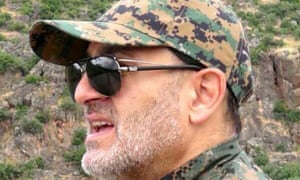
Hezbollah has claimed its top military commander died as a result of artillery shelling by Islamists near Damascus airport this week – despite his death being initially linked to Israel.
The Lebanese Shia Muslim group announced Mustafa Badreddine’s death on Friday and a military funeral was held for him on the same day in the group’s stronghold in southern Beirut.
His death was originally linked to Israel, Hezbollah’s primary enemy, but the group claimed on Saturday the attack was launched by “takfiri groups” – a word used to refer to Sunni Islamist groups.
A statement said: “Investigations have showed that the explosion, which targeted one of our bases near Damascus international airport, and which led to the martyrdom of commander Mustafa Badreddine, was the result of artillery bombardment carried out by takfiri groups in the area.”
The statement continued: “The result of the investigation will increase our commitment and will and perseverance in continuing to battle these criminal gangs and defeat them, and this was the wish of our dear martyr Sayyed Zul Fikar [Badreddine’s nom de guerre] and his will to his mujahideen brothers.”
However, the Syrian Observatory for Human Rights said later on Saturday that there has been no rebel shelling of the Damascus airport area in the last few days, casting doubt on Hezbollah’s allocation of blame.
Blaming the attack that killed Badreddine on the rebels will have come as a major cause of relief for many in Lebanon and Israel. If the group had blamed Israel for the attack, it would have been obliged to respond in kind.
Hezbollah has still not avenged the assassination of its former military commander Imad Mughniyeh in a joint CIA-Mossad operation in the heart of Damascus in 2008, and blaming Badreddine’s death on the Israelis would have further highlighted the party’s inability to level retribution for the killings of its leaders.
That is one of the reasons why accusing Syrian rebels has been treated with scepticism. Hezbollah has sought to equate its fight against the Sunni-dominated opposition in Syria with its fight against Israel, as the party lost its former popularity fighting alongside the regime of Bashar al-Assad.
Those who had once saluted its fight against Israel have begun to see Hezbollah as another sectarian militia in the Syrian quagmire. Its statement on Saturday reaffirmed that claim, equating the takfiris in Syria with its arch-enemy Israel, and the US.
Hezbollah initially said it was intervening in Syria to protect Shia shrines, before moving on to claim that its intervention saved Lebanon from an influx of jihadis from Syria. Now it claims it is fighting to protect the Muslim world from extremists as well as Israel, which in their messaging are two sides of the same coin.
Badreddine was the most senior member of the organisation to have been killed since the death of his predecessor and brother-in-law, Mughniyeh, who was assassinated by a joint Mossad/CIA operation in the Syrian capital in February 2008.
He was born in 1961 in the southern Beirut suburb of Ghobeiry, and rose to greater prominence after Mughniyeh’s assassination. In the 1980s Badreddine was sentenced to death in Kuwait over a plot to blow up the American and French embassies and later escaped after Saddam Hussein’s army invaded the country and threw open its prisons.
Hezbollah claimed the military commander had gone on to be instrumental in the majority of the group’s activities since its inception. He and four other alleged members of Hezbollah remain on trial in absentia at The Hague.
In south Beirut posters of Badreddine, whose image has rarely been published, were hung from overpasses and lamp-posts following reports of his death.
HE IS LYING ABOUT WHO KILLED MUSTAFA BADREDDINE.....
MOST LIKELY IT WAS HIZBULLAH ITSELF WHO KILLED HIM, SINCE HE WAS WANTED BY THE ICC AND HE KNEW TOO MUCH THAT WOULD HAVE INCRIMINATED MANY PEOPLE AT THE TOP INCLUDING NASRALLAH HIMSELF AND ASSAD! THINK ABOUT IT, HOW COULD BADREDDINE HAVE BEEN KILLED ALONE BY WHAT HIZBULLAH ITSELF DESCRIBED AS "A HUGE EXPLOSION"? HE WAS IN A SECURE HIZBULLAH FACILITY IN A MOST SECURE AREA AT DAMASCUS INTERNATIONAL AIRPORT. THE SYRIAN OPPOSITION IS AT LEAST 15 KM AWAY AND DOES NOT HAVE GUIDED MISSILES TO TARGET ONLY ONE INDIVIDUAL!
The horror of the conflict in Syria, which began in March 2011, can be measured with statistics: over 400,000 people dead; half the population displaced; the life expectancy of a newborn child dropping from 76 years in 2011 to under 56 years in 2016. But the grotesque absurdity of this revolution turned civil war is perhaps best captured by the fact that today Syrians are forced to crowdsource money online to rebuild and fortify bombed hospitals.
"In our worst dreams -- in our worst nightmares -- we never thought we would have to fortify hospitals."
"Now, thanks to this war, we are 10,000 years back and we dig hospitals in the mountains and in the ground," Zaidoun al-Zoabi, head of the Union of Syrian Medical Relief Organizations (UOSSM), told me. "In our worst dreams -- in our worst nightmares -- we never thought we would have to fortify hospitals," he said. "It's not humane. It's impossible to comprehend."
Zoabi, a 42-year-old father of three daughters, spoke to me from Berlin, where he fled two years ago. Originally from Daraa, where the initially peaceful uprising against the government of Bashar al-Assad began, he fled when he "couldn't stand anymore the brutality of the regime. Two times in jail was enough for me." Now, like 4.8 million other Syrians, he witnesses the brutality from abroad.
Today, Syria lacks many things, including the democracy Zoabi and thousands of others were arrested and tortured for demanding, but there is no shortage of atrocities.
On April 27, airstrikes on the rebel-held eastern half of Aleppo struck Al Quds hospital for at least the third time, killing at least 55 people, including one of the last qualified pediatricians in a city of 300,000 people. Before the strike, two barrel bombs were dropped outside, according to Pablo Marco, Middle East operations manager for Doctors Without Borders, which supported the facility. The third strike came after the victims of those bombs were brought in for treatment, Marco told PBS, suggesting the attack was "staged to provoke the maximum number of citizens killed."
Two days later, airstrikes hit Al-Marjah Primary Healthcare Center, which provided pediatric and gynecological care for residents of eastern Aleppo, Syria's largest city and, before the war, its economic hub. It was the fifth UOSSM-run health care center to be destroyed by the Syrian regime and its allies.
"It was leveled to the ground," Zoabi told me. "We lost two doctors that day. Two doctors means 4 percent of the doctors in eastern Aleppo. We only have 50 doctors inside Aleppo -- and not all at the same time."
I asked if he thought the destruction was on purpose or merely the product of an indiscriminate war where everyone and everything in territory controlled by the other side is fair game.
"There is nothing more systematic in Syria than bombing hospitals, at all, to cut the story short," he said. "When you have two hospitals being targeted [in] Aleppo in the span of one week, this cannot be collateral damage, especially when the bombing is so precise and destructive."
Rebuilding Is a Political Act
But Syrians have no choice: As the world watches from the sidelines -- or, increasingly, from the sky above, with an expanding number of major powers bombing the country as part of an indefinite war on non-state terror -- they must rebuild. But theirs is not the apolitical humanitarianism of an international nongovernmental organization: Building hospitals that are likely to be bombed again is as much an act of resistance as it is a humanitarian necessity, and an extension of the nonviolent activism with which the Syrian revolution began and which continues to exist despite a suffocating media obsession with the self-promoting butchers of ISIS (also known as Daesh).
That the money for such a project is being raised online is a commentary on the failures of our age and international system. It is striking that medical care for those suffering through the most devastating war of the 21st century is being funded by $5 donations from people on Twitter with far more empathy than politicians in Washington, Moscow or Brussels. Because of the time and red tape involved in applying for institutional sources of funding, Zoabi told me his organization had no choice but to turn to the internet. Waiting months for a grant would mean "many people will die."
The inspiring thing is people are not their governments: Seeing a tragedy, they are inspired to act. In under a week UOSSM raised more than $95,000 to rebuild both Al Quds hospital and Al-Marjah Primary Healthcare Center. Zoabi said it would have cost about $65,000 to rebuild both, but that's not an option anymore: If they are to be rebuilt, they must be fortified underground for the sake of those who will be working and treated there, raising the total cost to $100,000.
Abdulaziz Adel, a 50-year-old man from Aleppo, is one of the last surgeons who still works in the opposition-controlled part of the city. He told me the hospital where he spends most of his time has been attacked three times.
"When you have two hospitals being targeted [in] Aleppo in the span of one week, this cannot be collateral damage."
"The hospitals are hit more than military targets," he said, speaking from an airport in Turkey, where a child cried in the background. Ambulances are hit too. Indeed, whether it's a vehicle or a building, anything that's identifiable as providing medical care is ripe for an airstrike, so that staff have now taken to covering up any distinguishing characteristics. Even so, local residents are "always begging us to go away, take your hospital away from us or otherwise we'll be a target."
Adel thinks he knows why people like him are marked for death.
"Kill a doctor and you kill thousands," he said. "We have in Aleppo two or three pediatricians. Imagine that you kill one of them, in a city of more than 300,000. How many babies or children are in the city? One doctor will now have to care for all [of] them. This is a really difficult job, so of course mistakes will be made and patients will lose their lives. It's the same for all other specialties."
Doctors are the target, but the goal is to kill those they treat while making life unlivable for those who are left, or at least that's how the targeted see it.
"It's very simple and easy," Adel told me. "The Syrian people are paying the price of their freedom. This is a personal opinion, of course. Me, myself, I'm talking my own opinion. I'm not neutral anymore. I can't be neutral anymore. I'm sorry."
Like many medical professionals in opposition-controlled Aleppo, Adel goes to Turkey for a week or two each month for respite from the 15-hour workdays in a war zone, but Syria will always be his home.
"I'm very strange," he said when I asked why he keeps going back. "I would like to live and die in my country because it is my country. I hope I will die in my country. It is my duty as a doctor," he told me. "We hope that peace will come, but we will keep struggling until the last moment in time."
No One Is Innocent
No party to Syria's conflict has its hands clean when it comes to killing innocents, be it the Assad government, its Russian allies or the US-led coalition that has been bombing the country since September 2014. On May 3, for instance, three people at a maternity hospital in government-controlled western Aleppo were killed, according to the Guardian, when rebel mortars struck a military vehicle outside the hospital.
All hands are stained with blood, then -- but some are drenched in it. Non-state armed groups have attacked a total of 22 medical facilities in Syria, killing at least 25 medical personnel, according to Physicians for Human Rights. But non-state actors cannot hope to compete with the ghastly firepower of a state backed by a member of the UN Security Council. The Syrian government and its Russian partners have attacked no less than 326 medical facilities during the course of the war, killing 668 medical personnel and counting.
"All too often, attacks on health facilities and medical workers are not just isolated or incidental battlefield fallout," UN Secretary General Ban Ki-moon said earlier this month, "but rather the intended objective of the combatants. This is shameful and inexcusable."
His remarks came after the UN Security Council passed a resolution reiterating that what four out of five of its permanent members and their allies have done -- bomb hospitals, from Afghanistan to Syria to Yemen -- is a war crime, though the council took care not to suggest any of those crimes be punished by any of the relevant international bodies.
"Well, that's an achievement," Zoabi told me. "Listen, next time you kill a child, I will really, really shout at you. Shame on the world. That we see such bloodshed, such an ongoing massacre, is a shame on the world."
"It has to stop," he added. "For God's sake it has to stop or we will collapse."