Friday, February 3, 2017

Kellyanne Conway blames refugees for 'Bowling Green massacre' that never happened

Donald Trump’s senior adviser uses fictitious incident to justify US president’s travel ban

The Guardian

Link

Kellyanne Conway, a senior adviser to Donald Trump, has come in for criticism and ridicule after blaming two Iraqi refugees for a massacre that never happened.
Conway, the US president’s former campaign manager who has frequently faced the press to defend his controversial moves, cited the fictitious “Bowling Green massacre” in an interview in which she backed the travel ban imposed on visitors from seven Muslim-majority countries.
Interviewed by Chris Matthews on MSNBC’s Hardball programme on Thursday evening, Conway compared the executive order issued by Trump in his first week in the White House to what she described as a six-month ban imposed by his predecessor Barack Obama.
This claim has been debunked by commentators who have pointed out that the 2011 action was a pause on the processing of refugees from Iraq after two Iraqi nationals were arrested over a failed attempt to send money and weapons to al-Qaida in Iraq.
Pinterest
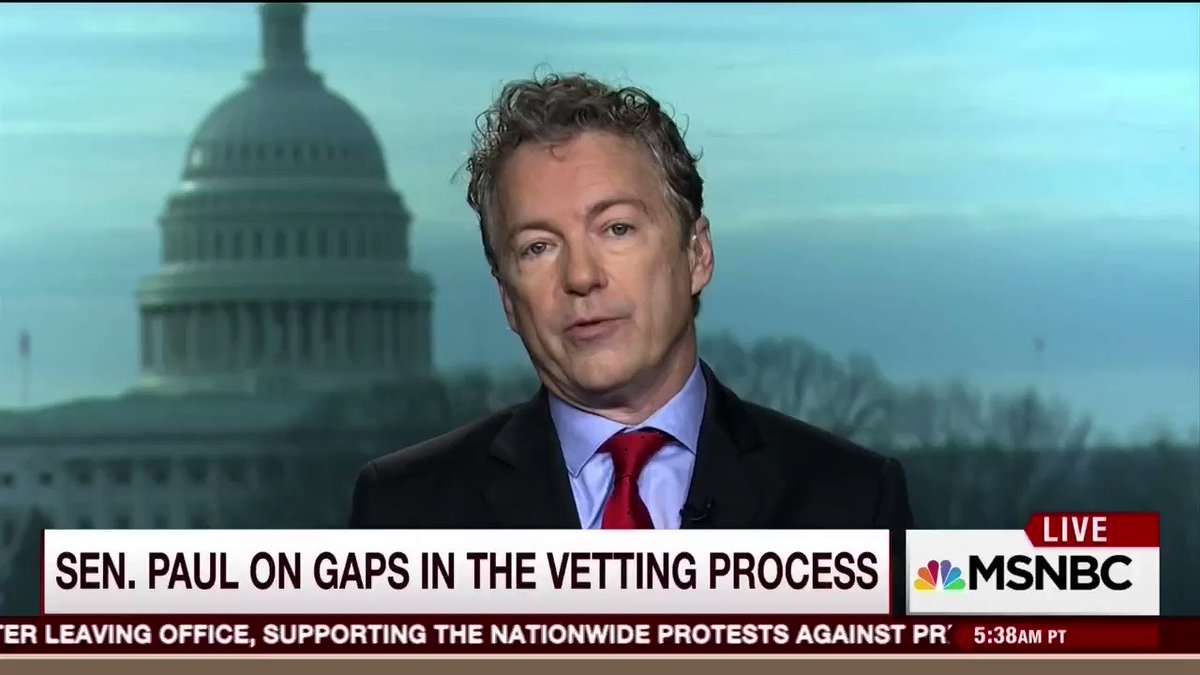
Kellyanne Conway’s interview on MSNBC
Conway told Matthews: “I bet it’s brand new information to people that President Obama had a six-month ban on the Iraqi refugee program after two Iraqis came here to this country, were radicalised and they were the masterminds behind the Bowling Green massacre.
“Most people don’t know that because it didn’t get covered.”
It didn’t get covered, many are now pointing out, because there was no such massacre.
The two Iraqi men arrested in 2011 did live in Bowling Green, Kentucky, and are currently serving life sentences for federal terrorism offences. But there was no massacre, nor were they accused of planning one. The US department of justice, announcing their convictions in 2012, said: “Neither was charged with plotting attacks within the United States.”
Analysis by the Cato Institute of terrorist attacks on US soil between 1975 and 2015 found that foreign nationals from the seven countries targeted by Trump’s travel ban – Iran, Iraq, Syria, Yemen, Sudan, Libya and Somalia – have killed no Americans.
Following the Conway interview, some social media users pointed out that false rumours about a Halloween massacre had circulated in several universities, including Ohio’s Bowling Green state university, in 1998.
But the likelihood that Conway had Kentucky in mind was bolstered when that state’s senator Rand Paul also made a variation of her false claim. In a separate interview with MSNBC, Paul referred to “the attempted bombing in Bowling Green, where I live”.
Conway had already prompted astonishment by describing comments by White House spokesman Sean Spicer that Trump’s inauguration crowd “was the largest audience ever to witness an inauguration, period” as “alternative facts”.
“You’re saying it’s a falsehood, and they’re giving – Sean Spicer, our press secretary, gave alternative facts to that,” Conway told NBC last week.
Matthews did not press Conway on her Bowling Green massacre claim in the interview, and she has not yet responded to reports that she misrepresented the events of 2011.

In anticipation of the next cycle of Arab revolutions

Azzam Tamimi

Link

The counter-revolution against the Arab uprisings has only raised the heat on the regional pressure cooker which is bound to explode again
I had just been appointed a senior lecturer at the UK-based Markfield Institute of Higher Education in the autumn of 2000 when the newly appointed director, Dr Zaghlul Al-Najjar, summoned me to his office. He spent the first few days of his tenure in office acquainting himself with the academic staff. On that day, it was my turn.
After a few introductory remarks, he handed a copy of my CV over to me and said: “I want you to correct the mistakes in it and then bring it back to me.” Curiously, I flipped through the few CV pages only to find that he had crossed with red ink every single “Middle East” phrase within my CV. Politely, I asked him: “But what is wrong with the Middle East?” He said: “It does not exist, it never existed.”
This seemed like a joke at the time. How could I change the title of my book “Islam and Secularism in the Middle East” or change the titles of some of my papers as well as of the many conferences and seminars that I had organised or attended?
However, the rejectionist sentiment expressed by Dr Al-Najjar, who is not a political scientist anyway, is shared by many activists and intellectuals of his generation who regard the Middle East a colonial invention. For them, it expressed the vision of the colonial powers of a region that was, for centuries, until the onset of colonialism the very heart of the Ummah, the Muslims’ global community.

Struggle to undo colonialism  

In as much as the creation of the Middle East was the product of a change in the global and regional balances of power, another historic change could, indeed, lead to the disappearance of this category and the emergence of a new reality.
The struggle for undoing what colonialism did to this region never ceased. However, reform and national liberation projects aimed at accomplishing this objective have mostly reached a dead end. Reversing the process that saw the creation and consolidation of the mosaic of modern territorial states across the region proved to be a formidable, even near impossible, task.
The elites governing these territorial states seemed to inherit from the colonial powers their contempt for the populations under their rule. Most of these post-colonial entities, notwithstanding the claims of independence, ended up being some sort of feudal properties exclusively owned by mafioso, whether dynasties or some military juntas, that seized absolute control of almost all material and human resources.
As the ruling classes grew richer and richer, the ruled, especially in densely populated states, grew poorer and poorer. Dissent, or mere criticism, was always suppressed and brutally punished. The majority of prison populations consisted of political activists and opponents. The two most common features across much of the Arab despotic Middle East were corruption and lack of respect for basic human rights.
When the Arab uprising of 2011 succeeded in bringing down four dictators who tormented their populations for decades in Tunisia, Egypt, Libya and Yemen and seemed to threaten so many others, hopes were raised that a new order was perhaps in the making. Jubilant masses took to the streets in many other places in the hope of bringing about similar changes to their own communities, sending alarm bells ringing in the palaces of horrified kings and presidents. A new Middle East seemed to be in the making.

How would such a new Middle East have looked like?

Well, to start with, governments would have been representative of the people and government functions and institutions would have been supervised by, and checked and made accountable to, elected parliaments. There was absolutely no need to reinvent the wheel; representative democracy had already been in place and functioning fairly well for centuries in the West.
Indeed, this was what Egypt and Tunisia were headed towards. Had democratic transition in those two countries been successful and complete, other entities in the region would have enthusiastically followed their example.
Imagine for a minute what would have happened had the three neighbouring countries -  Egypt, Libya and Tunisia -  who had just rid themselves of their dictators, been fully democratic. The people of Algeria next door, followed most probably by Morocco and Mauritania, would have not settled for anything less.
One can easily imagine, from then onwards, that the peoples of those ‘democracies’ would have wanted their representative governments to remove the obstacles that were put in place by defunct dictatorships and that for so many decades limited freedom of movement and divided with artificial lines drawn in the sand by the old colonial powers a people who to a large extent spoke the same language, shared the same heritage, hailed from the same ancestry and followed the same religion. One could easily envisage that, within few years, confederations, or federations, or even full unions, would have formed.
Moving to the Arab east, and using a similar intellectual exercise, imagine what would have happened had Syria and Yemen, both of which rose after Tunisia, Egypt and Libya, had become democracies. The young and educated in the Kingdom of Saudi Arabia and the in rest of the ultra-rich Gulf ‘principalities’ would have not settled for anything less than genuine political reform, to say the least. It is no wonder that Saudi Arabia, the United Arab Emirates and the State of Kuwait paid billions of dollars to fund the Egyptian army’s coup against the nascent regime and the arrest of democratic transformation not only in Egypt but also in Tunisia, Libya and Yemen.

United States of the Middle East 

Looking farther into the more distant future, had democratic transition been successful, one could envisage the creation of what might have become known as the United States of the Middle East, a formidable power with enormous resources, both human and material, and with considerable potential.
The impact of such transformation would have been unprecedented. It would have been no less significant and history-making than the American and the French revolutions. The emergence of such a magnificent regional power would have immediately put an end to Iranian expansionist and imperial ambitions in the region.
It is no wonder that Iran, which today has a regime that claims to have been itself the product of a popular revolution against tyranny, was a staunch opponent of the popular Arab Spring revolutions. The emerging power would not have just been more genuinely democratic but it would have also been Sunni. It would have had the immediate impact of inciting the oppressed peoples of Iran, many of whom happen to be Sunnis or Arab Shias, to rise and seek emancipation from a Shia theocracy disguised as some kind of ‘democracy’.
Iran’s endeavour to self-promote as the model for the oppressed peoples of Central Asia, Africa and the Middle East to follow would have been dealt a fatal blow. The emergence of a successful Sunni democratic model would have signalled the beginning of the end of the self-proclaimed role of global Muslim leadership by the Islamic Republic of Iran.
On another front, the emerging new regional power would, for the first time since Israel was created in Palestine in 1948, radically tilt the balance in the chronic Palestinian-Israeli conflict, or what used to be referred to in the old days as the Arab-Israeli conflict, in favour of the Palestinians.
Arab unilateral peace treaties concluded with Israel at the expense of the Palestinians and without the consent of the Arab populations would, out of necessity, be revisited. It is no wonder that Israel seemed most concerned when the Egyptian people delivered to power, through the ballot box, a leader belonging to the Muslim Brotherhood and why it seemed most pleased when the Egyptian military toppled him in a bloody coup that almost fatally crushed the Islamic group.

End of a sweet dream

So, the success of the Arab uprising would have eventually delivered a Middle East that is free from despotism, free from Iranian influence, free from division and free from Israeli occupation.
The 3 July 2013 military coup against the first democratically elected civilian president in the history of Egypt brought to an end what felt like a sweet dream. Since then, the Middle East has been living through a nightmare.
One may produce a list of reasons why the Arab Spring revolutions ended up in a mess. The most obvious reason has been the counter-revolution. The deep state, representing the interests of individuals and groups that were likely to lose as a result of change and reform, joined hands with regional powers and players, such as Iran, Israel, the UAE and Saudi Arabia, that were horrified at the prospect of democratisation succeeding in the neighbourhood as well as with some world powers, such as the United States, the EU and Russia, that feared the rise of Islamic groups to power via the ballot box. While the Russian attitude was not surprising, the betrayal of Middle East democracy by the world’s leading democracy in the West was scandalous.
Not only did this alliance bring to a standstill the dynamic that promised a better future; in fact, it contributed directly to the empowerment of the most radical elements within Middle Eastern societies and to the radicalisation of a large numbers of young men and women who swelled the ranks of the Islamic State, as Jean-Pierre Filiu noted in his 2015 book From Deep State to Islamic State, The Arab Counter-Revolution and its Jihadi Legacy.
So far, the cost has been astronomical. Much of Syria is in ruin and nearly half of its population has been displaced internally or forced into exile.
The sectarian conflicts in Iraq and Yemen are pulling both countries toward the same abyss. Libya is already divided and is having its own ‘light’ civil wars while Egypt, which is being led by the coup authorities from one disaster into another, has never been worse.
The countries that funded the counter-revolution and contributed to the mess are showing signs of strain too. This is particularly true in the case of Saudi Arabia, which squandered billions over a series of misadventures from Egypt to Yemen forcing it to impose austerity measures on its own population at home.
Indeed, today, the mayhem prevails across the region and the crisis is only likely to grow deeper for a while. The war on terrorism has invariably only begotten more terrorism and is only destined to generate more of the same so long as political and economic reform is non-existent. All signs indicate that the Middle East will never be the same.

The next revolutions

Yet, sometime soon – perhaps in a few years or at most in a decade or two – the next cycle of revolutions will begin. Revolutions that change the course of history usually come in cycles and achieve their objectives when their successive cycles manage to change not only regional and global balances of power but also the mindset and attitude of the people concerned.
Despite the heavy blow suffered by mainstream Islamic movements across the Arab world, most notably the Muslim Brotherhood, they continue to be the most credible and most popular political parties in the Middle East. Leftist, nationalist and liberal opposition groups that initially identified with the Arab Spring and cheered on as its revolutions erupted one after the other soon afterwards jumped ship and joined the counter-revolution when it became apparent to them that free and fair elections were being won by the Islamists in one country after the other.
The repressive measures used to marginalise or exclude the Islamists have always succeeded only briefly. It does not usually take long before they come back and rise once more. The Muslim Brotherhood in Egypt, who won the presidential elections and the parliamentary elections in 2012 were previously almost completely annihilated twice, in 1954 and in 1965, by Egypt’s former military dictator Gamal Abd Al-Nassir. As they bounced back several times before, they will bounce back again simply because their persecution and their steadfastness coupled with their moderate and tolerant interpretation of Islam only add to their credibility and popularity.
The counter-revolution has now all but been fully exposed for what it is, even to many of those who were deluded by it. Wherever one travels in the Middle East today, nothing, not even terrorism, supersedes people's concern about the deterioration in living conditions and the deepening crises at all levels. Many people see terrorism as an outcome rather than a cause whereas they believe the source of all evils to be despotism.
There is one obvious reason why change is inevitable and is definitely on its way. The counter-revolution has made things much worse than what they used to be when the Arab Spring revolutions erupted.
The pressure cooker will once again explode and a new generation of young men and women will take to the streets to resume the dynamic. Just like before, they will look for leadership and will find it nowhere but with those who have been truthful to the cause, those who paid with their lives and wealth, in order to bring about a new Arab dawn.
This piece originally ran in Global Policy.
- Azzam Tamimi is a Palestinian-British academic and chairman of Alhiwar TV channel. His books include: Hamas: Unwritten Chapters (Hurst, 2007) and Rachid Ghannouchi: a Democrat within Islamism (OUP, 2001)

Cartoon Donald Trump Has A Few Thoughts For Australia

Thursday, February 2, 2017

DNA - 02/02/2017 فضائح الإعلام الحربي

Trump’s Mom Debuts On Twitter, Triggering More Hair-Raising Questions

Link

DNA - 01/02/2017 محور المقاومة : أمن أميركا فوق كل اعتبار

Tantrums, threats and slammed phones: How Trump treats world leaders

Leaked excerpts of calls have Trump shouting and threatening invasions. On the other hand, he's 'very nice' to his friends


Link

He has dumped on Muslims and banned them from the US, protested with "alternative facts" about the size of his inauguration party, and put Iran on "official notice" and threatened its hard-fought nuclear deal. And now, if reports are correct, Donald Trump is shouting down the phone at other world leaders. 
If a man's character is judged by how he treats others Trump has, in little over two weeks, shown the world his true colours. And leaked reports of his telephone calls only confirm them.
In a call on Sunday with the prime minister of Australia, Malcom Turnbull, Trump reportedly yelled and slammed the phone down mid-sentence as they clashed over a refugee deal which, the US president claimed, would see Australia send the US "the next Boston bombers".
During the 25-minute call Trump described an agreement that requires the US to accept 1,250 refugees from Australia as the "worst ever", according to a report in the Washington Post.
Trump then cut short the planned one-hour conversation, and took to Twitter to slam the "dumb deal". 
The official read-out of his conversation was very different. The the two had "emphasised the enduring strength and closeness of the US-Australia relationship that is critical for peace, stability, and prosperity in the Asia-Pacific region and globally".
And Trump later admitted to "tough phone calls" with his global counterparts, but don't worry about it.
"The world is in trouble, but we're going to straighten it out, okay? That's what I do - I fix things," Trump said.
"Believe me, when you hear about the tough phone calls I'm having - don't worry about it. Just don't worry about it.
"We're taken advantage of by every nation in the world, virtually. It's not going to happen anymore."
Do you believe it? The Obama Administration agreed to take thousands of illegal immigrants from Australia. Why? I will study this dumb deal!
All that came days after a heated call with the president of Mexico, Enrique Pena Nieto, already a bete noire in the eyes of Trump for sending "murderers and rapists" across the border.
According to a transcript obtained by the AP news agency, Trump appeared to threaten to send in US troops to deal with “bad hombres”.
"You have a bunch of bad hombres down there," Trump apparently told Pena Nieto. "You aren’t doing enough to stop them. I think your military is scared. Our military isn’t, so I just might send them down to take care of it."
Both Mexican officials and the White House denied the exchange took place, but similar transcripts were released by Mexican news outlets - all saying the same thing: Trump had humiliated his Mexican counterpart.

The Middle East

But what of his dealings so far with the Middle East? Saudi Arabia, a country that produced the vast majority of the 9/11 team but a country exempt from Trump's visa bans, got the nice side of Trump - but the call still managed to cause ripples in other states. 
"The president requested, and the King agreed, to support safe zones in Syria and Yemen," a Saudi press statement said of the call on Monday. That message went straight to Russia, with Moscow saying it had never been consulted on the plans for Syria. 
Iran then came under the kosh for "destabilising" the region. Iran, with interests in Yemen and now placed on "official notice" by the Trump administration after a missile test, has not responded.
And so to the Muslim Brotherhood, a group Republican senators have repeatedly tried to ban in the US for "terrorist" links. Speaking to the crown prince of Abu Dhabi, the UAE's state news agency WAM reported Trump had agreed to clamp down on "groups that raise fake slogans and ideologies [and] aim to hide their criminal truth by spreading chaos and destruction".
No US president so far has accepted the Senate's moves to ban the group. A similar investigation in the UK, apparently written under pressure from Saudi Arabia, found no direct links to terrorism.

The Sisi call

Egypt's president Abdel Fatah al-Sisi, who kicked out his elected forerunner Mohamed Morsi in a bloody coup, was honoured with the first Trump call to a Middle East leader.
"Under a Trump administration, the United States of America will be a loyal friend, not simply an ally, that Egypt can count on", said the reports of the call. "President Trump underscored the United States remains strongly committed to the bilateral relationship, which has helped both countries overcome challenges in the region for decades."
Israel's prime minister, Benjamin Netanyahu, meanwhile had a "very nice" conversation with Trump on 22 January, where the leaders agreed to "address the threats posed by Iran" and Trump "affirmed his unprecedented commitment to Israel's security". 
The phone call came the same day as Israel approved permits to build more than 560 units in three illegal settlements in East Jerusalem, according to Reuters.
So which side will Trump present to the next leader who picks up the phone? Recep Tayyip Erdogan, Turkey's president, is still waiting for his despite being a key US ally in the region.

Mr Nice, or Mr Nasty? Perhaps it's better to not even get a call. Best not to worry about it.

Emad Hajjaj's Cartoon: دستور سورية الجديد !

دستور سورية الجديد !

Wednesday, February 1, 2017

THE UGLY ARAB: UAE foreign minister says Trump Muslim ban not Islamophobic

UAE foreign minister says Trump Muslim ban not Islamophobic

عرب جرب

Link

The United Arab Emirates' top diplomat has defended US President Donald Trump's travel ban citizens from seven Muslim-majority countries, arguing that it is not anti-Islamic.
The United Arab Emirates' top diplomat has defended US President Donald Trump's travel ban citizens from seven Muslim-majority countries.
Foreign Minister Sheikh Abdullah bin Zayed al-Nahyan said on Wednesday that Trump's ban was not anti-Islam and that the US was within its rights to take what he said was a "sovereign decision" concerning immigration.
Nahyan, whose country is a close ally of Washington, said it was "wrong to say" that the decision by the new US administration was "directed against a particular religion".
"The United States has made... a sovereign decision," he said at a joint press conference with his Russian counterpart, Sergei Lavrov, pointing out that it was "provisional" and did not apply to "the large majority" of the world's Muslims.
President Donald Trump's controversial executive order on Friday singled out citizens from Iran, Iraq, Libya, Somalia, Sudan, Syria and Yemen to prevent "radical Islamic terrorists" from entering the United States.
This week, Dubai's head of security Dhahi Khalfan Tamim sparked outrage after backing Trump's Muslim ban.
In a series of crude and sectarian outbursts on Twitter this weekend, Lieutenant General Khalfan – who holds one of the most important positions in Dubai – threw his weight behind Trump's immigration policy.
"We completely support Trump in his ban on entry to those who may cause a breach in America's security," the security chief tweeted.
The UAE is one of the US' closest Arab allies. It is part of the US-led coalition fighting the Islamic State group and hosts American troops and warplanes taking part.
The 90-day travel ban, which could still extend to other states, has exempted Muslim-majority nations associated with major attacks in the West.
Out of the 19 hijackers of planes used in the September 11, 2011 attacks on the Unites States, 15 came from Saudi Arabia, also the birthplace of al-Qaeda founder and attack mastermind Osama bin Laden.
The other four included the Egyptian plot leader, two Emiratis and a Lebanese.

Emad Hajjaj's Cartoon: تجارب صاروخية

تجارب صاروخية

Tuesday, January 31, 2017

في وجه قرار ترامب… هل يرى الحكّام العرب أن العجزَ فخرٌ؟

جلبير الأشقر


أصدر الرئيس الأمريكي الجديد دونالد ترامب قراره التنفيذي المشؤوم بشأن حظر دخول الولايات المتحدة يوم الجمعة الماضي (27 كانون الثاني/ يناير). وهو قرار فسّره العالم أجمع بأنه معادٍ للمسلمين، إذ أنه لم يكتفِ بتعميم حظر الدخول على كل من انتمى إلى البلدان السبعة التي شملها (اليمن والعراق وسوريا والسودان وليبيا والصومال وإيران) والتوقّف عن قبول اللاجئين، بل دعا إلى إعطاء الأولوية في منح اللجوء في المستقبل للأقليات الدينية التي تتعرّض لاضطهاد ديني بما يُقصد منه بكل وضوح استبعاد المنتمين إلى الأغلبية المسلمة في البلدان المقصودة. وقد أدانت منظمات مسيحية هذا التمييز بوصفه منافيا لمعتقداتها التي تنبذ التمييز بين البشر ضحايا الاضطهاد. لا بل أدانت منظمات يهودية القرار نفسه، وهي تذكّر بمحنة طالبي اللجوء الأوروبيين اليهود في زمن صعود النازية وكيف عانوا من سدّ الأبواب في وجوههم (وهو أمر استغلّته الحركة الصهيونية في حينه كي تجتذب عدداً هاماً منهم إلى فلسطين بينما كانت غالبية هؤلاء تفضّل الهجرة إلى أمريكا الشمالية).
وقد هبّت عاصفة شعبية عارمة ضد قرار ترامب في الولايات المتحدة ذاتها، ناهيكم بقيام العديد من المسؤولين الأمريكيين والشخصيات السياسية والاقتصادية والثقافية بالتنديد به. كما لقي القرار إدانة صريحة من قِبَل عدّة حكومات غربية، أبرزها ألمانيا وفرنسا وإيطاليا، وكذلك من مسؤولي الاتحاد الأوروبي. وفي بريطانيا انهالت الانتقادات على رئيسة الوزراء تيريزا ماي لرفضها إدانة القرار المشؤوم أثناء زيارتها لتركيا التي تلت مباشرة زيارتها لترامب في الولايات المتحدة. وكان رفض ماي انتقاد ترامب منسجماً تماماً مع سكوتها عن تعدّيات الحكم التركي على حقوق مواطنيه، حيث كان الهدف الرئيسي من زيارتها لأنقرة عقد صفقة أسلحة مع الدولة التركية مثلما كان الهدف الرئيسي من زيارتها لواشنطن الحصول من الرئيس الأمريكي الجديد على وعد باتفاق تجاري يتيح للحكومة البريطانية الادّعاء بأنها تستطيع التعويض عن الخسارة الجسيمة التي تنتظرها عند إتمام انفصالها عن الاتحاد الأوروبي. هذا وقد اضطرّت رئيسة الوزراء البريطانية أمام السخط العارم إلى إعلان «عدم موافقتها» على قرار ترامب بعد عودتها إلى لندن وبلسان الناطق الرسمي باسمها. وكان وزير خارجيتها بوريس جونسون نفسه قد أدان القرار الأمريكي إدانة صارمة.
وبعد، فلماذا نذكّر بهذه الأحداث التي لا بدّ لكل من يتابع الأخبار وأن يعرفها؟ لسبب بسيط وهو أمرٌ فاقع، وإن لم يكن مفاجئاً. فباستثناء قلّة من الدول المعنية بالحظر مباشرةً، لم نسمع صوت أي حكم عربي يرتفع إدانةً لقرار ترامب المشؤوم. فبينما جاء ردّ فعل في مستوى الحدث من قِبَل النوّاب العراقيين الذين دعوا إلى الردّ على ترامب بالمثل، وذلك بحظر دخول الأمريكيين إلى العراق، التزمت عواصم الدول العربية صمتاً مخزياً إزاء ذلك الإجراء الذي يقوم بشكل واضح على استغلال ديماغوجي لرهاب الإسلام والذي سوف تتبعه بالتأكيد إجراءات من النمط ذاته. وقد يكون أولَ هذه الإجراءات مشروعا لتصنيف جماعة الإخوان المسلمين كمنظمة «إرهابية» الغاية منه أن يكون مدخلاً لحظر عدد من المنظمات والهيئات الإسلامية الناشطة داخل الولايات المتحدة.
وعلى هذه الخلفيّة، تمّ اتصالٌ هاتفي يوم الأحد الماضي (29 كانون الثاني/ يناير) بين الملك السعودي سلمان بن عبد العزيز والرئيس الأمريكي دونالد ترامب. وقد صدر عن وكالة رويترز في اليوم ذاته تقريرٌ عن المكالمة نقتبس بعض ما جاء فيه، وهو بغنى عن مزيد من التعليق:
(بداية الاقتباس) قال مصدر سعودي رفيع المستوى لرويترز إن… الاتصال استمرّ أكثر من ساعة وتناول كثيراً من التفاصيل المهمة المتعلقة بمستقبل العلاقات بين الدولتين والوضع في المنطقة. وقال المصدر إنه لا يعلم ما إذا كان قد تم التطرّق لموضوع الحظر المؤقت الذي أعلنه ترامب على دخول مواطني سبع دول ذات أغلبية مسلمة إلى الولايات المتحدة…
‎وأفاد المصدر بأنه قد جرى خلال المكالمة «تبيان أن أسامة بن لادن تم تجنيده منذ مرحلة مبكّرة من قبل جماعة الإخوان المسلمين كما أفاد بذلك زعيم تنظيم القاعدة الحالي أيمن الظواهري في تسجيله المصوّر الشهير بعد وفاة بن لادن وأن بن لادن قام بتأجيل عمليات أحداث 11 أيلول/سبتمبر حتى يتمكّن من تجنيد خمسة عشر سعودياً من بين كل الجنسيات الأخرى وبشكل مقصود وممنهج لكي يقوموا بالعمليات الإرهابية في الولايات المتحدة».
وأضاف المصدر «ذلك كان بهدف ضرب العلاقات الاستراتيجية بشكل تام بين البلدين مما يوفّر لتنظيم القاعدة البيئة الخصبة في السعودية للتوسّع وتجنيد الشباب وإعطاء تنظيم القاعدة الشرعية التي يفتقدها في العالمين العربي والإسلامي» مشيراً إلى أن هذا الأمر معروف ومثبت لدى مخابرات البلدين ولن ينطلي أبداً على الدولتين الصديقتين… وقال المصدر لرويترز «إنه يتوقع أن تشهد فترة الرئيس ترامب علاقات تاريخية بين أمريكا والسعودية». (انتهى الاقتباس)
هذا ويقوم حالياً ملك الأردن بزيارة لواشنطن…
٭ كاتب وأكاديمي من لبنان

الاتجاه المعاكس- روسيا.. محل ترحيب عربي أم مستعمر جديد؟

DNA - 31/01/2017 ايران لترامب:WE LOVE AMERICA

DNA - 30/01/2017 السعودية ليست إيران

How Much Damage Could The President Do In One Week?

Khalil Bendib's Cartoon

Who speaks for Muslims? The Saudis, the Turks or the Germans?

A TRULY GREAT PIECE

By David Hearst


Link

America’s darkest hour in peace time is also the darkest hour for Arab leadership whose silence over the Muslim ban will come to haunt them
The reaction to Donald Trump’s executive order to ban refugees and Muslims from seven countries has been unprecedented. Flash crowds descended on JFK and Dulles international airports on Saturday. When the New York Taxi Drivers Association held an hour-long protest at Trump’s ban, and Uber attempted to profit from it by turning off their surge price, a campaign was launched to delete the Uber app from phones.
Demonstrations erupted in Atlanta, Baltimore, Boston, Chicago, Dallas, Detroit, San Francisco, New York and Washington. Britain’s prime minister Theresa May hardly had time to unpack her bags from her trip to Washington, than she found that her newly formed “special relationship” with Trump had turned into a domestic political liability.

READ: Obama's true legacy is Trump

On a cold Monday evening, thousands of protesters jammed Whitehall outside Downing Street. A petition calling for Trump's state visit to Britain to be cancelled has already got 1m signatures.
Protesters gathered outside 10 Downing Street in London against Trump and May union (MEE/Adam Omar)
Not since the invasion of Iraq in 2003 has anyone witnessed scenes like this. And a lot has happened in the Middle East since then, including the Gaza war, Libyan intervention, the massacre of protesters in Rabaa, Cairo and the fall of Aleppo. None of these major events has elicited anything like the same mass indignation.

Western moral outrage

It is not engendered by the issue itself: the heat is not being generated by a policy debate about the best way to prevent Islamic State (IS) attacks on Western soil. Anyone with a shred of knowledge about IS would tell you that Trump’s ban leaves the door open to the countries that provide the bulk of their foreign fighters.
One young protest against the ban at San Francisco International Airport on January 29, 2017 (AFP)
Nor is the fury coming primarily from Muslim communities or from the fringes of political discourse. It comes from mainstream politicians, lawyers, actors, singers and academics. The president of Harvard University Drew Faust wrote in an email that nearly half of her school deans were immigrants from India, China, Jamaica, Northern Ireland and Iran. The outrage is deep and widespread. It is, first and foremost, a moral outburst , but it also touches on the explosive issue of identity . Slamming the door shut on immigrants, some of them fleeing political oppression and war,  is not what millions of sons and daughters of American immigrants and indeed European ones think their countries are about. Woodie Guthrie's This Land is Your Land is suddenly back in vogue.
Sensing this, German Chancellor Angela Merkel used her first call with the week-old US president to lecture him on what being a signatory to the Geneva Convention means.
For once, just once, a substantial body of western public opinion, so often accused of hypocrisy in the Arab world, is living up to its name as a force that believes that their nation’s behaviour should be based on values.

Deafening silence of Saudi

What then are the so-called leaders of the Arab world saying to Trump at this critical point? If Merkel read Trump the riot act, then how indignant and forthright was the Saudi King Salman, a man who calls himself the leader of the Muslim world?
What did the custodian of the Two Holy Mosques have to say to Trump about his ban on Muslims, or even the distinction the US president drew between Muslims and Christians in Arab countries?
It’s not as if Salman had problems with access to the president. We know the two men talked for over an hour. They talked about Iran, safe zones in Syria, security co-ordination.
But Reuters reported that a senior Saudi source “had no word “ on whether the two leaders discussed Trump's order to put a four-month hold on allowing refugees into the United States and temporarily ban travellers from Syria and six other Muslim-majority countries.
In other words, Salman said nothing. He could have held his tongue out of fear about what this crazy man in the White House will do next. That certainly was the motivation for shutting down Saudi Arabia’s best foreign analyst, the journalist Jamal Khashoggi. (A similar thing happened to the Emirati academic and adviser Abdulkhaleq Abdullah). Or did Salman feel so desperate for US protection that he will do anything to get into Trump’s good books?
What then are the so-called leaders of the Arab world saying to Trump at this critical point?
Salman’s deafening silence is not is one of his memory lapses. The Palestinian President Mahmoud Abbas has also been told not to raise the awkward subject of Trump’s proposal to move the US embassy to Jerusalem, either in the Arab League or in the Organisation of Islamic Cooperation (OIC).
According to Arabi 21, Abbas has been assured that the US embassy will only be relocated to West Jerusalem. So that’s okay then. Who exactly told Abbas this is not clear -  but the message from his Arab brothers is clear. If he sticks his neck out, they will not have his back.

Erdogan's short-sighted policy

If the leaders of the Arab world are quickly falling into line behind Trump, then so too, alas, is, Recep Tayyip Erdogan, the new strong man of Turkey and a president soon to have enhanced powers. The Turkish president commended Trump for putting a CNN reporter “in his place” after the US president refused to take a question from the network’s Jim Acosta, sparked after the news organisation published a report on Russian efforts to compromise the new incumbent of the Oval Office.

READ: Trump and the decline and fall of the West

Erdogan’s beef with the international media is long standing. He has accused them of publishing false information about the Gezi Park protests in 2013. However, his memories of CNN should not go as far back as that. It was a CNN affiliate, CNN Turk, which broadcast Erdogan’s iPhone appeal to Turks to stand firm against the attempted coup in July last year. That broadcast probably saved his life. Erdogan already seems to have forgotten that.
The most right-wing government in Israeli history will use Trump as a golden opportunity to pursue its agenda
This is an incredibly short-sighted policy. The most right-wing government in Israeli history will use Trump as a golden opportunity to pursue its agenda, which is to continue to advance its enormous footprint in the West Bank and continue its campaign against non-Jewish citizens of Israel and residents of Jerusalem. It will do so in the knowledge that it will not only face no resistance from Washington, but have its active encouragement.
Two women embraceat New York's JFK International Airport in the hours after the ban was introduced (AFP)
The reaction to Trump represents an unparalleled opportunity for the Arab world. He has stirred a backlash in defence of refugees and travellers from Muslim countries, who find themselves denied access to universities, charities, foundations and think tanks on which the Arab elites themselves depend.

Islamophobia debate goes mainstream

Trump has brought Islamophobia to the centre stage of the mainstream political debate. Suddenly the placards are saying: “We are all Muslims.” Trump is contaminating his most vocal supporters such as Israeli Prime Minister Binyamin Netanyahu, and alienating liberal Jews in the process. He's even reawakened painful memories of Jews arriving in America from the pogroms of Russia and Eastern Europe. He is doing something no Middle Eastern conflict has yet succeeded in doing: stirring the Western conscience.
Trump sees himself as leading the “civilised world”, a concept that specifically excludes Muslims
At this very point in time, Arab leaders walk away , consumed by their calculations for preserving their own corrupt regimes. Muslim countries should be in the first line of defence of Palestine. Instead, they are sending out the message that they are not bothered. In Trump, they face a man who, for the first time in post-war US history, is abandoning the title of leader of the free world. Instead, Trump sees himself as leading the “civilised world”, a concept that specifically excludes Muslims.
America’s darkest hour in peace time is the darkest hour for Arab leadership too. They, like Trump, will soon find that they need the credibility they are now squandering by not standing up for what is right, unlike the hundreds of thousands of ordinary people fighting on their behalf on the streets of London, Washington and New York.
Shame on them. They richly deserve the fate that awaits them, when the peoples of the Arab world finally get their chance to rid themselves of their dictators.
David Hearst is editor-in-chief of Middle East Eye. He was chief foreign leader writer of The Guardian, former Associate Foreign Editor, European Editor, Moscow Bureau Chief, European Correspondent and Ireland Correspondent. He joined The Guardian from The Scotsman, where he was education correspondent.
The views expressed in this article belong to the author and do not necessarily reflect the editorial policy of Middle East Eye.