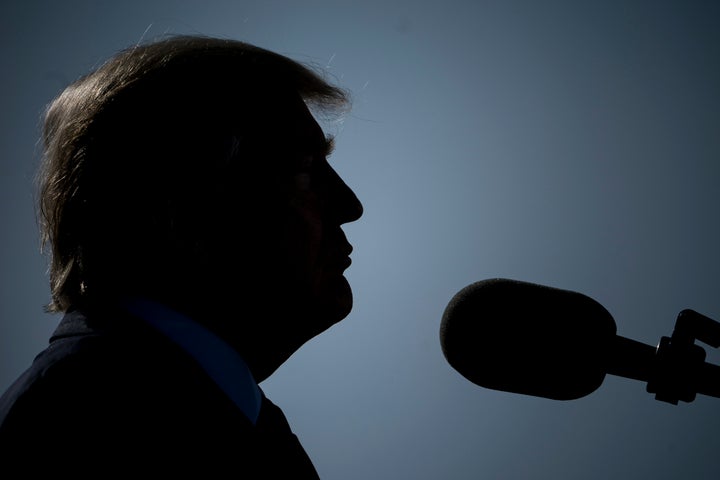
Given its terrible history, the term “fascist” is too often carelessly invoked. But fascism does not presuppose a holocaust. For Americans, the singular presidency of Donald Trump impels a measured consideration of what fascism truly is ― and how it grows. For fascism does not supplant democracy overnight. Rather it advances step-by-step, nourished by denial and disbelief, until it overruns the safeguards protecting decency and freedom.
Is Trump an agent of incipient fascism? Start with its historic cradle ― Europe in the 1920s and ’30s.
True, America’s democratic institutions are deeply rooted. But intelligent Germans and Italians dismissed the bigotry and unreason which overcame them ― their societies were too ancient, too civilized, to yield so easily. Until they did.
How? Both countries nurtured the seeds of democratic decline. Social fissures. Groups that felt beset by inimical forces. Demagogues who promised to subdue those forces in exchange for unquestioning fealty.
Particularly instructive is Benjamin Hett’s The Death of Democracy, a penetrating study of how Nazism overtook the Weimar Republic. Hett never mentions Trump; the societal parallels are, of course, far from exact. But his account carries a troubling ― and clearly intentional ― resonance.
Hitler exuded contempt for reason. He recast globalization as a conspiracy. He identified all-purpose external enemies. He cultivated a sense of victimhood. He insisted that the media serve “the general good,” and promised “legal warfare” against critics. He stoked contempt for pluralism and political institutions.
Particularly insidious, he saw Germans as a racial tribe, intellectually unequipped for critical thinking, who craved a leader with mystical powers. Relentlessly he galvanized their anger and anxieties through rudimentary language that was flagrantly mendacious. The greater the lie, Hitler believed, the easier to popularize: “I reduced [our political problems] to the simplest terms. The masses realize this and follow me.”
But Hitler could not rise on rhetoric alone. The German people were profoundly divided by class, region, religion and income inequality. Many despised the cosmopolites, global elites and politicians they associated with democracy. A conservative political and financial class, dismissing Hitler as a showman, imagined they could control him for their own ends ― a tragic miscalculation that resonates beyond its time.
For while fascism slumbered after World War II, it did not die. A contemporary exemplar is Trump’s patron ― Vladimir Putin.
Putin’s regime checks all of fascism’s historic boxes: a cult of personality; nationalism based in paranoia, xenophobia and ethno-religious identity; a tsunami of lies and distortions. Putin portrays a homeland imperiled by enemies ― entitling him to jail or murder domestic dissidents; invade Russia’s neighbors; and undermine Western democracy.
XINHUA NEWS AGENCY VIA GETTY IMAGES
Systematically, Putin has interfered in Western elections and financed right-wing foreign nationalists, principal among them Trump. In The Road To Unfreedom, Timothy Snyder quotes a former Russian foreign minister: Putin, the man asserts, “realizes that Trump will trample American democracy and damage if not destroy America as a pillar of stability and major force able to contain him.”
Trump, in turn, serves as Putin’s understudy. By helping Bashar Assad savage Syria, Putin fueled a refugee crisis which destabilized European democracies ― whose response Trump then castigates as weak. Putin boosted the French xenophobe Marine Le Pen; so did Trump. Putin denounced NATO and the EU; Trump disparages them. Putin interfered in the British referendum on EU membership; Trump praises the result. Putin demeans America’s democratic institutions; so does Trump.
Certainly, Trump’s rhetoric mirrors Putin’s animus for essential elements of liberal democracy. The rule of law. A separation of powers. A loyal opposition. An independent media. Vigorous dissent. Limitations on executive authority. The chief difference lies not in attitude, but context. Russia has no democratic tradition or ameliorating institutions – America does. At times Trump’s envy seems palpable.
How to interpret this? In Fascism, A Warning, Madeleine Albright reprises the historic hallmarks of an aspiring authoritarian. These include stoking prejudice against others; igniting anger instead of compassion; inciting disbelief in democratic governance.
The list continues: attacking a free press and an independent judiciary; exploiting the symbols of patriotism to divide and demean; claiming a unique personal power to resolve societal problems; castigating opponents in degrading terms; habituating citizens to blatant lies.
Much of this typifies authoritarians of varied stripes. But fascism feeds on nationalism, nativism and ethnic grievance. As historian Robert Paxton wrote, it is “an affair of the gut more than the brain,” breeding “an obsessive preoccupation with humiliation… and victimhood.” Consider, then, Trump’s methodology and message.
The glue bonding Trump to his base is a suffocating dishonesty which, in Orwell’s words, “demands… the continuous alteration of the past, and… a disbelief in the very existence of objective truth.” Trump’s metronomic repetition of false narratives conjures a mounting dystopia, filled with antagonists he alone can defeat ― eroding fact and reason until his followers accept whatever message, however contradictory, his psyche demands at any given moment.
The fascist sensibility makes the world more dangerous, empowering autocrats to subjugate their citizens, menace their neighbors, vilify “the other.”
In this psychic netherworld, truth is the ultimate enemy. By embracing Trump’s lies, his tribe cements their loyalty, answering his cravings for obeisance. Thus intoxicated, history cautions, instinctive autocrats accelerate their war on institutional constraints, requiring their partisans to follow.
Trump’s message is eerily familiar ― a tribe menaced from without. His most visceral fictions vilify non-whites. An alien black president insinuated in our midst. Apocryphal minorities voting illegally en masse. Undocumented immigrants with fictitious crime rates. A non-existent wave of Syrian refugees bent on terrorism. Imaginary American Muslims celebrating 9/11. And only Trump can “take our country back” from these insidious enemies.
Also menacing are foreigners bent on emasculating true Americans. Job-stealing immigrants. Europeans cheating us in trade deals. Freeloading NATO “allies” sapping our public finances. A malign global order enfeebling America with its siren-song of democracy, human rights and multilateral cooperation. And only Trump will put “America First” ― an isolationist slogan from our nativist past freighted with ethnic animus.
The fascist sensibility makes the world more dangerous, empowering autocrats to subjugate their citizens, menace their neighbors, vilify “the other” and diminish our common humanity ― until, as history demonstrates, their compulsions breed catastrophe.
Perhaps the best synonym for “fascist,” Orwell wrote, was “bully.” In word and deed, Trump licenses mass cruelty. That the lawless sadism of family separation is so widely applauded by Trump’s followers augurs our devolution. Warns Albright, “There is... a tipping point where loyalty to one’s own tribe curdles into resentment and hatred, then aggression toward others. That’s when fascism enters the picture.”
It is tempting to suppose that our Constitution is impervious to corrosion. But already Trump, and his party, are curtailing democracy. Gerrymandering congressional districts. Attacking minority voting rights. Exploiting a campaign finance system which advances plutocracy. Weakening labor unions. Stacking the judiciary with partisan ideologues. Threatening the media and former intelligence officials. Enshrining theocracy. Immunizing kleptocracy. Accelerating inequality.
These harbingers of creeping one-party rule free Republican legislators to subordinate principle to self-perpetuation. In Trump’s thrall, our supposedly independent Congress has become a shell, ceding its constitutional obligations as House Republicans further his attacks on our legal and intelligence institutions.
Trump’s motive is to conceal an authoritarian attack on American democracy: Putin’s efforts to elect Trump president in 2016, and his ongoing attempt to manipulate our elections on Trump’s behalf. Special counsel Robert Mueller’s investigation seeks to determine whether Trump conspired in Russia’s efforts and whether, as president, he attempted to obstruct the investigation itself, thereby sabotaging the rule of law.
Here Trump’s enablers advance a claim of victimization redolent of fascism: that Trump’s ”civil liberties″ are threatened by political partisans bent on thwarting his followers’ will, and that even overt collusion with a foreign power would be a justifiable defense against the threat of his domestic opponents. In this Orwellian construct, Trump has absolute authority to conspire with Russia to subvert American democracy and to obstruct any inquiry into his actions. Such presidential conduct, they argue, is beyond prosecution or impeachment, placing Trump alone above the law.
They deploy baseless McCarthyite attacks on Mueller; portray Trump’s own Justice Department as biased and demand investigation ― and even impeachment ― of those officials striving to maintain their independence. In tribal America, this proto-fascist propaganda is working: a solid majority of Republicans believe that the FBI is framing Trump. The nightmare scenario conjured by Norman Ornstein is not beyond imagining ― Trump fires Mueller, pardons himself and, as chaos ensues, attempts to declare martial law.
More probable is that a supine Republican Congress and judiciary help Trump thwart accountability and, thus unbound, they further erode democratic norms. A Pew Research survey shows that only one in five Americans believe our democracy is working very well, while two-thirds want “significant changes.” As tribalism and income inequality deepen, Trump stands ready to help.
Fascism’s encroachment does not require a president-for-life. Sufficient is a “guided democracy” whose institutions, fatally hollowed out, are occupied by an illiberal cadre that holds increasingly unmediated political and economic power. That, sadly, requires less imagination ― for we have seen it before.
Richard North Patterson is the New York Times best-selling author of 22 novels, a former chairman of Common Cause, and a member of the Council On Foreign Relations.
Qatar has donated $250,000 to some of the most extreme pro-Israel organisations in the US, a report by the Electronic Intifada has revealed.
The sums are believed to have been transferred by Joseph Allaham, a lobbyist working for the Qatari government, specifically through his firm Lexington Strategies, with some of the sums being paid as recently as early 2018.
The sums include $100,000 to the Zionist Organisation of America (ZOA), $100,000 to Our Soldiers Speak, an organisation that describes itself as the “vehicle through which the IDF [Israeli army] and the Israeli National Police dispatch senior officers to select campuses overseas” and gives “briefings” to members of the US Congress.
Some $50,000 was also allocated for the Blue Diamond Horizons Inc., an organisation run by Mike Huckabee, the Christian Zionist former governor of Arkansas and father of White House spokesperson Sarah Huckabee.
In US government disclosure documents, Lexington Strategies can be seen to have described the payment to Huckabee’s company as an “honorarium for visit”, while the donations to the ZOA and Our Soldiers Speak are labelled as contributions for “charitable goodwill”.
The document explicitly names Qatar’s ruler, Emir Tamim Bin Hamad Al-Thani, as the client of Allaham’s lobbying efforts for the purpose of facilitating “dialogue with [the] Jewish community abroad and in the United States.”
Qatar is believed to have aided pro-Israel organisations in an attempt to strengthen relations with the US in the wake of the blockade on the tiny Gulf state by Saudi Arabia, the UAE, Bahrain and Egypt.
Doha reportedly fears that under the influence of the Saudi-led bloc, the US could withdraw its forces from the country’s Al-Udeid air base, making Qatar vulnerable to invasion from its bigger neighbours.
As part of its effort to maintain ties, the Qatari government hired lobbyist Nick Muzin and his firm Stonington Strategies in 2017, and was recorded as paying him a monthly retainer of $50,000 that was later increased to $300,000. The latest revelations now indicate that this was not the only firm targeting causes that would win favour with the US government.
Last year, the Jewish Week also reported that Qatari diplomat and former head of $100 billion sovereign wealth fund Qatar Investment, Ahmed Al-Rumaihi, had also accompanied Allaham as a guest to the ZOA’s gala dinner last year, during which he reportedly requested an introduction to former Trump advisor Steven Bannon.
Allegations that Qatar was attempting to lessen its criticism of Israel were sparked earlier this year after news network Al Jazeera prevented the release of a documentary unveiling the inner workings of the pro-Israel lobby in the US. The ZOA, which took credit for the cancelling of the film, can now be seen to have been one of the recipients of Qatari aid.
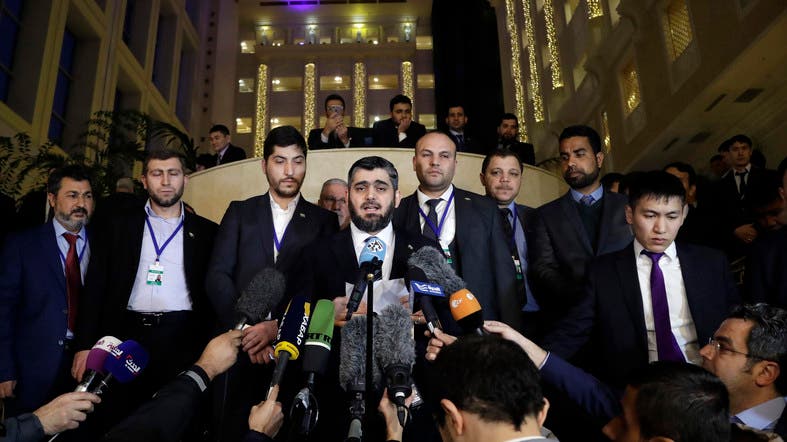
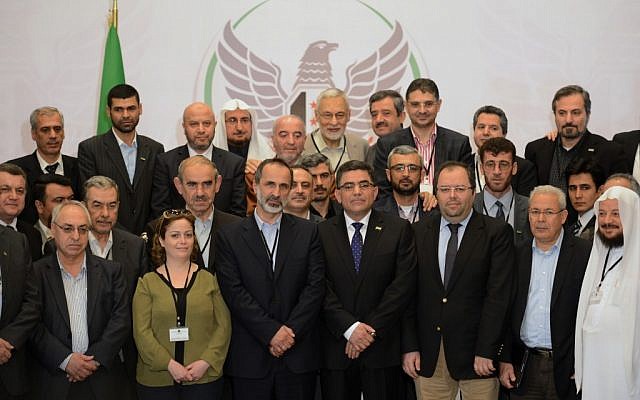
هذه المرة، لا أكتب مقال رأي سياسي، بل أبوح بحجم الهزيمة المرّة التي تعتصر صدورنا، ونحن نكشف الغطاء عن آخر مراحل الخيانة لثورة حرية وكرامة، شعارها الأول: "سلمية، سلمية". ثورة تنازع على طعنها الأصدقاء والأعداء، ووفّر لهم ذلك من ادّعوا حمايتها، من دول، وأدوات هذه الدول من قادة فصائل مسلحة مشبوهة، نبتت على دم الناس، واقتاتت من أجسادهم، ومن نخبة معارضين سياسيين أخذوا الثورة على محمل الانتقام من النظام، لاستلام السلطة منه، بكل ما فيها وعليها، ليكونوا بديلا مشوها عنه، كما حدث في مناطق نفوذهم، وقدّموا سورية كلها قرباناً لهذا الانتقام، وليس التغيير الذي تقوم من أجله الثورات، عندما يتحول النظام الحاكم إلى ذهنيةٍ عاجزةٍ عن أداء دورها المفترض في الإصلاح، فأبعدوا النضال السياسي، ليتقدم الصراع المسلح، ودافعوا عنه، بل وتبنوا كل انحرافاته المتطرّفة، من الفصائل المؤدلجة إلى جبهة النصرة وحتى "داعش"، (راجعوا تصريحات مسؤولين تولوا مناصب في المجلس الوطني السوري والائتلاف الوطني لقوى الثورة والمعارضة السورية والهيئة العليا للمفاوضات السورية) المشكوك بها بدايةً، وها هي النهاية تؤكد ضلوعهم الكامل بجريمة خطف الثورة، بل نحرها على أبواب دول التمويل لقتل الثورة في مهدها، وفداء لفكرة الانتقام من النظام.
لا تنفع البكائيات اليوم، على الرغم من دموعي التي تحجب عني رؤية شاشة "اللابتوب". هزمتنا الخيانات. والهزيمة هنا ليست عودة المدن والمناطق إلى حكم نظام الأسد، فالثورة لم تبدأ في مساحاتٍ محرّرة من حكمه، بل انطلقت في أكثر مناطق نفوذه، واستقراره، ووجوده العسكري والأمني، وحيث أكثر بنيته التنظيمية من مسؤولين هم من أبناء محافظة درعا، لعلي كنت واحدة منهم، رئيسة تحرير لإحدى صحيفتين فقط تملكهما الدولة، أي بنسبة خمسين بالمئة من إعلام النظام المكتوب، تقوده امرأة قيد نفوسها درعا، على الرغم من قناعاتي بأن سورية، بكل تفاصيلها ومدنها وقراها، هي مرجعيتي، وأقف على المسافة نفسها منها عند أداء واجبي، وأن العمل الإعلامي لم يكن يوما يحدّه منصب، أو ينتزعه منك قرارٌ أمني كما حدث معي، مرتين أولهما إثر تحميلي عبر لقاء مع قناة الجزيرة قوات الأمن مسؤولية قتل المتظاهرين في درعا (8 أبريل/ نيسان 2011)، وثانيهما عندما حاول "الائتلاف" انتزاع حقي بالتعبير عن رأيي في أدائه السيئ، طالباً محاكمتي على طريقة الأجهزة الأمنية السورية. نعم، فالهزيمة الفعلية التي منينا بها اليوم أننا، نحن المدنيين، بين حدّي منشار، يتنازع تمثيلنا نظام مستبد ظالم من جهة، ومقابله تاجر أو متسلق مرتهن لدولةٍ ما من جهة ثانية، وكلاهما لا يحمل الهدف النبيل لمفهوم الثورة والتغيير. "هل انهزمت الثورة؟" ربما يكون هذا عنوان سؤال عريض لبسطاء كثيرين اكتووا بنارها، مؤيدين لها كانوا أو معارضين، لكن في الحقيقة يجب أن يكون السؤال: هل كان أمام الثورة طريق للانتصار، واختارت هي الذهاب في طريق الهزيمة؟ أو هل الثورة المهزومة تلك هي الثورة نفسها التي انطلقت من درعا تهلل للحرية، وآمنا بها انتصاراً للحق؟ هذه أسئلة مؤلمة، لكنها جوهر البحث الذي نستخلص منه لماذا نحن هنا، على أبواب درعا نقفل ملف الفصائل المسلحة؟ ونفتح من جديد أبواب مؤسساتنا للنظام العائد إليها، وهو أكثر انكساراً منَا (نحن مجتمع الثورة السلمية). ولا أتحدث عن قادة وتنظيمات وكيانات وروابط (من رابطة)، وما هو مصير شعاراتنا في الحرية والكرامة وحقوق الإنسان؟ نعم، كان أمام الثورة فرصة لاختيار طريق آخر غير طريق الارتهان الذي مارسته الكيانات المحسوبة عليها، من مجلس وطني إلى فصائل مسلحة إلى ائتلاف إلى هيئات تفاوض، وما تفرّع "عنهم" من منظماتٍ تحت مسمى حكومة مؤقتة أو مجالس محلية، أو رابطات، فهذه جميعاً حتى اليوم لم تملك مشروعا وطنياً تدور في فلكه وتدافع عنه، حيث كل كيان أو فصيل أو منظمة تدافع عن مصالح مموليها، أو خلافتها أو دولتها، تحت مسمّى العمل الوطني، وتعطل على بعضها بعضاً فرصة الولوج إلى أي حلٍّ سياسي، ما لم يفصّل على مقاس الدولة التي ترعاها، وهذا ما حدث تباعاً في التشكيلات السياسية والعسكرية، وحتى المجتمعية. سيقول المدافعون: ما كنا نستطيع غير ذلك، ليبرّروا ارتهانهم، وأجندتهم الخارجية التي لا يمكن أن تخدم أجندة وطنية. وهذا ما ينطبق على ما قاله أحمد طعمة، عندما برّر قبوله رئاسة وفد "أستانة"، وهو غير العسكري، والذي "طرد" من هذه الفصائل من على معابرها في سورية، ومنع من دخولها، حين كان يرأس حكومة الائتلاف المؤقتة، في إعلانٍ من هذه الفصائل علناً انقلابها المسلح على أي كيان سياسي، وبرّر قبوله "إذا لم يقبل بالمنصب الجديد فسيكون مصيره الإهمال والجلوس في بيته". ما يعني أننا أمام حالة بيع قضيةٍ مقابل منصب، وهذا ما ينطبق على المعطلين لاتفاق الجنوب، على الرغم مما يشوبه، أنهم لم يجدوا في إتمامه "غنيمتهم المنشودة"، فقرّروا أن يموت المدنيون تحت القصف، حتى يستدرك الروسي المحتل خطأه، ويعيد توزيع الغنائم. بصراحة، نعم انهزمت ثورة القادة المسلحين المأجورين والأتباع، وانكشفت ارتهانات الكيانات، وضحالتهم
الوطنية
، لكن تلك الثورة التي تحدت النظام في عقر داره، وبين أجهزته الأمنية، لا تزال ترعب النظام، كما ترعب المعارضة المأجورة، ولا تزال شراراتها قابلةً للاشتعال، فحيث يستطيع مدنيٌّ أن يرفع صوته بوجه الاحتلال الروسي، ويطلب منه ما عجزت بنادق الفصائل وأسلحته عن طلبه، يكمن انتصار ثورة الحرية التي تمضي قدماً، ويظن (وبعض الظن إثم)
النظام والمعارضة أنهما أخمداها، بفعل الحرب والقتل والتدمير والتشريد، بينما هي تتمدّد أكثر واكثر، وتطبع سورية الجديدة بملامحها، رغماً عنهم جميعاً، فهذه الثورة التي بدأت سلميةً لا تنتهي بالخيانات العسكرية، بل تستكمل طريقها عبر الصراع السياسي الذي يمكن أن نستعيده حراً مع لحظة إنهاء الصراع المسلح الذي لم تسع إليه الثورة بدايةً، ولا يمكنه أن يكتب بتخاذله النهاية، وانتصار سلاح روسيا لا يمكنه أن يمحي هزيمتها الأخلاقية والسياسية عبر الأجيال القادمة التي لم تلتفت الكيانات المعارضة إلى أهميتها، كحاضنة للثورة، ولم تستشعر أي مسؤولية تجاهها، لتكتب لها وثيقةً تعترف فيها بما صنعته لهزيمة وتعطيل الحريات في كل مناطق نفوذها (حتى في دوائرها السياسية وهيئاتها التفاوضية) في مقابل السلطة والمال.
سيعود النظام ليس فقط إلى درعا، لكنه سيعود حاملاً انكساره أكثر مما تحمله المعارضة من هزيمة، حيث يعود متخلياً عن سيادته الوطنية لروسيا، وحامياً حدود دولةٍ تحتل أرضه، وتتبجح بحمايته، ما يجعل هذا أكثر أنواع السقوط إيلاماً في نظر حاضنته الشعبية الوطنية التي رفضت
تصريحات رامي مخلوف بداية الثورة، واستهجنتها، "أن أمن إسرائيل من أمن النظام".
وقبل أن يكون سقوطه مدوياً في نفوسنا، نحن الذين ما زلنا نؤمن بقضيتنا فلسطين العربية، وبالجولان أرضاً سوريةً لا تنازل ولا تفريط فيها وبأهلها، شاء النظام أم أبى، هو ومن يتوافق معه.
There is growing pressure on Iran to withdraw its forces from Syria. A GOOD PIECE by Marwan Kabalan Link
As Syria's civil war draws to a close, Iran's activity in the country is coming under increasing scrutiny. The US, Israel, and the Gulf states are all working towards making Iran's military presence in Syria untenable and its withdrawal - a prerequisite for resolving the conflict.
The Trump administration is not as tolerant of Iran's regional ambitions as its predecessor. The Pentagon has maintained US military presence in Syria after the defeat of the Islamic State of Iraq (ISIL) and the Levant in order to stop Iran from establishing a land corridor from Iraq to Lebanon, through Syrian territories.
Over the past year, the US-led coalition has succeed in preventing Iranian-backed militias from establishing a foothold on the eastern bank of the Euphrates River, near the border with Iraq.
The US has also blocked these militias from advancing towards al-Tanf border crossing between Syria and Iraq near the Jordanian border, where it maintains military presence to monitor Iranian movement on the main road between Baghdad and Damascus.
Over the past year, there has been a shift in Israel's Syria policy, too. From the beginning of the Syrian civil war in 2011 to mid-2017, Israel had a hands-off policy, which worked in Iran's favour.
During this period, Israel tolerated Iranian military presence in Syria, as its main objective was to help sustain the Syrian regime and prevent an opposition victory. Israel did not perceive the Syrian conflict as a threat, as it weakened its foes on both sides of the divide.
Last year, however, Israel's policy shifted in response to a new Iranian strategy in Syria. Since the beginning of the conflict, Iran's primary objective was to defend Assad.
Syria government takes most of Deraa in two-week offensive
Yet last year,as it became clear that Assad was winning the war, it started to work towards establishing permanent military presence in Syria to challenge Israel. Iran's end game was to set up paramilitary forces independent from the Syrian government and loyal to Tehran - similar to Hezbollah in Lebanon. That posed a direct threat to Israeli interests.
In July 2017, Israel tried to insert a clause in a de-escalation agreementbetween the US, Jordan and Russia to keep Iranian forces at least 40km away from the occupied Golan Heights, but failed. As a result, it decided to take the issue into its own hands. Since early 2018, the Israeli air force has intensified strikes against Iranian bases and outposts across Syria.
Russia is undoubtedly alarmed by the escalation in tensions, but it also views it as an opportunity. A confrontation between the two regional foes in Syria could undermine its strategy aimed at ensuring the survival of the Assad regime, rebuilding the Syrian army and resurrecting the state bureaucracy and the security apparatuses. But Moscow could also use the Israeli pressure as leverage against Tehran to force it to fall in line with its Syria policy.
The Syrian government's onslaughton Deraa backed by Russian forces showed that the Russians and the Israelis have already identified some common interests in southwest Syria.
According tothe Washington Post, an agreement has been reached to keep Iran away from the Golan Heights in exchange for allowing the Syrian regime to regain control over the opposition-held territories in the southwest.
The Russians seem willing to go even further. They want to strike a broader deal with the Trump administration to trade US military presence in Syria with that of Iran. That would include the US pulling its troops out of the Kurdish-held Syrian territories east of the Euphrates and from al-Tanf base in the southeast of the country.
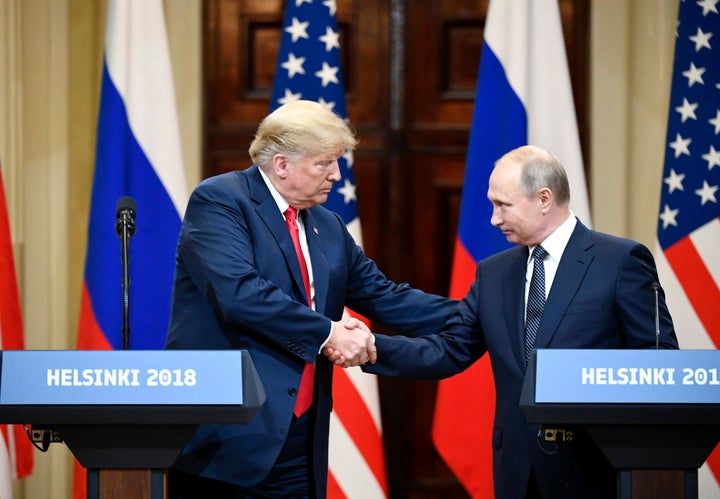
This option seems to have been discussed during the June 27 visit of US National Security Adviser John Bolton to Moscow and it is likely to be finalised at the upcoming Helsinki summit between US President Donald Trump and Russian President Vladimir Putin.
If such a deal is made, it would make almost everyone happy, except Iran. It would please the Israelis, the Gulf states, the Assad regime, the Americans and, indeed, the Russians, who have emerged as the biggest winners in the Syrian civil conflict.
It was Iran that invited Russia in 2015 to help ensure the survival of the Syrian regime after it failed to stop the advances of the opposition. The Russians answered the call and rescued the Assad regime, but they seem to be planning to throw the Iranians under the bus at the earliest opportunity.
In recent months, the Iranians have become increasingly wary of Russia's policies in Syria and elsewhere. They complain that the Russians are doing nothing to stop the movement of the Israeli air force over Syria despite having anti-aircraft missile systems stationed in the country, including the S-400. This has led some to believe that Russia condones Israel's actions against Iran in Syria.
The Russians also took an ambivalent position when Trump decided to withdraw the US from the Iran nuclear deal.
Russia's acting deputy foreign minister, Sergei Ryabkov, even suggestedthat Iran should make some concessions to save the deal. To add insult to injury, Russia sided with Saudi Arabia - Iran's arch enemy - when the increase of oil production to restrain prices was discussed.
Before OPEC's latest meeting, Russia pressured Iran to drop its reservations on the issue. It is very likely that Russia and Saudi Arabia are planning to compensate for any shortages in the oil market that may arise as a result of the US sanctions against Iran which will take effect in August.
Over the past seven years, Iran has invested heavily in Syria. It threw its weight behind the Assad regime, providing both financial and military support. Hundreds of Iranian Revolutionary Guards - Quds Force (IRGC-QF) and intelligence personnel have been killed in Syria.
According to the UN special envoy, Staffan de Mistura, Iranspends $6bn annuallyto prop up Assad. To make a return on its investment, Iran was hoping to take on a sizable part of Syria's post-war reconstruction. All these investments are now at risk of being lost.
Indeed, Iran will do everything in its power to resist any attempt to be forced out of Syria, a very important asset in its geopolitical game. If it were to lose it, its grip on Iraq would also be weakened and its only direct land route to Lebanon, where its key ally Hezbollah is based, would be blocked.
This could cause Iran's entire Middle East project to collapse. According toone Iranian official, Syria is more important to Iran than its oil-rich southern province ofKhuzestan.
Yet, Iran's options appear to be limited. It would find it very difficult to resist the emerging US-Russian-Arab-Israeli consensus on throwing its forces out of Syria to stabilise the war-torn country.
All in all, the Syrian civil war - a conflict that was once seen as Iran's greatest regional victory - may end up becoming its greatest regional failure in the near future.
Emails will be of interest to Mueller investigation, which is looking at whether the UAE and Saudi funnelled payments to Trump’s campaign By David Hearst Link
Donald Trump’s closest confidants were willing to exchange inside information about US government appointments with Yousef al-Otaiba, the Emirati ambassador to Washington, a new set of leaked emails has revealed.
The president-elect's advisers also pledged to Otaiba that they would keep his government’s interests at the heart of the new administration’s Middle East policy. The emails reveal that the relationship between the Emiratis and the president’s inner circle was cemented earlier than previously thought.
Tom Barrack speaks at the Republican National Convention in July 2016 in Cleveland, Ohio (AFP)
The correspondence is between Otaiba and Tom Barrack, a longstanding friend of Trump and billionaire fundraiser. It reveals how Barrack offered to bring Trump, then a candidate, to meet the Emirati ambassador for a coffee in April 2016; how the Republican platform for 2016 was altered to remove a call for the publication of 28 pages of allegedly incriminating documents from the 9/11 inquiry; and how Otaiba sought information about top appointments from Barrack while Trump was president-elect.
The close working relationship that developed between the Emirates and Trump’s inner circle when he was still a candidate is coming under increasing scrutiny
The key emails were written when Trump was still a presidential candidate and at least six months before the key meeting at Trump Tower in December 2016 between Crown Prince Mohammed bin Zayed (MbZ) and Michael Flynn, Trump's former national security adviser, Jared Kushner, his Middle East adviser, and Steve Bannon, his chief strategist, which was reported by the Washington Post.
At the time, Barack Obama, the outgoing president, was so annoyed by MbZ’s unannounced arrival in New York that the names of the people who attended the meeting were released.
The emails will be of especial interest to Special Counsel Robert Mueller, who has widened his inquiry into potential Russian meddling in the 2016 US presidential election to investigate whether the Emiratis and Saudis funnelled payments to Trump’s election campaign. Barrack was questioned by Mueller’s team last December: he himself is understood not to be a target of the investigation.
The close working relationship that developed between the Emirates and Trump’s inner circle when he was still a candidate is coming under increasing scrutiny.
Bin Zayed’s sensitivity to the Mueller inquiry is such that he cancelled a planned visit to Washington last month. He is understood to have sought a written guarantee that neither he nor his entourage would be detained for questioning, the Middle East Eye has previously reported.
How the relationship developed
Contact between Barrack and Otaiba started in 2009 over a property deal in California, but the relationship blossomed when Trump was a presidential candidate in 2016 and his confidant offered to introduce him to the ambassador.
“I am happy to bring him to you for a cup of coffee if you are interested," Barrack wrote on 26 April 2016. Otaiba, who was then in Abu Dhabi, replied that confusion about Trump was “very high” because of his proposed Muslim ban.
Donald Trump and Crown Prince Mohammed Bin Zayed Al Nahyan at the White House in May 2017 (AFP)
Barrack insisted that Trump was not anti-Islam and dangled the following offer: "We can turn him to prudence - he needs a few really smart Arab minds to whom he can confer - u r at the top of that list!”
Throughout their correspondence Barrack, the son of a Lebanese immigrant and an Arabic speaker, referred to “our agenda”, and “our region” and offered to introduce Otaiba to Jared Kushner, the future president’s Middle East adviser, adding: “You will love him and he agrees with our agenda."
Otaiba for his part was keen to introduce the Trump circle to his bosses, starting with Tahnoon bin Zayed, the crown prince’s brother and his national security adviser. On 26 May, Barrack replied: “Youssef this would be the best thing we could do. I promise you we could accomplish so much if you and HH [His Highness] will give me an hour or so with 'the man'."
'If you have any insights about postings to places like state, DOD, CIA and national security adviser, I would be grateful. I would only brief my bosses'
- Yousef al-Otaiba, UAE ambassador
As the November election neared, part of the Republican Party platform for 2016, which was potentially embarrassing to the Saudi government, was removed. The deleted section called for the publication of 28 pages of documents gathered during the 9/11 investigations which implicated members of the Saudi royal family in funding the attackers.
The missing passage had been inserted originally by lobbyists working on behalf of the American Israel Public Affairs Committee, according to an email sent to Barrack by Trump's campaign manager, Paul Manafort.
A week after Trump’s surprise defeat of Democrat presidential candidate Hillary Clinton, Otaiba asked for “any insights” about the people who the incoming president was going to choose for the key positions at the State Department, the Department of Defense and the CIA.
On 16 November, Otaiba wrote: “If you have any insights about postings to places like state, DOD, CIA and national security adviser, I would be grateful. I would only brief my bosses. Any indicators would be highly appreciated."
Barrack replied: “I do, and we’re working through them in real time and I have our regional interest in high profile. When you get a chance let’s talk by phone.”
'She [Fran Townsend] would make a perfect Director of National Intelligence or DHS secretary'
- Yousef al-Otaiba, UAE ambassador
Five days later, Otaiba attempted to get Fran Townsend, George W Bush’s counterterrorism and homeland security adviser, who he described as a “dear friend” of his, appointed as Trump’s director of national intelligence.
He wrote to Barrack: “I saw her last night and immediately thought she would be huge asset to you. She would make a perfect Director of National Intelligence or DHS secretary. She would hit the ground running on every issue.”
In May 2017 Townsend confirmed that she had been shortlisted for the post of FBI director after James Comey had been sacked. Asked whether she would have accepted had she been offered, Townsend told Politico: "You know what? I learned in the White House I don’t do hypotheticals, but I will say I was quite honoured and quite flattered to be approached.”
Anti-Saudi comments removed
Barrack was interviewed by Mueller’s investigators last December, when he was asked chiefly about Paul Manafort, whom he recommended as Trump’s campaign manager. Manafort has since been indicted by Mueller.
Donald Trump and Mohammed bin Salman at the White House in Washington in March 2018 (AFP)
In July 2016, one month after he became Trump’s campaign manager, Manafort sent Barrack an email he had received from a Republican Party source about the removal of the reference to the alleged Saudi funding of the 9/11 bombers. The email was then forwarded on to Otaiba, along with Barrack's comment that it was “really confidential but important. Please don’t distribute”.
“Paul. Something you can pass along to your friend Tom Barrack. I made certain that language that was anti the Saudi Royal Family was removed from the platform. It was inserted by AIPAC lobbyists and would have been a part of the 2016 Platform. When I saw the amendment that was passed in the subcommittee, I gave instructions to our political team to remove the language in the full committee."
The sender of the original email is unknown.
Barrack also emerged in the correspondence as the key conduit through whom Saudi Crown Prince Mohammed bin Salman was introduced to the White House.
Bin Salman attempted to introduce himself to Trump by requesting a meeting with Manafort in New York. There was then a discussion about the best channel for setting up the meeting.
'Something you can pass along to your friend Tom Barrack. I made certain that language that was anti the Saudi Royal Family was removed from the platform'
- Email forwarded to Tom Barrack and Yousef al-Otaiba
When the ambassador for Saudi Arabia contacted “a middle level person” at the major investment company Blackstone, Barrack moved quickly to close down this rival avenue of approach.
“Paul called me and will do so if introduced through us ! I would like to align in Donald’s mind the connection between the UAE and Saudi Arabia which we’ve already started with Jared [Kushner]. I think it is important that you are the center pin!”
This email exchange reveals that Trump himself was keen that contact between him and bin Salman should only be arranged through Barrack himself, his most trusted advisor.
Barrack wrote: “The candidate did not want to take the meeting if it was arranged through Blackstone for a number of reasons! If arranged by you and I we will make sure that everything runs smoothly, elegantly and appropriately and the candidate is properly briefed !”
Barrack, Otaiba become close friends
The exchange of emails also show how Barrack and Otaiba became close friends, with their correspondence starting with the formal “Your Excellency” and ending with “Marhaba Habibi” which means "hello my friend" in Arabic.
At one point during the correspondence the Emirati ambassador asks for a “small favour” - for his wife, Abeer al-Otaiba, to meet Melania Trump’s stylist. “Any chance we can get an introduction to Melania’s stylist for abeer’s fashion line?” Otaiba wrote.
Yousef Al Otaiba, UAE ambassador to the US, and his wife Abeer attend the Allen and Company Sun Valley Conference in July 2015 in Idaho (AFP)
After a dinner Otaiba arranged with Adel al Jubeir, the Saudi foreign minister, Barrack was obsequious in his praise for his host.
“I have to tell you it was one of the most wonderful and interesting evenings I have had in a long time," he wrote. "Your incredible home, the elegant cuisine, irreplaceable wine and the bevy of the most intelligent and eloquent guests imaginable. Thank you for your generosity and hospitality and including me in such a prestigious group. You’re an amazing man.”
Middle East Eye contacted the Embassy of the United Arab Emirates in Washington, Barrack and Townsend for comment. They had yet to reply at time of publication.
According to the New York Times, Barrack’s company Colony NorthStar has raised more than $7bn in investments since Trump won the Republican nomination, 24 percent of which came from the Gulf.








 Tom Barrack speaks at the Republican National Convention in July 2016 in Cleveland, Ohio (AFP)
 Donald Trump and Crown Prince Mohammed Bin Zayed Al Nahyan at the White House in May 2017 (AFP)
 Donald Trump and Mohammed bin Salman at the White House in Washington in March 2018 (AFP)
 Yousef Al Otaiba, UAE ambassador to the US, and his wife Abeer attend the Allen and Company Sun Valley Conference in July 2015 in Idaho (AFP)