
Friday, July 3, 2020


Tuesday, June 2, 2020
When fascism comes to America it will be wrapped in the flag and carrying a cross
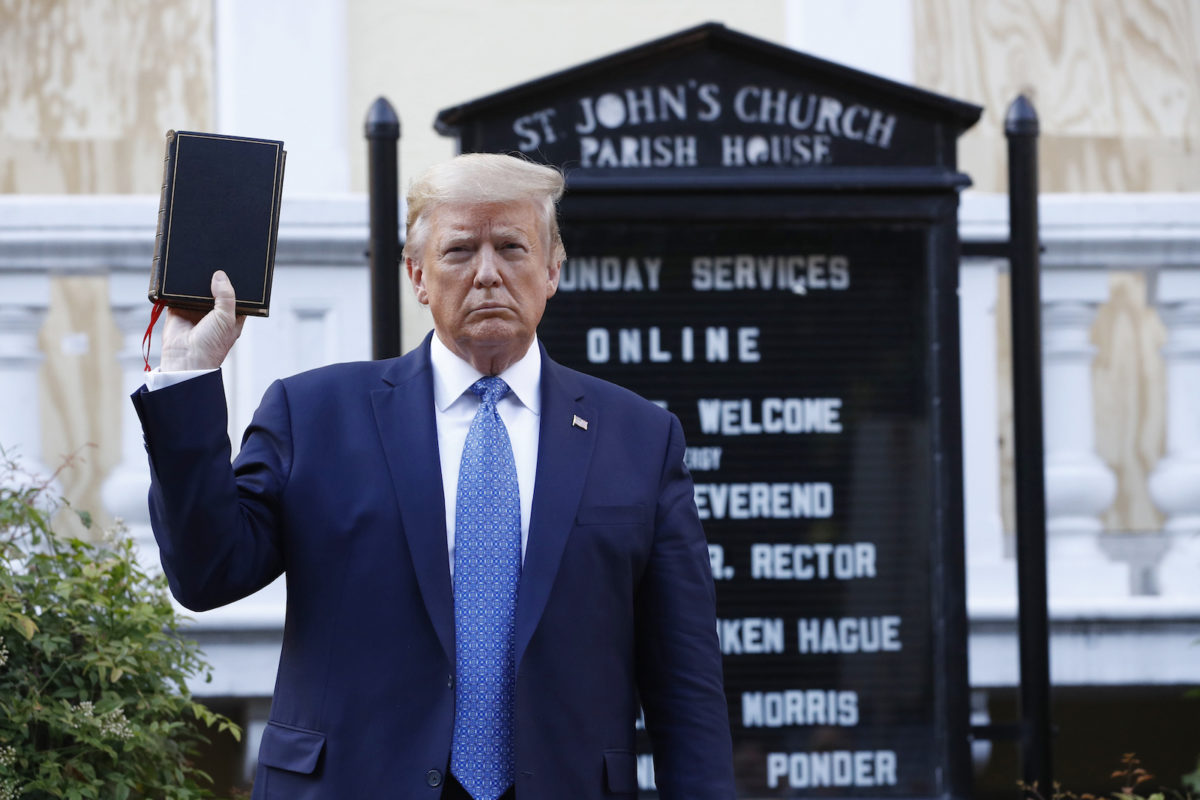
"When fascism comes to America it will be wrapped in the flag and carrying a cross" - Sinclair Lewis
Saturday, April 25, 2020
Sunday, March 15, 2020
Trump offers 'large sums' for exclusive access to coronavirus vaccine

WHAT A BASTARD!
German government tries to fight off aggressive takeover bid by US, say reports
The Guardian
Link
The Trump administration has offered a German medical company “large sums of money” for exclusive access to a Covid-19 vaccine, German media have reported.
The German government is trying to fight off what it sees as an aggressive takeover bid by the US, the broadsheet Die Welt reports, citing German government circles.
The US president had offered the Tübingen-based biopharmaceutical company CureVac “large sums of money” to gain exclusive access to their work, wrote Die Welt.
Q&A
How can I protect myself from the coronavirus outbreak?
According to an anonymous source quoted in the newspaper, Trump was doing everything to secure a vaccine against the coronavirus for the US, “but for the US only”.
The German government was reportedly offering its own financial incentives for the vaccine to stay in the country.
When approached about the report by the Guardian, the German health ministry would only confirm the accuracy of the quotes attributed to one of its spokespersons in the article.
“The federal government is very interested in vaccines and antiviral agents against the novel coronavirus being developed in Germany and Europe,” the spokesperson quoted in the original article had said. “In this regard the government is in an intensive exchange with the company CureVac.”
The German health ministry spokesperson declined the opportunity to correct any inaccuracies in Die Welt’s account.
With its headquarters in the south-western German city of Tübingen, CureVac also has sites in Frankfurt and Boston in the US. Linked with the German health ministry, it works closely with the Paul Ehrlich Institute, a research institution and medical regulatory body that is subordinate to the German health ministry.
Share your story
Share your stories
If you have been affected or have any information, we'd like to hear from you. You can get in touch by filling in the form below, anonymously if you wish or contact us via WhatsApp by clicking here or adding the contact +44(0)7867825056. Only the Guardian can see your contributions and one of our journalists may contact you to discuss further.
Share your story
Share your stories
If you have been affected or have any information, we'd like to hear from you. You can get in touch by filling in the form below, anonymously if you wish or contact us via WhatsApp by clicking here or adding the contact +44(0)7867825056. Only the Guardian can see your contributions and one of our journalists may contact you to discuss further.
On 11 March, CureVac released a statement that its CEO, the US citizen Daniel Menichella, was unexpectedly leaving the firm and would be replaced by the company’s founder, Ingmar Hoerr.
At the start of the month, Menichella was invited to the White House in Washington to discuss strategy for the rapid development and production of a coronavirus vaccine with Trump, the vice-president, Mike Pence, and members of the White House coronavirus task force.
The White House has been contacted for comment.
An interviewer once inquired about the ownership of the polio vaccine patent, to which Salk famously answered, “Well, the people, I would say. There is no patent. Could you patent the sun?” It was this spirit of humanism in combination with his astounding accomplishments in virology and vaccine development that have permanently etched Salk into the annals of medical history.
Friday, March 6, 2020

Sunday, March 1, 2020
UNAPOLOGETIC The Far Right Loves to Hate Sanders Surrogate Linda Sarsour, and She “Has the Wounds to Prove It”
Link


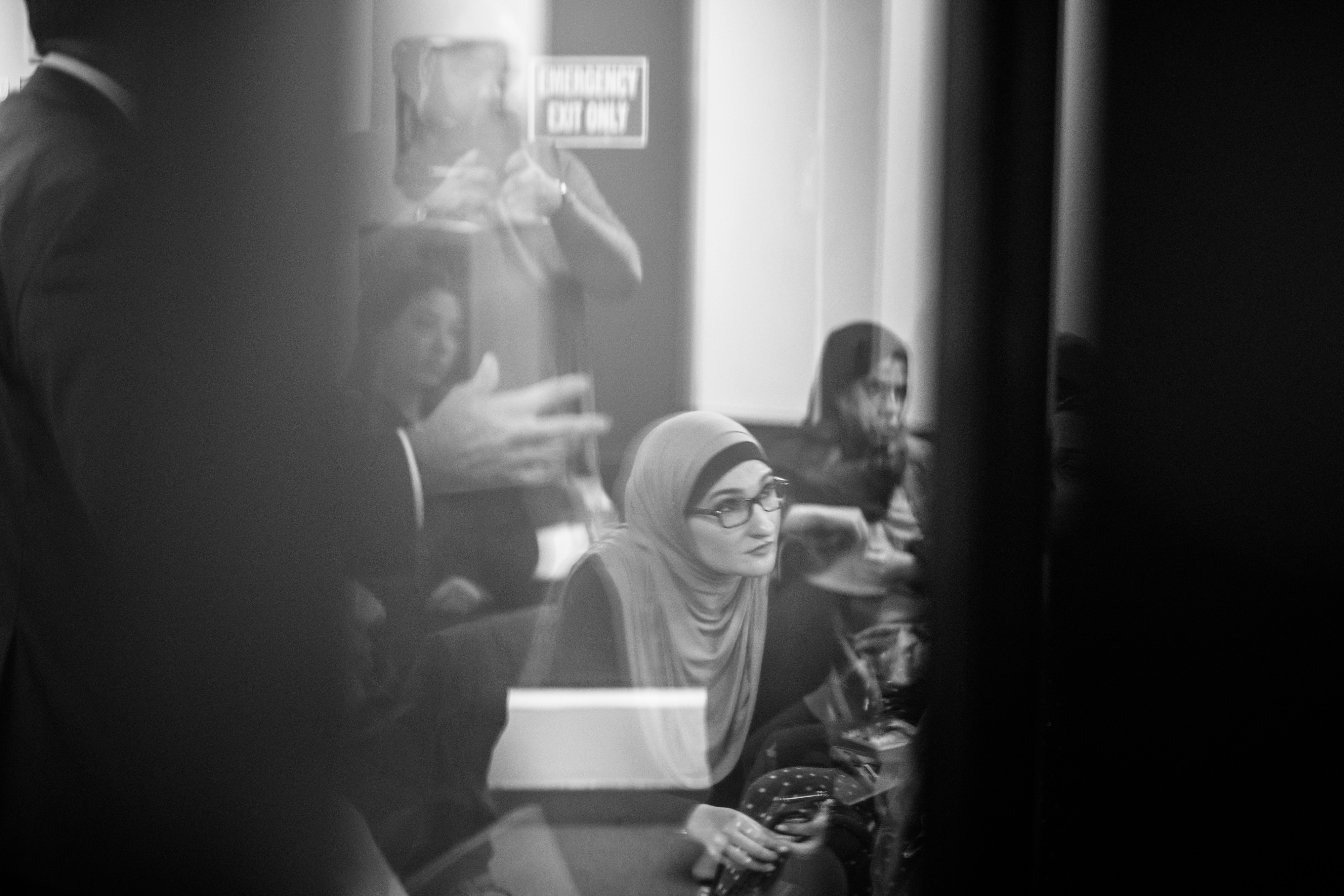
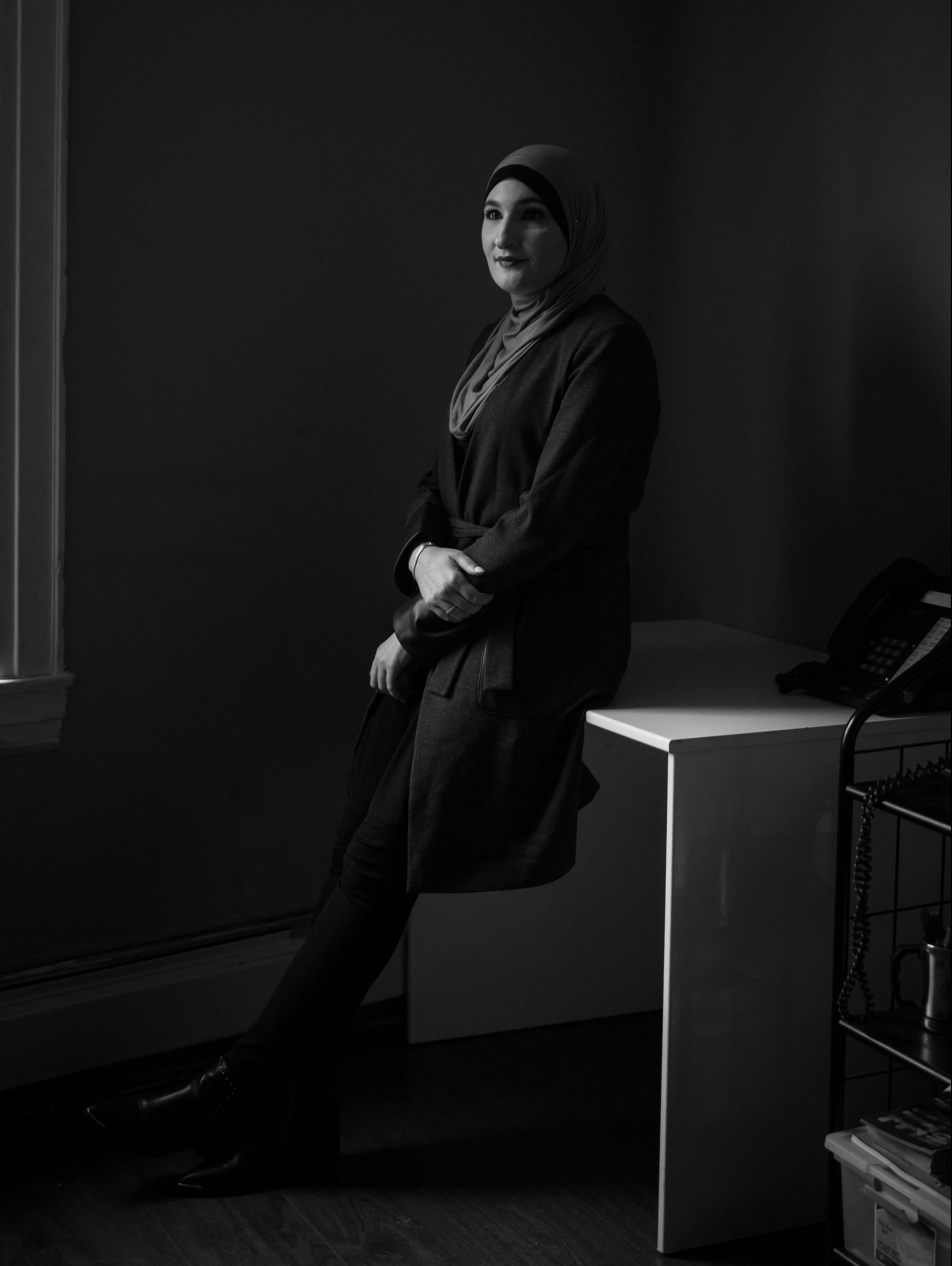

ON FEBRUARY 11, the night Bernie Sanders won the New Hampshire primary, Linda Sarsour was in Queens, New York, vying on his behalf for an endorsement from the Muslim Democratic Club of New York — a small subset of the American Muslim community, among which Sanders is the most popular presidential candidate.
Sarsour, a Sanders campaign surrogate and executive director of Muslim social justice group MPower Change, was speaking to club membership on home turf. She co-founded the organization, New York’s first Muslim political club, in 2013, and is a star in New York Muslim circles. But she didn’t take the club’s endorsement for granted.
“Bernie Sanders is the candidate for the Muslim American community,” Sarsour told the crowd during her five-minute spiel. “Bernie Sanders is the most consistent anti-war candidate in this campaign. He voted against the war in Iraq. He voted against the Patriot Act, which is a policy that allows unwarranted surveillance of our communities and takes our civil liberties away.”
Sanders, who was only competing against Sen. Elizabeth Warren for the small group’s endorsement, swept the vote. It was a minor victory for Sarsour, but she’s hoping a series of similar endorsements for Sanders across the country will add up to a big wave of Muslim groups backing the senator, giving him a boost to win states with sizable Muslim populations.
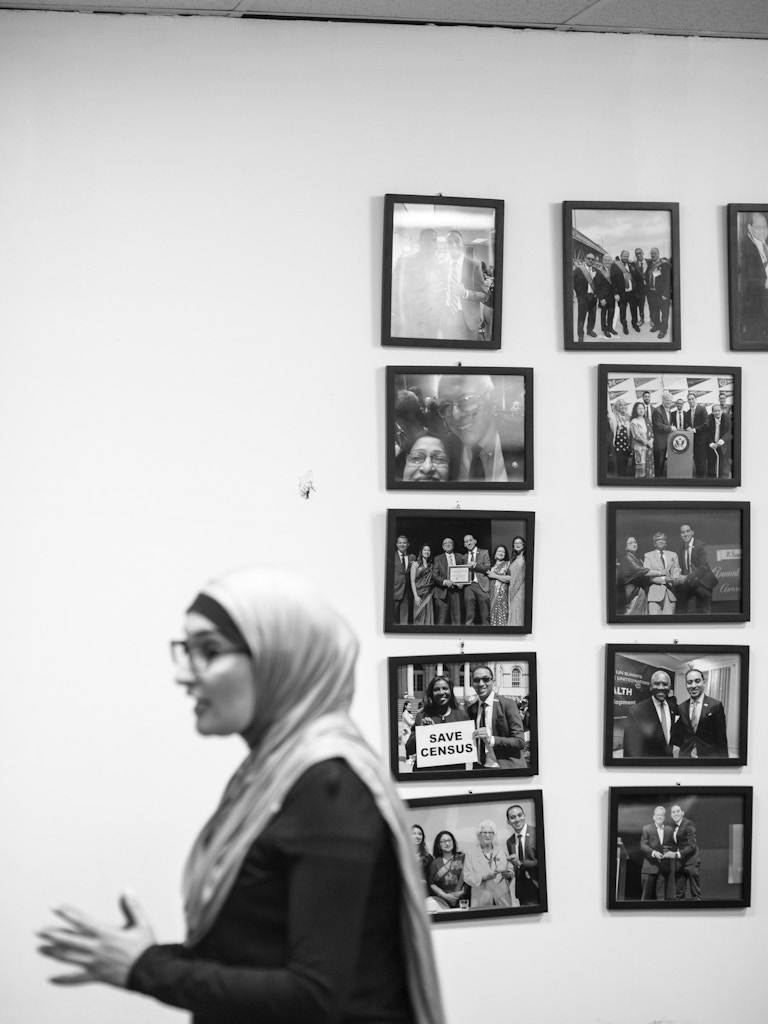
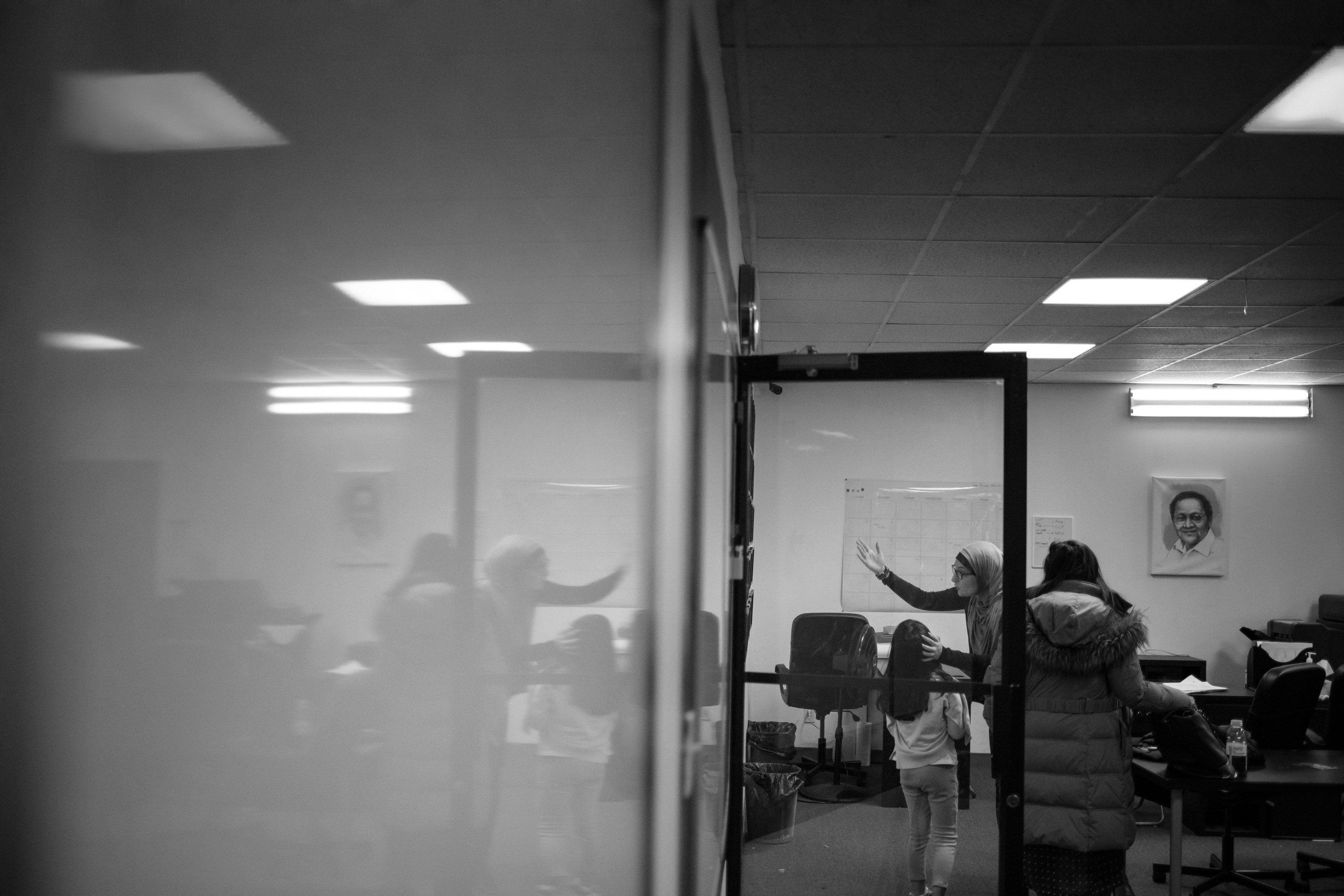
Left/Top: Sarsour hugs Arianna Khan, 7, at a Muslim Democratic Club of New York meeting. Right/Bottom: Sarsour applauds Iram Ali, a senior content strategist on Democratic presidential candidate Elizabeth Warren's campaign, after she concluded her address seeking an endorsement from the Muslim Democratic Club of New York.Photos: Kholood Eid for The Intercept
Soon, Sarsour, one of the most prominent Palestinian-American Muslims in the country, was on to the next thing. As a volunteer for the campaign, Sarsour is talking to Muslim community leaders nationally about why he is the best choice for president, rallying the Sanders faithful at campaign events, encouraging people to join phone banks for Sanders, and publishing a steady stream of pro-Sanders commentary on her Facebook (216,000 followers) and Twitter (313,000 followers) pages.
As a loud advocate for Palestinian rights and an unabashedly Muslim activist at a time when U.S. policy mirrors the Israeli government’s positions and anti-Muslim bigotry is largely tolerated, Sarsour is a lightning rod for bad-faith attacks. Right-wing voices who use Sarsour’s every criticism of Israel as an opportunity to smear her as an anti-Semite are pressuring the Sanders campaign to drop her as a surrogate, in only the latest example of the torrent of abuse she faces.
She explores her place at the center of so many contradictions of U.S. political life in her new memoir, “We Are Not Here to Be Bystanders: A Memoir of Love and Resistance,” due to be released on March 3. In the fast-paced account of her rise from daughter of Palestinian immigrants to confident leader at the top of the social justice activist world, she deploys her personal story in service of her larger political goals. She uses the experience of seeing black students at her Brooklyn high school go through metal detectors, for example, as an entry point into discussing the pervasiveness of racism is in the U.S., the school-to-prison pipeline, and why she’s committed to building multiracial coalitions for change.
In the memoir and in a recent interview with The Intercept, Sarsour expresses some vulnerability. Still, she remains deeply guarded over some aspects of her personal life and the biggest controversies of the last few years. In her memoir, she skips over the root causes of her exit from the Women’s March, the organization she co-led until just a few months ago. She makes scant references to her husband, and despite sharing some parenting anecdotes in the book, she showed little interest in answering questions about her three children — an understandable impulse from someone whose family has been hounded by the right-wing press.
“I am one of those Palestinian Americans that has the wounds to prove it. I feel, like, scarred. I’ve taken a lot of hits over the last few years, but I feel more hopeful than ever,” she said in the interview. “It seems bleak when you think about what’s happening in Palestine and Gaza. But I think from a political perspective in the United States of America, there has been great progress.”
Photo: Kholood Eid for The Intercept
THE 39-YEAR-OLD SARSOUR seemed to be everywhere at once over the past few years, fundraising for Muslim and progressive activism around the country, rallying for Sanders, and helping to lead the Women’s March, the group that spearheaded the largest single-day demonstration in American history following President Donald Trump’s inauguration.
But she got her start on a smaller stage.
Just a few months after the September 11 attacks, she began her local activism career when she joined the Arab-American Association of New York, working under her father’s cousin, Basemah Atweh, who had started the organization.
Four years later, as the post-9/11 surveillance state bore down on Muslim New Yorkers with a disturbing zeal, making AAANY’s work all the more important, a tragedy hit. In May 2005, Sarsour was driving Atweh and three others late at night when a tractor-trailer drove toward her, forcing Sarsour to get out of the way and drive off the road, in the process flipping over, going down a steep slope, and spinning the car around. Atweh died from internal bleeding, but Sarsour survived with only a few minor cuts.
When Sarsour returned to work at the AAANY offices a few days after the accident, she vowed to “continue this work for Basemah because this is all she ever wanted,” she recalls in her memoir.
By the fall, at the age of 25, AAANY’s board appointed her as the new executive director. In her 11-year tenure, Sarsour oversaw a team that registered Arab voters in New York, helped families navigate the immigration system, and successfully lobbied the New York Department of Education to give public school students off for major Muslim holidays. She also helped forge a multiracial coalition to curb the New York Police Department’s excesses, work that became especially important to New York Muslim activists after the Associated Press revealed that the NYPD had been spying on Northeast Muslims since the September 11 attacks. (I once spoke on a panel with Sarsour about Islamophobia, Israel, and New York City politics, and my name is listed as an adviser, alongside Sarsour, to a group called Jews Against Anti-Muslim Racism.)
Sarsour chats with attendees of a Muslim Democratic Club of New York meeting.
Photo: Kholood Eid for The Intercept
Sarsour’s charisma, relationship-building with local politicians, and show-up-to-everything attitude endeared her to many progressive activists in New York, who would rush to defend her after local politicians targeted her over Sarsour’s criticism of Israel.
“She’s a hero to a good number of people, especially to young women,” said Shahana Masum, a Sanders delegate in New York and community outreach liaison for the Muslim community group Muslim Sisters of Staten Island. “No other Muslim women talks like she does. She’s fearless. And she’s a person that has reached a level that many Muslims don’t get the chance to get to.”
The admiration for Sarsour is not universal. Some Muslim community activists in New York say she is more focused on her brand and getting media attention than doing the hard work of organizing or mentoring other activists. Sarsour rejects this line of criticism and says it stems from being a brash woman in a patriarchal society. “I am the person that stands on the street corner to register voters. I am the person that gathers petitions,” she said. “I’m always uplifting the work of others around me.”
Sarsour has sometimes struggled to balance her activism with her family life, she admits in her memoir. She recalls the time her son posted the news of his college acceptance on Facebook without telling her first. She was in Washington, D.C., planning the Women’s March, and she broke down crying.
“[I was] distressed that my child did not understand that no matter what I was doing, he and his sisters came first for me,” she writes.
But even after bringing attention to some aspect of her family life, there’s only so much Sarsour is willing to share. When I started to ask about her kids, she told me that two are in college and one is in high school, and with a smile said, “That’s all the demographic information you’re getting.”
It’s a natural response for a mother who is constantly on the receiving end of death threats. (In August, Sarsour revealed that the FBI had told her that Cesar Sayoc, the Florida man and Trump supporter arrested and convicted for sending pipe bombs to prominent Democratic politicians, had her name on a list of people to target.) She is willing to bear the costs of her activism, but as a mother of three, there’s more than her own life at stake.
“The impact on my family is more troublesome,” she said. “When my cellphone rings and [my kids] see an unknown number, they say, ‘Who is that? Who do you think that is?’”
Photo: Kholood Eid for The Intercept
THE RIGHT-WING BARRAGE against Sarsour reached its peak in early 2017, after she helped lead the Women’s March rally. Addressing a crowd of thousands of people, she said, to cheers, that she “stands here before you … unapologetically Palestinian American.”
What followed was a string of attacks on Sarsour from commentators on Fox News and articles in Breitbart and the right-wing Jewish press. Many of the articles focused on Sarsour’s penchant for tweeting out harsh attacks on her political opponents. The right went after Sarsour for two tweets in particular: one, written in 2011, in which Sarsour says she wishes she could “take” two anti-Muslim activists’ vaginas away, and another written in 2012, where Sarsour said that “nothing is creepier than Zionism,” alongside a YouTube video of Remi Kanazi, a Palestinian American poet. (Sarsour said she regrets how she worded the tweet about vaginas. As for the Zionism tweet, she said she did not write the message herself but copied the prewritten tweet from an email sent around to promote Kanazi’s video.)
“We all have our faults. Sometimes she’s a little careless, sometimes she’s a little imprecise, and she’s paid the price for that dearly,” said Moustafa Bayoumi, a Brooklyn College professor whose writing focuses on Muslim Americans.
In liberal spaces, the kinds of attacks that focused on stray tweets didn’t have much impact. But what did blossom into a full-blown crisis for Sarsour and the Women’s March centered on Louis Farrakhan, the Nation of Islam leader who frequently makes anti-Semitic remarks. Tamika Mallory, a co-chair of the Women’s March, had long been close to the Nation of Islam. Critics used her attendance at a February 2018 Nation of Islam event as cover to claim the Women’s March as a whole was tolerant of anti-Semitism within its ranks, also citing Sarsour’s anti-Zionist positions. They wanted to see Mallory and Sarsour gone.
The Women’s March succumbed to those external pressures. Sarsour and Mallory stepped down from the group’s board in 2019, after their board terms expired, they said.
“Things could have been done differently. But I hate that that’s become the story of the march. There was an incredibly effective campaign to utilize real issues of anti-Semitism, and inflated and even manufactured issues of anti-Semitism, to attack the progressive movement and leaders of color,” said Sophie Ellman-Golan, a prominent Jewish activist who helped organize the Women’s March.
In the same week Sarsour’s departure was announced, the Women’s March named its new board members. Among them was Zahra Billoo, executive director of the Council on American Islamic Relations chapter in San Francisco. Almost immediately, critics brought to light old tweets of Billoo’s in which, in 2018, she harshly criticized Israel by comparing it to the Islamic State and in 2010 said notions that Israel was “defending itself” were akin to saying that Nazi Germany defended itself from Jewish resistance. (Looking back, Billoo said she could have worded the tweets differently.) Pro-Israel groups demanded her ouster. Two days later, she was gone.
The Women’s March, apparently, had learned the wrong lessons from its experiences with Sarsour, she said.
“We had been targeted for three years consistently at the Women’s March, with lies, media requests by right-wing media, and still forged forward and did the work,” Sarsour said. “The new board caved to pressure within 24 hours and could have showed the kind of solidarity we were preaching and teaching over the years. Zahra is a brilliant leader and attorney and was treated unfairly.”
Photo: Kholood Eid for The Intercept
THE KIND OF social movement work Sarsour is engaged in fits right in with the political priorities of the larger Muslim American community. A 2017 poll conducted by the Institute for Social Policy and Understanding found that 66 percent of Muslims in the U.S. supported the Black Lives Matter movement — higher than any other religious group.
“Muslims’ progress is inextricably connected to other communities,” said Dalia Mogahed, director of research at ISPU. “People who endorse anti-Muslim stereotypes are much more likely to hold negative views about black Americans and Jews. And so [coalition-building is] really understandable. Beyond just being morally correct, it’s strategic to be building coalitions across these communities.”
The activism of Sarsour, and the broader Muslim American community, goes beyond racial justice, though. Sarsour has courted controversy, and risen to the top of her community, in large part because of her outspokenness on Palestinian rights in recent years. She is harshly critical of Israel’s human rights abuses, is a supporter of a one-state solution, where Israeli Jews and Palestinians live equally, doesn’t believe a two-state solution is possible, and supports the boycott, divestment and sanctions movement targeting Israel.
For those reasons, pro-Israel groups have repeatedly called for the Sanders campaign to drop Sarsour as a surrogate.
The calls are an attempt to exploit the gap between Sarsour’s positions — which are not mainstream views but are increasingly invoked on the left — and Sanders’s more moderate stances. He does not support BDS and favors a two-state solution, though he has voiced the most criticism of Israeli policy in the 2020 primary.
“Bernie doesn’t agree with me on everything. And I don’t agree with Bernie on everything on that particular issue,” Sarsour said. “But I see Bernie as someone who listens. And for the first time in at least my lifetime — and even I would say since my father has come to this country 45 years ago — we have a presidential candidate who is invoking the Palestinian plight on such a high level.”
The Sanders campaign has given no sign that it will drop Sarsour, disappointing groups like Democratic Majority for Israel, the AIPAC-linked group that has repeatedly complained about Sarsour to the Sanders camp. That kind of loyalty has energized Muslim American activists.
“As a Palestinian Muslim woman of color, that sends a message that Bernie Sanders and his future administration isn’t going to leave any community behind,” said Rasha Mubarak, a Sanders supporter, friend of Sarsour’s, and Florida community leader. “It sends a message that we can win being inclusive and talking about the very real occupation of the Palestinian people.”
Sarsour outside a Muslim Democratic Club of New York meeting on Feb. 11, 2020.
Photo: Kholood Eid for The Intercept
Even after Sarsour stirred controversy with her remarks at an American Muslims for Palestine conference that Israel was built on the idea of Jewish supremacy — she later clarified that she meant to refer to Israel’s nation-state law, which enshrines Israel’s status as a Jewish state, while saying nothing about Palestinian rights and downgrading the official status of Arabic — the Sanders campaign didn’t blink. “I’ve never been chastised by the campaign. No one ever told me what to say, when to say, not to say it,” said Sarsour.
The Sanders campaign must know, after all, that Linda Sarsour cannot be silenced.
WAIT! BEFORE YOU GO on about your day, ask yourself: How likely is it that the story you just read would have been produced by a different news outlet if The Intercept hadn’t done it?
Consider what the world of media would look like without The Intercept. Who would hold party elites accountable to the values they proclaim to have? How many covert wars, miscarriages of justice, and dystopian technologies would remain hidden if our reporters weren’t on the beat?
The kind of reporting we do is essential to democracy, but it is not easy, cheap, or profitable. The Intercept is an independent nonprofit news outlet. We don’t have ads, so we depend on our members — 35,000 and counting — to help us hold the powerful to account. Joining is simple and doesn’t need to cost a lot: You can become a sustaining member for as little as $3 or $5 a month. That’s all it takes to support the journalism you rely on.
Thursday, February 20, 2020
Monday, February 17, 2020
Bloomberg Apologized for Stop-and-Frisk. Why Won’t He Say Sorry to Muslims for Spying on Them?
A VERY GOOD PIECE
By Mehdi Hasan
Link
By Mehdi Hasan
Link
THE 2016 Republican presidential primaries were a living nightmare for Muslim Americans. From start to finish, GOP candidates fell over one another to fan the flames of anti-Muslim bigotry, anti-Arab racism, and Islamophobic hysteria. We all recall, of course, Donald J. Trump calling for “a total and complete shutdown of Muslims entering the United States until our country’s representatives can figure out what the hell is going on.” But do you also remember Trump saying that he would “strongly consider” closing mosques and setting up a database for all Muslims in the United States? How about Sen. Ted Cruz’s pledge to “patrol and secure Muslim neighborhoods,” or Sen. Marco Rubio’s plan to shut down Muslim cafes and diners? “If I have to monitor a mosque, I’ll monitor a mosque,” proclaimed Sen. Lindsey Graham.
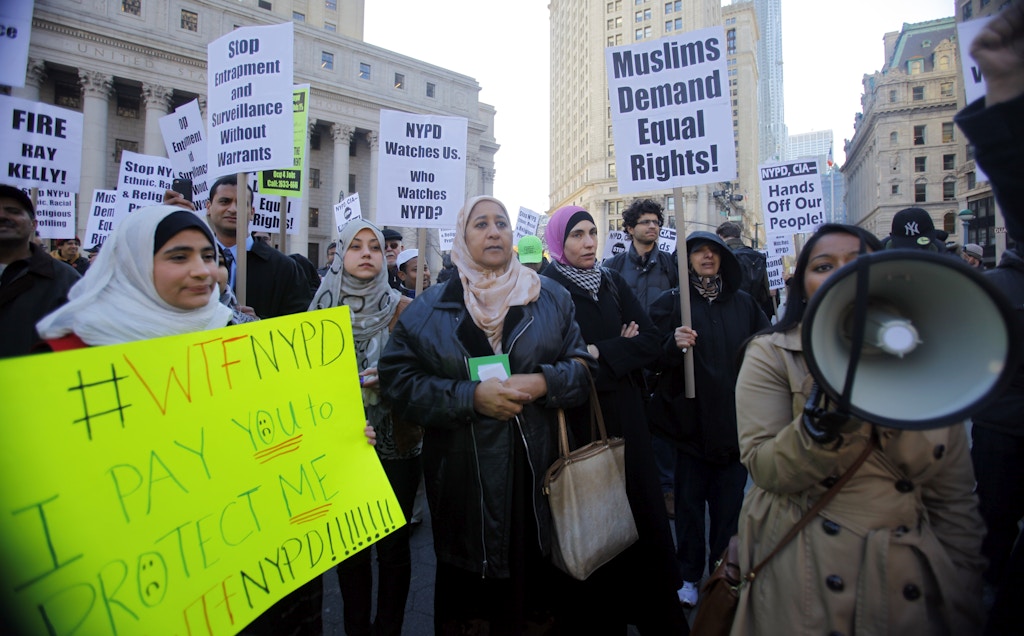
In 2016, Republican presidential candidates were openly fantasizing about surveilling and spying on Muslims. Yet just a few years earlier, in the nation’s biggest city, a Republican mayor had succeeded in going beyond mere rhetoric: Michael Bloomberg oversaw the mass warrantless, suspicionless surveillance of Muslim New Yorkers, as the New York Police Department “mapped” where they prayed, ate, studied, and worked.
Today, the billionaire media mogul is polling third in the race for the Democratic presidential nomination and has secured endorsements from dozens of high-profile Democratic mayors and members of Congress.
I cannot help but ask: Have these elected Democrats lost their minds? Have Democratic voters in, say, Florida, where Bloomberg is now leading in the polls, taken leave of their senses?
In recent weeks, much has been made of Bloomberg’s support for racist and unconstitutional stop-and-frisk practices, which targeted and terrorized African American New Yorkers. Much less has been made of his support for racist and unconstitutional surveillance practices, which targeted and terrorized Muslim New Yorkers. Why is that? How to explain the shameful silence? Could it be because Islamophobia, as I have pointed out before, still isn’t taken seriously by the mainstream media, as well as many liberals and Democrats? Or is it maybe because billionaire Bloomberg has paid prominent liberal groups to turn a blind eye to his Islamophobic record?
After all, that record is pretty indisputable. Much of the damning evidence against Bloomberg and the NYPD was amassed and documented by the Associated Press in a wide-ranging, Pulitzer Prize-winning, and devastating series of articles published in 2011.
During Bloomberg’s three-term tenure as mayor of New York, the NYPD worked with the CIA to deploy teams of undercover agents, known as “rakers,” into Muslim neighborhoods to gather information. “They’ve monitored daily life in bookstores, bars, cafes and nightclubs,” reported the AP. “Police have also used informants, known as ‘mosque crawlers,’ to monitor sermons, even when there’s no evidence of wrongdoing. NYPD officials have scrutinized imams and gathered intelligence on cab drivers and food cart vendors, jobs often done by Muslims.” The AP also noted that on one occasion officials “even sent an undercover agent on a whitewater rafting trip, where he recorded students’ names and noted in police intelligence files how many times they prayed.”
The NYPD, added the New York Times, “eavesdropped on thousands of conversations between Muslims in restaurants and stores in New York City and New Jersey and on Long Island.” Paid informants were “under orders to ‘bait’ Muslims into saying inflammatory things.”
In 2015, a federal court ruling compared the ethnic profiling and covert surveillance of Muslim communities living in Bloomberg’s New York to the discrimination faced by “Jewish Americans during the Red Scare, African-Americans during the Civil Rights movement, and Japanese-Americans during World War II.”
As with stop-and-frisk, Bloomberg defended surveillance as a vital crimefighting measure. “We have to keep this country safe,” he declared in 2012 — despite the fact that the surveillance of Muslims in New York produced “not one actionable piece of intelligence,” as even NYPD Police Commissioner Bill Bratton later admitted.
Yet on stop-and-frisk, Bloomberg has since apologized, telling a black church last November, “I want you to know that I realize back then I was wrong.” Last week, he apologized again to African American communities, saying that he had failed to “understand then the unintended pain it was causing to young black and brown families and their kids.” Whether we accept or even believe Bloomberg’s half-hearted and belated apology for stop-and-frisk, at least he felt the need to offer one.
But what about his warrantless surveillance of Muslims? What of the pain caused to young Muslim families and their kids? There has been no apology, no regret, no contrition whatsoever from the former mayor turned presidential candidate for his role in what has been described by civil rights activists as “one of the most chilling campaigns against religious liberty in modern American history.”
Nor does Bloomberg’s wider record on Muslims and Islam inspire much confidence. Yes, he defended the construction of a controversial Muslim community center in lower Manhattan; yes, he has criticized Trump’s Muslim ban. But the former Republican mayor has also referred to the “crazy Islamic world” while heaping praise on the Chinese dictatorship, perhaps the most Islamophobic government on earth right now. There are multiple tweets from Bloomberg praising the Chinese Communists for their record on climate change; zero tweets condemning their mass detention of the Uighur Muslims.
But back to surveillance: In recent days, with the emergence of audio recordings of Bloomberg making racist remarks and the renewed debate over stop-and-frisk, a number of public figures and activists have declared that they cannot bring themselves to vote for Bloomberg if he is the Democratic candidate against Trump. The Muslim American angle is important to consider here: On Sunday, Asad Dandia, a young Islamic studies graduate from Brooklyn who was a victim of the NYPD surveillance program, tweeted about the “enormous mental and emotional stress” that it caused to him and his family and called Bloomberg a “monster.”
Bloomberg terrorized me and my people. His surveillance brought enormous mental and emotional stress to my parents, who *still* ask me to vet any new friends.
Like my brother Raf, I will never shame folks for refusing to vote for that monster. I may even join them in abstaining. twitter.com/rafaelshimunov…

109 people are talking about this
But isn’t Trump worse than Bloomberg? The greater evil? Of course he is. It’s worth noting, however, that the former Republican mayor’s surveillance of Muslims in New York earned the praise and admiration of one particular Republican presidential candidate during the 2016 GOP primaries.
“You’re going to have to watch and study the mosques, because a lot of talk is going on at the mosques,” candidate Trump told MSNBC. “And from what I heard, in the old days … we had great surveillance going on in and around mosques in New York City.”
To be clear: Bloomberg spied on Muslim Americans. Trump praised him for it. And now, some Democrats want Bloomberg to defeat and replace Trump in November.
So I ask again: Have they lost their minds?
COMMENT
I PERSONALLY REFUSE TO VOTE FOR BLOOMBERG IF HE IS THE DEMOCRATIC NOMINEE. I SIMPLY WILL NOT VOTE, AS I DID IN 2016.
Subscribe to:
Posts (Atom)