Thursday, April 28, 2016

Airstrike on MSF-backed Aleppo hospital kills patients and doctors

One of Syrian city’s last paediatricians among the dead, as UN envoy says ceasefire is now ‘barely alive’

The Guardian

Link

A Syrian hospital backed by Médecins Sans Frontières and the International Committee of the Red Cross (ICRC) has been destroyed in an airstrike in Aleppo, killing patients and doctors including one of the last paediatricians remaining in the rebel-held part of the city.
MSF said the al-Quds hospital was targeted in an airstrike on Wednesday that killed 14 patients and staff members including at least two doctors, with the toll expected to rise.
The latest attack is part of a broader pattern of systematic targeting of hospitals by the government of Bashar al-Assad, as the humanitarian situation in the divided commercial capital of Syria grows more desperate under intense combat.
“MSF categorically condemns this outrageous targeting of yet another medical facility in Syria” said Muskilda Zancada, MSF’s head of mission in Syria. “This devastating attack has destroyed a vital hospital in Aleppo, and the main referral centre for paediatric care in the area. Where is the outrage among those with the power and obligation to stop this carnage?”
Marianne Gasser, head of the International Committee of the Red Cross’s Syria mission, said in a statement: “The recent attack on the ICRC-supported Quds hospital is unacceptable and sadly this is not the first time the lifesaving medical services have been hit.
“We urge all the parties to spare the civilians. Don’t attack hospitals, don’t use weapons that cause widespread damage. Otherwise, Aleppo will be pushed further to the brink of humanitarian disaster.”
Neither the ICRC nor MSF assigned blame for the attack, but the Syrian and Russian air forces have carried out almost all the aerial strikes on the opposition-controlled east of the city. The ICRC said the intense battles raging in Aleppo could put millions at grave risk of a humanitarian catastrophe.
Fresh airstrikes on Thursday on the rebel-held part of the city killed 20 people and brought down at least one residential building, the Syrian Observatory for Human Rights said. The UK-based monitor said shelling by insurgents on government-held areas killed at least 14.
“It’s like an apocalypse,” said Bara Abu Saleh, a city councillor in rebel-held Aleppo, speaking by Skype as explosions were heard in the background. “Today around 25 people have been killed in different areas. Just now a rocket landed close but it didn’t explode.”
Large-scale fighting erupted in and around Aleppo over the weekend, upending a fragile truce that had held for nearly two months as peace talks to end the five-year conflict got under way in Geneva. These negotiations are now deadlocked as the Assad regime refuses to discuss the possibility of a transitional government, and the truce appears to have all but collapsed, with over 100 dead in Aleppo province in the latest round of fighting.
Abu Saleh said there are also food shortages in the city, with truckers struggling to deliver 4,000 tonnes of wheat because Kurdish forces are firing on vehicles on the only road that connects the city to other rebel-held areas. While civilians are using rooftops and gardens to grow vegetables inside the city, a lack of fuel makes it hard to supply these impromptu “farms” with water.
After a period of comparative normality, many residents have hidden themselves away again since the bombing re-started, Abu Saleh said. But various shops are still open, and some residents are trying to carry on as normal. “People are determined to live their lives,” said Abu Saleh. “The people who are in Aleppo now are people who decided to stay here. We used to look at people in Gaza and wonder how they live their lives normally – but now we know.”
The Syrian government considers any medical facilities in opposition-held territory as legitimate military targets, saying that they are de facto illegal. Hospitals in opposition-held parts of Syria are refusing to share GPS coordinateswith Russian and Syrian authorities because of repeated attacks on medical facilities and workers, fearing that sharing the locations would make the hospitals targets.
As early as 2013, the UN independent commission of inquiry investigating alleged war crimes in Syria said attacks on medical facilities were being used systematically as a weapon of war by the Assad regime. Attacks by both sides on medical facilities have continued unabated in recent months. MSF said in February that a total of 94 airstrikes and shelling attacks hit facilities supported by the organisation in 2015 alone.
A man gestures amid the rubble of destroyed buildings after an airstrike on the rebel-held neighbourhood of al-Kalasa in Aleppo.
Pinterest
 A man gestures amid the rubble of destroyed buildings after an airstrike on the rebel-held neighbourhood of al-Kalasa in Aleppo. Photograph: Ameer Alhalbi/AFP/Getty Images
In February last year, the NGO Physicians for Human Rights said it had documented 224 attacks on 175 health facilities since the start of the conflict, and 599 medical personnel had been killed. The attacks continued after the Russian intervention – the organisation documented at least 10 attacks by Russian aircraft on medical facilities in October alone, the first month of Russia’s aerial campaign.
The attack came shortly after the two-month ceasefire agreed in February with US and Russian support was on Wednesday described by the UN as “barely alive”.
Staffan de Mistura, the UN envoy, urged the leaders of the US and Russia to revitalise the damaged peace process as he briefed the security council on the collapse of the latest talks in Geneva. “The legacy of both President Obama and President Putin is linked to the success of what has been a unique initiative which started very well. It needs to end very well. There is no reason that both of them which have been putting so much political capital in that success story and have a common interest in not seeing Syria end up in another cycle of war should not be able to revitalise what they have created and which is still alive but barely.”
The Geneva talks are deadlocked over the key question of Assad’s future. The opposition insists he must step down, while the government in Damascus says his role is not up for negotiation. The war, now in its sixth year, is estimated to have killed 400,000 people and has made millions homeless.
Russia announced on Wednesday that the Geneva proximity talks would resume on 10 May, though UN sources said no date had been set, amid growing uncertainty as to whether they would be reconvened at all. De Mistura presided over a two-week round of talks interrupted by a walkout by the Syrian rebels just days after it began.
De Mistura still aims to convene a ministerial meeting of major and regional powers under the International Syria Support Group, before the next round is held. Riyad Hijab, head of the Syrian opposition high negotiations committee, also called for a meeting of the Friends of the Syrian People group – which has called for Assad to go and crucially excludes Russia and Iran, the Syrian president’s close allies.
Amid concern about the humanitarian situation in Syria, British, French, German and Dutch MPs on Thursday urged their governments to carry out airdrops of food and medicine to relieve starving civilians trapped in areas that are besieged by Syrian government forces.
In a letter to the Guardian, the MPs and MEPs from across the European political spectrum write: “Our countries, the UK, France, Netherlands and Germany, are all flying in Syrian air space as part of the anti-Isis effort. If the UN lacks the ability to deliver aid, we have the capacity and presence to act. And high-altitude airdrops would keep our brave pilots safe. Airdropping aid is only ever a last resort, but there are dependable partners on the ground in these besieged areas ready to coordinate the distribution of aid.”

Deadly regime airstrikes hit hospital in Aleppo killing civilians

Over 100 civilians have been killed by airstrikes, shelling and rocket fire since Friday
Deadly regime airstrikes hit hospital in Aleppo killing civilians
Link

Syrian regime airstrikes hit a hospital in the al-Sukkari district in Aleppo, killing over 20 civilians, including children, a doctor and hospital guards.
A wave of night time airstrikes hit a hospital in Syria supported by Doctors Without Borders and nearby buildings in the rebel-held part of the contested city of Aleppo, killing at least 27 people.
Six hospital staff and three children were also among the casualties.
The strikes, shortly before midnight Wednesday, hit the well-known al-Quds field hospital in the rebel-held district of Sukkari in Aleppo, according to opposition activists and rescue workers.
The chief Syrian opposition negotiator Mohammed Alloush blamed the government of President Bashar al-Assad for the deadly airstrikes.
The Civil Defence, a volunteer first-responders agency whose members went to the scene of the attack, put the death toll at 30 and said the dead included six hospital staff.
Among those slain was one of the last paediatricians remaining in opposition-held areas of the contested city and a dentist.
Among those slain was one of the last paediatricians remaining in opposition-held areas of the contested city
The agency, also known as the White Helmets, said the al-Quds hospital and adjacent buildings were struck in four consecutive airstrikes.

It said there were still victims buried under the rubble and that the rescue work continued.
The Britain-based Syrian Observatory for Human Rights said at least 27 were killed, including three children.
Doctors Without Borders, also known by its French acronym MSF, said in a series of tweets that at least 14 patients and staff were among those killed, with the toll expected to rise.
A video posted online by the White Helmets showed a number of lifeless bodies, including those of children, being pulled out from a building and loaded into ambulances amid screaming and wailing.

It also showed distraught rescue workers trying to keep onlookers away from the scene, apparently fearing more airstrikes.
A video posted online by the White Helmets showed a number of lifeless bodies, including those of children, being pulled out from a building and loaded into ambulances amid screaming and wailing
Alloush, who was one of the leading negotiators of the opposition in the Geneva talks, described the airstrikes as one of the latest "war crimes" of Assad's government.
"Whoever carries out these massacres needs a war tribunal and a court of justice to be tried for his crimes. He does not need a negotiating table," Alloush said. "Now, the environment is not conducive for any political action."

In a separate incident, at least 11 people were killed and 35 wounded by al-Qaeda affiliate group, al-Nusra Front in western Aleppo, state news agency SANA reported.
Read Also: Fighting for freedom: The Syria Campaign 
Following a lull in fighting after the ceasefire took effect on February 27, violence has intensified in recent days, with more than 100 civilians reported dead in airstrikes, shelling and rocket fire since Friday.
Once Syria's commercial hub, Aleppo has been divided between rebel control in the east and government forces in the west since 2012.
The fighting has put the ceasefire in jeopardy and overshadowed a new round of UN-brokered peace talks in Geneva that were entering a recess on Wednesday.
More than 270,000 people have been killed in Syria and millions been forced from their homes since the conflict erupted in 2011.

Agencies contributed to this report

قتلى وجرحى باستهداف مستشفى ميداني بحلب

IS THE ALGERIAN PRESIDENT REALLY ALIVE OR THIS IS HIS CORPSE PROPPED UP?

French prime minster Manuel Valls meeting Algerian president AbdelAziz Bouteflika

Emad Hajjaj's Cartoon: The Iraqi "Parliament"

البرلمان العراقي !

Wednesday, April 27, 2016

DNA- رؤية المملكة تعوّض هزيمة اليمن 27/04/2016

Europe’s failure on refugees echoes the moral collapse of the 1930s

British MPs have voted down a plan to admit just 600 child refugees a year. With governments across the continent abdicating responsibility, this is an ethical catastrophe of historic proportions
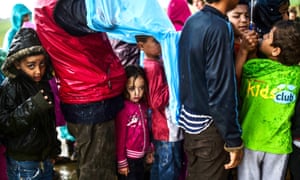
Child refugees queuing for food at the makeshift camp at Idomeni, northern Greece.
By 

Link

In 1938, representatives from 32 western states gathered in the pretty resort town of Evian, southern France. Evian is now famous for its water, but back then, the delegates had something else on their minds. They were there to discuss whether to admit a growing number of Jewish refugees, fleeing persecution in Germany and Austria. After several days of negotiations, most countries, including Britain, decided to do nothing.
On Monday, I was reminded of the Evian conference when British MPs voted against welcoming just 600 child refugees a year over the next half-decade. The two moments are not exactly comparable. History doesn’t necessarily repeat itself. But it does echo, and it does remind us of the consequences of ethical failure. Looking back at their inaction at Evian, delegates could claim they were unaware of what was to come. In 2016, we no longer have that excuse.


Nevertheless, both in Britain and across Europe and America, we currently seem keen to forget the lessons of the past. In Britain, many of those MPs who voted against admitting a few thousand refugees are also campaigning to unravel a mechanism – the European Union – that was created, at least in part, to heal the divisions that tore apart the continent during the first and second world wars.
Across Europe, leaders recently ripped up the 1951 refugee convention – a landmark document partly inspired by the failures of people such as the Evian delegates – in order to justify deporting Syrians back to Turkey, a country where most can’t work legally, despite recent legislative changes; where some have allegedly been deported back to Syria; and still more have been shot at the border.
Emboldened by this, the Italian and German governments have since joined David Cameron in calling for refugees to be sent back to Libya, a war zone where – in a startling display of cognitive dissonance – some of the same governments are also mulling a military intervention. Where many migrants work in conditions tantamount to slavery. Where three separate governments are vying for control. And where Isis runs part of the coastline.
In Greece, Europe’s leaders have forced the bankrupt government to lock up all arriving asylum seekers – and then reneged on a promise to help care for them, or move them to better-resourced countries elsewhere on the continent. The result is a dire situation on the Greek islands, where the world’s richest continent has contrived to jail babies, and then deny them access to adequate amounts of milk formula.
In Denmark, asylum seekers are forced to hand over valuables to pay for their stay, and volunteers have been prosecuted as smugglers for giving them lifts. In America, where boatloads of refugees were turned away from US ports in the 30s, more than 30 governors have refused to accept Muslim refugees. Some called for an outright ban on anyone fleeing a war that is ironically the partial result of catastrophic mistakes in American foreign policy over the past two decades.

Turkish prime minister Ahmet Davutoglu and Angela Merkel speak to children in Nizip refugee camp at the weekend
Pinterest
 Turkish prime minister Ahmet Davutoglu and Angela Merkel speak to children in Nizip refugee camp at the weekend. Photograph: Umit Bektas/Reuters

On Saturday afternoon, I came face to face with a similar kind of wilful blindness, close to Turkey’s border with Syria. Angela Merkel, the German chancellor, and Donald Tusk, the European council president, were visiting a Syrian refugee camp. In exchange for Turkey readmitting asylum seekers deported back from Europe, Europe is giving Turkey several billion euros to help care for the Syrians now stranded on its soil. Merkel and Tusk were at the camp to highlight the first beneficiaries of this cash, and to show that Turkey is an appropriate place to house refugees – that life inTurkey can be every bit as nice as life in Europe.
Merkel has shown extraordinary ethical leadership over the past year, but in this case she was participating in a charade. The camp she visited was pleasant enough – but it does not represent the lived reality of most Syrians in Turkey, 90% of whom live in urban poverty outside the camps. To really understand the limbo in which they are now trapped, Merkel should have visited the sweatshops on the other side of town, where thousands of Syrian children work 12-hour days to support their families. Or, even better, she might have peered over the border wall to the south, to watch Turkish soldiers shoot at Syrians as they try to escape the battlegrounds of northern Syria.


Instead, Merkel visited a sanitised refugee camp for 45 minutes. Most camp residents were ordered out of sight for the duration of her visit, leaving Merkel to spend roughly 20 seconds shaking hands with a line of just five Syrian men. It was a PR stunt stage-managed for the benefit of a hundred waiting journalists – a visual metaphor for the see-no-evil excuses that Europe has used to justify deporting refugees back to Turkey. “Today, Turkey is the best example for the whole world for how we should treat refugees,” Tusk told us later in the day. “Nobody should lecture Turkey on what to do.”
Europe’s abdication of responsibility is usually justified in the name of cultural superiority. Invoking a religion named after a man who was at times both a refugee and a migrant, several European politicians have used Christianity to justify their rejection of refugees. “Is it not worrying in itself that European Christianity is now barely able to keep Europe Christian?” asks Hungary’s prime minister, Viktor Orbán. “There is no alternative, and we have no option but to defend our borders.”
But citing religion and morality shouldn’t obscure the truth. The pope aside, by turning a blind eye to reality, by forgetting the lessons of the past, and by tearing up the post-war settlement, Europe risks an ethical catastrophe that would return us to the moral collapse of the 1930s. With the far right on the rise across Europe, it has been argued that deporting refugees back to places such as Turkey and Libya will save the continent from relapsing into the extremism of the interwar years. But I wonder if the opposite is true – if instead of averting a lurch to the right, it in fact takes us one step closer.


The Evian conference may have happened long ago, but we can still learn its lessons. It reminds us, just as Hugo Rifkind wrote in a moving essay about the Holocaust last year, that “we, as humans, balance on the very lip of the unspeakable; always far closer to toppling than we might wish to admit. All of us, everywhere, all the time.”
A few hours before Merkel arrived at the refugee camp on Saturday, I was on the other side of town at a sweatshop full of Syrians making shoes. The manager, Abu Shihab, hadn’t heard of anything like the Evian conference, and he didn’t mention the Holocaust. But he knows about Europe, and its reputation for morality. And he thinks it’s now undeserved.
“Cats and dogs in Germany can get pet passports – and they’re closing the borders to humans?” he asked. “History will document this.”
• The New Odyssey by Patrick Kingsley (Guardian Faber, £14.99) is published on 5 May. Pre-order your copy for £9.99 from bookshop.theguardian.com or call 0330 333 6846.

ANOTHER GRAVE

NOTHING NEW TO REPORT

JUST ARABS KILLING ARABS IN SYRIA......

JUST ARABS KILLING ARABS IN IRAQ.......

JUST ARABS KILLING ARABS IN YEMEN......

JUST ARABS KILLING ARABS IN EGYPT.....

JUST ARABS KILLING ARABS IN LIBYA......

JUST ARABS KILLING ARABS IN LEBANON.....

AND ON AND ON.

MEANWHILE ISRAEL EXPANDS AND GETS STRONGER BY THE DAY!

Monday, April 25, 2016

المعارضة السورية ترحب بقرار إرسال قوات أمريكية إضافية

THESE LOSERS ARE STILL COUNTING ON THE US?

HOW STUPID!

Link

25ipj

جنيف- رويترز- رحبت المعارضة السورية الرئيسية بقرار الرئيس الأمريكي باراك أوباما الاثنين إرسال 250 جنديا إضافيا إلى سوريا لمساعدة جماعات مقاتلة محلية تحارب متشددي تنظيم الدولة الإسلامية.
وقال سالم المسلط المتحدث باسم الهيئة العليا للمفاوضات في بيان إن قرار أوباما إرسال 250 جنديا آخرين لمحاربة التنظيم في سوريا خطوة إيجابية. لكنه أضاف أن سوريا لن تتخلص من الإرهاب إلا بانتهاء حكم الرئيس السوري بشار الأسد.
وأضاف أن المعارضة بحاجة للمساعدة في سبيل القضاء على “نظام الأسد وداعش”.

إسرائيل تستغل الأزمة السورية لانتزاع شرعية دولية لضم الجولان

وحدة تحليل السياسات | 24 أبريل، 
2016

Link

مقدمة
عقدت الحكومة الإسرائيلية في السابع عشر من نيسان/ أبريل 2016، اجتماعها الأسبوعي في هضبة الجولان السورية المحتلة، وذلك للمرة الأولى منذ وقوعه تحت الاحتلال قبل 49 عامًا. واستهل نتنياهو الاجتماع بالقول إنّ هضبة الجولان ستبقى بيد إسرائيل "إلى الأبد"، وأنّ إسرائيل لن تنسحب منها تحت أي ظرف. فما هي الأسباب التي جعلت الحكومة الإسرائيلية تعقد هذه الجلسة الاستفزازية في الجولان، وما هي الرسائل التي أراد نتنياهو إيصالها؟

"فرصة تاريخية في الجولان"
سنّ الكنيست الإسرائيلي قانون ضم الجولان السوري المحتل للسيادة الإسرائيلية في الرابع عشر من كانون الأول/ ديسمبر 1981 باقتراحٍ من حكومة مناحم بيغن. وقد أثار هذا الضم معارضةً عربيةً ودوليةً شديدةً، ولم تعترف به أيّ دولة أو هيئة دولية. وعلى الرغم من ضم الجولان، أجرت الحكومات الإسرائيلية المتعاقبة مفاوضاتٍ علنيةً وسريةً، مباشرةً وغير مباشرةٍ، مع النظام السوري، بشأن الانسحاب من الجولان وإعادته إلى سورية مقابل توقيع اتفاق سلامٍ شاملٍ بين سورية وإسرائيل وتطبيع العلاقات بينهما. وقد فشلت هذه المفاوضات في كل مرّة بسبب تعنّت إسرائيل ورفضها الانسحاب إلى خطوط الرابع من حزيران/ يونيو 1967.
وفي تشرين الثاني/ نوفمبر 2010 سنّ الكنيست الإسرائيلي بمبادرة من حكومة نتنياهو "قانون الاستفتاء العام" بغرض وضع العراقيل أمام أيّ انسحابٍ من أراضٍ تخضع للسيادة الإسرائيلية، وكان المقصود بذلك الجولان والقدس الشرقية المحتلة. وأكّد هذا القانون أنّ كلّ انسحابٍ إسرائيلي من منطقة تقع تحت السيادة الإسرائيلية يحتاج إلى أغلبيةٍ في استفتاءٍ عام، وقد أيّد القانون 61 عضوًا في الكنيست من بين مجموع أعضائه البالغ عددهم 120 عضوًا.
وعند انطلاق الثورة السورية في عام 2011 واختيار النظام السوري تحويلها إلى حربٍ أهلية، اتخذت إسرائيل موقفًا يهدف إلى إطالة أمد هذه الحرب وإضعاف سورية إلى أقصى درجةٍ ممكنة. ومنذ عام 2014، ولا سيما بعد ظهور تنظيم الدولة "داعش"، أخذ قادة إسرائيل ومنظروها يروّجون لمقولة إنّ سورية التي كانت قائمة قد انتهت، ولم يعد بالإمكان إعادة تشكيلها، وأنّ التقسيم على أسسٍ طائفية وإثنية وجهوية بات أمرًا واقعًا[1]. وعلت أصواتٌ تدعو لاستثمار الحرب في سورية ليس لدفع خيار تقسيمها فحسب، وإنما أيضًا من أجل مطالبة المجتمع الدولي، ولا سيما الولايات المتحدة الأميركية وروسيا والاتحاد الأوروبي، للاعتراف بضم إسرائيل لهضبة الجولان السورية المحتلة ومنح هذا الضم شرعيةً دوليةً[2].
وثمة مؤشرات حول تشجيع إسرائيل لدولٍ أخرى من أجل تقاسم سورية؛ ليكون احتلالها جزءًا من تقاسمٍ إقليمي لأراضيها. فقد دعا تسفي هاوزر، المقرّب من نتنياهو والذي شغل منصب سكرتير الحكومة في السنوات 2009-2013، في مقالٍ له تحت عنوان "فرصة تاريخية في الجولان"، إلى استغلال الظروف الجديدة التي نجمت عن الحرب في سورية وانهيار الدولة السورية والتغييرات في الشرق الأوسط، للعمل بكل جهد من أجل أن يعترف العالم بضم إسرائيل للجولان ومنحه شرعية دولية. وحاجج هاوزر أنه يتعين على إسرائيل، التي عجزت عن إفشال توصّل الدول الكبرى إلى "اتفاق سيء" مع إيران بشأن ملفها النووي، أن تبذل الجهد للحصول على تعويضٍ إستراتيجي ملائمٍ من الولايات المتحدة. وطالب بألا يقتصر هذا التعويض الأميركي على تقديم الأسلحة النوعية الحديثة لإسرائيل، وإنما يشمل اعتراف الولايات المتحدة بضرورة بقاء الجولان السوري تحت السيادة الإسرائيلية عبر وعدٍ رئاسي من البيت الأبيض وقانون من الكونغرس. وأشار هاوزر إلى أنّ الجولان السوري المحتل، بخلاف المناطق الفلسطينية المحتلة، لا يشكل مشكلةً ديموغرافية لإسرائيل لأنه يوجد به 24 ألف سوري فقط مقابل21 ألف مستوطن يهودي[3]. ومن المعروف أنّ إسرائيل شرّدت أهالي الجولان في حرب عام 1967، وكان عددهم حينها نحو 130 ألف نسمة، وقد أقام أكثرهم في أحياء قريبة من العاصمة دمشق مثل جديدة عرطوز والحجر الأسود وغيرها. وكان هؤلاء، الذين وصل عددهم إلى نحو 600 ألف، أول من ثار على النظام السوري مطلع عام 2011؛ ما أدى إلى تشريدهم مرة أخرى، ولكن على يد نظامهم "المقاوم" هذه المرة.
وفي لقائه مع الرئيس الأميركي باراك أوباما في التاسع من تشرين الثاني/ نوفمبر 2015، طرح بنيامين نتنياهو رغبة إسرائيل في بحث موقف الولايات المتحدة من ضم إسرائيل للجولان في ضوء تطورات الحرب في سورية. وأشارت المصادر الإسرائيلية إلى أنّ نتنياهو طرح هذا الموضوع على أوباما باقتضابٍ أثناء مداولاتهما، وأنّ نتنياهو أشار إلى أنه يشك كثيرًا في إمكانية إعادة توحيد سورية، ما يُوجب تفكيرًا مختلفًا بشأن مستقبل الجولان. ولم يردّ الرئيس أوباما على ما قاله نتنياهو بشأن الجولان[4].

نحو إفشال أي تسوية في سورية
أثار جهدُ الولايات المتحدة وروسيا في الشهور الأخيرة للدفع باتجاه التوصّل إلى حلٍ سياسيٍ للصراع الدائر في سورية خشيةَ نتنياهو من أن يسفر ذلك عن حلٍ يحافظ على وحدة سورية. وقد استشاط نتنياهو غضبًا عندما اطّلع على مسودة ورقة المبعوث الخاص للأمين العام للأمم المتحدة ستيفان دي ميستورا، للحل في سورية، والتي جاءت في 12 بندًا، ونصّ البند الأول فيها على: "احترام سيادة سورية واستقلالها ووحدة وسلامة أراضيها، ولا يجوز التنازل عن أي جزءٍ من الأراضي الوطنية ... وأنّ الشعب السوري مازال ملتزمًا استعادة مرتفعات الجولان المحتلة بالوسائل السلمية". وقد أدرك نتنياهو من هذه المسودة أنّ هذا البند لا يعبّر فقط عن موقفي المعارضة والنظام السوري بشأن استعادة سورية للجولان المحتل فحسب، وإنما يعبّر أيضًا عن موقف الولايات المتحدة وروسيا والاتحاد الأوروبي[5]. وقد اختار نتنياهو أن يردّ على ذلك بوسيلتين: الأولى، بتكثيف اتصالات إسرائيل مع كلٍ من روسيا والولايات المتحدة، فقد قام بترتيب زيارة هي الثالثة له إلى موسكو خلال الشهور السبعة الأخيرة. والثانية، بالقيام بحملة إعلامية تؤكد مكانة إسرائيل ودورها الإستراتيجي في المنطقة ومصالحها الحيوية، وتؤكد، من ناحية أخرى، أنّ هضبة الجولان السورية المحتلة باتت جزءًا من إسرائيل التي لن تنسحب منها تحت أي ظرف، وأنّ أي حلٍ للصراع في سورية يجب أن يقرّ بذلك.
 وفي هذا السياق قام نتنياهو بخطوتين استعراضيتين؛ تمثّلت الأولى بزيارة هضبة الجولان السورية المحتلة أثناء قيام الجيش الإسرائيلي بتمرين عسكري فيها، فأعلن من هناك أنّ الجيش الإسرائيلي نفّذ عشرات الهجمات ضد أهداف في سورية خلال الفترة الأخيرة، وذلك بخلاف السياسة الإسرائيلية المتبعة التي دأبت طوال السنوات الماضية على عدم الإعلان عن عمليات إسرائيل العسكرية في سورية. وقد عدّ بعض المحللين الإسرائيليين أنّ نتنياهو وجّه تصريحه هذا أساسًا إلى القيادتين الأميركية والروسية بغرض تذكيرهما بضرورة أخذ مصالح إسرائيل في الحسبان في أيّ حلٍ سياسيٍ للحرب في سورية، ولا سيما في ما يخص مطلب إسرائيل الاحتفاظ بالجولان المحتل. أما الخطوة الثانية، التي جاءت بعد نحو أسبوع من خطوته الأولى، فكانت عقد اجتماعٍ للحكومة الإسرائيلية في الجولان، صرّح خلالها بأنّ هضبة الجولان ستبقى بيد إسرائيل "إلى الأبد"، وأضاف أنه هاتف في الأسبوع الماضي وزير الخارجية الأميركي جون كيري وقال له إنه يشكّ في قدرة سورية على العودة إلى ما كانت عليه نظرًا إلى ما ادّعاه من "وجود أقلياتٍ مضطهدةٍ فيها مثل المسيحيين والدروز والأكراد" إلى جانب وجود "جهات إرهابية وعلى رأسها داعش وإيران وحزب الله وجهات أخرى". وأضاف نتنياهو لقد "قلت لوزير الخارجية الأميركي إننا لا نعارض التسوية في سورية بشرط ألا تأتي على حساب أمن دولة إسرائيل". وأكّد نتنياهو لكيري أنّه "آن الأوان للمجتمع الدولي أن يعترف بحقيقتين أساسيتين: الأولى، إنه بصرف النظر عما يحدث في الطرف الآخر من الحدود، فإنّ الخط الحدودي لن يتغيّر. والثانية، أنّ هضبة الجولان ستبقى تحت السيادة الإسرائيلية إلى الأبد"[6].
وقد قام نتنياهو في 21 نيسان/ أبريل الجاري بزيارةٍ خاطفةٍ إلى موسكو، استكمالًا لجهده أعلاه، ولإفشال أيّ حلٍ سياسيٍ يحافظ على وحدة أراضي الدولة السورية ويعيد الجولان المحتل إليها، ولرفع مستوى التنسيق العسكري والأمني بين إسرائيل وروسيا بخصوص نشاطهما العسكري في سورية. وفي مستهل اجتماعه مع الرئيس الروسي فلاديمير بوتين، الذي دام ثلاث ساعات، حرص نتنياهو على التأكيد أمام وسائل الإعلام أنّ هضبة الجولان السورية المحتلة هي خطٌ أحمرَ بالنسبة إلى إسرائيل، وأنّ إسرائيل لن تنسحب منها سواء في حالة التوصّل إلى حلٍ للأزمة السورية أو في غيابه[7].
وقد تمحورت المحادثات بين بوتين ونتنياهو حول موضوعين أساسيين: أولهما تعزيز التنسيق العسكري - الأمني بينهما لتجنّب حدوث تصادمٍ بين الطائرات الإسرائيلية والطائرات الروسية، خاصة في ظل احتفاظ روسيا بمنظومة الصواريخ إس 400 المتطوّرة في سورية. وثانيهما الرؤية الروسية بشأن وقف إطلاق النار في سورية ومساعيها مع الولايات المتحدة للتوصّل إلى حلٍ سياسيٍ للحرب في سورية. وقد اتفق نتنياهو وبوتين على عقد اجتماعٍ آخر بينهما في حزيران/ يونيو القادم بمناسبة مرور 25 عامًا على استئناف العلاقات الدبلوماسية بين الدولتين.

إجماع دولي على الرفض
سارعت العديد من الدول، بما فيها تلك الصديقة لإسرائيل، إلى الإعلان عن رفضها تصريحات نتنياهو بشأن الجولان السوري المحتل. وكانت ألمانيا أولى هذه الدول؛ إذ أكّد الناطق باسم وزارة الخارجية الألمانية بأنّ ضم إسرائيل للجولان السوري المحتل يتناقض مع القانون الدولي ومع ميثاق الأمم المتحدة، وأشار إلى أنّ المبدأ الأساسي في القانون الدولي وميثاق الأمم المتحدة يؤكد أنه لا يحقُّ لأيّ دولة ضم مناطق تابعة لدولة أخرى[8]. كما أكّد الناطق باسم وزارة الخارجية الأميركية أنّ الإدارة الأميركية لا تعترف بأنّ الجولان جزءٌ من إسرائيل، وأنّ سياسة الولايات المتحدة الأميركية بشأن الجولان ثابتة تحت مختلف الإدارات سواء أكانت ديمقراطية أم جمهورية، وأنّ مصير الجولان ينبغي أن يُحدَّد بواسطة مفاوضات بين إسرائيل وسورية[9]. وأكد الأمين العام للأمم المتحدة بان كي مون أنّ ضم إسرائيل للجولان السوري المحتل واستمرار احتلالها له يتناقضان مع القانون الدولي وميثاق الأمم المتحدة.
وقد استنكر كلٌّ من النظام السوري والمعارضة السورية عقد الحكومة الإسرائيلية اجتماعها في الجولان السوري المحتل وأكدا في تصريحاتٍ عديدةٍ لهما رفضهما أقوال نتنياهو جملةً وتفصيلًا. وقد أكّد رياض حجاب، منسق الهيئة العليا للمفاوضات عن المعارضة، في مؤتمر صحافي له أنّ الجولان أرضٌ سورية محتلة، وأنّ هذه الأرض ستعود حتمًا إلى سورية. وطالبت وزارة الخارجية السورية الأمم المتحدة ومجلس الأمن التنديد بتصريحات نتنياهو وبتنفيذ قرارات مجلس الأمن والأمم المتحدة ذات الصلة لإنهاء الاحتلال الإسرائيلي للجولان السوري المحتل. أما جامعة الدول العربية فقد عقدت جلسة خاصة على مستوى المندوبين الدائمين فيها في 21 نيسان/ أبريل الجاري، ودانت عقد الحكومة الإسرائيلية اجتماعها في الجولان السوري المحتل، ورفضت في بيانٍ لها على لسان أمينها العام أقوال نتنياهو وأكدت أنّ الجولان السوري المحتل أرضٌ عربية سورية محتلة ينبغي إعادتها إلى سورية.

خاتمة
على الرغم من محاولات إسرائيل المستمرة استثمار الحرب في سورية من أجل تحقيق أهدافها وفي مقدمتها الحصول على شرعيةٍ دوليةٍ لضمها الجولان السوري المحتل، فإنها فشلت فشلًا ذريعًا في تحقيق ذلك. فلم تعترف أيّ دولة أو أيّ هيئة دولية بهذا الضم. من جهة أخرى، إنّ انشغال سورية والسوريين بأزمتهم الداخلية الدامية لا يجب أن يصرف انتباههم أو يقلّل من إصرارهم على استعادة أرضهم المحتلة، كما يجب ألا يكون صراعهم ضد الاستبداد سببًا في ضياع البوصلة؛ فإسرائيل تبقى عدوهم، وهي تفعل ما تستطيع لإطالة أمد أزمتهم وإضعاف وطنهم وتمزيقه في محاولةٍ للظفر بجزءٍ منه. وفضلًا عن ذلك، يجب ألا يقود العنف غير المسبوق الذي يستخدمه النظام السوري ضد شعبه إلى استصغار الجرائم التي ترتكبها إسرائيل في الأراضي المحتلة السورية والفلسطينية أو أن يقود ذلك إلى التطبيع مع إسرائيل بذرائع وحجج واهية. إنّ قضية الجولان المحتل هي قضية وطنية سورية، وهي أيضًا قضية عربية. فهضبة الجولان أرضٌ عربية احتُلت في سياق حرب عربية - إسرائيلية عام 1967. وتتحيّن الدولة الصهيونية الفرص لكي يسلّم العرب والعالم بضم الجولان والقدس للسيادة الإسرائيلية. ويجب أن يتذكّر ذلك كلُّ من يتهاون في مسألة التطبيع مع إسرائيل.


[1]  انظر مثلًا: غدعون ساعر وجابي سيبوني، "الفراق من سورية الفراق من سايكس بيكو"، مباط عال، 11/10/2015، في:
[2]  انظر مثلًا: أودي ديكل وآخرون، "سورية خارطة جديدة ولاعبون جدد وتحديات وفرص لإسرائيل"، مذكرة 151 (تل أبيب: معهد دراسات الأمن القومي، كانون الأول/ ديسمبر 2015)، في:
[3]  تسفي هاوزر، "فرصة تاريخية في الجولان"، هآرتس، 2/7/2015، في:
[4]  براك رفيد، "نتنياهو إلى أوباما: في ضوء الوضع في سورية ’يمكن التفكير بشكل آخر‘ على مستقبل الجولان"، هآرتس، 10/11/2015، في:
[5]  شموئيل مئير، "ماذا يختبئ وراء إعلان نتنياهو في الجولان"، هآرتس، 16/4/2016، في:
[6]  شلومو تسزنه، "نتنياهو: للأبد لن ننزل من الجولان"، يسرائيل هيوم، 17/4/2016، في:
[7]  يهونتان ليس، "نتنياهو اجتمع مع بوتين في موسكو وأعلن: الجولان هو خط أحمر"، هآرتس، 21/4/2016، في:
للمزيد عن خلفية زيارة نتنياهو لموسكو، انظر: شلومو تسنزه، "نتنياهو سيجتمع مع بوتين"، يسرائيل هيوم، 17/4/2016، في:
[8]  براك رفيد، "ألمانيا: اعلان نتنياهو عن الجولان يتناقض مع القانون الدولي"،هآرتس، 18/4/2016، في:
[9]  براك رفيد، "الولايات المتحدة ترد على أقوال نتنياهو: الجولان ليس جزءًا من إسرائيل"، هآرتس، 18/4/2016، في:

Sunday, April 24, 2016

حديث الثورة- أي مدى سيبلغه تصاعد الغضب بمصر؟

ما وراء الخبر- لماذا يحذّر أوباما من الإطاحة بالأسد؟

ONLY DEATH...

الرئيس الجزائري ينقل إلى سويسرا لإجراء فحوص طبية

ONLY DEATH......

REMOVES AN ARAB "LEADER" FROM POWER,

TO BE FOLLOWED BY ANOTHER DESPOT!

Permission to speak, sir

Abdel-Fattah al-Sisi can’t handle his growing army of critics

The Economist


THE table was round, suggesting there might be a discussion. But Abdel-Fattah al-Sisi, Egypt’s president, had no intention of letting his guests speak. For nearly two hours on April 13th he defended his policies before a group of officials and journalists on state television. When he finally stopped, there was applause, then silence. One politician tried to ask a question, but Mr Sisi cut him off: “I did not give permission for anyone to speak.”
The president must dream of controlling the public in such a way—and oh, how he’s tried, cracking down on civil society and banning protests. But criticism of Mr Sisi has grown louder of late, culminating in a burst of outrage over his decision to cede two uninhabited islands in the Red Sea, called Sanafir and Tiran, to Saudi Arabia. As pressure has mounted, Mr Sisi has looked unsteady. The once-beloved former general appears shocked and angered by the public’s lack of obedience.
Take the islands, which Mr Sisi claims to be returning to their rightful owner. He is probably right: Saudi Arabia transferred them to Egypt in 1950 for fear that Israel might grab them. But few Egyptians know that. And their return, after months of secret talks, was announced while the Saudi king was in Cairo approving billions of dollars worth of investments in Egypt. So many saw it as a dodgy swap of land for cash, and therefore as an affront to Egyptian national pride.
The backlash seems to have surprised the president, whose supporters quickly scrambled to justify his actions. Did people not realise that Mr Sisi was their protector, the man who would “remove from the face of the earth” anyone who challenged the state, as he had earlier said?
All this patronising has not gone over well. On April 15th over 1,000 people gathered in downtown Cairo, in defiance of a ban on protests and in the face of the police. It was the largest demonstration since Mr Sisi took office nearly two years ago. While the islands provided the spark, the protesters aired pent-up grievances ranging from economic mismanagement to abuses by the security services. “I was protesting for too many reasons,” says Shady, a young protester. But the aim was clear: “The people demand the fall of the regime,” went one chant.
For now, though, Mr Sisi’s behaviour is more likely to result in ridicule than revolution. He has, for example, come up with unorthodox solutions to Egypt’s economic problems, such as suggesting that citizens text the government one Egyptian pound (about 11 cents) each day. The “remedy” for Egypt’s problems is simple, says Mr Sisi: “Don’t listen to anyone but me.” Some observers are drawing parallels with Anwar Sadat, the thin-skinned former president who tolerated the “loyal opposition”, while denouncing the “agitators, traitors and haters who deliberately distort Egypt’s image.” Mr Sisi has condemned “people of evil among us working on sabotaging our achievements by promoting lies”.
The institution that Mr Sisi trusts most is the army, from which he came. Since taking office, the president has given it control of large projects, such as the expansion of the Suez Canal, and enabled it to crowd out the private sector. He seems to expect the same loyalty from average Egyptians. “But we’re not soldiers,” says Khaled Dawoud, the spokesman for a coalition of opposition political parties.
Another big protest is planned for April 25th in Cairo. Egypt’s activists, long dormant, appear somewhat renewed. “The spark of the January 25th revolution is still there,” says Mr Dawoud, referring to the uprising that toppled Hosni Mubarak in 2011. “That is something that [Mr Sisi] needs to remember.” But the lesson learned by the president may be that any flicker of opposition must be swiftly snuffed out.

A GREAT AL-JAZEERA CARTOON

كاريكاتير: الأسد

Current Al-Jazeera (Arabic) Online Poll


This is another poll of the, "is the Pope Catholic?" variety:

Do you regard the West as being honest in seeking to depose Assad?

So far, 98% have voted no.


Emad Hajjaj's Cartoon: Turkish-European Agreement about the Refugees

الاتفاق التركي الاوروبي حول اللاجئين