Wednesday, August 12, 2015

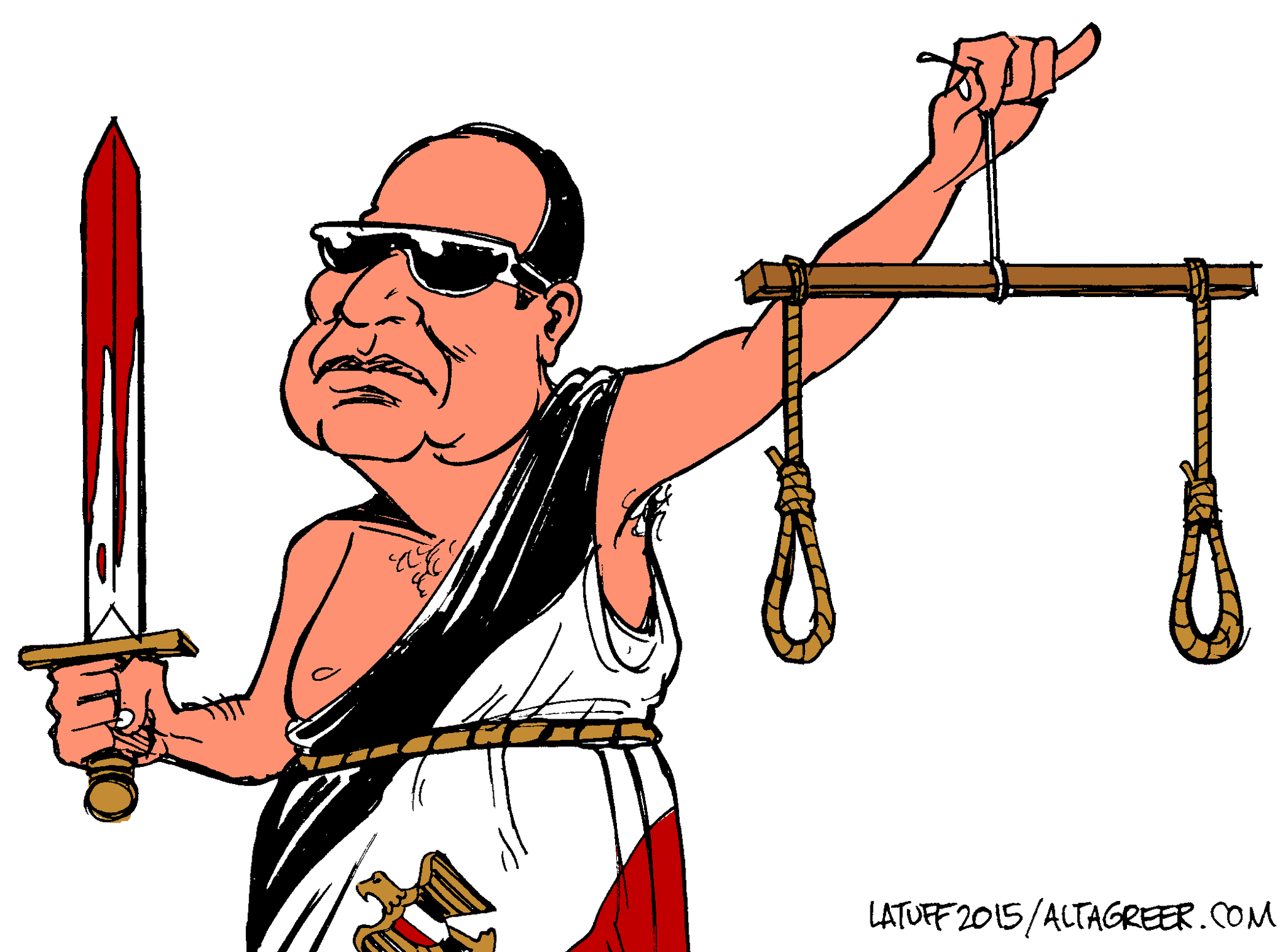
Human rights groups fear for rule of law in Egypt after lawyer dies in custody

Karim Hamdy, 27, who died after two days in police detention, had signs of torture including broken ribs and bleeding in the brain

The Guardian

Link


One night in late February this year, security officers burst into a north Cairo apartment belonging to the family of a 27-year-old lawyer named Karim Hamdy. Brandishing guns, they took Hamdy, still barefoot, to a police station in a nearby neighbourhood.
After two days in detention, Hamdy was dead. Medical officials who examined his body reported signs of torture, including a beating that had left him with ten broken ribs and bleeding in the brain.
Hamdy was one of dozens of Egyptians to die in custody in recent years, but as a lawyer his killing illustrates what rights monitors say is the unravelling of the rule of law and a heightened sense of impunity among the security forces since the military removed president Mohamed Morsi from power in 2013.
Torture by security forces did not cease after the uprising that toppled president Hosni Mubarak in 2011, nor following the election of Morsi, but rights organizations have documented an upsurge in torture under two years of military-backed rule.
“We see an escalation of torture and a maintenance if not an increase of impunity, and a ruthlessness in using torture, a carelessness,” said Aida Seif El Dawla, executive director of the al-Nadeem Center for the Rehabilitation of Victims of Violence, a Cairo-based organization that helps torture victims. “It gives the impression that there is a sense of ‘We’ll get away with it.’”

Karim Hamdy was arrested after security officers burst into his apartment.
 Karim Hamdy was arrested after security officers burst into his apartment. Photograph: Public domain

In a photo taken of him before his death, Karim Hamdy has a youthful face with a closely trimmed beard, curly hair, a tie and a red sweater vest. He was a respected figure in theEgyptian Lawyers Syndicate and was known for defending clients who had themselves suffered abuses at the hands of the police.
In a video available on YouTube, Hamdy’s mother said she was at home, sitting on the sofa with her son when the security officers rapped on the metal door of the apartment. “We opened the door and they rushed in,” she says in the recording. “They grabbed him by his clothes and said, ‘Come, Karim,’ as if they knew exactly who he was.”
The security men, apparently members of the National Security agency, accused Hamdy of participating in an unauthorized protest, and a weapons charge. His interrogators eventually compelled him to confess on video.
When police turned him over to prosecutors, Hamdy denied the charges and said he had been forced to confess under torture, according to an investigation of the incident by Amnesty International. He had been slated to return to the prosecutor’s office again the following day, but he never appeared. Lawyers went to search for him at the police station where they were told he had died.
A photo taken after his death shows Hamdy’s lifeless body after it was released by the security forces. His torso is visibly bruised. A medical report whose content was reproduced by Egyptian newspapers indicates the damage done to his body during the 48 hours he was in custody. Ten of his ribs were broken and there was bleeding inside his skull.
Hamdy’s story also reflects the shifting contours of politics in Egypt in the two years since Morsi’s removal. Hamdy died in Matariya, a working class neighbourhood in north Cairo that became a rallying point for Morsi’s supporters after the security forces killed hundreds of protesters in Cairo’s Rabaa Al-Adawiya and Nahda squares in August 2013. The mass killing and ensuing political clampdown flushed protest out of Cairo’s central neighbourhoods, but demonstrations persist in more marginal districts.


Matariya has been a flashpoint since the 2011 revolution, in part because of residents’ outrage over police abuses. On January 28, 2011,a monumental day of protests and pitched battles with police, demonstrators attacked the Matariya police station. Before and after the uprising, the station had a reputation for brutality. In the words of Abdelrahman Gad, a researcher at the Egyptian Commission for Rights and Freedoms, “If someone goes into that police station, everyone is afraid for them.”
Hamdy was one of two lawyers to die following apparent police torture in the span of three months in Matariya, and among nine deaths following arrests in the same neighbourhood since April 2014, according to Amnesty International.

The two lawyers’ deaths are part of a recent pattern of deaths in custody in the Matariya police station. One of them was Ezzat Abdel Fattah, a 46-year-old officer with the Ministry of Finance, who died after he was arrested following an altercation with his neighbours in May 2014. A medical report showed showed several broken ribs and bleeding in the brain, signs of a severe beating.The other lawyer was Imam Afifi, 63, who died after being arrested during one of the neighbourhood’s frequent anti-government demonstrations. The circumstances of his detention are in dispute. A Cairo security official anonymously quoted in Egyptian media said Afifi was beaten by a crowd of civilians who then turned him over to police. Other lawyers reported that their colleague was beaten inside the police station. A medical report obtained by the Guardian said Afifi suffered a head trauma while in custody. A CT scan indicated that Afifi, like Hamdy, had bleeding in the brain.
In a rare indictment of members of the security forces, Egypt’s public prosecutor’s office charged two members of the National Security agency over Hamdy’s death. The pair, a lieutenant colonel and a major, are now on trial. But the trial is taking place in secret as a result of a gag order by Egypt’s state prosecutor. The lawyers who are tracking the case say the gag order could be part of a cover-up.
“We have enormous doubts about the performance of the public prosecutor’s office, dating back to the Mubarak era,” said Malek Adly, a lawyer with the case with the Egyptian Center for Economic and Social Rights. “The way the authorities are hiding this case raises a lot of concerns.”

Syrian Army: Retreats in Northwest Necessary to ‘Avoid Losses’

Link

After a solid week of fighting over the Sahl al-Ghab plain, just west of the Idlib Province, Syria’s military has carried out a retreat to a position even closer to the Alawite heartland that lies of the western side of the area, as al-Qaeda masses more gains.
The recent al-Qaeda gains gave them the high ground on the eastern side of the plain, and Syrian Army officials say they had no choice but to fall back to avoid being exposed to artillery and missile fire, establishing the defensive line further back.
A newly announced 48-hour ceasefire in Idlib Province may allow the Syrian military to reinforce its defensive line, but it may also allow al-Qaeda to move some of its own fighters, who have been surrounding Alawite villages there, onto the plain to press the advantage.
Al-Qaeda and other rebel factions have made pushes against the Alawite homeland in Latakia Province in the past, but have always been repelled by the military. The Syrian military seems to be in somewhat rougher shape this time around, however, and may not hold out as well.

About Syria

Syria: War crimes amplify suffering of Eastern Ghouta’s bombed and besieged civilians

Link


Relentless aerial bombardment and shelling by Syrian government forces is magnifying the suffering of civilians trapped under siege and facing an escalating humanitarian crisis in Eastern Ghouta, said Amnesty International in a new report published today.
‘Left to die under siege’: War crimes and human rights abuses in Eastern Ghouta, Syria reveals damning evidence of war crimes and describes the Syrian government’s siege on Eastern Ghouta and unlawful killing of its besieged civilians, occurring as part of a widespread as well as systematic attack on the civilian population, as amounting to crimes against humanity. The report also highlights the agonizing struggle to survive of more than 163,000 people living under siege in Eastern Ghouta, as well as exposing abuses by non-state armed groups in the area.
“For nearly three years the lives of civilians in Eastern Ghouta have been devastated by bloodshed and tragedy. They are trapped and surrounded by fighting on all fronts with no means to escape the unlawful aerial and shelling attacks waged by government forces. Their anguish is compounded by dwindling supplies of food, clean water and other crucial necessities which mean that daily life for many has become a prolonged experience of hardship and suffering,” said Said Boumedouha, Acting Director of Amnesty International’s Middle East and North Africa Programme.

War crimes by government forces

Between January and June 2015 Syrian government forces carried out at least 60 aerial attacks on Eastern Ghouta killing around 500 civilians. The report documents 13 air strikes and other attacks amounting to war crimes, which killed 231 civilians and only three fighters. In 10 cases no military target could be identified in the vicinity suggesting the strikes were direct attacks on civilians or at best indiscriminate. In the remaining three cases the attacks appeared grossly disproportionate or otherwise indiscriminate.
Many public places that were struck were crammed full of civilians including a crowded public market, a school while students were nearby and the vicinity of a mosque soon after Friday prayers.
Satellite imagery analysis shows that aerial attacks carried out between 28 December and 10 February have completely destroyed multiple residential buildings in the vicinity of Taha mosque in Douma. One eyewitness said that he saw nine bodies scattered on the streets near the mosque killed by an airstrike on 9 February. He added that residential buildings, an underground field hospital and a school were also destroyed.
Satellite imagery from March 2,2015 clearly shows many structures have been severely damaged in the Taha mosque area of Douma, during an attack earlier in the year.

On the same day, Amir witnessed another strike on another mosque in Douma. He described to Amnesty International how displaced families including children were killed in the attack that struck al-Ansar mosque in Douma where they had sought refuge. “Nowhere is safe,” he said.
Public markets are also on the list of Syrian government’s targets. “It was a disaster,” one eyewitness said describing the aftermath of the attack on the market in Kafr Batna on 5 February. Residents said the attack took place at 1pm– the “busiest hour of the day” - and also destroyed two nearby residential buildings. There was no trace of a military target nearby.
In a similarly shocking attack on 25 January Syrian air force jets bombed a market in Hamouria shortly after Friday prayers as crowds of people poured out of a nearby mosque to buy sugar sold that day at a discounted price, killing more than 40 civilians. “I could only see blood. It was horrific, like nothing I have seen before,” an eyewitness said.
“The timing and location of these attacks appear deliberately orchestrated to maximize damage or civilian casualties in a gruesome attempt by the Syrian government forces to terrorize the population. All attacks on civilians and civilian buildings or infrastructure must end,” said Said Boumedouha.
Syrian government forces also repeatedly fired imprecise rockets and mortars or unguided bombs into populated areas in a series of direct and indiscriminate attacks on civilians amounting to war crimes.
 “By repeatedly bombing heavily populated areas in a series of direct, indiscriminate and disproportionate attacks as well as by unlawfully besieging civilians, Syrian government forces have committed war crimes and displayed a sinister callousness towards Eastern Ghouta’s civilians,” said Said Boumedouha.
By repeatedly bombing heavily populated areas in a series of direct, indiscriminate and disproportionate attacks as well as by unlawfully besieging civilians, Syrian government forces have committed war crimes and displayed a sinister callousness towards Eastern Ghouta’s civilians
Said Boumedouha

Life under siege – a struggle to survive

In addition to daily bombardments, living conditions for civilians of Eastern Ghouta have continued to deteriorate. Residents have limited access to food, clean water or medical care and essential supplies including electricity and fuel. Checkpoints controlled either by government forces or armed groups restrict their movements into and out of Eastern Ghouta. Government forces have also denied UN agencies and other humanitarian actors free access to the area.
More than 200 people have died from starvation or lack of access to adequate medical care in Eastern Ghouta between 21 October 2012 and 31 January 2015 according to the Syrian American Medical Society.
An emerging black market “war economy” has seen smugglers and members of armed groups or government officials profit at the expense of civilians. Syrian government forces routinely confiscate food at checkpoints forcing residents to buy goods on the black market often for up to 10 times the price of goods in central Damascus.
Marwan, a local resident from Jesrine, said he had lost more than 15kg in weight because of the siege. He spent days without eating in order to ensure his four children and wife could eat once a day. “What will it take for the United Nations to do something about it? Is starvation the only answer?” he said.
“Government forces are using starvation as a weapon of war in flagrant violation of international law. Withholding food and basic supplies required to survive is a vicious act of cruelty amounting to collective punishment of the civilian population,” said Said Boumedouha. 
Residents also said Army of Islam (Jaysh al Islam) fighters and their families had abundant food while civilians were forced to pay hugely inflated prices.
The report discloses that non-state armed groups, particularly the Army of Islam, are guilty of an array of abuses including abductions, arbitrary detentions and indiscriminate shelling. Their use of imprecise weapons such as mortars and Grad rockets in populated areas amounts to war crimes.
“Widespread violations by the Syrian government do not excuse the appalling behaviour of the Army of Islam who have also waged indiscriminate attacks, failed to protect civilians and deprived them of access to food or medical care. Civilians of Eastern Ghouta are essentially caught in between two hostile sides vying for their own gain,” said Said Boumedouha.
Civilians of Eastern Ghouta are essentially caught in between two hostile sides vying for their own gain
Said Boumedouha

International action desperately needed

More than a year ago the UN Security Council adopted two resolutions intended to alleviate the suffering of Syria’s civilians, calling on all parties to the conflict to end attacks on civilians, lift all sieges, grant unfettered humanitarian access and release anyone arbitrarily detained. So far however, they have failed to assuage the suffering of most civilians.
“The aim of these resolutions was precisely to protect civilians and prevent a full scale humanitarian disaster. Yet so far the UN Security Council has looked on as the resolutions continue to be openly flouted and the crisis grows steadily worse, despite commitments to take further steps to ensure they are enforced. Such steps are desperately overdue,” said Said Boumedouha.
“Perpetrators of the crimes under international law that we are witnessing in Syria must no longer be allowed to escape justice. As long as Russia blocks the Security Council from referring the situation in Syria to the Prosecutor of the International Criminal Court, justice remains a distant prospect.” 
So far the UN Security Council has looked on as the resolutions continue to be openly flouted and the crisis grows steadily worse, despite commitments to take further steps to ensure they are enforced. Such steps are desperately overdue
Said Boumedouha
The Security Council must urgently impose targeted sanctions against all parties to the conflict in Syria responsible for war crimes and crimes against humanity as well as an arms embargo on the Syrian government. The Syrian government should ensure unfettered access for the Independent International Commission of Inquiry to the country as well as other human rights monitors including Amnesty International. 

NASR-O-IRAN GETS THE INSTRUCTIONS FROM IRAN

لقاء ظريف ونصر الله لم تتسرب منه معلومات بشأن القضايا التي ناقشها (الأوروبية)

Emad Hajjaj's Cartoon: The Surrender of the Houthis

#استسلامـالحوثي

Tuesday, August 11, 2015

ما وراء الخبر - مصير الأسد بين موسكو والرياض

إصلاحات العبادي بالعراق.. حقيقية أم لعبة سياسية؟

مرّة أخرى في الطائفية وإنكارها

AN EXCELLENT, EXCELLENT ANALYSIS!!

HIGHLY RECOMMENDED READING...

عزام أمين | 10 أغسطس ،2015
 
​باحثٌ سوريّ، أستاذ علم النفس الاجتماعيّ وما بين الثقافات في جامعة ليون الثانية في فرنسا. مُدّرس باحثٌ في جامعة ليون الثانية والجامعة الكاثوليكيّة الخاصّة منذ عام 2004 . عضوٌ في مخبر "فريق البحث في علم النفس الاجتماعيّ" التابع لجامعة ليون الثانية. عضوٌ في المكتب العلميّ للجمعية العالميّة للبحث العلميّ في ما بين الثقافات، جنيف، سويسرا. نُشرت له عدّة مقالاتٍ وأبحاثٍ عن الهوّيّة والانتماء والثقافة والاندماج الاجتماعيّ.
Link


أن يختلف المثقفون والباحثون الأكاديميون في مقاربة مسألة الطائفية في سورية فهذا أمر طبيعي، لا بل ضروري. فالعلوم عامة، والاجتماعية منها خاصة، قائمةٌ على الجدل والشّك العلمي، وهذا ما يميّزها عن العقائد. أضف إلى ذلك أنّ مفهوم الطائفية هو مفهوم مركب، متعدد التعريفات والمعاني، وهو محل دراسة وتحليل في مجالات علمية مختلفة.
إنكار ظاهرة الطائفية في سورية ومحاولة تفنيد وجودها هو أيضًا أمر طبيعي وقابل للجدل، فالحقيقة الاجتماعية هي تصور، وكل تصور هو فعل ذاتي وموضوعي في الوقت نفسه. يرفض البعض لا شعوريًا رؤية هذه الظاهرة، ومن منطلق التأكيد على الهوية الوطنية السورية الجامعة. الأسئلة التي تطرح نفسها هنا هي: لو لم تكن ظاهرة الطائفية موجودةً فعلًا، لماذا يكتبون عنها إذًا؟ ولماذا أججت هذه الظاهرة كل هذا الجدل الكبير بين المثقفين والمفكرين؟ ولماذا أصبحت الشغل الشاغل للكثير من الباحثين والسياسيين المهتمين بالشأن السوري؟
ما نراه غير طبيعي، بالمقابل، هو ذلك الكمّ من الشتائم الذي ينهال به البعض على كل من يحاول الكتابة عن مسألة الطائفية وتفكيكها وفهمها واقتراح حلول علمية وعملية لها. تارةً يُتهم بالطائفية نفسها ومحاولة تكريسها، وطورًا بالشعبوية. بالتأكيد، في هذه الحالة ننتقل من منطق الشك العلمي والجدل إلى حيّز الأيديولوجيا والعقائد، وربما حيّز الحيل الدفاعية والإسقاطات النفسية، فرفض الاعتراف بوجود هذه الظاهرة وبهذا الأسلوب العُصابي له بالتأكيد دلالاتٌ نفسيةٌ، لسنا هنا مجال البحث فيها.
لن ندخل في إشكالية تعريف هذا المفهوم التي تطرقنا إليها في مقالات سابقة، ولا في جدل وجود ظاهرة الطائفية أو عدم وجودها. ففي مشرقنا العربي المعاصر، تفرض هذه الظاهرة حضورها الكبير ومنذ زمن بعيد، في مختلف تجليات الحياة الاجتماعية، وتأتي موجة التعصب بصفة عامة، بلورةً لحوادث سياسية واجتماعية متواترة، أدت إلى إيقاظ المشاعر المذهبية والطائفية حينًا، والعشائرية والأقوامية حينًا آخر، إلى درجة أصبح فيها الجمود والتطرف ورفض الآخر المختلف ملمحًا من ملامح الحياة الاجتماعية والثقافية. ويمكن القول في هذا السياق: إنّ الطائفية تمثّل أحد أهم التحديات التي تواجه الحياة السياسية والاجتماعية في المشرق العربي اليوم، وتعيد خلط الأوراق السياسية. وإن لم يتم تجاوزها ربما ستؤدي إلى تفتيت الدول المُكوّنة لهذا المشرق.
أصبحت الطائفية في سورية أمرًا واقعًا شئنا أم أبينا، فبعد أكثر من أربع سنوات من انطلاق الثورة السورية ضد نظام الأسد الاستبدادي، تنامت مشاعر الانتماءات الضيّقة، ما قبل الوطنية، وأدت إلى موجة عارمة من العداء والانتقام والتطرف بمستوياته المختلفة. كما بات السلوك الطائفي الإقصائي، على المستوى الفكري أكان أم على المستوى الجسدي، يهدد الهوية الوطنية بصفة عامة. وعلى الرغم من عدم وجود مؤشرات علمية دقيقة على مدى انتشار هذه الظاهرة، فلقد أصبحت تتجلى في صور متعددة ومختلفة بين السوريين، وتُمثّل خطرًا على الصعيد الفردي والاجتماعي والسياسي.
ويعلم المطّلع على الشأن السوري أنّ الطائفية ليست وليدة الثورة السورية، وأنّ وجودها أعمق كثيرًا، ويتعدى الاصطفافات والحوادث الطائفية التي ظهرت بعد عام 2011. ولكن وفي الوقت نفسه، لم تكن الطائفية سببًا من أسباب ثورة الشعب السوري، فهذا الشعب لديه ألف سبب آخر واضح ليثور على نظام شمولي، حرمه أبسط حقوقه الإنسانية. لا بل إنّ ما يجب أن يحاول المثقفون والباحثون فهمه، هو ليس لماذا ثار السوريون على نظام الأسد؟ وإنما لماذا لم يثر السوريون على نظام الأسد حتى عام 2011؟
وفي هذا الإطار، يبقى السؤال الأهم هو عن أسباب ظاهرة الطائفية في المجتمع السوري، وعوامل تفشيها بهذا الشكل الفجّ، فالعمل على تجاوز أي ظاهرة يجب أن ينطلق من الأسباب التي أدت إلى نشوئها وتكريسها. وأيّ تحليل لهذه الظاهرة لا يتبنى مقاربة عابرة للاختصاصات سيكون بالضرورة تجزيئيًا، يفتقد إلى الإطار التفسيري الشامل المتمثل بالربط بين العوامل السياسية والاقتصادية والاجتماعية والفردية.
ما تؤكده البحوث في هذا المجال، هو أنّ الطائفية ظاهرة مكتسبة، وليست فطرية، ولها أسبابها الموضوعية. فعلى الصعيد المباشر، هناك عدة عوامل دفعت وبشكل ممنهج إلى تطييف الثورة السورية والمجتمع السوري عامة. ونحن نجزم أنّ أهم هذه العوامل هو النظام السوري الذي وعبر أجهزة إعلامه، قسّم الشعب السوري، ومنذ اليوم الأول للحراك الثوري، إلى مواطنين شرفاء وأناس خونة، وإلى أكثرية سنّية متطرفة وأقليات مُستهدفة. لقد كان لهذه الإستراتيجية والعنف الذي رافقها فاعلية كبيرة، وزادا في تعميق الشرخ بين كل شرائح المجتمع السوري، وبين الموالين والمعارضين على وجه الخصوص. لقد دفع التجيّيش طائفي والعنف دموي كلًا من الفريقين إلى التّمترس خلف المواقف السياسية وإلى التعصب والتطرف في الخطاب، كما استطاعا تحويل ثورة شعب ضد نظام استبدادي إلى صراعٍ بين جماعات طائفية وعرقية. لا يمكننا بالطبع إنكار وجود عوامل خارجية وقوىً إقليمية، دفعت هي أيضًا نحو هذا التطييف، وكان لها مصالح فيه. السؤال الذي يطرح نفسه هو: لو لم تتوافر أرضية صالحة لتقبّل هذه التطييف، فهل كانت هذه العوامل الخارجية والداخلية لتنجح في تحقيق أهدافها؟ بصيغة أخرى، ألم يكن هناك ما يمكن أن نسميه بـ "جهوزية طائفية" عند الشعب السوري؟ للإجابة عن هذا السؤال، يجب تحليل الظرف السياسي والاقتصادي والثقافي الذي عاشه الشعب السوري لأكثر من أربعة عقود.
فعلى الصعيد السياسي، ينتمي نظام الحكم في سورية إلى بنية ذهنية قديمة لا تؤمن إلّا بالقوة والاستبداد من أجل البقاء، فلقد أسس حافظ الأسد بعد انقلابه في السادس عشر من تشرين الثاني / نوفمبر 1970 نظام حكم شمولي، يتغلغل الاستبداد في ظله في كل مفاصل الحياة وأدقّها من دون استثناء. لم يعمل هذا الحُكم يومًا، وعلى مدار أربعين عامًا من القمع، على خلق هويّة وطنية جامعة. لا بل، وعلى العكس من ذلك، عمل وبأسلوب منهجي على تفكيك المجتمع السوري تفكيكًا مدروسًا، يكفل له التفوق عليه وعلى أي مكونٍّ من مكوناته. فبعد إعلان الأحكام العرفية إثر الانقلاب العسكري الذي قاده حزب البعث في آذار / مارس من عام 1963، والذي قضى تمامًا على الحياة السياسية الحزبية والنقابية في سورية، أعاد نظام الأسد ضمنيًا إنتاج علاقات تقليدية عشائرية وطائفية، عبر توزيع الأدوار والوظائف الأساسية في الدولة على أساس الولاء والطائفة، "توازن طائفي" وليس على أساس الكفاءة. برز هذا أساسًا من خلال "السياسة الاقتصادية الزبائنية"، القائمة على الانتماءات الضيقة والتبعية بصفتهما أولوية ووسيلة وحيدة للبقاء والنجاح. كان هذا الاقتصاد الزبائني إلى جانب مفهوم التوازن الطائفي، في ظل نظام الأسد، أمرًا واقعًا مقبولًا ومشروعًا، نوعًا ما، عند الشعب السوري، وفي ظلهما عاشت أجيال متتالية من الناس مراحل تكوينها النفسي والعقلي.
أمّا على الصعيد الاقتصادي، فلم تعجز سياسات الأسد الأب والابن عن حماية اقتصاد سورية التقليدي فحسب، بل ساعدت على تحطيمه. فسوء توزيع الدخل بين فئات المجتمع عامة، وغياب القوانين والتنظيم المؤسسي، وعدم وجود برنامج اقتصادي واضح، وتحطيم قطاع الزراعة، أدّت مجتمعةً إلى استشراء الفساد الصغير والكبير في جميع مناحي الحياة، والأهم من كل ذلك هو التفاوت في نسبة النموّ بين منطقة وأخرى.
في ظل غياب تامّ للحياة السياسية والنقابية، والوضع الاقتصادي شبه المنهار، عانت أجيال من الشباب السوري الفقر والبطالة والتهميش والهدر لطاقاتها وكفاءاتها، ووقعت ضحية قلق وجودي واستلاب من خلال علاقات طفلية وطفيلية مع نظام سياسي غافل عنها ومتناس لها، بل كابت لوجودها ذاته. عاشت هذه الشريحة من الشباب الحرمان في غبن وغربة عن مجتمعها، وكان هاجسها اليومي هو إشباع حاجاتها الأولية، كالحاجة إلى مأوى وعمل ومكانة اجتماعية وإحساس بالطمأنينة. فلا عجب، إذًا، في ظل هذه الظروف، أن تصبح الهجرة هي المخرج الوحيد لمن استطاع إليها السبيل: فإمّا الغربة في الوطن أو خارجه.
 لقد أدّت حياة الحظر والحرمان، والتي كانت واقعًا يوميًا في سورية على مدى أربعة عقود، إضافة إلى غياب الحياة السياسية في أغلب الأحيان، إلى نوع من "الخواء الوجودي" وحياة اللامعنى وخنق الهوية الوطنية، وهو ما دفع بعض الشباب إلى الوقوع في إغراء الحركات الأصولية لاسترداد الفردوس المفقود، إذ أدّى الدين وظيفة إشباعيّةً وتعبوية. بينما انتشرت الولاءات الصغرى عند البعض الآخر، إذ وجد هؤلاء في هويتهم الطائفية والعرقية أو العشائرية نوعًا من الاعتزاز البديل عن الهوية الوطنية المفقودة لملء الفراغ الوجودي الذي عاشوه. وفي كتابه عن الجمود والتجديد في العقلية العربية، يصف علي وطفة هذه الولاءات الصُغرى، بأنها تلبي وظائف اجتماعية وسياسية مهمة في إطار أنظمة ومجتمعات لم تتبلور فيها البنى السياسية الاجتماعية المعاصرة على نحو متكامل ولا سيما بنية الدولة العصرية.
مجددًا، فعلى صعيد المدرسة، كما على صعيد المجتمع والدولة، لم يعمل نظام الأسد يومًا على بناء هوية وطنية شاملة عن طريق برنامج تربوي مدروس وممنهج، ولم تكن المدرسة إلاّ وسيلة "تدجين" للسوريين، فقد انتشرت أساليب التنشئة الاجتماعية القسرية، وثقافة العقاب الجسدي والطاعة العمياء، والتي كان من أهم نتائجها انحطاط الذات والشعور الدائم بالانكسار والعجز. لقد كانت المدرسة في سورية بصفتها مؤسسة تربوية، مثلها مثل غيرها من المؤسسات التربوية في عدد من الأقطار العربية، وخاصة في الأنظمة الشمولية، هي أداة للأدلجة والاستقطاب العقائدي وقتل الروح النقدية، لقد ساعدت بصفة مباشرة وغير مباشرة في نشر الفكر التعصبي الديني والطائفي والعرقي. فعلى سبيل المثال، نجد أنّ الكثير من الكتب المدرسية، ولا سيما كتب التاريخ، تنطوي على اتجاهات عنصرية وطائفية – في بعض الأحيان على الأقل – سواء من حيث القصد الذي تنطلق منه أو من حيث التأثير الذي تخلفه.
أمّا على صعيد الأسرة، فنجد، عمومًا، غياب قيم التسامح والانفتاح على الآخر ومفاهيم حقوق الانسان والتفكير العلمي. كما نلمس حضور قيم التعصب والتسلط والعنف والتفكير الخرافي والخوف من الغريب، قيم تغرس في الطفل منذ طفولته المبكرة. تسود كل هذه القيم السلبية الأجواء، ويتنفسها الطفل مع نسمات الحياة اليومية. الوالدان اللذان يقومان بلاوعي بعملية مجاراة للطائفية السائدة في ثقافة مجتمعهما يمثّلان "نموذجًا اجتماعيًا" لأطفالهما، وينقلان إليهم هذه الظاهرة بشكل غير مباشر عن طريق "المحاكاة". إنّ قيمًا تسلطية وتعصبيّة كهذه، وثقافة الانتقام والطاعة في آن معًا، لا تقتل في الطفل مقومات إنسانيته ووجوده الإنساني فحسب، بل تجعل منه جلّادًا لا يرحم من يختلف معه. أضف إلى ذلك أنّ انتشار ثقافة الخوف من الآخر المختلف، والحذر من الغريب والتشكيك في نواياه، وتصنيف الأفراد في جماعات وفقًا لانتماءاتهم الدينية المختلفة، تُعد البذرة الأولى لنبتة الطائفية.

والحصيلة، بعد هذا التقديم الموجز للظرف السياسي والاقتصادي والاجتماعي الذي عايشه السوريون أكثر من أربعة عقود، كانت سورية دولة خاوية، في ظاهرها دولة حديثة وفي باطنها تعيش وتزدهر الطائفية والعشائرية، والفساد، والرشوة، و"الاستزلام"، والتزلف، والخوف، وكل أشكال الولاءات ما قبل الوطنية. ففي ظل هذا الظرف، يكون الاستثناء ليس في وجود الطائفية، وإنما في عدم وجودها.

المشكلة في سورية ليست أبدًا في وجود تنوّع طائفي وأقوامي فيها، وليست في رغبة الطوائف والقوميات في التمايز والحفاظ على هويتها، فهذا هو الطابع التاريخي والمنطقي للتعايش، ووحدة الدولة لا تقتضي وحدة الثقافة أو الدين أو القومية بالضرورة. ففي الأنظمة الديمقراطية، يُعدّ التنوع الطائفي والأقوامي مصدر غنىً وتفاعل ثقافي وحضاري وفكري، وإرثًا تحاول الدولة الحفاظ عليه. وفي الوقت نفسه، يتجاوز الأفراد في هذه الأنظمة الديمقراطية حدود انتماءاتهم الضيقة ما قبل الوطنية (طائفية، وعشائرية، وإثنية... إلخ) إلى بناء مجتمع دولة المواطنة الذي يصبح هو انتماءهم الأول. أما في أنظمة الاستبداد الشمولي عامة، كما في سورية على سبيل المثال لا الحصر، يتحوّل هذا التنوّع الطائفي وهذه التعددية الأقوامية إلى محرمات يُمنع الحديث عنها، وتُكبت في اللاشعور القومي كي لا تخرج إلى الوعي إلّا وفق المنظور الأيديولوجي للنظام الحاكم. ومن ثمّ، يتبلور هذا التنوع الطائفي المكبوت في صيغة "شعور أقلّوي" و"مظلوميات" (سُنية، وكردية...) مزمنة، كردة فعل على إحساس دائم بالخطر والزوال أمام خطاب شمولي مسيطر على الجو العام السياسي والاجتماعي السائد.

DNA 11/08/2015: هجوم عون على قهوجي

قيادي عراقي بارز يطالب العبادي بإزالة صور الخميني وخامنئي

Link
قيادي عراقي بارز يطالب العبادي بإزالة صور الخميني وخامنئي
دعا رجل الدين والسياسي العراقي البارز وعضو البرلمان عن الدورة السابقة، الشيخ إياد جمال الدين، رئيس حكومة بلاده إلى إزالة ‏صور القادة الإيرانيين من شوارع بغداد فوراً كأحد الإصلاحات اللازمة في البلاد، خاصة صور الخميني وخامنئي، معللاً ذلك بكون ‏إيران هي سبب الوضع الراهن في العراق، وحثّ على استقدام شركات عالمية مختصة بالتقصي عن مخالفات الفساد المالي لتعقب ‏مصدر ثروات بعض المسؤولين.‏

وقال جمال الدين، والذي شغل منصباً قيادياً في التحالف الوطني الـ"شيعي" الحاكم بالبلاد، في رسالة وجهها إلى رئيس الوزراء ‏العراقي، حيدر العبادي، اليوم الثلاثاء، إن محطة تلفزيون "العراقية"، وصفت ما يجري من احتجاجات في العراق بأنها جاءت ‏بدعوة من "المرجعية"، وأن إجراءات الحكومة بعد ذلك جاءت بدورها "استجابة لأوامر المرجعية"، وبذلك تجاهلت الشعب ‏واحتجاجه تماماً واختزلت كل شيء بالمرجعية والحكومة، مبيناً أن "تعمد تجاهل الشعب سيزيد من انفجار الناس ضدكم وضد ‏المرجعية معاً".‏
وأضاف "اصحوا قبل فوات الآوان، لولا الشعب ما كانت هناك مرجعية، ما كانت هناك حكومة. الشعب هو مصدر السلطات وفق ‏الدستور وليس المرجعية. يا رئيس الوزراء أنت أقسمت بالالتزام بالدستور، والدستور يقول إن الشعب هو مصدر السلطات فلماذا ‏لا تستمع للشعب؟ لماذا يا رئيس الوزراء تستمع للمرجعية ولا تستمع للشعب؟ هل أنت ممثل للشعب أم للمرجعية؟ مَن هو رئيسك؟ ‏هل الشعب العراقي أم المرجعية؟"‏‎.‎

وتابع جمال الدين تساؤلاته بالقول "يا رئيس الوزراء لماذا لا تصدر تعليمات بإنزال صور الزعماء الإيرانيين من الشوارع خميني ‏وخامنئي؟".‏
ودعا رجل الدين الشيعي والبرلماني السابق، رئيس الحكومة العراقية إلى "الاستعانة بخبرات دولية محايدة لكشف ملفات الفساد ‏منذ سقوط صدام إلى اليوم"، موضحاً أن "هناك شركات دولية سويسرية وكندية وألمانية متطورة جداً في كشف الفساد ومتابعة ‏الأموال المهربة حتى الدولار الواحد، وهناك شركات عالمية متطورة جداً تقدم دراسات واستشارات لتصحيح الاقتصاديات لرسم ‏خطة لإنقاذ الاقتصاد العراقي".‏

ومضى قائلاً في السياق ذاته "القضاء العراقي فاسد، والفاسد لا يمكن أن يكون أداة للصلاح أبداً. المفسد لا يمكن أن يكون مصلحاً. ‏الفساد لا يُعالج بالفساد، مافيات الفساد والمليشيات لا يمكن أن تبني وطناً ودولة".‏
ودعا في ختام رسالته العراقيين إلى "الاستمرار بالتظاهرات وأن تكون يومية وليست أسبوعية لمعرفة مصير أموال العراق ‏المنهوبة"، واستطرد قائلاً: "على الشعب العراقي ألا يرضى بالفتات إنهم يريدون امتصاص غضب الناس ببعض الإجراءات ‏البسيطة‎"‎‏.‏

Regional powers are making a mess of the Middle East

Move over, imperialists — there’s a local game in town


By Rami Khouri


If you think European colonialism, Russian imperialism, Zionism and American militarism have made a mess of the Middle East over the past century, be prepared for worse. We have entered a wild new era in which actors within the region are driving new ideological tensions, civil conflicts and regional wars.
Now when Saudis, Iranians, Turks and Egyptians fight, they do so to pursue their own goals rather than be proxy responders to superpowers’ wishes. This is a paradigm shift, and we should expect much greater destruction, longer wars, a trail of shattered lands and ungoverned terrain, with terror groups such as Al-Qaeda and the Islamic State in Iraq and the Levant (ISIL) taking root.
At least a dozen regional players — both states and nonstate actors — routinely stir the pot in the area, starting with local powers Turkey, Saudi Arabia, Iran (and its allied Shia militias in Iraq) and Hezbollah. Add Qatar, the United Arab Emirates, a resurgent Egypt and assorted Kurdish groups to the mix; aggravate tensions by introducing ISIL and the Ansarullah group (Houthis) in Yemen; and you are left with a veritable mess of powers vying for regional influence. And that’s without even counting the hundreds of local militias and political and tribal groups that operate in and across many countries.
The complex, multifaceted nature of these conflicts means that there’s no going back to when Middle East conflicts were shaped mainly by Arab-Israeli wars and occasional proxy local battles on behalf of world powers. Some of these actors fight to maintain their place in the local or national power structure; others seek to generate regional strategic alliances. Others still fight back to prevent regional the big powerhouses from dominating the region.  
The foundation for local powers taking over the driver’s seat of regional developments was laid at the end of the Cold War 25 years ago, but only Iran then was strong enough to develop a coherent regional political strategy at the time through alliances with Syria and Hezbollah. The U.S. military remained active regionally through its wars in Iraq, but these started to wind down around in early 2011.
Around that time, the Arab uprisings began, and the two superpowers’ lower military profile in the region opened the door to power-hungry local armies: Saudi and other Gulf air forces bombed government and Islamist forces in Libya, moved troops into Bahrain to protect the monarchy and assisted rebels trying to overthrow the Syrian government. Their reasons for the assaults included supporting their allies in Libya, blocking a popular challenge to the Bahrain monarchy and overthrowing the Syrian regime in hopes of weakening its Iranian allies. Meanwhile, Iran and Hezbollah followed suit to support Bashar al-Assad’s regime in Damascus, and Turkey and Qatar assisted Islamist rebels in Syria.
A maze of interlocking and often contradictory alliances of convenience is sprouting up across the region.
These actions have given rise to three important new trends across the region. 
First, the ideological struggles and civil wars in countries such as Libya, Yemen, Syria, Lebanon, Palestine and Egypt are fueled mainly by direct military and economic support from regional patrons. Traditional powers like Turkey, Iran and Saudi Arabia have initiated military assaults on their own, with minimal and often just last-minute coordination with their big-power allies. Examples include the Saudi-led war in Yemen that Riyadh initiated and the U.S. subsequently supported from afar, Turkey’s attacks against Kurdish and ISIL targets in northern Syria and the Iranian military support of the Syrian regime. 
The second is a maze of interlocking and often contradictory alliances of convenience across the region. For example, while Saudi Arabia supports and arms Islamist militants fighting to overthrow the Assad regime in Syria, it fights Islamists in other Arab countries whom Saudi leaders see as a threat to their leadership of the Sunni Islamic world. Saudi Arabia has promoted hard-line Salafist movements that they see as weakening Iran and Shia groups, though some of their offshoots — notably, ISIL — now carry out attacks in Saudi Arabia and represent a serious threat in places to neighboring states such as Syria, Iraq, Lebanon and Jordan.
In northern Syria the U.S. supports Turkey in creating an ISIL-free zone while Turkey attacks Kurdish resistance forces that the U.S. supports and counts on in the battle against ISIL. The incoherence of this patchwork of foreign interventions in the region becomes more glaring by the day, and it will only metastasize as local wars are increasingly initiated by regional rather than global powers.
Third, this creates opportunities for world powers to support their allies and weaken their adversaries, mostly by injecting massive amounts of weaponry into the region or supporting military campaigns spearheaded by local parties, such as in Yemen, Libya, Syria and Iraq. This usually creates more chaos and destruction and leaves behind shattered societies, which are fertile ground for the emergence of extremist groups.
An important new twist is the emerging alliance between Egypt and Saudi Arabia. The two countries signed an agreement in Cairo last week to boost military and economic ties and to cooperate on launching a multinational Arab military force to fight terrorism and other unnamed security threats. Riyadh has backed Cairo since the 2013 overthrow of the elected government of President Mohamed Morsi and the Muslim Brotherhood; Egypt in turn sent warships to support the Saudi war in Yemen and has offered ground troops if needed.
A declaration issued after Saudi Deputy Crown Prince Mohammed bin Salman’s visit to Cairo last week said “the two sides stressed the need to exert all efforts to boost security and stability in the region and to work together to protect Arab national security.” This reflects Saudi-Egyptian cooperation for creating a joint Arab military force to fight terrorism in the region — never mind that Egypt has been unable to protect even its own troops in Sinai or its senior officials in Cairo, who have been killed by Egyptian militants allied with ISIL.
Ironically, Saudi-Wahhabi support for Salafists across the region has provided a huge pool of manpower that groups such as ISIL and Al-Qaeda draw from, and Egypt’s crackdown on the Muslim Brotherhood and similar groups has blocked peaceful political development and pushed some discontented Egyptians to join ISIL’s violent ways. In the bizarre and violent new world of regional powers at war, in some cases like these, they unite to wage war against a criminal foe they inadvertently helped to create through their own misguided policies.
These two Arab powers, together leading others militarily across the region, may well be a cause for concern for the damage they might do — especially given that the U.S. this week expressed its military support for them both. This is perhaps the most dramatic and troubling example of the major new trend that now defines the Middle East: Regional powers decide to go to war, the superpowers support them, and third-party Arab countries are smashed to smithereens in the name of security for all.

Emad Hajjaj's Cartoon

Monday, August 10, 2015

في العمق- المعادلة الإقليمية الجديدة في المنطقة


A VERY GOOD PROGRAM

ما وراء الخبر - انعكاسات تقدم المقاومة اليمنية

الواقع العربي - حرب التحالف على تنظيم الدولة؟

مدخل لفهم المسألة الطائفية وصناعة الأقلّيات في المشرق العربي الكبير

Contributed by Zarathustra


عزمي بشارة


Link


يبحث الكاتب في الطائفية كظاهرة حديثة وفي سياق أصبحت فيه الطائفة (أتباع دين أو مذهب) جزءًا من كلٍّ هو الكيان الوطني أو الدولة، على الرغم من أن للطائفة السياسية بدايات غير مكتملة التكوّن في الماضي. إن ما يميز الطائفية هو إحياء هذه الجماعة كطائفة ذات هوية تتجاوز الهوية المذهبية إلى السياسة والمصالح، وهذا يعني أن الطائفية عملية تفتيت بالضرورة من منظور الافتراض التاريخي.

تقوم الطائفية السياسية المعاصرة على المحاصصة السياسية المؤسسية أو شبه المؤسسية للطوائف. ومع أنها ظاهرة في إطار الدول، فإن الرابط الطائفي قد يُسخَّر بشكل عابر للدول لتوثيق روابط تضامنية، أو لغرض التدخّل الخارجي في دول أخرى. والطائفية السياسية بمعناها المعاصر وليدة تفاعل المنظومة الاجتماعية القائمة مع 
الاستعمار الحديث، وطريقة بنائه الدولة التي سترثها الدولة الوطنية المستقلّة، أو ستصطدم بها بعده.

انطلاقًا من تحديد أن "الكُلَّ" في الفكر القومي أو الوطني هو مرجع الشرعية الجديد، تصبح الطائفية، بحُكْم تعريفها، مسًّا بالوحدة الوطنية. ويحلل الكاتب تعارض المسارين القومي (الثقافة القومية الجامعة وأساسها اللغة المشتركة) والوطني (الدولة الوطنية وقوامها المواطنة، بما فيها من حقوق سياسية واجتماعية) مع الطائفية، بوصفهما أداتين في الاندماج تخترقان انقسام المجتمع إلى جماعات عشائرية أو جهوية.  ويخلص إلى أن العروبة ليست نقيض الدولة الوطنية في المشرق العربي، بل هي من أُسس وحدتها، وأن  بديلها ليس الوطنية  وإنما التمزُّق الطائفي، بل التمزق الاجتماعي والمناطقي أيضًا. 

وفي ظروف المشرق العربي الكبير التاريخية، تقدم الورقة مثالَي  لبنان والعراق في رصد تحوُّل الطائفة الاجتماعية إلى طائفة سياسية، وتشير إلى التدين السياسي، إذا وقع في مجتمعات متعدّدة الطوائف فإنه يؤُول بالضرورة إلى طائفية سياسية، وذلك في رصد عملية تحويل الجماعات أو الديانات والمذاهب "الأخرى" وتفكيكها إلى أقلّيات قياسًا بأكثرية طائفية... وصولًا إلى تصرّف الأكثريات بعقلية طائفية. إن رصد هذه التحولات هو التحدي الكبير الذي يواجه الباحثين العرب في موضوع الطائفية.

*نشرت هذه الدراسة في العدد 11 من مجلة "عمران" (شتاء 2015)، (الصفحات 7-18)، وهي مجلة  فصلية محكمة متخصّصة في العلوم الاجتماعيّة والإنسانيّة، يصدرها المركز العربيّ للأبحاث ودراسة السياسات.
** للحصول على أعداد المجلة (نسخ ورقية وإلكترونية) أو مقالات مفردة منها، أو الاشتراك السنوي، زوروا المكتبة 

للاطلاع على الورقة كاملة، انقر هنا، أو انقر على الصورة 
في الأسفل

DNA 10/08/2015: عون يقصف الجيش

Murder triggers protests in Assad stronghold

Protesters demand execution of president's relative 

By Brian Whitaker

Link
Sulaiman al-Assad likes posing with tanks and posting the pictures on his Facebook page

There are few things more likely to infuriate Arab citizens than blatant abuse of privilege – when those with powerful connections behave as if the law does not apply to them. This is what led to a rare public outburst at the weekend in the Syrian city of Latakia in the Assad regime's heartland.
Demonstrators took to the streets declaring their loyalty to President Assad while simultaneously demanding the execution of his cousin's son, Sulaiman al-Assad, for murdering a military officer in what appears to have been a fit of road rage.
On Thursday, according to witnesses (of whom there seem to be plenty), Sulaiman al-Assad overtook a car driven by Colonel Hassan al-Sheikh, and blocked the way in front of it. He was apparently angry at having been overtaken earlier by the colonel's car.
The Independent reports:
The brother of Al-Sheikh, who was in the car at the time of the incident, spoke to Syrian radio station Sham FM, "[Suleiman] overtook us and then blocked the road."
"My brother got out of the car and identified himself as an officer; the guy cursed my brother and the Syrian army. He then pointed a Kalashnikov [assault rifle] out of the car's window and shot at us, and that's when I saw my brother was killed."
"The shot was fatal and my brother died instantly," he said, adding that the colonel's wife and twins were present in the car with them and witnessed the entire incident.
The colonel’s brother has filed an official complaint accusing the President’s cousin and reports say that eye witness accounts agree with his claims.
While this might be viewed as just one more death among countless thousands in Syria, it has serious implications for the Assad regime. In a speech last month, the president conceded that the regime is withdrawing from some parts of the country in order to consolidate in those it believes it can hold on to – among them Latakia.
In the same speech, Assad also spoke openly about the depletion of his military forces. Scott Lucas writes:
He acknowledged for the first time that his military faces crippling shortages of manpower: “Everything is available [for the armed forces], but there is a shortfall in human capacity.”
In recent months, Syrian authorities have stepped up detentions at checkpoints to enforce conscription and raised the maximum age for service to well over 40. There are reports of raids on houses to seize more men for the battlefield. Earlier in July, Damascus announced the creation of new brigades, offering salaries well above the average soldier’s income and seeking commitments of at least two years.
Now Assad has granted amnesty to everyone has deserted or defected from the Syrian military during the four-year conflict, hoping they might return to the army.
The murder of an officer by a member of the Assad clan is scarcely going to assist this recruitment drive, but there's more to the public expressions of anger than a single incident. There's a long history of abuse by this particular branch of the family.
Before his death last year – apparently at the hands of rebel fighters – Sulaiman's father, Hilal al-Assad, was head of the Latakia branch of the National Defence Forces (NDF), Syria’s main pro-government militia. It was a position he had obviously got through family connections rather than military skill. Aron Lund notes:
"Virtually all other NDF commanders (there’s one per province) are career officers, typically at the rank of colonel or brigadier general. But despite commanding one of the most important NDF branches, that in Latakia, Hilal al-Assad was not a military figure at all."
Hilal had originally grown rich through smuggling but when that became less lucrative in the 1990s he enrolled for a degree in business studies and somehow managed to pass the exams – allegedly without attending any classes.
This apparently qualified him to be put in charge of the Latakia branch of Mu’assasat al-Iskan al-Askari, construction company owned by the defence ministry. As an employer, he did little to make himself popular, becoming notorious for later payment of wages. According to an article for Syria Comment, "When workers complained about their late wages, they had to face Military Intelligence, which Hilal would summon to deal with them."
The article also gives a portrait of Hilal's son, Sulaiman:
"He is a trouble maker and stories about him fill the internet. Some of these stories are true, while others are exaggerations by known anti-Assad agitators, who expound on the bad behavior of members of al-Assad clan. 
"He is almost always seen with his armed bodyguards, even on the beach, where his favorite pastime was to make hairpin turns with his all-terrain vehicle so that sand would spray those trying to relax at the shore. Reports of him shooting at people are many, but cannot be confirmed. Sulayman poses frequently with tanks belonging to the al-Difa’ al-Watani. He posts these on his Facebook page. 
"His reactions after the death of his father added to the troubles of the city. It increased the level of fear amongst all. Reports said that Sulayman went on a rampage twice, the first was the day when his father died. The second was few days later, when he went with some armed men to al-Slaybeh, a traditional Sunni neighborhood in the old city, and destroyed some of the furniture of al-Tabusheh famous cafe as well as that of a few other stores in the neighborhood. He ran away when the Mukhabarat showed up. This attack only deepened the sectarian divisions in the city."
Such is the anger in Latakia over Colonel Sheikh's murder that the regime seems to have recognised it cannot be ignored. A report on Sunday said a warrant had been issued for Sulaiman's arrest and another report claims he is now being held by "the competent authorities". Whether these reports are true, or merely an attempt to placate the protesters, remains to be seen. There are also claims that Sulaiman has been sighted in Damascus and Lebanon.
In the current military situation, the regime will probably have few qualms about eliminating Sulaiman if that proves necessary. But there are plenty of other thugs in the Assad family to provide unwelcome company for Syria's Alawites as they hunker down in the west of the country.

   
Posted by Brian Whitaker
Monday, 10 August 2015  

Gaza infant mortality rate rises for first time in 53 years, UN study reveals

The number of babies dying before four weeks old has risen from 12 per 1,000 live births in 2008 to 20.3 in 2013, agency for Palestinian refugees says

The Guardian
A premature infant receives treatment in a hospital in Gaza. A new UN report says there has been a surge in the rate of infant mortality in Gaza.

 A premature infant receives treatment in a hospital in Gaza. A new UN report says there has been a surge in the rate of infant mortality in Gaza. Photograph: Majdi Fathi/Demotix/Corbis
Link

The infant mortality rate in Gaza has risen for the first time in more than half a century, a new study by the United Nations aid agency for Palestinian refugees says.
“The number of babies dying before the age of one has consistently gone down over the last decades in Gaza, from 127 per 1,000 live births in 1960 to 20.2 in 2008. At the last count, in 2013, it had risen to 22.4 per 1,000 live births,” a statement from the United Nations Relief and Works Agency said.
“Every five years UNRWA conducts a survey of infant mortality across the region, and the 2013 results were released this week,” it said, adding that because of the data it would conduct a new Gaza-specific survey this year.
It said that neonatal mortality in Gaza, the number of babies who die before four weeks old, rose from 12 per 1,000 live births in 2008 to 20.3 in 2013.
The statement quoted Akihiro Seita, director of the agency’s health programme, as saying that the sudden upswing was unprecedented in the Middle East.
“When the 2013 results from Gaza were first uncovered, UNRWA was alarmed by the apparent increase. So we worked with independent research groups to examine the data, to ensure the increase could be confirmed,” he said.
“That is why it took us so long to release these latest figures.”
He suggested that Israel’s blockade of the coastal strip, where close to 45% of the population is under the age of 14, could be a contributing factor.
“It is hard to know the exact causes behind the increase in both neonatal and infant mortality rates, but I fear it is part of a wider trend,” he said.
“We are very concerned about the impact of the long-term blockade on health facilities, supplies of medicines and bringing equipment in to Gaza.”
Israel imposed its blockade on the Gaza Strip in 2006 after the Islamist militant group Hamas captured an Israeli soldier. It further tightened controls a year later when Hamas consolidated its rule there.
A 50-day war between Israel and Hamas in July-August 2014 killed about 2,200 Palestinians and 73 on the Israeli side, and destroyed or damaged tens of thousands of homes in the impoverished coastal territory. Among the Gaza dead were more than 500 children.