Tuesday, November 14, 2017

The Machiavellian Prince: Welcome to Salman Arabia

By Marwan Bishara

Link

You've got to admire Mohammed Bin Salman's stamina and drive. The ambitious, adrenaline-pumped young prince is fighting a major war next door, while instigating diplomatic crises abroad and cracking down on powerful detractors at home. And yet he still finds the time to curtail the influence of the religious establishment and chart a future vision for Saudi Arabia through 2030 and beyond.
But is he reaching too far?
Well, there's rationality to that rashness, a certain dogma that drives the drama. If you lay out the acts and scenes in his short career, you'll notice that his policies are anything but random.
Soon after King Salman took over the reigns of power of the Kingdom in January 2015, he appointed his young son and close adviser, Mohammed, to the post of minister of defence. Two months into the job, Mohammed bin Salman (MBS) made his mark on the international scene.

Act I - It's a good day to start a war

MBS led an Arab coalition to attempt to dislodge the Iranian-supported Houthi rebels from the Yemeni capital, Sanaa, in March 2015. One month later, the son was rewarded and made deputy crown prince, the second in line to the throne.
So here's the script:
Step 1: Consolidate power
Step 2: Head off internal controversy by capitalising on regional fault lines and stoking conflict abroad.
Step 3: Repeat. 
Over the following two years, the war wreaked havoc in Yemen, raining death and destruction upon Saudi Arabia's impoverished neighbour. But the rewards kept piling up for MBS. His influence grew and his 80-year-old dad, the King, delegated new authority over economic, social and foreign policy affairs to his son. It was clear he was racing to the throne. But there remained one major obstacle. And so it was time for another bold move within the Saudi royal family. Time for another diversionary tactic, a win-win move.

Act II - It's a good day to start a crisis

In early June 2017, MBS, along with the crown prince of the UAE, Mohammed Bin Zayed, manufactured a new Gulf crisis. This time, they took aim at a fellow Gulf Arab royal, by hacking into Qatar's official news agency and planting false statements attributed to the Qatari Emir, Sheikh Tamim bin Hamad Al Thani. 
Soon after, Saudi Arabia and the United Arab Emirates began an all-out diplomatic, political, economic and public relations assault on their Gulf partner, with the help ofBahrain and Egypt, which continues to threaten the existence of the Gulf Cooperation Council (GCC). 
OPINION

What is the Qatar-GCC showdown really about?

Marwan Bishara
by Marwan Bishara
Two weeks into the crisis, his cousin, Prince Mohammed bin Nayef, was removed by royal decree and MBS was elevated to crown prince. To ensure his silence, the once-powerful interior minister was put under house arrest, causing jitters in the Kingdom and dissatisfaction in the royal family. But those reactions were muffled by the shrieks of manufactured patriotism deployed againstQatar.
MBS was now in charge of Saudi Arabia's defence forces as well as internal security. To achieve total dominance over all levers of security in the country, he needed direct control over the National Guard, a strong force made up of all Saudi tribes. For decades, the National Guard was in the hands of two men only: Abdullah bin Abdulaziz and, after he took his turn as King in 2005, his son, Miteb.

Act III - The Night of the Great Purge

On November 3, Saad Hariri, a dual Saudi-Lebanese citizen and prime minister ofLebanon was lured to Riyadh for an audience with the royals. On November 4, he declared his resignation on a Saudi TV channel, condemned his coalition partner,Hezbollah, and threatened to "cut the hands" of its backer, Iran.
The voice and face were Hariri's, but the words and objectives were Saudi. Before the shock turned into suspicion, MBS moved to depose and detain his cousin Miteb, along with dozens of princes and present and former ministers, under the pretext of fighting corruption.
In a matter of a few, short days, MBS once again outmanoeuvred his detractors and consolidated his grip on power. Once again, he cunningly diverted Saudis with drama, manufactured or real, for personal gain. And once again, his rise came at a hefty cost: the distress of his neighbours, partners, and his own family.
 

The Trump effect

None of this would have been conceivable or doable without the tacit approval of Saudi Arabia's major ally, theUnited States. President Barack Obama supported the Saudi adventure in Yemen to contain Iran's influence, and he authorised greater intelligence and logistical support for the Kingdom. All in all, the Obama administration sold Saudi Arabia more than $115bn in weapons. But while Obama came to see the folly of Saudi-Iranian sectarian proxy wars by the end of his tenure, advising the protagonists to "share" the region in the context of "cold peace", his successor has been eager for the Saudis to build a regional coalition against Iran and its proxies.
Bizarre as it may have been for Obama to advise the sharing of the region by two authoritarian regimes to achieve peace, President Donald Trump's egging Saudi escalation against Iranian influence is worse. It plays straight into the "Salman doctrine" of muscular foreign policy against Iranian influence in Iraq, Syria, Lebanon, Yemen, and the Gulf, with incalculable costs to the region.
Trump agreed rather enthusiastically to sell an additional $110bn of "beautiful" US weapons to the Kingdom, and secured hundreds of billions of dollars of Saudi investment commitments in the US economy.
By the end of the Trump's visit to Riyadh in May, the Salmans had won him to their side. They committed to modernise the Kingdom and support Trump's "ultimate deal" between Israel, the Palestinians, and Arab states. 
And so, the following month, @realDonaldTrump rushed to tweet his support for Saudi Arabia against Qatar, to the displeasure of his Secretaries Rex Tillerson and James Mattis. And, last week, Trump hurried to support MBS' purge of princes and ministers, accusing them of "milking" Saudi Arabia. 
"They know exactly what they are doing", Trump tweeted, as if the Salmans could do no wrong.

'They know exactly what they are doing.' Really?

The war in Yemen, in its third year, has no end in sight, as violence, famine and a cholera epidemic continue to wreak havoc on the country. Not only is it a drain on the Kingdom's economy, security and international standing, but longer-range ballistic missiles from Yemen are now reaching the Saudi capital. Meanwhile, the Saudi nemesis, Iran, is keen or satisfied to see Yemen become Riyadh's Afghanistan. 
The Gulf crisis has also backfired. Saudi's international backers, including the Trump administration, now insist on a diplomatic solution that ends the siege and recognises Qatar's sovereignty. Likewise, Western powers want Saudi Arabia to respect Lebanon's sovereignty, and would like to see Prime Minister Hariri free to go back to Lebanon.
WATCH

How can world leaders end Yemen's crisis?

Internally, the situation, while not as bad, remains precarious. The purge under the pretext of curbing corruption is a smart, populist move that appealed to many young Saudis who have long complained about it. But if wealth and power move into the hands of even fewer Saudis, the appeal of the "anti-corruption" campaign will diminish fast. 
This recipe was tried by a number of aspiring, junior leaders in the region to pave their way towards political succession. Libya's Saif al-Islam Al Gaddafi, Egypt's Gamal Mubarak and Syria'sBashar al-Assad, among others, had all made the fight against corruption and terror central to their consolidation of power. But the first two have been deposed, and Assad is struggling to rule over a devastated nation after six years of upheaval and civil war.
Will MBS share a similar fate as those favoured sons? Or, will he lead a new, "modern" Kingdom inspired by "moderate Islam" for decades to come?
A true Machiavellian, MBS' gambit required great degrees of arrogance, duplicity, and indifference to undo decades, even centuries, of political and social traditions within a matter of months. His gamble might've worked for now, but ignorance of history comes at a price.
His scheme to establish a new Salman dynasty or an absolute monarchy has thus far come at the expense of Saudi and regional stability. Unless he curbs the arrogance that propelled him to the top, it may well lead to his downfall, sooner or later.
The cost of Saudi Arabia's purge
COUNTING THE COST
The cost of Saudi Arabia's purge

ABOUT THE AUTHOR


Saudi: Palestinian Abbas must endorse US’ plan or resign

Link

Saudi Arabia’s Crown Prince Mohamed Bin Salman has told Palestinian President Mahmoud Abbas that he has to back Donald Trump’s Israeli-Palestinian peace deal or resign.
According to Israeli sources Abbas was offered an ultimatum after he was summoned to Riyadh last week for a meeting with Bin Salman days after Us Presidential advisor Jared Kushner made an unannounced visit to the Saudi capital to meet the young crown prince. The two are reported to have thrashed out a plan in which Abbas seems to have had no say.
Riyadh had offered to normalise relations with Israel in 2002 on the condition that it agreed to the two-state formula, which more and more Israeli’s, including Prime Minister Benjamin Netanyahu, have rejected.
It’s still not clear what peace deal has been offered to Abbas, but Palestinians will be concerned by Bin Salman’s readiness to rally behind the US President who is described by close associates as the most pro-Israeli president in years. Trump is said to be drafting a deal put together by his son-in-law, Kushner, who is a strong advocate of Israel and his support for the country, say critics,  is odd even by American standards. Kushner has given money to Israeli settlements and his family are close friends of Benjamin Netanyahu.
The Israeli sources also mentioned that Abbas was instructed to stop any further rapprochement with Hamas; an ultimatum that could jeopardise the reconciliation process between the two main Palestinian rivals. If Israeli sources are to be believed than the ultimatum given by Bin Salman seems to be identical to the one made by Netanyahu who is also strongly opposed to the Palestinian unity government.

Palestinian President Mahmoud Abbas attends a central committee meeting of Fatah Movement in Ramallah, West Bank on September 13, 2017.
( Issam Rimawi – Anadolu Agency )
Though Abbas has rejected the claims made by the Israeli Channel 10, details of the meeting seems to be in line with the Saudi, UAE, Israeli and US vision for the region agreed prior to Trump’s inauguration.
It was widely reported that the US gave its backing for the unpredictable young prince while endorsing a regional plan that included unreserved support for Gulf monarchies; revision of the Iran nuclear deal; and a new Israel-Palestine peace plan.
The Saudis appear to be fully behind this deal whose blueprint has been drawn up by senior members of Trump’s exceptionally pro-Israeli administration.
Since his election, Trump has gone on to describe Saudi Arabia as a “magnificent country” while taking the unprecedented step of visiting the Gulf state in his first official visit, having condemned the rulers during his election campaign. Trump also struck a multibillion dollar dealwith the Saudi royals in May.
Trump’s new fondness for the Saudi’s saw him backing the Saudi-UAE media onslaught on Qatar and, last month, he announced he was decertifying the Iran nuclear accord. Last week, when Saudi Arabia arrested scores of princes and businessmen in an “anti-corruption” purge, the president also tweeted his support.
Palestinians no doubt had hoped that a Saudi crown Prince would be a trusted ally who could at the least present their cause with sympathy. They will be concerned over Bin Salman’s ultimatum, which appears to have been coordinated by people that support Netanyahu’s vision for the region which is nothing more than a “state-minus” for the Palestinians.

Monday, November 13, 2017

الحصاد- الشرق الأوسط.. التصور الأميركي للسلام

THE REVERSE MIDAS TOUCH OF SAUDI ARABIA’S CROWN PRINCE IS TURNING THE MIDDLE EAST TO DUST

By 

The Intercept

Link

KUDOS TO GERMANY’S spooks. Back in December 2015, the German foreign intelligence agency, BND, distributed a one-and-a-half-page memoto various media outlets titled: “Saudi Arabia — Sunni regional power torn between foreign policy paradigm change and domestic policy consolidation.” The document was pretty astonishing, both in its undiplomatic bluntness and remarkable prescience.
“The current cautious diplomatic stance of senior members of the Saudi royal family will be replaced by an impulsive intervention policy,” the memo warned, focusing on the role of Mohammed bin Salman, who had been appointed as deputy crown prince and defense minister at the age of 30 earlier that year.
Both MBS, as he has come to be known, and his elderly father King Salman, the BND analysts wrote, want Saudi Arabia to be seen as “the leader of the Arab world” with a foreign policy built on “a strong military component.” Yet the memo also pointed out that the consolidation of so much power in a single young prince’s hands “harbors a latent risk that in seeking to establish himself in the line of succession in his father’s lifetime, he may overreach,” adding: “Relations with friendly and above all allied countries in the region could be overstretched.”
And so it has come to pass. In fact, despite being repudiated at the time by a German government more concerned about diplomatic and commercial relations with Riyadh, the BND warning turned out to be eerily prophetic.
Consider recent events in the Gulf. Can you get more “impulsive” than rounding up 11 fellow princes, including one of the world’s richest menand the commander of the national guard, and holding them at the Ritz Carlton on charges of corruption? Especially since MBS, who ordered the arrests only a few hours after his father set up an anti-corruption committee and put him in charge of it, isn’t exactly a paragon of probity and transparency himself. Where, for example, did the crown prince find more than $500 million to spend on a luxury yacht while vacationing in the south of France last year?
Saudi Defense Minister and Deputy Crown Prince Mohammed bin Salman gives a press conference in Riyadh, on April 25, 2016.<br /> The key figure behind the unveiling of a vast plan to restructure the kingdom's oil-dependent economy, the son of King Salman has risen to among Saudi Arabia's most influential figures since being named second-in-line to the throne in 2015. Salman announced his economic reform plan known as "Vision 2030".<br />  / AFP / FAYEZ NURELDINE        (Photo credit should read FAYEZ NURELDINE/AFP/Getty Images)
Mohammed bin Salman gives a news conference in Riyadh, on April 25, 2016.
 
Photo: Fayez Nureldine/AFP/Getty Images
Is it anything other than “interventionist” to force the resignation of the prime minister of Lebanon on a visit to your country and then put him under a form of house arrest (though the hapless Saad Hariri, a long-standing client of Riyadh, publicly claims otherwise and says he is heading back to Beirut this week)? Or to also detain the president of Yemen? According to an investigation by the Associated Press, “Saudi Arabia has barred Yemen’s president, along with his sons, ministers and military officials, from returning home for months.”
That the crown prince of Saudi Arabia can, essentially, kidnap the elected leaders of not one but two Middle Eastern countries — and, incidentally, put the leading Saudi royal he replaced as crown prince under palace arrest — speaks volumes about not just his “impulsive intervention policy” but the shameless pass he gets from Western governments for such rogue behavior. Imagine the reaction from the international community if Iran had, say, detained the Iraqi prime minister on Iranian soil after forcing him to resign on Iranian television. Yet President Donald Trump has gone out of his way to tweet his support for the crown prince and his father: “I have great confidence in King Salman and the Crown Prince of Saudi Arabia, they know exactly what they are doing.”
The more sober Europeans haven’t been much better. President Emmanuel Macron of France, on a surprise visit to Riyadh last week, saluted MBS “on the opening of his country and support for a moderate Islam.”
Meanwhile, are we supposed to call the rift between the Gulf countries, instigated by the Saudis, with the support of the Emiratis, anything other than “overreach,” to quote the BND, on the part of MBS? The crown prince and his cronies had assumed that tiny, defenseless Qatar would be brought to heel within a matter of weeks, if not days. Five months on, however, the Qataris, continue to reject the long list of Saudi/UAE demands — including the closure of the Qatar-owned Al Jazeera media network — and have retreated into the warm embrace of the MBS’s key regional rivals, Iran and Turkey. Bravo, crown prince!
Then there is Yemen. More than two years after the richest country in the Middle East began bombing the poorest country in the Middle East, there is no end in sight. MBS owns this disastrous conflict — he pushed for it, defended it, escalated it. But wasn’t the recent Houthi rocket attack on Riyadh — which the crown prince called an act of “direct military aggression by the Iranian regime” — evidence of a complete failure of Saudi military strategy? Weren’t those pesky Houthi rebels supposed to have been vanquished by the Royal Saudi Air Force by now? Instead, Yemen has become the world’s worst humanitarian crisis — which MBS, as defense minister, shamefully intensified with his order last week to blockade all entry points into the country.
From Lebanon to Qatar to Yemen, the much-lauded MBS has in fact proved to be the reverse Midas — everything he touches turns to dust. Maybe the authors of that scathing BND memo underestimated just how much of a disaster this favored son of Salman would be both for the kingdom and for the wider region. The inconvenient truth about the crown prince is that he isn’t only impulsive, he’s incompetent; he isn’t only ambitious, he’s reckless. He is also a nationalist and a hawk who is bent on turning the long-standing Saudi/Iran cold war into a very hot war — and is even willing to ally with Benjamin Netanyahu’s Israel in order to do so. If MBS is the new “leader of the Arab world”… then Allah help the Arab world.
Mehdi Hasan teaches as an adjunct professor at the Prince Alwaleed bin Talal Center for Muslim-Christian Understanding at Georgetown University, and is a host on Al Jazeera English.

Sunday, November 12, 2017

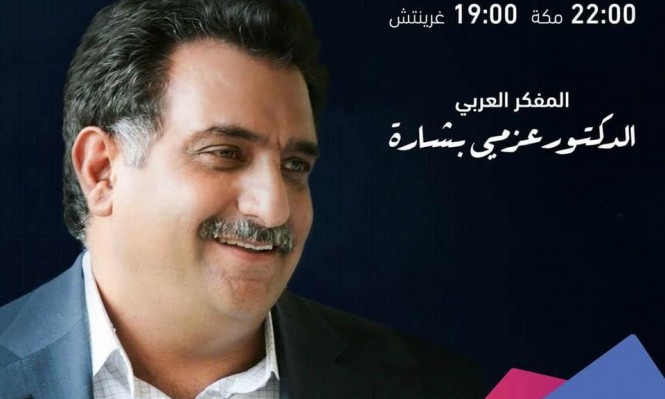
تقدير موقف│حلقة خاصة مع المفكر العربي الدكتور عزمي بشارة

Ex-intelligence chiefs: Trump is being played by Putin and US is in 'peril'

Vladimir Putin and Donald Trump are seen during a meeting of world leaders at the 25th Apec summit, in Da Nang, Vietnam.
The Guardian

Link

Two former US intelligence chiefs have said Donald Trump poses “a peril” to the US because he is vulnerable to being “played” by Russia, after the president said on Saturday he believed Vladimir Putin’s denials of Russian interference in the 2016 election.
The former director of national intelligence James Clapper and the former CIA director John Brennan issued a stern rebuke to Trump after the president branded both men “political hacks” for their support of an intelligence agency consensus that Russia meddled with the US election.
“First of all, he was referring to us as political hacks because he was trying to delegitimize the intelligence assessment that was done,” Brennan told CNN’s State of the Union.
He later added: “By not confronting the issue directly and not acknowledging to Putin: ‘We know that you’re responsible for this,’ I think he’s giving Putin a pass.
“And I think it demonstrates to Mr Putin that Donald Trump can be played by foreign leaders who are going to be appeal to his ego and try to play upon his insecurities, which is very, very worrisome from a national security standpoint.”
Special counsel Robert Mueller, a former FBI director, recently issued the first indictments in the investigation into possible collusion between Trump aides and Russia. Trump has repeatedly denied collusion.
On Saturday, he told reporters on Air Force One during a flight to Hanoi Mueller was leading an “artificial Democratic hit job” which could cost “millions and millions of lives” by interfering with diplomatic efforts with Russia.
Asked if he had raised the issue of Russian interference during conversations with Putin at a political summit in Da Nang, Trump said: “Every time he sees me, he says, ‘I didn’t do that.’ And I believe – I really believe that when he tells me that, he means it.”
The president later tweeted criticism of “haters and fools” and insisted that “having a good relationship with Russia is a good thing, not a bad thing” because he wanted “to solve North Korea, Syria, Ukraine, terrorism, and Russia can greatly help!”
Nonetheless he then appeared to contradict his own remarks during a press conference in Hanoi on Sunday, saying he was “with our agencies” on the issue of Russian meddling.
Clapper seized upon Trump’s initial comments. The former director of national intelligence also told CNN such backtracking was indicative of weakness in front of the leaders of rival powers.
“I think he [Trump] seems very susceptible to rolling out the red carpet, honour guards and all the trappings and pomp and circumstance that come with the office,” Clapper said. “I think that appeals to him and it plays to his insecurities. Yes, I do think that both the Chinese and the Russians can play him.”
Trump criticised Clapper and Brennan, who served under both Democratic and Republican presidents, as well as James Comey, the FBI director he fired in May over, he said, “this Russia thing”, during the same flight to Hanoi on Saturday. 
Brennan said the remarks were “reprehensible” but added: “Considering the source of the criticism, I consider that criticism a badge of honour.
“To impugn the character of somebody like Jim Clapper on Veteran’s Day, who has dedicated so much of his life to this country, I just find that outrageous. I think it’s something Mr Trump should be ashamed of, but it doesn’t seem that anything that he does he feels any shame of whatsoever.” 
Trump’s treasury secretary branded the former intelligence chiefs’ remarks “ridiculous statements”.
“President Trump is not getting played by anybody,” Steven Mnuchin told CNN. “President Trump was focused on some very important issues in North Korea and Syria and those are areas in which we need to work with Russia and get them onboard with our strategy.” 

القصة الكاملة لاستقالة الحريري وإقامته في السعودية والمقابلة التلفزيونية

AN IMPORTANT REPORT

Link

تُظهر الحيثيات التي رافقت استقالة رئيس الحكومة اللبنانية، سعد الحريري، من الرياض، في الرابع من نوفمبر/ تشرين الثاني، كأن هناك رغبة سعودية في إبقاء اللغز موجوداً في ما يتعلّق بالوضعية التي يعيشها الرجل حالياً، ومصيره الشخصي والسياسي.


وأمام الكمّ الهائل من التسريبات الإعلامية التي تتعلّق بحالة الحريري اليوم، بين روايات الاحتجاز والإقامة الجبرية أو المكوث الحرّ في منزله بالرياض، ينقل "العربي الجديد" عن مصدر مقرب من الحريري معلومات حول الاستقالة وما رافقها وما سبقها والحالة القانونية ــ السياسية التي يعيشها الحريري اليوم. فهل استقال الحريري من تلقاء نفسه؟ أو تم دفعه من قبل القيادة السعودية إلى الاستقالة؟ أو أنه أُرغم على فعل ذلك؟ هل هو اليوم يعيش في ما يُشبه الإقامة الجبرية في المملكة؟ أو أنه فعلاً يقيم هناك في منزله بناءً على قراره؟ وكيف يمكن فهم النفي السعودي البارد لمسألة الاحتجاز، على لسان القائم بأعمال السفارة السعودية في لبنان بالإنابة، وليد البخاري؟ ولماذا لم يخرج حتى الآن الحريري بتكذيب لروايات الإقامة الجبرية ويخاطب اللبنانيين من خارج السعودية مثلاً أو عبر قناة تلفزيونية غير تابعة للمملكة؟

لا احتجاز بل مصادرة قرار

يقول المصدر المقرّب من رئيس الحكومة اللبنانية، المستقيل شفهياً حتى الآن، إنه لا يوجد احتجاز بالمعنى القانوني للحريري حالياً في السعودية، وأنه "نظرياً يمكنه السفر"، بدليل زيارته الأسبوع الماضي إلى أبوظبي، وظهوره مرتين: الأولى خلال استقباله الملك سلمان عائداً من المدينة إلى الرياض، وقبلها خلال زيارته الملك في الرياض، يوم الأحد الماضي.
لكن المصدر نفسه يعترف بأنه "يمكن الحديث عن مصادرة قرار الحريري بالمعنى السياسي". ويجزم المصدر بألا علاقة من قريب أو من بعيد للتعاطي السعودي الحالي مع الحريري، بما يحصل من توقيفات بالجملة لرجال أعمال ومسؤولين سعوديين تحت عنوان "محاربة الفساد". ويشرح المصدر أنه قبل تقديم استقالته، في 4 نوفمبر/ تشرين الثاني، من على شاشة قناة "العربية"، خاطبت القيادة السعودية الحريري، بشكل شبه حرفي، لتسأله: "هل أنت معنا أم ضدنا؟ فإن كنت معنا (في المواجهة ضد إيران وحلفائها في المنطقة)، فعليك أن تستقيل وأن تعلن الحرب الكلامية على حزب الله وعلى إيران". بناءً على هذه الرسالة، فهم الحريري أن عليه الاستقالة لعلمه باستحالة بقائه على رأس حكومة يشارك فيها حزب الله وحلفاؤه بقوة، في بلد رئيس جمهوريته حليف لصيق بحزب الله.

الخطوة التالية
ويكشف المصدر المقرب من الحريري، لـ"العربي الجديد"، أن الأخير "لا يزال ينتظر القرار السعودي حول الخطوة التالية التي لم يبلّغ بها بعد (حتى مساء السبت)". وبحسب المصدر، فإن هذا هو السبب الذي يمنع الحريري حتى الآن من التحرّك والخروج من السعودية "قبل أن يفهم ما الذي يريدونه منه". وهذا هو أيضاً السبب الذي حال دون خروجه بحوارات إعلامية ينفي فيها مثلاً شائعات احتجازه أو فرض الإقامة الجبرية عليه، قبل اتضاح الصورة لديه بخصوص خريطة الطريق السياسية التي تتصوّرها السعودية حيال الملف اللبناني، وما تقول إنه مشروع مواجهة إيران ومليشياتها في لبنان، ممثلة في حزب الله والقوى السياسية التي تؤمن للحزب شرعية سياسية.


وعلى ذمّة المصدر المقرّب من الحريري، فإن العناوين العريضة للخطة السعودية اليوم، حيال لبنان، تقوم على الضغط بهدف جعل اللبنانيين، أو غالبية معتبرة منهم، يثورون على حزب الله، فإن نجحوا يكون المشروع سائراً وفق ما هو مرسوم له لضرب حزب الله من الداخل والخارج، أما إن فشل، "فلا أسف على لبنان من بعد ذلك، فليخرب"، على حد تعبير المصدر المقرّب من الحريري ومن القيادة السعودية.
ووفق الرواية نفسها، تحاول السعودية بالفعل الدفع باتجاه ضربة عسكرية لحزب الله، بما أن القيادة في الرياض مقتنعة بأن إسرائيل و/ أو الولايات المتحدة ستقومان بالفعل بشنّ حرب على حزب الله، انطلاقاً من سورية وصولاً إلى لبنان، أو في لبنان فقط، وبالتالي فإن حكام الرياض يصعّدون تجاه الملف اللبناني، استناداً إلى هذا المعطى.
قصة المقابلة التلفزيونية
كذلك يكشف المصدر المقرّب من الحريري، لـ"العربي الجديد"، كواليس حول المقابلة التلفزيونية المقرّر بثها اليوم مع الحريري، مع الإعلامية اللبنانية بولا يعقوبيان. يقول المصدر إن السعوديين "طلبوا إجراء المقابلة عبر شاشة العربية ومن خلال الإعلامي تركي الدخيل تحديداً".
لكن الحريري، والكلام للمصدر المقرّب منه، "كان رأيه، مع مساعديه، أن تتم المقابلة في فرنسا، لكن القيادة السعودية رفضت ذلك"، وهو ما يمكن فهمه على أنه إشارة إلى أن مغادرة الحريري الرياض "لن تكون قريبة، مع أن الحريري وفريقه يلحّون على ذلك". 

وأمام الإصرار المتبادل، السعودي لناحية أن تكون المقابلة مع "العربية" وتركي الدخيل تحديداً، في مقابل تفضيل الحريري أن تحصل خارج السعودية لأنه سيكون محرجاً للغاية بإجرائها من قناة سعودية، بعد تقديم استقالته بالشكل الذي حصل، "وافق السعوديون على أن تتم مع قناة لبنانية"، وربما تنقل المقابلة، حين تُبثّ، جميع القنوات اللبنانية مثلما أوحت مصادر إعلامية في لبنان.
بن سلمان: الأمر لي

ويلخّص المصدر المقرّب من الحريري طريقة التعاطي السعودي مع الحريري، منذ تقديم استقالته حتى اليوم، قائلاً إن القيادة السعودية، تحديداً ولي العهد، محمد بن سلمان، كأنه يريد القول "الأمر لي في ما يتعلق بسنّة لبنان"، وهو ما يمكن أن يشرح وضعية الحريري اليوم، كونه ليس محتجزاً أمنياً أو قانونياً، لكن قراره السياسي مصادر بالفعل. وحول مصير الحريري، لناحية مغادرة السعودية من عدمها، أو العودة إلى لبنان من عدمها، يجيب المصدر قائلاً إن المسؤولين السعوديين "يحاولون أن يكون القرار بذلك بناء على أجندة سعودية، لا بناءً على رغبة الحريري أو اللبنانيين أو الأمين العام لحزب الله حسن نصر الله أو رئيس الجمهورية ميشال عون". بكلام آخر، فإنه "كلما طالب اللبنانيون بعودة الحريري واستعجلوا الأمر تأخر صدور الموافقة السعودية على العودة كي لا تظهر الرياض كأنها استجابت للضغوط".

خليج العرب│ لقاء خاص مع الكاتب السعودي جمال خاشقجي

Al-Jazeera Cartoon

كاريكاتير: أحداث المملكة

Emad Hajjaj's Cartoon: امير سعودي

امير سعودي

Saturday, November 11, 2017

ما وراء الخبر- أزمة استقالة الحريري والحراك الدولي

Dan Rather's Latest Comment

Link

On Veteran's Day no less. On a day when we honor the service and sacrifice of millions of men and women who swore to defend their beloved nation, its Constitution, its rule of law, and its basic decencies in the face of foreign aggression.

On this day, the President meets with an autocrat, a strongman, an avowed enemy of the freedoms we hold dear. And he takes the assurances of a known spy over the consensus of our entire national security and intelligence communities. He takes the word of a foreign adversary over the men and women who put their lives on the line every day to keep us safe. And then he impugns the reputations of the Americans calling them "political hacks?"

As many of you know, I have been traveling the country on a book tour and meeting Americans of all types, across the political spectrum. They are telling me how worried they are. They know this behavior isn't normal for a Commander in Chief. Not by a long shot. And we cannot allow it to be normalized. And all who choose to excuse it away must be called to account. We cannot let politically convenient expediencies cloud hard facts and reasoned conclusions. We were attacked. This was deliberate and the effects and scale of the attack may not be known for some time. We have a serious and active investigation into possible collusion from members of Mr. Trump's inner circle of collusion. There are real questions about what the President may have known, and when (remembering that he must be provided the presumption of innocence).

I am pretty confident how history will judge this moment in the American story. There will be a tally of those who spoke up and those who remained silent. In the meantime, how much harm will be done?

Friday, November 10, 2017

"تقدير موقف": قراءة في آخر المستجدات

"تقدير موقف": قراءة في آخر المستجدات

يعرض التلفزيون العربيّ، الأحد المقبل، لقاءً مع الدكتور عزمي بشارة، في برنامج تقدير موقف مع ليلى الشايب، حيث يناقش ما وراء التصعيد الأخير في سياسة المحاور الإقليميّة، وأين موقع المصالحة الفلسطينيّة والأزمة الخليجيّة المستمرّة، والحرب في اليمن، والأزمة اللبنانيّة، وقراءة في ملفات إقليميّة متداخلة.
تقدير موقف، هو برنامج حواري أسبوعي يناقش أبرز قضايا الساعة من خلال حوار معمق، مع مجموعة من الأكاديميين البارزين، للوقوف على جوانب هذه الملفات المختلفة وأبعادها المستقبليّة.
يعرض البرنامج الأحد، السابعة بتوقيت غرينيتش، العاشرة بتوقيت السعودية، على شاشة التلفزيون العربي.

فوق السلطة- السعودية الجديدة!