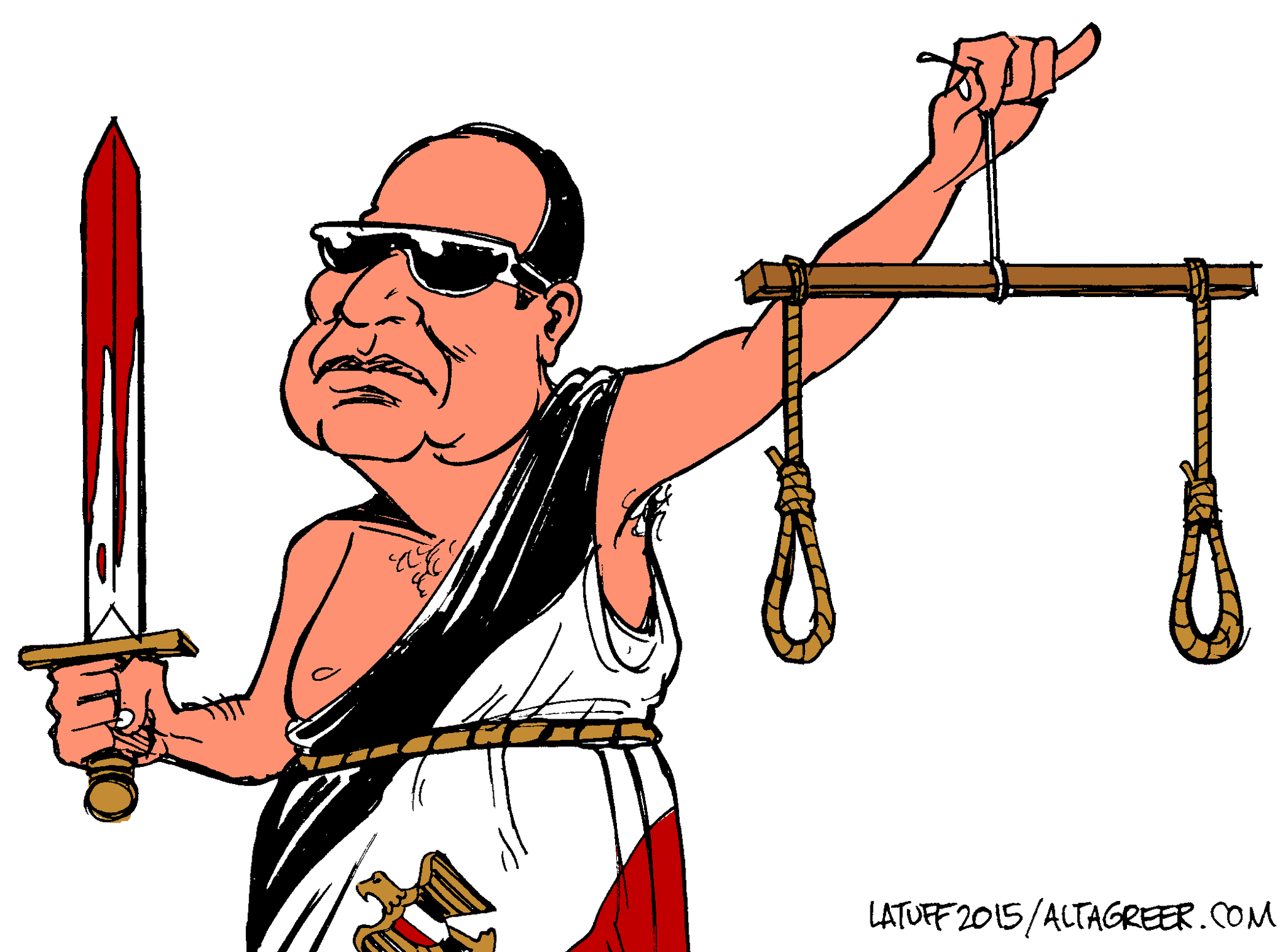
Monday, July 6, 2015

Cracks in the Saudi system

By Brian Whitaker

Link

Can the ruling family sever its alliance with Wahhabism? 


Short of nuclear war, it is difficult to envisage a more cataclysmic event in the Middle East than the collapse of Saudi Arabia. The centrality of Saudi Arabia in Islam, in the global economy and in the region itself, would make turmoil in the kingdom more than just another addition to the growing list of disintegrating Arab states.
Aside from the effects on world oil supplies, the collapse of Saudi Arabia would probably also hasten the fall of other Gulf monarchies, could easily provoke another revolution in Egypt (where the Sisi regime depends heavily on Gulf largesse) and cause turmoil in some of the world's poorest countries as millions of expatriate workers suddenly returned home, jobless. In addition to all that, it would have profound but unpredictable consequences for the future of Islam.
Looking at the kingdom and its archaic ways, one word springs to mind: unsustainable. It's obvious from any realistic assessment that at some point something will have to give. The monarchy is sandwiched between religious obscurantists, from whom it draws much of its claim to legitimacy, and more open-minded citizens demanding equal rights for women, freedom of speech and the right to enjoy yourself without fear of arrest by the men from the mutawa.
Of course, people have been talking about the unsustainability of the Saudi system for a long time. It's more than 20 years since Said Aburish wrote his book, "The Rise, Corruption and Coming Fall of The House of Saud". To recognise that the status quo can't last for ever is one thing, but to predict how and when the dam will eventually burst is something else.
So far, largely as a result of their enormous wealth, Saudi rulers have been pretty successful in postponing the day of reckoning, as Giorgio Cafiero and Daniel Wagner explain:
"Saudi Arabia is a classic rentier state. In exchange for the absolute acquiescence of its 29 million subjects, the ruling al-Saud family provides services such as housing, health care, education, and a variety of subsidies – all funded by the country’s substantial oil wealth. Combined with intolerance for dissent, control over these resources has historically served as the ruling family’s hedge against instability of all varieties.
"In 2011, for example, the Saudi leadership responded to the Arab Spring revolts across the region by injecting $130 billion in the form of salary increases, public-sector job creation, and housing subsidies to minimize the potential for an uprising. Meanwhile, the kingdom’s appalling human rights record has deteriorated. Over the past four years, beheadings have skyrocketed and torture has flourished.
"However, this authoritarian rentier state model is unsustainable. Oil revenues are down, local unrest is simmering, and extremists are taking aim at the kingdom from without and within. The roots of all these problems come not from Iran but from inside Saudi Arabia itself."
As threats proliferate across the region as well as inside the kingdom, the House of Saud is having to dip deeper and deeper into its pockets. It can well afford to do so but money, rather than lack of it, is part of the problem: buying off trouble – the customary Saudi solution – doesn't work as well as it used to and as far as other approaches are concerned, the cupboard is rather bare.
In an article last week, the Washington-based Center for Democracy and Human Rights in Saudi Arabia (CDHR) warned:
"More than at any time in its history, the Saudi ruling family is facing domestic and external challenges and threats that can result in domestic strife which the autocratic system cannot handle even with external support, including military intervention from the region or the west."
Against that simmering background we now also have a trigger that could finally break the status quo. The rise of ISIS has turned the spotlight on Saudi rulers' long-standing (and highly problematic) pact with Wahhabism, the dominant local sect which doctrinally has many similarities with ISIS.
This has had a polarising effect and is putting the monarchy under pressure from two opposite directions. In different ways, both of these present a threat to the king's absolute rule. On one side are those calling for reform, including some of the clerics. CHDR says:
"Divisions have been developing between those clerics who oppose any change in the status quo, like the Mufti and his circle of intransigent clerics, and clerics who call for moderate reforms, like Dr Salman al-Awdah, who has 2.4 million social media followers. Additionally, other clerics, like Mohsen al-Awaji, call for a constitutional monarchy, question gender segregation, the ban on women driving and women’s dress code and call for an end to the regime’s rampant corruption ...
"When prominent clerics publicly warn and denounce the system they have legitimised, protected and served for generations, such loss of allegiance threatens the pillars upon which the Saudi state was founded and upon which it stands."
And on the other side ...
"The threats posed by these advocates of moderate and overdue reforms pale in comparison with the threats posed by an increasing number of extremist clerics and many of their followers who, for example, believe ISIS is a better alternative to the monarchy, which many consider corrupt and incapable of defending their values."
Faced with this situation, CHDR says the Saudi monarchy has two choices:
"It can continue augmenting its historical self-serving relations with the zealots, thus perpetuating its current exclusive sectarian methods of ruling, thereby risking domestic and regional threats and increasing global isolation. Or it can introduce necessary non-sectarian reforms to begin the process of including the overwhelming majority of the disenfranchised Saudi population in the functions and all decision-making processes of the state."
But which will the Saudi royals choose? "Despite King Salman’s and other members of the old guard’s attachment to the past and their dependence on the Wahhabi dogma, the odds are mounting against the continuity of the alliance as it is," CHDR says – adding that "mounting domestic resentment toward the rulers’ use of religion as a tool of oppression and terrorism makes the disintegration of the alliance inevitable."
This may be over-optimistic, however. Arab autocrats have a long history of failing to grasp opportunities for change when they arise and Saudi rulers have been carried along by inertia more than most. And even if they do opt for reform, the time for achieving it peacefully may already have passed.
    
Posted by Brian Whitaker
Sunday, 5 July 2015

A year after the war, Gaza grieves for its child casualties

At a school where six boys were killed during last summer’s Israeli offensive, the loss is an open wound. For other young Palestinians, the scars are psychological


in Rafah

Link
Bullet and shell holes on a house in Gaza. Three-quarters of Gaza’s children experience unusual bedwetting regularly, and nine in 10 report constant feelings of fear, says a Save the Children report.

 Bullet and shell holes on a house in Gaza. Three-quarters of Gaza’s children experience unusual bedwetting regularly, and nine in 10 report constant feelings of fear, says a Save the Children report. Photograph: Majdi Fathi/NurPhoto/Rex
The walls of the office of Salim Abu Rous, headmaster of the Doha boys’ secondary school in Rafah, in the south of the Gaza Strip, are decorated with medals and trophies. He has photo albums of the boys in football teams and other clubs.
About 1,000 pupils attend his school, arriving in two shifts – so many that he struggles to remember the names of all the boys killed in last summer’s war.
“I remember Haitham Abdul Wahab,” he says finally, flicking through one of the picture albums to try to find him. “He was a good boy. He was well loved in the school. He was killed at his uncle’s house with his brother and mother.”
Six pupils from the Doha school were killed in the war, more than from any other school in Gaza. In total, more than 550 Palestinian children died during the conflict. Across Gaza, schools lost pupils and teachers, and thousands were injured.
Salim Abu Rous’s difficulty in remembering all the dead boys is understandable given some had not long transferred into his large school.
A sandstorm over ruined buildings in Gaza.
Pinterest
 A sandstorm over ruined buildings in Gaza. Photograph: Majdi Fathi/NurPhoto/Corbis
But there is another, grimmer, reason. “There were so many deaths in the last war,” he says – so many it was hard to process them. The consequence is that, on an institutional level at least, it appears as though the boys have been almost erased from the school’s memory.
But in their homes in neighbourhoods and villages across the Rafah area – which saw some of the heaviest attacks of the 50-day war – the anguish is still raw.
Anas Muamar was 16 when he was killed on 20 July last year. 
“It was two o’clock in the morning. We weren’t sleeping here. It was too dangerous. So we were staying in another place we thought was safer,” recalls his father, Mahmoud Hussein Mahmoud Muamar, a former employee of the religious affairs ministry.
“There was a very loud explosion. Anas had been sleeping but woke up and went to the balcony to see what had happened. After a while they went back inside. That’s when the house was hit again. His two brothers were killed and Anas was injured.”
Shuaib Hussein Behabsa with a poster of his 17-year-old son, Mohammad, a pupil at Doha school in Rafah, who was killed during an air and artillery strike on his home.
Pinterest
 Shuaib Hussein Behabsa with a poster of his 17-year-old son, Mohammad, a pupil at Doha school in Rafah, who was killed during an air and artillery strike on his home. Photograph: Peter Beaumont for the Guardian
Mahmoud’s face crumples into tears. “We took him to the hospital … but he died. He was a good boy. He was a good student who liked football and followed Barcelona. He was religious, like his brothers. This year he was supposed to have been in the twelfth grade. I wanted him to go to university and become a teacher.”
Gaza’s youngest residents still appear to be bearing the heaviest and most lasting consequences of last summer’s war. A report published on Monday by Save the Children, entitled A Living Nightmare: Gaza One Year On, says 551 children were killed and 3,436 were injured, of whom 10% suffered permanent disability. One Israeli child was killed during the war, and 270 injured.
Three-quarters of Gaza’s children experience unusual bedwetting regularly, the report says, while 89% of parents report that their children suffer constant feelings of fear, and more than 70% of children say they are worried about another war. Seven out of 10 children interviewed now suffer regular nightmares.
What is also clear is that the loss of older teenagers – such as the six Doha pupils on the brink of adulthood – has affected younger siblings and parents, compounding a deepening sense of fatalism and hopelessness in a Gaza where the promised reconstruction has barely happened and whose outlook, Palestinians say, seems bleaker than at any time in recent memory.
A green Hamas flag flies above the family compound where Muhammad Behabsa, 17, died, off a sandy lane in the Salaam district of Rafah. There seems little question that the house and five others beside it, occupied by relatives, were the intended Israeli target.
Like many living in areas heavily hit by military strikes during the war, the Behabsa family still live next to the ruins where their family members died. The main house was hit in an air strike that left a crater still visible in the dusty yard. A little later several smaller houses belonging to family members behind the compound were reduced to rubble in a second set of strikes, apparently by artillery fire.
“It happened at three o’clock in the morning on 2 August,” recalls Muhammad’s father, Shiab Hussein Behabsa, 52. “He was on his own, sleeping in the diwan of one of the houses behind this one. An F-16 hit this house with a bomb at first and then three artillery shells hit the five houses behind.
“He was cut to pieces.. Five of his cousins were killed in the same incident.” 
Naim Qishta holds a picture of his son Abdullah, a pupil at Doha school, killed during last summer’s war in Gaza during an Israeli attack. The Doha boys’ secondary school in Rafah lost more pupils during the war than any other.
Pinterest
 Naim Qishta holds a picture of his son Abdullah, a pupil at Doha school, killed during last summer’s war in Gaza during an Israeli attack. The Doha boys’ secondary school in Rafah lost more pupils during the war than any other. Photograph: Peter Beaumont for the Guardian
Like Anas, he wanted to go to university, in his case to study law.
“His headmaster and other teachers came to pay their condolences. His friends from school still come to visit. He was my second son but he was the dynamo of the family. He liked to joke but he would also help. If I needed anything it would be him who went to fetch it from outside.”
Abdullah Qishta, 17, also from the Doha school, died on the same day while returning from a summer job he had found at a dairy farm.
“When the war started, he continued working,” his father, Naim, says. “We moved to a house belonging to a relative of my wife when the ground invasion started. On 2 August the owner called and asked him if he would go and feed the animals. He said the situation near the farm was fine. But it wasn’t. When he got there the Israelis were close so the owner said he should sleep there.
“He wanted to come home and get some clothes and take a shower. He was calling every 10 minutes. Then the calls stopped. He had been walking back with another worker from the farm when he was hit by a drone missile near the house.”
Back at the school, now closed for the summer holidays, Salim Abu Rous describes the aftermath of losing so many of his pupils. “In the beginning the education ministry sent people to support the school. We had a mental health programme with plays and films and activities supported by Unicef.
“We had a football team named after the boys. Some of their friends still talk about them.
“The ministry never told us we had lost the most pupils of all the schools in Gaza. I have no explanation of why we suffered the worst. But the war took place during the school holidays. The boys were with the families. Perhaps that is why so many children died.”
Hasan Zeyada, a community psychologist in Gaza, believes that children and young people have been the most affected group, both because of the last war and in the wider context of blockade and conflict that means children over the age of nine will have lived through three wars and continuous economic siege.
Suleiman Loulahi holds up a picture of his son Bilel, aged 17, a pupil at the Doha school in Rafah who was killed in an Israeli strike on 2 August last year.
Pinterest
 Suleiman Loulahi holds up a picture of his son Bilel, 17, a pupil at the Doha school in Rafah who was killed in an Israeli strike on 2 August last year. Photograph: Peter Beaumont for the Guardian
“Children present problems you would expect. Hyper-vigilance, nightmares, cognitive problems. Teachers complain about falling performance in the classroom. In communication they become aggressive verbally and physically.
Back in Rafah, Suleiman Loulahi, a Bedouin agricultural worker who lost his son Bilel, 17, a pupil at Doha, also on 2 August, reflects the new fatalism that has crept into Gaza.“A yardstick is the feelings of hopelessness and powerlessness here in Gaza. It affects motivation and depresses the emotions.”
He has named a new baby after the brother he never knew, killed by a missile while he was returning to his house from a relative’s where they were feeding his pigeons.
Loulahi says: “I look at my other children, and these days I wonder what the point is encouraging them to go to school, to better themselves and get on, when there will only be another war in a few years. When I’ll risk losing them again.”

"Democracy Cannot Be Blackmailed": Greek Voters Overwhelmingly Reject Creditors’ Austerity Demand

Democracy Now!

"Greek voters have overwhelmingly turned down the terms of an international bailout in a historic rejection of austerity. With a margin of 61 to 39 percent, Greeks voted no to further budget cuts and tax hikes in exchange for a rescue package from European creditors. Polls had indicated a narrow vote, but the "no" side swept districts across the country. Thousands of people flocked to Athens’ Syntagma Square Sunday night in celebration. In voting against austerity, Greek voters have rejected measures that helped cripple the economy, but also turned down a financial lifeline for its struggling banks. The banks will remain closed today as the European Central Bank meets to consider new emergency loans. Tsipras says he will seek a new round of talks with creditors in which restructuring Greece’s $267 billion debt is on the table. In a surprise move, Greek Finance Minister Yanis Varoufakis announced his resignation today, saying Greece’s creditors no longer want him involved in the talks. Varoufakis said, "I shall wear the creditors’ loathing with pride." We are joined by Costas Panayotakis, author of "Remaking Scarcity: From Capitalist Inefficiency to Economic Democracy" and professor of sociology at NYC College of Technology atCUNY....."

Minister No More!

By Yanis Varoufakis

Link

July 06, 2015 "Information Clearing House" - The referendum of 5th July will stay in history as a unique moment when a small European nation rose up against debt-bondage.

Like all struggles for democratic rights, so too this historic rejection of the Eurogroup’s 25th June ultimatum comes with a large price tag attached. It is, therefore, essential that the great capital bestowed upon our government by the splendid NO vote be invested immediately into a YES to a proper resolution – to an agreement that involves debt restructuring, less austerity, redistribution in favour of the needy, and real reforms.

Soon after the announcement of the referendum results, I was made aware of a certain preference by some Eurogroup participants, and assorted ‘partners’, for my… ‘absence’ from its meetings; an idea that the Prime Minister judged to be potentially helpful to him in reaching an agreement. For this reason I am leaving the Ministry of Finance today.

I consider it my duty to help Alexis Tsipras exploit, as he sees fit, the capital that the Greek people granted us through yesterday’s referendum.

And I shall wear the creditors’ loathing with pride.
We of the Left know how to act collectively with no care for the privileges of office. I shall support fully Prime Minister Tsipras, the new Minister of Finance, and our government.

The superhuman effort to honour the brave people of Greece, and the famous OXI (NO) that they granted to democrats the world over, is just beginning.

Yanis Varoufakis is the current finance minister of Greece.

Jordan foils 'Iran-backed' bomb attack

Link

An Iraqi man is appearing before a state security court Monday after Jordanian authorities said they disrupted a large scale "terrorist" attack on behalf of Iran's Quds Force.
The Jordanian authorities have foiled a "terrorist" attack and arrested an Iraqi man in possession of explosives said to have come from Iran's Revolutionary Guards, a judicial source said on Monday.  

"Security services thwarted a terrorist plan at the last minute which was going to be carried out by an Iraqi on behalf of Iran's Quds Force", the source told AFP, without providing further details.

The Iraqi-Norwegian suspect, Khaled al-Rabei (49), was arrested
in possession of 45 kilos of explosives in the northern town of Jerash. 

The source did not say when he was detained.  

He is due before the state security court, which has banned media coverage of the trial, later on Monday, on charges of possessing explosive material and planning terrorist acts in Jordan on orders from Iranian Intelligence. 

According to the list of accusations, Rabei was also involved in other assassinations on behalf of Iranian Intelligence. 

Iran's Quds Force, the foreign operations arm of its Revolutionary Guards, is charged with carrying out missions abroad.  

Jordanian-Iranian relations, which are at a low ebb in any case,  are likely to worsen despite recent Iranian attempts to improve ties with Amman, such as offering energy deals and anti-terrorism cooperation.

Tehran is a key backer of Syrian President Bashar al-Assad, who has accused Jordan of aiding rebel groups fighting his forces in Syria.
Jordan is hosting a US-run programme to train Syrian rebels to fight against the Islamic State group and has said it was training some tribal groups in Syria.

There are fears that Jordan could become embroiled in the conflicts raging in neighbouring Iraq and Syria.

The last major attack on Jordanian soil was in 2005 when suicide bombers blasted three hotels in Amman, killing and wounding dozens of people.

حديث الثورة- هجمات سيناء والتعاون الإسرائيلي المصري

Sunday, July 5, 2015

البرادعي: برناردينو ليون هو مخطط الانقلاب على مرسي

Link

barad1
لندن ـ “القدس العربي”: كشف السياسي المصري محمد البرادعي أن المبعوث الأوروبي برناردينو ليون هو المخطط للانقلاب العسكري الذي تم ضد الرئيس المصري محمد مرسي.
ونقلت مواقع على شبكة الانترنت مقاطع من ندوة تحدث بها البرادعي حول الأحداث في مصر.
وقال البرادعي “في تموز/يوليو 2013 كان علي أن أكون جزءاً من المعارضة ولكن أساسا لكي اقول اننا بحاجة إلى نهج توافقي شامل” يضم كافة القوى والأطياف السياسية.
ويضيف أن “ما حدث بعد ذلك كان تماما عكس ما وقّعت عليه، فقد وقّعت على أنتخابات رئاسية مبكرة، وعلى خروج مشرف للرئيس مرسي، وللوصول لنهج شامل تكون جماعة الإخوان المسلمين والإسلاميين جزءا منه”.


وقال “وقّعت على الخطة التي وضعها بالفعل برناردينو ليون الذي يحاول الآن أن يفعل الشيء نفسه في ليبيا، ولكن بعد ذلك كل هذا تم القاؤه من النافذة، وبدأ العنف، بحيث لم يعد هناك مكان لشخص مثلي، وليس هناك مجال سياسي”. وقال “في مجتمع لا يوجد فيه مفهوم واضح للعدالة والتوافق، ولا يوجد فضاء سياسي، لا يمكن ان يكون لك أي تأثير، ولا يمكن أن أكون جزءا منه”.

Angela Merkel Celebrates the 4th of July

Sisi's MINISTRY OF TRUTH: Egypt journalists face jail for reporting non-government terrorism statistics

New law awaiting presidential approval outlaws the publication of ‘false news or data about any terrorist operations that contradicts official statements’

The Guardian

Link

Egypt was accused of making a savage assault on free speech on Sunday, after its cabinet drafted a law that criminalises the reporting of terrorism statistics that differ from those the government provides.
Under an article in the new terrorism law presented to the president for his final approval, journalists face at least two years in jail if they publish figures that contradict those that state institutions such as the army release.
The article concerned outlaws the intentional publication of “false news or data about any terrorist operations that contradicts the official statements released by the relevant authorities”.
The move follows the recent deadly attack by Islamic State’s Egyptian affiliate, in which the group narrowly failed to capture a town in a remote part of the Sinai desert, and killed a number of Egyptian soldiers. The army denied it had lost more than 17 men, and criticised foreign media outlets for reporting higher death tolls.
Officials built on that criticism with Sunday’s draft law, a lengthy text that also extends punishments for other terrorism-related charges.
Gamal Eid, the executive director of the Arab Network for Human Rights Information (ANHRI), a Cairo-based NGO, condemned the proposal, comparing it with the actions of the Nazis.
“We are faced with an article that pushes the media towards Goebbels’ media – the media of one opinion and one narrative,” he said. “It is against the freedom of press, especially press that is critical and professional.”
Egypt’s justice minister, Ahmed el-Zind, told Agence France-Presse: “There was no choice but to impose some standards. The government has the duty to defend citizens from wrong information … I hope no one interprets this as a restriction on media freedoms. It’s just about numbers.”
The law is the latest clash between the country’s increasingly authoritarian government and what remains of independent civil society. Since the army ousted the Muslim Brotherhood’s Mohammed Morsi from the presidency two years ago, the government has used the pretext of combatting a wave of militancy that has left hundreds of policemen and soldiers dead to unleash a wave of legislation that legal experts say is the most restrictive since the 1950s.
As a widespread wave of nationalism has taken hold, large swaths of Egypt’s state and private media have backed the government, but journalists who have questioned its direction have been targeted in the crackdown.Police have also arrested thousands of mainly Islamist opposition members,killed more than 1,000 protesters and curbed the activities of NGOs and political parties. After the assassination of Egypt’s chief prosecutor last week, President Abdel Fatah al-Sisi promised to limit prisoners’ right to an appeal, a pledge billed as an honest attempt to speed up the punishment of terrorists, but condemned by rights campaigners as a backdoor attempt to curb basic legal rights.
There are currently at least 18 journalists in Egyptian jails, a figure the Committee to Protect Journalists said last week represented an all-time high. Three al-Jazeera journalists accused of terrorism have been released on bail, but remain on trial. Last month the Cairo correspondent for El País, the leading Spanish broadsheet, fled the country after Spanish diplomats warned that he faced arrest.
Since Sisi’s government took power, officials have regularly criticised foreign journalists for reporting narratives that conflict with its own. In the latest example, the foreign ministry criticised the terminology that correspondents use to describe Isis, and instead suggested that the group be described with epithets such as “slaughterers, executioners, assassins, slayers, destroyers and eradicators”.


حجر شطرنج


The Suicide Bomber.....

A Chess Piece?

How Hollywood helped sanitise the 'war on terror'

A Top Gun drone sequel is planned - will it be the latest in a series of films that prime the US military's image?


Rachel Shabi


Link

Fans of 80s blockbusters - doubtless a huge cohort - will be celebrating the news from Hollywood this week that there's going to be a sequel to the all-American action drama, Top Gun.
Come on, of course you were a fan of this glamorous, speed-loving, adrenaline-charged action drama, with its cheesy singing serenades, amazing aerial stunts and Tom Cruise at his megawatt-smiling best playing the cocky, charismatic navy super-pilot, Maverick. No? Well, the US military was a huge fan - and not just because the film caused a spike in air force enlistments after its release in 1986.
Top Gun effectively rehabilitated the military's image and revived confidence in it - both factors were a bit low, post-Vietnam.
Listening Post - Feature: The Zero Dark Thirty controversy
This film is what helped ferment a Pentagon perception of the entertainment industry as useful for this sort of promotion of core values - and so perhaps we can expect more of the same, but with a necessary, modern warfare drone factor for the sequel.
Sanitising the 'war on terror'
Top Gun isn't the only movie to have assisted with this sort of thing. As proof of how hard Hollywood has helped to sanitise the "war on terror", the film Zero Dark Thirty has pretty much become the prime example.
Director Kathryn Bigelow's 2011 blockbuster is premised on the idea that enhanced interrogation techniques (in other words: torture) actually led to the capture and killing of Osama bin Laden in Pakistan in 2011.
The film, peddled as a definitive, authentic account, was made with such close cooperation with the CIA - keen to justify its now defunct detention and interrogation programme - that it might as well have been scripted by the agency.
Its role as a propaganda vehicle was recently reaffirmed by a US documentary, Secrets, Politics and Lies (on the US public broadcaster, PBS), which examined the CIA programme: how the agency tortured detainees in the post 9/11 years, knew this didn't produce any reliable intel, and then lied about both doing it and the fact of it not working.
Top Gun was made in consultation with the Pentagon, but this relationship is perhaps best seen in the 2001 film Black Hawk Down: In exchange for script changes, the film-makers were loaned eight shiny Black Hawk helicopters and over 100 soldiers...

The US Senate's own Investigations Committee spent six years looking into the CIA programme and the committee's former head, Dianne Feinstein, saw an advance copy of Bigelow's movie. This is what she tells PBS about the experience: "I walked out of Zero Dark Thirty, candidly… I couldn't handle it. Because it is so false."
As journalist Michael Isikoff tells in this documentary, Hollywood movies have a significant impact: "More people see them, and more people get their impressions about what happened from a movie like that than they do from countless news stories, or TV spots."
Triumph of good over evil
Right from the start, Hollywood seemed keen to help with the "war on terror". In 9/11's aftermath, Karl Rove, then special adviser to George W Bush, convened a Beverly Hills meetingwith entertainment chiefs to see how they might contribute.
This new war gave the US movie industry the chance to build on its favourite storyline, a recurrent theme from Westerns to sci-fi: the triumph of good over evil - and what better setting than Bush's "war on terror" narrative of us v them?
Actually, the Cold War was pretty handy for that, too, albeit with less flashy weaponry - cinematic stereotypes from then were simply repurposed for the global terror period: from cold-hearted, evil Soviets to hot-headed, evil Arabs.
The assumptions underpinning such productions are the same throughout: the US is the global force for good, sometimes forced - reluctantly but heroically, in its thankless task as the world's police - to do bad stuff to combat all the evil out there. Arab militants, just like their Soviet villain predecessors, aren't depicted as having motives or political context, because evil is just gratuitously violent.
The 2003 documentary, Hollywood and the Pentagon: a Dangerous Liaison, suggests that most American war movies have had some help from the US army. The Pentagon even has its own office in LA, with each branch of the military working with films that portray them in action.
Film-makers often trade access to expensive, flashy military hardware in exchange for having army officials consult over the script - these might simply be suggestions over which rifles to use, or it could be over actual scenes.
Top Gun was made in consultation with the Pentagon, but this relationship is perhaps best seen in the 2001 film Black Hawk Down: In exchange for script changes, the film-makers were loaned eight shiny Black Hawk helicopters and over 100 soldiers; an arrangement that required US army liaison with the government of Morocco - where the movie was filmed - so that its personnel would be let into the country.
Self-justifying and heroic
When films tinker with the optics, massaging the "war on terror" narrative so that it becomes self-justifying and heroic, it's bad enough. But something like Zero Dark Thirty feels worse because it is based on a barefaced lie, fed wholesale to its creators under the seductive cover of "exclusive access".
And maybe the disappointment with all of this stems from the expectation that culture's purpose is to go where politics doesn't; to challenge propaganda rather than reinforce it. We think of Hollywood as liberal-minded, but that's misguided when it comes to its portrayal of US foreign policy and place in the world.
The PBS documentary Secrets, Politics and Lies concludes by showing how political shutters have closed on the CIA torture issue: A Republican senate came into force last year, the Intelligence Committee appointed a new, Republican head, who recalled all copies of the 6,000 page, classified Panetta review, refusing to read this damning appraisal of CIA torture put together by his predecessors.
The senate committee had spent six years poring over millions of documents to probe the issue and issue the review - but now it's all shut down. What we're left with is an award-winning movie, script-doctored by the CIA and watched by millions, telling us that torture led to the capture of bin Laden. Thank you, Hollywood; It's been real.
Rachel Shabi is a journalist and author of Not the Enemy: Israel's Jews from Arab Lands.

Current Al-Jazeera (Arabic) Online Poll


Do you see that the imposition of the state of emergency in Tunisia guarantees increased security and stability?

So far, 85% have voted no.