
(1)
من يطالع الصحف المصرية هذه الأيام ويتابع تصريحات السياسيين التي باتت تتنافس
في مغازلة المؤسسة العسكرية والمزايدة على دورها، ربما لا يخطر على باله أن عناوين
الصحف وتعليقات محرريها وتصريحات أهل السياسة تكاد تكون صورة طبق الأصل مما كان
يتردد في تركيا قبل نصف قرن تقريبا.ذلك أن أي قارئ لتاريخ عسكرة المجتمع التركي يلاحظ أن الأصوات الداعية إلى تدخل القوات المسلحة لإنقاذ البلد من الفوضى والانهيار كانت تتردد عالية عند كل أزمة سياسية.
السيناريو المكرر والمحفوظ كانت فصوله تتابع على النحو التالي: الأحزاب الضعيفة تفشل في إدارة الدولة، ترتفع الأصوات داعية إلى قيام الجيش بدور المنقذ، الجيش يقدم إنذارا للحكومة لكي تتحمل مسؤوليتها، بعد الإنذار يعلن الجيش الانقلاب ويتولى إدارة البلاد وترتيب الأوضاع المنفلتة. ولا تكاد تستمر بضع سنوات (عشر في الأغلب) حتى تتكرر الأزمة وتتردد الأصوات والدعوات ذاتها، ثم يتقدم الجيش بإنذاره الذي يعقبه التدخل لاستلام السلطة باعتباره المؤسسة الوحيدة المنضبطة والمتماسكة، والتي تمتلك قوة السلاح على الأرض. وهذا ما تكرر مع الانقلابات التي توالت عام 1960، ثم عام 1971 وعام 1980، وصولا إلى انقلاب عام 1997 الذي وصف بأنه انقلاب ناعم، أو ما بعد حداثي. وكانت نقطة الانطلاق في كل تلك الانقلابات أن الجيش اعتبر نفسه مسؤولا عن حماية مبادئ الجمهورية التركية إلى جانب وظيفته في حماية الوطن. وبمقتضى تلك المسؤولية فإنه فرض نفسه وصيا على المجتمع، وقد قنن دستور عام 1982 تلك الوصاية التي باشرها مجلس الأمن الوطني الذي شكل مكاتب استشارية لمختلف شؤون البلاد العسكرية والسياسية والأمنية والاقتصادية والثقافية والإعلامية وغيرها. وقد جرى استنفار المؤسسة العسكرية بعد انتخابات عام 1995 التي حققت فوزا نسبيا لحزب الرفاة ذي الخلفية الإسلامية، مما أدى إلى تشكيل حكومة ائتلافية مع حزب الطريق القويم، رأسها آنذاك زعيم الرفاه نجم الدين أربكان، فردت القيادة العسكرية باستنهاض أصابعها المنتشرة في مفاصل الدولة وسلطة القرار، إلى أن أجبرت أربكان على الاستقالة من منصبه في عام 1997. 
(2)
الرياح التي تهب على مصر منذ عزل محمد مرسي تمضي في ذات الاتجاه المعاكس
للتاريخ، ذلك أنه بعد إنهاء مهمة المجلس العسكري في عام 2012، وانتعاش الآمال التي
علقت على إمكانية التحول الديمقراطي وإقامة مؤسسات إدارة المجتمع، تبدد ذلك كله في
الثالث من يوليو/تموز الماضي، بعدما تم عزل الرئيس المنتخب، وجمِّد الدستور وحُل
مجلس الشورى وغيره من المجالس التي كان قد تم تشكيلها، وبدا الاتجاه واضحا في
المراهنة على المؤسسة العسكرية وتعزيز قوة الدولة في مواجهة المجتمع.وفي هذه الأجواء جرى الإعداد لاستصدار دستور جديد من خلال مجموعة مختارة وليست منتخبة، وأصبحت المؤسسة العسكرية بحكم الأمر الواقع هي مصدر السلطات وصاحبة القرار في تشكيل الوضع المستجد.
في ظل الوضع المستجد أصبح الفريق عبد الفتاح السيسي وزير الدفاع والقائد العام للقوات المسلحة هو مرشح رئاسة الجمهورية الذي التفت حوله القوى المدنية، واكتسب حضور القوات المسلحة في اللجنة المعنية بوضع الدستور أهمية خاصة، حيث أثير لغط حول حصانة وزير الدفاع واشتراط موافقة المجلس الأعلى للقوات المسلحة على تعيينه، الأمر الذي يسحب تلك السلطة من رئيس الدولة أو رئيس الحكومة. وكحل وسط اقترحت فكرة تطبيق ذلك المبدأ خلال فترة انتقالية تتراوح بين عشر واثنتي عشرة سنة، وجرى التمسك بمبدأ محاكمة المدنيين أمام المحاكم العسكرية، التي هي ليست محاكم مستقلة أصلا، لكنها خاضعة لأمر وزير الدفاع. في هذه الأجواء قرأنا في جريدة "الشروق" (عدد 5/10) تصريحات مهمة لمصدر عسكري ذكر رئيس تحرير الجريدة أنه قريب من المؤسسة العسكرية، وركز في تصريحاته على ما يلى: - إن خبرة السنوات الأخيرة أثبتت للجميع أن الجيش هو القوة الوحيدة الموجودة على أرض مصر في الوقت الراهن ولفترة مقبلة، وذلك بسبب ضعف معظم الأحزاب السياسية المدنية، وبالتالي لابد أن نعطي هذا الجيش أدوات تساعده على حفظ البلاد، كي لا تصبح فريسة لأى تنظيم أو جماعة منظمة تريد تغيير هوية مصر بأكملها. - إن ظروف مصر لا تسمح بتسليم الجيش لرئيس لا نعرفه، والمنطقي ألا يفقد الشعب السلاح الذي يملكه وهو جيشه الوطني، ولا نريد أن نواجه احتمال أن يصل شخص متنكر في زي مدنى إلى الرئاسة، ويعين من يشاء وزيرا للدفاع، الأمر الذي قد ينتهي بتغيير هوية الجيش، لأن ذلك الوزير سيتولى تعيين قادة الأفرع والمناطق والجيوش. وهو ما قد يصل بنا إلى تغيير وضع القوات المسلحة لكي تتحول من مؤسسة وطنية جامعة إلى مليشيا خاصة لجماعة أو حزب. لم تذكر جريدة "الشروق" أن المصدر العسكري يتحدث باسم القوات المسلحة، لكنه عند الحد الأدنى يعبر عن مدرسة أو تيار داخل القوات المسلحة يعتبر أن الجيش هو القوة الوحيدة والسلطة الأعلى في الساحة السياسية المصرية، ثم من موقفه المعارض لتجربة الإخوان وكل ما يشغله هو تجنب تكرار تلك التجربة، بدعوى أنها يمكن أن تؤثر على هوية القوات المسلحة، أما هوية الوطن ومصالحه العليا فهي مسألة في المرتبة التالية من الأهمية.
(3)
حين يستمر تمدد المؤسسة العسكرية في الفراغ السياسي الراهن ويتصاعد دورها على
نحو لم تعد تخطئه عين، فذلك يعني أن مصر صارت تتحرك خارج مجرى التاريخ. عند الحد الأدنى فهو يعني أن حلم الدولة المدنية الديمقراطية الذي تطلعت إليه ثورة 25 يناير في حالة تراجع وانحسار بحيث لا تكاد توحى المقدمات الملموسة بإمكانية تحقيق شيء منه في الأجل المنظور. إن البناء الذي تجري إقامته الآن في مصر يعاني من خلل فادح في موازين القوة وفي الرؤى، ذلك أنه يتم في ظل قوة وهيمنة المؤسسة العسكرية، وفي ظل مؤسسات مختارة من فئات لا يجمع بينها سوى رفض الإخوان ومخاصمتهم، وهؤلاء يمثلون جماعات سياسية هشة لا جمهور لها، حتى باتت تستمد شرعيتها من الاستناد إلى قوة المؤسسة العسكرية والتعلق بأهدابها. وذلك يمثل جوهر الأزمة السياسية في مصر الراهنة، ذلك أن هذا البلد الكبير لا يستطيع أن يقيم بناءه على أساس من تحالف الليبراليين مع العسكر، ولا يستطيع أن يقيم مشروعه على مجرد فكرة إقصاء الإخوان ومواصلة الحرب ضد الإرهاب، وهو ما لاحظته تحليلات غربية عدة ما فتئت تتحدث عن أن مصر تتجه نحو المجهول بعدما تراجع وزنها السياسي وما عاد لها دور يُذكر في الشأن الإقليمي.
وربما دفعها المأزق الدولي الذي تواجهه إلى مزيد من التقارب والتفاعل مع إسرائيل، التي يُعد النظام الحالي طرفا مريحا ومطمئنا لها، بعكس نظام الرئيس مرسي الذي كانت تتوجس منه ولا تطمئن إليه. هذا الضعف ذاته المقترن بالحيرة والبلبلة التي تعانى منها الرؤية الإستراتيجية للوضع المستجد، دفع مصر إلى الارتماء في أحضان تحالفات عربية مخاصمة للربيع في مجمله ولها ارتباطاتها وولاءاتها التي تتعارض مع أهداف الثورة وأشواق الجماهير العربية. وحين يحدث ذلك في حين تتعرض المنطقة العربية لهزات كبرى من شأنها إعادة رسم خرائطها وإخضاعها لمشروعات التفتيت والتقسيم، فإن ذلك يكشف عن فداحة الثمن الذي يمكن أن يدفعه العالم العربي جراء الهزة والانتكاسة التي حلت بمصر.
(4)
ليست الصورة محبطة بالكامل، لأن الصدمات والهزات التي تعاني منها أنظمة الربيع
العربي تكاد تكون محصورة في الجزء الظاهر من تجليات ذلك الربيع، لكن هناك جزءا
غاطسا منه لم يفقد حيويته بعد. وكنت ممن سبق لهم القول إن الربيع في حقيقته هو تحول تاريخي في بنية الإنسان العربي الذي بات ينشد التغيير وأعلن رفضه للظلم السياسي والاجتماعي الذي فرضته عليه الأنظمة. وهذا الذي عبرت عنه سجله تقرير لصحيفة نيويورك تايمز في تقرير نشرته في 18 أكتوبر/تشرين الأول الحالي تحدث عن مظاهر الحراك الجماهيري المسكوت عليه الذي تشهده دول الخليج العربي جميعها، وفي المقدمة منها المملكة العربية السعودية ودولة الإمارات العربية. وقد كتب التقرير أحد أساتذة العلوم السياسية في جامعة دورهام البريطانية، كريستوفر دافيدسون، وتخير له عنوانا دالا هو: نهاية المشيخات. إن مصر إذ تخسر نفسها بأدائها الراهن، فإنها قد تسحب معها العالم العربي أيضا، لكنها وهي تقف خارج مجرى التاريخ، لن تستطيع أن توقف عجلة التاريخ، وتلك من سُنَن الله في الكون، التي عبر عنها النص القرآني القائل "وإن تتولوا يستبدل قوما غيركم، ثم لا يكونوا أمثالكم" (الآية 38 من سورة محمد). | |||||

Tuesday, October 22, 2013
مصر إلى المجهول وخارج التاريخ


US: Reassess Targeted Killings in Yemen
Inquiry into 6 Airstrikes Finds Violations, Harm to Civilians
"United States targeted airstrikes against alleged terrorists in Yemen have killed civilians in violation of international law, Human Rights Watch said in a report released today. The strikes, often using armed drones, are creating a public backlash that undermines US efforts against Al-Qaeda in the Arabian Peninsula (AQAP).
The 102-page report, “‘Between a Drone and Al-Qaeda’: The Civilian Cost of US Targeted Killings in Yemen,”examines six US targeted killings in Yemen, one from 2009 and the rest from 2012-2013. Two of the attacks killed civilians indiscriminately in clear violation of the laws of war; the others may have targeted people who were not legitimate military objectives or caused disproportionate civilian deaths.
“The US says it is taking all possible precautions during targeted killings, but it has unlawfully killed civilians and struck questionable military targets in Yemen,” said Letta Tayler, senior terrorism and counterterrorism researcher at Human Rights Watch and the author of the report. “Yemenis told us that these strikes make them fear the US as much as they fear Al-Qaeda in the Arabian Peninsula.”
Human Rights Watch released “‘Between a Drone and Al-Qaeda’” in a joint news conference on October 22, 2013, with Amnesty International, which issued its own report on US drone strikes in Pakistan.
......."
"United States targeted airstrikes against alleged terrorists in Yemen have killed civilians in violation of international law, Human Rights Watch said in a report released today. The strikes, often using armed drones, are creating a public backlash that undermines US efforts against Al-Qaeda in the Arabian Peninsula (AQAP).
The 102-page report, “‘Between a Drone and Al-Qaeda’: The Civilian Cost of US Targeted Killings in Yemen,”examines six US targeted killings in Yemen, one from 2009 and the rest from 2012-2013. Two of the attacks killed civilians indiscriminately in clear violation of the laws of war; the others may have targeted people who were not legitimate military objectives or caused disproportionate civilian deaths.
“The US says it is taking all possible precautions during targeted killings, but it has unlawfully killed civilians and struck questionable military targets in Yemen,” said Letta Tayler, senior terrorism and counterterrorism researcher at Human Rights Watch and the author of the report. “Yemenis told us that these strikes make them fear the US as much as they fear Al-Qaeda in the Arabian Peninsula.”
Human Rights Watch released “‘Between a Drone and Al-Qaeda’” in a joint news conference on October 22, 2013, with Amnesty International, which issued its own report on US drone strikes in Pakistan.
......."
US strikes in Yemen have killed dozens of civilians, says report
Human Rights Watch says 57 civilians have been killed in six attacks that 'clearly or possibly' violated international law
theguardian.com,
22 October 2013 03.16 EDT

"US missile strikes, including armed drone attacks, have killed dozens of civilians in Yemen as the United States tries to crack down on al-Qaida in the country, a prominent human rights organisation said on Tuesday.
Human Rights Watch detailed in a 96-page report what it said were six "unacknowledged" US military attacks on targets in Yemen, which either clearly, or possibly, violated international law.
Eighty-two people, 57 of whom were civilians, were killed during the six attacks studied by the group. One of the incidents occurred in 2009 and the other five happened in 2012-2013.
The Human Rights Watch report came as Amnesty International issued a report on US drone strikes in Pakistan.
Two strikes in Yemen - one in September 2012 and the other in December 2009 - caused what Human Rights Watch said were the largest numbers of civilian casualties.
On 2 September 2012, as two US drones flew above the target area, either two additional drones or two warplanes attacked a vehicle travelling north from the central Yemeni city of Radaa.
That attack killed 12 passengers in the vehicle, including three children and a pregnant woman, in violation of a law of war prohibiting attacks that do not discriminate between civilians and combatants, Human Rights Watch said.
The group said the apparent target of the raid was a tribal leader named Abd al-Raouf al-Dahab. He was not in the vehicle when it was attacked and that it was not clear that he was a member of al-Qaida's Yemeni affiliate, known as al-Qaida in the Arabian Peninsula.
Of the six cases it studied, Human Rights Watch said at least four of the strikes were carried out by missile-firing drones. A fifth was carried out either by drones or planes, and the sixth by cruise missiles that the group said released cluster bombs.
On 17 December 2009, an attack by as many as five US navy cruise missiles struck a Yemeni hamlet, killing what the Yemeni government initially described as 34 terrorists at a training camp.
However, Human Rights Watch said a Yemeni government inquiry later established that although 14 fighters for al-Qaida's Yemeni affiliate were killed in the attack, so were at least 41 civilians, including nine women and 21 children.
theguardian.com,
22 October 2013 03.16 EDT
People gather at the site of a drone strike in southern Yemen. Photograph: Stringer/REUTERS
"US missile strikes, including armed drone attacks, have killed dozens of civilians in Yemen as the United States tries to crack down on al-Qaida in the country, a prominent human rights organisation said on Tuesday.
Human Rights Watch detailed in a 96-page report what it said were six "unacknowledged" US military attacks on targets in Yemen, which either clearly, or possibly, violated international law.
Eighty-two people, 57 of whom were civilians, were killed during the six attacks studied by the group. One of the incidents occurred in 2009 and the other five happened in 2012-2013.
The Human Rights Watch report came as Amnesty International issued a report on US drone strikes in Pakistan.
Two strikes in Yemen - one in September 2012 and the other in December 2009 - caused what Human Rights Watch said were the largest numbers of civilian casualties.
On 2 September 2012, as two US drones flew above the target area, either two additional drones or two warplanes attacked a vehicle travelling north from the central Yemeni city of Radaa.
That attack killed 12 passengers in the vehicle, including three children and a pregnant woman, in violation of a law of war prohibiting attacks that do not discriminate between civilians and combatants, Human Rights Watch said.
The group said the apparent target of the raid was a tribal leader named Abd al-Raouf al-Dahab. He was not in the vehicle when it was attacked and that it was not clear that he was a member of al-Qaida's Yemeni affiliate, known as al-Qaida in the Arabian Peninsula.
Of the six cases it studied, Human Rights Watch said at least four of the strikes were carried out by missile-firing drones. A fifth was carried out either by drones or planes, and the sixth by cruise missiles that the group said released cluster bombs.
On 17 December 2009, an attack by as many as five US navy cruise missiles struck a Yemeni hamlet, killing what the Yemeni government initially described as 34 terrorists at a training camp.
However, Human Rights Watch said a Yemeni government inquiry later established that although 14 fighters for al-Qaida's Yemeni affiliate were killed in the attack, so were at least 41 civilians, including nine women and 21 children.
Dispatches: Who is Saudi Arabia attempting to fool?
Liesl Gerntholtz
(Executive Director, Women's Rights Division, Human Rights Watch)

"When the Saudi government came before the United Nations Human Rights Council in Geneva today, no one was surprised that its record on women’s rights was severely criticized. What was surprising, however, was a statement by Dr. Bandar al-Aiban, the head of the governmental Saudi Human Rights Commission, who said that Saudi women do not face systemic discrimination in the Kingdom. Saudi women were full citizens able to dispose of their property and manage their affairs without seeking permission from anyone, he said. So what happened to the male guardianship system?
A 2008 Human Rights Watch report documents how this system, grounded in the most restrictive
interpretation of an ambiguous Quranic verse, prevents women from conducting official government business, travelling abroad, marrying, pursuing higher education, or even undergoing certain medical procedures without permission from their male guardians—a husband, father, brother, or even a young son. They are banned from driving.
The system reduces women to the status of children, unable to make important decisions about their lives. Despite the apparent lack of written legal provisions or official decrees explicitly mandating male guardianship, the Saudi government uses a complex arsenal of laws, policies and informal mechanisms to enforce this oppressive system. In the face of many calls to end male guardianship, including at today’s council session in Geneva, the Saudi government has tinkered around its edges, but has so far declined to unequivocally dismantle the system. In fact, it continues to play a central role in enforcing it, with the support of the religious establishment. In doing so, the Saudi government chooses to ignore not only international law but elements of the Islamic legal tradition that support equality between men and women.
It’s really hard to see how Dr. al-Aiban can argue that Saudi women are full citizens of the Kingdom, when the evidence is clear that they are not."
(Executive Director, Women's Rights Division, Human Rights Watch)
"When the Saudi government came before the United Nations Human Rights Council in Geneva today, no one was surprised that its record on women’s rights was severely criticized. What was surprising, however, was a statement by Dr. Bandar al-Aiban, the head of the governmental Saudi Human Rights Commission, who said that Saudi women do not face systemic discrimination in the Kingdom. Saudi women were full citizens able to dispose of their property and manage their affairs without seeking permission from anyone, he said. So what happened to the male guardianship system?
A 2008 Human Rights Watch report documents how this system, grounded in the most restrictive
interpretation of an ambiguous Quranic verse, prevents women from conducting official government business, travelling abroad, marrying, pursuing higher education, or even undergoing certain medical procedures without permission from their male guardians—a husband, father, brother, or even a young son. They are banned from driving.
The system reduces women to the status of children, unable to make important decisions about their lives. Despite the apparent lack of written legal provisions or official decrees explicitly mandating male guardianship, the Saudi government uses a complex arsenal of laws, policies and informal mechanisms to enforce this oppressive system. In the face of many calls to end male guardianship, including at today’s council session in Geneva, the Saudi government has tinkered around its edges, but has so far declined to unequivocally dismantle the system. In fact, it continues to play a central role in enforcing it, with the support of the religious establishment. In doing so, the Saudi government chooses to ignore not only international law but elements of the Islamic legal tradition that support equality between men and women.
It’s really hard to see how Dr. al-Aiban can argue that Saudi women are full citizens of the Kingdom, when the evidence is clear that they are not."
Monday, October 21, 2013
Spread of Sectarianism in Egypt: gunmen open fire at Coptic Christian wedding in Cairo
Four people, including an eight-year-old girl, killed in suspected sectarian attack on minority which makes up 10% of population
Patrick Kingsley in Cairo
Patrick Kingsley in Cairo
عائلة طبيب مصري انقذ عائلة يهودية من المحرقة ترفض تسلم شهادة تقدير اسرائيلية
عرب 48

"رفضت عائلة الدكتور المصري محمد حلمي تسلم شهادة شرف من مؤسسة "ياد فشيم" الاسرائيلية لتخليد ذكرى ضحايا المحرقة النازية والتي منحت له من قبل المؤسسة المذكورة تقديرا لجهوده في انقاذ عائلة يهودية من الموت خلال اقامته في برلين.
وقالت قريبة الدكتور حلمي التي نجحت وكالة "أيي بي" بمساعدة مؤرخة المانية في العثور عليها، قالت، كنا لنكون سعداء لو منحت شهادة الشرف من أي دولة اخرى غير اسرائيل.
صحيفة "هارتس" التي اوردت النبأ في موقعها على الشبكة ، اليوم الاثنين، أفادت ان الطبيب المصري الذي عاش في برلين خلال الحرب العالمية الثانية، هو واحد من 25 الف انسان من 44 دولة وقومية، منحوا هذه الشهادة من مؤسسة "ياد فشيم" وان المؤسسة التي منحته الشهادة الشهر الماضي، اعلنت انها تبحث عن اقرباء له ليتسلموا الشهادة باسمه.
ونجحت وكالة الصحافة "ايي بي" في العثور على احدى قريبات العائلة في القاهرة وهي مرفت حسان (66 عاما)، التي قالت للوكالة ان العائلة غير معنية بتسلم الشهادة المذكورة، مشيرة انها تحترم اليهودية كديانة وتحترم اليهود وان الدكتور حلمي لم يكن يميز بين قومية ودين في مد يد العون للاخرين وانه اهتم بمرضاه دون النظر الى انتماءاتهم.
وكان الدكتور محمد حلمي الذي ولد في الخرطوم لأب مصري وام المانية عام 1901 ، قد انتقل للسكن في برلين عام 1922 لدراسة الطب وعمل في هذا المجال حتى عام 1938 ،حيث سحبت سلطات المانية النازية رخصته، لأنه لا ينتمي للجنس الاري ورغم ملاحقته من قبل النظام النازي فقد كان من اشد منتقديه وخاطر بحياته لانقاذ يهود.
وحسب معلومات مؤسسة "ياد فشيم" فان د, حلمي وفر ملجأ ل انا غوطمان من بيت بوروس، التي كانت صديقة العائلة وتبلغ من العمر 21 عاما. وبعد الحرب كتبت انا، " د. حلمي خبأني في مزله في برلين من 10 اذار 1942 وحتى انتهاء المعلرك وفي كثير من الاحيان نقلني في فترات الخطر للاقامة لدى معارف له، حيث كان يقدمني لهم على اني ابنة اخته من دزدران ... لقد فعل د. حلمي ذلك من قلب رحيم وسأبقى شاكرة له الى الابد".
ياد فشيم افادت، ان د. حلمي ساعد أيضا والدة ووالد انا يوليا وجورج واهر وجدتها سسيليا رودنيك وقام خلال فترة الحرب بتقديم العناية الطبية والادوية لهم عند الحاجة.
يشار ان د. حلمي تزوج بعد الحرب من أيمي الا انهما لم ينجبا اولادا وبقيا في المانيا حتى مماتهما، حيث توفي هو عام 1982 وتوفيت زوجته عام 1998 .
هذا وفي اعقاب رفض قريبة الدكتور حلمي المذكورة تسلم الشهادة، توجهت مؤسسة "ياد فشيم" الى السفارة المصرية للبحث عن اقارب اخرين مستعدين لتسلم الشهادة وفي حال لم يبسنى ذلك فان شهادة الشرف لن تمس، كما افادت المؤسسة صحيفة "هارتس".
"
"رفضت عائلة الدكتور المصري محمد حلمي تسلم شهادة شرف من مؤسسة "ياد فشيم" الاسرائيلية لتخليد ذكرى ضحايا المحرقة النازية والتي منحت له من قبل المؤسسة المذكورة تقديرا لجهوده في انقاذ عائلة يهودية من الموت خلال اقامته في برلين.
وقالت قريبة الدكتور حلمي التي نجحت وكالة "أيي بي" بمساعدة مؤرخة المانية في العثور عليها، قالت، كنا لنكون سعداء لو منحت شهادة الشرف من أي دولة اخرى غير اسرائيل.
صحيفة "هارتس" التي اوردت النبأ في موقعها على الشبكة ، اليوم الاثنين، أفادت ان الطبيب المصري الذي عاش في برلين خلال الحرب العالمية الثانية، هو واحد من 25 الف انسان من 44 دولة وقومية، منحوا هذه الشهادة من مؤسسة "ياد فشيم" وان المؤسسة التي منحته الشهادة الشهر الماضي، اعلنت انها تبحث عن اقرباء له ليتسلموا الشهادة باسمه.
ونجحت وكالة الصحافة "ايي بي" في العثور على احدى قريبات العائلة في القاهرة وهي مرفت حسان (66 عاما)، التي قالت للوكالة ان العائلة غير معنية بتسلم الشهادة المذكورة، مشيرة انها تحترم اليهودية كديانة وتحترم اليهود وان الدكتور حلمي لم يكن يميز بين قومية ودين في مد يد العون للاخرين وانه اهتم بمرضاه دون النظر الى انتماءاتهم.
وكان الدكتور محمد حلمي الذي ولد في الخرطوم لأب مصري وام المانية عام 1901 ، قد انتقل للسكن في برلين عام 1922 لدراسة الطب وعمل في هذا المجال حتى عام 1938 ،حيث سحبت سلطات المانية النازية رخصته، لأنه لا ينتمي للجنس الاري ورغم ملاحقته من قبل النظام النازي فقد كان من اشد منتقديه وخاطر بحياته لانقاذ يهود.
وحسب معلومات مؤسسة "ياد فشيم" فان د, حلمي وفر ملجأ ل انا غوطمان من بيت بوروس، التي كانت صديقة العائلة وتبلغ من العمر 21 عاما. وبعد الحرب كتبت انا، " د. حلمي خبأني في مزله في برلين من 10 اذار 1942 وحتى انتهاء المعلرك وفي كثير من الاحيان نقلني في فترات الخطر للاقامة لدى معارف له، حيث كان يقدمني لهم على اني ابنة اخته من دزدران ... لقد فعل د. حلمي ذلك من قلب رحيم وسأبقى شاكرة له الى الابد".
ياد فشيم افادت، ان د. حلمي ساعد أيضا والدة ووالد انا يوليا وجورج واهر وجدتها سسيليا رودنيك وقام خلال فترة الحرب بتقديم العناية الطبية والادوية لهم عند الحاجة.
يشار ان د. حلمي تزوج بعد الحرب من أيمي الا انهما لم ينجبا اولادا وبقيا في المانيا حتى مماتهما، حيث توفي هو عام 1982 وتوفيت زوجته عام 1998 .
هذا وفي اعقاب رفض قريبة الدكتور حلمي المذكورة تسلم الشهادة، توجهت مؤسسة "ياد فشيم" الى السفارة المصرية للبحث عن اقارب اخرين مستعدين لتسلم الشهادة وفي حال لم يبسنى ذلك فان شهادة الشرف لن تمس، كما افادت المؤسسة صحيفة "هارتس".
"
Tunisia: Rapper Acquitted After 3 Weeks in Prison
Crime of ‘Insulting Public Officials’ Should be Abolished

"(Tunis) – An appeals court on October 17, 2013, overturned the conviction of a rapper on charges of “insulting the police”. But Tunisian legislators should abolish laws that criminalize defamation and “insulting” state officials and institutions.
A district court had sentenced the rapper, Klay BBJ, to six months in prison for performing lyrics it deemed “insulting” at a summer music festival. Laws criminalizing peaceful criticism and even “insults” to public officials and institutions violate international standards on freedom of expression, Human Rights Watch said.
“It’s great to see Klay BBJ free, but meanwhile he spent three weeks in prison and never should have been charged in the first place,” said EricGoldstein, deputy Middle East and North Africa director at Human Rights Watch. “Tunisia needs to stop arresting people for offending government officials or institutions and get rid of the laws that criminalize that kind of criticism.”
Since the Tunisian revolution in 2011, authorities have repeatedly used these and other repressive laws of the previous government to prosecute speech they consider objectionable. The National Constituent Assembly, which is also the legislature, has made no move to abolish these laws.
During the appeal before the Grombalia First Instance Court, the defense argued that Klay BBJ had not insulted the police and that in any event,his song is an artistic creation protected by the right to freedom of expression under Tunisian and international law. The defense also said that the penal code article on insulting a public servant applies only to insults to individuals, whereas the song addresses the police as an institution. The court will announce its reasoning for overturning the conviction when it publishes its judgment...."
"(Tunis) – An appeals court on October 17, 2013, overturned the conviction of a rapper on charges of “insulting the police”. But Tunisian legislators should abolish laws that criminalize defamation and “insulting” state officials and institutions.
A district court had sentenced the rapper, Klay BBJ, to six months in prison for performing lyrics it deemed “insulting” at a summer music festival. Laws criminalizing peaceful criticism and even “insults” to public officials and institutions violate international standards on freedom of expression, Human Rights Watch said.
“It’s great to see Klay BBJ free, but meanwhile he spent three weeks in prison and never should have been charged in the first place,” said EricGoldstein, deputy Middle East and North Africa director at Human Rights Watch. “Tunisia needs to stop arresting people for offending government officials or institutions and get rid of the laws that criminalize that kind of criticism.”
Since the Tunisian revolution in 2011, authorities have repeatedly used these and other repressive laws of the previous government to prosecute speech they consider objectionable. The National Constituent Assembly, which is also the legislature, has made no move to abolish these laws.
During the appeal before the Grombalia First Instance Court, the defense argued that Klay BBJ had not insulted the police and that in any event,his song is an artistic creation protected by the right to freedom of expression under Tunisian and international law. The defense also said that the penal code article on insulting a public servant applies only to insults to individuals, whereas the song addresses the police as an institution. The court will announce its reasoning for overturning the conviction when it publishes its judgment...."
Al-Jazeera Video: المشهد المصري
"قوات الأمن تفرق بالقوة مظاهراتِ طلاب جامعة الأزهر المنددة َ بالانقلاب وتطارد الطلاب داخل حرم الجامعة .
مجلس الدفاع الوطني يقرر طرح مشروع قانون تنظيم حق التظاهر لحوار مجتمعي لمدة أسبوع .
المجلس القومي لحقوق الإنسان يؤكد ان نقص المعلومات هو السبب وراء عدم إصدار تقاريرحول حقيقة أحداث العنف الأخيرة .
"
مجلس الدفاع الوطني يقرر طرح مشروع قانون تنظيم حق التظاهر لحوار مجتمعي لمدة أسبوع .
المجلس القومي لحقوق الإنسان يؤكد ان نقص المعلومات هو السبب وراء عدم إصدار تقاريرحول حقيقة أحداث العنف الأخيرة .
"
Real News Video: Mission Accomplished? Iraq Violence Climbs to Highest Level in Years
A close look at who's behind the increase in sectarian violence in Iraq
Let’s Get This Class War Started
By Chris Hedges

"“The rich are different from us,” F. Scott Fitzgerald is said to have remarked to Ernest Hemingway, to which Hemingway allegedly replied, “Yes, they have more money.”
The exchange, although it never actually took place, sums up a wisdom Fitzgerald had that eluded Hemingway. The rich are different. The cocoon of wealth and privilege permits the rich to turn those around them into compliant workers, hangers-on, servants, flatterers and sycophants. Wealth breeds, as Fitzgerald illustrated in “The Great Gatsby” and his short story “The Rich Boy,” a class of people for whom human beings are disposable commodities. Colleagues, associates, employees, kitchen staff, servants, gardeners, tutors, personal trainers, even friends and family, bend to the whims of the wealthy or disappear. Once oligarchs achieve unchecked economic and political power, as they have in the United States, the citizens too become disposable......
It is not a new story. The rich, throughout history, have found ways to subjugate and re-subjugate the masses. And the masses, throughout history, have cyclically awoken to throw off their chains. The ceaseless fight in human societies between the despotic power of the rich and the struggle for justice and equality lies at the heart of Fitzgerald’s novel, which uses the story of Gatsby to carry out a fierce indictment of capitalism. Fitzgerald was reading Oswald Spengler’s “The Decline of the West” as he was writing “The Great Gatsby.” Spengler predicted that, as Western democracies calcified and died, a class of “monied thugs” would replace the traditional political elites. Spengler was right about that.
“There are only two or three human stories,” Willa Cather wrote, “and they go on repeating themselves as fiercely as if they had never happened before.”
The seesaw of history has thrust the oligarchs once again into the sky. We sit humiliated and broken on the ground. It is an old battle. It has been fought over and over in human history. We never seem to learn. It is time to grab our pitchforks. "
"“The rich are different from us,” F. Scott Fitzgerald is said to have remarked to Ernest Hemingway, to which Hemingway allegedly replied, “Yes, they have more money.”
The exchange, although it never actually took place, sums up a wisdom Fitzgerald had that eluded Hemingway. The rich are different. The cocoon of wealth and privilege permits the rich to turn those around them into compliant workers, hangers-on, servants, flatterers and sycophants. Wealth breeds, as Fitzgerald illustrated in “The Great Gatsby” and his short story “The Rich Boy,” a class of people for whom human beings are disposable commodities. Colleagues, associates, employees, kitchen staff, servants, gardeners, tutors, personal trainers, even friends and family, bend to the whims of the wealthy or disappear. Once oligarchs achieve unchecked economic and political power, as they have in the United States, the citizens too become disposable......
It is not a new story. The rich, throughout history, have found ways to subjugate and re-subjugate the masses. And the masses, throughout history, have cyclically awoken to throw off their chains. The ceaseless fight in human societies between the despotic power of the rich and the struggle for justice and equality lies at the heart of Fitzgerald’s novel, which uses the story of Gatsby to carry out a fierce indictment of capitalism. Fitzgerald was reading Oswald Spengler’s “The Decline of the West” as he was writing “The Great Gatsby.” Spengler predicted that, as Western democracies calcified and died, a class of “monied thugs” would replace the traditional political elites. Spengler was right about that.
“There are only two or three human stories,” Willa Cather wrote, “and they go on repeating themselves as fiercely as if they had never happened before.”
The seesaw of history has thrust the oligarchs once again into the sky. We sit humiliated and broken on the ground. It is an old battle. It has been fought over and over in human history. We never seem to learn. It is time to grab our pitchforks. "


Sunday, October 20, 2013
Saudi Arabia: Empty promises as crackdown intensifies

"Saudi Arabia has failed on every count to live up to its promises to address the dire human rights situation in the country, said Amnesty International.
An Amnesty International submission ahead of a UN meeting in Geneva on Monday to scrutinize the country’s human rights record details an ongoing crackdown including arbitrary arrests and detention, unfair trials, torture and other ill-treatment over the past four years.
“Saudi Arabia’s previous promises to the UN have been proven to be nothing but hot air. It relies on its political and economic clout to deter the international community from criticizing its dire human rights record,” said Philip Luther, Director of Middle East and North Africa at Amnesty International.
The Saudi Arabian authorities have failed to implement any of the main recommendations from the last review by the UN Human Rights Council – known as the Universal Periodic Review – which took place in 2009.
“Four years ago, Saudi Arabian diplomats came to Geneva and accepted a string of recommendations to improve human rights in the country. Since then, not only have the authorities failed to act, but they have ratcheted up the repression,” said Philip Luther.
“For all the peaceful activists that have been arbitrary detained, tortured or imprisoned in Saudi Arabia since, the international community has a duty to hold the authorities to account.”
The new wave of repression against civil society which has taken place over the last two years is documented in Amnesty International’s submission to the UN as part of the review.
Saudi Arabia: Unfulfilled Promises highlights how human rights activists and supporters of political reform in the country face repressive measures that include arbitrary arrest, detention without charge or trial, unfair trials and travel bans.
Those imprisoned for peacefully exercising their rights to freedom of expression or association include the founders of the Saudi Civil and Political Rights Organization (ACPRA). Founded in 2009, it became one of the most prominent independent human rights organizations in the country.
On 9 March, two ACPRA co-founders – Dr Abdullah bin Hamid bin Ali al-Hamid, 66, and Mohammad bin Fahad bin Muflih al-Qahtani, 47 – were sentenced to 10 and 11 years imprisonment respectively. Even on their release they will be subjected to travel bans of at least 10 years. Other co-founders of the group have also been imprisoned......"
ماذا تبقى من خطاب المقاومة والممانعة؟
A GOOD PIECE

لم نكن يوما ممن ينكرون وجود خطاب اسمه خطاب المقاومة والممانعة، ولا وجود محور سياسي بذات الاسم، وهو محور كان عماده الشارع العربي الرافض للمشروع الصهيوني وأي شكل من أشكال التطبيع معه، وتتصدره القوى الإسلامية، إلى جانب قوى قومية ويسارية محدودة الشعبية.
لكنه محور أخذ تميزه للتذكير من وجود محور آخر كان اسمه "الاعتدال"، وعنوانه الانبطاح أمام الغرب لأجل مصالح الأنظمة وليس أي شيء آخر.
ونتذكر أن أسوأ محطات الانبطاح في سلوك النظام المصري على سبيل المثال كانت حين قرر حسني مبارك التوريث لنجله جمال، الأمر الذي تطلب استحقاقات لا بد من تقديمها للخارج.
فيما نتذكر في المقابل أنه التقى منتصف التسعينيات مع سوريا والسعودية في محور ثلاثي رافض للتطبيع عقب تطور مشروع أوسلو، ووجود ضغوط أميركية للتطبيع مع الكيان الصهيوني، ثم شرع ذات المحور بعد ذلك بسنوات في التراجع (مصر بعد ظهور ملامح التوريث، والسعودية بعد الاتهامات التي وجهت إليها بتفريخ الإرهاب الذي أنتج هجمات الحادي عشر من سبتمبر/أيلول 2001).
الأنظمة إذن لا
تهيم عشقا بالغرب والصهاينة، ولكنها تبني سياستها على أساس تحقيق مصلحة نخبها
الحاكمة، ولو وجدت سياسة تحقق تلك المصلحة، في ذات الوقت الذي تكسبها فيه ثقة
الشعوب وحبها، لما ترددت في اتباعها، لكن ذلك لا يبدو ممكنا في أكثر الأحيان، لا
سيما أن جزءا مهما من رضا الشعوب يتطلب نبذ الدكتاتورية والفساد، ومنح الناس حق
التأثير في قرارهم السياسي.
وهنا يكمن الخط الأحمر، لأن على من يريد التنكر لمطالب شعبه، أن يبحث عن مصدر دعم من الخارج، والخارج له مطالبه، وهنا في الحالة العربية كانت أهم المطالب هي الأمن الصهيوني، فضلا عن استحقاقات تتعلق بالسياسات المتعلقة بإدارة الثروة، وقضايا أخرى تبرز بين الحين والآخر.
قلنا إن عماد جبهة المقاومة هي الشعوب والقوى الإسلامية، وبعض قوى أخرى قومية ويسارية كانت تبحث عن دور بعد عقود من تراجعها الشعبي، أما النظامان اللذان حسبا على الجبهة فكانت لكل منهما حساباته المصلحية.
فإيران لها مشروعها الإقليمي الذي يستخدم المذهب في التمدد والنفوذ، ويتطلب دعم القضية الفلسطينية وحزب الله في لبنان، مع التذكير بأنها ارتكبت خطايا ضد منطق هذه الجبهة حين تطلبت مصلحتها ذلك، كما هو حال دعمها غير المباشر لاحتلال العراق وأفغانستان.
أما النظام السوري فوقف في هذا المحور لأن مصلحته تقتضي ذلك، وكان ثمن الانبطاح بالنسبة إليه أغلى من ثمن المقاومة كما كان بشار الأسد يردد دائما، ولو نجح مشروع غزو العراق مثلا (وقف النظام مع المقاومة، وتحالف مع من يسميهم الآن تكفيريين ومتطرفين)، لكان وضعه في غاية السوء، ولكان مضطرا للركوع أمام الكيان الصهيوني بعد ذلك، بل لكان وجوده في السلطة مشكوكا فيه، أعني نخبته العلوية على وجه التحديد.
وللتذكير، فقد وقف النظام حين كانت مصلحته تقتضي ذلك مع الأميركيين في حربهم على العراق بعد غزو الكويت، ولا أظن السادة المتاجرين بشعار المقاومة والممانعة ينكرون ذلك.
لم تكن الشعوب، ولا القوى الإسلامية تجهل ذلك كله، لكنها كانت أمام خيارين، بين جبهة تنادي بالانبطاح أمام الغرب والكيان الصهيوني، وجبهة أخرى تنادي بالمقاومة، وإن كان للنظامين الأكثر تأثيرا فيها أهدافهما المعروفة، وهي في الحالتين ذات بعد طائفي.
ولأن الشارع هو عماد هذه الجبهة (المقاومة والممانعة)، وهو الذي يمنح الشرعية للقوى السياسية المنخرطة فيها، وكذلك الحال للأنظمة، فقد كان من الطبيعي أن تنحاز القوى الإسلامية التي كانت عماد هذه الجبهة للشعوب حين اختارت الثورة على الظلم والدكتاتورية والفساد، بصرف النظر عن المواقف الخارجية الخاصة بكل نظام، إن كانت في أسوأ درجات الانبطاح كما هو حال مبارك وبن علي، أم كانت بين بين، كما كان الحال بالنسبة للقذافي وعلي عبد الله صالح، أم كانت منتمية لجبهة المقاومة كما هو حال النظام السوري.
في المقابل انحازت القوى اليسارية والقومية أو أكثرها للبعد الحزبي والأيديولوجي ضد الشارع الذي تزعم تمثيله، فيما استعادت القوى المذهبية وجهها الحقيقي، إن كانت دولا، كما هو حال إيران والعراق، أم كانت أحزابا وتيارات كما هو حال حزب الله وسائر التيارات الشيعية في المنطقة، بما فيها للمفارقة تلك التي جاءت على ظهر الدبابة الأميركية في العراق.
بالله
عليكم، أيهما كان الأصدق في خطابه وخياراته، من انحاز لنظام مجرم يقتل شعبه بحجة
المقاومة والممانعة، أم من انحاز للشعوب، جميع الشعوب دون تفريق بين شعب وشعب، أو
بين نظام ونظام، ووقف مع حقها جميعا في الحرية والتعددية؟
ولا قيمة هنا لحكاية البحرين، ليس فقط لأنها ليست ثورة محسومة لجهة التغيير الشامل، بقدر ما هي احتجاج شعبي، إلى جانب فرصتها المعدومة في النجاح بسب وجودها في وسط سياسي خاص (الخليج)، بل أيضا لأن الحشد المذهبي في المنطقة لم يسمح بتأييدها إثر موقف غالبية الشيعة مما جرى في سوريا، مع التذكير بأن غالبية القوى الإٍسلامية (السنية خارج البحرين) لم تؤيد النظام ضد المحتجين كما فعلت القوى الشيعية بتأييدها للنظام المجرم في سوريا.
نتذكر ذلك كله بين يدي الاتفاق الذي عقد بين نظام بشار والأميركيين بمبادرة روسية للتخلص من السلاح الكيميائي، وكيف اختار النظام نفسه ومصلحة (نخبته الحاكمة) حين خاف على نفسه من السقوط، وقدم السلاح الذي جمعه لردع العدو من قوت السوريين، قدَّمه لذات العدو دون تردد، مع خطاب يشي بالانتصار، ما يؤكد أن الانتصار بالنسبة إليه هو بقاء النظام، وليس أي شيء آخر.
ماذا يتبقى من خطاب المقاومة والمانعة بعد ذلك، وأي ازدراء سيشعر به المواطن العربي والمسلم وهو يسمع شبيحة النظام السوري وأبواقه، وأبواق إيران يرددون حكاية المقاومة والممانعة؟
لقد آن أن يتوارى هؤلاء عن أنظار الناس، فمن يقف ضد أشواق الناس في الحرية لا يمكن أن يكون إلا في مربع العدو، فالشعوب هي وحدها مستودع الحق والشرعية، ومن ينحاز إليها هو من ينحاز فعلا إلى جانب الحق، وتبعا لذلك إلى جانب المقاومة والممانعة ضد أعداء ذلك الحق
لم نكن يوما ممن ينكرون وجود خطاب اسمه خطاب المقاومة والممانعة، ولا وجود محور سياسي بذات الاسم، وهو محور كان عماده الشارع العربي الرافض للمشروع الصهيوني وأي شكل من أشكال التطبيع معه، وتتصدره القوى الإسلامية، إلى جانب قوى قومية ويسارية محدودة الشعبية.
لكنه محور أخذ تميزه للتذكير من وجود محور آخر كان اسمه "الاعتدال"، وعنوانه الانبطاح أمام الغرب لأجل مصالح الأنظمة وليس أي شيء آخر.
ونتذكر أن أسوأ محطات الانبطاح في سلوك النظام المصري على سبيل المثال كانت حين قرر حسني مبارك التوريث لنجله جمال، الأمر الذي تطلب استحقاقات لا بد من تقديمها للخارج.
فيما نتذكر في المقابل أنه التقى منتصف التسعينيات مع سوريا والسعودية في محور ثلاثي رافض للتطبيع عقب تطور مشروع أوسلو، ووجود ضغوط أميركية للتطبيع مع الكيان الصهيوني، ثم شرع ذات المحور بعد ذلك بسنوات في التراجع (مصر بعد ظهور ملامح التوريث، والسعودية بعد الاتهامات التي وجهت إليها بتفريخ الإرهاب الذي أنتج هجمات الحادي عشر من سبتمبر/أيلول 2001).
| الأنظمة لا تهيم عشقا بالغرب والصهاينة، ولكنها تبني سياستها على أساس تحقيق مصلحة نخبها الحاكمة، ولو وجدت سياسة تحقق تلك المصلحة، في ذات الوقت الذي تكسبها فيه ثقة الشعوب وحبها، لما ترددت في اتباعها، لكن ذلك لا يبدو ممكنا في أكثر الأحيان |
وهنا يكمن الخط الأحمر، لأن على من يريد التنكر لمطالب شعبه، أن يبحث عن مصدر دعم من الخارج، والخارج له مطالبه، وهنا في الحالة العربية كانت أهم المطالب هي الأمن الصهيوني، فضلا عن استحقاقات تتعلق بالسياسات المتعلقة بإدارة الثروة، وقضايا أخرى تبرز بين الحين والآخر.
قلنا إن عماد جبهة المقاومة هي الشعوب والقوى الإسلامية، وبعض قوى أخرى قومية ويسارية كانت تبحث عن دور بعد عقود من تراجعها الشعبي، أما النظامان اللذان حسبا على الجبهة فكانت لكل منهما حساباته المصلحية.
فإيران لها مشروعها الإقليمي الذي يستخدم المذهب في التمدد والنفوذ، ويتطلب دعم القضية الفلسطينية وحزب الله في لبنان، مع التذكير بأنها ارتكبت خطايا ضد منطق هذه الجبهة حين تطلبت مصلحتها ذلك، كما هو حال دعمها غير المباشر لاحتلال العراق وأفغانستان.
أما النظام السوري فوقف في هذا المحور لأن مصلحته تقتضي ذلك، وكان ثمن الانبطاح بالنسبة إليه أغلى من ثمن المقاومة كما كان بشار الأسد يردد دائما، ولو نجح مشروع غزو العراق مثلا (وقف النظام مع المقاومة، وتحالف مع من يسميهم الآن تكفيريين ومتطرفين)، لكان وضعه في غاية السوء، ولكان مضطرا للركوع أمام الكيان الصهيوني بعد ذلك، بل لكان وجوده في السلطة مشكوكا فيه، أعني نخبته العلوية على وجه التحديد.
وللتذكير، فقد وقف النظام حين كانت مصلحته تقتضي ذلك مع الأميركيين في حربهم على العراق بعد غزو الكويت، ولا أظن السادة المتاجرين بشعار المقاومة والممانعة ينكرون ذلك.
لم تكن الشعوب، ولا القوى الإسلامية تجهل ذلك كله، لكنها كانت أمام خيارين، بين جبهة تنادي بالانبطاح أمام الغرب والكيان الصهيوني، وجبهة أخرى تنادي بالمقاومة، وإن كان للنظامين الأكثر تأثيرا فيها أهدافهما المعروفة، وهي في الحالتين ذات بعد طائفي.
ولأن الشارع هو عماد هذه الجبهة (المقاومة والممانعة)، وهو الذي يمنح الشرعية للقوى السياسية المنخرطة فيها، وكذلك الحال للأنظمة، فقد كان من الطبيعي أن تنحاز القوى الإسلامية التي كانت عماد هذه الجبهة للشعوب حين اختارت الثورة على الظلم والدكتاتورية والفساد، بصرف النظر عن المواقف الخارجية الخاصة بكل نظام، إن كانت في أسوأ درجات الانبطاح كما هو حال مبارك وبن علي، أم كانت بين بين، كما كان الحال بالنسبة للقذافي وعلي عبد الله صالح، أم كانت منتمية لجبهة المقاومة كما هو حال النظام السوري.
في المقابل انحازت القوى اليسارية والقومية أو أكثرها للبعد الحزبي والأيديولوجي ضد الشارع الذي تزعم تمثيله، فيما استعادت القوى المذهبية وجهها الحقيقي، إن كانت دولا، كما هو حال إيران والعراق، أم كانت أحزابا وتيارات كما هو حال حزب الله وسائر التيارات الشيعية في المنطقة، بما فيها للمفارقة تلك التي جاءت على ظهر الدبابة الأميركية في العراق.
| بالله عليكم، أيهما كان الأصدق في خطابه وخياراته، من انحاز لنظام مجرم يقتل شعبه بحجة المقاومة والممانعة، أم من انحاز للشعوب، جميع الشعوب دون تفريق بين شعب وشعب، أو بين نظام ونظام، ووقف مع حقها جميعا في الحرية والتعددية؟ |
ولا قيمة هنا لحكاية البحرين، ليس فقط لأنها ليست ثورة محسومة لجهة التغيير الشامل، بقدر ما هي احتجاج شعبي، إلى جانب فرصتها المعدومة في النجاح بسب وجودها في وسط سياسي خاص (الخليج)، بل أيضا لأن الحشد المذهبي في المنطقة لم يسمح بتأييدها إثر موقف غالبية الشيعة مما جرى في سوريا، مع التذكير بأن غالبية القوى الإٍسلامية (السنية خارج البحرين) لم تؤيد النظام ضد المحتجين كما فعلت القوى الشيعية بتأييدها للنظام المجرم في سوريا.
نتذكر ذلك كله بين يدي الاتفاق الذي عقد بين نظام بشار والأميركيين بمبادرة روسية للتخلص من السلاح الكيميائي، وكيف اختار النظام نفسه ومصلحة (نخبته الحاكمة) حين خاف على نفسه من السقوط، وقدم السلاح الذي جمعه لردع العدو من قوت السوريين، قدَّمه لذات العدو دون تردد، مع خطاب يشي بالانتصار، ما يؤكد أن الانتصار بالنسبة إليه هو بقاء النظام، وليس أي شيء آخر.
ماذا يتبقى من خطاب المقاومة والمانعة بعد ذلك، وأي ازدراء سيشعر به المواطن العربي والمسلم وهو يسمع شبيحة النظام السوري وأبواقه، وأبواق إيران يرددون حكاية المقاومة والممانعة؟
لقد آن أن يتوارى هؤلاء عن أنظار الناس، فمن يقف ضد أشواق الناس في الحرية لا يمكن أن يكون إلا في مربع العدو، فالشعوب هي وحدها مستودع الحق والشرعية، ومن ينحاز إليها هو من ينحاز فعلا إلى جانب الحق، وتبعا لذلك إلى جانب المقاومة والممانعة ضد أعداء ذلك الحق
Video: Noam Chomsky on Egypt, The Muslim Brotherhood and Palestine
"The West prefers Egypt under military rule to control by a democratically
elected candidate from the Muslim Brotherhood, linguist and political scholar
Noam Chomsky told a full audience hosted by the MIT Egyptian Student Association
on October 4th. "
Empire Building, the Debt Ceiling the Budget Deficit and the Samson Solution
By James Petras

"......
The Samson Solution
Given the harsh terms, which accompany the “Grand Bargain” to raise the debt ceiling, it would be better if no agreement were reached. The financial elite is counting on the ‘Grand Bargain’ to leverage their debt collection over the lives and welfare of hundreds of millions of Americans. It would be better to shake the pillars and pull down this Temple of Mammon (the ‘Samson Solution’) making them pay a price!
The ‘shock and awe’ induced by default would shake the very foundations of the financial pillage of the US Treasury and the taxpayers; default would seriously undermine the financial basis for imperial wars, spying, torture and death squads. The entire empire building project would crumble.
True, in the short-run, the workers and middle class would also suffer from a default. But the discredit of the ruling political parties, the political elite and Wall Street, could lead to a new political alignment, which would fund social programs by, in David Stockman’s phrase, “soaking the rich” – raising corporate taxes by 50%, imposing a financial transaction tax of 5%, uncapping the social security tax and collecting taxes on overseas US multi-nationals’ profits. Additional billions would be saved by ending imperial wars, closing bases and canceling military contracts. Tax reform, imperial dismantlement and increased domestic investment in productive activity would generate domestic growth leading to a budget surplus, extending MEDICARE to all Americans, reducing the age of retirement to 62 and providing a living wage for all workers! "
"......
The Samson Solution
Given the harsh terms, which accompany the “Grand Bargain” to raise the debt ceiling, it would be better if no agreement were reached. The financial elite is counting on the ‘Grand Bargain’ to leverage their debt collection over the lives and welfare of hundreds of millions of Americans. It would be better to shake the pillars and pull down this Temple of Mammon (the ‘Samson Solution’) making them pay a price!
The ‘shock and awe’ induced by default would shake the very foundations of the financial pillage of the US Treasury and the taxpayers; default would seriously undermine the financial basis for imperial wars, spying, torture and death squads. The entire empire building project would crumble.
True, in the short-run, the workers and middle class would also suffer from a default. But the discredit of the ruling political parties, the political elite and Wall Street, could lead to a new political alignment, which would fund social programs by, in David Stockman’s phrase, “soaking the rich” – raising corporate taxes by 50%, imposing a financial transaction tax of 5%, uncapping the social security tax and collecting taxes on overseas US multi-nationals’ profits. Additional billions would be saved by ending imperial wars, closing bases and canceling military contracts. Tax reform, imperial dismantlement and increased domestic investment in productive activity would generate domestic growth leading to a budget surplus, extending MEDICARE to all Americans, reducing the age of retirement to 62 and providing a living wage for all workers! "
From Azmi Bishara's Facebook Page

"150 سجينة سورية، كن تفصيلا صغيرا في وطنهن وفي الإقليم. احتفال في بيروت وآخر في استنبول، ولكن قلة التفتت لصاحبات الشأن، وهذه المرة صاحبات الشأن، لم يحتفل بهن أحد، وربما لم يجدن حتى الأهل أصلا في استقبالهن. فضلا من عن الاحتفال والكاميرات, ومن يعرف ماذا جرى لذويهن؟ هؤلاء البطلات الحقيقيات، خلفن وراءهن ما يقارب مائتي ألف سجين، لا نعرف كم منهم قضى تحت التعذيب. حكاية أهمالهن هذه المرة (الا من قبل من أصر على مطلب تحريرهن) دليل مشين على أن أقل ما يهم الدول في سورية هو الشعب السوري. هذا الشعب العظيم الذي لم يدفع شعب في التاريخ الثمن الذي دفعه وما زال يدفعه من أجل الحرية. تحية من القلب للمظلومات في الأرض، نساء سورية البطلات، والسجينات منهن بشكل خاص. أين صوتهن، فليرفعن الصوت عاليا !!
Reclaiming Judaism from Zionism
Ilan Pappe

"When the Zionist movement appeared in Eastern Europe in the 1880s, it found it very difficult to persuade the leading rabbis and secular Jewish thinkers of the day to support it.
The leading rabbis saw the political history in the Bible and the idea of Jewish sovereignty on the land of Israel as very marginal topics and were much more concerned, as indeed Judaism as a religion was, with the holy tracts that focused on the relationship between the believers themselves and in particular their relations with God.
Secular liberal or socialist Jews also found the idea of Jewish nationalism unattractive. Liberal Jews hoped that a far more liberal world would solve the problems of persecution and anti-Semitism while avowed socialists and communists wished peoples of all religions, not just the Jews, to be liberated from oppression.
Even the idea of a particular Jewish socialist movement, such as the Bund, was a bizarre one in their eyes. “Zionists fearful of seasickness” is how Leon Trotsky called the Bundists when they wanted to join the international communist movement.
The secular Jews who founded the Zionist movement wanted paradoxically both to secularize Jewish life and to use the Bible as a justification for colonizing Palestine; in other words, they did not believe in God but He nonetheless promised them Palestine.
This precarious logic was recognized even by the founder of the Zionist movement himself, Theodore Herzl, who therefore opted for Uganda, rather than Palestine, as the promised land of Zion. It was the pressure of Protestant scholars and politicians of the Bible, especially in Britain, who kept the gravitation of the Zionist movement towards Palestine.
From that moment onwards the Bible became both the justification for, and the map of, the Zionist colonization of Palestine. Hardcore Zionists knew it would not be enough: colonizing the inhabited Palestine would require a systematic policy of ethnic cleansing. But portraying the dispossession of Palestine as the fulfillment of a divine Christian scheme was priceless for galvanizing global Christian support behind Zionism.
The Bible was never taught as a singular text that carried any political or even national connotation in the various Jewish educational systems in either Europe or in the Arab world. What Zionism derogatorily called “Exile” — the fact that the vast majority of Jews lived not in Palestine but communities around the world — was considered by most religious Jews as an imperative existence and the basis for Jewish identity in modern time.
Jews were not asked to do all they can to end the “Exile” — this particular condition could have only been transformed by the will of God and could not be hastened or tampered with by acts such as the one perpetrated by the Zionist movement.
One of the greatest successes of the secular Zionist movement was creating a religious Zionist component that found rabbis willing to legitimize this act of tampering by claiming that the very act itself was proof that God’s will has been done.
These rabbis accepted the secular Zionist idea to turn the Bible into a book that stands by itself and conceded that a superficial knowledge of it became a core of one’s Jewishness even if all the other crucial religious imperatives were ignored.
These were the same rabbis who after the 1967 War used the Bible as both the justification and roadmap for the judaization and de-Arabization of the occupied West Bank, including Jerusalem.
And yet this development has not completely eclipsed the very same Jewish groups that rejected Zionism when it first appeared in the late nineteenth century: those who are called in Israel the Ultra-Orthodox Jews — abhorred and detested in particular by liberal Zionists — and purely secular Jews who feel alien in the kind of “Jewish State” Israel became.
A small number of the former — for example Neturei Karta — even profess allegiance to the Palestine Liberation Organization, while the vast majority of the Ultra-Orthodox express their anti-Zionism without necessarily offering support for Palestinian rights.
Meanwhile, some of the secular Jews try to relive the dreams of their European and Arab grandparents in the pre-Zionist era: that group of people made their way as individuals, and not as a collective, in the various societies they found themselves in; more often than not injecting cosmopolitan, pluralist and multicultural ideas if they were gifted enough to write or teach about them.
This new, and I should say inevitable, religious-nationalist mixture that now informs the Jewish society in Israel has also caused a large and significant number of young American Jews, and Jews elsewhere in the world, to distance themselves from Israel. This trend has become so significant that it seems that Israeli policy today relies more on Christian Zionists than on loyal Jews.
It is possible, and indeed necessary, to reaffirm the pluralist non-Zionist ways of professing one’s relationship with Judaism; in fact this is the only road open to us if we wish to seek an equitable and just solution in Palestine. Whether Jews want to live there as Orthodox Jews — something that was always tolerated and respected in the Arab and Muslim worlds — or build together with like-minded Palestinians, locals and refugees, a more secular society, their presence in today’s Palestine is not by itself an obstacle to justice or peace.
Whatever your ethnicity is, you can contribute to the making of a society based on continued dialogue between religion and secularism as well as between the third generation of settlers and the native population in a decolonizing state.
Like all the other societies of the Arab world this one too would strive to find the bridge between past heritage and future visions. Its dilemmas will be the same as those which are now informing everyone who lives in the Arab world, in the heart of which lies the land of Palestine.
The society in Palestine and present-day Israel cannot deal with these issues in isolation from the rest of the Arab world, and neither can any other Arab nation-state created by the colonialist agreements forged in the wake of the First World War.
Judaism, Christianity and Islam are what believers choose them to be. In pre-Zionist Palestine, the choice was for living together in the same towns and villages in one complete existence. In the turn of the twentieth century, it was even moving faster towards a more relaxed way of living. But alas, that was the path not taken.
We should not lose hope that this is still possible in the future. We need to reclaim Judaism and extract it from the hands of the “Jewish State” as a first step towards building a joint place for those who lived and want to live there in the future."
18 October 2013
Jews in today’s Israel must reconnect to Jewish heritage before it was distorted by Zionism.
(Ryan Rodrick Beiler)
(Ryan Rodrick Beiler)
"When the Zionist movement appeared in Eastern Europe in the 1880s, it found it very difficult to persuade the leading rabbis and secular Jewish thinkers of the day to support it.
The leading rabbis saw the political history in the Bible and the idea of Jewish sovereignty on the land of Israel as very marginal topics and were much more concerned, as indeed Judaism as a religion was, with the holy tracts that focused on the relationship between the believers themselves and in particular their relations with God.
Secular liberal or socialist Jews also found the idea of Jewish nationalism unattractive. Liberal Jews hoped that a far more liberal world would solve the problems of persecution and anti-Semitism while avowed socialists and communists wished peoples of all religions, not just the Jews, to be liberated from oppression.
Even the idea of a particular Jewish socialist movement, such as the Bund, was a bizarre one in their eyes. “Zionists fearful of seasickness” is how Leon Trotsky called the Bundists when they wanted to join the international communist movement.
The secular Jews who founded the Zionist movement wanted paradoxically both to secularize Jewish life and to use the Bible as a justification for colonizing Palestine; in other words, they did not believe in God but He nonetheless promised them Palestine.
This precarious logic was recognized even by the founder of the Zionist movement himself, Theodore Herzl, who therefore opted for Uganda, rather than Palestine, as the promised land of Zion. It was the pressure of Protestant scholars and politicians of the Bible, especially in Britain, who kept the gravitation of the Zionist movement towards Palestine.
Map of colonization
For them it was a double bill: you get rid of the Jews in Europe, and at the same time you fulfill the divine scheme in which the second coming of the Messiah will be precipitated by the return of the Jews — and their subsequent conversion to Christianity or their roasting in hell should they refuse.From that moment onwards the Bible became both the justification for, and the map of, the Zionist colonization of Palestine. Hardcore Zionists knew it would not be enough: colonizing the inhabited Palestine would require a systematic policy of ethnic cleansing. But portraying the dispossession of Palestine as the fulfillment of a divine Christian scheme was priceless for galvanizing global Christian support behind Zionism.
The Bible was never taught as a singular text that carried any political or even national connotation in the various Jewish educational systems in either Europe or in the Arab world. What Zionism derogatorily called “Exile” — the fact that the vast majority of Jews lived not in Palestine but communities around the world — was considered by most religious Jews as an imperative existence and the basis for Jewish identity in modern time.
Jews were not asked to do all they can to end the “Exile” — this particular condition could have only been transformed by the will of God and could not be hastened or tampered with by acts such as the one perpetrated by the Zionist movement.
One of the greatest successes of the secular Zionist movement was creating a religious Zionist component that found rabbis willing to legitimize this act of tampering by claiming that the very act itself was proof that God’s will has been done.
These rabbis accepted the secular Zionist idea to turn the Bible into a book that stands by itself and conceded that a superficial knowledge of it became a core of one’s Jewishness even if all the other crucial religious imperatives were ignored.
These were the same rabbis who after the 1967 War used the Bible as both the justification and roadmap for the judaization and de-Arabization of the occupied West Bank, including Jerusalem.
Extreme nationalism
In the 1990s the two movements — the one that does not believe in God and the one that impatiently decides to do His work — have fused into a lethal mixture of religious fanaticism with extreme nationalism. This alliance formed in the Israeli crucible is mirrored among Israel’s Jewish supporters around the world.And yet this development has not completely eclipsed the very same Jewish groups that rejected Zionism when it first appeared in the late nineteenth century: those who are called in Israel the Ultra-Orthodox Jews — abhorred and detested in particular by liberal Zionists — and purely secular Jews who feel alien in the kind of “Jewish State” Israel became.
A small number of the former — for example Neturei Karta — even profess allegiance to the Palestine Liberation Organization, while the vast majority of the Ultra-Orthodox express their anti-Zionism without necessarily offering support for Palestinian rights.
Meanwhile, some of the secular Jews try to relive the dreams of their European and Arab grandparents in the pre-Zionist era: that group of people made their way as individuals, and not as a collective, in the various societies they found themselves in; more often than not injecting cosmopolitan, pluralist and multicultural ideas if they were gifted enough to write or teach about them.
This new, and I should say inevitable, religious-nationalist mixture that now informs the Jewish society in Israel has also caused a large and significant number of young American Jews, and Jews elsewhere in the world, to distance themselves from Israel. This trend has become so significant that it seems that Israeli policy today relies more on Christian Zionists than on loyal Jews.
It is possible, and indeed necessary, to reaffirm the pluralist non-Zionist ways of professing one’s relationship with Judaism; in fact this is the only road open to us if we wish to seek an equitable and just solution in Palestine. Whether Jews want to live there as Orthodox Jews — something that was always tolerated and respected in the Arab and Muslim worlds — or build together with like-minded Palestinians, locals and refugees, a more secular society, their presence in today’s Palestine is not by itself an obstacle to justice or peace.
Whatever your ethnicity is, you can contribute to the making of a society based on continued dialogue between religion and secularism as well as between the third generation of settlers and the native population in a decolonizing state.
Like all the other societies of the Arab world this one too would strive to find the bridge between past heritage and future visions. Its dilemmas will be the same as those which are now informing everyone who lives in the Arab world, in the heart of which lies the land of Palestine.
The society in Palestine and present-day Israel cannot deal with these issues in isolation from the rest of the Arab world, and neither can any other Arab nation-state created by the colonialist agreements forged in the wake of the First World War.
Distorted
For the Jews in today’s Israel to be part of a new, just and peaceful Palestine, there is an imperative to reconnect to the Jewish heritage before it was corrupted and distorted by Zionism. The fact that this distorted version is presented in some circles in the west as the face of Judaism itself is yet another rotten fruit of the wish of some of the victims of nationalist criminality — as the Jews were in central and Eastern Europe — to become such criminals themselves.Judaism, Christianity and Islam are what believers choose them to be. In pre-Zionist Palestine, the choice was for living together in the same towns and villages in one complete existence. In the turn of the twentieth century, it was even moving faster towards a more relaxed way of living. But alas, that was the path not taken.
We should not lose hope that this is still possible in the future. We need to reclaim Judaism and extract it from the hands of the “Jewish State” as a first step towards building a joint place for those who lived and want to live there in the future."
Saudi Arabia: Abuses in International Spotlight
Election to Human Rights Council Should Bring Concrete Improvements

"(Geneva) – Other countries should use the rare opportunity for scrutiny of Saudi Arabia’s human rights record on October 21, 2013, to press for concrete steps to end abuses. Country representatives gathering in Geneva for the United Nations Human Rights Council’s periodic review of Saudi Arabia should press for actions that include the immediate release of Saudi activists jailed over the past year solely for peacefully advocating reform.
Saudi Arabia has convicted seven prominent human rights and civil society activists since the beginning of 2013 – including Abdullah al-Hamid, Mohammed al-Qahtani, Mikhlif al-Shammari, and Wajeha al-Huwaider – on broad, catch-all charges, such as “trying to distort the reputation of the kingdom,” “breaking allegiance with the ruler,” and “setting up an unlicensed organization.” Saudi courts are currently trying others, including the human rights lawyer Waleed Abu al-Khair, on similar charges and authorities have harassed and placed travel bans on dozens more.
“Many countries have problematic records, but Saudi Arabia stands out for its extraordinarily high levels of repression and its failure to carry out its promises to the Human Rights Council,” said Joe Stork, deputy Middle East director. “Countries should use this opportunity to send a strong, unified message that Saudi Arabia needs to make critical human rights reforms.”
Despite longstanding reform promises, the government of Saudi Arabia has failed to make substantive changes, Human Rights Watch said. In particular, it should improve its arbitrary criminal justice system, abolish the system of male guardianship over women, and throw out discriminatory aspects of its sponsorship system for foreign workers, which leave workers vulnerable to abuses including forced labor. Saudi Arabia also stands out for its failure to heed the recommendations of its most recent Human Rights Council review, in February 2009.
Human Rights Watch submitted its own human rights assessment of Saudi Arabia to the Human Rights Council in advance of the Universal Periodic Review (UPR), highlighting key concerns and necessary steps to address them.
The UPR comes just weeks before Saudi Arabia’s bid for a three-year seat on the Human Rights Council. States will choose 14 countries to replace the ones scheduled to rotate off......."
"(Geneva) – Other countries should use the rare opportunity for scrutiny of Saudi Arabia’s human rights record on October 21, 2013, to press for concrete steps to end abuses. Country representatives gathering in Geneva for the United Nations Human Rights Council’s periodic review of Saudi Arabia should press for actions that include the immediate release of Saudi activists jailed over the past year solely for peacefully advocating reform.
Saudi Arabia has convicted seven prominent human rights and civil society activists since the beginning of 2013 – including Abdullah al-Hamid, Mohammed al-Qahtani, Mikhlif al-Shammari, and Wajeha al-Huwaider – on broad, catch-all charges, such as “trying to distort the reputation of the kingdom,” “breaking allegiance with the ruler,” and “setting up an unlicensed organization.” Saudi courts are currently trying others, including the human rights lawyer Waleed Abu al-Khair, on similar charges and authorities have harassed and placed travel bans on dozens more.
“Many countries have problematic records, but Saudi Arabia stands out for its extraordinarily high levels of repression and its failure to carry out its promises to the Human Rights Council,” said Joe Stork, deputy Middle East director. “Countries should use this opportunity to send a strong, unified message that Saudi Arabia needs to make critical human rights reforms.”
Despite longstanding reform promises, the government of Saudi Arabia has failed to make substantive changes, Human Rights Watch said. In particular, it should improve its arbitrary criminal justice system, abolish the system of male guardianship over women, and throw out discriminatory aspects of its sponsorship system for foreign workers, which leave workers vulnerable to abuses including forced labor. Saudi Arabia also stands out for its failure to heed the recommendations of its most recent Human Rights Council review, in February 2009.
Human Rights Watch submitted its own human rights assessment of Saudi Arabia to the Human Rights Council in advance of the Universal Periodic Review (UPR), highlighting key concerns and necessary steps to address them.
The UPR comes just weeks before Saudi Arabia’s bid for a three-year seat on the Human Rights Council. States will choose 14 countries to replace the ones scheduled to rotate off......."
Syrian, all too Syrian
By Maysaloon
"I'm sorry if I'm not perfect, and this revolution wasn't something that suited your preferences and tastes. I'm also sorry that those poor people you pretend to care about only got washed up hypocrites like myself to cry out when they were hurting. I really wished there were better people than me to write about all this at first, to explain and to tell the world. But for that short period when nobody cared (or dared), we saw something wrong and we wanted to say that this wasn't right. I don't remember seeing you at 3am in a cold square surrounded by police and police dogs, kettled in as we protested when artillery started falling on Homs. That night there were a lot of whom you'd have called the unwashed, those people you like to make fun of. People who don't know that revolutions need intellectuals and Marx and poetry and berets and Malcolm X quotes. They just knew that their family members were out there somewhere getting murdered. It was just naked human emotion on full display, and maybe that's why some people hate the Syrian revolution so much, because it makes them uncomfortable.
Some people started getting very nervous, and I also remember that the night was bitterly cold. I was also very thirsty. Somebody called out to everybody to calm down and start crouching, and then he started reciting from the Quran. At first it all seemed really silly, but slowly it had a soothing effect. Some girls stopped crying and the angry cries from some men became murmurs. I looked back and H was there, crouched behind me. He's been doing a lot of good work lately with charities trying to help Syrian refugees and I'd seen him before at earlier protests, good guy - stand up guy. He hadn't noticed me either, and then when our eyes met he smiled and seemed genuinely surprised. I nodded at him and smiled back, I wanted him to know that when it counted there were people who were prepared to get out of their comfort zone and stand up for what is right. That's what I was thinking anyway. He had packs of plastic water bottles that he was handing out individually and he passed me one. I thanked him and drank the cool water, like I said I was very thirsty. The police looked on and I felt sorry for them too, out on a cold night like this away from their families and loved ones.
When I got home that night, the news online still said parts of Homs were being shelled and that it was under a brutal onslaught. I contemplated in silence. Nothing had changed. We made no difference that night apart from getting frozen and wet, and enduring a tiresome journey on a nightbus surrounded by people oblivious to the carnage taking place. I didn't mind them. It's good that somewhere in the world people can still have fun without a care in the world. I liked that contradiction, in fact here's something else I learned. I know I'm not a great person, probably not a very good one. I've let people down and been foolish. But just this once people like me decided to speak up about something that really, really, meant something to us. That was right, do you understand? Right. Contradictions are what make us human. This revolution the people of Deraa startrf is a walking contradiction of noble aspirations and mindless brutality. A sad fact is that all those lives sinc then were squashed out of existence for a big nothing..for a murderer's greed, but it was also for something at the same time, for everything that was right and worth living for. And people like Assad don't like contradictions and they don't like human beings. After all they know how to deal with people who are perfectly good, they kill them, and they know how to deal with people who are perfectly corrupt, they buy them. It's those messy, hypocritical people in between, half saints and half sinners, that the regime doesn't like. People who aren't out there to slay demons and who aren't waiting for prophets to come and save them. People who can never be fully controlled, just like their revolution - flawed, Syrian, and very human. "
I learned a little bit about people during this time, believe it or not. Maybe I've also learned a bit more about myself, enough to know that I'm just a big nobody and that maybe that's not a bad thing because if you dig down then you find that almost everybody is pretending to be something that they're not. At least you know something certain and honest and true when you realise you're a nobody. You can start from that and build on it if that's what you want.
Some people like to lash out when they feel hurt, maybe because they want the world to feel what they are feeling. I guess I might have been like that once, but you learn quickly that it doesn't really work. Then there's another way, a way where you can look inwards and draw strength. You somehow find a way to push forward through the pain and all the misery and loneliness because that's all you've got and in the middle of it all you remember that you're still a human being and you can still try to be a good person.
Some people like to lash out when they feel hurt, maybe because they want the world to feel what they are feeling. I guess I might have been like that once, but you learn quickly that it doesn't really work. Then there's another way, a way where you can look inwards and draw strength. You somehow find a way to push forward through the pain and all the misery and loneliness because that's all you've got and in the middle of it all you remember that you're still a human being and you can still try to be a good person.
That night as we sat in a cold square I remember feeling a bit worried, wondering why I had gotten myself in that situation. We were kettled in by the police and nobody could leave. A man standing next to me had been charged by the police and pulled down by snarling dogs. He was right there, centimetres away, and I felt like a train had just ploughed past me. It took me a second to realise that I wasn't the one they were after, so I took a step back and looked at the man they pinned down. I recognised him as one of the people who had climbed up the embassy wall and taken down Assad's flag. He put a Kurdish flag there instead - good for him. I can't remember now, but I think that might have been around the time that Meshaal Tamo was assassinated. I'd never heard of Tamo before, but what I eventually learned was that he was somebody whom people looked up to. People like him lead in times like this, they keep people calm. They also get killed by the regime because that's the way it survives, by destroying all alternatives. It's like one of those koi fighting fish that can't stand another fish in the same fish tank, only this one deserves that a switched on electric hairdryer be dropped in with it because it's a horrible and wretched creature, rotten inside and out.
Some people started getting very nervous, and I also remember that the night was bitterly cold. I was also very thirsty. Somebody called out to everybody to calm down and start crouching, and then he started reciting from the Quran. At first it all seemed really silly, but slowly it had a soothing effect. Some girls stopped crying and the angry cries from some men became murmurs. I looked back and H was there, crouched behind me. He's been doing a lot of good work lately with charities trying to help Syrian refugees and I'd seen him before at earlier protests, good guy - stand up guy. He hadn't noticed me either, and then when our eyes met he smiled and seemed genuinely surprised. I nodded at him and smiled back, I wanted him to know that when it counted there were people who were prepared to get out of their comfort zone and stand up for what is right. That's what I was thinking anyway. He had packs of plastic water bottles that he was handing out individually and he passed me one. I thanked him and drank the cool water, like I said I was very thirsty. The police looked on and I felt sorry for them too, out on a cold night like this away from their families and loved ones.
When I got home that night, the news online still said parts of Homs were being shelled and that it was under a brutal onslaught. I contemplated in silence. Nothing had changed. We made no difference that night apart from getting frozen and wet, and enduring a tiresome journey on a nightbus surrounded by people oblivious to the carnage taking place. I didn't mind them. It's good that somewhere in the world people can still have fun without a care in the world. I liked that contradiction, in fact here's something else I learned. I know I'm not a great person, probably not a very good one. I've let people down and been foolish. But just this once people like me decided to speak up about something that really, really, meant something to us. That was right, do you understand? Right. Contradictions are what make us human. This revolution the people of Deraa startrf is a walking contradiction of noble aspirations and mindless brutality. A sad fact is that all those lives sinc then were squashed out of existence for a big nothing..for a murderer's greed, but it was also for something at the same time, for everything that was right and worth living for. And people like Assad don't like contradictions and they don't like human beings. After all they know how to deal with people who are perfectly good, they kill them, and they know how to deal with people who are perfectly corrupt, they buy them. It's those messy, hypocritical people in between, half saints and half sinners, that the regime doesn't like. People who aren't out there to slay demons and who aren't waiting for prophets to come and save them. People who can never be fully controlled, just like their revolution - flawed, Syrian, and very human. "
Saudi Arabia mocks the UN – again
Kingdom bids for seat on Human Rights Council
By Brian Whitaker

"Saudi Arabia, which spent more than a year campaigning for a seat on the UN Security Council only to turn it down when elected last week, is seeking election to yet another UN body – the Human Rights Council. The kingdom is one of several notorious rights abusers hoping to win a place in next month's vote.
By Brian Whitaker
"Saudi Arabia, which spent more than a year campaigning for a seat on the UN Security Council only to turn it down when elected last week, is seeking election to yet another UN body – the Human Rights Council. The kingdom is one of several notorious rights abusers hoping to win a place in next month's vote.
On Friday, the Saudi foreign ministry adopted a high moral
tone to explain
its rejection of a Security Council seat. It accused the Security Council of
double standards and ineffectiveness – including a failure to prevent "the
expansion of the injustices" and "the violation of rights".
Meanwhile, Saudi Arabia's own record in this area raises
"serious questions about its fitness for membership in the Human Rights
Council", according to Human Rights Watch. The New York-based organisation is calling
on the kingdom to take "concrete, visible steps before the council elections to
show it's willing to improve its abysmal rights record".
By coincidence, Saudi Arabia's rights record is due for
scrutiny on Monday under the UNHRC's periodic review system. Ahead of tomorrow's
session, the kingdom has issued a progress
report which claims there is freedom of religion, freedom of expression and
equality of the sexes.
A lack-of-progress
report also summarises the criticisms from 13 "stakeholder" organisations,
and critical questions for the Saudi representatives have been submitted by
Belgium, Britain, the Czech Republic, Germany, the Netherlands, Norway,
Slovenia, Sweden and the United States (here
and here).
A submission
to the council from Human Rights Watch says Saudi Arabia "continues to commit
widespread violations" of basic human rights:
"The most pervasive violations affect persons in the criminal justice system, women and girls, migrant workers, and religious minorities. Persecution of political and religious dissidents is widespread."
HRW also notes
that Saudi Arabia has an "exceptionally poor record of cooperation with the UN".
Since the last periodic review in 2009, seven UN rapporteurs have requested
access to the kingdom but none has been allowed to visit.
In contrast to that, Joshua Yaphe, an analyst at the US State
Department, has written an
article for Al-Monitor praising Saudi Arabia for "steady and substantial
progress" in expanding women's rights.
"Saudi Arabia is starting from a very low point of gender equality, and no doubt the media and human rights activists have high expectations for rapid improvements. However, civil and personal rights are seldom won through stunning and swift action that results in revolutionary change ..."[Saudi] government attempts to promote a more tolerant and open society run counter to the situation in many of the Arab countries that recently underwent popular uprisings. It is not a revolution of civil rights in Saudi Arabia; it is a slow and quiet process of change sustained by a broad interaction of societal forces, encouraged by the free exchange of ideas on the internet, and supported by a wide range of activities and institutions receiving backing from prominent members of society. The highly-charged issue of drivers' licences could turn out to be the last privilege that women receive, long after they have gained basic employment and family rights."
Yaphe concludes by saying:
"Surprisingly, among all of King Abdallah's attempts to establish a legacy, the advancement of women's rights may turn out to be the most successful initiative well into the future."
If so, the rest of the king's legacy must surely be dire."
Communication technology and revolutionary organization in the 21st century
By Hossam El-Hamalawy

"The following article first appeared in Arabic on the Revolutionary Socialists website, on 29 January 2013. Thanks to Anne Alexander for her help in translating it into English…
Individuals’ belief in a shared goal or political idea does not mean that they constitute an organization. What creates organization or destroys it, is the extent of the ability of these individuals to move in harmony, to coordinate their positions, and the speed of their mobilization: in other words the speed of communication between them in order to achieve unity in action.
When the Marxist tradition deals with the process of building a political party, we find many metaphors and similes from the pages of the military dictionary. This is not surprising as the revolutionary party is like an army. The only difference is that the leaders of the party and the majority of the “officers” are elected by the “soldiers”, and regularly held accountable to the rank-and-file. Apart from this, it is like the army, in terms of structure, tactics and strategy. Thus it is not strange that the greatest influence on Lenin thinking about organization was the German philosopher of war, Carl von Clausewitz. Whoever imagines that the revolutionary party is a cultural forum or a social club is wrong.
In the 6th century BC, Sun Tzu wrote in his book “Art of War”, that skillful leaders are those who are able to sever communications between the vanguard and rearguard of the enemy army, who can cut the means of cooperation between the enemy’s large and small units, in order to stop the best troops from saving the worst, and to obstruct the officers from rallying their forces.
In wars, the first goal is to destroy or interfere with the enemy’s internal communications network: hunting down the signals corps is always on the list of priorities. The same process is at work in the state’s war on political organizations. If you want to destroy an organization, then you must destroy or damage its internal communications apparatus, whether it is an army, a political organization or even a commercial company.
How can the leaders of an army mobilize their troops? If the leaders of the army decide to deploy their forces, withdraw them, or attack how can the commands and assignments arrive in the fastest possible time with the units on the frontline or in the rear. Once again, what is the first military goal of an army’s strike against the enemy? The answer is simple: the internal communications system. Internal communication is what constitutes any organization – be it an army or a political party – and destroys organization if falls into disrepair. It is what allows the members of the organization to move in harmony and co-ordination. Its absence means fragmentation, decentralization and the paralysis of its leaders.
In the absence of a modern communications system and rapid channels of communication, the political perspectives of the leadership of any organization remain trapped in locked rooms or in papers which no-one reads. The leaders of the organization remain helpless and paralyzed from delivering their perspectives and tasks at the appropriate and required speed. This when a political organization becomes a mere figment of its leaders’ imagination; it becomes incapable of mobilization or movement in any direction, and prone to frequent internal explosions.
Internal communications and Marxist organization in the 1990s
In the 1990s, Marxist organizations were small, consisting of a few dozen cadres concentrated geographically in Greater Cairo.
The cadres met weekly in a cell, which they made efforts to keep secure. At these cell meetings, alongside political discussion and education and the allocation of tasks, any assignments or notices from the leadership were passed on orally by the person in charge of the cell, and the date, time and place of the next meeting were agreed. Every month (or two), the cadres would receive the newspaper of their secret organization in order to distribute it to members, candidates for recruitment and sympathizers.
There were also organizational documents and discussion papers which would reach the membership through the cell meeting. They were issued every few months, and contained reports on general organizational work: failures, achievements and requirements. These papers were passed on to the membership by the cell organizer during the meeting, to be read on the spot. Generally the papers were not left with the members, but read during the meeting, and then collected by the cell organizer to be disposed of later by either burning or shredding.
The cell organizer was the link between the members and the leadership. The small size of the organizations at that time meant that the cell organizer was often also a member of the leadership. Intermediate levels between the membership and leadership (in other words, the middle ranking cadres) did not exist for long periods except among students, reflecting the nature of an organization which was confined to 3 or 4 universities in varying degrees, and did not have genuine roots at that time in the working class.
Telephone communication
The primary mechanism for the allocation of tasks, was, as we have explained above, through oral instructions transmitted at the weekly meeting. If the leadership wanted to transmit an assignment to the membership, the process would take several days until the cell met with the organizer at the appointed day and time agreed at the previous week’s meeting. If the matter was urgent, then a member of the leadership would go to a public phone box and ring the cell organizer at home or on his mobile phone, if available (by the end of the 1990s), and agree a quick meeting. The time and place would be agreed between them without going into details on the phone, which was generally under surveillance. Thus the cell organizer would meet the member of the leadership to receive assignments from the leadership orally.
How did the cell organizer then transmit this to the membership? He would have to pass by the comrades’ homes, one by one, if the matter was really urgent, or wait until the next day, hoping to see the comrades at university, in order to pass on the message verbally.
Let’s assume though, that the cell organizer was unable to see a comrade. There was no means to communicate the assignment to him except by going to his home in order to find him, or by asking another member to pass on the message.
This form of communication was appropriate for a small organization, where most of the members really knew each other, and who were concentrated in two or three locations (basically in the universities), and could therefore rely on being able to meet almost every day. How did the leadership coordinate work between different locations? It was sufficient to organize periodic meetings on a weekly or monthly basis with the middle-ranking organizers from each campus.
These procedures may appear bureaucratic and extremely slow, and for young activists who are newcomers to organizational work, they seem to have been lifted from the pages of a crime novel, but this way of working was imposed by the very bad security situation at the time. It is also important to keep in mind that there was no upturn in the class struggle in Egypt then, and thus the speed of intervention by Marxist organizations (and of the other political organizations of the period), was slower than that required by conditions today.
It is also worth noting that these security measures during the 1990s were not strictly followed, and lax attitudes existed even then. It is essential to transfer the experience of organizational work in the Nineties to new members today, but we must also emphasize that the idea of the “Super Cadre,” committed to literally all the security measures did not exist in the past, even though it is always important to strive for perfection and and professionalism in our work.
After the outbreak of the Palestinian Intifada in 2000, the Marxist organizations found themselves in new political circumstances. After being small, isolated groups within a student milieu, which had to struggle to get out into the streets, they found that the solidarity movement with the Intifada, followed by the anti-war movement, and then the movement for democratic change created a space within which they could work on the streets. People from my generation, the generation of the 1990s, whose biggest ambition had been to bring a small demonstration about ten meters outside the university campus before being confronted by the riot police, suddenly found themselves in protests of hundreds and occasionally thousands, roaming the streets of central Cairo, and even organizing a rally in front of the Ministry of the Interior itself in Lazoghly Square in 2005. All of this was like a science-fiction movie for the Nineties generation.
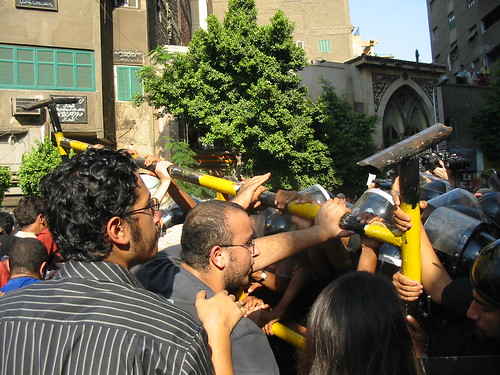
Accompanying this partial opening for political work in the streets was also a widening of the margin for freedom of expression and opinion:
1. The emergence of private newspapers (I do not use the term “independent press”), which were owned by businessmen such as Al-Masry al-Youm. Of course Salah Diab, or Naguib Sawiris and others of their kind did not do this because they were “free-speech revolutionaries,” but as businessmen aiming to make a profit, and who were well aware that the era of [the old state-run newspapers] Al-Ahram, Al-Akhbar and Al-Gumhuriya was over, and that there was a market for a more professional press, within the limits of the “red lines” agreed with the regime and the security forces according to changing circumstances and terms of negotiation.
2. The spread of satellite channels such as Al-Jazeera and others meant that [the state TV and Radio at] Maspero had lost its monopoly over broadcasting towards the end of the 1990s. This was followed by the emergence of talk show programs on Egyptian satellite channels (which again cannot be described as “independent” or “revolutionary” media), where the professional standards were higher than on state TV, and which had greater room to convey some aspects of the protests, contributing in turn to widening the space for expression, even if this was not the goal of their owners, who were up to their ears in alliances with the Mubarak regime. Protesters often used the traditional media before the January Revolution in order to communicate with their colleagues in the same sector, and to urge them to move.
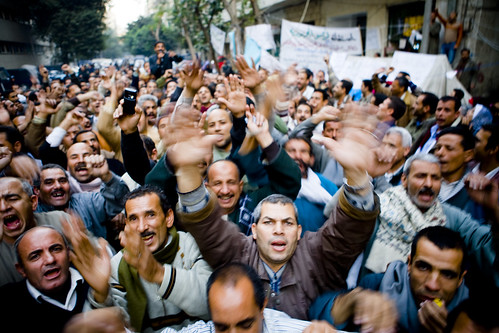
For example, one of the leaders of the Property Tax Collectors and one of the founders of their independent union told me that he joined the sit-in at Hussein Hegazy Street (December 2007) after seeing a news report about it on “Dream” satellite channel. Another of his colleagues from Sharqiyya province told me he joined the sit-in after reading about it in Al-Masry al-Youm, and this experience is repeated in many workers’ sit-ins which became movements in more than one province (such as those organized by the postal workers, public transport workers and the Information Centers workers).
3. The spread of modern means of communications such as SMS messaging on mobile phones, the appearance of blogs and widespread use of email lists and online forums which were used to spread views which neither the state nor private media would publish, and to exchange news, pictures and videos of activities.
Did the political situation and this openness have an effect on organizational work within the Marxist organizations? Unfortunately the development of the organizational machine was too slow. The organizations were hit by a case of schizophrenia. I can assure you that it was not clear to any of the cadres what was “secret” and what was “public”, nor was it clear (in practice, regardless of whatever was written or said about the subject), to the old members, what was the best means to integrate the new members who began to flow towards leftist ideas in these circumstances.
At the same time that almost all “youth movements” began to use e-mail, web forums and social networks such as Facebook for rapid communication between their members, Marxist organizations continued to follow the same old methods of communication and the same old organizational forms inherited from the Nineties, with tasks given out orally in face-to-face meetings. The cost of this was heavy in my opinion:
1. It was impossible to keep centralism and democracy together, or to transmit tasks fast enough to keep pace with a changing political situation, in organizations which were broadening their membership and beginning to create a presence beyond the Greater Cairo “ghetto”, through weekly meetings at a time when the new members were getting political news and updates minute-by-minute via the internet and SMS. If a weekly meeting was not sufficient, where would the time come from for members to meet more often, given that they were not full-time organizers?
2. The failure of members of the leadership of Marxist organizations to communicate quickly with different sections led to constant accusations of “extreme centralization” and “tyranny”. The extreme centralization, in my view was caused by the inability of the leadership to simply communicate on a daily basis with the membership. Daily communication at that time (in the old ways inherited from the Nineties), meant at least daily meetings, which was impossible for a leadership whose members were not full-time and who were holding down jobs in additional to their organizational roles. This led to slow and slack decision-making in a changeable political situation, weakness in mobilizations and failure to absorb new members.
Democratic debate in any organization also requires rapid transfer of different views to the rest of the membership, and given the unjustified refusal to use the internet out of fears of the “technological unknown”, printing irregular internal discussion bulletins was not the best alternative. Why should a member even bother writing one of these papers, knowing that it will only be published months later, and printed god knows when, and uncertain whether it will even reach all the membership at all? The absence of rapid channels of internal dialogue is a major cause of internal organizational explosions, splits, frustration for some and their exit from the organization.
In the event of a split or disputes, in Marxist groups, and particularly in the provinces, the first accusation to be thrown at any side in the argument was that of “lying”. Why? It was natural that any organization relying on oral tradition in organizational work, would explode in tensions and accusations when it expanded beyond the confines of the small group which knew each other. It was an inevitable result!
It was also natural that oral transmission of tasks led to misunderstandings. When an organizer from the provinces would go to Cairo to meet the leadership to pass on their perspectives and political debate verbally, it could happen that the leadership would mean one thing while the provincial organizer would understand another, and on returning to the provinces he would transmit it to the rest of the members who would understand something else.
The first practical experiment undertaken by students of sociology is often when the lecturer whispers into the ear of one student and asks him to transmit the message by whispering to the person next to him, until it passes right around the lecture theater, reaching the last student who hears something completely different to what the lecturer said in the first place. Apply the same experiment in an organization to understand the mystery of widespread accusations of lying, confusion and misunderstandings in recent years. This tension will continue, as long as we rely on oral, rather than written correspondence.
4. The years before the revolution saw a political opening in the streets, and Marxist organizations often emerged in the leadership of these mobilizations, but they remained determined to follow the same old methods of organizational work, losing many opportunities to grow. In my opinion, the political and security situation from 2005 onwards would have allowed Marxist organizations to operate publicly, without using these caricatured methods, which sometimes made them the laughing stock of the new activists with a background in work on the streets, not Nineties-style debates behind closed doors.
Some dealt with this like the ostrich who buries her head in the sand, imaging that no-one sees her. Most of the membership was “burned” at that time, and exposed to the security forces because of the work in the streets and use of the telephone to organize that work. The security forces therefore knew the leading member allocating tasks, and the organizer who was receiving the instructions, but other sections of the organization did not know what was happening for reasons of “secrecy”!
Of course it was not possible to go through all the details of discussions or organizational tasks over the phone, and this meant that these organizational tasks or inquiries, or discussions in the provinces had to wait until a member of the leadership could travel to the province or the provincial organizer could travel to Cairo to meet the leadership. Bearing in mind that we are not talking about groups with full-time organizers, requests from the leadership to meet organizers in the provinces were also dependent on the circumstances in the lives of both the members of the leadership and the provincial organizers. The end result was that we were faced with channels of communication with which it was impossible to build organizations larger than a few dozen members without tensions and internal explosions.
5. The organizations of the revolutionary left wasted golden opportunities to grow, leaving the field open to youth movements, parties and campaigns, which took the initiative in using modern means of communication and succeeded in creating a strong political presence within a short time. This was a presence which we knew would not last forever, but these movements were nevertheless able to quickly mobilize and coordinate between their sections in different provinces because of their reliance on the internet, in comparison with the Marxist organizations which had long experience in politics, but which were extremely slow to react to any political development and could not mobilize more than a few dozen members in any protest, despite the growth in membership. The problem was still this: how to communicate with members in order to get them to attend the demonstration? Or how could members quickly reach the people in the center of the organization in order to know position “X” or “Y” or what to do about this or that, or to transfer suggestions or criticisms.
Restructuring, “movementism” and the continued crisis in communication
There had already been a number of developments in the organizational structure of different Left groups before and directly after the revolution, but these created a body without a nervous system in the absence of a rapid, professional communications apparatus within the organization. The scale of what has been accomplished so far, does not measure up to what could have been achieved if the leadership took the issue with the seriousness it required. In the tensions and organizational explosions which repeatedly took place in all Marxist organizations, a common ingredient in their escalation and repetition was the absence of internal channels of communication and immersion in work in the streets – demonstrations, conferences, protests – at the expense of building the organization internally, developing and strengthening its structures while achieving the necessary balance between the two processes.
Outside the central committees of the Marxist organizations, it was hard for the membership to feel that they were part of a coordinated movement or organization, and the principal reason for this was lack of rapid and clear channels of communication which fitted the current circumstances. If the political leadership, for example, decides on a specific position or to mobilize for a particular demonstration, how can this be achieved? Immediately after the leadership meet, they will call or meet a limited number of intermediate cadres, tasking them with calling their colleagues and asking them to attend. This is accompanied by the publication of an event on Facebook and other social networks in the hope that the rest of the membership and sympathizers will see the invitation and attend. Despite this, the number of members which the leadership can reach in telephone calls and quick face-to-face meetings remains very small (a fact which explains the weakness in mobilization for demonstrations and marches in spite of the rapid growth in membership of Marxist organizations). We do not have a channel of rapid and specific communication to reach the membership in Greater Cairo, let alone the provinces.
In the absence of Marxist organizations’ financial ability to pay a number of their leading and middle cadres to work full-time, they remain at the mercy of the day-to-day circumstances of the lives of its leadership and middle cadres. If nothing is accomplished except face-to-face meetings, god only knows when these meetings will be organized and how many comrades will attend. What if we need an urgent statement on a emergency political situation. How will the leadership quickly discuss the decision and draft the statement if its members are absorbed in their daily lives at work? Will the members of the leadership telephone each other individually in order to discuss the matter (in the presence of the security agencies who monitor our phones, of course)? Is a weekly face-to-face meeting of the political leadership enough to direct organizational matters? It is enough if the middle cadres in each section meet once a week or once every two weeks, in order to coordinate their work, while the rest of the time there is no contact between them?
The answer is of course, No! These are all ways of working appropriate to a small organization, composed of a handful of members and concentrated in one province. It is ridiculous to imagine continuing to work in that way, if the organizations of the revolutionary left are serious about transformation into a mass party with a presence across the whole country, and capable of moving in a centralized way and having access to rapid channels of democratic communication.
In my opinion there is no alternative to the generalization of the use of email circulated by mobile devices as a fundamental form of communication.
“Mobiles for all”?
This phrase from one of the MobiNil advertisements during the 1990s provoked sarcasm and laughter from everyone: mobile phones were a luxury and only the Egyptian bourgeoisie could afford them, because of the high prices of the service at the time. But in 2013, this slogan may have become a reality. According to a report by the Egyptian Ministry of Communications issued last May, the Egyptian mobile phone market has reached a saturation ratio of 112 percent, meaning that the number of SIM cards outnumbers the population. This is a general phenomenon in the region. Research conducted by Ericsson indicates that the spread of mobile phones exceeds the birth rate in the Middle East. According to the report, 8 million new mobile phone service subscriptions were registered in various parts of the region between July and September 2012, by contrast the number of children born during the same period was only 1.1 million. The total number of mobile phone subscriptions reached 990 million across the Middle East during the 3rd quarter of 2012, with estimates of a further 600 million subscriptions by the year 2018. The Ericsson report on the Middle East recorded one of the highest rates of mobile phone use in the world, reaching 103 percent of the population during the 3rd quarter of 2012.
Smartphones which can be used to log on to the internet to read mail are no longer the preserve of the elite, and the numbers speak for themselves. Reliance on email lists received over mobile phones must be the basic form of communication between the members of Marxist organizations now.
We sometimes forget that Marxism is simply “scientific socialism”, which analyses the world and history, and provides evidence for action based on scientific grounds. The stunning development of communications technology over the past two decades has had a significant impact on the relations and forces of production, in other words on the base of our society and the world. Is this development not reflected in the superstructure, in human beings’ way of life, and in the way we build political organizations? This is not an invitation to build organization in a virtual world, but an invitation to create scientific socialist organization rooted in the ground, which provides for its members safe, modern channels for its members in different geographical locations to communicate democratically at the speed required by the era in which we live in order to ensure harmony and centralism in action. "
"The following article first appeared in Arabic on the Revolutionary Socialists website, on 29 January 2013. Thanks to Anne Alexander for her help in translating it into English…
Individuals’ belief in a shared goal or political idea does not mean that they constitute an organization. What creates organization or destroys it, is the extent of the ability of these individuals to move in harmony, to coordinate their positions, and the speed of their mobilization: in other words the speed of communication between them in order to achieve unity in action.
When the Marxist tradition deals with the process of building a political party, we find many metaphors and similes from the pages of the military dictionary. This is not surprising as the revolutionary party is like an army. The only difference is that the leaders of the party and the majority of the “officers” are elected by the “soldiers”, and regularly held accountable to the rank-and-file. Apart from this, it is like the army, in terms of structure, tactics and strategy. Thus it is not strange that the greatest influence on Lenin thinking about organization was the German philosopher of war, Carl von Clausewitz. Whoever imagines that the revolutionary party is a cultural forum or a social club is wrong.
In the 6th century BC, Sun Tzu wrote in his book “Art of War”, that skillful leaders are those who are able to sever communications between the vanguard and rearguard of the enemy army, who can cut the means of cooperation between the enemy’s large and small units, in order to stop the best troops from saving the worst, and to obstruct the officers from rallying their forces.
In wars, the first goal is to destroy or interfere with the enemy’s internal communications network: hunting down the signals corps is always on the list of priorities. The same process is at work in the state’s war on political organizations. If you want to destroy an organization, then you must destroy or damage its internal communications apparatus, whether it is an army, a political organization or even a commercial company.
How can the leaders of an army mobilize their troops? If the leaders of the army decide to deploy their forces, withdraw them, or attack how can the commands and assignments arrive in the fastest possible time with the units on the frontline or in the rear. Once again, what is the first military goal of an army’s strike against the enemy? The answer is simple: the internal communications system. Internal communication is what constitutes any organization – be it an army or a political party – and destroys organization if falls into disrepair. It is what allows the members of the organization to move in harmony and co-ordination. Its absence means fragmentation, decentralization and the paralysis of its leaders.
In the absence of a modern communications system and rapid channels of communication, the political perspectives of the leadership of any organization remain trapped in locked rooms or in papers which no-one reads. The leaders of the organization remain helpless and paralyzed from delivering their perspectives and tasks at the appropriate and required speed. This when a political organization becomes a mere figment of its leaders’ imagination; it becomes incapable of mobilization or movement in any direction, and prone to frequent internal explosions.
Internal communications and Marxist organization in the 1990s
In the 1990s, Marxist organizations were small, consisting of a few dozen cadres concentrated geographically in Greater Cairo.
The cadres met weekly in a cell, which they made efforts to keep secure. At these cell meetings, alongside political discussion and education and the allocation of tasks, any assignments or notices from the leadership were passed on orally by the person in charge of the cell, and the date, time and place of the next meeting were agreed. Every month (or two), the cadres would receive the newspaper of their secret organization in order to distribute it to members, candidates for recruitment and sympathizers.
There were also organizational documents and discussion papers which would reach the membership through the cell meeting. They were issued every few months, and contained reports on general organizational work: failures, achievements and requirements. These papers were passed on to the membership by the cell organizer during the meeting, to be read on the spot. Generally the papers were not left with the members, but read during the meeting, and then collected by the cell organizer to be disposed of later by either burning or shredding.
The cell organizer was the link between the members and the leadership. The small size of the organizations at that time meant that the cell organizer was often also a member of the leadership. Intermediate levels between the membership and leadership (in other words, the middle ranking cadres) did not exist for long periods except among students, reflecting the nature of an organization which was confined to 3 or 4 universities in varying degrees, and did not have genuine roots at that time in the working class.
Telephone communication
The primary mechanism for the allocation of tasks, was, as we have explained above, through oral instructions transmitted at the weekly meeting. If the leadership wanted to transmit an assignment to the membership, the process would take several days until the cell met with the organizer at the appointed day and time agreed at the previous week’s meeting. If the matter was urgent, then a member of the leadership would go to a public phone box and ring the cell organizer at home or on his mobile phone, if available (by the end of the 1990s), and agree a quick meeting. The time and place would be agreed between them without going into details on the phone, which was generally under surveillance. Thus the cell organizer would meet the member of the leadership to receive assignments from the leadership orally.
How did the cell organizer then transmit this to the membership? He would have to pass by the comrades’ homes, one by one, if the matter was really urgent, or wait until the next day, hoping to see the comrades at university, in order to pass on the message verbally.
Let’s assume though, that the cell organizer was unable to see a comrade. There was no means to communicate the assignment to him except by going to his home in order to find him, or by asking another member to pass on the message.
This form of communication was appropriate for a small organization, where most of the members really knew each other, and who were concentrated in two or three locations (basically in the universities), and could therefore rely on being able to meet almost every day. How did the leadership coordinate work between different locations? It was sufficient to organize periodic meetings on a weekly or monthly basis with the middle-ranking organizers from each campus.
These procedures may appear bureaucratic and extremely slow, and for young activists who are newcomers to organizational work, they seem to have been lifted from the pages of a crime novel, but this way of working was imposed by the very bad security situation at the time. It is also important to keep in mind that there was no upturn in the class struggle in Egypt then, and thus the speed of intervention by Marxist organizations (and of the other political organizations of the period), was slower than that required by conditions today.
It is also worth noting that these security measures during the 1990s were not strictly followed, and lax attitudes existed even then. It is essential to transfer the experience of organizational work in the Nineties to new members today, but we must also emphasize that the idea of the “Super Cadre,” committed to literally all the security measures did not exist in the past, even though it is always important to strive for perfection and and professionalism in our work.
After the outbreak of the Palestinian Intifada in 2000, the Marxist organizations found themselves in new political circumstances. After being small, isolated groups within a student milieu, which had to struggle to get out into the streets, they found that the solidarity movement with the Intifada, followed by the anti-war movement, and then the movement for democratic change created a space within which they could work on the streets. People from my generation, the generation of the 1990s, whose biggest ambition had been to bring a small demonstration about ten meters outside the university campus before being confronted by the riot police, suddenly found themselves in protests of hundreds and occasionally thousands, roaming the streets of central Cairo, and even organizing a rally in front of the Ministry of the Interior itself in Lazoghly Square in 2005. All of this was like a science-fiction movie for the Nineties generation.
Accompanying this partial opening for political work in the streets was also a widening of the margin for freedom of expression and opinion:
1. The emergence of private newspapers (I do not use the term “independent press”), which were owned by businessmen such as Al-Masry al-Youm. Of course Salah Diab, or Naguib Sawiris and others of their kind did not do this because they were “free-speech revolutionaries,” but as businessmen aiming to make a profit, and who were well aware that the era of [the old state-run newspapers] Al-Ahram, Al-Akhbar and Al-Gumhuriya was over, and that there was a market for a more professional press, within the limits of the “red lines” agreed with the regime and the security forces according to changing circumstances and terms of negotiation.
2. The spread of satellite channels such as Al-Jazeera and others meant that [the state TV and Radio at] Maspero had lost its monopoly over broadcasting towards the end of the 1990s. This was followed by the emergence of talk show programs on Egyptian satellite channels (which again cannot be described as “independent” or “revolutionary” media), where the professional standards were higher than on state TV, and which had greater room to convey some aspects of the protests, contributing in turn to widening the space for expression, even if this was not the goal of their owners, who were up to their ears in alliances with the Mubarak regime. Protesters often used the traditional media before the January Revolution in order to communicate with their colleagues in the same sector, and to urge them to move.
For example, one of the leaders of the Property Tax Collectors and one of the founders of their independent union told me that he joined the sit-in at Hussein Hegazy Street (December 2007) after seeing a news report about it on “Dream” satellite channel. Another of his colleagues from Sharqiyya province told me he joined the sit-in after reading about it in Al-Masry al-Youm, and this experience is repeated in many workers’ sit-ins which became movements in more than one province (such as those organized by the postal workers, public transport workers and the Information Centers workers).
3. The spread of modern means of communications such as SMS messaging on mobile phones, the appearance of blogs and widespread use of email lists and online forums which were used to spread views which neither the state nor private media would publish, and to exchange news, pictures and videos of activities.
Did the political situation and this openness have an effect on organizational work within the Marxist organizations? Unfortunately the development of the organizational machine was too slow. The organizations were hit by a case of schizophrenia. I can assure you that it was not clear to any of the cadres what was “secret” and what was “public”, nor was it clear (in practice, regardless of whatever was written or said about the subject), to the old members, what was the best means to integrate the new members who began to flow towards leftist ideas in these circumstances.
At the same time that almost all “youth movements” began to use e-mail, web forums and social networks such as Facebook for rapid communication between their members, Marxist organizations continued to follow the same old methods of communication and the same old organizational forms inherited from the Nineties, with tasks given out orally in face-to-face meetings. The cost of this was heavy in my opinion:
1. It was impossible to keep centralism and democracy together, or to transmit tasks fast enough to keep pace with a changing political situation, in organizations which were broadening their membership and beginning to create a presence beyond the Greater Cairo “ghetto”, through weekly meetings at a time when the new members were getting political news and updates minute-by-minute via the internet and SMS. If a weekly meeting was not sufficient, where would the time come from for members to meet more often, given that they were not full-time organizers?
2. The failure of members of the leadership of Marxist organizations to communicate quickly with different sections led to constant accusations of “extreme centralization” and “tyranny”. The extreme centralization, in my view was caused by the inability of the leadership to simply communicate on a daily basis with the membership. Daily communication at that time (in the old ways inherited from the Nineties), meant at least daily meetings, which was impossible for a leadership whose members were not full-time and who were holding down jobs in additional to their organizational roles. This led to slow and slack decision-making in a changeable political situation, weakness in mobilizations and failure to absorb new members.
Democratic debate in any organization also requires rapid transfer of different views to the rest of the membership, and given the unjustified refusal to use the internet out of fears of the “technological unknown”, printing irregular internal discussion bulletins was not the best alternative. Why should a member even bother writing one of these papers, knowing that it will only be published months later, and printed god knows when, and uncertain whether it will even reach all the membership at all? The absence of rapid channels of internal dialogue is a major cause of internal organizational explosions, splits, frustration for some and their exit from the organization.
In the event of a split or disputes, in Marxist groups, and particularly in the provinces, the first accusation to be thrown at any side in the argument was that of “lying”. Why? It was natural that any organization relying on oral tradition in organizational work, would explode in tensions and accusations when it expanded beyond the confines of the small group which knew each other. It was an inevitable result!
It was also natural that oral transmission of tasks led to misunderstandings. When an organizer from the provinces would go to Cairo to meet the leadership to pass on their perspectives and political debate verbally, it could happen that the leadership would mean one thing while the provincial organizer would understand another, and on returning to the provinces he would transmit it to the rest of the members who would understand something else.
The first practical experiment undertaken by students of sociology is often when the lecturer whispers into the ear of one student and asks him to transmit the message by whispering to the person next to him, until it passes right around the lecture theater, reaching the last student who hears something completely different to what the lecturer said in the first place. Apply the same experiment in an organization to understand the mystery of widespread accusations of lying, confusion and misunderstandings in recent years. This tension will continue, as long as we rely on oral, rather than written correspondence.
4. The years before the revolution saw a political opening in the streets, and Marxist organizations often emerged in the leadership of these mobilizations, but they remained determined to follow the same old methods of organizational work, losing many opportunities to grow. In my opinion, the political and security situation from 2005 onwards would have allowed Marxist organizations to operate publicly, without using these caricatured methods, which sometimes made them the laughing stock of the new activists with a background in work on the streets, not Nineties-style debates behind closed doors.
Some dealt with this like the ostrich who buries her head in the sand, imaging that no-one sees her. Most of the membership was “burned” at that time, and exposed to the security forces because of the work in the streets and use of the telephone to organize that work. The security forces therefore knew the leading member allocating tasks, and the organizer who was receiving the instructions, but other sections of the organization did not know what was happening for reasons of “secrecy”!
Of course it was not possible to go through all the details of discussions or organizational tasks over the phone, and this meant that these organizational tasks or inquiries, or discussions in the provinces had to wait until a member of the leadership could travel to the province or the provincial organizer could travel to Cairo to meet the leadership. Bearing in mind that we are not talking about groups with full-time organizers, requests from the leadership to meet organizers in the provinces were also dependent on the circumstances in the lives of both the members of the leadership and the provincial organizers. The end result was that we were faced with channels of communication with which it was impossible to build organizations larger than a few dozen members without tensions and internal explosions.
5. The organizations of the revolutionary left wasted golden opportunities to grow, leaving the field open to youth movements, parties and campaigns, which took the initiative in using modern means of communication and succeeded in creating a strong political presence within a short time. This was a presence which we knew would not last forever, but these movements were nevertheless able to quickly mobilize and coordinate between their sections in different provinces because of their reliance on the internet, in comparison with the Marxist organizations which had long experience in politics, but which were extremely slow to react to any political development and could not mobilize more than a few dozen members in any protest, despite the growth in membership. The problem was still this: how to communicate with members in order to get them to attend the demonstration? Or how could members quickly reach the people in the center of the organization in order to know position “X” or “Y” or what to do about this or that, or to transfer suggestions or criticisms.
Restructuring, “movementism” and the continued crisis in communication
There had already been a number of developments in the organizational structure of different Left groups before and directly after the revolution, but these created a body without a nervous system in the absence of a rapid, professional communications apparatus within the organization. The scale of what has been accomplished so far, does not measure up to what could have been achieved if the leadership took the issue with the seriousness it required. In the tensions and organizational explosions which repeatedly took place in all Marxist organizations, a common ingredient in their escalation and repetition was the absence of internal channels of communication and immersion in work in the streets – demonstrations, conferences, protests – at the expense of building the organization internally, developing and strengthening its structures while achieving the necessary balance between the two processes.
Outside the central committees of the Marxist organizations, it was hard for the membership to feel that they were part of a coordinated movement or organization, and the principal reason for this was lack of rapid and clear channels of communication which fitted the current circumstances. If the political leadership, for example, decides on a specific position or to mobilize for a particular demonstration, how can this be achieved? Immediately after the leadership meet, they will call or meet a limited number of intermediate cadres, tasking them with calling their colleagues and asking them to attend. This is accompanied by the publication of an event on Facebook and other social networks in the hope that the rest of the membership and sympathizers will see the invitation and attend. Despite this, the number of members which the leadership can reach in telephone calls and quick face-to-face meetings remains very small (a fact which explains the weakness in mobilization for demonstrations and marches in spite of the rapid growth in membership of Marxist organizations). We do not have a channel of rapid and specific communication to reach the membership in Greater Cairo, let alone the provinces.
In the absence of Marxist organizations’ financial ability to pay a number of their leading and middle cadres to work full-time, they remain at the mercy of the day-to-day circumstances of the lives of its leadership and middle cadres. If nothing is accomplished except face-to-face meetings, god only knows when these meetings will be organized and how many comrades will attend. What if we need an urgent statement on a emergency political situation. How will the leadership quickly discuss the decision and draft the statement if its members are absorbed in their daily lives at work? Will the members of the leadership telephone each other individually in order to discuss the matter (in the presence of the security agencies who monitor our phones, of course)? Is a weekly face-to-face meeting of the political leadership enough to direct organizational matters? It is enough if the middle cadres in each section meet once a week or once every two weeks, in order to coordinate their work, while the rest of the time there is no contact between them?
The answer is of course, No! These are all ways of working appropriate to a small organization, composed of a handful of members and concentrated in one province. It is ridiculous to imagine continuing to work in that way, if the organizations of the revolutionary left are serious about transformation into a mass party with a presence across the whole country, and capable of moving in a centralized way and having access to rapid channels of democratic communication.
In my opinion there is no alternative to the generalization of the use of email circulated by mobile devices as a fundamental form of communication.
“Mobiles for all”?
This phrase from one of the MobiNil advertisements during the 1990s provoked sarcasm and laughter from everyone: mobile phones were a luxury and only the Egyptian bourgeoisie could afford them, because of the high prices of the service at the time. But in 2013, this slogan may have become a reality. According to a report by the Egyptian Ministry of Communications issued last May, the Egyptian mobile phone market has reached a saturation ratio of 112 percent, meaning that the number of SIM cards outnumbers the population. This is a general phenomenon in the region. Research conducted by Ericsson indicates that the spread of mobile phones exceeds the birth rate in the Middle East. According to the report, 8 million new mobile phone service subscriptions were registered in various parts of the region between July and September 2012, by contrast the number of children born during the same period was only 1.1 million. The total number of mobile phone subscriptions reached 990 million across the Middle East during the 3rd quarter of 2012, with estimates of a further 600 million subscriptions by the year 2018. The Ericsson report on the Middle East recorded one of the highest rates of mobile phone use in the world, reaching 103 percent of the population during the 3rd quarter of 2012.
Smartphones which can be used to log on to the internet to read mail are no longer the preserve of the elite, and the numbers speak for themselves. Reliance on email lists received over mobile phones must be the basic form of communication between the members of Marxist organizations now.
We sometimes forget that Marxism is simply “scientific socialism”, which analyses the world and history, and provides evidence for action based on scientific grounds. The stunning development of communications technology over the past two decades has had a significant impact on the relations and forces of production, in other words on the base of our society and the world. Is this development not reflected in the superstructure, in human beings’ way of life, and in the way we build political organizations? This is not an invitation to build organization in a virtual world, but an invitation to create scientific socialist organization rooted in the ground, which provides for its members safe, modern channels for its members in different geographical locations to communicate democratically at the speed required by the era in which we live in order to ensure harmony and centralism in action. "
A GOOD CARTOON BY AL-JAZEERA

The objective of the Geneva 2 Conference is to trap the Syrian opposition. The so-called international community has set up the trap. The bait is the goal of the opposition (end of the despotic regime of Assad).
Current Al-Jazeera (Arabic) Online Poll

Do you support Saudi Arabia reversing its decision not to accept a seat in the Security Council?
With about 200 responding so far, 58% said yes.
Subscribe to:
Posts (Atom)