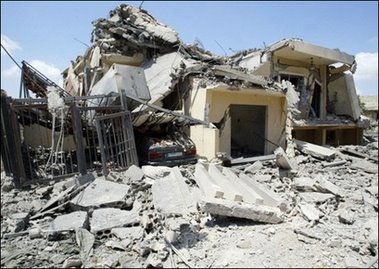
QANA, Lebanon (Reuters) - An Israeli air strike killed at least 35 Lebanese civilians, including 21 children, in the southern village of Qana on Sunday, in the bloodiest single attack during Israel's 19-day-old war on Hizbollah.
Several houses collapsed and a three-storey building where about 100 civilians were sheltering was destroyed, witnesses and rescue workers said. Distraught people screamed in grief and anger amid the rubble of wrecked buildings.
Israel's military said it had warned residents of Qana to leave and said Hizbollah bore responsibility for using it to fire rockets at the Jewish state.
In April 1996, Israeli shelling of a base of U.N. peacekeepers in Qana killed more than 100 civilians sheltering there during Israel's "Grapes of Wrath" bombing campaign.
The deadly air strike, whose target was not immediately clear, occurred as U.S. Secretary of State Condoleezza Rice was in Jerusalem on a mission to persuade Israel and Lebanon to agree on an international force to deploy on the border.
At least 518 Lebanese, mostly civilians, and 51 Israelis have been killed in the conflict that erupted after Hizbollah captured two Israeli soldiers in a cross-border raid on July 12.
As Rice made her second trip to the region in a week, Hizbollah fighters battled Israeli soldiers making a new thrust into southern Lebanon, Lebanese security sources said.
Rice said she hoped for a deal on ceasefire terms to be outlined in a U.N. Security Council resolution that could be tabled as early as Tuesday.
"We still have quite a bit of heavy lifting," an official travelling with Rice said on condition of anonymity. He declined to say what the sticking points were.
After meeting Israeli Prime Minister Ehud Olmert on Saturday evening, Rice held talks with Foreign Minister Tzipi Livni on Sunday. She is expected to meet Lebanese Prime Minister Fouad Siniora in Beirut later during her trip.
In a further sign of intensifying diplomacy to end the war, France -- emerging as the international force's potential leader -- drafted a Security Council resolution that would call for an immediate truce and prepare for the peace mission.
DRAFT RESOLUTION
The document, distributed to the 15 Security Council members and obtained by Reuters, anticipated a draft resolution the United States was planning that would place up to 20,000 peacekeepers along Lebanon's borders with Israel and with Syria.
U.N. Secretary-General Kofi Annan will preside over a meeting on Monday of possible troop contributors, including the 25-member European Union, Turkey and nations now contributing to a small U.N. peacekeeping force deployed in Lebanon since 1978.
Sunday's clashes erupted when Israeli soldiers crossed the Israeli border towards the town of Khiam. Israeli aircraft and artillery pounded the Shi'ite town while guerrillas fired rockets at northern Israel, Lebanese security sources said.
Israel's Haaretz newspaper quoted defence sources as saying the army had orders to accelerate its offensive, assuming it had another seven to 10 days before it had to stop fighting.
Israel says it had killed at least 200 Hizbollah guerrillas. Hizbollah says only 31 of its fighters have died in the war.
An estimated 750,000 people in Lebanon have fled their homes.
The United States has faced mounting criticism across the world for not calling for an immediate ceasefire and for giving Israel an apparent green light to press on with its offensive.
U.S. President George W. Bush blames the conflict on Hizbollah and its main allies, Syria and Iran.
The guerrilla group's leader Sayyed Hassan Nasrallah accused Rice of serving only Israel's interests and threatened to order more rocket strikes in central Israel.
"There are many cities in central Israel which will come into target range ... if the barbaric aggression on our country and people continues," Nasrallah said in a televised speech.
An Israeli political source said Rice did not pressure Olmert for an immediate ceasefire but did urge Israel not to attack Lebanon's infrastructure. They agreed Hizbollah must release the two Israeli soldiers as part of any deal.
(Additional reporting by Jerusalem bureau)
Al Jazeera: At least 20 children are believed to be among more than 40 civilians killed after an Israeli raid destroyed a building in the southern Lebanese town of Qana, Aljazeera's correspondent reports.
Scenes Of Israeli Massacre In Qana 1996
This video of an Israeli Massacre of Palestinian & Lebanese civilians in April of 96 is very graphic and should only be viewed by a mature audience.
Robert Fisk's, Eyewitness Report From 1996: Massacre in Sanctuary

Saturday, July 29, 2006


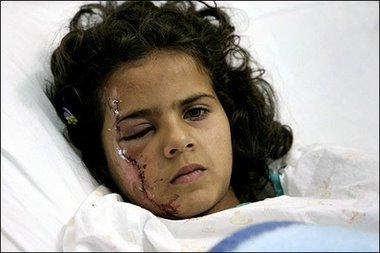



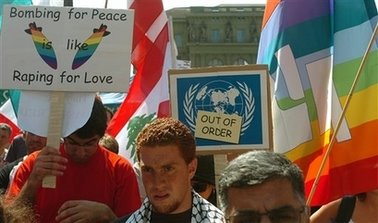

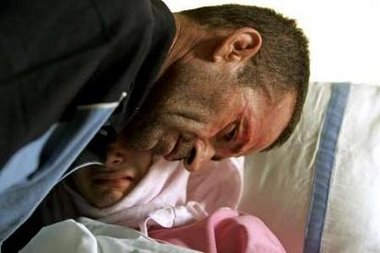
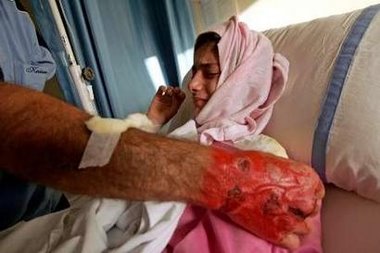


More love notes from the Israeli Occupation Forces
An Israeli soldier writes messages for the recipients of these shells at a military staging area outside the northen settlement of Fasuta.

Evil
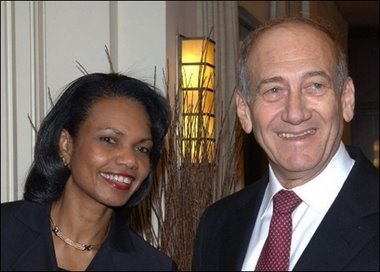
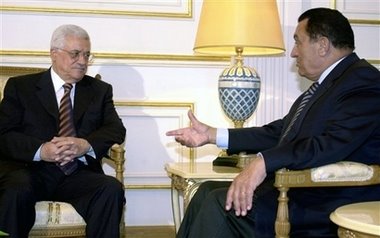
Princess and King Evil ham it up for the cameras after discussing the latest civilian casualties in Lebanon and Palestine.
War Crimes

Lebanese Adnan Haraki cries after his wife and five children were killed when an Israeli warplane hit their house in the village of Nmairieh, next to the market town of Nabatiyeh, southern Lebanon. Associated Press photo by Mohammed Zaatari

Lebanese soldiers use heavy machinery to look for survivors after an Israeli warplane targeted a building in the village of Nmairieh, next to the market town of Nabatiyeh, southern Lebanon. Associated Press photo by Mohammed Zaatari




Meanwhile in Empire
Just hot air? Bush and Blair refuse to call for ceasefire : Cabinet ministers warned that Mr Blair's refusal to stand up to Mr Bush would hasten his own exit from power.
War pimp alert: Bush and Blair lay out Lebanon plan but warn Tehran : As they set out a vague plan for bringing a cessation of violence in the Israel-Lebanon conflict at a joint press conference in the White House, they repeatedly referred to the threat posed by Iran and Syria, and their links with Hizbullah.
Blair Gets Payoff: Murdoch set to back Blair - for a place in his boardroom : Fox TV owner and media magnate Rupert Murdoch is expected to offer Tony Blair a senior role in his News Corporation empire when he stands down as Prime Minister.
US must abolish secret detention facilities: UN rights panel: The UN Human Rights Committee has called on the United States to immediately abolish all secret detention facilities, in a report raising deep concerns about the conduct of the "war on terror".
Big brother on campus: U.S. wants to track students' every step: Does the federal government need to know your family's financial profile, how much aid you received and whether you took off a semester to help out at home?
War pimp alert: Bush and Blair lay out Lebanon plan but warn Tehran : As they set out a vague plan for bringing a cessation of violence in the Israel-Lebanon conflict at a joint press conference in the White House, they repeatedly referred to the threat posed by Iran and Syria, and their links with Hizbullah.
Blair Gets Payoff: Murdoch set to back Blair - for a place in his boardroom : Fox TV owner and media magnate Rupert Murdoch is expected to offer Tony Blair a senior role in his News Corporation empire when he stands down as Prime Minister.
US must abolish secret detention facilities: UN rights panel: The UN Human Rights Committee has called on the United States to immediately abolish all secret detention facilities, in a report raising deep concerns about the conduct of the "war on terror".
Big brother on campus: U.S. wants to track students' every step: Does the federal government need to know your family's financial profile, how much aid you received and whether you took off a semester to help out at home?
Meanwhile in Lebanon
Israel Kills Woman And 6 Children: Sources said the woman was the mother of five of the children. The other victim was the child of neighbours.
Israeli warplanes attack Beirut-Damascus road near crossing gate : Israeli warplanes on Saturday attacked the Masnaa area, the main road leading to the border region with Damascus, a Lebanese security sources said.
UN soldiers injured in Israeli strikes: Two Indian soldiers with the United Nations (UN) peacekeeping force in southern Lebanon have been wounded and their observation post damaged by an Israeli air strike.
Israel says, no humanitarian aid : Rejects truce: Israel, backed by the United States, has refused to set a date for ending its war on the Shiite Muslim Hezbollah that has killed more than 450 people in Lebanon, most of them civilians.
Aid workers lament no safe access to south Lebanon: Aid workers are finding it impossible to get medical supplies and food safely to isolated villages in southern Lebanon due to the Israeli bombardment, aid agencies said on Friday.
MSF: Aid corridors 'an illusion': An international medical charity has said that Israel's promised humanitarian aid corridors in south Lebanon are an illusion and that rockets have landed close to its teams two days in a row.
Lebanon: One In Five Homeless: With one in five of Lebanon's 3.8 million population homeless and hostilities continuing, WFP has launched a three-month US$8.9 million emergency operation to feed over 300,000 people, including 50,000 in Syria.
Hizbullah men await the Israelis: - Inside a well-furnished apartment in a village on the outskirts of Tyre, with shelves of books piled from floor to ceiling, a black turbaned cleric and three men sit sipping bitter coffee. By the door is a pile of Kalashnikovs and ammunition boxes; handguns are tucked into the men's trousers. The four are Hizbullah fighters, waiting for the Israelis.
Nasrallah says Rice mission to serve Israel: "Rice is returning to the region to try to impose her conditions on Lebanon again to serve her new Middle East project and to serve Israel," Nasrallah said in a televised speech.
Israel Retreats: Expert: Hizbullah announced earlier in the day that it forced Israeli soldiers to withdraw from the two strategic towns of Bint Jbeil and Maroon Al-Ras.
Lebanon’s Berri lambastes Arab leaders over war : Lebanon’s Parliament Speaker Nabih Berri lashed out at US-allied Arab governments on Friday for not doing enough to stop Israel’s war on his country.
People of character: Lebanese wounded turn cold shoulder on Jordan aid: Lebanese casualties are rejecting aid from Jordan in protest at what they view as its failure to press for an end to Israeli air strikes in the 17-day-old war against Hizbollah.
Hezbollah: Halt Israeli aggression: Hezbollah pledged on Saturday to deny the United States and Israel any political gains from the war in Lebanon as US Secretary of State Condoleezza Rice flew to Jerusalem to discuss ways to end the 18-day-old conflict.
Lebanon to Israel: Return Shebaa Farms: Lebanon's Prime Minister Fouad Siniora has said that if Israel wants secure borders it must withdraw from the disputed Shebaa Farms area that it has occupied since 1967.
Israeli warplanes attack Beirut-Damascus road near crossing gate : Israeli warplanes on Saturday attacked the Masnaa area, the main road leading to the border region with Damascus, a Lebanese security sources said.
UN soldiers injured in Israeli strikes: Two Indian soldiers with the United Nations (UN) peacekeeping force in southern Lebanon have been wounded and their observation post damaged by an Israeli air strike.
Israel says, no humanitarian aid : Rejects truce: Israel, backed by the United States, has refused to set a date for ending its war on the Shiite Muslim Hezbollah that has killed more than 450 people in Lebanon, most of them civilians.
Aid workers lament no safe access to south Lebanon: Aid workers are finding it impossible to get medical supplies and food safely to isolated villages in southern Lebanon due to the Israeli bombardment, aid agencies said on Friday.
MSF: Aid corridors 'an illusion': An international medical charity has said that Israel's promised humanitarian aid corridors in south Lebanon are an illusion and that rockets have landed close to its teams two days in a row.
Lebanon: One In Five Homeless: With one in five of Lebanon's 3.8 million population homeless and hostilities continuing, WFP has launched a three-month US$8.9 million emergency operation to feed over 300,000 people, including 50,000 in Syria.
Hizbullah men await the Israelis: - Inside a well-furnished apartment in a village on the outskirts of Tyre, with shelves of books piled from floor to ceiling, a black turbaned cleric and three men sit sipping bitter coffee. By the door is a pile of Kalashnikovs and ammunition boxes; handguns are tucked into the men's trousers. The four are Hizbullah fighters, waiting for the Israelis.
Nasrallah says Rice mission to serve Israel: "Rice is returning to the region to try to impose her conditions on Lebanon again to serve her new Middle East project and to serve Israel," Nasrallah said in a televised speech.
Israel Retreats: Expert: Hizbullah announced earlier in the day that it forced Israeli soldiers to withdraw from the two strategic towns of Bint Jbeil and Maroon Al-Ras.
Lebanon’s Berri lambastes Arab leaders over war : Lebanon’s Parliament Speaker Nabih Berri lashed out at US-allied Arab governments on Friday for not doing enough to stop Israel’s war on his country.
People of character: Lebanese wounded turn cold shoulder on Jordan aid: Lebanese casualties are rejecting aid from Jordan in protest at what they view as its failure to press for an end to Israeli air strikes in the 17-day-old war against Hizbollah.
Hezbollah: Halt Israeli aggression: Hezbollah pledged on Saturday to deny the United States and Israel any political gains from the war in Lebanon as US Secretary of State Condoleezza Rice flew to Jerusalem to discuss ways to end the 18-day-old conflict.
Lebanon to Israel: Return Shebaa Farms: Lebanon's Prime Minister Fouad Siniora has said that if Israel wants secure borders it must withdraw from the disputed Shebaa Farms area that it has occupied since 1967.
Meanwhile in Palestine
Israel 'to destroy homes in Gaza: The YNet news website quoted an unnamed senior officer in the army's southern command as saying the aim was to "clean" a 1km wide strip of land.
Video: What's it like to have your home demolished
Bahraini women, professionals rally for Lebanon, Palestinians
OCHA: 22 Palestinians killed in Gaza in past 36 hours
Weekly Report on Human Rights Violations
Video: What's it like to have your home demolished
Bahraini women, professionals rally for Lebanon, Palestinians
OCHA: 22 Palestinians killed in Gaza in past 36 hours
Weekly Report on Human Rights Violations
Meanwhile in Iraq
Iraq: At least 16 killed in continuing U.S. occupation: Anti occupation forces killed four U.S. Marines in action in Iraq's restive Anbar province on Thursday, the U.S. military said. They gave no further details.
Shiite cleric condemns Iraqi leader for U.S. visit : In a sermon rich with bloody imagery and religious struggle, an influential Shiite cleric yesterday condemned Iraqi Prime Minister Nouri al-Maliki’s trip to Washington this week as a betrayal of Islam and a humiliation to his people at the hands of U.S. and Israeli aggressors.
Congresswoman Woolsey Calls for Repeal of President’s Iraq War Powers : Says Congress never authorized an occupation of Iraq
Ghettoisation creeping into Iraq
Sunni mosques attacked in Baghdad
Shia shrine destroyed in Iraq
Shiite cleric condemns Iraqi leader for U.S. visit : In a sermon rich with bloody imagery and religious struggle, an influential Shiite cleric yesterday condemned Iraqi Prime Minister Nouri al-Maliki’s trip to Washington this week as a betrayal of Islam and a humiliation to his people at the hands of U.S. and Israeli aggressors.
Congresswoman Woolsey Calls for Repeal of President’s Iraq War Powers : Says Congress never authorized an occupation of Iraq
Ghettoisation creeping into Iraq
Sunni mosques attacked in Baghdad
Shia shrine destroyed in Iraq
خطاب الأمين العام لحزب الله حسن نصر الله
Audio of Sayyed Nasrallah's speech on July 29, televized by Al-Jazeera and Al-Manar.
ISRAEL GETTING READY TO ATTACK SYRIA
The latest news is that intensive Israeli bombardment of the main crossing point between Lebanon and Syria and the main highway between the two countries has stopped all crossing. Israel wants to turn Lebanon into a large Gaza Strip and wants European puppet troops to control the crossing points just as they do at the Rafah crossing between Egypt and Gaza.
Equally important, Israel will get Syria involved, the old-fashioned way. Moshe Dayan, the former Israeli Defense Minister, stated that Israel would send its bulldozers inside Syrian territory and wait. If the Syrians did not fire on them, they would be told to go deeper, until the Syrians finally fire on them in self-defense. Then Israel would attack with overwhelming force, because, you guessed it, "Israel has the right to defend itself."
Folks, it is going to be the same way; it is deja vu, all over again.
In addition, an "explosives specialist" with the Israeli police said that the "unknown" missile fired by Hezbollah at the Israeli town of Afula on Friday was supposedly Syrian-made. So, the setup is complete.
Tony Sayegh
-----
Air raid hits Syria border
Equally important, Israel will get Syria involved, the old-fashioned way. Moshe Dayan, the former Israeli Defense Minister, stated that Israel would send its bulldozers inside Syrian territory and wait. If the Syrians did not fire on them, they would be told to go deeper, until the Syrians finally fire on them in self-defense. Then Israel would attack with overwhelming force, because, you guessed it, "Israel has the right to defend itself."
Folks, it is going to be the same way; it is deja vu, all over again.
In addition, an "explosives specialist" with the Israeli police said that the "unknown" missile fired by Hezbollah at the Israeli town of Afula on Friday was supposedly Syrian-made. So, the setup is complete.
Tony Sayegh
-----
Air raid hits Syria border
Israel's secret war on Palestine
It is a war of containment and control that has turned the besieged Strip into a prison with no way in or out, and no protection from an fearsome battery of drones, precision missiles, tank shells and artillery rounds.
As of last night, 29 people had been killed in the most concentrated 48 hours of violence since an Israeli soldier was abducted by Palestinian militants just more than a month ago.
The operation is codenamed "Samson's Pillars", a collective punishment of the 1.4 million Gazans, subjecting them to a Lebanese-style offensive that has targeted the civilian infrastructure by destroying water mains, the main power station and bridges.
The similarities with Israel's blitz on Lebanon are striking, raising suspicions that the Gaza offensive has been the testing ground for the military strategy now unfolding on the second front in the north.
As of last night, 29 people had been killed in the most concentrated 48 hours of violence since an Israeli soldier was abducted by Palestinian militants just more than a month ago.
The operation is codenamed "Samson's Pillars", a collective punishment of the 1.4 million Gazans, subjecting them to a Lebanese-style offensive that has targeted the civilian infrastructure by destroying water mains, the main power station and bridges.
The similarities with Israel's blitz on Lebanon are striking, raising suspicions that the Gaza offensive has been the testing ground for the military strategy now unfolding on the second front in the north.
Nasrallah: Israel wants cease-fire, U.S. opposed
Says U.S. insists on continued fighting in Lebanon; claims Israel suffered 'serious defeat' in Bint Jbail. Continued.
Strength in unity
WASHINGTON - Hopes by the George W Bush administration for the emergence of an implicit Sunni-Israel alliance against an Iranian-led "Shi'ite crescent" have faded over the past week as Arab public opinion has become increasingly united by outrage over the Jewish state's continuing military campaign in Lebanon and Washington's refusal to stop it, according to Middle East experts.
Fueled by saturation television coverage of the destruction and suffering wrought by Israel's attacks, popular sentiment in both Shi'ite and Sunni communities has moved strongly behind Shi'ite Hezbollah, whose leader, Hassan Nasrallah, has become a symbol of resistance to Israeli and US power, these analysts agree.
"Resistance rises above sectarianism," said Graham Fuller, a former top Middle East analyst for the Central Intelligence Agency and the Rand Corporation. "Sunni masses by and large are not concerned whether Iran, Syria's rulers, or Hezbollah are Shi'ites; they applaud them for their steadfastness and willingness to fight and even die."
The growing Sunni-Shi'ite unity in support of Hezbollah defies hopes by Bush administration officials and their Israel-centered neo-conservative supporters in Washington that fears of an Iranian-led Shi'ite axis stretching from Lebanon across Syria to the new Shi'ite-dominated government in Iraq would provoke Sunni-led states to form a de facto alliance with Israel.
Those hopes were bolstered when, in a break with traditional Arab solidarity over any confrontation with Israel, Saudi Arabia, Jordan and Egypt denounced Hezbollah for "adventurism" in abducting two Israeli soldiers along the Israel-Lebanon border, the incident that precipitated the current violence and destruction.
Their statements, which were welcomed by US Secretary of State Condoleezza Rice as evidence of the emergence of a "new Middle East", were also cited as evidence, particularly by neo-conservatives, that Iran, believed to be Hezbollah's most important source of arms and external funding, had displaced Israel as the Sunnis' greatest threat.
The theory was most eloquently expressed by Michael Rubin, a hardline neo-conservative at the American Enterprise Institute. "Across Lebanon and the region, Arab leaders see Hezbollah for what it is: an arm of Iranian influence waging a sectarian battle in the heart of the Middle East," he wrote in a July 19 column in the Wall Street Journal titled "Iran against the Arabs".
"An old Arab proverb goes, 'Me against my brother; me and my brother against our cousin; and me, my brother and my cousin against the stranger,'" he went on. "Forced to make a choice, Sunni Arabs are deciding: the Jews are cousins; the Shi'ites, strangers."
But most regional specialists now dismiss this analysis, at least at the popular level. If anything, they say, the impact of Israel's military campaign in Lebanon has confirmed its status as the "stranger", while Hezbollah's resistance has elevated it and those who support it to "cousin", if not "brother", to Sunni Arabs.
"In fact ... there is more of a rapprochement between the Sunni and Shi'ite," said Jean Francois Seznec, a specialist on the Persian Gulf region at Columbia University, who noted that Shi'ite Hezbollah and Iran both support Sunni Hamas in the Palestinian territories and that Sunnis in Syria could be expected to rally behind the Alawi Assad regime if Damascus, which also supports Hezbollah, is drawn into the current conflict.
"The real split here is between the Sunni autocrats and their very own citizens," wrote Fuller in an article for Global Viewpoint. "These Sunni regimes are terrified that Iran, Syria, Hezbollah and even Sunni Hamas are all creating inspirational models of independent mass resistance against reigning US and Israeli power in the region."
That Sunni leaders now feel compelled to follow public opinion was made evident by several developments this past week, beginning with Egypt's rejection of Washington's proposal to hold Wednesday's emergency international conference on Lebanon at Sharm el-Sheikh. As a result, the conference, at which Rice found herself completely isolated in rejecting calls for an immediate ceasefire, was held in Rome instead.
Tuesday's angry and unusually harsh denunciation by Saudi Arabia of what it called "unremitting Israeli aggression", which also warned Washington in particular of unpredictable "repercussions befalling the region, including wars and conflict that will spare no one" if a ceasefire is not quickly achieved, was also taken as a major reversal of its previous views.
"The Saudis thought they could get a ceasefire and be the heroes," said Marc Lynch, a Middle East specialist at Williams College who follows the Arab media closely. "When it became clear that that wasn't going to happen and public opinion was getting really mobilized, then they did a 180-degree turn. That is very significant."
Finally, Thursday's appearance on Al-Jazeera of a new video by al-Qaeda deputy leader Ayman al-Zawahiri, in which he implicitly called for unity between Sunnis and Shi'ites against the "Zionist-Crusader alliance", suggested that the most radical Sunni jihadis were not only eager to identify themselves with Hezbollah's resistance, but also see the current crisis as an opportunity for broadening their base.
"Just as Iraq served al-Qaeda's strategy by supplying an endless stream of images of 'heroic mujahideen' fighting against 'brutal Americans' - and became less useful as images of dead Iraqi civilians began to complicate the picture - the Lebanon war offers an unending supply of images and actions which powerfully support al-Qaeda's narrative and world view ... without the complications posed by [Abu Musab al-] Zarqawi's controversial anti-Shi'ite strategy in Iraq," wrote Lynch on his blog.
"In that regard, al-Qaeda's open support for Hezbollah might even help to heal the Sunni-Shi'ite breach which Zarqawi worked hard to open [in Iraq] against [Osama] bin Laden's and Zawahiri's advice," he said.
Even before the current Israel-Lebanon crisis, al-Qaeda had been trying to undo the damage caused by Zarqawi's anti-Shi'ite campaign. In his most recent audio message released on July 1, several weeks after Zarqawi's death, bin Laden referred to Shi'ites as "cousins" and called for al-Qaeda of Mesopotamia, as Zarqawi's group is known, to make US forces and their collaborators - rather than the general Shi'ite population - its primary target.
"The Sunni-Shi'ite divide is real, and it's not just being invented by the neo-cons, but if you look at mainstream public opinion, a lot of the Sunni-Shi'ite stuff that the neo-cons and the press are picking up on is the invention of the [Sunni-led] regimes, especially in the Gulf, where Sunni leaders really are afraid of Iran and their Shi'ite populations inconveniently happen to live on the oilfields," Lynch told Inter Press Service.
"For the Arab regimes, playing on Sunni-Shi'ite differences is really a divide-and-conquer [strategy] to prevent the rise of a unified movement against them. But the fact is you're now seeing even very Sunni movements like the Muslim Brotherhood rallying to Hezbollah as the fighter against Israel, while these corrupt, impotent, pro-American governments aren't doing a thing."
Fueled by saturation television coverage of the destruction and suffering wrought by Israel's attacks, popular sentiment in both Shi'ite and Sunni communities has moved strongly behind Shi'ite Hezbollah, whose leader, Hassan Nasrallah, has become a symbol of resistance to Israeli and US power, these analysts agree.
"Resistance rises above sectarianism," said Graham Fuller, a former top Middle East analyst for the Central Intelligence Agency and the Rand Corporation. "Sunni masses by and large are not concerned whether Iran, Syria's rulers, or Hezbollah are Shi'ites; they applaud them for their steadfastness and willingness to fight and even die."
The growing Sunni-Shi'ite unity in support of Hezbollah defies hopes by Bush administration officials and their Israel-centered neo-conservative supporters in Washington that fears of an Iranian-led Shi'ite axis stretching from Lebanon across Syria to the new Shi'ite-dominated government in Iraq would provoke Sunni-led states to form a de facto alliance with Israel.
Those hopes were bolstered when, in a break with traditional Arab solidarity over any confrontation with Israel, Saudi Arabia, Jordan and Egypt denounced Hezbollah for "adventurism" in abducting two Israeli soldiers along the Israel-Lebanon border, the incident that precipitated the current violence and destruction.
Their statements, which were welcomed by US Secretary of State Condoleezza Rice as evidence of the emergence of a "new Middle East", were also cited as evidence, particularly by neo-conservatives, that Iran, believed to be Hezbollah's most important source of arms and external funding, had displaced Israel as the Sunnis' greatest threat.
The theory was most eloquently expressed by Michael Rubin, a hardline neo-conservative at the American Enterprise Institute. "Across Lebanon and the region, Arab leaders see Hezbollah for what it is: an arm of Iranian influence waging a sectarian battle in the heart of the Middle East," he wrote in a July 19 column in the Wall Street Journal titled "Iran against the Arabs".
"An old Arab proverb goes, 'Me against my brother; me and my brother against our cousin; and me, my brother and my cousin against the stranger,'" he went on. "Forced to make a choice, Sunni Arabs are deciding: the Jews are cousins; the Shi'ites, strangers."
But most regional specialists now dismiss this analysis, at least at the popular level. If anything, they say, the impact of Israel's military campaign in Lebanon has confirmed its status as the "stranger", while Hezbollah's resistance has elevated it and those who support it to "cousin", if not "brother", to Sunni Arabs.
"In fact ... there is more of a rapprochement between the Sunni and Shi'ite," said Jean Francois Seznec, a specialist on the Persian Gulf region at Columbia University, who noted that Shi'ite Hezbollah and Iran both support Sunni Hamas in the Palestinian territories and that Sunnis in Syria could be expected to rally behind the Alawi Assad regime if Damascus, which also supports Hezbollah, is drawn into the current conflict.
"The real split here is between the Sunni autocrats and their very own citizens," wrote Fuller in an article for Global Viewpoint. "These Sunni regimes are terrified that Iran, Syria, Hezbollah and even Sunni Hamas are all creating inspirational models of independent mass resistance against reigning US and Israeli power in the region."
That Sunni leaders now feel compelled to follow public opinion was made evident by several developments this past week, beginning with Egypt's rejection of Washington's proposal to hold Wednesday's emergency international conference on Lebanon at Sharm el-Sheikh. As a result, the conference, at which Rice found herself completely isolated in rejecting calls for an immediate ceasefire, was held in Rome instead.
Tuesday's angry and unusually harsh denunciation by Saudi Arabia of what it called "unremitting Israeli aggression", which also warned Washington in particular of unpredictable "repercussions befalling the region, including wars and conflict that will spare no one" if a ceasefire is not quickly achieved, was also taken as a major reversal of its previous views.
"The Saudis thought they could get a ceasefire and be the heroes," said Marc Lynch, a Middle East specialist at Williams College who follows the Arab media closely. "When it became clear that that wasn't going to happen and public opinion was getting really mobilized, then they did a 180-degree turn. That is very significant."
Finally, Thursday's appearance on Al-Jazeera of a new video by al-Qaeda deputy leader Ayman al-Zawahiri, in which he implicitly called for unity between Sunnis and Shi'ites against the "Zionist-Crusader alliance", suggested that the most radical Sunni jihadis were not only eager to identify themselves with Hezbollah's resistance, but also see the current crisis as an opportunity for broadening their base.
"Just as Iraq served al-Qaeda's strategy by supplying an endless stream of images of 'heroic mujahideen' fighting against 'brutal Americans' - and became less useful as images of dead Iraqi civilians began to complicate the picture - the Lebanon war offers an unending supply of images and actions which powerfully support al-Qaeda's narrative and world view ... without the complications posed by [Abu Musab al-] Zarqawi's controversial anti-Shi'ite strategy in Iraq," wrote Lynch on his blog.
"In that regard, al-Qaeda's open support for Hezbollah might even help to heal the Sunni-Shi'ite breach which Zarqawi worked hard to open [in Iraq] against [Osama] bin Laden's and Zawahiri's advice," he said.
Even before the current Israel-Lebanon crisis, al-Qaeda had been trying to undo the damage caused by Zarqawi's anti-Shi'ite campaign. In his most recent audio message released on July 1, several weeks after Zarqawi's death, bin Laden referred to Shi'ites as "cousins" and called for al-Qaeda of Mesopotamia, as Zarqawi's group is known, to make US forces and their collaborators - rather than the general Shi'ite population - its primary target.
"The Sunni-Shi'ite divide is real, and it's not just being invented by the neo-cons, but if you look at mainstream public opinion, a lot of the Sunni-Shi'ite stuff that the neo-cons and the press are picking up on is the invention of the [Sunni-led] regimes, especially in the Gulf, where Sunni leaders really are afraid of Iran and their Shi'ite populations inconveniently happen to live on the oilfields," Lynch told Inter Press Service.
"For the Arab regimes, playing on Sunni-Shi'ite differences is really a divide-and-conquer [strategy] to prevent the rise of a unified movement against them. But the fact is you're now seeing even very Sunni movements like the Muslim Brotherhood rallying to Hezbollah as the fighter against Israel, while these corrupt, impotent, pro-American governments aren't doing a thing."
Welcome to My Parlor
By William Lind
"Welcome to my parlor, says the Hezbollah spider to the Israeli fly. The Israeli high command continues to express its faith in the foxfire of air power to destroy Hezbollah, but, as always, it's not working. Lebanon is taking a pounding, to be sure, but Lebanon is not Hezbollah. Slowly, reluctantly, Israel is edging toward a ground invasion of Lebanon, for which Hezbollah devoutly prays. When air power fails, what other choice will Israel have?
'They're not fighting like we thought they would,' one soldier said. 'They're fighting harder. They're good on their own ground….'
"'It will take the summer to beat them,' said [Israeli soldier] Michael Sidorenko….
"'They're guerrillas. They're very smart.'"
Operationally, Hezbollah's rocket attacks on Israel are the matador's cape. That too is working. What of the strategic level? The Arab street is cheering for Hezbollah, often across the Sunni-Shi'ite divide, while the governments of states such as Egypt hide under the bed. The goal of Islamic fourth generation forces is the destruction of most, if not all, Arab state governments, so Hezbollah is winning strategically as well. One can almost watch the legitimacy drain away from the region's decrepit states, with incalculable consequences for American interests."
"Welcome to my parlor, says the Hezbollah spider to the Israeli fly. The Israeli high command continues to express its faith in the foxfire of air power to destroy Hezbollah, but, as always, it's not working. Lebanon is taking a pounding, to be sure, but Lebanon is not Hezbollah. Slowly, reluctantly, Israel is edging toward a ground invasion of Lebanon, for which Hezbollah devoutly prays. When air power fails, what other choice will Israel have?
'They're not fighting like we thought they would,' one soldier said. 'They're fighting harder. They're good on their own ground….'
"'It will take the summer to beat them,' said [Israeli soldier] Michael Sidorenko….
"'They're guerrillas. They're very smart.'"
Operationally, Hezbollah's rocket attacks on Israel are the matador's cape. That too is working. What of the strategic level? The Arab street is cheering for Hezbollah, often across the Sunni-Shi'ite divide, while the governments of states such as Egypt hide under the bed. The goal of Islamic fourth generation forces is the destruction of most, if not all, Arab state governments, so Hezbollah is winning strategically as well. One can almost watch the legitimacy drain away from the region's decrepit states, with incalculable consequences for American interests."
Bush: The slaughter of innocents is an "opportunity"
In his weekly radio address on Saturday, President Bush called the conflict in the Mideast "painful and tragic" but also "a moment of opportunity for broader change in the region."
--Who should I despise more? Him? Or the idiots that voted for him T W I C E ? ?
--Who should I despise more? Him? Or the idiots that voted for him T W I C E ? ?
صفقة المئة صاروخ أميركي إلى إسرائيل:
ما الحاجة إلى هذا العدد وبهذه السرعة؟
تثير شحنة الأسلحة التي بدأت الولايات المتحدة بارسالها إلى إسرائيل على جناح السرعة في نهاية الأسبوع الماضي، جملة من الأسئلة الجدية التي تتجاوز الطريقة شبه السرية التي تتم بها العملية لتطاول السبب الفعلي حول حاجة إسرائيل إلى هذه الكمية من الصواريخ ذات القدرة التدميرية الهائلة والتي لا يمكن أن يكون الغرض من ارسالها هو لبنان وحده.
تثير شحنة الأسلحة التي بدأت الولايات المتحدة بارسالها إلى إسرائيل على جناح السرعة في نهاية الأسبوع الماضي، جملة من الأسئلة الجدية التي تتجاوز الطريقة شبه السرية التي تتم بها العملية لتطاول السبب الفعلي حول حاجة إسرائيل إلى هذه الكمية من الصواريخ ذات القدرة التدميرية الهائلة والتي لا يمكن أن يكون الغرض من ارسالها هو لبنان وحده.
Iran: The Next War
By James Bamford
Rolling Stone
Even before the bombs fell on Baghdad, a group of senior
Pentagon officials were plotting to invade another country.
Their covert campaign once again relied on false intelligence
and shady allies. But this time, the target was Iran.
Triumph for the NEOCONs and the Israel Lobby Approaches"The only way we are going to win this war is to bring down those regimes in Tehran and Damascus, and they are not going to fall as a result of fighting between their terrorist proxies in Gaza and Lebanon on the one hand, and Israel on the other. Only the United States can accomplish it. There is no other way."- Michael Ledeen, 13 July 2006, National ReviewMER - MiddleEast.Org - Washington - 28 July 2006: The Israelis are mobilizing tens of thousands of additional troops. The Americans are rushing still more high-tech weapons to Israel, including satellite-guided bunker-busting super bombs. President Bush and Condi Rice miss no opportunity to publicly implicate Syria and Iran in 'arming' Hezbollah, promoting terrorism, and building weapons of mass destruction. The Zionist Neocons who dominate Washington affairs in coordination with The Israel Lobby are working feverishly to create the conditions for the expansion of the war to Syria and Iran. The huge AIPAC conference in March at the Washington Convention Center has one giant theme - GET IRAN! This most insightful article from the upcoming issue of Rolling Stone Magazine makes for exceedingly important weekend reading now.
Rolling Stone
Even before the bombs fell on Baghdad, a group of senior
Pentagon officials were plotting to invade another country.
Their covert campaign once again relied on false intelligence
and shady allies. But this time, the target was Iran.
Triumph for the NEOCONs and the Israel Lobby Approaches"The only way we are going to win this war is to bring down those regimes in Tehran and Damascus, and they are not going to fall as a result of fighting between their terrorist proxies in Gaza and Lebanon on the one hand, and Israel on the other. Only the United States can accomplish it. There is no other way."- Michael Ledeen, 13 July 2006, National ReviewMER - MiddleEast.Org - Washington - 28 July 2006: The Israelis are mobilizing tens of thousands of additional troops. The Americans are rushing still more high-tech weapons to Israel, including satellite-guided bunker-busting super bombs. President Bush and Condi Rice miss no opportunity to publicly implicate Syria and Iran in 'arming' Hezbollah, promoting terrorism, and building weapons of mass destruction. The Zionist Neocons who dominate Washington affairs in coordination with The Israel Lobby are working feverishly to create the conditions for the expansion of the war to Syria and Iran. The huge AIPAC conference in March at the Washington Convention Center has one giant theme - GET IRAN! This most insightful article from the upcoming issue of Rolling Stone Magazine makes for exceedingly important weekend reading now.
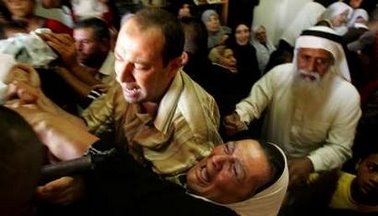 The mother of 12 year-old Anas Zumlut mourns during his funeral in Jabalya north Gaza Strip July 28, 2006.
Palestinians carry the body of twelve-year-old old Anas Zumlut during his funeral in Jabalya in the northern Gaza Strip July 28, 2006. Zumlut was killed by Israeli gunfire near his house in the east of Jabalya.

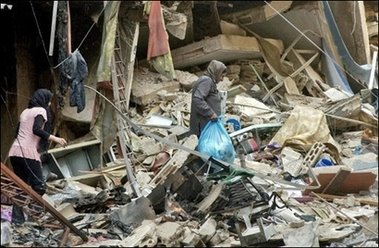

 A displaced Lebanese man sits in his wheelchair as a displaced young girl looks up while holding a placard with writing in Arabic reading: 'Even if you kill our children we will remain steadfast' at a school in Beirut, Lebanon, Friday, July 28, 2006, where citizens who fled their houses in different Lebanese towns and villages have been staying since shortly after the beginning of the Israeli offensive on Lebanon.



Height of absurdity
Lawmakers form pro-Israel caucus : The U.S. caucus plans to join with the Knesset Christian Allies Caucus and caucuses in other legislatures to “support Israel’s right to live in peace within safe and secure borders.” (They should ask the people that voted for them if this is what they voted for them to do.)
Antiwar Candidate Backs Israeli Strikes: Ned Lamont, a Greenwich, Conn., businessman who holds a slight lead in the polls over Lieberman, told the Forward that he supports Israel's current operations in Gaza and Lebanon, and that he disagreed with the European Union's declaration that criticized Israel's actions as a "disproportionate" response. (Proof that the Democrats (except for my man Pete Stark) are all pigs at the trough with no scruples or principles at all.)
Nancy Pelosi and Israel: This was written in May of 2005. I think it is a good reminder of how the Democrats are complicit in Israel's crimes.
Antiwar Candidate Backs Israeli Strikes: Ned Lamont, a Greenwich, Conn., businessman who holds a slight lead in the polls over Lieberman, told the Forward that he supports Israel's current operations in Gaza and Lebanon, and that he disagreed with the European Union's declaration that criticized Israel's actions as a "disproportionate" response. (Proof that the Democrats (except for my man Pete Stark) are all pigs at the trough with no scruples or principles at all.)
Nancy Pelosi and Israel: This was written in May of 2005. I think it is a good reminder of how the Democrats are complicit in Israel's crimes.
Friday, July 28, 2006
More isolated incidents
Israeli sniper kills a 13-year-old boy: An Israeli sniper shot and killed Anas Zomlot, from the "Block 2" area in Jabalia refugee camp in the northern Gaza Strip, early on Friday morning as he was standing on his family's balcony.
Gaza Strip Situation Report: 22 Palestinians are killed and 67 injured in the last 36 hours
Gaza Strip Situation Report: 22 Palestinians are killed and 67 injured in the last 36 hours
The "hiding among civilians" myth
Israel claims it's justified in bombing civilians because Hezbollah mingles with them. In fact, the militant group doesn't trust its civilians and stays as far away from them as possible.
By Mitch Prothero
7/28/06 "Salon"
The bombs came just as night fell, around 7 p.m. The locals knew that the 10-story apartment building had been the office, and possibly the residence, of Sheik Tawouk, the Hezbollah commander for the south, so they had moved their families out at the start of the war. The landlord had refused to rent to Hezbollah when they requested the top floors of the building. No matter, the locals said, the Hezb guys just moved in anyway in the name of the "resistance."
Everyone knew that the building would be hit eventually. Its location in downtown Tyre, which had yet to be hit by Israeli airstrikes, was not going to protect it forever. And "everyone" apparently included Sheik Tawouk, because he wasn't anywhere near it when it was finally hit.
Two guided bombs struck it in a huge flash bang of fire and concrete dust followed by the roar of 10 stories pancaking on top of each other, local residents said. Jihad Husseini, 46, runs the driving school a block away and was sitting in his office when the bombs struck. He said his life was saved because he had drawn the heavy cloth curtains shut on the windows facing the street, preventing him from being hit by a wave of shattered glass. But even so, a chunk of smoldering steel flew through the air, broke through the window and the curtain, and shot past his head and through the wall before coming to rest in his neighbor's home.
But Jihad still refuses to leave.
"Everything is broken, but I can make it better," he says, surrounded by his sons Raed, 20, and Mohammed, 12. "I will not leave. This place is not military, it is not Hezbollah; it was an empty apartment."
Throughout this now 16-day-old war, Israeli planes high above civilian areas make decisions on what to bomb. They send huge bombs capable of killing things for hundreds of meters around their targets, and then blame the inevitable civilian deaths -- the Lebanese government says 600 civilians have been killed so far -- on "terrorists" who callously use the civilian infrastructure for protection.
But this claim is almost always false. My own reporting and that of other journalists reveals that in fact Hezbollah fighters -- as opposed to the much more numerous Hezbollah political members, and the vastly more numerous Hezbollah sympathizers -- avoid civilians. Much smarter and better trained than the PLO and Hamas fighters, they know that if they mingle with civilians, they will sooner or later be betrayed by collaborators -- as so many Palestinian militants have been.
For their part, the Israelis seem to think that if they keep pounding civilians, they'll get some fighters, too. The almost nightly airstrikes on the southern suburbs of Beirut could be seen as making some sense, as the Israelis appear convinced there are command and control bunkers underneath the continually smoldering rubble. There were some civilian casualties the first few nights in places like Haret Hreik, but people quickly left the area to the Hezbollah fighters with their radios and motorbikes.
But other attacks seem gratuitous, fishing expeditions, or simply intended to punish anything and anyone even vaguely connected to Hezbollah. Lighthouses, grain elevators, milk factories, bridges in the north used by refugees, apartment buildings partially occupied by members of Hezbollah's political wing -- all have been reduced to rubble.
In the south, where Shiites dominate, just about everyone supports Hezbollah. Does mere support for Hezbollah, or even participation in Hezbollah activities, mean your house and family are fair game? Do you need to fire rockets from your front yard? Or is it enough to be a political activist?
The Israelis are consistent: They bomb everyone and everything remotely associated with Hezbollah, including noncombatants. In effect, that means punishing Lebanon. The nation is 40 percent Shiite, and of that 40 percent, tens of thousands are employed by Hezbollah's social services, political operations, schools, and other nonmilitary functions. The "terrorist" organization Hezbollah is Lebanon's second-biggest employer.
People throw the phrase "ghost town" around a lot, but Nabatiya, a bombed-out town about 15 miles from the Lebanon-Israel border, deserves it. One expects the spirits of the town's dead, or its refugees, to silently glide out onto its abandoned streets from the ruined buildings that make up much of the town.
Not all of the buildings show bomb damage, but those that don't have metal shutters blown out as if by a terrible wind. And there are no people at all, except for the occasional Hezbollah scout on a motorbike armed only with a two-way radio, keeping an eye on things as Israeli jets and unmanned drones circle overhead.
Overlooking the outskirts of this town, which has a peacetime population of 100,000 or so -- mostly Shiite supporters of Hezbollah and its more secular rival Amal -- is the Ragheh Hareb Hospital, a facility that makes quite clear what side the residents of Nabatiya are on in this conflict.
The hospital's carefully sculpted and trimmed front lawn contains the giant Red Crescent that denotes the Muslim version of the Red Cross. As we approach it, an Israeli missile streaks by, smashing into a school on the opposite hilltop. As we crouch and then run for the shelter of the hospital awning, that giant crescent reassures me until I look at the flagpole. The Lebanese flag and its cedar tree is there -- right next to the flag of the Islamic Republic of Iran.
It's safe to say that Ragheh Hareb Hospital has an association with Hezbollah. And the staff sports the trimmed beards and polite, if somewhat ominous, manner of the group. After young men demand press IDs and do some quick questioning, they allow us to enter.
Dr. Ahmed Tahir recognizes me from a funeral in the nearby village of Dweir. An Israeli bomb dropped on their house killed a Hezbollah cleric and 11 members of his immediate family, mostly children. People in Lebanon are calling it a war crime. Tahir looks exhausted, and our talk is even more tense than the last time.
"Maybe it would be best if the Israelis bombed your car on the road here," he said, with a sharp edge. "If you were killed, maybe the public outcry would be so bad in America that the Jews would be forced to stop these attacks."
When I volunteered that the Bush administration cared little for journalists, let alone ones who reported from Hezbollah territory, he shrugged. "Maybe if it was an American bomb used by the Israelis that killed an American journalist, they would stop this horror," he said.
The handful of people in the town include some from Hezbollah's political wing, as well as volunteers keeping an eye on things while the residents are gone. Off to the side, as we watch the Israelis pummel ridgelines on the outskirts of town, one of the political operatives explains that the fighters never come near the town, reinforcing what other Hezbollah people have told me over the years.
Although Israel targets apartments and offices because they are considered "Hezbollah" installations, the group has a clear policy of keeping its fighters away from civilians as much as possible. This is not for humanitarian reasons -- they did, after all, take over an apartment building against the protests of the landlord, knowing full well it would be bombed -- but for military ones.
"You can be a member of Hezbollah your entire life and never see a military wing fighter with a weapon," a Lebanese military intelligence official, now retired, once told me. "They do not come out with their masks off and never operate around people if they can avoid it. They're completely afraid of collaborators. They know this is what breaks the Palestinians -- no discipline and too much showing off."
Perhaps once a year, Hezbollah will hold a military parade in the south, in which its weapons and fighters appear. Media access to these parades is tightly limited and controlled. Unlike the fighters in the half dozen other countries where I have covered insurgencies, Hezbollah fighters do not like to show off for the cameras. In Iraq, with some risk taking, you can meet with and even watch the resistance guys in action. (At least you could during my last time there.) In Afghanistan, you can lunch with Taliban fighters if you're willing to walk a day or so in the mountains. In Gaza and the West Bank, the Fatah or Hamas fighter is almost ubiquitous with his mask, gun and sloganeering to convince the Western journalist of the justice of his cause.
The Hezbollah guys, on the other hand, know that letting their fighters near outsiders of any kind -- journalists or Lebanese, even Hezbollah supporters -- is stupid. In three trips over the last week to the south, where I came near enough to the fighting to hear Israeli artillery, and not just airstrikes, I saw exactly no fighters. Guys with radios with the look of Hezbollah always found me. But no fighters on corners, no invitations to watch them shoot rockets at the Zionist enemy, nothing that can be used to track them.
Even before the war, on many of my trips to the south, the Lebanese army, or the ubiquitous guy on a motorbike with a radio, would halt my trip and send me over to Tyre to get permission from a Hezbollah official before I could proceed, usually with strict limits on where I could go.
Every other journalist I know who has covered Hezbollah has had the same experience. A fellow journalist, a Lebanese who has covered them for two decades, knows only one military guy who will admit it, and he never talks or grants interviews. All he will say is, "I'll be gone for a few months for training. I'll call when I'm back." Presumably his friends and neighbors may suspect something, but no one says anything.
Hezbollah's political members say they have little or no access to the workings of the fighters. This seems to be largely true: While they obviously hear and know more than the outside world, the firewall is strong.
Israel, however, has chosen to treat the political members of Hezbollah as if they were fighters. And by targeting the civilian wing of the group, which supplies much of the humanitarian aid and social protection for the poorest people in the south, they are targeting civilians.
Earlier in the week, I stood next to a giant crater that had smashed through the highway between Tyre and Sidon -- the only route of escape for most of the people in the far south. Overhead, Israeli fighters and drones circled above the city and its outlying areas and regular blasts of bombs and naval artillery could be heard.
The crater served as a nice place to check up on the refugees, who were forced by the crater to slow down long enough to be asked questions. They barely stopped, their faces wrenched in near panic. The main wave of refugees out of the south had come the previous two days, so these were the hard-luck cases, the people who had been really close to the fighting and who needed two days just to get to Tyre, or who had had to make the tough decision whether to flee or stay put, with neither choice looking good.
The roads in the south are full of the cars of people who chose wrong -- burned-out chassis, broken glass, some cars driven straight into posts or ditches. Other seem to have broken down or run out of gas on the long dirt detours around the blown-out highway and bridge network the Israeli air force had spent days methodically destroying even as it warned people to flee.
One man, slowing his car around the crater, almost screams, "There is nothing left. This country is not for us." His brief pause immediately draws horns and impatient yells from the people in the cars behind him. They pass the crater but within two minutes a large explosion behind us, north, in the direction of Sidon, rocks us.
As we drive south toward Tyre, we soon pass a new series of scars on the highway: shrapnel, hubcaps and broken glass. A car that had been maybe five minutes ahead of us was hit by an Israeli shell. Three of its passengers were wounded, and it was heading north to the Hammound hospital at Sidon. We turned around because of the attack and followed the car to Sidon. Those unhurt staked out the parking lot of the hospital, looking for the Western journalists they were convinced had called in the strike. Luckily my Iraqi fixer smelled trouble and we got out of there. Probably nothing would have happened -- mostly they were just freaked-out country people who didn't like the coincidence of an Israeli attack and a car full of journalists driving past.
So the analysts talking on cable news about Hezbollah "hiding within the civilian population" clearly have spent little time if any in the south Lebanon war zone and don't know what they're talking about. Hezbollah doesn't trust the civilian population and has worked very hard to evacuate as much of it as possible from the battlefield. And this is why they fight so well -- with no one to spy on them, they have lots of chances to take the Israel Defense Forces by surprise, as they have by continuing to fire rockets and punish every Israeli ground incursion.
And the civilians? They see themselves as targeted regardless of their affiliation. They are enraged at Israel and at the United States, the only two countries on earth not calling for an immediate cease-fire. Lebanese of all persuasions think the United States and Israel believe that Lebanese lives are cheaper than Israeli ones. And many are now saying that they want to fight.
Copyright ©2006 Salon Media Group, Inc
By Mitch Prothero
7/28/06 "Salon"
The bombs came just as night fell, around 7 p.m. The locals knew that the 10-story apartment building had been the office, and possibly the residence, of Sheik Tawouk, the Hezbollah commander for the south, so they had moved their families out at the start of the war. The landlord had refused to rent to Hezbollah when they requested the top floors of the building. No matter, the locals said, the Hezb guys just moved in anyway in the name of the "resistance."
Everyone knew that the building would be hit eventually. Its location in downtown Tyre, which had yet to be hit by Israeli airstrikes, was not going to protect it forever. And "everyone" apparently included Sheik Tawouk, because he wasn't anywhere near it when it was finally hit.
Two guided bombs struck it in a huge flash bang of fire and concrete dust followed by the roar of 10 stories pancaking on top of each other, local residents said. Jihad Husseini, 46, runs the driving school a block away and was sitting in his office when the bombs struck. He said his life was saved because he had drawn the heavy cloth curtains shut on the windows facing the street, preventing him from being hit by a wave of shattered glass. But even so, a chunk of smoldering steel flew through the air, broke through the window and the curtain, and shot past his head and through the wall before coming to rest in his neighbor's home.
But Jihad still refuses to leave.
"Everything is broken, but I can make it better," he says, surrounded by his sons Raed, 20, and Mohammed, 12. "I will not leave. This place is not military, it is not Hezbollah; it was an empty apartment."
Throughout this now 16-day-old war, Israeli planes high above civilian areas make decisions on what to bomb. They send huge bombs capable of killing things for hundreds of meters around their targets, and then blame the inevitable civilian deaths -- the Lebanese government says 600 civilians have been killed so far -- on "terrorists" who callously use the civilian infrastructure for protection.
But this claim is almost always false. My own reporting and that of other journalists reveals that in fact Hezbollah fighters -- as opposed to the much more numerous Hezbollah political members, and the vastly more numerous Hezbollah sympathizers -- avoid civilians. Much smarter and better trained than the PLO and Hamas fighters, they know that if they mingle with civilians, they will sooner or later be betrayed by collaborators -- as so many Palestinian militants have been.
For their part, the Israelis seem to think that if they keep pounding civilians, they'll get some fighters, too. The almost nightly airstrikes on the southern suburbs of Beirut could be seen as making some sense, as the Israelis appear convinced there are command and control bunkers underneath the continually smoldering rubble. There were some civilian casualties the first few nights in places like Haret Hreik, but people quickly left the area to the Hezbollah fighters with their radios and motorbikes.
But other attacks seem gratuitous, fishing expeditions, or simply intended to punish anything and anyone even vaguely connected to Hezbollah. Lighthouses, grain elevators, milk factories, bridges in the north used by refugees, apartment buildings partially occupied by members of Hezbollah's political wing -- all have been reduced to rubble.
In the south, where Shiites dominate, just about everyone supports Hezbollah. Does mere support for Hezbollah, or even participation in Hezbollah activities, mean your house and family are fair game? Do you need to fire rockets from your front yard? Or is it enough to be a political activist?
The Israelis are consistent: They bomb everyone and everything remotely associated with Hezbollah, including noncombatants. In effect, that means punishing Lebanon. The nation is 40 percent Shiite, and of that 40 percent, tens of thousands are employed by Hezbollah's social services, political operations, schools, and other nonmilitary functions. The "terrorist" organization Hezbollah is Lebanon's second-biggest employer.
People throw the phrase "ghost town" around a lot, but Nabatiya, a bombed-out town about 15 miles from the Lebanon-Israel border, deserves it. One expects the spirits of the town's dead, or its refugees, to silently glide out onto its abandoned streets from the ruined buildings that make up much of the town.
Not all of the buildings show bomb damage, but those that don't have metal shutters blown out as if by a terrible wind. And there are no people at all, except for the occasional Hezbollah scout on a motorbike armed only with a two-way radio, keeping an eye on things as Israeli jets and unmanned drones circle overhead.
Overlooking the outskirts of this town, which has a peacetime population of 100,000 or so -- mostly Shiite supporters of Hezbollah and its more secular rival Amal -- is the Ragheh Hareb Hospital, a facility that makes quite clear what side the residents of Nabatiya are on in this conflict.
The hospital's carefully sculpted and trimmed front lawn contains the giant Red Crescent that denotes the Muslim version of the Red Cross. As we approach it, an Israeli missile streaks by, smashing into a school on the opposite hilltop. As we crouch and then run for the shelter of the hospital awning, that giant crescent reassures me until I look at the flagpole. The Lebanese flag and its cedar tree is there -- right next to the flag of the Islamic Republic of Iran.
It's safe to say that Ragheh Hareb Hospital has an association with Hezbollah. And the staff sports the trimmed beards and polite, if somewhat ominous, manner of the group. After young men demand press IDs and do some quick questioning, they allow us to enter.
Dr. Ahmed Tahir recognizes me from a funeral in the nearby village of Dweir. An Israeli bomb dropped on their house killed a Hezbollah cleric and 11 members of his immediate family, mostly children. People in Lebanon are calling it a war crime. Tahir looks exhausted, and our talk is even more tense than the last time.
"Maybe it would be best if the Israelis bombed your car on the road here," he said, with a sharp edge. "If you were killed, maybe the public outcry would be so bad in America that the Jews would be forced to stop these attacks."
When I volunteered that the Bush administration cared little for journalists, let alone ones who reported from Hezbollah territory, he shrugged. "Maybe if it was an American bomb used by the Israelis that killed an American journalist, they would stop this horror," he said.
The handful of people in the town include some from Hezbollah's political wing, as well as volunteers keeping an eye on things while the residents are gone. Off to the side, as we watch the Israelis pummel ridgelines on the outskirts of town, one of the political operatives explains that the fighters never come near the town, reinforcing what other Hezbollah people have told me over the years.
Although Israel targets apartments and offices because they are considered "Hezbollah" installations, the group has a clear policy of keeping its fighters away from civilians as much as possible. This is not for humanitarian reasons -- they did, after all, take over an apartment building against the protests of the landlord, knowing full well it would be bombed -- but for military ones.
"You can be a member of Hezbollah your entire life and never see a military wing fighter with a weapon," a Lebanese military intelligence official, now retired, once told me. "They do not come out with their masks off and never operate around people if they can avoid it. They're completely afraid of collaborators. They know this is what breaks the Palestinians -- no discipline and too much showing off."
Perhaps once a year, Hezbollah will hold a military parade in the south, in which its weapons and fighters appear. Media access to these parades is tightly limited and controlled. Unlike the fighters in the half dozen other countries where I have covered insurgencies, Hezbollah fighters do not like to show off for the cameras. In Iraq, with some risk taking, you can meet with and even watch the resistance guys in action. (At least you could during my last time there.) In Afghanistan, you can lunch with Taliban fighters if you're willing to walk a day or so in the mountains. In Gaza and the West Bank, the Fatah or Hamas fighter is almost ubiquitous with his mask, gun and sloganeering to convince the Western journalist of the justice of his cause.
The Hezbollah guys, on the other hand, know that letting their fighters near outsiders of any kind -- journalists or Lebanese, even Hezbollah supporters -- is stupid. In three trips over the last week to the south, where I came near enough to the fighting to hear Israeli artillery, and not just airstrikes, I saw exactly no fighters. Guys with radios with the look of Hezbollah always found me. But no fighters on corners, no invitations to watch them shoot rockets at the Zionist enemy, nothing that can be used to track them.
Even before the war, on many of my trips to the south, the Lebanese army, or the ubiquitous guy on a motorbike with a radio, would halt my trip and send me over to Tyre to get permission from a Hezbollah official before I could proceed, usually with strict limits on where I could go.
Every other journalist I know who has covered Hezbollah has had the same experience. A fellow journalist, a Lebanese who has covered them for two decades, knows only one military guy who will admit it, and he never talks or grants interviews. All he will say is, "I'll be gone for a few months for training. I'll call when I'm back." Presumably his friends and neighbors may suspect something, but no one says anything.
Hezbollah's political members say they have little or no access to the workings of the fighters. This seems to be largely true: While they obviously hear and know more than the outside world, the firewall is strong.
Israel, however, has chosen to treat the political members of Hezbollah as if they were fighters. And by targeting the civilian wing of the group, which supplies much of the humanitarian aid and social protection for the poorest people in the south, they are targeting civilians.
Earlier in the week, I stood next to a giant crater that had smashed through the highway between Tyre and Sidon -- the only route of escape for most of the people in the far south. Overhead, Israeli fighters and drones circled above the city and its outlying areas and regular blasts of bombs and naval artillery could be heard.
The crater served as a nice place to check up on the refugees, who were forced by the crater to slow down long enough to be asked questions. They barely stopped, their faces wrenched in near panic. The main wave of refugees out of the south had come the previous two days, so these were the hard-luck cases, the people who had been really close to the fighting and who needed two days just to get to Tyre, or who had had to make the tough decision whether to flee or stay put, with neither choice looking good.
The roads in the south are full of the cars of people who chose wrong -- burned-out chassis, broken glass, some cars driven straight into posts or ditches. Other seem to have broken down or run out of gas on the long dirt detours around the blown-out highway and bridge network the Israeli air force had spent days methodically destroying even as it warned people to flee.
One man, slowing his car around the crater, almost screams, "There is nothing left. This country is not for us." His brief pause immediately draws horns and impatient yells from the people in the cars behind him. They pass the crater but within two minutes a large explosion behind us, north, in the direction of Sidon, rocks us.
As we drive south toward Tyre, we soon pass a new series of scars on the highway: shrapnel, hubcaps and broken glass. A car that had been maybe five minutes ahead of us was hit by an Israeli shell. Three of its passengers were wounded, and it was heading north to the Hammound hospital at Sidon. We turned around because of the attack and followed the car to Sidon. Those unhurt staked out the parking lot of the hospital, looking for the Western journalists they were convinced had called in the strike. Luckily my Iraqi fixer smelled trouble and we got out of there. Probably nothing would have happened -- mostly they were just freaked-out country people who didn't like the coincidence of an Israeli attack and a car full of journalists driving past.
So the analysts talking on cable news about Hezbollah "hiding within the civilian population" clearly have spent little time if any in the south Lebanon war zone and don't know what they're talking about. Hezbollah doesn't trust the civilian population and has worked very hard to evacuate as much of it as possible from the battlefield. And this is why they fight so well -- with no one to spy on them, they have lots of chances to take the Israel Defense Forces by surprise, as they have by continuing to fire rockets and punish every Israeli ground incursion.
And the civilians? They see themselves as targeted regardless of their affiliation. They are enraged at Israel and at the United States, the only two countries on earth not calling for an immediate cease-fire. Lebanese of all persuasions think the United States and Israel believe that Lebanese lives are cheaper than Israeli ones. And many are now saying that they want to fight.
Copyright ©2006 Salon Media Group, Inc
Meanwhile in Iraq
Iraqi Shiite leader rejects role for US reinforcement: Iraq's most influential Shiite leaders have rejected the use of US forces to stabilize Iraq's security situation, as the Pentagon announced an increase in troops numbers.
Iraq: At least 46 killed in ongoing U.S. occupation: The Iraqi army killed nine "insurgents" and detained another 16 in different parts of Iraq during the last 24 hours, Iraqi army said in a statement.
Dozens killed as more troops head to Baghdad : It is unlikely, however, that some 10,000 US troops will succeed in restoring civil order, something that 50,000 Iraqi forces in the city have failed to do. Sunni now shoot at police and police commando detachments, regarding them as officially sanctioned "death squads".
Iraq: At least 46 killed in ongoing U.S. occupation: The Iraqi army killed nine "insurgents" and detained another 16 in different parts of Iraq during the last 24 hours, Iraqi army said in a statement.
Dozens killed as more troops head to Baghdad : It is unlikely, however, that some 10,000 US troops will succeed in restoring civil order, something that 50,000 Iraqi forces in the city have failed to do. Sunni now shoot at police and police commando detachments, regarding them as officially sanctioned "death squads".
Israel's secret war: the humanitarian disaster unfolding in Palestine
Israel's secret war: the humanitarian disaster unfolding in Palestine
By Anne Penketh in Gaza City
Published: 29 July 2006
A 12-year-old boy dead on a stretcher. A mother in shock and disbelief after her son was shot dead for standing on their roof. A phone rings and a voice in broken Arabic orders residents to abandon their home on pain of death.
Those are snapshots of a day in Gaza where Israel is waging a hidden war, as the world looks the other way, focusing on Lebanon.
It is a war of containment and control that has turned the besieged Strip into a prison with no way in or out, and no protection from an fearsome battery of drones, precision missiles, tank shells and artillery rounds.
As of last night, 29 people had been killed in the most concentrated 48 hours of violence since an Israeli soldier was abducted by Palestinian militants just more than a month ago.
The operation is codenamed "Samson's Pillars", a collective punishment of the 1.4 million Gazans, subjecting them to a Lebanese-style offensive that has targeted the civilian infrastructure by destroying water mains, the main power station and bridges.
The similarities with Israel's blitz on Lebanon are striking, raising suspicions that the Gaza offensive has been the testing ground for the military strategy now unfolding on the second front in the north.
In Gaza, following the victory of the Islamic fundamentalist Hamas in January, Israel, with the help of the US, initiated an immediate boycott and ensured the rest of the world fell into line after months of hand-wringing. Israel has secured the same flashing green light from the Bush administration over Lebanon, while the rest of the world appeals in vain for an immediate ceasefire.
The Israelis, who launched their Lebanon offensive on 12 July after the capture of two Israeli soldiers by Hizbollah fighters, intend to create a "sterile" zone devoid of militants in a mile-wide stretch inside Lebanon.
In Gaza, Palestinian land has already been bulldozed to form a 300-metre open area along the border with Israel proper. And in both cases, the crisis will doubtless end up being defused by a prisoner exchange. With Lebanon dominating the headlines, Israel has "rearranged the occupation" in Gaza, in the words of the Palestinian academic and MP, Hanan Ashrawi. But unlike the Lebanese, the desperate Gazans have nowhere to flee from their humanitarian crisis.
Before Israeli tanks moved into northern Gaza, yesterday, 12-year-old Anas Zumlut joined the ranks of dead Palestinians, numbering more than 100. His body was wrapped in a funeral shroud, just like those of the two sisters, a three-year-old and an eight-month-old baby, who were killed three days ago in the same area of Jablaya.
In the past three weeks, the foreign ministry and the interior ministry in Gaza city have been smashed, prompting speculation that Israel's offensive is not only aimed at securing the release of Cpl Gilad Shalit, or bringing an end to the Qassam rocket attacks that have wounded one person in the past month and jarred the nerves of the residents of the nearest Israeli town of Sderot.
"At first we thought they were bombing the Hamas leaders by targeting Haniyeh and Zahar," a Palestinian official said, referring to the Palestinian Prime Minister and the Foreign Minister. "But when they targeted the economy ministry we decided they wanted to completely destroy the entire government."
The only functioning crossing, Erez, is closed to Palestinians who are almost hermetically sealed inside the Strip. As the local economy has been strangled by donor countries, Gaza City's 1,800 municipal employees have not been paid since the beginning of April. Families are borrowing to the hilt, selling their jewellery, ignoring electricity bills and tax demands and throwing themselves on the mercy of shopkeepers.
Western officials say they hope the pressure will coerce Hamas into recognising Israel but the Palestinians believe the real goal is the collapse of the Hamas government - six of whose cabinet members have been arrested, the rest are in hiding.
The signs on the ground are that Israel's military pressure is proving counter-productive. There is the risk of a total breakdown of the fabric of society at a time when the main political parties, Fatah and Hamas, are at each other's throats. "The popularity of Hamas is increasing," says the Palestinian deputy foreign minister, Ahmed Soboh, from the comparative safety of his West Bank office in Ramallah.
The situation has become unbearable for Gazans, says Nabil Shaath, a veteran Fatah official who is a former foreign and planning minister. Through the window, small fishing boats are anchored uselessly in the harbour, penned in by Israeli sea patrols.
All mechanisms for coping are being exhausted.
Mr Shaath, who had a daughter, Mimi, late in life, says that he tried "laughter therapy" with his five-year-old at home in northern Gaza. "Every time there was a shell, I would burst out laughing and she would laugh with me. But then the Israelis occupied everything around us, and there were tanks, and shrapnel in the garden, and she saw where the shells were coming from, and she was terrified. So Mimi now gets angry when I laugh."
Only a few miles away, on the other side of the border, the Israeli army says it is taking pains to minimise civilian casualties. Hila, a 21-year old paratrooper who is not allowed to give her last name, says the Hamas fighters in Gaza - like Hizbollah in Lebanon - deliberately mingle with the civilian population as a tactic. Weapons are stored in the upper storeys of houses where families live downstairs, she says. "The terrorists deliberately choose places where we can't retaliate."
But these places are being hit. And Mr Shaath is scornful of the disproportionate Israeli reaction to the Palestinian rockets. Five Israelis have been killed by the 10km range Qassams since 2000.
Mrs Ashrawi believes Samson's Pillars are no closer to falling. "Israelis think they are searing the consciousness of the Palestinians and the Lebanese with a branding iron. But if people have a cause they will never be defeated."
Day 17
* Israeli aircraft kill 12 in southern Lebanon, with hill villages near Tyre among the targets.
* Hizbollah fires a new long-range missile, the Khaibar-1, at Afula south of Haifa, the furthest a Hizbollah rocket has landed inside Israel.
* At least six people are wounded in rocket attacks on northern Israel. One rocket hits a hospital in Nahariya.
* US State Department describes Israel's remarks that the Rome conference gave it a ''green light'' to continue its attack on Lebanon as ''outrageous''.
* Emergency relief co-ordinator Jan Egeland asks Israel and Hizbollah for a 72-hour ceasefire to allow evacuation of the elderly.
* Israeli aircraft attack homes owned by Palestinian militants and a metal workshop in the Gaza Strip, wounding seven, doctors say.
* Death toll:
At least 459 people, mostly civilians, in Lebanon
* 51 Israelis, including 18 civilians, according to Reuters' tally.
* Israeli military says 200 Hizbollah fighters killed, Hizbollah has said 31 of its fighters killed.
A 12-year-old boy dead on a stretcher. A mother in shock and disbelief after her son was shot dead for standing on their roof. A phone rings and a voice in broken Arabic orders residents to abandon their home on pain of death.
By Anne Penketh in Gaza City
Published: 29 July 2006
A 12-year-old boy dead on a stretcher. A mother in shock and disbelief after her son was shot dead for standing on their roof. A phone rings and a voice in broken Arabic orders residents to abandon their home on pain of death.
Those are snapshots of a day in Gaza where Israel is waging a hidden war, as the world looks the other way, focusing on Lebanon.
It is a war of containment and control that has turned the besieged Strip into a prison with no way in or out, and no protection from an fearsome battery of drones, precision missiles, tank shells and artillery rounds.
As of last night, 29 people had been killed in the most concentrated 48 hours of violence since an Israeli soldier was abducted by Palestinian militants just more than a month ago.
The operation is codenamed "Samson's Pillars", a collective punishment of the 1.4 million Gazans, subjecting them to a Lebanese-style offensive that has targeted the civilian infrastructure by destroying water mains, the main power station and bridges.
The similarities with Israel's blitz on Lebanon are striking, raising suspicions that the Gaza offensive has been the testing ground for the military strategy now unfolding on the second front in the north.
In Gaza, following the victory of the Islamic fundamentalist Hamas in January, Israel, with the help of the US, initiated an immediate boycott and ensured the rest of the world fell into line after months of hand-wringing. Israel has secured the same flashing green light from the Bush administration over Lebanon, while the rest of the world appeals in vain for an immediate ceasefire.
The Israelis, who launched their Lebanon offensive on 12 July after the capture of two Israeli soldiers by Hizbollah fighters, intend to create a "sterile" zone devoid of militants in a mile-wide stretch inside Lebanon.
In Gaza, Palestinian land has already been bulldozed to form a 300-metre open area along the border with Israel proper. And in both cases, the crisis will doubtless end up being defused by a prisoner exchange. With Lebanon dominating the headlines, Israel has "rearranged the occupation" in Gaza, in the words of the Palestinian academic and MP, Hanan Ashrawi. But unlike the Lebanese, the desperate Gazans have nowhere to flee from their humanitarian crisis.
Before Israeli tanks moved into northern Gaza, yesterday, 12-year-old Anas Zumlut joined the ranks of dead Palestinians, numbering more than 100. His body was wrapped in a funeral shroud, just like those of the two sisters, a three-year-old and an eight-month-old baby, who were killed three days ago in the same area of Jablaya.
In the past three weeks, the foreign ministry and the interior ministry in Gaza city have been smashed, prompting speculation that Israel's offensive is not only aimed at securing the release of Cpl Gilad Shalit, or bringing an end to the Qassam rocket attacks that have wounded one person in the past month and jarred the nerves of the residents of the nearest Israeli town of Sderot.
"At first we thought they were bombing the Hamas leaders by targeting Haniyeh and Zahar," a Palestinian official said, referring to the Palestinian Prime Minister and the Foreign Minister. "But when they targeted the economy ministry we decided they wanted to completely destroy the entire government."
The only functioning crossing, Erez, is closed to Palestinians who are almost hermetically sealed inside the Strip. As the local economy has been strangled by donor countries, Gaza City's 1,800 municipal employees have not been paid since the beginning of April. Families are borrowing to the hilt, selling their jewellery, ignoring electricity bills and tax demands and throwing themselves on the mercy of shopkeepers.
Western officials say they hope the pressure will coerce Hamas into recognising Israel but the Palestinians believe the real goal is the collapse of the Hamas government - six of whose cabinet members have been arrested, the rest are in hiding.
The signs on the ground are that Israel's military pressure is proving counter-productive. There is the risk of a total breakdown of the fabric of society at a time when the main political parties, Fatah and Hamas, are at each other's throats. "The popularity of Hamas is increasing," says the Palestinian deputy foreign minister, Ahmed Soboh, from the comparative safety of his West Bank office in Ramallah.
The situation has become unbearable for Gazans, says Nabil Shaath, a veteran Fatah official who is a former foreign and planning minister. Through the window, small fishing boats are anchored uselessly in the harbour, penned in by Israeli sea patrols.
All mechanisms for coping are being exhausted.
Mr Shaath, who had a daughter, Mimi, late in life, says that he tried "laughter therapy" with his five-year-old at home in northern Gaza. "Every time there was a shell, I would burst out laughing and she would laugh with me. But then the Israelis occupied everything around us, and there were tanks, and shrapnel in the garden, and she saw where the shells were coming from, and she was terrified. So Mimi now gets angry when I laugh."
Only a few miles away, on the other side of the border, the Israeli army says it is taking pains to minimise civilian casualties. Hila, a 21-year old paratrooper who is not allowed to give her last name, says the Hamas fighters in Gaza - like Hizbollah in Lebanon - deliberately mingle with the civilian population as a tactic. Weapons are stored in the upper storeys of houses where families live downstairs, she says. "The terrorists deliberately choose places where we can't retaliate."
But these places are being hit. And Mr Shaath is scornful of the disproportionate Israeli reaction to the Palestinian rockets. Five Israelis have been killed by the 10km range Qassams since 2000.
Mrs Ashrawi believes Samson's Pillars are no closer to falling. "Israelis think they are searing the consciousness of the Palestinians and the Lebanese with a branding iron. But if people have a cause they will never be defeated."
Day 17
* Israeli aircraft kill 12 in southern Lebanon, with hill villages near Tyre among the targets.
* Hizbollah fires a new long-range missile, the Khaibar-1, at Afula south of Haifa, the furthest a Hizbollah rocket has landed inside Israel.
* At least six people are wounded in rocket attacks on northern Israel. One rocket hits a hospital in Nahariya.
* US State Department describes Israel's remarks that the Rome conference gave it a ''green light'' to continue its attack on Lebanon as ''outrageous''.
* Emergency relief co-ordinator Jan Egeland asks Israel and Hizbollah for a 72-hour ceasefire to allow evacuation of the elderly.
* Israeli aircraft attack homes owned by Palestinian militants and a metal workshop in the Gaza Strip, wounding seven, doctors say.
* Death toll:
At least 459 people, mostly civilians, in Lebanon
* 51 Israelis, including 18 civilians, according to Reuters' tally.
* Israeli military says 200 Hizbollah fighters killed, Hizbollah has said 31 of its fighters killed.
A 12-year-old boy dead on a stretcher. A mother in shock and disbelief after her son was shot dead for standing on their roof. A phone rings and a voice in broken Arabic orders residents to abandon their home on pain of death.

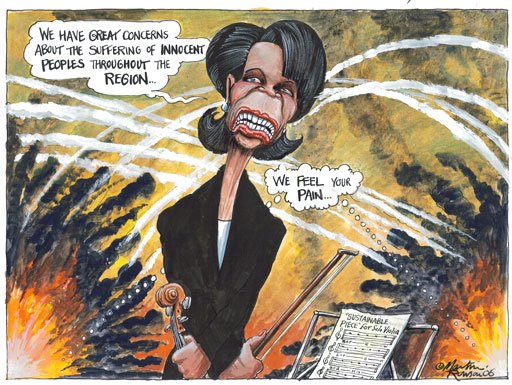

URGENT: LEBANON PALESTINE EMERGENCY FUND
For Immediate Release
July 27, 2006
The ongoing invasion of Lebanon by Israel has left hundreds of itsresidents either dead or injured. Meanwhile, the 58-year Zionistoccupation of Palestine has escalated, bringing with it more death anddestruction for the Palestinian people.
Hundreds of thousands of Lebanese and Palestinians have been renderedhomeless and unable to meet their most basicneeds by Israel's deliberate and conscious effort to destroy Lebanon's civilian infrastructure. Entire neighborhoods in the south of Lebanon andBeirut have been literally wiped out using US-supplied weapons.
Since the siege of Gaza one month ago, the Palestinian death toll includesmore than 31 children, killed by the hand of the "Israeli" occupier.
Al-Awda, The Palestine Right to Return Coalition, calls on all people ofconscience to donate to its Lebanon Palestine Emergency Relief Fund. Alldonations will be used to help Palestinian and Lebanese victims of thelatest Israeli aggression.
Please make your tax-deductible donation payable to "Al-Awda, PRRC".Indicate "Lebanon Palestine Emergency Fund" in the memo section.
Checks or money orders should be mailed to:
Al-Awda, PRRC
PO Box 131352
Carlsbad, CA 92013, USA
To make a secure online donation using your credit card, go to www.al-awda.org/donate.html and follow the instructions. Please email us at info@al-awda.org to let us know that your online donation is intended for the 'Lebanon Palestine Emergency Fund.
Al-Awda, The Palestine Right to Return Coalition
PO Box 131352
Carlsbad, CA 92013, USA
Tel: 760-685-3243
Fax: 360-933-3568
E-mail: info@al-awda.org
al-awda.org
Al-Awda, The Palestine Right to Return Coalition (PRRC), is a not for profit tax-exempt educational and charitable 501(c)(3) organization as defined by\nthe Internal Revenue Service (IRS) of the United States of America. Under RS guidelines, your donations to PRRC are tax-deductible.
For Immediate Release
July 27, 2006
The ongoing invasion of Lebanon by Israel has left hundreds of itsresidents either dead or injured. Meanwhile, the 58-year Zionistoccupation of Palestine has escalated, bringing with it more death anddestruction for the Palestinian people.
Hundreds of thousands of Lebanese and Palestinians have been renderedhomeless and unable to meet their most basicneeds by Israel's deliberate and conscious effort to destroy Lebanon's civilian infrastructure. Entire neighborhoods in the south of Lebanon andBeirut have been literally wiped out using US-supplied weapons.
Since the siege of Gaza one month ago, the Palestinian death toll includesmore than 31 children, killed by the hand of the "Israeli" occupier.
Al-Awda, The Palestine Right to Return Coalition, calls on all people ofconscience to donate to its Lebanon Palestine Emergency Relief Fund. Alldonations will be used to help Palestinian and Lebanese victims of thelatest Israeli aggression.
Please make your tax-deductible donation payable to "Al-Awda, PRRC".Indicate "Lebanon Palestine Emergency Fund" in the memo section.
Checks or money orders should be mailed to:
Al-Awda, PRRC
PO Box 131352
Carlsbad, CA 92013, USA
To make a secure online donation using your credit card, go to www.al-awda.org/donate.html and follow the instructions. Please email us at info@al-awda.org to let us know that your online donation is intended for the 'Lebanon Palestine Emergency Fund.
Al-Awda, The Palestine Right to Return Coalition
PO Box 131352
Carlsbad, CA 92013, USA
Tel: 760-685-3243
Fax: 360-933-3568
E-mail: info@al-awda.org
al-awda.org
Al-Awda, The Palestine Right to Return Coalition (PRRC), is a not for profit tax-exempt educational and charitable 501(c)(3) organization as defined by\nthe Internal Revenue Service (IRS) of the United States of America. Under RS guidelines, your donations to PRRC are tax-deductible.
I actually despise Democrats more than Republicans
At least the Republicans are honest, they don't try to pretend that they aren't fascists. They wear their fascist label with pride. Pride. But the Democrats, they try to pretend that they aren't and that really bothers me. *But all props to my representative Pete Stark who is very moral and very ethical and OK he is the only Democrat that I will vote for.
Battle Over Bolton Could Be Decided by Jewish Support: "I believe almost every Republican will be supporting" Bolton in the Senate, and "you're going to have a surprising number of Democrats supporting him because of his record" of "courage, intelligence and eloquence," said Morton Klein, president of the Zionist Organization of America
Battle Over Bolton Could Be Decided by Jewish Support: "I believe almost every Republican will be supporting" Bolton in the Senate, and "you're going to have a surprising number of Democrats supporting him because of his record" of "courage, intelligence and eloquence," said Morton Klein, president of the Zionist Organization of America
Iraqis thank you, America...
For liberating them from their heads, their limbs, their lives, their freedom, their dignity, their electricity, their children, etc.,
Iraq's Valley of Peace helps overflowing morgues: "Most of the bodies were bound by chains so we always have to keep a cutter nearby to cut them. Most bodies were beheaded and they have a lot of holes in the head and face," said cemetery worker Riad Ahmed.
Iraq's Valley of Peace helps overflowing morgues: "Most of the bodies were bound by chains so we always have to keep a cutter nearby to cut them. Most bodies were beheaded and they have a lot of holes in the head and face," said cemetery worker Riad Ahmed.
A "light" upon nations...
Israeli Justice Minister: IDF Entitled to Kill Everyone in South Lebanon: Ramon made these comments on Israeli Army radio. He was apparently not asked about the IDF’s practice of blowing up the cars full of civilians fleeing south Lebanon.
Criminalizing Civilians: Look at this logic: since Israel has asked civilians to leave, any that disobeyed have forfeited their status as civilians.
100,000 Whiners for War Crimes: Israel's Ministry of Foreign Affairs has called for 100,000 apologists for Israel to spam web sites reporting the Israeli Death Forces' horrors in Lebanon. (I knew that when that Gallup poll came out indicating that only half of Americans support what Israel is doing and that something like 70% did not believe Israeli claims that Hezbollah *started it* that we would be inundated with Zionist apologists. I think that 90% of the Zionists on As'ad's blog are being paid or are volunteering their time for Israel)
Criminalizing Civilians: Look at this logic: since Israel has asked civilians to leave, any that disobeyed have forfeited their status as civilians.
100,000 Whiners for War Crimes: Israel's Ministry of Foreign Affairs has called for 100,000 apologists for Israel to spam web sites reporting the Israeli Death Forces' horrors in Lebanon. (I knew that when that Gallup poll came out indicating that only half of Americans support what Israel is doing and that something like 70% did not believe Israeli claims that Hezbollah *started it* that we would be inundated with Zionist apologists. I think that 90% of the Zionists on As'ad's blog are being paid or are volunteering their time for Israel)
Syrian reporter: In Syria there is atmosphere of eve of war
"Exclusive: In conversation in Damascus, senior Syrian journalist tells about sentiments in Syria ('as if there will be war any moment'); talks about military preparations in his country ('identifying your reinforcements in Golan Heights'); and estimates that Israeli pounding in Lebanon to intensify grassroots support of Nasrallah and his organization. Also in Syria, he says, Nasrallah more popular than ever "
Hizbullah support tops 80 percent among Lebanese
Israeli strikes may boost Hizbullah base Hizbullah support tops 80 percent among Lebanese factions.
By Nicholas Blanford
TYRE, LEBANON
The ferocity of Israel's onslaught in southern Lebanon and Hizbullah's stubborn battles against Israeli ground forces may be working in the militant group's favor.
"They want to shatter the myth of Israeli invincibility," says Amal Saad-Ghorayeb, a leading Lebanese expert on Hizbullah. "Being victorious means not allowing Israel to achieve their aims, and so far that is the case."
Still, the intensity of the Israeli bombing campaign appears to have taken Hizbullah aback. Mahmoud Komati, the deputy head of Hizbullah's politburo told the Associated Press, "the truth is - let me say this clearly - we didn't even expect [this] response ... that [Israel] would exploit this operation for this big war against us."
When Hizbullah guerrillas snatched two Israeli soldiers from across the border, it appeared to be a serious miscalculation. In the days that followed the July 12 capture, Israel unleashed its biggest offensive against Lebanon since its 1982 invasion, smashing the country's infrastructure, creating 500,000 refugees, and so far killing more than 400 civilians.
Thursday, Israeli air and artillery strikes continued in southern Lebanon and the International Committee of the Red Cross said bodies were laying in the streets of some Lebanese border villages where fighting has trapped civilians. Also Thursday Al Qaeda's second in command, Ayman Zawahiri, called in a televised video for Muslims to join fighting in the Gaza Strip and Lebanon in a holy war against Israel. While al-Qaeda is a Sunni Muslim group which in general views Shiites, who make up Hizbullah's ranks, with disgust and not even as Muslims, they share a common hatred of Israel and the US.
In a televised address Tuesday, Hassan Nasrallah, Hizbullah's secretary general, said the Israeli onslaught was an attempt by the US and Israel to "impose a new Middle East" in which Lebanon would be under US hegemony.
"Our fate is to confront this plan ... we are waging a war for the liberation of the remaining occupied lands and the liberation of our detainees," Mr. Nasrallah said.
Ms. Saad-Ghorayeb says that Hizbullah's goals have changed, "assuming a wider strategic importance" in which the party is at the forefront of opposition to the Bush administration's agenda of transforming the Middle East into a series of pro-Western democracies.
"Hizbullah is in a unique position to confront the US agenda which if successful will be, by extension, a victory for Syria, Iran and Hamas," she says.
Hizbullah's top guerrilla fighters are mounting a stubborn campaign against the region's most powerful army in and around Bint Jbail, the largest Shiite town in the border district where support for the party runs high.
Hizbullah has had six years - ever since Israel withdrew from south Lebanon - to prepare for this climactic showdown. Instead of storing weapons and ammunition in vulnerable stockpiles, they are scattered throughout the south in natural caves, tunnels, and homes. Hizbullah officials say they have sufficient ammunition and high morale tofight for months.
Hizbullah's frontline fighters are battle-hardened veterans after fighting Israeli forces in the 1990s. They are armed with advanced Russian antitank missiles, which have proved deadly against Israel's vaunted Merkava tanks and use classic hit-and-run guerrilla tactics.
"Hizbullah is doing what it does best, harassing the enemy," says Timur Goksel, who served 24 years with the UN peacekeeping force in south Lebanon.
Indeed, Nasrallah has announced the launch of the "second phase of our struggle" in which his long-range rockets would "go beyond Haifa," Israel's third-largest city. Israeli officials have been bracing for possible rocket attacks on Tel Aviv, which would mark a major escalation in the conflict.
"If Hizbullah hits Tel Aviv, I think that Israel will totally wipe off the map Bint Jbail, Khiam, Tyre and Nabatieh," says Nizar Abdel-Kader, a columnist for Ad-Diyar newspaper and a retired Lebanese army general.
The stakes are high for Hizbullah, but it seems it can count on an unprecedented swell of public support that cuts across sectarian lines.According to a poll released by the Beirut Center for Research and Information, 87 percent of Lebanese support Hizbullah's fight with Israel, a rise of 29 percent on a similar poll conducted in February. More striking, however, is the level of support for Hizbullah's resistance from non-Shiite communities. Eighty percent of Christians polled supported Hizbullah along with 80 percent of Druze and 89 percent of Sunnis.
Lebanese no longer blame Hizbullah for sparking the war by kidnapping the Israeli soldiers, but Israel and the US instead.
The latest poll by the Beirut Center found that 8 percent of Lebanese feel the US supports Lebanon, down from 38 percent in January.
"This support for Hizbullah is by default. It's due to US and Israeli actions," says Saad-Ghorayeb, whose father, Abdo, conducted the poll.
The most favorable outcome for Hizbullah, analysts say, is to keep harassing Israel until there is a cease-fire agreement that essentially leaves Hizbullah intact. If Israel establishes an occupation zone along the border to police the area, Hizbullah will likely continue fighting, unhindered by a weakened Lebanese government and backed by a radicalized Shiite community. That growing radicalization is palpable in this laid-back coastal town where support for Hizbullah traditionally has been arbitrary.
Ghassan Farran, a doctor and head of a local cultural organization, gazes in disbelief at the pile of smoking ruins which was once his home. Minutes earlier, an Israeli jet dropped two guided missiles into the six-story apartment block in the centre of Tyre.
"Look what America gives us, bombs and missiles," says this educated, middle-class professional. "I was never a political person and never with Hizbullah but now after this I am with Hizbullah."
By Nicholas Blanford
TYRE, LEBANON
The ferocity of Israel's onslaught in southern Lebanon and Hizbullah's stubborn battles against Israeli ground forces may be working in the militant group's favor.
"They want to shatter the myth of Israeli invincibility," says Amal Saad-Ghorayeb, a leading Lebanese expert on Hizbullah. "Being victorious means not allowing Israel to achieve their aims, and so far that is the case."
Still, the intensity of the Israeli bombing campaign appears to have taken Hizbullah aback. Mahmoud Komati, the deputy head of Hizbullah's politburo told the Associated Press, "the truth is - let me say this clearly - we didn't even expect [this] response ... that [Israel] would exploit this operation for this big war against us."
When Hizbullah guerrillas snatched two Israeli soldiers from across the border, it appeared to be a serious miscalculation. In the days that followed the July 12 capture, Israel unleashed its biggest offensive against Lebanon since its 1982 invasion, smashing the country's infrastructure, creating 500,000 refugees, and so far killing more than 400 civilians.
Thursday, Israeli air and artillery strikes continued in southern Lebanon and the International Committee of the Red Cross said bodies were laying in the streets of some Lebanese border villages where fighting has trapped civilians. Also Thursday Al Qaeda's second in command, Ayman Zawahiri, called in a televised video for Muslims to join fighting in the Gaza Strip and Lebanon in a holy war against Israel. While al-Qaeda is a Sunni Muslim group which in general views Shiites, who make up Hizbullah's ranks, with disgust and not even as Muslims, they share a common hatred of Israel and the US.
In a televised address Tuesday, Hassan Nasrallah, Hizbullah's secretary general, said the Israeli onslaught was an attempt by the US and Israel to "impose a new Middle East" in which Lebanon would be under US hegemony.
"Our fate is to confront this plan ... we are waging a war for the liberation of the remaining occupied lands and the liberation of our detainees," Mr. Nasrallah said.
Ms. Saad-Ghorayeb says that Hizbullah's goals have changed, "assuming a wider strategic importance" in which the party is at the forefront of opposition to the Bush administration's agenda of transforming the Middle East into a series of pro-Western democracies.
"Hizbullah is in a unique position to confront the US agenda which if successful will be, by extension, a victory for Syria, Iran and Hamas," she says.
Hizbullah's top guerrilla fighters are mounting a stubborn campaign against the region's most powerful army in and around Bint Jbail, the largest Shiite town in the border district where support for the party runs high.
Hizbullah has had six years - ever since Israel withdrew from south Lebanon - to prepare for this climactic showdown. Instead of storing weapons and ammunition in vulnerable stockpiles, they are scattered throughout the south in natural caves, tunnels, and homes. Hizbullah officials say they have sufficient ammunition and high morale tofight for months.
Hizbullah's frontline fighters are battle-hardened veterans after fighting Israeli forces in the 1990s. They are armed with advanced Russian antitank missiles, which have proved deadly against Israel's vaunted Merkava tanks and use classic hit-and-run guerrilla tactics.
"Hizbullah is doing what it does best, harassing the enemy," says Timur Goksel, who served 24 years with the UN peacekeeping force in south Lebanon.
Indeed, Nasrallah has announced the launch of the "second phase of our struggle" in which his long-range rockets would "go beyond Haifa," Israel's third-largest city. Israeli officials have been bracing for possible rocket attacks on Tel Aviv, which would mark a major escalation in the conflict.
"If Hizbullah hits Tel Aviv, I think that Israel will totally wipe off the map Bint Jbail, Khiam, Tyre and Nabatieh," says Nizar Abdel-Kader, a columnist for Ad-Diyar newspaper and a retired Lebanese army general.
The stakes are high for Hizbullah, but it seems it can count on an unprecedented swell of public support that cuts across sectarian lines.According to a poll released by the Beirut Center for Research and Information, 87 percent of Lebanese support Hizbullah's fight with Israel, a rise of 29 percent on a similar poll conducted in February. More striking, however, is the level of support for Hizbullah's resistance from non-Shiite communities. Eighty percent of Christians polled supported Hizbullah along with 80 percent of Druze and 89 percent of Sunnis.
Lebanese no longer blame Hizbullah for sparking the war by kidnapping the Israeli soldiers, but Israel and the US instead.
The latest poll by the Beirut Center found that 8 percent of Lebanese feel the US supports Lebanon, down from 38 percent in January.
"This support for Hizbullah is by default. It's due to US and Israeli actions," says Saad-Ghorayeb, whose father, Abdo, conducted the poll.
The most favorable outcome for Hizbullah, analysts say, is to keep harassing Israel until there is a cease-fire agreement that essentially leaves Hizbullah intact. If Israel establishes an occupation zone along the border to police the area, Hizbullah will likely continue fighting, unhindered by a weakened Lebanese government and backed by a radicalized Shiite community. That growing radicalization is palpable in this laid-back coastal town where support for Hizbullah traditionally has been arbitrary.
Ghassan Farran, a doctor and head of a local cultural organization, gazes in disbelief at the pile of smoking ruins which was once his home. Minutes earlier, an Israeli jet dropped two guided missiles into the six-story apartment block in the centre of Tyre.
"Look what America gives us, bombs and missiles," says this educated, middle-class professional. "I was never a political person and never with Hizbullah but now after this I am with Hizbullah."
Sergeant Tells of Plot to Kill Iraqi Detainees
For more than a month after the killings, Sgt. Lemuel Lemus stuck to his story.
“Proper escalation of force was used,” he told an investigator, describing how members of his unit shot and killed three Iraqi prisoners who had lashed out at their captors and tried to escape after a raid northwest of Baghdad on May 9.
Then, on June 15, Sergeant Lemus offered a new and much darker account.
In a lengthy sworn statement, he said he had witnessed a deliberate plot by his fellow soldiers to kill the three handcuffed Iraqis and a cover-up in which one soldier cut another to bolster their story. The squad leader threatened to kill anyone who talked. Later, one guilt-stricken soldier complained of nightmares and “couldn’t stop talking” about what happened, Sergeant Lemus said.
As with similar cases being investigated in Iraq, Sergeant Lemus’s narrative has raised questions about the rules under which American troops operate and the possible culpability of commanders. Four soldiers have been charged with premeditated murder in the case. Lawyers for two of them, who dispute Sergeant Lemus’s account, say the soldiers were given an order by a decorated colonel on the day in question to “kill all military-age men” they encountered.
Continued
“Proper escalation of force was used,” he told an investigator, describing how members of his unit shot and killed three Iraqi prisoners who had lashed out at their captors and tried to escape after a raid northwest of Baghdad on May 9.
Then, on June 15, Sergeant Lemus offered a new and much darker account.
In a lengthy sworn statement, he said he had witnessed a deliberate plot by his fellow soldiers to kill the three handcuffed Iraqis and a cover-up in which one soldier cut another to bolster their story. The squad leader threatened to kill anyone who talked. Later, one guilt-stricken soldier complained of nightmares and “couldn’t stop talking” about what happened, Sergeant Lemus said.
As with similar cases being investigated in Iraq, Sergeant Lemus’s narrative has raised questions about the rules under which American troops operate and the possible culpability of commanders. Four soldiers have been charged with premeditated murder in the case. Lawyers for two of them, who dispute Sergeant Lemus’s account, say the soldiers were given an order by a decorated colonel on the day in question to “kill all military-age men” they encountered.
Continued
Israel will not allow UN to probe killing of observers in Lebanon
The United Nations will remove unarmed observers from their posts along the Israel-Lebanon border, moving them in with the peacekeeping force in the area, a spokesman said Friday. UNTSO has about 50 observers in four posts along the border, two of which have already been abandoned - the one that was destroyed at Khiam and a second near the village of Maroun al-Ras, which was abandoned after one of the observers was seriously wounded by Hezbollah gunfire on July 23, said Milos Struger, spokesman for the UNIFIL peacekeepers. Israel's ambassador to the UN ruled out Thursday major UN involvement in any potential international force in Lebanon, saying more professional and better-trained troops were needed for such a volatile situation. Dan Gillerman also said Israel would not allow the United Nations to join in an investigation of an Israeli air strike that demolished a post belonging to the current UN peacekeeping mission in Lebanon. Four UN observers were killed in the Tuesday strike.
'Everything In My Life Is Destroyed, So I Will Fight Them'
By Dahr Jamail
07/28/06
"I am in Hezbollah because I care," the fighter, who agreed to the interview on condition of anonymity, told me. "I care about my people, my country, and defending them from the Zionist aggression." I jotted furiously in my note pad while sitting in the back seat of his car. We were parked not far from Dahaya, the district in southern Beirut which is being bombed by Israeli warplanes as we talk.
The sounds of bombs echoed off the buildings of the capital city of Lebanon yesterday afternoon. Out the window, I watched several people run into the entrance of a business center, as if that would provide them any safety.
The member of Hezbollah I was interviewing-let's call him Ahmed-has been shot three times during previous battles against Israeli forces on the southern Lebanese border. His brother was killed in one of these battles. It's been several years since his father was killed by an air strike in a refugee camp."
My home now in Dahaya is pulverized, so Hezbollah gave me a place to stay while this war is happening," he said, "When this war ends, where am I to go? What am I to do? Everything in my life is destroyed now, so I will fight them."
That explains why earlier in the day, when driving me around, he'd stopped at an apartment to change into black clothing-a black t-shirt and black combat pants, along with black combat boots.
A tall, stocky man, Ahmed seemed always exhausted and angry."I didn't have a future," he continued while the concussions of bombs continued, "But now, Hassan Nasrallah is the leader of this country and her people. My family has lived in Lebanon for 1,500 years, and now we are all with him. He has given us belief and hope that we can push the Zionists out of Lebanon, and keep them out forever. He has given me purpose."
"Do you think this is why so many people now, probably over two million here in Lebanon alone, follow Nasrallah?" I asked.
"Hezbollah gives you dignity, it returns your dignity to you," he replied, "Israel has put all of the Arab so-called leaders under her foot, but Nasrallah says 'No more.'
"He paused to wipe the sweat from his forehead. The summer heat in Beirut drips with humidity. During the afternoon, my primary impulse is to find a fan and curl up for a nap under its gracious movement of the thick air here.
Earlier he'd driven me to one of the larger hospitals in Beirut where I photographed civilian casualties. All of them were tragic cases but one really grabbed me-that of a little 8 year-old girl, lying in a large bed. She was on her side, with a huge gash down the right side of her face and her right arm wrapped in gauze. She was hiding in the basement of her home with 12 family members when they were bombed by an Israeli fighter jet.Her father was in a room downstairs with both of his legs blown off. Her other family members were all seriously wounded. She lay there whimpering, with tears streaming down her face.
I think I won Ahmed's trust after that. I walked out the car, got in and sat down. He asked me where I wanted to go now.
Ahmed put his hand on my shoulder and said, "This is what I've been seeing for my entire life. Nothing but pain and suffering."
A photographer from Holland who was working with me was able to respond to Ahmed that maybe we could go have a look at Dahaya.
Ahmed had told me that it was currently extremely dangerous for a journalist to try to go into Dahaya. Before, Hezbollah had run tours for people to come see the wreckage generated by Israeli air strikes.
All you had to do was meet under a particular bridge at 11 a.m., and you had a guided tour from "party guys" (members of Hezbollah) into what has become a post-apocalyptic ghost town.
A couple of days ago I went there, without the "party guy" tour. A friend and I were driven in by a man we hired for the day to take us around. I was shocked at the level of destruction-in some places entire city blocks lay in rubble. At one point we came upon the touring journalists, all scurrying to their vehicles. Everyone was in a panic."What's going on?," I asked our driver. "A party guy who is a spotter said he saw Israeli jets coming," he responded, while spinning the van around and punching the gas as we sped past the journalists lugging their cameras while running back to their drivers.
While driving we were passed by several Hezbollah fighters riding scooters. Each had his M-16 assault rifle slung across his back and wore green ammunition pouches across his chest.
Ahmed told me he'd captured two Israeli spies himself. "One of them is a Lebanese Jewish woman, and she had a ring she could talk into," he explained as new sweat beads began to form on his forehead, "Others are posing as journalists and using this type of paint to mark buildings to be bombed."
I doubt the ring part, and also wonder about the feasibility of paint used for targeting, but there are no doubt spies crawling all over Beirut. In Iraq, mercenaries often pose as journalists, making it even more dangerous than it already was for us to work there.
Nevertheless, war always fosters paranoia. Whom can you trust? What if they are a spy? What are their motives? Why do they want to ask me this question at this time? These types of questions become constant I my mind, and so many others in this situation where normal life is now a thing of the past. I think they are some sort of twisted survival mechanism.
We drove back near my hotel and parked again. People strolled by on the sidewalks. Ahmed said, "I will never be a slave to the United States or Israel."
(c)2006 Dahr Jamail.
On a Red Cross mission of mercy when Israeli air force came calling
By Robert Fisk
The Indepedent
07/28/06
It was supposed to be a routine trip across the Lebanese killing fields for the brave men and women of the International Red Cross.
Sylvie Thoral was the "team leader" of our two vehicles, a 38-year-old Frenchwoman with dark brown hair and eyes like steel. The Israelis had been informed and had given what the ICRC likes to call its "green light" to the route. And, of course, we almost died. Trusting the Israeli army and air force, which are breaking the Geneva Conventions almost every day, is a dodgy business.
Their planes have already attacked - against all the conventions - the civil defence headquarters in Tyre, killing 20 refugees. They have twice attacked truckloads of refugees whom they themselves had ordered from their villages.
They have already attacked two Lebanese Red Cross ambulances in Qana, killing two of the three wounded patients inside and injuring all the crew - a clear and apparently deliberate breach of Chapter IV, Article 24 of the 1949 Geneva Conventions.
Continued
The Indepedent
07/28/06
It was supposed to be a routine trip across the Lebanese killing fields for the brave men and women of the International Red Cross.
Sylvie Thoral was the "team leader" of our two vehicles, a 38-year-old Frenchwoman with dark brown hair and eyes like steel. The Israelis had been informed and had given what the ICRC likes to call its "green light" to the route. And, of course, we almost died. Trusting the Israeli army and air force, which are breaking the Geneva Conventions almost every day, is a dodgy business.
Their planes have already attacked - against all the conventions - the civil defence headquarters in Tyre, killing 20 refugees. They have twice attacked truckloads of refugees whom they themselves had ordered from their villages.
They have already attacked two Lebanese Red Cross ambulances in Qana, killing two of the three wounded patients inside and injuring all the crew - a clear and apparently deliberate breach of Chapter IV, Article 24 of the 1949 Geneva Conventions.
Continued

White House wary of war crimes charges...
Detainee Abuse Charges Feared
Shield Sought From '96 War Crimes Act
By R. Jeffrey Smith
Washington Post Staff Writer
Friday, July 28, 2006; A01
An obscure law approved by a Republican-controlled Congress a decade ago has made the Bush administration nervous that officials and troops involved in handling detainee matters might be accused of committing war crimes, and prosecuted at some point in U.S. courts.
Senior officials have responded by drafting legislation that would grant U.S. personnel involved in the terrorism fight new protections against prosecution for past violations of the War Crimes Act of 1996. That law criminalizes violations of the Geneva Conventions governing conduct in war and threatens the death penalty if U.S.-held detainees die in custody from abusive treatment.
In light of a recent Supreme Court ruling that the international Conventions apply to the treatment of detainees in the terrorism fight, Attorney General Alberto R. Gonzales has spoken privately with Republican lawmakers about the need for such "protections," according to someone who heard his remarks last week.
Continued
Shield Sought From '96 War Crimes Act
By R. Jeffrey Smith
Washington Post Staff Writer
Friday, July 28, 2006; A01
An obscure law approved by a Republican-controlled Congress a decade ago has made the Bush administration nervous that officials and troops involved in handling detainee matters might be accused of committing war crimes, and prosecuted at some point in U.S. courts.
Senior officials have responded by drafting legislation that would grant U.S. personnel involved in the terrorism fight new protections against prosecution for past violations of the War Crimes Act of 1996. That law criminalizes violations of the Geneva Conventions governing conduct in war and threatens the death penalty if U.S.-held detainees die in custody from abusive treatment.
In light of a recent Supreme Court ruling that the international Conventions apply to the treatment of detainees in the terrorism fight, Attorney General Alberto R. Gonzales has spoken privately with Republican lawmakers about the need for such "protections," according to someone who heard his remarks last week.
Continued

Is Condoleeza bleaching herself like Michael?
It must be hard to constantly struggle to fit in with those deranged, violent, racist white men in the White House.
So really, what is up with her feet? And legs?
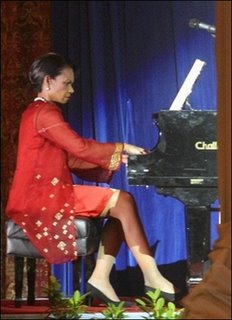
So really, what is up with her feet? And legs?

 BIRTH PANG?
Palestinian relatives carry the body of Anas Zoumlot, 12, during his funeral at the Jebaliya refugee camp, next to Gaza City Friday July 28, 2006. Zounlot was killed, according to Palestinian witnesses and officials, by Israeli troops during an army operation Thursday in Jebaliya. Despite a high death toll in Gaza, with 23 people killed on Wednesday alone, the world's attention has been focused on Lebanon.
Sorry, Mohammed but you're just a quota
Air Marshals say people added to watchlists to fill quotas
The American Civil Liberties Union has asked the Chief Privacy Officer of the Department of Homeland Security to investigate a recent news report that federal air marshals are labeling innocent Americans as "suspicious" after being directed to fill a monthly watchlist quotas, RAW STORY has learned.
The Air Marshals Service responded to earlier complaints by indicating that the complaints came from disgruntled Denver employees. However, Denver's KMGH-TV contacted 17 employees in 4 different states, who confirmed the story.
KMGH quotes one Air Marshal as saying, "Our job is to prevent another Sept. 11 from happening. We can't do that. Not under these circumstances, not under these conditions."
Continued
The American Civil Liberties Union has asked the Chief Privacy Officer of the Department of Homeland Security to investigate a recent news report that federal air marshals are labeling innocent Americans as "suspicious" after being directed to fill a monthly watchlist quotas, RAW STORY has learned.
The Air Marshals Service responded to earlier complaints by indicating that the complaints came from disgruntled Denver employees. However, Denver's KMGH-TV contacted 17 employees in 4 different states, who confirmed the story.
KMGH quotes one Air Marshal as saying, "Our job is to prevent another Sept. 11 from happening. We can't do that. Not under these circumstances, not under these conditions."
Continued
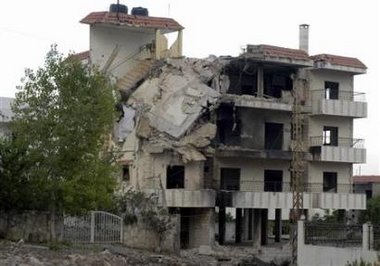
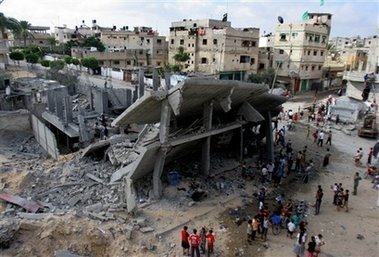
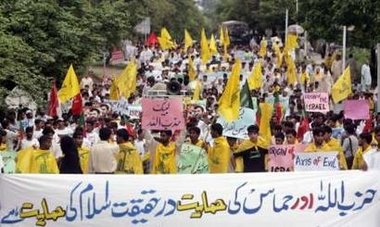
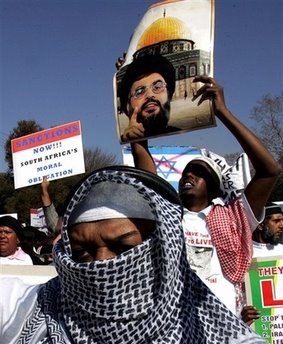
The War on Lebanon and the Battle for Oil
Is there a relationship between the bombing of Lebanon and the inauguration of the World's largest strategic pipeline, which will channel more than a million barrels of oil a day to Western markets?
Virtually unnoticed, the inauguration of the Ceyhan-Tblisi-Baku (BTC) oil pipeline, which links the Caspian sea to the Eastern Mediterranean, took place on the 13th of July, at the very outset of the Israeli sponsored bombings of Lebanon.
One day before the Israeli air strikes, the main partners and shareholders of the BTC pipeline project, including several heads of State and oil company executives were in attendance at the port of Ceyhan. They were then rushed off for an inauguration reception in Istanbul, hosted by Turkey's President Ahmet Necdet Sezer in the plush surroundings of the Çýraðan Palace.
Also in attendance was British Petroleum's (BP) CEO, Lord Browne together with senior government officials from Britain, the US and Israel. BP leads the BTC pipeline consortium. Other major Western shareholders include Chevron, Conoco-Phillips, France's Total and Italy's ENI. (see Annex)
Israel's Minister of Energy and Infrastructure Binyamin Ben-Eliezer was present at the venue together with a delegation of top Israeli oil officials.
Read the rest
Virtually unnoticed, the inauguration of the Ceyhan-Tblisi-Baku (BTC) oil pipeline, which links the Caspian sea to the Eastern Mediterranean, took place on the 13th of July, at the very outset of the Israeli sponsored bombings of Lebanon.
One day before the Israeli air strikes, the main partners and shareholders of the BTC pipeline project, including several heads of State and oil company executives were in attendance at the port of Ceyhan. They were then rushed off for an inauguration reception in Istanbul, hosted by Turkey's President Ahmet Necdet Sezer in the plush surroundings of the Çýraðan Palace.
Also in attendance was British Petroleum's (BP) CEO, Lord Browne together with senior government officials from Britain, the US and Israel. BP leads the BTC pipeline consortium. Other major Western shareholders include Chevron, Conoco-Phillips, France's Total and Italy's ENI. (see Annex)
Israel's Minister of Energy and Infrastructure Binyamin Ben-Eliezer was present at the venue together with a delegation of top Israeli oil officials.
Read the rest
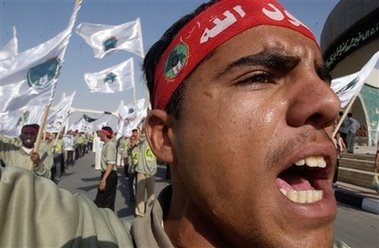
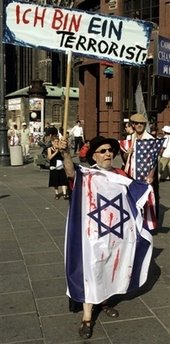

Subscribe to:
Posts (Atom)