Saturday, September 09, 2006


WHILE THE PUPPET ABBAS ENTERTAINS FOREIGN LEADERS IN HIS PLUSH SUITE IN RAMALLAH.....


Children receive bread and soup, donated by the Palestinian 'Waqf' or religious affairs ministry, at a kitchen in the old town of the West Bank city of Hebron September 8, 2006. (REUTERS)


THE HAMAS DIFFERENCE: YOU NEVER SEE THE PUPPET ABBAS AMONG PALESTINIANS IN REFUGEE CAMPS LIKE THIS
Palestinian Prime Minister Ismail Haniyeh of the Islamic group Hamas, center, waves as he is surrounded by supporters after speaking at a mosque during Friday prayers in the Rafah refugee camp, in the southern Gaza Strip, Friday Sept. 8, 2006.(AP Photo)


WE BOTH HAVE SEEN BETTER DAYS


TWO LOSERS TRYING TO ESCAPE THE WRATH OF THEIR PEOPLE WHO DEMAND THEIR RESIGNATION

“What did the shops ever do to them?”


This morning between 2 and 4 o’clock Israeli military forces entered Balata Refugee Camp, south-east of Nablus city center. Soldiers traveling in two armoured bulldozers and four military jeeps proceeded to partially destroy of ten shops in the marketplace on the main street of the camp. The bulldozers pulled down whole shop awnings, crushed tiles and cement curbs lining the street, ripped a street sign from the ground, down a wall, cut an electric cable running overhead and destroyed an large arrangement of grape-vines outside a family home.

A local butcher expressed his frustration at the wanton destruction, “They do this because they know that we are all too poor to afford to rebuild our shops. The occupation is strangling our economy”. Pointing at the wrenched-up tiles of the shop porch and the ripped bits of metal sticking out above our heads in place of the bright red and white shop-front that usually greets customers, he continued: “It will take $1,000 just to repair the awning and another $500 for the porch. And I know that many other shop owners have worse damage. But there is no point in repairing any of it because we know that as soon as we fix it, they will come. They will come the next day!”

Despite this, the marketplace was this morning full of men clambering up ladders to tear down the old wrecked shop-fronts and take measurements for new ones. A team of electricians were busy replacing the cut cable and the rubble from the wreckage was neatly piled up at the sides of the street. “What did the shops ever do to them?” one of the workers exclaimed. “They are terrorists? No, this is the terror of the Israeli army.”

This sort of incursion is a regular occurrence in the refugee camps around Nablus, especially Balata. Occupation soldiers invade the camps nightly, though the use of armoured bulldozers is less common. On a ‘normal’ night, soldiers enter the camp around 2am and shoot at residents, occasionally arresting young men or invading and occupying homes. Last night’s incursion and destruction is yet another attack by the Israeli military on the impoverished residents of Palestine’s refugee camps.


Forced Migration Review 26: Palestinian displacement:

The September 2006 issue of the in-house magazine of the University of
Oxford’s _Refugee Studies Centre _ (http://www.rsc.ox.ac.uk/) includes a major
feature on Palestinian displacement. Twenty-eight articles by UN, Palestinian
and international human rights organisations, Palestinian scholars in the
diaspora and Jewish and Israeli activist groups examine the root causes of the
displacement of Palestinians, the consequences of the failure to apply
international humanitarian law in the Occupied Palestinian Territory and Palestinian
entitlement to protection and compensation. Full texts of all articles are
_online_ (http://www.fmreview.org/palestine.htm) . Hard copies are being printed.

The articles discuss how failure to address the Palestinian refugee crisis
represents perhaps the gravest shortcoming of the UN since its foundation.
The international community has not exerted sufficient political will to
advance durable solutions consistent with international law and Security Council
resolutions requiring Israel to withdraw from Palestinian territory it occupied
in 1967. Durable solutions for displaced Palestinians have been discussed
without reference to the legal norms applied in other refugee cases. Refugee
rights, entitlements to compensation or restitution and the rights to
protection of those Palestinians living under continued military occupation were not
central to the now-moribund Oslo peace process – nor are they part of the
subsequent US-sponsored ‘Performance-
Based Roadmap to a Permanent Two-State
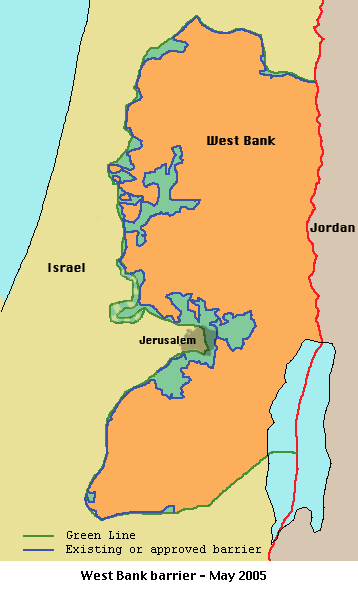
Solution’. Creeping annexation continues unchecked. Upon completion of Israel’s
Wall, Palestinians in the West Bank and Gaza Strip will be restricted to a
series of non-contiguous enclaves which constitute an eighth of the area of
historic Palestine. Despite pro-democracy rhetoric, Western response to the
internationally-validated Palestinian legislative elections in January 2006 has
sparked a politically-induced crisis and crippled the Palestinian economy.
Ordinary Palestinians are suffering as donors freeze funding required to maintain
humanitarian assistance and development programmes.
This issue is being published in English, Arabic, Hebrew, French and
Spanish.

Lebanon: civilians pay the price
by Thomas C Archer

Who are Palestinian refugees?
by Terry M Rempel

Stateless Palestinians
by Abbas Shiblak

UNRWA: assisting Palestine refugees in a challenging environment
by Greta Gunnarsdóttir

Palestinian refugees in Lebanon
by Sherif Elsayed-Ali

No freedom, no future: undocumented Palestinian refugees in Lebanon
by Cynthia Petrigh

Immobile Palestinians: ongoing plight of Gazans in Jordan
by Oroub el Abed

Is Gaza still occupied territory?
by Iain Scobbie

Can Palestinian refugees in Iraq find protection?
by Gabriela Wengert and Michelle Alfaro

Territorial fragmentation of the West Bank
by David Shearer

Identity and movement control in the OPT
by Jennifer Loewenstein

‘Quiet transfer’ in East Jerusalem nears completion
by Elodie Guego

The message of the bulldozers
by Jeff Halper

Just a wall?
by Tim Morris

Wall mitigation efforts: legal and practical tensions
by Chareen Stark

Emergency assistance for farmers affected by the Wall
by Saed Essawi and Emily Ardell

Impressions from a visit to Palestine
by Julian Gore-Booth

Democratic choice punished
by Ibrahim Hewitt

Can the IDP label be used in Israel/Palestine?
by Dina Abou Samra and Greta Zeender

The Bedouin of the Negev: a forgotten minority
by Kathrin Koeller

Breaking the cycle of violence
by Lucy Nusseibeh

Civil society responds to protection gap
by Vivienne Jackson

European aid to vulnerable Palestinians
by Daniela Cavini

Reparations for Palestinian refugees
by Lena El-Malak

The politics of Palestinian refugee participation
by Juliette Abu-Iyun and Nora Lester Murad

Negotiating checkpoints in Palestine
by Sheerin Al Araj

Policing thought on Palestine

What future for young Palestinians in Jordan?
by Jason Hart


CARTOON OF THE DAY


War-Mongering America Terrorizes the World

By Howard Zinn

(Howard Zinn is a professor emeritus at Boston University and the author of the forthcoming book, "A Power Governments Cannot Suppress")

"There is something important to be learned from the recent experience of the United States and Israel in the Middle East: that massive military attacks, inevitably indiscriminate, are not only morally reprehensible, but useless in achieving the stated aims of those who carry them out.

The United States, in three years of war, which began with shock-and- awe bombardment and goes on with day-to-day violence and chaos, has been an utter failure in its claimed objective of bringing democracy and stability to Iraq. The Israeli invasion and bombing of Lebanon has not brought security to Israel; indeed it has increased the number of its enemies, whether in Hezbollah or Hamas or among Arabs who belong to neither of those groups.

I remember John Hersey's novel, "The War Lover," in which a macho American pilot, who loves to drop bombs on people and also to boast about his sexual conquests, turns out to be impotent. President Bush, strutting in his flight jacket on an aircraft carrier and announcing victory in Iraq, has turned out to be much like the Hersey character, his words equally boastful, his military machine impotent."

GET READY: THE "PEACE PROCESS" CIRCUS IS MAKING A NEW TOUR (A Repost)

On the occasion of the arrival of the Blair Circus in the Middle East, I am reposting this commentary which I wrote on August 20:

By Tony Sayegh

Like clock work, every time there is a war in the Middle East, the circus known as the "peace process" is dusted off and with its clowns it heads to various capitals in the region to peddle the illusion that this time Usrael and Britain are really serious about starting the "process." The impotent Arab foreign ministers have met, again, and they are doing the preparatory work for the circus to begin. The same ministers who declared just about a month ago in Cairo that the peace process was dead, are now ready to resurrect it from the dead! The mighty Arab puppets, trying to cover up their shameful and pathetic behavior while Hizbullah was making history, by re-launching a "peace initiative" in the UN. Don't laugh now; these Arab leaders mean business this time, and if the UN does not respond positively, the Lebanese PM will burst into tears!

Chief Clown Blair has sent his adviser, Lord Levy, to the M.E. to prepare for the arrival of the Chief Clown himself next week. He is expected to visit the major puppets in the area: Egypt, Jordan, S.A., and the P.A. in addition to Israel, of course.

Having failed militarily against Hizbullah, the Anglo-Usraeli axis is shifting gears. The main objective is to lure Syria away from Iran to accomplish three objectives: complete an anti-Iran Arab alliance under the Usraeli umbrella in preparation for an attack on Iran, cut off arm supplies to Hizbullah and end any support of the Palestinian Hamas and Islamic Jihad. The carrot being dangled in front of Syria is the start of the "peace process" negotiations about the future of the occupied Golan Heights. The process will involve neutralizing Syria, demilitarizing it and taking it outside of the confrontation with Israel in return for some arrangement for a demilitarized Golan.

As for the Palestinians, the chief stooge Abbas is ready to execute his role as a junior clown. He, having failed to get rid of Hamas, is calling for a national unity "government" and another one-sided truce where the Palestinians agree not to fight back while Israel continues with the assassinations, demolitions and arrests. Chief Clown Blair will be calling for restarting the "Road Map" discussions and he will be asking Israel to make some minor concessions in order to help Abbas. Things such as opening the border crossings to Gaza and easing the financial noose imposed on the Palestinians.

The key question is whether Syria will fall for such a trap and end its strategic alliance with Iran. It is not beyond the Syrian regime to take such bait, and one will have to wait and see. Early indications are that Syria will resist the temptation, especially since the credibility of any promises made by Bush and Blair is very low now. Similar promises were made before to the Palestinians which were not kept. The last one was made by Blair just before the invasion of Iraq, when the "Road Map" was launched and Bush promised a Palestinian state by 2005. It was perhaps telling that Syria did not attend the latest Foreign Ministers conference in Cairo.

The Occupation of Iraqi Hearts and Minds


By Nir Rosen

Editor’s note: Truthdig contributor Nir Rosen, an American reporter who has lived for the last three years in Iraq and who can pass as Middle Eastern, describes what it’s like to live under the boot of a culturally callous—and sometimes criminal—occupying force in Iraq. “The occupation has been one vast extended crime against the Iraqi people, and most of it has occurred unnoticed by the American people and the media.”

"In reality both Abu Ghraib and Haditha were merely more extreme versions of the day-to-day workings of the American occupation in Iraq, and what makes them unique is not so much how bad they were, or how embarrassing, but the fact that they made their way to the media and were publicized despite attempts to cover them up. Focusing on Abu Ghraib and Haditha distracts us from the daily, little Abu Ghraibs and small-scale Hadithas that have made up the occupation. The occupation has been one vast extended crime against the Iraqi people, and most of it has occurred unnoticed by the American people and the media.

Americans, led to believe that their soldiers and Marines would be welcomed as liberators by the Iraqi people, have no idea what the occupation is really like from the perspective of Iraqis who endure it. Although I am American, born and raised in New York City, I came closer to experiencing what it might feel like to be Iraqi than many of my colleagues. I often say that the secret to my success in Iraq as a journalist is my melanin advantage. I inherited my Iranian father’s Middle Eastern features, which allowed me to go unnoticed in Iraq, blend into crowds, march in demonstrations, sit in mosques, walk through Falluja’s worst neighborhoods. I also benefited from being able to speak Arabic—in particular its Iraqi dialect, which I hastily learned in Baghdad upon my arrival and continued to develop throughout my time in Iraq.

My skin color and language skills allowed me to relate to the American occupier in a different way, for he looked at me as if I were just another haji, the “gook” of the war in Iraq. I first realized my advantage in April 2003, when I was sitting with a group of American soldiers and another soldier walked up and wondered what this haji (me) had done to get arrested by them. Later that summer I walked in the direction of an American tank and heard one soldier say about me, “That’s the biggest fuckin’ Iraqi (pronounced eye-raki) I ever saw.” A soldier by the gun said, “I don’t care how big he is, if he doesn’t stop movin’ I’m gonna shoot him.”

I was lucky enough to have an American passport in my pocket, which I promptly took out and waved, shouting: “Don’t shoot! I’m an American!” It was my first encounter with hostile American checkpoints but hardly my last, and I grew to fear the unpredictable American military, which could kill me for looking like an Iraqi male of fighting age. Countless Iraqis were not lucky enough to speak American English or carry a U.S. passport, and often entire families were killed in their cars when they approached American checkpoints."
---
A long article but well worth reading.

Israel’s Barrier to Peace


By Chris Hedges

Editor’s note: In this Dig, the former Middle East bureau chief for The New York Times and author of the bestseller “War Is a Force That Gives Us Meaning” examines the way Israel’s security wall has ripped a mortal gash in the lives of Palestinians living in its shadow, and argues that there can be no hope for peace in the Middle East as long as America continues to aid Israel in its dehumanizing practices.

"But this branding of these militants as something less than human, as something that reasonable people cannot hope to understand, is possible only because we have ignored and disregarded the decades of repression, the crushing weight of occupation, the abject humiliation and violence, unleashed on Lebanese and Palestinians by Israel because of our silence and indifference. It is the Israeli penchant for violence and occupation that slowly created and formed these frightening groups.

The failure by the outside world to react to the years of brutal repression, the refusal by the United States to intercede on behalf of the occupied Lebanese and Palestinians, gradually formed and galvanized the radicals who now occupy the stage with Israel, answering death for death, atrocity for atrocity.

Those inside these zones of occupation pleaded over the years for help. We refused to listen. And once they burst through these barriers, enraged, bloodied, bent on revenge, we recoiled in horror, unable to see our complicity. We asked them to be quiet, to be reasonable, to calm down, and when they did not, their blood heated by years of abuse and neglect, we condemned them to their fate.

We watch the woman. She is keening slightly. People are being destroyed by the serpent’s teeth of the wall, springing up from the soil of the West Bank like the evil warriors sown by Cadmus. This for me is the story, not the amount of concrete or coils of razor wire or razed olive groves and villages, but what all this is doing to human souls."

---
A long article, but well worth reading by one of my favorite writers, Chris Hedges.

Bibi's Rolling Armaggedon Sideshow


By Kurt Nimmo

"Somebody, please, grab Binyamin Netanyahu from his “American tour,” put him on a plane—or a slow boat—and send him back to Israel before he blows up the world.

“Benjamin Netanyahu … told an audience in New York yesterday that President Bush is preparing to ditch the United Nations to take on Iran alone and that American politicians of all parties would do well to stop squabbling about Iraq and join the president in focusing on threat from Tehran,” reports the New York Sun, a neocon infested newspaper propped up by the likes of Bruce Kovner, a billionaire financier who also apparently showers money on the American Enterprise Institute, a criminal organization where Bush gets his “minds,” that is to say the same folks who at one time “advised” Bibi to trash the Oslo Accords and go after Iraq and Syria.

In other words, Bibi knows better what Americans should focus upon—taking out Israel’s declared enemy, an enemy that poses absolutely no threat to America. “Why would Iraq attack America or use nuclear weapons against us? I’ll tell you what I think the real threat (is) and actually has been since 1990 — it’s the threat against Israel,” declared Philip Zelikow, executive director of Bush’s whitewash and progenitor of Brothers Grimm scary stories. “And this is the threat that dare not speak its name, because the Europeans don’t care deeply about that threat, I will tell you frankly. And the American government doesn’t want to lean too hard on it rhetorically, because it is not a popular sell.”"

Friday, September 08, 2006

A policy of punishment


Ismail Haniyeh
Palestinian PM
Saturday September 9, 2006
The Guardian

"Despite the historic responsibility of successive British governments for what has befallen our people, from the Balfour declaration to the catastrophe of dispossession, Palestinians had hoped that the new generation of British politicians might break with the past and stand for truth and justice in the Middle East.

Regrettably, however, the last decade has witnessed the most unfair and one-sided British policy towards the region since the creation of the state of Israel in our homeland close to 60 years ago. The problem has been the unquestioning attachment of Tony Blair's government to the Clinton and then Bush administrations, which have seen the Middle East through Israeli eyes only.

Despite Israeli war crimes against our people and assassinations of our leaders, the Palestinians introduced to the region one of the most transparent democratic experiences ever. The response of the British government has been to back the US and Israel in imposing boycotts and sanctions, in a blatant act of collective punishment. Since the legislative elections in January 2006, the Palestinian people have endured an effective state of siege and economic and diplomatic boycotts, and the Israeli military machine has been given free rein. During July and August, Israeli occupation troops killed 251 Palestinians, about half of them civilians - without a word of criticism from the British government.

The arrest of these ministers and MPs - five ministers, 33 MPs, including my deputy and the speaker of the legislative council - is a violation of the most fundamental principles of democracy, but this appears to be immaterial to Mr Blair. For him, three captured Israeli soldiers are far more important than 10,000 Palestinian detainees.

We receive signals here that the British public is unhappy about what Blair's government has been doing to our people. We know for sure that the majority of the British people did not approve of the invasion of Iraq. We greatly commend them for such a stance and thank them for sympathising with us in our plight. It is only through justice that peace will prevail in our region and Muslims, Christians and Jews once again live in harmony."

The bigger Palestinian picture


By Lamis Andoni
Al-Ahram Weekly

"Prime Minister Haniyeh's accusations that the Palestine Liberation Organisation (PLO) Executive Committee is conspiring against Hamas hold a lot of truth. Although united by different motivations, the PLO Executive Committee has joined Fatah's Central Committee in openly exploiting present Palestinian economic hardships to undermine the Hamas government.

"Some Fatah leaders and influential Palestinian Authority (PA) personalities want Hamas to declare defeat. There is no real interest in a partnership, but in a triumphant return", says one PLO official in touch with both parties. In the words of another PLO official, Fatah cannot fathom the fact that it is no longer the ruling party while Hamas is mainly concerned about the "success of Islamic rule".

But if Fatah, which still cannot take full responsibility for its defeat in last January's elections, has found an opportunity in outing Hamas, or at least subjugating it, the Islamist movement has the responsibility of making tough choices. What has transpired is that no Palestinian government can opt for both assuming power under the obligations of agreements with Israel and challenging the system that such agreements have brought into being. Late president Yasser Arafat was ostracised, besieged and driven to his death by challenging the system -- in spite of all of his political compromises.

Hamas is already discovering the limitations set on any Palestinian government set up within a system already confined by signed agreements with Israel. Popular elections notwithstanding, Hamas has found itself in a system totally dependent on Israel and international funding. The Oslo Accords may be buried under the rubble of demolished Palestinian homes, but its chains have survived, nurtured by Israel, Arab and Western governments.

It is no secret that some senior PLO emissaries have spared no time promising European leaders that they would save the Oslo induced "process" and subjugate Hamas. But even if a national unity government relatively acceptable to the world, and which could ease the siege on the Palestinians, were formed, Palestinians would still be faced with the challenge of finding a strategy that gets them out of a perpetual siege of agreements that undermine the core of Palestinian self-determination and their struggle for freedom."

U.S. Politicians Should Focus On Tehran, Netanyahu Says

September 8, 2006

"NEW YORK - Benjamin Netanyahu, as part of an American tour repositioning himself for a return to the Israeli premiership, told an audience in New York yesterday that President Bush is preparing to ditch the United Nations to take on Iran alone and that American politicians of all parties would do well to stop squabbling about Iraq and join the president in focusing on threat from Tehran.

The former prime minister, who leads the right of center Likud Party in opposition to the current government, went on to tell lunch guests of the Hudson Institute that another war between Hezbollah and Israel is inevitable and that a shift in Israeli politics is about to take place with his return to power and a return to the principles that guided thinking in Jerusalem until the Oslo Accords.

Israel's one-time ambassador to the United Nations urged Americans of all political persuasions to "not get caught up" arguing about Iraq. Mr. Netanyahu dismissed the argument that fears of Iranian plans for WMD might be false in the way that predictions on Iraq have come under question. Mr. Netanyahu said Israel had told America that claims about Iraq's weapons were based on "conjecture," while with Iran "we're not guessing. We know."

Mr. Netanyahu told the gathering at the Four Seasons that Prime Minister Olmert's Kadima party was built on the policy of unilateral withdrawals – a premise that is now dead. And so, went his implication, is the party and Mr. Olmert's premiership. The policy of unilateral withdrawals started with the Oslo Accords. He spoke of how, from Israel's founding until then, Israel's military and her relations with her Arab neighbors had been based on Vladimir Jabotinsky's concept of the "Iron Wall."

This was a reference to a phrase used by the right of center Zionist, who held that only when the Arabs became convinced that they couldn't destroy Israel – with every attack on Israel met by an "iron wall" – would peace follow. If Israel's deterrence and response to attack was so strong the Arab's found themselves banging themselves against an "Iron Wall," they'd realize the futility of trying to destroy Israel and seek peace. The "Iron Wall" principle, said Mr. Netanyahu, led to peace with Egypt and Jordan. They attacked Israel, were soundly defeated, and sued for peace."

LATUFF CARTOON OF THE DAY


(Click on cartoon to enlarge)

Canadian Media calls for Nuking Iran


by Michel Chossudovsky

"A major Canadian newspaper is calling for outright nuclear attacks on Iran.The Toronto Sun article proposes the use of tactical nuclear weapons or so-called mini-nukes with an explosive capacity between one third to six times a Hiroshima bomb .

The article goes beyond the usual pattern of media disinformation, which presents Iran is a threat to global security, calling for punitive bombings pursuant to a Security Council Resolution.

While the proposal to nuke Iran may appear outrageous, it nonetheless reflects US foreign policy. It is consistent with US military doctrine and ongoing war plans which contemplate the use of tactical nuclear weapons against Iran.

The nuking of Iran is viewed as a "humanitarian operation" intent upon liberating Iran from oppression.

The objective is to build a consensus that mini nukes are actually safe for civilians and you can use them against rogue states.

According to the Pentagon, tactical nuclear weapons "are safe for the surrounding civilian population." The use of nuclear weapons against Iran is part of a broad "humanitarian mandate" which seeks to prevent Iran from threatening the World with its own nukes, which it does not possess."

Lessons from Lebanon: Rethinking national liberation movements


A RECOMMENDED ARTICLE

By Hamid Dabashi
Al-Ahram Weekly

"ON THE EVIDENCE of the facts on the ground, the death and destruction and the rubble and ruin that this wild European beast has left behind in Lebanon, it is quite evident that the purpose of this latest criminal atrocity was to destroy the very possibility of any kind of cosmopolitan culture in Lebanon. The failed launch of "Israel" as a mini empire, modeling itself clumsily on the pattern of the neocon artist in Washington DC (as AIPAC tries to prove to Washington that it can be useful in Bush's war on "terrorism"), has an evident agenda far beyond Palestine and Lebanon--and the fact that it has miserably failed to achieve it must not blind us to the projected agenda that this mutated stage of Zionism is projecting. The mutation of the Zionist settlement into a mini-empire wannabe means that all the positive and hopeful developments in both Palestine and Lebanon, that both Hamas and Hizbullah were now part and parcel of a more embracing political process, were in fact inimical to the Israeli imperial aping of the US in the region. In that respect, all the hogwash of European and American so-called liberals that the Israeli response to Hizbullah was "disproportionate" is sheer nonsense. Israeli's war crimes in Lebanon were perfectly proportionate to what it wanted to do--to bomb Lebanon back to sectarian warfare, to reduce the cosmopolitan character of Lebanon to Muslims and Christians fighting against each other in order to make the Jewish state look normal and at home in the neighbourhood. That Israel miserably failed to achieve that malicious objective speaks volumes both to the medieval tribalism that is at the heart of the Jewish state and the cosmopolitan character of the Lebanese national resistance.

Too much emphasis on Hizbullah, Hamas, and the Mahdi's Army as three political organizations confuses a subaltern political reality (the poor and the disenfranchised in Lebanon, Palestine, and Iraq) with its accidental organizational manifestation. Israel can kill Hassan Nasrallah in Lebanon and Khaled Mashaal in Palestine, as the US might Muqtada Sadr in Iraq, tomorrow (if they only could) and ten more Nasrallahs and Mashaals and Muqtada Sadrs will emerge from the Dahiya neighbourhood in Beirut and from Gaza in Palestine and from Najaf in Iraq. Hizbullah and Hamas and Mahdi's Army are three accidental expressions of three essential and deeply rooted political and demographic realities. The poor of the southern Lebanon (who happen to be Shias) have historically been denied their fair share in Lebanese politics; as have the poor and the disenfranchised among the Palestinians (who happen to be Muslims), and the poor and the disenfranchised among the Iraqis (who too happen to be Shias). Hizbullah, Hamas, and Mahdi's Army are not manufactured banalities and militant adventurers like al-Qaeda, created and crafted by the US-Pakistan-Saudi alliance to fight the Russians and prevent the spread of the Iranian Islamic revolution eastward. Hizbullah, Hamas, and Mahdi's Army are grassroots movements--the shame of the national liberation movements in Lebanon, Palestine, and Iraq that had historically failed to include the most disenfranchised subaltern communities in their emancipatory projects."

'Quiet transfer' in East Jerusalem nears completion


by Elodie Guego
Forced Migration Review

(Elodie Guego, a lawyer specialised in human rights law, worked as a volunteer in the OPT in 2005 and is currently Assistant Country Analyst at the Norwegian Refugee Council's Internal Displacement Monitoring Centre, Geneva)

"Israel is close to implementing a long-term plan to transform the demographic structure of annexed East Jerusalem. Policies to revoke the residency permits of Palestinian Jerusalemites and to Judaise the city have been described as ethnic cleansing.

The construction of the Wall along and inside Jerusalem's municipal borders will definitively prevent the return of Palestinians expelled from Jerusalem by land confiscations, house demolitions or pressure from extremist settlers' groups. They will lose their rights to permanent residency in Jerusalem under the 'centre of life' policy and will no longer be able to enter the city without special permits. The properties that they have abandoned in Jerusalem risk being seized under Israeli's Absentee Property Law.

This eight-metre high Wall has given Israel a pretext to achieve long-established goals under the guise of security. Jerusalem is at the heart of all the antagonisms in the Middle East. International silence and failure to speak out against Israeli's transfer strategy is likely to have irreversible consequences and destroy regional prospects for peace. The transfer of Palestinians will soon be an undisputed reality but should not remain 'quiet'."

Turkey's high-stakes march into Lebanon

Asia Times

"It is therefore not in the least bit surprising that the decision by the Turkish government to depute troops to Lebanon - duly endorsed by the Turkish parliament in a majority vote on Tuesday - has virtually split the country's polity into two distinct worlds.

The 340-192 vote in parliament authorizing the government to deploy a naval force for one year to patrol the waters off Lebanon, and possibly Turkish ground troops of an unspecified number, might appear deceptively simple. Actually, the topic proved to be highly divisive, with significant sections of public opinion, the country's president and all political parties other than the ruling Justice and Development Party (AKP) vehemently opposing the move. Dissident opinion is apparently sizable even within the AKP.

The Islamist and nationalist camps argue that the Turkish contingent in Lebanon might come to be viewed as an occupation force, which would work against "Islamic solidarity" and hurt Turkey's long-term interests. The nationalists abhor the very idea of Turkey getting entangled in any manner in the Israeli-Arab conflict. They argue that Turkey ought to concentrate attention on the pressing challenge to national security posed by Kurdish separatism.

"Leave aside Palestine; the primary interest is in Mount Kandil and Kirkuk," said top nationalist leader and former deputy prime minister Devlet Bahceli, in reference to Kurdish militant strongholds in Turkey and Iraq, respectively.

There is widespread concern that the United Nations stabilization force will be called on incrementally to serve US-Israeli interests and will prove incapable of protecting the Lebanese people from future Israeli aggression. Overarching all this is the pervasive skepticism about Turkey identifying with the United States' controversial "New Middle East" project."

How hi-tech Hezbollah called the shots

Asia Times

"Hezbollah's ability to repel the Israel Defense Forces during the recent conflict was largely due to its use of intelligence techniques gleaned from allies Iran and Syria that allowed it to monitor encoded Israeli communications relating to battlefield actions, according to Israeli officials, whose claims have been independently corroborated by the US Central Intelligence Agency (CIA).

"Israeli EW [electronic warfare] systems were unable to jam the systems at the Iranian Embassy in Beirut, they proved unable to jam Hezbollah's command and control links from Lebanon to Iranian facilities in Syria, they blocked the Barak ship anti-missile systems, and they hacked into Israeli operations communications in the field," Richard Sale, the longtime intelligence editor for United Press International, who was alerted to this intelligence failure by current and former CIA officials, told Asia Times Online.

"It goes to the heart of one of the factors ... routinely regarded as one of the clear advantages for all First World versus Third World nations or forces - electronic warfare and secure communications," said Gary Sick, who was national security adviser under US president Jimmy Carter. "We are supposed to be able to read and interfere with their communications, not vice versa. A lot of calculations are based on that premise.""


The ability to hack into Israel's military communications gave Hezbollah a decisive battlefield advantage, aside from allowing it to dominate the media war by repeatedly intercepting reports of the casualties it had inflicted and announcing them through its television station, Al-Manar.

Why we're in Afghanistan and why we're there forever


Accessing 11 to 12 TRILLION dollars
in Caspian Sea Basic Oil and Gas


Click to see Video;Investment Banker Karl Schwartz lays it out

1. The Caspian Sea Basin (Kazakstan, Turkmenistan etc.) holds between 11 and 12 TRILLION dollars in oil and gas resources
2. There are only three ways to get it out:
- East to China
- West through Iran, Russia, and Turkey to Europe
- South through Afghanistan and Pakistan
3. The Taliban who controlled Afghanistan before 9/11 made pipeline deals with non-US companies and refused to change them to give control of the region's resources to the US

RESURGENT TALIBAN

"Afghanistan is especially important to Washington because it is the only plausible way to bring natural gas down from Turkmenistan to Pakistan and India. The Turkmenistan alternative is being used to push Delhi away from any flirtation with an Iranian pipeline.

As Afghanistan falls again into substantial chaos, India is being forced to reconsider, and to seek to draw on Iran's Yadavan fields, with a pipeline coming down through Pakistani Baluchistan and over to the Indian border.

The turn for the worst in Afghanistan may explain the sudden warming of relations between Delhi and Tehran. Indian PM Manmohan Singh called up Iranian President Mahmoud Ahmadinejad and stressed the need to fast track the pipeline project, which had seemed dead earlier this summer. (Last spring the pro-Iranian minister of petroleum had been fired, and some assumed it had been in part as a result of American pressure).

By deserting Afghanistan to run off to war in Iraq, Bush ensured that it would risk falling again into social turbulence, and thus helped seal the fate of the Turkmenistan pipeline through Herat (wouldn't the Taliban just blow it up?)

In turn, that may have ensured that Iran would be able to sidestep US sanctions by dealing, not only with China, but also with India.

And that may mean that Bush let the big fish get away by getting bogged down in Iraq, which is turning out not to be any prize for him, either."


KABUL, Afghanistan - The driver of a car packed with explosives rammed into a U.S. military convoy in downtown Kabul on Friday, killing himself and at least 16 other people, including at least two American soldiers. Two other American soldiers were among 29 people wounded. Here, a US soldier is pulling the body of a dead US soldier.

Thursday, September 07, 2006

'Gaza is a jail. Nobody is allowed to leave. We are all starving now'


By Patrick Cockburn in Gaza
The Independent

"Gaza is dying. The Israeli siege of the Palestinian enclave is so tight that its people are on the edge of starvation. Here on the shores of the Mediterranean a great tragedy is taking place that is being ignored because the world's attention has been diverted by wars in Lebanon and Iraq.

A whole society is being destroyed. There are 1.5 million Palestinians imprisoned in the most heavily populated area in the world. Israel has stopped all trade. It has even forbidden fishermen to go far from the shore so they wade into the surf to try vainly to catch fish with hand-thrown nets.

Gaza has essentially been reoccupied since Israeli troops and tanks come and go at will. In the northern district of Shajhayeh they took over several houses last week and stayed five days. By the time they withdrew, 22 Palestinians had been killed, three houses were destroyed and groves of olive, citrus and almond trees had been bulldozed.

The few ways that Gazans had of making money have disappeared. Dr Abu-Ramadan says the Israelis "have destroyed 70 per cent of our orange groves in order to create security zones." Carnations and strawberries, two of Gaza's main exports, were thrown away or left to rot. An Israeli air strike destroyed the electric power station so 55 per cent of power was lost. Electricity supply is now becoming almost as intermittent as in Baghdad.

The Israeli siege and the European boycott are a collective punishment of everybody in Gaza. The gunmen are unlikely to be deterred."

OIL CORRIDOR - IRAQ/IRAN


U.S. forces in Iraq number 145,000

ANOTHER INDICATION OF A PLANNED US GROUND INVASION OF IRAN

"WASHINGTON - The number of U.S. troops in Iraq rose to 145,000 this week, the highest since December and 15,000 more than a month ago."

---
MY TAKE:
-------

It is highly unlikely that the aim of a US ground invasion of Iran is to capture the entire country, in a manner similar to the invasion of Iraq. Iran is much larger, with three times the population of Iraq and the US doesn't have enough troops on the ground. However, it is highly likely that the US (with British help) will aim to capture Khuzestan, right across the border from Iraq. That is where Iranian oil in concentrated. The aim would be for a quick operation to capture the oil installations and refineries in as intact condition as possible. This is probably doable. With the loss of the oil revenue, and with air strikes, it would be a matter of time before the Iranian government falls. That is the theory, anyway.

This also explains the closing down of the British military base recently and the relocation of British soldiers to the Iranian border. It is to be noted that British forces in Iraq are also being increased.

If we were to take Blair seriously, that he would leave office in a year, then the invasion of Iran will take place within this window.

---

It is true that in the short term, a foreign attack on Iran would unify the country. We can look at Lebanon as an example. However, that unity begins to collapse, as time goes on and an economic siege is imposed. We have three examples: Iraq, Lebanon and Palestine. In the early stages of each attack, each presented a united front. But look at Iraq now; it is being fragmented along sectarian and ethnic lines. The same could easily happen in Lebanon; the bickering and narrow self-interest are in full view already. Look at the Palestinians, while Israel is still bombing and killing on a daily basis, Fatah is implementing Usraeli plans to topple the government by all means possible, including strikes, armed confrontations, etc.

If we extrapolate to Iran, the same can easily develop there; Iran is just as vulnerable to ethnic and sectarian divisions. I am not saying that the US will succeed, but experience shows that the neocons do not learn from their failures, or if they learn they learn the wrong lesson, which is to apply even more force in the next adventure (mini nukes?).

خالد مشعل:المقاومة صارت بديلاً متكاملاً وإسرائيل لن تعيش كثيراً


AN INTERVIEW (Arabic) IN AL-AKHBAR LEBANESE PAPER
WITH HAMAS LEADER MASH'AL


ليس أفضل من الفلسطينيين من يفهم حقيقة ما حصل في لبنان خلال شهر ونيّف. وليس أكثر من الفلسطينيين من سيحصد النتائج البعيدة المدى للانتصار الذي حققته المقاومة في لبنان. وليس أكثر من الفلسطينيين من يقدر على استثمار هذا الإنجاز في المكان الصحيح، حيث بقية المعركة المفتوحة ضد إسرائيل.

Palestinian elite tells British PM Blair not to visit territories

"RAMALLAH - Hundreds of Palestinians including politicians and intellectuals on Thursday called on British Prime Minister Tony Blair not to visit Palestinian areas, accusing him of excessive support for Israel.

"He is coming here in order to wash his hands, that are dripping with Lebanese blood, with Palestinian water," the group of Palestinians wrote in an ad placed in the al-Ayyam newspaper.

"We, the signatories... notables, intellectuals and political figures declare that Tony Blair is persona non-grata in our country."

The British prime minister came under fire at home during Israel's 34-day war with Hezbollah for lining up with the United States in refusing to back Lebanon's demands for an immediate truce.

The notice said Palestinian leaders should cancel Blair's trip. It was signed by members of smaller parties, university professors, activists from non-governmental organizations and hundreds of ordinary Palestinians.

The signatories did not include any politicians from Abbas' Fatah group or the governing militant Hamas movement."
---
I find it interesting and a bit cowardly that Hamas did not support this statement and position.

Palestinian Donors: What Mission?

By Nicola Nasser

"The Palestinians have been too grateful and too helpless for too long to be critical of the political agenda of their donors who have practically nailed them down as political hostages to the donors’ money, which was promised initially to help build an independent Palestinian state, but ended as a political instrument effectively used by the Israeli occupying power.

The internal political crisis is only a result of the deeper economic and humanitarian crisis, which is crushing the Palestinian people to the brink of a “social revolt,” especially in the “ticking time bomb” of Gaza Strip, (1) and the donors-sustained Palestinian Authority (PA) to the brink of collapse since the donors tightened the Israeli military siege by imposing a suffocating financial blockade early in the year.

The donors’ money continued to flow nonetheless with or without awareness that thereafter their aid had shifted to serve a completely different and contradictory political Israeli agenda and became an instrument of Israel’s foreign policy and thus became part of the problem and not of the solution, without alleviating the Palestinian economic plight.

Donors have turned to finance either the Palestinian submission, compliance, passivity or collaboration and collusion vis-à-vis the Israeli U.S.-backed unilateral plans, with a questionable indifference to the death of the peace process and the reoccupation of the PA autonomy, while showing an astonishing exemplary tolerance towards Israel’s destruction of the state-building infrastructures financed mainly by money paid by European and American taxpayers.

A show case of how donors squander their taxpayers’ money was their financing the Palestinian presidential and legislative elections with more than $250 million, which they strictly monitored, only to immediately refuse the outcome and give ammunition to Palestinian accusations that their democratic rhetoric was a sham.

At least this is how the donors’ role has become to be perceived, not by a minority but by the mainstream Palestinian, as was proved both by the landslide victory of the Hamas-led opposition in the January 25 legislative elections and by the failure of the “Oslo camp” to avert that victory in spite of the billions of dollars channelled to it by the donors."


The new Iraqi flag as desired by Barzani
(Iraqi Cartoon, published by Assafir, 9/7/06)

---

The Kurdish warlords (and that is what they are) have not served the Kurdish people well. They have allied themselves with different countries at different times and switched alliances so many times, it is hard to keep track of. They were allies even with the Shah and with Saddam!

The picture that emerges is of very narrow-minded and shortsighted leadership that looks only for personal gain. As a result, everyone ends up using the Kurds and making promises to them that they can't keep. The Americans and Israelis will be no different; they will use the Kurds and then dump them.

It would be a lot wiser, instead of taking advantage of the agony of Iraq and splitting the country, to live together with the Arabs of Iraq under a more enlightened leadership (from both sides) that cherishes ethnic diversity and richness of cultures. The Kurds will still have to live with the Arabs long after the Americans and Israelis are gone.

One last thought: How is an independent state of Kurdistan going to survive (after the Americans are gone), completely surrounded on all sides by hostile states? It has no outlets! How can you get in and out if they all blockade such a state?

---

An interesting article in Arabic by a Kurdish writer:

البارزاني يستر فشله القومي بالعلم العراقي
"وفشلت القومية الكردية في تحقيق أدنى حد من الصلاح الإداري، فالمنطقة تفوح منها رائحة الفساد الإداري من المحسوبية الحزبية والقبلية والرشوة وتجارة المخدرات والعمالة السرية والعلنية لهذه الجهة أو لتلك!

والمنطقة مفتوحة لكل من هب و دب من إسرائيلي إلى أميركي محتل وغير محتل، إلى مخابرات دول الإقليم إلى تجار الجنس والمخدرات.. وفوق ذلك تأتي بين تصريحات لا مسؤولة عن فتح قنصلية لإسرائيل في أربيل! واليوم نسمع إنزال العلم العراقي في كردستان! ليزيد من مشاعر العداء للأكراد ويزيد من عزلتهم عراقيا وعربيا وإسلاميا!

How Human Rights Watch Lost Its Way in Lebanon

The Israel Lobby Works Its Magic, Again
By JONATHAN COOK

Nazareth.

"The measure of a human rights organisation is to be found not just in the strides it takes to seek justice for the oppressed and victimised but also in the compromises it makes to keep itself out of trouble. Because of the business that human rights defenders are in, they must be held to a standard higher than we demand of others.

Unfortunately, one of the best -- Human Rights Watch -- has failed that test during the war in Lebanon this summer.

To its credit, HRW has risked much opprobrium for taking Israel to task for systematically breaking international law during its assault on Lebanon. That has culminated in a predictable campaign of harassment by pro-Israel organisations in the US -- as well as by the usual suspects like Alan Dershowitz -- that have accused its researchers of libelling Israel and being anti-Semitic.

Name-calling, however distasteful, cannot justify HRW distorting its findings to placate the Israel lobby. But that seems to be just what is happening.

At least it is now possible, because some army positions were temporary, to reveal that many communities in the north had artillery batteries stationed next to them firing into Lebanon and that from Haifa Bay warships continually launched warheads at Lebanon. That information is now publicly available in Israel, and other examples are regularly coming to light.

Arab member of Knesset Abbas Zakour has also gone publicly on the record: "During a short visit to offer condolences to the families of victims killed in Hizbullah's rocket attacks, I saw Israeli tanks shelling Lebanon from the two towns of Arab Al-Aramisha and Tarshiha."

Aside from the fact that this effective use of Israeli civilians as human shields by the army outdoes any "cowardly blending" (in the words of Jan Egeland of the United Nations) by Hizbullah in Lebanon, it also makes any attempt at second-guessing the targets of the Shiite militia's rockets futile.

This sophistry is fooling no one, least of all, of course, Israel's apologists. They will keep up their relentless defamation of an organisation like Human Rights Watch as long as Israel comes under its scrutiny. By trying to appease them, our human rights champions damage only themselves and those they should be seeking to protect."

Pakistan: Hello al-Qaeda, goodbye America

By Syed Saleem Shahzad
Asia Times

"MIRANSHAH, North Waziristan - With a truce between the Pakistani Taliban and Islamabad now in place, the Pakistani government is in effect reverting to its pre-September 11, 2001, position in which it closed its eyes to militant groups allied with al-Qaeda and clearly sided with the Taliban in Afghanistan.

While the truce has generated much attention, a more significant development is an underhand deal between pro-al-Qaeda elements and Pakistan in which key al-Qaeda figures will either not be arrested or those already in custody will be set free. This has the potential to sour Islamabad's relations with Washington beyond the point of no return.

An article by retired US Major Ralph Peters titled "Blood borders" published in the Armed Forces Journal last month has given Pakistan some food for thought over manipulating the geopolitical game on its own terms and conditions.

Peters, formerly assigned to the Office of the Deputy Chief of Staff for Intelligence, where he was responsible for future warfare, argues that borders in the Middle East and Africa are "the most arbitrary and distorted" in the world and need restructuring.

Four countries - Pakistan, Iraq, Saudi Arabia and Turkey - are singled out for major readjustments. Pakistan and Saudi Arabia are also defined as "unnatural states".

Across Pakistan's border in Afghanistan, the Taliban have control of most of the southwest of the country, from where Mullah Omar is expected soon to announce the revival of the Islamic Emirate of Afghanistan - the name of the country before the Taliban were driven out in 2001. Once the proclamation is made, a big push toward the capital Kabul will begin.

The sounds of jail doors opening in Pakistan will jar with the United States, as will Islamabad adopting a more independent foreign policy and, crucially, aligning itself with the resurgent Taliban in Afghanistan, which once again could become a Pakistani playground."

'Taliban taking over'

By Sanjay Suri
Asia Times

"LONDON - The Taliban have regained control over the southern half of Afghanistan and their front line is advancing daily, a group closely monitoring the Afghan situation said in a report this week.

The report on the reconstruction of Afghanistan marking the fifth anniversary of the September 11, 2001, attacks on the US is based on extensive field research in the critical provinces of Helmand, Kandahar, Herat and Nangarhar.

"The Taliban front line now cuts halfway through the country, encompassing all of the southern provinces," says a report by the Senlis Council, an international policy think-tank with offices in Kabul, London, Paris and Brussels.

"The subsequent rising levels of extreme poverty have created increasing support for the Taliban, who have responded to the needs of the local population," the report says.

The poppy-eradication program has been a disaster, he said. "It is a direct attack on the livelihood of the farmers, so there is a clear connection between the eradication and this humanitarian crisis. All this is being used by the Taliban to say ... 'When we were there we were maybe hard and cruel, but you could feed the family; now look what's going on.' They are more and more providing support [and] social services to the local population.""

Wednesday, September 06, 2006

Pawns of the War Party

HERE IS ANOTHER PIECE OF THE PUZZLE FITTING IN PLACE:

By Justin Raimondo
I'm talkin' 'bout the Kurds

"One of the most interesting, and little-talked about, consequences of the Iraq war has been the extension of Israeli influence – and aid, including military aid – to Kurdistan. Seymour Hersh reported on this, and Le Figaro detailed the developing American-Israeli rift over the issue, with Washington increasingly nervous over the growing Israeli presence and what it portends for the region. The Turkish military, formerly best buddies with the IDF, are furious at what they consider to be a stab in the back by their sometime allies, and relations between Ankara and Tel Aviv have subsequently soured.

Israel's interest is in establishing a base that borders Iran, from which to monitor developments in country and build an enclave from which to launch armed attacks. Pejak is the ideal instrument with which to accomplish this, and if Washington isn't directly funding or otherwise aiding the Iranian Kurdish guerrilla group, then the Israelis surely haven't neglected such an opportunity.

The Israelis are eager to use the Kurds as a tripwire for war, not only with Iran but with Syria, where restive Kurds have recently begun to rise against the regime of Bashar al-Assad. If the Israeli strategy is to spark a regional war that will rearrange the map of the Middle East and oust their enemies from Beirut to Tehran, then the Kurds are the perfect fuse. If you look at the claimed area of Kurdish predominance – "Greater Kurdistan" – it runs through Turkey, Syria, Iraq, Iran, and as far north as Armenia. Kurdistan, in short, is ideally located as a base from which to launch a campaign to destabilize Israel's enemies and effect "regime change" throughout the Middle East.

As American foreign policy increasingly aligns itself with Israel's, and the two allies settle their sights on Iran, Kurdistan takes on added importance. The price the Kurds are demanding for their cooperation – de facto independence – is one the U.S. may well be willing to pay if it means having an advantage in their coming showdown with Iran."

The Next Phase of the Middle East War

AN IMPORTANT REPORT
by Michel Chossudovsky

September 4, 2006
GlobalResearch.ca

"Israel's war on Lebanon is an integral part of a US sponsored "military roadmap".

The war on Lebanon, which has resulted in countless atrocities including the destruction of the nation's economy and civilian infrastructure, is "a stage" in a sequence of carefully planned military operations.

In the aftermath of the Israeli bombings and the "ceasefire", UN Security Council Resolution 1701, drafted by France and the US in close consultation with the Israeli government, has paved the way for the militarization of Lebanon, under a bogus UN mandate.

Confirmed by official statements and military documents, the US in close coordination with Britain (and in consultation with its NATO partners), is planning to launch a war directed against Iran and Syria.

US military sources have confirmed that an aerial attack, pursuant to a sanctions regime on Iran, with or without UN approval, would involve a large scale deployment comparable to the US "shock and awe" bombing raids on Iraq in March 2003.

While the threat of punitive aerial bombardments of Iran's nuclear facilities have been announced repeatedly by the Bush administration, recent developments suggest that an all out ground war is also under preparation."
---
Steven Rix: What do you think of this report?


THE NUMBER OF DEAD CANADIAN, BRITISH AND OTHER OCCUPATION FORCES IN AFGHANISTAN IS INCREASING RAPIDLY
These five Canadians were loaded in Kandahar Airport for the last trip home on Monday


Palestinians gather around the burning wreckage of a car destroyed in an apparent Israeli airstrike in the Rafah refugee camp, southern Gaza Strip, Tuesday, Sept. 5, 2006.Three Palestinians were killed and 12 wounded.(AP Photo)


The Grand Mufti of Jerusalem Sheik Ikrima Sabri (L), the top Palestinian Muslim Cleric, shakes hands with Atallah Hanna, spokesman of the Greek Orthodox Church in Jerusalem, during a news conference in East Jerusalem September 6, 2006, where they called for an end to Israeli arrests of Hamas leaders. (REUTERS)


Ioustinos Mamalos, the head of the monastery at Jacob's Well, walks on the grounds of the monastery in the West Bank city of Nablus September 6, 2006. The monastery at Jacob's Well, on the edge of the Palestinian city of Nablus, stands on the site where the Bible says Christ stopped on his way through Samaria two thousand years ago and asked a Samaritan woman for a drink of water. (REUTERS)


A Palestinian boy runs on the grounds of the monastery at Jacob's Well in the West Bank city of Nablus September 6, 2006. The monastery at Jacob's Well, on the edge of the Palestinian city of Nablus, stands on the site where the Bible says Christ stopped on his way through Samaria two thousand years ago and asked a Samaritan woman for a drink of water. (REUTERS)


Sinn Fein leader Gerry Adams, foreground, speaks with Palestinian legislators during a visit to the Palestinian Legislative Council building in the West Bank town of Ramallah in the West Bank town of Ramallah, Wednesday Sept. 6, 2006. Adams arrived for a two-day visit to Israel and the Palestinian areas, but Israeli officials will shun Adams during his first trip to the Holy Land because of plans to meet with members of the Hamas militant group, a government spokesman said Tuesday. (AP Photo)


Palestinian children hold a huge Palestinian flag during a demonstration calling for the release of Palestinian prisoners, held in Israeli jails, in the West Bank town of Ramallah, Wednesday, Sept. 6, 2006. (AP Photo)


Atallah Hanna, the spokesman for the Greek Orthodox Church in Jerusalem, speaks during a news conference in East Jerusalem September 6, 2006, where he called for an end to Israeli arrests of Hamas leaders. (REUTERS)

Palestinians in Gaza largely cut off from outside world


UN Office for the Coordination of Humanitarian Affairs

"RAFAH, 6 Sep 2006 (IRIN) - Israel’s continued closure of the Gaza Strip’s only international border crossing is isolating Gaza’s 1.4 million residents.

As Gaza’s only international border crossing, Rafah is the only route for ordinary Palestinians to cross from Gaza to Egypt to go back to their jobs and universities across the world - and to get back in to see their families.

All other crossings into Israel have been closed since the start of a second intifada in 2000. Meaning ‘uprising’ in Arabic, an intifada is a campaign directed at ending Israeli military occupation.

Many stuck in Gaza face losing their jobs if they cannot travel when they planned to. Palestinians unable to cross into Egypt risk losing money spent on airline tickets from Cairo to countries in the Gulf and elsewhere.

When the border last opened on August 25 and 26, priority was given to sick and vulnerable people, many of whom were travelling to Egypt for medical treatment.

Only a few thousand Palestinians got through, though – alerted by television news and mobile phone messages from friends - masses rushed towards it.

"It was insanely crowded – about 10,000 people. Many people jumped up onto the roofs of buses arriving at the border, and a lot fell off again."

Iraqi Necklaces Protest Disintegration of Iraq


OSAMA BIN LENIN


"Bored with the Hitler comparisons, Bush’s speechwriters have moved on to new and equally absurd rhetorical territory. “George Bush has given another warning on the dangers of terrorism, in which he compares Osama bin Laden to Hitler and Lenin,” reports ITV News, and none too soon, as the mid-term elections are right around the corner.

Osama and Vladimir Lenin are ideological opposites, but never mind—the American public is not paying attention."

وقائع «بهدلة» معلنة

A GREAT EDITORIAL BY LEBANESE COLUMNIST
JOSEPH SAMAHA (in Arabic)

جوزف سماحة

"إننا، نحن العرب، متّجهون نحو «بهدلة» سيسببها لنا حكامنا ومسؤولونا. نقترب منها بخطى حثيثة. لن تمضي أسابيع إلا ويكون المحظور قد وقع. لن نستطيع فعل شيء لتجنب هذه الكأس المرّة. وقائع هذه «البهدلة» معلنة.

قال أنان أمس في مقابلة مع الزميلة «الحياة» إن «الجامعة العربية لديها اقتراح لمجلس الأمن للنظر في عملية السلام وقد أرادوا أن يكون الاجتماع خلال هذا الشهر وأنا خارج نيويورك ولستُ متأكداً مما قرره رئيس مجلس الأمن وإذا كان سيتم هذا الشهر أم لا. وإذا تأجّل فإنه يمكن عقد اجتماع وزاري أثناء عقد الجمعية العمومية». أما لماذا الاجتماع فلأنه، حسب أنان، «من أجل إعطاء أمل للناس»!
هكذا إذاً، باتت وظيفة «النظام العربي الرسمي» إطلاق الأفكار من أجل «إعطاء الأمل».
لم يعد ممكناً سحب المذكرة. ستقع الواقعة. «البهدلة» حاصلة لا محالة. كنا في غنى عنها. لم يكن ضرورياً أن ننتقل من مراسم دفن عملية التسوية مباشرة نحو «مبادرة الأمل» التعيسة هذه.

The People's Struggle in the Middle East: An Interview with Ramzy Baroud

By Joshua Frank
Guerrilla News Network

Ramzy Baroud is a US author and journalist, currently based in London. He is the author of The Second Palestinian Intifada: A Chronicle of a People's Struggle (Pluto Press, 2006). He is also the Editor-in-Chief of PalestineChronicle.com. Here Baroud talks with Joshua Frank about the latest crisis in the Middle East and how it threatens the US and Israel’s international prowess.

"The tide quickly turned when Hizbollah exhibited steadfastness never displayed by entire Arab armies of well-armed legions with extensive political and material support. Every Arab I know watched in disbelief as events folded in Lebanon. The best they’ve hoped for is nominal resilience from Hizbollah, enough to thwart Israel’s overall objectives. A few went as far as predicting an Israeli defeat. Needless to say, Hizbollah’s victory has managed to help most Arabs and Muslims rise above their religious and sectarian divides, and has helped the group re-establish itself as a formidable political power and a military force not to be reckoned with.

That said, it’s important not to underestimate Arab factionalism, but especially Lebanese factionalism and its feasible role in helping Israel and the US achieve what they’ve failed to achieve through war.

In Lebanon, a redoubtable elite, representing various sects is greatly alarmed that the balance of power -- struck in Lebanon through years of civil wars and subsequent treaties (fair to some, utterly unfair to others) -- might be hindered with the re-rise of Hizbollah.

At one point, it was hoped that by removing the Syrian factor from the Lebanese equation, and weakening Hizbollah militarily, a pro-American Lebanon would effortlessly emerge: the old neoconservative calculation. That is yet to happen. However, Saad Hariri, son of former prime minister Rafik Hariri’ condemnation of Syria, calling it a greater threat to Lebanon than Israel, just a day after the end of the Israeli onslaught, speaks volumes regarding the nationalistic priorities of this crowd."

Chaos as a Strategy in Gaza

By Ramzy Baroud

"Israel, on one hand, desperately tried to link its fight against Palestinians — which evolved into a war against Palestinian democracy following the January 2006 legislative elections — with America’s “war on terror”. Palestinian factions, wary of the dangerous Israeli scheme, seemed least interested in any involvement with Al-Qaeda and its criminal affiliations. Desperate, yet canny Israeli attempts, reported sporadically in world media, failed miserably.

The Israeli redeployment around Gaza, ending on Sept. 12, 2005, was hardly the end of Israeli interests in the impoverished Gaza Strip. It left behind a legion of self-seeking, dare I say a pro-Israeli crowd, incessant in its attempts to redeem the many privileges it had lost since the restructuring of the political landscape introduced with the democratic toppling of Fatah in the recent Palestinian elections. While many Palestinians wish not to admit the size and significance of such a group, all signs point to their unmatched influence, and ability to wreak havoc within Palestinian society, permeate chaos, and impede genuine attempts of Hamas and a less corrupt Fatah faction to achieve a national unity government.

Regardless of who is exactly behind the journalists’ kidnapping in Gaza, this episode highlights the volatility of a situation when an elected government is being forced to operate underground (with many of its members already in Israeli jails), leaving the matter of security to be handled by the same dysfunctional and power hungry Fatah faction that caused most of the chaos and insecurity in Gaza.

Is it a surprise that the Fatah security forces always fail to carry out even one arrest once the release of foreign hostages is secured, perhaps with the hope that the kidnappers will strike once more whenever such distractions are convenient for both Israel and its beneficiaries?

The mockery is most disturbing."

Gerry Adams: Law limiting family reunification is a 'terrible thing'

Sinn Fein leader Gerry Adams on Wednesday slammed Israeli legislation that makes it difficult for Palestinians married to Israeli Arabs to gain legal status in Israel as a "terrible thing."

Speaking during a meeting with the deputy Knesset speaker, MK Ahmed Tibi, at his East Jerusalem hotel, Adams also called criticized the law that restricts Palestinian appeals for compensation for damage resulting from military operations. Continued

Jewish settlers in the West Bank predict a rosy future

By Michael Blum

Agence France Presse
6 September 2006

MAALEH REHAVAM, West Bank, Sept 6 2006-- Jewish settlers in the Israeli-occupied West Bank are looking to the future with renewed optimism, now that "realignment" --withdrawal -- is no longer the priority it once was for Prime Minister Ehud Olmert's government.

"I think we'll be here for a long time. There's no longer any reason to pull us out," one of the founders of the Maaleh Rehavam settlement near Bethlehem, Drori Bar Levav, told AFP.

He was speaking Tuesday, a day after Olmert was quoted by a Knesset official as telling the parliamentary defense and foreign affairs committee: "At this moment the question of realignment is not on our priority list the way it was two months ago."

"Olmert understands that the Israelis will not accept the expulsion of people from their homes for no valid reason, following the failure of the Gaza pull-out and the consequences of the war in Lebanon," the 30-year-old Bar Levav told AFP.

Established in 2001 on the outskirts of Noqdim, part of the Gush Etzion group of settlements, Maaleh Rehavam has never received the green light from the Israeli authorities.

Just 29 people live in the rogue settlement which the government has promised to dismantle under the roadmap drafted by the United States, European Union, Russia and the United Nations outlining steps toward establishing a viable Palestinian state living in peace alongside Israel.

Olmert's Kadima party narrowly won parliamentary elections in March with the aim of withdrawing from large swathes of the occupied West Bank -- but also effectively annexing
the largest Jewish settlements to Israel, with or without Palestinian agreement.

His realignment plan envisaged dismantling isolated settlements, evacuating some 70,000 settlers and regrouping them.

In March last year, Talia Sasson, a lawyer in the state prosecutor's office, produced a report on illegal Jewish outposts in the West Bank at the behest of then prime minister Ariel Sharon.

Her report recommended evacuating dozens of illegal settlements, but this never happened.

On July 10, a jurist at the justice ministry, Malkiel Blass, suggested legalising most of the unauthorised settlements -- prompting a sharp response from Sasson.

If Blass's recommendation were adopted, the government would be "violating Israeli law and the pledge made to the American administration to dismantle illegal settlements created after March 2001", she wrote in a letter published by the Haaretz daily newspaper.

For Emilie Amroussi, spokeswoman for Yesha, the organisation representing Israeli settlers in the West Bank, "the recommendations to legalise the outposts and Olmert's declaration are encouraging".

"But we're not claiming victory yet," she added quickly. "Olmert has not given up on these projects. He has merely deferred them for political reasons."

Drori Bar Levav is more upbeat, however, believing that he will now be able to stay at Maaleh Rehavam.

"My grandchildren will eat fruit from the trees that I plant," he said, pointing proudly at the vines and olive trees growing around the simple caravan in which he lives.

At the regional council of Gush Etzion, which comprises more than 20 settlements -- Maaleh Rehavam among them -- his optimism is not shared, however.

"Despite what Olmert says, I am not reassured about the future of the outposts and settlements," council president Saul Goldstein told AFP. "The threat of evacuation may
have lessened somewhat, but all that could change very quickly."

Calling himself a realist, Goldstein believes that only the formation of a government of national unity that includes the far right will remove the threat to dismantle unauthorised settlements and prevent Ehud Olmert's realignment plan from eventually going ahead.

Bush Turns to Fear-Mongering


Creation of "Islamic" Bogeyman

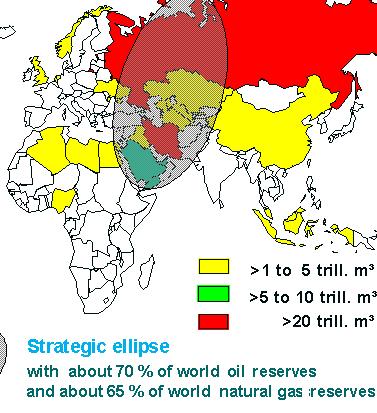
"This isn't a coherent enemy, it is a laundry list of places Bush would like to control because they have oil or gas, or are key to its development, or have other strategic benefits for the US and/or its regional allies, especially Israel.

So Bush tried to unify the Bogeyman by condemning radical Sunni Islam and then equally condemning radical Shiite Islam.

Shiite Islamism in Iraq is good, the same thing in southern Lebanon is bad.

And this is the reason for which he needs to keep 140,000 troops in Iraq, to stop the Muslim fundamentalists from taking it over. But of course, the Da'wa Party, the Supreme Council for Islamic Revolution in Iraq and the Sadr movement have *already* taken it over.

So there are good Muslim fundamentalist movements and bad ones. What seems to distinguish them is whether they are eager to do business with Houston or whether they badmouth Bush.

If you want to know what is really going on, it is a struggle for control of the Strategic Ellipse, which just happens demographically to be mostly Muslim. Bush has to demonize the Muslim world in order to justify his swooping down on the Strategic Ellipse. If demons occupy it, obviously they have to be cleared out in favor of Christian fundamentalists or at least Texas oilmen."

Tuesday, September 05, 2006

Blair's legacy is a reckless adventure that's wreaked havoc the world over

Jonathan Freedland in Washington
Wednesday September 6, 2006
The Guardian

"That was the new doctrine: unilateralism, pre-emption and coercive democratisation. And what has been the fate of this new faith? Judged from any and every point of view, it has proved the most spectacular failure.

Genuinely spreading democracy is a noble goal, but Bush could not face the logic of his own position. Not only would it have meant allowing people to vote for parties the US does not like, it would also have seen them rid themselves of regimes the US has long backed. Rhetorically Bush swore he was ready for that, but his continued support for the dictatorships in Pakistan and Egypt, and his closeness to the House of Saud, show it was just talk. Moreover, if the peoples of the Muslim and Arab world were really allowed their say, one of their prime demands would be an end to US and western meddling in their affairs. But that would be a democratisation too far for Washington.

Accordingly, the Bushies are trying to soften their approach, resorting to diplomacy and alliances in dealing with Iran, for example. But that's chiefly because Iraq has deprived them of military options. "There's a change of course, but not a change of heart," one senate Democrat told me.

Either way, it's too late for Tony Blair. He signed up for the Bush project, even though it was doomed. His aides speak of legacy, but this is his legacy - to have glued himself to a reckless venture which has wreaked havoc the world over. Destroying the Blair premiership is the very least of it."

Meanwhile in Iraq

Iraq: At least 25 killed as U.S. occupation continues: Police said they found the bodies of seven people in Baghdad with gunshot wounds to the head, five of them in the mainly Sunni area of Adhamiya, where insurgents are active.

U.S. occupation forces kill 5: U.S. troops killed five men in a ground assault and air strike on what they called a "safe house", targeting a person involved in moving money and foreign fighters into Iraq. A child was also killed in the fighting in Muqdadiya, northeast of Baghdad, the U.S. military said in a statement

3 U.S. occupation troops killed in Iraq fighting: The deaths brought to eight the number of American troops killed in Iraq in combat-related violence over the past two days.

Iraq to extend state of emergency: The measure has been in place for almost two years and grants security forces greater powers. It affects the entire country apart from the autonomous Kurdish region in the north.

Dahr Jamail : U.S. Losing Control Fast: The U.S. military has lost control over the volatile al-Anbar province, Iraqi police and residents say. The area to the west of Baghdad includes Fallujah, Ramadi and other towns that have seen the worst of military occupation, and the strongest resistance.

Iraqi parliament mulls federal break up: Abbas al-Bayati, spokesman for the largest Shia bloc, the United Iraqi Alliance, predicted: "In the next few sessions the parliament will discuss the law for the formation of provinces."

Shiite Revival or Majority Resistance?: The Sunni-Shiite divide is a deplorable ploy that was implemented by the West to create a diversionary tactic. Regrettably, the people of Iraq have fallen prey to it, for violence begets violence.

Patrick Seale: Four American allies in deep trouble: In Islamabad, Kabul, Baghdad and Jerusalem, four heads of government are facing grave, possibly terminal, difficulties -- largely because of their alliance with the United States.

Documentary Slams U.S. Companies Working in Iraq: He's tackled Wal-Mart and Fox News with his scathing documentaries. Now, filmmaker Robert Greenwald is releasing a documentary which argues that private companies helping to fight the war in Iraq don't have the nation's best interests in mind.

Truth in a Time of War with Howard Zinn : Video: Zinn's talk explores the notion of "just" wars with his usual candor and critical understanding.


Meanwhile in Lebanon

Nasrallah: from humble roots to Arab hero: In what will likely become one of the most oft-told stories about Nasrallah, the resistance leader declared calmly during one of his five televised speeches during the recent 34-day war with Israel: "Now, in the middle of the sea, facing Beirut, the Israeli warship that has attacked the infrastructure, people's homes and civilians - look at it burning."

Four dead in Lebanon 'assassination' bid: Four people have been killed and four others wounded in what is believed to be an assassination attempt on a leading Lebanese intelligence officer.

Israeli Occupation Forces: Withdraws From Five Lebanese Villages : UNIFIL soldiers, followed by Lebanese troops, are reported to have moved in to the villages in the wake of the withdrawals. UNIFIL set up new checkpoints and patrols in the area after Israeli occupation troops pulled out

Annan: Israel To Lift Lebanon Blockade in 48 Hours : United Nations Secretary General Kofi Annan told reporters in Cairo on Tuesday that he expects Israel will lift its blockade against Lebanon within the next 48 hours. Israel denied it.

Israel destruction in south Lebanon: initial survey: Israel destroyed or damaged in south Lebanon 1489 buildings, 21 of 29 bridges over the Litani river, 535 sections of road and 545 cultivated fields during its 34-day military offensive, according to an EU assessment released today.

The Footrace to Rebuild Lebanon: The militant Islamic group Hezbollah has seized an opportunity to show how much power it still wields by assuming a key role in the Lebanese reconstruction effort. With its generous assistance programs, the organization is shoring up its influence among the country's Shiites.

Syria to rebuild three Lebanese towns: The Lebanese National News Agency said that Speaker of the Lebanese parliament Nabeih Berri and Lebanese Prime Minister Fuad al-Siniora were informed about the Syrian decision of rebuilding the three Lebanese towns.


Meanwhile in Palestine

Bethlehem to be hemmed in on four sides, the latest for the Wall & a settler road in the southwest: The Israeli forces Commander for the Central Region of the occupied West Bank, Major General Yair Naveh, has decided to confiscate 152 dunams of southern Bethlehem. The stated aims of the confiscation are “military purposes” and “the security wall. ” Director of the Committee to Defend against Land Confiscation in the southern West Bank, Khalid Al Azzeh, says that this portion of the Wall will run alongside a new settler road linking Israeli settlements surrounding Bethlehem.

Army closes a Wall Gate cutting Far'on village farmers from their land: The Israeli army closed on Tuesday the gate number 708 of the Annexation Wall, which is located between the village of Far'on, near the West Bank of Tulkarem, and its orchards. This gate was installed to allow the farmers of the village to reach to their orchards that became isolted behind the Wall, closing it will bar the residents from reaching their lands, the main source of livelihood of the villagers.

For Gaza's students, classes by 'remote control': Shaima Naji, a 21-year old from Gaza, has never attended classes at Bethlehem University where she is enrolled to study occupational therapy. Naji registered at the university four years ago, but security forces forbade her entry into the West Bank. Occupational therapy, commonly called OT, has become a vital aspect of rehabilitative treatment in the Gaza Strip since the intifada began, but Naji may only receive professional training in Bethlehem...

Walls turn into fact of life in West Bank city of Hebron: A Palestinian child in Hebron has drawn her West Bank home town. Apart from rows of houses and olive trees, the picture shows an area circled by barbed wire, and is complete with checkpoint and watchtower. The large drawing now hangs in a Medecins Sans Frontieres (MSF) consulting room, where the international non-governmental organisation counsels Palestinians on "the violence of the intifada and the (Israeli) occupation" of the area.

PM unaware of gov't-issued tenders for W. Bank apartments: Security sources said yesterday that the construction plans for Ma'aleh Adumim and Beitar Ilit had already been approved last year, under the government of Prime Minister Ariel Sharon and Defense Minister Shaul Mofaz. The sources said the tenders for Ma'aleh Adumim are part of a larger plan to build 4,000 apartments in the town.

Hamas on the brink of deal to lead new coalition in move to end funding crisis: But Hamas officials say even in a new joint government with its main political rival, Fatah, the movement will not give explicit recognition to Israel - one of the conditions set by the international community for funding to resume.

Report: “86, including 16 children killed, 270 taken prisoners in August” : Sixteen Palestinian children were killed by Israeli shells and bullets, the youngest casualty was a three-day old child, Shahad Saleh Al Eid. The report stated that the Israeli attacks are in direct violations to the international law while Israel continues to violate the fundamental rights of the Palestinian people by using excessive force against civilians and children.

Tony Blair 'not welcome' in Ramallah: In a statement distributed in Ramallah, they said that Blair, who is expected to visit the region later this week, was "completely unwelcome in our country because he was coming to wash the hands that are dripping Lebanese blood with Palestinian water."

EU monitors may opt to leave Gaza crossing, Israel: European monitors could be withdrawn from the border between Gaza and Egypt later this year amid concerns about Israeli restrictions on performing their duties, European officials said on Tuesday. "We cannot continue like this," a European official said.

PM: Shalit must be freed before PA prisoners: "I said in the past, before the abduction, that in my talks with Abu Mazen [Palestinian Authority Chairman Mahmoud Abbas], I would want to release Palestinian prisoners to convey to everyone that whoever opposes terror and accepts the Road Map should be supported," Olmert said. "But now we are not interested in doing so under the pressure of Shalit's abduction."

Palestinian lawmaker holds Israel responsible for economic crisis in territories: In a news conference in Ramallah, Mustafa al-Barghouti of the National Initiative party accused Israel for having withheld the Palestinians' tax revenues for more than six months. "Israel keeps holding not less than 600 millions U.S. dollars from tax revenues that form about 70 percent of the Palestinian local income," al-Barghouti denounced.

Penury and boredom weigh on West Bank refugees: While much media attention has been on Israel's war against Hizbollah in recent weeks, the situation in the Israeli-occupied West Bank has been slipping from bad to worse and beyond.

Heading for 3rd Intifada?: As Hamas is standing its ground, Israel is acting in an effort to bring about the paralysis of the PA through various administrative and military means. Against the backdrop of the ideological, constitutional, and political struggle between Fatah and Hamas, this policy is indeed leading to a growing collapse in the PA's ability to govern. This outcome contradicts the Israeli interest. A Palestinian Authority that is allowed to provide for the population's basic needs and possibly even put an end to the firing on Israeli territory is a fundamental Israeli need.

'We know what we want' : An interview with the Palestinian prime minister, Ismail Haniyeh, about his hopes for a national unity government .


CARTOON OF THE DAY


THE PUPPET ARAB REGIMES AND THE ISRAELI SIEGE OF THE PALESTINIANS

U.S., Iran share interests in Iraq, Khatami says


NEW YORK — Former Iranian president Mohammad Khatami said Monday that U.S. forces should remain in Iraq until that country's fragile government can assume greater control.
In an interview here during his first trip to the United States since leaving office a year ago, Khatami said, "We can't leave this newly formed government at the mercy of terrorists and insurgents."

Khatami is a moderate Islamic cleric who was president from 1997 to 2005. By law, he could not seek a third consecutive term. He was succeeded by Mahmoud Ahmadinejad, a hard-line fundamentalist.

Despite the change in the leadership, Khatami said that Iran is not the enemy of the United States and that the two countries share strategic interests in Iraq and Afghanistan.

Mrs. Duwaik lashes out at Abbas for not exerting enough efforts in her husbands' case


Occupied Jerusalem - The wife of Dr. Aziz Duwaik, the Israeli kidnapped PLC speaker, Tuesday addressed severe criticism to PA chief Mahmoud Abbas for not exerting enough efforts to rally international support seeking the release of her husband and other kidnapped PA ministers and lawmakers from Israeli occupation jails.

She told the PIC correspondent in occupied Jerusalem that she did not sense any tangible efforts on the part of Abbas and other PA leadership membership in the case of the kidnapped ministers and MPs.

She said that such a stand was "surprising" on the part of Abbas and raised a lot of questions, adding that he could have called on Arab and international parliaments to hold a session to discuss the Israeli arrests and the Hebrew state's attempts to disband the democratically-elected PLC and finally to demand expulsion of Israel from the international parliamentary union over such practices.

"The current passive position is not acceptable", the wife of Duwaik emphasized, and drew the attention to the fact that Arab and Muslim reactions to what had happened did not cope with the seriousness of the incident.

She said that her husband's health condition was stable but still worrying, and pointed out that he was isolated from the outside world.

She charged that her husband's arrest was political in nature and reflected the Israeli arrogance, noting that a parliament speaker enjoys immunity that bars his detention.

Mrs. Duwaik further described her husband's trial as "illegitimate" and a theatrical play that displayed the oppressive image of the Israeli occupation.

She said that the trial aimed at forcing them (kidnapped ministers and legislators) and the Palestinian people to recognize the Israeli occupation and to give up constants, which, she stressed, would never happen.

She finally praised the Palestinian masses for their sympathy with the kidnapped PLC speaker, deputies and ministers.

Robert Fisk on His Interview with Former Iranian President Khatami, Why "The IDF Could Not Protect the People of Israel" and More

Democracy Now! With Amy Goodman

In a wide-ranging interview, Robert Fisk - the veteran Middle East correspondent for the London Independent - discusses Hezbollah and Israel, Hezbollah and his interview this weekend with former Iranian president President Mohammed Khatami.

خاتمي: واشنطن ليست عدونا وأؤيد بقاءها لحين استقرار العراق


قال الرئيس الإيراني السابق محمد خاتمي إن على القوات الأميركية البقاء في العراق إلى أن تتمكن الحكومة العراقية من السيطرة على الأمور في البلاد.

وقال خاتمي لصحيفة يو إس أي توداي إنه لا يمكن ترك هذه الحكومة التي شكلت حديثا تحت رحمة من سماهم إرهابيين ومتمردين، مضيفا أن إيران ليست عدوة الولايات المتحدة وأن البلدين لهما مصالح إستراتيجية مشتركة في العراق وأفغانستان.

وقال خاتمي -الذي يقوم بزيارة خاصة إلى الولايات المتحدة لإلقاء سلسلة من الخطابات- إنه خلال سنوات توليه الرئاسة ما بين 1997 و2005، لم تزود إيران العراقيين الشيعة بالأسلحة ويشك في أن ذلك يحدث في حكم الرئيس الإيراني الحالي محمود أحمدي نجاد.
---
Spoken as a true ally of the US.

Europeans See U.S. as Threat to Global Stability

"30 per cent of respondents believe the U.S. is the greatest threat to global stability.

Iran is second on the list with 23 per cent, followed by China with 15 per cent, Iraq with 14 per cent, North Korea with eight per cent, and Russia with two per cent.

In Spain, 44 per cent of respondents place the U.S. as the main perceived threat. 36 per cent of respondents in Britain—and 28 per cent of respondents in France—feel the same way."

T-shirt Campaign


The story of Raed Jarrar, who was barred from a flight for wearing this shirt,
can be found here: http://raedinthemiddle.blogspot.com/

From The Critical Voice
Affinity Group of Artists Against War

Sept. 5th, 2006

The "We WIll Not Be Silent" campaign is reaching all
over the world, illustrating without a doubt, the
campaign's deep resonance amongst the many who feel
strongly about speaking out. Since the breaking of
this story, less than 48 hours ago, 'The Critical
Voice' has received over 1000 requests for t-shirts in
all languages.

People want shirts to board flights all over the
world.

A soldier requested an Arabic t-shirt to wear under
his uniform.

Another soldier had hand-drawn a stencil version to
make his own Arabic t-shirt before receiving ours.

A mother, and member of GoldStar families, who lost
her only son in Iraq on 5.30.04 wants a shirt.

A couple getting married wants shirts for the entire
wedding party to wear at their ceremony.

A man wants a shirt to wear when he runs the New York
City marathon.

A man in Israel wants 100 shirts to send to the
occupied territories.

A Methodist minister wants an Arabic t-shirt to wear,
with his white collar showing, and will bring many to
the other clergy.

The shirts are being sent as far as Slovenia, Korea,
the United Arab Emirates, South Africa, Spain,
Britain, Germany, Canada . . .as well as of course
all over the United States. We could not have
anticipated the extraordinary level of response, and
are moved by the genuine, personal testimonies that
strike at the heart of the statement's deep and
profound meaning.

We have been overwhelmed with the excitement and
inspiration the campaign is generating. Please go to
the following link for our website.

Thank you,
The Critical Voice


THE PUPPET ABBAS LOGGING MORE FREQUENT-FLYER MILES
Mahmoud Abbas (L) walks with United Arab Emirates' President Sheikh Khalifa bin Zayed al-Nahayan during a trip to the Gulf kingdom in Abu Dhabi September 5, 2006.


THESE PALESTINIANS ARE THE ONES RESISTING THE OCCUPATION, NOT ABBAS' "SECURITY FORCES"
A Palestinian youth throws a stone at an Israeli army vehicle during a military operation in the West Bank village of Qabatiyah near Jenin Monday, Sept. 4, 2006. (AP Photo)


CONDOLEEZZA, HELP ME PLEASE!


THESE PEOPLE ARE GOING TO LIBERATE PALESTINE? WHAT A DISGRACE!
A member of the Palestinian security forces fires a gun into the air during a protest to demand salaries from the Hamas-led government in Gaza September 5, 2006. (REUTERS)


V FOR .... SALARIES. THIS IS THE PALESTINIAN "STRUGGLE" TODAY!
Palestinian security forces shout slogans during a protest to demand salaries from the Hamas-led government in Gaza September 5, 2006. (REUTERS)


THE MERCENARIES' STRUGGLE FOR LIBERATION OF......THEIR SALARIES
Palestinian security forces shout slogans during a protest in Gaza September 5, 2006. Palestinian security forces took to the streets in Gaza demanding salaries from the Hamas-led government. (REUTERS)


THESE PUPPET "FORCES" DO NOT PROTECT PALESTINIANS FROM ISRAELI ATTACKS, THEIR JOB IS TO PROVIDE SECURITY FOR ISRAEL
Palestinian security forces shout slogans during a protest in Gaza, September 5, 2006, to demand salaries from the Hamas-led government. (REUTERS)

Iraq loses its voice of reason


By Sami Moubayed
Asia Times

"Sistani and Muqtada stand on different ground when it comes to Iran and the status of the Shi'ite community in Iraq.

Muqtada is greatly opposed to creating an autonomous Shi'ite district in southern Iraq, something that has been lobbied for by Abd al-Aziz al-Hakim of the Supreme Council for Islamic Revolution in Iraq. Hakim is a creation of Iran and an ally of Sistani. His family is also the historical contender to Shi'ite leadership in Iraq against the family of Muqtada.

The young Muqtada believes in a united and Arabist Iraq. He pays little more than lip service to the mullahs of Tehran, arguing that they should not interfere in domestic politics. Both men have an ultimate goal of creating an Iran-style theocracy in Iraq. Sistani wants it influenced and controlled by Iran, while Muqtada wants it to be independent from Tehran. This brings the two men further apart when added to how they view the US occupation of Iraq. While both may be equally opposed to it, each deals with this occupation in a very different manner.

Some speculated that Sistani's journey to London at such a time was deliberate: a green light to the Americans to launch a full assault on Muqtada. If the Americans won, then Sistani would have rid himself of a noisy challenger in Shi'ite politics. If they lost (which was impossible) then he would get rid of the Americans.

What happened was a different story. During Sistani's absence, more fighting broke out. On his return, when Muqtada and his men were stranded in combat, Sistani stepped in at the last moment to end the crisis. He secured another ceasefire, a pardon for Muqtada, and his continuation in the political life of Iraq.

Sistani was sending Muqtada a message: "I saved you in a minute, and if I wish, I can also destroy you in a minute. Do not get too strong or overambitious. I am No 1 in the Shi'ite community of Iraq.""
---
Sistani faked a heart condition in April 2004 and took refuge in London (of all possible places). Informed sources at the time reported that Sistani's aids met with representatives of the US army in Najjaf. Sistani wanted the US forces to get rid of Muqtada and his Mahdi Army, even if it meant destroying Najjaf. Sistani made the excuse of "heart condition" to be in the safety of London, while US troops went about their killing and destruction in Najjaf. Sistani and his representatives did not want to be in town while this was going on, so all of them left Najjaf. Just when Muqtada himself was about to be killed or arrested, Sistani returned as the savior saint. After the destruction of 40% of Najjaf and the killing of several hundreds of the Mahdi Army, Sistani appeared to have saved Muqtada's life, but at the price of ending all armed resistance and the Mahdi army surrendering its arms. This is the real role Sistani has been playing in Iraq: opposing any armed resistance to the occupation, and instead providing tacit support of this occupation.

Will Robert Fisk tell us the whole story?


Time For a Champion of Truth to Speak Up

By JONATHAN COOK

"But possibly in an attempt at even-handedness, Fisk has also muddied the picture in relation to the actions of Hizbullah and thereby contributed towards the very mythical narratives he seeks to undermine.

Hizbullah and its leader, Hassan Nasrallah, deserve the fairest hearing we can give them, especially as their voices are systematically excluded from a Western press that identifies with Israel.

The implications of these comments are serious, and deserve to be set out clearly and transparently by a reporter who consistently makes them. And yet Fisk has not produced any evidence, let alone reasoned argument, to suggest that Syria, through Hizbullah, planned a war that would offer Israel the chance to destroy Lebanon. I am not saying Fisk is wrong, but I would like to know the basis for his grave claims.

What makes his comments all the more strange is that Fisk seems to be at least aware that, quite unrelated to the capture of the two Israeli soldiers, Israel had planned its assault on Lebanon for some time:

Most noticeable is that, in constantly castigating Hizbullah for “starting” the war, Fisk entirely ignores the background to the confrontation: that Israeli war planes and spy drones were almost daily violating Lebanese air space and sovereignty, as well, of course, as the issues of Lebanese prisoners in Israeli jails, Israel’s refusal to hand over the maps of the minefields it laid during its two-decade occupation, and its continuing refusal to negotiate over the land corridor known as the Shebaa Farms.

A separate factor may help to explain how Fisk’s judgment may have been clouded. He often mentions in passing his close relations with the family of the late Lebanese prime minister Rafik Hariri, who was killed by a car bomb more than a year ago that was widely blamed on Syria. Hariri, a millionaire Sunni businessman, was responsible for much of the private investment in Lebanon that led to its reconstruction and which Israel has now destroyed."

Better Not Meet Me at the Casbah

Hatred of Americans and Brits Soars across Middle East

By PATRICK COCKBURN

"The real reason of the increasing violence in the Middle East is the return to imperial control and foreign occupation half a century after the European colonial empires were broken up. This is the fuel for Islamic militancy. This is why fanatical but isolated Islamic groups can suddenly win broader support. Governments allied to the US and Britain have no legitimacy. The very attempts by America and Britain to crush Islamic militancy across the Middle East are making sure that it will become stronger."

Monday, September 04, 2006

"You don't see, you don't feel, and you don't look"

An Israeli Combat Soldier Breaks the Silence

By Daniel Sturm

09/04/06 --
The midday news showed Israeli tanks shelling the Gaza Strip. In a Jerusalem coffee shop, 23-year-old former combat soldier, Yehuda Saul, told me he had made it his personal mission to speak out against the Israeli army when its actions were immoral. The Canadian American-Israeli veteran said that his "arch-conservative family" had slated him for a career in the Israeli Defense Forces (IDF). But during his third year of service the young platoon sergeant witnessed a scene of looting and killing at a combat mission in Hebron that had troubled him so much that he decided to leave the army. In June 2004 Saul founded "Breaking the Silence" (Shovrim Shtrika in Hebrew), an organization whose 350 members are all former Israeli combat soldiers who can share similar experiences. "Breaking the Silence" is currently preparing a world speaking tour and photo exhibition, offering a critical look at the Israel military's occupation of Palestine.

Daniel Sturm: You criticize Israel's army, yet you served as a soldier in the defense forces yourself. Isn't this hypocritical?
Yehuda Shaul: I think that I and every member of "Breaking the Silence" deserve the attention of the public. From the first diaper that my mom changed, it was obvious that I was going to be an officer. It's not as if I woke up one day, when I was 18, and said, "Hey, let's go and have fun in the Occupied Territories." In a way, we are all ex-soldiers. When I was in the Occupied Territories, you could have said that I was an American soldier. After all, I owned an M-16 that wasn't produced in Israel. I shot grenades that weren't produced with Israeli money, but by American money. Everyone, and especially Americans, have a responsibility to know what's going on in the world. And since I am from here, I am talking about here.

Daniel Sturm: When did you first realize that "occupation corrupts," as you say?
Yehuda Shaul: I grew up in a very right-winged family in Jerusalem. I went to high school in a settlement near Ramallah. When I was 18, there was no question of whether or not I would join the IDF. The only question was how high I would climb. Would I be in an elite commander unit, or just a regular infantry combat soldier? That was the mind-set I joined the army with. But what I took part in and witnessed in the Occupied Territories opened my eyes.

Daniel Sturm: Could you explain?
Yehuda Shaul: In Hebron settlers put a poster on the wall that called for soldiers to refuse to evacuate the settlements [as had been agreed upon in the treaty]. The poster said something like, "Soldier, commander, you must distinguish between good and evil, between enemy and beloved." In the Israeli army we learned that one must deport the enemies, meaning the Palestinians, but never those who were beloved, meaning the settlers. When I joined I had a black and white vision of right and wrong. Later I learned that everything is gray.

Daniel Sturm: What happened in Hebron?
Yehuda Shaul: Hebron is the second largest city in the Palestinian West Bank, with 150,000 Palestinians. Around 600 Jewish settlers live in the heart of the city, and 450 combat soldiers guard them. Under the Oslo agreement of 1997 Hebron was divided into two parts, with 120,000 Palestinians left under Palestinian authority and 30,000 Palestinians left under Israeli authority. At the beginning of the Intifada, from 2000 until mid-2002, the Palestinians began shooting at night, from the mountains down to the settlements. My company officer told us that if they shoot, we have to shoot back. We had three well-positioned posts in Palestinian neighborhoods. We posted snipers and grenade guns. My post was at a former Palestinian school in Hebron. Our mission was to target Palestinian houses. I remember being shocked when I heard this. "You mean we should shoot into the neighborhoods, where people live?" I thought about the safety rules I had learned during training. In order to shoot live grenades, no one should be within a distance of one mile on each side of the target. And now I was supposed to shoot into a neighborhood where people lived. The grenade gun is not an accurate weapon. One grenade kills everyone within the radius of eight meters, and injures everyone within the radius of 16 meters. At night, after the Palestinians shot, we received the order to pull the trigger. On the first day, during the four to five seconds before the grenades hit, you prayed that you didn't hurt anyone innocent. On the second day you are less tense, and on the third day even less. And after a week, it's a game.

Daniel Sturm: Was this when you became critical of the army's mission?
Yehuda Shaul: Not really. I first began to fully understand the corruption after I was discharged. When you are a combat soldier in the Occupied Territories, you can't see Palestinians as equal human beings. Because then you couldn't hop through a roof in the middle of the night, wake up a family, force the women into one corner and the men into another, and tear apart the place. At least when you stand at a checkpoint you see the shape of human beings: One head, two hands, and two legs. But when I was shooting live grenades into neighborhoods where people lived every night - why, that was a computer game!

Daniel Sturm: Weren't your actions justified, considering the violence the Palestinians were using?
Yehuda Shaul: You can't ignore that the Palestinians were using violence. But what is our moral and legal boundary, as a society or a nation? Can we really condone shooting grenades into neighborhoods, as a way of getting back? When we realized we were unable to prevent the Palestinians from shooting back at us, we started a strategy called "making our presence felt." We conducted silent patrols. We walked through streets, shooting onto houses, and shoot off grenades in parks.

Daniel Sturm: At what point did you begin to sympathize with the victims of this war?
Yehuda Shaul: The terminology of "victim" doesn't apply when you're in the field. When in combat you don't see, you don't feel, and you don't look. The name "Breaking the Silence" therefore refers to two levels of silence. The first is the personal level, where we realize what is really going on around us. The second level refers to the silence of society. As I was sitting in Hebron, firing grenades, my parents were just across the street in Jerusalem, hearing on the radio the sentence that every Israeli knows by heart: "IDF forces returned fire to the sources of fire." Of course, there were no sources of fire! We shot without ever finding any specific sources. But this is how Israeli society and human beings around the world receive information.

Daniel Sturm: How have people responded to your criticism?
Yehuda Shaul: Very ambivalent. Some people understand me, some don't. In the beginning, the IDF military police investigators broke into our exhibition, confiscated some items and brought us into interrogation. The idea was to frighten us and to declare us as an extreme case of "rotten apples." For me, it's no longer a question. I can't see myself acting any other way.

Daniel Sturm: Does the military occupation make any sense at all?
Yehuda Shaul: We all want to think that we are immune, that we can perform an "enlightened" and civilized occupation of Palestine. We want to believe that we are the most moral army in the world. But the truth is, every time you have a case in the press about Israeli soldiers shooting Palestinians, the example is treated as if, "that's a rotten apple." If you were to send every Israeli soldier who has abused a Palestinian during his service to jail, every soldier who has served in the Occupied Territories would have to stand in line. Because you can't serve there without acting like an occupier.

"Breaking the Silence," contact information Email: yehuda@shovrimshtika.org - Internet: http://www.shovrimshtika.org


Israel blockade on Lebanon prevents oil spill clean-up:

by Salim Yassine

Mon Sep 4, 12:49 PM ET

The Israeli blockade on Lebanon is preventing the widescale intervention needed to clean a massive oil slick caused by the Jewish state's bombardment of a power station, Greenpeace has said.

"You have to be able to overfly Lebanese waters to pinpoint surface slicks and fuel oil deposits deeper down, as well as intervention by skimmers (cleaning boats) -- and that is not possible while the blockade continues," Greenpeace Lebanon's spokesman Omar al-Naim told AFP Monday.

"The use of pumps is also necessary, which means being able to operate freely on the surface of the sea, which is impossible because of the blockade," Naim said.

"The more time that passes, the more the slicks are dispersed by the wind and the currents," he added.

Naim said that unless the slicks are dealt with while they are still at sea, "the coastline will inevitably be soiled again, even if it has already been cleaned up".

Syrian officials said on Sunday that a new oil slick had reached its shores after initial pollution at the end of July, caused by Israeli air strikes in the middle of the month against the Jiyeh power station 30 kilometres (19 miles) south of Beirut.

Two attacks by Israeli warplanes hit fuel oil storage tanks at the coastal generating station, spilling up to 15,000 tonnes of fuel into the Mediterranean and fouling three quarters of Lebanon's 200-kilometre (124-mile) coast.

The air assaults came after Israel launched its blistering 34-day offensive on July 12 against Lebanese Shiite fighters from Hezbollah, and subsequent fires at Jiyeh burned for nearly two weeks.

The latest slick washed up on Syrian shores between the Lebanese frontier and Tartus, 260 km (161 miles) northwest of Damascus, Hassan Murjan, the head of environment services in Tartus, told AFP on Sunday.

"As long as the Lebanese coastline has not been cleaned there will be a risk for Syria," Murjan said. "We're waiting for the clean-up in Lebanon so we can get started again."

According to Rick Steiner, an American expert sent to the region by the World Conservation Union at the request of the Lebanese non-governmental group Greenline, "the longer pollution lasts, the more dangerous it becomes".

At a meeting last month in the Greek port of Pireaus, organised by the UN Environment Programme, a dozen countries promised logistical aid to battle the oil spill, considered the worst environmental catastrophe ever to befall Lebanon.

Greenpeace Mediterranean said that cleaning the massive spill could take up to a year.


Meanwhile in Palestine

Tenders issued for hundreds of homes in West Bank settlements: In the largest wave of new settlement construction activity approved by the Olmert government since it came into office, the Housing Ministry issued tenders Monday morning for the construction of 690 new housing units in the (OCCUPIED) territories. Betar Ilit is located southwest of Jerusalem and is home to a poor Orthodox population of over 25,000. Its growth rate is one of the fastest in Israel. Israel also seeks to connect Ma'aleh Adumim to Jerusalem through the E1 building plan, currently on hold.

Israeli notice to northern West Bank: Land will be confiscated, olive trees will be destroyed: Hundreds of farmers will no longer be able to reach their trees and crops when Israeli forces have completed the confiscation and destruction in the Palestinian town. Coordinator Zayed said that Israeli forces recently distributed leaflets written in Arabic announcing the intention to uproot the olive trees. The decision was made by the Israeli Commander of the Central Region for “security reasons.”

The Silent Expulsion / Palestinian businessmen wonder why Israel wants them out of the territories: Acccording to Khouri, "when a Palestinian state is established alongside Israel, it will not be in Israel's best interest for Silicon Valley to have Mogadishu next to it. If the intention is transfer - that will not happen. If the idea is to leave poverty-ridden neighborhoods here, that will not help Israel. Israel must come back to its senses. The world is afraid to criticize Israel, that is why it gets away with any policy, even if it hurts its own interests."

Israeli Army injures a women and attacks three reporters in Hebron: Medical sources in Hebron said that Mayson Missk, 38, was admitted to the Hebron public hospital today after sustaining cuts and bruises all over her body from an attack by Israeli soldiers, who hit her with clubs and rifle butts while searching her house in Hebron.

Gaza doctors encounter 'unexplained injuries': The World Health Organisation (WHO) is considering whether there is a case for an investigation into the injuries amid suspicions by the medics that the injuries were inflicted by what they claim may have been unidentified "non-conventional" weapons. Beside especially severe burning "down to the bones", the doctors say that, in other cases, internal organs have been ruptured without any obvious sign of shrapnel wounds.

Israeli army leaves Khaza'a village east of Khan Younis with massive losses: Army bulldozers uprooted farmlands and olive orchards that belong to the residents of the village. According to local sources, troops already destroyed scores of Dunams of farming land and uprooted more than 100 olive trees. Army invaded the village in the morning and took one prisoner there.

Father and Son Killed in Cold Blood, 2 Daughters Seriously Injured; 9 Homes Destroyed, 2 Activists Detained, 6 Civilians Injured: In another crime in the ongoing war crimes in the Gaza Strip, IOF killed a Palestinian civilian and his son in cold blood in the town of Beit Hanoun in the predawn hours of Saturday, 2 September 2006. In addition, two of the slain man's daughters were seriously injured. The raid by IOF undercover units also resulted in the injury of 6 civilians, including two parents and their 3 children, and the destruction of 9 homes.

Palestinian Health Ministry In Financial Crisis, WHO Warns: The Palestinian Health Ministry is facing a growing financial crisis as well as a humanitarian crisis, the World Health Organization (WHO) warned ahead of the Stockholm donor conference on the humanitarian situation in the West Bank and Gaza Strip. The health component of the revised UN humanitarian appeal for the territory is critically underfunded despite growing humanitarian needs, especially in Gaza.

Stateless Palestinians: Palestinians are the largest stateless community in the world. Statelessness has dominated and shaped the lives of four generations of Palestinian refugees since their exodus in 1948. One of the main objectives of the Zionist scheme in Palestine was eradication of Palestine from the map, both as a political entity and a basis of nationality. Today more than half of the eight million or so Palestinians are considered to be de jure stateless persons.

Court petitioned for more classrooms in east Jerusalem: The battle started in 2001 when, following decades of neglect in classroom building in the eastern part of the city, residents appealed to the High Court of Justice. The court ordered the construction of 245 new classrooms, which the municipality and the Education Ministry said would be completed within four years. By September 2005, with only 13 classes completed and 34 funded but not built

Haifa City Council sacks Arab deputy mayor who opposed war: The Haifa City Council on Monday approved the dismissal of Deputy Mayor Walid Hamis, who represents the Arab sector on the council, for his opposition to the war in Lebanon. Hamis, whose dismissal was approved by a vote of 23 to 3, charged that he was fired due to his vocal opposition to the war and for pointing out the discrimination in Arab neighborhoods.

Israel soldier to be swapped for 1,400 Palestine prisoners: Israel and Palestine have reached an agreement on the exchange of Israeli soldier Gilad Shalit who was seized by Palestinian gunmen near the Gaza Strip border on June 25 for 1,400 Palestinian prisoners, the Qatari newspaper Al Shark reported on Monday referring to informed political sources. According to the newspaper the exchange may take place in the next 48 hours.

Israel, Hamas deny reports of prisoner swap breakthrough: "There will be no proposal before we have received reliable information on Shalit's fate and know whether he is alive. None of the negotiators has seen him to this day. We are far from a breakthrough, even a small one," said one source.

Gerry Adams to meet Hamas leaders: The Israeli government has made it clear it will not receive Mr Adams because of his intention to talk with Hamas. The White House administration reportedly tried to dissuade him from going. "While no two conflicts are identical there are key conflict resolution principles which can be applied in any situation. These include inclusive dialogue, respect for electoral mandates and respect for human rights and international law."

Olmert says West Bank pullback plan on hold: Olmert's chiefs of staff will soon meet with U.S. officials, including Secretary of State Condoleezza Rice, and tell them that the plan for the Israeli pullback was no longer on the agenda, Israel's NRG Maariv Web site said.

Breaking The Silence

A hard hitting special report into the "war on terror"
Award winning journalist John Pilger


CLICK here to watch

CARTOON OF THE DAY

LEBANON: Power shortages could last months in south

UN Office for the Coordination of Humanitarian Affairs

"TAYBEH, 3 Sep 2006 (IRIN) - Thirty-four days of Israeli bombardment have left many residential areas in south Lebanon without power. Towns and villages, particularly those nearest the border with Israel, are strewn with damaged power lines along the roads.

During the course of the conflict, Israel carried out aerial attacks on approximately 7,000 targets in Lebanon. A number of these bombing raids destroyed power stations, sub-stations and transformers.

Israel says it was targeting “terrorist infrastructure”.

"At home, we're living by candlelight," said a man from Taybeh, near Qantara, who did not want to be named. There is one generator in the town square, which they say was donated by the Iranian government. "It's all very well. But it's only enough to serve the homes and shops in the centre. As for the rest of us, there's no electricity at all, day or night."

Damaged or destroyed power supply lines have various implications for the recovery of south Lebanon. "People returning to their homes in the south with the intention to stay may be unable to given the severe shortage of power," said White, adding that the likelihood of the creation of new internally displaced people will be exacerbated by the onset of winter."

Occupied Palestinian Territories: Staple foods in short supply

UN Office for the Coordination of Humanitarian Affairs

"GAZA CITY, 4 Sep 2006 (IRIN) - A United Nations aid agency has warned that Israel’s intermittent closure of crossings into Gaza is severely hampering its ability to bring in food.

Every two months, the UN Relief and Works Agency (UNRWA) gives out food to Palestinian refugees living in the Gaza Strip, a Palestinian-administered area bordering Israel and Egypt.

Its latest food delivery has been delayed by a lack of access. "Food distribution will not start until we can get our products into Gaza. The 830,000 refugees we feed will not have any food from us," said John Ging, UNRWA’s Director of Operations in Gaza.

UNRWA usually brings food supplies through the Karni Crossing, a cargo terminal on the eastern end of a barrier between Israel and the Gaza Strip. But Israel has closed the crossing, saying it discovered a tunnel that could be used to attack its border personnel."

War is Sell

Documentary by Brian Standing

How do you sell a war? How do the techniques of government propagandists, public relations consultants and commercial advertisers work, and why are they so effective? How did the United States become a master of domestic war propaganda over the course of the twentieth century?

With, Amy Goodman; Alexander Cockburn; Robert Fisk, John Stauber; Sheldon Rampton; Nancy Snow; Rahul Mahajan; Mary Carpenter; Neil Whitehead.

09/03/06 Runtime 57 Minutes

Click Here to Watch

Sunday, September 03, 2006

ANNAN AND HIS BUCKET BRIGADE

LATUFF CARTOON FEATURED ON NORMAN FINKELSTEIN'S WEBSITE

LATUFF CARTOON FEATURED ON NORMAN FINKELSTEIN'S WEBSITE

Meanwhile in Empire

Doubts whether Bush is good for Israel: Influential voices within the US Jewish community are questioning the Bush administration's hardline positions on the Middle East, arguing that they harm, rather than protect, Israel's interests. Most of all, they want to see Washington talk to Syria.

Book: Bush told reporters that "all Jews are going to hell."
(Palestinians, Syrians, Iranians and Lebanese BEWARE. Because whenever someone is in power is accused of being anti-semitic they try to prove their loyalty to Israel by giving them the green light to kill more Arabs and more Muslims--CS)


US Army Contemplates Redrawing Middle East Map to Stave-off Looming Global Meltdown: In a little-noted article printed in early August in the Armed Forces Journal, a monthly magazine for officers and leaders in the United States military community, early retired Major Ralph Peters sets out the latest ideas in current US strategic thinking. And they are extremely disturbing.

U.S. asserts Iran stirring up trouble in Iraq, but evidence less certain: Most of that aid appears to go to the same Shiite parties in Iraq that the American government supports and that are part of the government. The more militant Shiite groups are equally critical of U.S. and Iranian influence in the country.

'Why did Blair send my teenage son to fight an illegal and dishonest war?' : Mrs Hamilton-Bing said that anger at seeing her son sent to fight a dishonest war had driven her to take action, adding that many other military families shared her views.

UK: 'Deluded': Extraordinary attack on Blair by Cabinet : 'Self-indulgent' PM urged to 'end the pantomime' as senior ministers meet to hasten his departure.

John Bolton: Mission accomplished?: This year, Bonkers Bolton and his Gang of Three – the British, French and Germans – have managed to get the other members of the Interna-tional Atomic Energy Agency Board of Governors and the United Nations Security Council to commit 'assisted' suicide, seriously.

Mexican leftists storm Congress: In a historic rebuke, opposition lawmakers seized control of Mexico's congressional chamber Friday and blocked President Vicente Fox from delivering his final State of the Nation address. (Mexicans take their democracy much, much, much more seriously than Americans. --CS)

Latin America round up: Legal process in Mexico's election heads toward a potentially rocky conclusion … U.S. - Venezuela rift deepens as American embassy ships explosives, chicken in diplomatic pouch … U.S. meddles in elections in Nicaragua.

Robert Fisk: American and Muslim: six million people in search of an identity : Daniel Pipes is a bête noire, as is Steven Emerson, a freelance journalist who grinds out article after article about the "American jihad" for such august papers as The Wall Street Journal, which, by the way, more and more reads like The Jerusalem Post.

Meanwhile in Iraq

4 U.S. Occupation soldiers among at least 25 killed: U.S. and Iraqi forces have arrested the second most senior figure of al Qaeda in Iraq and killed 20 fellow "militants", Iraq's national security adviser said.

Iraq: At least 31 killed as U.S. occupation grinds on: Fourteen South Asian pilgrims were ambushed and killed on their way to Shi'ite Muslim sites in Iraq, hospital, Interior Ministry and army sources said.

More Than 300 Killed as sectarian attacks soar in Iraq : Sectarian violence in Iraq this week has killed more than 300 Iraqis, including 64 in a series of coordinated attacks Thursday night in Baghdad, which has been the target of a U.S.-Iraqi campaign to improve security.

I no longer have power to save Iraq from civil war, warns Shia leader: The most influential moderate Shia leader in Iraq has abandoned attempts to restrain his followers, admitting that there is nothing he can do to prevent the country sliding towards civil war.

Sistani tells Maliki to 'impose security': al-Sistani said: "If the government does not do its duty in imposing security and order to the people and protecting them, it will give a chance to other powers to do this duty and this is a very dangerous matter."

Iraq: A Sweeping, Secret New Report: Bush administration policymakers and their congressional backers may get some unwelcome news from a new analysis on Iraq that the office of intelligence czar John Negroponte will soon produce.

Iraq wants more control over security


Meanwhile in Palestine

9th - 16th of November 2006: 4th National & international week against THE APARTHEID WALL: As the ghetto walls close around our people, the voice of the Palestinian and Arab resistance continues to echo within the Bantustans and beyond. Like every year since bulldozers started to level our land for the Wall's path, the Week against the Apartheid Wall (November 9-16) will unite Palestinian communities struggling against the land grab and expulsion in mass protests.

UK Headquarters of Israeli Company Blockaded to Gain Ruling on Legality of Trading with Settlements: The activists arrived at the UK headquarters of Carmel-Agrexco before sunrise on Wednesday morning for a day of uncompromising protest. The purpose underlying the protest was clear: to expose an Israeli company that is engaging in continuous unlawful and brutal activity by importing fresh produce originating from illegal Israeli settlements in the Occupied Palestinian Territories.

'OCCUPATION TO BLAME' FOR FIRES DEVASTATING OLIVE GROVES IN THE WEST BANK: Hundreds of olive trees were destroyed yesterday by fires that broke out on Palestinian land cut off by the Apartheid Wall. The villages of Azun, Izbit Tabib and Nabi Ilyas lost several hundred dunums of land to the blaze, which local people suspect may have been started deliberately by Jewish settlers. Four hundred dunums were burnt in Azun alone.

Father, his five sons, taken prisoners in Hebron: Israeli soldiers invaded on Sunday at dawn the Al Fawwar refugee camp, near Hebron city in the southern part of the West Bank, and arrested a father and his five sons after surrounding their home, Palestinian News Agency, WAFA, reported.

Prime Minister Haniya: Coalition government talks with President Abbas in-depth and serious: Prime Minister Ismail Haniya said Sunday that ongoing discussions with Palestinian President Mahmoud Abbas regarding forming a coalition government are going well as the dialogue is open. However due to the seriousness of the issue at hand, said the Prime Minister, “There is no need to impose a specific time frame.”

Haneya urges Arabs to break siege imposed on Palestinians: Ismail Haneya, Prime Minister of the Hamas-led Palestinian government, on Sunday called on Arab nations to break a siege imposed by the United States and Israel on the Palestinians and its government.

Israeli warplane destroys Palestinian house, wounding two: An Israeli (MADE IN USA) F-16 warplane fired one missile at a Palestinian house in northern Gaza Strip Saturday night, destroying the building and wounding two civilians, Palestinian medics and witnesses said.

Human rights group: Contempt for human life in Gaza: "On this matter there is total contempt for human life, even if the Palestinians are being forced to get used to the fact that citizens are dying because of shortages in drugs and treatment, or inappropriate treatment," he added. Bentwich accused the Israeli government's actions fall short of its claims that its policy is to alleviate the dire humanitarian conditions in Gaza.

Chief rabbis to visit Archbishop: It is hoped that the talks will also smooth over the relationship with the Church of England following their decision in February to disinvest in companies, such as Caterpillar Inc, whose products are used by the Israeli government. The vote in favor of divestment followed calls from the Episcopal Church in Jerusalem for "morally responsible investment in the Palestinian occupied territories" and to disinvest in companies, such as Caterpillar Inc.

One good man surrounded by 500 idle workers: "We will not surrender to the policy of starvation, and we agreed on a national unity government to bring about the removal of the siege on our people," said Abbas. He did not hesitate to level criticism at Hamas: "The firing of missiles [on Israel, A.I.] has only led to over 250 dead and wounded among the Palestinians. Who is responsible for that?

Independent Cabinet minister quits Hamas-led Palestinian government: Communications Minister Jamal Khodari informed a local news agency on Sunday that he resigned, but he refused to explain his reasons. Palestinian government spokesman Ghazi Hamad confirmed that Khodari handed in his resignation, but Prime Minister Ismail Haniyeh had not accepted it.

Blair to visit here this week: The political source ventured that Blair would not propose during his visit to renew Israeli-Palestinian talks. "He won't suggest relinquishing the road map and entering talks with Hamas," the source said. "Such proposals would only anger the Americans."

Qatar Airways to defy Israeli blockade on Beirut: "We have asked for authorization from the Lebanese authorities and they have given it. Therefore flight QR 422 is going to go to Beirut," said the spokeswoman, who did not wish to be named. The spokeswoman said the three-hour flight from Doha was due to land in Beirut on Monday at 3:30 pm (1230 GMT).

Poll: Israelis believed Nasrallah over Peretz: The public perceived the enemy leader against whom we fought as having those characteristics, and waited impatiently for his speeches. Nasrallah contradicted the Israeli spokespeople more than once, many times contradicting the minister of defense.


Israel formally annexes 14% of northern Bethlehem: Israel has both effectively and officially overtaken northern Bethlehem, swallowing the entire Rachel's Tomb area. The process was slow enough, ongoing for the past two years, however it all occurred with very little fuss. Those that did protest were gassed, shot at, imprisoned, or ignored.

Fires behind Wall in northwestern West Bank destroy Palestinian farm land:
"We were surprised to find a huge conflagration behind the apartheid wall. The Qalqilia Fire Department came and tried to put out the blaze which had already consumed nearly 434 dunums of land planted with fruiting olive trees." Civil Defense sources in Qalqilia reported to PNN, "Israeli soldiers did not warn firefighters or residents that they were mining the area.

Israeli forces attack Palestinians trying to pray at Al-Aqsa Mosque:
The troops fired live ammunition, rubber bullets, tear gas canisters and stun grenades. A bus driver from the northern West Bank city of Tulkarem was hit with a rubber bullet and a number of people suffered breathing difficulties as a result of inhaling the tear gas. Hundreds of worshippers were barred from entering the holy city.

Holy Land churches attack Christian Zionism:
"The Christian Zionist programme provides a world view where the Gospel is identified with the ideology of empire, colonialism and militarism," said the declaration, accusing Christian Zionists of hurting hopes for Middle East peace. "We reject the teachings of Christian Zionism that facilitate and support these policies as they advance racial exclusivity and perpetual war," the declaration added.

Olive Picking Program 2006:
For the fourth consecutive year, the Joint Advocacy Initiative of the East Jerusalem YMCA and YWCA of Palestine (JAI) is partnering the Alternative Tourism Group (ATG) in organizing an Olive Picking Program in Palestine between the 26 th of October and 4 th of November, 2006. Now with the construction of the Separation Wall through rural villages, many farmers are separated from their lands.

Political prisoners preparing hunger strike in protest of Israeli prison conditions in West Bank:
Israeli forces occupying western Jenin patrol a military area that includes a checkpoint, court and the prison. The Palestinians inside held a one day strike as a threat of more yet to come if the prison administration does not respond to their "just and legitimate" demands. A letter from political prisoners stated that at least 35 Palestinians are detained in inhumane conditions, deprived of their most basic rights and treated in a harsh and provocative manner.

Three Palestinians, including a father and his son, killed in the Gaza Strip:
Palestinian medical and security sources in the Gaza Strip reported on Saturday morning that three Palestinians, including a 54 year-old father and his 27 year-old son were killed in Beit Hanoun and Al Qarara, in the southern part of the Gaza Strip. A husband, his wife and their four children were injured in a separate attack.

Genocide in Gaza:
A genocide is taking place in Gaza. This morning, 2 September, another three citizens of Gaza were killed and a whole family wounded in Beit Hanoun. This is the morning reap, before the end of day many more will be massacred. An average of eight Palestinian die daily in the Israeli attacks on the Strip. Most of them are children. Hundreds are maimed, wounded and paralyzed.

Palestine Prime Minister cleans garbage:
When garbage men went on a strike in Gaza three days ago, garbage began to overflow in the streets. In order to encourage people to do the same, the Prime Minister took a broom in hand and cleaned the streets with volunteers.

Italian FM: Hezbollah, Hamas are not al-Qaida:
"Besides their well-known responsibilities for terrorist actions, they have a political side, they are engaged in assistance. ""IRA and ETA have become political movements from (being) terror groups," D'Alema said, referring to groups that have carried out terrorist attacks in Northern Ireland and in Spain. "We must encourage this metamorphosis in the Middle East," D'Alema said.

Gideon Levy: Just try to imagine : Two brothers. Their parents and siblings were all killed while they were sleeping. Only the brothers were saved from the inferno caused by two missiles dropped by a Israeli plane on their house in the middle of the night. Awad, 19, is seriously injured; Mohammed, 20, uninjured, tends him. Their parents and all seven of their younger siblings, including a disabled sister, were killed.

UN Human Rights Council to probe Israeli civilian killings in Lebanon : "The United Nations Human Rights Council today named three members of the High-Level Commission of Inquiry probing what the Geneva-based body termed 'systematic targeting and killings of civilians by Israel' in Lebanon,"

Amnesty International: Israel must disclose details of cluster bomb attacks and accept a full investigation: Publishing new accounts from the victims of unexploded cluster bombs, the organization also called on Israel to cooperate in a full and impartial investigation into their use of such munitions during the recent conflict.

The price of Israel: Israel's war on Lebanon has exposed once and for all that its security will be bought even at the cost of war crimes and mass destruction

Pig at the trough: Critical congressman tours Israel : A Democratic congressman who came under fire after calling for an immediate cease-fire during Israel’s Lebanon war visited Israel.


Gaza's darkness

By Gideon Levy

"Gaza has been reoccupied. The world must know this and Israelis must know it, too. It is in its worst condition, ever. Since the abduction of Gilad Shalit, and more so since the outbreak of the Lebanon war, the Israel Defense Forces has been rampaging through Gaza - there's no other word to describe it - killing and demolishing, bombing and shelling, indiscriminately.

But under the cover of the darkness of the Lebanon war, the IDF returned to its old practices in Gaza as if there had been no disengagement. So it must be said forthrightly, the disengagement is dead. Aside from the settlements that remain piles of rubble, nothing is left of the disengagement and its promises. How contemptible all the sublime and nonsensical talk about "the end of the occupation" and "partitioning the land" now appears. Gaza is occupied, and with greater brutality than before. The fact that it is more convenient for the occupier to control it from outside has nothing to do with the intolerable living conditions of the occupied.

Some 15,000 people waited for two months to enter Egypt, some are still waiting, including many ailing and wounded people. Another 5,000 waited on the other side to return to their homes. Some died during the wait. One must see the scenes at Rafah to understand how profound a human tragedy is taking place. A crossing that was not supposed to have an Israeli presence continues to be Israel's means to pressure 1.5 million inhabitants. This is disgraceful and shocking collective punishment. The U.S. and Europe, whose police are at the Rafah crossing, also bear responsibility for the situation.

And we still haven't mentioned the death, destruction and horror. In the last two months, Israel killed 224 Palestinians, 62 of them children and 25 of them women. It bombed and assassinated, destroyed and shelled, and no one stopped it. No Qassam cell or smuggling tunnel justifies such wide-scale killing. A day doesn't go by without deaths, most of them innocent civilians.

A journalist from Spain who spent time in Gaza recently, a veteran of war and disaster zones around the world, said he had never been exposed to scenes as horrific as the ones he saw and documented over the last two months."

PROFILE OF AN IMPOTENT PUPPET


One good man surrounded by 500 idle workers

"However, as opposed to during Arafat's speeches, the demonstrators did not hesitate to interrupt the Palestinian leader. As usual, the PA chair said the right things, but most of those present understood his words were meaningless. The demonstrators, like many of the residents of the territories, see Abbas (Abu Mazen) as the great disappointment of Palestinian politics. About a year and seven months after his election, Abu Mazen's status is weaker than ever. In many senses, the Palestinian leader has fulfilled the Israeli prophecy, which saw him as irrelevant. "You called him a plucked chicken" [a reference to a comment by former prime minister Ariel Sharon], said a senior member of Tanzim on the West Bank this week, "but during the past year we have discovered that he simply does not want to take off."

A former adviser to the PA chair, who has resigned, says that "the problem of Abu Mazen and the Fatah leadership is the bell mentality. There is no organized plan, there is no strategy. Everything is impromptu, according to the ringing of the bell. The assistant who prepares coffee or lights a cigarette for Abu Mazen is the same person who will put him on the line with the U.S. Secretary of State. There are over 500 people working in Abu Mazen's office at present, not including the security people. None of them works according to an organized plan or vision. They all sit idle most of the day waiting for the leader to tell them what to do."

Most of the anger of the Tanzim leaders in Fatah is directed at the group of advisers appointed by Abu Mazen, while they were pushed aside. In the words of an associate of Marwan Barghouti, a senior Fatah official who is imprisoned in Israel, "that's a surprising step, bordering on scandal. Every person who is identified with corruption in Fatah was appointed to an official position in the president's bureau."

"Why only outsiders? Ask him. Maybe because of their common mentality, the familiar jokes and their simple demands of Abu Mazen. They won't ask for reforms in Fatah, only for money."

"Sharon proposed as a gesture to Abu Mazen, who was the prime minister of the PA at the time, to withdraw from all the cities of the West Bank and to deploy around them. Abu Mazen refused and told Sharon that it was too early. Arik said that he had never encountered such a measured and responsible reaction from an Arab leader."

In Arab countries as well, and mainly in Egypt and Jordan, there is disappointment with Abu Mazen for not demonstrating leadership. On the other hand, American diplomats call the PA chairman "a president of promises." According to Abu Mazen's former adviser, "he will never say no to the Americans. He received this nickname because he will always make promises, but he will never keep them."

"You have to understand that the PA is falling apart. The question of who will follow Abu Mazen is irrelevant; the question is 'What comes next?' The leader is interested in a national unity government, although it is not expected to solve the problems of the Palestinian public if it does not accept the conditions of the United States."

A senior Egyptian official said, "All the talk about the fact that he is not a real leader is simply incorrect. He was the only Palestinian leader who opposed the armed intifada. Such courage proves what exceptional leadership is.""

This page is powered by Blogger. Isn't yours?