Saturday, January 06, 2007

Video: A U.S. Tank Flambe In Fallujah

"Jan. 5 - A US tank is seriously damaged and catches fire after it struck a roadside bomb in Falluja"

Watch Video

Revealed: Israel plans nuclear strike on Iran


ISRAEL has drawn up secret plans to destroy Iran’s uranium enrichment facilities with tactical nuclear weapons.

Times Online

"Two Israeli air force squadrons are training to blow up an Iranian facility using low-yield nuclear “bunker-busters”, according to several Israeli military sources.

The attack would be the first with nuclear weapons since 1945, when the United States dropped atomic bombs on Hiroshima and Nagasaki. The Israeli weapons would each have a force equivalent to one-fifteenth of the Hiroshima bomb.

Under the plans, conventional laser-guided bombs would open “tunnels” into the targets. “Mini-nukes” would then immediately be fired into a plant at Natanz, exploding deep underground to reduce the risk of radioactive fallout.

As soon as the green light is given, it will be one mission, one strike and the Iranian nuclear project will be demolished,” said one of the sources.

The plans, disclosed to The Sunday Times last week, have been prompted in part by the Israeli intelligence service Mossad’s assessment that Iran is on the verge of producing enough enriched uranium to make nuclear weapons within two years.

Israeli military commanders believe conventional strikes may no longer be enough to annihilate increasingly well-defended enrichment facilities. Several have been built beneath at least 70ft of concrete and rock. However, the nuclear-tipped bunker-busters would be used only if a conventional attack was ruled out and if the United States declined to intervene, senior sources said.

Israeli and American officials have met several times to consider military action. Military analysts said the disclosure of the plans could be intended to put pressure on Tehran to halt enrichment, cajole America into action or soften up world opinion in advance of an Israeli attack.

Some analysts warned that Iranian retaliation for such a strike could range from disruption of oil supplies to the West to terrorist attacks against Jewish targets around the world.

Israel has identified three prime targets south of Tehran which are believed to be involved in Iran’s nuclear programme:


* Natanz, where thousands of centrifuges are being installed for uranium enrichment

* A uranium conversion facility near Isfahan where, according to a statement by an Iranian vice-president last week, 250 tons of gas for the enrichment process have been stored in tunnels

* A heavy water reactor at Arak, which may in future produce enough plutonium for a bomb. Israeli officials believe that destroying all three sites would delay Iran’s nuclear programme indefinitely and prevent them from having to live in fear of a “second Holocaust”.
The Israeli government has warned repeatedly that it will never allow nuclear weapons to be made in Iran, whose president, Mahmoud Ahmadinejad, has declared that “Israel must be wiped off the map”.

Robert Gates, the new US defence secretary, has described military action against Iran as a “last resort”, leading Israeli officials to conclude that it will be left to them to strike.

Israeli pilots have flown to Gibraltar in recent weeks to train for the 2,000-mile round trip to the Iranian targets. Three possible routes have been mapped out, including one over Turkey.
Air force squadrons based at Hatzerim in the Negev desert and Tel Nof, south of Tel Aviv, have trained to use Israel’s tactical nuclear weapons on the mission. The preparations have been overseen by Major General Eliezer Shkedi, commander of the Israeli air force.

Sources close to the Pentagon said the United States was highly unlikely to give approval for tactical nuclear weapons to be used. One source said Israel would have to seek approval “after the event”, as it did when it crippled Iraq’s nuclear reactor at Osirak with airstrikes in 1981.

Scientists have calculated that although contamination from the bunker-busters could be limited, tons of radioactive uranium compounds would be released.

The Israelis believe that Iran’s retaliation would be constrained by fear of a second strike if it were to launch its Shehab-3 ballistic missiles at Israel.

However, American experts warned of repercussions, including widespread protests that could destabilise parts of the Islamic world friendly to the West.

Colonel Sam Gardiner, a Pentagon adviser, said Iran could try to close the Strait of Hormuz, the route for 20% of the world’s oil.

Some sources in Washington said they doubted if Israel would have the nerve to attack Iran. However, Dr Ephraim Sneh, the deputy Israeli defence minister, said last month: “The time is approaching when Israel and the international community will have to decide whether to take military action against Iran.”"

American "Freedom" On The March In Somalia


Anti-Ethiopia protests rock Mogadishu

"ETHIOPIAN troops and Somali protesters have exchanged fire in Mogadishu today, killing three people as hundreds of Somalis demonstrated against the foreign forces and a government disarmament drive.

The protesters hurled stones and burnt tyres, wreathing streets in smoke and reviving memories of the chaos that had largely stopped during six months of strict Islamist rule before the Somalia Islamic Courts Council (SICC) was ousted last week.

"The Ethiopians opened fire and shot dead a young boy and a lady, they also killed another person," a witness said. Other witnesses agreed.

"The (government) and Ethiopian troops invaded our country and they have shot my son for no good reason," Omar Halane, the father of the boy, said.

A government source said one person had died and that police had opened fire in Tarbuunka square, where the Islamists had held regular anti-Ethiopian demonstrations when they controlled the volatile capital.

"Protesters shot at policemen, the police returned fire killing one man," the source said. "I don't know how many people have been wounded."

In the latest show of discontent with the forces that ousted the Islamists, hundreds of Somalis marched through the capital chanting: "Down with Ethiopia." Ethiopian soldiers fired in the air to disperse crowds and government troops armed with AK-47s patrolled the streets.

Somalia's interim government wants to install itself in Mogadishu, one of the world's most dangerous cities, after ousting the Islamists with the help of Ethiopian troops, tanks and warplanes.

Within hours of the Islamists fleeing, militiamen loyal to warlords reappeared at checkpoints in the city where they used to rob and terrorise civilians.

Muse Sudi Yalahow, a warlord dislodged by the Islamists in the June battle for Mogadishu, came back to the capital on Saturday but declined to speak to reporters.

Residents fear Mogadishu could slide back into the anarchy and clan violence that has gripped the city since the 1991 ouster of a dictator.

"We are against the Ethiopian troops' occupation. We don't want them, they should leave," 20-year-old protester Ahmed Mohamed said. "They are harassing us in our own country. The government is imposing the Ethiopians on us."

A hospital source, speaking before the shooting incident, said at least five civilians were hurt.

The interim government had given Mogadishu residents until last Thursday to hand in their weapons or be disarmed by force.

Government spokesman Abdirahman Dinari told local radio today the disarmament program had been postponed. Few weapons have been handed in as locals wait to see if the government can impose the relative stability experienced under the SICC.

President Abdullahi Yusuf was due to meet Ethiopian Prime Minister Meles Zenawi, who says his troops will leave the Horn of Africa country within two weeks, government officials said.

The SICC had controlled much of southern Somalia after ousting warlords from Mogadishu in June, but have been forced into hiding after being routed from their strongholds in two weeks of open warfare. "

It Became Necessary To Destroy Baghdad In Order To Save IT


Grand Strategy at Its Worst
Stalingrad on the Tigris


By FRANKLIN C. SPINNEY
CounterPunch

"Sun Tzu said avoid protracted war and attack cities as a last resort.

President Bush has managed to do the opposite in Iraq. Now he is about to escalate his long-war strategy with a door to door assault on Baghdad
. The aim will be to cleanse Baghdad's neighborhoods of insurgents and local militias. But as Patrick Cockburn has shown, most of these militias are allied to the different factions of the Iraqi government we put into place.

Once the Battle of Baghdad starts, and casualties and frustrations mount, the US military will do what it always does: it will fall back on a technology-intensive firepower strategy.

But militias and insurgents will not cooperate by standing and fighting. Our adversaries will not provide the kind of targets so conveniently assumed by the Pentagon in the computer models it uses to sell its high-cost hi-tech weapons to Congress and the American people. The local fighters will counter with hit and run raids on US forces.

The increasing rubblization of Baghdad will create more opportunities for dispersing, for ambushing, and for mining. As the German's learned in Stalingrad, and we should have learned at Monte Cassino, the irregularity of rubble makes it easier for defenders to hide in or disappear into the environmental background, or what the Pentagon antiseptically calls the "urban battle space."

Couple this battlespace with the rising sea of intelligence support provided by increasingly hostile local residents, and it is likely that the US forces will be bogged down in a highly destructive unending battle.

Given the dubious nature of Mr. Bush's real motives for invading Iraq and our military's predilection for substituting firepower for ideas, the strategy of providing greater security to Baghdad's local population by destroying their city is an oxymoronic fantasy that will increase division at home, embolden adversaries, alienate allies and uncommitted nations, and make it impossible to end this conflict on favorable terms that do not sow the seeds for future conflict.

This is grand strategy at its worst.

But then, we have seen how fantasies come easily to the armchair strategists careening around the hall of mirrors that is Versailles on the Potomac."

Franklin C. Spinney is a former Pentagon analyst and whistleblower. His writing on defense issues can be found on the invaluable Defense in the National Interest website.

Palestinian Puppet Declares War On The Palestinians
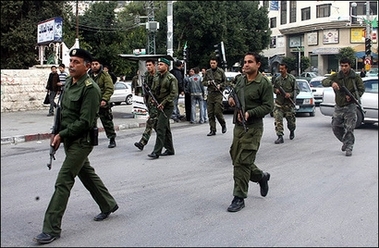

"Mahmoud Abbas, the Palestinian president, has declared a Hamas security force in the Gaza Strip 'illegal' after a surge in internal violence, officials said.

Shortly after Abbas' statement on Saturday, Hamas announced it would double the number of its 'executive force' in Gaza, formed in the months after taking power in early 2006.

Abbas's decision is likely to further fuel tension between Hamas and the president's once-dominant Fatah faction.

One Hamas spokesman has said that any action taken against Hamas' executive force, will be met with retaliatory force.

A spokesman for Abbas said: "The President of the Palestinian Authority, Mahmoud Abbas ... considers the executive force, both officers and individuals, illegal and outlawed."

***

I think that this could be the signal that the hot phase of the slow-moving coup against the elected Palestinian government is about to start. The Princess of Darkness Rice will be in the region soon and she wants the coup to be complete by that time and Generalissimo Dahlan fully disappearing Palestinians determined to resist Israeli occupation. All indications are that the preparations for the coup are in place, including putting Dahlan in charge of all PA puppet forces. Condoleezza and Olmert have demanded that the CIA asset Dahlan be in charge of these forces to lead the coup.

It was a good step for Hamas to be prepared by doubling the size of its force that would stand up to the Palestinian Pinochet. I think that, as regrettable as this is, a bloody confrontation is coming. Hamas has tried to avoid it, but it is of no use. The Usraeli orders to the Palestinian puppet will be obeyed and a coup will be attempted. The best hope is for Hamas and other patriotic Palestinians to have infiltrated the PA puppet forces and that many of them will disobey orders to shoot other Palestinians.

This is the most treacherous attempt to split the Palestinians and to crush the spirit of resistance to impose an Usraeli dictated Palestinian surrender. It is time for all Palestinians to be alert and informed. By information and vigilance the coup will be defeated.

Tony Sayegh

The Urge to Surge

Political Cover or Escalation?

A Good Piece
By PAUL CRAIG ROBERTS
CounterPunch

"The new year began on the hopeful note that Bush's illegal war in Iraq would soon be ended. The repudiation of Bush and the Republicans in the November congressional election, the Iraq Study Group's unanimous conclusion that the US needs to remove its troops from the sectarian strife Bush set in motion by invading Iraq, Donald Rumsfeld's removal as defense secretary and his replacement by Iraqi Study Group member Robert Gates, the thumbs down given by America's top military commanders to the neoconservatives' plan to send more US troops to Iraq, and new polls of the US military that reveal that only a minority supports Bush's Iraq policy, thus giving new meaning to "support the troops," are all indications that Americans have shed the stupor that has given carte blanche to George W. Bush.

When word leaked that Bush was inclined toward the "surge option" of committing more troops by keeping existing troops deployed in Iraq after their replacements had arrived, NBC News reported that an administration official "admitted to us today that this surge option is more of a political decision than a military one." It is a clear sign of exasperation with Bush when an administration official admits that Bush is willing to sacrifice American troops and Iraqi civilians in order to protect his own delusions.

The American establishment, concerned by Bush's egregious mismanagement, moved to take control of Iraq policy away from him. However, recent news reports and analysis suggest that Bush has turned his back to the American establishment and his military advisers and is throwing in his lot with the neoconservatives and the Israeli lobby. This will further isolate Bush and make him more vulnerable to impeachment.

In the January 5 issue of CounterPunch John Walsh gives a good description of the struggle between the American establishment and the neocons.

Peter Spiegel, the Pentagon correspondent for the Los Angeles Times, reported on January 4 that the neocons have used the failure of the administration's policy in Iraq to convince Bush to launch an aggressive counterinsurgency requiring the buildup of troop levels by extending deployments beyond the agreed terms.

Raed Jarrar (CounterPunch, January 4) suggests that the Shi'ite militias, such as the one led by Al-Sadr, are the intended targets of the "surge option." There seems no surer way to escalate the conflict in Iraq than to attack the Shi'ite militias. For longer than the US fought Germany in WW II, 150,000 US troops in Iraq have been thwarted by a small insurgency drawn from Iraq's minority population of Sunnis. It hardly seems feasible that 30,000 additional US troops, demoralized by extended deployment, can succeed in a surge against the Shi'ite militias when 150,000 US troops cannot succeed against the minority Sunnis.

The reason the US has not been driven out of Iraq is that the majority Shi'ites have not been part of the insurgency. The Shi'ites are attacking the Sunnis, who are forced to fight a two-front war against US troops and Shi'ite militias and death squads.The US owes its presence in Iraq, just as the colonial powers always owed their presence in the Middle East, to the disunity of Arabs. Western domination of the Muslim world succeeded by not picking a fight with all of the disunited Arabs at the same time.

Attacking the Shi'ite militias while fighting a Sunni insurgency would violate this rule. If Bush ignores US military commanders and expert opinion and accepts the surge option advanced by the delusional neocon allies of Israel's right-wing Likud Party, US troops will be engulfed in general insurgency. This is why General John Abizaid resigned on January 5. He wants no part of the Republican Party's sacrifice of US soldiers to sectarian conflict.

In recent Senate Armed Services Committee hearings, Republican Senator John McCain, who believes in the efficacy of violence and not in diplomacy, pressed General Abizaid to request more US troops to be sent to Iraq. General Abizaid replied as follows:

"Senator McCain, I met with every divisional commander, General Casey, the core commander, General Dempsey, we all talked together. And I said, in your professional opinion, if we were to bring in more American troops now, does it add considerably to our ability to achieve success in Iraq? And they all said no."

Bush is like Hitler. He blames defeats on his military commanders, not on his own insane policy. Like Hitler, he protects himself from reality with delusion. In his last hours, Hitler was ordering non-existent German armies to drive the Russians from Berlin.

By manipulating Bush and provoking a military crisis in which the US stands to lose its army in Iraq, the neoconservatives hope to revive the implementation of their plan for US conquest of the Middle East. They believe they can use fear, "honor," and the aversion of macho Americans to ignoble defeat to expand the conflict in response to military disaster. The neocons believe that the loss of an American army would be met with the electorate's demand for revenge. The barriers to the draft would fall, as would the barriers to the use of nuclear weapons.

Neocon godfather Norman Podhoretz set out the plan for Middle East conquest several years ago in Commentary Magazine. It is a plan for Muslim genocide. In place of physical extermination of Muslims, Podhoretz advocates their cultural destruction by deracination. Islam is to be torn out by the roots and reduced to a purely formal shell devoid of any real beliefs.

Podhoretz disguises the neoconservative attack against diversity with contrived arguments, but its real purpose is to use the US military to subdue Arabs and to create space for Israel to expand.

Not enough Americans are aware that this is what the "war on terror" is all about."


The Puppet Is Upset


Lyncher-in-Chief Is Upset About Worldwide Revulsion At The Barbarity of His Shiite Thugs:
The sock puppet threatened to cut diplomatic relations with any country criticizing the lynching.


Israel's Bad Influence

by Charley Reese

"Scott Ritter, a former U.N. arms inspector in Iraq, has written a book, Target Iran, in which he accuses the Israeli government and its American lobby of pushing the U.S. into attacking Iran.

Ritter writes, "Let there be no doubt: If there is an American war with Iran, it is a war that was made in Israel." He accuses some members of the lobby of dual loyalty and urges that the American Israel Public Affairs Committee be required to register as a foreign agent.

He also blasts the Israeli lobby for its use of the Holocaust and for crying anti-Semite every time Israel is criticized. "This is a sickening trend that must be ended," he writes.

By coincidence, an Israeli general has verified everything Ritter says. According to an article published in Today.az on Jan. 2, Israeli Brig. Gen. Oded Tira published a statement urging an all-out effort by Israel and its lobby to push a U.S. attack on Iran.

"President Bush lacks the political power to attack Iran," the general is quoted as saying. "As an American strike in Iran is essential for our existence, we must help him pave the way by lobbying the Democratic Party (which is conducting itself foolishly) and U.S. newspaper editors. We need to do this in order to turn the Iran issue to a bipartisan one and unrelated to the Iraq failure."

The general urges the Israeli lobby to turn to Hillary Clinton and other potential presidential candidates in the Democratic Party so that they support immediate action by Bush against Iran. The lobby must also approach the Europeans, he adds, so Bush won't find himself isolated, and he calls for Israel to "clandestinely cooperate with Saudi Arabia so that it also persuades the U.S. to strike Iran."

As Ritter says, a U.S. war in Iran will be a war made in Israel.

Of course, Israel's American supporters, most of whom are ignorant of nuclear energy, ignorant of the history of Israel and ignorant of the people in the Middle East, will trot out their usual specious arguments.

But let's lay out the undeniable facts. Israel considers Iran its main threat. Israel wants a U.S. attack against Iran. The Israeli lobby does what the Israeli government tells it to do. Anybody who claims the Israeli lobby is just another lobby is either ignorant or lying. The Israeli lobby is the second most, if not the most, powerful lobby in America.

So, sit back and watch the Israeli amen corner start the propaganda to push America to war with Iran just as it did in the case of Iraq. It will try to have you believe that Iran can make nuclear weapons as easily as baking cakes. The truth is that even if Iran decided to seek nuclear weapons, the Iranians are a good 10 years away from having any. The truth is that Iran, even if it had nuclear weapons, is no threat to the U.S.

All of which reminds me of my favorite undiplomatic comment by a diplomat. Some time ago at a private party in London, the French ambassador said of Israel, "Why does the world put up with such a sh*tty little country causing so much trouble?" Outraged British Zionists demanded his recall, but the French government ignored them.

Sooner or later, Americans are going to wake up to the fact that Israel's influence on the American government is detrimental. If Israel wants a war with Iran, let the Israelis fight it. Of course, seeing how poorly they did against Hezbollah, I suspect that the Israelis, despite their public threats, would not choose to fight the Iranians.

In my opinion, Americans who want American youth to die and bleed for the benefit of a foreign country are guilty of more than dual loyalty."

Somalia: A State Restored? Not So Fast


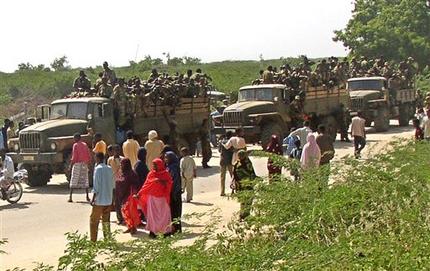
Protesters threw stones and burned tyres during an anti-Ethiopian protest in Mogadishu [AFP]


A Very Good Analysis
By William S. Lind

"For more than a decade, Somalia has been Exhibit A in the Hall of Statelessness, a place where the state had not merely weakened into irrelevance but disappeared. Somalia's statelessness had defeated even the world's only hyperpower, the United States, when it had intervened militarily to restore order. Fourth Generation war theorists, myself included, frequently pointed to Somalia as an example of the direction in which other places were headed.

Then, over the past several weeks, a Blitzkrieg-like campaign by the Ethiopian army seemed to change everything. A Fourth Generation entity, the Islamic Courts, which had taken control of most of Somalia, was brushed aside with ease by Ethiopian tanks and jets. A makeshift state, the Transitional Federal Government, which had been created years ago by other states but was almost invisible within Somalia, was installed in Mogadishu. The Somali state was restored – or so it seems.

This direct clash between the international order of states and anti-state, Fourth Generation forces is a potentially instructive test case. If the Ethiopians and their sponsors succeed in re-creating a self-sustaining Somali state, it may put Fourth Generation elements elsewhere on the defensive. Conversely, if the Somali state again fails, it will suggest that outside efforts to restore states are unlikely to succeed and the future belongs to the Fourth Generation.

It is too soon to know what the outcome will be. However, we might want to ask the question, what does each side need to accomplish in order to succeed?
The first thing the Transitional Federal Government and its Ethiopian and other foreign backers must accomplish is to restore order. Many Somalis welcomed the Islamic Courts because they did bring order. They shut down the local militias, made the streets safe again and began the revival of commerce, which depends on order.

Can the Transitional Federal Government do the same? Its problem is that its main instrument is the Ethiopian army, which is hated by many Somalis. Its own forces are largely warlord militias. If the TFG fails to bring order, not only will it have failed to perform the first task of any state, it will make the Islamic Courts look good in retrospect. Precisely this dynamic is now playing itself out in Afghanistan.

The pro-state forces' second task is in tension with the first: the Ethiopian Army must go home soon. "Soon" here means weeks at most. If the Ethiopian invasion turns into an Ethiopian occupation, a nationalist resistance movement is likely to emerge quickly. Such a nationalist resistance would have to ally with the Islamic Courts, just as the nationalist resistance in Iraq has been pushed into alliance with Islamic 4GW forces, including al-Qaeda. Non-state forces are usually too weak physically to be picky about allies.

The third task facing the TFG is to split the Islamic Courts and incorporate a substantial part of them into the new Somali state. In the end, political co-option is likely to do more to end a 4GW insurgency than any action a military can take.

What about the Islamic Courts? What do they need to do to defeat the state?
They have already accomplished their first task: avoid the Ethiopian army and go to ground, preserving their forces and weapons for a guerrilla war. Had they stood and fought, not only would they have lost, they would have risked annihilation. Mao's rule, "When the enemy advances, we retreat," is of vital importance to most 4GW forces.

The next task is harder: they must now regroup, keep most of their forces loyal, supplied, paid and motivated, and begin a two-fold campaign, one against the Ethiopians or any other foreign forces and the second against the Transitional Federal Government. This will be a test of their organizational skills, and it is by no means clear they have those skills. Time will tell, time probably measured in weeks or months, not years.

Against occupying foreign forces, the Islamic Courts will need to wrap themselves in nationalism as well as religion, so that they rather than the TFG are seen as the legitimate Somali authorities. The fact that the TFG has to be propped up by foreign troops makes this task relatively easy.

Against the TFG itself, the Islamic Courts' objective is the opposite of the government's: it must make sure order is not re-established. Here, terror tactics come into if play, and if car bombs, suicide attacks and the like spread in Somalia, it will be a sign the Islamic Courts are organizing.

The Islamic Courts may have an unlikely ally here in the old war lords and clan militias. The Islamic Courts suppressed these elements, but their comeback will help, not hurt them. They were and may again become the main source of disorder, and all disorder works to the Islamic Courts' advantage.

The new government in turn needs to suppress these forces just as the Islamic Courts did, but it may be unable to do so, not only because it has no real army of its own but also because it has warlords and militias as key constituents. This mirrors the situation in Iraq, where the Shi'ite-dominated government cannot act against Shiite militias because it is largely their creature.

How will it all turn out? My guess is that in Somalia as elsewhere, the dependence of the wanna-be state on foreign troops will prove fatal. In the end, Fourth Generation wars are contests for legitimacy, and no regime established by foreign intervention can gain much legitimacy. On the other hand, if the Islamic Courts cannot organize effectively, the new government could win by default. Either way, it is safe to say that the outcome in Somalia will have an impact far beyond that small, sad country's borders. "

The whole bloody thing was obscene

By Robert Fisk
The Independent

"The lynching of Saddam Hussein - for that is what we are talking about - will turn out to be one of the determining moments in the whole shameful crusade upon which the West embarked in March of 2003. Only the president-governor George Bush and Lord Blair of Kut al-Amara could have devised a militia administration in Iraq so murderous and so immoral that the most ruthless mass murderer in the Middle East could end his days on the gallows as a figure of nobility, scalding his hooded killers for their lack of manhood and - in his last seconds - reminding the thug who told him to "go to hell" that the hell was now Iraq."

Continue
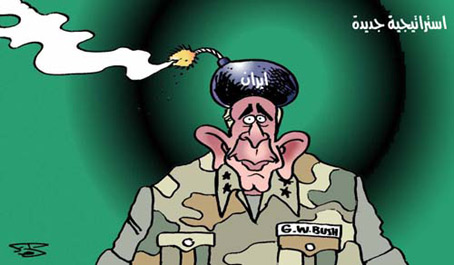

Bush's New Strategy
By Baha Boukhari

Abbas appoints Dahlan general commander of PA security apparatuses
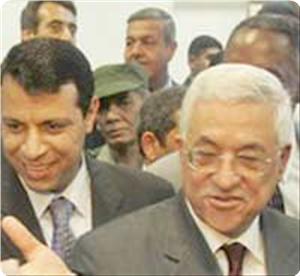


"Gaza - PA chief Mahmoud Abbas has appointed Fatah MP Mohammed Dahlan, the former chief of the notorious preventive security apparatus, as general commander of the PA security apparatuses at the request of the USA and Israel, according to local media.

The media quoted a PA presidential source, who refused to disclose his identity, as saying that the decision was not written so as to evade the protests of the Hamas-led PA government and its interior minister Sa'eed Siyam.

He affirmed that the decision was implemented on the ground and that all commanders of security apparatuses were notified and were abiding by Dahlan's orders despite reservations on the part of some of them.

The same source disclosed that Dahlan's appointment came at the request of the USA and Israel which pledged to finance and to facilitate the PA security apparatuses' needs in the event Dahlan was appointed in this post.

Meanwhile, Hamas MP Mushir Al-Masri asked Abbas, in his capacity as the PA chief and Fatah leader to bridle the unruly elements within his faction.

He questioned the ability of Abbas to rule a country if he could not restrain members of his own faction."

"غزة - المركز الفلسطيني للإعلام

كشفت وسائل إعلام محلية، نقلاً عن مصدر أمني فلسطيني رفيع المستوى في مكتب رئيس السلطة محمود عباس، أن الأخير أصدر قراراً شفهياً يقضي بتعين النائب محمد دحلان، أحد قيادات "فتح" المتهمين بتأجيج الساحة الفلسطينية، قائداً عاماً للأجهزة الأمنية الفلسطينية ومسؤولاً مباشراً عن جهاز الأمن الوطني.

وقال المصدر الرئاسي، الذي رفض الكشف عن هويته، إن القرار لم يكن مكتوباً لأسباب خاصة لدى رئيس السلطة عباس، خشية اعتراض الحكومة ووزير الداخلية والأمن الوطني سعيد صيام على ذلك، لكن القرار نفذ عملياً على أرض الواقع، بناء على تعليمات مباشرة صدرت من عباس إلى قادة الأجهزة الأمنية الفلسطينية بتلقي تعليماتهم من دحلان، خلال اجتماع عقد في مكتبه بغزة دون علم وزير الداخلية بذلك.

وأضاف المصدر إن دحلان باشر مهامه الأمنية كقائد للأجهزة الأمنية فور انتهاء اجتماع الأجهزة الأمنية، وإن قادة الأجهزة الأمنية، الموالين له في الأساس كونه كان قائداً للأمن الوقائي في غزة التزموا بتعليماته، رغم تحفظ البعض منهم على ذلك، وترأس دحلان عدة اجتماعات للأجهزة الأمنية في مقر الرئاسة بغزة.

وكشف المصدر ذاته أن القرار جاء بناء على اشتراط أمريكي صهيوني بتعين دحلان مسؤولاً عن الأجهزة الأمنية، وخاصة جهاز الأمن الوطني، الذي يمثل أكبر عدد من حيث الأفراد، مقابل أن يقوم الجانب الأمريكي ومن خلال دحلان بإعادة بناء وتمويل هذه الأجهزة وتغطية كافة احتياجاتها من سلاح وذخيرة وسيارات ومعدات، وقد رصدت مبالغ عالية لتنفيذ المخطط.

كما أصدر عباس مساء الجمعة (5/1) مرسوماً رئاسياً بتعيين العميد جمال كايد قائداً لقوات الأمن الوطني في قطاع غزة وذلك خلفا للعميد سليمان حلس. "


***

The Palestinian Pinochet, with Usraeli backing, is getting ready to mount the bloody coup and unleash a reign of terror against the Palestinians. This is American "democracy" in action, complete with death squads. The M.E. today is looking more and more like Latin America a generation ago. Why not! The same bloody villains (Negroponte, Elliott Abrams, etc) are trying the same policies they tried before in Latin America.

Hamas: Washington's money to Abbas' guards targets igniting civil war


"Gaza - The Hamas Movement has strongly denounced the American administration's financial assistance to PA chief Mahmoud Abbas' loyalist forces as a fresh attempt to igniting Palestinian civil war.

The Movement said in a statement that the American administration, which spearheads an "oppressive siege" of the Palestinian people alongside Israel and a number of regional countries, was extending 86 million dollars to Abbas' loyalist forces to confront the Hamas Movement and to quell the Palestinian resistance.

It charged that such a step was a "blatant intervention in Palestinian internal affairs" and a fresh attempt to ignite a Palestinian civil war.

Hamas asked Abbas to declare a clear stand toward the news that was included in a document published by a news agency.

"If the American administration was keen on the Palestinian people's interests and willing to help them then it should have rather rushed to lift the siege imposed on the people and allow the channeling of necessary financial assistance," the Movement concluded.

In an earlier statement, the Hamas Movement said that it was running out of patience vis-à-vis the incessant attacks by a trend within the Fatah Movement against Hamas leaders and cadres.

It urged Abbas to bridle his Fatah faction and warned that it would no longer put up with such practices."

Friday, January 05, 2007

Kiss of death


SINCE JUDAS ISCARIOT embraced Jesus, Jerusalem has not seen such a kiss

By Uri Avnery

"After being boycotted by Ariel Sharon and Ehud Olmert for years, Mahmoud Abbas (Abu Mazen) was invited to the official residence of the Prime Minister of Israel two weeks ago. There, in front of the cameras, Olmert embraced him and kissed him warmly on both cheeks. Abbas looked stunned, and froze.

Somehow the scene was reminiscent of another incident of politically-inspired physical contact: the embarassing occurrence at the Camp David meeting, when Prime Minister Ehud Barak pushed Yasser Arafat forcefully into the room where Bill Clinton stood waiting.

In both instances it was a gesture that was intended to look like paying respect to the Palestinian leader, but both were actually acts of violence that - seemingly - testified to ignorance of the customs of the other people and of their delicate situation. Actually, the aim was quite different.

ACCORDING TO the New Testament, Judas Iscariot kissed Jesus in order to point him out to those who had come to arrest him.

In appearance - an act of love and friendship. In effect - a death sentence......

WHY DID Olmert go through all these motions?

The naïve explanation is political. President Bush wanted some movement in the Israeli-Palestinian conflict, which would look like an American achievement. Condoleezza Rice transmitted the order to Olmert. Olmert agreed to meet Abbas at long last. There was a meeting. A kiss was effected. Promises were made and immediately forgotten. Americans, as is well known, have short memories. Even shorter (if that is possible) than ours.....

Some of Olmert's advisors had a brilliant idea: to give Abbas hundreds of prisoners as a gift, just for nothing. That would reinforce the position of the Palestinian president and prove to the Palestinians that they can get more from us this way than by violence. It would deal a sharp blow to the Hamas government, whose overthrow is a prime aim of the governments both of Israel and the USA.

Out of the question, cried another group of Olmert's spin doctors. How will the Israeli media react if prisoners are released before Shalit comes home?

The trouble is that Shalit is held by Hamas and its allies, and not by Abbas. If it is forbidden to release prisoners before the return of Shalit, then all the cards are in the hands of Hamas. In that case, perhaps it makes sense to speak with Hamas? Unthinkable!

The result: no strengthening of Abbas, no dialogue with Hamas, no nothing.....

Continued."


This Is No Way To Treat An Old Friend And Ally, Is It?

Hezbollah to expand protest in Lebanon conflict next week

By Reuters

"The Shi'ite Hezbollah group and its allies will step up a campaign of protest and disruption next week to try to topple the Lebanese government by paralyzing the country, a senior opposition politician said.

The move is an attempt to break a deadlock that has defied mediation efforts and fuelled Sunni-Shi'ite tensions.

"The opposition is putting the final touches to the second phase of its campaign. Things will start moving next week," said the opposition politician, who asked not to be identified."

Marzouq: a trend within Fatah is working against democracy with foreign help


"Damascus – Deputy Chief of Hamas Political Bureau, Dr. Mousa Abu Marzouq, accused a trend within the Fatah movement of working to thwart the Palestinian democratic experience which brought Hamas to power.

"It is sad that there is a decision to thwart the first transparent democratic experience in the region which took place under occupation and which brought Hamas to power in place of a political power which monopolised the management of the Palestinian issue since 1969 despite the weakness and deterioration which the Palestinian issue suffered during its reign." Dr. Marzouq said in a statement to Quds press.

He added that when the people elected Hamas, this faction mobilised its members, supported by regional and international forces, and one of the results of this mobilization was the oppressive siege imposed on the Palestinian people and the security chaos in all its forms and its painful results we are observing today.

He stressed that Hamas is holding to its principle that rejects the conspiracy against the Palestinian democratic experience; "What we see in terms of security chaos in all its forms, are but means to thwart the Palestinian people's choice. This is rejected by Hamas which believes that the way is political participation and national dialogue."

When asked about his fears that Hamas's rejection could lead to infighting, he said: "We count on our people, whether they were in the security forces or the presidential guards to value the Palestinian blood and are capable of avoiding infighting."

Marzouq strongly condemned the tragic events in the Gaza Strip and said: "the spilling of any Palestinian blood is a step in the wrong direction."

He accused the USA of fuelling the strife by giving aid to Abbas's presidential guards. He also blamed the international community of siding with one faction instead of supporting Palestinian national reconciliation. He excluded Russia from this accusation saying that Russia has stopped the sale of armoured vehicles to Abbas's presidential guards.

He stressed that the Russian decision was taken by President Vladimir Putin to prevent Palestinian civil war which Israel is trying to ignite."

Israel bought 10% of the Moon (the rest belongs to the Americans...)


Explosion of sales for pieces of land on our satellite that is up for private sale
For the company that is handling the offer, "It's an excellent occasion and a good investment."


"10 per cent of the Moon belongs to Israelis"

Living the New Year's Raid on Ramallah
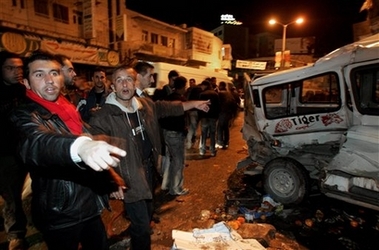


Dana Shalah writing from Ramallah, occupied Palestine, Live from Palestine, 5 January 2007

"I never thought I would be so happy to come back home. I am still disoriented and traumatized, and though I had taken pain killers, and coffee after coffee, I just can't bring myself to sleep.

Early this morning while walking in Ramallah, I took a road that brought awful memories into my head. Last year, I witnessed one of the Israeli forces' raids in Ramallah. Though it was from a distance, it was a chilling experience to be totally surrounded by bullets and blood.

I have just come back from Ramallah where together with my sister I was locked inside a building at Al Manara, Ramallah's city center, for four hours. While we were shopping this afternoon, people started running, stores began closing up, and the Palestinian policemen fled from Al Manara. Everyone was pointing somewhere upwards and there were two Israeli helicopters flying in Ramallah's skies.

I cannot recall how I ended up in this building, but that was not the most rational choice I have made in my life since it is in the heart of Al Manara. We have been living in an area of armed conflict before I was even born, with its bullets, sound and/or gas bombs, in addition to helicopters, but today it felt like a factual battlefield except that the battle was waged by a powerful side against civilians. Shots, gas, noises of the Israeli jeeps, bulldozers, two helicopters, nonstop bullets everywhere, screams and cries, inhaling gas, constant fear, not knowing what's going outside, and not being able to have a peek outside lest catching a bullet is rather insane.

At some point, I felt that this was it. And I will never get back home. I could not stand the raining bullets and bombs; I could hardly tolerate the numbness in my ears. The noise was getting much and much louder and closer while the locked building was getting darker. I sat on the stairs and had my head against the wall. I was totally petrified not for my life, but for feeling what the other Palestinians have been through. Those who have been attacked on daily basis in Gaza, and the kids whose only crime is being Palestinians have to live that without knowing what the next seconds hold. I, on the other hand, was reassured by the young men who were locked in the same building. They may have noticed my watery eyes, and said, "It's alright, sister, this happens all the time. Now they will leave." Half an hour later, the shooting and noises of military vehicles was getting more intense, and I could have sworn that one of the bombs was thrown inside the building. The ten guys who were by the window jumped away, and I almost fell, so I found myself hugging some guy.

Eventually, everyone was let out after hours. It was getting dark. People were surrounding me from everywhere, kids were screaming, cars were crushed, streets filled with rocks, broken glass, and smoke, and hundreds of young men were carrying either dead or injured people. The noises of shooting and bullets faded while the noise of ambulances dominated.

I would never wish this to happen to anyone because it is much worse than death. I am still unable to put things together at the moment, but I am so glad that I got back home. The only irony is that once I got here, Al Jazeera was covering the Olmert-Mubarak press conference. While they were sucking up, we were under attack. They were discussing peace (I guess), and they made sure it is being perfectly applied this afternoon in Ramallah."

Dana Shalash is a student of English at Birzeit University. Her blog is Stranger than Fiction.

W Pushes Envelope on US Spying


New postal law lets Bush peek through your mail

Gestapo in Ramallah


A Great Comment
By Khalid Amayreh
Ramallah, The Occupied West Bank

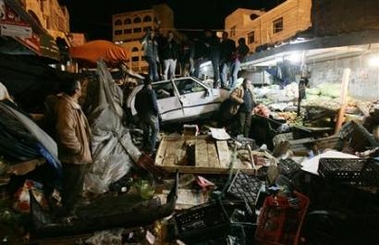
"On Thursday, 4 January, the Israeli occupation army carried out another provocative foray into Ramallah, killing at least four Palestinian civilians and injuring and maiming more than 20 others. During the Gestapo-like incursion, trigger-happy Israeli soldiers opened fire rather wantonly on Palestinian civilians and stone-hurling youngsters. Moreover, Israeli army bulldozers crushed Palestinian cars, storefronts and vegetable and fruit stands in downtown Ramallah in a manner befitting the German Wehrmacht.

Undoubtedly, the criminal raid, which took place as Israeli Prime Minister Ehud Olmert himself was meeting with Egyptian President Husni Mubarak at Sharm al Sheikh, ostensibly to promote peace, constituted a brazen provocation not only to the Palestinian and Egyptian leaderships but also all international efforts aimed at reviving peace talks in the region. Indeed, only a few weeks ago, Olmert said in his much-celebrated speech in southern Israel that he was extending a hand of peace to the Palestinian people. And now, he is sending his murderous army on yet another rampage of murder and terror in the heart of Ramallah, not far from the headquarters of President Abbas with whom he had an ostensibly cordial meeting less than two weeks ago.

Does Olmert really think that sending his Gestapo-like soldiers to spread death and terror in our crowded streets in Ramallah and Nablus and other Palestinian population centers is the way to demonstrate his and his people’s desire for peace?

The Palestinian leadership, especially lately, sought to give Olmert and his government the benefit of the doubt, despite all the clarion misgivings about the Israeli premier and his criminal attitudes.

Chairman Abbas did laud Olmert’s speech last month and agreed, probably under British and American pressure, to meet with the Zionist premier in his own home where he pledged to deliver a package of “good will” gestures to the Palestinians, including a promise to remove roadblocks and checkpoints, free some prisoners and release a $100 million dollars of our imprisoned tax money which Israel is withholding in order to punish Palestinians for electing Hamas. However, ever since that fiasco on 27 December, the Israeli government has neither removed roadblocks, nor released prisoners and has refused to release our money.

And now we are affronted once again by this pornographic rape of Ramallah’s city center in broad daylight which reminds us of what happened in Jericho last year, when Israeli occupation troops raided the town’s central prison and abducted several Palestinian detainees, including PFLP leader Ahmed Sa’adat.

To be sure, these criminal provocations by Israel carry certain messages to the Palestinian people and their leadership.

The first message is that Israel remains unchanged and her leaders lie as often as they breathe and that their words and pledges and promises carry no weight and are devoid of any veracity and credibility, which really underscores the futility of believing let alone relying on promises and undertakings made by Israeli leaders.

The second message is that Israel remains a bellicose and murderous state with which genuine peace is impossible. Indeed, how can these recurrent acts of brigandage and criminality be reconciled with Israel ’s purported desire for peace and principled acceptance of a viable Palestinian state? This is a question that had been asked thousands of times and is being asked again in light of Israel ’s enduring and unrelenting criminality.

The sinister Israeli raid in Ramallah on Thursday should really prompt the Palestinian leadership, including the PLO executive committee and especially President Abbas, to rethink the present discourse vis-a-vise the moribund peace process which Israel uses as rubric to murder our youngsters and rape our towns.

Indeed, with Israel apparently hell-bent on eviscerating the PA of whatever semblance of substance of authority there is, and there is not that much anyway, the Palestinian leadership must stop acting as a state when there is none. Our leadership must meticulously re-evaluate the continued existence of the PA structure, especially if it becomes sufficiently clear this ramshackle and fragile existence doesn’t really serve our paramount national interests.

We must stop deceiving our people by clinging and clutching to an authority that lacks any semblance of authority.

Yes, Israel wants to kill every dignified Palestinian who dare raise his hands in the face of the Israeli occupation. And it makes no difference if the “targeted Palestinian” carried out the “terrorist act” five, ten, or even twenty years ago.

Another point I would like to make is that the Israeli raid in Ramallah came as our own militiamen were killing each other in cold blood in the streets of Gaza ? The disgrace of what is happening in Gaza really transcends reality. Indeed, if we are so bent on spilling our own blood with our own hands, why should our enemies be any more merciful toward us.?

Shame on us. "

Get the message?

Protesters in Lebanon have a simple message for Britain and the US: you cannot expect Arab democracies to operate on western terms.

A Comment By Salam Al-Mahadin
The Guardian

"Let's assume for the sake of the argument that half the population of Britain took to the streets, slept out in the cold, raised the national flag and flew banners demanding the resignation of Tony Blair. Would the western world flock to London to offer him support? Would the US, Israel and half the enlightened democracies denounce the crowds as ignorant mobs easily swayed by agitating demagogues? Would he and his government legitimate their rule on the basis of foreign support? Would Blair declare to the world at large that the support of his own people was secondary to the support of international allies?

Let's assume for the sake of another argument that Tony Blair came into office following elections in which he swept more than three quarters of votes in the biggest electoral turnout in the history of the UK. Would the European Union, the US and Israel rave and rant before sulking in a corner and declaring that they didn't really like Tony Blair's politics and had therefore decided to starve the British people for making such an unsavoury choice?

Do these two scenarios seem surreal?

They didn't seem so surreal when they were applied to both Lebanon and the West Bank. And I am willing to bet my lunch money for a whole year that should an independent international committee be formed to gauge the degree of support for both the Hamas government and the opposition movements in Lebanon, they would reveal that both the Lebanese and Palestinian nations were in favour of those whom the west considers "personas non grata"."
Continue

Confronting the Empire


It's time …

By Justin Raimondo

"How it is that, having lost an election widely viewed as a referendum on the war, the Bush administration has the temerity to announce a "surge" in American forces engaged in active combat in Iraq? The answer was given by incoming chairman of the Senate Armed Services Committee Carl Levin (D- Michigan):

"'There are a lot of ways you could have a surge, it's not just 'surge versus non-surge,'' Levin said. ‘If a temporary surge is part of a reduction of U.S. forces in four to six months with political milestones to achieving a political solution agreed upon by Iraqis' then he would be on board."

Get on board the Middle East war-escalator – Republicans, Democrats, one and all! Screw the American people and the recent election results – that was then, this is now. Democrats in the know are sitting back and enjoying the tax-funded orgy known as Pelosi-palooza!, raking in the campaign cash from lobbyists and special interests – and letting the good times roll!"

Continue

Latest Latuff Cartoon


Latuff: Saddam EXECUTED! Now, who will hang Bush for war crimes? Or Blair? What about Olmert?

Latest From Dr. Mona El-Farra In Gaza


A Gaza Sunset

"Dear All
happy new year , hoping that 2007 will bring the best possible for al lof us , sorry it is belated wish , but late is better than never
with love and solidarity

Mona eLFarra

GAZA

Gaza at the end of 2006

My life in Gaza

Throughout December, I was very busy organizing relief work for hundreds
of families living in different sorts of poverty. Working with colleagues
and tens of volunteers, we managed to distribute food parcels – meat,
blankets, money vouchers, milk, medications for sick children and cancer
patients, university fees for needy students.

I am organizing and coordinating this work for MECA and some other donors,
with the help of 3 doctors, friends and colleagues. A group of volunteers,
mainly women, help as well. We work hard to reach people in different
parts of the crowded Gaza Strip, where we are imprisoned in this small
area of land whose borders are still mainly closed – they opened just 14
times in 6 months.

The Palestinian Egyptian border crossing is very crowded with hundreds of
people waiting to travel on both sides. You can only leave Gaza in very
difficult and inhuman circumstances, and you cannot be sure of coming
back. Passengers wait on the Egyptian side, not knowing when the borders
will open – is it a matter of hours, days, weeks or months? Some have no
choice but to go through this traumatic experience. Students did not reach
their universities on time, and some patients died while waiting to cross
the border for treatment.

I am invited by the Palestine Solidarity Campaign in London to to attend a
conference.(Enough ) I do not think it will be easy for me to travel, and it may be
impossible in such uncertain circumstances. It is important for me to be
able to go to London and I wish I could go, but this is a luxurious wish
when we all live under very severe circumstances. All of us feel unsafe
and cannot guarantee the safety of our children.

I am surrounded by thousands of people who depend on different sources of
local and international humanitarian aid for their daily basic needs, and
to continue living and resisting these circumstances. They resist
occupation by continuing to live here at all, in such horrific, inhuman
miserable conditions.

IN Gaza YOU CANNOT PLAN SOMETHING AS SIMPLE AS LUNCH WITH FREINDS

IN GAZA YOU CANNOT PLAN SOMETHING AS SIMPLE AS VISITING YOUR OLD MOTHER ONLY 20 MINTUES DRIVE "

VIDEO: War and The Neoliberal Agenda

The Side Effects of IMF "Economic Medicine"

by Michel Chossudovsky

New Way Forward


By Mike Luckovich

One last thrust in Iraq

By Robert Dreyfuss
Asia Times

"Like some neo-conservative Wizard of Oz, in building expectations for the 2007 version of his "Strategy for Victory" in Iraq, US President George W Bush is promising far more than he can deliver. It is now nearly two months since he fired secretary of defense Donald Rumsfeld, installing Robert Gates in his place, and the White House revealed that a full-scale review of America's failed policy in Iraq was under way.

Last week, having spent months - if, in fact, the New York Times is correct that the review began late in the summer - consulting with generals, politicians, State Department and Central Intelligence Agency bureaucrats, and Pentagon planners, Bush emerged from yet another powwow to tell waiting reporters: "We've got more consultation to do until I talk to the country about the plan."

As John Lennon sang in "Revolution": "We'd all love to see the plan."

Unfortunately for Bush, most of the US public may have already checked out. By and large, Americans have given up on the war in Iraq. The November election, largely a referendum on the war, was a repudiation of the entire effort, and the vote itself was a marker along a continuing path of rapidly declining approval ratings both for Bush personally and for his handling of the war.

It's entirely possible that when Bush does present us with "the plan" next week, few will be listening. Until he makes it clear that he has returned from Planet Neo-Con by announcing concrete steps to end the war in Iraq, it's unlikely that American voters will tune in. As of January 1, every American could find at least 3,000 reasons not to believe that Bush had suddenly found a way to put Humpty Dumpty back together again.....

Bush, perhaps dizzy from the oedipal frenzy created by the emergence of Daddy's best friend James Baker and his Iraq Study Group, seems all too willing to prove his manhood by the size of the surge. According to a stunning front-page piece in the New York Times last Tuesday, Bush has all but dismissed the advice of his generals, including Centcom Commander John Abizaid, and George Casey, the top US general in Iraq, because they are "more fixated on withdrawal than victory".

At a recent Pentagon session, according to General James T Conway, the commandant of the US Marine Corps, Bush told the assembled brass: "What I want to hear from you now is how we are going to win, not how we are going to leave." As a result, Abizaid and Casey are, it appears, getting the same hurry-up-and-retire treatment that swept away other generals who questioned the wisdom on Iraq transmitted from Planet Neo-Con.

That's scary, if it means that Bush - presumably on the advice of the neo-con-in-chief, Vice President Dick Cheney - has decided to launch a major push, Kagan-style, for victory in Iraq. Not that such an escalation has a chance of working, but there's no question that, in addition to bankrupting the United States, breaking the army and the marines, and unleashing all-out political warfare at home, it would kill perhaps tens of thousands more Iraqis......

....At the same time, it may also be too much to expect that the Democrats will really go to the mat to fight Bush if, Kagan-style, he orders a surge that is "long and large". Maybe they will merely posture and fulminate and threaten to ... well, hold hearings.

If so, it will be the Iraqis who end the war. It will be the Iraqis who eventually kill enough Americans to break the US political will, and it will be the Iraqis who sweep away the ruins of the Maliki government to replace it with an anti-American, anti-US-occupation government in Iraq. That is basically how the war in Vietnam ended, and it wasn't pretty."

Continue

America's new puppet

By its ill-judged invasion of Somalia, Ethiopia has become an accomplice in Bush's war on terror

Cameron Duodu
Friday January 5, 2007
The Guardian


"If the 20th century taught us anything, it was that powerful armies can be brought to their knees by small groups of fighters who are not afraid to die. Small Vietnam humiliated mighty America, and the "stone-age" mujahideen of Afghanistan sent the Soviet army packing. With all this so apparent, why has the Ethiopian prime minister, Meles Zenawi, sent his army into Somalia?
The transitional government had been fighting a civil war against the Union of Islamic Courts (UIC). Meles may think the former has the people's backing, but that poses the question: if it's so popular, why does it need the Ethiopian army to fight for it?"

Continue

Washington Arming Palestinian Thugs
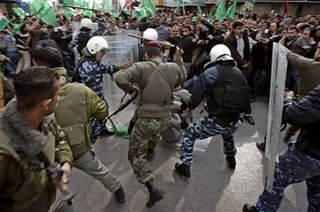

U.S. to provide Abbas' forces with $86 million

"The Bush administration will provide $86.4 million to strengthen security forces loyal to Palestinian Authority Chairman Mahmoud Abbas, expanding U.S. involvement in Abbas' power struggle with Hamas, U.S. documents showed on Friday.

Fighting between Abbas's Fatah faction and Hamas has surged since talks on forming a unity government collapsed and Abbas called for early parliamentary and presidential elections. Hamas accused Abbas of mounting a coup.

The U.S. money will be used to "assist the Palestinian Authority presidency in fulfilling PA commitments under the road map to dismantle the infrastructure of terrorism and establish law and order in the West Bank and Gaza," a U.S. government document obtained by Reuters said."

Thursday, January 04, 2007

Bush Shuffles the Neocon Deck


By Kurt Nimmo

"In an all too predictable game of musical chairs, the Bush neocons have decided to shuffle John Negroponte, the butcher of Honduras and member in good standing at the Council on Foreign Relations, off to the State Department to work under Condi, drop Zalmay Khalilzad, the PNAC flunky, into fill the space vacated by the unconfirmable John Bolton at the United Nations, and spin former admiral Mike McConnell, a director at Booz Allen Hamilton, where the neocon “World War Four” James Woolsey runs shop, into the top spook position as national intelligence director.....

......In other words, Negroponte may be on the grooming track to replace Condi, disliked by one too many neocons, and thus the transformation at the State Department since the departure of Colin Powell, who rightly called the neocons “fucking crazies,” will be complete as the new target, Iran, looms in the gun sights of the neocons who are tutored in the murderous Machiavellian madness of post-Straussian philosophy mingled with a heaping dose of the totalitarian demagoguery of the Nazi jurist, Carl Schmitt.

Once again, the Bush neocons, or rather the neocons who selected Bush, are turning the tables. For most of us, this is pretty drab and lackluster stuff, especially with more important business afoot, for instance Lindsay Lohan going under the knife. Most Americans cannot be bothered to follow the twists and turns of their government, even if it translates into additional murder, mayhem, and economic and social disaster, right here in the neighborhood, and sooner before later.

Come that inevitability, the neocons will throw up yet another hobgoblin—worse than Osama and al-Zarqawi—a city or two will be attacked in the heartland, and the populace, forever easy prey for such trickery, will get back to where they were in the months following September 11, 2001."

New Year Reflections


By Ramzy Baroud

"......With Iraq left with no positive scenarios, hopes for a lasting Palestinian democratic experience turning into daring predictions of a civil war, coupled with bloody Israeli onslaughts against Gaza and the West Bank, Lebanon still bleeding under the outcomes of war and its own political mayhem, Bush’s ‘vision’ for a democratic Middle East of 2005 has enlivened factionalism, sectarianism and the prospect for a regional civil war in 2006; this is yet another reckless American-Israeli experiment that if fully actualized, shall harvest untold political instability, debase America’s reputation even further and expand the list of innocent victims who have fallen as profusely as ever in this passing year.

One is only left with the hope that 2007 may bring some comfort and a moment of peace to the poor, the dispossessed and the resilient masses all around the world, who cannot afford to surrender their genuine hope, humble prayers, and whatever price necessary to achieve peace and freedom for themselves, for all of us. "

Video: Al-Nakba--The Palestinian Catastrophe of 1948

Contributed by Fatima.

Watch Video


Osirak Redux?


An Israeli strike on Iran would pin the U.S. down in Iraq and resuscitate the neocons.

by Leon Hadar

"........Michael Oren, an Israeli historian affiliated with Shalem, a think tank that promotes the Likud agenda, wrote in the Wall Street Journal that Olmert came to Washington “in search of a green light” from Bush to launch a preemptive strike against Iran. According to Oren, Olmert discovered that “bogged down in Iraq and hemorrhaging political capital at home,” Bush was unable to undertake a unilateral attack against Iran “or even to endorse an Israeli one.” That was “bad news” for the Israeli PM, who had “hoped to secure a hard-and-fast timetable for interdicting Iran’s nuclear program first by diplomacy and then, if that failed, by force.” Nevertheless, concluded Oren, “the light Mr. Olmert received in Washington was probably not green, but neither was it flashing red.”

American officials continue to maintain in public that Washington will not sanction unilateral Israeli action against Iran, and according to the Jerusalem Post, Secretary of State Condoleezza Rice told French officials that she would not be willing “to show understanding for a possible Israeli strike against Iran” in the same way that her boss promised. But the mixed signals coming out of Washington, and the fact that top officials have refrained from stating clearly that they would veto a strike, have led to speculation in Europe that there is some political logic behind what looks like confusion among the Bushies. Is it possible that Bush and Cheney, backed by the remaining neoconservative foot soldiers, are hoping that Israel will soon remake the Osirak ’81 production in Iran? Such an Israeli action could serve not only as preemptive action against Iran but also against the battalions of realist forces led by Baker, Hamilton, Gates, and Brzezinski, who threaten what remains of the neocon agenda. Indeed, as Oren put it, the ramifications of an Israeli attack on Iran “are certain to affect America as well.” If Israel attacks Iran, and especially if Israeli jets pass through Iraq’s American-controlled airspace, the perception in the Middle East and elsewhere will be that while Israel ostensibly acted alone, “the U.S. acts with it,” as Oren explained....

...Hopes of an Israeli military action breathe life into the neocon geo-strategic corpse that was buried in Iraq and recall similar wishful thinking on the eve of the American decision to green-light the Israeli attack on Hezbollah’s infrastructure in Lebanon last summer. From the office of the vice president to the Pentagon to AEI and The Weekly Standard, officials, wonks, and scribblers fantasized that it was going to be the Six Day War all over again, that Israel would annihilate the Shi’ite militia and Hassan Nasrallah in the same way that it had left the Egyptian military rotting in Sinai and devastated President Gamal Abdel Nasser in 1967. This would strike a major blow to Hezbollah’s patrons, Syria and Iran, and would shift the balance of power in the Middle East in favor of Israel and its sponsor, the United States, which would then be able to regain the momentum in Iraq. Before we knew it, we would have another tipping point in Mesopotamia.

The Israeli operation in Lebanon did serve as a tipping point—by transforming Hezbollah into the most popular anti-Israeli and anti-American force in the Middle East and by shifting the balance of power in the region even further in the direction of Iran. Now just six months after Israel’s fiasco in Lebanon and as the American disaster in Iraq continues to unfold, the usual suspects are once again daydreaming that a lame duck American president will approve military action by a politically drained Israeli prime minister against the leading bad guy in the neoconservative script.

A few days of Israeli bombing may or may not retard the Iranian nuclear program, but it would impede any plan by the realists to engage Iran in an effort to stabilize Iraq, start withdrawing U.S. troops, and change the direction of American policy in the Middle East."

روسيا توقف صفقة سلاح كانت سترسل إلى حرس عباس


"دمشق - المركز الفلسطيني للإعلام

كشفت مصادر سياسية فلسطينية مطلعة النقاب عن أن السلطات الروسية أبطلت مفعول صفقة سلاح عسكرية مع رئاسة السلطة الفلسطينية، خوفاً من أن يستعمل هذا السلاح في إذكاء نار الصراع المستعر بين الرئاسة الفلسطينية ومن ورائها حركة "فتح" وبين الحكومة الفلسطينية التي تقودها حركة المقاومة الإسلامية "حماس".

وقال الدكتور موسى أبو مرزوق، نائب رئيس المكتب السياسي لحركة المقاومة الإسلامية "حماس" في تصريحات لوكالة "قدس برس": "إن السلطات الروسية أوقفت فعلاً صفقة سلاح بينها وبين حرس الرئاسة الفلسطيني، كان من المفترض أن يتسلم بموجبها حرس عباس مدرعات مصفحة".

وأكد القيادي البارز في حركة "حماس" إن قرار السلطات الروسية الذي اتخذه الرئيس فلاديمير بوتين يأتي في سياق منع حدوث حرب أهلية بين الفلسطينيين يسعى الكيان الصهيوني لإشعالها.

ويأتي هذا التطور فيما تتزايد المعلومات عن مساع إقليمية ودولية لتقوية حرس الرئاسة وكافة الأجهزة الأمنية التابعة لرئيس السلطة محمود عباس في محاولة لكسر ذراع حكومة "حماس" وترجيح كفة "فتح" عسكرياً بعد فشلها في الانتخابات الأخيرة."

Rearranging The Chairs on The Titanic Deck


Another Neocon at the U.N.

Bush said to name new U.N. envoy

"WASHINGTON (Reuters) - Zalmay Khalilzad, the U.S. ambassador to Iraq, is expected to be nominated the next U.S. ambassador to the United Nations as President George W. Bush attempts to chart a new course for his Iraq policy, two U.S. officials said on Thursday."


Thanks fatima.
(For non-Arabs, this is the Arabic way of "giving the finger.")

Rebellion Within U.S. Military Ranks

Opposing the "Surge?"

"Replacements for Generals Abizaid and Casey
January 04, 2007 4:02 PM

ABC News' Martha Raddatz Reports: ABC News has learned that the president intends to nominate Admiral William J. Fallon to replace General John Abizaid at Central Command. The announcement is expected next week, before the president gives his Iraq strategy speech, according to US officials.

Officials also tell ABC that the replacement as MNF-I commander in Iraq (replacing Gen. George Casey) will be LTG David Petraeus. Though Casey was originally staying in position till June, he is expected to leave earlier than expected probably in the next few months.

The president wants a clean sweep” an official told ABC News.

Fallon, who is in the Navy, is currently head of Pacific Command; he will be overseeing two ground wars, so the appointment is highly unusual."

***

The Executioner-in-Chief demands total obedience to his suicidal policies.

EXCLUSIVE: IRAN WAR 'IN 2YRS'

"A WAR against Iran could be launched within the next two years, a senior adviser to George Bush warned last night.

CIA specialist on Iran Reuel Marc Gerecht said there had been a "tidal shift" of opinion towards military action, especially in Israel.

He added: "I think it has now become highly likely the Israelis will launch a strike before the end of George Bush's presidency."

An Israeli attack before the US election in November 2008 risks sparking a military explosion in the Middle East.

It is likely to be backed up by American and possibly British air support from Iraq.

Iran's president Mahmoud Ahmadinejad could retaliate by sending the Republican Guard across the border with Iraq to attack British forces.

Experts warned there would be a massive surge in Iranianbacked suicide attacks.

The UN has voted unanimously to impose sanctions against Iran over its failure to halt its nuclear programme."

We Didn't Disappear


The document is likely to further increase tensions between the Israeli government and the country's Palestinian minority, and has already been roundly condemned in the Hebrew media

By Jonathan Cook

"The official political leadership of Israel's more than one million Palestinian citizens issued a manifesto in Nazareth last week demanding a raft of changes to end the systematic discrimination exercised against non-Jews by the state since its creation nearly six decades ago.

Included in the manifesto -- the first ever produced by the community's supreme political body, known as the High Follow-Up Committee -- are calls for Israel to be reformed from a Jewish state that privileges its Jewish majority into "a state of all its citizens" and for sweeping changes to a national system of land control designed to exclude Palestinian citizens from influence.

The document is likely to further increase tensions between the Israeli government and the country's Palestinian minority, and has already been roundly condemned in the Hebrew media.

Although individual Arab political parties have made similar criticisms of the state before, it is the first time in its history that the High Follow-Up Committee -- a cautious and conservative body, mainly comprising the heads of Arab local authorities -- has dared to speak out. The committee is seen as setting the consensus for Israel's one in five citizens who are Palestinian.

The most contentious issue raised in the document, called "The Future Vision of the Palestinian Arabs in Israel", is Israel's status as a Jewish state. The authors -- leading academics and community activists -- argue that Israel is not a democracy but an "ethnocracy" similar to Turkey, Sri Lanka and the Baltic states.

Instead, says the manifesto, Israel must become a "consensual democracy" enabling Palestinian citizens "to be fully active in the decision-making process and guarantee our individual and collective civil, historic and national rights."

An editorial in Israel's liberal Haaretz newspaper denounced the document as "undermining the Jewish character of the state" and argued that it was likely its publication would "actually weaken the standing of Arabs in Israel instead of strengthening it".

The campaign among Israel's Arab parties for a state of all its citizens began in the mid-1990s after it was widely understood that under the terms of the Oslo Accords Israel's Palestinian population would remain citizens of the State of Israel. Until then the minority had kept largely out of the debate about its future, fearing that expressing a view would prejudice negotiations between Israel and the Palestinian leadership.

The demand for a state of all its citizens has wide backing among the Palestinian minority: a recent survey by the Mada Al-Carmel Centre revealed that 90 per cent believed a Jewish state could not guarantee them equality, and 61 per cent objected to Israel's self-definition.

However, Israeli prime ministers, including Ehud Barak and Ariel Sharon, have always characterised the call for a state of all its citizens as tantamount to sedition. In a speech last week, Avigdor Lieberman, the new minister of strategic threats, repeated a similar line, telling policy-makers in Washington: "he who is not ready to recognise Israel as a Jewish and Zionist state cannot be a citizen in the country."

As well as highlighting the various spheres of life in which Palestinian citizens are discriminated against, the manifesto makes several key demands that are certain to fall on stony ground.

The High Follow-Up Committee argues that the Palestinian minority must be given "institutional self-rule in the field of education, culture and religion". Israeli officials have always refused to countenance such forms of autonomy. Instead, the separate and grossly under-funded Arab education system is overseen by Jewish officials; the status of the Arabic language is at an all-time low; and the government regularly interferes in the appointment of Muslim and Christian clerics, as well as controlling the running of their places of worship and providing almost no budget for non-Jewish religious services.

The manifesto also demands that Israel "acknowledge responsibility for the Palestinian Nakba " -- the catastrophic dispossession of the Palestinian people during Israel's establishment in 1948 -- and "consider paying compensation for its Palestinian citizens".

As many as one in four Palestinian citizens are internal refugees from the war, and referred to as "present absentees" by the Israeli authorities. They were stripped of their homes, possessions and bank accounts inside Israel, even though they remained citizens. Most homes were either later destroyed by the army or reallocated to Jewish citizens.

An internal government memorandum leaked several years ago showed that most of the internal refugees' money, supposedly held in trust by a state official known as the Custodian of Absentee Property, had disappeared and could no longer be traced.

Another controversial demand is for a radical overhaul of the system of land policy and planning in Israel, described in the manifesto as "the most sensitive issue" between Palestinian citizens and their state. Israel has nationalised 93 per cent of the territory inside its vague borders, holding it in trust not for its citizens but for the Jewish people worldwide. The land can be leased, but usually only to Jews.

Israel's Palestinian citizens, on the other hand, are restricted to about three per cent of the land, although they do not control much of the area nominally in their possession. Gerrymandering of municipal boundaries means that Arab local authorities have been stripped of jurisdiction over half of their areas, which have been effectively handed over to Jewish regional councils.

The manifesto calls for an end to other discriminatory land practices: the exclusion of Palestinian citizens from planning committees; the refusal of such committees to issue house- building permits to Palestinian citizens; the enforcement of house demolitions only against Palestinian citizens; and the continuing harmful interference by international Zionist organisations, particularly the Jewish Agency and the Jewish National Fund, in Israel's land and planning system.

The chairman of the High Follow-Up Committee, Shawki Khatib, said: "We've already seen the reality of which the Arab public says to the Jewish public, 'I want to live together, and I really mean it', but the Jewish public has still not reached the same conclusion. This document is a preliminary spark. Its importance is not in its publishing, but in what happens after it."

The High Follow-Up Committee was established in 1982, in the wake of Land Day in 1976 when six unarmed Palestinian citizens were shot dead by Israeli security forces during demonstrations against a wave of land confiscations by the state to advance its official goal of "Judaising" the Galilee.

The Follow-Up Committee has lost much of its status over the past decade, widely seen as too unwieldy a body to represent the Palestinian minority's needs effectively. Members, drawn from the heads of local authorities and major Israeli Arab organisations and parties, do not have to submit to direct election and reach their decisions through consensus, which has often paralysed the committee into inaction. The manifesto is viewed as an attempt to reassert the committee's authority.

In recent years Arab political factions have called for direct elections to the Follow-Up Committee, but the Israeli government has intimated that it would consider an Arab "parliament" as an attempt at secession and react harshly.

In a related development, the Mossawa advocacy centre presented a position paper at a conference in Nazareth this month, arguing that internal refugees should be allowed to return to villages that existed before 1948. "The move by refugees of 1948 to their villages will not change the demographic balance or endanger the Jews," said Jafar Farah, head of Mossawa. "Unlike the [Palestinian] refugees in Arab states, we are [already] here.""


One of the Palestinians injured in Ramallah during the IOF invasion.


It Is Mubarak's Turn; It Has Been More Than A Week Since An Arab "Leader" Kissed Olmert's Butt.
To celebrate the occasion, the IOF slaughtered 4 Palestinians and injured more than 25 in the largest invasion of Ramallah since last May.

Saddam's Death Squad Hanging

A Good Piece
By Robert Dreyfuss

"In Iraq today , there are the death squads that slink by night, barging into homes in the dark with lists in their hands and shooting whole families of (usually) Sunni leaders and innocents, and there are the brazen death squads who roam in broad daylight, who terrorize whole neighborhoods in an ethnic cleansing frenzy. Some of them wear police uniforms, some of them wear army fatigues, and some of them are black-clad Mahdi Army thugs. The killing goes on: by official Iraqi count, 2,000 in December and more than 16,000 for all of 2006, according to latest reports—though the actual total for last year is more likely 100,000 or more.

And then there is the official death squad that hanged Saddam Hussein. They hanged him unceremoniously, black-hooded killers chanting Shiite religious slogans even as they placed the noose around his neck, shouting “Muqtada! Muqtada! Muqtada!” It was a sordid, even sleazy affair, replete with boorish spectators shouting the names of supposed Shiite clergy-martyrs. It followed a haphazard, kangaroo-court trial, in which judges who couldn’t stomach the travesty were fired and Saddam’s defense lawyers murdered serially by death squads, in which witnesses were paraded to denounce the accused without any rebuttal or cross-examination, resembling the Red Queen’s “Off with her head!” trial of Alice, with the bulbous fictional monarch shouting: “Sentence first, and verdict later!” And then, at the final moment, in Baghdad , the dictator stood proud and erect, making his killers look small and evil-minded. At once, the dictator—who’d sent thousands to the gallows and to the firing squad—became victim and martyr, and the righteous sufferers were transformed into bloodthirsty revenge-seekers.

Adding insult to injury, the Iraqi authorities ordered the hurry-up execution at the start of a major Muslim holiday (at least, according to the Sunni religious calendar), on a holiday whose theme is forgiveness. In so doing, the Shiite-dominated regime made it clear that its own religious calendar, not the Sunni version, is all that matters in the New Iraq.....

....Meanwhile, the Bush administration and the U.S. occupation authorities are flailing around, just days before the announcement by President Bush of the latest, 2007 version of his “Strategy for Victory.” The sheer bungling of their efforts recalls the comment of Anthony Cordesman, the conservative military analyst at the Center for Strategic and International Studies, that the U.S. invasion of Iraq was “like sending in a bull to liberate a china shop.”....

....Amid such bungling, it’s impossible to believe that any “surge” in U.S. forces—or any other stay-the-course stratagem—will make any difference in the end. With its sheer might and with Bush’s bull-headed determination, the United States can indeed kill many more Iraqis, perhaps even hundreds of thousands more on top of the 655,000 dead already. But in the end, either the United States will withdraw from Iraq without the victory Bush seeks—indeed, in defeat—or it will be expelled by Iraqis themselves. By now, no Iraqi government will have any credibility if it does not align itself with Iraqi public opinion, which overwhelmingly (Sunni and Shiite, alike) demands the withdrawal of U.S. troops."

Hanging By A Thread


By Mike Luckovich

The "Demonization" of Muslims and the Battle for Oil
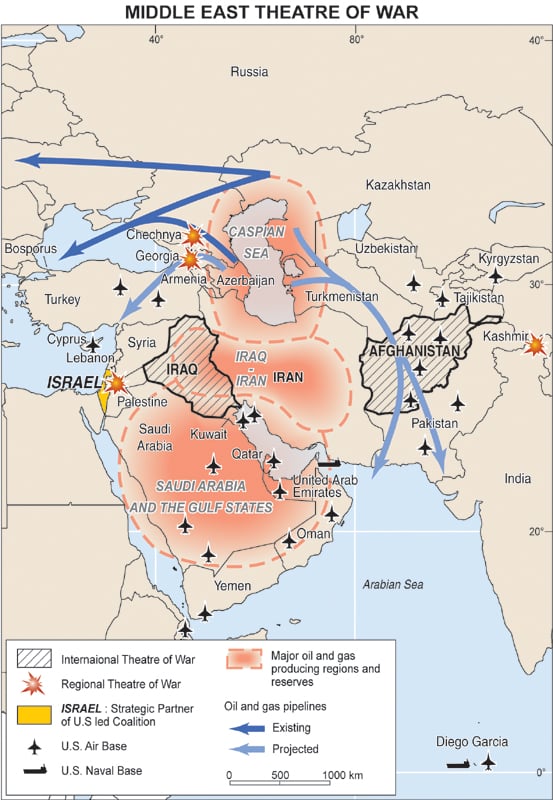

A Good, Long Analysis
by Michel Chossudovsky

"....America's Crusade in Central Asia and the Middle East

In the eyes of public opinion, possessing a "just cause" for waging war is central. A war is said to be Just if it is waged on moral, religious or ethical grounds.

America's Crusade in Central Asia and the Middle East is no exception. The "war on terrorism" purports to defend the American Homeland and protect the "civilized world", it is upheld as a "war of religion", a "clash of civilizations", when in fact the main objective of this war is to secure control and corporate ownership over the region's extensive oil wealth, while also imposing under the helm of the IMF and the World Bank (now under the leadership of Paul Wolfowitz), the privatization of State enterprises and the transfer of the countries' economic assets to foreign capital. .

The Just War theory upholds war as a "humanitarian operation". It serves to camouflage the real objectives of the military operation, while providing a moral and principled image to the invaders. In its contemporary version, it calls for military intervention on ethical and moral grounds against "rogue states" and "Islamic terrorists", which are threatening the Homeland.

Possessing a "just cause" for waging war is central to the Bush administration's justification for invading and occupying both Afghanistan and Iraq.

Taught in US military academies, a modern-day version of the "Just War" theory has been embodied into US military doctrine. The "war on terrorism" and the notion of "preemption" are predicated on the right to "self defense." They define "when it is permissible to wage war": jus ad bellum.

Jus ad bellum serves to build a consensus within the Armed Forces command structures. It also serves to convince the troops that they are fighting for a "just cause". More generally, the Just War theory in its modern day version is an integral part of war propaganda and media disinformation, applied to gain public support for a war agenda......

Continued."

So This is Plan B?

The U.S. Attack on Saleh Al-Mutlaq's Headquarters

By RAED JARRAR
CounterPunch

".....This attack against the National Dialogue Front (NDF) led by Al-Mutlaq does not seem to be accidental. The Bush administration's attempts to create a pro-occupation coalition in the Iraqi government failed last week after Al-Sistani, the grand Shia Ayatollah, refused to support the U.S. plan. The bush administration's plan seems to have changed from simply excluding anti-occupation political parties (like Sadrists, Al-Fadila party, NDF, and others) from the Iraqi government to actively bombing them.

The attack on NDF's headquarters in Baghdad is nothing more than the first step in the administration's plan B. The Al-Sadr movement and its militia, Al-Mahdi Army, seem to be next, and others will follow.

Attacking NDF, the only political party with no militias, will push the country towards more violence and militarization. It sends one message to Iraqis who still believe in political solutions: We will destroy you unless you were strong enough to destroy us."

Support a Palestinian Civil Rights Movement

Rima Merriman, The Electronic Intifada, 3 January 2007

A Palestinian demonstrator holds a Palestinian flag next to Israeli soldiers, during a demonstration against the Separation Wall in the village of Bilin near the West Bank city of Ramallah, December 22, 2006. (MaanImages/Moti Milrod)

Sometime in 2003, Condoleezza Rice declared to Reuters: "One of the really bad actors in the Middle East has just been deposed, and the president is not going to miss this opportunity" - meaning the opportunity to broker peace between the Palestinians and Israelis. But, as it turned out, not only did this promise remain unfulfilled, the "opportunity" of which Rice spoke did not even exist.

The really bad actor has now been hanged and hastily buried in what appears like Wild West justice to many in the Arab world. All that was missing from the spectacle was the picnicking rabble come to watch the hanging for entertainment. Far from being liberated, Iraq is a quagmire for both the US and the Iraqis. Neither the US's disastrous machinations in Iraq nor its past performance with regard to the Palestinians inspire confidence in its abilities to understand the complex sensibilities of the Arab world. Far from it.

In as much as the US has energy to spare for a peace plan between the Israelis and Palestinians, it means to bolster Abbas and give the upper hand back to Fateh with certain dire consequences obvious to everyone in the Middle East except to the US itself and to the Palestinian ruling elite whose economic interests are connected to Israel and who are supposedly in charge of the defunct "process" dreamed up at Oslo. What's more, if the best predictor of future behavior is past behavior, there is no reason at all that US intervention is likely to result in anything close to fair negotiations for the Palestinians or that the US and Israel will meet Abbas even half way.

The unfortunate reality of Abbas and of any Palestinian "president" is that he is powerless. When a Hamas majority in the Palestinian legislative Council was elected back in January, the Israeli foreign minister Tzipi Livni asked the following question about Abbas: "If he was useless or powerless even to advance negotiations before, what possible influence can he have when a party that runs what there is of Palestine does not actually want talks at all?"

"Useless or powerless" are adjectives that applied to Abbas before the elections, as they now apply to the Palestinian government that is running "what there is of Palestine." Recently, Abbas said of Olmert, "We have to meet. We need each other." But the truth is that Abbas needs Olmert, but Olmert does not need Abbas.

One recent headline blared that "Israel will let Abbas obtain arms" - in a limited way, of course, just enough to make it easier for the Palestinians to get at one another. The whole point of the Oslo agreement was to set up the figure of the Palestinian president as a buffer between the Israelis and the Palestinian people, so that the Israelis will not have to deal with confrontations directly. Political opposition that springs from civil authority through a representative government is not permitted, hence all the talk about a "technocrat" government as a "solution" to the Palestinian attempt at democracy.

Democracy in the oPt is not permitted; it's as simple as that. You wouldn't guess at this fact, however, if you took as an indicator the number of NGOs that have been planted in what there is of Palestine through the support of foreign aid in order to enlighten the Palestinian public on that count. As a result, the Palestinian public that elected Hamas is now sufficiently politicized to guarantee an explosion of monumental proportions should any Palestinian leader sign the kind of agreement that Israel has gone a long way in shaping geographically based on its interpretation of the letter of the Oslo agreement - a cantonized, segregated West Bank interspersed by a strong Jewish presence.

Israel and the US control the Palestinian political game and they will not allow the much touted "democracy" to develop in the occupied territories. Palestinian political life is designed to be dysfunctional, because Abbas, who ought to get the source of his authority from the legislative branch (which is what democracy means), is instead totally reliant on Israel and the US to make him useful and powerful.

The way to go forward is for Palestinian civil society to insist on the empowerment of the Legislative Council, if necessary by electing Hamas again. As Azmi Bishara put it, "Since territorial sovereignty is lacking, sovereignty over institutions and through elected national institutions will have to take its place."

Clinging to the Oslo agreements is a sure dead end for the Palestinians. Since Israel's racism and apartheid intentions are at long last becoming clear to the world, the best course of action is to support a Palestinian civil rights movement that would make alliances within Israel's own civil society as well as internationally in order for "the hammer of international opinion and the Boycotts, Divestments and Sanctions" campaigns to be effectively activated against Israel.

Posthumous Secrets & Truths


Painting : Iraqi Artist, Dr. Ala Al Bashir

An Arab Woman Blues
A Powerful Piece
By Layla Anwar

"....A good deal of the reactions I have witnessed from the above lot were very similar to what I witnessed on the lynching video that has been circulating.
Hooded men jumping and dancing around a dead corpse.
So is this what it amounts to in the end ?
With this fascistic predisposition, America will be staying in Iraq for decades. The anti war movement can go and bury itself alive. They will be doing the Iraqi people a great favor by doing so. As for the "experts " on the Middle East, the Arabic speaking ones, they have shown their disgraceful face . Not that they were graced before, but as I said, Death has this cunning ability of revealing hideous traits and enhancing them. Have a look around the blogs and you will see for yourself. Some nearly orgasmed at the Execution.

When it comes to Human rights organizations, they are nothing but pitiful.
Was just watching an hour long program, an interview with the "head" of Amnesty International. Not one word mentionned about the human rights abuses in Guantanamo, not one word on the lynching of the late President Saddam Hussein, not one word on the illegal American occupation of Iraq. I will not even bother citing the other agencies. Variations on the same theme.

What can I say about the executioners? They will be featuring in another gruesome video soon- at dawn again. The first one was to celebrate the first day of the muslim Feast and the second one to celebrate it's ending.
When I look at them, I try very hard to put my disgust aside and I keep imagining in a cold rational way what exactly happened.
How they deliberately kept Saddam awake a few hours before his execution and would not let him sleep.They would show him the rope every 3o mn. How they refused to even let him smoke his final cigarette. How they taunted a man about to die with insults just before he is to be hanged. How they mutilated the face of a dead man and bruised it after his death . How they danced and sang later around the cadaver. My only relief is that they did not engage in some cannibalistic, necrophiliac orgy.
Then they probably went home and drank some halal whiskey , burped and fell asleep.A bit like the anti war movement really
.
The irony is that despite all this morbid charade, Saddam outwitted them. He died as a very dignified person and they appeared as the sadistic criminals that they are. Too cowardly to drive home , a military American helicopter took them back to the Green Zone.

As for the American Zionists who planned the timing , they now claim that they tried to delay it. Catching up on saving some face, the little they have left, if at all. Still trying hard to show how humane they are.Politically correct oblige.

And what does the anti war movement do ? It applauds. And what do the so called fake "arab"2 cents worth "intellectuals" do? They applaud even harder.
And who joined the applause apart from America and the valiant "left"? Israel and Iran.

Curiously, after I finished writing my post " And the Crows sang at Dawn", I received a mail from a friend, out of the blue and by total "coincidence" entitled "the Jewish Calendar in Action."
And this what the e.mail said :
" Today the 10th of Tevet (31st of December- one day after the Death of Saddam Hussein) is a day of fasting , commemorating the siege of Jerusalem by the despot Nebuchadnezzar of whom Saddam claimed to be the reincarnation...and other more secular Jews commemorate this day as a remembrance for the loss of their loved ones during the Holocaust..."
Again,curiously enough the 10th of Tevet coincided with the Iranian Shi'ias celebration of Eid al Adha and the West's celebration of New Year's Eve.
A Diabolical timing indeed.

Some of you may get offended that I am lumping IT all together . Americans, Zionists Jews, Sectarian Iranian Shia's and the anti war "left". Am glad, because this is exactly what I am doing.
Those of you-whomsoever you are- you have not faced Death face to face or by proxy, and you, who can easily sit and plan, connive, strategize, theorize, analyze, calculate, council, orate or satirize in grave moments of history. In moments when hundreds are dying daily, where life is a thing of the past, when a sovereign country is being raped along with its people ...deserve nothing less than to be lumped together as a fascistic,sadistic,racist, ignorant,despicable,evil lot.

What you fail to understand and probably will never understand, being the limited people that you are is that Saddam's Death has ultimately nothing to do with the politician or the persona.
Grieving Saddam is grieving a concept, a symbol, a wish, a hope, a vision, a sense of belonging... But since you are so limited in your understanding of anything that goes beyond facts and figures, there is absolutely no point explaining it to you
.

I leave you now in your tedious hypocrisy, in your boring ignorance and in your bigoted visions. But before I sign off , I have another secret to share with you. Do keep it hush hush and don't bother googling it because you won't find it on the web (your ultimate academic reference!).
Bremmer, the suave gangster Bremmer asked one of his assistants before he left office in Baghdad :
"How many are the Iraqis today?" the Assistant replied :" Around 24 million".
"Too much" he replied " WE shall bring it down to 5 million
".
And you lot are helping him in this.

Now let me go and throw up as I am feeling politically nauseating.
Good night."

Gunmen target 3 Hamas leaders; 4th slain

RAMALLAH, West Bank - In a new round of factional fighting, assailants targeted three senior Hamas officials in the West Bank, kidnapping one, torching the car of a second and shooting in the air as a third emerged from a mosque, security officials said Thursday. Separately, a member of a Hamas security force was killed Thursday when his car came under fire from unidentified assailants in the Jebaliaya refugee camp in Gaza, a force spokesman said. Four other people were wounded. Hamas accused Fatah of the attack, but Fatah denied involvement.

Four killed, 20 wounded by IOF in Ramallah

Four Palestinians were killed and 20 wounded on Thursday when Israel Defense Forces undercover troops entered the West Bank town of Ramallah on an arrest raid, sending Palestinians fleeing and setting off a battle with gunmen in the center of town. During the raid in Ramallah on Thursday, bulldozers and armored personnel carriers were seen driving through Ramallah's central square, clearing cars out of the way and turning some over on the pavement. Gunshots could be heard throughout the center of the town, which was mostly deserted. At one point, an Israel Air Force helicopter fired, witnesses said.
continues...

Yes....More On Saddam


The inevitable end of Saddam
by Hasan Abu Nimah


"....Because he will never be tried for his other crimes, we may never know the full extent of Western, particularly American and European, complicity in supplying him with the chemical and other weapons he used, and the extent of the cooperation with his regime. The testament to this deliberately forgotten history is the grainy photograph of former US defence secretary Donald Rumsfeld firmly clasping Saddam's hand.

Many truths which the world deserved to know have perished forever with that savage execution. Yet, even if Saddam's trial had been impeccably handled, the fundamental principle of justice is equality before the law. Such "justice" has no chance of winning over the masses in this region when they observe that punishment is so swift and brutal when the accused is an Arab, Muslim head of state, while other accused former leaders, like Slobodan Milosevic, receive elaborate trials in The Hague (so long in Milosevic's case that he died of natural causes several years into the proceeding).

The United Kingdom, which had General Augusto Pinochet in its custody, released him, and he, too, died peacefully, never having answered a charge against him.

Even worse, when attempts were made to initiate legal action against Ariel Sharon and other major Israeli war criminals in Belgium and other European capitals, the countries involved were subjected to enormous pressure to even change their legislation to obstruct justice and protect the accused.

In December, a United States district court in Washington, DC, dismissed a lawsuit against former Israeli chief-of- staff, General Moshe Yaalon, by some of his Palestinian victims, on the grounds that he is immune from the action because he wore a uniform at the time of his alleged crimes. This shocking reversal of some of the fundamental principles established at the Nuremberg trials passed almost without notice.

And, of course, there is the war that brought us to this point in the first place. Dozens, if not hundreds, of Iraqis are dying every day. Will those who justified a war through lies and fabrication, who flouted the UN Charter, who tried to use Iraq as a source of wealth and plunder for their corporations and contractors ever answer for their misdeeds? It seems more likely that they will retire as respected "statesmen" whose wise advice will be sought for decades to come.

At the end of an overstretched process which lasted for more than 16 years, including two major wars, separated by 12 violent years of harsh UN sanctions against Iraq and the innocent Iraqi people -- following the fatal invasion of Kuwait in 1990 -- the termination of Saddam and his regime was inevitable. What was not, is the ugly and costly manner in which this has been "accomplished" and, more frightfully, the lows to which superpower politics towards our region have degenerated.

The ugly killing of Saddam will do nothing to restore peace to the region, nor will it help Iraq. It is a mark of the savagery that has come to replace politics and diplomacy in international affairs, and of the reduction and humiliation of the Arab nation. It is no more than another blunder contributing further to the aggravation and the deterioration at a time when correction measures are urgently required.

Which of the rulers between Africa and Afghanistan, whether they now enjoy Western patronage or count the West as their enemy, cannot see themselves at the centre of the same horrifying and tragic drama? Perhaps that was the point all along. "

Israeli "traitor" vilified in press, freed after two years

Conal Urquhart in Tel Aviv
Thursday January 4, 2007
The Guardian

An Israeli woman whose attempts to better understand Palestinians led to a campaign of vilification and charges of treason was released yesterday after serving more than two years in jail.

Tali Fahima, 30, said she had no regrets and insisted that she had done nothing to harm the state of Israel as she left prison to the cheers of a hundred supporters.

Ms Fahima, a legal secretary, was arrested in August 2004 after the last of a series of visits to Jenin, which were publicised in the media. She was detained without trial after the defence minister said she "took part in planning a terrorist attack in Israel".

She was attacked in the Israeli press as a "terrorist's whore" after journalists were briefed that she had an affair with a Palestinian militant, Zakaria Zubeidi, who is often described as Israel's most wanted man.

Ms Fahima said there was no truth in any of the allegations and said she was only arrested after she declined to work for Shin Bet, Israel's secret service.

When she was tried no evidence was presented of her involvement in a terrorist attack, although she admitted reading an Israeli army document that soldiers lost on patrol.

Ms Fahima pleaded guilty to meeting enemy agents and passing information to them as part of a plea bargain in December 2005.

The charges could have led to a life sentence but Ms Fahima was offered the opportunity to serve only a further 10 months in return for a guilty plea.

As part of the condition of her release she is "banned from leaving the country in the coming year, contacting a foreign agent or entering unauthorised territories", the Israeli prison service said in a statement.

She said she had no plans to visit Jenin and Zubeidi but said she wanted to continue to fight Israel's occupation of the territories.

Three Palestinian farmers wounded by Israeli fire in Gaza

Agence France Presse
4 January 2007

GAZA CITY, Jan 4 2007--Three Palestinian farmers were wounded Thursday by Israeli fire in Beit Lahiya in northern Gaza near the border with the Jewish state, medics said.

An army spokeswoman said that Israeli soldiers saw two people approaching the border fence between Gaza and Israel, called on them to stop, and when the men did not heed the order fired at their lower body. The soldiers identified hitting one of the men, she said.

Under a November 26 ceasefire, Israel withdrew its troops from Gaza and militants were supposed to cease firing rockets.Since then, around 70 rockets have been fired into the Jewish state, and one Palestinian has been killed and at least six wounded by Israeli fire in the coastal strip.

Egypt-US-EU agents for Israel search Palestinian PM on return from Haj

Palestinian Prime Minister Ismail Haniyeh arrived at the Egypt-Gaza border Thursday after undergoing unprecedented security measures to ensure that he is not carrying money or weapons into the Gaza Strip.

Haniyeh was returning from a pilgrimage to Islam's holiest city Mecca.

The measures were planned by representatives of Israel, the Palestinian Authority, the United States and the European Union.

Representatives of the four parties met in Jerusalem on Wednesday to coordinate security arrangements concluded during Prime Minister Ehud Olmert's meeting with PA Chairman Mahmoud Abbas nearly two weeks ago. They also discussed the operation of the Rafah crossing between Sinai and Gaza in anticipation of Haniyeh's arrival.

In accordance with the agreed-upon arrangements, the Saudi Arabian aircraft carrying Haniyeh landed in El-Arish and underwent a detailed security inspection by a joint American-Egyptian team, in the presence of Nizami Muhane, the PA official responsible for the border crossings. The team was to confiscate any weapons or money.

Afterward, Egypt informed the EU monitors at Rafah that Haniyeh and his aides are "clean" of both weapons and money.

Haniyeh will now have to complete the rudimentary inspection reserved for VIPs, following which he and his entourage will enter Gaza in four armored vehicles belonging to the office of the PA chairman.

Two weeks ago, Haniyeh was delayed for seven hours at Rafah after trying to enter Gaza carrying large sums of cash donated to Hamas during his visit to Iran and other Muslim countries that support the organization.

He was ultimately allowed to enter Gaza only after surrendering the cash to aides in Egypt. Both Abbas and Israel are trying to avoid a repetition of this scenario, which resulted in tensions among Fatah and Hamas, and also elevated Haniyeh to the status of hero among Hamas supporters.


Usrael Is Working Hard With Abbas' Thugs To Fuel Inter-Palestinian Fires
Wasfi Kibha, Palestinian Minister for Prisoner Affairs, displays a burnt Quran, Islam's holy book, after assailants torched his car in the West Bank town of Jenin Thursday Jan. 4, 2007. Assailants targeted three senior Hamas officials in the West Bank, kidnapping one, torching the car of a second and shooting in the air as a third emerged from a mosque, officials said Thursday. There was no immediate claim of responsibility. (AP Photo)

Sacrifice Translates into More Dead People


By Kurt Nimmo

"Is John “Keating Five” McCain sincerely clueless? Or is he simply a politician playing a cynical numbers game with Iraq and thus eventually condemning to certain death more troops that should be here at home, protecting our borders?

McCain told General John Abizaid he didn’t understand why the United States cannot “control” al-Anbar province and was flummoxed the general would suggest the “mission” is to train Iraqis to fight the “insurgency,” actually a popular resistance against both occupation by foreign troops and their hand-picked Iraqi proxy.

McCain expressed frustration that said “insurgents” have taken back al-Anbar, thus demonstrating you can’t teach an old dog new tricks, or at least teach him a bit of history and the inevitability of defeat for those who invade and attempt to occupy, as the French lost Vietnam at Diem Bien Phu and the British lost Afghanistan at the Gandamak pass. In Iraq, the Brits were unable to contain continual uprisings against occupation, even though they used mustard gas, a weapon favored Winston Churchill for the likes of “uncivilized” tribes. John McCain, the Manchurian candidate for president in 2008, does not even seem vaguely aware of such historical realities.....

But forget al-Anar, the Pentagon can’t even “secure” Baghdad, and will be unlikely to do so even if they send another 20,000, 30,000, or even 100,000 troops into the neocon constructed meat grinder.....

Admittedly, Bush may not know what he is doing from one moment to the next, as he is a former drunk and drug abuser, and thus a mental graveyard, but his coterie of neocons most certainly know what they are doing—coming up with excuses to send more troops into Iraq, not to win that which cannot be won, as another basket case, McCain, would have us believe, but rather to see through “mission accomplished,” the destruction and balkanization of Iraq. It’s a work in progress, with horrifying results. For instance, last weekend, a series of car bombings killed more than 70 people in Shia neighborhoods in the hours after Saddam Hussein was lynched by a gaggle of puppets installed by the neocons......

In other words, the American people can be expected to do nothing, or nothing effective, to put an end to the carnage, never mind the increasing flights of flag-draped coffins off-loaded at Dover Air Force Base. Of course, most Americans, many unable to find Iraq on a map, don’t know a thing about the 650,000 plus Iraqis slaughtered, and even if they did a whole lot of them wouldn’t care.....

Offing Saddam on the first day of the holy Eid holiday should have rung a bell with Americans, allowing them to realize the neocons, their leadership rife with Arab-hating Israel Firsters, will stop at nothing to turn up the heat of sectarian violence in Iraq.

“What the Shiite Arabs have to remember is that while the Sunni Arabs are a minority in Iraq, they in fact are a majority in the Arab world. They have the backing of the Sunni masses which form the basis of Arab nationalism,” writes Ilnur Cevik for the New Anatolian. “What they are attracting is more Arab Sunni enmity which will be very dangerous for the future of Iraq. Iran, which acts like the mentor of the Arab Shiites in Iraq, should also take this into account. The way Saddam was humiliated and mishandled in his final minutes by his Arab Shiite executioners will be deeply entrenched in the minds of many Sunni Arabs, and not only those who had sympathies for Saddam.” ......

Neocons, naturally, know the difference, and that’s why they do the things they do.

Get ready to sacrifice, indeed.

Next up, Iran. "


(Click on to enlarge)
The New Iraq: Sectarianiam, Hate, Vengeance, Chopping Heads, Extremism,...

From monster to martyr?


How Bush and Blair's choices have led to disaster in Iraq, culminating in a chaotic execution that is fuelling civil war

By Patrick Cockburn
The Independent

".......There is also a fear among Shia leaders that the US might suddenly change sides. This is not as outlandish as it might at first appear. The US has been cultivating the Sunni in Iraq for the past 18 months. It has sought talks with the insurgents. It has tried to reverse the de-Baathification campaign. US commentators and politicians blithely talk about eliminating the anti-American Shia cleric Muqtada al-Sadr and fighting his militia, the Mehdi Army. No wonder Shias feel that it is better to get Saddam under the ground just as quickly as possible. Americans may have forgotten that they were once allied to him but Iraqis have not.

When Saddam fell Iraqis expected life to get better. They hoped to live like Saudis and Kuwaitis. They knew he had ruined his country by hot and cold wars. When he came to power as president in 1979, Iraq had large oil revenues, vast oil reserves, a well-educated people and a competent administration. By invading Iran in 1980 and Kuwait in 1990, he reduced his nation to poverty. This was made worse by the economic siege imposed by 13 years of UN sanctions.

But life did not get better after 2003. Face-to-face interviews with 2,000 Iraqi adults by the Iraq Centre for Research and Strategic Studies in November revealed that 90 per cent of them said the situation in their country had been better before the US-led invasion. Only 5 per cent of people said it was better today. The survey was carried out in Baghdad, in the wholly Sunni Anbar province and the entirely Shia Najaf province. It does not include the Kurds, who remain favourable to the occupation.

This does not mean that Iraqis want Saddam back. But it is clearly true that the chances of dying violently in Iraq are far greater today everywhere in the country outside the three Kurdish provinces than they were in 2002. The myth put about by Republican neoconservatives that large parts of Iraq enjoyed pastoral calm post-war but were ignored by the liberal media was always a fiction. None of the neocons who claim that the good news from Iraq was being suppressed ever made any effort to visit those Iraqi provinces which they claimed were at peace.

Saddam should not have been a hard act to follow. It was not inevitable that the country should revert to Hobbesian anarchy. At first the US and Britain did not care what Iraqis thought. Their victory over the Iraqi army - and earlier over the Taliban in Afghanistan - had been too easy. They installed a semi-colonial regime. By the time they realised that the guerrilla war was serious it was too late.

It could get worse yet. The so-called "surge" in US troop levels by 20,000 to 30,000 men on top of the 145,000 soldiers already in the country is unlikely to produce many dividends. It seems primarily designed so that President George Bush does not have to admit defeat or take hard choices about talking to Iran and Syria. But these reinforcements might tempt the US to assault the Mehdi Army.

Somehow many senior US officials have convinced themselves that it is Mr Sadr, revered by millions of Shia, who is the obstacle to a moderate Iraqi government. In fact his legitimacy in the eyes of ordinary Shia Iraqis, the great majority of the population, is far greater than the "moderate" politicians whom the US has in its pocket and who seldom venture out of the Green Zone. Mr Sadr is a supporter of Mr Maliki, whose relations with Washington are ambivalent.

An attack on the Shia militia men of the Mehdi Army could finally lead to the collapse of Iraq into total anarchy. Saddam must already be laughing in his grave."

A drop into the abyss

Saddam jailed me but his hanging was a crime. Iraq's misery is now far worse than under his rule

Haifa Zangana
(Haifa Zangana is an Iraqi-born novelist and former prisoner of Saddam's regime)
Thursday January 4, 2007
The Guardian

"......About 500 academics and 92 journalists have been murdered since the invasion of Iraq. Hundreds more have been kidnapped, and many others have fled the country after receiving threats against their lives. The human costs are so high that many Iraqis believe that had there been a competition between Saddam's regime and the Bush-Blair occupation over the killing of Iraqi minds and culture, the latter would win by far. Sadly, I am becoming one of them.

I am speaking as one who has been, from the start, a politically active opponent of the Ba'ath regime's ideology and Saddam Hussain's dictatorship. At times that was at the high personal cost of prison and torture. In 1984, during the Iran-Iraq war, my family had to pay for the bullets used to execute my cousin Fouad Al Azzawi before being allowed to collect his body. But I find myself agreeing with many Iraqis, that life now is not just the continuity of misery and death under new guises. It is much, much worse - even without the extra dimensions of pillage, corruption and the total ruin of the infrastructure.

Every day brings with it, due to the presence of occupation troops to protect US citizens' safety and security, less safety and security for Iraqis.

The timing and method of the execution of Saddam Hussein proves that the US administration is still criminally high on the cocktail of power, arrogance, and ignorance. But above all racism: what is good for us is not good for you. We are patriots but you are terrorists.

The US and their Iraqi puppets in the green zone chose to execute Saddam on the first day of Eid al-Adha, the feast of the sacrifice. This is the most joyous day in the Muslim calendar when more than 2 million pilgrims in Mecca start their ancient rituals, with hundreds of millions of others around the world focused on the events. They then further humiliated Muslims by releasing the official video of the execution, with the 69-year-old having a noose placed around his neck and being led to the drop. The unofficial recording shows Saddam looking calm and composed, and even managing a sarcastic smile, asking the thugs who taunted him "hiya hiy al marjala?" ("is this your manliness?"), a powerful phrase in Arabic popular culture connecting manliness to acts of courage, pride and chivalry. He also managed to repeatedly say the Muslim creed as he was dying, thus attaching himself in the last few seconds of his life to one billion Muslims. Saddam had literally the final say. From now on, no Eid will pass without people remembering his execution.

This was the climax of a colonial farce with the court proceedings' blatant sectarian overtones welcomed by Bush and the British government as a "fair trial". The occupation also welcomed the grotesque public execution as "justice being done". Contrast this with the end of our hopes, as Iraqis in opposition, of persuading our people of the humanity of democracy and how it would, unlike Saddam's brutality, put an end to all abuses of human rights, to execution in public, and to the death penalty.

It is no good the deputy prime minister John Prescott now condemning the manner of Saddam's execution as "deplorable" when, as a representative of one of the two main occupying powers, his government is both legally and morally responsible for what took place.

It is hell in Iraq by all standards, and there is no end in sight to the plight of Iraqi people. The resistance to occupation is a basic human right as well as a moral responsibility. That was the case during the Algerian war of independence, the Vietnamese war of independence, and it is the case in Iraq now."

Wednesday, January 03, 2007

Clearing The Decks For The Attack On Iran


Second U.S. carrier group to deploy to Gulf: sources

"WASHINGTON (Reuters) - The Pentagon will send a second aircraft carrier and its escort ships to the Gulf, defense officials said on Wednesday, as a warning to Syria and Iran and to give commanders more flexibility in the region.

Officials, speaking on condition of anonymity, said the Bremerton, Washington-based USS John C. Stennis strike group would deploy this month. It will put 5,000 more U.S. sailors in the region, bringing the total to 16,000.

The USS Dwight D. Eisenhower aircraft carrier group entered the Gulf in December.

Pentagon spokesman Bryan Whitman declined to comment, saying the Defense Department would not discuss future deployments or ship movements. But military analysts said the move was intended to demonstrate U.S. resolve in the face of acts by Iran and Syria that it sees as provocative, such as Tehran's pursuit of its nuclear program.

The Stennis had been scheduled to deploy to the Pacific region. But the Pentagon agreed instead to send the carrier group to the Gulf after a request from U.S. Central Command, the military command responsible for Middle East operations.

Senior defense officials have said that request was aimed at increasing Central Command's flexibility in a variety of operations and providing deterrence in the region."

Why Saddam's Execution Clouds Bush's Iraq Plan

Viewpoint: Whether or not more troops are sent, the circumstances of Saddam's hanging are a stark reminder that the U.S. may lack an Iraqi partner for its strategy

By Tony Karon
Time

".......Having created a new state in Iraq — and not yet ready to admit that it is a failed state — the U.S. felt obliged to hand Saddam Hussein over to the Iraqis to administer the death penalty, even though Washington made clear it would have preferred that Saddam's sentence be administered at a less fraught moment — and in a less rushed manner. But being the ones to kill Saddam was a political prize for at least a section of the current government — the ultimate gesture of vengeance on behalf of the long-suffering Shi'ite majority, clearly calculated to boost the political standing of those who administered it. And so, as the video makes clear, Saddam faced death to the sound of chants proclaiming Shi'ite victory and extolling the name of the anti-American radical Shi'ite cleric Moqtada Sadr — not exactly the healing denouement the U.S. had in mind for the Saddam era......

....So if, as the U.S. recognizes, the major security challenge in Iraq is sectarianism tending toward civil war, then the Iraqi government is hardly above the fray. (The two main Shi'ite militias responsible for most attacks on Sunnis, for example, are affiliated with the ruling coalition, which has tended to restrain U.S. military action against them.) While the Shi'ite leadership is willing to cooperate with the U.S. to the extent that this helps it pursue its own goals, the Shi'ite base is increasingly mistrustful of Washington's efforts to promote reconciliation with the Baathists and take down militias that many Shi'ites see as vital to their defense against Sunni insurgents. At the very moment the U.S. needs greater cooperation from the government, Prime Minister Maliki needs to show his independence from Washington, where doubts about his usefulness are no secret. No wonder he no longer wants the job....Continued."

Attack on Iran could bring devastation to Arab world


By Patrick Seale

"ALTHOUGH peering into the future is a hazardous business, it would not be rash to say that of all the potential man-made catastrophes that might afflict the world this coming year, for sheer destructiveness none would surpass a US or Israeli attack on Iran. Is such an attack probable or even possible? Regrettably, it is. In the current confrontation with Iran, the military option remains very much on the table. In both the US and Israel, the same military planners, political lobbyists and armchair strategists that pressed the US to attack Iraq are now urging it to strike Iran — and for much the same reasons. These reasons may be briefly summarised as the need to control the Middle East’s oil resources and deny them to potential rivals, such as China; the wish to demonstrate the US’s ability to project military power across the globe; and Israel’s determination to maintain its supremacy over any regional challenger, especially one as recklessly provocative as Iran’s President Mahmoud Ahmadinejad. An effective US or Israeli strike against Iran would have to destroy not only its nuclear facilities but also its ability to hit back — its entire military-industrial complex.

The attack would have to be so devastating it would rob Iran of the will and means to retaliate. This could take weeks of air and missile attacks and, because of the size of the country and the dispersal of its military assets, would be difficult to achieve. It seems more than likely that if attacked, Iran will, one way or another, manage to strike back — against US troops in Iraq, against Israel, and against US bases and US allies in the Gulf. Of all these targets, the Arab states of the Gulf — the most prosperous, modern and forward-looking of the Arab world — are perhaps the most vulnerable.

The effect on Arab society would be incalculable.

The effect would also be devastating on US-Arab relations, on Israel’s long-term security, on the flow of oil from the Gulf, on the oil price, on the economies of the industrial world and on the already highly fragile dollar. And yet, some influential voices argue that the only way the US can hope to “win” in Iraq is to destroy Iran.

US President George Bush is due to make a statement on his Middle East strategy soon. All the indications are that he will reject the advice of the Iraq Study Group, led by James Baker and Lee Hamilton, to withdraw combat troops from Iraq, to engage Iran and Syria in a dialogue and to give priority to resolving the Arab-Israeli conflict.

There is talk of sending more troops to Iraq, of tightening sanctions against Iran and Syria, of mobilising “moderate” Arab states against “extremists”, of arming the Fouad Siniora government in Lebanon against Hezbollah, and the Fatah forces of Palestinian Authority President Mahmoud Abbas against the Hamas government.

In the Horn of Africa, the US is lending its tacit support to Ethiopia in its war against Somalia’s Union of Islamic Courts, in the name of the ill-conceived war on terror which creates more terrorists than it eliminates.

Instead of bringing peace to a deeply troubled region, US policies are feeding the flames of civil war in Iraq, exposing US troops to greater danger, forcing Iran and Syria to look to their defences, exacerbating conflicts in Lebanon and Palestine and opening a new front in Somalia, which risks destabilising much of east Africa.

Still in the grip of the neoconservative cabal which has destroyed his presidency by its insane belligerence, Bush continues to see the Tehran-Damascus-Hezbollah-Hamas axis as the main enemy to confront and bring down.

The real danger this year is that Saudi Arabia, alarmed at the rise of Iran and the self-assertion of Shiite communities in Lebanon and the Gulf region, will be persuaded to side with the US against Tehran.

Meanwhile, Israel continues to play cat and mouse with the international community, pretending to make concessions to Abbas, such as removing a few checkpoints and releasing a fraction of the funds it has sequestered, while blatantly establishing a new illegal settlement in the Jordan valley and pressing ahead with its infamous separation wall. The message is clear: Israel’s land grab on the West Bank will continue whatever Washington or anyone else might say.

Last year’s war in Lebanon confronted Israel with the choice of continuing to seek to dominate the region by military force and expanding its territory at the expense of the Palestinians or of making peace with the Arab world on the basis of something like its 1967 borders.

Ehud Olmert’s government in Israel has chosen the first option: it has rejected Syria’s offer to reopen peace negotiations for the return of the Golan Heights; it is not ready to end its occupation of Palestinian territory or allow the creation of a viable Palestinian state; it is rearming and retraining its forces in anticipation of a “second round” against Hezbollah in Lebanon; it continues its cruel war of attrition against the Hamas movement in Gaza; and it is determined to maintain its regional monopoly of weapons of mass destruction. Various influential Israelis have stated that if the US does not strike against Iran to destroy its nuclear facilities, Israel must do so itself.

If one considers the likely effect of these US and Israeli policies, it is clear the coming year is likely to be a hot one in the region....

...Continued."

Meanwhile in Palestine

Thirty Days Against Borders - Children of Nablus against the Occupation: School children from Nablus dressed up like Native Americans will gather in a peaceful demonstration at Huwarra checkpoint. Over four weekends in January and February, Palestinian, Israeli and international peace organizations will gather at both sides of Huwarra Checkpoint to protest against the regime of barriers which severely retricts movement in the West Bank. They will sing and play, have a photo exibition and in other ways demonstrate for peace.

Five killed as internal tensions resurface in Gaza Strip: In the southern Gaza town of Khan Yunis, three security officials loyal to Palestinian Authority Chairman Mahmoud Abbas were killed Wednesday afternoon when unidentified gunmen attacked their vehicles, hospital officials said.

Bodies of a Woman and child found in Gaza: Dr. Mou'awiah Hassanin, director of the emergency department in the Palestinian ministry of health reported that Sami Ashour, 14, was found dead near a gas station in central Gaza strip, Dr. Hassanin added that the boy was beaten up on the head very badly, shot in the back and his body had torture marks. Apparently, the two cases are separate, however, this indicates a serious alarming situation in the Gaza Strip regarding the security situation.

Unknown gunmen abduct a Palestinian security officer in the southern part of Gaza Strip: Eyewitnesses reported that the gunmen opened fire at Mo'taz Al Tawil, 40, an officer working with the Palestinian Preventative Security forces, while he was leaving a mosque in Khan Younis at dawn.

Israeli army invades Nablus and Tubass: three residents abducted among an injured man. The Israeli army invaded the northern West Bank cities of Nablus and Tubass on Wednesday at dawn, attacked residents' homes, wounded one resident and abducted three including the wounded, Palestinian sourcess reported.

Fatah official: Hamas training in Iran, Lebanon: "We are sure according to information that we have that Hizbullah prepares Hamas for a confrontation with us (Fatah) and with Israel. None of these preparations takes place in Gaza, but they take place in Lebanon, in Iran and in other places where the Iranian and Hizbullah experts train Hamas militants," the senior Palestinian intelligence official told WND.

Marking the territory: At 6:30 last Friday morning, two cars waited for soldiers to open the checkpoint at the eastern entrance to Ramallah. This checkpoint is only for diplomats, Palestinian VIPs, journalists, employees of international organizations and anyone whose presence is welcomed by the military authorities. The checkpoint obligates thousands of villagers living in the vicinity to travel from 30 to 60 kilometers, instead of three to four km, so the settlers of Beit El and Psagot and of the outposts of Migron and Givat Asaf can exercise their landlordism.

Americans, Europeans told: Leave Gaza: The Palestinian security establishment has advised American and European citizens to leave the Gaza Strip following kidnapping warnings, Israel Radio reported Wednesday. The warnings were also aimed at United Nations Relief and Works Agency personnel who are in Gaza to aid Palestinian refugees. However, the UNRWA said that they did not intend to pull their workers out of the area.

Hamas claims Shalit progress, Israel says it's all 'spin': Israeli officials on Tuesday continued to dismiss various reports about an impending deal for the release of kidnapped Cpl. Gilad Shalit as "media spin," even as Hamas sources were saying that the movement has agreed to release Shalit in return for "several hundred" Palestinian prisoners.

Arab MKs: We’ll torpedo budget if funds not given to Arab sector: The two MKs have demanded that $980 million of the funds allocated to developing the Galilee be transferred to Arab villages, and for hundreds of millions of shekels to be dedicated toward developing Arab communities in the Negev. They also asked the Education Ministry to build more classrooms for Arab students. Majadele told Haaretz Tuesday that he had been in contact with the Finance Ministry over the matter for a number of weeks.

Haniyeh cuts short tour of Arab world: The aides said Haniyeh would return to Gaza on Thursday to attend to "work" instead of traveling to Jordan, which has offered to host a meeting between Haniyeh and Palestinian President Mahmoud Abbas of the Fatah movement in an effort to defuse deadly tensions between their factions.

Mubarak-Olmert summit seeks to relaunch Mideast peace talks: Egyptian President Hosni Mubarak is due to meet Israeli Prime Minister Ehud Olmert Thursday in a bid to relaunch the stalled Middle East peace process and to bolster Palestinian president Mahmud Abbas in his standoff against the ruling Hamas party.

Netanyahu: Pensions cut – Arabs' birth rate declined: In his speech, Netanyahu referred to the cuts in child pensions, saying that since they were implemented "two positive things happened: Members of the haredi public seriously joined the workforce. And on the national level, the unexpected result was the demographic effect on the non-Jewish public, where there was a dramatic drop in the birth rate."

Meanwhile in Iraq

Saddam co-defendants to be executed Thursday: Saddam's half brother Barzan Ibrahim, a former intelligence chief, and Awad Hamed al-Bandar, the former chief justice of the Revolutionary Court, were originally scheduled to hang with Saddam, who was put to death on Saturday.

What about other U.S.-backed killers in the world?: What about the atrocities committed by other dictators around the world? Hosni Mubarak and other allies of U.S. who have done and are doing things that can only be considered crimes against humanity. How many of these are democracies? How many of these regimes respect human rights? And how many of these regimes receive American aid? There in lies the hypocrisy.

Bush promises new Iraq policy in the coming days:
"Ultimately, Iraqis must resolve the most pressing issues facing them. We can't do it for them. But we can help Iraq defeat the extremists inside and outside of Iraq -- and we can help provide the necessary breathing space for this young government to meet its responsibilities."

Baghdad arrest in Saddam's death video:
An Iraqi prison guard was arrested for illegally videotaping the Baghdad execution of deposed leader Saddam Hussein and posting it on the Internet.

Fresh violence in occupied Iraq claims 22 lives: Police said the found 15 more bodies dumped in the north of the city.

Iraq: At least 17 killed in another bloody day in Iraq: Police found five bodies bearing signs of torture and bullet wounds in the town of Nahrawan, 30 km (20 miles) southeast of Baghdad, police said.

Islamic Army calls for 'saving Baghdad from Iranian occupation':
"Iraq is under a double, US-Iranian occupation, the worst being the Iranian Safavid (Shiite Persian) occupation," the IAI's "emir" said in an audio message posted on a website used by Iraqi insurgent groups on Monday.

16,273 Deaths Reported During U.S. Occupation of Iraq in 2006: Government officials reported that 16,273 Iraqi civilians, soldiers and police died violent deaths in 2006, a figure larger than an independent Associated Press count for the year by more than 2,500.

Bush 'to reveal Iraq troop boost': The speech will reveal a plan to send more US troops to Iraq to focus on ways of bringing greater security, rather than training Iraqi forces.

Chaos Overran Iraq Plan in ’06, Bush Team Says: President Bush began 2006 assuring the country that he had a “strategy for victory in Iraq.” He ended the year closeted with his war cabinet on his ranch trying to devise a new strategy, because the existing one had collapsed.

Iraq orders shutdown of Baghdad office of TV station:
The Iraqi government Monday ordered the closure of the Baghdad office of a Dubai-based television station whose newscaster wore black mourning clothes while reporting on the hanging of Saddam Hussein.

Iraq PM orders probe into Saddam video: The prime minister on Tuesday ordered an investigation into the conduct of Saddam Hussein's execution in a bid to learn who among the witnesses taunted the former Iraqi leader in the last minutes of his life, then leaked a cell phone video.

Thanks For The Memories: Short video explains the CIA's role in Saddams rise to power.

Truth at last, while breaking a U.S. taboo of criticizing Israel, By George Bisharat

Americans owe a debt to former President Jimmy Carter for speaking long hidden but vital truths. His book Palestine: Peace Not Apartheid breaks the taboo barring criticism in the United States of Israel's discriminatory treatment of Palestinians. Our government's tacit acceptance of Israel's unfair policies causes global hostility against us.

Israel's friends have attacked Carter, a Nobel laureate who has worked tirelessly for Middle East peace, even raising the specter of anti-Semitism. Genuine anti-Semitism is abhorrent. But exploiting the term to quash legitimate criticism of another system of racial oppression, and to tarnish a principled man, is indefensible. Criticizing Israeli government policies - a staple in Israeli newspapers - is no more anti-Semitic than criticizing the Bush administration is anti-American.

The word apartheid typically evokes images of former South Africa, but it also refers to any institutionalized regime of systematic oppression and domination by one racial group over another. Carter applies the term only to Israel's rule of the occupied Palestinian territories, where it has established more than 200 Jewish-only settlements and a network of roads and other services to support them. These settlements violate international law and the rights of Palestinian property owners. Carter maintains that "greed for land," not racism, fuels Israel's settlement drive. He is only partially right.

Israel is seizing land and water from Palestinians for Jews. Resources are being transferred, under the guns of Israel's military occupation, from one disempowered group - Palestinian Christians and Muslims - to another, preferred group - Jews. That is racism, pure and simple.

Moreover, there is abundant evidence that Israel discriminates against Palestinians elsewhere. The "Israeli Arabs" - about 1.4 million Palestinian Christian and Muslim citizens who live in Israel - vote in elections. But they are a subordinated and marginalized minority. The Star of David on Israel's flag symbolically tells Palestinian citizens: "You do not belong." Israel's Law of Return grants rights of automatic citizenship to Jews anywhere in the world, while those rights are denied to 750,000 Palestinian refugees who were forced or fled in fear from their homes in what became Israel in 1948.

Israel's Basic Law of Human Dignity and Liberty establishes the state as a "Jewish democracy" although 24 percent of the population is non-Jewish. Adalah, the Legal Center for Arab Minority Rights in Israel, counted 20 laws that explicitly privilege Jews over non-Jews.

The government favors Jews over Palestinians in the allocation of resources. Palestinian children in Israel attend "separate and unequal" schools that receive a fraction of the funding awarded to Jewish schools, according to Human Rights Watch. Many Palestinian villages, some predating the establishment of Israel, are unrecognized by the government, do not appear on maps, and thus receive no running water, electricity, or access roads. Since 1948, scores of new communities have been founded for Jews, but none for Palestinians, causing them severe residential overcrowding.

Anti-Arab bigotry is rarely condemned in Israeli public discourse, in which Palestinians are routinely construed as a "demographic threat." Palestinians in Israel's soccer league have played to chants of "Death to Arabs!" Israeli academic Daniel Bar-Tal studied 124 Israeli school texts, finding that they commonly depicted Arabs as inferior, backward, violent, and immoral. A 2006 survey revealed that two-thirds of Israeli Jews would refuse to live in a building with an Arab, nearly half would not allow a Palestinian in their home, and 40 percent want the government to encourage emigration by Palestinian citizens. Last March, Israeli voters awarded 11 parliamentary seats to the Israel Beitenu Party, which advocates drawing Israel's borders to exclude 500,000 of its current Palestinian citizens.

Some say that Palestinian citizens in Israel enjoy better circumstances than those in surrounding Arab countries. Ironically, white South Africans made identical claims to defend their version of apartheid, as is made clear in books such as Antjie Krog's Country of My Skull.

Americans are awakening to the costs of our unconditional support of Israel. We urgently need frank debate to chart policies that honor our values, advance our interests, and promote a just and lasting peace in the Middle East. It is telling that it took a former president, immune from electoral pressures, to show the way.

The debate should now be extended. Are Israel's founding ideals truly consistent with democracy? Can a state established in a multiethnic milieu be simultaneously "Jewish" and "democratic"? Isn't strife the predictable yield of preserving the dominance of Jews in Israel over a native Palestinian population? Does our unconditional aid merely enable Israel to continue abusing Palestinian rights with impunity, deepening regional hostilities and distancing peace? Isn't it time that Israel lived by rules observed in any democracy - including equal rights for all?

George Bisharat (bisharat@uchastings.edu) is a professor of law at University of California Hastings College of the Law. He writes frequently on law and politics in the Middle East. This article originally appeared in the Philadelphia Inquirer and is reprinted by permission of the author.

Reading List Reminder

A reminder that our list of recommended books on Palestine, in bold on the right, is updated regularly and is now arranged by publication date.

Mission Accomplished


The War Party meant to destroy Iraq – and so they did

By Justin Raimondo

".......George W. Bush has been savagely criticized and mercilessly mocked for declaring "mission accomplished" at the very moment when the anti-American insurgency was birthed, but in retrospect this makes perfect sense – if one realizes that our mission was the utter destruction of Iraq. As a dress rehearsal for the larger event – the coming Sunni-Shi'ite civil war that will go down in history as comparable to Europe's Thirty Years' War pitting Catholics against Protestants – Iraq is truly a "model" for the rest of the region, albeit not in a way anybody but the perpetrators of this criminal policy expected."

Doubling down on the imperial mission


By Tom Engelhardt
Asia Times

".......Expand the military or shrink the mission?
We Americans may never vote on this question, symbolic as it is of the critical choices being made in our name; but make no mistake, the rest of the world is already "voting" - some literally on ballots, as in Latin America; some by arms (and polls), as in the Middle East; some via old-style great-power politics, as in Central Asia. Americans may not know it, but the mission is shrinking, even as the weaponry grows ever more dangerous and the imperial path gets ever bumpier, more potholed, better mined. Expanding the US military will only increase the costs in every sense of the word. "

Russia's grand bargain over Iran

A Good Article
By Kaveh L Afrasiabi
Asia Times

"In the United States there is growing talk of a "grand bargain" with Iran, but it appears that the US has struck one already with Russian President Vladimir Putin. All is well when former Cold War enemies unite against the clear and present danger of proliferation by a "rogue state" and do so through the lofty channels of the United Nations. This they did by invoking Chapter 7, which, in effect, means that the Security Council recognizes us, and, indeed, why shouldn't he be? Per various Russian official and unofficial sources, Putin considers UN Resolution 1737, which imposes targeted sanctions on Iran and gives Tehran some 60 days to comply with its nuclear demands or face tougher measures down the road, a "diplomatic victory" for Russia.

This is how Foreign Minister Sergei Lavrov explained it: Russia achieved a triple objective through the Security Council resolution, ie, took a step on behalf of the "non-proliferation" cause; prompted the recalcitrant Iranians to "continue negotiations"; and safeguarded its interests with Iran, above all, with respect to the Bushehr power plant it is building in Iran. The resolution exempts the plant and permits Russia-Iran cooperation to proceed with finishing it, so goes Kremlin's argument.

What is more, given Iran's defiance, Putin and his circle of policy advisers have made it crystal-clear that Russia will remain on board for follow-up punitive measures two months from now, which is probably what Putin conveyed to US President George W Bush when he placed a call to the White House right after the resolution's passage and expressed his felt need to maintain a united front on the matter. This leaves no doubt whatsoever where Moscow stands on this thorny subject that dragged on for much of 2006.

The new year therefore promises to be a better one for troubled US-Russia relations, seeing how a mere two weeks ago Putin was vilified as a Cold Warrior murdering his opponents seeking sanctuary abroad, that is, a "toxic Putin", as a right-wing media pundit put it.

Nor should we forget the deprecating image of Putin, clad Mafia-style and with a gas nozzle looking like a machine-gun in his hand, on the cover of The Economist. How quickly things change and, overnight, Putin the "rogue" spy relic is now hailed as a stable, stabilizing and trustworthy partner in the unholy battle against "mad mullahs" thirsting for a bomb to "annihilate Israel", to paraphrase a recent editorial of the pro-Israel Washington Times.

But really, what caused the sudden turnaround on Putin's part? Was it primarily Russia's fear of Iran's clandestine military program, as alleged by Washington, London and Paris? Was it Putin's unhappiness with the firebrand President Mahmud Ahmadinejad? Or was it a quiet quid pro quo with Bush, whereby Putin was let off the hook over the spy murder mystery involving a Russian dissident? Or did he receive certain open and some not so open rewards, such as Russia's accession to the World Trade Organization, and, perhaps, a US pledge not to make too much fuss about Russia's less than desirable record on democracy and human rights, in exchange for backing Bush and British Prime Minister Tony Blair versus Iran?

One thing is for sure: we may never know the full answer any time soon and can only extrapolate from the trickle of incoming information the distinct possibility of a Bush-Putin grand bargain, whose genesis may be traced back to the Group of Eight summit in St Petersburg last summer. This, we may recall, coincided with the storms over Lebanon in that botched Israeli attempt to "decapitate Hezbollah", to paraphrase Israel's elder statesman and vice premier, Shimon Peres.

Not were only Peres' and Prime Minister Ehud Olmert's prayers not answered, and not only was Israel dealt a severe blow to its military prestige after 34 days of relentless decimation of Lebanon's economic infrastructure, that brief though costly episode also coincided with the growing Iraqi quagmire. This was partly blamed on Iran and Syria, who could now boast of a "double victory" imperiling the post-Cold War status quo.

Between the two, Iran was billed as the "biggest winner" and this, in turn, meant that the "500-pound gorilla" of Iran, to quote former US senator Bob Dole, was exceeding the limits of power allotted to it by big powers. Russia, after all, has a large Muslim population that is somewhat restless and a candidate for fundamentalist indoctrination, and more so if seduced by an Iranian "regional superpower", per the words of a Russian commentator. The solution, then, according to a veteran analyst in Washington, was "to clip the mullahs' wings, and do so before they soar to the nuclear heights".

Farewell multipolarism, hello again US unilateralism thinly cloaked in the new garb of multilateralism toward Iran, as if there is an iota of heterogenity left breathing in the skin of French or German diplomacy on Iran's nukes. This is, put simply, not 2003 recycled, when European heroics against the invasion of Iraq flashed triumphantly, albeit passingly, on the horizon; rather, it is more akin to 1990-91, when the US managed its last grand global alliance against Saddam Hussein's conquest of one of Iraq's former provinces dished out by the European post-colonialists as independent Kuwait.

No wonder US State Department and White House spokespeople are now beaming bright lights on "the will of the international community" - irrespective of the fact that while all 15 Security Council members voted in favor of the Iran resolution, in effect it was the will of the Permanent Five, all nuclear-weapons states, that coalesced together against the Iranian would-be-proliferators......

.....In the end, Russia's grand nuclear bargain with Iran may turn out as the casualty of its other grand bargain with the White House, and the question haunting them for some time will be: Was it the right deal? The political future of Vladimir Putin hangs on this question."

Israel against the ISG

In a New Year's Day message, superhawk and former Prime Minister Netanyahu Binyamin accused Prime Minister Ehud Olmert of the kind of appeasement that threatened Israel's very existence. His critique's main points:

• The ISG report smacks of rank appeasement when it recommends talking to Syria and Iran at a time when Iran has been handed the whip hand in Iraq by the U.S. with a U.S.-facilitated, pro-Iranian Shiite-led government.

• ISG says a solution to the Israeli-Palestinian conflict is a sine qua non to stabilizing the rest of the Middle East. The implied suggestion that it's now up to Israel to make further concessions to the Palestinians is yet another manifestation of appeasement. Israel must reject any perceived sign of weakness.

• In reality, if the problem of Iran, which Israel's enemies call "the strategic backbone of Hezbollah and Hamas," were solved by the forceful elimination of its nuclear facilities, or a highly unlikely voluntary return to nuclear power for peaceful purposes under U.N. inspection, the conflict with the Palestinians would become easier to tackle.

• Hezbollah and Hamas are rapidly arming themselves thanks to the Israeli government's decision to refrain from further action against them. Since the cease-fire was declared, dozens of Kassam rockets have been fired at targets in the western Negev.

• If Olmert's government reacts limply to Iran's statements about its intentions to destroy Israel, "why should we expect the world to act against them?"

• ISG says, "The majority of the political establishment in Israel has grown tired of a continuous state of a nation at war." When even Israel's leadership sends out a message of fatigue and weakness, "why should we be surprised that the world agrees?"

Netanyahu then said Israel "must immediately launch an intense, international, public relations front first and foremost on the U.S. The goal being to encourage President Bush to live up to specific pledges he would not allow Iran to arm itself with nuclear weapons. We must make clear to the government, the Congress and the American public that a nuclear Iran is a threat to the U.S. and the entire world, not only Israel."

There are signs this is already happening in Washington. Before the invasion of Iraq, the Bush-Cheney-Rumsfeld troika decided the ousting of Saddam Hussein had to become an integral part of the "war on terror." Eventually 60 percent of Americans thought Saddam was behind 9/11, even though there was no link between the two. Today, the Bush-Cheney team faces the same spin scenario: how to weave the global war on terror and the Shiite powers that be in Iran. This one is relatively simple: Iran trains and funds Hezbollah in Lebanon and Hamas and Islamic Jihad in the Palestinian territories.

Anticipating the new line, Sen. Joe Lieberman (Independent-CT) referred to "Iran and al-Qaida" on Wolf Blitzer's Sunday program on CNN. That Iran is Shiite and al-Qaida Sunni becomes irrelevant in the new game plan that will most probably lead to U.S. air strikes against Iran's nuclear facilities in 2007/08. Can a Democratic Congress be bypassed under a blanket authorization already secured to hunt down transnational terrorists wherever they may be hiding?

The "neocons" who work closely with Netanyahu on what could be the next phase of a nascent regional war in the Middle East, say Bush has the authority to take out Iran's nuclear threat. Because it has only one purpose -- to take out Israel. One Hiroshima-type nuclear weapon and Israel ceases to exit.

And if Bush doesn't take on Iran, prominent Israelis are speculating that president Clinton 2 (Hillary) will do so. Oded Tira, the chairman of Israel's Association of Industrial Manufacturers, and former chief artillery office in the IDF, said, "Bush lacks the political power to attack Iran. As an American air strike in Iran is essential for our existence, we must help pave the way by lobbying the Democratic Party, which is conducting itself foolishly, and U.S. newspaper editors."

Writing in Ynet News (online Yedioth Ahronoth), Tira said, "We need to turn the Iranian issue to a bipartisan one and unrelated to the Iraq failure. Hillary Clinton and other potential presidential candidates in the Democratic Party (must) publicly support immediate action by Bush again Iran."

As for target Iran, Tira voiced widespread belief in Israel that the Jewish state must coordinate strikes with the U.S. -- "and prepare for the Iranian response.

Ignoring the real enemy

By Gareth Porter
Asia Times

"...In that setting, the most striking thing about the George W Bush administration's policy in 2006 was its inability to identify the primary enemy in Iraq.

Is it al-Qaeda in Iraq? President Bush often implies that it is the real enemy, suggesting that the US must fight the enemy in Iraq so it doesn't have to fight them at home.

Is it the armed Sunni resistance groups, who were the original target of a US counterinsurgency war that is now an all but officially admitted failure?

Or is it the Mehdi Army of Muqtada al-Sadr, which has been implicated in large-scale killings of Sunnis in the Baghdad area and which is aligned with Iran in the conflict between Washington and Tehran?

And what about the Badr Organization, which is known to be responsible for mass kidnapping, torture and what many now call ethnic cleansing of Sunnis from predominantly Shi'ite neighborhoods in Baghdad? .....

....The original source of the administration's confusion over its primary enemy in Iraq was the decision to sell the counterinsurgency war in Iraq to the US public in 2004-05 as a struggle between a nascent democratic state and anti-democratic forces in the country.

That public line obscured the underlying reality of a sectarian struggle for power complicated by the desire of the militant Shi'ite parties for revenge against Sunnis for Saddam Hussein's abuses.

Unfortunately, the White House and the Pentagon seem to have internalized their own propaganda line. When unmistakable evidence of the Shi'ite militias' sectarian violence against Sunnis emerged in 2005, the US administration was reluctant to admit that reality. Former interim prime minister Iyad Allawi lamented publicly in mid-2005 that US officials "have no vision and no clear policy" on preventing a downward spiral of sectarian violence.

That deficit in US policy was the consequence of the US administration's focus on defeating the Sunni resistance - an effort that required an alliance with the very militant Shi'ite forces who were behind the paramilitary violence against Sunnis.

But it became increasingly clear in 2005 that the alliance with Shi'ites against the Sunni resistance was not succeeding, because the resistance was growing stronger rather than weaker. In the latter half of 2005, Ambassador Zalmay Khalilzad became convinced that the United States had to win over Sunnis through a political compromise rather than defeating them militarily......

......The US administration has also warmed up to Abdul Aziz al-Hakim and the militant Shi'ite Supreme Council for the Islamic Revolution in Iraq (SCIRI) in the hope of politically isolating the more openly anti-US Muqtada. Hakim and SCIRI, which are linked to the sectarian violence of the Badr Organization and are ideologically aligned with Iran, have been the strongest political force for sectarian war against Sunnis. They were the main target of Khalilzad's anti-sectarian rhetoric a year ago.......

.....Bush's de facto support for militant Iraqi Shi'ites against the anti-jihadist Sunni resistance has been a losing proposition from every perspective. It has increased regional tensions by appearing to strengthen Iraqi forces aligned with Iran, fueled sectarian war, and eased the pressure on the one enemy on which most US citizens might agree should be targeted - al-Qaeda in Iraq. Clarifying the murky logic driving that policy and its consequences may be a major preoccupation of US Senate committees in 2007."

Death on camera


Leader
Wednesday January 3, 2007
The Guardian


"It is curious, but till that moment I had never realised what it means to destroy a healthy, conscious man," wrote George Orwell after witnessing a hanging. Proximity to death, which shocked him as a police officer in pre-war Burma, has been brought to the world in a different form at the start of 2007 through the images and sounds surrounding Saddam Hussein's execution, recorded on a camera phone and released on the internet. John Prescott, who yesterday described the manner of the dictator's death as "quite deplorable" in an interview with the BBC, would not have been so outspoken had coverage been restricted to the official, edited and silent film.

Even in the still form used by some newspapers, including this one, after consideration, the second film has confronted the world not just with the brutish circumstances of Saddam's death but the wider reality of present-day Iraq. Mr Prescott's off-the-cuff response to it yesterday was authentic, just as Margaret Beckett's initial statement that Saddam had been "held to account" (which Downing Street said came on behalf of the whole government) was inadequate. The new film of events at dawn inside the former offices of Iraq's military security service has produced a more realistic understanding. The boundary between justice, however unpleasant, delivered by a responsible, sovereign government, and sectarian mob violence, was crossed in an explicit form.

The way in which the former Iraqi ruler died may not alter the underlying morality of his execution, an act which Britain should have opposed more firmly than it did and which was not universally supported even inside the Iraqi government, as President Jalal Talabani's objections made clear. But the manner of Saddam's death, ridden with chaos and malice, has made the act much more divisive and dangerous. It was justice delivered in its crudest form, by hooded men taunting Saddam with Shia slogans, the distillation of a fractured and lawless country. The possibility that the pictures were recorded by a senior Iraqi official, as Saddam's prosecutor Munkith al-Faroon suggested yesterday, underlines the decayed state of what passes for central authority in the country.

The British government, like President Bush, still fails to acknowledge this reality, preferring Saddam's trial and sentence to be seen as a clinical, judicial process carried out by forces over which they have no control. Yesterday Mr Prescott appeared to object less to the manner of Saddam's death than its public exposure when he said that "to get this kind of recorded messages coming out is totally unacceptable". He might have preferred the deed to take place behind closed doors, but even without the film the guards would still have jeered and Iraqi constitutional restrictions, such as they are, would have been pushed to the limit. So would Sunni tolerance. Their anger will be added to by Kurdish distress at being cheated of their time in court. The execution was hurried through after a trail for anti-Shia crimes but before the gassing of Kurds had even reached trial.

The pictures are shocking because they serve as a graphic conclusion to the terrible story of the rise and fall of Saddam, a story in which this country has played a part. For all the talk of Iraqi sovereignty, the former leader was tried by a special tribunal shaped by western forces, and was kept by the US until the final hours before his hanging. His body was flown to Tikrit on a US helicopter and US embarrassment over the bungling of his death has put pressure on the Iraqi government to investigate. The mayhem revealed in the new film, like the wider mayhem across most of Iraq, is in part mayhem that we have created. Like the image of Saddam's statue being toppled in 2003, and pictures of torture from Abu Ghraib prison, the illicit pictures of his death will come to define the conflict, evidence of just how disastrous the whole project has proved.

The Iraqi Puppet Wants To Resign


Having Accomplished His One And Only Achievement, That Of Lynching Saddam, The Puppet Now Wants To Rest On His "Laurels."

Somalia: New Hotbed of Anti-Americanism


A Good Article
By Nicola Nasser


"The U.S. foreign policy blundering has created a new violent hotbed of anti-Americanism in the turbulent Horn of Africa by orchestrating the Ethiopian invasion of another Muslim capital of the Arab League, in a clear American message that no Arab or Muslim metropolitan has impunity unless it falls into step with the U.S. vital regional interests.

The U.S.-backed Ethiopian invasion of the Somali capital, Mogadishu, on Dec. 28 is closely interlinked in motivation, methods, goals and results to the U.S. bogged down regional blunders in Iraq, Lebanon, Syria and Sudan as well as in Iran and Afghanistan, but mainly in the Israeli-occupied Palestinian territories.

Mogadishu is the third Arab metropolitan after Jerusalem and Baghdad to fall to the U.S. imperial drive, either directly or indirectly through Israeli, Ethiopian or other proxies, and the fourth if the temporary Israeli occupation of Beirut in 1982 is remembered; the U.S. endeavor to redraw the map of the Middle East is reminiscent of the British-French Sykes-Pico colonial dismembering of the region and is similarly certain to give rise to grassroots Pan-Arab rejection and awaking with the Pan-Islamic unifying force as a major component.

The U.S. blunder in Somalia could not be more humiliating to Somalis: Washington has delegated to its Ethiopian ally, Mogadishu’s historical national enemy, the mission of restoring the rule of law and order to the same country Addis Ababa has incessantly sought to dismember and disintegrate and singled Ethiopia out as the only neighboring country to contribute the backbone of the U.S.-suggested and U.N.-adopted multinational foreign force for Somalia after the Ethiopian invasion, thus setting the stage for a wide-spread insurgency and creating a new violent hotbed of anti-Americanism.

The U.S. manipulation is there for all to see; a new U.S.-led anti-Arab and anti-Muslim regional alliance is already in the working and not only in the making; the U.S.-allied Ethiopian invaders have already taken over Somalia after the withdrawal of the forces of the United Islamic Courts (UIC), who rejected an offer of amnesty in return for surrendering their arms and refused unconditional dialogue with the invaders; the withdrawal of the UIC forces from urban centers reminds one of the disappearance of the Iraqi army and the Taliban government in Afghanistan and warns of a similar aftermath in Somalia in a similar shift of military strategy into guerilla tactics.

The UIC leaders who went underground are promising guerilla and urban warfare; “terrorist” tactics are their expected major weapon and American targets are linked to the Ethiopian invasion. It doesn’t need much speculation to conclude that the Bush Administration’s policy in the Horn of Africa is threatening American lives as well as the regional stability.

According to the Council on Foreign Relations in New York, “Because the United States has accused Somalia of harboring al-Qaeda suspects, the Ethiopian-Eritrean proxy conflict increases the opportunities for terrorist infiltration of the Horn and East Africa and for ignition of a larger regional conflict,” in which the United States would be deeply embroiled.

Eritrea accused the United States on Monday of being behind the war in Somalia. “This war is between the Americans and the Somali people,” Eritrean Information Minister Ali Abdu told Reuters.

The U.S administration found no harm in keeping the divided country an easy prey for the warlords and tribal bloody disputes since 1991, probably finding in that status quo another guarantee-by-default for U.S. regional interests. It could have lived forever with the political chaos and humanitarian tragedy in one of the world’s poorest countries were it not for the emergence of the indigenous grassroots UIC, who provided some social security and order under a semblance of a central government that made some progress towards unifying the country.

Pre-empting intensive Arab, Muslim and European mediation efforts between the UIC and the transitional government, Washington moved quickly to clinch the UN Security Council resolution 1725 on Dec. 6, recognizing the Baidoa government organized in Kenya by U.S. regional allies and dominated by the warlords as the legitimate authority in Somalia after sending Army Gen. John Abizaid, head of U.S. Central Command, to Addis Ababa in November for talks with Prime Minister Meles Zenawi on bailing out the besieged transitional government by coordinating an Ethiopian military intervention.

Resolution 1725 also urged that all member states, “in particular those in the region,” to refrain from interference in Somalia, but hardly the ink of the resolution dried than Washington was violating it by providing training, intelligence and consultation to at least 8,000 Ethiopian troops who rushed into Baidoa and its vicinity before the major Ethiopian invasion, a fact that was repeatedly denied by both Washington and Addis Ababa but confirmed by independent sources.

To contain the repercussions, Washington is in vain trying to distance itself from the Ethiopian invasion; U.S. officials have repeatedly denied using Ethiopia as a proxy in Somalia. Moreover it is trying to play down the invasion itself: “The State Department issued internal guidance to staff members, instructing officials to play down the invasion in public statements,” read a copy of the guidelines obtained by The New York Times.

Mission Accomplished?

“Mission Accomplished,” Addis Ababa's Daily Monitor announced when the Ethiopian forces blitzed into Mogadishu, heralding a new U.S. regional alliance at the southern approaches to the oil-rich Arab heartland in the Arabian Peninsula and Iraq; in 2003, the same phrase adorned a banner behind President Gearge W. Bush as he declared an end to major combat operations in the U.S.-led invasion of Iraq. All facts on the ground indicate that the U.S. mission in Somalia won’t be less a failure than that in Iraq, or less misleading.

The U.S. foreign policy has sown the seeds of a new national and regional violent hotbed of anti-Americanism in the Arab world, the heart of what western strategists call the Middle East, by succeeding in Somalia in what it failed to achieve in Lebanon a few months ago: Washington was able to prevent the United Nations (UN) from imposing a ceasefire until the Ethiopian invasion seized Mogadishu; the Lebanese resistance and national unity prevented the Israeli invaders from availing themselves of the same U.S. green light to achieve their goals in Beirut.

In both cases, Washington involved the UN as a fig leaf to cover the Israeli and Ethiopian invasions, repeating the Iraq scenario, and in both cases initiated military intervention to abort mediation efforts and national dialogue to solve internal conflicts peacefully.

In Somalia as in Iraq, Washington is also trying to delegate the mission of installing a pro-U.S. regime whose leaders were carried in on the invading tanks to a multinational force in which the neighboring countries are not represented, only to be called upon later not to interfere in Somalia’s internal affairs, as it is the case with Iran, Syria in particular vis-à-vis the U.S.-occupied Iraq.

The Bush administration has expressed understanding for the security concerns that prompted Ethiopia to intervene in Somalia. So once again U.S. pretexts of Washington’s declared world war on terror were used to justify the Ethiopian invasion as a preventive war in self-defense, only to create exactly the counterproductive environment that would certainly exacerbate violence and expand a national dispute into a wider regional conflict........

....The sectarian war among Muslims fomented by the U.S.-led occupation of Iraq within the context of “divide and rule” policy could now be coupled with a “religious war” in the Horn of Africa to protect the U.S. military presence that is “defending” the Arab oil wealth in the Arabian Peninsula and Iraq against a threat to its mobility from the south, a war that could drive a new wedge between Arabs and their neighbors, in a replay of the Iran-Iraq war in the 1980s, and in tandem with a 60-year old Israeli strategy of sowing divide between them and their Ethiopian, Iranian and Turkish geopolitical strategic depth.

However this U.S.-Israeli strategy is certain to backfire. Somalis could not but be united against foreign invasion in a country where Islamism is the essence of nationalism and where Pan-Arabism could not but be a source of support as the country is too weak and poor to be adversely affected by Arab League divides; they are in their overwhelming majority Muslims with no divisive sectarian loyalties and no neighboring sectarian polarization center as it is the case with Iran in Iraq; the “Christian face” of the invasion would be a more uniting factor and would serve as a war cry against the new American imperialistic plans because it is reminiscent of earlier “Christian” European colonial adventures. "

All Lies, All The Time!

Framing Hamas, Hizbullah and Iran, All With One Lie

Fatah official: Hamas training in Iran, Lebanon

Says members of ruling PA group training with Iranian Revolutionary guard units, Hizbullah militants for future confrontation with Israel, Fatah ; ‘But I confirm that we have the right to train inside or outside the country’ Hamas spokesperson says

Aaron Klein, WND

"Hamas members have been flying to Iran and Lebanon for advanced military training with Iranian Revolutionary guard units and Hizbullah militants, according to a senior intelligence official from Palestinian Authority President Mahmoud Abbas' Fatah party.

The official was confirming reports last week quoting Israeli security sources saying dozens, perhaps hundreds, of Hamas terrorists left Gaza for training in Iran.

"We are sure according to information that we have that Hizbullah prepares Hamas for a confrontation with us (Fatah) and with Israel. None of these preparations takes place in Gaza, but they take place in Lebanon, in Iran and in other places where the Iranian and Hizbullah experts train Hamas militants," the senior Palestinian intelligence official told WND.

The official oversees Fatah's police forces in the West Bank and Gaza Strip.

Israeli security officials last week told reporters Hamas has been training in Iran in Hizbullah-like guerrilla tactics. The officials said they fear the training will greatly improve Hamas' military capability in any future battle with Israeli troops in Gaza. "

***

That Dahlan Is Quite Useful In Fabricating Israel's Case.

The Nutcase Is Hearing Voices, Again


Pat Robertson prophesies 'mass killing'

Religious broadcaster Pat Robertson claims on his TV program 'The 700 Club' G-d told him US to sustain massive terror attack in 2007. Robertson: 'The Lord didn't say nuclear. But I believe it will be something like that.' Robertson also asserts that Ariel Sharon's illness punishment for his willingness to give up Israeli territory

"In what has become an annual tradition of prognostications, religious broadcaster Pat Robertson said Tuesday God has told him that a terrorist attack on the United States would result in "mass killing" late in 2007.

"I'm not necessarily saying it's going to be nuclear," he said during his news-and-talk television show "The 700 Club" on the Christian Broadcasting Network. "The Lord didn't say nuclear. But I do believe it will be something like that."

Robertson said God told him during a recent prayer retreat that major cities and possibly millions of people will be affected by the attack, which should take place sometime after September.

Robertson said God also told him that the US only feigns friendship with Israel and that US policies are pushing Israel toward "national suicide."

Robertson suggested in January 2006 that God punished then-Israeli Prime Minister Ariel Sharon with a stroke for ceding Israeli-controlled land to the Palestinians. "

***

The "Attack Iran" Lie Machine Is In Overdrive Now.


Tuesday, January 02, 2007

Iraqis Say They Were Better Off Under Hussein

(Angus Reid Global Monitor) - Many adults in Iraq believe the coalition effort has been negative, according to a poll by the Iraq Centre for Research and Strategic Studies and the Gulf Research Center. 90 per cent of respondents think the situation in their country was better before the U.S.-led invasion.

The coalition effort against Saddam Hussein’s regime was launched in March 2003. At least 3,000 American soldiers have died during the military operation, and more than 22,500 troops have been wounded in action.

There has been no official inquiry on the actual number of Iraqi casualties. A volunteer group of British and U.S. academics and researchers—known as Iraq Body Count (IBC)—estimates that more than 52,000 Iraqi civilians have been killed during the military intervention.

In December 2005, Iraqi voters renewed their National Assembly. In May 2006, Shiite United Iraqi Alliance member Nouri al-Maliki officially took over as prime minister.

The survey was conducted in November 2006, before the publication of the Iraq Study Group’s findings in the United States, and Hussein’s execution for crimes against humanity. Late last month, Al-Maliki called on the "followers of the ousted regime" to "reconsider their stance as the door is still open to anyone who has no innocent blood on his hands to help in rebuilding Iraq."

Polling Data

Do you feel the situation in the country is better today or better before the U.S.-led invasion?

Better today
5%

Better before
90%

Not sure
5%

Source: Iraq Centre for Research and Strategic Studies / Gulf Research Center
Methodology: Face-to-face interviews with 2,000 Iraqi adults in Baghdad, Anbar and Najaf, conducted in late November 2006. Margin of error is 3.1 per cent.

Survey: Lebanon war damaged Israel’s deterring image

Survey: Lebanon war damaged Israel’s deterring image

Tel Aviv University’s 2005-2006 Middle East Strategic Balance survey discusses lack of progress in the Palestinian arena, American failure in Iraq, Syrian peace overtures, Iranian nuclear threat, consequences of second Lebanon war

The Middle East Strategic Balance 2005-2006 survey said, “The Lebanon war actualized Israel’s strategic problems and instability, damaged its deterring image, and exposed IDF weakness in decision making in Israel .”

The survey was written by experts at Tel Aviv University’s Middle East Strategic Studies Institute.

Security and stability threats in the Middle East worsened during the past year. According to the survey, this was due to lack of progress in the Palestinian arena, lack of achievements in the struggle against world terror and radical Islam, and the American failure to stabilize the situation in Iraq.

The institute also stated that the failure in Iraq hurt the United States’ position and that Israel had nothing to gain from the American presence in Iraq.

With regards to Syria , the survey said that Damascus was in a strategically weak position, and was trying to better its position by taking steps in suggesting negotiations with Israel.

The researchers also pointed out that even if there was a doubt as to Syrian President Bashar Assad’s willingness and ability to “provide the goods”, Israel would do well to closely examine Syria’s stance.

‘Israel can attack Iran’

With regards to Iran , the research showed that the country’s purchase of military nuclear ability was widely supported by Iranians. It also expressed doubt that effective international sanctions would be implemented.

Regarding Iranian nuclear power, the experts pointed out that although Israel had the technical ability to take offensive action “of some sort” in Iran, it should allow the international community to continue making the most of its operations, and not become a central factor in the issue.

War perceived as ‘Israeli failure’

The survey writers wrote that despite United Nations decisions, Hizbullah was not limited with regards to rearming. It was likely to keep the peace on the border with Israel in the short run in order to allow the rehabilitation of its strongholds.

Israel’s fighting in Lebanon was perceived by many, friends and foes united, as an Israeli failure. The war also exposed the issues of Israel’s vulnerability and the lack of an effective solution to the Qassam rockets.

One of the institute’s researchers, Giora Island, said that the war had two far reaching, serious consequences. One was that Arab states now doubt Israel’s strength, and may take future offensive steps that would have been unthinkable six months prior.

The other consequence was Israel’s disappointment to the US and other western countries in light of the war’s embarrassing achievements, which could possibly affect future discussions connected with Israel’s offensive aspects.

The Hanging of Saddam Hussein: A Roundtable Discussion

AMY GOODMAN: Param Preet Singh joins us now in our firehouse studio. She is the counsel for the International Justice Program of Human Rights Watch. We are also joined on the phone by Richard Falk, who is a Distinguished Professor at the University of California at Santa Barbara. And we welcome you both to Democracy Now! Param Preet Singh, your response to the execution?

PARAM PREET SINGH: Well, Saddam Hussein's execution follows a deeply flawed trial for crimes against humanity committed in Dujail. Our observers documented a number of severe procedural flaws within the trial, in terms of how the trial was conducted. First of all, a fundamental benchmark of a fair trial is independence of the judiciary from the executive and impartial judges conducting the case.

But there were a number of instances throughout the trial to indicate that this indeed wasn't present in Saddam Hussein's case. For example, in January of 2006, the first presiding judge resigned in protest over a public criticism by the then-Minister of Justice and others, that he was being too lenient on Saddam Hussein. Similarly, the second presiding judge in July of 2006 indicated that -- he abruptly halted the defense case and told the defense attorneys that “no number of witnesses will convince me of your client's innocence.”

And there were a number of political statements, as well. In July of 2006, the prime minister indicated that Saddam Hussein's execution would follow shortly after his conviction for the crimes committed, but the verdict didn't come out until November of 2006, which indicates that clearly this was an atmosphere of prejudgment of the outcome against him.

There were also other flaws. For example, Saddam Hussein didn't have an opportunity to confront a lot of the witnesses who presented key evidence against him. Without the opportunity to confront, he had no -- there was no possibility for him to test their credibility or test the type of evidence presented. Extensive use of anonymous witnesses, again, the same issue: he didn't have a right to confront the witnesses and the evidence against him. Those are just a few of the procedural flaws that we documented.

AMY GOODMAN: And then, once the verdict came down in November -- November 5th -- what happened?

PARAM PREET SINGH: Well, the verdict came down on November 5th, but the judgment, the 300-page judgment, was not made available to defense attorneys until November 22nd. And under Iraqi law, defense attorneys have 30 days from the announcement of the verdict to launch an appeal. But, of course, they didn't get the judgment until two weeks later, so they had essentially less than three weeks to review a complex 300-page judgment and present arguments.

Those submissions were given, I guess, in December 5th of 2006. And the appeals chamber reviewed their submissions and the 300-page judgment, and on December 26 indicated that it confirmed the death sentence and the verdict. In less than three weeks it was able to review the judgment, the 300-page judgment, and the submissions of the defense, which, I think, it illustrates that the appeals process is -- appears to be even more unfair than the actual trial.

AMY GOODMAN: And what has happened to the other two people who were tried, found guilty, sentenced to death, as well: the judge, as well as Saddam Hussein's brother-in-law, al-Tikriti?

PARAM PREET SINGH: It’s my understanding that their execution will take place on a -- I mean, the execution against them was also confirmed. The verdict against them was confirmed. And it’s my understanding that they’ll be executed at a later date.

AMY GOODMAN: Professor Richard Falk, your assessment of the trial, the verdict? And then I’d like to go into the issue of the timing of this verdict. Welcome to Democracy Now!

RICHARD FALK: Well, my [inaudible] echoes that of your other guest, in the sense that, from the beginning, the trial was deeply flawed, and the flaws, in a sense, distracted one from the substantive issues engaged by Saddam Hussein's behavior while he had been a leader. And the execution, its manner, the fact of not only carrying out a death penalty at a time when most liberal democracies have repudiated that as an option for the state and doing it in a particularly horrifying manner, has completely eclipsed the criminality of Saddam Hussein’s period of brutal rule. And I think in a way that’s the greatest cost, aside from the public relations catastrophe for the United States and the current Iraqi leadership that’s associated with the way in which this execution was carried out.

AMY GOODMAN: Well, talk about the timing and what it meant. And can you talk about the US role? I mean, he was killed in Iraqi custody, though that only happened in the last hours before he was executed, the transfer.

RICHARD FALK: Yes, precisely. As far as we know -- it is to some extent based on circumstantial evidence -- the US orchestrated the whole process and was very intent on accelerating both the reaching of judgment and now the announcement of the process that culminated in this execution. The timing of the verdict seemed connected with the American November elections. The timing now seems clearly connected with both the hope to divert attention from passing the 3,000-death threshold, as well as -- and I think this is more important -- creating a possibility for President Bush to contend that this is -- that the United States is making progress in the Iraq war and that all that is required to achieve the goals that he has set some years ago is the patience of the American people and the support of Congress when he unfurls this new turn in American policy, which is expected to include the recommendation of -- or the decision to send an additional 20,000 to 30,000 American troops to Iraq.

AMY GOODMAN: Now, the New York Times had a front-page piece yesterday, on January 1st, saying that the US felt that Iraq was rushing the execution. You’re making the opposite case in a piece you wrote, “The Flawed Execution of Saddam Hussein,” that the US was trying to speed it up.

RICHARD FALK: Well, yes. It may be that at the very last moment, because it became so clear that this was going to be a very ugly, ugly way of handling the execution, that there was an attempt to make it conform at least to Iraqi internal law, which had, as far as we know, required that no execution be carried out during an Islamic holiday, and the Saturday when Saddam Hussein was executed was the first day of the Eid holiday, which is the most sacred day in the Islamic liturgical calendar and a holiday that is supposedly dedicated to the ethical theme of forgiveness.

And beyond that, there was clearly the sense that the execution should be carried out in a manner that doesn't deepen the sense that this is an incident in internal sectarian strife within Iraq, rather than a matter of rendering justice. So I think the people in Iraq got very nervous. The American handlers of the policy surrounding Saddam Hussein got very nervous at the very last stage, when they saw what the Iraqi leadership planned to do with this event associated with the execution.

AMY GOODMAN: We’re talking to Richard Falk. He is Distinguished Visiting Professor at University of California, Santa Barbara. We’re also talking to Param Preet Singh, who is with Human Rights Watch, which has condemned the execution of Saddam Hussein. When we come back from break, we’ll be talking with a Kurdish surgeon about his response to the killing. Stay with us.

[break]

AMY GOODMAN: We are joined, in addition to Param Preet Singh of Human Rights Watch and Dr. Richard Falk, now at the University of California, Santa Barbara, we’re joined by Najmaldin Karim. He is on the phone with us, President of the Washington Kurdish Institute. He wrote a piece in the New York Times on Saturday. It was called “Justice, But No Reckoning.” We welcome you to Democracy Now!

NAJMALDIN KARIM: Thank you. Glad to be with you.

AMY GOODMAN: Your response to the execution?

NAJMALDIN KARIM: My response is just like the Op-Ed piece. Most of the people in Kurdistan are really deeply disappointed by the timing of the execution. Saddam was going through the trial for his genocidal campaign, which he named Anfal, and that trial was starting to go. And it was very important for the victims and their families for that trial to come to conclusion.

For us, as Kurds, going through these trials, the Anfal campaign, the massacre of the Shias in the south in 1991, the killing of the Barzanis or the use of chemical weapons, is not about revenge. It’s about coming to a conclusion. Why did Saddam do this? Who helped him? Who were his accomplices in committing these crimes? And I think he took all of those answers with him, and we probably will never know.

AMY GOODMAN: Why do you think he was tried on this one issue in Dujail, the killing of the Shia there in 1982, without being tried for these other crimes, Dr. Falk?

RICHARD FALK: A possible explanation is that this incident was clearly detachable from American complicity with the regime of Saddam Hussein and the period when the worst offenses occurred under his rule. And it was a very unprecedented procedure to separate the crimes of someone who is charged with sustaining a criminal regime during a period of political leadership.

If one thinks back to the Pinochet trial or the Milosevic trial, much less the Nuremberg and Tokyo trials, it was taken for granted that the whole package of alleged criminality would be addressed in a single unified trial. And that makes political, moral and legal sense, as the main purpose of such trials is not the punishment of the defendant, but, really, the political education of the society and the wider global public, in the hope that such an exposure of criminality will be a warning to the people and to future leaders of their accountability for crimes of state.

AMY GOODMAN: Dr. Karim, in your piece, you wrote about President Ford in 1975. Today, a funeral for him is being held in Washington, D.C., at the National Cathedral. Can you elaborate?

NAJMALDIN KARIM: Well, first, let me say that President Ford is revered by the people in this country, particularly in his late years, for what he did as far as the healing and all that. But it was during 1975, when Henry Kissinger was Secretary of State and there was a Kurdish resistance against the Baathist regime in Iraq, at that time Saddam Hussein was the vice president but he was really the de facto president. And the United States at the time was helping the Kurds, and there was a covert operation where the Kurds were getting help from the United States. And then, the Shah of Iran decided that he will make a deal with Saddam Hussein. And at that time, Kissinger was obviously the person who was running the foreign policy of this country, and it was during the Ford administration. So that is really where Ford's name comes in. And when Kissinger was asked why did he cut the aid to the Kurds, and his answer was “Covert operation is not missionary work,” if I’m quoting him correctly, but that's basically what he said. And as a result of that, 250,000 refugees went into Iran, and I was one of those. And many, many more returned to Iraq, and a lot of those were deported into the southern deserts, and thousands of them were killed, and we still don't know what happened to them.

AMY GOODMAN: You feel this point in 1975 was the worst?

NAJMALDIN KARIM: I believe that was the beginning, because it was that agreement between Saddam Hussein and the shah of Iran that probably led to the other things that happened afterwards because it was during that agreement that Saddam Hussein and the Shah of Iran that probably led to the other things that happened afterwards, because it was during that agreement that Saddam Hussein gave up Iraqi territory to the Shah of Iran.

And in 1979, when he saw that the Shah was overthrown and Khomeini had come to power, the Iranian regime was weak, he thought, and it was the time of the hostage crisis, when they took American hostages. So he took advantage of that moment to come back and tear that agreement on television -- this is Saddam Hussein -- and attacked Iran, thinking that Iran is weak and he will regain the territory that he had given to the Shah of Iran in the 1975 agreement. But, of course, that war with Iran lasted eight years, and as a result of that, Iraq went bankrupt, and it was that bankruptcy and the need for money that made Saddam Hussein invade Kuwait.

So, if you look at it, really a series of blunders and aggressions by Saddam Hussein really resulted from him giving up Iraqi territory to the Shah of Iran, which he felt that he will get back, and led to these other military adventures and then his genocidal campaign against the Kurds, invasion of Kuwait, killing of the Shias, and etc.

AMY GOODMAN: Dr. Karim, among those who will be eulogizing President Ford today at the National Cathedral are Henry Kissinger and also former President George H.W. Bush. What about the role of the Reagan-Bush years with Saddam Hussein?

NAJMALDIN KARIM: Well, as we all know now that it was in 1983 when President Reagan sent Donald Rumsfeld to Baghdad to establish relations with Baghdad -- with Saddam Hussein's regime, and it was the support of the Reagan administration to Saddam. And it was during that time when Saddam Hussein used chemical weapons against the Kurds and carried out the genocidal Anfal campaign. Even though this was known in this country and there were hearings in the United States Senate about this and imposing sanctions on Iraq, yet the Reagan administration kept defending its policies towards Iraq.

And in 1990, on exactly on June 15, there was a hearing at the Senate Foreign Relations Committee, when Bush was president, and that hearing was about imposing sanctions at the time the United States was giving hundreds of millions of dollars in credit to Iraq, and this was June 15, just about six weeks prior to the invasion of Kuwait, when the Bush administration defended its relationship with Iraq and described Saddam's influence in the region as being a moderating influence against, particularly, the Iranian aggression.

So, and then after the invasion of Kuwait and then the first Gulf War, President Bush called for the Iraqi people to rise up and get rid of the dictator. And when they did so, instead of protecting them, actually the Bush administration allowed Saddam Hussein to fly his helicopters, and it was those helicopters that massacred the Kurds and the Shias in 1991.

So, if you look back at it, you know, there is complicity. At least, at the minimum, they looked the other way when they knew Saddam was committing these atrocities and committing genocide against the people of Kurdistan.

AMY GOODMAN: Najmaldin Karim, I want to thank you very much for being with us, President of the Washington Kurdish Institute, a surgeon here now in the United States. In a minute, we’re going to go to Professor John Collins at St. Lawrence University in Canton, New York, who did some media analysis of CNN this weekend in the coverage of the execution. But before we do that, I wanted to turn back to Param Preet Singh to ask you about the possibility now, what it means when Saddam Hussein has been executed, yet these trials of his involvement in these other killings have not been carried out.

PARAM PREET SINGH: Well, I think it’s important to remember that the Anfal trial -- that was a trial that was being conducted at the time of his execution -- will continue. There are six other defendants against whom the prosecution will present evidence, and the defense will have an opportunity to rebut that evidence. So, of course, there are secrets about the Anfal campaign that Saddam Hussein will take with him to his grave. But the evidence that will come out in that trial could shed some light, in terms of how the crimes were committed, who was involved, how the victims were chosen, etc. So, I mean, there is still an opportunity there for the victims of these crimes to see some justice. It certainly wouldn't be the same had Saddam Hussein lived to stand trial.

AMY GOODMAN: And why do you think they didn't do these trials before he was killed?

PARAM PREET SINGH: I can't speculate on the thinking of the Iraqi government in terms of why they decided to, first of all, go forward with the Dujail case, as opposed to the Anfal case, which, although the killings in Dujail are horrific, the Anfal case involved the killing of up to 100,000 Kurds in northern Iraq. So in terms of why they decided to move ahead with one case over the other, it’s not clear.

In terms of the decision to execute him before his role was fully explored in other crimes, again, I mean, I can’t speculate on why the Iraqi government decided to do what they did. It most likely, you know -- they had a conviction, and they wanted to put in place the sentence as quickly as possible, just for the sake of making sure that there was at least some justice done for them.

AMY GOODMAN: Well, I wanted to turn now to Professor John Collins at St. Lawrence University, Upstate New York, who wrote a piece for Electronic Iraq called “The Low Profile: CNN and New York Times Execute a Denial of History.” Welcome to Democracy Now!

JOHN COLLINS: Thank you.

AMY GOODMAN: Can you evaluate the media coverage of the execution of Saddam Hussein here in the United States?

JOHN COLLINS: Sure. Certainly CNN, I think, needs to get some attention here. I turned on CNN's broadcast on the night of the execution, as I’m sure a lot of people did, and I was immediately struck by the fact that the whole event was being very carefully framed in order to kind of facilitate a denial of the historical relationship between Saddam Hussein and the US government.

The entire focus of the broadcast -- and this was the Anderson Cooper program on CNN -- the entire focus was on Saddam Hussein as an individual, and the images that were being looped on the screen, sort of over Anderson Cooper's voice and the voices of the guests, were obviously selected for their value in pushing that storyline forward. So, we saw, for example, images of Saddam Hussein brandishing a sword, firing a gun, laughing sort of like a cartoon villain, being checked for lice by US military doctors, and so forth.

And for me, the most obvious absence there was the photo and the video of this Donald Rumsfeld visit to Saddam in December 1983, at a time when the US government was working very hard to strengthen its ties with Baghdad. And that image of Rumsfeld shaking hands with Saddam Hussein is not a random image. It’s a very crucial piece of the history of that regime, a piece that many Americans, I think, may not be aware of. And it’s all the more important given Rumsfeld's subsequent and current role during the current Bush administration.

AMY GOODMAN: Interestingly, Professor Collins, I think it was CNN that was one of the first to show that videotape on air, the actual videotape in 1983-1984 of Donald Rumsfeld shaking hands with Saddam Hussein, and questioning Rumsfeld about it.

JOHN COLLINS: Right. And that’s why it’s all the more so strange to me that CNN would have chosen, at this point, at the moment of the execution, to frame the issue in a way that shielded its viewers in that moment from any reference to past US support for Saddam and his actions.

And I think we saw a little bit something kind of similar in the New York Times the following morning in the front-page obituary in the Times, which was a long piece, over 5,000 words, and it certainly did a better job than CNN, in terms of providing some historical context. It did mention briefly that the US chose to back Iraq in its war with Iran during the 1980s. But the vast majority of the obituary portrayed the US as a consistent opponent of Saddam, which is to say that it leaned heavily toward the post-1990 piece of the story.

And I think what we have to keep in mind here is that the history of this regime is a long and complicated history, like anything in international politics. It’s built on a web of relationships, which bring with them webs of responsibility. And I think that, as Americans, we have an ethical responsibility to confront the role that we’ve played in that story, and certainly the news media have a responsibility to give us as detailed a history as possible, so that we can make informed decisions about policy.

AMY GOODMAN: Professor John Collins, you also write about New York Times coverage of Saddam Hussein's reign.

JOHN COLLINS: Right.

AMY GOODMAN: Can you talk about that?

JOHN COLLINS: Absolutely. I mean, I think the obituary on the front page was particularly noteworthy, because it played on a lot of the kinds of, I guess, stereotypes that we’ve become very used to when America's enemies are discussed in the mainstream media. So there were lots of anecdotes in the Times obituary about Saddam's paranoia, his megalomania, his sadism, and so forth. And I think the overall effect of that piece was to confirm to the readers of the Times that, yes, this man really was evil. But that just raises the question of why we ever allied ourselves with him to begin with. And the Times could have done a much better job of exploring that issue at the moment of his execution.

AMY GOODMAN: Finally, Professor Richard Falk, President Bush at Crawford, praising Saddam's execution as, quote, "the kind of justice he denied victims of his brutal regime. Fair trials were unimaginable under Saddam Hussein's tyrannical rule," said Bush. He said, “It’s a testament to the Iraqi people's resolve to move forward after decades of oppression, that despite his terrible crimes, Saddam Hussein received a fair trial. This would not have been possible without the Iraqi people’s determination to create a society governed by the rule of law.” That sentiment of a fair trial was underscored by, well, formerly Democrat, but now independent Connecticut Senator Joseph Lieberman on CNN, talking about the fact that Saddam Hussein got a fair trial. Professor Falk?

RICHARD FALK: Well, I can hardly imagine a more Orwellian description of the actual trial. And to hear those words juxtaposed with the reality that we’ve been discussing this past hour suggests either the extreme detachment of President Bush from the notion of what a fair trial constitutes or a deliberate confusion of what happened with what the American people are being told happened by our leadership and, as Professor Collins suggested, by the most supposedly reliable mainstream media. So, it’s part of spinning an event in such a distorted and deformed manner as to really commit a kind of crime on the language itself and on the seriousness of the events that were taking place.


Divide and conquer: The strength of a regional Sunni-Shi'i alliance executed along with Saddam


A Good Article
By Kristen Ess

"Why execute Iraqi President Saddam Hussein on Eid Al-Adha, the Muslim holiday of sacrifice and feast; the time to slaughter the sheep and give the meat to the poor, money to relatives and the impoverished, and toys to the children?

Why did the United States choose a Shi'i client government after it captured Saddam Hussein?

The "divide and conquer" technique seems so easily employed in the Middle East. Under US occupation, Iraq has fallen apart in Sunni – Shi'i fighting, not that it did not exist before, but not to the same extent in intention. Under Israeli occupation, Palestine has fallen apart with the Hamas – Fateh fighting. But the issue of timing and political party in Iraq may have more to do with the United States' publicly stated plan this summer for its “New Middle East” than originally thought.

Shi'i Iran would not back down to the US and Shi'i Syria was gaining power and influence. Shi'i Hizbullah in Lebanon defeated the Israeli army in the minds of the local population. And the Shi'is are the underdogs in Lebanese government and society; the trouble makers to the middle class, and powerful Sunnis, and the even more powerful Christians. But with the Hizbullah perceived defeat of Israel that is all it took: perception. No matter how many Lebanese the Israelis killed this summer, in the end Hizbullah was deemed to defeat the undefeatable Israeli military even with all of its US backing. The myth that Israeli forces were invincible in the Middle East was shattered.

And Saddam Hussain was also one who was considered to have fought the Israelis and won in the past. Why have a Shi'i government execute him on the first day of Eid Al-Adha while the American press reported that “in the end it was his Shi'i enemies who carried out the execution?” Now Iran is getting nearly as condemnations in Palestine for the execution as the Americans are.

To divide and conquer, it is necessary that there previously exist points of contention, and sometimes major ones at that. But all it then takes is to vigorously promote that divide. And what has the US to be afraid of? A unified Middle East; a strong Iran that was working closely with Syria, with both countries funding the Lebanese resistance movement Hizbullah and its Secretary General Hassan Nassrullah, and some say Hamas. And we all know what happened to Hamas after they were democratically elected. The party was destroyed, and so was much of Palestine. Certainly the unity was destroyed with the US-led political and economic blockade. Hamas became the “root of the problem” even though the people voted for them, with the population somehow forgetting who was behind it all. And Sunni Hamas was strongly supported by Shi'i Iran, Syria, and Hizbullah.

Nassrullah was in strong support of Palestine, in particular the armed resistance in the Gaza Strip, which the Israelis likened in the press this Fall to a nascent Hizbullah. And with the Palestinian Muslim population being Sunni, what better way than to sever the quickly growing alliance in the forms of moral, military and economic support that Hamas, and other facets of the armed resistance, were receiving. The support was coming from Hizbullah, Syria (where the exiled Hamas political bureau leader, Khaled Mesha'al, lives) and Iran, which the US has been trying to take down through its accusations of nuclear weapons and threats of sanctions and war. And in many Palestinian denunciations of the US in the execution of Saddam Hussain, Iran is being included.

Why on Eid Al-Adha?

Why are the American newspapers so heavily promoting the Sunni – Shi'i divide?

It is not only to remove US culpability, after all that was the original intention behind the US war on Iraq: to take down Saddam. But after years of the American press vilifying the Shi'is as the “fanatics,” as the “fundamentalists,” the Shi'is suddenly now have the moral authority in the United States.

Simply because Saddam was a Sunni?

Doubtful.

Or perhaps the US corporate media outlets know no better and are basing their limited analysis on the Sunni-Shi'i divide that has existed in Iraq, but that was hardly insurmountable, even now given the current conditions.

If that divide were cleverly exploited, it could certainly guarantee a non-unified Middle East.

But if it were not, that would mean a strong Middle East, undivided, and not in keeping with the US vision of the “New Middle East.” "

***

DRAFT NASRALLAH

I think that it is critical at this time that Sayyed Nasrallah, with his good name and credibility, among most Arabs and Muslims, both Sunni and Shi'a, rise to the occasion and defuse this sinister and potentially explosive issue and defeat the Usraeli plan.

I can't think of any other leader who can pull such a feat. Time is of the essence since the sectarian flames can spread very quickly.

More fuel on Iraq's spreading flames


By W Joseph Stroupe
Asia Times

"......In the resulting chaos, which will most likely be anything but manageable, the oil-rich Sunni regimes will be at grave risk of collapse in the face of the storm waves of Shi'ite-Sunni sectarian rivalry crashing against them both from within and from without.

Every one of those Sunni regimes has a significant, mostly disaffected and increasingly restless Shi'ite population that poses a fundamental risk to the stability of the US-friendly oil-rich regimes. Those regimes, whose hold on power is already tenuous, will be forced to engage in more oppressive measures in an effort to subdue their domestic Shi'ite peoples. Such measures are most likely to fail as the Shi'ites are joined by others in their passion and outrage over the heavy-handed tactics that will increasingly be employed by the regimes' leadership to retain power.

As the endgame arrives prompted by destructive US/British policies and strategies, Iraq will almost inevitably break apart along sectarian lines as its factions vie for ascendancy. That will oblige the surrounding states of Iran, Turkey and Syria to intervene to secure their respective, and conflicting, interests. Additionally, the Sunni Arab states will also intervene on behalf of their Sunni brethren in Iraq.

As the US and Britain work to instigate the return to a regional balance of power by implementing their last-ditch strategies and policies, they will instead bring on the full-blown arrival of the Middle East endgame in which something other than the regionwide stalemate they envisage will be the result. One of the region's sectarian factions will win the game, thereby rising to ascendancy across the region.

Not a restoration of a balance of power, but rather a further chaotic tipping of the balance toward one faction will be the most likely result of the implementation of their strategies. The Bush and Blair administrations are not known for their ability to conceive truly brilliant strategies and wisely implement them on the ground - hence the impending exhibition of their latest foreign-policy "talents" in the Middle East should be more than sufficient cause for alarm. "

Iron Man, Tin God

Had Saddam Hussein never lived, the world would be a different place. But he changed the world more by his defeats than his victories.

For all his nationalist rhetoric, Iraqis never wanted to fight or die for him. After he invaded Iran in 1980, Iraqi troops surrendered en masse until Iran in turn invaded Iraq. In Kuwait in 1991, the Iraqi army again hardly fought against the US-led coalition. In 2003, the American and British armies suffered few casualties on the road to Baghdad. Only after Saddam fled did serious guerrilla warfare begin.

His nationalism was genuine: he identified Iraq wholly with himself. At his trial he presented himself as the symbol of Iraqi unity and independence, berating his judges as pawns of the US. When told he was to die this weekend, he remarked philosophically to one lawyer: "What do you expect from occupiers?"

As the standard-bearer of Arab nationalism and the opponent of Western imperialism, he was more popular outside Iraq than within. Every office, restaurant and street in Iraq bore his image. I once counted nine photographs of him in the office of a Baghdad newspaper editor. But for all that, he was liked by few Iraqis. The next time I saw the editor, he was in exile in London.

The reverence was more genuine elsewhere. Taxi drivers from Jordan to Sudan and Yemen to Bangladesh pinned up his picture in their cabs. It was only as his army fled without firing a shot, and the Sunni and Shia rose in rebellion, that they realized they had chosen an ineffective champion.

His regime was a police state, but a peculiar one. It had all the repressive apparatus of East Germany or Chile. Saddam's response to any form of dissent was repression, usually far in excess of what was needed to achieve his ends. He was executed yesterday for killing 148 people from the village of Dujail because of an attempt to kill him there in 1982, but the assassination bid was only a scattering of shots in the direction of his motorcade. The savagery of the retaliation aimed, very successfully, to spread terror.

There have been other states ruled by fear - most Middle East countries are controlled by corrupt and parasitic ruling élites, backed by ferocious security services - but Saddam's grip on power was also sustained by kinship and tribal links. In so far as he ever trusted anybody, it was relatives. He came from the al-Bejat clan, part of the Albu Nasir tribe from around the city of Tikrit on the Tigris river. "Do you want to know how we run Iraq?" said one of his lieutenants in the 1990s. "Exactly the same way as we used to run Tikrit."

Saddam had highly educated advisers to balance Ba'ath party loyalists and tribal allies. But there was always something archaic about his regime - for all the trouble he had taken to invade and hold Kuwait, the Iraqi occupiers behaved as if they were on a Bedouin raid, looting everything from bulldozers to museum artefacts.

Saddam was a man of intelligence, but also arrogance so great that it led to catastrophic blunders. Iraq was a growing power in 1980, but to wage war on revolutionary Iran, a country with three times Iraq's population, was the height of foolishness. Ten years later Saddam once again miscalculated his strength in invading Kuwait. Tragically for Iraqis, these blunders were matched by great skill on Saddam's part in retaining power. A natural-born conspirator himself, he had a secret policeman's instinct for smelling out conspiracies against his regime.

His appeal was always to Iraqi unity. Iraqi nationalism can be a powerful force, but it is also true that Iraq was historically far more divided between Sunni, Shia and Kurd than most Iraqis admit. Although Iraq is a country created by the state, this is not so peculiar as some who see Iraq as "an artificial state" suppose, since the same is true of the United Kingdom. But under Saddam the state had been overstrained by war and 13 years of economic sanctions, until it dissolved at the time of the capture of Baghdad in 2003.

For the division of Iraq, Saddam bears some, but not all, the responsibility. He was part of the Sunni community, as were his senior lieutenants. Towards the Kurds he never adopted any policy but repression. He made war on the Shia religious parties, but tried to conciliate ordinary Shia during the war with Iran. After the Shia uprising in 1991, however, he viewed them - 60 per cent of the population - as potential rebels.

Saddam was a convenient enemy, as the US and Britain found. Few opponents could have been as easy to demonize, because in many ways he was a real demon. His physical appearance was threatening, and so was his rhetoric. In 1990 he appeared with a young British hostage sitting on his knee, like the wicked king in a fairy tale.

Doubly convenient for Washington and London, his menacing rhetoric was far from reality. The "Mother of all Battles" he promised foreign invaders in 1990 never happened. Instead, there was an embarrassing rout. The allies later boasted of destroying 2,000 Iraqi tanks, but most of them were empty, their crews having sensibly fled before they were hit.

If Iraqis had really identified with Saddam - as so many Germans identified with Hitler - then the task of the US and Britain in Iraq might have been easier. But to the surprise of the invaders, the serious fighting began after his flight. When he was captured by US troops in December 2003, it had no dampening effect on the insurgency, which grew steadily in strength.
This was hardly surprising. No Iraqis, not even the Sunni community from which he came, wanted Saddam back in power. Only the US generals, at their ludicrous press conferences in Baghdad's Green Zone, pretended that he played a central role in the war against the occupation. As his lieutenants pictured on the US Army's notorious pack of cards were killed or captured, it became increasingly evident that none was at the centre of the war of resistance.

The US made every effort to portray the trial of Saddam as an Iraqi-run affair, but the former leader was right in seeing it as orchestrated by Washington. If confirmation of this were needed, it came when the date for announcing his death sentence was moved to November 5, so it could be the leading item on the news the day before the US midterm elections. In the event, the reality of 25,000 US soldiers killed and wounded in Iraq made more impression on American voters.

Many Iraqis will rejoice at the death of Saddam. While some will accept his estimate of himself as a symbol of his country, making the final patriotic sacrifice, he is only one of 4,000 Iraqis who will die violently this month. The war has its own momentum, and Iraqis are too worried about staying alive themselves to lament or rejoice very long at the execution of the man who ruled them for a quarter of a century.


Failure of Palestinian diplomacy in 2006

ANALYSIS BY
Khalid Amayreh


"In 2006, the Palestinian diplomacy failed, almost completely, in achieving its central goals.

These include, first, expediting the process of ending the Israeli military occupation that began in 1967; second, lifting the draconian siege imposed by Israel, the US, and EU, in connivance with certain Arab regimes, for the purpose of punishing the Palestinian people for electing Hamas; and, third, exposing Israeli brutality and criminality against our people.

In the past year, Palestinian Authority (PA) President Mahmoud Abbas visited many capitals, including Washington D.C. , and received in Ramallah scores of foreign leaders and diplomats. However, these high-profile meetings and encounters yielded next to nothing in terms of positive tangible outcome, apart from the usual pleasantries and public relations trappings. Indeed, a meticulous review of Abbas’s meetings with foreign leaders in 2006 (2005 was no different) shows that the Palestinian leadership failed utterly in communicating the messages that ought to have been communicated to these foreign visitors.

For example, Abbas made little or no efforts to tell the world community that it was unfair and unwise to punish ordinary Palestinians because of Hamas’s refusal to recognize Israel and that it was illogical to demand that Hamas recognize Israel without demanding a reciprocal Israeli recognition of a sovereign Palestinian state on the West Bank, East Jerusalem and the Gaza Strip.

He also equally utterly failed to effectively and clearly convey the message that the election of Hamas in January 2006 didn’t really imply that a majority of Palestinians were against peace with Israel or dedicated to the destruction of the apartheid state as Israeli hasbara has been successfully trying to convince the international community.

Indeed, Abbas’s statements and remarks in the presence of foreign visitors often suggested that he more or less agreed that the Palestinian people erred, to put it mildly, by electing Hamas, and had to incur the consequences.

Furthermore, the PA leadership in 2006 was guilty of indulgence in seeking to appease and please the West, especially the United States , by creating the impression that the PA, especially Fatah, was joining the American-inspired “coalition of the moderates,” which includes pro-American regimes in the Middle East against the anti-Israeli coalition, which includes Hamas, Hizbullah , Syria and Iran .

Well, this impression is false and deceptive because Palestine and the Palestinians are occupied and tormented by Israel whose occupation of our land is supported, sustained and guarded by the United States , not by Iran or Hizbullah or Syria .

More to the point, we must take note of the fact that these artificial and disingenuous classifications (the coalitions of moderates and extremists) are being utilized by the bankrupt Bush administration in order to redefine the essence of the Palestinian cause, from an enduring criminal and racist occupation of Palestine and systematic repression of its people to a mere psychological problem of moderates and extremists. This is how the Bush administration, in coordination with some Zionist circles, such as the so-called Peres Peace Center , has come to understand the conflict in this region.

That is why they are always trying to get Palestinian soccer players (usually the young boys and girls uncorrupted by extremist thinking!!) to play Israeli counterparts or play with them in one team against a foreign soccer team, as happened recently in Spain . Well, they are trying to spread the message that the problem is not the rape of Palestine by the Jews, the expulsion of millions of Palestinians from their ancestral homeland, but merely a psychological problem and some unresolved psychological complexes.

Having effectively joined the “axis of moderates” (which actually is an axis of liars), Abbas may have hoped that this false perceived proximity vis-à-vis the Americans would have placed him in a better position to extract Palestinian rights from Israel ’s criminal hands. But this view is short sighted if not outright naïve. This almost messianic American administration, which believes that the invasion, occupation and destruction of Iraq, was inspired by God, will not award or reward Abbas for being moderate (in the American lexicon “moderate” means coming to terms with the Israeli occupation and giving up Jerusalem as well as the right of return and much of the West Bank).

This is clear from the quality of the award the Bush Administration is already giving the PA. Indeed, instead of ordering Israel to stop building racist Jewish-only colonies and put an end to the policy of narrowing Palestinians’ horizons, George Bush has decided to give us weapons and millions of bullets to kill each other. More to the point, the fact that the delivery of these weapons has been supported by the likes of Avigdor Lieberman and right-wing Jewish extremists in the US speaks volumes in itself.

This is the same Bush that once described Ariel Sharon (we know well who Sharon is) as a man of peace and awarded his artificial withdrawal from Gaza by bestowing legitimacy to scores of Jewish colonies in the West Bank .

Our leadership must realize that the Palestinian people are not an Eidul Adha ram, to be fed today in order to be slaughtered tomorrow. It is lamentable that PA spokesmen, from Abbas downward, are scandalously failing to get the right messages through to the world.

For these reasons, in 2007, we must seek to rethink our performance with regard to media tactics and public diplomacy and do away with the often jumbled and confused public discourse. And in order to do that, we must concentrate on the following messages.

First, that the Israeli occupation is an act of rape and that it is the mother of all problems in the Middle East and beyond, and that there can be no peace or stability between Islam and the West, let alone between Israel and the Muslim world, as long as the Israeli occupation persists and the Palestinian people are denied their rights, including the right to have a viable and sovereign state with East Jerusalem as its capital as well the repatriation of Palestinian refugees to their original hometowns and villages in what is now Israel.

Second, that Hamas is an authentic societal force that can’t be marginalized let alone eradicated and that it is futile and unrealistic to starve and torment the Palestinian people in order to weaken Hamas.

Third, that the Palestinian people will not be cajoled or bullied into accepting a deformed state, one with a form but without a substance.

Furthermore, the PA should stop talking about Hamas in the presence of foreign, especially American visitors since this would give the impression that the real problem lies in the existence of Hamas, not in the reality of the Israeli colonization and occupation of our homeland.

More to the point, the PA should really tell the international community that the PA itself is under the Israeli occupation and that the Israeli occupation of Palestine is still as sinister and as direct as it was prior to the conclusion of the Oslo Accords in 1993.

Indeed, giving the false impression of Palestinian statehood, by employing such bombastic but mendacious phrases as Palestinian “sovereignty” and Palestinian “government” and Palestinian “security forces,” is really self-defeating and very very harmful to Palestinian aspirations for real freedom and real statehood. After all, real freedom can only be attained following a real delivery from this Nazi-like occupation of our country.

Finally, it is sad that the PA continues to employ poorly qualified or unqualified spokespersons with inadequate political and linguistic abilities to communicate the Palestinian view point to the outside world. We need professional spokespersons with excellent knowledge of the world and mastery of foreign languages, especially English, to tell the world in straightforward manner that Israel is a murderer, liar and land thief and that the problem lies squarely in the Zionist theft of our land and savaging of our people."

أبو مرزوق: فتح تريد سرقة الخيار الفلسطيني


الدوحة-عبد الحكيم أحمين

قال موسى أبو مرزوق نائب رئيس المكتب السياسي لحركة المقاومة الإسلامية (حماس) إن الخطأ" التاريخي الذي كان بالاعتراف بشرعية الاحتلال الإسرائيلي هو السبب الرئيسي في ما نواجهه الآن من مآزق، وإن حماس لا يمكن أن تتنازل عن حق واحد من حقوق الشعب الفلسطيني.

وأكد أن العقاب الجماعي والضغوطات التي يتعرض لها الشعب الفلسطيني قصدها إثارة الشعب ضد حكومة حماس وليقول بأنها لم تأت إلا بالحصار والمصائب، مشيرا إلى أن المدد الحقيقي لإبقاء حماس في السلطة هو الشعب الفلسطيني الذي لم يثر وبقي إلى جانب حماس.

وأضاف أبو مرزوق في حوار للجزيرة نت أثناء زيارته مؤخرا للدوحة أن حماس ليست لديها مشكلة مع المبادرة العربية التي أقرت عام 2002 بل المشكلة الحقيقية هي مع العدو الصهيوني الذي رفض المبادرة من اليوم الأول وقال إنها لا تساوي الحبر الذي كتبت به، لافتا إلى أن "المشكلة هي أن تطالب حماس بأشياء غير عملية وأشياء غير موضوعة على الطاولة السياسية".

وقال القيادي في حماس إن حركة التحرير الوطني الفلسطيني (فتح) مستعجلة في القفز على سلم الحكومة من جديد، وهي تحاول أن لا يفلت القرار الفلسطيني من يدها وأن يبقى مستأثرا لديها، مؤكدا أن هذه الطريقة لا تخدم إلا العدو الصهيوني وهي مضرة بحاضر ومستقبل المستقبل الفلسطيني.

وأكد أن قادة فتح يريدون "سرقة خيار الشعب الفلسطيني من خلال الدعوة إلى انتخابات جديدة"، وأنهم يريدون "تزييف هذه الانتخابات وسرقتها ليس إلا"، لأنه ليس حلا أن يلتجئوا إلى الانتخابات لأنه إذا فازت حركة حماس فمعنى ذلك تأزيم هذا المأزق.

واعتبر أن "تأزيم المأزق ليس حلا عندهم فهم يريدون الخروج من المأزق، والخروج من المأزق تحليله هو خروج حماس من السلطة وهم لا يستطيعون أن يخرجوا حماس إلا إذا زيفوا إرادة الشعب الفلسطيني"، مشددا على أنه "لا يمكن التعامل مع قضايا الانتخابات بهذا الشكل الانتقائي إذا جاءت حماس في الانتخابات لا نقبلها وإذا جاءت فتح نقبلها".

وفيما يلي نص الحوار

Continued."

Current Al-Jazeera (Arabic) Online Poll

The question is:

Do you think that Washington had nothing to do with the timing of Saddam's execution?

With over 2,300 responding so far, here are the responses:

Yes (Washington had nothing to do with it)....22%

No.......................................................78%


By Naser Jafari

Iraqi Writer: Footage of Saddam's Execution was a US Plan to "Foment Sedition"

Al-Jazeera TV, 1 January 2007. Interview with Iraqi writer Dr Walid al-Zubaydi.

Commenting on the possible "ramifications" of executing Saddam Husayn, Al-Zubaydi says: "Undoubtedly, the US occupation in Iraq wanted the last moment of the execution to drag the Iraqis into what is worse after the failure to carry out the most dangerous conspiracy against the Iraqi people; namely, sectarian sedition."

He adds that the last footage of the execution was leaked to the media "according to a US plan that depends on the effects of the psychological war and propaganda that aim at achieving a clearly known objective."

Al-Zubaydi says: "Obviously, the last footage was taken wilfully and carefully. In order to avert any legal responsibility concerning the media, they fabricated things to show that the footage was taken stealthily. Everybody knows that the Americans surround the chamber [of execution ], and cameras cannot be allowed in. So they invented the idea of using mobile phones although no violations can take place. However, this is a play designed to foment sedition. They prepared some people to arouse a certain sect to show that the execution was implemented on sectarian grounds.

He continues to say: "I believe that this is the last attempt by the administration of the occupation to penetrate the Iraqi society."

Source: Al-Jazeera TV, Doha, in Arabic 0508 gmt 1 Jan 07, original Arabic. Translation. Copyright BBC 2007

2007: Decisive Year for the Israeli-Neocon Attack Iran Plan


By Kurt Nimmo

"As if to kick off the New Year, and usher in the required political mindset, the Israelis are switching the attack Iran mantra into hyperdrive.

“As an American strike in Iran is essential for our existence, we must help him pave the way by lobbying the Democratic Party (which is conducting itself foolishly) and US newspaper editors,” declares Israeli Brigadier General Oded Tira. “We need to do this in order to turn the Iranian issue to a bipartisan one and unrelated to the Iraq failure.”

It is refreshing, in a sadistic sort of way, so little translation is required here. First, Tira, a former IDF chief artillery officer, has cut to the chase, not belaboring us with the sort of platitudes uttered by a Binyamin Netanyahu or Ehud Olmert. In order for Israel to exist, so the reasoning goes, it is required for the United States to attack Iran and kick off world war three, or as the neocons call it, world war four. Of course, by “existence” the former IDF officer means Israel must continue the illegal occupation of Palestinian land, continue killing and torturing the Palestinian people, and mucking around in the domestic affairs of its Arab neighbors.

I believe the second point, however, is not necessary, as in many ways the Democrats are more pro-Israel than the Republicans, if that is possible. Killing large numbers of Muslims—650,000, by conservative estimates, in Iraq alone as the year ends—is indeed a bipartisan affair. Both Hillary Clinton and Barack Obama, while dissing the neocon occupation of Iraq in the name of political expediency, have called for invading Iran. But the likely Democrat presidential selectee, John Edwards, is even more pro-Zionist than either Clinton or Obama.

Edwards has been one of Israel’s strongest and most consistent supporters in the U.S. Senate, and as President, he will work in the tradition of Democratic Presidents like Harry Truman, John Kennedy and Bill Clinton to strengthen the special relationship between the United States and Israel and the Jewish people. He will work tirelessly to strengthen America’s economic and political ties with Israel—the region’s only democracy—and will ensure that America will do what is necessary to ensure Israel’s security, including through economic and military aid,” declares the American-Israeli Cooperative Enterprise, billed as a “non-partisan” organization established “to strengthen the U.S.-Israel relationship by emphasizing the fundamentals of the alliance,” that is to say disseminate propaganda through the Jewish Virtual Library, a sprawling online encyclopedia.

Specifically, in regard to Iran, Edwards said during a vice presidential selectee “debate” in 2004: “It’s important for America to confront the situation in Iran, because Iran is an enormous threat to Israel and to the Israeli people.” Not the American people, mind you, but the Israeli people. As president, Edwards will carry Israel’s torch forward, making certain to ignite Iran—not that he will be required to do such, as the departing neocons will do it for him, possibly sooner before later.

Mr. Tira offers a few choice suggestions on how best to start world war four and ultimately destroy America. “For our part, we must prepare an independent military strike by coordinating flights in Iraqi airspace with the US. We should also coordinate with Azerbaijan the use of airbases in its territory and also enlist the support of the Azeri minority in Iran. In addition, we must immediately start preparing for an Iranian response to an attack.”

In addition to the lucrative Baku-Tbilisi-Ceyhan pipeline and billions in oil and gas revenue, the Israelis are interested in using Azerbaijan as a staging platform for a future attack, as Tira notes. According to Seymour Hersh and Scott Ritter, the Israeli Mossad is busily at work unleashing covert intelligence cells inside Iran, “supplemented with specially trained commandos entering Iran disguised as local villagers,” according to Hersh. In an interview published by Aljazeera, Ritter claims “the Mossad is working with the Azeri population” to undermine Iranian sovereignty.

The strategic importance of the Israeli-Azeri alliance should not be underestimated—Azeris are the second largest ethnic group within Iran. “Human Rights Watch reports that between 15 and 20 million Azeris reside in Iran, and that they ‘inhabit a strategically important, prosperous area in northwest Iran, relatively close to Tehran,’” notes Nick Grace C.

According to Glenn Hauser, who monitors short wave radio, the Voice of Southern Azerbaijan is an Israeli operation. Wolfgang Bueschel, another short wave monitor, told “IPS in October 1992 from Baku, that the Israelian (sic) secret service specialist David Kimche and… Richard Secord, who was involved in the Iran-Contra-Affair, visited Azerbaijan, (and) presented a delegation of more Israelian secret service personnel. Mr. Culuzadeh took part on a return visit to Israel, (and) lead a delegation of Azerbaijan/Uzbek/Kazakh secret services.”

But simply stirring up the Azeri population will not be enough, not without an aroused United States, once again willing to lend its once powerful, now increasingly impotent, military to the Israeli cause. “Based on the urgency of General Tira’s extraordinary pleas, it is immediately apparent that he has been shocked by the turn of political events inside America. By this time, he has learned from official US sources that the long-anticipated attack against Iran has been shelved because of tectonic shifts in American politics,” writes Michael Carmichael.

In short, the Israelis are not prepared to wait for the glacial turn of American politics, especially now that the decidedly pro-Israel Democrats are taking over the reigns of Congress. Israel has demanded the United States invade Iran for a couple years now and is obviously growing increasingly agitated with the slow move in that direction, a move nonetheless promised before Bush leaves office.

Even though Mr. Carmichael believes the neocon plan for attacking Iran is in decline, the principals remain faithful to the cause. For instance, Binyamin Netyanahu.

In an op-ed published in the neocon-infested Jerusalem Post, Netanyahu declares “Iran can still be stopped,” and the Israelis “must make it clear to the government, the Congress and the American public that a nuclear Iran is a threat to the US and the entire world, not only Israel.”

In other words, in regard to the in-coming Democrat Congress, there must be “an intense, international, public relations front focusing first and foremost on the US…. The time has come for the Israeli government to put our existence in its utmost priority. If it does so, I guarantee that both my party members and myself will give our full support in preparation against the Iranian threat, as we did in the Lebanon war,” never mind that “war” went badly for Israel, as it ran smack up against the reality of a well-armed and trained Hezbollah.

Come the invasion of Iran, Hezbollah’s resistance will look like an informal dress rehearsal by way of comparison.

As it now appears, 2007 will be the decisive year for Israel’s long-planned attack on Iran, thanks to a never-ending stream of propaganda and the easily exploitable ignorance of the American people. “The Bush administration, with the able help of the Israeli government and the pro-Israel Lobby, has succeeded in exploiting the ignorance of the American people about nuclear technology and nuclear weapons,” writes Scott Ritter. “If there is an American war with Iran, it is a war that was made in Israel and nowhere else.”

In addition to AIPAC influence and the overtime work of the neocons, the latter with a virtual electronic forum thanks to the corporate media and the former now diligently canvassing Congress for easily won support, there is Bush’s “legacy” to consider.

“Bush can’t stop now,” writes Scott Horton. “He figures his legacy as a disgrace to America and all mankind can be postponed or perhaps somehow even reversed if he could have just a little more time. Time for what? Could it be that Bush truly intends to carry out the full neoconservative program in the Middle East, complete with more regime changes? …. Perhaps the question is whether Israel will start a war in Syria as a back door to the expansion of America’s war to Iran, or will the U.S. simply fake another Gulf of Tonkin provocation in the Indian Ocean and hit Syria second?…. Robert Parry reports that Bush, Blair and Olmert are already planning for more war in the new year. The Iranians seem to have waited too long to get their act together. If they had withdrawn from the NPT and started harvesting plutonium the way North Korea did, instead of throwing their books wide open to the UN and trying to go along, they’d have a nuclear deterrent by now.”

Deterrent or not, Iran will not come out on the short end of any attack, although doubtless plenty of Iranians will die. It will be the United States and Israel that will ultimately suffer, or rather the people of these countries. If Israel manages to goad the United States into an attack, the economic consequences alone will put an end to the demented aspirations of Pax Americana, and this will spell disaster for Israel as well, as it cannot possibly hope to exist in current form if its nanny funds, to the tune of billions each year, suddenly evaporate. "

Hijacking Eid and Hanging Saddam


Timing and Hostile Repartee Creates Further Division

By NIR ROSEN

"Saddam Hussein became the first modern Arab dictator to die violently since Egypt's Anwar Sadat in 1981. Saddam's hanging at the hands of chubby Iraqi men wearing ski masks is likely to be perceived by many as an American execution and as part of a trend of American missteps contributing to sectarian tensions in Iraq and the region. The trial of Saddam was viewed by detractors as an event stage-managed by the Americans. According to Human Rights Watch, the Iraqi judges and lawyers involved in prosecuting Saddam were ill prepared and relied on their American advisers. American minders shut off the microphones and ordered the translators to halt whenever they disapproved of what was being said by the defendants.

The important Muslim holiday of Eid al Adha was due to begin over the weekend. For Sunnis it began on Saturday the 30th of December. For Shias it begins on Sunday the 31st. According to tradition in Mecca, battles are suspended during the Hajj period so that pilgrims can safely march to Mecca. This practice even predated Islam and Muslims preserved this tradition, calling this period 'Al Ashur al Hurm,' or the months of truce. By hanging Saddam on the Sunni Eid the Americans and the Iraqi government were in effect saying that only the Shia Eid had legitimacy. Sunnis were irate that Shia traditions were given primacy (as they are more and more in Iraq these days) and that Shias disrespected the tradition and killed Saddam on this day. Because the Iraqi constitution itself prohibits executions from being carried out on Eid, the Iraqi government had to officially declare that Eid did not begin until Sunday the 31st. It was a striking decision, virtually declaring that Iraq is now a Shia state. Eid al Adha is the festival of the sacrifice of the sheep. Some may perceive it as the day Saddam was sacrificed.

Saddam had been in American custody and was handed over to Iraqis just before his execution. It is therefore hard to dismiss the perception that the Americans could have waited, because in the end it is they who have the final say over such events in Iraq. Iraqi officials have consistently publicly complained that they have no authority and the Americans control the Iraqi police and the Army. It is therefore unusual that Iraqis would suddenly regain sovereignty for this important event. For many Sunnis and Arabs in the region, this appears to be one president ordering the death of another president. It was possibly a message to Sunnis, a warning. The Americans often equated Saddam with the Sunni resistance to the occupation. By killing Saddam they were killing what they believed was the symbol of the Sunni resistance, expecting them to realize their cause was hopeless. Sunnis could perceive the execution, and its timing, as a message to them: "We are killing you." But Saddam's death might now liberate the Sunni resistance from association with Saddam and the Baathists. They can now more plausibly claim that they are fighting for national liberation and not out of support for the former regime as their American and Iraqi government opponents have so often claimed. A lack of a hood (victims normally do not have a choice to wear a hood) a scarf to prevent rope burn for the soon to be distributed photo, a hallmark of US "We Got Him" psyops tactics. Even the US plane that flew him to his final resting spot seems to indicate US management.......

.....One thing that is clear, is that the death of Saddam did not bring closure or peace to Iraq. Sunnis are now gathering at Saddam's grave, demonstrators are now showing his iconic image and revenge has been threatened. President George Bush declared his nemesis' death "a milestone" and it may just be the clearest message that is there will be no mercy for Sunnis in a Shia and Kurdish dominated Iraq."

These shameful events have humiliated the Arab world


Saddam's trial and mob execution reeked of western double standards. Yet Iraq's neighbouring states failed to speak out

Ghada Karmi
Tuesday January 2, 2007
The Guardian

"The spectacle of Saddam Hussein's execution, shown in pornographic detail to the whole world, was deeply shocking to those of us who respect propriety and human dignity. The vengeful Shia mob that was allowed to taunt the man's last moments, and the vicious executioners who released the trapdoor while he was saying his prayers, turned this scene of so-called Iraqi justice into a public lynching. One does not have to be any kind of Saddam sympathiser to be horrified that he should have been executed - and, so obscenely, on the dawn of Islam's holy feast of Eid al-Adha, which flagrantly defies religious practice and was an affront to the Islamic world.

What was the executioners' hurry? Why was Saddam condemned for one of his lesser crimes, ignoring the far larger ones for which many of his victims had sought retribution? In their unseemly haste to kill him, the judges ended up looking mean-minded, bloodthirsty and vengeful, while Saddam retained a dignity to the end that drew the reluctant admiration of many of his enemies.
It was always clear that Saddam's fate was sealed from the moment US forces "got 'im", in Paul Bremer's tasteless phrase. He was to be used as a trophy of a mindless and catastrophic war, to redeem America's dented image. But it was also essential to stop him revealing secrets about the west's past enthusiasm in supporting and arming his regime. Hence he was tried on the relatively minor charge of killing 148 people in the village of Dujail, after a plot to assassinate him. Far better to put him away safely for that rather than risk his exposing western hypocrisy, treachery and double-dealing.

For the Arab world, this has been a shameful, humiliating event that underlines its total surrender to western diktat. The execution was carried out under the auspices of a foreign occupying power, and with a clear western message: we give ourselves the right to invade a sovereign Arab state and remove its leader because he offends us; we think you Arabs are incapable of sorting out your own affairs in accordance with our interests, so we will do it for you.

Saddam was held in US custody right up to the end and only handed over to the Iraqis for the distasteful deed, his body whisked away immediately afterwards by a US helicopter for a hasty burial. Yet this was billed as an independent decision of a "sovereign state", as if any such thing were possible under occupation. The fact that this was the act of an Iraqi government dominated by Saddam's Shia enemies made the final outcome a foregone conclusion. Yet the Arab states stood by, swallowing their humiliation in silence and letting US/Iraqi "justice" take its course, hoping no one would notice how some of them had supported Saddam's war on Iran in the 80s, fought to a large extent on their behalf.

But the west should also be ashamed of what was a clear miscarriage of justice, carried out in the face of its strident demands of the Arabs for democracy and the rule of law. The trial judgment was not finished when sentence was pronounced. Saddam's defence lawyers were given less than two weeks to file their appeals against a 300-page court decision. Important evidence was not disclosed to them during the trial, and Saddam was prevented from questioning witnesses testifying against him. Several of his lawyers were threatened or actually assassinated, and the trial was subjected to continuous political interference.

Any pretence that this was an exercise of due process is farcical. Of course Saddam himself was a brutal tyrant, but the kangaroo court that tried him lacked any serious legal credibility. Yet no western leader (or Arab one for that matter) was prepared to say so, or exert any pressure to have the defendant tried by an international court. Whatever else Saddam was, he was the constitutionally recognised Iraqi president. Yet he was left to the mercies of a campaign of revenge masquerading as legal process.

Britain, which does not support the death penalty, did not strive hard to prevent it. No western leader has been treated in this way, and Arabs should ask themselves why this exception was made. Was it because there is one rule for them, and another for western "civilised" people?

For everyone concerned, this was a lost opportunity: for the Arabs, to have protested against this western humiliation and regained some dignity; for the Islamic world, to speak out against a sacrilegious act; and for Britain and America, to have made up, however belatedly, for their arrogance and aggression against an Arab nation that had never harmed them. Most of all, it was a chance for the "new" Iraq to have shown that it would not conform to the western stereotype that led to the country being invaded in the first place - of an unruly, despotic people who thrive on bloodshed and revenge."

***

"this was a lost opportunity: for the Arabs, to have protested against this western humiliation and regained some dignity; for the Islamic world, to speak out against a sacrilegious act"

Hey, they protested the cartoons! Remember? What more do you want? There is a limit of what the Umma can do!

Iraq civilian deaths hit new record -ministry

By Alastair Macdonald

BAGHDAD, Jan 2 (Reuters) - The number of Iraqi civilians killed in political violence edged to a new record high in December after a big leap the previous month, data from Interior Ministry officials showed on Tuesday.

The statistics, widely viewed as an indicative but only partial record of violent deaths, showed 12,320 civilians were killed in 2006 in what officials classified as "terrorist" violence -- half of them in the last four months.

The ministry figure of 1,930 civilian deaths in December is three and a half times the figure of 548 for January, before the surge in sectarian killing which followed the destruction of a major Shi'ite shrine in February.

All such statistics are controversial in Iraq. A figure of 3,700 civilian deaths in October, the latest tally given by the United Nations based on data from the Health Ministry and the Baghdad morgue, was branded exaggerated by the Iraqi government.

The U.N. figure indicates about 120 civilians died each day.

Clearly frustrated at its inability to rein in violence that is partly blamed on militia death squads nominally loyal to parties in power, the government has stopped publishing its own figures and has barred its officials from giving out such data.

However, the statistics from Interior Ministry sources, which Reuters has been tracking since January, appear to reflect trends consistent with official comments from the government and from the U.S. military, which also gives out no such numbers.

An Interior Ministry official told Reuters on Tuesday the December figure, up from 1,850 violent civilian deaths in November, included people killed in bombings and shootings but not deaths classed as "criminal".

The tally in October was 1,289.

In December, police, medical and other officials told Reuters reporters of the deaths of 1,571 Iraqi civilians, compared to 1,706 in November and 1,178 in October.

Since the chaos in Iraq makes consistent reporting impossible, those tallies are approximate and certain to be an underestimate. They include no deaths among the many civilians wounded in attacks who may die later from wounds. Nor do they include many people kidnapped whose fate remains unknown.

The Interior Ministry said 125 police officers and 25 Iraqi soldiers were killed in December, similar totals to November and October. U.S. military reports show 112 American soldiers were killed in December, the deadliest month for them in two years.

Just before New Year, the total U.S. death toll since the invasion of March 2003 passed the 3,000 mark.

NYT: 'Urgent need' to change US approach to aiding Iraqis fleeing violence


Critics charge that the Bush administration isn't doing enough to support Iraqis escaping violence in their nation, The New York Times will report on the cover of its Tuesday edition.

"With thousands of Iraqis desperately fleeing this country every day," write Sabrina Tavernise and Robert F. Worth for the Times, "advocates for refugees, and even some American officials, say there is an urgent need to change American policies limiting the number of Iraqis who settle in the United States."

The article notes that the White House had made resettlement plans for "just 500 Iraqis" in 2007, "a mere fraction of the estimated 60,000 to 90,000 Iraqis" fleeing Iraq each month. The State Department lays the blame on "a cumbersome and poorly funded U.N. referral system," Tavernise and Worth write.

"I don't know of anyone inside the administration who sees this as a priority area," one refugee advocate is quoted in the article. "We're not even meeting our basic obligation to the Iraqis who've been imperiled because they worked for the U.S. government," the writers quote a former American official. "We could not have functioned without their hard work, and it's shameful that we've nothing to offer them in their bleakest hour."

Excerpts from the registration-restricted article, now available online, follow...

Some critics say the Bush administration has been reluctant to create a significant refugee program because to do so would be tantamount to conceding failure in Iraq. They say a major change in policy could happen only as part of a broader White House shift on Iraq.

...

For Iraqis, a tie to the United States is a life-threatening liability, particularly in harder-line Sunni neighborhoods. In 2003, Laith, an army interpreter who would allow only his first name to be used, got a note threatening his family if he did not quit his job. His neighborhood, Adhamiyah, was full of Baath Party loyalists. A month later, his father opened the door to a stranger, who shot him dead.

...

Many Iraqis who worked for Americans have already fled the capital or the country, and many plead for help or asylum on a daily basis. Of some 40 nationalities seeking asylum in European countries in the first half of 2006, Iraqis ranked first with more than 8,100 applications, according to the United Nations.

Remarkably few apply for refugee status in the United States, mainly because most Iraqis, even those who have worked for the U.S. government here, simply assume that getting American status is all but impossible. Iraqis cannot apply directly for refugee status in the American Embassy in Baghdad.

Monday, January 01, 2007

Saddam Hussein: Execution Video Meant to Cause Shia-Sunni Conflict

A Good, Short Analysis

"The leaking of the videotape of hanging of Saddam and the dialogue that was exchanged between Saddam’s executioners, handpicked by Americans, and the subsequent planting of stories in mainstream media that Saddam's hanging will be seen by Shia's as a welcome sacrifice on one of the Holiest days of Islam was a deliberate act meant to create a backlash amongst Muslims and a Shia-Sunni conflict in the Muslim world.

Americans have perfected the art of movies in which actors act out the pre-scripted scenarios and dialogues. Scenarios and dialogues which will have a certain impact on the minds of the audience.

Saddam was in American custody from the moment he was caught, his trial was an American trial, and his execution was carried out under American supervision. The puppet Maliki government had no say at all in this and as all puppets do, he had to go along with whatever was dictated by the Americans

The selection of the day of Eid-ul-Adha for hanging, the videoing, the pre-scripted “taunts” by hired hangmen, and the release of the video had the goal of creating a division between Shia and Sunni, and angering the Muslim youth in Europe and elsewhere.

Americans want to get rid of Moqtada Sadr, who stands in their way of delivering Iraq’s oil to the American oil companies, and what a better way to do that then to get the Sunni resistance in Iraq to turn their guns on Moqtada Sadr, rather than fight the Americans. The actors who were given the script to shout “Moqtada, Moqtada” to Saddam during his hanging was to incite Sunni feelings against the Shia. To show that the hanging was an act of Shia vengeance against the Sunni Saddam.

The second reaction that they wanted to achieve was for Muslim youth in Europe and elsewhere to resort to acts of terror. Americans know that Muslim youth is angry and many of them will be outraged and chatter about revenge, which is exactly what the Americans need in their “war on terror”, and to keep Europeans and Americans united in the Crusade against Islam and Muslims.

Muslims must not be stupid and fall into this trap of sectarian violence and acts of revenge."

كبير في حياته.. كبير في شهادته

عبد الباري عطوان

02/01/2007

هذا الاهتمام العربي والعالمي غير المسبوق باعدام الرئيس العراقي صدام حسين، والطريقة الوحشية التي تم بها، يؤكدان اهمية الرجل، ومكانته البارزة، ودوره المتميز في تاريخ المنطقة العربية.
الادارة الامريكية وادواتها في العراق الذين خططوا بعناية لهذا الحدث، من خلال خبراء في الاعلام والعلاقات العامة وتوجهات الرأي العام، لم يتوقعوا مثل هذه النتيجة العكسية تماما، وفوجئوا بها وبالآثار المدمرة التي يمكن ان تترتب عليها فيما هو قادم من الايام.
صدام حسين تقدم الي منصة الاعدام كالجبل الاشم، رافع الرأس، ممشوق القوام، مترفعاً عن الصغائر والصغار، مؤمناً بعقيدته وعروبته، مردداً شعارات العزة والكرامة، بعد ان عزز ايمانه، واكد عليه بترديد آيات من القرآن الكريم والشهادتين، سيحسده كل الزعماء العرب، الاحياء منهم والاموات، علي هذه الشهادة المشرفة، وهذه المحبة العارمة في اوساط مئات الملايين من العرب والمسلمين في مختلف انحاء المعمورة.
صدام حسين كان الزعيم الوحيد في تاريخ هذه الامة الحديث الذي ذهب الي المقصلة لانه وطني رفض الاحتلال والاستسلام للغزو، واختار المقاومة، ولم يسبقه الي هذا الشرف الا رجال من امثال عمر المختار ويوسف العظمة، تشرفت الامة وتاريخها بنضالاتهم، وحفظتها لهم في سجلات العزة والكرامة.
سارعوا باعدامه لانهم كانوا يخافونه حتي وهو خلف القضبان، مثلما سيظلون يخشونه وهو جثة تتواري بين حنايا تراب الوطن، فالمقارنات بين زمانه وزمانهم الدموي الفوضوي جاءت دائما لصالحه، والمطالبات بعودته لانقاذ العراق من محنته والزمرة الفاسدة الحاقدة التي تحكمه باتت تصم آذان الاحتلال والمتواطئين معه.
احرجهم وقزمهم بوقوفه كالرمح في قفص الاتهام، وارعبتهم نظرات عينيه الثاقبة، وفضحتهم وطنيته وعروبته وترفعه علي التقسيمات الطائفية الكريهة التي زرعوها في عراقهم الجديد الموبوء، فقرروا التخلص منه في عجالة مربكة ومرتبكة.
شكراً لتكنولوجيا الهاتف النقال التي مكنتنا من التعرف علي الوجه البشع للطائفية البغيضة الحاكمة في عراق امريكا ، فهذا الشريط، فضح حكومة المنطقة الخضراء، ونسف كل مخططات الرقابة والتزييف لخبراء المخابرات الامريكية وعملائهم، وقدم لنا الحقيقة عارية، دون ان يقصد صاحبه.
كان مصيباً عندما التفت اليهم وقال هل هذه هي مراجلكم؟ عندما كانوا يوجهون اليه الاهانات وهو يتقدم الي حبل المشنقة برحابة صدر وعزة نفس، مردداً القول الكريم واذا خاطبهم الجاهلون قالوا سلاماً .
فهل من الرجولة الهتاف بشعارات طائفية بغيضة امام رجل، لم يكن طائفياً في اي يوم من الايام، وحبل المشنقة يلتف حول عنقه، وستذهب روحه الي خالقها بعد ثوان معدودة؟
هل هذه هي اخلاق الاسلام السمحاء، وهل هذه من قيم العروبة والشهامة والاباء، وهل هؤلاء هم ابناء العراق العظيم الذي وقف دائماً في وجه الغزاة علي مر التاريخ وكان سنداً لأمته وقضايا العدل في العالم بأسره؟
نأسف، ولكن لا