Saturday, October 21, 2006

Twenty-eight Palestinians killed this week in OPT


The destroyed house of Hamdi Al Ashi after it was hit by an Israeli warplane in Rafah refugee camp, southern Gaza Strip, 14 October 2006. (MaanImages/Hatem Omar)

Electronic Intifada

"Israeli Occupation Forces (IOF) Escalate Attacks on Palestinian Civilians and Property in the Occupied Palestinian Territory (OPT)

28 Palestinians, 17 of whom, including two children and a woman, are civilians, were killed by IOF.

Each of the two children was killed together with the father of each.

Six of the victims were extra-judicially executed by IOF in three separate attacks.

Forty-five Palestinians, including 14 children and four women, were wounded.

IOF have continued to launch air strikes on houses and civilian facilities in the Gaza Strip; five houses were destroyed and a number of others were severely damaged.

IOF conducted 30 incursions into Palestinian communities in the West Bank, and six others into the Gaza Strip.

IOF arrested 48 Palestinian civilians, including seven children, in the West Bank, and eight others in the Gaza Strip.

IOF have continued to impose a total siege on the OPT; IOF arrested three Palestinian civilian at checkpoints in the West Bank

IOF have continued to construct the Annexation Wall in the West Bank; Palestinian farmers have been denied access to their agricultural lands to cultivate olives."

Read Full Report

"SLIGHT" COURSE CORRECTION


By Ed Stein, Rocky Mountain News
(Click on Cartoon to Enlarge)

A Consensus Develops: Leave the Course


By Jim Lobe

""Plan B" – that is, anything but "staying the course" – has been on the lips of virtually every foreign policy analyst who considers him or herself worthy of the name this past week when, it seemed, the entire capital appeared to decide that whatever the U.S. has been doing in Iraq for the past three months, six months, or three years is failing, and failing spectacularly.

Even a few of the war's most enthusiastic neoconservative supporters have come to admit that it may in fact have been a serious strategic mistake, although they seem determined still to stave off the growing consensus – even among Republican circles – in favor of some kind of timetable for withdrawal.

"That the Iraq war is, if not a failure, failing, requires little demonstration," conceded Eliot Cohen, a member of the Pentagon's Defense Policy Board (DPB), in a column entitled "Plan B" published in the Wall Street Journal Friday.

Cohen, whose 2002 book, Supreme Command, about how the West's greatest civilian wartime leaders constantly ignored or overruled their military commanders received widespread publicity when Bush took it on vacation with him several months before the Iraq invasion, argued that the loss in "American prestige" resulting from the Iraq adventure is such that it "will not be restored without a considerable and successful use of American military power down the road."

The gloom – not to say growing desperation – regarding the situation in Iraq is, of course, compounded not only by the relentless daily media reports cataloguing yet more violence in Iraq, and the Maliki government's failure or inability to do anything about it, but also by the sense that the man at the top here, George W. Bush, either doesn't understand how bad the situation has become or is so stubborn and lacking in self-confidence that he wouldn't admit it if he did.

Hence the sudden rise in talk not just about a coup d'etat in Baghdad that could somehow produce a new political leadership capable of pacifying the country – either through appeasement or ruthless repression (either of the Sunni insurgency or of the Shi'ite militias) – but about effective "regime change" at home, as well.

Indeed, none other than Harlan Ullman, a defense expert who coined the idea of "shock and awe" in military strategy, noted in his column in the Washington Times last week that Bush's stubbornness represented a real obstacle to sensible policies not just in Iraq, but in East Asia, where North Korea's recent nuclear test has been seen as yet another major Bush failure, and elsewhere."

Exclusive: Feds Probe a Top Democrat's Relationship with AIPAC


Time

The Department of Justice is investigating whether Rep. Jane Harman and the pro-Israel group worked together to get her reappointed as the top Democrat on the House Intelligence Committee

"Did a Democratic member of Congress improperly enlist the support of a major pro-Israel lobbying group to try to win a top committee assignment? That's the question at the heart of an ongoing investigation by the FBI and Justice Department prosecutors, who are examining whether Rep. Jane Harman of California and the American Israel Public Affairs Committee (AIPAC) may have violated the law in a scheme to get Harman reappointed as the top Democrat on the House intelligence committee, according to knowledgeable sources in and out of the U.S. government.

The sources tell TIME that the investigation by Justice and the Federal Bureau of Investigation, which has simmered out of sight since about the middle of last year, is examining whether Harman and AIPAC arranged for wealthy supporters to lobby House Democratic leader Nancy Pelosi on Harman's behalf.

The case is a spin-off of a probe that has already led to charges under the Espionage Act against two AIPAC lobbyists, whose case is still pending, and to a 12-and-a-half-year prison sentence for former Defense Intelligence Agency official Lawrence A. Franklin. Franklin pleaded guilty a year ago to three felony counts involving improper disclosure and handling of classified information about the Middle East and terrorism to the two lobbyists, who in turn are accused of passing it on to a journalist and a foreign government, widely believed to be Israel.

The sources say the probe also involves whether, in exchange for the help from AIPAC, Harman agreed to help try to persuade the Administration to go lighter on the AIPAC officials caught up in the ongoing investigation. If that happened, it might be construed as an illegal quid pro quo, depending on the context of the situation.

In this same investigation, the Justice Department has previously suggested that AIPAC had questionable motives in trying to help a valued government contact remain in a sensitive national security post. The Justice Department alleges in its indictment of Franklin that he asked one of the two AIPAC lobbyists to "put in a good word" for him in seeking assignment to the National Security Council. The document says the AIPAC official noted that such a job would put Franklin "by the elbow of the President" and said he would "do what I can."

A congressional source tells TIME that the lobbbying for Harman has included a phone call several months ago from entertainment industry billionaire and major Democratic party contributor Haim Saban."

***

ISRAEL LOBBY? WHAT LOBBY?


***

OPPOSING HARMAN

What is very interesting is that in the Democratic Party primary, Harman was challenged by a progressive Jew: Marcy Winograd. Winograd opposes the war and the occupation of Iraq, while Harman is supported by (in addition to AIPAC) the "defense" industry.

Winograd is so opposed to aggressive Israeli policies that she and a group of Jewish women picketed the Israeli consulate in Los Angeles to protest Israel's invasion of Lebanon. With AIPAC and the merchants of death (arms industry) opposing her, Winograd was unable to defeat the well-entrenched Harman.

US Public Wants "New Approach" on Foreign Policy

By Jim Lobe

"WASHINGTON - More than 70 percent of the U.S. public, including nearly half of self-identified Republicans, say they prefer candidates for Congress in the Nov. 7 mid-term elections who will pursue a "new approach" to U.S. foreign policy, according to a new survey released here Friday by the Programme on International Policy Attitudes (PIPA).

The survey, which echoes many of the key findings of two other recent major polls of U.S. foreign policy attitudes, found that voters are increasingly disillusioned with critical aspects of policy preferences of the administration of President George W. Bush, particularly his reliance on military power, penchant for unilateral action, and disdain for international opinion.

A second poll released last week by the Chicago Council on Global Affairs found that around two-thirds of the public believes that the Iraq war has not reduced the threat of terrorism, will not lead to the spread of democracy in the Middle East, and has worsened U.S. relations with the Islamic world. Some three out of four respondents said they worry about the U.S. playing the role of "world policeman" more than it should.

Asked to choose between two principles for U.S. foreign policy -- that Washington should use its power "to make the world be the way that best serves U.S. interests and values" or that Washington "should coordinate its power together with other countries according to shared ideas of what is best for the world as a whole" -- 79 percent, including 75 percent of Republicans, chose the second option."


655,000 Iraqis Killed.

The Next War

By Daniel Ellsberg

"A hidden crisis is under way. Many government insiders are aware of serious plans for war with Iran, but Congress and the public remain largely in the dark. The current situation is very like that of 1964, the year preceding our overt, open-ended escalation of the Vietnam War, and 2002, the year leading up to the U.S. invasion of Iraq.

In both cases, if one or more conscientious insiders had closed the information gap with unauthorized disclosures to the public, a disastrous war might have been averted entirely.

Each of the assurances above had been false, a conscious lie. That they were lies, though, had only been revealed to the public seven years later with the publication of the Pentagon Papers, several thousand pages of top-secret documents on U.S. decision-making in Vietnam that I had released to the press. The very first installment, published by the New York Times on June 13, 1971, had proven the official account of the Tonkin Gulf episode to be a deliberate deception.

Assuming Hersh’s so-far anonymous sources mean what they say—that this is, as one puts it, “a juggernaut that has to be stopped”—I believe it is time for one or more of them to go beyond fragmentary leaks unaccompanied by documents. That means doing what no other active official or consultant has ever done in a timely way: what neither Richard Clarke nor I nor anyone else thought of doing until we were no longer officials, no longer had access to current documents, after bombs had fallen and thousands had died, years into a war. It means going outside executive channels, as officials with contemporary access, to expose the president’s lies and oppose his war policy publicly before the war, with unequivocal evidence from inside.

Simply resigning in silence does not meet moral or political responsibilities of officials rightly “appalled” by the thrust of secret policy. I hope that one or more such persons will make the sober decision—accepting sacrifice of clearance and career, and risk of prison—to disclose comprehensive files that convey, irrefutably, official, secret estimates of costs and prospects and dangers of the military plans being considered. What needs disclosure is the full internal controversy, the secret critiques as well as the arguments and claims of advocates of war and nuclear “options”—the Pentagon Papers of the Middle East. But unlike in 1971, the ongoing secret debate should be made available before our war in the region expands to include Iran, before the sixty-one-year moratorium on nuclear war is ended violently, to give our democracy a chance to foreclose either of those catastrophes.

The personal risks of doing this are very great. Yet they are not as great as the risks of bodies and lives we are asking daily of over 130,000 young Americans—with many yet to join them—in an unjust war. Our country has urgent need for comparable courage, moral and civil courage, from its public servants. They owe us the truth before the next war begins."

Iraq: The Real Story


Sean Smith, the Guardian's award-winning war photographer, spent nearly six weeks with the 101st Division of the US army in Iraq. Watch his haunting observational film that explodes the myth around the claims that the Iraqis are preparing to take control of their own country.


Click Here to Watch Video

Amara Fighting Threatens Stability of South

Explanation of What is Behind Shi'a-Shi'a Fighting

By Juan Cole

"Fighting broke out Thursday and Friday in the southern city of Amara (pop. 330,000) between the Mahdi Army and the local police (which are infiltrated by the Badr Corps, another Shiite militia). The fighting killed 9 and wounded 90. The Mahdi Army fighters occupied three buildings important to the police, including the major crimes office, the police directorate

Aljazeera is reporting that relative calm has returned to the city on Saturday morning, in part through the mediation of the central government. The governor of Maysan province told the Arabic satellite channel that British forces tried three times to intervene, but he said that each time he told them that local authorities would handle it.

Prime Minister Nuri al-Maliki had sent a security team down to look into the violence and to stop it.

Amara is the capital of Maysan province (pop. 770,000). Maysan province in general and Amara in particular support the nationalist Shiite cleric Muqtada al-Sadr. Maysan and its capital are among the places to which the Marsh Arabs were displaced when their swamps dried up, and they are often desperately poor and very tribal, and they seem to have joined the Sadr Movement en masse during the past 3 years.

When the Supreme Council for Islamic Revolution in Iraq (SCIRI) of Abdul Aziz al-Hakim controlled the Interior Ministry in 2005 and until May, 2006, it used the ministry's national oversight of local police forces to infiltrate members of SCIRI's paramilitary, the Badr Corps, into the Amara police force. There is a bubbling low-level feud between the Sadrists in Maysan and the SCIRI police.

So recently the Mahdi Army assassinated Qasim al-Tamimi, a police official who was also a member of the Badr Corps. The Badr Corps was formed in Iran and trained by the Revolutionary Guards, and is viewed by many in the Iraqi-nationalist Mahdi Army as the tool of a foreign power.

Then the police arrested or abducted (when militia are in police, how could you tell?) 5 men, including the brother of a Mahdi Army leader in Amara. Then protests escalated into fighting, and the Mahdi Army took over several police stations and killed or wounded dozens of police/ Badr Corps militiamen.

The Western press is mostly reporting this story backwards, as a pro-Iranian Sadr Movement taking over Amara. In fact, the Sadr Movement already dominated Amara politically, but the (Iranian-trained) Badr Corps had this unnatural niche in the police. It was Badr that had "taken over" the security forces in a largely Sadrist city. The Mahdi Army was attempting to align local politics with local power.

Muqtada al-Sadr, the young spiritual leader of the Sadr Movement and the Mahdi Army, demanded that his men stop fighting and said that he washed his hands of anyone who disobeyed his orders, according to Aljazeera.

Ahmad al-Sharifi, a Sadrist leader, told al-Zaman that the fighting in Amara is one of the consequences of the law on provincial confederacies passed last week by the Iraqi parliament, to which the Sadr Movement was opposed.

Al-Zaman's contacts in the Iraqi intelligence establishment warned that the clashes in Amara could spread to the cities of Basra and Nasiriyah. He said that the Mahdi Army and the Badr Corps in those two cities had announced their mutual dislike of one another, and that they had begun recruiting further militiamen to replenish their ranks.

These sources said that the transportation and communications lines between Baghdad and the south had been cut, leaving the capital isolated from the south. The main highway leading south out Baghdad had been blocked.

They said that Basra is witnessing an unprecedented wave of weapons smuggling across the border from Iran.

The week the war unravelled: Bush to 'refocus' Iraq strategy


By Rupert Cornwell in Washington
The Independent

"In a new admission of the mounting crisis in Iraq, President George Bush is to have emergency consultations with his top generals today to see if any change of strategy is needed to cope with the escalating violence in a country seemingly spinning out of control.

Two days after he acknowledged possible similarities between today's Iraq and the Vietnam of a generation ago, Mr Bush said he would be discussing the worsening situation with General John Abizaid, overall US commander for the Middle East, and General George Casey, in command of the 145,000 American troops in Iraq.

Mr Bush's words cap an especially disastrous week in the three- and-a-half year war, when the entire Allied strategy has, at times, appeared to be unravelling, amid relentless bloodshed in Iraq and growing political criticism at home, including from top members of his own Republican Party.

It began amid consternation in London and Washington over the remarks of General Sir Richard Dannatt, chief of the general staff, that the presence of foreign troops might be "exacerbating" the situation in Iraq ­ words taken as a call from Britain's top-ranking soldier for a swift pull-out of coalition forces. Caught off balance, Tony Blair first insisted that there would be no withdrawal "until the job was done," claiming that was the view of General Dannatt as well. On Wednesday, only 24 hours later, the Prime Minister was stressing the desire of Britain and the US to leave Iraq as soon as possible ­ citing the opinion of General Casey that Iraqi security forces might be ready to take over in 12 to 18 months.

The same debate raged in Washington. Almost every day brings news of sectarian massacres and military casualties as US troops try in vain to halt the sectarian violence between Sunnis and Shia and cope with the anti-American insurgency. Seventy-four US soldiers have been killed so far in October, putting the month on course to be the bloodiest since January 2005. The death toll among allied forces this week overtook the number lost in the September 11 attacks.

At the same time, Washington is visibly losing patience with Nouri al-Maliki, Iraq's Prime Minister, who has been deemed ineffectual and unwilling to take on the Shia militias who now control large areas of the south."

The genteel revolt that is remaking US policy on Iraq


Republican veterans push for end to interventionist approach

Julian Borger in Washington
Saturday October 21, 2006
The Guardian

"A "polite rebellion" is under way among previously loyal allies of President Bush aimed at persuading him to change course in Iraq and quietly abandon the foreign policy doctrine he had hoped would be the centrepiece of his legacy.
Many senior Republicans believe the "Bush Doctrine" has hit a wall in Iraq and lies in ruins. The rebels, including many foreign policy veterans close to the president's father, see it as an obstacle to stabilising Iraq and extricating US forces. But they have decided that earlier, head-on challenges have only deepened the president's resolve, and a less confrontational approach was needed that avoided blame for past mistakes if there was to be any hope of a fundamental rethink.

"It's a polite rebellion by moderate and military-minded Republicans," said Steven Clemons, a Washington analyst. "Any walk-away from the Bush line is going to be covered with a lot of cosmetics to make it look like it's not really a big change."

The focus of the new approach is the Iraq Study Group (ISG), a bipartisan commission co-chaired by the first President Bush's secretary of state, James Baker, which will present its recommendations after the November elections.

Those elections are another reason for urgency. If the Democrats capture the House of Representatives, as expected, they will be in a position to cut funding for the war if they are not listened to. Even if they fall short of an absolute majority in the Senate, there are now Republican senators signalling that they could side with the opposition if there is not a decisive rethink on Iraq. David Mack, a diplomat in the first Bush administration who helped rally Arab support for the Gulf War, said: "We are really at a point where any talk of victory is an illusion."

Those involved with the Baker commission hope that its recommendations, coming from friends and camouflaged as tactical tweaks, could offer President Bush a face-saving way out of the current bloody impasse. But they concede there is no guarantee of a decisive change.

There is no consensus on the way out of Iraq among the president's critics while resistance to change is entrenched and led by Vice-President Dick Cheney."I know what the president thinks. I know what I think. And we're not looking for an exit strategy. We're looking for victory," Mr Cheney told Time magazine."

PA refugees ministry demands halt to targeting Palestinians in Iraq

"Gaza - The PA ministry of refugees' affairs has condemned the murder of four Palestinian refugees and the injury of 20 others Thursday night in the Baladayat residential compound in Baghdad at the hands of Iraqi militias.

Hussam Ahmed, director of the ministry's follow up and coordination department, said in a press release on Friday that the Palestinian refugees in Iraq are the victims of daily massacres at the hands of "suspicious armed groups that target the Palestinian presence there".

The ministry received certified information that the compound came under mortar attack, he said, adding that ambulance cars did not arrive to the scene despite Palestinian appeals.

More than 70 Palestinian refugees have so far been killed in Iraq ever since the American occupation of that Arab country.

Ahmed appealed to the Arab League, OIC, UN and all freedom-loving people in the world to intervene and halt the attacks on the Palestinians in Iraq. He also asked the Iraqi government to assume its role in protecting the Palestinians living in its lands on temporary basis."

More than 250,000 Palestinians pray in the Aqsa Mosque despite unprecedented IOF security measures

"Occupied Jerusalem - More than 250,000 Palestinian citizens on Friday converged on the Aqsa Mosque in the occupied city of Jerusalem to attend the Friday congregation despite the extraordinary security measures taken by the IOA to prevent them from doing so.

Hundreds of IOF troops and policemen were intensively deployed in and around the city, installing tens of barriers to ban Palestinians less than 45 years old from entering the Mosque.

Thousands of Palestinian citizens, mostly from the nearby Bethlehem and Al-Khalil cities among other West Bank cities, were reportedly denied entry to the Mosque and forced to return back, prompting them to perform their Friday prayers on roads and streets of the city.

IOA security measures were viewed as "unprecedented" as Israeli choppers were hovering over the heads in addition to spy aerostats and hundreds of spy cameras that were installed all over the Mosque to monitor every movement in and around the Mosque.

Khatib (preacher) of the Aqsa Mosque Sheikh Yousef Abu Sunaina condemned the IOA practices and the banning of pious Palestinians from offering their prayers in the Aqsa.

In his Khutba (sermon), Abu Sunaina urged the Palestinian people to frequent the Aqsa Mosque in big numbers, adding that such practice is the safety valve to protect the Mosque and preserve its purity against repeated Israeli attempts to desecrate it.

He further unveiled a number of attempts by Jewish groups to storm the Mosque and defile it last week, adding that such behavior "portrays the non-stop and serious Jewish attempts to harm the Aqsa Mosque".

Under the UN charter, freedom of religion is sanctioned; yet, the Hebrew state undermined that charter and suppressed Palestinian people's freedom of worship in the Aqsa Mosque and many other holy places in occupied Palestine."

Friday, October 20, 2006


With the Dome of the Rock Mosque seen in the background thousands of Palestinian Muslim worshippers (estimated at 200,000) pray during the last Friday prayers of the holy month of Ramadan in the Al-Aqsa Mosque compound in Jerusalem's Old City, Friday, Oct. 20, 2006. (AP Photo)

CARTOON OF THE DAY


وزارة شؤون اللاجئين تطالب بوقف استهداف الفلسطينيين في العراق


غزة – المركز الفلسطيني للإعلام


نددت وزارة شؤون اللاجئين الفلسطينيين، الجمعة (20/10) بمقتل أربعة لاجئين فلسطينيين، وإصابة 20 آخرين في مجمع البلديات بالعاصمة العراقية بغداد، ليل الخميس (19/10)، بعد تعرض المجمع لقصف بقذائف الهاون، من قبل مجموعات مسلحة، ليرتفع بذلك عدد القتلى الفلسطينيين في العراق إلى 70 قتيلا منذ بدء الاحتلال.

وأكد حسام أحمد، مدير عام التنسيق والمتابعة بوزارة شؤون اللاجئين، في بيان صحفي أصدرته الدائرة الإعلامية بالوزارة، وقوع الحادث ومقتل الفلسطينيين الأربعة، مشيراً إلى أنّ اللاجئين الفلسطينيين في العراق يتعرضون يومياً لمجازر حقيقة من قبل مجموعات مسلحة مشبوهة، تستهدف الوجود الفلسطيني هناك.

وقال أحمد "إنّ الوزارة تلقت معلومات مؤكدة من داخل العراق مفادها أنّ مجمع البلديات في مدينة بغداد في العراق تعرض لقصف مدفعي بالهاون وسقط جراء ذلك عدد من القتلى والجرحى، ولم تصل سيارات الإسعاف رغم المناشدات الطويلة التي أطلقها الفلسطينيون من مجمع البلديات ولكن دون جدوى".

يُشار إلى أنّ أكثر من 70 لاجئاً فلسطينياً قُتلوا حتى الآن في العراق منذ الاحتلال الأمريكي. واستنكر المسؤول الفلسطيني بشدة هذا العمل، وقال إنه يصب في مصلحة العدوان على الأمة العربية والشعبين الفلسطيني والعراقي علي وجه الخصوص، مناشداً مؤتمر العلماء السنة والشيعة، المنعقد في مكة المكرمة بإصدار قرار يؤكد حرمة الدم الفلسطيني، ويدعو إلي وقف الاعتداء علي أبناء الشعب الفلسطيني في العراق.

وناشد حسام أحمد، الأمناء العامين لجامعة الدول العربية ولمنظمة المؤتمر الإسلامي، وللأمم المتحدة وجميع أحرار العالم؛ التدخل لوقف العدوان على الشعب الفلسطيني في العراق، مطالباً الحكومة العراقية أن تقوم بدورها في توفير الحماية للفلسطينيين في العراق، ووضع حد لهذه الاعتداءات التي تستهدف الوجود الفلسطيني في العراق.

يُذكر أنّ الوزارة كانت قد أرسلت مناشدات إلى أطراف عدة، منها الحكومة العراقية وجامعة الدول العربية للتدخل لوضع حد لاستمرار الاعتداءات علي الشعب الفلسطيني بالعراق.

وطالبت وزارة شؤون اللاجئين، رئيس الوزراء العراقي نوري المالكي بإصدار تعليماته السريعة للجهات المختصة في العراق لتوفير الحماية للاجئين الفلسطينيين المقيمين في العراق الذين يتعرضون للقتل والملاحقة والتهديد. وأعربت الوزارة عن ألمها وحزنها لما يواجهه فلسطينيو العراق من تهديدات بضرورة مغادرة مناطق سكناهم والا تعرضوا للقتل.

يذكر أن على السيستاني المرجع الديني الأعلى للشيعة في العراق كان قد أصدر في وقت سابق فتوى شرعية تمنع التعرض للاجئين الفلسطينيين المقيمين في العراق، وتطالب بحماية أرواحهم وممتلكاتهم، وذلك بناء على رسالة من وزارة شؤون اللاجئين الفلسطينية.

The Second Palestinian Intifada


History of a Struggle for Survival

A Book Review By
FRED WILCOX
CounterPunch

"All too often, historians and scholars write about war from a comfortable distance. Readers do not feel the pain of families driven from their homes by invading armies. We do not hear children scream in terror when their siblings and parents are murdered in front of them. Human suffering is just another episode in a war-torn world.

In The Second Palestinian Intifada, Ramzy Baroud defies such polite conventions by taking readers on a journey into the heart of the Palestinian peoples' struggle to survive war, massacres, assassinations, poverty, and exile.

A prominent writer, scholar, historian, and editor, (Searching Jenin: Eyewitness Accounts of the Israeli Invasion), Mr. Baroud grew up in a poverty-stricken refugee camp. He lived among Palestinians who grew old holding the rusted keys to homes confiscated by the Israeli government. His own grandfather kept hope alive by listening to the radio, believing that one day he would hear the call to return to his beloved olive orchards and the only way of life he and his ancestors had ever known. Instead, the author's grandfather died hearing the sounds of an army determined to destroy the will of the Palestinian people.

Ramzy Baroud does not romanticize violence. He simply states, without rancor and with a quiet passion, what it is like to live, not year after year, but decade after decade, watching children go hungry and suffer brain damage from malnutrition, watching the Israeli army harass, insult, disappear, and murder friends and family; watching, perhaps most tragically, young men and women blow themselves to pieces in crowded Israeli cafes. Baroud wants readers to understand the reasons behind these attacks, but he argues that suicide bombers mimic the indiscriminate brutality of the occupation.

The Second Palestinian Intifida chronicles the crimes that former Prime Minister Arial Sharon and many other Israeli politicians have committed against the Palestinian people. But these details are less important, really, than the questions the author poses time and again in this book: Why does the United States continue to fund the expropriation of Palestinian land? Why have a succession of U.S. administrations supported Israel's illegal occupation of Gaza and the West Bank? How could it be that the lives of Palestinian children are so much less important than their counterparts in Israel?

This is not a book for those who want surface, sanitized, accounts of the Palestinian Diaspora. Ramzy Baroud is committed to truth telling, and his new book will undoubtedly disturb, shock, and outrage his readers. One can only hope that those who claim to love and support the state of Israel will not only read, but study, this important book. Not to make anyone feel ashamed, but so that even Israel's most ardent supporters will understand that no nation can brutalize, indeed terrorize, an innocent people forever."


The Proof
"There, you see it! Space has always been ours!"
(Art: Pancho / Le Monde)

Occupation of Iraq: One Crime Too Many


By Mike Whitney

"Iraqi blogger Riverbend summarizes the mood in Iraq saying:

“There are women who have not shed their black mourning robes since 2003 because each time the end of the proper mourning period comes around, some other relative dies and the countdown begins again”. Iraq is in a permanent state of bereavement. The suffering we have caused is immeasurable.

Compare Bush’s indifference to the Iraqi death-toll to his “pro-life” rhetoric at home. Consider how he cancelled his Crawford vacation to speed back to Washington to sign legislation to save the life of Terri Schiavo even though Schiavo was showing no mental-activity and 19 courts had already ruled in her husband’s favor to allow her to die peacefully. Later, an autopsy confirmed that her brain had calcified and shrunk to half its normal size. Still, Schiavo’s political value was of greater importance to Bush than the 650,000 men, women and children he has slaughtered in Iraq. There’s simply no way to measure this degree of cynicism.

Bush’s crimes and the crimes of the United States are far greater than Saddam’s. Saddam had no intention of dismantling the government, the army, the civic institutions; of looting the museums and killing the teachers and intellectuals, of ethnic cleansing the Christians and the Sunnis, and inciting violence between the sects. Saddam had no plan to increase malnutrition, to reduce the flow of clean water, to cut off the electricity, to remove the social-safety net, to increase the poverty and unemployment, or to set Iraqi against Iraqi in a vicious struggle for survival. Saddam did not abide by the neoconservative theory of “creative destruction”, which deliberately plunged an entire nation into chaos destroying the fabric of Iraqi society and leaving the people to flock to militias for safety. Saddam was a brutal, cold-blooded dictator, but compared to the calculated viciousness of Bush, he looks like a pillar of virtue."

Iran Sparked Islamic Divide, Iran Only Can Defuse It


A GOOD ARTICLE

By Nicola Nasser
(Nicola Nasser is a veteran Arab journalist in Kuwait, Jordan, UAE and Palestine. He is based in Ramallah, West Bank of the Israeli-occupied Palestinian territories)

"Tehran for the first time and at the highest level has this week went public on the so far taboo Sunni-Shi'i divide, accused the American Great Satan of exploiting and fuelling the historic Islamic sectarian tragedy, which is true, but offered no way out of the divide except a verbal call for unity, which has to be tested against the Iranian policies on the ground in Iraq, where the Iranian call can make or break.

The sophisticated scholarship and leadership of Khamenei could not be credited in good faith with inexperience or innocence to justify his missing the real “bare truth” in Iraq. He portrayed the conflict in Iraq as only “interference” by the “occupiers” in the affairs of what he presented as the “national” government, ignoring on purpose the “bare truth” that it is the government which the occupiers installed and legitimatized without any sovereignty even inside its captivity in Baghdad’s Green Zone.

Tehran also for the first time went public this week on the “superior situation” Iran has gained under the U.S. occupation of Iraq, a fact which makes it impossible to absolve it from being responsible also for the state of affairs of its unfortunate western Muslim Arab neighbor. “Iran is now enjoying a superior situation in Iraq … Today, many of the European, American and regional analysts and heads of states admit that the Islamic Republic of Iran is having a powerful position in Iraq," said special assistant to Iranian Foreign Minister for Strategic Planning, Mostafa Moslehzadeh.

In a bad faith reading the “superiority” Iran enjoys in Iraq now is tantamount to sharing the Iraqi pie with the Great Satan; in a good faith interpretation it reflects a conflict with the Great Satan over the Iraqi pie, or most likely it is maneuvering either to make Iraq a battle ground in case of a U.S. attack on its territory or to use its position there as a bargaining chip to negotiate with Washington, a possibility that almost came true earlier this year.

The flare up of the sectarian conflict in Iraq, which has so far claimed the worst bloodletting, sectarian cleansing and unleashing of an historic genie of a long-dormant Sunni-Shiite divide is precisely the fear that Saddam tried to fend off, backed by the overwhelming majority of Arab regimes and people, and generously financed by his immediate Arab neighbors who feared the regional repercussions and were ready to deplete their budgets and fight until the last Iraqi to confine the Islamic revolution within Iran’s borders.

The sectarian divide and a rapprochement between a U.S.-installed “Shiite-Kurdish” regime and Iran were evidently foreseen by Washington and taken into account as positive factors in neutralizing Iran and the Iran-influenced Shiites and Kurds of Iraq, a calculation that the current state of affairs in Iraq vindicates as a proven anticipation.

The prerogatives of Islamic unity and averting a Shiite-Sunni divide from playing into the hands of U.S. occupiers in Iraq and far beyond in the region requires that Iran accommodates the proven historical experience that exclusion of Arabs and Pan-Arabism deprives Islam of its vital component, acknowledges that sectarization of Islamic politics adversely affect Islamic unity, rejects in principle the exploitation of foreign powers’ interference to settle intra-Muslim scores, and translating these prerogatives into concrete policies. Of course Iranian commitment to such prerogatives requires Arab reciprocity, which in turn necessitates the highest level of dialogue and political engagement."

Heck of a job, Maliki!


By Sami Moubayed
Asia Times

"The Iraqi police have been infiltrated by militiamen, who are using official equipment and funds to kill other Iraqis in the Iraqi Army, controlled by the Sunnis. Death squads roam the streets, killing over 100 Iraqis per day. Under Maliki, the death toll has risen to over 3,000 Iraqis killed per month. On the anniversary of his 150th day in power, 50 people were killed in Mosul, Kirkuk and Baquba, and another 100 were wounded, while 33 unidentified bodies - all shot in the head, were found in Baghdad. Earlier in the week, 60 beheaded bodies were found.

Under Maliki, according to a report in the London-based daily Al-Hayat, Iraqi men are carving tattoos on their bodies, with their home address and telephone number. This is so that if they are killed, mutilated or beheaded, police would be able to identify their bodies and send them back to their families for burial.

Although unconfirmed, some claim that the abundance of suicide bombers in Iraq under Maliki is a result of a trick carried out by the militias and the Ministry of Interior on ordinary Iraqi citizens. They offer young men well-paying, non-military jobs, which are quickly snapped up due to the terrible economic conditions, with no questions asked. While on duty, they are sent in a car to a certain location and told to call a certain person when they get there. The employee does not realize that his mobile phone is connected to a hidden car bomb. When he makes the call, his car explodes.

It proves that to get things done, the prime minister needs the consent of Muqtada, the militia leader who helped bring him to power in May. Muqtada, after all, shares identical views with Maliki over the partitioning of Iraq, which both oppose, as well as on Iranian-Iraqi relations. Although Maliki has pledged to clamp down on the militias, he has done nothing to control, or even curb, the powers of the Mehdi Army that is run by Muqtada.

Instead of objecting to the prime minister's alliance with the rebel Muqtada, the United States is in fact encouraging Maliki to solidify his ties to him. As long as he has the backing of the cleric, the Americans believe, Maliki will remain legitimate in the eyes of ordinary Shi'ites. On Wednesday, White House spokesman Tony Snow said that that the US hoped Muqtada would cooperate with the Maliki government and play a constructive role in Iraq. This was shocking for Iraqi observers, because of Muqtada's anti-American history.

Khalaf states that "the army is more acceptable to the Iraqi street than the police force because of the accusations from some parliamentary and governmental groups who say that the police are supporting the militias and are involved with the death squads". The officers in the army are often attacked by militiamen wearing police uniforms and driving cars from the Ministry of the Interior. Missiles are fired at Iraqi soldiers from districts supposedly under control of the ministry.

With all of this going on in Iraq, it is not surprising that there is a lot of talk about a coup being planned to oust Maliki. Rumor has it that the newly created Iraqi Army, along with former officers in Saddam Hussein's forces, will stage a coup to topple Maliki and replace him with a strong prime minister who is able to clamp down on the militias."

A coup in the air


AN EXCELLENT, LONG ARTICLE

By Robert Dreyfuss
Asia Times

"The clock is ticking for Iraqi Prime Minister Nuri al-Maliki, the hapless, feckless leader of the Shi'ite fundamentalist party al-Dawa. From Washington, London, Baghdad and other capitals come rumors that Maliki's government will soon be overthrown by a nationalist general or colonel or that he will resign in favor of an emergency "government of national salvation".

A coup d'etat in Iraq would put a period - or rather an exclamation point - at the end of the Bush administration's bungled experiment with democracy there. And it would open an entirely new phase in that country's post-2003 national nightmare. Would it result in the creation of a Saddam Hussein-like strongman to rule Iraq with a heavy hand? Or would it force the warring parties (Sunni insurgents, Iranian-backed Shi'ite militias and Kurdish warlords) to intensify the bloody civil war that is tearing Iraq apart? No one knows.

Still, whatever form it might take, a coup stands an excellent chance of making a horrible situation worse. Rather than toy with yet another misstep, the capstone in a seemingly endless series of errors in Iraq, the Bush administration - including the increasingly powerful "realist" anti-neo-conservative policy types now emerging in Washington - would do far better to start planning for a quick exit.

Even though a military coup might seem to some desperate policymakers a tempting option, it's one of those quicksand ideas. In a paper just written for the Middle East Institute, the sagacious Wayne White - who headed the State Department's intelligence effort on Iraq until last year - specifically warns that it's time for the US to "back off" in Iraq.

Whatever fantasies officials in Washington or Iraq may harbor, however, a coup in Baghdad would by no means be a silver bullet to end Iraq's anarchy. Quite the opposite, it might just add to the bloody unraveling of the country. The problem is, as one experienced Middle East hand told me, "In order to mount a coup, you have to have a state. And there is no state in Iraq." "

Hospitals now a battleground in the bloody civil war


By Patrick Cockburn in Iraq
The Independent

"Iraqi hospitals are dangerous places. Policemen and soldiers carry their wounded comrades into operating theatres and demand immediate treatment, forcing doctors at gunpoint to abandon operations on civilians before they are completed. The hospital system is not a haven from the war. The Health Ministry is controlled by the supporters of the nationalist cleric Muqtada al-Sadr who did well in the elections in December.

Intelligence officers claim hospitals are now being used by al-Sadr's Mehdi Army militia as its headquarters and hospital basements are used as prisons.

Sunni Arabs are nervous of even going to the central Baghdad morgue to look for their dead because they fear they may be targeted by Shia gunmen. One Sunni who took his brother to the morgue was asked: "Do you know who killed him?" When he answered: "Yes" he was immediately shot dead. Many people with bullet wounds fear entering a hospital on the grounds that they will be accused of being an insurgent.

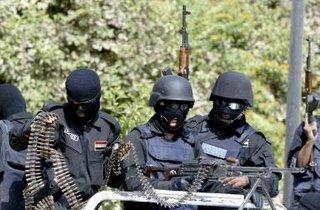
Once I saw several badly wounded police commandos carried into Yarmouk hospital in west Baghdad. Even those bleeding badly refused to be parted from their machine-guns and would not allow doctors to take off their black face masks.

The Iraqi health system is breaking down. Thirty years ago, it was one of the best in the Middle East. But ever since 1980, the country's oil revenues have all been devoted to buying military equipment. Almost no new hospitals were built. From the start of UN economic sanctions against Iraq in 1990, medical care plummeted further.

Old medical equipment broke down and was not replaced. Once, when travelling north of Baghdad, I was besieged by local farmers who thought I was a foreign doctor and demanded I look at their children. Many of them were carrying dusty old X-rays taken years earlier. The local medical centre had closed. At another old hospital on the outskirts of Baghdad, the hospital forecourt was packed with vehicles - ambulances and trucks - that no longer moved. Many were without wheels or tyres. The doctors were desperate to obtain an oxygen tank but they had no vehicle to pick it up from another part of the capital.

Doctors faced another threat. They were prime targets for kidnappers because they were known to have some money. They had to operate more or less openly even if the doors of their clinics were heavily barred. They were also targets for assassination. Many clinics were closed as doctors fled abroad. By this summer, 220 doctors had been killed and more than 1,000 had fled Iraq.

It is not just the decline in the medical system that has hit Iraqi health. It is the rise in general impoverishment. The Ministry of Labour says that the level of poverty is up by 35 per cent since 2003 and 5.6 million Iraqis live below the poverty line: "At least 40 per cent of this number is living in absolutely desperate conditions."

Three years ago, half the country's population had access to drinkable water. The figure now has dropped to 32 per cent."

There is never going to be a Nato victory in Afghanistan

The military option is going nowhere. The way forward is to emulate Pakistan by withdrawing troops and making deals

Jonathan Steele
Friday October 20, 2006
The Guardian

"General Sir Richard Dannatt's brave call for an early British withdrawal from Iraq contained one logical flaw. It did not apply to Afghanistan, he said, because foreign troops were invited by the Kabul government. This gave them a different status from coalition forces in Iraq, "which is why I have much more optimism that we can get it right in Afghanistan". It was an odd remark since US and British forces have a standing invitation from the Baghdad government. There is a clear parallel with Afghanistan, just as there is in his core arguments: Britain's presence in Iraq is exacerbating the security problems, and "we are in a Muslim country and Muslims' views of foreigners in their country are quite clear".

Both points apply to Afghanistan, where a combination of rising nationalism, impatience with Kabul's selection of corrupt governors, anger at the coalition's military tactics, and disappointment with its failure to improve basic services, is creating a tide of resistance. Afghan history shows that foreign interventionists, especially non-Muslims, only have a small window of time to show they are doing good. It runs out fast, particularly in the Pashtun south, the traditional heartland of opposition.

The Taliban are resurgent. British forces are taking casualties in clashes that Brigadier Ed Butler, the outgoing commander of UK forces, calls more ferocious than anything in Iraq. A retired US general, Barry McCaffrey, reported this spring that, unlike Iraq's insurgents, the Taliban operate in battalion-sized units of 400 men, equipped with "excellent weapons and field equipment" and new technology for roadside bombs.

The conflict's intensification reinforces the case, argued by a minority in the west after 9/11, that military attack would not solve the Taliban - or al-Qaida - problem. In Washington and London the desire to eliminate al-Qaida was wrongly combined with seeking regime change in Kabul - a goal the security council never authorised. A propaganda campaign demonised the Taliban so as to justify their removal as a victory, even though Osama bin Laden might not be found."

We've lost battle for Baghdad, US admits

Suzanne Goldenberg in Washington
Friday October 20, 2006
The Guardian

"A day after George Bush conceded for the first time that America may have reached the equivalent of a Tet offensive in Iraq, the Pentagon yesterday admitted defeat in its strategy of securing Baghdad.

The admission from President Bush that the US may have arrived at a turning point in this war - the Tet offensive led to a massive loss of confidence in the American presence in Vietnam - comes during one of the deadliest months for US forces since the invasion.

Yesterday the number of US troops killed since October 1 rose to 73, deepening the sense that America is trapped in an unwinnable situation and further damaging Republican chances in midterm elections that are less than three weeks away.

In Baghdad a surge in sectarian killings has forced the Pentagon to review its entire security plan for the capital, Major General William Caldwell, a US military spokesman, said yesterday.

"The violence is, indeed, disheartening," he told reporters. The US has poured 12,000 additional US and Iraqi troops into Baghdad since August only to see a 22% increase in attacks since the beginning of Ramadan.

"Operation Together Forward has made a difference in the focus areas but has not met our overall expectations in sustaining a reduction in the level of violence," Gen Caldwell said.

The bleak assessment arrives as official thinking appears to be shifting on the war, with reports that a study group led by a Bush family loyalist and former secretary of state, James Baker, could be drawing up an exit plan for US forces in Iraq.

Such a strategy would once have been unthinkable for Mr Bush, who famously vowed to keep US forces in Iraq even if he was supported only by his wife, Laura, and dog, Barney.

But the president now appears willing to acknowledge that the public is losing confidence in his administration's involvement in Iraq.

On Wednesday Mr Bush admitted for the first time the existence of a parallel between Iraq and Vietnam.

Such comparisons had been fiercely resisted by the White House, which has insisted that the US would succeed in bringing stability to Iraq and democracy to the Middle East.

But Mr Bush appeared to agree that the rise in sectarian killings in Iraq could prove as demoralising to his administration's mission in Iraq as the Tet offensive of 1968-69. Although that offensive resulted in a military defeat for the North Vietnamese forces, it turned American public opinion against the war and the then American president, Lyndon Johnson.

"There is certainly a stepped-up level of violence, and we are heading towards an election," Mr Bush said during an interview with ABC television.

He said he understood the insurgents were trying to drive American forces out of Iraq. "My feeling is that they all along have been trying to inflict enough damage so that we leave," he said.

While Mr Bush now readily acknowledges the potentially demoralising effects of the violence, there was no sign yesterday that the White House had reached the same conclusion as critics who have called for an early withdrawal of US forces from Iraq."

THAT VIETNAM MOMENT


By Martin Rowson, The Guardian.
(Click on Cartoon to Enlarge)

قاسم: عباس أهدر كرامة الشعب الفلسطيني وحفر قبراً جماعياً لهم


سلفيت – المركز الفلسطيني للإعلام


شدد أكاديمي فلسطيني معروف على ضرورة أن ينال الشعب الفلسطيني حريته، وأن لا تسلب ديمقراطيته، مؤكداً على أن "الحرية والديمقراطية تأتي قبل الخبز، وإلا أصبحنا عبيداً".
وقال البروفسور عبد الستار قاسم أستاذ العلوم السياسية في جامعة النجاح الوطنية، في مقال له: "إن من يقول إن الخبز أهم من الديمقراطية يأتي بتصريح خطير جداً، لما ينطوي عليه من استعباد للذات، وفصل الإنسان عن نفسه، ونكران قدراته الذاتية وانسحاق شخصيته، إنه قول يعود إلى القرون الوسطى، عندما كانت لقمة الخبز وسيلة الأسياد الأولى في سوق العبيد كقطيع من الماشية الدهماء، التي لا تعرف سوى طعم البرسيم".

وتوجه قاسم، بالقول لرئيس السلطة الفلسطينية محمود عباس: "كلامك بأن الخبز قبل الديمقراطية هذا، يحفر قبراً جماعياً ليهلك فيه جمهور الفلسطينيين، فيصبحون أثراً بعد عين.. أنت تدعو إلى العبودية، إلى استعباد الشعب الفلسطيني، وتدعو إلى نزع الإنسان عن نفسه، وتمزيق وهدر كرامته، مقابل رغيف الخبز، أنت لا تعتبر الفلسطيني أكثر قيمة من رغيف الخبز، بل أنت تعتبره أقل من الرغيف لأن الرغيف، حسب فلسفتك، هو سر العيش، أنت ترى في الفلسطيني كائنا يبحث عن عيش لا عن حياة، ألا ترى أن الإنسان عبد لمن يطعمه، وأن العبد مجرد بهيمي لا حقوق له أكثر من نعمة يقدمها له سيده صاحب الفرن؟".

وأشار الأكاديمي الفلسطيني، الذي ترشح في السابق لمنصب رئاسة السلطة الفلسطينية، إلى أن "لقمة الخبز الآتية من الغرب لها ثمن، وثمنها الحقوق والكرامة والاستقلال؛ وأنت تعلم سيادة الرئيس أن لقمة الخبز التي يعتصرها عرق الجبين، هي التي تعني الكبرياء والكرامة والتحرير.. الأذلاء يا حضرة الرئيس لا يقوون على التحرير، ولن تكون لهم دولة وعاصمتها القدس الشريف".

وأضاف أنه "لا بديل عن الحرية، لأن الأحرار يصنعون الخبز، ومدّ اليد للآخرين هي صناعة العبيد.. لا تكن عبدا يا رئيس فلسطين، ولا تجر الناس إلى العبودية، العبيد لا ذمة لهم ولا ضمير، وهم يسرقون طعام وأرزاق إخوانهم في العبودية، أما الأحرار فلا ينامون وإخوانهم جوعى، الأحرار يزرعون ويصنعون ويأكلون نصف طعام، لكن الأهم أنهم يعرفون كيف يقتسمون الرغيف، الأحرار يبحثون عن الكرامة، ويصرون على الحقوق، ويطورون قدراتهم وطاقاتهم لكي تبقى رؤوسهم مرفوعة، أما العبيد فترتعش أجسادهم كلما ظنوا أن حرية تتسلل إلى أوصالهم".

Thursday, October 19, 2006

They must go, and soon

By Haifa Zangana
Al-Ahram Weekly

"Johnson knew it was the right advice to follow, but he chose to stay the course. It took the US another 10 years to withdraw its soldiers from Vietnam. Three million Vietnamese were killed, 15 million were displaced, over one million persons had to flee the country, infrastructure was destroyed and 58,000 Americans killed, and far more injured.

The same is happening in occupied Iraq now.

The latest study by the Johns Hopkins University Bloomberg School of Public Health published in The Lancet, estimates that a total of 654,965 Iraqi people -- nearly one in 40 -- have died violently since the American-led invasion of the country in March 2003. Maliki's government, though, was keen to discredit the report and its conclusions. While Iraqi morgues, hospitals and streets bear witness to the daily carnage, Ali Al Dabagh, spokesperson for the government, stood, shamelessly, in the fortified Green Zone to argue "methodology". He did not argue responsibility or the morality of the killings.

The pre-planned descent into hell is so rapid that no fatwa can stop it.

The reason is not difficult to extrapolate. The last few months witnessed a surging escalation in targeting journalists who work for organisations considered relatively independent. The attacks are seen by Iraqis as means to intimidate journalists and prevent independent reporting of the scale of the carnage unfolding in Iraq.

Parliament spent some time arguing how to punish Al-Sharqiya television and Azzaman newspapers for reports considered unacceptable by the "democratic" government. Ruling groups objected to the suggestion that their voting for "federalism" under occupation amounts to fragmenting the country and encouraging sectarian and ethnic civil war.

Politically, Maliki's government is totally isolated from the people and unable to provide what any government should: security, basic services, and dignity to people in their daily lives. With no real power, it is consumed from inside, like an old wooden ship eaten by termites, by sectarian, ethnic division, but above all by corruption, militias and death squads.

No wonder that support for the popular national resistance is increasing with most Iraqis celebrating the success of attacks on occupation forces.

In the last year, the so-called "Sunni triangle" has expanded to defy any geometrical definition. Occupation forces and their camps have been under attack in the north, centre and south of the country daily.

The neocns have failed in Iraq. A poll conducted for CNN suggests support among Americans for the war in Iraq is declining to an all-time low. Just 34 per cent say they support the war, while 64 per cent oppose it. On the other hand, polls in Iraq, like the one conducted this month by a University of Maryland team, show the hardening of Iraqis across all provinces against occupation. Seventy-eight per cent across Iraq's 18 provinces now find the presence of US troops the main cause of the bloodletting with over 60 per cent openly telling pollsters that they support attacks on occupation forces.

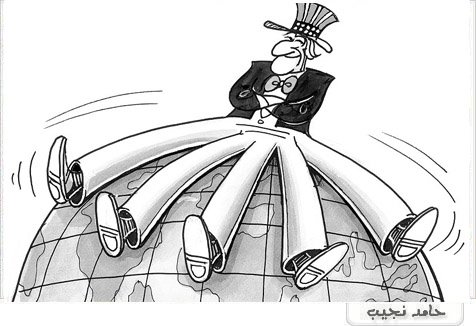
Like in Vietnam, Algeria and South Africa, the only option for occupation forces is to negotiate their exit with the Iraqi people and the resistance. Indications are that that is what is happening. Yet the US stalled the Vietnamese for years before leaving. Let us hope they learn from experience and take their cue soon."


(Hamed Najeeb, Alittihad, 10/19/06)

Govt. Death Squads Ravaging Baghdad


An Important Article
by Ali Al-Fadhily and Dahr Jamail

"BAGHDAD - Death squads from the Ministry of Interior posing as Iraqi police are killing more people than ever in the capital, emerging evidence shows.

The death toll is high - in all 1,536 bodies were brought to the Baghdad morgue in September. The health ministry announced last month that it will build two new morgues in Baghdad to take their capacity to 250 bodies a day.

Many fear a government hand in more killings to come. The U.S. military has revealed that the 8th Iraqi Police Unit was responsible for the Oct. 1 kidnapping of 26 Sunni food factory workers in the Amil quarter in southwest Baghdad. The bodies of ten of them were later found in Abu Chir neighbourhood in the capital.

But sections of the ministry appear responsible for the abductions and killing. Ministry of Interior vehicles were used for the kidnapping in this case, and most men conducting the raid wore Iraqi police uniforms, except for a few who wore black death squad 'uniforms', witnesses told IPS.

"It is for sure that they did it," one of the victim's neighbours told IPS on condition of anonymity. "The tortured bodies were found the second day. They came in their official police cars; it is not the first time that they did something like this. They do it all over Baghdad, and we hope they will get proper punishment this time."

Men of the police unit meanwhile do not face imminent punishment. "They are going to be rehabilitated and brought back to service," director-general of the Iraqi police Adnan Thabit told IPS.

The Iraqi Islamic Party, the largest Sunni party, blamed militias with ties to the government and the U.S. military.

"The Iraqi Islamic Party asks how could 26 people, women among them, have been transported from Amil to Abu Chir through all those Iraqi and U.S. army checkpoints and patrols," it said in a statement.

General Yassin al-Dulaimi, deputy minister for the interior, has said on Iraqi television several times that death squads are composed mainly of Iraqi police and army units. His comments reflect differing allegiance and agendas even within the Shia bloc.

General Dulaimi has been trying for long to expose the organised criminal gangs that have been controlling the ministry since its formation - a formation that was overseen by U.S. authorities.

Dulaimi says he does not believe that the Shia Badr organisation, a large, well-armed and funded militia, has complete control over his ministry. But most residents of Baghdad believe that Badr has complete control over the Baghdad Order Maintenance police force, and use this force to carry out sectarian murders. This force is one of several official security teams in Baghdad.

The force is led by Mehdi al-Gharrawi, who also led similar security units during the U.S.- led attack on Fallujah in November 2004.

"All criminals who survived the Fallujah crisis after committing genocide and other war crimes were granted higher ranks," Major Amir Jassim from the ministry of defence told IPS. "I and many of my colleagues were not rewarded because we disobeyed orders to set fire to people's houses (in Fallujah) after others looted them."

Jassim said the looting and burning of homes in Fallujah during the November siege was ordered from the ministries of interior and defence.

"Now they want to do the same things they did in Fallujah in all Sunni areas so that they ignite a civil war in Iraq," said Jassim, referring to the Shia-dominated ministries. "A civil war is the only guarantee for them to stay in power, looting such incredible amounts of money."

Another official with the ministry of defence, Muntather al-Samarraii, told IPS that both Iran and "collaborators" within the Ministry of Interior are to blame for the widespread sectarian killings..

"I have lists of thousands of corruption cases from within my ministry, and other files to expose to the world," he said, "But the world is not listening. When it does, I am afraid it is going to be too late."

A police officer in Samarraii's office, speaking on condition of anonymity, told IPS that he believed that murderers would not be punished for their crimes.

"They will reward them, believe me, and give them higher ranks," he said. "This is a country that will never stand back on its feet as long as these killers are in power. And the Americans are supporting them by allowing their convoys to move during curfew hours."

While there is little evidence of direct U.S. involvement, questions have arisen over what the U.S. forces have done - or not done - to encourage such killings.

A UN human rights report released September last year held interior ministry forces responsible for an organised campaign of detentions, torture and killings. It reported that special police commando units accused of carrying out the killings were recruited from Shia Badr and Mehdi militias, and trained by U.S. forces.
Retired Col. James Steele, who served as advisor on Iraqi security forces to then U.S. Ambassador John Negroponte supervised the training of these forces.

Steele was commander of the U.S. military advisor group in El Salvador 1984-86, while Negroponte was U.S. ambassador to nearby Honduras 1981-85. Negroponte was accused of widespread human rights violations by the Honduras Commission on Human Rights in 1994. The Commission reported the torture and disappearance of at least 184 political workers.

The violations Negroponte oversaw in Honduras were carried out by operatives trained by the CIA, according to a CIA working group set up in 1996 to look into the U.S. role in Honduras.

The CIA records document that his "special intelligence units," better known as "death squads," comprised CIA-trained Honduran armed units which kidnapped, tortured and killed thousands of people suspected of supporting leftist guerrillas."

'Dramatic change of direction' coming for Iraq


THE WASHINGTON TIMES

"• Coup in Baghdad: While given little credence in Washington, this scenario is being widely talked about in Iraq and in neighboring countries, both on the streets and among senior political and military officials.
According to the scenario, the new U.S.-trained army, along with elements of Saddam Hussein's Ba'athist-led army, would stage a coup to oust the al-Maliki government and replace it with one led by a more effective figure -- by most accounts Mr. Allawi.
One Iraqi Sunni living in Dubai, who is in close contact with Sunni generals in exile in both the United Arab Emirates and Saudi Arabia, said those generals have been discussing such a "Plan B" with secular Shi'ites and U.S. officials for months.
These officers reportedly are convinced that Miss Rice has been discussing such ideas during a series of visits to Saudi Arabia over the past eight months.
Mr. Allawi, a secular Shi'ite who led the government before the 2005 legislative elections, is known as a strong man with backing from both secular Shi'ites and Sunnis tired of the sectarian killings. The politician also is liked by U.S. intelligence agencies, which were disappointed that his party was unable to win more seats in the parliamentary elections.
"The army scenario is not a bad scenario for the United States," said Robert Killebrew, a retired Army infantry colonel and national security analyst who predicted civil war in Iraq more than a year ago. "U.S. policy issues in the Middle East and Iraq do not require a democratic Iraq, it only requires a stable and friendly Iraq," he said.
Under this scenario, the Dubai-based Sunni source said, the army would gradually bring back elements of Saddam's former army, removing a major grievance that is driving the insurgency.
"The insurgency will come under control as most of them are concerned with keeping Iraq as one country. This is the most important for them and for the surrounding Arab countries," said the former officer.
According to most coup talk, the United States would publicly condemn the move but support the new government after a decent interval.
"My preference would be that there would be a certain amount of sanctimonious hand-wringing and saying that we don't agree with the overthrow of a democratically elected government," said Mr. Killebrew. "But we will continue to support the Iraqis in their fight against the insurgency, which would be de facto support." "

***

SAY HELLO TO THE NEW DICTATOR (ALLAWI) WHO USED TO WORK FOR THE OLD ONE (SADDAM). WHY NOT BRING SADDAM HIMSELF BACK?

BUSH SENIOR WAS RIGHT, BUT THE DIM SON WOULD NOT LISTEN.

Bush: This is their Tet


By Juan Cole

"In his interview with George Stephanopoulos on Wednesday evening, George W. Bush accepted that there might be a parallel between the spike in killings of US troops in Iraq and the Tet offensive in Vietnam. Many commentators are saying that he finally admitted that Iraq is a quagmire like Vietnam, but this is a complete misreading of what Bush is saying.

Bush's position is that things are going just great in Iraq, and that a few trouble-makers have managed to hijack the US media with a small number of limited bombings and other sabotage, and have made it look like the US isn't making progress. Bush believes that the media and Americans are falling for a get-up job. So he is is trying to say to the American public that just as the Tet offensive was a military defeat for the Viet Cong but a propaganda defeat for Washington, so the October offensive of the Sunni Arab guerrillas is so much smoke and mirrors, a mere propaganda stunt with no substantive importance for Iraq.

But in fact, the current guerrilla war against US troops and the new Iraqi government isn't at all like the Tet offensive. It is deadly serious. Because the US military is not defeating the guerrillas militarily any more. They have succeeded in provoking an unconventional, hot civil war, which was their "poison pill" strategy for getting the US out. The US has alienated the Sunni Arab population decisively. In summer of 2003, only 14 percent of them supported violent attacks on US troops. In a recent poll, 70 percent supported such attacks. And, the guerrilla movement is well-heeled, well-trained, and adaptive. Anderson Cooper 360 on CNN for Wednesday presented videotape showing well-trained snipers shooting down US troops in Baghdad. The guerrilla war is real, not just a political show put on to weaken the will of the fickle American public.

What is delicious is that the general American public does not hold the view of the Vietnam War popular among far-right politicians like Bush, and so no one but the true believers will catch his drift here. In fact, most Americans will assume that Bush has admitted that we are in an unwinnable quagmire in Iraq, just as in Vietnam. And the Iraq=Vietnam identification is likely to stick. Of all his misstatements and malapropisms over the years, any one of which would have robbed most people of credibility or made them a laughing-stock, it is ironic that this miscalculation, uttered coolly and with no stutter, may have been his biggest gaffe of all."

Israelis lead the world in supporting torture - BBC poll

One-third support 'some torture'
The back and legs of an Iraqi who was allegedly tortured by the Iraqi police
The use of torture is controversial, but widespread
Nearly a third of people worldwide back the use of torture in prisons in some circumstances, a BBC survey suggests.

Although 59% were opposed to torture, 29% thought it acceptable to use some degree of torture to combat terrorism.

While most polled in the US are against torture, opposition there is less robust than in Europe and elsewhere.

More than 27,000 people in 25 countries were asked if torture would be acceptable if it could provide information to save innocent lives.

Some 36% of those questioned in the US agreed that this use of torture was acceptable, while 58% were unwilling to compromise on human rights.

Graph

The percentage favouring torture in certain cases makes it one of the highest of all the countries polled.

The majority of those questioned in the BBC World Service poll - 19 of the 25 countries surveyed - agree that clear rules against torture in prisons should be maintained because it is immoral and its use would weaken human rights standards.

"The dominant view around the world is that terrorism does not warrant bending the rules against torture," said Steven Kull, director of the Program on International Policy Attitudes (PIPA), whose organisation helped conduct the survey.

Saving lives?

All of the countries surveyed have signed up to the Geneva Conventions which prohibit the use of torture and cruel and degrading behaviour.

HAVE YOUR SAY
We are judged by how we treat our enemies rather than how we treat our friends
Jay Kandy, London

But countries that face political violence are more likely to accept the idea that some degree of torture is permissible because of the extreme threat posed by terrorists.

Israel has the largest percentage of those polled endorsing the use of a degree of torture on prisoners, with 43% saying they agreed that some degree of torture should be allowed.

However, a larger percentage - 48% - think it should remain prohibited.

The question
Most countries have agreed to rules prohibiting torturing prisoners. Which position is closer to yours?
Terrorists pose such an extreme threat that governments should now be allowed to use some degree of torture if it may gain information that saves innocent lives
Clear rules against torture should be maintained because any use of torture is immoral and will weaken international human rights

Other countries that polled higher levels of acceptance of the use of torture include Iraq (42%), the Philippines (40%), Indonesia (40%), Russia (37%) and China (37%).

The Israeli figure conceals a stark difference in attitude within the country, split along religious lines.

A majority of Jewish respondents in Israel, 53%, favour allowing governments to use some degree of torture to obtain information from those in custody, while 39% want clear rules against it.

But Muslims in Israel, who represent 16% of the total number polled, are overwhelmingly against any use of torture.

Meanwhile opposition to the practise is highest in Italy, where 81% of those questioned think torture is never justified.

Australia, France, Canada, the UK and Germany also registered high levels of opposition to any use of torture.

The survey was carried out for the BBC World Service by polling firm Globescan and the Program on International Policy Attitudes (PIPA).

Views on torturing prisoners

Country Against all torture * Some degree permissible * Neither/Don't Know
Australia 75% 22% 3%
Brazil 61% 32% 8%
Canada 74% 22% 4%
Chile 62% 22% 16%
China 49% 37% 13%
Egypt 65% 25% 9%
France 75% 19% 6%
Germany 71% 21% 7%
Gt Britain 72% 24% 4%
India 23% 32% 45%
Indonesia 51% 40% 8%
Iraq 55% 42% 1%
Israel 48% 43% 9%
Italy 81% 14% 6%
Kenya 53% 38% 9%
Mexico 50% 24% 27%
Nigeria 49% 39% 12%
Philippines 56% 40% 5%
Poland 62% 27% 12%
Russia 43% 37% 19%
S Korea 66% 31% 3%
Spain 65% 16% 19%
Turkey 62% 24% 14%
Ukraine 54% 29% 18%
US 58% 36% 7%
Average 59% 29% 12%
*27,000 respondents in 25 countries were asked which position was closer to their own views:
  • Clear rules against torture should be maintained because any use of torture is immoral and will weaken international human rights standards against torture.
  • Terrorists pose such an extreme threat that governments should now be allowed to use some degree of torture if it may gain information that saves innocent lives.
Source: BBC/Globescan/PIPA

Cracks in the Bush / Blair Axis

Breaking Up That Old Gang of Mine

By Col. DAN SMITH
CounterPunch

"George Bush's most steadfast backer in the March 2003 preventive war invasion and occupation of Iraq has been British Prime Minister Tony Blair. The Bush-Blair "dynamic duo" act is, however, about to end. Blair is soon to resign his post in favor of the Chancellor of the Exchequer Gordon Brown.

Like the date on which British, U.S., and all other foreign occupation troops will leave Iraq, the exact month and day of the hand-over of #10 Downing Street remains undeclared. But pressure is sure to mount for some declaration on both points because of remarks by top British military official General Sir Richard Dannatt.

Dannatt, however, is to date the only active duty senior officer in either the UK or the United States to have come close to an explicit call for removing foreign troops. After Sir Richard's original remarks became public, retired Major General Patrick Cordingly, who commanded the UK's "Desert Rats" in the first Gulf War in 1991, commended Dannatt for speaking out.

Neither Downing Street nor the Ministry of Defence (MOD) publicly challenged, let alone attacked, Sir Richard. Blair's office said foreign troops were in Iraq "at the express wish" of the Iraqi government and under a UN mandate, while a MOD spokesperson said the military "had a clear strategy." This moderate response contrasts sharply with how, just before the U.S.-led invasion took place, Deputy Secretary of Defense Paul Wolfowitz rebuked then-U.S. Army Chief of Staff Eric Shinseki for telling Congress that "several hundred thousand" troops would be needed to occupy Iraq.

One thing seems certain. Even though the signature B-B relationship will survive the coming "regime change" in the UK when Brown replaces Blair, the intensity of UK enthusiasm for staying on in Iraq will diminish. With casualties mounting, with the generals beginning at last to criticize the war and the effects of combat, Brown will find himself under enormous pressure to set a timetable, declare an exit strategy, and bring the UK troops home.

And should the Republicans lose control of the House or Senate in next month's election, George Bush may have to declare "victory" and follow the lead of the British: out the door that was kicked in on March 19, 2003."

The challenge to the empire


by Tariq Ali
and Anthony Arnove

Tariq and Anthony answered Socialist Worker’s questions about the development of a challenge to the U.S. empire--most directly with Venezuela’s Hugo Chávez, but evident in the opposition in every corner of the globe to American imperialism.

THE QUESTIONS:

AFTER HUGO Chávez’s United Nations (UN) speech in September, the U.S. media either denounced him or treated him with derision. Does Chávez deserve to be dismissed as a madman?

WHY DO you think the U.S. political establishment views Chávez as a threat?

CHÁVEZ CRITICIZED the U.S. for waging war in the name of democracy, but imposing the opposite. Can you talk about that?

DO YOU think the difficulties U.S. imperialism faces in its different wars--Iraq, Afghanistan, Lebanon--relate to the fundamental injustice of the imperialist project?

THE DEMOCRATS have restricted their criticism of the Bush administration’s wars mainly to tactics--for example, Rep. John Murtha’s plan for “redeployment” in Iraq representing a different strategy, rather than the end of the occupation. Is that enough?

WHY DO you think the antiwar movement--most obviously here, but internationally--hasn’t advanced further?

CHÁVEZ SAID in his UN speech that the world was “waking up” and “rising up against the empire.” What do you think is needed for this resistance to truly deal a blow to imperialism?

Read The Answers of Both Tariq Ali and Anthony Arnove to These Questions Here

The power of Questions in times of the Israeli Rape!


By Salim Nazzal
(Dr. Salim Nazzal is a Palestinian historian. He has written extensively on social and political issues in the Middle East)

"The important question for Palestinians, if Katzav is discovered after few years to be simply a rapist who takes advantage of his post to rape a young woman, how long will it take the world community to discover the Zionist rape of Palestine which took place 58 years ago? As readers know well I use the rape of Palestine in allegorical perspective, in the political dimension if you will, because if rape means to impose sex on a woman against her well, Zionists impose themselves self on Palestinians by acts of terror and violence. The next important question is, if this young Israeli woman brings Katzav to trial, is that not hope to Palestinians to bring the whole Zionist project to trial. In my view they should do so and according to my perspective a trial for war criminal Zionists is a matter of time.

Therefore to reach the greater goal, we need to throw a small stone in the quiet lake and ask why punishing a small rapist and overlooking a greater rape??? Why justice implemented in minor cases and ignored in major cases?

What made the young Israeli woman endure all the hardships are in her words “the desire for justice”, the question is, are not Palestinians 'literary speaking' motivated by the same desire for justice? More than this, in the simplest form of logic, who is more eager to implement justice, more than the people deprived from justice? Socrates was right, Questions open up cases. Therefore for the sake of justice we need to keep asking questions about justice, to press for specific answers to our questions: from the UN which keep tons of unimplemented resolutions in favor of Palestinians which were never honored by Israel. From the west which backs and stands for the creation of Israel on the ruins of the existing native Palestinians.

Questions should be straightforward, Why the west did so, how can the west legitimize morally and politically and legally the support to the occupation contrary to laws, contrary to logic, contrary to civil codes, and how can the west help Palestinians to restore what they lost? Questions should not pause, why other nations are given UN protection and Palestinian must bear unprotected the brutality of the Israeli occupation? To echo Kant, Palestinians should not give up questions because these questions are part of their existence and part of their struggle towards truth and justice.

As in the following story, the Palestinian old man faced the policy of the (selective memory) with his simple yet powerful question .In the aftermath of the Zionist ethnic cleansing war of 1948 which uprooted around 70 percent of Palestinian from their ancestral homes, an American congressman came to meet the Palestinian refugees to tell them that the USA is ready to help them with food and with other humanitarian needs.

When the congressman finished his speech he asked through the translator if there is any questions, An old Palestinian stood up and told the congressman thank you for offering the help but why do you not help us to return back to our villages because there we can plant corn ourselves, the congressman had no answer, after 58 years the American administration has not or chose not to answer, yet the powerful question is still creating echoes? Such echoes survived simply because the “justice principle” say historians ,is a decisive factor in construction the political realities .The Egyptian film director Yousef Shahen points at the power of great ideas .In his film (Al-Masir, the destiny) the hero says that ideas are like birds with wings, they can fly and reach to remote places. Indeed history demonstrates this: Lincoln was murdered physically but the idea of equality survived and became stronger, Ghandi was murdered but his ideas about peace, love and coexistence became lighthouses for all humans."

OUR IRAQ POLICY IS NOT A DISASTER


(Cartoon from The Independent; click on to enlarge)

Out of options


Leader
The Guardian

"The Baker group's influence over President Bush's thinking may not be strong, but the US administration's nerve is beginning to crack.

Calling for "a lower ambition" about what can now be achieved, Gen Dannatt exposed the truth that there is now no simple job that can be completed in Iraq. Whenever they go, British troops will be retreating from their mission, not completing it. That unhappy outcome will not bring security to Iraq. But the prime minister's insistence that security and a functioning democracy are likely prospects, and that Britain and the US are succeeding in establishing them, is looking more threadbare by the day. Once, the prime minister's rhetorical magic could persuade others. Now, on Iraq, Mr Blair is the only person who still appears to be seduced by the illusion that he has created."

Clearly the lessons of Suez were lost on the Americans

By Martin Woollacott
The Guardian

The events of 50 years ago marked the end of the British Middle East. For the US, there are uncomfortable parallels

"Large differences between the two projects make that too simple a conclusion. But what does link Suez and Iraq is the degree to which those who ruled Britain in 1956 and those in power in the United States in 2003 were obsessively preoccupied with "position" at a time of shifting power relationships. This hazy concept too easily goes beyond national interest to demand an unnatural degree of respect and deference from others at just the moment when they are becoming less ready to offer either. The canal in 1956, just as with WMD and even terrorism in 2003, was a detail. The essence was the panicky feeling in western capitals that control was slipping and had to be re-established.

The irrationality of western fears about Arab nationalism and Soviet influence in the 50s had its parallel in America in 2003 when the real dangers represented by Osama bin Laden and Saddam Hussein were both exaggerated and conflated. Like Suez, the intervention in Iraq was intended to bring down a hostile leader and have an exemplary effect on the whole region. Like Suez, it was intended to demonstrate a capacity to dominate and to control. And, like Suez, it has failed in that respect, even though this time the leader was toppled. The difference is that in 1956 a damaged Britain could fall back on the United States, enabling it to recover some influence and to go on to support American policies that were in most ways a continuation of its own. Obviously, there is no great kindred power waiting in the wings to pick up the pieces in 2006. The United States is not remotely as weakened as Britain was in 1956, but it is clearly ill-equipped to deal with the regional crisis it precipitated by intervening in Iraq.

But as a means of demonstrating dominance, which is where Iraq closely parallels Suez, the project has already failed. American primacy in the region has not been cemented by Iraq, but undermined, just as British primacy was undermined by Suez.

It is possible that the Iraq war and occupation will in retrospect mark the beginning of the end of the American Middle East, just as Suez marked the end of the British Middle East. Like Britain in 1956, America faces a region-wide array of movements that aim at reducing western control and influence. In this respect there is no essential difference between the more secular Arab nationalists of Eden's day, in all their varieties, and Islamists and secular nationalists today, in their equal diversity. In addition, the growing power of China and India and the residual influence of Russia - and the increasing interest of these nations and many others in the region's energy resources - give some local states more room for manoeuvre than they have had since the end of the cold war."

Wednesday, October 18, 2006

FINALLY, A RIVERBEND UPDATE!

Riverbend's previous update was August 5. A lot of people were concerned about her. But here are her words:

Wednesday, October 18, 2006

The Lancet Study...

"The latest horror is the study published in the Lancet Journal concluding that over 600,000 Iraqis have been killed since the war. Reading about it left me with mixed feelings. On the one hand, it sounded like a reasonable figure. It wasn't at all surprising. On the other hand, I so wanted it to be wrong. But... who to believe? Who to believe....? American politicians... or highly reputable scientists using a reliable scientific survey technique?

The responses were typical- war supporters said the number was nonsense because, of course, who would want to admit that an action they so heartily supported led to the deaths of 600,000 people (even if they were just crazy Iraqis…)? Admitting a number like that would be the equivalent of admitting they had endorsed, say, a tsunami, or an earthquake with a magnitude of 9 on the Richter scale, or the occupation of a developing country by a ruthless superpower… oh wait- that one actually happened. Is the number really that preposterous? Thousands of Iraqis are dying every month- that is undeniable. And yes, they are dying as a direct result of the war and occupation (very few of them are actually dying of bliss, as war-supporters and Puppets would have you believe).

For American politicians and military personnel, playing dumb and talking about numbers of bodies in morgues and official statistics, etc, seems to be the latest tactic. But as any Iraqi knows, not every death is being reported. As for getting reliable numbers from the Ministry of Health or any other official Iraqi institution, that's about as probable as getting a coherent, grammatically correct sentence from George Bush- especially after the ministry was banned from giving out correct mortality numbers. So far, the only Iraqis I know pretending this number is outrageous are either out-of-touch Iraqis abroad who supported the war, or Iraqis inside of the country who are directly benefiting from the occupation ($) and likely living in the Green Zone.

The chaos and lack of proper facilities is resulting in people being buried without a trip to the morgue or the hospital. During American military attacks on cities like Samarra and Fallujah, victims were buried in their gardens or in mass graves in football fields. Or has that been forgotten already?

We literally do not know a single Iraqi family that has not seen the violent death of a first or second-degree relative these last three years. Abductions, militias, sectarian violence, revenge killings, assassinations, car-bombs, suicide bombers, American military strikes, Iraqi military raids, death squads, extremists, armed robberies, executions, detentions, secret prisons, torture, mysterious weapons – with so many different ways to die, is the number so far fetched?

There are Iraqi women who have not shed their black mourning robes since 2003 because each time the end of the proper mourning period comes around, some other relative dies and the countdown begins once again.

Let's pretend the 600,000+ number is all wrong and that the minimum is the correct number: nearly 400,000. Is that better? Prior to the war, the Bush administration kept claiming that Saddam killed 300,000 Iraqis over 24 years. After this latest report published in The Lancet, 300,000 is looking quite modest and tame. Congratulations Bush et al."


INCOMPETENT, SHRILL WAR CRIMINAL!

Oscar-Winning Actor Vanessa Redgrave to Present International Human Rights Award to Extraordinary Rendition Survivor Maher Arar


DemocracyNow!
With Amy Goodman


"Tonight, the Institute for Policy Studies will award its International Human Rights Award to extraordinary rendition survivor Maher Arar. In 2002, Arar, a Canadian citizen, was falsely accused of terrorist links and handed over to Syrian authorities where he spent nearly a year enduring brutal torture. Just last month the Canadian government exonerated Arar and criticized both Canadian and US officials for his ordeal. Maher Arar’s Human Rights award will be presented by Oscar award-winning actor Vanessa Redgrave. [includes rush transcript]
Redgrave is one of the most famous of the Redgrave acting dynasty with a career that spans some 47 years. She has served as a UN Goodwill Ambassador and was a founding member of International Artists Against Racism. Most recently she has spoken out on behalf of Guantanamo detainees... and she also spoke out when the New York Theater workshop canceled ‘My Name is Rachel Corrie.’

AMY GOODMAN: We're joined right now by Vanessa Redgrave, the Oscar-winning actor. She is not in Britain. We last saw her at her home and interviewed her there in London. But today she’s in Washington, D.C. Before we talk about the reason for the visit, Vanessa, as you listened to the story about the production of My Name is Rachel Corrie now finally in New York -- you were a big part of it, being at the Royal Court Theatre -- what are your thoughts?

VANESSA REDGRAVE: I am very glad that all those who planned and wanted My Name is Rachel Corrie to be seen in America have been successful. It indicates to me a wonderful thing, that there are many, many Americans who prefer to know the truth and also want to protect human rights. And Rachel was killed defending the human lives, which is the first human right, of a Palestinian family.

And I’m here in Washington, not able to be in New York last night or the previous nights, because I am here at the request of the Institute [for] Policy Studies. I’m going to have the enormous honor of presenting their [Letelier-Moffitt] Award to Maher Arar and to the Center for Constitutional Rights, which is headed by Mike Ratner, the chief legal firm that worked so hard with Maher Arar to obtain his release and to obtain his exoneration, which the Canadian government has fully recognized, subsequent to the special government-sponsored commission of inquiry headed by Justice [O'Connor].

AMY GOODMAN: Let's talk about Maher Arar. 2002, he is coming home from a family vacation headed through Kennedy Airport, picked up by U.S. authorities, put in a New York jail for a few weeks, and then he is sent off to Syria. He’s a Canadian citizen, but he’s sent to Syria. He was born there, though he left when he was 17. The victim of what is known as “extraordinary rendition.” Can you talk, Vanessa Redgrave, about this term, this practice of extraordinary rendition? He says he wept all the way to Syria, telling the U.S. authorities, his captors at the time, that he would be tortured if he was sent to Syria, and ultimately he was.

VANESSA REDGRAVE: Yes, indeed, he was. Well, the chief concern about extraordinary rendition is what goes on before a man, in this case Maher Arar, is rendered to a country like Syria, where over the years before he was sent to Syria both Amnesty International and the United States State Department itself had issued a number of public reports which warned and emphasized that the Syrian government and the Syrian military intelligence practiced torture in the interrogation of prisoners who they held incommunicado for that purpose during the early days of their interrogation. So he was rendered to Syria in full knowledge of both Americans and of Canadians that he would be tortured there.

I think the other really important thing is, as I’ve got the opportunity, Amy and Democracy Now!, is to urge every single person who hears or sees this program to go onto the website and the summarized report of Justice [O'Connor] for the Canadian commission of inquiry which exonerated Maher Arar totally of all information that had been posted up and exchanged and shared between Canadian intelligence services and the American intelligence services and the Syrian intelligence services. That website is www.ararcommission.ca."

Read The Transcript of Today's Interview

Gaza in Crisis: As Military Siege Enters Fifth Month, Israel Threatens New Military Offensive


DemocracyNow!
With Amy Goodman


"Israel has ratcheted up threats of a massive ground offensive in the Gaza Strip. Israeli troops backed by tanks, helicopters and drones have already staged ground operations in parts of Gaza in yet another escalation in the ongoing assault on the Occupied Territories.
For the past four months, the Israeli military has led a wave of intense operations along the length of the Gaza Strip. It began after the capture of an Israeli soldier, Corporal Gilad Shalit, by Palestinian militants on June 25th. The Israeli military said its operations were intended to free Corporal Shalit and to halt Qassam rocket fire. Early on the Israelis bombed Gaza’s only power plant and they have kept Gaza’s crossing points to Israel and Egypt closed for most of the time.

Since the start of the operation - codenamed Summer Rain - more than 250 Palestinians have been killed. One in five were children. According to The Palestinian Centre for Human Rights, which has investigated each case, the vast majority of the casualties are civilian.

Meanwhile, the Palestinian economy has ground to a halt. Unemployment levels stand at close to fifty percent and around eighty percent of households in Gaza are living in poverty. The crisis comes at a time when the two main Palestinian factions, Hamas and Fatah, are deadlocked in their efforts to form a national unity government.

Dr. Mona El-Farra is a physician and community activst living in northern Gaza. She runs a blog called From Gaza, with Love. She joins us on the line from Gaza."

Read The Transcript of The Interview Today With Dr. El-Farra

“My Name is Rachel Corrie” Opens in New York


Friends try to aid Rachel Corrie after she was run over by an Israeli army bulldozer.


The Israeli bulldozer ran over her and then backed up, crushing her chest and skull.


Rachel Corrie stands in front of an Israeli army bulldozer wearing an orange jacket so that she can be easily identified and seen.


DEMOCRACYNOW!
With Amy Goodman


"“My Name is Rachel Corrie” – a play based on the life of the late US peace activist who was killed by an Israeli bulldozer - was scheduled to open last March at the New York Theatre Workshop. But six weeks before opening night, the theater announced it was indefinitely postponing the production. The move that was widely criticized as an act of censorship. On Sunday, the play finally opened at the Minetta Lane Theatre in New York. We play exclusive excerpts of the play, and speak with Rachel Corrie’s father, Craig; her sister, Sarah; and the play’s co-editor, Katharine Viner.

Rachel Corrie was killed in Gaza three years ago when she stood in front of an Israeli bulldozer set to demolish a Palestinian home. The play is based on Corrie”s writings before her death.
“My Name is Rachel Corrie” was scheduled to open last March at the New York Theatre Workshop. But six weeks before opening night, the theater announced it was indefinitely postponing production of the play. They cited the current political climate as the reason for the cancelation, pointing to Prime Minister Ariel Sharon"s coma and the election of Hamas.

The move was widely criticized by artists and activists all over the world. At the time, we had a debate on Democracy Now and I read a letter written by Nobel laureate Harold Pinter to the artistic director of the New York Theatre Workshop James Nicola and the theater”s managing director, Lynn Moffat. The co-editor of the play, Katherine Viner, joined us from London.

Katharine Viner. Co-editor of the play My Name is Rachel Corrie. She is also an editor at the London newspaper The Guardian.

Craig Corrie. Rachel Corrie’s father.

Sarah Corrie. Rachel Corrie’s older sister.

Excerpts from “My Name is Rachel Corrie.”

Excerpt of the documentary, “Rachel Corrie: An American Conscience.” It was directed by Yahya Barakat."

القدومي: طابور ثالث تابع للاحتلال يثير الفتنة في فلسطين


دمشق - المركز الفلسطيني للإعلام


اتهم فاروق القدومي، رئيس الدائرة السياسية في منظمة التحرير الفلسطينية، ورئيس حركة "فتح"، طابوراً ثالثاً في الشارع الفلسطيني، تابع للاحتلال الصهيوني، بالسعي لإثارة الفتنة في الأراضي الفلسطينية لصالح الاحتلال، مشيراً بذلك إلى ما حدث في الأيام الأخيرة من عمليات اغتيال سياسي وتخريب لمؤسسات السلطة الفلسطينية.

كما حمّل القدومي، في تصريح إعلامي له، الولايات المتحدة الأمريكية، المسؤولية عن تجويع الشعب الفلسطيني، من خلال منع تحويل الأموال إلى الحكومة الفلسطينية المنتخبة، موضحاً أنّ الإدارة الأمريكية، التي تسيطر على صندوق النقد الدولي، هي التي تمنع الحوالات، وإذا لم تسمح واشنطن بتحويل هذه الأموال فستبقى في صندوق الجامعة العربية.

وفيما يتعلق بإصلاح منظمة التحرير الفلسطينية، أكد القدومي، الذي تحدثت وسائل الإعلام عن وجود خلاف بينه ومحمود عباس رئيس السلطة الفلسطينية، لا سيما بشأن تشكيل حكومة وحدة وطنية مع حركة "حماس"؛ أنّ هناك بعض الجهات (دون أن يسميها) طالبت في البداية لتأجيل البدء في هذه مهمة إصلاح المنظمة؛ متهماً في الوقت ذاته هذه الجهات بأنها تسعى إلى تعطيل هذه الإجراءات وتأجيلها لفترات طويلة جداً.

لكنّ فاروق القدومي استطرد قائلاً "سنبدأ بعد العيد (عيد الفطر) من أجل البدء في تفعيل منظمة التحرير وإصلاحها، استكمالاً للجهود المضنية، في سبيل إعداد هذه المنظمة وبناء كل مؤسساتها، حيث شكلت لجنة سميت باللجنة العليا للأمناء العامين"، على حد تعبيره.

من جهة أخرى؛ أكد القدومي وجود اتفاق لعقد اجتماع بين حركتي "حماس" و"فتح" في القاهرة، لبحث مبادرة من أجل التوصل إلى صيغة ترضي جميع الأطراف، لا سيما فيما يتعلق بتشكيل حكومة وحدة وطنية، موضحاً هنا أنّ دور سورية، التي ستحضر اللقاء، سيكون داعماً للجهود المبذولة لتوحيد الفلسطينيين، كما

Year One of the Empire

Bush: Resistance is Illogical

By Juan Cole

"Bush and a supine, cowardly Congress shredded the US Constitution on Tuesday, abolishing the right of a court review (habeas corpus) for some classes of suspect. Suspect, mind you, not proven criminal.

In other words, we have to be confident that George W. Bush is so competent, all-knowing, and inherently just that we can just trust him. If he says someone is an enemy combatant, then he or she is. No need to check with a judge about why he or she is being held. And then Bush can have the suspect tortured to make him confess, and can convict him on the basis of the coerced confession, all in secret.

This law creates two classes of persons inside the United States, citizens with rights and non-citizens (12 million persons? Equivalent to the entire state of Michigan!) without rights.

We Americans made a revolution against such arbitrary practices of the French and other Empires.

Article 1, Section 9 of the US Constitution says, "The Privilege of the Writ of Habeas Corpus shall not be suspended, unless when in Cases of Rebellion or Invasion the public Safety may require it."

I look out my window. I don't see a general Rebellion or an invasion by a foreign power. The conditions, under which the right of the imprisoned to demand that a court establish whether there are genuine grounds to hold him is suspended, are absent.

The law is unconstitutional.

Moreover, our founding documents did not admit of a distinction among human beings with regard to rights. The Declaration of Independence says:

"We hold these truths to be self-evident, that all men are created equal, that they are endowed by their Creator with certain unalienable Rights, that among these are Life, Liberty and the Pursuit of Happiness."

Bush sounds more and more like the Borg every day. I swear to God, next we are going to get up in the morning and hear him proclaim, "Resistance is futile!"

So of course eventually Bush-think will lead to attempts to cure those of us who are critical of him of our illogicality, and to suppress our "propaganda." We'll all be right-thinking non-propagandists after a little water-boarding. You say we don't have to worry about that because we are citizens? But what is to stop Bush from declaring you an enemy combatant and stripping you of your citizenship? And then keeping you away from any civil court where those letters of cachet can be challenged?

The Republic is Dead, Long Live the Republic."


ARAB "NUCLEAR" EXPERIMENTS

Grinding Palestine To Powder

Lori Allen, an anthropologist at Harvard’s Weatherhead Center for International Affairs, is an editor of Middle East Report, a publication of the Middle East Research and Information Project in Washington, DC.

Secretary Rice's recent Middle East tour concluded without any discussion of peace between Isreal and Palestine. Unity talks between Fatah and Hamas have hit a standstill. In other words, the possibility of an Israeli-Palestinian political compromise appears bleaker than ever. Meanwhile, U.S. and European governments reiterate their demands of the Palestinian Authority after Hamas' electoral victory in March: recognize Israel, renounce violence and accept past peace accords. While Hamas has repeatedly offered Israel a long-term truce, they have not announced their recognition of the Jewish state.

In the midst of all these political machinations, the Palestinian people are paying the price. Their lives and livelihoods should no longer be held hostage to the ongoing diplomatic stagnation.

It has been more than six months since the U.S. and its European allies imposed an economic embargo on the democratically elected Hamas-led government. The government of Israel has suspended the transfer of clearance revenues to the Palestinian Authority, amounting to between $50 and $70 million a month—taxes collected for Palestinians on “behalf” of the Palestinian Authority. Recent media reports detail the alarming economic, social and humanitarian consequences of this blockade for Palestinian society. According to the U.N. World Food Program, 70 percent of Gazans are totally dependent on food aid, and many families are living on one meal a day. While international relief organizations have warned of a humanitarian crisis should external funding not resume, they neglect to explain the history, context and likely outcomes of the impending emergency.

It has been six years since Israel tightened its system of checkpoints and closures on the occupied West Bank, Gaza and East Jerusalem at the start of the second intifada. The World Bank reports that along with the separation barrier, this closure regime restricting the movement of goods and people within the occupied territories and beyond has drastically fragmented the territories. Palestinians’ income has deflated and their meager savings are depleted by years of economic suffocation, with unemployment above 23 percent and almost half the population living in poverty—and more than that in Gaza. Hunger and disease are spreading, and signals of incipient social breakdown abound.

The financial siege on the Palestinian Authority is particularly devastating because Palestinians have been forced by the Israeli occupation into almost complete dependence on foreign aid for growth, development and survival. Neither the state economy nor family budgets can become self-sustaining when an external power wields near absolute control over the movement of people and goods. This is the kindling of conflagrations to come.

Israel has killed more than 220 Palestinians since the June capture of Israeli soldier Gilad Shalit, more than two dozen during the most recent Israeli incursion into Gaza over the past few days. Sporadic and lethal gun battles between members of Fatah and Hamas have led Palestinian citizens, frustrated and angry about these incidents, to plead from mosque loudspeakers for the withdrawal of armed men from the streets. Politicians and editorialists are calling for national unity, but the economic pressures and political disarray seem to have gained a deadly momentum and blocked egress from this morass.

Now that teachers, school administrators and other civil servants are striking to protest the embargo on their Palestinian Authority-paid salaries, students’ educations are likewise impeded. UNICEF reports that the majority of the 1,726 Palestinian public schools are either partially or completely closed. Meanwhile, increasing poverty and persistent checkpoints are dissolving the social ties that sustain people. The World Bank predicts that in 2006 Palestinian GDP will have suffered a 27 percent decline. Families can no longer afford the cost of transportation to visit one another, and crime is on the rise.

According to the sanctions' logic, Palestinians will be starved into demanding that their government fulfill the conditions imposed by the international community. The ill-concealed goal of such tactics is to cause Hamas to lose favor with constituents they are unable to provide for. However, many in the Hamas government were imprisoned before they could try their hand at governing. As such, many Palestinians have looked past ideological differences to stand by the party, believing that their democratically elected representatives should have a chance to succeed or fail according to their own merits or missteps. To move the process along, the U.S. is now supporting a campaign to bring down the Hamas-led government and reinstall Fatah, which the Palestinian people voted out of government because of their corrupt and inept leadership.

These years of economic suffocation will undoubtedly produce an even more resentful population. In a few years, those who are youth now, when food is scarce and education impossible, will grow into leaders. The lesson they will have learned is that suffering for the sake of democracy brings only punishment and swindles.

If funding and the ability to move and work are not restored now, it will not be long until the world finds out what alternative system the young people raised in these desperate circumstances might develop. Lifting the siege on the Palestinian Authority and Palestinian society is the necessary first step—but only the first—toward removing the Israeli occupation that is the root cause of Palestinians’ economic woes and the source of insecurity for Palestinians, Israelis and the international community.

In contrast to the U.S. push to prop up Fatah, over one hundred world leaders, including Mikhail Gorbachev, Shlomo Ben-Ami and Desmond Tutu, have recently published a statement calling for a new international conference to sketch out a comprehensive peace agreement. They wisely urge “support for a Palestinian national unity government, with an end to the political and financial boycott of the Palestinian Authority.” A group of prominent Jewish political personalities and philanthropists are leading another initiative to push the Bush administration to do more to resolve the Israeli-Palestinian conflict.

The Palestinian daily Al-Quds is currently running an opinion poll on the question of how Palestinians can get out of the current crisis: an emergency government, a government of technocrats or a national unity government. Shouldn’t the Palestinians be supported in finding their own methods out of this madness?


CARTOON OF THE DAY


(Click on cartoon to enlarge)

***

Will it be Laura's turn next? These are his last two supporters.

America has finally taken on the grim reality of Iraq

An article first posted by fatima

The US is radically rethinking its exit strategy, while Britain waits zombie-like for new instructions

Simon Jenkins
The Guardian

"For all the abuse which Europeans regularly heap on the American political process, it has one strength, its capacity for course-correction. A constitution heavy with checks and balances enables it to respond to new circumstances with brutal pluralism. Three years ago America went to war on a lie, a wing and a prayer. That war has clearly failed and consensus is disintegrating. Congress subjects serving and retired generals to searing cross-examination. Senior figures go to Baghdad and, when they break free of their minders, report independently. There is none of the executive deference of Britain's parliamentary committees and tongue-tied "loyal opposition". America's debate on Iraq is now a grim, grinding encounter with reality.

The debate must contemplate the painful but not unfamiliar experience of imperial retreat. As in Vietnam, Lebanon and Somalia the moment is delayed but the deed will be efficient. The Baker commission, appearing in full after November's congressional election, realises the senselessness of the present bloodbath. It reportedly accepts that the continued presence of foreign forces does not prevent but adds to the chaos. American troops are in occupation but not in control. Their departure can hardly undermine security, except possibly that of Baghdad's green zone, and that is largely privatised.

A measure of the collapse is the astonishing suggestion that America find a new regime in consultation with Iran and Syria."

Congresswoman: Safeguard US aid to Abbas


Rep. Ileana Ros-Lehtinen, R-Fla., chairwoman of the House International Relations Subcommittee on the Middle East, says America must make sure weapons, financial aid reportedly being given to Palestinian Authority President Mahmoud Abbas' Force 17 personal security detail do not wind up in possession of Palestinian terror groups

""We cannot be blinded to the fact that in this case, there is a propensity that US assistance could, whether deliberately or inadvertently, find its way to extremist groups," said Ros-Lehtinen. "With the representation within the ranks of Abbas' Fatah party of militants with ties to the Al Aqsa Martyrs Brigade, there is a potential that our own weapons could later be used against our ally, Israel and potentially against US priorities in the region. "As such, I am committed to working with my colleagues to ensure that, if such assistance is provided, proper safeguards and monitoring are in place to avoid diversion of weapons and resources into the hands of Islamist jihadists operating in the Palestinian territories or working with Hamas and other entities classified by the US as foreign terrorist organizations," Ros-Lehtinen said.

The congresswoman previously sponsored legislation along with Rep. Tom Lantos, D-Calif., calling for a halt to US assistance to the PA following Hamas' victory in last January's Palestinian elections.

According to multiple reports, the US is leading a campaign to bolster Abbas' Force 17 against Hamas, which won a majority of parliamentary seats in Palestinian elections earlier this year. Force 17 protects the Abbas and also serves as a special security force on behalf of the Fatah party.

The Washington Times reported this week the US is working on a plan to build up Force 17. Last week, the New York Times reported the US proposed expanding Abbas' Force 17 from 3,500 men to 6,000 as part of a USD 26 million plan to strengthen the Palestinian leader. The Associated Press and Israel's leading Yedioth Ahronoth daily reported Friday new training facilities for Force 17 are slated to be set up in the West Bank town of Jericho and in Gaza, at a cost of USD 2 million each, according to the US proposal.

Sources in the US consulate in Jerusalem confirmed to WND the US is slated to transfer weapons to Force 17. "

What are 20 tons of explosives?

By Amira Hass

"Finally, in contrast to Palestinian weaponry, which is quantifiable, it is impossible to quantify the amount of "explosives" in Israel's hands - all the different types of shells and bombs, all the weapons that Israeli soldiers use or will use. The IDF Spokesman's Office does not volunteer that information, but in any case, the quantities are enormous, and they are constantly being restocked, whether through imports or through the flourishing Israeli arms industry. Before the recent war in Lebanon, did anyone calculate how many millions of cluster bombs Israel had in its warehouses (of which 1.2 million were fired during the war, as Meron Rapoport reported in this newspaper on September 12)?

And therefore, what exists in Israelis' consciousness is not the millions of cluster bombs - that is, the flying mines - or the tens of millions of bombs and shells and lethal bullets stored in our arms warehouses and our gun barrels and the bellies of our helicopters and planes. Although the amount of such explosives is measured in the millions of tons, it is the 20 tons of explosives and the few thousand rifles that permeate the Israeli consciousness.

Israelis are convinced that we are facing an existential danger. But what has been erased from the Israeli consciousness is that Israel is a weapons superpower, and that the weapons this state has, as is the nature of all weapons, are lethal and frightening.

The Israeli media, of course, cooperates with this distortion of reality. It devoutly reports every shot fired by the Palestinians and every rocket they launch - even when they cause no harm. But Israeli bullets and shells, which are fired routinely, do not exist in the media unless there are fatalities, and even those are quickly forgotten.

The purpose of instilling such fear in Israelis is to win ongoing support for the IDF's policy of constant escalation. The security establishment is not neutral. Its members, no less than bureaucrats in any other system, want to perpetuate the rationale for their existence and their salaries. They need public silence about the free use the IDF makes of the weapons and ammunition that it puts into its soldiers' hands. This serial intimidation is meant to give the IDF a free hand while it expands its operational infrastructure, perhaps to the point of using thousands of cluster bombs on Gaza, too.

The military establishment in Israel is joined at the hip with the political decision-making establishment, and hyping the security threat facing Israelis, while completely disengaging from the reality of the Israeli occupation, assures continued Israeli support for the myth that there is a military "solution" but not a political one. This in turn provides support for the ongoing regime of occupation and dispossession, and for the privileges that this bestows on Israelis."

Rice taking notice of 'challenge'

By Amira Hass

"Over the past few days, U.S. Secretary of State Condoleezza Rice and her department have commented several times on Israel's restrictions on the entry of Palestinian-Americans. At a press briefing on October 12, for instance, her spokesman, Sean McCormack, said that she intends to raise this issue in her talks with Israeli officials.

On October 11, speaking at the Inaugural Gala of the American Task Force on Palestine, Rice told an audience that included senators, diplomats and members of the Palestinian-American community that she is aware of the "challenge" facing Palestinian-Americans who travel to the territories frequently and invest their "time, ... knowledge, and ... capital" there. "I will continue to do everything in my power to support your good work, and to ensure that all American travelers receive fair and equal treatment," Rice said.

According to the U.S. Consulate in Jerusalem, there are 35,000 U.S. citizens living in the West Bank, Gaza Strip and East Jerusalem. However, there are no figures on how many of these also have Palestinian residency status"

Fighting on two fronts, Abbas is at a crossroads


A GOOD ARTICLE
By Danny Rubinstein

"Palestinian Authority Chairman Mahmoud Abbas has reached one of the most important crossroads in his life. On Monday, he found himself in a bitter struggle with the head of the opposition in Fatah, Farouk Kaddoumi, and two of his supporters during the preparations for a meeting of the movement's central committee in Amman.

Abbas did not get the support he expected from his colleagues on the committee. The situation was so bad that the gathering was canceled - though officially, it was merely postponed for a week.

Aides to Abbas suspect that Kaddoumi is cooperating with Khaled Meshal, the head of Hamas' political bureau, who is based in Damascus, and that the two are making a bid to take over the Palestine Liberation Organization and move the Palestinian leadership out of the territories.

Thus Abbas now finds himself embroiled in infighting and tension not only with Hamas, but also inside his own movement. And those who are supposed to back him up - the United States, the Quartet, the Arab states and Israel - consider him to be a weak leader who makes a lot of mistakes.

This is about a lot more than protocol. It is about a bitter struggle for power: Kaddoumi and two other members of the central committee, Ahmed Ghnayem and Mohammad Jihad, are veteran opponents of the peace process and the Oslo Accords, and refuse to come to the territories.

Moreover, Abbas was informed that Kaddoumi had visited Damascus and met there with Meshal about how to include Hamas in the PLO and what positions Hamas leaders would receive in the Palestinian national leadership.

Both Kaddoumi and Meshal believe that the Palestinian leadership should not be based in the territories, since there, it is at Israel's mercy. One serious problem for Abbas is that veteran members of the Fatah Central Committee do not fully support him. Some clashed with him during the period when there was friction between him and Arafat; others have personal gripes against him.

In an effort to counter this problem, Abbas developed ties with younger members, such as Mohammad Dahlan and Jibril Rajoub, and he is pressing to add 21 younger members to the central committee, whose 15 current members are in their seventies and refuse to allow any changes.

This mess is having a negative effect on Abbas' ability to deal with both the Hamas government in Gaza and the Hamas leadership in Damascus. Despite backing from Jordan and Egypt, Abbas has been unable to convince Hamas even to accept the Arab peace initiative, which calls for recognition of Israel in return for a withdrawal to the 1967 lines. The question now is whether Abbas has the strength to announce the dissolution of the Hamas government, thereby risking the possibility of civil war."

Israel's internal ethnic cleansing of bedouins continues

'The area where you live is known as a military area that
was acquired by the state in 1980 and is earmarked for the
construction of a military base.'

According to the story passed from generation to
generation in the Bedouin village of Al-Sira, the village
was founded during the Ottoman period following a conflict
in the early 20th century among the families of the tribe,
al-Nasasra and al-Amour, and the neighboring al-Hassouni
clan. The argument revolved around several hundred dunams
that the al-Nasasra and al-Amour families had purchased
southeast of Be'er Sheva. The sheikhs of the two tribes
went all the way to Jerusalem to ask the Ottoman court to
decide. The court ruled in their favor, and the lands of
Al-Sira were registered in their names in the Turkish land
registry.

"Our families have been living peacefully in this village
for almost 100 years, without bothering anyone and without
anyone bothering them," says Halil al-Amour, a member of
the village residents' committee and a teacher of
mathematics and computers in the high school in Keseifa,
the adjacent town.

The lands of Al-Sira, which over 100 years ago lay in the
middle of the desert, are today located in a bustling
region: they border on the north with the highway
connecting Arad with the Shoket junction, on the south
with the Israel Air Force base in Nevatim, and on the east
with the road connecting the base and the highway.

Only few of the Bedouin tribes who lived for years in the
region have survived the changes in government as they
have, without having to leave their lands. The British,
who arrived a few years after that legal proceeding in
Jerusalem, honored their ownership of the land and even
built a clinic, a school and a flour mill for them in
nearby Tel Malhata. The Israeli government, which replaced
the British 30 years later, did the same.

The residents of Al-Sira received citizenship in the new
state and were allowed to remain on their land. The
village did not receive official recognition (and
therefore has yet to be linked up to the electricity and
telephone grids) but its residents remained in place. The
clinic, the school and the flour mill continued to
operate, now under Israeli administration.

The residents of Al-Sira stayed put even in the early
1980s, when the evacuation of Sinai in the context of the
peace treaty with Egypt led to the construction of the
airport in Nevatim and a law that transferred all the
lands of Tel Malhata and its environs to state ownership.

About 5,000 Bedouin were forced at the time to evacuate
the villages surrounding Al-Sira and move to Keseifa,
Arara and Segev Shalom, three of the towns where the State
of Israel has been trying since then to concentrate the
majority of its Bedouin citizens. The residents of Al-Sira
claim that nobody bothered to tell them, for over 25
years, that according to the map accompanying the law,
their village also lies in the expropriated area.

During all those years they avoided asking questions about
their good fortune, they lived their lives and maintained
good relations with their Israel Airforce neighbors. Every
new base commander is invited to a festive meal in the
village, and the soldiers and village residents often give
each other lifts. A relatively recent local legend tells
how a soldier on a navigational exercise fell into a
village cistern, and his life was saved thanks to the
resourcefulness of a village elder.

Planes and helicopters take off and land over the heads of
the residents almost 24 hours a day, but they don't
complain. "We've become used to the noise," they explain,
"and we no longer hear it." This, taken with the fact that
no government official has ever intervened in village
affairs, led them to conclude that in spite of the absence
of official recognition, the state had decided to treat
their little village of about 350 souls as a permanent
fact. "When they built the IAF base, most of our families
still lived in tents," says Ahmed al-Nasasra. "During the
1980s we slowly began to move into huts, and during the
past 15 years everyone has built stone houses. We knew
that we weren't a recognized village, but we made sure not
to exceed our land boundaries by even a meter." Al-Nasasra
was born in the village 47 years ago, and claims that
"from the day I was born until last May not a single
representative of the state ever told us that these lands
are not ours and that we were not allowed to build on
them."

Last May government representatives suddenly informed them
that they intended to destroy seven of the village homes;
early in September they announced that they planned to
destroy all 45 remaining houses.

At about 9 A.M. on May 10, several Interior Ministry
supervisors entered the village, accompanied by dozens of
policemen armed with rifles and bludgeons. "Without
speaking to anyone and without explaining anything," says
Amour, "they posted warning notices on the doors of seven
houses prior to issuing the demolition orders and left."

The residents reacted quickly: That same day they met and
elected a committee to handle the problem. Halil al-Amour
and Ahmed al-Nasasra, who were chosen to head it,
immediately turned to the Interior Ministry and asked to
meet with David Cohen, in charge of the Southern district.

The letter they sent to Cohen clearly demonstrates that
they were convinced that the authorities would weigh their
arguments practically. "In the absence of approved
construction plans for the village, the residents are
forced to build without a permit," they explained, asking
to meet with Cohen "in order to find a solution to the
problem."

Cohen refused their request. He sent them to Ilan Sagi, in
charge of construction supervision in the district. Sagi
promised them to freeze the demolition orders for three
months, on condition that they would begin negotiations
with the Bedouin Administration about abandoning the
village and moving to another community. This condition
made the bitter reality clear to them: the Interior
Ministry was not interested in enforcing the construction
laws in the village, but in erasing it entirely.

A letter from David Cohen also informed them for the first
time of what nobody had told them until then: "The area
where you live is known as a military area that was
acquired by the state in 1980 and is earmarked for the
construction of a military base."

After consulting with the village residents the committee
decided nevertheless to turn to the Bedouin Administration
to find out exactly where the State of Israel planned to
transfer them.

Yaakov Katz, the administration director, refused to meet
them, and sent them to Eli Yifrah, "director of the
Keseifa region in the administration." Yifrah offered them
two problematic solutions: moving to a neighborhood that
is slated to be built in the future in the city of Rahat,
and whose planning has yet to begin, or moving to Marit, a
Bedouin community that does not yet exist and whose future
is uncertain. When Amour and Nasasra asked Yifrah about
the amount of financial compensation they would receive
from the state, Yifrah sent them to the Israel Lands
Administration Web site.

"We understood from Yifrah that the state has nothing to
offer us, and that it simply wants to expel us from our
land without proposing any alternative," says Amour.

Moving to Rahat, he adds, is unthinkable. "Rahat, like all
the towns built by the state in order to concentrate the
Bedouin in them, long ago became a hotbed of unemployment,
with a poor quality of life," says Nasasra. "There's no
education, there are no services, there's no law, there's
nothing there. Under no circumstances will we agree to
move to Rahat."

They turned once again to Katz, who this time agreed to
receive them. They told him that they would be prepared to
leave the family lands, but they wanted government
assistance for building an agricultural village in another
area. Amour says Katz dismissed this idea, saying, "You
don't know anything about agriculture."

After this disdainful and insulting reply, they once again
asked to meet with the district director in the Interior
Ministry. He refused, and instructed the ministry legal
advisers to turn to the Be'er Sheva Magistrates' Court
with a request for demolition orders for the seven houses
on which the warnings had been posted. Judge Yisrael
Axelrod acceeded to the request in the presence of only
one party, i.e. without hearing the villagers' viewpoint
at all.

Early in September the Interior Ministry supervisors once
again visited the village, again accompanied by a large
contingent of police. This time that had come to post
demolition notices on all the other 45 buildings.

Implementation of the orders has been frozen for now,
because attorney Suhad Bashara from Adalah (The Legal
Center for Arab Minority Rights in Israel), which is now
representing the residents, turned to the court with a
request to abolish the orders issued in the presence of
only one party, but the story is far from over.

Amour and Nasasra wonder what caused the government to
initiate the evacuation of the village now of all times,
after refraining from such expropriation for 26 years? How
can a judge order a wholesale demolition of houses without
examining the circumstances of their construction, and
even without knowing who lives in them? Is the state
really in need of this land, or does it simply want to
take it away in order to promote a policy of pushing the
Negev Bedouin into a corner?

Death of a presidency


by Michael Carmichael

"In the same week while millions of Britons were witnessing the depressingly melodramatic Death of a President, it became abundantly clear that the presidency of George W. Bush had literally crashed into a brick wall and bounced backwards. Simultaneous political sea changes sweeping across America and the Middle East have dramatically pre-empted Bush’s range of executive action. Both parallel political tides – those in the Middle East and America - are now running strongly against the Bush presidency.

In America, three out of four likely voters now believe that Bush has been overactive in policing the world – an astonishing statistic. That fact places Bush in a difficult political position. Now his presidency is seen as less effective in its core mission – national security – than his opponents, the Democrats. The Bush White House is tottering on its heels and threatening to collapse on its face.

In the Middle East, support for Israel and its sponsors in Bush’s America, has collapsed in favor of Hizbullah and a constellation of Islamist movements from Hamas and Fatah to the Mahdi Army and the Muslim Brotherhood. The situation is now critical and getting worse. If America were to launch a new war against Iran, the pro-American regimes currently holding the reins of power in Cairo, Amman and Riyadh would be placed under immediate siege. Swiftly, the Islamist factions would topple: Hosni Mubarak in Egypt; King Abdullah of Jordan and Prince Abdullah of Saudi Arabia. In the aftermath, American companies would be unceremoniously ejected from the region, and the price of oil would soar into the stratosphere.

Last week, to respond to the maelstrom that is now perceived as a terminal crisis for his presidency, Bush took the immensely unpalatable option and submitted himself to the slings and arrows of one of his exceedingly rare press conferences. In the White House Rose Garden, Bush sought to defend his presidency from further erosion in the midst of the whirlwind of crises that could mushroom into a political earthquake in the midterm elections.

While Bush claims to be the father of a democratic revolution in the Middle Ease, the truth is actually quite different. Meaningful debate – the fountainhead of democracy – about the Middle East is routinely repressed in Bush’s America. In the Middle East, the situation is different. Debate about the course of events in the Middle East is robust in: Israel, Iraq, Iran, Syria, Jordan, Egypt and Saudi Arabia where many are now waiting for the outcome of the midterm elections in the US.

The US midterm elections have morphed into a referendum on Bush and his outlandish policies: the war in Iraq; war with Iran; war with North Korea and his concerted attack on the US constitution and the Bill of Rights.

While the entire globe is rapt in attention, the Middle East has trained its eagle eyes on Bush’s America where they are beginning to discern the death throes of a presidency."

PA Deputy Prime Minister: Give us freedom, we will give you peace


By Khalid Amayreh
In the West Bank

"Ramallah - Palestinian Deputy-Prime Minister and Minister of Education Nasseruddin Al-Sha’er on Monday, 16 October, called on Palestinians to show more resistance and defiance in the face of the harsh American-led sanctions aimed at starving Palestinians.

Speaking during a press conference in the Israeli-occupied town of Ramallah, Sha’er argued that there were two approaches to overcome the present national ordeal facing the Palestinian people. “Either we surrender completely and lose our dignity and our rights and our honor and our holy places; or we respect ourselves so that others will respect us and treat us in a dignified manner as human beings.” Sha’er said he was too well aware of the harsh criminal tactics being imposed on the Palestinian people and aimed at blockading them, starving them and barring them from food and work. However, the former Najah University professor said Palestinians must never lose their humanity and dignity in the face of the “criminal conspiracy.”

Sha’er, the highest-ranking government official in the West Bank, urged Palestinian factions to manage “legitimate differences” in a civilized and dignified manner without ever resorting to acts of vandalism and actual or verbal violence. “I don’t think, and I think you agree with me, that these acts of savagery and vandalism are a legitimate expression of discontent or protest,” he said in a clear reference to the torching by Fatah activists of government buildings in Ramallah. He said that the hope for national unity was still open, adding, “Don’t you believe those who would tell you that the doors were closed.”

Sha'er, who was recently released by the Israeli army after two months of abduction, appealed to striking teachers to return to classes right after the Eidul Fitr holiday, marking the end of the holy month of Ramadan, which occurs either on Sunday or Monday next week. “I know that the strike is a legitimate right, but we must also pay attention to the consequences". “You know that a national disaster will occur if schools are not opened. What will be the fate of the universities and colleges? What will be the fate of the 12th graders who will graduate? What will happen to the entire education process?” Sha’er appealed to the striking teachers to explore additional and alternative mechanisms to voice their legitimate grievances. He also denied rumors that he would take punitive measures against striking teachers, saying, “The law is the arbiter between you and me.”

The Palestinian deputy premier urged Arab states to shoulder their moral, religious and nationalist responsibilities toward their Palestinian brothers. He appealed to any given Arab state, without naming any, to sponsor the Palestinian education process “in these difficult times.”

He said efforts were being under way to pay government employees and civil servants a salary or advanced payment before the end of the month of Ramadan. However, he said there was no guarantee that salaries will be paid due to the sanctions. “Financial responsibility is a huge national burden that should be carried out by both the PA presidency and the government.”

Turning to the international community, Sha’er said all the Palestinians were seeking was freedom and dignity. “Give us our freedom, and we will give you what you want. We are human beings like you; you can’t treat us this way and expect us to give you what you want.” He added that the Palestinian government never thought of creating trouble in the Middle East or undermining regional stability. “All we want is freedom and our rights to a homeland like the rest of humanity. We are not asking for too much.”"

Bush and Blair isolated as criticism of war grows


The Independent

"George Bush and Tony Blair were looking more isolated than ever last night as the ground shifted further under their strategy of remaining in Iraq "until the job is done".

The President and the Prime Minister were left clinging to the dream of establishing a lasting democracy in Iraq as their advisers urged them to look for a new, more realistic, exit strategy.

A leaked report by the Iraq Study Group, chaired by former US secretary of state James Baker, a close friend of the Bush family, paved the way for a large-scale withdrawal of US forces and a dramatic shift of US policy.

It suggested that instead of the "stay the course" policy, President Bush could extricate the US from the quagmire of Iraq by removing US forces to bases outside Iraq. In an even more spectacular U-turn, they are believed to suggest that Iran and Syria could be invited to co-operate in the stabilisation of lawless Iraq.

That was implicitly rejected by the White House spokesman Tony Snow, who said the administration would not "subcontract" management of the war to outside advisers. But two high-profile Republican senators separately called for a change of course.

"We clearly need a new strategy," said Chuck Hagel of Nebraska, a possible 2008 presidential candidate.

John Warner, chairman of the Senate Armed Services Committee, said Iraq was "drifting sideways" and that if there was no improvement within two or three months, then policy would have to change.

That deadline coincides with the expected publication of the conclusions of Mr Baker's Iraq Study Group around the end of the year.

Support for the war is at its lowest ebb and top Republicans warned that the present state of affairs could not continue.

With the carnage on the ground mounting daily, and American military losses approaching 2,800, a new CNN poll found 64 per cent of the public believing the war was a mistake - more than at any time since the invasion in March 2003.

Mr Bush's approval rating is close to all-time lows, three weeks before mid-term elections at which the Republicans face the loss of one or both Houses of Congress.

Senior Labour figures in Britain are hoping a shift of opinion in the highest reaches of the US administration could signal a turning point to force Mr Blair to revise his own approach to Iraq where Allied forces have failed to establish the rule of law, in spite of the promises that followed the overthrow of Saddam Hussein.

Last week, Mr Blair was urged by the chief of Britain's armed forces, General Sir Richard Dannatt to scale down his ambitions for Iraq. Warning that the Army could be broken if it was forced to stay in the country, Sir Richard said: "The original intention was that we put in place a liberal democracy that was an exemplar for the region, was pro-West and might have a beneficial effect on the balance within the Middle East... I think we should aim for a lower ambition."

Sir Richard said the presence of British troops in Iraq was exacerbating the security situation. On Monday night, the Home Secretary, John Reid also broke ranks by admitting for the first time at a private meeting of the Parliamentary Labour Party that foreign policy was contributing to the radicalisation of young Muslims in Britain."

Iraqi Endgame Approaching, Bush Ready or Not


By Jim Lobe

"The signs of eroding support for Bush's "stay-the-course" strategy are virtually everywhere in Washington, where senior Republicans, such as the chairman of the Senate Armed Services Committee, John Warner, are moving into open revolt against what they see as a rapidly deteriorating situation and Bush's bullheadedness in still believing that Iraq will somehow become a model for democratic transformation in the Middle East.

Similar auguries are visible in London, Washington's closest ally in the "global war on terror" and the biggest contributor of troops by far to the U.S.-led coalition in Iraq.

In a lengthy newspaper interview last week, Britain's new army chief, Gen. Sir Richard Dannatt, echoed the arguments made over the past year by the Democratic Party's most prominent advocate of a swift withdrawal, Rep. John Murtha.

Dannatt's views, according to a column by a former senior instructor at the Royal Military Academy and director of the Center for Foreign Policy Analysis, Paul Moorcraft, reflect the thinking of the "British military establishment."

All of these developments have created panic among the war's supporters, particularly neoconservatives who were most enthusiastic about invading Iraq. In a cover article in this week's Weekly Standard, in which he warned, contrary to some critics, that "exiting Iraq … would fan the flames of jihadism," Reuel Marc Gerecht of the American Enterprise Institute (AEI) conceded that a "consensus is growing in Washington" on both the Right and the Left in favor of a "rapid departure."

The second option, called "Redeploy and Contain," appears similar to a plan floated last year by the Center for American Progress and subsequently endorsed by most Democratic lawmakers. It calls for a gradual withdrawal of U.S. troops to bases outside Iraq from which they could strike against terrorist targets in Iraq or elsewhere in the region.

The fact that the ISG's co-chair is former secretary of state and Bush family consiglieri James Baker, with whom Bush reportedly talks on a regular basis, is likely to give the final report, due out early next year, serious heft, particularly for a Congress, a military, and top Republican strategists that are already desperate for a face-saving exit strategy, timetable included."

***

THE LIMITS OF POWER: WHAT A US DEFEAT!

9 U.S. troops killed in Iraq bombings

By CHRISTOPHER BODEEN, Associated Press Writer

"BAGHDAD, Iraq - The U.S. military reported Wednesday that nine American troops had been killed in bombings and combat, raising to 67 the number of U.S. troops killed in October.

The eight U.S. soldiers and one Marine were killed by roadside bombs and enemy fire in and around Baghdad on Tuesday, the military reported.

Four soldiers died when a roadside bomb struck their vehicle at about 6:50 a.m. Tuesday morning west of Baghdad, the military said in a brief statement.

Three soldiers attached to Task Force Lightning, assigned to the 3rd Heavy Brigade Combat Team, 4th Infantry Division, were killed and one wounded during combat in Diyala province east of Baghdad. Another soldier died around 9:30 a.m. when suspected insurgents attacked his patrol in northern Baghdad.

A Marine assigned to Regimental Combat Team 7 also died from injuries sustained during fighting in Al Anbar Province, it said.

Early Wednesday, a bomb planted on the main highway between the cities of Amarah and Basra killed Ali Qassim al-Tamimi, head of intelligence for the Maysan provincial police force, along with four bodyguards, Maysan police Capt. Hussein Karim said.

For the U.S. military, October's death toll is on a pace that, if continued, would make the month the deadliest for coalition forces since January 2005, when 107 U.S. troops died. The war's deadliest month for U.S. forces was Nov. 2004, when 137 troops died. At least 2,779 members of the U.S. military have died since the beginning of the Iraq war in March 2003, according to an Associated Press count."

Tuesday, October 17, 2006

Iraqi Judge Sentences U.S. Citizen To Death After U.S. Military "Demanded" the Man Be Executed

Tuesday, October 17th, 2006
Iraqi Judge Sentences U.S. Citizen To Death After U.S. Military "Demanded" the Man Be Executed

An Iraqi-born US citizen is in a battle to save his life as he tries to avoid execution in Baghdad. But he's not up against insurgents groups – he's up against the Iraqi and US governments. [includes rush transcript]

The man, Mohammad Munaf, was arrested by US troops last year. He was charged with kidnapping three Romanian journalists and holding them hostage for nearly two months. Last week, Munaf was sentenced to death. He's being held in a US-run prison at the Baghdad airport.

Munaf maintains his innocence. Just weeks ago, it appeared he would be set free. Munaf's attorneys say the presiding judge promised to dismiss the charges after he concluded there was no material evidence to support a conviction.

But then came a strange intervention. Two US military officers appeared in court to advocate giving Munaf the death penalty. One of the officers claimed to be acting on behalf of the Romanian embassy and said Romania "demanded" Munaf be put to death. The two officers then held a private meeting with the judge – without the defense in the room. When he returned, the judge ruled Munaf was guilty and ordered his execution.

The Romanian government says it did not authorize any US official to speak on its behalf and that it is not seeking the death penalty. Munaf's attorneys are asking a federal court to stop the US military from handing him over to the Iraqi government. In an emergency motion filed last week, the attorneys write: "Mr. Munaf was convicted and sentenced to death by an Iraqi court operating under glaring procedural deficiencies and the direct manipulation of US military personnel." Lawyers have also filed a motion arguing the US has no legal right to turn Munaf over to a government where he might face torture.

For more on this case, I'm joined now by one of Mohammad Munaf's attorneys. Jonathan Hafetz is Associate Counsel for the Liberty & National Security Project at the Brennan Center for Justice at NYU School of Law.


RUSH TRANSCRIPT

This transcript is available free of charge. However, donations help us provide closed captioning for the deaf and hard of hearing on our TV broadcast. Thank you for your generous contribution.
Donate - $25, $50, $100, more...

AMY GOODMAN: For more on the case, we're joined by Mohammad Munaf's attorneys. Jonathan Hafetz is Associate Counsel for the Liberty & National Security Project of the Brennan Center for Justice at NYU School of Law. He's representing Mohammad Munaf here in the United States. We welcome you to Democracy Now!, Jonathan Hafetz.

JONATHAN HAFETZ: Good morning.

AMY GOODMAN: It's good to have you with us. Well, explain this case.

JONATHAN HAFETZ: Well, this case is very significant. The United States has been detaining an American citizen for 16 months in Iraq.

AMY GOODMAN: How did he end up in Iraq?

JONATHAN HAFETZ: He traveled to Iraq with three Romanian journalists. He had been living in Romania with his wife and three children, who are also all U.S. citizens. He traveled with the journalists to serve as a guide and interpreter as the journalists covered stories in Iraq. And he was called upon, because of his knowledge of the language and of the terrain. They were all kidnapped.

AMY GOODMAN: He was kidnapped, as well.

JONATHAN HAFETZ: He was kidnapped, as well, released two months later. They were kidnapped by an insurgent group, released after two months. And Munaf was then taken into custody by the Americans and has been held by the Americans for 15 months.

AMY GOODMAN: What happened to the Romanians?

JONATHAN HAFETZ: They were set free. They were freed by the kidnapping, and thy're back in Romania.

AMY GOODMAN: And what do they say?

JONATHAN HAFETZ: Well, we haven't spoken with them. We're hopefully calling for a hearing, at which point Munaf could testify, present his case and the evidence of witnesses in his favor to demonstrate that he is innocent, that he had no part in planning the kidnapping. He comes to the federal court as an innocent man who has been held by his own government for 16 months. And the United States takes the position that because the United States is operating as part of a multinational force, the court has no power to review his detention.

AMY GOODMAN: And the issue of the death penalty, where did it come from?

JONATHAN HAFETZ: The death penalty is very -- as I understand it, it has been handed down very infrequently, only on one or two occasions in Iraq. And what our understanding is from Mr. Munaf's Iraqi attorney was that the United States intervened in his trial last Thursday. U.S. military officials appeared, urged the judge to hand Munaf the death penalty, met privately with the judge outside of counsel and outside of the defendant's presence. And shortly thereafter, the judge returned with a death verdict. This is a fundamental violation of due process, and as a U.S. citizen Mr. Munaf has a right to his day in United States federal court to demonstrate his innocence and that his transfer would violate fundamental due process and constitutional protections.

AMY GOODMAN: Explain what happened when these two U.S. military officers -- who were they? -- met with the judge. One saying he represented the Romanian government?

JONATHAN HAFETZ: Yes, one said he was there on behalf of the Romanian government. The Romanian government itself did not appear to press the case forward. Our understanding from Mr. Munaf's Iraqi attorney was that the judge was prepared to dismiss the case, because of lack of evidence, because Romania was not pressing the criminal complaint. So the U.S. then intervened, as we understand it, and urged the judge to hand Munaf a death sentence.

AMY GOODMAN: But a U.S. soldier saying he represents the Romanian government?

JONATHAN HAFETZ: That's correct. That's our understanding of what happened. He appeared -- a U.S. soldier appearing -- said he was there on behalf of the Romanian government, and appeared in court and then met with the judge outside of the presence of the defendants and their counsel.

AMY GOODMAN: And the Romanian government says they never asked him to do this?

JONATHAN HAFETZ: We do not know what the official statement of the Romanian government is at this point. I've heard stories that they were not -- this was not authorized, but I don't have anything definitive.

AMY GOODMAN: I wish I could ask the Pentagon about this. We did ask them to join us on the broadcast, and they did not get back to us. But what have they said to you?

JONATHAN HAFETZ: All the government said was to confirm that Mr. Munaf had been sentenced to death. And we've asked the government to at least delay handing him over until the district court can assess the lawfulness of his detention and his handover to Iraq, and the government has refused even that modest relief, to allow the court to fully hear the case before it hands over an American citizen to die.

AMY GOODMAN: Where is his family today? Where is Munaf's family?

JONATHAN HAFETZ: Well, he has some family in Iraq. A parent's in Iraq. His sister in the United States, and his wife and children are in Romania. He has some family elsewhere, I believe.

AMY GOODMAN: What are your plans now? How do you pursue this case?

JONATHAN HAFETZ: Well, we intend to press the case forward in the district court. Again, the implications of the United States's arguments are very far-reaching. They say that because the United States has donned the cap of the United Nations, it's not accountable to a federal court for holding, torturing and handing over a U.S. citizen to death in a proceeding that violates due process. It would eviscerate the most fundamental protections of U.S. citizenship under the Constitution.

AMY GOODMAN: I have heard about a case like this before in Iraq, where U.S. officials met with a judge, actually privately, threatened him. And then the judge returned and reversed his position. They live in a very dangerous situation, the judges of Iraq.

JONATHAN HAFETZ: They do. My understanding is that the United States is responsible for their security, as well, which, as we know, is significant, given the situation in Iraq.

AMY GOODMAN: Jonathan Hafetz, the President is signing the Military Commissions Act today. Can you briefly summarize this act?

JONATHAN HAFETZ: The Military Commissions Act of 2006 is a far-reaching and unprecedented grant of power to the President of the United States. It does a number of things quickly. It defines a term "enemy combatant" very broadly to allow essentially innocent people who unwittingly donate money to charities to be detained as enemy combatants, and it eliminates the --

AMY GOODMAN: In this country.

JONATHAN HAFETZ: In this country, anywhere. And it eliminates all –

AMY GOODMAN: American citizens and non-citizens.

JONATHAN HAFETZ: It allows anyone to be detained as an enemy combatant. It then denies all access to the courts for aliens, non-citizens, to challenge their detention, whether they're located here or abroad, so any of the 15 million-plus non-citizens in the United States, including long-term permanent residents, could be taken away, sent to Guantanamo or disappeared without judicial review. It also eliminates protections against torture and provides a get-out-of-jail-free card for the abuses that have gone on in the past in CIA secret prisons.

AMY GOODMAN: What do you mean "get-out-of-jail-free"?

JONATHAN HAFETZ: Well, under the War Crimes Act of 1996, any official, including CIA, or contractors who engage -- who violates the Geneva Conventions, including a provision known as Common Article 3, which provides the baseline of protections to individuals in U.S. custody, prohibits cruel treatment, torture and outrages on personal dignity. Under the War Crimes Act, if you violate Common Article 3 --

AMY GOODMAN: This is U.S. law, War Crimes Act?

JONATHAN HAFETZ: Yes, this is U.S. It's domestic. It's a law passed by Congress. If you violate Common Article 3, you can be prosecuted for a war crime. What the Military Commissions Act does is to give immunity for past -- effectively give immunity for past violations of the War Crimes Act. We know that there's been torture and other abuse at Guantanamo, as well as in Bagram Air Base and secret CIA-run prisons, where approximately 3,000 people have passed through, including individuals who we know are innocent.

AMY GOODMAN: And the military commissions, what are they? It's called the Military Commissions Act.

JONATHAN HAFETZ: Well, that's what's ironic about this. The act was ostensibly passed as a response to the Supreme Court's decision in June in Hamdan v. Rumsfeld, which struck down the military commissions, these trials that the President had set up outside of court-martial and civilian courts to try suspected terrorists, that the court found they were unfair, violated U.S. law and the Geneva Conventions. So what the President did was to go back to Congress and said, "Authorize these commissions," and in addition to grants him sweeping powers, the powers we just talked about: elimination of habeas corpus, a sweeping definition of "enemy combatant," and elimination of checks on torture and other cruel treatment. So the Military Commissions Act creates a -- a military commission is a second-class system of justice for non-citizens, military trials where the defendant doesn't get to be present and can be convicted on evidence obtained by torture and other coercion.

AMY GOODMAN: In this election year, a number of Democrats joined with Republicans in voting for this act.

JONATHAN HAFETZ: That is true, and that is very shameful, I think, that the -- the support this had and the way that the administration was able to play politics and to create essentially something that we've never before had in the United States: a system of military justice that threatens to subvert the whole notion of our criminal laws and our civilian protections and our constitution and, as I said, creates a second-class system of justice for any alien or non-citizen anywhere in the world, including the United States.

AMY GOODMAN: I want to thank you for being with us, Jonathan Hafetz, Associate Counsel for the Liberty & National Security Project at the Brennan Center for Justice at NYU School of Law, an attorney for Mohammad Munaf, as well.

To purchase an audio or video copy of this entire program, click here for our new online ordering or call 1 (888) 999-3877.


Meanwhile in Iraq

The worst in Iraq is still to come: In the US, Iraq is now primarily an electoral rather than a nation-building, humanitarian or counter-terrorism issue. With the Republicans fighting to retain control of Congress in next month's midterm polls, George Bush's Middle East freedom mission has become a hard-nosed numbers game.

Iraq: Leave Or Be Forced Out: The United States is not militarily capable of preventing the worse war yet to come, and trying to do so would only start a new war between the United States and the Shiites who want the U.S. to leave. Since we cannot prevent sectarian violence, the only question is whether we leave before the inevitable confrontation with Shiites—a battle U.S. troops would certainly lose.

Iraq: At least 73 killed as U.S occupation rages on. 65 bodies were found in different districts of Baghdad since Sunday night, an Interior Ministry source said.

Surge of sectarian violence leaves nearly 100 dead in Iraqi town north of the capital: Four days of sectarian slaughter killed at least 91 people by Monday in Balad, a town near a major U.S. air base an hour’s drive north of the capital. Elsewhere, 60 Iraqis died in attacks and 16 tortured bodies were found.

Iraq Goes Deeper Into Division : A partition would leave Iraq with a weak central government and largely independent states run by Kurds in the north, Shiites in the south and Sunnis in the center and west - giving impetus for still more violence and still further population upheaval.

Blame the Iraqi's: Dennis Ross: A plan for Iraq: Staying the course is a prescription for avoiding reality. But simply setting a deadline and withdrawing might also constitute a form of denial -- denial of what will happen in the region after a precipitous pullout.

The Iraq Study Group: a bipartisan conspiracy against the American and Iraqi people

Iran and Iraq have agreed to share intelligence: Officials said the two countries have established a panel meant to launch an intelligence exchange. They said the group would also explore security cooperation.

More than 3,000 Iraqi police sacked: ministry spokesman: Brigadier General Abdel Karim Khalaf told reporters that 1,228 had been sacked for breaking the law while nearly 2,000 more were dismissed for dereliction of duty.

The courts are starting to accept that the war against Iraq is a crime : In Britain and Ireland, protesters who have deliberately damaged military equipment are walking from the dock

Iraqi Judge Sentences U.S. Citizen To Death After U.S. Military “Demanded” the Man Be Executed: An Iraqi-born US citizen is in a battle to save his life as he tries to avoid execution in Baghdad. But he’s not up against insurgents groups – he’s up against the Iraqi and US governments.

Iraq: More than 77 killed as U.S. occupation grinds on: A total of 46 bodies, with gunshot wounds and bearing signs of torture, were found in Baghdad since Saturday night, an Interior Ministry source said.

Two car bombs kill 20 in Baghdad: Two near simultaneous car bombs killed 20 people and wounded 17 in a mixed neighborhood in northern Baghdad on Monday, an Interior Ministry source said.

Seven US troops killed in Iraq: Seven more US troops have been killed in action in Iraq, bringing the number of American troops to have died this month to 57.

Brother of Saddam prosecutor killed: The brother of the top prosecutor in the second trial of Saddam Hussein was shot dead in front of his wife at his home in the capital Monday

Saddam Says Iraq 'Liberation Is at Hand': Saddam Hussein issued an open letter Monday, saying Iraq's "liberation is at hand" and calling for an end to sectarian killings.

Iraq rebels say they will only negotiate with US: Iraqi nationalist insurgents have told AFP they have begun talks with US forces, after a weekend meeting of Sunni tribal sheikhs called for the restoration of ousted leader Saddam Hussein.

Top US inquiry to call for Iraq policy change : US policy in Iraq is not working and George Bush should consider radical changes, according to a top-level panel backed by the president.


Denial of Entry: Rice's Probe and the Israeli Administration


Rima Merriman, The Electronic Intifada, 17 October 2006
(Rima Merriman is a Palestinian-American living in Ramallah in the occupied West Bank)

"The good news that Condoleezza Rice "wants the Israeli government to explain restrictions on Palestinian-Americans traveling on U.S. passports in Israel and the Palestinian territories" spread like wildfire in the occupied Palestinian territories. Rice has apparently listened to something from the Palestinian side!

Maybe she saw the ads that the Palestinian grassroots Campaign for the Right of Entry/Re-Entry into the oPt had placed in all the local papers during her most recent visit - a photograph of her and Abbas with the caption "Wish we could be there to help you!", meaning that Americans, and Palestinian-Americans especially, are being denied entry to the oPt, and so are also denied the opportunity to play a role in the peacemaking she was seeking.

But elation must be tempered with caution, because the experience of Palestinians with the Israeli government from whom Rice is asking "an explanation" is never straightforward. The Israeli government's response so far is as follows:

"We are aware of this issue, and we are looking into it at senior levels," an Israeli official said yesterday. "We are waiting to receive additional information from the administration."

It sounds reasonable and measured. It's as though they are talking about a computer glitch: "We are aware of the problem; we are looking into it." We are being led to believe that it is "an administrative" issue that has nothing to do with the government - some kind of bureaucratic misunderstanding.

It's been clear from the start that the reason behind the visa denial policy about which the Israeli government is now collecting "additional information" from its administration was motivated politically.

The policy is meant to put pressure on the Hamas-led government and to punish Palestinians generally, as the majority of foreign passport holders who are denied entry have family connections in the oPt, and they and their families are very, very unhappy. Another end Israel means to achieve through this policy is to isolate the West Bank in various ways: There are few internationals in the West Bank to witnesses Israeli aggressions, little or no international expertise to develop education, business, health or government.

If all this would come out in Rice's probe, perhaps the US would pressure Israel to ease these restrictions not just for its nationals, but also for all internationals (and especially Palestinian expatriate nationals) who wish to visit or reside in the oPT for legitimate reasons."

CARTOON OF THE DAY


AMERICA WELCOMES "ARAB MODERATES"
(Hamed Najeeb, Alittihad, 10/17/06)

To appreciate the cartoon even more:

The word for moderate in Arabic can also mean straight or upright. In this case the "moderates" are bending to U.S. wishes and are not standing straight or upright.


TWO PEAS IN AN USRAELI POD

NATO "Peace Keeping" Forces collaborate with Israeli Military


Global Research

Editor's note

The deployment of a multinational naval force and the stationing of NATO troops in Lebanon has nothing to do with peacekeeping.

The following report suggests that "the peace-keeping forces" from NATO countries deployed in the Eastern Mediterranean pursuant to UN Security Council Resolution 1701, are directly collaborating with the Israeli military, which is responsible for extensive war crimes in Lebanon and Palestine.

What we are dealing with is a militarization of the Eastern Mediterranean. The multinational force is working hand in glove with Israel.

M. C., 17 October 2006

--------------------------------------------------------------------------------

Israel to support NATO counter-terrorism patrols
16 Oct 2006 17:33:41 GMT
Source: Reuters

BRUSSELS, Oct 16 (Reuters) - Israel will provide support for NATO counter-terrorism patrols in the Mediterranean under a cooperation pact agreed with the alliance on Monday.

NATO has sought since the end of the Cold War to bolster its presence in the Middle East, and the accord is the first one to be finalised since the 26-member alliance offered in 2004 to forge closer ties with Israel and six Arab states.

"Israel is the first one to have agreed to the details of what cooperation should entail," said a NATO official, adding that details of the pact would be released later.

The details agreed on Monday included a pledge to provide support for counter-terrorism patrols by alliance ships.

NATO has offered Israel, Algeria, Egypt, Mauritania, Jordan, Morocco and Tunisia help in reforming their armies and making it easier for them to cooperate with the military of alliance nations.

It has also encouraged them to provide ships, intelligence and port access for patrols NATO launched in the Mediterranean to help detect terrorist activity shortly after the Sept. 11 attacks on the United States.

Algeria and Morocco have also expressed an interest in supporting the patrols, but the Arab response to offers of cooperation has been generally patchy. Many in the Arab world regard NATO as a U.S.-dominated body intent on interfering.

NATO nonetheless held its first meeting in an Arab country this year with talks with the seven Mediterranean partners in Morocco, and is looking to provide officer training for them and four Gulf states.

Diplomats say Jordan had shown interest in hosting a NATO-run academy but no final decision has yet been taken.

Iraq: Leave Or Be Forced Out


By Gareth Porter
TomPaine.com

"While George W. Bush continues to use the rhetorical device of linking the occupation of Iraq with the war on terrorism, warning in his most recent press conference that “the terrorists would take control of Iraq” if the U.S. withdrew its forces. But for many politicians and pundits the argument that has kept them supporting the occupation is that withdrawing too soon would make sectarian violence even worse. This argument for continued occupation is not based on the real political-military situation in Iraq, and it is important to understand why.

It is not that the civil war won't get worse in Iraq; it now seems very likely that it will. But the United States is not militarily capable of preventing the worse war yet to come, and trying to do so would only start a new war between the United States and the Shiites who want the U.S. to leave. Since we cannot prevent sectarian violence, the only question is whether we leave before the inevitable confrontation with Shiites—a battle U.S. troops would certainly lose.

No, the withdrawal of U.S. forces will not result in an outbreak of sectarian violence leading to civil war. That’s already happening. Now, the only recourse for the United States is to pursue the course that the Bush administration has thus far resisted: dropping its threatening demeanor toward Iran and working with it and Iraq’s Arab neighbors to craft a settlement that would constrain the Shiite militia and prompt the kind of political and economic concessions to Sunni minority that could bring a Lebanon-style peace between the two communities. But to get the Sunnis on board, such a settlement would require that Bush agree to a timetable for withdrawal.

The argument that U.S. occupation is the only thing standing between Iraq and complete civil war and chaos argument is symptomatic of a broad refusal to face unpalatable realities that has distorted the national discourse on Iraq. In order to make the national decision to end the occupation, the pundits and politicians will have to face those realities squarely and start making them part of that discourse. Meanwhile, our troops are doing no good to anyone as sitting targets for both sides."

The U.S. Takeover of Iraqi Oil


By Joshua Holland, AlterNet

(Part 2 of 2)

"With 140,000 U.S. troops on the ground, the largest U.S. embassy in the world sequestered in Baghdad's fortified "Green Zone" and an economy designed by a consulting firm in McLean, Virginia, post-invasion Iraq was well on its way to being a bonanza for foreign investors.

The occupation authorities would have to steer an ostensibly sovereign government to the outcome they desired and they'd have to overcome any resistance they encountered from the fiercely independent and understandably wary Iraqis along the way. Finally, they'd have to make sure that the Anglo-American firms were well positioned to win the lion's share of the choicest contracts.

While the Oil Ministry, famously, was one of the few structures the invading forces protected from looters in the first days of the war, the bureaucracy's human assets weren't so lucky. With a stroke of the pen, Coalition Provisional Authority boss L. Paul Bremer fired hundreds of ministry personnel, ostensibly as part of the program of "de-Baathification." But, as Antonia Juhasz, author of The Bush Agenda, told me, "it wasn't an indication that they were a party to Saddam Hussein's crimes … they were fired because they could have stood in the way of the economic transformation."

An emerging, although still fragile, civil society was another source of potential trouble. Iraqi trade unions were a thorn in the side of the CPA -- shutting down the port of Khor az-Zubayr in protest of a rip-off deal with the Danish shipping giant Maersk, halting oil production in the South to demand the re-hire of laid-off Iraqi workers and kicking Halliburton subsidiary Kellogg Brown and Root out of their refineries. Perhaps it's not a coincidence, then, that the only significant law that Paul Bremer left on the books from the Hussein era was a prohibition against organizing public-sector workers; Raed Jarrar, an Iraqi analyst with the NGO Global Exchange told me "the unions are basically illegal -- they're having a lot of legal problems."

That's where the most common -- almost ubiquitous -- tool of neocolonialism, debt, came into play. In this case, massive, crushing debt run up by a dictator who treated himself and his cronies to palaces and imported luxuries, spent lavishly on weapons for Iraq's war with Iran -- fought in part on behalf of the U.S. -- and owed billions of dollars in reparations for invading Kuwait in 1990.

The debt would be written off in stages; 30 percent would be cancelled outright, another 30 percent when an elected Iraqi government accepted an IMF structural reform agreement and a final 20 percent after the IMF had monitored its implementation for three years. This made the IMF a powerful watchdog over the country's new economy, despite the fact that the institution's own share of the country's outstanding debt was less than 1 percent of the total.

Among a number of provisions in the IMF agreement, along with privatizing state-run companies (which resulted in the lay-offs of an estimated 145,000 Iraqis), slashing government pensions and phasing out the subsidies on food and fuel that many Iraqis depended on, was a commitment to develop Iraq's oil in partnership with the private sector. Then-Finance Minister Adel Abdul Mehdi said, none too happily, that the deal would be "very promising to the American investors and to American enterprise, certainly to oil companies." The Iraqi National Assembly released a statement saying, "the Paris Club has no right to make decisions and impose IMF conditions on Iraq," and called it "a new crime committed by the creditors who financed Saddam's oppression." And Zaid Al-Ali, an international lawyer who works with the NGO Jubilee Iraq, said it was "a perfect illustration of how the industrialized world has used debt as a tool to force developing nations to surrender sovereignty over their economies.""

Nine paradoxes of a lost war

By Michael Schwartz
Asia Times

"In the past two weeks, however, rumblings of discontent, the urge for a change of course (or at least a mid-course correction) in Iraq have been persistently bubbling to the surface of already roiling Washington. Senate Armed Services Committee chairman John Warner recently returned from Iraq to rattle the Bush administration by saying that policy there was "drifting sideways" and if it didn't improve, "all options" should be on the table not long after the mid-term elections.

Suggestions are rife for dumping the president's goal of "democracy" in Iraq and swallowing a little of the hard stuff. Reports indicate that in two desperate capitals, Washington and Baghdad, rumors about possible future Iraqi coups are spinning wildly. People of import are evidently talking about the possibility of a new five-man "ruling commission", a "government of national salvation" that would "suspend parliament, declare martial law and call back some officers of the old Iraqi army". Even the name of that Central Intelligence Agency warhorse (and anti-neo-conservative candidate) Iyad Allawi, who couldn't get his party elected dogcatcher in the new Iraq, is coming up again in the context of the need for a "strongman".

This was, of course, the desire of the elder George Bush and his advisors back at the end of Gulf War I, when they hoped just such a Sunni strongman - one who could work with them - would topple a weakened Saddam Hussein. Dreams, it seems, die hard. And, as if on cue, who should appear but former secretary of state and Bush family handler James A Baker III, a Bush Elder kind of guy.

Below, Michael Schwartz considers the latest in military mid-course corrections and explains why such corrections can no longer hope to plug the gaping holes in Iraq's political dikes. Similarly, Warner, Baker, Casey, Senator Joe Biden (with his "three-state solution"), and so many others can all promote their own mid-course corrections, suggest them to the president, bring them to the new Congress, promote them among military figures, but as long as that embassy goes up and those bases keep getting hardened and improved, as long as the "mission continues" (in Baker's phrase), changing troop levels, tactics, even governments in Baghdad's Green Zone, not to speak of "policy options" in Washington, will solve nothing. Wherever that "table" is sooner or later all options will really have to be displayed on it.

But this plan had one ingenious section, derived from an article by four military experts published in the quasi-official Military Review and entitled "The Paradoxes of Counterinsurgency". The nine paradoxes the experts lay out are eye-catching, to say the least and so make vivid reading; but they are more than so many titillating puzzles of counterinsurgency warfare. Each of them contains an implied criticism of American strategy in Iraq. Seen in this light, they become an instructive lesson from insiders in why the American presence in that country has been such a disaster and why this (or any other) new counterinsurgency strategy has little chance of ameliorating it.

Paradox 1:
The more you protect your force, the less secure you are

Paradox 2:
The more force you use, the less effective you are

Paradox 3:
The more successful counterinsurgency is, the less force can be used

Paradox 4:
Sometimes doing nothing is the best reaction

Paradox 5:
The best weapons for counterinsurgency do not shoot

Paradox 6:
Baghdad doing something tolerably better than US doing it well

Paradox 7:
If a tactic works this week, it will not work next week

Paradox 8:
Tactical success guarantees nothing

Paradox 9:
Most important decisions are not made by generals
"

Read The Details of These Paradoxes

Abbas lacks majority in Fatah to oust Hamas government


"Most Fatah leaders are opposed to Palestinian Authority Chairman Mahmoud Abbas' initiative to dismiss the Hamas government.

Consequently, the Fatah Central Committee has postponed a meeting scheduled to discuss the Abbas proposal.

Abbas has spoken repeatedly of the possibility of invoking his right to dissolve the government and in its place, establish a government of experts.

According to the Palestinian constitution, a government which does not win parliamentary support can not hold power for more than a few months. Establishment of a government of experts would greatly increase the chance of early elections for the PA.

The Fatah Central Committee, composed of 20 members, was to have convened Monday evening in Amman in order to discuss Abbas' proposal.

Hardline senior Fatah official Farouk Kadoumi arrived in Amman from Damascus and Abbas came from the West Bank.

However, according to the London-based Al-Hayat newspaper, at the last minute it became clear to Abbas that his proposal would not gain majority support. Due to this realization, the decision was made to postpone the central committee session."

***

THE TRAITOR ABBAS DOES NOT HAVE THE SUPPORT OF MOST PALESTINIANS, WITH 60% PREFERRING THAT HE STEPS DOWN. HE DOES NOT HAVE THE SUPPORT OF A MAJORITY IN HIS OWN MOVEMENT. WHO DOES HE REPRESENT AND SPEAK FOR, BESIDE THE U.S. AND ISRAEL?

Abbas leaves Fatah meeting AND Israel backs Abbas' forces with seized PA money


"Amman - A meeting of Fatah central committee in the Jordanian capital Amman was aborted as PA chief Mahmoud Abbas suddenly and "angrily" left the meeting amidst talks of deliberate attempts to foil that meeting.

Journalists covering the event said that members of the supervising committee of that meeting asked them to leave the venue, saying none of the central committee's members was ready to give statements; but, the journalists affirmed, "We were surprised to know that Abbas and some of his allies in the committee had exasperatedly left the meeting".

Well-informed sources close to the conferees revealed that Abbas was furious over the committee's rejection of his request to preside over the meeting. Rules and regulations of the committee don't stipulate who should chair the committee's meetings.

But the sources opined that Abbas' request was deliberately made to find a reason to foil the session that was supposed to look into a memorandum of understanding signed between Fatah leader Farook Kaddomi and Hamas' supreme political leader Khaled Mishaal in the Syrian capital Damascus.

Abbas had earlier warned Kaddomi of meeting Mishaal during his visit to Damascus.

Israel backs Abbas' forces with seized PA money:

Meanwhile, the Hebrew daily Ma'ariv newspaper unveiled that Israel will finance the training of "Abbas' army" with 300 million dollars from the hundreds of millions of dollars of PA government money it seizes.

Palestinian citizens were starving due to the unjust economic blockade imposed on them by Israel, America, and their international and regional allies with the aim to pressure them into abandoning their legal rights and national constants. The siege has so far failed in achieving its purpose as "hungry" Palestinian citizens remain steadfast on their national demands.

The paper added that Israel received the OK signal from the United States of America in this regard, affirming that part of those money sums were flowing already to the PA presidential guards, the supposed nucleus of that "Army".

The Hebrew media revelations affirmed earlier reports that the USA, with Israeli approval, was establishing secret training camps in the West Bank city of Jericho to train forces loyal to Abbas in a bid to strengthen his position and prepare him for possible military showdown with Hamas.

According to Israeli political sources of high echelon, "elements of that army were carefully selected, and criteria in this regard were already in place to exclude anyone with possible links to Hamas or Islamic Jihad".

Keith Dayton, the American security coordinator in the PA lands, according to the paper, was the one arranging the security plan for Abbas' forces and reorganizing them!!!

The American training camps and courses in Jericho would cost around 20 million dollars, according to some estimates."

***

Are we witnessing the re-birth of the Abbasid Caliphate with this new "Abbas Army?" What an unlikely setting! On one of the Bantustans of the West Bank, and flying the American and Israeli flags? Could it get more bizarre than this?

The End of Press Freedom in Iraq?

By Juan Cole

"Al-Zaman, the Times of Baghdad, reports [Ar.] that press freedom may soon be a thing of the past in Iraq. The Iraqi parliament on Monday passed a resolution calling on the president of Iraq, Jalal Talabani, to intervene to close down the offices of the al-Sharqiyah television channel in Iraq, and to close down a newspaper, al-Zaman itself! Both are owned by a media group headed by Saad al-Bazzaz, and they have a mild secular, Arab nationalist tone. It is not a point of view welcome to the Shiite fundamentalists who dominate the Iraqi parliament.

The parliamentarians were upset about the negative coverage in the two news outlets of the vote last Wednesday by a bare majority to create the rules for the establishment of provincial confederacies. The vote was rammed through by a simple majority once a bare quorum had been established, despite the boycott of the vote by several major political blocs, including those of the Sunni Arabs. The parliamentary maneuver was contrary to the spirit of the promises made to the Sunni Arab community last year this time that if they joined the political process they would be given a voice on such matters. Al-Zaman covered the vote critically and called it a black day for Iraq.

The parliamentarians, presumably mainly members of the Supreme Council for Islamic Revolution in Iraq, accused the two of calling into question the patriotism of the politicians who favor regional confederacies.

I see this resolution as an extension of a virtual doctrine of the tyranny of the Shiite majority, and aimed at silencing a major Sunni Arab newspaper.

al-Sharqiya Television employs 400 reporters, administrators and technicians. Al-Zaman newspaper employs 150 reporters, 160 technicians and administrators in all of its Iraq-based operations. The parliament warned these two media organs against repeating their "unacceptable coverage."

Please write your legislators and urge them to pressure the Iraqi government to abide by the freedom of the press provisions of the Iraqi constitution.

I already see less controversial news in al-Zaman than I used to. I think the window of relative press freedom may be closing. Al-Zaman has a London edition and can be kept alive abroad, but would lose something important if its editorial offices ceased being in Iraq.

Al-Zaman also reports that some MPs did insist that parliament does not have the authority to close newspapers and television stations, warning that such a move would represent a return of the dictatorial methods of the former regime.

You hope they are in the majority."

Monday, October 16, 2006

Support for Iraq war at all-time low

"WASHINGTON (CNN) -- A poll conducted for CNN over the weekend suggests support among Americans for the war in Iraq is dwindling to an all-time low. Just 34 percent of those polled say they support the war, while 64 percent say they oppose it.

Thirty-four percent of those polled approve of how Bush is handling the war, with 64 percent disapproving."


THE IRAQI RESISTANCE IS SPREADING
A British military SUV burns after being hit by a rocket propelled grenade in Basra, Iraq, 550 kilometers (340 miles) southeast of Baghdad, Monday Oct. 16, 2006. One soldier was wounded in the attack. (AP Photo)

Scott Ritter on "Target Iran: The Truth About the White House’s Plans for Regime Change”


Democracy Now!
With Amy Goodman


"Scott Ritter, Ritter served from 1991 to 1998 as a United Nations weapons inspector in Iraq in the United Nations Special Commission (UNSCOM). His new book is, "Target Iran: The Truth About the White House’s Plans for Regime Change." His previous book is "Iraq Confidential."

AMY GOODMAN: A new book by former weapons inspector, Scott Ritter, claims the Bush administration is determined to wage war against Iran. In Target Iran: The Truth About the White House’s Plans for Regime Change, Scott Ritter examines the administration’s regime change policy and the potential of Iran to threaten U.S. national security interests. He writes, “The path the United States has currently embarked on regarding Iran is a path that will inevitably lead to war. Such a course of action will make even the historical mistake we made in Iraq pale by comparison,” he writes. Scott Ritter joins us in the studio now. Welcome to Democracy Now!

SCOTT RITTER: Well, the most important thing is to understand the reality that Iran is squarely in the crosshairs as a target of the Bush administration, in particular, as a target of the Bush administration as it deals -- as it relates to the National Security Strategy of the United States. You see, this isn’t a hypothetical debate among political analysts, foreign policy specialists. Read the 2006 version of the National Security Strategy, where Iran is named sixteen times as the number one threat to the national security of the United States of America, because in the same document, it embraces the notion of pre-emptive wars of aggression as a legitimate means of dealing with such threats. It also recertifies the Bush administration doctrine of regional transformation globally, but in this case particularly in the Middle East. So, we’re not talking about hypotheticals here, regardless of all the discussion the Bush administration would like you to believe there is about diplomacy. There is no diplomacy, as was the case with Iraq. Diplomacy is but a smokescreen to disguise the ultimate objective of regime change."

Read The Transcript of the Rest of Today's Interview

Plan to boost security seen as power play

"TEL AVIV -- A U.S.-led plan to bulk up the security forces protecting Palestinian Authority President Mahmoud Abbas is stirring concerns that it could feed the escalating violence between Mr. Abbas' Fatah party and Islamic militants from Hamas.
The Bush administration's security coordinator with the Palestinians, Lt. Gen. Keith Dayton, wants to deploy the Palestinian presidential guard -- considered the most disciplined of the many security services in the West Bank and Gaza Strip -- at critical crossing points with Israel.
The deployment, aimed at persuading Israel to ease restrictions on the movement of Palestinian civilians and commerce in and out of Gaza, is expected to require an enlargement of the force and a reported $26 million in international aid.
But some see the plan as a veiled intervention in the power struggle between the rival Palestinian political factions, which fought pitched battles that left 15 men dead earlier this month. The groups exchanged fire in Gaza yesterday, wounding at least one person.
"The question is not just to give arms and training for one faction, because they're not going to enhance law and order, they're going to kill and be killed," said Eyad Sarraj, a Gaza political analyst.
"I would like to see a package that would strengthen all of the PA security forces, especially the police. It's not an issue of the presidential guard or the police. The question is political, and it is the aim of the Americans to make Hamas fail."
The New York Times reported this month that the United States was pushing a plan to nearly double the size of the presidential guard so it can help secure border passages around Gaza.
Since the outbreak of the latest Palestinian uprising six years ago, the passages have been closed for weeks at a time because of Israeli security concerns. The Dayton plan envisions the presidential guard helping to ease the situation.
The presidential guard is considered the best trained of the Palestinian security forces and has gotten high marks for helping to secure the crossing point between the Gaza Strip and Egypt's Sinai Peninsula in the past year.
A Western diplomat said the money is being raised by the United States among its allies and will be used for training and infrastructure. But analysts said the aid is liable to be seen as an effort to prop up Mr. Abbas.
"The problem has never been one of technical facilities," said Mark Heller, a fellow at Tel Aviv University. "It has been one of political control and political will. I don't think you can weaken Hamas by buying more guns or equipment for the presidential guard."
Mr. Heller added that putting the presidential guard in charge of border crossings would, in effect, be asking it "to usurp the normal functioning of government, and I'm not sure that Hamas will agree to it that easily."
Although the American financing for the presidential guard is supposed to be negligible, Reuters news agency reported that the United States is funneling $42 million toward political groups -- including Fatah -- on the hunch that the Palestinians may hold elections soon.
U.S. Consul General Jake Walles told Reuters that the aid was nothing new and that the United States has always backed democracy groups.
But Omar Shaban, a Gaza political analyst, said the aid will backfire if perceived as partisan.
"They have to do it in a way that they don't show it as empowering Fatah against Hamas. They can't show it as a part of the conflict," he said. "They have to say that we want to help the Palestinian people, they have to put in the context of the Palestinian state, not the president." "

***

The issue of "security" of the border crossings is a red herring used by the US and Israel. In reality the US is preparing and financing the establishment of a repressive Palestinian force along the lines of the so-called national guards in Central and South America. The job of this force is open suppression of any opposition to American and Israeli dictates. Usrael has long given up on the stooge Abbas. This new Palestinian force is being prepared for a ruthless Palestinian thug by the name of Dahlan. He is being prepared to replace Abbas when this American-created force is ready. Dahlan comes from the same American tradition that brought various Central and South American dictators to power. People such as Somoza of Nicaragua and the head of death squads Roberto d'Aubuisson in Salvador.


A CASE OF LOCKING THE BARN DOOR AFTER THE HORSE HAS BOLTED?
THE INCOMPETENT PRINCESS OF DARKNESS IS ARM TWISTING CHINA OVER N. KOREA SANCTIONS

FINAL RESULTS OF AL-JAZEERA ONLINE POLL

Apparently, Al-Jazeera was able to fix the problem in its online poll, which in the past allowed Fatah supporters to vote repeatedly in polls and skew the results in favor of Fatah. Using this loophole, Fatah's supporters recently were able to push the total vote count to over a million!

With the voting window closed (10/13-10/16) here are the final results:

What is the best solution to resolve the internal Palestinian crisis?

With a final total of 27,944 people responding:

Resignation of the Hamas government------13.7%

Resignation of Mahmoud Abbas-------------59.7%

Forming a national unity government------26.6%

CONCLUSION

If the Arab street had its way, it has stated resoundingly that the best answer to resolve the internal Palestinian crisis is for Abbas to step down.

CARTOON OF THE DAY


Black Op Mujahideen Shura Council Declares Islamic State in Iraq

By Kurt Nimmo

"Iraqi speaker Mahmoud al-Mashhadani is on to something. “Everyone who believes statements made by [the Mujahideen Shura Council] know nothing. All the followers of this organization are fools. It is obvious that the purpose of the council is to stir up hatred between the Sunnis and the Shiites.”

The precisely timed statement was devised, with western intelligence connivance, not only to “stir up hatred between the Sunnis and the Shiites,” but break the country into three pieces based on ethnic and religious affiliation, a plan formulated in Israel, adopted by the neocons, and approved by the bankster global elite.

As the newly declared Sunni Islamic state includes Shi’ite areas of Iraq, conflict is assured to continue, as planned.

Abu Maysarah al-Iraqi—supposedly the former “media coordinator” for “al-Qaeda jihad organization in the Land of the Two Rivers,” that is to say the al-Zarqawi black op in Iraq—is a prominent figure in the Mujahideen Shura Council and for this reason the above declaration is highly suspect.

It is hardly a mistake all of this dovetails nicely with the “three state solution” proposed by the Council on Foreign Relations and others. “For decades, the United States has worshiped at the altar of a unified yet unnatural Iraqi state. Allowing all three communities within that false state to emerge at least as self-governing regions would be both difficult and dangerous. Washington would have to be very hard-headed, and hard-hearted, to engineer this breakup. But such a course is manageable, even necessary, because it would allow us to find Iraq’s future in its denied but natural past,” writes Leslie H. Gelb, CFR President Emeritus and Board Senior Fellow and, not surprisingly, a Pulitzer Prize winner, former correspondent for the New York Times, and senior official in state and defense departments.

As Oded Yinon noted in his A Strategy for Israel in the Nineteen Eighties, a “division into provinces along ethnic/religious lines as in Syria during Ottoman times” is the plan. “[T]hree (or more) states will exist around the three major cities: Basra, Baghdad and Mosul, and Shi’ite areas in the south will separate from the Sunni and Kurdish north.”

In other words, the United States will maintain three massive Fort Apaches in Iraq, part of an effort to “prevent collusion and maintain security dependence among the vassals” and “keep tributaries pliant and protected,” as Zbigniew Brzezinski wrote in The Grand Chessboard.

Naturally, the Mujahideen Shura Council—read, “al-Qaeda”—declaration of an Islamic state underscores the threat of “collusion” and, as well, maintains the neocon assertion that Iraq is the frontline of the generational war against terrorism. Part of the “three state solution” is the emergence of a terrorist state requiring vigilance, well-stocked “enduring” military bases built by Cheney’s Halliburton, and never-ending “commitment,” that is to say continuous profit for the war profiteers."

الاحتلال يدعم قوات عباس بـ 300 مليون دولار من أموال الحكومة المحتجزة


AN IMPORTANT STORY

Sorry, but I will translate As soon as I have time.

الناصرة - المركز الفلسطيني للإعلام


كشفت صحيفة صهيونية النقاب عن أنّ الحرس الرئاسي التابع لمحمود عباس، رئيس السلطة الفلسطينية، سيتلقى دعماً وتمويلاً كبيراً جداً من قبل سلطات الاحتلال الصهيونية، بقرار أمريكي، وذلك في إطار تشكيل "جيش الرئاسة"، الذي سيكون الحرس الرئاسي نواته، مؤكدة أن بعض الأموال تتدفق الآن لصالح ذلك الحرس.

وبحسب ما نشرته يومية "معاريف"؛ فإنّ "جيش الرئاسة" سيتم تمويله ودعمه بأكثر من ثلاثمائة مليون دولار أمريكي، وذلك من أموال السلطة التي جرت مصادرتها مع فوز حركة المقاومة الإسلامية "حماس" إلى السلطة، وهي الأموال التي كانت تُدفع كرواتب للموظفين، وهي من أصل نحو 600 مليون دولار، ما تزال سلطات الاحتلال الصهيوني تسيطر عليها، في إطار التضييق على الحكومة الفلسطينية المنتخبة من قبل الشعب ديمقراطياً.

وذكرت الصحيفة أنّ هذا الجيش يجري إنشاؤه بالتنسيق الكامل مع الإدارة الأمريكية، المعنية بأن توجد لمحمود عباس، رئيس السلطة، قوة شديدة وخبيرة، لا سيما مع تشييد معسكرات تدريب لذلك الجيش في مدينة أريحا، كمرحلة أولية.

وفي مخطط لإنهاء أي صلة من قبل الحكومة الفلسطينية، التي تقودها حركة "حماس"، بأي جهاز أمني أو حتى فرد فيها؛ تقرّر أن يكون أساس الجيش المستقبلي الحرس الرئاسي، الموالي لعباس بشكل مطلق.

وتوضح الصحيفة، نقلاً عن ما سمته مصدراً رفيع المستوى مقرّب من رئيس السلطة الفلسطينية؛ قوله إنّ "الهدف هو أن يصبح الحرس الرئاسي جهاز الأمن الرئيس، وبعد ذلك سيكون الجهاز الوحيد، وذات يوم سيكون جيشاً فلسطينياً حقيقياً".

ولهذا الغرض، يتابع المصدر؛ يقوم الحرس الرئاسي بإجراءات تجنيد واستيعاب لعسكريين جدد، مشيراً إلى أنّ أجهزة الأمن القائمة مصابة بانعدام النظام، وبإخفاقات قيادية، وبضلوعها بتراجعات السياسة. وحسب أقواله؛ فإنّ الهدف هو أخذ الجنود الناجحين والموالين منها، ورويداً رويداً حلّ الأجهزة القديمة، مثل الشرطة والأمن الوطني.

وبحسب مصدر سياسي صهيوني رفعي المستوى؛ فإنه رغم ذلك، فليس كل واحد يمكنه أن يُقبل في الجيش الجديد، حتى لو كان يخدم الآن في أحد أجهزة الأمني. وكشف المصدر عن أنّ الجنود يمرون في ترشيح أمني في إطاره يخرج كل من له علاقات بحركة "حماس" أو الجهاد الإسلامي.

ويلمح أحد الضباط في قاعة التدريب في أريحا إلى أنّ "الانتماء السياسي يشكل اعتباراً للاختيار في هذا الجيش".

وتشير الصحيفة الصهيونية إلى أنّ العمل حيال الحرس الرئاسي الفلسطيني ينسقه المنسق الأمني الأمريكي، الجنرال كيب دايتون، الذي صاغ، بل وعرض، الخطة الأمنية لإعادة تنظيم الحرس الرئاسي بحجم قوات من 6 آلاف حتى 10 آلاف جندي.

وقبل بضعة أسابيع؛ بدأت إقامة قاعدة تدريب كبيرة في أريحا تقع على مساحة اكثر من 60 دونم، لتدريب الحرس الرئاسي. وتحيط بالمنشأة سور وفي أجزاء واسعة منه توجد أسيجة.

وتجري الأشغال ببطء في هذه اللحظة، بسبب شهر رمضان، بحسب الصحيفة التي نشرت صوراً لهذا الموقع، تظهر صفوف التعليم وبعض مباني السكن التي توجد في مرحلة بناء متقدم، مشيرة إلى أنّ كلفة إقامة المعسكر تبلغ نحو 2 مليون دولار وصلت من مساعدات أمريكية.

A FREUDIAN SLIP BY HAARETZ?

Netanyahu: Israel must rebuild `wall of steal` against its enemies (Haaretz)

Bush's Petro-Cartel Almost Has Iraq's Oil


RECOMMENDED READING
By Joshua Holland, AlterNet

Even as Iraq is on the verge of splintering into a sectarian civil war, four big oil companies are on the verge of locking up its massive, profitable reserves, known to everyone in the petroleum industry as "the prize."

Editor's note: this is the first of a two-part series.

"Iraq is sitting on a mother lode of some of the lightest, sweetest, most profitable crude oil on earth, and the rules that will determine who will control it and on what terms are about to be set.

The Iraqi government faces a December deadline, imposed by the world's wealthiest countries, to complete its final Oil Law. Industry analysts expect that the result will be a radical departure from the laws governing the country's oil-rich neighbors, giving foreign multinationals a much higher rate of return than with other major oil producers, and locking in their control over what George Bush called Iraq's "patrimony" for decades, regardless of what kind of policies future elected governments might want to pursue.

And Iraq's oil sector is largely undeveloped. Former Iraqi Oil Minister Issam Chalabi (no relation to the neocons' favorite exile, Ahmed Chalabi) told the Associated Press that "Iraq has more oil fields that have been discovered, but not developed, than any other country in the world." British-based analyst Mohammad Al-Gallani told the Canadian Press that of 526 prospective drilling sites, just 125 have been opened.

Both independent analysts and officials within Iraq's Oil ministry anticipate that when all is said and done, the big winners in Iraq will be the Big Four -- the American firms Exxon-Mobile and Chevron-Texaco, and the British BP-Amoco and Royal Dutch-Shell -- that dominate the world oil market. Ibrahim Mohammed, an industry consultant with close contacts in the Iraqi Oil Ministry, told the Associated Press that there's a universal belief among ministry staff that the major U.S. companies will win the lion's share of contracts. "The feeling is that the new government is going to be influenced by the United States," he said.

Understanding how Big Oil came to this point, poised to take effective control of the bulk of the country's reserves while they remain, technically, in the hands of the Iraqi government -- a government with all the trappings of sovereignty -- is to grasp the sometimes intricate dance that is modern neocolonialism. The Iraq oil-grab is a classic case study.

According to The New Yorker, at the same time, a top-secret National Security Council memo directed NSC staff to "cooperate fully with the Energy Taskforce as it considered melding two seemingly unrelated areas of policy." The administration's national security team was to join "the review of operational policies towards rogue states such as Iraq, and actions regarding the capture of new and existing oil and gas fields."

While [U.S. Ambassador to Iraq Zalmay] Khalilzad and his team of US and British diplomats were all over the scene, some members of Iraq's constitutional committee were reduced to bystanders. One Shiite member grumbled, 'We haven't played much of a role in drafting the constitution. We feel that we have been neglected.' A Sunni negotiator concluded: 'This constitution was cooked up in an American kitchen not an Iraqi one.'

With a Constitution cooked up in DC, the stage was set for foreign multinationals to assume effective control of as much as 87 percent of Iraq's oil, according to projections by the Oil Ministry.

To complete the rip-off, the occupying coalition would have to crush Iraqi resistance, make sure it had friendly people in the right places in Iraq's emerging elite and lock the new Iraqi government onto a path that would lead to the Big Four's desired outcome."

Nuclear Strike on Iran Is Still on the Agenda

What will Congress do?

by Jorge Hirsch

"The Bush administration has radically redefined America's nuclear use policy [1], [2]: U.S. nuclear weapons are no longer regarded as qualitatively different from conventional weapons. Many actions of the administration in recent years strongly suggest that an imminent U.S. nuclear use is being planned for, and this was confirmed by Bush's explicit refusal to rule out a U.S. nuclear strike against Iran. We have all been put on notice. The fact that North Korea is now a nuclear country does not change the agenda – quite the contrary.

The 150,000 U.S. soldiers in Iraq will be at great risk if there is a war with Iran, and Americans will support a nuclear strike on Iran once the administration creates a situation where it can argue that such action will save a large number of American lives.

In fact, Bush will use the fact that North Korea has joined the nuclear club, and charges that he was not "tough enough" on North Korea, as justification for attacking Iran before it too joins the club.

The changes in policy have been openly declared in order to gauge public opinion, and to prepare the public for the implementation of this policy. Because reaction to these radical statements [1], [2], [3], [4] unfortunately has been rather muted, the administration will be able to claim that the American people by and large have embraced the new nuclear doctrine of "integration" of nuclear and non-nuclear capabilities" and approve of the use of nuclear weapons when they provide "the most efficient use of force."

There have been many voices across the political spectrum calling for Rumsfeld's resignation for the botched Iraq war [1], [2], [3], [4], [5], [6], [7], yet he "retains the full confidence" of Bush. Why? Because Rumsfeld cannot be fired until he demolishes the "nuclear taboo," by detonating a small tactical nuclear weapon against an enemy.

Why is "downsizing" the military so important to the PNAC crowd? Because the American public has no stomach for a draft nor large losses of American military personnel. If it becomes possible to wage war "on the cheap," without the loss of American life, and in the process we can lower the price of oil and spread "liberty" across the world, opposition will be muted.

Congress will not be asked in advance to authorize the Iran war. Congress has already declared, in passing H.R. 6198, that Iran should be held accountable "for its threatening behavior" (which merely consists in Iran's refusal to give up its rights under the Nuclear Nonproliferation Treaty).

The nuclear weapons that the administration is planning to use against Iran are low-yield earth penetrating weapons expected to cause "reduced collateral damage." Their real purpose is not to destroy facilities that are too deep underground to be destroyed by conventional weapons: it is primarily to erase the nuclear taboo, and secondarily to shock-and-awe Iran into surrender.

A U.S. attack on Iran will lead to the use of nuclear weapons and will be disastrous for America. It is the path that Bush, Cheney, and Rumsfeld, on the advice of Kissinger [1], [2], are hell-bent on pursuing. Whether the military would refuse to carry out immoral orders is uncertain at best. Congress has a role to play, perhaps the most important one in its history. "

Good News From Gaza


By Ran HaCohen

"Israeli Hotel Spoils Palestinians

Since the abduction of an Israeli soldier on June 25th, the world's biggest open-air prison – Gaza Strip – has been subject to a continuous, murderous Israeli attack, with several Palestinians killed every single day, and scores injured. While Lebanon was flattened by millions of Israeli bombs, nobody cared about Gaza. Following the Israeli defeat in Lebanon, the frustrated army can now take revenge on the helpless Gazans with renewed destructive energies. Gaza is under total siege, with poverty at 75 percent, no electricity in the intolerable late-summer heat, let alone proper medical care.

But even in these darkest days there is a single ray of light. There is someone who does care about the people of Gaza, someone who does see them as human beings deserving food, shelter, freedom and dignity. Guess who. Mother Teresa? Close, but no cigar. The answer is: the Israeli army. At least if you ask Israel's by far most popular portal, YNET, the website of Israel's most selling daily Yediot Achronot. Read along (Hebrew; translation: ynetnews.com).

"IDF sets up detention center near Gaza: Palestinian men held at special temporary center set up near Gaza as IDF embarks on wave of arrests

"The Israel Defense Force set up a temporary detention center near the border with the Gaza Strip where dozens of Palestinian men arrested by troops operating in the tiny coastal strip are interrogated each day."

So far so good. Or not so good. One wonders what would come next: a couple of critical questions? A short comment about the illegality of this procedure? After all, international law explicitly forbids the abduction of people across the border of an occupied territory, so that all Israelis involved in this "detention center" can be accused of war crimes.

"The army said soldiers have been instructed to treat the detainees in a humane manner and stressed that most men are released after undergoing interrogation. Released Palestinians are given a package of food staples like sugar, oil and flour. 'We can be proud of the IDF's treatment of the Palestinians,' reservist soldiers operating the center said. [...] 'Since yesterday, arrestees have been pouring in,' a soldier told Ynet. 'In the afternoon a number of Palestinians arrived, whose ages ranged from 15-year-old teenagers to adults aged 45. We made every effort to give the Palestinians a good feeling, we set up tables, benches, and we even set up shades so they don't have to stand in the sun.' Soldiers said the arrestees did not seem scared, and some were seen laughing. Most Palestinians who arrived at the center on Thursday were neither blindfolded nor handcuffed. 'Every one of them was taken to a tent for interrogation. Those with links to terror groups were taken by bus to another facility and the rest were released to Gaza within hours,' soldiers said. 'We received orders to serve them hot meals, and the brigade set a table with bread and chocolate and served them drinks,' reservists said. 'We felt great pride for the treatment, for treating the Palestinians with respect, even those suspected of terror activities.'"

So now we know it all. "Detention center" must be a leftist or anti-Semitic defamation. What the Israeli army runs just outside Gaza is in fact a luxury hotel with full board. Soldiers work in room service, giving Palestinians a brief relief from the terrible conditions in Gaza: water, shade, food, chocolate, hot meals, even a good laugh.

Not only adults enjoy the hotel's services: even children can be surprised by the merciful Israeli soldiers who take them out of their wretched beds in the middle of the night, transport them by tanks and armored personnel carriers (air-conditioned buses to be introduced shortly, please forgive the inconvenience) to this army-run oasis, ask them how they feel ("interrogation"), spoil them with the hotel's excellent services, and consequently release them well-quipped with a bag full of goodies.

Media as Propaganda

This YNET report is a quite a typical example of the mainstream Israeli media coverage of the Occupation's atrocities and war crimes. But this piece of information – to which the article dedicates approximately 50 words – is flooded by more than 200 words of pure propaganda, like in the darkest dictatorships, which frames the news item in a safe way and silences in advance any critical questions or thoughts. The impression the reader gets is that there's some camp out there where Palestinians get more than a fair treatment.

Controversy

In the readers' reactions, the so-called backtalks, however, one can see the Israeli democracy at work. Democracy encourages controversies, as we all know. This report too aroused a heated debate. While many readers took great pride of the army's humanitarian behavior, even more readers disagreed, being highly critical of the army's conduct. Highly critical, to say the least. Here: "Why arrest? Kill them off!," several readers suggested. "Why give them chocolate? Torture them to find our kidnapped soldier!," urged another. "We pay with our lives for our morality; the terrorists are human trash!," preached yet another Israeli reader. Out of 120 backtalk items, less than 5% questioned the validity of this cheap propagandistic report. So either the framing worked perfectly, or the website's backtalk editors completed the job by a suitable selection."

صحيفة صهيونية تؤكد بالصور وجود معسكر تدريب أمريكي تابع لعباس


ISRAELI PAPER MAARIV CONFIRMS SECRET, US-RUN TRAINING CAMP IN JERICHO

Sorry, but this story is not available in English, yet. The Israeli paper Maariv confirmed, with photos, in its Monday (10/16) edition the presence of a secret camp in Jericho (WB) where Americans are training a special "army" ostensibly for the protection of Abbas. The US has allocated $20 millions to build this camp and to train this army and to prepare it for a crackdown that would unleash a Palestinian civil war.

ناصرة - المركز الفلسطيني للإعلام

أكدت صحيفة "معاريف" العبرية في عددها الصادر الاثنين (16/10)، المعلومات التي كانت تحدثت عن وجود معسكر تدريب أمريكي في مدينة أريحا بالضفة الغربية، تابع لقوات خاصة تخضع لإمرة محمود عباس، رئيس السلطة الفلسطينية، بدعم وتمويل أمريكي.

ووصفت الصحيفة هذه القوات بأنها "جيش دفاع أبو مازن"، مشيرة إلى أنّ رئيس السلطة الفلسطينية يموِّل ما أسمته بالجيش بأموال أمريكية. كما قامت بنشر صور لمعسكر يتدرب فيه الحرس الرئاسي الفلسطيني على يد ضباط أمريكيين، مشيرة إلى أنّ الحديث يدور عن مقر أمني كبير يُبنَى بإشراف أحد الأجهزة الأمنية الفلسطينية.

وقالت الصحيفة إنّ الحرس الرئاسي الفلسطيني هذا يضم أفراد النخبة من جميع الأجهزة الأمنية الفلسطينية، بالإضافة إلى قوات أمن الرئاسة الفلسطينية، التي تلقت في الآونة الأخيرة سلسلة من التدريبات العسكرية في الخارج، في دول عربية وأوروبية.

وفي السياق ذاته؛ كشفت مصادر فلسطينية لـ "المركز الفلسطيني للإعلام"، أنّ توفيق الطيراوي رئيس جهاز المخابرات في الضفة الغربية، هو من يشرف على بناء هذا المعسكر في أريحا والمقام على مساحة واسعة، وهو جزء من كلية عسكرية.

ويتابع الطيراوي، وفقا لهذه المصادر، خطوات البناء، حتى وهو في الأراضي الفلسطينية أو في الخارج، من أجل إنجازه بوقت قياسي. وتقول "معاريف" إنّ رئيس السلطة الفلسطينية عباس يدرِّب هذه القوات الخاصة به، استعداداً لما تصفه بـ "اقتتال داخلي".

وكانت مصادر فلسطينية رفيعة المستوي قد أكدت وجود معسكر تدريب تعده الولايات المتحدة الأمريكية بصمت في مدينة أريحا، لتدريب قوات تابعة لرئيس السلطة الفلسطينية.

وورد أنه خلف الأسوار التي تحيط بمدينة أريحا، وفي أرض جافة مساحتها 16 فداناً، يجري العمل في إعداد معسكر تدريب لجنود موالين لعباس بتكلفة تصل إلى 20 مليون دولار.

وقالت مصادر في الحرس الرئاسي إنه خلال الشهرين الماضيين عمل فريق من المدربين الأمنيين الأمريكيين سراً مع أفراد الحرس الرئاسي في معسكر تدريبهم الحالي، المقام على أرض مساحتها نحو 1.2 فدان في أريحا، ويضم معسكر التدريب الجديد بشكل مبدئي ثكنات تضم 500 مجند.

وكشفت المصادر أيضاً أنّ محمود عباس طلب مؤخراً من واشنطن صفقة أسلحة جديدة لتزويد الحرس الرئاسي التابع له بها، وعلى وجه التحديد عقب موجه المواجهات العنيفة التي وقعت بين متمردي الأجهزة الأمنية الموالية لعباس والقوة التنفيذية التابعة لوزارة الداخلية الفلسطينية.

Lebanon's top Shi'ite cleric: UN force only protects Israel

By Reuters

"BEIRUT - Lebanon's top Shi'ite Muslim cleric said on Monday a reinforced international force on the Lebanese border was only there to protect Israel.

Grand Ayatollah Mohammed Hussein Fadlallah said United Nations peacekeepers were doing little to stop Israeli violations of Lebanon's sovereignty and urged the Lebanese to treat the force, UNIFIL, with caution.

"The widening of the scope of Israeli violations in the south and other areas in Lebanon and their repetition within the sight and hearing range of UNIFIL forces that don't interfere to stop these violations... affirm that these forces have come here to protect Israel not Lebanon," a statement from Fadlallah said.

"Therefore, it is the Lebanese people's right to put a question mark over its (UN force) role and to be cautious towards it in order to deal with it in a way that would protect Lebanon's security and peace."

Israel Defense Forces soldiers withdrew from virtually all of south Lebanon on October 1 but Israeli jets continue to fly over Lebanon.

Lebanon and UNIFIL say overflights violate Lebanese sovereignty and breach the UN resolution. But Israel has said the overflights would continue to help ensure that arms supplies do not reach Hezbollah from Syria.

Israel has also not withdrawn from a small area of southern Lebanon which straddles the border between Lebanon and territory Israel captured from Syria in the 1967 Middle East War.

Lebanon has since threatened to complain to the UN Security Council unless Israel leaves the Lebanese part of the Ghajar village.

Statements such as that of German Chancellor Angela Merkel who linked Berlin's decision to send a naval force to prevent Hezbollah from rearming by sea with Germany's "special responsibility for Israel's right to exist", have also upset many Lebanese politicians and officials."

Sunday, October 15, 2006

1 Man Still Locked Up From 9/11 Sweeps

In a jail cell at an immigration detention center in Arizona sits a man who is not charged with a crime, not suspected of a crime, not considered a danger to society.

But he has been in custody for five years.

His name is Ali Partovi. And according to the Department of Homeland Security, he is the last to be held of about 1,200 Arab and Muslim men swept up by authorities in the United States after the Sept. 11, 2001, terror attacks.

There has been no full accounting of all of these individuals. Nor has a promised federal policy to protect against unrestricted sweeps been produced.

Human rights groups tried to track the detainees; members of Congress denounced the arrests. They all believed that all of those who had been arrested had been deported, released or processed through the criminal justice system.

Just this summer, it was reported that an Algerian man, Benemar "Ben" Benatta, was the last detainee, and that his transfer to Canada had closed the book on the post-9/11 sweeps.

But now The Associated Press has learned that at least one person — Partovi — is still being held. The Department of Homeland Security, which enforces immigration law among its many duties, insists he really is the last one in custody.

"Certainly it's not our goal as an agency to keep anyone detained indefinitely," said DHS spokesman Dean Boyd. Boyd said the department would like to remove Partovi from the United States but that he refuses to return to his homeland of Iran.

And so he remains, a curious remnant of a desperate time.

___

Within hours of the Sept. 11 attacks — before it was even clear if they were over — the FBI was ordered to identify the terrorists who had managed to slip so smoothly into American society and to catch anyone who might have been working with them. The FBI operation was called PENTTBOM; it was swift and fierce, and the stakes couldn't have been higher.

When in doubt, the orders came, arrest now and ask questions later. To make this easier, law enforcement officials were authorized to use immigration charges as needed. The risk of allowing terrorists to slip away just because there wasn't ample evidence to hold them on terror charges could not be tolerated. And thus hundreds of individuals who were not terrorists, nor associated with terrorists, were temporarily taken into city, county and federal custody.

They were caught in their bedrooms while they slept, pulled from the restaurant kitchens where they worked, stopped at the border, even federal offices where they had gone to seek help. In the end, then-Attorney General John Ashcroft's call for "aggressive detentions" in the unprecedented sweeps netted more than 1,200 individuals in less than two months.

The initial reaction to the sweeps was confusion. Members of Congress, leading civil rights organizations, Arab and Muslim activists, even the Justice Department's internal watchdogs, didn't know how to react.

"After 9/11, everyone was caught off guard. There was so much secrecy surrounding the government's policies that it took a number of months before the public and civil-liberties groups began unraveling what the government was doing," said Lee Gelernt, an American Civil Liberties Union attorney.

Then came demands, from Congress, from the Justice Department's Inspector General, from the ACLU and Human Rights Watch and from Arab and Muslim activists, that these individuals must be accounted for.

To date that hasn't occurred.

"The fact is the United States has not come forward with information on what happened to these people, or released their names," said Rachel Meeropol, a staff attorney at the Center for Constitutional Rights, an advocacy organization that represents several detainees being held in Guantanamo. "Our understanding is that the majority of these people who were swept up on immigration violations were then held in detention until they were cleared of any connection to terrorism. We believe that accounts for the vast majority of people who were swept up."

Here's what is known: 762 of the 1,200 PENTTBOM arrestees were charged with immigration violations at the behest of the FBI because agents thought they might be associated with terrorism. Partovi was one of these 762. Much as Partovi used a false passport, nearly all of these detainees had violated immigration laws, either by overstaying their visas, entering the country illegally, or violating some other immigration law.

Unlike Partovi, almost everyone was either deported or released within a few months.

There were still at least 438 other individuals who were not accounted for. Most of those individuals, said Justice Department officials, were released within days. But at least 93 were charged with federal crimes and processed through the courts, and an unknown number were deemed material witnesses.

As the years passed, said the ACLU's Gelernt, public concern faded.

"Initially there was a lot of attention on the 1,200 people, but we're still not sure exactly what happened to all of them," said the ACLU's Gelernt.

The repercussions are still being felt, say advocates.

"Those 1,200 were taken in on pseudo-immigration charges," said Jennifer Daskal of Human Rights Watch. "It really is a black mark on the U.S. and it undermines our intelligence gathering because it creates distrust between law enforcement officials and communities where those officials should be building rapport and trust."

"People lost years of their lives and families were ripped apart in the frenzy of fear," said Kerri Sherlock, director of policy and planning at the Rights Working Group, an advocacy organization in Washington D.C. "Do we really want to be a country that locks people up without guaranteeing their basic constitutional rights?"

___

In June 2003, the Justice Department's inspector general, an in-house auditor, found widespread abuses in the way immigration laws were used to hold people suspected of terrorism in the months following 9/11. The inspector general made 21 recommendations aimed at protecting individuals' civil rights. Twenty of those recommendations have been adopted.

The last recommendation calls for the Justice Department and the Department of Homeland Security to formalize policies, responsibilities, and procedures for managing a national emergency that involves alien detainees. After the inspector general's report, the Justice and Homeland Security departments agreed with the recommendation and began negotiating over language. Officials at both departments say those negotiations are still going on.

"The Department of Homeland Security and the Department of Justice continue to work toward the development of formal joint policies and approaches for the handling of such national security cases during periods of national impact," said Homeland Security Department spokesman Dean Boyd.

However, Boyd stressed that guidelines were set up in 2004 to make sure detainees' rights are being protected on a case-by-case basis.

"We learned from the past," he said. "We evaluate each situation to make sure it's being handled fairly."

Tim Lynch, a lawyer with the libertarian think tank Cato Institute, said guidelines are not enough.

"I don't think the guidelines will mean very much in an emergency if they don't have the binding force of law," he said. "We shouldn't be surprised if those guidelines aren't followed if there's another massive attack."

___

When the AP wrote Ali Partovi to ask for an interview, he called collect from the Florence Correctional Center, a privately run detention center in Arizona where he is held. Adamantly, he said he did not want to be interviewed and that he wanted to remain private, even though he said understood his case files, including litigation he files himself, are part of the public record.

He later reportedly told a public affairs officer at the facility that he is too busy for an interview — perhaps preparing his many legal appeals.

In his lawsuits — there have been seven so far — Partovi claims he is a victim of civil rights abuses and demands between $5 million and $10 million in restitution. The most recent was filed in July.

The staff at the jail where he was first held "poured hot coffee on my body, they also poured cold ice water on my body," he wrote in one, claiming that staffers also cuffed his hands and feet, which caused "my ankle and lower extremities to swell abnormally."

"It is my firm belief that I am constantly subjected to physical abuse (because) of my ethnicity, I am Iranian of Persian birth," he wrote in another, filed this summer. In that lawsuit he claimed that immigration officers forced him to kneel while handcuffed, and then kicked and punched his stomach and kidneys.

"As you can imagine, this is very, very painful when you are cuffed from behind," he wrote.

A spokesman for the U.S. Attorney said that office was aware of the lawsuits but could not comment on them. A detention center spokesman said he was not aware of any lawsuits and could not respond.

Partovi doesn't have a lawyer, and he told the AP he doesn't want one, choosing instead to represent himself, gleaning expertise from the prison library.

He did have a lawyer once, when he was arrested in Guam in the weeks after Sept. 11, trying to enter the U.S. on a flight out of Japan using a fraudulent Italian passport.

"Mr. Partovi came into Guam International Airport using a false passport. He explained about having been married to a Japanese woman and the arrangement wasn't working out. He applied for political asylum, and I believe the federal government thought he might be a terror suspect," said Curtis Charles Van de Veld, who was hired by the federal government to represent him.

Partovi was sentenced to 175 days in custody, which he had already served by the time he pleaded guilty in 2002. Then he was turned over from U.S. Marshals Service custody to the Department of Homeland Security; sometime after that he was transferred from Guam to Arizona.

Until the AP contacted him, Van de Veld didn't realize his former client was still in custody.

"I'm surprised he hasn't contacted me," he said.


Meanwhile in Palestine

Israeli occupation kill 22 Palestinians in 48 hours: An Israeli air raid on the occupied Gaza Strip killed two Palestinian militants Saturday as the Jewish state showed no let-up in its pounding of the territory that has seen 22 people killed in barely 48 hours.

Number of children killed by Israeli occupation troops doubles: The number of Palestinian children who have already been killed this year in the West Bank and Gaza Strip, almost double the number for the whole of 2005, according to the United Nations Children's Fund

Hamas warn against coup attempts during rise in Israeli violence: The Hamas movement has confirmed that the Israeli escalation is part of the plan aimed at bypassing the Palestinian election results which brought the movement to power.

Hamas: US working to topple our gov't: Group officials enraged over report that Americans will transfer USD 42 million to Fatah in order to strengthen movement. 'Financing aimed at overturning results of democratic elections in Palestinian Authority

UK NGOs call for Israel arms embargo: A London based non-governmental organization, The Campaign Against Arms Trade (CAAT), has launched a campaign calling for an arms embargo on Israel, accusing the British government of "complicity in the occupation."

Israel war crime charge roils Canada politics: Leading candidate to head Canada's opposition Liberal Party says Israel committed war crime when it bombarded Lebanese village of Qana in July.

The Great Experiment: IS IT possible to force a whole people to submit to foreign occupation by starving it? That is, certainly, an interesting question. So interesting, indeed, that the governments of Israel and the United States, in close cooperation with Europe, are now engaged in a rigorous scientific experiment in order to obtain a definitive answer.

Israeli bombs kill 7 in occupied Gaza: A missile strike killed six "gunmen" from the Islamic militant group Hamas, Palestinian security officials said. Fifteen people were wounded in those strikes east of Gaza City. Witnesses said ambulances driving to the scene came under fire from Israeli soldiers.

US 'plot to force out Hamas' : Hamas accused the United States yesterday of fomenting internal strife among Palestinians as new details emerged of a campaign to funnel millions of dollars in funds to its opponents and provide weapons and military training for rival forces.

Analysis: No Results From Hamas Boycott : The international boycott of the Hamas-led Palestinian government has yielded no results, and as poverty soars and civil war looms, time and options are running out for Israel, the Palestinians and the international community.

Canadian PM's comment on Liberals disgraceful: : No prime minister has the right to say that anyone who voices a criticism of Israel is an enemy of the Jewish state, Liberal leadership front-runner Michael Ignatieff charged in a stinging attack levelled at the Conservative leader on Friday.

Spy Jonathan Pollard caught on tape: Surveillance video from 1985 shows American stealing secrets for Israel.

Israeli Attacks Kill 8 In The Occupied Gaza Strip: Those killed include a 13-year-old boy and a two year old child.

Palestinians clash with Israeli police outside occupied Jerusalem : Clashes erupted Friday at several checkpoints outside Jerusalem as Palestinians protested against an Israeli restriction on their entry to the al-Aqsa mosque compound in the city for Friday prayers.

Palestinian PM Rules Out Ever Recognizing Israel : " Resistance is a legitimate right...We will not give up our right to defend ourselves."

Olmert Courts Hard-Line Party in Israel : Olmert is scrambling to shore up his rickety coalition by courting a hard-line party that favors redrawing Israel's borders to exclude Arab citizens.


Meanwhile in Iraq

Iraq: 4 U.S. occupation force soldiers among 95 killed: Militiamen in pickup trucks set up fake checkpoints on Saturday, killing at least 31 people in the town of Balad.

Death toll climbs to 63 in tit-for-tat sectarian killings north of occupied Baghdad : Suspected Shiite militiamen killed at least 46 Sunni Arabs in a weekend rampage of revenge killing in a city north of Baghdad, an Interior Ministry official said Sunday, raising the toll in the latest sectarian bloodletting there to 63.

Iraqis call for five-man junta to end the anarchy: Dr Saleh al-Mutlak, a prominent Sunni politician, travelled to Arab capitals last week seeking support for the replacement of the present government with a group of five strongmen who would impose martial law and either dissolve parliament or halt its participation in day-to-day government.

Lack of confidence in Maliki government grows: Since Iraq's first permanent government was elected, security has eroded by nearly every measure, despite the U.S. training of more than 300,000 Iraqi police and soldiers. When the government came into power, 65 bodies on average were appearing on Iraq's streets a day; today, 100 are killed daily.

What about all those purple fingers?: David Brooks has incredible access to the White House so when he said this shocker on "The Chris Matthews Show," I believed him. Bush is thinking about replacing the entire Iraq government. I kid you not.

Government postpones critical reconciliation conference: The government on Sunday postponed indefinitely a much-anticipated national reconciliation conference aimed at shoring up Iraq's brittle political system, citing "emergency reasons."

Iraqi federalism vote: Behind the contradictory numbers : The NYT reporting of this as a routine vote and another small step in the right direction, is about as misleading as it can be.

Iraq: Group claims establishment of Islamic state: The Mujahedeen Shura Council, an umbrella organization of insurgent groups in Iraq, said the new state was made up of six provinces including Baghdad that have large Sunni populations and parts of two other southern provinces that are predominantly Shiite.

There was a plan for Iraq - but it was torn up: Garner drew up detailed plans and, at his first briefing with President Bush, outlined three essential "musts" that would, he asserted, ensure a smooth transition after the war.

It's time to say sorry for Iraq's agony : General Sir Richard Dannatt, the army's biggest gun, has blown apart Blair's promises and exposed the disaster our leaders try to hide.

Call For New Direction In Iraq: Republican senators Hag