Tuesday, November 5, 2013

Morsi and the Muslim Brotherhood are pushing Egypt deeper into the quagmire

Mohammed Morsi
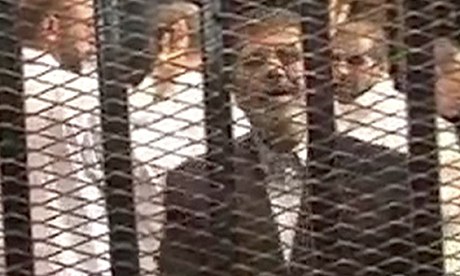
Mohamed Morsi made a brief and defiant appearance in court. He reportedly told the judge 'I am the legitimate president', and refused to wear the white prison uniform. Photograph: AP

Putting Morsi and Mubarak behind bars will only heighten turmoil. But help from outsiders like the EU is not the answer


"The trial of the ousted Egyptian president Mohamed Morsi, which opened and adjourned on Monday, is a fundamentally political affair – as was the trial of his overthrown predecessor, Hosni Mubarak. Mubarak's biggest crime was presiding over a police state for 30 yearsBut he wasn't tried for that. Morsi's was a betrayal of the democratic values that brought him to power, but the charges against him say nothing of the sort. In Egypt's penal code no such acts are prohibited.
And just as Mubarak's laws got him off the hook, the same, unreformed laws may very well be used to nail Morsi. Only a new legal framework could have laid the foundation for a fair and transparent judicial process. But for selfish reasons neither the military who took over from Mubarak in 2011 nor Morsi's Muslim Brotherhood when it was in power, pursued this course of action. Instead, Egypt's leaders – of whatever ideological hue – continue to refuse to learn from other countries, or from their own mistakes.
Egypt is in a quagmire. The blame rests squarely on the shoulders of its old political class (the Islamists as well as the secularists) who have followed their narrow interests at the expense of everyone else. Either all or nothing.
Morsi's brief and defiant appearance in court (he reportedly told the judge "I am the legitimate president", and refused to wear the white prison uniform) confirmed what many feared. The Muslim Brotherhood is determined to fight on. Clashes between its supporters and police in Cairo and Alexandria may very well escalate and turn bloody. Against the good advice of some of their best friends, the Brotherhood's leaders refuse to see that every demonstration, jammed road or disrupted trip on the Cairo underground serves only to swell the ranks of their enemies and detractors.
For a people who have endured all kinds of despots for centuries, the trials of two ousted presidents are truly seismic events, leading inevitably to instability and uncertainty. Is there anything the outside world can do to help?
On the political front, any mediation by the EU or others would only make matters worse. It would raise the Brotherhood's hopes that its daily disruption of public life is bearing fruit, and that someone will come to its rescue – which is patently not the case. The widespread perception in Egypt that the EU has been pressuring the interim government on the Brotherhood's behalf has infuriated public opinion, hardening the nationalist belief that it is a treasonous organisation soliciting foreign intervention in Egypt's internal affairs.
However, trade and revitalised tourism could inject hope where politics appears to spread despair. The outside world can offer assistance on how to reform Egypt's dysfunctional state machinery. Otherwise the Egyptians are better left to work out their political differences on their own.
Healing Egypt's political wounds will not be easy, because the divisions are multilayered and no longer limited to the simple binary of Islamists versus seculars. There is a third group that wants to work outside this polarisation, and a fourth that clings on to the military as the saviours. Add to all this the stalwarts of the old Mubarak regime: powerful people determined to preserve the state that served them so well.
It's perhaps no longer realistic to expect any major overhaul of the legal system or the police – longstanding demands of the revolution. Putting Morsi and Mubarak behind bars will not end Egypt's political turmoil. The interim government has in fact responded to such demands by creating a minister for transitional justice – but the new official, whose name is hardly known to anyone in Egypt, has so far done virtually nothing."

Monday, November 4, 2013

Failed policies

The Daily Star
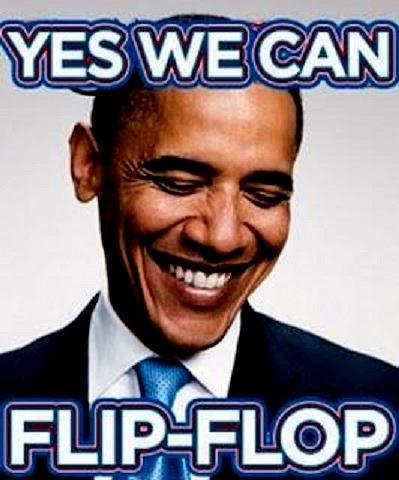
bho-yes-we-can-flip-flop.jpg (399×480)
"U.S. Secretary of State John Kerry’s current Middle Eastern tour is a patently obvious attempt to salvage relations between America and its key partners in the region, badly burnt over differences on Syria and Iran, but his trip reeks of both desperation and hypocrisy, and sadly for the U.S., appears to have come too late.
Arriving in Cairo Sunday, Kerry tried to insist that the U.S. and Egypt were still great friends and reiterated Washington’s support for the interim rulers, who ousted the country’s first elected leader in July, in what the U.S. has stopped short of calling a “coup.” But actions speak louder than words and it cannot be forgotten that America has withdrawn $1.5 billion in annual aid to the country.
Kerry insisted that this recalibration in aid was but a “very small issue between us.” And while the size of the now absent aid package falls far short of assistance recently granted by Saudi Arabia and other Gulf states, what it represents symbolically may be a far greater issue to Cairo than Kerry cares to admit.
The U.S.’ position in the Middle East is changing, and faster, and perhaps more irrevocably, than it is prepared to accept.
Nowhere has this descent been more evident than vis-à-vis the American relationship with Saudi Arabia over recent weeks. The kingdom’s unprecedented decision to refuse a rotating position at the U.N. Security Council last month signaled just how angry the country was with the U.S. over its about face on the threat of striking the Syrian regime militarily, and its tiny steps toward a thawing of relations with Iran.
Ahead of Kerry’s touchdown in Saudi Arabia Sunday evening, the headline of the editorial in the Al-Riyadh daily, which mirrors government policy, read “Yes, we are not on good terms with America,” leaving the state of the marriage in no uncertain terms. This is perhaps the worst that relations have been between the two allies in memory. But while the U.S. relies on Saudi Arabia as its primary ally in the Arab world, the kingdom has many other friends to turn to, as it revealed Sunday with the news that it is in talks with Germany on a new military deal.
But recognizing that its interests in the region are in jeopardy, the U.S. has quickly abandoned any principles it once claimed to have, whether right or wrong. Kerry flirts with the Egyptian rulers on the eve of the trial of deposed President Mohammad Morsi, and then insists any differences with other regional partners on Syria are not existential but “tactical.”
However it appears that Kerry’s Middle Eastern charm offensive may be too little, too late. The many countries of the region have grown tired of the U.S.’ broken promises and self-serving interests. Obama in particular continues to be a growing disappointment, having fallen so far from his inspirational and hopeful Cairo University speech of 2009, when a different future in American-Middle Eastern relations genuinely seemed tangible.
On both the Middle East peace process, and now on talks to hold Geneva II, the U.S. has again revealed itself to be a weak partner. On the former issue, the crucial settlement issue has worsened over the last couple of years, and on the latter, the possibility of a Geneva follow up feels further away than ever. Obama should realize sooner than later that he has lost the trust of the Middle East."


Emad Hajjaj's Cartoon


The Egyptian Junta Has Stopped Airing of Satirist Bassem Youssef's Show, Al-Bernameg

Iran Revolutionary Guards commander killed in Syria

"
Middle East
Follow this storyPrintEmail thisRSS FeedePapershare this
Reuters
Reuters
A general view shows buildings that were damaged during clashes between with forces loyal to Syria's President Bashar al-Assad and Free Syrian Army fighters, near Sayeda Zainab area in Damascus May 27, 2013. REUTERS/ Alaa Al-Marjani
A+A-
"DUBAI: A commander of Iran's Revolutionary Guards has been killed in Syria after volunteering to defend a Shiite shrine in Damascus, the Iranian Mehr news agency said on Monday.

Commander Mohammad Jamalizadeh of the Islamic Revolutionary Guard Corps (IRGC) in the southeastern province of Kerman was killed in the last few days by "Wahhabi terrorists", the agency said, giving no more details.
The report could not be independently confirmed.

Jamalizadeh was a veteran of the 1980-88 Iran-Iraq war and then served in anti-smuggling units. He did not travel to Syria for the IRGC, but volunteered to defend the Sayyida Zainab mosque in the southern suburbs of Damascus, Mehr said.

The area around the mosque revered by Shiites as the burial site of a grand-daughter of the prophet Mohammad has been the scene of heavy fighting.
Jamalizadeh's funeral is to take place on Tuesday in Kerman, capital of the province of the same name.
Western diplomats say Iran, an ally of President Bashar al-Assad, provides billions of dollars of aid and an undisclosed number of military advisers to Syria.
Lebanon's Iranian-backed Hezbollah group openly acknowledges its guerrillas are fighting for Assad, but Tehran denies its troops have been engaged directly in combat in Syria.
"As we have said many times before, Iran has no battalions in Syria and only advisers are present to transfer their defensive experience to the defenders of that country," Sepah news agency quoted General Ramazan Sharif, head of public relations for IRGC, as saying on Monday.
Video footage seized and posted online by Syrian rebels in September showed armed Iranians in military uniform working on the front lines alongside Syrian government soldiers. Iranian media later reported that both the cameraman and the Iranian commander in the footage had been killed."

Inside the "Electronic Omnivore": New Leaks Show NSA Spying on U.N., Climate Summit, Text Messaging

Democracy Now!

"As Edward Snowden seeks clemency from the United States, the New York Times has revealed new details about how the National Security Agency is spying on targets ranging from the United Nations to foreign governments to global text messages. We are joined by New York Times reporter Scott Shane, who reports that the NSA has "as an electronic omnivore of staggering capabilities, eavesdropping and hacking its way around the world to strip governments and other targets of their secrets, all the while enforcing the utmost secrecy about its own operations." The Times article reveals how the NSA intercepted the talking points of U.N. Secretary-General Ban Ki-moon ahead of a meeting with President Obama in April and mounted a major eavesdropping effort focused on the United Nations climate change conference in Bali in 2007. The Times also reveals the existence of an NSAdatabase called Dishfire that "stores years of text messages from around the world, just in case." Another NSA program called Tracfin "accumulates gigabytes of credit card purchases."....."

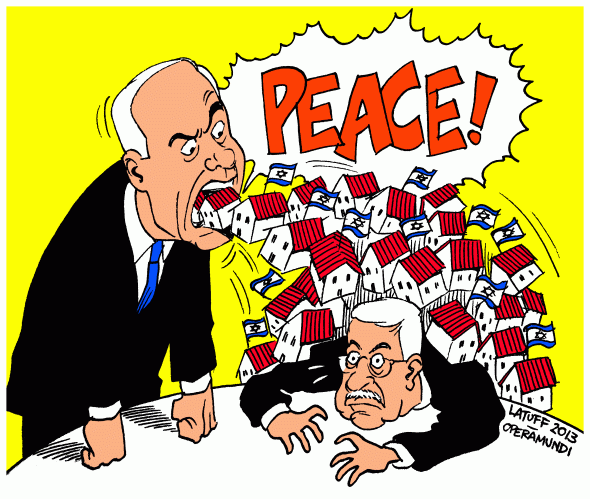
A GOOD CARTOON BY CARLOS LATUFF: Netanyahu, Abbas and the “peace talks”


Netanyahu Abbas peace talks

Imploding the Myth of Israel

AN EXCELLENT PIECE AND RECOMMENDED READING

"Israel has been poisoned by the psychosis of permanent war. It has been morally bankrupted by the sanctification of victimhood, which it uses to justify an occupation that rivals the brutality and racism of apartheid South Africa. Its democracy—which was always exclusively for Jews—has been hijacked by extremists who are pushing the country toward fascism. Many of Israel’s most enlightened and educated citizens—one million of them—have left the country. Its most courageous human rights campaigners, intellectuals and journalists—Israeli and Palestinian—are subject to constant state surveillance, arbitrary arrests and government-run smear campaigns. Its educational system, starting in primary school, has become an indoctrination machine for the military. And the greed and corruption of its venal political and economic elite have created vast income disparities, a mirror of the decay within America’s democracy.

And yet, the hard truths about Israel remain largely unspoken. Liberal supporters of Israel decry its excesses. They wring their hands over the tragic necessity of airstrikes on Gaza or Lebanon or the demolition of Palestinian homes. They assure us that they respect human rights and want peace. But they react in inchoate fury when the reality of Israel is held up before them. This reality implodes the myth of the Jewish state. It exposes the cynicism of a state whose real goal is, and always has been, the transfer, forced immigration or utter subjugation and impoverishment of Palestinians inside Israel and the occupied territories. Reality shatters the fiction of a peace process. Reality lays bear the fact that Israel routinely has used deadly force against unarmed civilians, including children, to steal half the land on the West Bank and crowd forcibly displaced Palestinians into squalid, militarized ghettos while turning their land and homes over to Jewish settlers. Reality exposes the new racial laws adopted by Israel as those once advocated by the fanatic racist Meir Kahane. Reality unveils the Saharonim detention camp in the Negev Desert, the largest detention center in the world. Reality mocks the lie of open, democratic debate, including in the country’s parliament, the Knesset, where racist diatribes and physical threats, often enshrined into law, are used to silence and criminalize the few who attempt to promote a civil society. Liberal Jewish critics inside and outside Israel, however, desperately need the myth, not only to fetishize Israel but also to fetishize themselves. Strike at the myth and you unleash a savage vitriol, which in its fury exposes the self-adulation and latent racism that lie at the core of modern Zionism.

There are very few intellectuals or writers who have the tenacity and courage to confront this reality. This is what makes Max Blumenthal’s “Goliath: Life and Loathing in Greater Israel” one of the most fearless and honest books ever written about Israel. Blumenthal burrows deep into the dark heart of Israel. The American journalist binds himself to the beleaguered and shunned activists, radical journalists and human rights campaigners who are the conscience of the nation, as well as Palestinian families in the West Bank struggling in vain to hold back Israel’s ceaseless theft of their land. Blumenthal, in chapter after chapter, methodically rips down the facade. And what he exposes, in the end, is a corpse. 

I spent seven years in the Middle East as a correspondent, including months in Gaza and the West Bank. I lived for two years in Jerusalem. Many of the closest friends I made during my two decades overseas are Israeli. Most of them are among the Israeli outcasts that Blumenthal writes about, men and women whose innate decency and courage he honors throughout his book. They are those who, unlike the Israeli leadership and a population inculcated with racial hatred, sincerely want to end occupation, restore the rule of law and banish an ideology that creates moral hierarchies with Arabs hovering at the level of animal as Jews—especially Jews of European descent—are elevated to the status of demigods. It is a measure of Blumenthal’s astuteness as a reporter that he viewed Israel through the eyes of these outcasts, as well as the Palestinians, and stood with them as they were arrested, tear-gassed and fired upon by Israeli soldiers. There is no other honest way to tell the story about Israel. And this is a very honest book......." 

America’s Top Diplomat Is Lost in Space

A VERY GOOD PIECE
by Peter Van Buren and Tom Engelhardt, November 04, 2013
Antiwar.com
kerry1.jpg (500×289)
"If it’s Tuesday, this must be Belgium – the title of a 1969 romantic comedy – could now fit two intertwined phenomena: the madcap global travels of Secretary of State John Kerry and the nonstop journey of the latest revelations from National Security Agency whistleblower Edward Snowden. In mid-August, there was Kerry in Brazil, lamely defending the NSA’s surveillance program, even as he tried to pacify local ire over reports that the agency was monitoring phone calls and emails on a mass scale there. (And this was before the news even broke that the NSA had hacked intoPresident Dilma Rousseff’s emails and spied on Brazil’s major oil company.) "We’re not surprised and we’re not upset that Brazil would ask questions. Absolutely understandable,” Kerry said at the time. "Brazil is owed answers with respect to those questions and they will get them. And we will work together very positively to make certain that this question – these issues – do not get in the way of all the other things that we talked about." As it happened, no answers were forthcoming. A month later, Rousseff would cancel a long-planned visit to Washington and denounce the NSA’s spying at the U.N.
Skip two months to late October, and there Kerry was again, this time in France trying to pacify an angry ally over another revelation of a massive NSA eavesdropping operation. ("We will have ongoing bilateral consultations, including with our French partners, to address this question of any reports by the U.S. government gathering information from some of the agencies and those consultations are going to continue.") Meanwhile, he was still trying to defend that agency’s basic program in similarly foggy language. ("Protecting the security of our citizens in today’s world is a very complicated, very challenging task… because there are lots of people out there seeking to do harm to other people.") And then, in a no-rest-for-the-weary world, on he went to Italy, whose population had just been outed as the latest victim of NSA spying, and whose foreign minister was demanding "clarity" on the issue. With much of Europe up in arms over America’s expanding global security state, he once again resorted to his rope-a-dope technique, taking the local punches while offering public pabulum about our dearest allies and how much the Obama administration cares for them and how Americans nonetheless have to be protected from the evil doers, etc., etc. Only as October ended, two and a half months after his Brazilian trip, did the secretary of state become the first Obama administration official to admit that “in some cases, some of these actions have reached too far.”
By now, Kerry’s act had all the charm of a clown fireman putting out a blaze at a circus only to set himself on fire. If this repetitive scene, in which the Snowden revelations stay just ahead of the eternally globetrotting secretary of state, doesn’t quite add up to a real life version of Batman and Robin, the dynamic duo, it still has to be the spectacle of 2013. Given the recent Guardian report that the NSA has listened in on at least 35 heads of state (and that’s only phone calls, not emails), Kerry could be an even busier man in the months to come. As TomDispatch regular Peter Van Buren, former State Department whistleblower and author of We Meant Well: How I Helped Lose the Battle for the Hearts and Minds of the Iraqi People, points out, Kerry’s already legendary global travels are matched by a legendary cluelessness that reflects a particularly twenty-first-century Washington state of mind. ~ Tom
Ramblin’ Man: John Kerry is a Figure of His Times (and That’s Not a Good Thing)
By Peter Van Buren
In the 1960s, John Kerry was distinctly a man of his times. Kennedy-esque, he went from Yale to Vietnam to fight in a lost war. When popular sentiments on that war shifted, he became one of the more poignant voices raised in protest by antiwar veterans. Now, skip past his time as a congressman, lieutenant governor of Massachusetts, senator, and presidential candidate (Swift Boated out of the race by the Republican right). Four decades after his Vietnam experience, he has achieved what will undoubtedly be the highest post of his lifetime: secretary of state. And he’s looked like a bumbler first class. Has he also been – once again – a true man of his time, of a moment in which American foreign policy, as well as its claim to global moral and diplomatic leadership, is in remarkable disarray?.....
......"

Sunday, November 3, 2013

Most Incompetent Pair

obama_kerry001_16x9.jpg (640×360)

When Did the US Have as Incompetent and Vacillating President and Secretary of State As These Two Losers?

بينها الاستعانة بالنووي الباكستاني وتسليح المعارضة السورية ودعم انتفاضة فلسطينية:

سيناريوهات سعودية تخيف أمريكا... وبندر مسؤولاً عن 'الاستراتيجية الدفاعية'

عواصم- وكالات: قال وزير الخارجية الأمريكي جون كيري أمس ان الولايات المتحدة ربما تكون بينها وبين السعودية خلافات حول سورية ولكنها تتعلق ب’التكتيك’ فيما قال مراقبون إن السياسة الأمريكية دفعت بالمملكة للتخلي عن دبلوماسيتها الهادئة.
وكان كيري يتحدث في بداية جولة تستغرق 11 يوما خلال مؤتمر صحافي مع نظيره المصري نبيل فهمي ‘هناك بعض الدول التي كانت تريد من الولايات المتحدة ان تفعل شيئا في ما يتعلق بسورية ولكننا فعلنا شيئا اخر’. 
إلى ذلك قال مصدر مقرب من دوائر القرار في السعودية لوكالة فرانس برس مشترطا عدم ذكر اسمه ان المملكة ترفض استقبال الابراهيمي بسبب مواقفه. وكشف ان ‘رئيس جهاز الاستخبارات العامة الامير بندر بن سلطان اصبح مسؤول الاستراتيجية الدفاعية ومشتريات الاسلحة’ مشيرا الى ان التنسيق مع الفرنسيين ‘ممتاز′، حيث منحت فرنسا عقد تسلح’، في اشارة الى صفقة تجديد اربع فرقاطات وسفينتي امداد بقيمة 1,3 مليار يورو. 
وفي سياق مقارب تحدثت مجلة الفورين بوليسي الأمريكية في تقرير مطوّل أول من امس، عن الغضب السعودي وتدهور العلاقات مع امريكا، ونقلت تصريحات الأمير بندر بن سلطان أمام السفير الفرنسي وسفراء غربيين عن إمكانية أن تتحول السعودية إلى حلفاء آخرين غير الولايات المتحدة، مؤكداً احتمال تأثر صفقات النفط والسلاح معها.
واستشهدت المجلة بتصريحات أخرى للأمير تركي الفيصل، لا تخرج عن سياق تصريحات الأمير بندر بن سلطان كدلالة على تدهور العلاقات بين البلدين.
وقدمت الصحيفة سبعة سيناريوهات كارثية، تجعل أمريكا تشعر بالذعر من الغضب السعودي وذكرت أن السيناريو الأول هو أن تقوم السعودية بتخفيض إنتاجها من النفط عن 10 ملايين برميل، وهو ما سيؤثر في الاقتصاد الأمريكي فوراً، ويهدد الانتعاش الاقتصادي الذي تعيشه أمريكا حالياً ويتسبب بالتالي بتغير الرأي العام الحالي في أمريكا، مذكّرة بأن السعودية رفعت إنتاجها من النفط بطلب من أمريكا من أجل سد العجز بسبب العقوبات الأمريكية القوية علىطهران.
السيناريو الثاني هو أن تمد السعودية يدها إلى السلاح النووي الباكستاني، التي تملك صواريخ ذات رؤوس نووية، مذكرة بأن السعودية كانت تمول البرنامج النووي الباكستاني في عام 1999، إضافة إلى زيارة الأمير سلطان بن عبد العزيز لمحطة تخزين الأسلحة النووية في كوهتا رفقة رئيس الوزراء نواز شريف، بخلاف أن باكستان تريد تخزين أسلحة نووية في الأراضي السعودية بعيداً عن أعين جارتها الهندية، لتكون في مأمن في حال نشوب نزاع مسلح مع الهند.
وأضافت الصحيفة بأن السعودية قد تقوم ببناء محطة نووية جديدة، وستقبل بها أمريكا نظراً لامتلاك إيران السلاح النووي. وذكّرت الصحيفة بتصريحات الملك عبد الله بن عبدالعزيز أمام المستشار الأمريكي السابق دينيس روس عام 2009 قائلاً ‘إذا حصلت إيران على السلاح النووي فسنحصل عليه’.
وتحدثت عن السيناريو الثالث، وهو أن الرياض قد تطلب من الأسطول الأمريكي مغادرة البحرين، وهو ما فعلته السعودية مع أمريكا قبل عشرة أعوام، وأخرجت أمريكا من قاعدة الأمير سلطان بن عبدالعزيز الجوية.
وأضافت بأن السيناريو الرابع أن السعودية قد تزود المعارضة السورية بأسلحة متطورة جداً وخطيرة، وهي إلى الآن ما زالت تصغي لواشنطن، لكنها من المرجح أن تكسر الحظر على الأسلحة الخطيرة والمتطورة، وستقوم بإرسالها إلى المعارضة السورية، بالرغم من الرفض الشديد لذلك من قبل أمريكا.
والسيناريو الخامس هو أن تقوم السعودية بدعم انتفاضة فلسطينية ثالثة، وهي القضية التي تغضب السعودية بشكل دائم، وذكّرت برفض الملك عبدالله بن عبدالعزيز لزيارة واشنطن محتجاً بعدم ضغط أمريكا على إسرائيل في عام 2001، مبلّغاً واشنطن بأن فلسطين هي القضية الأساسية والمهمة في وجدان الملك عبدالله بن عبدالعزيز.
والسيناريو السادس هو أن الرياض جعلت مصر مستغنية عن واشنطن، وهو ما ظهر جلياً عقب الدعم السعودي لمصر، إذ جعلت مصر تصم آذانها عما تقوله واشنطن، وتجاهلت تهديداتها.
السيناريو السابع رفض السعودية لمقعد مجلس الأمن واحتشاد الدول الإسلامية خلف السعودية، وعددها 57 دولة؛ إذ دعت منظمة المؤتمر الإسلامي إلى إصلاح مجلس الأمن وإعطائه دوراً يوازي حجم هذه المنظمة وحجم المسلمين في العالم داخل مجلس الأمن؛ وبالتالي إذا عارضت أي دولة من الدول دائمة العضوية أو أمريكا هذه المطالب داخل مجلس الأمن باستخدام الفيتو فإنها ستخسر سمعتها بشكل كبير أمام العالم الإسلامي؛ وبالتالي توفير سبب جوهري لزيادة التطرف والمتطرفين ضد أمريكا واتهام أمريكا بأنها عدوة للمسلمين، وهو ما تخشاه الولايات المتحدة بشكل كبير.
وأشارت الصحيفة إلى أن محللين عدة استبعدوا أن تقوم السعودية بهذا الخيار؛ لأن له أيضا آثار سلبية على السعودية.
وأضافت الصحيفة بأن السعودية ترى تدهور العلاقات الأمريكية أهم قضية لها حالياً، لكن في الولايات المتحدة القضايا الشائكة كثيرة جداً، والغضب السعودي واحد من هذه القضايا. 

Al-Jazeera Cartoon: Egyptian "Justice"

كاريكاتير: محاكمة مبارك ومرسي
The Trials of Mubarak and Morsi

Radicalisation in Syria poses growing threat to Europe, says Turkish leader

In exclusive interview, president Abdullah Gul says Syria risks becoming 'Afghanistan on the shores of the Mediterranean'

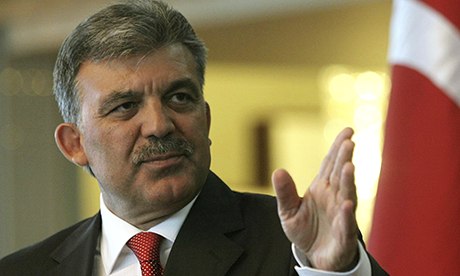
Abdullah Gul
"The Syrian nation is dying as an indifferent world looks on, and the territory it occupies risks becoming "Afghanistan on the shores of the Mediterranean", the Turkish president, Abdullah Gul, has said.
Radicalisation of ordinary people by Islamist jihadist groups was spreading across Syria and posed a growing risk to its neighbours and the countries of Europe, Gul said in an exclusive interview with the Guardian.
But the response of the international community – including Turkey's American and British allies – to the security, humanitarian and moral challenges posed by the crisis had been "very disappointing", he said. He reiterated his view that the UN security council's performance was a "disgrace".
In a forthright and sometimes angry critique of western policy on Syria, Gul said the deaths of more than 100,000 people, mostly civilians, in fighting over the past 32 months could have been avoided. Turkish mediation efforts early on in the war were not supported and were even undermined by western powers, he complained.
With the conflict showing no sign of ending, Turkey faces extreme instability and dislocation along its 565-mile border with Syria, the prospective radicalisation of its Kurdish, Alevi and Sunni Muslim populations, the spread of infectious diseases such as polio, TB and measles, and many new additions to its current total of 500,000 Syrian refugees.
Asked about the risk of the war spreading beyond Syria, Gul said that if Turkey were attacked or Turkish territory invaded his government would respond militarily "in the strongest way possible".
He said: "There is no question about this. In fact we have already stated that we have changed the rules of engagement and we have given authority to Turkish armed forces in that respect … I don't see how much worse it can get, it's already very bad. But let me also say that this is not a bilateral issue between Turkey and Syria. We did not have any conflict with Syria, but when those human rights violations begun to occur and there was massacring of the people of Syria, then it become a matter for mankind, for us all, the international community. It's only by virtue of being a neighbouring country that Turkey is so very much involved. Also from the point of view the fact that we are hosting 500,000 Syrians in Turkey. Two hundred thousand of them live in camps and 300,000 in the cities through their own means.
"We have so far spent $2bn (£1.25bn) for them. We will continue to do so because this is a humanitarian matter [but] it's very regrettable seeing the indifference on the part of the international community."
Gul said that if the current deterioration in Syria continued unchecked, it would pose an increasingly grave security and counter-terrorism challenge for Turkey.
"If the atmosphere remains as it is, then this can lead to more radicalisation and some groups in the civil war becoming more extreme, dividing up, not being under control, and spreading across that country. Because under those circumstances, ordinary people could become much more extreme and this is something that poses a danger and threat not just for Turkey – it's an issue for everyone.
"I don't think anybody would tolerate the presence of something like Afghanistan on the shores of the Mediterranean. For that reason the international community must have a very solid position with respect to Syria."
Unfortunately, that unified stance appeared lacking and meanwhile the country was being destroyed.
"At the very beginning the international community's rhetoric was very high [calling for Assad to stand down immediately] but then it reverted to its current position now. And that is a contradiction itself. And morally too, there is a country, Syria, exhausting itself, consuming itself, with many people dead, the infrastructures gone, there is a lot impact of what is going on, and the international community is watching this. Simply watching this, and this is very regrettable."
Gul said Turkish efforts to engage Assad in a dialogue two years ago had not received sufficient backing from Turkey's allies, but could have headed off the disaster that ensued.
"We talked to Assad because we wanted things to be resolved by peaceful means. That engagement was at all levels, it wasn't just myself, the prime minister, the foreign minister, we all worked very hard and at the time we even faced pressure from our allies because they said this was going on too long and it wasn't going anywhere. This is what I mean about the high rhetoric of the international community at the very beginning. They should have done something to follow up on their rhetoric and this was not done.
"What we tried to do did not work out and there wasn't much more we could do. I wish Assad had understood what we were telling him. In my very last message to him I said that if things went on as they were, whatever might be done would be too little, too late, and that he should take the initiative and lead the change in his country so the country would not fall to pieces.
"He read my letter and said it was all very important and good but he did not act on it, he did not do anything. Most certainly, yes, if he had heeded my advice, 100,000 people may not have died and Syria would not have faced so much destruction."
Gul suggested that the chemical weapons deal with Assad brokered by Russia was a distraction that Assad had exploited to bolster his position.
"It might be said Assad made good use of an opportunity with the chemical weapons deal with the Russians. But the question comes back to the international community again … Of course we are very pleased about the chemical weapons and we support that. But was it just the chemical weapons? Do we reduce the whole thing to chemical weapons? I think there is a moral question there that is presented to the international community."
Asked whether the US and Britain should be doing more to end the crisis, he replied: "Frankly speaking, our expectation was different, we expected more. I think it is very disappointing to see the whole discussion reduced to a discussion solely on chemical weapons."
Gul said it was important that the proposed Geneva II peace conference, due this month, was better prepared than its forerunner. He felt last month's London meeting of the Friends of Syria group had been helpful. But he expressed scant hope that the next Geneva meeting would achieve a breakthrough, if and when it takes places. "The country is destroyed … There really isn't in my opinion much that can be done now."
Gul spoke to the Guardian during a weekend visit to Edinburgh, where he attended the Turkey-Britain Tatli Dil bilateral forum, met Scottish residents of Turkish origin and was given dinner by the Duke of York.

Real News Video: Palestinians Face Discrimination in Israeli Economy, Majority Live in Poverty

Shir Hever: Official Israeli statements on integrating Palestinians into workforce exposes apartheid system. 


More at The Real News

Egypt: Protester Killings Not Being Investigated

Impunity Encourages Excessive Force

"(New York) – Egypt’s authorities have yet to announce any move to investigate security force killings of protesters on October 6, 2013. Almost four weeks after police used lethal force to break up protests by Muslim Brotherhood supporters, the authorities have not said they have questioned, or intend to question, security forces about their use of firearms that day.

The clashes left 57 people dead throughout Egypt, according to the Health Ministry, with no police deaths reported.

In dealing with protest after protest, Egyptian security forces escalate quickly and without warning to live ammunition, with deadly results,” said Joe Stork, deputy Middle East and North Africa director at Human Rights Watch. “Thirteen hundred people have died since July. What will it take for the authorities to rein in security forces or even set up a fact-finding committee into their use of deadly force?”...."

Emad Hajjaj's Cartoon

اضغط على الكاريكاتير لإرساله إلى صديق!

Assad's Missiles Supposedly Intended for Defense Against Israel.....
Are Cut to Pieces to Drop on Syrian Cities Instead.  

Egypt army chief seeks immunity for military

Abdel Fattah el-Sisi in leaked audios says army should have immunity under new constitution.


"Egypt's Defence Minister has said that the military should enjoy immunity under the new constitution, according to two leaked audios broadcast on Friday by Rasd Network.
General Abdel Fattah el-Sisi made the comments in an interview that was recorded a few weeks ago, but was never made public.
"You need this military institution to be given immunity, it is not an immunity for Abdel Fatah [referring to himself] …. It is for the [military] institution, which is the backbone of the state in light of the current circumstances. The constitution should consider that during this transitional period,'' Sisi said in the audio that is now in the possession of Al Jazeera.
The military deposed the Muslim Brotherhood's Mohamed Morsi, the country’s first democratically elected president, on July 3 and suspended the constitution.
In the second audio, Sisi is heard saying, ''The [military] institution should have immunity because it has a role… that will be extended for at least 15 years during the coming period, be not withstanding who is going to be in power, whether he belongs to the Islamist, liberal or secular trend.”
"For someone to come and control this [military] institution completely, he could destroy it without noticing and without any intention,'' Sisi said in the audio interview that Rasd says was given to the editor-in-chief of independent daily newspaper, Al-Masry al-Youm.
Army calls shots
The military installed a technocrat government immediately after Morsi’s removal amid widespread public approval, but the interim government has played second fiddle to the army.

The 50-member constitution-writing committee, which has no representation from the Muslim Brotherhood that dominated the previous parliament, is still debating the military's powers.

“This audio proves that the main conflict now is between the old authoritarian regime that has ruled the country since the 1952 military coup and the establishment of a new, democratic, civilian state,” Adel Soleiman, a former military general and head of the Cairo-based Strategic Dialogue Forum for Defence Studies, told Al Jazeera.
The military leaders are telling the people that the regime will not fall, you can bring down one president or 100…but the regime will not change
Adel Soleiman, Former military general
"Egypt's military is the old regime,'' he said.

During the January 25 revolt that toppled military President Hosni Mubarak in 2011, the people called for the ''fall of the regime”.

''The military leaders are telling the people that the regime will not fall, you can bring down one president or 100…but the regime will not change,'' Soleiman said.

He said that this indicated that anyone - despite his affiliations - who tries to change the political regime will fail, because ''the military will be untouchable, according to the new constitution”.

Military representatives of the committee have called for the constitution to allow the military to name the defence minister during the next two presidential terms.

This point had been widely criticised by legal experts and politicians who say this would give the military power above the president.

According to Egypt's 2012 and 1971 constitutions, the president is the Supreme Commander of the Armed Forces and he is the one who appoints the Defence Minister.

The constitution-writing committee is also discussing whether or not to keep an article, allowing the military trials of civilians that directly assault the armed forces.
No to military trials 

Several rights and campaign groups such as ''no to military trials of civilians campaign'' have condemned the article - which violates the rights of civilians in a fair trial in front of a civilian court - and demanded that it be removed completely.

There is also fear that the military forces will have immunity against prosecution for the crimes they committed against the people during the 2011 uprising and after Morsi’s removal.

More than 1,000 civilians have been killed during clashes with the military and police forces since July 3.

The draft constitution also has articles guaranteeing the secrecy of the military budget.

“I believe that their inability to estimate the reaction of the military institution and its size is what made them take the last decision [against] the Supreme Council of armed forces,” Sisi said in the audio.

Sisi was referring to Morsi's decision in August last year to dismiss the Supreme Council of Armed Forces that ruled the country after Mubarak's ouster and annul their constitutional declaration that curbed the president's powers.
''Sisi’s words indicate that Morsi's problem was that he tried to change the regime and build a new one.” Soleiman said.
Meanwhile, Yasser Risk, editor-in-chief of Al-Masry al-Youm, has denied that these leaks were authentic in several statements to local channels.

''The defence minister did not say any of this,” he said, adding that the authentic audio might have been leaked from the newspaper then edited, re-arranged and fabricated before they were released.

Last month, Rasd also leaked videos of Sisi's meeting with military commanders including a video where Sisi spoke about how to control the media."

World must help Lebanon handle Syrian refugee flood: UNICEF

"(Reuters) - International donors must do more to help Lebanon absorb a flood of refugees straining its schools and public services, the head of the United Nations children's fund UNICEF said.
Lebanon, the smallest of Syria's neighbors, is giving sanctuary to the largest number of refugees from the civil war across its border and Syrians now number around a quarter of its own population of just over 4 million.

With a weak government and threadbare national services even before the Syrian crisis erupted two and a half years ago, Lebanon is struggling to support those refugees, scattered in informal camps across the country's most deprived areas.
"Lebanon has opened its borders, opened its arms, and the international community owes it to Lebanon to do everything it can to help Lebanese society adapt to this," UNICEF chief Anthony Lake told Reuters on a visit to a camp in the eastern Bekaa Valley, about two miles from the Syrian frontier.
Syrian refugee children sit inside a makeshift school operated under UNICEF in a tent, in Bekaa valley of Lebanon November 1, 2013. REUTERS/ Jamal SaidiThe United Nations says 800,000 Syrians have either registered or are awaiting registration as refugees in Lebanon. But many more are estimated to be in the country unregistered and some Lebanese officials say there could be more than 1 million refugees in the country.
The World Bank has estimated the cost to Lebanon at around $2.6 billion over three years. Government-funded schools, which cater for the poorest third of the population, face being inundated with Syrians even if only a fraction of them enroll.
Lake visited a Bekaa Valley school where 200 of the 355 children are Syrian and the kindergarten section has swollen to around 40 per class.
"Physically we are able to absorb them but at some stage we will need more teachers and equipment," head teacher Jhonny Abu Toumah said. "What else can I do with the children - put them out on the street?"...."