Tuesday, February 11, 2014

Secular Egyptian detainees complain of police torture

CAIRO Tue Feb 11, 2014 7:28am EST
Riot police are seen on October bridge during clashes with anti-government protesters and members of the Muslim Brotherhood, near Tahrir Square in downtown Cairo, on the third anniversary of Egypt's uprising, January 25, 2014. REUTERS/Mohamed Abd El Ghany
Riot police are seen on October bridge during clashes with anti-government protesters and members of the Muslim Brotherhood, near Tahrir Square in downtown Cairo, on the third anniversary of Egypt's uprising, January 25, 2014.
CREDIT: REUTERS/MOHAMED ABD EL GHANY

RELATED TOPICS

(Reuters) - Secular activists arrested last month on the third anniversary of the revolt against Egyptian autocrat Hosni Mubarak say they have been tortured, some with electric shocks, relatives and lawyers who have seen them said.
The Interior Ministry denied any abuses. If independently confirmed, the allegations would suggest police have reverted to some of the practices blamed for stoking the 2011 uprising.
The latest arrests have increased criticism of the army-backed authorities by liberals and leftists who supported the decision to remove President Mohamed Mursi and who have turned a blind eye to a state crackdown on his Islamist supporters.
Lawyers say police detained about 1,000 people, including some teenage boys, on January 25, when 49 people, mostly Islamists, were killed during anti-government marches. Thousands rallied in support of the authorities on the same day.
The torture and humiliation began in police stations and continued in some of Egypt's most notorious prisons and detention centers, relatives and lawyers told Reuters.
"He told me he was hanging by his arms from the ceiling and beaten very badly. He was taken to a room and blindfolded so he could hear the screams of men who were being tortured," said Hoda Mahmoud, referring to her detained husband Khaled al-Sayed.
"Some were sexually abused. He was stripped naked and they threw cold water at him. He was strapped to a chair and beaten for hours," Mahmoud said.
When Field Marshal Abdel Fattah al-Sisi deposed Mursi, Egypt's first freely elected leader, he promised to restore democracy to the most populous Arab nation, which receives some $1.5 billion a year in U.S. aid, most of it to the military. Washington has withheld some aid pending democratic progress.
GOVERNMENT DENIES ABUSES
Critics of the new government allege it is out to crush all forms of dissent, jailing Islamists and now secular activists. The government says it is committed to guarding human rights.
Many of the arrested Islamists, who number in the thousands, have been charged with perpetrating or inciting violence. Secular activists, who have been arrested in much smaller numbers, have been accused of crimes including breaking a new law that makes it illegal to protest without permission.
Charges against those detained on January 25 range from violating the protest curbs to belonging to a terrorist group, relatives and lawyers said.
Asked about the torture allegations, government spokesman Hany Salah said: "The government is committed to protecting human rights and the rule of law. It is not Egypt's policy to torture or harass any arrested person for any reason."
Ahmed Helmy, the Interior Ministry's media coordinator, denied any abuses, saying the judiciary and prosecutor-general regularly inspected all prisons. "Any prisoner who has a complaint has the right to file a petition to the ministry and the ministry is obliged to look into it and investigate."
The accounts emerged over the weekend when those arrested appeared before a state prosecutor, to whom they reported the abuse, according to lawyers and activists who attended. Their detention was extended.
The prosecutor, who could not immediately be reached for comment, told the detainees their complaints were beyond the scope of his mandate, which is to decide whether or not they should be kept in detention, the lawyers and relatives said.
Khaled Dawoud, a liberal activist, said at least three detainees said they had suffered electric shocks. "I was electrocuted in my genitals," he quoted one as saying, posting the account on his Twitter feed as the session was under way.
ECHOES OF MUBARAK ERA
"This is a return to the politics of the Mubarak era in a more aggressive manner. It is an alarming sign of what the future holds," Dawoud told Reuters.
Relatives of the detainees have little faith that the government will act on the complaints of abuse.
"When my husband and others were first detained, he said they were put in a tiny room and forced to kneel blindfolded with their hands behind their heads for 16 hours," said Heba Mohamed, wife of detainee Nagy Kamel.
"He said they were electrocuted. They were told: 'If you need to go to the bathroom, go on yourself'. Whenever they heard the phrase 'Good morning' that meant torture time."
In a New York Times op-ed, Egyptian liberal politician and author Alaa Al Aswany said it was shameful that security forces were targeting revolutionaries like Sayed and Kamel. "This is a tragic turn of events," said Aswany, who backed the army's removal of Mursi on July 3 after mass protests against his rule.
Detainees told relatives and lawyers the abuses had been carried out by policemen.
Such accounts of police behavior diminished after the 2011 uprising, though the Interior Ministry was never reformed in the years that followed, including during Mursi's time in office.
"DARKEST TIMES"
"These allegations are pretty consistent with what we have been hearing of late, what happens in this kind of situation," said Joe Stork, deputy director of Human Rights Watch's Middle East division. "Abuse in police stations is pretty routine."
The police are now lionized in state and private media, which describe anyone who criticizes the force as a traitor.
Human rights groups and critics of the government say the Interior Ministry has a free rein once again, though its tactics have failed to crush Islamist insurgents who have killed hundreds of policemen and soldiers since Mursi's fall.
"I had hopes for democracy and justice before," said lawyer Yasmine Hossameddin. "Now these are the darkest times of all. You work 24 hours and you still can't keep up with the number of arrests. The Interior Ministry has become a monster. Now it is not accountable to anyone. The state says 'do what you want'."
Several lawyers said they had overheard policemen threaten detainees with continuous torture if they complained to the authorities of abuses. "One man said: 'Shoot me here. I would rather die than go back to prison'," said Hossameddin.
Relatives of 17-year-old Aboud Sabry said he has nothing to do with politics and was simply in the wrong place at the wrong time when he was swept up by police on January 25.
"He told me they scared him and other inmates with attack dogs at a police detention center called Kilometer 10.5," said his brother Ahmed.

"He told me they blindfolded him and he could hear someone say 'get the electrocution device ready'. He is just 17. He cried. They beat him and asked him if he belonged to the Muslim Brotherhood. He said 'I will say whatever you want me to'."

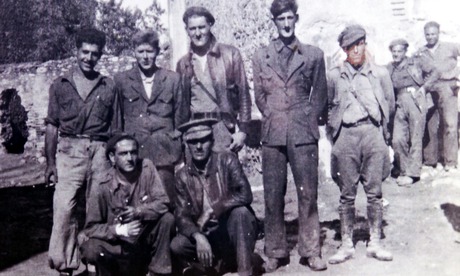
Orwell was hailed a hero for fighting in Spain. Today he'd be guilty of terrorism

The International Brigades are acclaimed for bravery. But British citizens who fight in Syria are damned. If only they did it for the money

orwell hero terror
'The British government did threaten people leaving to join the International Brigades, by reviving the Foreign Enlistment Act. But the act was unworkable.' Photograph: Christopher Thomond
"If George Orwell and Laurie Lee were to return from the Spanish civil war today, they would be arrested under section five of the Terrorism Act 2006. If convicted of fighting abroad with a "political, ideological, religious or racial motive" – a charge they would find hard to contest – they would face a maximum sentence of life in prison. That they were fighting to defend an elected government against a fascist rebellion would have no bearing on the case. They would go down as terrorists.
As it happens, the British government did threaten people leaving the country to join the International Brigades, by reviving the Foreign Enlistment Act of 1870. In 1937 it warned that anyone volunteering to fight in Spain would be "liable on conviction to imprisonment up to two years". This was consistent with its policy of non-intervention, which even Winston Churchill, initially a supporter, came to see as "an elaborate system of official humbug". Britain, whose diplomatic service and military command were riddled with fascist sympathisers, helped to block munitions and support for the Republican government, while ignoring Italian and German deployments on Franco's side.
But the act was unworkable, and never used – unlike the Crown Prosecution Service's far graver threat to British citizens fighting in Syria. In January 16 people were arrested on terror charges after returning from Syria. Seven others are already awaiting trial. Sue Hemming, the CPS head of counter-terrorism, explained last week that "potentially it's an offence to go out and get involved in a conflict, however loathsome you think the people on the other side are ... We will apply the law robustly".
People fighting against forces that run a system of industrialised torture and murder and are systematically destroying entire communities could be banged up for life for their pains. Is this any fairer than imprisoning Orwell would have been?
I accept that some British fighters in Syria could be changed by their experience. I also accept that some are already motivated by the prospect of fighting a borderless jihad, and could return to Britain with the skills required to pursue it. But this is guilt by association. Some of those who go to fight in Syria might develop an interest in blowing up buses in Britain, just as some investment bankers might be tempted to launder cash for drug dealers and criminal gangs. We don't round up bankers on the grounds that their experience in one sector might tempt them to dabble in another. (The state won't prosecute them even when they do launder money for drug gangs and terrorists, as the HSBC scandal suggests.) But all those who leave Britain to fight in Syria potentially face terrorism charges, even if they seek only to defend their extended families.
Last week a British man who called himself Abu Suleiman al-Britani drove a truck full of explosives into the gate of Halab prison in Aleppo. The explosion, in which he died, allowed rebel fighters to swarm into the jail and release 300 prisoners. Was it terrorism or was it heroism? Terrorism, according to many commentators.
It's true that he carried out this act in the name of the al-Nusra Front, which the British government treats as synonymous with al-Qaida. But can anyone claim that liberating the inmates of Syrian government prisons is not a good thing? We now know that at least 11,000 people have been killed in these places, and that many were tortured to death.Pictures of their corpses were smuggled out of Syria by the government photographer employed to record them. There are probably many more. That combination of horror and bureaucracy – doing unspeakable things then ensuring that they are properly documented – has powerful historical resonances. It haunts us with another horror, and the questions that still hang over the Allied effort in the second world war: how much was known, how much could have been done?
As no one else is now likely to act, and as the raid on the prison would probably have been impossible without the suicide bomb, should we not be celebrating this act of extraordinary courage? Had David Cameron not lost the intervention vote, and had al-Britani been fighting for the British army, he might have been awarded a posthumous Victoria Cross.
When you think of the attempt by the British battalion in the Spanish civil war to defend a place they called "Suicide Hill", with the loss of 225 out of 600 men, do you see this as an act of terror – a suicide mission motivated by an extreme ideology – or as a valiant attempt to resist a terror campaign?
Sue Hemming claims it is "an offence to go out and get involved in a conflict", but that is not always true. You can be prosecuted if you possess a "political, ideological, religious or racial motive" for getting involved, but not, strangely, if you possess a financial motive. Far from it: such motives are now eminently respectable. You can even obtain a City & Guilds qualification as a naval mercenary. Sorry, "maritime security operative". As long as you don't care whom you kill or why, you're exempt from the law.
I expect that's a relief to Sir Malcolm Rifkind, the former foreign secretary who now chairs parliament's intelligence and security committee, where he ramps up public fears about terrorism. For several years he waschairman of ArmorGroup, whose business was to go out and get involved in conflict. The absence of one word from the legislation – financial – ensures that he is seen as a scourge of terrorism, rather than an accomplice. The British fighters in Syria should ask their commanders to pay them, then claim they're only in it for the money. They would, it seems, then be immune from prosecution.
Talking of which, what clearer case could there be of the "use or threat of action ... designed to influence the government ... for the purpose of advancing a political, religious, racial or ideological cause" than the war with Iraq? Tony Blair's ministers were, of course, protected by crown immunity, but could they have experienced no flicker of cognitive dissonance while preparing the 2006 act?
Whatever you might think of armed intervention in Syria, by states or citizens, Hemming's warning illustrates the arbitrary nature of our terrorism laws, the ring they throw around certain acts of violence while ignoring others, the risk that they will be used against brown and bearded people who present no threat. The non-intervention agreement of 1936 was not the last elaborate system of official humbug the British government devised."

Monday, February 10, 2014

من المسؤول عن الفوضى في المنطقة؟


يجهد أدعياء المقاومة والممانعة أنفسهم في تحليل ما يجري في المنطقة، ويمعنون في الحديث عن "الفوضى الخلاقة"، وأحاديث المؤامرة التي يدمنها بعضهم على نحو يستحق العلاج في مصحات نفسية، وكل ذلك في سياق تبرئة أنفسهم وإدانة الآخرين.

وفي حين يمكن الاتفاق معهم حول معالم الفوضى الراهنة، والأرباح الصافية التي صبّت وتصب في صالح الكيان الصهيوني، بل حتى الإمبريالية الأميركية، فإن الافتراق معهم يبدو واضحا في قراءة الأسباب، لأن ما يعنيهم -عمليا- هو الهروب أو التهرب من المسؤولية، ومن ثم إدانة الآخرين، سواء كانوا أنظمة أو منظمات وتنظيمات وجماعات.

ولا سيما حين يركز هؤلاء على إدانة الظاهرة الإسلامية برمتها، "المعتدل" منها الذي تحالف معهم في سياق صدّ الهجمة الصهيونية الأميركية على المنطقة طوال عقدين، أو "المتشدد" الذي رحب بجهوده في سياق إفشال الغزو الأميركي للعراق، والذي كان ينبغي أن يعيد تشكيل المنطقة، بدليل أن المالكي الذي ضمّوه مؤخرا لمحور المقاومة والممانعة كان هدد بشار الأسد بتحويله إلى المحكمة الجنائية الدولية بسبب دعمه لما سماه "الإرهاب القاعدي" الذي كانت مفخخاته تضرب العراق وترهق الأميركان، وكذلك حليفهم الذي نصَّبوه حاكما على العراق.
لو بقيت سوريا متماسكة، لكان وضع تركيا أفضل، وكذلك حال إيران، ولكان احتمال سقوط الثورة المصرية أقل بكثير، لأن أنظمة الثورة المضادة ما كان لها أن تفعل ما فعلته في مصر وهي حرة طليقة بسبب ما يجري في سوريا
يحلو لبعضهم أن يجعلوا من ربيع العرب محض مؤامرة طُبخت في الأروقة الأميركية الصهيونية، وهم الذين رحّبوا به حين تحرك في تونس واليمن ومصر، ثم ترددوا في ليبيا قبل أن يدينوه كاملا ويجعلوه محض مؤامرة بعد وصوله سوريا، الأمر الذي ينطبق على المعلم الإيراني الذي وصف مرشده ربيع العرب بـ"الصحوة الإسلامية" قبل أن يحيله مؤامرة بعد سوريا.

لا خلاف أبدا على أن ما يجري في المنطقة قد أفاد عمليا الكيان الصهيوني، بل وضع الحبَّ صافيا في طاحونته، إذ لم يدمّر سوريا وينزع سلاحها الكيميائي فحسب، بل استنزف إيران (يبشّر بالتخلص من برنامجها النووي) وحزب الله، وها هو يهدد حماس، بل يهدد المنطقة برمتها بتسوية مشوّهة في الملف الفلسطيني، وضرب تركيا التي كانت تقترب عمليا من محور المقاومة والممانعة، بل تتحالف معه عمليا وتغير خطابها من الاحتلال الصهيوني، ويحظى زعيمها بقصائد مديح من قبل مثقفي المقاومة والممانعة.

ولا تسأل بعد ذلك عن الهجوم الذي تتعرض له القوى الإسلامية (السنيّة) التي كانت أحد أهم العناصر الفاعلة في المحور المذكور، وهي التي تصدت لكل معالم التطبيع مع العدو، والتقت مع يساريين وقوميين كانوا على هامش الحياة السياسية.

أميركا بدورها استفادت من الفوضى في المنطقة، وإن رسمت أغلب سياستها على هذا الصعيد على إيقاع المصالح الصهيونية، لكنها استفادت بعودتها أكثر قوة رغم بعض التقدم الروسي، وهي التي كانت تسعى إلى الانسحاب منها لصالح الاهتمام بحوض الباسفيكي والتحدي الصيني.

وإذا اعتبرنا أن النقيض لمحور المقاومة والممانعة هو المحور الآخر، فإن ما جرى في المنطقة بسبب سوريا قد أفاده إلى حد كبير، إذ أبعد عنه -ولو مرحليا- هواجس الإصلاح والتغيير، فيما أعاد له مصر التي فقدها في بداية الربيع العربي، بينما يمكن القول إنه يبدو الأقوى في المنطقة، خلافا للمحور الآخر الذي يعيش أزمات أكبر، أكان ممثلا بدول أم بحركات وقوى سياسية.

كلمة السر في كل هذا الذي يجري هي سوريا، وليس ربيع العرب كما يزعمون، ولنتخيل المشهد لو أن ما يمكن أن يقدمه أو يعرضه النظام السوري على المعارضة في المفاوضات الجارية قد عرض على الشعب السوري بعد ثورته الأولية، ألم يكن بالإمكان تجاوز كل التداعيات اللاحقة، مع بقاء سوريا متماسكة، ودون أن تستنزف إيران وحزب الله، فضلا عن تركيا وكل القوى الإسلامية؟

وحتى لو سقط النظام، أو تغير على النمط التونسي أو المصري، أو حتى اليمني، فإن المشهد لن يتغير كثيرا.

لو بقيت سوريا متماسكة، لكان وضع تركيا أفضل، وكذلك حال إيران، ولكان احتمال سقوط الثورة المصرية بيد الانقلابيين أقل بكثير، لأن أنظمة الثورة المضادة ما كان لها أن تفعل ما فعلته في مصر وهي حرة طليقة بسبب ما يجري في سوريا، وبسبب دعمها الظاهري للثورة الذي يخفف عنها الأعباء الجماهيرية الداخلية والخارجية.

لو وقفت إيران إلى جانب الشعب السوري -ولو جزئيا- وضغطت على بشار الأسد كما فعلت تركيا في تلك الأثناء، لكي يقبل حلا يرضى به الشعب السوري، لما دخلت الأمة في هذه الحالة البشعة من الحشد الطائفي التي تستنزف الجميع، ولكان بالإمكان الحديث عن استمرار مسيرة الربيع العربي في التقدم تباعا، وصولا إلى شمولها المنطقة برمتها، بصرف النظر عن طبيعة التغيير المتوقع في كل دولة، ولكان بالإمكان فتح آمال عريضة بأنظمة تعبر عن طموحات جماهيرها، بل بدول مواطنة تعبر عن الناس التواقين إلى التصدي للمشروع الصهيوني، وللهيمنة الغربية على القرار السياسي.

لقد كانت الآمال عريضة بالفعل، وكان الكيان الصهيوني في حالة ذعر مما يجري، ولو حكّمت إيران العقل والشرع لكان بالإمكان الحديث عن مرحلة جديدة تصبّ في صالح عموم شعوب المنطقة، بما في ذلك الأقليات الشيعية.

لم يكن ذلك حلما، فقد بدا أقرب إلى الواقع القريب، لكن إصرار إيران على الوقوف إلى جانب طاغية دمشق وهو يقتل شعبه، ما لبثت أن أربكت الحسابات جميعها، وصرنا أمام مشهد نزيف يصب بالكامل في صالح الكيان الصهيوني، ويمكن أن يفضي لاحقا -بل الأرجح أن يفضي- إذا سارت الأمور وفق ما يشتهي الطرف الآخر إلى اضطرار إيران للتصالح مع الغرب، وترك حكاية المقاومة والممانعة برمتها، والتحول إلى دولة مذهب تدخل في صراع حاد مع غالبية الأمة في مواقع كثيرة.
لقد كانت الآمال عريضة، وكان الكيان الصهيوني مذعورا مما يجري، ولو حكّمت إيران العقل والشرع لكان بالإمكان الحديث عن مرحلة جديدة تصب في صالح عموم شعوب المنطقة
صحيح أن جزءا من الحشد المذهبي في المنطقة كان قائما بسبب دعم إيران لسياسات المالكي الطائفية في العراق، لكن التوصل إلى تفاهم ما هناك يعيد الاعتبار للمكون السنّي، دون المسّ بدور وحضور المكون الشيعي والكردي، لم يكن صعبا بأي حال، لا سيما أن العراق هو "باروميتر" التعايش بين الشيعة والسنّة في المنطقة برمتها.

خلاصة القول في هذه القضية، هي أن سوريا كانت محطة تخريب الحلم العربي ممثلا في ربيعه الجميل، فيما كان لإيران الدور الأبرز في ذلك، لا سيما أن الجميع يعلمون أن حراك الشعب السوري لم يكن مؤامرة بأي حال، بل كان جزءا لا يتجزأ من أشواق الإنسان العربي إلى الحرية والتحرر، ولم يكن حراكا موجها ضد المقاومة والممانعة، ولا حتى ضد إيران بأي حال.

إنه غرور القوة الذي أصاب إيران وأعماها عن قراءة مشهد المنطقة بطريقة أكثر رشدا، وها هي تدفع ثمنا باهظا، ومعها الأمة جمعاء، ولن تخرج من هذه المعركة إلا خاسرة بكل تأكيد، بل إن ما خسرته حتى الآن يبدو باهظا، أكان في سوريا (حيث تدفع إيران كلفة الحرب الباهظة)، والتي لن تعود إلى ما كانت عليه، ولو استمرت المعركة عشرة أعوام أخرى، أو في المنطقة برمتها بدخولها في مزاج عداء مع غالبية الأمة، الأمر الذي ترك آثارا مخيفة على العلاقة بين أبنائها: سنّة وشيعة.

وحين نقول سوريا وإيران، فإن كل من وقفوا إلى جانبهما مسؤولون أيضا عما يجري، ولا صلة للشعوب والحركات التي ثارت بذلك، أما أنظمة الثورة المضادة فكانت في المعسكر الآخر من الأصل، ولم يكن متوقعا منها أن تفعل غير ما فعلته

Defying Threats to Journalism, Jeremy Scahill & Glenn Greenwald Launch New Venture, The Intercept

Democracy Now!

"Investigative journalists Jeremy Scahill and Glenn Greenwald join us for their first interview upon launching The Intercept, their new digital magazine published by First Look Media, the newly formed media venture started by eBay founder Pierre Omidyar. Greenwald is the journalist who first broke the story about Edward Snowden’s disclosures on the National Security Agency. He was previously a columnist at The Guardian newspaper. Scahill is producer and writer of the documentary film "Dirty Wars," which is nominated for an Academy Award for Best Documentary Feature. "We are really about a journalistic ethos — which is not doing things like helping the U.S. continue its targeting of U.S. citizens for death, but by being adversarial to the government," Greenwald says. "Telling the public what it ought to know, and targeting the most powerful corporate factions with accountability journalism." Greenwald and Scahill founded TheIntercept.org with filmmaker Laura Poitras...."

Death By Metadata: Jeremy Scahill & Glenn Greenwald Reveal NSA Role in Assassinations Overseas

Democracy Now!

"In the first exposé for their new venture, First Look Media’s digital journal The Intercept, investigative journalists Jeremy Scahill and Glenn Greenwald reveal the National Security Agency is using complex analysis of electronic surveillance, rather than human intelligence, as the primary method to locate targets for lethal drone strikes. The NSA identifies targets based on controversial metadata analysis and cell-phone tracking technologies, an unreliable tactic that has resulted in the deaths of innocent and unidentified people. The United States has reportedly carried out drone strikes without knowing whether the individual in possession of a tracked cell phone or SIM card is in fact the intended target of the strike. Scahill and Greenwald join us in this exclusive interview to discuss their report and the launch of their media project....."

Scarlett Johansson controversy shows Hollywood’s fading Zionism

By Max Blumenthal

"These are trying times for the generation of liberal Zionist baby boomers. As American Jews, many of them became magnetised to Israel after the war of 1967. As liberals, they became convinced that their Zionism could be seamlessly intertwined with the liberation movements they supported during the heady days of the 1960s.
When they entered positions of influence during the 1980s, they urged respect for multiculturalism and immigrant rights, campaigned for nuclear-free zones, puttered around in eco-friendly vehicles and demanded free-range eggs at the organic co-op.
And at the same time, they rallied around a far-off ethnocracy that concealed a vast nuclear arsenal beneath the veil of strategic ambiguity, while doing everything in its power to eliminate the phenomenon of free-range Palestinians.
They are the PEPs – Progressives Except for Palestine – and today they find themselves consumed in anguish.
If there was any date that marked the high point of PEP-ism in Jewish-American life, it was May 8, 1978. That evening, a star-studded cast appeared before an audience of millions of Americans in The Stars Salute Israel at 30, a nationally televised gala beamed live by ABC from the Los Angeles Music Center.
The stage at the Dorothy Chandler Pavilion was filled with Hollywood A-listers, including outspoken liberals like Paul Newman, Anne Bancroft and Barry Manilow. None were asked to ponder the cruelty of Israel’s 11-year-old occupation of the West Bank and the Gaza Strip before signing on to appear in the gala. Back then, celebrities leapt at the opportunity to sing and dance for Israel, if not out of genuine conviction, then at least out of careerist considerations.
Of all the stars on stage that night, it was the proudly Jewish singer and actress Barbra Streisand who stole the show. The curly-haired Streisand belted out schlock anthems like Tomorrow and Happy Days Are Here Again to an enchanted crowd, before the former Israeli prime minister Golda Meir appeared on a gigantic television screen above the stage to greet her.
The raspy voiced Meir was an icon to many Jewish American liberals, who either studiously ignored or quietly endorsed her Milwaukee-accented denial of the existence of Palestinians and her orders to carpet bomb refugee camps.
“The country needs you, and the world needs you,” Streisand told Meir before launching into a soaring rendition of the Israeli national anthem.
Starting with her donation to the Emergency Committee for Israel during the 1967 war, Streisand’s unabashed Zionism propelled her career. She has been a regular headliner at benefits for the Friends of the Israeli Defense Forces and serenaded Israeli President Shimon Peres on his 90th birthday last year. When she withdrew in protest from a celebration of Israel’s 60th anniversary, it was not out of opposition to its siege of Gaza or destruction of South Lebanon, but because the bane of all good-hearted American progressives, George W Bush, would be in attendance.
By marrying liberalism and Zionism during decades in the public limelight, Streisand became the ultimate embodiment of the PEP sensibility that influenced Jewish-Americans baby boomers.
However, thanks to the rise of the BDS (Boycotts, Divestment and Sanctions) movement she is a relic.
These days, celebrities who shill for Israel can expect to be relentlessly harried and forced to declare where they stand on Israel’s ongoing dispossession of Palestinians.
For those who have attached themselves to humanitarian do-gooder causes, the potential for PR damage is considerable — certainly enough to give them second thoughts. As the price tag on pro-Israel activity rises, some performers are quietly opting out of attractive deals before the controversy shatters their image.
But others like Scarlett Johansson, the comely blonde starlet described by Woody Allen as “sexually overwhelming” were not willing to let apartheid get in the way of a sizeable profit.
In January, the Israeli company Sodastream signed Johansson to promote its home soda-making machines in a $16 million (Dh58.8m) Super Bowl ad that featured her sucking suggestively on a straw off-and-on for two minutes.
Johansson, a standard-fare Hollywood liberal who proclaimed in 2008 that her “heart belongs to Barack”, cast her deal with Sodastream as a shining example of “conscious consumerism and transparency”.
She seemed oblivious to the fact that Sodastream operates out of Maale Adumim, an illegal Israeli mega-settlement built on privately owned Palestinian land whose master plan would eventually bisect the West Bank.
Within days of inking the deal, she found herself at the centre of a global controversy, as Palestine solidarity activists homed in on her global ambassadorship with the international aid agency, Oxfam, which opposes all Israeli settlement activity.
With demands rising for Oxfam to cut ties with Johansson, the actress published a crafted press release, with apparent help from her PR handlers.
Johansson claimed that Sodastream was “supporting neighbours working alongside each other, receiving equal pay, equal benefits and equal rights” in its settlement factory, recycling the paternalistic arguments familiar to apologia for the apartheid regime of South Africa. The deeper she waded into the controversy, the more she confirmed her indifference to the facts on the ground in occupied territory.
After more than a week of internal dissension and high-level anxiety, Oxfam finally compelled Johansson to withdraw her ambassadorship.
What at first seemed like an enviable endorsement deal had transformed into a PR nightmare for one of Hollywood’s rising stars.
Johansson had become the target of widespread derision on social media, with viral internet memes mocking her cynical motives and humanitarian pretensions. The campaign gained so much mainstream traction that Israeli prime minister Benjamin Netanyahu weighed in on Twitter, calling BDS “immoral and unjust”.
Shaken by the PR catastrophe, operatives from Israel’s multibillion dollar propaganda machine rallied around Johansson, deploying a series of dunderheaded and downright weird social-media postings, demanding supporters thank her for combating “hate and bigotry”.
Unlike Streisand, an ardent Zionist who acted on her convictions, Johansson had never visited the Holy Land or expressed any opinion about the place prior to her endorsement deal with Sodastream. Whether she liked it or not, the clueless starlet had suddenly become the new poster-girl for Zion.
Unlike the behaviour of pro-Israel PR operatives, which was amusingly predictable, the liberal Zionist reaction was stunning to behold.
Having always insisted that they were personally opposed to Israel’s settlement enterprise, major pro-Israel liberals were forced to demonstrate their stated principles. Asked about the campaign against Sodastream during a Huffpost Live segment, Jewish Daily Forward editor-in-chief Jane Eisner typified the mealy-mouthed liberal Zionist response: “It’s complicated … we’re trying to sort it out.”
A week later, she orchestrated an editorial denouncing settlement boycotts as “unfair”. By closing ranks with right-wing partisans of Greater Israel, Eisner and a chorus of liberal Zionists revealed their claims to reject the settlement enterprise as empty bluster.
As the discussion on Israel-Palestine slips from their control, the greying band of PEPs has nowhere to turn but the past. All they have are dreams of the magical night in 1978 when Streisand stood in the spotlight of Hollywood, sang for Israel, and the nation cheered. They are marching forward against BDS in a rosy haze of nostalgia, united by the terror of what lies beyond."

Syria evacuees: “All of their names will go to the mukhabarat”

By Phil Sands


"BEIRUT // The Syrian government is recording the names of people being evacuated from Homs, prompting fears that the evacuees may be arrested and used as leverage against rebels and civilians who remain in the city.
The UN-brokered evacuation of civilians from a besieged area of the city continued yesterday despite concern over the fate of those leaving, with no guarantees in place against arrest by the authorities.
Syrian officials insisted on registering all 83 people who were evacuated from the Old City district on Friday, prompting concern they may be detained or interrogated at a later date.
“All of their names will go to the mukhabarat [secret police], there is no question about it, and we know the Syrian regime has arrested family members of rebels and opposition activists in the past, as a way of trying to get them to surrender – innocence is not a defence,” said a veteran NGO worker, who has been involved in international aid efforts throughout Syria since the start of the uprising in March 2011.
“Those being evacuated do not have any protection – once they are out of the view of UN officials, they are on their own,” he said.
According to the NGO worker, who is part of a major aid organisation, in 2012 international groups refused to hand the Syrian authorities names during a similar evacuation of civilians from Homs.
“The regime wanted names then and they were told, ‘no deal – if people come out they must be free to go’,” he said.
International NGO staff are often reluctant to speak openly about working conditions inside Syria because they rely on permission from the Syrian authorities in order to carry out their work. Visas are often denied to aid workers.
Peter Kessler, spokesman for the UNHCR, one of several UN agencies involved in the evacuation, in addition to the Syrian Arab Red Crescent, confirmed Syrian officials recorded the names of all evacuees on Friday.
“UNHCR and Unicef protection colleagues witnessed the registration procedure by Syrian authorities and also conducted individual interviews to assess their state of health and needs,” he said. “We also asked questions to get a better idea of the humanitarian needs inside the city, particularly in the besieged areas.”
Once evacuated, the civilians were offered medical care, an aid package and transport – although not outside of Syria.
The evacuees were given US$150 (Dh550) each by the UNHCR and items such as blankets, plastic tarpaulin, mattresses, kitchen sets and hygiene kits. They were then taken to nearby areas of their choice, Mr Kessler said.
“We will follow up with them to check on their condition.”
Previous evacuations of civilians from siege areas have resulted in arrests, according to activists and aid workers, although details remain hard to pin down because Syrian refugees move frequently.
“We know that people, some of them children, were arrested after an evacuation of civilians from Moadamiya last year. It’s always a risk,” the NGO worker said.
“There is a difficult choice for them: stay in a conflict zone where they might starve or be killed in fighting, or leave and risk being arrested.”
At least 10 children under the age of 14 were evacuated from Moadamiya on October 13, some of whom were later detained by the authorities, according to residents of the besieged suburb on the south-western edge of Damascus.
Samantha Power, the US ambassador to the UN, flagged the lack of protection for evacuees.
“I note regime statements this morning describing a willingness to evacuate ‘innocents’,” she said on Friday.
“Given that the regime, up to this point, has described just about anybody living in opposition territory as a terrorist and has attacked them as such, we have reason, on the basis of history, to be very sceptical and frankly very concerned about anybody who falls into regime hands who comes from a part of the country that has been under opposition control.”
The evacuations took place as part of a deal between the UN and the Syrian authorities that was on the agenda at peace conference in Geneva last month but agreed upon only after the talks ended. It includes a three-day ceasefire and a promise that humanitarian aid will be transported into rebel-held neighbourhoods that have been more or less cut off, and bombarded, for almost two years.
Humanitarian organisations have been trying desperately to get aid into areas under siege by regime forces, where people trapped inside have been dying of starvation.
Large areas of Homs, where more than 1.5 million once lived, have been reduced to rubble, and there is little firm information about how many people remain in the rebel-held area there. The UN hopes to get in food for 2,500 people during the pause in fighting.
At least one man who was evacuated was shot on the way out and another died from a serious medical condition, Mr Kessler said, without specifying who fired the shots.
“Most appeared in poor health and traumatised.”
Sana, Syria’s state-run news agency, said “armed terrorist groups” had trapped civilians in Homs for months.
It said residential centres had been prepared for evacuees, and that they would be offered medical care in state hospitals.
Government-run medical facilities have been criticised by human rights groups since March 2011, with the authorities routinely arresting wounded people they suspect of involvement in anti-regime activity."

Current Al-Jazeera (Arabic) Online Poll


Do you see a path towards democracy in Egypt?

So far, 96% have voted no.

Sunday, February 9, 2014

Al-Jazeera Video: ماوراء الخبر .. الضغوط الأميركية وتقارب حماس وفتح


تباينت وجهات نظر الضيوف حول اتفاق قيادات من فتح وحماس على دفع جهود المصالحة الوطنية، وطبيعة العقبات التي تحول دون المصالحة.
تقديم: محمد كريشان 
ضيوف الحلقة: نبيل شعث، غازي حمد، ياسر الزعاترة 
تاريخ البث: 9/2/2014

‘F….Europe’

By Eric Margolis

February 10, 2014
"“F….Europe!” Such were the words used in Kiev, Ukraine by Victoria Nuland, the US Assistant Secretary of State for Europe.
Nuland was referring to the European Union’s reluctance to get too deeply involved in Ukraine’s current strife or to impose sanctions on the former Soviet republic. But Nuland perfectly captured Washington’s sneering view of Europe as a collection of feeble and irrelevant banana republics.
Nuland is a prominent American neoconservative. Like her fellow neocons, she disdains Europe for being unwarlike, mildly critical of Israel, and often insufficiently responsive to Washington’s demands – or even insubordinate, like the awful French.
How delicious was it that Nuland’s pithy reference to Europe and her plans for a new western-confected government in Ukrainian – where the US insists it is not at all interfering – were picked by Russian electronic intelligence and played to the world. How dim for Madame Nuland to speak so thoughtlessly on her cell phone.
Of late, Nuland and other senior US officials have been blasting Moscow for “meddling” in Ukraine. The leaked phone recording has Nuland telling the US ambassador to Kiev which of the three opposition candidates Washington wants to run Ukraine.
Nuland’s plans for regime change in Kiev have been a godsend to Moscow, which claims the US and EU are behind the uprising in Ukraine. She has just undermined the democratic Ukrainian opposition by making them look like American puppets.
Score one for Russia’s spooks. All Nuland could do was splutter about how Russian intelligence had intercepted her cell phone. This after the US National Security Agency was revealed to be bugging the phones and email of most of Europe’s leaders. What goes around comes around.
The loud-mouthed Nuland should resign.
All this was most amusing – except that it highlighted the growing US-Russian confrontation over Ukraine that risks turning very dangerous.
A senior Russian official close to President Vladimir Putin just warned Washington to butt out of Ukraine – or else. Europe is rightfully fearful that the Ukraine crisis could cause a head-on clash by Washington and Moscow – just as the little Russia-Georgia War over Ossetia almost did in 2008.
Interestingly, during that crisis, the US rushed warships to the Black Sea. This time, US Navy warships are back again in the Black Sea under the laughable excuse they are on station to evacuate US tourists to the Sochi Olympics if violence occurs.
Day by day, we see growing rancor between the US and Russia. Most of it is unfair criticism and childish spats, but the overall effect is creating the basis for war fever. The same bickering, cheap criticism and manufactured anger created the psychological basis in Britain for the utterly catastrophic World War I. Three years later, it was repeated in the United States to whip up anti-German fever.
The US media is barraging Russia and Putin with a drumfire of negative stories. The Sochi Olympics have come in for relentless, petty attacks and low-minded carping.
Anyone who knows Russia should be in awe that the normally bumbling, disorganized Ruskis managed to get their Olympic sites finished more or less on time – and that they still remain standing. Russians usually lose a lot of early battles, but they usually end up winning wars.
So what if Russia spent billions on the Sochi Olympics. Who is Washington to criticize Moscow after pouring over $2 trillion into the stupid wars in Afghanistan and Iraq, and now Syria, with nothing to show but huge debts, armies of refugees, and graveyards?
America’s national security establishment – what used to be known in Britain as imperialists – is now turning its guns on Russia, aided by the US corporate media. Vlad Putin’s Russia has re-emerged as America’s number one enemy. Muslims are out. At times, the Cold War seems to be inching back. The US narrowly escaped a dangerous military clash over President Barack Obama’s intemperate rush to war over Syria.
Nuclear powers must not indulge in such school-yard squabbles. World War I, whose 100th anniversary comes this fall, began just this way.
Putin’s Russia is no Utopia, but do we really want angry, expansionist Russians again on our eastern borders? Better they focus on Olympic games and shopping sprees. Unlike us, they have not started any wars lately."

Here is a Good Joke: Iran Says Warships Headed Close to US Borders. Ha, Ha, Ha! Are They on Their Way to "Liberate Jerusalem??"

"Iranian warships dispatched to the Atlantic Ocean will travel close to U.S. maritime borders for the first time, a senior Iranian naval commander said Saturday.
The commander of Iran's Northern Navy Fleet, Admiral Afshin Rezayee Haddad, said the vessels have already entered the Atlantic Ocean via waters near South Africa, the official IRNA news agency reported.
The fleet, consisting of a destroyer and a helicopter-carrying supply ship, began its voyage last month from the southern Iranian port city of Bandar Abbas. The ships, carrying some 30 navy academy cadets for training along with their regular crews, are on a three-month mission.
The voyage comes amid an ongoing push by Iran to demonstrate its ability to project power across the Middle East and beyond.
IRNA quoted Haddad as saying the fleet is approaching U.S. maritime borders for the first time. The Islamic Republic considers the move as a response to U.S. naval deployments near its own coastlines. The U.S. Navy's 5th fleet is based in Bahrain, just across the Persian Gulf."