
Friday, April 20, 2018


Wednesday, April 18, 2018
Monday, April 16, 2018
Sunday, April 15, 2018
Friday, April 13, 2018
Trump is teetering – and tweeting – on a high wire with Syria crisis
Donald Trump’s increasingly bizarre and unpredictable behaviour has created a new international circus, and this week it came to Syria
Simon Tisdall
The Guardian
Link
A GOOD ANALYSIS
Simon Tisdall
The Guardian
Link
A GOOD ANALYSIS
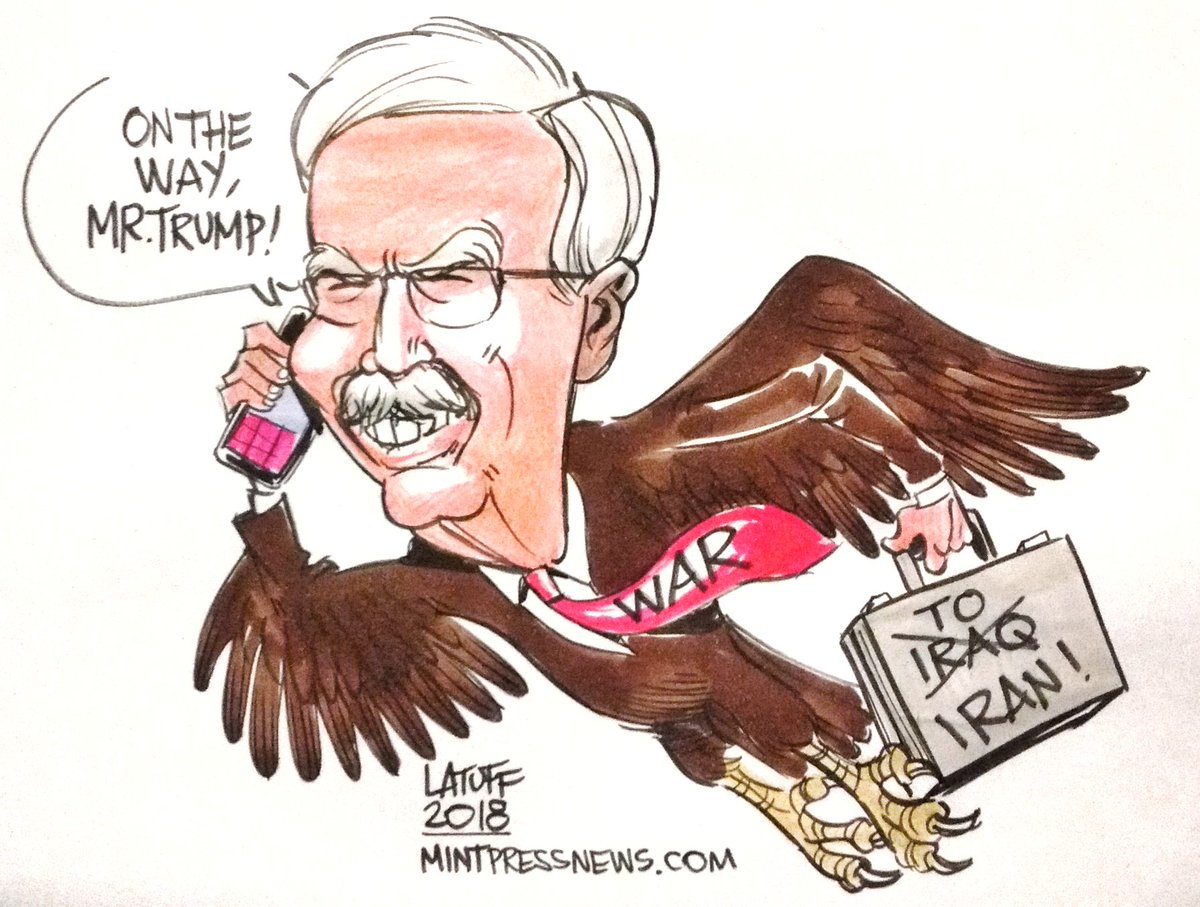
Trump apologists claim everything is planned. So when the US president says avenging American missiles are heading imminently for Syria, then casually declares a day later that maybe they aren’t, a perplexed international audience is expected to believe the confusion is deliberate – a clever ploy to keep the bad guys off-balance.
In truth it’s Trump who is teetering on a high wire, wobbling and wavering, with a big drop and gaping chasm below. Trump’s “tweet of the day” approach to the Syrian crisis suggests to a watching world that an unheeding, impulsive president is making it up as he goes along, has no clue which way to jump and would really rather be golfing.
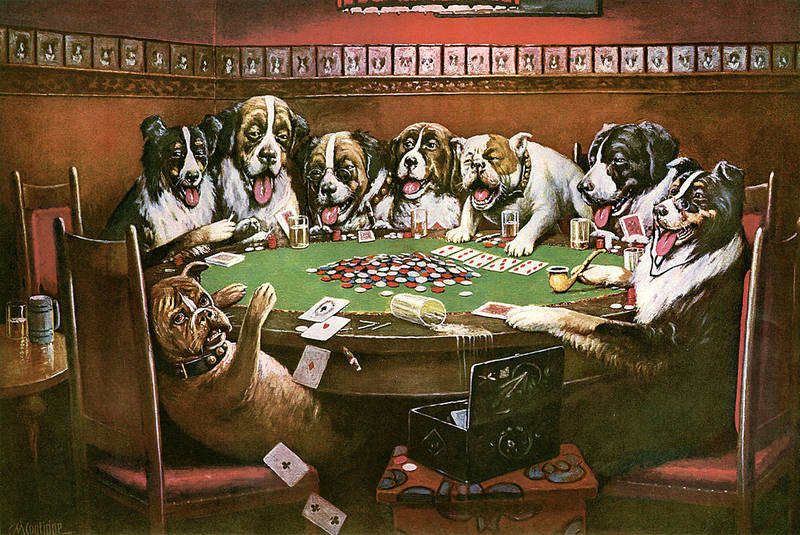
What has happened, they ask, to American leadership? What became of the Pax Americana? For US allies and enemies alike, in these noxious days of fear and loathing across Europe and the Middle East, Trump more closely resembles a circus ringmaster than a commander-in-chief.
Similarities between Trump and PT Barnum, the 19th century showman and hoaxer who ran an internationally notorious traveling circus, are striking. Like Trump, Barnum was a New York-based entrepreneur. Like Trump, he nurtured political ambitions and became embroiled in vexatious litigation. Like Trump perhaps, he subscribed to the old adage, which he supposedly coined, that “there’s a sucker born every minute”.
Trump’s increasingly bizarre and unpredictable behaviour – a Russian TV commentator this week dubbed it “unbelievable” – has created a new international circus, and this week it came to Syria.
It is currently also showing in London and Paris, where disconcerted allies struggle to discern what the US leader really wants while trying to avoid the appearance of dancing to his raucous tune. With one notional crack of the whip – his mention of “smart” missiles zooming towards Damascus – Trump sends a sizable chunk of Bashar al-Assad’s armed forces scurrying for cover. Another crack, and overexcited politicians in Russia are talking about the dangers of an escalating global confrontation and a third world war.
In Israel and Lebanon, worryingly, they have a ringside seat. In Iran, unabashed hardliners are selling tickets. “Roll up, roll up: watch and marvel as we destroy the Great Satan!” Meanwhile, military men in Washington and Moscow reportedly conspire to choreograph a neo-Strangelove conflict in which nothing they value gets broke. It’s like ballet with bombs.
The diplomatic circus spawned by Trump’s shenanigans is something to see. In New York, the UN security council, ostensibly the world’s premier political forum, meets in solemn session only to descend into a shouting match. You unfeeling Russians are protecting a “gas killing animal”, Trump’s minions declare. You Americans are plotting to destroy the Soviet Union, the Putinistas scream back, forgetting (again) that it is already destroyed.
The media, markets and pundits relish all the fun of the fair. No sooner is there a mention of bombing a Middle East country, up goes oil, down go stocks. Out come the pious priests of the left, seizing the moral high ground like an Iraqi tank brigade on the Golan in 1973. Just as fast, the right hits back. Bombing is good for you, say armchair veterans of Iraq, Afghanistan, Libya, Somalia, Yemen and countless other conflicts. You have to kill people to save lives! Watching DJ Trump’s traveling circus of political panjandrums, diplomatic dunderheads and popular pandemonium is like watching bareback riders running round and round a ring.
They chase each other in circles. They get nowhere fast. Nobody “wins”. But it’s a grand spectacle, with the pulse-racing prospect of an ear-splitting finale. Yet in their highfalutin fury and prepaid passion, the performers seem to lose sight of the real issue – the dying people of Douma, sprawled in sand and sawdust where homes used to be.
Tuesday, April 10, 2018
Friday, April 6, 2018
Thursday, April 5, 2018
Tuesday, April 3, 2018

Monday, April 2, 2018

Saturday, March 31, 2018
Friday, March 30, 2018
Mohammed Bin Salman is buying America's silence with a fake veneer of cultural openness
Riyadh has delivered a small dose of cultural and economic openness in order to avoid demands for political liberalism
Soumaya Ghannoushi
Link
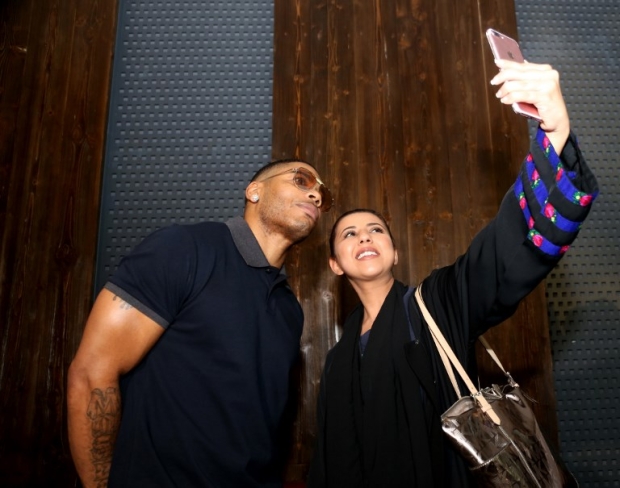 US rapper Nelly poses for a picture with a fan ahead of a male-only concert at King Abdullah Economic City on 14 December 2017 (AFP)
Soumaya Ghannoushi
Link
Show comments
A number of Gulf countries are heading towards greater cultural and economic "liberalism", but not on the level of politics or governance.
In fact, these states are resorting to some form of social and economic openness precisely to avoid demands to inject a dose of political liberalism into their totally closed political systems.
Perhaps the most visible face of this paradox today is Saudi Arabia, along with the UAE and Bahrain. A group of Saudi "liberals" has recently taken centre stage in Saudi Arabia, replacing the Wahhabi sheikhs whose merchandise no longer appears desirable.
Sharp and rapid shift
These sheikhs seem to have no function now other than to swear allegiance to the new rulers, and are otherwise seen as a liability for the Saudi state.
After a decades-long policy of religious conservatism, Saudi Arabia is seeking to shed its heavy Wahhabi heritage and move towards some form of cultural and economic pseudo-liberalism. It has thus imposed a sharp and rapid shift on its religious apparatus, which has long acted as an instrument for imposing discipline at home and promoting the Wahhabi ideology abroad.
Today, Saudi Arabia has orchestrated a coup d’etat against its own former stance at lightning speed, wiping its hands of a heavy legacy of Wahhabi militancy that it created and propagated over several decades
As such, it has become common to witness Saudi security forces intervening to prevent Mutaween agents (officials of the so-called Committee for the Promotion of Virtue and the Prevention of Vice, who formerly acted as religious police) from interfering in women’s appearance, as they had done for decades, or aggressively cracking down on free mixing in streets and shopping malls.
In a very unusual sight in Saudi Arabia, a few months ago, the musician Cheb Khaled took to the stage in Jeddah, performing for a large audience that swayed to the strains of Algerian rai music.
Also late last year, the Saudi Entertainment Agency brought US actor John Travolta to take selfies with smiling Saudi girls - a far cry from the usual images of Saudi women peering from behind black veils.
Draconian religious ideology
That Saudi women have finally been allowed to catch up with most women around the world and obtain the right to drive a car is great. So too is allowing Saudis to enjoy leisure and entertainment activities, which have been permitted in much of the Arab and Muslim world for decades.
However, what would be even greater is to have these abrupt shifts accompanied by even a basic level of political openness, rather than the very opposite.
We would do well to remember, amid the loud cheers and eager applause, that it was Saudi Arabia itself, with its draconian religious ideology, that created the very problems it is bending over backwards and forwards trying to deal with today. To claim that this extremism is foreign to it is a historical distortion. It is the birthplace and fount of an extremist, distorted version of Islam.
US rapper Nelly poses for a picture with a fan ahead of a male-only concert at King Abdullah Economic City on 14 December 2017 (AFP)
Until recently, Saudi religious leaders had attacked reformist Islamic scholars and thinkers, going as far as to excommunicate them for simply saying that Islam does not prohibit women from driving, or for daring to maintain that democracy is not incompatible with Islam.
State-sponsored Gulf sheikhs have expended much of their energy on waging fierce battles against women, minority rights, other Muslim sects, and the idea of constitutionalism and democracy, based on a radical Wahhabi ideology. The Saudi state has dedicated massive resources - mosque pulpits, satellite channels and funds - to promoting these hardline religious interpretations throughout the Muslim world and beyond.
Shedding the Wahhabi legacy
Today, Saudi Arabia has orchestrated a coup d'etat against its own former stance at lightning speed, wiping its hands of a heavy legacy of Wahhabi militancy that it created and propagated over several decades.
What we have in Saudi Arabia is the appearance of cultural "liberalism", reduced to a few concerts and shows here and there, coupled with some economic liberalisation, manifested in the trend towards privatising major state institutions such as Aramco - but the complete absence of the most minimal level of political liberalism when it comes to governance.
The sincerity of the Saudi elite's approach to liberalisation should be measured by the extent of its ability to liberalise the political field first and foremost.
READ MORE►
The shift to constitutional rule - the distribution of power, respect for individual rights, and an end to arbitrary detention and violations of the physical and moral integrity of citizens - is the primary measure of openness and emancipation.
Otherwise, all we have is a fraudulent liberalism whose only aim is to purchase the protection of the West. In a nutshell, what Saudi Arabia's new ruler is striving to do is buy America's silence, in return for a fake veneer of cultural openness and pumping billions into its economy through arms and investment contracts.
The well-known Lebanese academic Ghassan Salame once wrote that one of the biggest obstacles facing Arabs today is a form of democracy without democrats. Today, it would be more accurate to say that the biggest problem facing Arabs is the absence of democracy even with the presence of democrats, and the absence of liberalism with the presence of "liberals" or semi-liberals.
Another Arab Spring?
If the main difficulty lay in the scarcity of democrats, this would be less problematic, since the democratic system would be able to generate democrats.
However, democrats, where they can be found in the Arab world, are unable to build democracy on their own for one simple reason: political systems are bigger than the will of a few individuals.
It is clear that the Gulf monarchies are pushing towards a form of liberal authoritarianism based on a model of superficial openness at the cultural and economic levels, within an unprecedented level of political repression
To be more precise, in the case of the Gulf countries, the presence of semi-liberals chatting away in private and public councils does not necessarily produce liberalism. All it produces is a new form of authoritarianism in liberal clothing.
It is clear that the Gulf monarchies are pushing towards a form of liberal authoritarianism based on a model of superficial openness at the cultural and economic levels, within an unprecedented level of political repression.
What we are seeing is the replication of the Ben Ali and Mubarak model: a kind of pseudo-liberalism based on the creation of a new class of businessmen linked to those in power, with a small dose of cultural openness limited to dancing, music and soirees, surrounded by an arid desert of authoritarianism and political repression.
This was precisely the equation that generated the Arab Spring, and that may yet give rise to another chain of Arab uprisings.
- Soumaya Ghannoushi is a British-Tunisian writer and expert in Middle East politics. Follow her on Twitter: @SMGhannoushi
Thursday, March 29, 2018
Wednesday, March 28, 2018
Subscribe to:
Comments (Atom)