Wednesday, February 15, 2012

The "New" Egypt Looks Exactly the Same as the Old Egypt: Egypt’s former PM Shafiq to make presidential bid, hints at SCAF support


(Shafiq is the one on the right)

Bikya Masr

"CAIRO: Egypt’s former Prime Minister Ahmed Shafiq announced on Tuesday his candidacy for the presidency, saying that he would submit his nomination papers on March 10, immediately after the opening of the doors for presidential candidates to nominate themselves.....

He gave a quick overview about his background, civil and military career, and stressed that he is proud that he served as one of the veterans of the armed forces.

Shafiq defended his candidacy, despite the controversy looming around it, as he served as the Minister of Civil Aviation and, the former prime minister during the January 25 Revolution, before the ouster of the President Hosni Mubarak.

He hinted at the support of Field Marshal Hussein Tantawi for his candidacy, saying that he has known him for the past 20 years, and he is a “good friend.”

“I spoke with him about my candidacy informally as a friend, and I would have withdrawn my candidacy if he had told me not to run,” The state-run MENA news agency reported.

He denied that he is the military council’s candidate and stressed that the council “is not nominating anyone in particular for the post.”......"

AUDIO – 8 Feb KPFA Interview

Interview with Hossam El-Hamalawy
Interviewer: Khalil Bendib

'Losing' the world: American decline in perspective, pt. 1


American decline is real - but the US remains the world's dominant power by a large margin.

By Noam Chomsky

Al-Jazeera

"Significant anniversaries are solemnly commemorated - Japan’s attack on the US naval base at Pearl Harbor, for example. Others are ignored, and we can often learn valuable lessons from them about what is likely to lie ahead. Right now, in fact.

At the moment, we are failing to commemorate the 50th anniversary of President John F Kennedy’s decision to launch the most destructive and murderous act of aggression of the post-World War II period: the invasion of South Vietnam, later all of Indochina, leaving millions dead and four countries devastated, with casualties still mounting from the long-term effects of drenching South Vietnam with some of the most lethal carcinogens known, undertaken to destroy ground cover and food crops.....

Gauging American decline

With such lessons in mind, it is useful to look at what is highlighted in the major journals of policy and opinion today. Let us keep to the most prestigious of the establishment journals, Foreign Affairs. The headline blaring on the cover of the December 2011 issue reads in bold face: “Is America Over?”....

The January 2012 issue features yet another call to bomb Iran now, before it is too late. Warning of “the dangers of deterrence”, the author suggests that “sceptics of military action fail to appreciate the true danger that a nuclear-armed Iran would pose to US interests in the Middle East and beyond. And their grim forecasts assume that the cure would be worse than the disease - that is, that the consequences of a US assault on Iran would be as bad as or worse than those of Iran achieving its nuclear ambitions. But that is a faulty assumption. The truth is that a military strike intended to destroy Iran’s nuclear program, if managed carefully, could spare the region and the world a very real threat and dramatically improve the long-term national security of the United States.”........

The concentration of wealth and American decline

Despite such victories, American decline continued. By 1970, the US share of world wealth had dropped to about 25 per cent, roughly where it remains, still colossal but far below the end of World War II. By then, the industrial world was “tripolar”: US-based North America, German-based Europe, and East Asia, already the most dynamic industrial region, at the time Japan-based, but by now including the former Japanese colonies Taiwan and South Korea, and more recently China....."

Current Al-Jazeera (Arabic) Online Poll


Are economic and political sanctions sufficient to bring down the Syrian regime?

With about 400 responding, 94% said no.

Tuesday, February 14, 2012

Anonymous sends unhappy Valentine's Day greetings


Community of hackers take repsonsibility for mucking up website of company accused of supplying tear gas in Bahrain uprising

The Guardian

"It's been a busy Valentine's Day for Anonymous, that loose affiliation of hackers who seem to be cracking into every company in town.

Celebrating the one-year anniversary of the uprising in Bahrain, sometimes called the February 14 Revolution, the group attacked Combined Systems, a tactical weapons company that has been accused of selling tear gas canisters and grenades to Arab governments.

Anonymous said the attack was in retaliation for sales by the company of chemical weapons "to repress our revolutionary movements." The company had no comment.

The Bahrain government's website too was targeted but appears to be back online......."

Al-Jazeera Video: Gaza facing severe fuel crisis


"The Gaza Strip's only power station has been shut down, cutting electricity in the area by almost two-thirds.

The Palestinian enclave usually relies on fuel smuggled in from Egypt, but the power facility has run out. Gaza is under a sea and land blockade imposed by Israel, which prevents regular shipments of power to the area.

Gaza's energy authorities say they will now only be able to give each household six hours of electricity at a time.

Al Jazeera's Caroline Malone wraps up the developments."

One year on from the Bahrain uprising, the movement is more unified than ever


By destroying the focal point of resistance the regime entrenched the Pearl monument in the collective consciousness

Ala'a Shehabi

(a British-born economics lecturer, activist and writer in Bahrain. She has a PhD from Imperial College London, is a former policy analyst at Rand Europe. Her husband is a political prisoner in Bahrain)
guardian.co.uk, Tuesday 14 February 2012

"Last March, after the Bahraini regime had dramatically destroyed the Pearl monument in Manama it triumphantly screened pictures of its actions on state TV: a clear message to protesters who had dared challenge its authority by gathering there. The monument became part of the physical and psychological conflict between a state and its people. To the government it is a "bad memory". To the revolutionaries it has become a utopian symbol of freedom and resistance. Today, on the one-year anniversary of the uprising, these two mindsets have come to a clash once more, as the revolutionaries tried to return to the area where the monument once stood. Some predicted a bloodbath but, going by the latest reports, it appears the government may have learned its lesson: more blood will hasten its downfall not delay it......

Crushing the icon of resistance and forcing out the impassioned protesters has only served to fuel revolutionary sentiment over the past year. As the revolutionaries once again try to return to the former site of Pearl roundabout, they will be driven by a sustained utopian cultural memory consisting of a rare sense of freedom and autonomy about how the Pearl roundabout was, and their right to go back there. The government will be faced with the same situation as last year: does it turn its tanks on its own people, or not."

Al-Jazeera Video: Inside Syria - Who is really calling the shots in Damascus?

Al-Jazeera Video: Inside Story - Can the UN quell Syria's unrest?


"An Arab League proposal to deploy peacekeepers in Syria, which is gathering momentum. Could this proposal work on the ground? Will Russia and China soften their positions in the UN? Guests are: Ammar Waqqaf, Nabila Ramdani, Sergei Strokan."

Al-Jazeera Video: Fired Shias want Bahrain jobs back


"It's been one year since anti-government protests started in Bahrain. Nearly 2,000 mainly Shia Muslim workers in both the private and public sector lost their jobs as punishment for their perceived participation in the protests.

Unions say they have not got their jobs back, despite repeated promises from the government.

Human rights groups and activists say more than 60 people have been killed, including four policemen, since the crackdown began on Shia-led protesters.

Al Jazeera's Charles Stratford reports."

Real News Video (with Transcript): Why are Israel and US on a Collision Course with Iran?

Robert Naiman: Nuclear weapons a stand in for Israel and US trying to weaken Iran's role in the region

More at The Real News

Valentine's Day in Syria

Gazans shocked at home demolitions ordered "by our own brothers"


Rami Almeghari
The Electronic Intifada
Gaza City, 13 February 2012

"“Many of us women and children have gathered here at this mosque, after bulldozers demolished our homes. Unfortunately, those who displaced us are not the Israelis this time, but our own brothers in Gaza,” said an angry Umm Khaled al-Najjar, 50, as she held her grandson.

Al-Najjar and dozens of other women and children from the Hamami coastal neighborhood in western Gaza City took shelter last Wednesday at the mosque on the al-Rashid road after the demolitions of their homes on the orders of the Gaza municipality and the Gaza Lands Authority.

They attacked our neighborhood early on Wednesday morning,” al-Najjar told The Electronic Intifada. “A contingent of police including female officers stormed the home and I fainted after the police hit my son in his back. Believe me, what happened is similar to Israeli actions against us for the past four decades, it is unbelievable, unbelievable.” The interview took place on Wednesday afternoon, as bulldozers were still flattening the area....."

Why Bahrain is not Syria

By Pepe Escobar
Asia Times

"The United States tells the Syrian regime to step aside for a democratic transition, while one year after crushing protests Bahrain's monarch gets more weapons. Consider Russian and Chinese support for Syria and Bahrain's strategic importance for the defender of the "free world" and the dissonance passes, unlike the air of repression in the kingdom...."

Feasting on Greek Remains, by Dave Brown


(Click on cartoon to enlarge)

Assad's forces attack opposition on fronts across Syria


Reuters

"Syrian government forces attacked opponents of President Bashar al-Assad on several fronts on Tuesday, sending residents fleeing from one town near the capital and bombarding the city of Homs for an 11th day running, activists said.

Citizens of Homs - Syria's third largest city with one million people - faced a humanitarian crisis. Food and fuel were scarce and most shops shut due to relentless shelling and rocket fire that have trapped people in their homes.

With Assad seemingly oblivious to international condemnation of the tactics employed to crush the uprising against his 11-year rule, Arab countries led by Saudi Arabia pushed for a new resolution at the United Nations supporting their peace plan.

The redoubled diplomatic effort came as the U.N. human rights chief chastised the Security Council for failing to act on Syria, saying Assad had been emboldened by its failure to condemn him....."

Guardian Video: Syria faces humanitarian crisis, UN told

The UN general assembly debates fears that the failure to take action on Syria has emboldened the Assad regime. The United Nations high commissioner for human rights, Navi Pillay, says she is appalled by the ongoing onslaught on Homs. Syria's UN ambassador blamed al-Qaida for the loss of life

guardian.co.uk, Tuesday 14 February 2012


Saudi Arabia: Writer Faces Apostasy Trial


Malaysia, in Extraditing Hamza Kashgari, Shows Disregard for International Norms

Human Rights Watch
February 13, 2012

"(New York) – Saudi authorities should free Hamza Kashgari and drop any charges against him based on comments he made on Twitter expressing his personal religious views, Human Rights Watch said today. On the morning of February 12, 2012, Malaysian authorities deported Kashgari back to Saudi Arabia to face charges of apostasy there, hours before lawyers obtained a Malaysian High Court injunction against his deportation.

Saudi Arabia’s highest official clerics have declared Kashgari guilty of apostasy based on his now-deleted tweets and called for him to be put to death.

Malaysia had no business deporting Kashgari, and Saudi has no business prosecuting him for his tweets expressing his religious opinion, which it is his right to do freely,” said Sarah Leah Whitson, Middle East director at Human Rights Watch. “It is near certain he will not get a fair trial in Saudi Arabia, where religious scholars have concluded that he is guilty of apostasy and should be put to death.”

Kashgari fled Saudi Arabia, on February 6, to Malaysia, following popular outrage and calls for his punishment after he published a number of tweets expressing his religious views, which he has since deleted. Human Rights Watch has reviewed the alleged tweets and not found any language that could incite violence. The 23-year-old journalist, who wrote for Al-Bilad daily newspaper, has expressed regret for the tweets, saying he had no idea they would elicit such a strong negative reaction.

Kashgari was preparing to seek political asylum in New Zealand in light of the likely death sentence he faces in Saudi Arabia for expressing his religious views. Saudi Arabia immediately sought his extradition from Malaysia, though the countries do not have a bilateral extradition treaty......"

Freed journalist Austin Mackell says not a spy, lashes out at military, state TV


By Joseph Mayton
Bikya Masr

"CAIRO: Freed Australian journalist Austin Mackell lashed out at the Egyptian military junta and state television shortly after his release from two days of detention, where he was accused of bribing locals to “incite” and cause violence in the northern Nile Delta city of Mahalla on Saturday.

Speaking to The World Today, Mackell said he was not a spy and that he had heard a number of people being tortured and beaten in the rooms next to where he, translator Aliya Alwi and American student Derek Ludovici were being held.

This is the standard line: that the people who are protesting, that the people who are fighting for their rights in any regard, are actually being paid by foreign agents,” he told The World Today.

“This is the line that state TV has run with on a number of occasions in similar cases, and it’s what happened with us as well.”.....

Their arrest has sparked continued concern over the treatment of journalists, both local and foreign, in the country. Over the past few months, a number of reporters have been accosted by the military, detained and threatened for attempting to do their job.

The day before Mackell and Alwi were arrested, two Italian photographers were detained in the Abbassiya neighborhood of Cairo while covering the protests in the area. They have been told to leave the country, witnesses said."

Camp David treaty conditional on US aid, says FJP’s Essam el-Erian


Bikya Masr

"CAIRO: Egypt member of Parliament Essam el-Erian, a leading member of the Freedom and Justice Party (FJP), the political wing of the Muslim Brotherhood, who heads the Parliamentary Foreign Affairs Committee, said that American aid to Egypt is “connected and conditioned” with the Camp David agreement, signed by Egypt and Israel under American auspices in 1979.

The MP said during a session at parliament, “US economic aid is part of the agreement and if the US administration decides to cut it, then Egypt has the full right to modify or withdraw from the peace treaty,” stressing that Egypt is the “only decision-maker in this regard and accepts no pressures from any parties.”......"

Starving for freedom: The hunger strike of Khader Adnan

Khader Adnan, currently on hunger strike in an Israeli prison, runs the risk of dying without international help.

By Ali Abunimah
Al-Jazeera

"Amman, Jordan - By the time you read these words, Khader Adnan could be dead. After 58 full days on hunger strike, his body is already well past the stage where his vital organs may cease to function at any moment. But Khader Adnan is dying to live.

The 33-year-old Palestinian baker, husband, father, and graduate student has refused food since December 18, a day after he was arrested in a nighttime raid on his family home by Israeli occupation forces in the West Bank. He has lost over 40 kgs and his wife Randa and young daughters have described his appearance as "shocking".

Adnan, whom Israel says is a member of Islamic Jihad, was given a four month "administrative detention" order by the Israeli military - meaning that he is held without being charged for any crime or trial, a practice continued by Israel that dates back to British colonial days.

Yesterday an Israeli military court rejected Adnan's appeal against the arbitrary detention. Having vowed to maintain his hunger strike until he is released or charged, the judge - an Israeli military officer - might as well have sentenced Khader Adnan to death, unless there is urgent international intervention....

Last week Tommy McKearney, who spent 53 days on hunger strike in 1980, sent a video message of solidarity with Khader Adnan. McKearney, himself a former member of the IRA, lived to contribute to peace in his country, just as his comrades did with their deaths.

But Bobby Sands and his comrades need not have died had wiser, more humane policies prevailed at the time. And Khader Adnan need not die today or tomorrow. But it will take the world to speak out now to save him.

The determination, unflinching courage and self-sacrifice of Adnan's hunger strike has captured the imagination and support of people everywhere. He deserves our respect, but more importantly right now, he needs us to raise our voices."

Monday, February 13, 2012

Al-Jazeera Video: More clashes between protesters and security in Bahrain

Q&A: Nir Rosen on Syria's armed opposition


Journalist who recently spent time with fighters says there is no central leadership to the armed resistance.

A VERY GOOD INTERVIEW

"Journalist Nir Rosen recently spent two months in Syria with unique access. As well as meeting members of various communities across the country - supporters of the country's rulers and of the opposition alike - he spent time with armed resistance groups in Homs, Idlib, Deraa, and Damascus suburbs. He also travelled extensively around the country last year, documenting his experiences for Al Jazeera.

This is the first in a series of interviews he gave to Al Jazeera since his return.

Al Jazeera: Who are the armed opposition?
....
AJ: Who are the fighters - army defectors, armed civilians or "armed gangs"?

NR: .....They are also not armed gangs, as the regime and its supporters describe them. They are much more akin to a popular armed struggle or an insurgency. In fact, many Syrian revolutionaries use the term muqawama, ["resistance"] to describe themselves. This I find particularly ironic, as the Syrian regime and its supporters champion "resistance" (to Israel and the West) as the reason for their legitimacy, and the reason why they are being targeted by an alleged "foreign conspiracy" in the form of this uprising.

As the armed groups gain experience, they are adopting classic insurgent techniques of providing services to the population, while also blending in with them. In my encounters with armed opposition groups throughout Syria, I was reminded of Hamas in Palestine, Hezbollah in south Lebanon, Iraqi Sunni and Shia insurgents and resistance groups as well as the Taliban in Afghan villages - not in the religious sense, but in how they were an organic part of the community.

AJ: Who were the first to take up arms?
....
AJ: Who do the armed groups target?

NR: From an early stage of the uprising, suspected informants for the regime have been intimidated, expelled and often killed.

These are called mukhbir ["sources"], or in colloquial Syrian awayneh or fasfus. Executions of those suspected of spying for the regime take place regularly all throughout Syria, including in Damascus. By the summer there were regular ambushes of security officers on the roads, as well as attacks against shabiha ["thugs"], as the civilian paramilitary or militia forces of the security agencies are known.

AJ: What methods and weapons do the fighters use?

....The armed groups generally operate secretly and in small groups, conducting ambushes on targets of opportunity using light arms and, increasingly, improvised explosive devices. For the past few months, insurgents have been using improvised explosive devices such as those found in Iraq, Afghanistan or southern Lebanon. Unlike in Iraq, however, the explosives used in these IEDs are fertiliser-based. These have been used in Idlib, Hama and Homs. In addition, rocket-propelled grenades - such as LAW anti-tank shells - have also more recently been used as shoulder-fired anti-armour missiles. The fighters have access to some sniper rifles as well.....

AJ: How do armed groups get their arms?
....
AJ: How do the groups finance their arms purchases?
....
AJ: How much impact do army defections have?
....
AJ: Is the armed opposition popular with the protesters?
....
AJ: Are there veterans of the insurgency in Iraq fighting in Syria?

NR:
This is a common claim by the Syrian regime. There are Syrians who went to Iraq during the US-led invasion who are now taking part in the uprising. They are a minority of the fighters and crucially, all those I met were part of the first generation of foreign volunteers who flocked to Iraq in March 2003, before the Salafi jihadist days of Abu Musab al-Zarqawi. Most of these men fled back to Syria after two or three weeks, when they realised Iraq was such a dangerous place.

AJ: Are the fighters inspired by any particular ideology?
....
AJ: Are Palestinian groups active in Syria?

NR: In Homs there is an armed Palestinian group working with the opposition Homs Revolutionary Council. They helped evacuate wounded people from the Bab Amr neighbourhood during the autumn, and transported them safely to the Homs Palestinian refugee camp, which has also seen demonstrations. Armed Palestinian factions in both Lebanon and Syria have received military training over the years. But while the factions, officially, have sedulously abstained from taking sides in the conflict, many individual members certainly have. In Latakia during the summer and autumn, Palestinians with training in explosives and other military skills assisted opposition militia in the Ramel neighborhood. Palestinians with medical training also provided assistance. In Deraa, Palestinians also provided similar assistance. Palestinians allied to either Hamas or the Popular Front for the Liberation of Palestine - General Command have reportedly smuggled supplies into Syria on behalf of revolutionaries.

Hamas has withdrawn all its members and their families from Syria with the exception of its political office
...."

Israeli embassy attacks in Delhi and Tbilisi could set off a conflagration


The immediate damage could have been worse, but the consequences for the Middle East could still be disastrous

Ian Black
, Middle East editor
guardian.co.uk, Monday 13 February 2012

"It could have been worse: one bomb slightly injured the wife of an Israeli diplomat and three other people in Delhi. Another device targeting an embassy car was made safe in Tbilisi, Georgia, before it exploded. But the consequences could still prove to be disastrous: in the tinder box that is the Middle East sparks such as these can set off a huge conflagration. Much depends, as always, on how governments choose to respond....

Against a background of extraordinary turbulence across the Middle East, the Israeli-Iranian confrontation is by far the most dangerous element – amid near-constant speculation about a pre-emptive strike Israel might launch to stop the Islamic Republic acquiring a nuclear capability. An Israeli attack could draw in the US and cause Iran to block the narrow strait of Hormuz, retaliate against Arab Gulf targets and disrupt global oil supplies. Anything that could trigger such a chain of events clearly has to be taken very seriously.

Underlining these fears, Exclusive Analysis, an intelligence company, forecast on Monday increasing probability of an Israeli strike on two or three key Iranian nuclear facilities, from 50% in about April rising to 60% by September......"

Al-Jazeera Video: Syrian medics battle odds to treat wounded


"With inadequate facilities and limited supplies, volunteers help treat wounded protesters who are afraid to go to hospitals fearing they will be arrested.

Al Jazeera's Andrew Simmons reports"

The Arab League has misjudged its actions on Syria


In isolating the Assad regime, the Arab League risks polarising allegiances – with the potential for escalation

Read at Your Own Risk: A So-So Comment, But I am Posting it Anyway.

Abdel Bari Atwan
guardian.co.uk, Monday 13 February 2012

"The Arab League has called for a joint Arab-UN peacekeeping force to end the bloodshed in Syria. It is a historical irony that the precedent for this – the 1976 deployment of an Arab Deterrent Force (ADF) between Israel and southern Lebanon – was a Syrian initiative and that the ADF was predominantly composed of Syrian troops.

However, there are crucial differences between the situation in Syria now and that in Lebanon in 1976. None of the preconditions for a peacekeeping force exist: there is no ceasefire in place, neither party has given permission for foreign troops to enter the country. Finally, it is not clear who would speak for the disparate opposition forces; no peace negotiations are ongoing and there is no UN mandate. In effect, this means that the latest proposals are unworkable.....

This is not to downplay the urgency of finding a way to stop Assad from murdering his own people. The international community, through the mechanisms of the UN, need to agree a common stance and identify, through diplomacy, a mutually acceptable plan of action. This might include a face-saving departure package for Assad of the type drawn up for Yemen's President Ali Abdullah Saleh [Are you serious Mr. Atwan??]. However unpalatable such measures might appear, they are preferable to most conceivable alternatives.

The problem is that in isolating the Assad regime, the Arab League risks a polarisation of allegiances with the potential for escalation: the sectarian conflict in Syria could extend beyond its borders and into the rest of the region; in the worst-case scenario, we might see a return to a cold-war alignment positioning the Shia crescent, backed by Russia and China, against the Sunni countries, backed by the west....."
Bahrain police fire teargas at protesters in Manama


Ahead of anniversary of Shia-led uprising forces launch stun grenades to curb protesters trying to regain Pearl Square

guardian.co.uk, Monday 13 February 2012

"Security forces in Bahrain have fired teargas and stun grenades at protesters trying to occupy Pearl Square in the nation's capital ahead of the first anniversary of the Gulf kingdom's Shia-led uprising.

Thousands of opposition supporters marched through Manama's streets in the largest attempt in months to retake Pearl Square, the central roundabout that served as the epicentre of weeks of protests last year by Bahrain's Shia majority against the ruling Sunni dynasty.

Thousands of riot police and other security forces have staked out positions around the square and across the Gulf island nation to prevent the opposition from staging a mass rally in or near the plaza to mark Tuesday's one-year anniversary of the revolt.

Opposition supporters were undeterred by the authorities' warnings of zero tolerance for anti-government activities around the strategic island that is the home of the US Navy's Fifth Fleet.

"We will not back down," said Nader Abdulimam, who had taken refuge in a house just outside of Manama with other protesters overcome by teargas. "This has gone on for one year and it will go for another year or more."......"

U.S.-Backed Bahraini Forces Arrest and Deport Two American Peace Activists Acting As Human Shields

EXCELLENT!!
DON'T Miss.


"On Saturday, Bahrain arrested and detained two American citizens, Huwaida Arraf and Radhika Sainath, for their role in recent protests. They were deported Sunday and returned to New York last night. Both Arraf and Sainath are human rights activists and members of the Witness Bahrain initiative, which places international observers in the country in the hopes of preventing violence by security forces. Their arrest comes just ahead of the one-year anniversary of the popular uprising against the U.S.-backed monarchy. In the past year, Bahraini security forces have killed dozens of demonstrators, and hundreds more have been arrested or fired from their jobs. “[We are] also were getting reports of journalists and human rights organization representatives being denied entry into the country in the lead up to the first anniversary of the Bahrain revolution and this caused great alarm, that the government was planning to escalate its oppression of the people,” says Huwaida Arraf....."

Suppressing the narrative in Bahrain


As the anniversary of the uprising nears, the country's rulers are denying foreigners entry and hiring PR firms.

Matthew Cassel
Al-Jazeera

"In January, Brian Dooley, of the US-based organisation Human Rights First, was preparing for his fourth trip back to Bahrain since the uprising began in February 2011. Dooley told Al Jazeera that he had never previously had any problems entering the country.
"About a week before I was going, I got a letter saying: 'Do not come,'" Dooley said.

Al Jazeera obtained a copy of the letter - sent by the Ministry of Human Rights - which asked Dooley to wait until after the end of February, by which time a national commission on implementing recommendations from the government-sponsored Bahrain Independent Commission of Inquiry (BICI) would have finished its work.
"People are bracing for something serious and probably bad to happen in the middle of February," Dooley told Al Jazeera by phone from the US......

Armed with phones

On Saturday, two US human rights activists were arrested at a protest in Bahrain's capital, Manama, and deported the following morning. On Monday, the ministry of interior announced that nationals of countries that required Bahrain nationals to obtain visas ahead of time, would face a policy of reciprocity and no longer be eligible for visas on arrival, if they had been previously.

After many local journalists who had reported on or taken part in the February 14 uprising were arrested or forced into exile, Reporters Without Borders ranked Bahrain 173 out of 179 countries for press freedoms in 2011. However, supressing the narrative of crackdown on a mostly unarmed pro-democracy uprising has been difficult for the government, with social media-savvy activists armed with mobile phones and other recording devices. Videos and pictures documenting police repression are uploaded to sites such as YouTube, Twitter and Facebook on an almost daily basis.

With the uprising's one-year anniversary on Tuesday - and protests already happening across the country - it is unlikely that efforts to distance the country's rulers from what has recently become a familiar image of a regime willing to hold on to power, at any cost, will be anything but an exercise in futility."

الإخوان في البرلمان


الإخوان في البرلمان
عبد الحليم قنديل

"ربما لا ينطوي أداء نواب جماعة الإخوان في البرلمان المصري الجديد بعد الثورة على مفاجآت ذات بال، وإن بدت صدمة الناخبين فيهم كبيرة .
ونتصور أن الشعور العام بالصدمة سوف يتزايد مع الوقت، فقد حصلت جماعة الإخوان جيدة التنظيم مهولة التمويل على الأغلبية النسبية في انتخابات البرلمان، ولم تكن تلك مفاجأة من أي نوع، فقد توقع كاتب السطور حصول الإخوان على النسبة ذاتها، ونشر توقعه في مقال بـ 'القدس العربي' قبل ما يزيد على أربع سنوات، وحمل المقال عنوان 'إذا حكم الإخوان مصر'، ولم نكن وقتها نرجم بالغيب أو نقرأ الرمل، بل كنا نلحظ تحولا جرى في المجتمع المصري على مدى أربعة عقود سبقت، وانتهى به إلى 'التصويت الديني' بعد حظر وموات السياسة، ثم أن جماعة الإخوان بدت محلا لعطف شعبي جارف، وزادت المطاردات الأمنية من وهجها الأخلاقي، وبدت مشاركاتها البرلمانية السابقة في خانة المعارضة عموما، وفي صف المطالبات الوطنية والاجتماعية، وحصلت الجماعة على خمس مقاعد البرلمان في انتخابات 2005، وهو ما أوحى بأنها القوة القادرة على صناعة بديل لنظام مبارك المخلوع .
ومع انتقال الإخوان من خانة المعارضة إلى اكتساب السلطة، وقد حصلت على السلطة البرلمانية حتى الآن، وربما تقفز إلى السلطة التنفيذية بعد شهور، ومع التحول إلى السلطة، بدأت ممارسات جماعة الإخوان تتغير، وتثير النفور في أوساط تتزايد يوما بعد يوم، وتحولت لغة الإخوان فجأة إلى ما يشبه اللغة الأمنية المعتادة، وعلى طريقة الميل إلى تقييد حريات الصحافة والإعلام المكتسبة عرفيا، واستنكار حوادث التظاهر والإضراب والاعتصام السلمي، ونعت المتظاهرين بالبلطجـــية، وإنكار تورط السلطات العسكرية والأمنية في قتــــل متظاهــــرين، وتقليد المجلس العسكري في ترديد اسطوانات مشروخة عن اللهو الخفي والطرف الثالث، وتكرار الحديث عن مؤامرة في وصف الثورة، وفي التكرار الحرفي لأقوال دفاع المتهمين في قضية مبارك وعصابته.
وفي قضية محاكمة مبارك بالذات، بدا انكشاف الإخوان سريعا ومثيرا، فالكل يسلم بعبث وسخف وهزلية محاكمة مبارك الجارية، وعدم اشتمالها على تهمة الخيانة العظمى، وهو ما تنبه إليه كثيرون من نواب المعارضة الجديدة في البرلمان، وبحثوا عن مخرج قانوني جدا، ووجدوا ضالتهم في أرشيف القوانين المصرية السارية، فقد صدر أواسط العام 1956- قانون لمحاكمة رئيس الجمهورية، وبدا القانون المنسي كامل الأوصاف، فهو يحدد بصيغة قانونية تكييف تهمة الخيانة العظمى، وطرق توجيها لمن شغل أو يشغل منصب الرئيس، ويضيف لمعنى الخيانة العظمى حالات مخالفة الدستور والعبث بالنظام الجمهوري، وقد نصت دساتير مصر كلها بعد ثورة 1952 على تهمة الخيانة العظمى، وبما فيها دستور 1971 الذي ظل ساريــــا وقت حكم مبارك، ولا يحتاج القانون المكتشف إلى إضافة، اللهم إلا تفعيــــله من قبل البرلمان الحالي ذي الأغلبية الإخوانية والسلفية، وقد قدمه بالفعل نواب المعارضة الجديدة، وطلبوا سرعة إقــــراره وتفعيله، وبدء محاكمة جدية لمبارك بتهمة الخيانة العظـــمى، وهنا بدا تلكؤ الإخوان، بل ورفضهم الصريح لتطبيق قانون الخيانة العظــــمى، واستعانتهم بفتاوى جماعــــة مبارك في المجلس العسكري والحكومة، وتطابقهم مع مواقف نواب لحزب مبارك المنحل تسللوا إلى البرلمان الجديد، والمثير أن مواقف بعض نواب السلفيين بدت أكثر تقدما من نواب الإخوان، خاصة نواب حزب 'الأصالة' السلفي.
ورغم أنه لم يمض على عمل البرلمان الجديد سوى أسابيع، فقد أدى الانكشاف السريع للإخوان إلى تزايد حدة الانتقادات الموجهة لهم، وتكريس انطباع بأنهم يكررون تجربة حزب مبارك نفسه، وسريان وصف جماعة الإخوان بالحزب الوطني الجديد، ورغم أن الوصف ينطوي على قدر من القسوة، إلا أن أفعال قيادة الإخوان توحي بالتشابه المسيء، فقد بدأ نواب الإخوان عملهم بشن حملة ضارية على المجلس العسكري وحكومته في أول جلسة، وطالبوا بسحب الثقة من الحكومة، ومن وزير الداخلية بالذات، إلا أن قيادة الإخوان سرعان ما أصدرت أوامرها، وكانت النتيجة التواء في لسان نواب الإخوان، وتحولهم عن شراسة اللغة إلى صمت الحملان، بل والتورط في التحرش البدني واللفظي بنواب من خارج الإخوان، وتقييد فرصهم في الكلام من خلال تحكم الإخوان في رئاسة الجلسات، وهو ما أدى لمواجهات عنيفة زادت من حرج نواب الإخوان، وإنقيادهم لمبعوثي مكتب الإرشاد الإخواني، وعلى طريقة انقياد نواب حزب مبارك فيما مضى لإشارات وأوامر كمال الشاذلي ثم أحمد عز .
ومن الظلم بالطبع أن نأخذ كل الإخوان بجريرة مكتب الإرشاد، والذي تعقد عنده الصفقات والاتفاقات الكبرى، وتدار التفاهمات مع جنرالات المجلس العســـكري، ومــــع قوى إقليـــمية ودولية متضررة من اندفاع الثورة المصرية، وتخشى تحطم نظــــام مبارك بعد خــــلع رأسه، وتسعى إلى إعادة ترميمه، وتعول على 'إعتدال' و'عقــــلانية' و'براجماتية' قـــيادة الإخوان، وتريد استبقاء اختـــيارات مبارك ذاتها، وعلى وجــــه الخصــوص في ميداني الاقتصاد والعلاقة بالأمريكيين والإسرائيليين، وهو ما سيضاعف من حرج نواب الإخوان، ويخرجهم عن الملة الراديكالية التي انتسبوا إليها طويلا، خاصة أن نوابا راديكاليين من خارج الإخوان طبعا سوف يطرحون خيارات أخرى، ومن نوع فرض ضرائب تصاعدية بنسبة عالية على طبقة المليونيرات والمليارديرات، وإلغاء اتفاق تصدير الغاز لاسرائيل، وربما إلغاء اتفاق الكويز، وعندها تزيد محنة نواب الإخوان، ويزيد الانكشاف، وفي بيئة متوترة، لا تهدأ فيها الإضرابات والتظاهرات والاعتصامات، وتزيد من ضغط تحركات الميدان على تصرفات البرلمان، وتضاعف وتائر الاستقطاب السياسي والاجتماعي .
وبصفة عامة، فإن القاعدة الذهبية تبدو واضحة جلية، وفي صورة معادلة حسابية عكسية، وهي أنه كلما زاد تورط الإخوان في السلطة، كلما مالت شعبيتها إلى التناقص، وكلما زادت خيبة أمل الناخبين في الإخوان، خاصة أن قيادة الإخوان الحالية جماعة يمينية بامتياز، وخاضعة لنفوذ مليارديرات كبار لهم مصلحة في استنساخ اختيارات نظام مبارك، وفي العداء الصريح لطلائع الثورة الشعبية المصرية، وربما العداء لمزاج راديكالي نسبيا في قواعد جماعة الإخوان، وهي تضم مزيجا هائلا من الفئات الوسطى والدنيا اجتماعيا، وهو ما يغري بتوقع زيادة موجات الهجرة من الإخوان، ونشأة مجموعات إخوانية خارج التنظيم الإخواني ذاته، وإعادة تشكيل خرائط السياسة بطريقة تخصم طرديا من نفوذ قيادة الإخوان .
"

Al-Jazeera Video: Syrian army defector speaks to Al Jazeera


"A growing number of defectors from the Syrian army are filling the ranks of the opposition forces.

Soldiers who were taught to believe the opposition was made up of so-called "terrorists" are questioning the government after seeing the violence with their own eyes.

Fayez al-Abdullah is one of many soldiers who changed his mind after the army attacked his hometown.

He shares his story with Al Jazeera on how he defected from the military."

Al-Jazeera Video: CloseInside Story - Is Syria's unrest spilling over into Lebanon?


"Lebanon is beginning to feel the impact of escalating violence over the border in Syria, with clashes in the northern city of Tripoli. How bad is the violence and what does it mean for Lebanon? Guests: Mustafa Allouch, Elias Hanna and Kamel Wazne."

Bombings Target Israelis in Both India and Georgia


Common Dreams

"Members of Israel's foreign service were targeted in separate incidents on Monday. A car bomb exploded in New Delhi, India injuring a diplomat and two other people. Nearly simultaneously, according to reports, a car bomb was discovered in the Georgian capital of Tbilisi. That bomb was defused by security personnel.....

Israel Quick to Accuse Iran

From the Associated Press:

Benjamin Netanyahu told a meeting of lawmakers from his Likud Party on Monday that he believed the Iranians were responsible for the attacks in New Delhi and Tbilisi. [...]
Netanyahu said Israel has thwarted other attacks in recent months in Azerbaijan, Thailand and elsewhere.
"In all those cases, the elements behind these attacks were Iran and its protege Hezbollah," he said.
Iran has accused Israel of involvement in a series of killings of officials and scientists involved in its controversial nuclear program....."

Leaked report belies Afghan surge 'success'


By Gareth Porter
Asia Times

"A leaked and damning assessment of the US military in Afghanistan may have been dismissed by the author's army superiors as "one person's view", but it provides the most authoritative refutation of the official narrative of success since the troop surge began in early 2010. Even a cursory glance proves that the insurgency has gained strength, it concludes......"

Egypt and its generals: between denial and repression

By Salil Shetty, Secretary-General of Amnesty International

"Last March, following a violent crackdown on peaceful demonstrations in Cairo’s Tahrir Square, a group of 18 women protesters were detained by the Egyptian army.

Seventeen of them were held for four days, repeatedly beaten, given electric shocks, subjected to strip searches and at least seven were forced to submit to “virginity checks”. They were told that “those not found to be virgins” would be charged with prostitution. Before they were released, the women were brought before a military court and received one-year suspended sentences for variety of confected charges.


Only one of the women ultimately felt strong enough to endure the risks of coming forward to fight what had happened. Samira Ibrahim(left), a 25-year-old marketing manager from Sohag, Upper Egypt, filed two complaints in Egyptian courts: one demanding an end to the “tests” on Egyptian women; the other for what she had to personally endure. Months later, she is still waiting for justice and change. She is not alone.

One year after the toppling of Egyptian President Hosni Mubarak ended three decades of crushing repression, people across Egypt are also waiting for justice and change. The success of the 25 January movement that ended the Mubarak regime offered promises that have yet to be kept. And instead of a new, freer and more equal Egypt, many are trapped between the old and new, living under military rule and facing an uncertain future.

Mubarak’s iron fist was rapidly replaced by an equally formidable military junta known as the Supreme Council of the Armed Forces (SCAF), which has been in control of government functions for the past year....."

Bahrain: One year on, accountability remains a distant aspiration


Amnesty International
13 February 2012

"The Bahraini government remains far from delivering the human rights changes that were recommended by an independent international commission, Amnesty International said today.

Amnesty International warned that the government risked falling short of meeting its self-imposed deadline of the end of February to implement the Bahrain Independent Commission of Inquiry (BICI)’s recommendations.

The organization called on the government to release all prisoners convicted or held solely for leading or peaceful participation in protests and to bring all those responsible for the gross human rights violations committed during the last year to account.

As Bahraini protesters prepare to mark the one year anniversary of the start of mass anti-government protests, the organization also warned the Bahraini government against excessive force against demonstrators.

“Despite promises made by the government, victims and families of victims of the serious human rights violations – torture, arbitrary detention and excessive use of force – that have taken place since protests began a year ago are still waiting for justice,” said Hassiba Hadj Sahraoui, Deputy Director of Amnesty International’s Middle East and North Africa Programme......"

Time for Egypt’s media to stand united against military junta


Joseph Mayton 13 February 2012
Bikya Masr

"CAIRO: If anyone had any doubts over the role of the military in supporting justice and freedom were once again dashed on Saturday when Australian journalist Austin Mackell and his Egyptian translator Aliya Alwi were arrested in the Nile Delta town of Mahalla while covering the general strike called for by activists. The military detained them, then proceeded to belay any semblance of reason by fomenting charges, acquiring “witnesses” – including an 8-year-old – and charged them with “incitement” of violence.

For me, it was yet another attack on media by the military junta, which hit home. In December, I was arrested, dragged and beaten by the military police. They threatened to charge me with similar acts of “incitement.” Luckily, after 13 hours, I was set free, bruised but safe. Now, my colleagues are being taken to a military prosecutor and could face an illegal military trial for doing their job. For attempting to show the world the truth. This is the face of SCAF. They have lost all credibility and their stalwart attempts to paint foreigners, and especially journalists, as the enemy of the revolution, must come to an end.

The new Egypt post-Hosni Mubarak is looking more and more like the days of the Pharaoh, when NGOs, human rights advocates and media face abuse and jail. Egyptians fought for a new country, one of hope and change, but instead we are now revisiting the dark days of dictatorship at the hands of the SCAF.

Over the past 12 months, since the military junta took power in Egypt, the media has risen to speak freely, only to be pushed back into its shell over the summer month’s, when SCAF realized the media was becoming a threat. By “summoning” and interrogating bloggers, activists and media professionals, they have sent a message to journalists to keep their mouths – or pens – quiet.

In 2004, Egypt had a mere 40-registered blogs. Today, that number has risen into the thousands, and was instrumental in creating a new medium for the diffusion of ideas that ultimately gave strength to the protest movement on January 25, 2011.

Egyptian media remains scared and appears unready to have an in-depth examination into its own institutions and practices. Editors and publishers speak of freedom and a new way forward, but we have seen little to evidence any substantial change......"

Sunday, February 12, 2012

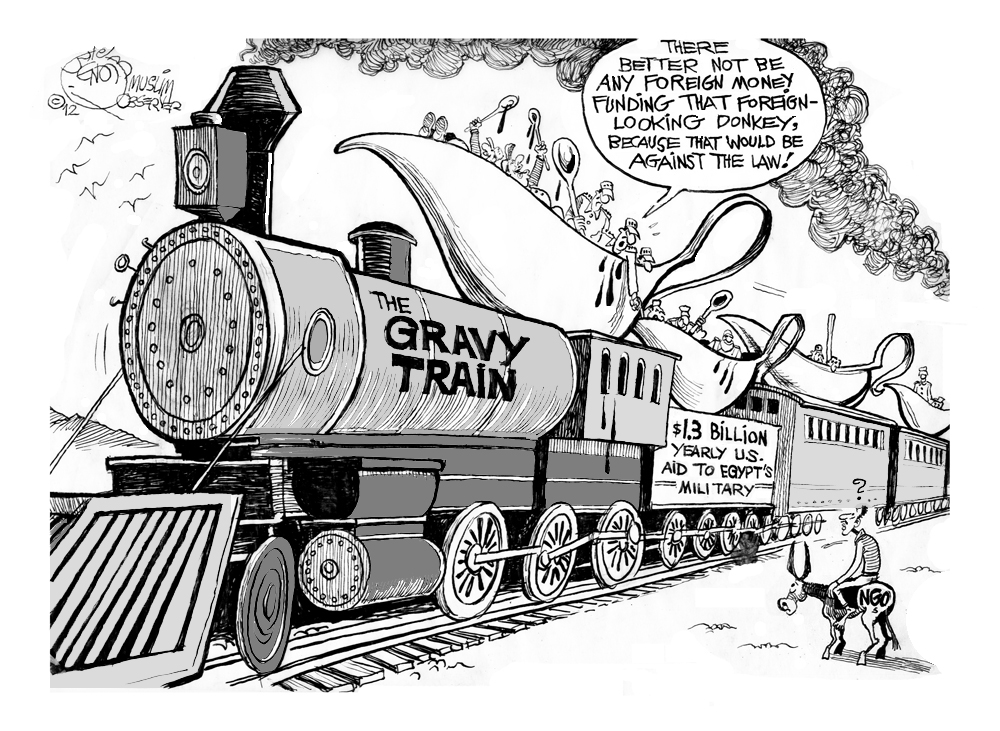
Egyptian NGOs, by Khalil Bendib


(Click on cartoon to enlarge)

Israel shackles Palestinian hunger striker


Khader Adnan, detained without charge for two months, may be close to death say human rights groups

Harriet Sherwood in Jerusalem
guardian.co.uk, Sunday 12 February 2012

"A Palestinian prisoner who has been on hunger strike for more than eight weeks is being kept shackled to a hospital bed by the Israeli authorities, despite warnings that he may be close to death.

Khader Adnan, 33, has been held without charge under "administrative detention" since mid-December. The Israeli military authorities have refused to tell his lawyer what he is accused of or disclose any evidence against him.

Human Rights Watch (HRW) called for Israel to either charge or release Adnan. "He may be approaching death from his hunger strike, and yet Israel is chaining him to his hospital bed without bothering to even charge him with any wrongdoing," said Sarah Leah Watson, HRW's Middle East director.....

More than 300 Palestinians are being held by Israel under administrative detention orders, according to Addameer, a Palestinian prisoners' support group."

Lovely!


This Embrace Should Lift the Spirits of Besieged and Dying Syrians in Homs.

The miracle generation


Marwan Bishara
Al-Jazeera

"Editor's note: This article is the third of a series of excerpts that Al Jazeera will be publishing from The Invisible Arab: The promise and peril of the Arab revolutions. You can also read an excerpt from the preface, and from chapter one, L'Ancien Regime.

....The Arab youth increasingly comprise a modern, transnational tribe that bypasses borders, religion, and social strata. As a distinctly modern social construct, the youth transcend traditional hierarchy in favour of open and pluralistic characteristics. Thanks in no small part to the information revolution and its twin byproducts "new media" and "social media", Arab youth have developed their own social and cultural codes and jargon. They share opinions and experiences freely, and, in the process, have established a diverse Arab community that is creative and innovative.....

Making and empowering individualism

The new media has had an important cultural, even sociological, role to play in patriarchal Arab societies. It helped young people break free from social constraints, it propelled them into uncharted territory, and it helped them mould a certain type of individualism. They began to enjoy an uninhibited space where they could share information and experiences, join chat rooms, and participate with one another.

Theirs is a newfound egalitarianism that contradicts the intrinsically hierarchal and inhibiting sociopolitical system. Paternalism was replaced with collegial relations; censorship was replaced by free expression. Internet citizens were not judged according to gender, ethnicity, age, or class - but on individual contributions, ability, and wit. Indeed, identities could be invented or tailored to fit personal taste or fantasy.

With no fear of retribution, Arab citizens set out to express themselves as free souls, as sovereign members of a community of individuals that is as real as the world they inhabit. They choose on the basis of free will, devoid of social and political pressures - joining, subscribing, sharing, reading, saving, deleting, working, investing, playing, as well as making friends, starting romances, joining global activism, speaking foreign languages, and communicating across borders with no limits and with no Big Brother watching over their shoulders.....

The youth have sparked a revolution not only in the public squares, but also in the minds and hearts of those long subdued by repression, broken by oppression, domesticated with proverbial carrots, or deterred by sticks. But if these old warriors were down, they weren't out. In no time, people of all types and age were awakened by the calls for change and encouraged by the will of the youth to go all the way."

Current Al-Jazeera (Arabic) Online Poll


Do you see that sending a joint Arab-international mission of observers will end the Syrian crisis?

With over 3,000 responding, 94% said no.

Al-Jazeera Video: Syrian soldiers defect to fight against government

Al-Jazeera Video: Hundreds of Palestinians join hunger strike


"Hundreds of Palestinian prisoners in Israeli jails are joining a fellow inmate on hunger strike, after human rights groups reported that his life was in danger.

Khader Adnan has been refusing food and water since he was detained on December 17."

Real News Video: Egyptians Call for National Strike and Civil Disobedience Marking Mubarak's Downfall

Jihan Hafiz: Religious authorities denounce strike while Egyptians march to Ministry of Defense demanding the regime relinquish power


More at The Real News

Real News Video: Noam Chomsky: "Crisis and Hope: Theirs and Ours"

Noam Chomsky delivers speech at the University of Maryland Friday, January 27, 2012


More at The Real News

Could there be some bad guys among the rebels too?


By Robert Fisk

"....As if the Syrian military needs to be taught how to shoot by the slightly decrepit Revolutionary Guards of Tehran. Stories of the brutality and cruelty of Syrian officials are true. Let's repeat that: stories, reports, images, YouTube, real recordings of these cruelties, are all true. But then there's the shocked face of my friend, neither Syrian nor a journalist, drinking coffee with me, who agrees with much of the story. Snipers, yes. "Most of the shooting victims are hit in the head or chest. If you are hit by a sniper, you are in a serious way." There has been shelling – of homes and of at least one clinic – and there are graves in gardens. But then there are the other little comments, almost forgettable but still disturbing. The habit of "Free Syrian Army" soldiers of playing Islamic music before crossing roads under sniper fire and of praying before pressing their foot on the gas. Well, nothing wrong in that, for heaven's sake.....

Could it be that the brave defenders of Homs include some very bad guys? Well, you may say, who can blame them? What resistance force, defending its people, has not admitted that "there may have been some excesses"?

My friend (no acolyte of the Baath party) expresses his absolute belief that if the FSA breaks out of Homs, there will be "massacres". The ethnic cleansing of the Christians, then, the nightmare that Assad evokes? And the rumours that Syrian tanks use heavy machine guns in cities but growl around without shells for their barrels – just in case they, too, defect? Could it be that shelling Homs is one thing, but levelling it to the ground a much more painful gamble of "will the tank-crews defect or not"?"

Egypt: A Year of Attacks on Free Expression


Halt Assaults on Journalists; Repeal Laws that Curb Speech

Human Rights Watch
February 11, 2012

A LONG, DETAILED ARTICLE

"(New York) – The climate for free expression in Egypt has worsened since Hosni Mubarak was ousted a year ago, Human Rights Watch said today. Egypt’s ruling Supreme Council of the Armed Forces (SCAF) should act to end assaults on journalists by security forces. It should cease prosecutions based on laws violating media freedoms, and the country’s newly elected parliament should promptly repeal those laws.

In one recent example, a Cairo misdemeanor court on December 26, 2011, sentenced a democracy activist, Gaber Elsayed Gaber, to a year in prison for handing out leaflets at a public rally in Cairo. Security forces have engaged in brutal beatings and used excessive force against demonstrators in Cairo and tried to stop journalists from reporting on them. Actions like these were hallmarks of Mubarak’s 30-year rule, but they also have been used repeatedly in the year since the SCAF assumed control on February 11, 2011, Human Rights Watch said.

The past year has seen a disturbing assault on free expression,” said Joe Stork, deputy Middle East director at Human Rights Watch. “Not only are direct critics of the military under physical and legal threat, but so are those who deliver these critical voices to the public.”

Violations of the right to freedom of expression have included military trials of protesters and bloggers, interrogations of journalists and activists for criticizing the military, the suspension of new satellite television licenses, and the closure of an outlet of Al Jazeera television. In two high-profile cases, the telecommunications entrepreneur Naguib Sawiris and the veteran film comedian Adel Imam have faced charges of insulting religion under vague and arbitrary laws dating from the Mubarak administration.

Human Rights Watch has documented a number of assaults on journalists by security forces during demonstrations and destruction of news media property since the SCAF took power. These efforts to hinder broadcasts of demonstrations follow several months of efforts to curb activities of independent media outlets.

The Committee to Protect Journalists reported 50 assaults on and detentions of journalists in November and December alone – actions that “are effectively censoring coverage of ongoing protests in Cairo.” Reporters Without Borders ranked Egypt 166th in its press freedom index in 2011, a steep decline from 127th in 2010, because “the Supreme Council of the Armed Forces ... dashed the hopes of democrats by continuing the Mubarak dictatorship’s practices.”

State security forces have also used excessive and sometimes deadly force to break up a series of demonstrations and sit-ins in which people were trying to exercise their rights to free speech and assembly.

The SCAF seems to be unjustly prosecuting journalists to obscure repeated brutality against the media by security forces,” Stork said......."

Thousands rally in solidarity with Middle East and North Africa protesters


Amnesty International
11 February 2012

"Thousands of people rallied in cities across the world today to demand respect for human rights in the Middle East and North Africa as part of a global day of action organized by Amnesty International.

Activists, trade unionists, students and Amnesty International supporters gathered in countries from Morocco to Nepal in a day of "solidarity and defiance".


“Our message to the people of the Middle East and North Africa is that you are not alone in your struggle. We are with you,” said Salil Shetty, Amnesty International's Secretary General, who led events in London’s Trafalgar Square.

“Our message to the governments of the Middle East and North Africa is that you will be held to account. The world is watching."

Rallies were held in cities across Austria, Belgium, Germany, Finland, France, Italy, Iceland, Ireland, Luxembourg, Morocco, Netherlands, Nepal, Norway, Paraguay, Peru, Spain, Switzerland and the UK.

The event in London featured live pictures of protesters in the Syrian towns of Deraa and Idlib....."

UPDATE: Australian journalist, Egyptian translator arrested by military, charged with incitement

Joseph Mayton 11 February 2012
Bikya Masr

"CAIRO: An Australian journalist and his Egyptian translator have been arrested in the Nile Delta city of Mahallah on Saturday. As of Saturday evening, the two had been charged with “incitement” and had been transferred to the prosecutor’s office.

Austin Mackell and Aliya Alwi had been covering the protests taking place in the northern Egyptian town – the flashpoint of protests in 2008 – as part of the general strike that began on Saturday in Egypt when the military police arrested them.

Alwi reported at 7 PM local time that they had been transferred to the military prosecution in Tanta, about an hour north of Cairo. Many online referred to this change as “worrying.”

Mackell, an Australian national and journalist based in Egypt has written extensively from Egypt, having been published in major international newspapers and publications including The Guardian UK. The pair have worked together regularly in Egypt.

Alwi, still able to send messages on her Twitter account as of early Saturday evening, wrote “Report against us, filed now. Many witnesses saw us ‘offering money to youth to vandalize and cause chaos’.”

Their situation is being monitored closely by fellow media professionals and activists in the country, who have condemned the military’s use of violence and intimidation against media personnel in recent months.

Shortly before their arrest, the vehicle they were riding in was attacked, glass broken and Alwi was called a “whore,” she wrote on Twitter."

How the Muslim Brotherhood's choices will shape Egypt's future


By Alaa Al-Aswani
Al-Masry Al-youm

".......The Muslim Brotherhood, which has the majority of seats in parliament, currently faces this choice. They can either continue to insist that their group alone possesses the truth, in which case it will replace the goals of the revolution with a moral program--like the situation in Sudan, Afghanistan and Somailia--and instead of establishing justice it will get occupied with things like banning movies, canceling concerts and hunting down women in pants and swim wear. If they follow this scenario, they will be creating an intellectual void in order to freely forge more deals and alliances that satisfy the SCAF and undermine the revolution.

This is when Muslim Brothers and Salafis will lose all legitimacy.

Alternatively, the Muslim Brothers and Salafis may develop their views in a way that allows them to respect those who differ with them and to acknowledge that theirs is an effort to understand religion, not the only understanding of religion. They may admit that their opponents are not necessarily conspirators. At this point, they will adopt the goals of the revolution and work to achieve them no matter how much this infuriates the SCAF. If they do so, they will go down in history as the builders of Egypt’s modern democratic state. I hope the Muslim Brothers and Salafis will make the right choice in order for Egypt to build the future it deserves.

Democracy is the solution."