Tuesday, December 17, 2013

Major US academic body backs boycott of Israeli educational institutions

American Studies Association says move is 'in solidarity with scholars and students deprived of academic freedom'

Stephen Hawking
The boycott movement claimed a major victory earlier this year when Stephen Hawking pulled out of a conference in Israel. Photograph: Felix Clay for the Guardian
"A prestigious US academic body has joined a growing movement to boycott Israel in protest at its treatment of Palestinians, in a move both welcomed and condemned in a bitterly divisive international arena.
The American Studies Association (ASA), which has more than 5,000 members, is the most significant US academic organisation to back a boycott of Israeli educational institutions following a two-thirds majority vote. Around a quarter of members took part in the ballot.
The ASA resolution was "in solidarity with scholars and students deprived of their academic freedom", the organisation said in a statement. It cited "Israel's violation of international law and UN resolutions; the documented impact of the Israeli occupation on Palestinian scholars and students; [and] the extent to which Israeli institutions of higher education are a party to state policies that violate human rights."
The resolution bans "formal collaborations with Israeli academic institutions, or with scholars who are expressly serving as representatives or ambassadors of those institutions".
The vote came amid renewed calls in the aftermath of Nelson Mandela's death for an international boycott drive against Israel similar to the anti-apartheid campaign.
Last week the major Dutch drinking water firm Vitens announced that it was severing commercial links, including joint projects agreed just weeks earlier, with Israel's national water company, Mekorot, in protest at its activities in Israeli settlements in the West Bank. "The company concluded that it would be very difficult to develop joint ventures together, considering the fact that they cannot be seen as divorced from their political context. We follow international law," Vitens said in a statement.
At the same time, the UK government issued an explicit warning to British businesses over the risks of involvement in Israeli settlements in the West Bank, including potential damage to a company's reputation. There were "clear risks related to economic and financial activities in the settlements, and we do not encourage or offer support to such activity," it said.
Earlier this year, the EU established new guidelines that prohibit giving funds, grants, prizes or scholarships to Israeli bodies with links to settlements in the West Bank, including East Jerusalem, prompting a furious response by the Israeli government.
The Palestinian president, Mahmoud Abbas, drew a distinction last week between boycotting products and companies connected to settlements and a more widespread boycott of Israeli institutions and goods. "We do not ask anyone to boycott Israel itself," he said in South Africa. "We have relations with Israel, we have mutual recognition of Israel." But, he added, "we ask everyone to boycott the products of the settlements".
The ASA move, which is not binding on its members, drew angry responses from Israeli ministers. "This is an unworthy act that does not dignify the association," said the science minister, Yaakov Peri. "To our regret, in the recent past we have seen numerous examples of the mixing of politics with science, and we are acting to eradicate those phenomena."
Avi Wortzman, the deputy education minister, also condemned the decision. He said: "This is a disgraceful attempt to meddle in the internal policies of the state of Israel under the guise of an academic debate and equal rights supposedly. The state of Israel grants all of its citizens an equal opportunity in the academic world and encourages the integration of minorities in academia."
Ronald Lauder, the president of the World Jewish Congress, said: "This vote to boycott Israel, one of the most democratic and academically free nations on the globe, shows the Orwellian antisemitism and moral bankruptcy of the ASA." The association was deeply biased and disconnected with reality, he added.
The Palestinian Campaign for the Academic and Cultural Boycott of Israel hailed the ASA's "refusal to be intimidated by the persistent efforts of defenders of Israel's regime of occupation, colonisation and apartheid". The move was "a significant step in the direction of holding Israeli institutions accountable for their collusion", it added.
The US-based Jewish Voice for Peace also welcomed the ASA's move, saying it represented a "significant milestone in the growth of the BDS [boycott, divestment and sanctions] movement in the United States". Boycotts to pressure Israel to abide by international law were not inherently antisemitic, it said.
The American Association of University Professors, which has 48,000 members, has rejected calls for a boycott of Israeli institutions. In the UK, the University and College Union supports one.
Earlier this year, the boycott movement claimed a major victory when Stephen Hawking pulled out of a conference in Israel in protest at its treatment of Palestinians.
Other British personalities who have declined invitations to visit Israel include Elvis Costello, Roger Waters, Brian Eno, Annie Lennox and Mike Leigh. Many others, however, including the author Ian McEwan, have resisted pressure to join the boycott on the grounds that it is ineffective or misguided.

Year four: The seasons turn on the Arab Spring

Revolution, counter-revolution and counter counter-revolution.


By Marwan Bishara
Al-Jazeera

"Inasmuch as a revolution is a break with history, the Arab peoples' revolution broke with history three years ago this December. But inasmuch as a revolution is an evolutionary process, the revolution has entered its 4th year.
The Arab revolution is a long time in the coming. It has been incredibly shocking, largely unpredictable but hardly surprising. There is no point, therefore, in trying retroactively to figure out why or how it was missed.
And while the Arabs share a common political history, geography and culture, the multiple uprisings that started in Tunisia and made their way through Egypt to other parts of the Arab world, while diverse, are - in fact - part and parcel of one Arab revolution and one mega Arab spectacle. Nonetheless, each Arab country has acted and reacted according to its own particularity and circumstances, defined mostly by the nature of the relationship between regime, society and state.
In retrospect, the revolutionary wave which swept through Tunisia and Egypt was breath-taking but also "too good to be true". Democratic revolutions require radical, mostly painful, changes to succeed, the undoing of old structures and institutions, reining in the old regimes' bloated and unchecked power, and unseating their resourceful benefactors.
This revolution, in all likelihood, was going to face a stubborn counter-revolution. In fact, one indicator of the democratic nature of the Arab revolution was its allowing for old powerful and conservative forces to compete fairly, overcoming old habits and archaic politics.True that revolutions open the way for the emergence of new forces to represent and fulfil people's aspirations, yet, these forces take time and effort to organise into democratic parties with comprehensive agendas.
And inasmuch as the revolution dominated the first year, counter-revolution, in all its forms, has made a comeback in the second phase. Today we are witnessing the rise of new forms of counter counter-revolution. Some are peaceful, others violent and if left unchecked, will further destabilise the region.
A break with the past
Never has a revolution been so peaceful, so passionate, and so 'pleasant'.
The promise of the Arab revolution was - and remains - a break with repressive authoritarian and totalitarian regimes to pave the way towards an era of freedom, dignity and prosperity.
Never in the history of the region have people been so hopeful, so ready, and so adamant to change their lives for the better as they were in 2011.
Never have the spread, speed, and similarity of uprisings across continents been so breath-taking, and the contagion, so instantaneous.
Never have the young and old, men and women, middle class and working class worked so closely and so satisfyingly.
Never have the religious and secular, the liberal and conservative marched so trustingly in the streets and public squares of the Arab world as they did at the outset of this revolution.
Never have their voices been raised FOR rather than AGAINST something or someone
Never have their demands been so just, so universal, and so timely.
Never has a revolution been so peaceful, so passionate, and so "pleasant".
But the "ancient regime" and its reactionary forces saw in all this an existential, zero-sum conflict that would end their influence, privilege and any chance of governing again, and so have been as adamant on maintaining power. And towards that end, they've used all necessary means to stem the tide of revolution.
Reversing the revolution
As a result, the slogans that echoed out from the streets and public squares of the Arab world didn't make it to the corridors of power over the last three years. By the second year, liberty, prosperity and social justice have become catchphrases to be repeated as mantras by revolutionaries and counter-revolutionaries alike.
Local and regional counter-revolutionary forces have persistently undermined and suppressed dissenting voices. They have confronted - and at times - violently crushed the more peaceful and less experienced forces of change. And despite their relatively successful comebacks, attempts by counter-revolutionary forces to turn back the clock have failed to kill the spirit of freedom and justice that prevails throughout the region.
Their recourse to extreme violence in Syria and to a lesser degree in Egypt - the two most important battlegrounds for counter-revolution - reflects both their naked power and weakness. They see their fight as one of survival and are ready to fight until death, at least the death of their opponents.
The Syrian regime's deadly campaign against a peaceful uprising in 2011 has spiralled out of control after new, armed groups began to take root. In the process, so much blood has been shed to tame and defeat the regime's detractors, moderates or extremists into total submission. "Apres moi, le deluge" means that in its attempt to safeguard its power and privileges, the Assad regime would stop at nothing regardless of the price for Syria and Syrians.
In Egypt, Mubarak fell, but the Mubarak regime remained intact. And so the military and intelligence services took advantage of the anti-Morsi and anti-Muslim Brotherhood sentiments among their previous partners in the public squares to mount a coup d'etat in July 2013, under the pretext of saving the revolution from the Islamist groups, to try and reverse the changes that took place after January 2011.
The tenacity of the military and the so-called "deep state" - the institutions that have long preserved, protected and profited from the regime - became transparent as they undermined and deposed the elected president and detained him along with other Muslim Brotherhood leaders, most of whom were previously elected to Parliament.
The terrible setbacks in both of these important Arab nations have largely dimmed the excitement over the revolution and undermined the promise of change, when change has brought even more instability, violence and despair.
Political Islam and democracy
The earlier decision of the Muslim Brotherhood to join the revolution and its acceptance of the democratic system of governance were seen as promising signs that a new era of stability could be ushered in. The rush to elections ensured victory for the better-organised 82 -year-old movement (as well as the ultra-conservative Salafists). The Islamist groups' gains were also seen in Tunisia, Libya and Morocco. 
However, while the Islamist groups agreed to the electoral process, they projected a limited understanding of the nature of democracy. Indeed, their detractors and former partners alike have accused them of exploiting the democratic processes to gain and hold on to power. Many rushed to highlight an inherent incompatibility between democracy and political Islam. Some even demanded outlawing the Brotherhood and other Islamist political parties, a deja vu of a past era.
True that Islamists have had their share of mistakes and failures, nonetheless, it was made abundantly clear that they weren't really given a chance to govern in Egypt, the central and most influential Arab state.  What would have happened if the Muslim Brotherhood and the ultra-conservative Salafists had governed and legislated?  What if the June 30 popular uprising against the Brotherhood was allowed to spread and take root without an intervention by the military? It's hard to tell.
So now that Islamists have been pushed into a corner of Egypt, and other places, by those who claim Islamists are not suited for democracy, a growing number of them, especially among the youth, insists that, in reality, democratic processes are counter-productive and that non-political means are more effective to gain power.

Breakthrough to breakdown
In my estimation, the use of force by the likes of the Syrian regime, the foriegn military intervention in Libya, and the arming of their opposition have greatly undermined the cause of the revolution and paved the way toward more instability and violence whether in Syria, Libya, Yemen or Egypt.
That's not to equate the violence by Qaddafi, Assad, Saleh and Sisi with the violent resistance of their citizens in self-defence. As Nelson Mandela wrote in his memoirs, it's the oppressor that determines the means and nature of the conflict, not the oppressed.
And so, regardless of their motives, the shift from peaceful uprisings to armed resistance and intervention has undercut the revolution's goals and chances of national renewal in the short and intermediate run.
In the process, the youthful movement yearning for change has thus far been eclipsed by the two oldest post-colonial forces in the region - the military and the Islamists - which have, once again, taken off their gloves to go after one another with total venom.
As the seasons have turned on the Arab Spring, the resulting political paralysis has allowed for instability and chaos, and potentially the emergence of failed states in Egypt, Syria, Libya or Yemen
Tunisia - the birthplace of the Arab revolution - is the only Arab Spring nation that seems to pre-empt such failure by rebalancing its political trends and governing coalition. And there are lessons to be learnt from it.
Counter counter-revolution
Spotlight
Follow our ongoing coverage of the political crisis in Egypt
In the final analysis neither of the two protagonists, the military and the Islamists, will win the day or be able to lead on their own. Rather, both will end up losing  if their political and ideological polarisation continues to cripple their nations. They will lose materially and in terms of credibility, legitimacy and morality.
If somehow they find a middle ground that allows them to coexist once again within a new framework of transitional power-sharing, a certain stability might allow for a third way to emerge on the long term; one that reflects the very ideals of the revolution. This, however, seems less likely with every passing day. The antagonism and deadlock between the military and their opposition, notably the Islamists, will eventually lead to the emergence of new, decentralised and violent groups as witnessed in Syria. It's the ultimate sign of a "failed state".
The proliferation of segmented and polycentric counter counter-revolutionary groups in Libya, Yemen, lebanon, potentially Egypt as well as other Arab countries would be devastating to their societies.
That's unless those who led the revolution in the first place rise once again and return to the political scene - albeit with more realistic expectations - to save their revolution from the jaws of civil war and to pull their nations back from the brink.
Easier said than done? Yes. Is there a better alternative? No. As I have written in my recent book, The Invisible ArabThe promise and perils of the Arab Revolution, this is a generational cause that will consume more time, and unfortunately more blood.


Al-Jazeera Cartoon: Career Path of Most Arab Leaders

495 (660×495)

هل يفاجئنا تفاهم إيران وإسرائيل في العام الجديد؟


السيناريوهات المرشحة للعام الجديد باتت تحتمل طرح السؤال التالي: هل يكون التفاهم بين إيران وإسرائيل أحد خيارات إعادة تشكيل منطقة الشرق الأوسط؟

(1)
أدري أن مجرد طرح السؤال يُعد من المحرمات لدى كثيرين ممن يعتبرون أن التفكير فيه يجرح شرعية الثورة الإسلامية التي كانت مخاصمة إسرائيل من ثوابتها، باعتبار أن معركة الإمام الخميني كانت منذ وقت مبكر ليست مع نظام الشاه وحده، وإنما كانت له أيضا حساباته المعادية للولايات المتحدة والرافضة لإسرائيل.

وبعد سقوط الشاه كان هتاف "الموت لأميركا" يقترن بتمني المصير ذاته لإسرائيل، وهى الخلفية التي جعلت قادة الثورة ورموزها منذ وقت مبكر يتحدثون عن أن تحرير فلسطين يمر بطهران، ومنهم من ظل يكرر في العلن الإشارة إلى زوال إسرائيل من خريطة المنطقة باعتباره مصيرا حتميا سيتحقق إن عاجلا أو آجلا.

ذلك كله أفهمه ولدي قرائن أخرى عديدة تعزز فكرة أن الثورة الإسلامية طوال الـ35 سنة الماضية لم تتبن موقف العداء لإسرائيل فحسب، ولكنها أيضا ساندت بقوة حركات المقاومة المناوئة لها في فلسطين ولبنان.
كثيرون بين النخبة الإيرانية لا يزالون عند مواقفهم من إسرائيل وأميركا، وليسوا على استعداد للتراجع عنها، لكني أزعم أن ثمة متغيرات في الفضاء السياسي على الصعيدين الإقليمي والدولي استدعت رؤى جديدة وشجعت البعض على فتح باب الاجتهاد فيما اعتبر من ثوابت الثورة
وإذ أسجل أن كثيرين بين النخبة الإيرانية لا يزالون عند التزامهم بذلك الموقف، وليسوا على استعداد للتراجع عنه، لكني أزعم أن ثمة متغيرات في الفضاء السياسي على الصعيدين الإقليمي والدولي استدعت رؤى جديدة وشجعت البعض على فتح باب الاجتهاد فيما اعتبر من ثوابت الثورة.
ولئن أسفرت تلك المتغيرات عن نوع من المصالحة مع الولايات المتحدة التي عُدت في ثقافة الثورة التقليدية رمزا للشيطان الأكبر، فإن ذلك قد يفتح الباب لقبول فكرة التفاهم مع من دونه في الشيطنة خصوصا إذا اقتضت المصلحة ذلك، وإسرائيل تحتل مكانة بارزة في ذلك التصنيف الأخير.
(2)
منذ توقيع اتفاق جنيف النووي في 24 نوفمبر/تشرين الثاني الماضي، والمعلقون السياسيون يتنافسون على رصد خلفياته وملابساته وتداعياته.

والاتفاق منعقد بين أغلبهم على أنه يمثل طورا جديدا في العلاقات وموازين القوى العالمية والإقليمية، فمن قائل إن إدارة الرئيس أوباما اتجهت إلى إغلاق ملف عسكرة السياسة الخارجية وإنهاء الحرب في سبيل الشرق الأوسط الكبير، ومن ثم قررت اتباع سياسة واقعية تعترف فيها واشنطن بنفوذ إيران ودورها، في حين تعترف طهران بالواقع الإقليمي.

وفى ظل هذه السياسة الواقعية فقد اعتبرت الإدارة الأميركية أن طهران هي نافذة واشنطن إلى طي مغامراتها سيئة المآل (في العراق وأفغانستان).

وشجعها على ذلك تراجع اهتمامها بالعالم العربي خصوصا في ظل المؤشرات القوية الدالة على احتمالات اكتفائها من النفط والغاز إزاء وفرة الاحتياطيات التي تم اكتشافها في بحر الشمال (أندرو باسيفيتش أستاذ التاريخ بجامعة بوسطن-واشنطن بوست 6/12)، ولم يبتعد محرر صحيفة "لوبوان" الفرنسية نيكولا بافاريز كثيرا عن الفكرة السابقة في تحليله المنشور في 5 ديسمبر/كانون الأول الجاري.

إذ ذكر أن واشنطن مهووسة بالحفاظ على زعامتها في وجه الصين، وقررت الانتقال من المحيط الأطلسي إلى المحيط الهادي، ساعدها على ذلك أنها بصدد الاستقلال في مجال الطاقة والتقليل مما تستورده من نفط الشرق الأوسط.

وفي تحولها ذاك تراجعت الأهمية النسبية للمنطقة في إستراتيجيتها، ووجدت أن اتفاقها مع إيران يمكن أن يسهم في استقرارها.

وينبه يوجين روبنسون في واشنطن بوست (في 30/11) إلى أن الاتفاق مع إيران يكتسب أهمية من عناصر عدة، في مقدمتها أنه الوسيلة الأكثر حسما في استقرار الشرق الأوسط وتجنيبه احتمالات التوتر والتصعيد المؤدي إلى محظور الحرب التي لا تريدها الولايات المتحدة أو أوروبا.

وأشار في هذا الصدد إلى أن قدرة إيران على تصنيع القنبلة النووية تزداد بمضي الوقت رغم الحصار المفروض عليها. ودلل على ذلك بقوله إن الأمم المتحدة حين فرضت عقوباتها على إيران سنة 2006 فإنها كانت تملك آنذاك ثلاثة آلاف جهاز للطرد المركزي، وهى تملك الآن 18 ألف جهاز، وتستطيع تخصيب اليورانيوم بنسبة 20%، وهى تسعة أعشار الطريق نحو إنتاج الوقود اللازم للقنبلة.

في إيران، كتب كيهان برزكر محرر صحيفة "تابناك" الصادرة في 9/12 قائلا إن اتفاق جنيف فتح الطريق أمام تعاون أوسع مع الدول الغربية لحل القضايا الإقليمية والدولية، الأمر الذي يساعد على خروج المنظومة السياسية والأمنية من توازن القوى إلى إستراتيجية توازن المصالح والتعاون الإقليمي.

ولخص تلك المصالح في الحفاظ على الأنظمة السياسية ومكافحة الإرهاب والتطرف والتعاون من أجل شرق أوسط خال من أسلحة الدمار الشامل.
(3)
أرجو أن تكون قد لاحظت أن التحليلات السابقة -وغيرها كثير- لم تأت على ذكر أي دور للعالم العربي في الحديث عن الخريطة الجديدة للمنطقة أو موازين القوى فيها، وأن الولايات المتحدة التي جعلت مواجهة الصين على رأس أولويات سياستها الخارجية، والتي بصدد تحقيق اكتفائها الذاتي من النفط والغاز، لم تعد تطلب من المنطقة في الوقت الراهن سوى الهدوء والاستقرار وأمن إسرائيل بطبيعة الحال.
لا ذكر لأي دور للعالم العربي في الخريطة الجديدة للمنطقة أو موازين القوى فيها، خصوصا أن واشنطن التي بصدد تحقيق اكتفائها الذاتي من النفط والغاز، لم تعد تطلب من المنطقة في الوقت الراهن سوى الهدوء والاستقرار وأمن إسرائيل بطبيعة الحال
ولأن العالم العربي بأوضاعه غير المستقرة وبالوهن الذي أصابه لم يعد قادرا على توفير الاستقرار المنشود، فقد اتجهت الأبصار إلى عناصر من خارجه يمكن أن تقوم بهذه المهمة. 

في هذا الصدد، فإن الاتفاق مع إيران أصبح مهما، ليس فقط بسبب أهميتها الإستراتيجية وثبات أوضاعها السياسية وقدرتها النفطية وقوتها العسكرية، لكن أيضا لأنها أصبحت لاعبا أساسيا في المنطقة. 

فهي موجودة في سوريا ولبنان والعراق فضلا عن أصابعها الممتدة إلى البحرين واليمن، ثم إنها متحالفة مع روسيا ومدعومة من الصين. 

ورغم أن تركيا طرف لا يمكن تجاهله سواء لأنها عضو في حلف الأطلنطي أو لأهميتها الإستراتيجية والاقتصادية من ناحية ولكونها صارت طرفا في المشهد السوري وفي الساحة العراقية من جهة أخرى، فإن الدور الإيراني أصبح أثقل وزنا، خصوصا بعد توتر العلاقات بين أنقرة والقاهرة، بحيث ما عاد لتركيا حليف في العالم العربي سوى دولة قطر.

إسرائيل تبرز في هذا السياق، سواء لأن واشنطن لا تستطيع أن تتجاهلها، أو لأنها تمثل قوة عسكرية ونووية تعاظم دورها منذ خرج العالم العربي من معادلة القوة، بعد تدمير الجيشين العراقي والسوري، وإزاء استغراق الجيش المصري في أوضاع الداخل وحربه المفتوحة في سيناء. 

ولأن الأمر كذلك فإن حضور إسرائيل في كواليس الخرائط الجديدة بدا أمرا مفروغا منه، باعتبارها طرفا لا غنى عنه في مخططات الاستقرار المنشود، ناهيك عن أنها في الأساس أحد أسباب التوتر منذ اغتصابها فلسطين في أربعينيات القرن الماضي وحتى اللحظة الراهنة التي تمارس فيها سياسة التهويد ولا تكف عن التوسع في الاستيطان.

إذا صح ذلك التحليل فمعناه أن مسار الخرائط الجديدة يضع إيران وإسرائيل في مربع واحد (تركيا ليست بعيدة تماما عنه)، على الأقل من حيث إن الولايات المتحدة تعول عليهما في الحفاظ على الاستقرار ومكافحة ما يسمى بالتطرف في المنطقة. 

وفي الولايات المتحدة أصوات تدعي أن التطرف المذكور يخرج في أغلبه من عباءة أهل السنة، ولذلك ينبغي الاستعانة بالشيعة في مواجهته. ومن أهم الداعين إلى هذه الفكرة المستشرق المعروف برنارد لويس.

(4)
في وقت سابق قلت في التعقيب على اتفاق جنيف: من الناحية المنطقية، إيران لا تستطيع أن تعقد صفقة تفاهم مع الولايات المتحدة في حين تستمر في دعمها للمقاومة الفلسطينية، وتساءلت عن الثمن الذي سوف تدفعه طهران لضمان إنجاح اتفاقها مع واشنطن، خصوصا أنها تحت الاختبار الآن ولمدة ستة أشهر لاحقة.

لم تكن لدي معلومات تسمح بالإجابة على السؤال، لكنني اعتبرت أن طرحه يُعد أمرا منطقيا في الأجواء الراهنة.

كنت أعرف أن القوميين الإيرانيين ومعهم بعض الليبراليين والإصلاحيين لا يرون غضاضة في إقامة علاقات مع إسرائيل خصوصا بعد تطبيع بعض الدول العربية علاقاتها معها.

وسمعت من بعضهم أن الإمام الخميني لم يقطع علاقات بلاده مع مصر بعد معاهدة السلام التي وقعها السادات مع إسرائيل سنة 1979 إلا بطلب وضغط من الرئيس الفلسطيني ياسر عرفات. إلا أنني ظللت طوال الوقت اعتبر أن تلك الأصوات ليس لها تأثير على دائرة صنع القرار في طهران.

وكان ذلك واضحا في الموقف الحازم الذى تبناه الإمام الخميني إزاء إسرائيل، وفى مضي السيد علي خامنئي (المرشد الحالي) على ذات الدرب.

وحتى حين قيل لي ذات مرة إن رئيس الجمهورية الأسبق السيد محمد خاتمي لا يمانع في عودة العلاقات مع إسرائيل، فإن هذا الكلام سمعته بعد خروجه من السلطة عام 2005 وقد رجاني محدثي وقتذاك أن أكتم الأمر، إلا أنني وجدت أن الظرف الراهن يسمح لي بإفشائه.

صورة العلاقات الإيرانية الإسرائيلية التي استقرت عندي طوال العقود الثلاثة السابقة اهتزت حين وقعت على تقرير نشرته مجلة نيوزويك الأميركية في 25 نوفمبر/تشرين الثاني الماضي تحت عنوان "القنوات الخلفية في بورجوندي"، كتبه محررها أوين ماتيوس.

وقد تحدث فيه عن اجتماعات سرية عقدت في أحد قصور تلك المقاطعة الفرنسية بين عسكريين إيرانيين سابقين من الحرس الثوري وبين آخرين من إسرائيل ومجموعة ثالثة من الصين، نوقشت خلالها النقاط التي كانت محل خلاف بين إيران وبين الدول الكبرى التي عطلت الاتفاق حول مشكلة البرنامج النووي.

وكان للنتائج التي تم التوصل إليها في تلك الاجتماعات السرية دورها في تذليل العقبات التي اعترضت توقيع الاتفاق.
تحدثت مجلة نيوزويك عن اجتماعات سرية عقدت في أحد قصور بورجوندي الفرنسية بين عسكريين إيرانيين سابقين من الحرس الثوري وبين آخرين من إسرائيل ومجموعة ثالثة من الصين نوقشت خلالها النقاط الخلافية التي عطلت الاتفاق النووي
ذكر التقرير أن الاجتماعات تمت في قصر "شاتو دى سيلور" بالمقاطعة المذكورة، وأن المجتمعين كانوا في ضيافة شخص باسم كريستوف فون فيتين (يرجح أنه هولندي الجنسية) وهو يعمل مستشارا للجنة المركزية للحزب الشيوعي الصيني.

وكان من الوسطاء الذين أسهموا في ترتيب اللقاء ومن الأسماء التي وردت في عملية الوساطة رئيس الوزراء الأسترالي السابق روبرت هوك.
وقد ذكر التقرير أسماء آخرين شاركوا في المحادثات، منهم الجنرال الإسرائيلي دورون أفيتال القائد السابق للقوات الخاصة بالجيش وعضو لجنة الأمن القومي بالكنيست، ووزير الدفاع الفرنسي الأسبق ميشيل أليوت، لكنه لم يشر إلى أسماء الإيرانيين من قيادات الحرس الثوري السابقين.

من الملاحظات المهمة التي أوردها التقرير أن حضور الصين في تلك الاجتماعات السرية لا يرجع فقط إلى كونها عضوا في مجموعة الدول التي شاركت في اجتماعات جنيف، ولكن أيضا لأن القيادة الصينية ترى أنها ينبغي أن تكون حاضرة في أي مباحثات تتعلق بمستقبل العالم العربي خصوصا منطقة الخليج لأنها تستورد 70٪ من احتياجاتها النفطية منها، وهي ليست على استعداد أن يتولى غيرها رسم مستقبلها الصناعي.

لا أستبعد أن يكون الإسرائيليون وراء تسريب خبر الاجتماعات التي عقدت في بورجوندى، لأن معلومات التقرير تحدثت عن حميمية العلاقات التي نشأت بين الإيرانيين والإسرائيليين أثناءها.

وقد تأكد لدي هذا الظن حين قرأت أن راديو تل أبيب بث هذا الأسبوع خبرا عن عقد اجتماع تاريخي بين السعوديين والإسرائيليين في فرنسا، هو الأول الذي يعلن عنه صراحة دون غيره من الاجتماعات التي تعقدها الأجهزة الأمنية بعيدا عن الأعين. كأنهم يريدون أن يخرجوا ألسنتهم لنا في كل مرة ويثبتون أننا مضحوك علينا من الجميع.

رغم دقة التفاصيل التي وردت في تقرير نيوزويك، فإنني أقاوم تصديقها، وأفضل أن أحولها إلى سؤال أرجو أن يجيب عليه الإيرانيون بالنفي.

Questions for the Syria Sarin sceptics

If rebels were to blame how did they do it?

By Brian Whitaker


"If Syrian government forces did not launch the chemical attacks near Damascus on August 21, we have to assume that rebel fighters did. Short of denying that the attacks took place at all, there is really no other possibility.
Although many people continue to dispute that the Assad regime was responsible, no one has yet come up with a plausible theory – let alone hard evidence – as to how the rebels might have done it.
The chemicals
We know the Syrian regime had plenty of Sarin as well as the type of rockets that were almost certainly used to deliver it in the August 21 attacks. In order to make a persuasive case that blames the rebels it would therefore be necessary to show that they too had access to Sarin in large enough quantities, as well as the relevant munitions.
As far as rebel Sarin is concerned there are three possibilities:
1. It was obtained from outside Syria
2. Rebels produced it themselves
3. It was stolen/captured from the Syrian regime's stockpile
The third possibility can be eliminated immediately because the regime has insisted throughout the conflict that its chemical weapons are secure and it has not reported any losses.
To advance an argument that Sarin came from outside Syria it would be necessary to identify possible suppliers: who was in a position to supply, and could they realistically have done so?
If the rebels made their own Sarin – a complex and dangerous process in itself – who did they manage to do so without detection and, apparently, without mishap? One might reasonably expect Syrian intelligence to have been on the lookout for this and eager to publicise any incriminating evidence they found. But apart from vague claims about chemical "factories" they have come up with nothing that clearly points to Sarin production by rebels.
The munitions
According to the Syrian regime, rebel fighters have used small quantities of Sarin on several occasions. One of these, allegedly, was in Khan al-Asal last March. The facts are disputed but the regime's version (cited in the latest report from UN weapons inspectors) is that rebels fired a chemical rocket from 5km away. 
If this were true (and it may not be), the rocket cannot have been of the same type that was implicated in the August 21 attacks, since their probable range has now been established at a little more than 2km.
In the days following the August 21 attacks, the regime also accused rebels of attacking its soldiers on three occasions with canisters that emitted gas. The UN inspectors were unable to confirm this but, even if we accept the regime's version, the point to note is that the munitions allegedly used were fairly small. One is said to have had a capacity of four litres and one is said to have been launched from a catapult.
If we take the regime's claims at face value that still doesn't go very far towards convicting rebel fighters for the August 21 attacks. If we assume the rebels did use Sarin in these other incidents there's nothing to indicate they had enough of it for August 21, when it appears that hundreds of litres were used.
Also, the regime's claims about other usage of "rebel Sarin" do not link the rebels to the type of munitions implicated in the August 21 attacks.
In their report on the events of August 21, the UN inspectors stated:
  • "Impacted and exploded surface-to-surface rockets, capable to carry a chemical payload, were found to contain Sarin."
  • "Close to the rocket impact sites, in the area where patients were affected, the environment was found to be contaminated by Sarin."
The rockets concerned were of a type which is so far unknown outside Syria and which is known from video evidence to be used by the regime. There is no evidence, at least so far, of them being used by rebels.
To make a persuasive case against the rebels, therefore, it would be necessary to show how they could have acquired them, along with suitable launchers. Could they have captured them from regime forces? If that were what actually happened, why hasn't the regime said so?"

Monday, December 16, 2013

From Azmi Bishara's Facebook Page


عن صناعة أسطورة مانديلا 


1. كان مانديلا قائدا سياسيا ومناضلا عظيما ضد التمييز العنصري، تحول بحق إلى رمز للنضال ضد العنصرية.
2. لا علاقة لمانديلا وتاريخه بالأسطورة التي تصنع عنه في إطار الاستهلاك الغربي للرموز والصور. 
3. الأسطورة المعولمة التي تحاك عن مانديلا تشبه في صناعتها أسطورة "ليدي ديانا" وغيرها من المشاهير والنجوم.
4. يمكن للعنصريين أـن يتعايشوا مع هذه الأسطورة. فهي لا تتضمن مراجعة للذات، ولا تطلب من الدول الغربية نقدا ذاتيا على دعمها للأبارتهايد.
5. يمكن حتى لأساطين الاستعمار الاستيطاني والابارتهايد في فلسطين أن يحملوا صورة مانديلا وأن يشيّعوا جثمانه.
6. لم يقد مانديلا المؤتمر الوطني الأفريقي في أي مرحلة. كان منذ شبابه في السجن حين أسس المؤتمر فعليا وقاده آخرون تعتم عليهم الاسطورة التي تشخصن القضايا في النجوم.
7. لم يكن نضال شعب جنوب أفريقيا نضال شخص أو مجموعة، بل نضال شعب وقيادة ممأسسة ومنظمة. 
8. ولكن قادة المؤتمر أحسنوا صنعا إذ حولوه إلى رمز نضالي في سجنه، وهذا غير الرمز الذي يصنع عنه حاليا.
9. مانديلا لم يكن مناضلا سلميا، ولم يتنازل عن فكرة الكفاح المسلح مبدئيا، ورفض التنصل منها مع أن الفضل لانهيار الابارتهايد يعود للمقاطعة الدولية وليس للكفاح المسلح الذي لم يحسم المعركة.
.10. من يحمل صور مانديلا اليوم يدين الكفاح المسلح في فلسطين، ويرفض مقاطعة إسرائيل.
11. من أهم آليات احتواء القضايا العادلة ضد الظلم شخصنتها وتحويلها إلى رموز يصنعها الظالمون السابقون ويتعايشون معها.
12. أولئك الذين دعموا الأبارتهايد في جنوب أفريقيا ، ويدعمون إسرائيل حاليا يصنعون بهيمنتهم الثقافية والإعلامية صورة المضطهَدين، تلك الإيجابية التي يمكنهم التعايش معها بعد التسوية، وتلك الشيطانية التي تستخدم في الحرب على الضحايا.

عزمي بشارة


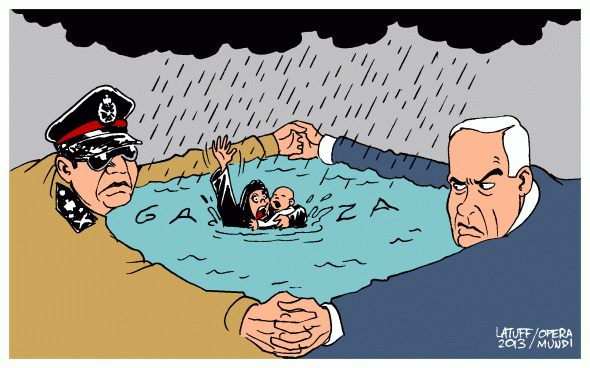
A GREAT CARTOON BY CARLOS LATUFF: Accomplices of Gaza Disaster


Gaza disaster

Bahrain: Halt detention, abuse and torture of children


"Children are being routinely detained, ill-treated and tortured in Bahrain, said Amnesty International in a new briefingpublished today. 

Scores of children arrested on suspicion of participating in anti-government protests – including some as young as 13 – were blindfolded, beaten and tortured in detention over the past two years the organization said. Others were threatened with rape in order to extract forced confessions.

“By rounding up suspected under-age offenders and locking them up, Bahrain’s authorities are displaying an appalling disregard for its international human rights obligations,” said Said Boumedouha, Deputy Director of Amnesty International’s Middle East and North Africa Programme.  

“Nearly three years after Bahrain’s security forces used excessive force to crush anti-government protests, they now appear to be targeting children in an intensified crackdown. All children under the age of 18 who have not committed any recognizable offence must be released immediately. Any allegations of torture and ill-treatment must be thoroughly investigated.” 

According to reports received by Amnesty International there are at least 110 children aged between 16 and 18 held at the Dry Dock Prison, an adult facility in al Muharraq Island, pending investigation or trial. 

Most children have been arrested on suspicion of participating in “illegal gatherings”, rioting, burning tyres or throwing Molotov cocktails at police.  Many were seized during raids while they were playing at home and even at a local swimming pool. Several were denied access to their families for extended periods and interrogated without their lawyers.

Children under the age of 15 who have been sentenced are held at a Juvenile Centre in Manama under Ministry of Interior control. During the day they are attended by social workers but at night, when most abuses tend to take place, Bahraini police take over.  At the age of 15 those held in the Juvenile Centre are transferred to adult prisons such as Jaw Prison in southeast Bahrain to serve the remaining prison sentences.

Bahrain is a signatory to the UN Convention on the Rights of the Child which defines a child as anyone below the age of 18. The convention also explicitly prohibits the torture or other cruel, inhuman or degrading treatment or punishment. 

The organization is also urging the government of Bahrain to review legislation including the Juvenile law and the Penal code to ensure that they are fully compatible with international standards. 

In August, Bahrain’s juvenile law was amended to indicate that the parents of anyone under the age of 15 who takes part in a demonstration, public gathering or sit-in would receive a written warning from the Ministry of Interior. If a second offence is recorded within six months the child’s father could face jail, a fine or both. 

“Bahrain’s government purports to respect human rights yet it is brazenly flouting international obligations on a routine basis by resorting to extreme measures such as imposing harsh prison sentences on children,” said Said Boumedouha. 

Amnesty International is calling on Bahrain to consider alternative penalties for children who have committed internationally recognizable criminal offences such as probation and community service. 

Background

Since Bahrain’s popular uprising began on 14 February 2011, gross human rights violations have been committed by security forces who used excessive force against protesters killing dozens. At least 2,000 people are languishing in jail. Many trials fell short of fair trial standards. Amnesty International has adopted 20 of those jailed as prisoners of conscience. Widespread impunity for abuses carried out by the security forces continues to be a problem."

البابا ‘الماركسي’ وأئمة الإسلام

رأي القدس

بعد يوم من إعلان مجلة ‘تايم’ الأمريكية ان فرنسيس الأول هو ‘شخصية العام’ قام بابا الفاتيكان بالقاء خطبة بمناسبة يوم السلام العالمي طالب فيها المسيحيين ألا ينقادوا وراء رغبة للربح او تعطش للسلطة وأدان في خطبته كل أنواع الاستغلال كالاسترقاق والدعارة والاتجار بالبشر والفساد وتجارة المخدرات ودعا الى السلام العالمي ونزع السلاح في كل أنحاء العالمِ.
أعلن البابا غضبه من ‘فضيحة’ الجوع في العالم وهاجم الرأسمالية والسعي الشرس وراء الربح ومظاهر البحث عن السعادة في مظاهر الاستهلاك والكسب الفاحش مطالباً الكنيسة برفع صوتها لتوصل للمسؤولين ‘صرخة وجع هذه البشرية المتألمة ووضع حد للأعمال العدائية وكل انتهاكات حقوق الانسان الاساسية’.
ورداً على انتقادات وجهت له من محافظين متشددين أمريكيين وصفوا خطبته الآنفة بأنها ‘ماركسية خالصة’ قال البابا في حديث مع صحيفة ايطالية امس انه لا يبالي اذا وصفه الناس بالماركسي قائلاً انه التقى في حياته الكثير من الماركسيين وهم أشخاص طيبون ولذلك، قال البابا، ‘لا أشعر بأن أحداً أساء إليّ’.
تصريحات شخص يرأس مؤسسة دينية كبرى فاعلة في العالم مثل الكنيسة الكاثوليكية دليل أكيد على حيوية هذه المؤسسة وقدرتها على الاستجابة للتغيرات الحاصلة في العالم، اضافة لتقديمها بوصلة أخلاقية قادرة أن تؤثّر وتساهم في تغيير نظرة البشرية لهذه المؤسسة، بعد عقود من الربط بينها وبين السياسات المحافظة سياسيا واجتماعياً، وفي تغيير الكنيسة نفسها، بحيث يساهم ذلك في تحسين أوضاع البشرية عموماً.
قدوم البابا من أمريكا اللاتينية (الأرجنتين)، هو انتصار رمزي لهذه القارة التي شهدت قبل عقود طويلة ظهور كنيسة جذرية معادية للاتجاهات المحافظة في الكاثوليكية، وهو، عملياً، مصالحة بين أوروبيّة الفاتيكان الجغرافية، وبين عالميّته، وخصوصاً في الأطراف المهمّشة والمعدمة في القارات الأخرى.
الحيوية والقدرة على التغيير اللتان ابدتهما الكنيسة الكاثوليكية تدفعان بالضرورة الى مقارنتها بأحوال الإسلام والمسلمين اليوم، وخصوصاً العرب منهم.
ما يميّز الكنيسة الكاثوليكية، هو المجال الكبير لحركتها وفعلها خارج تأثير القوى السياسية الأوروبية (وهو أمر كان يتناقص ويزيد بحسب الأحوال السياسية)، واختيار البابا فرنسيس الأول تعبير عن إمكانية أن تكون هذه المؤسسة أقرب الى رعاياها وأكثر تمثيلية لهم.
بالمقابل تتعرّض تمثيلية المرجعيات الاسلامية لضغط هائل تفرضه الاستقطابات الاجتماعية والسياسية الحادّة، والواضح أن بعض هذه المرجعيّات (كما في حالة الأزهر) يتم استخدامها في الصراع السياسي العنيف الحاصل في البلدان العربية بشكل يسيء كثيراً لها ولصورة الاسلام نفسه.
لا يعلم الكثيرون عن تعرّض الأئمة الاسلاميين الكبار: ابو حنيفة، ومالك بن أنس، والشافعي، وأحمد بن حنبل وابو عبدالله جعفر الصادق الى محن هائلة كادت تودي بحياة بعضهم، أو أودت بها، بسبب الصراع السياسي المرير في عصرهم، والذي اختار أغلبهم فيه موقف الثورة على الظلم، فقد رأى ابو حنيفة، على سبيل المثال، ان الثورة على الملك الأموي جائزة شرعاً (وكان الثائر عليه هو الإمام زيد بن علي)، ورفض ابو حنيفة أن يصبح فقيهاً للسلطان فأمر الخليفة العباسي المنصور بحبسه وجلده كل يوم عشرة أسواط حتى يقبل ان يكون قاضي الخليفة فلم يقبل.
ضُرب مالك بالسياط أيضاً و’مدّت يداه حتى انخلعت كتفاه’ لاتهامه بتأييد بيعة محمد النفس الزكيّة، كما اتهم الشافعي بتأييد آل البيت وكاد يقتل، وسجن ابن حنبل ثمانية وعشرين شهراً كان يضرب وينخس بالسيف فيها الى ان يغمى عليه وقيل ان جعفر الصادق مات مسموماً على يد المنصور.
يعجب المرء حين يرى رايات الطائفية تسود اليوم رغم أن أئمة الإسلام (السنّي) عانوا الأمرّين دفاعاً عن آل البيت، فقد فهم أولئك الدين باعتباره جهاداً ضد الظلم، وهو يتناقض مع حال الكثرة الغالبة من الفقهاء المسلمين الآن والذين يوظفون الدين (باسم السنّة او الشيعة) في خدمة الطغيان في سوريا ومصر والعراق وباقي بقاع العرب المظلومة.

Britain’s policy on Syria has just been sunk, and nobody noticed

The West’s favoured faction is on the run, while the Riyadh-backed rebels steadily gain ground

By Patrick Cockburn

"The final bankruptcy of American and British policy in Syria came 10 days ago as Islamic Front, a Saudi-backed Sunni jihadi group, overran the headquarters of the Supreme Military Council of the Free Syrian Army (FSA) at Bab al-Hawa on the Syrian side of the border with Turkey. The FSA, along with the Syrian National Coalition, groups that the United States and Britain have been pretending for years are at the heart of Syrian military and political opposition, has been discredited. The remaining FSA fighters are in flight, have changed sides, or are devoting all their efforts to surviving the onslaught from jihadi or al-Qa’ida-linked brigades.
The US and Britain stopped the delivery of non-lethal aid to the supply depot at Bab al-Hawa as the implications of the disaster sank in. The West’s favourite rebel commander, General Salim Idris, was on the run between Turkey and his former chief supporter and paymaster, Qatar. Turkey closed the border, the other side of which is now controlled by the Islamic Front. The so-called moderate wing of the Syrian insurgency has very limited influence, but its representatives are still being urged by Washington and London to attend the peace conference in Geneva on 22 January to negotiate Bashar al-Assad’s departure from power.
Confusion over what is happening is so great that Western leaders may not pay as much of a political price at home as they should for the failure of their Syrian policy. But it is worth recalling that the Syrian National Coalition and the FSA are the same people for whom the US and UK almost went to war in August, and saw as candidates to replace Assad in power in Damascus. The recent debacle shows how right public opinion in both countries was to reject military intervention.
Who are the winners in the new situation? One is Assad because the opposition to him – which started as a popular uprising against a cruel, corrupt and oppressive dictatorship in 2011 – has become a fragmented movement dominated by al-Qa’ida umbrella organisation the Islamic State of Iraq and the Levant (Isil); the other al-Qa’ida franchisee, the al-Nusra Front; and the Islamic Front, consisting of six or seven large rebel military formations numbering an estimated 50,000 fighters, whose uniting factor is Saudi money and an extreme Sunni ideology similar to Saudi Arabia’s version of Islam.
The Saudis see this alliance as capable of fighting pro-Assad forces as well as the Islamic State of Iraq and the Levant, but Riyadh’s objections to the latter appears to be based on its independence of Saudi control rather than revulsion at its record of slaughtering Shia, Alawi, Christians, Armenians, Kurds, Turkomans or any dissenting Sunni.
The allegation of Saudi control is becoming easier to substantiate. Until a year ago, the Saudis stayed somewhat in the background when it came to funding the Syrian rebels, in which the leading role was played by Qatar in association with Turkey. But the failure of the rebels to win and US anger that the Qataris and Turks had allowed much of the aid to go to jihadis led to an important change this summer, when Saudi Arabia took over from Qatar as chief supporter of the rebels.
An interesting example of just how hands-on this Saudi direction has become is illustrated by a fascinating interview given by a top defector from the FSA to Isil, Saddam al-Jamal. Commander of the Liwa Allah Akbar battalion, he was until recently the top FSA commander in eastern Syria, much of which is under rebel control. He recalls that “we used to meet with the apostates of Qatar and Saudi Arabia and with the infidels of Western nations such as America and France in order to receive arms and ammo or cash”. He says Western intelligence operatives had of late been worried about the growing influence of al-Qa’ida affiliates and repeatedly asked him why he was growing a beard.
Jamal gives an account of a recent three-day meeting between the FSA commanders from northern and eastern Syria with Western, Saudi, Qatari, Emirati and Jordanian intelligence operatives. This appears to have been soon after the Saudis took over the Syria file from the Qataris. He says the FSA commanders, including General Idris, had a meeting with Prince Salman bin Sultan, the Saudi deputy defence minister who was the leading figure at the meeting. Jamal says that Prince Salman “asked those who had plans to attack Assad positions to present their needs for arms, ammo and money”.
The picture that Mr Jamal paints is of an FSA that was a complete pawn to foreign intelligence agencies, which is one reason why he defected. The Saudis subsequently decided that the FSA would not serve their purposes, and were frustrated by America backing away from war in Syria and confrontation with Iran. They set about using their limitless funds to attract into alliances rebel brigades such as the Islamic Front which would be Sunni fundamentalist, committed to the overthrow of Assad, against political negotiations, but distinct from al-Qa’ida. In reality, it looks highly unlikely that Saudi money will be enough to bring down or even significantly weaken Assad though it may be enough to keep a war going for years.
The old, supposedly moderate, opposition has been marginalised. Its plan since 2011 has been to force a full-scale Western military intervention as in Libya in 2011 and, when this did not happen, they lacked an alternative strategy.
The US, Britain and France do not have many options left except to try to control the jihadi Frankenstein’s monster that they helped create in Syria and which is already helping destabilise Iraq and Lebanon. Turkey may soon regret having given free passage to so many jihadi on their way to Syria. Ankara could close its 500-mile border with Syria or filter those who cross it. But Turkish policy in Syria and Iraq has been so dysfunctional in the past three years that it may be too late to correct the consequences of wrongly convincing itself that Assad would fall.
The Geneva II peace conference on Syria looks as if it will be born dead. In so far as the FSA and its civilian counterparts ever repres-ented anyone in Syria they do so no longer. The armed opposition is dominated by Saudi-sponsored Islamist brigades on the one hand and by al-Qa’ida affiliates on the other. All US, British and French miscalculations have produced in Syria is a re-run of Afghanistan in the 1980s, creating a situation the ruinous consequences of which have yet to appear. As jihadis in Syria realise they are not going to win, they may well look for targets closer to home."

Guardian Video: Aleppo devastated by Syrian army bombs


"Footage obtained from social media appears to show the aftermath of an attack by the Syrian army on Aleppo. The Syrian Observatory for Human Rights believes that Syrian army helicopters dropped barrel bombs on the disputed city on Sunday killing 36 people, including 15 children."

Sunday, December 15, 2013

Al-Jazeera Video: غموض بأعداد قتلى حزب الله بسوريا

NSA versus the press by Khalil Bendib

12-12-NSA-vs.-the-Press.jpg (600×434)

سياسات شجعت الاصولية

ميشيل كيلو

 زعم النظام السوري منذ اليوم الأول لحركة الاحتجاح الشعبي ضده ان وراءه قوى اصولية تحركه ،واعلن استراتيجيته لمواجهة هذه القوى ، التي ستقوم اساسا على حماية الشعب بالقوة من المسلحين التابعين لها من جهة ، وعلى فضح اساليبهم وشعاراتهم المخادعة ، التي يستخدمونها لتضليل المواطنين وتشجيعهم على النزول الى الشارع ، وفي مقدمها شعارات الحرية والمواطنة والدولة الديمقراطية ، ليس لان النظام ضدها ، بل لان استخدامها يغري قطاعات واسعة من الشعب بالانسياق وراء الأصولية ، لذلك لا بد من ملاحقة مروجيها ودعاتها اما لانهم مشبوهون او سذجا يخدمون اغراضا تآمرية تقف وراء الاحتجاج  . 
  بنى النظام جزءا مهما من استراتيجيته على تهمة الأصولية ، التي وجهها بصورة فعلية إلى الشعب ، دون ان يحدد القوى التي تقف وراءها او يقدم دليلا واحدا طيلة سبعة اشهر على وجود أي حراك او فعل يشير الى وجودها بشكل ملموس في اي مكان من سوريا ومع انه كان يع.رف كم هو كاذب ، فقد اراد ضرب عصفورين بحجر واحد : 
كسب عطف ودعم الخارج الدولي ، الذي ما ان يسمع كلمة الأصولية حتى يقف ضدها ، سواء كانت موجودة بالفعل ام بالوهم – كما كان حال سوريا – ويؤيد من يحاربها ، مهما كان غارقا في القذارة والكذب .
ملاحقة الديمقراطيين السوريين في الداخل وقمع قطاعات الشعب ، التي كانت تنزل إلى الشارع بحجة التعاون مع الاصولية ، كي لا يقال إنه يلاحقهم كديمقراطيين يطلبون الحرية لشعب مظلوم يرفضه ، ولا يبقى على حقيقته كصراع بين شعب يريد حريته ونظام يبطش به لهذا السبب .
    ومع ان تركيز النظام على الاصولية الغائبة لعب دورا مهما في فبركتها واستحضارها ، فإن أيا من هذين الهدفين لم ينجح في تضليل شعب سورية، الذي كان يعيش الواقع ويرى بأم عينه من يتظاهر وكم هو بعيد عن الاصولية ، لكنهما نجحا في دغدغة وايقاظ احقاد غرب يعتقد في قرارة عقله ان المسلمين ميالون بطبعهم الى الاصولية ، وان اي حراك سياسي يقومون به ينطلق بالضرورة من دوافع اصولية او ينتهي إلى نتائج تحمل بصماتها . هذه النظرة ، التي عبرت عن نفسها في حيرة الغرب الظاهرة خلال انتفاضة شعوب تونس ومصر واليمن ، التي نزلت باعداد كبيرة الى ساحات التظاهر رافعة شعارات ديمقراطية ، وجدت من قبلها في حال سوريا ، بدليل موقف الغرب من تسليح المعارضة ، الذي بني على الخشية من الاصولية ومن وصول السلاح الحديث إليها ، ثم تخطى السلاح إلى ما يجب اتخاذه من تدابير للحيلولة دون تغلبها على ما يسمونه " القوى المعتدلة " . وبينما ادت المواقف من السلاح الى وجوده بوفرة لدى جماعات اصولية برزت وتقدمت بسرعة لاسباب بينها عنف النظام وما رأى السوري العادي فيه " تخاذل الغرب"، كان للخوف الأميركي / الاوروبي من الاصولية نتيجتان : اهتمام شعبي سوري بها لكونها بدت مستقلة عن سياسات خارج مخادع يدير ازمة سورية بدل حلها ، وفي الوقت نفسه قادرة على خوض الصراع بنجاح ضد نظام الاسد ، دونما حاجة إلى دعم دولي ، في حين ترقص قوى الثورة الاخرى على مزمار خارجي لم يعد يطرب احدا . 
   كان "الغرب" ينتهج سياسات تبدو وكأنها قائمة على المماطلة وترفض قراءة الواقع بطرق تتفق وما يحدث فيه ، ترتبت عليها نتائج بالغة السلبية تجاه اللتنظيمات التي تأسست من خلال الثورة وعبرت عنها كالجيش الحر والمجلس الوطني والائتلاف وبقية الاحزاب والقوى غير الاصولية ،  افادت التيارات الاصولية من ما اعتبر فشله وعجزه عن فهم ما يجري على الارض، وحققت نجاحت تغير اليوم بعمق قوى وقواعد الصراع في سوريا وربما في المنطقة العربية والاسلامية ، وتخلق ثنائية قطبية ليس طرفها الأول النظام والثاني الشعب الثائر ، بل الاصولية التي تبتلع الجيش الحر وتمهد لضرب الائتلاف  وتغير المشهد السياسي والعسكري بطريقة لن تقف عند حدود عربية او اقليمية ، إن هي نجحت في احباط أي حل سياسي للمعضلة السورية،  والحلول محل ما انتجته الثورة من تنظيمات ومؤسسات، وفي مقاتلة النظام بنجاح . 
  قد لا تكون هذه النتيجة مما اراده الغرب الأميركي . لكنها انبثقت بالتأكيد عن سياساته، التي قامت منذ بداية الثورة على الصراع على سورية  وفيها، وعطلت حل معضلتها باصرار، واطالتها وسكتت على عنف النظام ، الذي بلغ مرحلة الاجرام منذ ايام الثورة الأولى،وأدارت الامور باساليب رجحت كفة الاصولية وانهكت واضعفت القوى الديمقراطية ، وها هي تقف اليوم امام قرار يرجح ان تتخذه في وقت جد قريب ، يتعلق بالمفاضلة بين النظام والاصولية ، وخاصة القاعدية منها ، ومن منهما ستختار . 
   اذا كانت قراءة نص الثورة الذي قدمته في هذه المقالة صحيحا ، فإن قرار الدول الغربية يرجح ان يكون لصالح النظام ، الذي قد لا يكون الاسد على رأسه بالضرورة ، لكن تجاربه في الحرب ضد " الارهاب " ، وعنفه ضد شعبه يرشحانه للانخراط في حرب ضد اصولية غدت اقليمية !

Real News Video: Al Qaeda, Saudi Arabia and the Collapsing Free Syrian Army

Omar Dahi tells Paul Jay that there is widespread belief among many Syrians that Geneva II is going to be a way to preserve the Syrian state and create a front for fighting al-Qaeda


More at The Real News