Wednesday, October 30, 2013

Al-Jazeera Video: هل يلجأ النظام السوري للتجويع لإجبار الشعب على طاعته؟

Real News Video: Netanyahu's Greater Israel Based on Expulsion and Annexation Pt3

 In this episode of Reality Asserts Itself with Paul Jay, Max Blumenthal, author of Goliath - Life and Loathing in Greater Israel, looks at PM Netanyahu's strategy of ethnic cleansing and negotiations without end 

More at The Real News

Iraq, by Emad Hajjaj

اضغط على الكاريكاتير لإرساله إلى صديق!

Digging up the past

   
Zahi Hawass Indiana Jones
 
US investigates deals with Egypt's former antiquities chief 
 
By Brian Whitaker
  

"The US Department of Justice is investigating whether National Geographic broke the law by paying up to $200,000 a year to Zahi Hawass, Egypt's former antiquities chief, according to the newly-launched American website, Vocativ.
The Justice Department, in line with its usual practice, is
neither confirming nor denying an investigation and National Geographic insists it has not broken the law, but let's take a look at some of the background.
Zahi Hawass is a controversial figure. In 2002, after several years as chief inspector and director of the Pyramids Plateau site in Giza, he became secretary-general of the Supreme Council of Antiquities and in 2011, during the final days of the Mubarak regime, was appointed as Egypt's first Antiquities Minister.
Hawass brought a showbiz approach to Egyptology which irritated some of the more academically-minded archaeologists. The worldwide publicity he generated undoubtedly helped to promote tourism in Egypt, though it also became a means for Hawass to promote himself. He even launched a "Zahi Hawass" menswear brand (for "the man who values self-discovery, historicism and adventure").
He relished performing for the TV cameras and, with his characteristic broad-brimmed hat, was dubbed by the media as Egypt's own Indiana Jones.
Perhaps more accurately, Egyptian blogger Hossam el-Hamalawy describes him as the Mubarak of archaeology: "He is a dictator ... who cares as much about Egyptian antiquities as Mubarak cared about human rights."
Since being ousted from his post in 2011 he has been pursued by a number of legal claims in Egypt. Last June, an article in the Smithsonian magazine explained the situation thus:
"Hawass is still fighting the legal problems that ensnared him during the revolution. Last spring the prosecutor general banned him from traveling outside Egypt, pending investigation of dozens of charges of impropriety and corruption brought against him by a pair of former colleagues. 
"Hawass stands accused of wasting public money and exposing Egyptian antiquities to possible theft by shipping them overseas without permission. He gave up his National Geographic contract, an arrangement that paid him $200,000 a year, after questions were raised about possible conflict of interest. As antiquities chief, Hawass administered many sites that the Geographic used in its television programmes and other projects. (He insists that he left because 'I can make more money' without an exclusive arrangement for his lectures and books.)
"His relationship to the former first lady, Suzanne Mubarak, has also come under scrutiny. Investigators are probing his involvement in the Suzanne Mubarak Children’s Museum in Cairo (renamed the Children’s Civilisation and Creativity Centre when it opened in January 2012), which was funded by donations raised by Hawass on a lecture tour and funnelled into her charity. Hawass may have violated the law by using his public office to raise money for a private organisation. Hawass maintains that his relationship with Suzanne Mubarak was beyond reproach ...
"He had been assured that the travel ban had been lifted, he said, but the paperwork had fallen between the cracks during the political crisis: 'Egypt is in chaos now. Nobody cares about Zahi Hawass'."
At one level the Zahi Hawass story sounds like an all-too-familiar case of blurred lines between official and personal business – as illustrated by the Hawass menswear affair. While Hawass was
in New York for the travelling King Tut exhibition the museum was
specially opened up one night to provide the background for a photo-shoot of his new clothing brand.
In 2011, Hawass was sentenced to a year in jail (though not actually imprisoned) during a legal wrangle over a bookshop at the Egyptian Museum in Cairo. Hawass explained on his blog that this was the result of "a complete misunderstanding". According to another version of the story, Hawass was disgruntled that a profitable bookshop concession outside the museum entrance, renewable every three years, had been repeatedly won by a man called Farid Atiya.
"Hawass was so determined to block Atiya from winning again that he set out to build a second book shop on the western side of the museum, a prime location situated at the visitors' exit.
"Hawass’s intention was to rent the gift shop to a governmental company ‘Sound and Light’, responsible for displays at top tourist spots, they would in turn rent it to the AUC Press (American University in Cairo Press) championed by Hawass."
In another case, in 2012, an Egyptian court ruled that an agreement signed by Hawass to send 179 artefacts for exhibitions in the US (in exchange for $1.25 million) had violated Egypt's Antiquities Protection Act. This was illegal because the exhibitors concerned (which included National Geographic) were regarded as private institutions rather than museums and the agreement had not been signed by President Mubarak as required by the law.
Hawass's relationship with National Geographic, where he had the title "Explorer-in-Residence", has been frequently criticised by Alan Mairson, a former staff writer and editor for National Geographic who now runs the Society Matters blog which aims to provide "commentary and critique of the National Geographic Society’s broken business model".
Starting in 2001, Hawass signed a series of contracts with National Geographic, rising from an initial $80,000 a year to $200,000 a year over the following decade, according to the Vocativ article. By the standards of Egyptian salaries – even those of senior officials – these were enormous sums. However, Hawass says there was nothing illegal about this and he obtained Egyptian government approval. The article continues: 
"In his contract, Hawass had to indicate that his services for National Geographic – evidently a few lectures and some consulting projects – were outside his official duties as a government official. He also had to agree that his services were legal under Egyptian law."
The question for the US Justice Department, though, is whether National Geographic's payments infringed the Foreign Corrupt Practices Act by “securing any improper advantage”.
The article quotes Jessica Tillipman of the George Washington University law school as saying that it can be legal to pay a foreign bureaucrat as long as there’s no effort to sway his official duties but it is "potentially problematic" that National Geographic also did business with the government agency that Hawass ran. 

Tuesday, October 29, 2013

Real News Video: Ethnic Cleansing and the Israeli "Center " - Blumenthal Pt2

In this episode of Reality Asserts Itself with Paul Jay, Max Blumenthal author of Goliath - Life and Loathing in Greater Israel, looks at Tzipi Livni whose support for expelling Israeli Palestinians even surprised Condoleezza Rice 

More at The Real News

من يريد الذهاب الى جنيف 2؟

رأي القدس


كشفت دورية ‘فورين بوليسي’ الأمريكية عن خلاف بين وزير الخارجية الأمريكي جون كيري وكبار مستشاريه الذين يصرون على الغاء مؤتمر ‘جنيف 2′ حول سورية أو تأجيله، وفي ما يشبه السخرية من موقف الوزير نقلت المجلة عن مسؤول أمريكي كبير قوله ‘إن الشخص الوحيد الذي يريد عقد مؤتمر جنيف هو الوزير’.
المثير للمفارقة ان الأخضر الابراهيمي، المبعوث الخاص للأمم المتحدة والجامعة العربية لحل الأزمة السورية، كرر عدة مرات أيضا أنه لا يبني آمالاً على العملية السلمية، وهو يؤكد بذلك، من جهة، صحة رأي مستشاري كيري، وهو، من جهة أخرى، يجعلنا نتساءل عن سبب تنقلاته التي لا تنتهي بين البلدان العربية والأجنبية اذا كان لا يرى أملاً في العملية السياسية؟
يستند مستشارو جون كيري الى صورة واقعية لما يحصل في سورية فهم يعلمون أن المعارضة السورية ستفقد أية مصداقية لها عند السوريين لو أنها حضرت دون ضمانات بما اتفق عليه في جنيف 1 من تأسيس لحكومة سورية بصلاحيات كاملة، وهو ما يعني خروج بشار الأسد من الواجهة.
هذا هو حجر الزاوية الذي يمكن البناء عليه بالنسبة لسورية ككلّ وليس بالنسبة للمعارضة فحسب، فالرئيس السوري يتحمّل مسؤولية كاملة عن الدمار الشامل الذي حاق بالبلاد التي تسلّم قيادتها بالوراثة فعرّض شعبها إلى أسوأ كارثة في تاريخه الحديث والقديم.
بغير ذلك فإن المؤتمر سيكون اجتماعاً لتمرير المشروع الروسي المتمثّل باجراء مفاوضات بين بشار الأسد وتشكيلة تضمن تمييع وزن المعارضة الجذرية له المتمثلة بالائتلاف الوطني المعارض (والذي يتعرض لضغط شديد من الحراك المدني والعسكري داخل البلاد)، باضافة قوس قزح من معارضة ‘معتدلة’ (ولكن لا تأثير حقيقياً لها على أطر المعارضة المدنية والعسكرية للنظام) ومعارضات أخرى ‘سكر خفيف’، تم تلفيقها على عجل وتحوّلت إلى أداة دعائية تطلق البالونات الاختبارية لصالح النظام من وقت لآخر.
الائتلاف السوري المعارض ارجأ اجتماعاته الى 9 تشرين الثاني (نوفمبر) بعد أن مورست عليه ضغوط شديدة، ومن ذلك ما يشبه التهديد في قول جيفري فيلتمان رئيس الدائرة السياسية في الأمم المتحدة الذي قال إن ‘عدم انعقاد مؤتمر جنيف 2 يعني ترشح بشار الأسد للرئاسة’، وكذلك قوله ‘شاركت
السعودية ام لم تشارك هي تلعب دورها لكن لا يجب ان نربط مشاركة ايران بمشاركة السعودية’، فهاتان النقطتان الصادرتان عن مسؤول أممي كفيلتان بتهديم أية امكانية لمشاركة المعارضة السورية وإبعاد أكبر حلفائها العرب.
سخرية بعض المسؤولين الأمريكيين من الوزير كيري واختلاف مستشاريه معه يظهر الدبلوماسية الأمريكية كما لو كانت ذيلاً للدبلوماسية الروسية التي تعمل جاهدة لإدخال بشار الأسد باعتباره اللاعب الأساسي على الأرض وفي المفاوضات.
أثناء ذلك يعيش السوريون الذين ما زالوا على قيد الحياة، والذين سجّل أكثر من نصفهم تحت خط الفقر وتهجر 8 ملايين منهم داخل وخارج سورية، واعتقل أكثر من مئتي ألف (بينهم اكثر من 40 ألف امرأة)، ويقتل شهرياً ما يقارب 5 آلاف صار عشرات الآلاف منهم في المقابر.
مصير السوريين مظلم لكنّ فكرة تأهيل بشار الأسد أكثر إظلاماً من أي مصير.

Emad Hajjaj's Cartoon


Iran-US Detente at the Expense of the Arabs.......
So, What is New?
Everyone has Been Colonizing and Exploiting the Arabs for the Past 500 Years!

Jordan: End Trials of Protesters for “Undermining Regime”

Proposed Security Court Reform Would Preserve Status Quo

"(Beirut) – Jordanian lawmakers should amend or eliminate vague penal code provisions used to try peaceful protesters on terrorism-related charges.
The cabinet on September 1, 2013, proposed a legal change to restrict the jurisdiction of the quasi-military State Security Court over civilians to terrorism and four other serious crimes – espionage, treason, currency counterfeiting, and drug offenses. But legislators should also narrow the overly broad definition of terrorism to make the new restriction meaningful.

“Jordan’s move to limit civilian trials before military courts is good, but it needs to call a halt to trying peaceful protesters for terrorism,” said Joe Stork, acting Middle East director at Human Rights Watch. “Jordan should overhaul its outdated penal code and stop dragging civilians in front of the State Security Court just for demonstrating for reform.”

The vaguely worded article 149 of Jordan’s 1960 penal code includes “undermining the political regime” and “inciting resistance” to the government in the “terrorism” section. Since 2011, prosecutors of the State Security Court have increasingly pursued cases against largely peaceful protesters on these grounds. The authorities should release and drop charges against all protesters facing trial before the security court for offenses related solely to the peaceful exercise of their right to free expression and assembly, Human Rights Watch said....."

Al-Jazeera Video: في العمق- الدور الإيراني في العراق

AN IMPORTANT VIDEO

تقديم: علي الظفيري

The secret clinic – how Syrian refugees are taking healthcare into their own hands


"Syrian refugees have become so frustrated with the scarcity of medical care at the Zaatari refugee camp that they have set up their own clinics, which are kept secret from the organisations running the camp.
“We don’t want our faces on camera. This isn’t part of the government system. We don’t want to get anybody into trouble,” says Hamza, the clinic manager, who asked for his second name not to be used.
Hamza was a pharmacist by profession in Syria. With a handful of fellow citizens of the southern city of Deraa, he opened the clinic to distribute medication free-of-charge to those living at Zaatari. They buy the medicines from wherever in Jordan they can get hold of them, he says.
Zaatari is now a year old. What was a small camp is now a sprawling tent city in the desert, housing 150.000 Syrians. Sanitation is poor, resources are scarce and refugees are acting to provide their own healthcare.
The makeshift clinic is hidden among rows of prefab white-coloured caravans that were donated by Saudi Arabia for people to live in. He gives a tour of the clinic with a sense of pride.
“We don’t want to call it a hospital; it is just a small place for people to come if they are not very well”
Inside are two small rooms, one of which holds several rows of shelves that are stocked with medicine. A refrigerator keeps a stock of insulin cool. There is also an oxygen tank respirator and several other pieces of basic medical equipment.
“We don’t want to call it a hospital; it is just a small place for people to come if they are not very well,” he says. “The other hospitals have a big shortage of medicine.”
He lists diabetes, high blood pressure, kidney problems and skin infections as the most common afflictions they deal with. They also run another clinic, which specialises in treating gun-shot wounds and other injuries of combat.
One person who has recently been treated at the clinic is a 15-year old boy named Hamad Agali, who needed antibiotics to treat an infection.
“I got ill from drinking the water,” he explains. “I threw up, and I had dirty breath with mucous in it.”
Contaminated water supplies are a breeding ground of sickness at Zaatari. Water is brought in by tanker lorries and deposited into large storage vats that are dotted around the camp. Some of these vats contain water that is designated suitable only for washing, others dispense drinking water. Some of the refugees regard both types as unsafe, claiming the drinking water is causing kidney problems and vomiting bugs. The few who can afford instead buy bottled water. Although to a thirsty child playing in the searing mid-summer heat, any water is precious, regardless of its cleanliness.
Another problem is women’s health. Due to cultural sensitivities women will not see male doctors and a lack of female medical professionals means their health often goes unchecked.
At Hamza’s clinic there is a female doctor who visits about once a week.
“We do bring in a Syrian female doctor, but sometimes it takes a while so women get sick. So for women especially, it is tough,” he says. “In one day the female doctor has to see 50 people.”
Some of the official medical staff working at Zaatari’s agency-run hospitals, however, disagree there is a shortage of medical care.
“People sometimes think they need medication when they don’t. In those cases they are unhappy when we don’t give them any. That is why there are complaints,” says Majed Bawaneh, manager of a clinic run jointly by the Jordan Health Aid Society and the United Nations High Commission for Refugees (UNHCR).
Still, Bawaneh does concede there had been shortages of basic medicines in the past, and there are currently no resources to treat cancers and other terminal illnesses.
But with the camp stretched to capacity, now housing over 150.000 Syrians, it seems hard to imagine that its whole population would agree. People are desperate. Lives have been needlessly cut short.
“Children die here because they don’t get medicine. All the organisations that come, they are just pen and paper, they don’t bring medicine,” said Manal Masalmeh, a widow who fled Deraa with her family, including a newborn baby grandson.
Like other commodities in short-supply at Zaatari, medicines are becoming increasingly expensive, further inhibiting the refugees’ capability to stay healthy.
“If medicines get cheaper, a lot of the problems would be much better. A lot of people are dying because of this,” adds Hamza.
“So many people are sick because of the atmosphere and water. There’s just too much sickness, it’s over-whelming.”

Lebanon haunted by ghosts of civil war

By Ramzy Baroud
Asia Times

"As an influx of some 75,000 Syrian refugees a month disturbs Lebanon's demographic balance, the country's fractious sectarian politics are again threatening to erupt into civil conflict. Syria's brutal fight has already crossed the border in the form of car bombs, mortars and street fighting, and the deepening involvement of Lebanese fighters in their neighbor's war will likely accelerate the process.....

This bloody legacy is returning due to the sectarian nature of the Syrian war, and Israelis are already on the lookout for a possible future role. Aside from the flood of Syrian refugees in Lebanon, legions of Lebanese fighters from Hezbollah and other groups are fully engaged in the Syrian strife along sectarian lines. The fight has crossed over into Syrian borders and made it into Lebanon in the form of cars bombs, mortar shells, hostage taking and occasional street fighting. If tension continues to build, there is little question that Lebanon will become embroiled in its own civil war.

All of this is of course, welcome news in Israel, which prefers to wait until the warring parties exhaust each other in every way before it launches a new confrontation. Israeli Defense Minister Moshe Ya'alon was quoted in the Jerusalem Post on October 24 as saying that a civil war between Hezbollah and a group called "Global Jihad" had erupted in Lebanon. "To those who are not yet aware, there is already a civil war in Lebanon. Global Jihad, which has infiltrated Lebanon and is attacking Hezbollah, is blowing up car bombs in Dahia and is firing rockets at Dahia and the Beka'a Valley," he said.

This is a win-win situation for Israel, which continues to navigate the Syrian war very carefully so it is not directly involved but ready to deal with its consequences......

Yes, the circumstances are not exactly identical, and history cannot repeat itself in an exact fashion. But these historical lessons should not escape us as we watch Lebanon descend into another abyss. Judging by the brutality of the Syrian war, Lebanon's own bloody history, and Israel's familiar military tactics, another Lebanese war is very much possible. Such a war will revive old animosities and establish new military alliances, but as always the most vulnerable will pay the price as they already have in Syria's unending bloodbath."

Polio outbreak in northeast Syria risks spreading, WHO says

"(Reuters) - A polio outbreak has been confirmed among young children in northeast Syria and risks spreading in the region, the World Health Organization (WHO) said on Tuesday.
Twenty-two children in Deir al-Zor province became paralyzed this month with acute flaccid paralysis, symptoms that can be caused by other diseases, and WHO's laboratory in Tunis has now isolated the wild polio virus in samples taken from 10 victims.
"Out of those 22 being investigated, 10 are now confirmed to be polio type one," WHO spokesman Oliver Rosenbauer told a news briefing in Geneva.
Most victims are under two years old and are believed never to have been vaccinated against the crippling disease or to have received even a single dose of the oral vaccine instead of three which ensure protection, he said.
It is the first outbreak of polio in Syria since 1999, according to the United Nations agency. "Immunizations have started in that area," Rosenbauer told Reuters.
"The next step will be to look genetically at these isolated viruses and where they came from. That should give some clarity on the origin," he said.
With about 4,000 refugees fleeing Syria's civil war daily, polio immunization campaigns are planned in neighboring countries, where there may be gaps in coverage.
"Of course this is a communicable disease. With population movements it can travel to other areas. So the risk is high for (its) spread across the region," Rosenbauer said."

Egyptian satirist Bassem Youssef upsets all sides on return to TV

 Egypt's answer to Jon Stewart criticises governments past and present, prompting channel to distance itself from his politics

in Cairo
theguardian.com,
Bassem Youssef
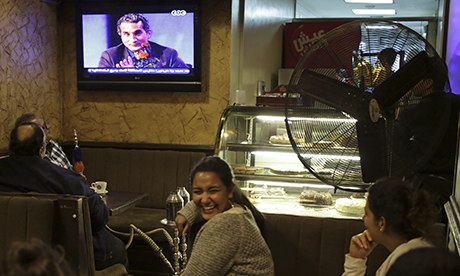
People watch Bassem Youssef's show at a coffee shop in Cairo. Photograph: Khalil Hamra/AP

"The Egyptian broadcaster CBC has distanced itself from its star satirist, Bassem Youssef, after he criticised both the army-backed government and the Islamist regime it succeeded in the first episode of his long-delayed new series.
Youssef's widely watched show, which rose to global prominence last year for lampooning the former president, Mohamed Morsi, had been off air since before Morsi's overthrow in July. Its return was anticipated as a litmus test for free speech in the post-Morsi era, in which few dare to criticise the army for fear of upsetting the authorities or alienating a largely pro-military audience.
Youssef's production team said the series had been postponed after the death of his mother, but many feared that his prolonged absence from the airwaves was the result of censorship by the government or CBC.
On Friday night Youssef re-emerged with the first episode of his third series and took careful aim at most Egyptian factions. Youssef criticised the Morsi administration, whose prosecutors had interrogated him this spring. But he also questioned the actions of the current government and mocked the popular adulation of the army chief, General Abdel Fatah al-Sisi.
"I definitely do not support the people who attacked us, accused us of heresy, had the gallows ready for us, and publicly demanded our arrest," said Youssef, a heart surgeon whose shift to satire was inspired by the US comedian Jon Stewart.
"At the same time, I don't support the hypocrisy, deification, pharoahisation and the repetition of the mistakes of the past 30 or even 60 years," he added, in a veiled reference to the dictatorships of Hosni Mubarak, Anwar Sadat and Gamal Abdel Nasser, a strongman era to which some Egyptians seek a return.
"What we fear is that fascism in the name of religion will be replaced by fascism in the name of patriotism and national security," Youssef said.
As expected, the show sparked criticism from all sides of the political spectrum, especially from supporters of the army. At least four viewers filed legal complaints against Youssef, which could lead to a formal investigation.
A day later Youssef's employers at CBC, who stood by him during similar barrages under Morsi, moved to distance themselves from his stance. "CBC will continue to be supportive of the basics of national sentiment and popular will and is keen on not using phrases and innuendos that may lead to mocking national sentiment or symbols of the Egyptian state," said a CBC broadcaster in a statement on behalf of the channel's board.
During the show Youssef appeared to predict the coming storm, in a skit that riffed on the theme of censorship. "Nobody will tell us what to say. We shall say what we want," he deadpanned as a hand reached from beneath his desk and replaced his script with another."

Monday, October 28, 2013

Oh well...

By Maysaloon

"Should I really care if Abu Mohammad al Golani has been killed in a regime ambush? Probably not. The Syrian revolution isn't about swapping an Alawite dictator for a Sunni one, it's about fundamental rights for the citizen and for dignity. I'm not going to shed tears over somebody simply because he opposes Assad when his group openly calls for ethnic cleansing and has been accused of horrific human rights abuses. I've often heard Syrians telling me that they are "the only ones fighting Assad" and so we should turn a blind eye to their mistakes. I disagree.

Nobody asked for this war, Assad imposed it on the country in order to stay in power. The reason he did this was precisely for the kind of reaction that groups like JAN and ISIS are capable of. It is also to buttress his position internationally and domestically as some sort of champion for secularism. If we really think about it there are two things this regime has feared and avoided above all else, allowing peaceful demonstrations to take root in the country - coupled with a civil society movement - and foreign - specifically Western - intervention.

Both of these options seem a distant dream now, but if the killing is to stop, really stop, then we have to bring these back on the table. I don't care who screeches to me about Iraq and imperialism, this is a matter of survival for an entire country. Assad and his allies are now presenting the world with two scenarios for Syria, and neither is acceptable. Either the country transforms into a version of North Korea, or it becomes Afghanistan. Both options would suit Iran, Hezbullah and Assad perfectly well for obvious reasons. But, and here is the important caveat, Iran, Hezbullah and Assad cannot impose their will on Syria. They've been trying to for almost three years and they can't. That means a lot though it has come at a hell of a price.

Syrians can push for the third option, a country that respects the rights of its citizens and gives them the opportunity to try and make a better life for themselves. In order to do that they don't have to feel compelled to clap and cheer for every madman who fires a Kalashnikov at the regime."

Al-Jazeera Video: جبهة الإنقاذ و"تمرد".. تجمع ظرفي أم تحالف دائم؟


"الاتفاق بين حركة تمرد وجبهة الإنقاذ على تشكيل تحالف انتخابي.
دور حزب الله والمليشيات العراقية في العمليات العسكرية بريف دمشق.
تقديم: عبد الصمد ناصر
الضيوف: أميرة العادلي, حسن سليمان, قاسم قصير, فايز الدويري, أبو محمد الفاتح

"

Glenn Greenwald: Media Venture Will Empower Adversarial Journalism to Hold the Powerful Accountable

Democracy Now!

"Glenn Greenwald, the journalist who first reported Edward Snowden’s leaks, is leaving The Guardian this week to join a new media venture funded by eBay founder and multi-billionaire Pierre Omidyar. "Usually [dissenting journalists] are on the outside of institutional power, and what this is really about is being able to create a very well-funded, powerful, well-fortified institution that’s designed not to just tolerate that kind of journalism, but to enable it and protect it, strengthen it and empower it," Greenwald says. "The people who we’re going to select are all going to be people who take the same view of adversarial journalism, that it’s about holding the most powerful factions accountable, fearlessly without regard to threats from the government or corporate factions. I think it’s going to be a very formidable force in shaping how journalism is understood and how it’s practiced."...."

Glenn Greenwald: U.S. Spying on Allies Shows "Institutional Obsession" With Surveillance

Democracy Now!


"The spat over U.S. spying on Germany grew over the weekend following reports the National Security Agency has monitored the phone calls of Chancellor Angela Merkel since as early as 2002, before she even came to office. The NSA also spied on Merkel’s predecessor, Gerhard Schroeder, after he refused to support the Iraq war. NSA staffers working out of the U.S. embassy in Berlin reportedly sent their findings directly to the White House. The German tabloid Bild also reports President Obama was made aware of Merkel’s phone tap in 2010, contradicting his apparent claim to her last week that he would have stopped the spying had he known. In another new disclosure, the Spanish newspaper El Mundo reports today the NSA tracked some 60 million calls in Spain over the course of a month last year. A delegation of German and French lawmakers are now in Washington to press for answers on the allegations of U.S. spying in their home countries. We discuss the latest revelations with Glenn Greenwald, the journalist who first reported Edward Snowden’s leaks......"

I Spy

By Nick Anderson

Video: Joseph Massad on Zionism’s strategy of “Peace is War”

Submitted by Ali Abunimah on Mon, 10/28/2013 - 12:56   


In this fascinating lecture, Columbia Professor Joseph Massad unravels the obfuscatory language of “peace” the Zionist movement and Israel have always used to mask their aggressive and colonial intentions towards Palestine.
Massad’s lecture, entitled “Peace Is War: Negotiations, Israeli Settler Colonialism, and the Palestinians” was given at Austin Community College in Austin, Texas on 23 October.
His opening words set up his journey through Zionist history to the present day:
Ever since its colonial project was set in motion, Zionism has insisted that it seeks to colonize Palestine “peacefully,” indeed that its colonization of the country will not only not harm the native population, but that it would be of benefit to them. The movement’s founder, Theodor Herzl, himself provided two visions of this future, a fictional public vision advertised in his futurist novel Altneuland, where Palestine would become a Jewish state allowing coexistence with the native Arabs who would be happy and grateful for being colonized and civilized by European Jews, and a secret logistical and practical strategy to evict the Arab population out of the country, which he spelled out in his Diaries. Herzl’s dual approach of declaring peaceful intentions for public consumption behind which he sought to hide Zionism’s violent strategy of conquering the land of the Palestinians would be adopted wholesale thenceforward and continues to be the cornerstone of Israeli policy to the present.
Indeed, long before George Orwell popularized the expression “war is peace” in his 1949 novel [1984], Zionism understood well that its colonial strategy depended on a deliberate and insistent confusion of the binary terms “war” and “peace” so that each of them hides behind the other as one and the same strategy: “peace” will always be the public name of a colonial war, and “war,” once it became necessary and public, would be articulated as the principal means to achieve the sought after “peace.” This is so central to Zionist and Israeli propaganda that Israel’s 1982 invasion of Lebanon, which killed 20,000 civilians, was termed operation “Peace for Galilee.” War and peace therefore were the same means whose only and ultimate strategic goal was the European Jewish colonization of Palestine and the subjugation and expulsion of Palestine’s native population.
Watch the video for the full lecture, followed by a question and answer session with the audience in which Massad addresses questions about the current situation in Palestine, armed struggle, the power of the Israel lobby and the achievements of the boycott, divestment and sanctions (BDS) movement

بشار.. المقاوم للإرهاب!


في آخر حواراته الصحفية، وغالبا لوسائل إعلام أجنبية، بدا بشار الأسد أكثر وضوحا وحسما في الدور الذي يعرضه على الغرب، وفي مقدمته الولايات المتحدة خلال المرحلة المقبلة، وقد شجّعه على تقديم العرض، ذلك الفيض من شهادات حسن السلوك التي حصل عليها من جون كيري، ومن الأمم المتحدة فيما يخص تعاونه "السريع" مع جهود تدمير أسلحته الكيميائية.

والحال أن بشار لم يعد قلقا على مصيره في المدى القريب، وبالطبع بعد مرحلة توتر امتدت لأسابيع على خلفية قرار الرئيس الأميركي باراك أوباما بتوجيه ضربة عسكرية لنظامه إثر استخدامه الكيميائي في الغوطة الشرقية، فقد أدرك أن أحدا لن يهدده لعام مقبل على الأقل، وربما أكثر، وهي الفترة التي تحتاجها تل أبيب للتأكد من التخلص من الأسلحة الكيميائية، مع أن الأمر قد يستمر لفترة أطول، لاسيما أنه سيكون بوسعه إحالة التعطيل لجماعات المعارضة المسلحة.

ويأتي ذلك في ظل قناعة الجميع بأن سقوطه قبل استكمال المهمة سيعني وقوع تلك الأسلحة بيد جماعات لا يمكن السيطرة عليها.

وإذا كانت التجربة قد بدت مخيفة لهم عقب سقوط القذافي الذي توزعت أسلحته على عناوين شتى من بينها قطاع غزة، فإن الأمر سيكون أكثر خطورة بكثير بالنسبة للسلاح الكيميائي، لاسيما أن في سوريا جماعات لن تتردد كثيرا في استخدامه في حال حصلت عليه ضد الكيان الصهيوني الذي يعيّرها كثيرون بأنها لا تهدد أمنه، مع أن الأمر لا يتعلق بقرار، بل بصعوبة ذلك، بل ربما باستحالته في ظل الوضع الأمني المعقد، داخليا، وفي المحيط.

لم يعد الأسد قلقا على مصيره في المدى القريب، فقد أدرك أن أحدا لن يهدده لعام مقبل وربما أكثر، وهي الفترة التي تحتاجها تل أبيب للتأكد من التخلص من الأسلحة الكيميائية، مع أن الأمر قد يستمر لفترة أطول، لاسيما أنه سيكون بوسعه إحالة التعطيل لجماعات المعارضة المسلحة
ليس هذا فقط ما يمنح بشار الأسد قدرا من الطمأنينة لبقائه في السلطة خلال المرحلة المقبلة، لاسيما أن حكاية الانتخابات لن تكون ممكنة في ظل تهجير الملايين من الشعب السوري، وفي ظل الوضع الأمني الصعب، وحيث يسيطر الثوار على حوالي 60% من التراب السوري. وعموما، فإن انتخابات تديرها أجهزته ستعني فوزه دون أدنى شك في حال إجرائها.

ما يمنح بشار قدرا آخر من الطمأنينة أيضا، يتمثل في الصفقة التي تعرضها طهران على الغرب، والتي تتمثل في التخلي عن الشق العسكري من المشروع النووي مقابل رفع العقوبات والإبقاء عليه (بشار).

لاسيما أنها (إيران) تدرك أن بقاءه هو الضامن الوحيد لمكتسباتها في العراق ولبنان، بل الضامن لعدم ضياع جهود عقود بُذلت فيها الكثير من الأموال والجهود، ومن العبث التضحية بها من أجل سلاح نووي لن يجدي كثيرا، وهو أصلا مخصص لمشروع التمدد في المنطقة في مواجهة الجيران الآخرين، وليس في مواجهة الكيان الصهيوني الذي يملك من الرؤوس النووية ما يمكنه تدمير إيران لو أراد ذلك، هذا بفرض تفكيرها في الأمر في ظل الوضع الدولي الراهن، وفي ظل حرص أقرب المحاور الدولية إليها (روسيا) على أمن الكيان الصهيوني بما لا يقل أبدا عن حرص الولايات المتحدة.

في المقابل لا تجد تل أبيب في خيار الإبقاء على بشار في السلطة ثمنا تدفعه، بقدر ما يشكل مكافأة لها تجنبها سيطرة جماعات خطيرة على البلد، وهو ما بدأت تدركه الولايات المتحدة أيضا بحسب ما صرح أحد مسؤوليها لصحيفة لوس أنجلوس تايمز.

فقد تحدث هذا المسؤول عن إمكانية أن تغدو سوريا مثل منطقة القبائل الأفغانية التي تستقطب الجهاديين من كل أنحاء العالم، مع فارق الأهمية الجيوإسترتيجية لسوريا، وحيث يمكن أن تشكل تهديدا للكيان الصهيوني بشكل خاص، ولعموم حلفاء أميركا في المنطقة بشكل عام، فضلا عما ينطوي عليه ذلك من ملامح تصدير للعنف نحو الخارج أيضا، كما حصل في العمليات التي خططت وانطلقت من أفغانستان أيام وجود أسامة بن لادن فيها إبان حكم حركة طالبان.

بشار الضعيف المنهك، والذي يدير بلدا مدمرا تأكله الانقسامات هو أفضل ألف مرة من أي بديل آخر،
مع أن الحصول على نظام بمقاس عربي "معتدل" يسيطر على البلد يُعد جيدا أيضا، وهنا تحديدا تبدأ مخاوف بشار.

وردا على تلك المخاوف يعرض بشار على الغرب وعلى الكيان الصهيوني، مهمة جديدة بالغة الأهمية قد تمنحه وصفة بقاء طويلة المدى.
وتتمثل هذه المهمة في دخوله معركة استئصال للجهاديين الذين ينتشرون في سوريا ويهددون العراق، بل ويهددون حلفاء آخرين من أنظمة المنطقة، وربما يهددون في محطات قادمة الغرب نفسه، فضلا عن الكيان الصهيوني كما يردد بشار.

إنه يعرض نفسه بمثابة رأس حربة في المواجهة مع هذه القوى، وهو عرض سيجد على الأرجح آذانا صاغية من قبل الغربيين والإسرائيليين، فيما تمنحه بعض الممارسات "المتطرفة" فرصة القبول أكثر فأكثر، لاسيما تلك التي تصر على بناء إمارات هنا وهناك، بدل الانشغال بقتال النظام وإسقاطه، ما يعزز الفكرة التي ذكرتها الصحيفة الأميركية وأشرنا إليها آنفا.

بشار الضعيف المنهك، والذي يدير بلدا مدمرا تأكله الانقسامات هو أفضل ألف مرة من أي بديل آخر، مع أن الحصول على نظام بمقاس عربي "معتدل" يسيطر على البلد يُعد جيدا أيضا، وهنا تحديدا تبدأ مخاوف بشار
يُشار في هذا السياق إلى أن نظام بشار له سجل في التعاون مع أميركا فيما خصّ الجهاديين، وهو تعاون معهم إبان المواجهة مع الاحتلال الأميركي للعراق، ثم ما لبث أن انقلب عليهم وقدم معلومات كثيرة عنهم للأميركيين، وللنظام العراقي أيضا، فيما اعتقل آخرين، ما لبث أن أفرج عن بعضهم لكي يتحركوا ويستثمرهم في القول إنه يواجه موجة إرهاب، وليس ثورة شعبية.

هذه المعادلة الجديدة ستعني بكل وضوح أن جنيف2 لن يكون برسم النجاح، هذا في حال عقده أصلا، وتعني أيضا أن لعبة الاستنزاف ستطول أكثر، وربما تغدو أكثر سخونة، في ذات الوقت الذي تفرض فيه وضعا صعبا على داعمي الثورة الذين يريدون انتصارها فعلا.

وفي المقدمة من هؤلاء تركيا التي هددها بشار بنبرة طائفية واضحة، والتي تميل اليوم إلى مقاربة جديدة (فتح مسار جديد مع إيران وحلفائها) ترد من خلالها على انحياز السعودية وبعض دول الخليج ضدها، بل التآمر عليها في بعض الأحيان.

معادلة استنزاف من الصعب الجزم بمداها، وربما من الصعب الجزم بتفاصيلها النهائية أيضا، لكن المؤكد أن عودة الوضع إلى ما كان عليه من حيث سيطرة طائفة صغيرة على سوريا لن تكون واردة بأي حال مهما كان الثمن، ومهما طال أمد الحرب