Friday, January 6, 2017

Damascus water wars expose Assadist rifts, threaten humanitarian disaster

Damascus water wars expose Assadist rifts, threaten humanitarian disaster

Link

Millions in Damascus face restricted access to water with humanitarian concerns also growing for 100,000 civilians trapped in Wadi Barada, with Hezbollah reluctant to stop pro-regime advances in the area.
International organisations including the UN and the International Red Cross continue to have no access to a contested valley located close to Damascus as millions in the Syrian capital face restricted access to mains water.
Around 70 percent of Damascus' water supply comes from Wadi Barada where clashes are ongoing between pro-regime troops and opposition fighters among mounting humanitarian concerns for an estimated 100,000 civilians besieged in the area.
The Ain al-Fija source in Wadi Barada has been cut since 22 December amid mutual accusations between pro-regime and rebel groups over who is responsible.
Rebel groups situated in Wadi Barada have previously cut water supplies on a number of occasions as a bargaining chip in order to dissuade the Syrian regime from launching full-scale assaults on the area, which has been in rebel hands since 2012.
However, they say that the Syrian regime has falsely claimed rebels have polluted the water supply with diesel as a pretext to invade the valley despite the existence of a nationwide ceasefire in Syria brokered by Russia and Turkey in late December.

The Syrian regime has also claimed that the nationwide ceasefire is not applicable to Wadi Barada due to the presence of the al-Qaeda linked Jabhat Fatah al-Sham in the area. However, local councils in Wadi Barada claim that the group, formerly known as the Nusra Front, has not had a presence in the area since 2015.
Videos uploaded to the internet by opposition activists claim to show extensive damage to water infrastructures in Wadi Barada they say has been caused by regime bombardment.
Speaking on Thursday Jan Egeland, head of a UN-backed humanitarian taskforce for Syria, said that 5.5 million people in Damascus had been affected by the water cuts, adding that such "dramatic consequences" meant it was an imperative that the UN gained access in order to make vital repairs.
But both the UN and the International Red Cross say that gaining access to Wadi Barada is currently not possible due to ongoing fighting in the area.
"We are working to get access and have contact with local councils but because of the ongoing fighting we cannot enter," said Ingy Sedky, a spokesperson for the International Red Cross speaking to The New Arab.
Last week a UN source in Damascus revealed to The New Arab that authorities in Damascus had established an emergency plan to produce around 30 percent of residents' water needs.
However, the UN source said that as a result of the crisis people are increasingly resorting to buying water privately for household usage, leading prices to skyrocket to more than double their usual cost, adding that the UN had been involved in rehabilitating a number of wells in and around Damascus that now served as "the sole source of water" for the entire city. Risks of water-born diseases are also on the rise.
But concerns are also increasing for civilians trapped in Wadi Barada.
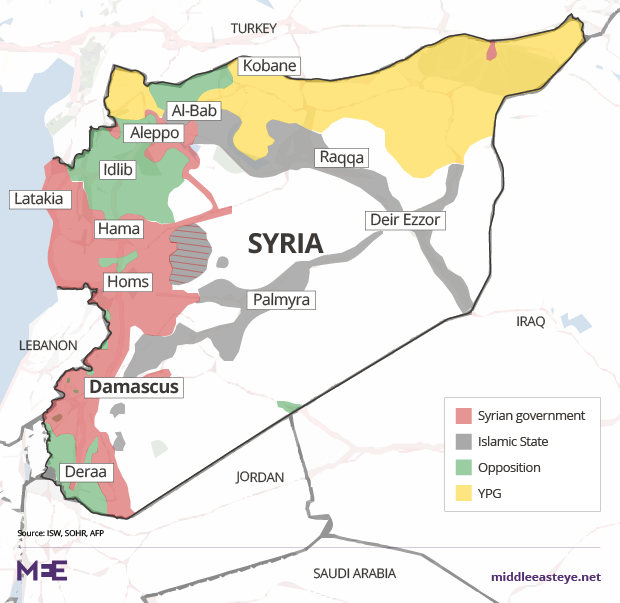
Click to enlarge
In addition to Syrian Arab Army troops, the Lebanese Shia paramilitary group Hezbollah is taking part in current regime advances on Wadi Barada.
The strategically important valley is located between Damascus and the group's strongholds in the Bekaa valley across the Lebanese border. Opposition figures claim that Hezbollah is reluctant to leave the area, under Iranian direction, despite the existence of a nationwide ceasefire for Syria which came into place on 29 December.
"Hezbollah, backed by Iran, is interested in asserting control in these areas by the Lebanese border. We have seen this in places like Yabroud, Qalamoun, Qusair. They want to control this area," said Monzer Akbik, a senior member of Tayar al-Ghad, a moderate opposition faction involved in fighting against the Islamic State group alongside Kurdish forces in eastern Syria, in comment to The New Arab.
Ahmad Ramadan, a spokesman for the Syrian National Council opposition political body, pointed to reports earlier this week that Russian generals attempting to enter Wadi Barada to assess the situation in the valley, had been denied access by Hezbollah operatives in the area as evidence of such dynamics.
This week Turkey has also called on Iran to exert pressure on Hezbollah to halt its operations in Wadi Barada in remarks rebuked by Tehran as "unconstructive".
"There is some disagreement between these pro-regime groups. The two main forces on the ground in Wadi Barada are the Republican Guard under Maher al-Assad (Syrian President Bashar al-Assad's brother) and Hezbollah," said Ramadan, who described incursions by pro-regime forces in the area as a clear violation of the ceasefire.
"Without doubt this is a clear violation. We are in communication with local councils on the ground there. Civilians are being subjected to bombardment and they are surrounded, they have nowhere to go."
Sedky, of the IRC, said that in the past week some civilians had managed to flee Wadi Barada.
However, neither the IRC nor the UN, due in part to restricted access, has official statistics on displacement from the area with estimates ranging from 900 into the thousands.
Akbik voiced concern for civilians besieged in the area, pointing out that the Syrian Civil Defence, one of whose members was reportedly killed in regime bombardment in the area this week, had reported running out of diesel fuel to power its emergency response vehicles.
"People are trapped, they have nowhere to go," said Akbik. "I think the attack will continue. It is a mountainous region and the regime has had trouble in the past displacing opposition groups from this area but I don't know how long they (the opposition) can resist with their current stocks of ammunition and supplies."
Since water to Damascus from Wadi Barada was cut the UN has consistently described the sabotaging of water infrastructures as tantamount to war crimes.

However, the UN has not commented on who is responsible for damaging water infratructures in Wadi Barada.

Combatant forces in Syria have routinely been accused of using water as a weapon, with the Syrian regime notably criticised for bombing campaigns targeting water infrastructures in the formerly rebel-held districts of east Aleppo last year.
Meanwhile, in Wadi Barada itself, monitors such as the UK-based Syrian Observatory for Human Rights have recorded a mounting civilian death toll in the valley in a campaign that has involved airstrikes, shelling, and ground advances by pro-regime troops.

"We are deeply concerned about the wellbeing of civilians trapped in the area," said Sedky. "We are waiting for access. We are ready. But because of the conditions we cannot enter."
* Joint-statement from civil society organisations in Wadi Barada condemning pro-regime attacks and denying the presence of the al-Qaeda linked Jabhat Fatah al-Sham in the area. *

ما وراء الخبر-جدل بين تركيا وإيران بشأن التدخلات بسوريا

Thursday, January 5, 2017

DNA - 05/01/2017 الأسد وحزب الله..لصاحبهما النظام الإيراني

Assad government has infiltrated Islamic State, says Syria diplomat

Secretary of the Syrian Parliament Khaled Abboud alluded in an interview earlier this week that the Assad government has been redirecting IS attacks

SCROLL DOWN 7 POSTS TO SEE A VIDEO OF ABBOUD'S INTERVIEW

Link


President Assad’s government has infiltrated the Islamic State group and is fully aware of the intricacies behind terrorist attacks taking place in Turkey, a Syrian diplomat has said.
“The Syrian security establishment and the Syrian intelligence services have infiltrated these networks [Islamic State and other militant groups in Syria],” said Secretary of the Syrian Parliament Khaled Abboud, in an interview on Syrian state TV channel earlier this week.
Abboud said that infiltration of the militant group's networks was why Damascus has been spared militant attacks which are rampant across the rest of the country.
“Where is Daesh (IS) and the Nusrah Front and all these jihadist revolutionary factions?" he said. "They are on the outskirts of Damascus, [aren’t they]."
“Then why have there been no bombings Damascus? But there have been attacks on Turkish cities [instead]," he said, hinting at the link between the infiltration of IS and the absence of attacks on the capital, which is the government’s stronghold.

Need help with terrorism? Ask Syria

Abboud also said that other countries struggling to fight terrorism should seek advice and the cooperation of the Assad government to overcome militant attacks.
Consequently, in my opinion, what is going on in Turkey [terrorist attacks] … no one can stop that without cooperating with the Syrian security establishment,” said Abboud.
Turkey has witnessed a series of militant attacks since 2015. The latest was claimed by IS and targeted a nightclub in Istanbul on New Year’s Eve, killing 39 people and injuring dozens of others.
Abboud further said that the Syrian government is fully-aware of the terrorist attacks unfolding in Turkey and Jordan.
“You may be surprised (to know) ... that the Syrian state is fully aware of what is going on in ...Turkey.”
“There is a difference between knowing about these operations and actually running them.”

Terrorism still rampant

In a series of contradictory statements, Abboud claimed that despite the Syrian government not needing any foreign assistance in its fight against rebel groups, Hezbollah, Iran and Russia all joined the fight with Assad.
“This force of three powers combined [Syrian army, Hezbollah militias and Iran] could not defeat terrorism. So, who intervened (next)? Russia did,” explained Abboud.
According to the Syrian diplomat however, despite the involvement of all these powers, terrorism is still rampant in Syria.
“[But] did we manage to overcome terrorism?” he asked rhetorically. “Until this very day we have not been able to,” said Abboud.
Following the fall of Aleppo on 23 December and the evacuation of civilians and rebel fighters from the besieged enclave, the Syrian army declared a pivotal victory against "terrorism”, while key ally Russia hailed it a "very important" step.
Iranian forces and militias linked to Tehran – including Hezbollah - have played a crucial role in supporting the troops of Syrian President Assad, particularly in the battle of Aleppo.
The fall of Aleppo has been considered the biggest victory for Assad's forces in nearly six years of civil war and a major win for his foreign backers.

TRUCE??

119185201643463211458576988

عرب جرب

Al-Jazeera Cartoon: The Arab League

كاريكاتير: الجامعة العربية

Wednesday, January 4, 2017

نقد الثورة السورية

AN EXCELLENT AND BOLD CRITIQUE!

سلامة كيلة
نقد الثورة السورية
Link

يبدو أن التطورات الأخيرة في الوضع السوري فرضت "استفاقة" لدى نخب وناشطين. ولهذا قرّرت أن تقدّم وجهة نظرها لتصحيح مسار الثورة. ولا شك في أن وقع خسارة حلب، و"صدمة" تطور العلاقة التركية الروسية، كانتا "لحظة الصدمة" التي استدعت ذلك، الآن وبعد ست سنوات من الثورة. ولكن بعد أن كان لكثيرين من هذه النخب والناشطين والمثقفين دور ليس قليلاً في وصول الوضع إلى ما وصل إليه، أي بعد أن أسهم كل هؤلاء في الانحدار الكبير الذي حدث، بعد أن عمّمت الأوهام حول قضايا كثيرة باتت مجال نقدهم الآن. 

من المفيد الميل نحو إعادة النظر في مسار ست سنوات، ومهم كذلك أن يشار إلى "خطايا" عديدة جرى ارتكابها، لكن الأهم هو نقد الذات قبل نقد الثورة، فما عانته الثورة كان من فعل مباشر من النخب التي عملت على حرفها عن سياقها ووضعها في سياقٍ مختلف، مستفيدةً من تكريس كل الإعلام والقنوات الفضائية لتعميم أوهامها، وإظهار الثورة بصورةٍ ليست فيها. سواء تعلق الأمر بالأسلمة، حيث كانت النخب فاعلةً في هذا السياق، أو في استدعاء التدخل الإمبريالي، أو في تخريب الفعل الواقعي للشباب الذي كان يقود الثورات، والشغل على شرائه أو تهجيره. 


ولا شك في أنه يجب تحديد المطالب التي فرضت انطلاق الثورة. لكن، لا يبدو أن النخب التي تنتقد معنيةً بذلك. لهذا، نجدها تعيد تكرار خطابها الذي لم يلامس مشكلاتٍ مجتمعيةً عميقة. ولهذا، لم يؤثّر في قطاعاتٍ شعبيةٍ، كان يجب أن تكون مع الثورة. على العكس، طرحت أوهامها هي، أو لكي أكون "دبلوماسياً"، طرحت مطلبها الخاص كنخب ما ترى أنه مشكلة هو استبدادية النظام، لكنها لم تلمس انهيار الوضع الاقتصادي، وارتفاع البطالة بشكل كبير، ولا انهيار الوضع المعيشي لنسبة كبيرة من الشعب. وهي العوامل التي أحدثت الاحتقان الذي فرض انفجار الثورة، وهي تتلهى بشعار "الانتقال من الاستبداد إلى الديمقراطية"، وتظن أن الشعب عاجز عن فعل شيء. وهذه المسألة هي التي أطلقت المراهنات على التدخل العسكري الخارجي، وربط مصير الثورة بالدول الإمبريالية التي كانت تخطط لتدمير الثورة، لأنها تخاف الثورة أكثر كثيراً مما تخاف الاستبداد، بل تحبّذ الاستبداد. 


هل تستطيع هذه النخب مواجهة الخطاب الأصولي السلفي الذي ساعدت على انتشاره، حين غطت على القوى التي تطرحه، وأوهمت أنها آتيةٌ لإسقاط النظام، وأن أصوليتها ووهابيتها ليست سيئة، و"هذا هو وعي شعبنا"، وما إلى ذلك من تبريرات؟ هل تستطيع كشف أطراف المعارضة التي عملت، منذ اللحظة الأولى، على أسلمة الثورة عبر فرض شعاراتٍ وأسماء جُمعٍ كانت البداية في مسيرةٍ أسلمةٍ وجدت منابرها الإعلامية في القنوات الفضائية؟ أشير هنا الى "الإخوان المسلمين" وتواطؤ "إعلان دمشق"، ونخبٍ كثيرة باتت تلهج بالخطاب الطائفي. 


كانت الثورة السورية كاشفاً لأمراض ومصالح وأوهام كثيرة، وأيضاً القدرات. ولهذا، ظهر واضحاً أن كل من تصدّى لقيادة ثورةٍ لم يتوقعها ولا شارك فيها، ولا انتبه إلى مشكلاتها، لم يكن في مستواها، بل إن كثيرين ممن "تعربشوا" عليها كان يلحق مصالحه في لحظةٍ أحسّ أن النظام سيسقط، وعليه أن يقفز لكي يحكم بديلاً عن النظام. ولهذا، قبِل التبعية للدول الإقليمية أو "الغربية"، وقبِل أن يكون بوقاً لها، وأن ينفّذ سياساتها التي كانت تهدف الى تدمير الثورة بالتحديد، بغض النظر عن كل البروباغندا الإعلامية، وكل الحديث عن "دعم الشعب السوري". 


لهذا، ما دام الأمر قد فرض أن تجري مراجعة تجربة سنوات ست، لا بد من القول الواضح إن المعارضة التي تصدّت لقيادة الثورة، وفرحت بحصولها على "اعتراف دولي"، كانت عبئاً على الثورة وأضرّت كثيراً. وبالتالي، ليست جديرةً بأن تبقى، أو تجري المراهنة على أن تعيد النظر في سياساتها، بالضبط لأن المصالح الخاصة تقبع تحت هذه السياسات. وبالتالي، يجب أن تُعرّى، وأن تُلفظ، هكذا بالضبط، وحين تأتي لحظة المحاسبة أن تحاسب على كل ما فعلت. 


ليس هؤلاء من هم في مستوى الثورة، بكل قوتها وعظمتها وتضحياتها، بكل الجبروت الذي واجهت النظام به. ومن ثم لكي تنتصر، لا بد من أن تُنتج هي قادتها الفعليين، من الشباب الذي أطلقها، والذي خاضها بكل جرأة وقوة، ولا يزال. 


بلا حدود- بشير موسى نافع

DNA - 04/01/2017 محور المقاومة.. ورؤية 2017

DNA - 03/01/2017 خالد العبود..فاضِح سر الأسد


AN EXCELLENT SEGMENT!!

DNA - 02/01/2017 وقف إطلاق النار في سوريا

Can Turkey and Russia push back Iran in Syria?

AS USUAL, A VERY GOOD PIECE!

By David Hearst

Link


The big losers from the Turkey-Russian entente are Iran and the Kurdish YPG - with Saudi Arabia now left watching from the sidelines
Not so long ago, the question on many people’s minds was whom the US would choose as partners in the liberation of the northern Syrian town of al-Bab from the clutches of Islamic State fighters - the Kurds or the Turks.
That question has since been answered on at least two occasions. Turkish ground forces are getting air cover from the Russians as well as their own air force, and there is little either the US or their former allies in Kurdish YPG can do about it.
This was the way Sputnik, which took over from RIA Novosti as the official voice of Russia, and which at one point was banned in Turkey, reported the first three Russian air strikes around al-Bab:
“Euphrates Shield, a Turkish operation to defend its border from terrorists, received a notable boost from Moscow. Turkish military officials announced that Russian fighter jets eliminated 12 Daesh militants in air strikes… The US has been coy in supporting Turkey as Washington has backed the Kurdish YPG, a group that has long sought to create their own nation, independent of Ankara.”
Sputnik omitted to mention that Moscow supported the Syrian Kurds in that ambition, allowing them to open their first international office in Moscow. All that, of course, is now water under the bridge. 

No longer interested

Welcome to the new world order - at least as far as Syria is concerned. The fall of Aleppo marked a form of regime change among those states who have pulled the strings of the political and military Syrian opposition. Exit the US and Saudi Arabia and enter Turkey.
When Syrian opposition leaders pulled out of the last set of peace talks in Geneva, there were calls from Riyadh instructing them on when to leave the hotel
Not so long ago, the Saudis choreographed the smallest moves of Syrian opposition. When Syrian opposition leaders pulled out of the last set of peace talks in Geneva, there were calls from Riyadh instructing them on when to leave the hotel.
In December, King Salman addressed his newly appointed Shura Council, the non-elected parliament, in what could be considered a state of the kingdom speech. This was a few days before Aleppo fell. Salman made not one reference to Syria in the section of his speech devoted to foreign affairs and only one scant sentence in a passage devoted to humanitarian work praising the Saudi campaign for the relief of Syrian refugees.
The omission was deliberate. The message Salman was sending Syrian rebels he had once funded and armed was simple: we are no longer interested. This clearly had implications for Turkey as well. 

Wooing Turkey

Turkey’s disenchantment with Obama’s outgoing administration had been building steadily and reached a peak after the failed coup last year. For years, they asked for a no-fly zone in Syria and did not get it. For years, they asked for weapons that would allow the Free Syria Army to change the course of the war. Obama vetoed those, too.
Conspiracy theory or not, the majority of the government in Turkey believe that Washington either had a hand in the coup attempt in July or foreknowledge of it. Relations with Europe are just as icy, after the EU’s failure to deliver a visa waiver deal for Turkish citizens. This was one of several reasons which forced Ahmed Davutoglu to resign as prime minister.
Much of this is manna from heaven for the man who has become Erdogan’s closest foreign ally, Vladimir Putin. The Turkish file has become very important to Moscow, too important to be derailed even by the murder of a Russian ambassador. Turkey is the second largest army in NATO, the military alliance whose eastward expansion has sapped so much of Russia’s geopolitical strength. The possibility - still faint - that Erdogan can walk away from NATO would be a major achievement for Putin.
Putin has got what he wanted from his intervention in Syria. He has his base; the Syrian state has been saved, and the rebels have been so weakened, they are ready - or so the Russians calculate - to accept a deal on a transitional government which would keep Assad in place.

Risk of blowback

Russia is not interested in annihilating the Syrian rebels in Idlib, or in turning the vast majority of the Sunni Muslim population against them. The deployment of 400 Chechen military police - who are Sunni Muslims - in Aleppo was another product of the Turko-Russian pact, which was done at Turkey’s request.
The last thing Putin wants to do is to repeat the mistake George W Bush made in Iraq or indeed the Soviets in Afghanistan in which both invading forces won the war, but lost the peace
If Donald Trump feels he has a problem with his Muslims which form less than 1 percent of the population in America, Muslim minorities  - mainly Tatars, Bashkirs and Chechens - form up to 14 percent of the population of the Russian Federation. There are a million Muslims in Moscow alone, which held one of the largest Eid celebrations anywhere in the world. The risk of blowback from Syria on the streets of Moscow is real, with or without video threats of sleeper cells in the Russian capital from the Islamic State (IS) group.
Russia’s interest lies in closing down the Syrian conflict sooner rather than later. The last thing Putin wants to do is to repeat the mistake George W Bush made in Iraq or indeed the Soviets in Afghanistan in which both invading forces won the war, but lost the peace.
Here Russian and Iranian interests diverge. Russia has never had a problem with Israeli air strikes on Hezbollah’s supply lines in southern Syria. Unlike Russia, Iran’s motives in Syria are ideological.
Iran is the brains behind Assad's plan to redraw the ethnic map of central Syria. They want to evacuate all Sunnis from their areas between Damascus and the Lebanese border. Iran has brought 300 Shia families from Iraq to repopulate the Damascus suburb of Darayya, which surrendered as an opposition stronghold in August. They have also shipped in Shia families to protect the Zainab shrine. Iran’s planning is strategic, long term and deeply sectarian.  
Iran pushed for an all-out offensive on Idlib after the fall of Aleppo, arguing, so far unsuccessfully, that the rebels should be given no respite.

Winners, losers and a retreat

This, then, is the state of play in Syria that greets Trump on 20 January. Without him having to make a single policy decision, it is tailor-made for a new US rapprochement with both Putin and Erdogan - and all with Israel’s blessing. 
The losers of Turko- Russian pact blessed by Trump will be Iranian-backed militias and the YPG. There have been tensions between Iran and the Iraqi Kurds, although with a group closer to Barzani's KDP, an Iranian Kurdish armed opposition group called the Democratic Party of Iranian Kurdistan (PDKI). They accused Iran of a bombing in Koy Sanjaq, a town east of Erbil, the capital of the Iraqi Kurdistan, which killed five of its fighters and a Iraqi policeman. 
Last year saw the first lethal clashes for many years between PDKI fighters and the Iranian Revolutionary Guards in northwestern Iran. For now, the US-backed Syrian Kurdish forces of the SDF are still on the march to Raqqa.

READ: More columns by David Hearst

The de facto pact between Russia and Turkey to carve zones of influence out of Syria would have King Salman’s blessing. The Saudis were so terrified of the Russian intervention, the nuclear agreement with Iran and the Justice Against Sponsors of Terrorism Act (JASTA) in Congress, that they would do anything to keep in step with the new US administration. Their foreign policy is built first and foremost on fear. This was why they silenced their best journalist Jamal Khashoggi from even tweeting on the subject.
It is not, however, the end of the story.  Neither Iran, nor Assad - both of whom want to press home their advantage against the rebels - will be so easily deterred, as the latest ceasefire violations around Damascus show. Having invested so much in their foreign intervention, Iran will not want to let Turkey stabilise and strengthen the Syrian Free Army under one unified command, as it now threatens to do. 
Nor will the Syrian rebel factions be so easy to turn on or off. I do not share Moscow’s confidence that they will sit down with Assad in one room, let alone agree to him staying on. All we have witnessed is just another chapter in the long march of America's retreat from the Middle East.
David Hearst is editor-in-chief of Middle East Eye. He was chief foreign leader writer of The Guardian, former Associate Foreign Editor, European Editor, Moscow Bureau Chief, European Correspondent and Ireland Correspondent. He joined The Guardian from The Scotsman, where he was education correspondent.

Syrian regime responsible for 75% of 2016 civilian casualties


The report said that 3,923 children and 2,552 women were killed [SNHR]
Syrian regime responsible for 75% of 2016 civilian casualties


The Assad regime and its allies were responsible for 75 percent of the Syrian civil war's civilian casualties in 2016, a report by an independent rights group has revealed.
Bashar al-Assad's regime and its allies were responsible for 75 percent of the Syrian civil war's civilian casualties in 2016, a report by an independent rights group has revealed.
The Syrian Network for Human Rights [SNHR] said on Sunday that the Syrian military, including loyalist militias, and Russian forces killed 12,703 civilians last year out of a total of 16,913 deaths.
The group said that extremist groups such as the Islamic State group [IS] and former al-Qaeda affiliate Jabhat Fateh al-Sham killed nine percent of civilians and that rebel groups were responsible for six percent.
The SNHR explained that the number of victims was likely much higher because of difficulties in collecting information on casualties.
"The Syrian government and [IS] don't publish, reveal, or record their victims," the report said.
"We face additional difficulties as many of those victims are killed on battlefronts and not inside cities," it said, referring to casualties caused by opposition groups.
The Syrian Network for Human Rights [SNHR]
The report said that 3,923 children and 2,552 women were killed by the main influential parties of the war in 2016.
The SNHR said the regime and its allies have committed "crime against humanity" with its systematic attacks against non-combatants.
"According to hundreds of eyewitness accounts, at least 90 percent of widespread and single attacks [by the regime] were directed against civilians and civilian facilities," the group said.
The regime of Syrian President Bashar al-Assad has maintained that it is fighting against "terrorists" and has denied targeting civilians in the war.
The Syrian conflict has killed more than 310,000 people, and displaced over half the population, including millions who have fled abroad since it began in March 2011 with anti-government protests.
The peaceful pro-reform demonstrations were met with brutal repression, prompting an armed uprising that later descended into a multi-sided nationwide conflict.

Read also:

هل كانت الثورات مؤامرة لتدمير العالم العربي؟

Arabs blow up Iran oil pipelines

A video allegedly showing one of the bombings was released.
A gas flare on an oil production platform [REUTERS/Raheb Homavandi/]
GOOD....I HOPE THAT THIS IS TRUE

Link

An Iranian Arab separatist movement has claimed responsibility for destroying two major oil pipelines in Iran, vowing to continue attacks against vital Iranian economic and energy infrastructure over the coming year. The Iranian government has denied the reports.
According to The New Arab, the pipeline bomb attacks reportedly occurred near the towns of Omidiyeh and Deylam that are in the Arab-majority area of what Tehran calls Khuzestan province and what many local Arabs identify as Arabestan.
A video allegedly showing one of the bombings was released on YouTube by the Arab Struggle for the Liberation of Ahwaz (ASLA), an Arab separatist group that calls for Arab self-determination and liberty from what it says are racist Iranian government policies that discriminate against Arabs.
Iranian Arabs are generally known as Ahwazis, named for a major city in southwestern Iran called Ahwaz.
The video assigns credit for the reported attack to ASLA’s armed wing, the Martyr Mohyiddin Al Nasser Brigades, named after a tribal sheikh who led an Arab rebellion against the Iranian government in 1928 before he was killed.
The footage, which MEMO cannot independently verify, shows a dramatic and fiery explosion of a nondescript area at night. The lower silhouette of the video appears to be a pipeline, and the size and pattern of the explosion suggests that the contents could be oil or gas.
The areas where Ahwazi Arabs live are generally quite rich in natural resources, a wealth that Ahwazis say they are denied a share in by the Persian-dominated regime in Tehran who also discriminates against them in terms of educational and economic opportunities.
The Iranian Interior Ministry denied that the attacks took place.
Armed groups fighting for greater autonomy and even independence, including Kurds, have carried out attacks against Iranian infrastructure for decades, citing racist repression by the central government dominated by ethnic Persians.

Monday, January 2, 2017

ما وراء الخبر- 2/1/2017

Emad Hajjaj's Cartoon

تقليد رئاسي أميركي !

فرص نجاح الاتفاق الروسي - التركي بشأن سورية

المركز العربي للأبحاث ودراسة السياسات

Link

بعد اتفاق إجلاء المعارضة عن حلب الذي توصل إليه الجانبان، الروسي والتركي، اتفقت روسيا مع فصائل من المعارضة السورية، بوساطة تركية، على وقفٍ للعمليات العدائية يشمل الجبهات كافة. وأُعلِن الاتفاق في أنقرة في 29 ديسمبر/ كانون الثاني الماضي، على أن يبدأ تنفيذه في اليوم نفسه، وبضمانات تركية وروسية. وقد اتُّفق على أن يشكل وقف إطلاق النار بدايةً لعملية سياسية لحل الأزمة السورية، تنطلق أواخر يناير/ كانون الثاني الجاري في مدينة أستانا، عاصمة كازاخستان، بين النظام السوري والمعارضة. فما الذي يجعل هذا الاتفاق مختلفًا عن الاتفاقات السابقة؟ ولماذا قد ينجح الجهد التركي - الروسي في حل الأزمة السورية، في حين فشل الجهد السابق كله في وضع حدٍ لها؟ وهل هناك معطيات مختلفة في هذه المرة؟

فشل التفاهم الروسي - الأميركي
منذ التدخل العسكري الروسي في سورية في الثلاثين من سبتمبر/ أيلول 2015، توصلت الولايات المتحدة وروسيا إلى اتفاقين لوقف إطلاق النار، انبثق الأول من تفاهمات فيينا التي جرى التوصل إليها منتصف نوفمبر/ تشرين الثاني 2015، ثم تضمينها في قرار مجلس الأمن التابع للأمم المتحدة رقم 2254 في 18 ديسمبر/ كانون الأول 2015. وجاء الاتفاق، الذي بدأ العمل به في 27 فبراير/ شباط 2016، بهدف تذليل العقبات أمام مفاوضات "جنيف 3"، والتي فشلت بسبب استمرار قصف النظام مناطق المعارضة، وإصراره على عدم إدخال مساعداتٍ إنسانية إلى المناطق المحاصرة. أما الاتفاق الثاني، فقد أُقِر بعد محادثاتٍ مكثفة بين وزيري الخارجية، الأميركي جون كيري والروسي سيرغي لافروف، بهدف تنسيق جهد الطرفين، لمواجهة التنظيمات المتطرفة في سورية (تنظيم الدولة الإسلامية وجبهة النصرة)؛ وإحياء مفاوضات إنهاء الصراع في سورية. وأُعلن الاتفاق يوم التاسع من سبتمبر/ أيلول 2016. وقد فشل الاتفاقان المذكوران في الحفاظ على وقف الأعمال القتالية، بسبب اقتناع النظام السوري وإيران بإمكانية الحسم العسكري بعد التدخل الروسي، واستمرار الخلافات 

الروسية - الأميركية حول موضوع التنسيق الأمني، وإصرار الروس على "وحدة" المسارين، السوري والأوكراني. أراد النظام السوري وإيران والمليشيات المتحالفة معهما استغلال التدخل الروسي للحسم العسكري ضد المعارضة، في حين جاء التدخل الروسي لحماية النظام السوري الذي كان على حافة السقوط على الرغم من التدخل الإيراني، وإجبار الأطراف على التوصل إلى حل سياسي.

التقارب الروسي - التركي
بالتوازي مع تعمّق فجوة عدم الثقة بين الجانبين الروسي والأميركي، والتركي والأميركي، شهدت العلاقات التركية - الروسية تقاربًا مضطردًا، خصوصاً في المرحلة التي أعقبت المحاولة الانقلابية التي استهدفت إطاحة الرئيس التركي، رجب طيب أردوغان، وحكم حزب العدالة والتنمية منتصف يوليو/ تموز 2016، وتنامي الشكوك التركية بالنيات الأميركية في ضوء الدعم الكبير الذي تقدمه واشنطن لوحدات حماية الشعب الكردية في سورية.
أدى التقارب التركي – الروسي، واستعادة الرئيس أردوغان السيطرة على الجيش التركي، إلى تدخل تركيا عسكريًا على نطاق واسع في سورية، لأول مرة منذ بداية الأزمة، وكانت عملية "درع الفرات" التي انطلقت في أغسطس/ آب 2016 بمنزلة مؤشرٍ على تحول كبير في العلاقات التركية - الروسية. ومنذ فشل وقف إطلاق النار الثاني، ويأس الروس من التوصل إلى اتفاقٍ مع إدارة الرئيس الأميركي، باراك أوباما، يحقق مطالبهم في تنسيق أمني مشترك مع الجيش الأميركي في سورية، وافقت روسيا على الدخول في مفاوضاتٍ مباشرة مع فصائل من المعارضة السورية، استضافتها تركيا التي أخذت تقدّم نفسها وسيطاً في الصراع السوري، بعد أن كانت طرفاً داعمًا للمعارضة.
أسفر الجهد التركي عن اتفاق مع روسيا على إخراج مقاتلي المعارضة المحاصرين من حلب، وإلزام إيران وميليشياتها على الأرض بتنفيذه. وقد شجع نجاح الاتفاق الروسي - التركي حول حلب الطرفين على المضي باتجاه تصورٍ أشمل لحل المسألة السورية. 

اتفاق أنقرة
بعد إخراج المعارضة من حلب، دعت موسكو إلى اجتماع سداسي، ضمّ وزراء خارجية ودفاع كل من روسيا وتركيا وإيران. وخرج الاجتماع الذي عقد في 20 ديسمبر/ كانون الأول 2016 ببيان حمل اسم "إعلان موسكو"، وتضمّن خريطة للحل السياسي في سورية؛ تشمل توسيع وقف إطلاق النار الذي تم التوصل إليه في حلب، ليشمل الأراضي السورية والأطراف المتحاربة كافة، باستثناء جبهة فتح الشام (جبهة النصرة سابقًا) وتنظيم الدولة الإسلامية (داعش)، وإحياء المسار السياسي الذي لم يحقق أي تقدم منذ انطلاقته برعاية دولية في يناير/ كانون الثاني 2014. وبالتوازي مع ذلك، جرت مفاوضات صعبة استضافتها تركيا بين روسيا وفصائل المعارضة السورية، أُعلن، في نهايتها، عن التوصل إلى "اتفاق أنقرة" الذي شمل ثلاث وثائق، تضمنت الأولى بنود وقف العمليات العدائية بين النظام والمعارضة، والثانية آليات مراقبة وقف إطلاق النار، وإدخال المساعدات الإنسانية إلى المناطق المحاصرة، وتناولت الثالثة سبل استئناف مفاوضات السلام في مدينة أستانا ومرجعيات التفاوض.
تميّز هذا الاتفاق عن الاتفاقات السابقة بغياب المماحكات الروسية - الأميركية التي أدت إلى فشل اتفاقي فبراير/ شباط وسبتمبر/ أيلول 2016، وحضور الطرفين الفاعلين الرئيسين في المسألة السورية؛ روسيا التي تعد الراعية الأكبر للنظام السوري، وتركيا صاحبة النفوذ الأكبر على المعارضة السورية. وقد تكفلت تركيا بضمان تنفيذ فصائل المعارضة التي وقعت على الاتفاق، والتي يتجاوز مجموع عدد مقاتليها ستين ألفًا، أما روسيا فقد تكفلت بالنظام وحلفائه من مليشيات وحرس ثوري إيراني. واستُبعد من الاتفاق كل من جبهة فتح الشام وتنظيم الدولة الإسلامية والفصائل الكردية. وأظهرت الوثائق التي نشرت اتفاق الطرفين الضامنين على تثبيت وقف إطلاق النار عن طريق نشر مراقبين روس وأتراك ونقاط تفتيش قرب مناطق الاشتباك. كما تم التوصل إلى آلياتٍ لتسجيل خروقات اتفاق وقف العمليات القتالية، ونظام معاقبة لمن يخرق الاتفاق. ولإعطاء الاتفاق غطاءً سياسيًا وقانونيًا دوليًا، اتجهت روسيا وتركيا إلى مجلس الأمن الذي رحب باتفاق وقف إطلاق النار بنص القرار رقم 2336، وأكّد على مرجعيات الحل السياسي المتمثلة بقرار مجلس الأمن 2254 وبيان "جنيف 1" لعام 2012.
ويتوقع أن يشكل الاتفاق الروسي - التركي في أنقرة خطوةً مهمةً على طريق الحل السياسي في سورية، فكل المؤشرات تدلّ على جدية الطرفين، ومصلحتهما، في السعي إلى الوصول 

بالأزمة السورية إلى نهايتها، فالروس يريدون، بعد أن قلبوا، بتدخلهم المعادلات الميدانية، إثبات قدرتهم على صنع السلام، انطلاقًا من حجم التأثير والنفوذ الذي باتوا يملكونه في سورية، وفي الفاعلين الإقليميين، كما أن روسيا لا تريد أن تغرق أكثر في المستنقع السوري، في ظل أوضاع اقتصادية سيئة تمرّ بها. أما تركيا فقد باتت تنظر إلى الأزمة السورية باعتبارها خطرًا يهدّد وحدتها واستقرارها، في ظل تنامي التهديدات الأمنية الناتجة من استمرار الصراع، إذ إنها تخوض حربًا مزدوجةً ضد تنظيم الدولة وحزب العمال الكردستاني في آن معًا، كما أن الدعم الأميركي للأكراد يزيد مخاوفها من احتمال إنشاء دولة قومية كردية في الشمال السوري. من هنا، يأتي حرص الطرفين، الروسي والتركي، على التوصل إلى حلٍ للأزمة السورية.

عقبات على طريق الحل
غابت إيران عن اتفاق حلب الذي أخرج المعارضة من المدينة، كما غابت عن اتفاق أنقرة الذي أسفر عن وقف إطلاق النار؛ فالاتفاقان كانا ثمرةَ جهدٍ ثنائيٍ روسي – تركي. ومع ذلك، حرص الروس والأتراك على ضم إيران إلى التسوية، لتحييد قدرتها على التعطيل، واعترافًا بنفوذها في النظام السوري، وذلك بدعوتها إلى اجتماع موسكو الثلاثي الذي صدر عنه "إعلان موسكو". لكن إيران تبدي تحفظاتٍ على التحركات الروسية - التركية، كما أبدت استياءها من تجاهل موسكو طلبها اعتبار بعض فصائل المعارضة السورية المشاركة في محادثات أنقرة "إرهابية" (أحرار الشام وجيش الإسلام خصوصاً). ويتخذ الحرس الثوري تحديدًا مواقف متشدّدة ومتشكّكة إزاء مساعي موسكو وأنقرة إلى إنهاء الصراع، كما تتخوف أوساط إيرانية من وجود تفاهمات روسية - تركية غير معلنة تجاه الوضع في سورية.
وفيما حاول الحرس الثوري الإيراني (عن طريق مليشيا حزب الله اللبناني والنجباء العراقية) نسف اتفاق حلب، لمعارضته خروج المعارضة سالمةً من المدينة، يحاول الحرس الثوري، عبر حزب الله أيضًا، نسف اتفاق وقف إطلاق النار من خلال استمرار استهداف قرى وبلدات وادي بردى والغوطة الشرقية في ريف العاصمة دمشق، متجاهلًا اتفاق أنقرة. وما لم تتمكّن موسكو من ضبط سلوك الحرس الثوري ومليشياته، فإن وقف إطلاق النار سوف يكون عرضةً للانهيار حتمًا. وبينما يبدي الحرس الثوري تشدّدًا تجاه الأزمة السورية، ويدفع باتجاه حل عسكري، يرى الواقعيون في طهران، وفي مقدمهم الرئيس حسن روحاني ووزير خارجيته جواد ظريف، ضرورة عدم الاصطدام بمساعي موسكو لحل الأزمة السورية، خصوصاً مع ازدياد الحاجة الإيرانية إلى روسيا مع اقتراب استلام إدارة دونالد ترامب الحكم في واشنطن، والتوقعات بزيادة ضغوطها على إيران. ويبدو أن قرب تسلم ترامب الحكم من أدوات الضغط التي تمارسها روسيا على إيران.

من جهة أخرى، يمثل وضع جبهة فتح الشام (النصرة) قنبلةً موقوتة أخرى في قلب اتفاق أنقرة، وسط اختلاف التفسيرات حول إن كان وقف إطلاق النار يشملها. ففصائل المعارضة السورية تقول إن اتفاق أنقرة لا يستثني إلا تنظيم الدولة الإسلامية من وقف إطلاق النار؛ ما يعني أن "النصرة" مشمولة في الاتفاق. وقد أصرت المعارضة على هذا الأمر، لأن ضرب "النصرة" طالما استخدم ذريعة من النظام وحلفائه لضرب فصائل المعارضة الأخرى؛ وهو ما كان من أسباب فشل اتفاقات الهدنة السابقة. 


ولا تزال المعارضة المسلحة عاجزةً عن تنفيذ الخيار الوحيد الذي يقطع الطريق على النظام وحلفائه المليشياويين على أنواعهم، وذلك بحل الفصائل كلها، والاندماج في جيش وطني سوري حر، ملتزم بمبادئ ثورة عام 2011 وعلمها، وإقصاء كل من يرفض هذا الاندماج.
عدا عن ذلك، يبدو واضحًا أن نجاح الجهد الروسي - التركي لحل الأزمة السورية سوف يرتبط بصورةٍ وثيقةٍ أيضًا بتعاون بقية الأطراف الإقليمية والدولية، ذات الصلة بالصراع السوري، وفي مقدمها الإدارة الأميركية القادمة، وما إن كانت مهتمةً بدعم المساعي الروسية - التركية للتوصل إلى حل سياسي للأزمة السورية.

خاتمة
من بين كل المحاولات السابقة لوقف القتال في سورية، وتمهيد الطريق لحل سياسي يضع حدًاً لمعاناة الشعب السوري، ويحقق تطلعاته في حياةٍ ديمقراطية، حرة وكريمة، يبدو الجهد الروسي - التركي الأخير الأكثر جديةً، كما أن احتمالات نجاحه تبدو أكبر مقارنةً بما سبق. ويعود السبب في ذلك إلى النفوذ الكبير الذي يملكه الروس والأتراك لدى أطراف الصراع السوريين والإقليميين، وظهور ما يشبه حالة إجماع دولي وإقليمي على وجوب إنهاء الأزمة التي شملت أضرارها الجميع بدرجاتٍ متفاوتة. ومع ذلك، سوف تكتنف صعوبات كبيرة إمكانية التوصل إلى حل، وقد تحصل جولات قتال أخرى، قبل الوصول إلى هذه النقطة، بسبب تباين توقعات مختلف الأطراف حول طبيعة هذا الحل ومخرجاته، خصوصاً في ظل تمسّك النظام السوري بأدبياته حول الأزمة، ومساعيه إلى تحقيق مكاسب على الأرض، تجري ترجمتها على طاولة المفاوضات، وموقف إيران المتماهي معه في هذا الشأن. في الوقت نفسه، لا تزال التحديات ماثلةً أمام المعارضة باتجاه تقديم بديل مقنع (سياسي وعسكري) يكون على مستوى التضحيات التي قدّمها الشعب السوري، والبسالة التي واجه بها أحد أسوأ الأنظمة التي واجهها أي شعبٍ في سعيه نحو التحرّر من الطغيان.