By Dr. Khalil Nakhleh
24.5.2012
"Opening remarks
1. I was invited on 15 February to visit Gaza by a small organization called “Gaza Exchange Program”, the moving force behind which is Dr. Eyad al-Sarraj. I accepted the invitation on the same day. The date of the visit was set for 30 April – 6 May.
2. After being informed of the documents I hold, the organizers proposed two options through which I could enter Gaza. The first option: to enter through the official crossing point at Rafah (al-Ma’bar), which meant that I would fly from Tel Aviv to Cairo, and be driven from there by car to Rafah. This required me to visit the US Embassy in Cairo a day before (since I would be traveling on my US passport) in order to give me a letter clearing them from any responsibility, while in Gaza. It required also pre-coordination with Egyptian mukhabarat. The second option: to enter through the underground tunnels, which required pre-coordination with the Ministry of the Interior (MoI) of the Gaza government, but without any coordination with the American or Egyptian authorities.
3. I opted for the second option right away based on the principle that I, as a Palestinian, should not require external coordination, especially with our enemies, to interact and deliberate with my people, wherever they are, on important issues that affect our collective future. My organizers took upon themselves to do the necessary coordination with the Gaza authorities. This was done during the month of April.
4. All communications with me were through emails and telephone. I received a scanned copy of an entry permit from the MoI valid for 30 days; a lecture was arranged for me at the Islamic University in Gaza (IUG); samples of my earlier writings were requested and sent; a scanned copy of my US passport; and names and numbers of all necessary contacts in Gaza responsible for my visit. At this moment, early on, I was impressed, and worried at the same time, by the level of openness, overtness, and normalcy of the whole process. On the other hand, I kept reiterating to myself that I was not on a secret mission; I was going to lecture to university students, and to hold discussions in an open small seminar with concerned young people on pressing issues of “development”, which I addressed in my most recent book. Accordingly, I reserved my flight for 30 April.
Getting in
My flight on Air Sinai from Tel Aviv to Cairo on Monday morning, 30 April, was scheduled to leave at 12:00 noon; it was about 30 minutes late. We arrived at Cairo airport at about 2:00 pm, Egypt time. As an Israeli citizen, I exited from Tel Aviv on my Israeli passport, and I entered Egypt on my American passport. This is the only way I could travel.
After I came out of customs, I saw four taxi drivers holding names of persons for whom they were waiting. I veered towards them in search of my name, but it was not among them. My heart sank for a minute; I was calm, however, but panic was about to set in! At that moment, my designated driver, whose name and cell number I was carrying, came in with my name and identified me. Without wasting anytime, he picked up my suitcase, directed me to his car, and we started heading northeast in the direction of Rafah (on the Egyptian-Palestinian border—keep in mind that Rafah is an artificially divided city on both sides of the border).
It was a drive of about 4-5 hours (450 km). I tried to learn everything about “Sayyid” (my driver), and he about me. Often I had to repeat my question or comment because of difference in our spoken Arabic dialects, which rendered some word usages too incomprehensible to both of us. (I am a Palestinian from Galilee, and he’s an Egyptian from Al-Said—Lower Egypt.). Nevertheless, I learned that he grew up in various regions of the Sinai desert because his father was the chief engineer for putting in the railroad tracks for the “Hijaz Line” in the early thirties under the British occupation. I felt reassured, particularly as it began to get dark, that he was familiar with the region in which we were driving, and that he spoke the local vernacular. Most of the road northeastward, after clearing the Egyptian city of Ismailiyya, was dusty, to a suffocating degree, with sand in the air—a desert—until we got to the city of El-Arish on the shore of the Mediterranean. From there we continued towards the city of Rafah, not to the official Crossing point between Egypt and Gaza, but to the “tunnel area”, which we reached around 5:45 pm.
Whereas the official Rafah Crossing is clearly marked with Egyptian flags, visible structures and signs, the entrance to the “tunnel area” is buried in the sand, and decipherable only to the knowledgeable; neither my driver nor I possessed this needed knowledge! Finally, we reached, as close as we could, the general tunnel area, and waited for instructions from my organizers on the Palestinian side.
In a way, it was tantamount to arriving at the right “terminal” in the airport, so to speak, but without any “gate” information, i.e., which of the nearly 1,700 tunnels we’re “scheduled” to take so that we can meet in the right place with our people on the other side. As we approached, Sayyid suggested calling my contact on the other side. I called twice as we waited on the Egyptian side. A “committee”, we were told, was convening to decide which tunnel to “allocate” for my crossing, since I had a formal entry approval from the Palestinian Ministry of the Interior—Gaza Government. Fearing that it would become dark soon, and I won’t be able to cross, and may had to stay overnight on the Egyptian Rafah side, Sayyid decided to seek the advice of his local tribal contacts. He did, and someone by the name of “Abu Khalid” met us there soon after. After a brief discussion he proposed the “right” tunnel to take, which, I assumed, it was based on considerations of familiarity, safety and reliability? He knew it by the name of its owner/operator (a privately-owned). He directed us to the “mouth” of the tunnel. There, we encountered two men sitting on plastic chairs in the sand, without any appearance of urgency, sipping coffee or tea comfortably, around the “mouth” of the tunnel. Hovering around them were two or three young men. One of them had a Vespa-like motorcycle (referred to locally as “tuk tuk”), ready to service us. Our local guide explained the situation and my urgency to cross before it gets dark, since my people are awaiting my arrival on the other side, and that I had an official entry permit (which I pulled out almost on cue!). One of the men made a couple of contacts on his Jawwal (presumably to their men at the other end); and then they approved my crossing into their tunnel. It was a “commercial” transaction, for which I knew I had to pay $100 each way. Immediately, we conveyed this info to our “organizers” on the Palestinian side. At last, I was very relieved to know that I was cleared to enter through “their” tunnel. No pictures were allowed; my mobile with camera was withheld at the beginning, and returned to me at the end of the ride.
Now, how to get to the other end of the tunnel? Hop on “doktoor” on the tuk tuk behind the “driver”. “What about my suitcase,” I asked, “the driver holds it in front of him,” the explanation came. I hopped in behind him, but I was in a very precarious position, with my satchel on one shoulder, and my permit in one hand, as if expecting checkpoints on the way!
The instructions to the “tuk tuk” driver were to take me to the “well” (al-Bir) at the end of the tunnel. We zipped through the 750 meters length of the tunnel on a pressed sand and white dirt path, but with numerous bumps and potholes. The path was wide enough, and high enough for cars, or big animals, to drive or gallop through (one-way). The walls and the ceilings were of pressed mud and cement, protected with mesh wire, and lit by electric lights on small poles on both sides, spaced, what looked like every 10-15 meters. Afraid of falling off, I pressed hard on the driver’s waist, without uttering a word. Neither did he. It became obvious later that the driver of the “tuk tuk” was mute.
The “well”, or Al-Bir, at the end of the tunnel, is a big circular open shaft, about 40 meters deep, where natural light from the Gaza sky could be seen. Filling the complete diameter of this shaft is a wooden platform elevator operating by side pulleys, wide enough to transport people, cars, animals, animal-drawn carts, cement, gasoline, etc. As we arrived to Al-Bir, a maintenance crew of 4 young men was fixing the platform. The atmosphere was non-challant and normal. I did not feel any sense of urgency, or that they were on some sort of a military mission; they were joking and laughing with each other and taking their time. Sometimes they were serious. But they appeared like a normal maintenance crew, taking their job seriously. Every now and then, they asked me questions about where I was from, and why did I come through the tunnel not the official crossing (al-Ma’bar), etc. When I said I am a Palestinian living now in Ramallah, one asked “where in Ramallah do you live?” “I lived there until ‘Al-Khityar’ (Abu Ammar) died; I was in the presidential guard,” he made a point to tell me, and to indicate, perhaps, that he was (or is) Fateh? We waited in Al-Bir, 40 meters underground for about 20-30 minutes until the crew completed the maintenance chores. During this time, electricity went out and the entire tunnel was pitch-black for a few seconds until generators kicked in without delay.
Now the elevator-platform is ready for operation. I was ready and elated to be lifted up with my suitcase. Before I did, I handed the “tuk tuk” driver a few Shekels for his trouble! Once on top, my contacts/organizers were waiting with broad smiles that I made it safely. A policeman from the Ministry of the Interior (MoI) was sitting there on a plastic chair “checking” those coming in. He was told I was Palestinian and had a permit from the MoI, and he was shown that piece of paper, which, in full daylight, and without ability to read English, one can hardly decipher! He motioned me in. A car drove us to Gaza City, and that was it.
Getting out
The exit leg of the trip was long and worrisome:
Because my return flight from Cairo to Tel Aviv on Sunday, 6 May, was set for 9:00 am Cairo time, and to avoid driving from Rafah to Cairo through Sinai at night, I decided to leave Gaza City the day before, Saturday, 5 May, as soon as I finished my lecture at the Islamic University (IUG).
It was arranged for a taxi to pick me up at 12:30 from IUG and to take me directly to Hammam (my Palestinian “tunnel” organizer), who was waiting for us at the Gaza Mental Health Program “chalet” on the beach, not far from Al-Zawaydeh (the middle part of Gaza). There, we had to wait for about 30 minutes for Abu Nasrallah, originally a Bedouin from the Rafah area (and our effective and indispensable “key” for the tunnel procedure.) He met me at the tunnel opening when I entered. He’s Hammam’s reliable contact. (Dr. Eyad was very active behind the scenes in organizing my trip.). The plan was that I’ll be accompanied to the “mouth” of the tunnel in Rafah with Hammam, Abu Nasrallah and Paul (of the inviting organization).
We arrived at the tunnel area in Rafah about 40 minutes later. We were led to the office of “Central Operations, the Borders’ Commission” of the Ministry of the Interior in the Gaza Government. Government offices are closed on Fridays and Saturdays, we were told. This office had a skeleton staff of one—a very nice young man, with a cute smile, dressed in black shirt and black trousers, no evidence of any gun to his waist, but he could not (or would not) take any personal responsibility for the decisions he had to take. This situation spelled disaster for us!
I showed my documents: (1) the permit from the MoI to enter Gaza, (2) My US passport stamped in Egypt with an entry visa, and (3) my return ticket. He recorded my data, which he had a hell of a time deciphering, on a loose sheet of paper. He kept repeating my name as “Khalil Abu Nakhla—ad-daktoor!”. I kept on correcting him every time he called someone with the information, but he kept repeating the same thing. Also, my accompanying team in the office kept correcting him and telling him: “Ad-Doktoor Khalil Nakhleh is an important doktoor and professor, and he came to lecture at the Islamic University!”
The young man kept trying to call “his superiors” for authorization. He said that all my information was in order, but he could not “authorize” me to cross in his own capacity. The person, or persons, he was trying to call had their Jawwals (Palestinian cells) turned off. He said he was sorry for this, but he could not do anything about it! In the meantime, we sat in his office on a very wide dusty bed (with no sides or pillows for back support), constantly shifting our bodies for comfort, searching and hoping to keep our backs straight. We were very hot; dust and more dust everywhere. The cab driver sat in his cab and waited for us. All of us waited and hoped for the Jawwal on the other side of the signal to turn on! We assumed this was the reason for the delay.
We became very intolerant with the non-challant attitude and indecisiveness. My team kept repeating “Ad-Doktoor had to leave today; otherwise he’ll miss his flight tomorrow morning to America.” He had the ticket in front of him, on the dusty and bare desk, showing, for anyone, who could read English, that my flight was to Tel Aviv not to America! He kept apologizing for delaying us, and insisted that he needed authorization, and he could not take the responsibility on his own to let me through. He said perhaps his superior was sleeping. We said: “why don’t you wake him up; if he’s sleeping nothing gets done?”.
We consulted among ourselves on how to nudge the decision process. I asked Hammam whether we should call al-Zahhar, with whom I spent 3 hours two days earlier at Eyad’s house. I suggested that Hammam call Dr. Eyad and ask him to find a way to nudge the process. Hammam did. Eyad called and asked us to wait for his call! Certainly, we were not going anywhere!
In the meantime, we had been sitting, fidgeting, sighing ... and Abu Nasrallah making his Islamic supplications, recalling Koranic verses, intermingled with Arabic jokes to release tension ... As we “sat” there, a colleague of our indecisive young man, from another MoI office next door, came in and, after hearing the story and that my papers were in order, he urged our young man repeatedly: “khalas, authorize the crossing of ad-Doktoor so he can be on his way”. This, however, was to no avail on the claim that he needed authorization from his superiors. Suddenly, and without receiving any external calls, or any indication that he received the “needed” authorization from his superiors or anybody, he decided to let me cross ... just like that! We got up after nearly two hours; thanked him, and followed, in our taxi, his colleague, in his jeep, towards the “mouth” of the same tunnel through which I came in.
Entering the tunnel was no problem at all, no delay. The platform elevator was level with the ground, where the passengers—I and two full-size, horse-pulled carts, awaited and ready to board. The carts, with their horses and drivers, loaded side by side on the wooden platform, followed by my suitcase on one of the carts. “Yallah doktoor, hop on,” I was instructed, and I gladly obliged, relieved that the ordeal was basically over. Down the 40-meter shaft we were lowered: I, two young men, two horses, two carts on four wheels each, and my suitcase. As we reached the ground, one of the carts proceeded ahead of us, while my driver asked me to hold on tight. The only way I could hold on tight was to lay flat on the dirty cart hanging on my suitcase. (Keep in mind that I was coming directly from giving a lecture at the university with a white shirt, dressing dark pants, suit jacket ...). I held on tight for my life with great fear at times of falling, as the horse trotted most of the 750 meters of the tunnel, jerking my body right and left, until we got to the opening on the Egyptian side, where I let a big sigh when I could see the natural light!
I got out from the tunnel with my suitcase, shoulder satchel, jacket, pants, shirt, and hair, all full of white powdery sand and dirt; thirsty and without anything to eat since 6:00 am. By now, it was about 5:00 pm.
A young boy was asked by the tunnel operator to help carry the suitcase of al-Hajj (me) to the wire gate signaling the entrance, a distance of 20-30 meters. The young boy dragged my suitcase in thick dirt and sand, and placed it outside the gate, which they closed behind me.
Now, I stood alone with my suitcase immediately outside the gate, with no sign of Sayyed, my driver who transported me from the airport to Rafah a few days back, and whom I expected to see waiting for me at the gate, especially since he is reliable, and we had called him the night before and informed him about the arrangements. We had asked him to be there about 2:30 pm, but I arrived about 3 hours late. What to do now? I stood at the entrance gate, in an unknown and potentially hostile territory, with an overwhelming sense of panic. I felt I was standing in a mafia-controlled territory, as the sun was gradually disappearing. This is an area under the total control of Bedouin tribes, marauders, traders and transporters of every commodity for which there is demand and pay, between the two sides of Rafah. There is clearly no control of the Egyptian central authority here. On the contrary, these people are overtly opposed to the presence of any symbols of central authority. The last two days, the area witnessed armed confrontation between the northern Sinai tribesmen and Egyptian police and army. Police posts were attacked with RPG’s and some were ambushed, which resulted in several injuries and one dead. They don’t hide their deep mistrust and hostility towards the Egyptian police and army, and they express openly their desire to establish an “Islamic Salafist Imarah” in this region.
As I stood there, I tried desperately to call Sayyed on his mobile to no avail. I could not get hold of him. He was praying. After about 30 minutes, which seemed forever, he showed up, and sped with me towards Cairo airport, dodging the hot spots of confrontation and burning tires on the main access road, and clearly rushing to avoid driving in the dark in northern Sinai.
He dropped me off at about 10:00 pm at Novotel airport hotel, in which I had reserved a room the night before. All I needed at that minute was to have a decent place where I could have a nice hot bath, a meal, a bottle of wine, a tv with good reception, clean sheets, and sleep. That I did, until I was awaken at 6:00 am to ready myself to catch my flight back to Tel Aviv!
Observations at-large
I will start with observations of little things, compared with Ramallah:
1. Observable on the streets are old, run-down cars, with more pollution; absence of fancy, new, late model cars observable on the streets of the “imaginary bubble” called Ramallah. On the other hand, animal-pulled carts (donkeys, mules and horses), abound on the streets of Gaza to transport rubbish, building materials, cases of water and soft drinks, vegetables, etc. Most often, they are “driven” by younger boys; in some cases, middle-aged women were “driving” their donkey-pulled carts with some home-grown vegetables to peddle at different stops.
2. Popular foods (falafel, humus, fool, etc) are much cheaper than in Ramallah; in my experience, the price is about one-third what I am used to in Ramallah. In one instance, I walked to the “popular food” shop across the street from the apartment where I stayed, to get some falafel and humus for lunch. When I asked about the cost of the falafel, he told me “seven for one Shekel”. My shock was obvious from my body reaction. The owner said: “clearly you are not from here”. No, I answered, “I am Palestinian from Galilee but living in Ramallah”. “How much is it in Ramallah,” he asked, “generally, three for one Shekel,” I answered.
But, when the average person has no money, this seems to be the only affordable quick food. On the other hand, the only available commercial bread is the tiny, white-flour, tasteless, cardboard-like, “kmajeh”, which young people refer to as “bitah”! I looked hard to find other kinds of bread, dark, or whole wheat, etc, hoping in my exuberance of visiting Gaza in spite of all kinds of restrictions, to stumble upon “taboun” bread, but to no avail.
3. Unless you were planning to shop at the new mall, it was almost impossible to walk around with denominations bigger than 50 Shekels. Small shops cannot handle bigger denominations, and have no small change.
4. During my stay, electricity was interrupted every day, during the day, sometimes for 7-8 hours; often it came back late during the night. So, one had to plan when to charge mobile phones, what to keep, or not to keep, in the refrigerator, when can you heat water on the gas stove for coffee or tea, if you don’t smoke and don’t walk around with a box of matches or a lighter, etc. Not to mention, of course, if you’re hoping to keep up with your favorite TV show...
5. I walked up and down Omar al-Mukhtar street, one of the main, and at one time fancy, streets in Gaza city. When the electricity was out, every shop, small or big, had a running small generator by the door. The noise is deafening; and combined with the heat and dust of the day, the noise pollution is overbearing.
6. Tap-water is salty. I would brush my teeth in the morning, and I have the constant taste of salt in my mouth until I had a chance to eat or drink bottled water. Of course, this water is undrinkable. But who can afford bottled water? How does the average person, who has no money and cannot afford to go to restaurants, manage?
7. Long cues of cars are frequently observable in front of gas stations, waiting for cheaper Egyptian gasoline and solar (mazoot) to arrive. Next to the cars, I observed another long cue of empty tin cans and gallon jugs waiting to be filled, so they can be sold on the black market for some profit (which is illegal; taking pictures of these cues is also illegal). The price of the Egyptian gas is less than half the price of the Israeli gas. I observed this phenomena also in northern Sinai district, as I entered and exited Gaza.
8. Not readily observable are young “professional technocrats” walking around with their name tags, attached to blue ribbons, and dangling down from their necks, as is the common scene in many Ramallah streets. A few “NGO types” can be observed, mainly near fancy hotels and meeting halls, but not abundantly.
9. Walking the streets, during day or night, I never feared for my personal security. Nor did I notice signs of armed groups, or such menacing scenes. I felt the place was quiet.
Some observations of the bigger things:
10. Readily observable is the presence of a big and clear chasm in geography, thought and speech simultaneously. The Gaza Strip appears to be a world in its own. Unity of Gaza and the West Bank is illusory. It appears to me that, more and more, Gaza is extending southwards, through language, social and human relationships, economic interests, daily interactions, and tyranny of religious thought, etc, and connecting with northern Sinai. As observed, northern Sinai district exists in a sort of “imaginary self-rule”, detached from the central authority and in confrontation with it.
11. I began wondering about the implications of such geographical and emotive fragmentation, and the role and planning of Zionist colonization in fueling such disintegration in order to control the available energy resources in the entire area. I also began questioning our contribution in feeding this fragmentation and disintegration, the more we insist on seeking a solution based on the partitioning of Palestine, and disregards its historical wholeness.
12. There are allusions that current society in Gaza is undergoing a “Talibanization” process, evidenced by the insistence of the Ministry of Education to introduce “Sharia” classes, required at the basic education level. Drew my attention, in this context, a big sign affixed to the wall of the police training academy (that was shelled at the beginning of the war on Gaza), stating in bold calligraphy: “The liberation generation will emerge from the mosques”.
13. One is very impressed by the resilience and creative steadfastness shown by the average people of Gaza in their daily adaptation to the most difficult and oppressive living conditions and environment. It was very clear to me that there was a prevalence of positive feeling of interactive human solidarity and concern to each other, which exceeds by leaps and bounds what I observe in Ramallah."

Thursday, May 24, 2012


Egyptian Voters on the Promise, and Limits, of Historic Election: Sharif Kouddous Reports From Cairo
Democracy Now!
"Voters are heading to the polls for the second day in Egypt’s first competitive presidential election following the ouster of Hosni Mubarak 15 months ago. The first day of voting saw numerous reports of minor violations, but was largely hailed as free of fraud and violence. Ahmed Shafik, Mubarak’s last prime minister and now a leading candidate, was swarmed by protesters outside his polling station who hurled shoes and debris at him. Democracy Now! correspondent Sharif Abdel Kouddous and videographer Hany Massoud spent the day traveling to polling stations around Cairo speaking to voters about their choices for president and their concerns in the election...."
"Voters are heading to the polls for the second day in Egypt’s first competitive presidential election following the ouster of Hosni Mubarak 15 months ago. The first day of voting saw numerous reports of minor violations, but was largely hailed as free of fraud and violence. Ahmed Shafik, Mubarak’s last prime minister and now a leading candidate, was swarmed by protesters outside his polling station who hurled shoes and debris at him. Democracy Now! correspondent Sharif Abdel Kouddous and videographer Hany Massoud spent the day traveling to polling stations around Cairo speaking to voters about their choices for president and their concerns in the election...."
Al-Jazeera Video: Egypt to hold second round of parliamentary election
"In just a few hours time, polls open again in Egypt for a second day of voting in the country's first free presidential elections.
Fifty million Egyptians are eligible to cast their ballots and so many turned out on the first day polling hours were extended.
Al Jazeera's Mike Hanna reports from Cairo."
Al-Jazeera Video: Amnesty criticises UN Security Council
"In its annual report Amnesty says the Security Council should have taken stronger action on the crisis in Syria.
Amnesty is recommending reform at the Security Council so a veto won't be able to stop action in cases of gross human rights violations.
Al Jazeera's Dominic Kane reports."
Al-Jazeera Video: Returning Lebanese tell of kidnapping
"Several members of a group of Lebanese Shia Muslim pilgrims caught up in a kidnapping in Syria have returned to the Lebanese capital, sources say.
The 34 female pilgrims arrived at Beirut's airport on Wednesday. They were travelling with at least 11 men and a Syrian driver, who were abducted on Tuesday in the the northern Syrian city of Aleppo and are still being held.
The Free Syrian Army says it was not involved in the kidnapping.
Rula Amin reports from Beirut, where she spoke to the wife of one of the abducted."
Egyptians Vote in Historic Elections while Under Military Rule
Millions of Egyptians cast their ballot in what has been hailed as the country's first and free presidential elections


Egypt's revolution won't end with the presidential election
Beyond Tahrir Square Egypt's uprising is one that intersects with grassroots struggles in Europe: that's what the elites fear most
Jack Shenker
guardian.co.uk, Wednesday 23 May 2012
"....Contrary to popular perception, Egypt has been a nucleus of radical dissent throughout its history, and certainly long before the anti-Mubarak uprising exploded. Just ask the residents of Kafr el-Dawwar, site of a barely reported insurgency in 1984; or the farmers of Sarandu, who in 2005 fought armed thugs and riot police attempting to seize their plots in accordance with a new Mubarak-promulgated "liberalising" land law. The difference now is that those agitating for transformation know that the winds of revolution are behind them, transforming what could otherwise be purely "local" or "parochial" concerns into a sustained and collective assault on the status quo.....
But is this month's vote the all-encompassing final product to be spat out at the end of the creaking revolutionary factory line, now that the "Tahrir youth" have been supposedly muted? That's what the revolution's enemies are hoping. They are likely to be proved wrong."
Jack Shenker
guardian.co.uk, Wednesday 23 May 2012
"....Contrary to popular perception, Egypt has been a nucleus of radical dissent throughout its history, and certainly long before the anti-Mubarak uprising exploded. Just ask the residents of Kafr el-Dawwar, site of a barely reported insurgency in 1984; or the farmers of Sarandu, who in 2005 fought armed thugs and riot police attempting to seize their plots in accordance with a new Mubarak-promulgated "liberalising" land law. The difference now is that those agitating for transformation know that the winds of revolution are behind them, transforming what could otherwise be purely "local" or "parochial" concerns into a sustained and collective assault on the status quo.....
But is this month's vote the all-encompassing final product to be spat out at the end of the creaking revolutionary factory line, now that the "Tahrir youth" have been supposedly muted? That's what the revolution's enemies are hoping. They are likely to be proved wrong."
How Osama re-elects Obama

By Pepe Escobar
Asia Times
"The release of hundreds of pages of government documents reveal that Kathryn Hurt Locker Bigelow was given unprecedented access to top-level sources for the movie she is making on the SEAL raid in Pakistan that led to the killing of Osama bin Laden. Essentially, this will be a Hollywood 90-minute multi-million dollar campaign commercial selling President Barack Obama as a macho commander-in-chief....."
Cairo's women have their say – but they have lost all their faith in the revolution

This election is all about giving women humble roles in society and leaving the important jobs to men
By Nabila Ramdani
Thursday 24 May 2012
"Awomen-only voting station on the west bank of the River Nile is an obvious place to gauge the state of female empowerment in post-revolutionary Egypt. Thousands of determined voters trooped in and out of the converted school in the Aguza district of Cairo yesterday in what looked like an inspiring symbol of a truly democratic, enlightened republic choosing its own president for the first time in its history. The truth is far less inspiring, unfortunately.
As I chatted to women of all ages, classes and professions, it soon became obvious that most have no faith whatsoever in the post-Arab Spring order. Not only do women make up less than 2 per cent of the new Egyptian parliament, but all of the 12 candidates standing to become head of state are men......
Since then, the patriarchal nature of Egyptian society has won through. Islamists and two men who were ministers in Mubarak's government are on course to win through to the second round of voting. The military, meanwhile, continues to receive complaints about sexual harassment and worse, as it uses attacks on women to reinforce its authority. Incidents such as forced "virginity tests" and savage beatings are known to have taken place over the past year.
"Women's rights have been reversed since Mubarak was deposed," said Amal Mattar, 19, a mother of two who was voting for the first time. "We vote with hope because women have so much to offer, but the Islamic parties believe men are far better placed to run society. Plans have already been put forward to reduce the age at which women can marry to 14, while everything is being done to keep them in the kitchen."......"
Press freedom watchdogs demand release of Palestinian broadcaster
The Guardian
"Press freedom watchdogs have called on the Israeli military to release the director of a Palestinian TV station who was detained last Thursday (17 May).
Israeli soldiers arrested Baha Khairi Moussa, who runs the Palestine Prisoner Channel, a satellite broadcaster based in the West Bank. They also confiscated the station's equipment.
But the reason for his arrest remains a mystery, as do his whereabouts. Both the New York-based Committee to Protect Journalists (CPJ) and the Vienna-based International Press Institute (IPI) have called for his release.
The Palestine Prisoner Channel, which began broadcasting a month ago, features reports and interviews with Palestinian prisoners on their status and condition in Israeli jails.
The arrest occurred days after about 2,000 Palestinian prisoners waged a month-long hunger strike for more rights in the Israeli detention system....."
"Press freedom watchdogs have called on the Israeli military to release the director of a Palestinian TV station who was detained last Thursday (17 May).
Israeli soldiers arrested Baha Khairi Moussa, who runs the Palestine Prisoner Channel, a satellite broadcaster based in the West Bank. They also confiscated the station's equipment.
But the reason for his arrest remains a mystery, as do his whereabouts. Both the New York-based Committee to Protect Journalists (CPJ) and the Vienna-based International Press Institute (IPI) have called for his release.
The Palestine Prisoner Channel, which began broadcasting a month ago, features reports and interviews with Palestinian prisoners on their status and condition in Israeli jails.
The arrest occurred days after about 2,000 Palestinian prisoners waged a month-long hunger strike for more rights in the Israeli detention system....."
Israelis attack African migrants during protest against refugees


Twelve arrested after protesters go on 'unbridled rampage' targeting African workers and looting shops serving refugees
Harriet Sherwood in Jerusalem
guardian.co.uk, Thursday 24 May 2012
"Demonstrators have attacked African migrants in Tel Aviv in a protest against refugees and asylum-seekers that indicates an increasingly volatile mood in Israel over what it terms as "infiltrators".
Miri Regev, a member of the Israeli parliament, told the crowd "the Sudanese are a cancer in our body". The vast majority of asylum-seekers in Israel are from Sudan and Eritrea.
Around 1,000 demonstrators took part in the demonstration on Wednesday night, waving signs saying: "Infiltrators, get out of our homes" and "Our streets are no longer safe for our children." A car containing Africans was attacked and shops serving the refugee community were looted....."
Report 2012: No longer business as usual for tyranny and injustice

Strong Arms Trade Treaty needed as UN Security Council looks unfit for purpose
Amnesty International
24 May 2012
"The courage shown by protesters in the past 12 months has been matched by a failure of leadership that makes the UN Security Council seem tired, out of step and increasingly unfit for purpose, Amnesty International said as it launched its 50th global human rights report with a call for a strong global Arms Trade Treaty later this year.
“Failed leadership has gone global in the last year, with politicians responding to protests with brutality or indifference. Governments must show legitimate leadership and reject injustice by protecting the powerless and restraining the powerful. It is time to put people before corporations and rights before profits,” said Salil Shetty, Amnesty International Secretary General.
The vocal and enthusiastic support for the protest movements shown by many global and regional powers in the early months of 2011, has not translated into action. As Egyptians go to the polls to vote for a new president, it looks increasingly as if the opportunities for change created by the protesters are being squandered.
“In the last year it has all too often become clear that opportunistic alliances and financial interests have trumped human rights as global powers jockey for influence in the Middle East and North Africa,” said Salil Shetty.
“The language of human rights is adopted when it serves political or corporate agendas, and shelvedwhen inconvenient or standing in the way of profit.”....."
Wednesday, May 23, 2012
Why have Pro Palestinian voices ignored Salama Keela?
Salama Keela, a Palestinian, an Arab, a Marxist, an
anti-Zionist and an anti-imperialist, had been living in Syria up till a few
weeks ago after having been uprooted from occupied Palestine in the late 70s. He is
known to always be principled and straight up having never compromised nor
bowed down to pressures. When the Assad regime jailed him few weeks ago in Syria ,
there was an uproar to his arrest, petitions were signed, some alternative Arab media covered his arrest in shock (Al-Akhbar and Angry Arab blog). Keela was
exiled a second time from his second home Syria to Jordan where he revealed
in detail the ordeals of his arrest, the reasons behind it, how he was
tortured, beaten, how he was forced to pee on himself and watch two of his
mates die in front of his eye due to torture in a hospital.
The whole story was disturbing but the account he gave of his hospital stay was the most chilling. There have been many stories of Syrians being killed, tortured, humiliated, and treated in the most inhumane ways while in government hospitals. Only those of us who care about the revolution believed these stories, the doubters, cynics, sectarians, and/or regime/resistance supporters all denied/down played the horror taking place even when faced with evidence whether it be youtube videos or Amnesty reports. These doubters would either pull the "how can you know this is not fabricated" excuse or in the case of staunch Palestinian supporters who blog for Al-Akhbar what is happening
in syria
is nothing more than a conspiracy with hollywood
special effects !!
Salama stated that he wished he was never taken to the hospital !! Imagine a hospital bed has become a more brutal, ruthless and painful place than a prison cell. This is what ordinary Syrians face on a regular basis, that was what Salama tried to tell the world...Strangely no one from the pro Palestinian media reported what happened to him. Not Electronic Intifada , not Al-Akhbar , not Ali Abunimah, not Sari Makdissi none of them. Those very same voices have always pointed out-rightfully so- the double standards in the western and gulf media in their coverage of Palestine and how dissident voices are marginalized never to be heard and how important stories are constantly ignored with no coverage.
Now imagine that Salama was detained by Israeli forces, beaten and tortured in Israeli hospitals, had witnessed the death of 2 fellow Palestinian prisoners due to the Israeli torture. Do you believe that Electronic Intifada would have just simply ignored it? Would Abunimah or Makdissi not tweet about it ? I ask because I need to make sense of how the pro Palestinian voices would not practice what they preach and ignore such a huge story that merits at the least some attention. Salama is not only a Palestinian who was tortured by the Syrian regime, but a human being who was gravely mistreated and tortured by an oppressive authority for daring to voice his principles. Ironically the voices that most listen and cover the oppressed and are ignored by the mainstream chose to ignore him.
Current Al-Jazeera (Arabic) Online Poll

Do you believe that the increased tension in Lebanon is due to deliberate agitation?
With 2,500 responding, 91% said yes.
Egypt Votes: Sharif Abdel Kouddous Reports from Cairo on Historic Post-Mubarak Election
Democracy Now!
"A historic election is underway as Egyptians head to the polls for the first presidential election since their ouster of Hosni Mubarak. For the first time in the country’s history, the winner is not a foregone conclusion. We go to Cairo for an update from Democracy Now! correspondent Sharif Abdel Kouddous. Despite predictions of a high turnout, Kouddous says concerns remain over the role of Egypt’s military rulers: "Many say that we cannot have a president without a constitution. ... The president is essentially being elected without knowing exactly what authorities he will have vis-à-vis the military, vis-à-vis cabinet, vis-à-vis the Parliament. And many of these young revolutionaries ... say that any president that comes will be a puppet for the Supreme Council of the Armed Forces, will not have any real power, and that the real struggle will continue to be in the streets."....."
"A historic election is underway as Egyptians head to the polls for the first presidential election since their ouster of Hosni Mubarak. For the first time in the country’s history, the winner is not a foregone conclusion. We go to Cairo for an update from Democracy Now! correspondent Sharif Abdel Kouddous. Despite predictions of a high turnout, Kouddous says concerns remain over the role of Egypt’s military rulers: "Many say that we cannot have a president without a constitution. ... The president is essentially being elected without knowing exactly what authorities he will have vis-à-vis the military, vis-à-vis cabinet, vis-à-vis the Parliament. And many of these young revolutionaries ... say that any president that comes will be a puppet for the Supreme Council of the Armed Forces, will not have any real power, and that the real struggle will continue to be in the streets."....."
Al-Jazeera Video: The role of religion in Egypt's election
"Two of the main contenders for Egypt's presidential election are or were affiliated with the Muslim Brotherhood.
Al Jazeera's Sherine Tadros reports from the group's stronghold of Beni Suef, to find out what impact religion is likely to have on the vote."
Palestine's Future in Safe Hands

By Ramzy Baroud
Palestine Chronicle
"The commemoration of the Nakba needs to be more than a ritualistic event; the remembrance should be integrated into a clear and comprehensive national project aimed at offsetting the harm wrought to generations of Palestinians.....
While Oslo has been dead for over a decade — ever since Palestinian masses revolted in the Second Intifada in 2000 — those who formed the new government once more reiterated their commitment to the ‘peace process’. Following a Palestinian letter to Israel’s prime minister, the latter dispatched an envoy, Yitzhak Molcho, who delivered to Abbas a counter letter. “Israel and the Palestinian [National] Authority are committed to achieving peace and the sides hope that the exchange of letters between President Abbas and Prime Minister Netanyahu will further this goal,” read a statement issued by Netanyahu’s office (Jerusalem Post, May 12).
Palestinian history is now evolving in two opposing directions. One is stuck in the past, reproducing the same statements and referencing the same tired but fruitless language of peace, ‘confidence building’ and compromises. The other direction is being followed by protesting prisoners and thousands of people in refugee camps, behind Israel’s apartheid walls and all over Palestine. It is the latter, not former, that will eventually define the future of Palestine. Their discourse is the one that has defined every Palestinian generation, from before the Nakba to the present day."
And Finally, To Vote
By Adam Morrow and Khaled Moussa al-Omrani
"CAIRO, May 23, 2012 (IPS) - As Egyptians head to the polls Wednesday and Thursday to elect the country's first post-Mubarak president, local analysts say that voting results - even on the very eve of the balloting - remain impossible to predict..."
"CAIRO, May 23, 2012 (IPS) - As Egyptians head to the polls Wednesday and Thursday to elect the country's first post-Mubarak president, local analysts say that voting results - even on the very eve of the balloting - remain impossible to predict..."
Egypt's Presidential Election Experiment

by Sharif Abdel Kouddous
"....The Muslim Brotherhood along with other groups—Islamist or otherwise—may have emerged as the new power brokers in the post-Mubarak political landscape, but it has been the power of the street that has forced far more concessions from the military council over the past year and a half, most significantly a scheduled handover of authority by June that necessitated this week’s presidential poll.
While the election is billed as the last stage in the country’s transition, the question remains, a transition to what? The military remains deeply entrenched in the economy and government institutions, while the main pillars of the state—the judiciary, the police, the security and intelligence agencies—have not been reformed.
Despite the uncertainty, millions of Egyptians will head to the polls on Wednesday to cast their ballots in what should prove to be a historic election. For the winner, a turbulent future awaits."
Manal al-Sharif: 'They just messed with the wrong woman'

She is the Saudi woman who became a symbol of female emancipation when she was filmed behind the wheel of a car. In a rare interview, she tells Guy Adams of the persecution she has endured in her fight for equality – and why she will not be silenced
The Independent
Wednesday 23 May 2012
"....Not long after returning home, Ms Sharif took her now-famous car journey. It was the start of a long campaign that she says will end only when women in Saudi Arabia become the equals of men. It is a tall order, but she is adamant that it can be done.
"You know what?" she tells people who ask the secret of her success. "They just messed with the wrong woman.""
Egypt's presidential election: a game of the least bad option
Egyptians are being asked not to choose the future but to choose between various versions of an imagined glorious past
Magdi Abdelhadi
guardian.co.uk, Wednesday 23 May 2012
"Egypt oscillates between euphoria and resignation. The prospect of electing the country's first-ever president in a multi-candidate race is exhilarating. But when you look at what is on offer, many feel despondent.
Never before in the country's history were the people allowed to choose their head of state without the result being known in advance. Egyptians are talking all the time about it, arguing with one another – families are split over who to vote for.
The Islamists have three formidable candidates. People who believe that Egypt should be ruled by sharia have plenty of choice.
Not so on the other side. For the others – short of a better term we will call them "the secular half" – it's a game of the least bad option.
The fact that a candidate for the ancien regime, Field Marshal Ahmed Shafiq, was allowed to stand in itself shows that the Egyptian revolution still has a long way to go......
Don't hold your breath, a leading Egyptian columnist warned recently, it could even get bumpier after 1 July – the date the new president is supposed to take over. None of the underlying tensions (military versus civilian and religious versus secular) have been resolved and are not likely to be any time soon."
Magdi Abdelhadi
guardian.co.uk, Wednesday 23 May 2012
"Egypt oscillates between euphoria and resignation. The prospect of electing the country's first-ever president in a multi-candidate race is exhilarating. But when you look at what is on offer, many feel despondent.
Never before in the country's history were the people allowed to choose their head of state without the result being known in advance. Egyptians are talking all the time about it, arguing with one another – families are split over who to vote for.
The Islamists have three formidable candidates. People who believe that Egypt should be ruled by sharia have plenty of choice.
Not so on the other side. For the others – short of a better term we will call them "the secular half" – it's a game of the least bad option.
The fact that a candidate for the ancien regime, Field Marshal Ahmed Shafiq, was allowed to stand in itself shows that the Egyptian revolution still has a long way to go......
Don't hold your breath, a leading Egyptian columnist warned recently, it could even get bumpier after 1 July – the date the new president is supposed to take over. None of the underlying tensions (military versus civilian and religious versus secular) have been resolved and are not likely to be any time soon."
Syria opposition demands release of abducted Lebanese Shia pilgrims
Syrian National Council condemns kidnapping of 13 Shia Muslims near Aleppo on their way home to Lebanon from Iran
guardian.co.uk, Wednesday 23 May 2012
"Syria's political opposition in exile, the Syrian National Council, has called on rebels in Syria to help secure the release of 13 Lebanese Shia pilgrims abducted near the northern city of Aleppo.
The 13 were among dozens of Shia pilgrims on a bus stopped by armed rebels as it crossed the border from Turkey to Syria on Tuesday on the way back from Iran, families of the abducted men said.
The abduction took place two days after fighting in the Lebanese capital between supporters of the 14-month-old Syrian revolt and those loyal to President Bashar al-Assad, a spillover of Syria's unrest.
"The Syrian National Council condemns any kidnappings, assault or terrorising of our Lebanese brothers and demands their immediate release," an SNC statement said.
"The council calls on the officers of the Free Syrian Army … who rebelled against the repression and criminality of the regime, to do everything they can to free the Lebanese brothers," the statement said........."
guardian.co.uk, Wednesday 23 May 2012
"Syria's political opposition in exile, the Syrian National Council, has called on rebels in Syria to help secure the release of 13 Lebanese Shia pilgrims abducted near the northern city of Aleppo.
The 13 were among dozens of Shia pilgrims on a bus stopped by armed rebels as it crossed the border from Turkey to Syria on Tuesday on the way back from Iran, families of the abducted men said.
The abduction took place two days after fighting in the Lebanese capital between supporters of the 14-month-old Syrian revolt and those loyal to President Bashar al-Assad, a spillover of Syria's unrest.
"The Syrian National Council condemns any kidnappings, assault or terrorising of our Lebanese brothers and demands their immediate release," an SNC statement said.
"The council calls on the officers of the Free Syrian Army … who rebelled against the repression and criminality of the regime, to do everything they can to free the Lebanese brothers," the statement said........."
ثلاث اعتبارات للمواطن المصري في الانتخابات الرئاسية
By Azmi Bishara
23 مايو 2012
ثلاث اعتبارات عقلانية يحسن المواطن المصري أن يتلتفت إليها:
1. لا تحتاج مصر الى رئيس من بقايا النظام السابق.
2. لا تحتاج مصر في هذه المرحلة الى رئيس حزبي يضع الولاء الحزبي فوق الولاء الوطني. يصح وجود رئيس حزبي لاحقا في حالة انتخابات تتنافس فيها أحزاب رئيسية في مرحلة قادمة عند رسوخ الديمقراطية المصرية.
3. نشوء وضع يحكم فيه البرلمان والحكومة والرئاسة نفس التنظيم سوف يخلق في مصر استقطابا هي ليست بحاجة له في المرحلة الانتقالية. وقد رأينا نتائج تحكم حزب واحد في لجنة الدستور، ورد فعل المجتمع المصري. تحتاج مصر في هذه المرحلة تحتاج مصر الى قوى اجتماعية وسياسية في إدارة دفة الحكم (الرئاسة الحكومة البرلمان) تقود مصر نحو الديمقراطية المستقرة والمزدهرة اقتصاديا.
23 مايو 2012
ثلاث اعتبارات عقلانية يحسن المواطن المصري أن يتلتفت إليها:
1. لا تحتاج مصر الى رئيس من بقايا النظام السابق.
2. لا تحتاج مصر في هذه المرحلة الى رئيس حزبي يضع الولاء الحزبي فوق الولاء الوطني. يصح وجود رئيس حزبي لاحقا في حالة انتخابات تتنافس فيها أحزاب رئيسية في مرحلة قادمة عند رسوخ الديمقراطية المصرية.
3. نشوء وضع يحكم فيه البرلمان والحكومة والرئاسة نفس التنظيم سوف يخلق في مصر استقطابا هي ليست بحاجة له في المرحلة الانتقالية. وقد رأينا نتائج تحكم حزب واحد في لجنة الدستور، ورد فعل المجتمع المصري. تحتاج مصر في هذه المرحلة تحتاج مصر الى قوى اجتماعية وسياسية في إدارة دفة الحكم (الرئاسة الحكومة البرلمان) تقود مصر نحو الديمقراطية المستقرة والمزدهرة اقتصاديا.
Merci, Monsieur Badiou
Secular fanaticism must be exposed for its own hatred and xenophobia, and get over the old cliches of East and West.
By Hamid Dabashi
Al-Jazeera
"New York, NY - In a powerful new essay for Le Monde [Fr], Alain Badiou, arguably the greatest living French philosopher, pinpoints the principal culprit in the success of the far-right in the recent French presidential election that resulted in the presidency of Francois Hollande.
At issue is the evidently not-so-surprising success of the French far-right, anti-immigration, Islamophobe nationalist politician Marine Le Pen - to whom the French electorate handed a handsome 20 per cent and third place prestige.....
Who is responsible?
In this poignant and timely essay, Alain Badiou dismisses the pop sociology of blaming the rise of the right on the poor and the disenfranchised French, supposedly fearful of globalisation. He denounces the blaming of the poor French by the educated elite for all its ills - and instead offers a far more sensible and factual evidence of what seems to be the matter with the French - and, by extension, other Europeans......
Blaming the poor, Alain Badiou retorts, is reminiscent of Berthold Brecht's famous sarcasm that the French government evidently does not have the people it richly deserves. Turning the table against the French politicians and the French intellectuals, Badiou blames them directly for the rise of the right. Badiou turns to a list of the most recent anti-labour and anti-immigrant statements uttered by socialist politicians and charges them with the responsibility for the rise of the right.
"The succession of restrictive laws, attacking, on the pretext of being foreigners, the freedom and equality of millions of people who live and work here, is not the work of unrestricted 'populists'." He accuses Nicolas Sarkozy and his gang of "cultural racism", of "raising high the banner of 'superiority' of Western civilisation" and "an endless succession of discriminatory laws".
But Badiou does not spare the left and, in fact, accuses them of complacency: "We did not see the left rise forcefully to oppose... such reactionary" laws. Quite to the contrary, this segment of the left maintained that it understood this demand for "security", and had no qualms about the public space being cleansed of women who opted to veil themselves.
Badiou accuses the French intellectuals of having fomented Islamophobia, as he accuses successive French governments of having been "unable to build a civil society of peace and justice", and for having Arabs and Muslims abused as the boogymen of French politics.
But this is not just a French thing....."
By Hamid Dabashi
Al-Jazeera
"New York, NY - In a powerful new essay for Le Monde [Fr], Alain Badiou, arguably the greatest living French philosopher, pinpoints the principal culprit in the success of the far-right in the recent French presidential election that resulted in the presidency of Francois Hollande.
At issue is the evidently not-so-surprising success of the French far-right, anti-immigration, Islamophobe nationalist politician Marine Le Pen - to whom the French electorate handed a handsome 20 per cent and third place prestige.....
Who is responsible?
In this poignant and timely essay, Alain Badiou dismisses the pop sociology of blaming the rise of the right on the poor and the disenfranchised French, supposedly fearful of globalisation. He denounces the blaming of the poor French by the educated elite for all its ills - and instead offers a far more sensible and factual evidence of what seems to be the matter with the French - and, by extension, other Europeans......
Blaming the poor, Alain Badiou retorts, is reminiscent of Berthold Brecht's famous sarcasm that the French government evidently does not have the people it richly deserves. Turning the table against the French politicians and the French intellectuals, Badiou blames them directly for the rise of the right. Badiou turns to a list of the most recent anti-labour and anti-immigrant statements uttered by socialist politicians and charges them with the responsibility for the rise of the right.
"The succession of restrictive laws, attacking, on the pretext of being foreigners, the freedom and equality of millions of people who live and work here, is not the work of unrestricted 'populists'." He accuses Nicolas Sarkozy and his gang of "cultural racism", of "raising high the banner of 'superiority' of Western civilisation" and "an endless succession of discriminatory laws".
But Badiou does not spare the left and, in fact, accuses them of complacency: "We did not see the left rise forcefully to oppose... such reactionary" laws. Quite to the contrary, this segment of the left maintained that it understood this demand for "security", and had no qualms about the public space being cleansed of women who opted to veil themselves.
Badiou accuses the French intellectuals of having fomented Islamophobia, as he accuses successive French governments of having been "unable to build a civil society of peace and justice", and for having Arabs and Muslims abused as the boogymen of French politics.
But this is not just a French thing....."
Tuesday, May 22, 2012
Lousy Arab Strikes again
I've written before about Asad Abukhalil's biased coverage of the Syrian uprising. But Asad (aka the Angry Arab), is not done smearing the Syrian revolution.
A Syrian on twitter commented a couple of days ago that all the counter-revolutionary propaganda on Syria is aimed at proving one thing: that the opposition, the protesters, their armed wing, their politicians, all of them are just as bad as the regime's.
Which makes sense: Asad Abukhalil can't just outright come out and defend Bashar Al Assad, can he? so what he does instead is trash the opposition and the protests' movement and attempt to portray it as sectarian, violent and treasonous (in the sense that it is western and Qatari-backed).
For sure, Syrian people aren't angels. There are worrying incidents of violence and sectarianism. But the uprising at large has been overwhelmingly peaceful and non-sectarian. What Abukhalil (and his ilk) does is to magnify these incidents and blow them out of proportions: as if they do not occur in Bahrain, as if they've not occurred in Egypt or Tunisia.
The latest installment of grouch comes in the form of doubting the popularly of the Syrian uprising. Asad Abukhalil actually goes straight to claiming the Syrian uprising is the least popular in the Arab World. He does not state one single proof for this grandiose claim (and let's remember that he mocks western reporters for making generalized statements about the Arab World without evidence. Heck, even when a study about domestic violence was presented with statistics, he didn't believe it and went picking at it just because it didn't suit his narrative).
However, Asad does present one sort of a proof: discounting the Salafi gangs in Lebanon, there has not been any protests in support of the Syrian uprising in the Arab World, according to him. But that's not all. He adds:
"And when the Syrian opposition in exile took its cause to Tunisia for a meeting of the Arab League, they were met with one of the largest Arab demonstration on Syria, but it was in favor of Bashar Assad."
First of all, the protest in Tunisia was not in favor of Bashar Al Assad, it was, according to its organizers at least, against the “conspiracy” against Syria. (But maybe this Freudian slip betrays the real position of Asad himself?)
Second, it wasn’t an Arab League meeting, it was the Friends of Syria conference.
Third, the said protest can hardly be described as the “largest on Syria”. It actually had few dozens who tried to storm the conference. Watch this video, and judge for yourself.
But at any rate, if Asad is going to rely on the size of a protest to gauge the popularity, how about we check youtube for rallies across the Arab world in support of the Syrian uprising?
I will not even mention the one held in downtown Beirut (in consideration to Asad sensibilities, who described them as “Salafi Gangs”). Let’s have a look at protests and expression of support elsewhere:
The Making of Egypt’s President
The US Push for Amr Moussa
A GOOD PIECE
by ESAM AL-AMIN
CounterPunch
"Ever since the toppling of Egypt’s former dictator Hosni Mubarak, the United States has been very nervous with regard to its former client state. Likewise, most Israeli leaders have been sounding the alarms, warning that the peace treaty with Egypt is in danger and that its relationship with its western neighbor has never been more fragile. Last month, Egyptian authorities, under intense pressure from the public and revolutionary groups, abruptly ended all natural gas shipments to Israel. In addition, the parliamentary elections late last year, which resulted in the overwhelming victory of Islamic candidates, gave early warning signs that Egypt might chart a new independent course to the detriment of U.S. and Israeli policies in the region.
According to multiple well-placed American and Israeli sources, U.S. policymakers have concluded that they must pursue a dual-track policy. The first was to accelerate and broaden the contacts with the new power brokers in Egypt, particularly the Muslim Brotherhood, in the hope that engaging the Islamist group might result in more moderate policies towards Israel and the West.
The second but more potent approach was to devise a sophisticated scheme in order to ensure that the next president of Egypt would be a friendly and trusted face to the West. The selected candidate was Amr Moussa, Mubarak’s former foreign minister and, until his term ended last year, the General Secretary of the Arab League. Although he had been known to criticize some Israeli policies on occasion, it was concluded that not only was he a known quantity and would not cross any red lines, but more importantly that he would keep Egypt in the U.S. column and within its sphere of influence in the region, and would easily succumb to pressure if he were to deviate from the line.......
A GOOD PIECE
by ESAM AL-AMIN
CounterPunch
"Ever since the toppling of Egypt’s former dictator Hosni Mubarak, the United States has been very nervous with regard to its former client state. Likewise, most Israeli leaders have been sounding the alarms, warning that the peace treaty with Egypt is in danger and that its relationship with its western neighbor has never been more fragile. Last month, Egyptian authorities, under intense pressure from the public and revolutionary groups, abruptly ended all natural gas shipments to Israel. In addition, the parliamentary elections late last year, which resulted in the overwhelming victory of Islamic candidates, gave early warning signs that Egypt might chart a new independent course to the detriment of U.S. and Israeli policies in the region.
According to multiple well-placed American and Israeli sources, U.S. policymakers have concluded that they must pursue a dual-track policy. The first was to accelerate and broaden the contacts with the new power brokers in Egypt, particularly the Muslim Brotherhood, in the hope that engaging the Islamist group might result in more moderate policies towards Israel and the West.
The second but more potent approach was to devise a sophisticated scheme in order to ensure that the next president of Egypt would be a friendly and trusted face to the West. The selected candidate was Amr Moussa, Mubarak’s former foreign minister and, until his term ended last year, the General Secretary of the Arab League. Although he had been known to criticize some Israeli policies on occasion, it was concluded that not only was he a known quantity and would not cross any red lines, but more importantly that he would keep Egypt in the U.S. column and within its sphere of influence in the region, and would easily succumb to pressure if he were to deviate from the line.......
Should NATO Exist? Phyllis Bennis vs. Ex-CIAer Stan Sloan on Alliance’s Purpose, Afghan War’s Future
Democracy Now!
"As NATO concludes its largest-ever summit in Chicago, we host a debate on whether the trans-Atlantic military alliance should exist at all and its new agreement to hand over control to Afghan forces next year. "When you’re a hammer, everything looks like a nail. When you’re a military alliance, every problem looks like it requires a military solution," argues Phyllis Bennis, an author and fellow at the Institute for Policy Studies. "NATO is a giant, big hammer. The problem is, Afghanistan is not a nail, Libya is not a nail. These are political problems that need to be dealt with politically. And by empowering ... a military alliance, NATO is really serving to undermine the goal of the United Nations Charter, which speaks of the importance of regional organizations, in political terms, for nonviolent resolution of disputes, not to put such a primacy and privilege on military regional institutions that really reflect the most powerful parts of the world." Speaking in support of NATO, Stan Sloan, a 30-year security analyst at the CIA and former senior specialist at the Congressional Research Service, counters: "I believe that having allies in this alliance for the United States serves our interests, serves our national interests. ... [NATO] has always been a political alliance. ... I think as long as the member states regard cooperation among them as valuable and even necessary if they have to use military force, they will continue to judge that we need the alliance."...."
"As NATO concludes its largest-ever summit in Chicago, we host a debate on whether the trans-Atlantic military alliance should exist at all and its new agreement to hand over control to Afghan forces next year. "When you’re a hammer, everything looks like a nail. When you’re a military alliance, every problem looks like it requires a military solution," argues Phyllis Bennis, an author and fellow at the Institute for Policy Studies. "NATO is a giant, big hammer. The problem is, Afghanistan is not a nail, Libya is not a nail. These are political problems that need to be dealt with politically. And by empowering ... a military alliance, NATO is really serving to undermine the goal of the United Nations Charter, which speaks of the importance of regional organizations, in political terms, for nonviolent resolution of disputes, not to put such a primacy and privilege on military regional institutions that really reflect the most powerful parts of the world." Speaking in support of NATO, Stan Sloan, a 30-year security analyst at the CIA and former senior specialist at the Congressional Research Service, counters: "I believe that having allies in this alliance for the United States serves our interests, serves our national interests. ... [NATO] has always been a political alliance. ... I think as long as the member states regard cooperation among them as valuable and even necessary if they have to use military force, they will continue to judge that we need the alliance."...."
Real News Video (with Transcript): J.P. Morgan Funds Senate Finance Chair, Even Bigger Problem in the Wings
Tom Ferguson: Euro crisis may have more devasting effect on US banks than previously thought

Alawite interest lies in removing Assad: dissident

By Khaled Yacoub Oweis
AMMAN Tue May 22, 2012
"(Reuters) - A dissident from President Bashar al-Assad's minority Alawite sect is urging his co-religionists not to fear for their fate if the Syrian leader falls, arguing the "end of totalitarianism" is the best guarantee for the survival of their community.
The armed uprising led by Syria's Sunni Muslim majority has rallied around Islamist slogans that identify all Alawites with irregular "shabbiha" forces unleashed against protesters, leading some to fear they have no future without Assad.
A wave of sectarian killings in the protest hub of Homs reinforced those fears earlier this year.
Alawites say they were targeted on the basis of presumed communal loyalty to Assad. Some Sunni preachers subsequently began to denounce Alawites as heretics.
Severing their fate from Assad's is crucial for Alawites, said Maen Akel, a writer who has been travelling around Syria and documenting the 14-month-old uprising in film as well as with notes and interviews.
He acknowledged the fear Alawites have regarding their future, but argued that democracy would best defuse anger over the identification of Alawites as a whole with Assad's rule....."
AMMAN Tue May 22, 2012
"(Reuters) - A dissident from President Bashar al-Assad's minority Alawite sect is urging his co-religionists not to fear for their fate if the Syrian leader falls, arguing the "end of totalitarianism" is the best guarantee for the survival of their community.
The armed uprising led by Syria's Sunni Muslim majority has rallied around Islamist slogans that identify all Alawites with irregular "shabbiha" forces unleashed against protesters, leading some to fear they have no future without Assad.
A wave of sectarian killings in the protest hub of Homs reinforced those fears earlier this year.
Alawites say they were targeted on the basis of presumed communal loyalty to Assad. Some Sunni preachers subsequently began to denounce Alawites as heretics.
Severing their fate from Assad's is crucial for Alawites, said Maen Akel, a writer who has been travelling around Syria and documenting the 14-month-old uprising in film as well as with notes and interviews.
He acknowledged the fear Alawites have regarding their future, but argued that democracy would best defuse anger over the identification of Alawites as a whole with Assad's rule....."
Ahead of Elections, Military Well Entrenched

By Cam McGrath
"CAIRO, May 22, 2012 (IPS) - As Egyptians prepare to elect their country’s first president since the uprising that toppled dictator Hosni Mubarak, the military junta that has ruled for the last 15 months has shown little sign it is prepared to accept civilian oversight.....
"It’s clear that the SCAF does not want an elected civilian president to have control over the army," says Bahgat.
The generals still have time to set the rules. Egypt’s parliament has been unable to agree upon a constituent assembly to write a new constitution that would specify the new president’s powers.
Some legal experts argue that until a new charter is inked the SCAF will retain authority over the president and parliament. One way it could extend this control is through a proposed National Security Council. The council – comprised of cabinet ministers, parliamentarians and senior army officers – would give the generals a voice in issues ranging from foreign policy to bread shortages....."
Cloud of Syria's war hangs over Lebanese cleric's death
The fatal shooting of Sheikh Abdul-Wahid by a soldier raised fears about the influence of the Assad regime over the border
By Robert Fisk
".....The problem is that Syria now dominates Lebanon as surely as it did in the days when tens of thousands of its troops occupied much of the country. You only have to count how many times the phrases "pro-Syrian" and "anti-Syrian" appear in reports about Lebanon to grasp that the division between the government – electorally pro-Syrian and very much supported by Hezbollah and pro-Syrian Christian parties and the Shia Muslims – and the anti-Syrian Sunnis and Druze and Phalangist Christians is presently incurable.
But every time the Lebanese have been offered another civil war, they have turned it down. The young men and women educated outside Lebanon during the 1975-90 war do not want another conflict and are contemptuous of the sectarian politics, introduced by the French almost 100 years ago. And no one can forget who won the civil war: the one neighbouring power whose soldiers were stabled across the land, that rock-solid, secure dictatorship which would never suffer internal dissent, a nation called Syria."
By Robert Fisk
".....The problem is that Syria now dominates Lebanon as surely as it did in the days when tens of thousands of its troops occupied much of the country. You only have to count how many times the phrases "pro-Syrian" and "anti-Syrian" appear in reports about Lebanon to grasp that the division between the government – electorally pro-Syrian and very much supported by Hezbollah and pro-Syrian Christian parties and the Shia Muslims – and the anti-Syrian Sunnis and Druze and Phalangist Christians is presently incurable.
But every time the Lebanese have been offered another civil war, they have turned it down. The young men and women educated outside Lebanon during the 1975-90 war do not want another conflict and are contemptuous of the sectarian politics, introduced by the French almost 100 years ago. And no one can forget who won the civil war: the one neighbouring power whose soldiers were stabled across the land, that rock-solid, secure dictatorship which would never suffer internal dissent, a nation called Syria."
Guardian Video: Idlib: Free Syrian Army burns Assad loyalists' tank
Syrian rebels celebrate after capturing and setting alight a government tank in the north-west city of Idlib. The unverified footage was uploaded to the Syria-registered YouTube account idlib4all, which features videos in and around Idlib, after UN secretary-general Ban Ki-moon said he feared the violence could spread to neighbouring Lebanon
guardian.co.uk, Tuesday 22 May 2012
guardian.co.uk, Tuesday 22 May 2012
Syrian rebels cling to bullets and hope

While the west looks elsewhere, President Bashar al-Assad's regime is exploiting sectarian divisions
Martin Chulov in Jebel al-Zawiya
guardian.co.uk, Monday 21 May 2012
"....."They are cruel and they are evil," he says of his enemy. "And they will never stop killing and lying. To them and those who blindly back them, we are Muslim Brotherhood and Muslim Brotherhood is al-Qaida. Both claims are dishonest."
At this base and all the others the Guardian visited during five days in Syria, a television was playing in the background. Each set of hosts would insist on showing the Syrian state TV channels, then the rebel-backed TV and pan-Arab networks.
On state television, the al-Qaida line is relentless. The narrative has become essential to the regime's bid to hold on to power. Rallying support for state repression is easier when people believe it is needed to combat a global jihadist "terrorist" plot against a secular Arab nationalist state.
"They are always talking about al-Qaida," said Abu Hamza of the state coverage. "They are stopping at nothing to make us look like devils when they know very well that the Free Syria Army are no more than men who have seen the light. Have you seen their claim that there are 3,000 foreign Arabs fighting here with us? There is not one."
Rebel groups across Jebel al-Zawiya sense that the regime's narrative of al-Qaida-backed groups taking a lead in the insurgency is starting to prevail – in the western psyche, in particular.
And they bristle at what they regard as both the indignity of the claim and the consequences. While foreign fighters and weapons from Libya and Tunisia have made it to the western Syria rebel heartland near Homs, rebels around Idlib insist that neither men nor military supplies have reached them.
"They are not welcome here, and they have not tried to come here," said a rebel colonel, also named Abu Hamza. "You need to understand this society to know it would be impossible for groups like this to come here and operate," he said. "Everyone would know about it very quickly. They would need to be received by the community and there is no way around this......"
Lebanon: Independent investigation into checkpoint killings needed

21 May 2012
"A prominent Lebanese cleric opposed to the Syrian government and another man travelling with him have been shot dead at a checkpoint in northern Lebanon, prompting Amnesty International to urge the Lebanese authorities to launch an independent investigation rather than one carried out by the army or other security forces.
Sheikh Ahmad Abdel-Wahed, a critic of Syrian President Bashar al-Assad and his government, and Muhammad Hussein Merheb were shot dead on Sunday near a checkpoint in Kouaikhat in the northern Akkar region.
Three other people are reported to have been killed in clashes between rival groups in the wake of the checkpoint shootings.
“It’s vital the probe into these killings is carried out by an independent body. It must be thorough, prompt and impartial as required under international human rights standards and anyone found responsible for abuses must be brought to justice without resort to the death penalty,” said Ann Harrison, Amnesty International’s Deputy Director for the Middle East and North Africa......"
Palestinian writer: Syrian detention facilities ‘human slaughterhouses’

Al-Masry Al-Youm
"AMMAN, Jordan — A prominent Palestinian writer who was jailed in Syria for nearly three weeks described the facilities as “human slaughterhouses,” saying security agents beat detainees with batons, crammed them into stinking cells and tied them to beds at night.
Salameh Kaileh, 56, was arrested 24 April on suspicion of printing leaflets calling for the ouster of Syrian President Bashar al-Assad, who is fighting a 15-month-old uprising against his rule. Kaileh’s story offers a rare inside glimpse into the conditions faced by detainees held by the country’s feared security services.
“It was hell on earth,” Kaileh told The Associated Press on Sunday, nearly a week after Syrian forces released him and deported him to Jordan. Speaking at his friend’s home in an Amman suburb, Kaileh had bluish-red bruises on his legs, which he said were the result of beatings with wooden batons that were studded with pins and nails.
“I felt I was going to die under the brutal, savage and continuous beating of the interrogators, who tied me to ropes hung from the ceiling,” said Kaileh, a soft-spoken man with a shock of white hair who appeared frail, barely able to stand on his feet.
Born in Birzeit, West Bank, Kaileh has suffered under the regime in Damascus before. He was imprisoned by the Syrian government in 1992 for eight years because of his alleged links to underground Syrian communist and leftist opposition groups. A well-known leftist, he has written books on subjects ranging from Marxism to Arab nationalism.
This time, he was held in at least four detention centers after security forces arrested him at his home in Damascus, the Syrian capital where he’s lived for more than 30 years......"
Video: تسجيل: محاضرة عزمي بشارة حول العلمانية في القصر الجمهوري بقرطاج
عــ48ــرب
"الجزء الأول من محاضرة الدكتور عزمي بشارة " السياقات التاريخية لنشوء العلمانية وأنماطها في إطار حوارات قرطاج.
"
"الجزء الثاني من محاضرة "السياقات التاريخية لنشوء العلمانية وأنماطها" للدكتور عزمي بشارة في إطار حوارات قرطاج"
"الجزء الثالث من محاضرة "السياقات التاريخية لنشوء العلمانية وأنماطها" للدكتور عزمي بشارة في إطار حوارات قرطاج"
"الجزء الأول من محاضرة الدكتور عزمي بشارة " السياقات التاريخية لنشوء العلمانية وأنماطها في إطار حوارات قرطاج.
"
"الجزء الثاني من محاضرة "السياقات التاريخية لنشوء العلمانية وأنماطها" للدكتور عزمي بشارة في إطار حوارات قرطاج"
"الجزء الثالث من محاضرة "السياقات التاريخية لنشوء العلمانية وأنماطها" للدكتور عزمي بشارة في إطار حوارات قرطاج"
Monday, May 21, 2012
"No NATO, No War": U.S. Veterans of Iraq and Afghanistan Return War Medals at NATO Summit
Democracy Now!
"We broadcast from Chicago, site of the largest NATO summit in the organization’s six-decade history. On Sunday, veterans of the Iraq and Afghanistan wars, as well as members of Afghans For Peace, led a peace march of thousands of people. Iraq Veterans Against the War held a ceremony where nearly 50 veterans discarded their war medals by hurling them down the street in the direction of the NATO summit. We hear the soldiers’ voices as they return their medals one by one from the stage. "I am giving back my global war on terror service medal in solidarity with the people of Iraq and Afghanistan," said Jason Heard, a former combat medic who spent 10 years in the U.S. Army. "I am deeply sorry for the destruction that we have caused in these countries and around the globe."...."
"We broadcast from Chicago, site of the largest NATO summit in the organization’s six-decade history. On Sunday, veterans of the Iraq and Afghanistan wars, as well as members of Afghans For Peace, led a peace march of thousands of people. Iraq Veterans Against the War held a ceremony where nearly 50 veterans discarded their war medals by hurling them down the street in the direction of the NATO summit. We hear the soldiers’ voices as they return their medals one by one from the stage. "I am giving back my global war on terror service medal in solidarity with the people of Iraq and Afghanistan," said Jason Heard, a former combat medic who spent 10 years in the U.S. Army. "I am deeply sorry for the destruction that we have caused in these countries and around the globe."...."
Al-Jazeera Video: Al Jazeera's Jane Ferguson reports from Sanaa.
"A suicide bomber has killed at least fifty people during parade rehearsal in the Yemeni capital Sanaa.
Al Jazeera's Jane Ferguson reports from Sanaa."
Real News Video : NATO Summit Kicked Off with Massive Demonstrations
Thousands of police flood downtown Chicago

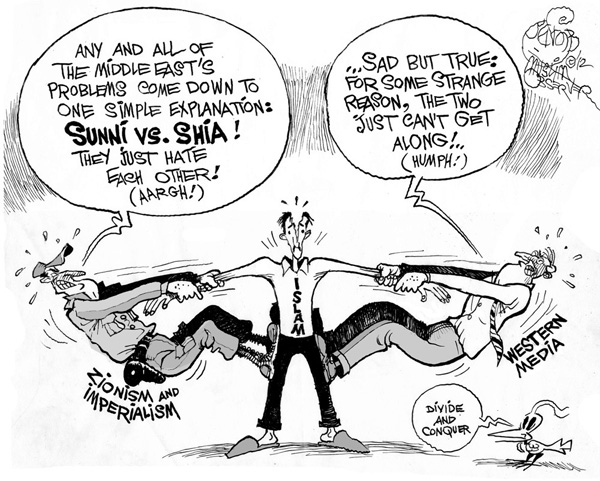
Obama or Anarchy?

The politics of prosecuting the "NATO Three"
by Justin Raimondo, May 21, 2012
"Rahm Emanuel runs Chicago like he ran the Obama White House: with an iron fist and a foul mouth – and the NATO summit, being held in the Windy City, is the perfect occasion for him to demonstrate just how “tough” he can be.
“Never let a serious crisis go to waste. What I mean by that is it’s an opportunity to do things you couldn’t do before.” Thus spake Rahm, during his days as Obama chief consigliere — and with the arrest of at least three individuals on the eve of the anti-NATO protests on charges of “material support for terrorism,” possession of incendiary devices, and conspiracy, we are seeing Rahm’s credo in practice. The “NATO Three,” as they’re known on Twitter, are accused of plotting to attack Chicago police stations, the mayor’s home, and Obama’s Chicago election headquarters.
Of course, any visible opposition to the militarism draining this country is a crisis for the War Party, whose shaky rule can’t tolerate visible protest of any sort. Using all the legal and bureaucratic resources given them by the “Patriot” Act and the Homeland Security State, Rahm and his friends in the White House are taking the opportunity to boast of how this is the first time state “anti-terrorist” laws have been used in a prosecution. This is how a phony “crisis” begets the opportunity for the State to smear its enemies and make more inroads on what is left of our civil liberties......
There have been nineteen arrests in the run up to the Chicago anti-NATO events, in what is clearly an attempt to intimidate and isolate the protesters, but these arrests also serve a broader purpose. You’ll note one of the charges is that the “conspirators” were planning on attacking the Obama campaign’s reelection headquarters, a detail that gives the case a distinctly political cast. After all, those evil commie-faggot bomb-throwing “anarchists” were plotting to blow up Obama’s reelection effort! Although the GOP is trying to accomplish this in a purely metaphorical sense, aren’t those anti-government Republicans kind of like anarchists? It’s Obama or Anarchy — how about that for framing the presidential campaign!
It’s just the kind of dirty trick we might expect from a man who once delivered a dead fish to someone who had crossed him. This time, however, the stench of Rahm’s dirty tricks – it was his police department that sent in the infiltrators – may be his undoing. The use of infiltrators against a rival political movement is the hallmark of a police state, and as the details of the case come out in court it will become swiftly apparent that the alleged “imminent threat” was created by the very people who are supposed to be protecting us. ....."
War and cheeseburgers

By Pepe Escobar
Asia Times
"A specter haunts Europe. No, it's not communism; it's US rating agencies. Greece is bankrupt; the eurozone is about to crack; JP Morgan makes billion-dollar "mistakes"; there's no (jobs) future for the new generations. And yet the weaponized arm of the Western 0.1% elites occupies Chicago - turned into an Orwellian police city-state - to discuss "smart defense".
In Afghanistan, the "smart" North Atlantic Treaty Organization (NATO) is in fact bound for a humiliating escape. "Smart defense"is code for "there's no money". Only five among 28 NATO member states spend 2% of their gross domestic product on the military - as NATO would have it. One of them was - surprise! - Greece. Here's yet another crash course on weaponized neo-liberalism. First Greece was more or less forced to buy expensive submarines from the French and the Germans; then it was forced to make budget cuts. Call it the "food for subs" NATO relief plan....."
Guardian Video: Israeli settlers fire at Palestinians
Israelis from the West Bank settlement of Yitzhar fire at Palestinians from the town of Asira al-Qibliya on Saturday. Fires seen burning in the background were lit by settles, according to Israeli NGO B'Tselem. A 24-year-old Palestinian is shot in the face. He is later treated in hospital and recovering from his injuries, according to the NGO
guardian.co.uk, Monday 21 May 2012
guardian.co.uk, Monday 21 May 2012
Bahrain: Human Rights Body Should Target Repression

Systematic and New Violations and Impunity
May 20, 2012
"(Geneva) – United Nations member states should scrutinize Bahrain’s deplorable human rights record during the country’s Universal Periodic Review (UPR) at the UN Human Rights Council on May 21, 2012, Human Rights Watch said today. The international community should push Bahrain to adopt specific measures to ensure free expression and peaceful assembly, end torture, free political prisoners, and establish credible accountability mechanisms for continuing abuses.
Under the UPR process, the Human Rights Council examines the human rights record of each UN member state once every four years. The process began in 2008, and Bahrain is the first country to undergo a second UPR round.
“The UPR should focus on Bahrain’s routine suppression of basic political rights like freedom of association as well as the grave human rights violations committed in the brutal 2011crackdown against pro-democracy protesters,” said Joe Stork, deputy Middle East director at Human Rights Watch. “Countries should ask Bahrain why it hasn’t released scores of prisoners whose only crimes were to call for greater political rights.”......"
Sunday, May 20, 2012
EU calls on Egypt to lift “emergency” state before elections

Bikya Masr
"CAIRO: The European Union called on Egypt to ensure the transfer of all powers to a civil administration, and the full lifting of the state of emergency before the presidential elections, calling for the need to “draft a comprehensive democratic constitution that enshrines respect for human rights.”
The EU called, in a report issued by the European Commission in Cairo, to stop the trial of civilians before military courts, as well as create favorable conditions for the operation of vibrant and independent non-governmental organizations and the adoption of legislation “regulating the work of NGOs, in line with international standards.”
It called in its report, which assesses the performance of Egypt in the field of human rights in 2011, the need to “preserve religious freedom, minority rights and outlining and implementation of economic reform program that ensures macroeconomic stability and strengthen management of public financial resources, in order to open the door to international financial aid, including financial aid granted by the EU.”
The EU also called on Egypt to sign and ratify the Regional Convention for the Euro-Med rules of origin.
The report said: “the continuing political and economic uncertainty led to little progress towards structural reform, and Egypt had been subjected to profound change and political and economic challenges in 2011, and a revolution ousted an authoritarian regime and the Supreme Council of the Armed Forces took over presidential, legislative, and executive powers in the country as a transitional measure to meet the people’s legitimate demands for political freedom and respect for human rights and improve the social and economic conditions.”
The report criticized the performance of the military with regard to its respect of human rights, where it said: “the administration of the SCAF to the state of Egypt during the transitional period did not meet the needs of Egyptians with regards to respect for fundamental human rights and democratic standards, where police and military personnel [have been] accused of using excessive force during demonstrations, as well as arresting thousands of activists arbitrarily and using military courts to prosecute activists, bloggers, and continued to torture and [use] degrading treatment in detention centers and prisons.”"
MORE DEBT WON’T SOLVE EUROPE’S PROBLEMS

By Eric Margolis
19 May 2012
"The last time Greece faced a crisis of this magnitude was in 490 BC when the armies and fleets of the Persian Empire were converging on Athens.
The great Athenian leader Themistocles rallied his countrymen and defeated the Persians.
Alas, this time Greece has no Themistocles to save the embattled nation. Unlike the incompetent Persian Emperor Darius, the Greeks now face Germany’s very tough, stern and able Frau Doktor Angela Merkel who has vowed to impose “zucht und ordnung” (order and discipline) on the unruly Greeks.
A potentially fatal run on Greeks banks is underway, with over 800 million euros withdrawn last week. The sky is indeed falling.
Who can blame Greek depositors?......."
Eastern Europe's neoliberal disaster provides a warning for the Arab spring

(Click on cartoon to enlarge)
Rather than help enhance democracy and reduce corruption, following western advice on privatisation does the exact opposite
Neil Clark
guardian.co.uk, Sunday 20 May 2012
"I wonder if David Cameron spent any time in eastern Europe in the 1990s.
Judging from his recent remarks about the Arab spring and international aid, the British prime minister seems to believe that having a more "open" and "free", ie privately owned, economy is the key to both economic development and a successful transition from one-party rule.
The evidence from the former communist countries gives lie to that neoliberal viewpoint. In a recent study entitled Mass Privatisation, State Capacity, and Economic Growth in Post-Communist Countries, published in American Sociological Review, sociologists from the universities of Cambridge and Harvard claim to have established a "direct link" between the mass privatisation programmes followed by around half the countries of the region – enthusiastically urged upon them by western economists and western financial institutions – and the "economic failure and corruption that followed". The more closely the countries followed western advice, and the more they privatised, the worse things became......."
Current Al-Jazeera (Arabic) Online Poll

Do you support giving Assad immunity in return for stepping down?
With about 800 responding, 76% said no.
Al-Jazeera Video: Inside Syria: An opposition divided
"The Syrian opposition appears to have come apart at the seams as different factions vie for leadership roles. James Bays discusses with Bassma Kodmani in Paris, Dr. Kamal al-Labwani in Cairo and Josh Landis in Oklahoma."
Egyptian army’s pledges of retreat could be an illusion, analysts say

Al-Masry Al-Youm
".....For Hassan Nafea, a leading Egyptian political columnist, “the role of the army will depend very much on the president to be elected.”
If he comes from the old regime such as the ex-foreign minister and former Arab League chief Amr Moussa, or Ahmed Shafiq, the last prime minister to serve under Mubarak, “the army will continue to play an important role, and there will be no reform regarding its role or its place.”
If another person wins, “troops would return to their barracks, but an agreement will be needed to ensure the process goes smoothly. Many interests, including economic ones, are at stake, and it will have to be dealt with tact,” Nafea added.
One of the main Islamist candidates, Abdel Moneim Abouel Fotouh, has promised to confine the military to matters of defense, but without explicitly saying how this would be done.
The Muslim Brotherhood, which dominates Parliament and has fielded Mohamed Morsy, could give a harder time to the army, with which it has historic rivalries...."
الدكتور عزمي بشارة يحاضر في قصر قرطاج بضيافة الرئيس المنصف المرزوقي

20 مايو 2012
" ألقى الدكتور عزمي بشارة محاضرة في القصر الجمهوري في قرطاج، وذلك يوم السبت 19 مايو ايار وقد افتتح اللقاء وقدمه للجمهور الدكتور منصف المرزوقي رئيس الجمهورية. وحضر اللقاء حشد من المثقفين وقادة الراي وفي مقدمتهم عدد من السادة الوزراء وقادة الأحزاب ومنهم الشيخ راشد الغنوشي والسيد علي العريض وزير الداخلية. وكان عنوان المحاضرة : "السياقات التاريخية لنشوء العلمانية وانماطها".
وقد تابع د. بشارة سياقات نشوئها السياسية التاريخية منذ بداية الحداثة الأوروبية، وأصل اللفظ في المجال الديني، كما حلل تاريخ نشوئها كفكرة وموقف تحولت في القرنين التاسع عشر والعشرين الى نظرية العلمنة في فهم عملية التحديث. وقد انتقد الدكتور بشارة هذه النظرية، كما انتقد العلمانية الصلبة التي تعادي الدين في المجال العالم مبينا وجود أنماط أخرى من العلمانية لا تقصي الدين من المجال العام وتحرص على حيادية الدولة في الشأن الديني كما في الحالتين البريطانية والأميركية.
وقارن بين النمط الفرنسي والأميركي والبريطاني والتركي. كما قدم مطالعة مطولة نقدية لتحول العلمانية الى ايديولوجية دولة استبدادية تقدس قيما دنيوية، وبذور هذا التقديس للدولة في مصادرة الدولة للقداسة منذ حق الملوك الالهي في الحكم مرورا بالدولة القومية. كما ايد استخدام مفهوم الديمقراطية وقيمها ومبادئها، اكثر من مفهوم العلمانية الملتبس، لا سيما وأن العلمانية باتت تطمس الفرق بين العلماني الديمقراطي وغير الديمقراطي، اليساري واليميني... تماما كما ان التدين لا يكفي لفهم موقف الإنسان السياسي.
وقد شددعلى ضرورة تجاوز الاستقطاب الديني العلماني نحو تعددية بين مواقف وبرامج وايديولوجيات تقوم على تعدديتها على احترام مبادئ الديمقراطية. وأشاد بالتجربة التونسية في هذا المجال مؤكدا على ضرورة إنجاحها. وقد دامت المحاضرة والحوار الطويل الذي تبعها مع المثقفين التوانسة مدة ثلاث ساعات.
ونأمل ان نوافيكم بتسجيل لها
وتحدث الدكتور عزمي بشارة عن شعوره اثناء القاء محاضرة في قصر قرطاج، قائلا: كان المشهد مؤثرا, بالنسبة لي حتى درامي وتاريخي دون شك، ان ألتقي صديقي المناضل المنصف المرزوقي كرئيس يدعوني لالقاء محاضرة فكرية تمس قضايانا في المقر الرسمي لرئيس دولة عربية، وتتخللها نقاش جاد من دون خوف بين مثقفين توانسة في قصر الرئيس. لا اعتقد انه في اوروبا واميركا يمكن ان تشهد أمرا كهذا. على العريض السجين الدائم في سجون بن علي وزير دخلية يتقدم الصفوف لسماع محاضرة فكرية، والصديق الشيخ راشد الغنوشي المنفي الذي لم تستقبله السعودية للحج ولا فرنسا لالقاء محاضرة ها هو جالس ايضا في القصر الذي استضاف حوارا فكريا رفيعا... هل هذه تونس؟ وهل هذه المنطقة العربية؟ لحظات من الشحنات العاطفية لا توصف، ولكن الجمهور جاء ليسمع، فغرقت في الموضوع الفكري ونسيت اين انا.
"
Subscribe to:
Posts (Atom)